Category: 3. Business

  • Five big finance questions for 2026

    Five big finance questions for 2026

    One note to start: In this special edition, we’re looking ahead to some of the biggest themes that will affect dealmaking, private equity, corporate finance and much more in the coming months. We’ll be back to our regular scheduled programming on Tuesday January 6. Thanks for reading and happy New Year from Arash, JFK and the whole DD crew.

    Welcome to Due Diligence, your briefing on dealmaking, private equity and corporate finance. This article is an on-site version of the newsletter. Premium subscribers can sign up here to get the newsletter delivered every Tuesday to Friday. Standard subscribers can upgrade to Premium here, or explore all FT newsletters. Get in touch with us anytime: Due.Diligence@ft.com

    1. Were First Brands and Tricolor one-offs or signs of blow-ups to come?

    Jamie Dimon captured the popular imagination when he described the shock bankruptcies of auto lender Tricolor (for which JPMorgan Chase had securitised most of its debts) and car parts supplier First Brands Group as “cockroaches” in the credit market. For those unaware of the adage, the idea is that when you see one cockroach scuttle out from under the floorboards, there are usually more lurking.

    These blow-ups have led to an epic blame game between public and private credit markets.

    In the case of First Brands, its $12bn debt pile had a bit of everything: financing from banks, syndicated loans placed with collateralised loan obligations, and opaque off-balance sheet financing largely provided by specialist private credit funds.

    Expected losses now stretch into the billions of dollars, with even a typically bombproof debtor-in-possession loan crashing to distressed levels in December.

    This is what makes First Brands so unnerving. Until the FT first revealed serious issues with the company’s balance sheet weeks before its bankruptcy, its senior debt was trading close to face value.

    Predicting when a credit market will turn is a fool’s errand, but it’s safe to assume that when the finest minds on Wall Street are oblivious to an impending $12bn car crash, there are likely to be more accidents to come.

    2. Will OpenAI, SpaceX and Anthropic go public?

    After years of false dawns in the US IPO market, investors are hoping 2026 delivers “an epic bonanza” in the form of three of the biggest listings of all time.

    Elon Musk’s rocket maker SpaceX and Silicon Valley’s most high-profile artificial intelligence start-ups, OpenAI and Anthropic, are all gearing up for public offerings.

    SpaceX is the most advanced, with executives telling investors they plan to go public next year barring major market ructions. Its backers argue that the 23-year-old company has such a dominant position in its field that it could list even in a downturn.

    Anthropic and OpenAI have taken steps towards IPOs: the former hired law firm Wilson Sonsini and the latter is in talks with various firms, including Cooley. Both are exposed to market sentiment on AI, which cooled in the last weeks of the year. They are also heavily lossmaking, complicating their paths to the public markets.

    SpaceX is valued at $800bn by investors and OpenAI at $500bn, while Anthropic is working on a funding round likely to be priced north of $300bn.

    Any of the three would rank among the biggest IPOs of all time — a list topped by Saudi Aramco’s 2019 flotation, which raised $29bn. All three going public would make 2026 a banner year.

    “The likelihood of all these companies listing next year is small, but possible, and would mean an epic bonanza for VCs, bankers and deal attorneys,” said Peter Hébert, co-founder of venture firm Lux Capital.

    3. Will the megadeal boom continue?

    The takeover battle for Warner Bros Discovery was a fitting end to 2025. It minted the biggest announced deal of the year, whether Netflix’s $83bn deal or Paramount’s $108bn hostile bid prevails. 

    Some 68 deals worth more than $10bn were announced in 2025, a record high, according to LSEG data. Will this continue? Yes and no.

    At first it may accelerate as chief executives dust off the combinations they’ve been wanting to do for years, but that have been held up by boards, financing, antitrust risks and/ or investors. 

    Defence and offence will drive them. Look to the oil and gas sector, where oil prices have crashed to a four-year low, for defensive consolidations. On the offensive utilities giants are ready to empire build, cashing in on a share price surge driven by artificial intelligence.

    But the boom may be shortlived if an economic downturn or shift of power at the US midterm elections ruins the appetite for riskier deals.

    The first half of this year was slow thanks to US President Donald Trump’s “liberation day” tariffs, but the second half was gangbusters. In 2026, expect the opposite.

    As one investment banker put it: 2026 will come “out of the gate like a lion and leave like a lamb”.

    4. Will corporate Europe get its act together? 

    European companies, spurred on by former European Central Bank president Mario Draghi’s 2024 report on competitiveness, understand the need for massive investment and cross-border mergers to compete with foreign rivals.

    But the barriers are still too high to forge stronger global competitors.

    Domestic politics stymied several potential cross-border deals in 2025, particularly in banking — where the region’s industry is losing out to American competitors. And in AI, Europe remains far behind the US and China when it comes to innovation and investment.

    In other sensitive sectors, particularly aerospace and defence, European champions are needed but the bureaucratic hurdles are high. For example, in October the groups Airbus, Thales and Leonardo struck a long-awaited deal to combine their space businesses, but they don’t expect the new entity to be operational until 2027.

    The backdrop is that Europe’s economy remains anaemic. That helps explain why so much dealmaking in Europe features investment groups searching for undervalued companies to acquire. 

    There are causes for hope such as Germany’s approval last year of new chancellor Friedrich Merz’s plan to inject up to €1tn into the nation’s military and infrastructure, the kind of bold spending that will be required to bolster European defence. 

    European leaders are well aware that massive investment, decisive strategy and cross-border takeovers are needed to strengthen the region’s industry, which still features some of the world’s leading companies. But Europe’s gap only seems to grow.

    5. Will banks start lending again?

    At the start of 2025, one topic was top of mind for bankers: deregulation. 

    The advent of another Trump presidency had US bank executives hoping that post-2008 crisis rules would finally be scrapped. Meanwhile, European and UK bank executives were worried they’d be left behind.

    Deregulation soon arrived in the US. Michelle Bowman, vice-chair for supervision at the US Federal Reserve, has presided over one of the most significant rule rollbacks in decades, with the aim of getting banks to lend more and take on more risk. 

    It seems regulators are waking up to the fact that risk hasn’t left the banking system, it has just been rerouted. While the riskier activity that banks used to do has moved into much more lightly regulated areas, such as private equity and private credit, banks are deeply intertwined with those firms through the extensive financing they provide. 

    It will be interesting to see how far banks will push their newfound freedoms. The US reforms are expected to free up $2.6tn in lending capacity, mainly by limiting the amount of capital lenders have to hold in case something goes wrong.

    Across the pond it’s creating an existential question. Fail to meet the US wave of deregulation and European banks are certain to lose more ground to their rivals. But as the architects of some of the most stringent rules they’ll have to undertake even more sweeping changes if they want a European banking champion.

    This year’s predictions:

    Take these with a grain of salt. We made only one accurate prediction last year.

    Will BP still be a standalone company at the end of 2026?

    Yes. Sometimes there’s smoke and fire. Sometimes there’s just smoke. 

    Will there be the first pharmaceutical megamerger in years?

    Yes. Big Pharma had been busy striking deals with Trump. Now expect them to strike deals with each other. At least one. Maybe two. 

    Will a boutique bank crack the 60% comp ratio?

    Lazard’s Peter Orszag said this year that he was hoping his firm could soon fall to a number starting with 5. But it’s not looking great at Lazard (or any of its publicly traded competitors) even as deal fees from M&A, restructuring and private capital are soaring. 

    Bankers are hot free agents and firms do not want to cede any market share. Revenue-to-pay is closer to 70 per cent across the industry, with bosses not even apologising to their shareholders for the bonus guarantees that they’re passing out like candy.

    Will Goldman Sachs buy a private capital giant?

    Public and private markets are converging quickly and Trump’s deregulatory efforts have tempted the imaginations of C-suites. Goldman will grow its asset management unit using a signature acquisition.

    Will a PE firm blow up?

    They say PE firms are hard to kill. But a decade of financial engineering has left many groups leveraged in a myriad of different directions, a recipe for disaster.

    Will Jared Kushner win the PE industry’s first Nobel Prize?

    We’ll take the over on Kushner’s chances of winning the prize, alongside his father-in-law, and the under on his private equity returns.

    Will Fannie Mae and Freddie Mac make their stock market debut?

    Yes. Bill Pulte, the director of the Federal Housing Finance Agency, has been laying the groundwork for months. If he had his way, they would have IPOed months ago. What we don’t know yet is which banks will lead the deal, and reap the fees.

    Will Izzy Englander finally step back from his hedge fund Millennium?

    Not so fast. We bet he’ll stay on for at least another year.

    Will UBS move its headquarters from Switzerland to the US?

    No, the place that brought you the Swiss Army Knife is too pragmatic to let its most important financial institution leave.

    Will banks start getting aggressive financing buyouts?

    Yes. Large money-centre banks have been chomping at the bit to compete with private credit shops. With the Trump administration rescinding so-called leveraged lending guidance, which restricted banks from financing the riskiest buyout loans, they will start taking shots again.

    Bankers expect they’ll still be working side-by-side with giants of the private credit industry, but they’re hopeful their risk committees will start to stretch when potentially lucrative financings from the likes of Blackstone, Thoma Bravo and KKR roll in.

    Some of our favourite work from the past year: 

    The secretive First Brands founder, his $12bn debt and the future of private credit

    How Trump is exploiting Big Law’s identity crisis

    Inside the downfall of trading titan and Blackpool FC owner Simon Sadler

    How Blackstone and its biggest rivals are drifting apart

    The hedge fund billionaire aiming to be king of Queens

    The billionaire elite who answered Donald Trump’s call on Panama Canal

    Inside the collapse of Microsoft-backed UK tech unicorn Builder.ai

    ‘JPMorgan has crossed a line’: How Altice’s debts ensnared US banking giant

    Kirkland & Ellis trains lawyers on communication style after investor tensions

    Kushner, Gulf money and desperate texts: inside Paramount’s hostile bid for Warner Bros

    Elliott’s ‘lone wolf’: the hedge fund maverick waging war on Big Oil

    Due Diligence is written by Arash Massoudi, Ivan Levingston, Ortenca Aliaj, Alexandra Heal and Robert Smith in London, James Fontanella-Khan, Sujeet Indap, Eric Platt, Antoine Gara, Amelia Pollard, Kaye Wiggins, Oliver Barnes, Tabby Kinder and Julia Rock in New York, George Hammond in San Francisco and Arjun Neil Alim in Hong Kong. Please send feedback to due.diligence@ft.com

    Recommended newsletters for you

    The AI Shift — John Burn-Murdoch and Sarah O’Connor dive into how AI is transforming the world of work. Sign up here

    Unhedged — Robert Armstrong dissects the most important market trends and discusses how Wall Street’s best minds respond to them. Sign up here

    Continue Reading

  • Christine Lagarde’s pay is 50% higher than disclosed by ECB – Financial Times

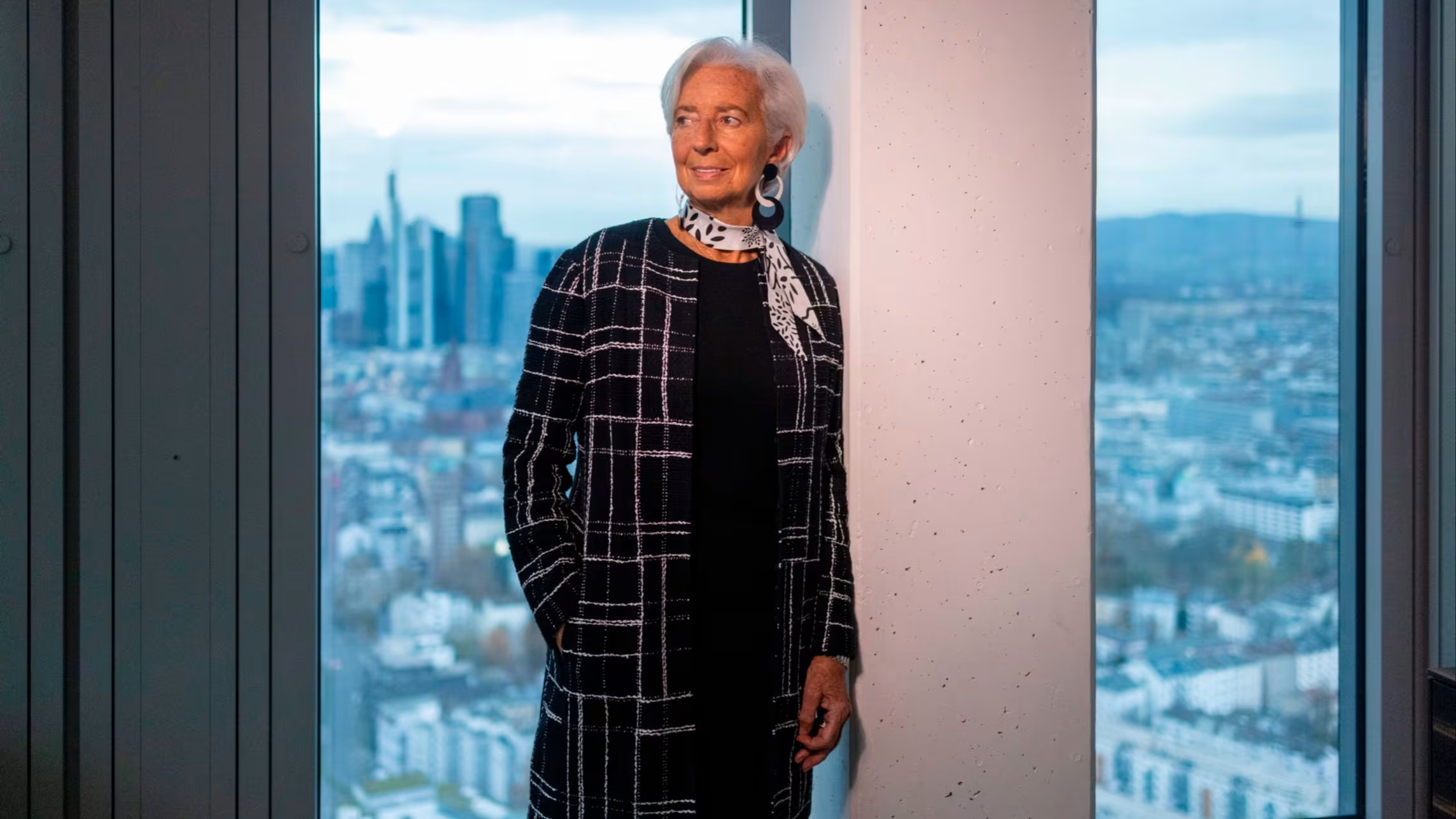
    Christine Lagarde’s pay is 50% higher than disclosed by ECB – Financial Times

    1. Christine Lagarde’s pay is 50% higher than disclosed by ECB  Financial Times
    2. UK media: Lagarde’s actual salary is 56% higher than disclosed, four times that of Powell  Bitget
    3. Lagarde is under fire for earning too much. Her ECB salary in 2024 will be €726, nearly four times that of Powell.  firstonline.info
    4. “Financial Times”: Lagarde’s salary is 50 percent higher than reported.  Agenzia Nova

    Continue Reading

  • Predicting 2026 — Will the Magnificent Seven tech stocks continue to diverge?

    Predicting 2026 — Will the Magnificent Seven tech stocks continue to diverge?

    This is an audio transcript of the FT News Briefing podcast episode: ‘Predicting 2026 — Will the Magnificent Seven tech stocks continue to diverge?’

    Sonja Hutson
    Good morning from the Financial Times. Today is Friday, January 2nd. I’m Sonja Hutson and this is your FT News Briefing.

     [MUSIC PLAYING]

    This whole week, we’ve been looking back at 2025 and trying to predict what’ll happen in 2026. It’s our last show in this series, and this time we are talking all about tech stocks.

    This time last year, the Magnificent Seven were flying high. These are tech stocks like Amazon and Apple and they basically propped up the entire US market. The question on everyone’s mind was, will their moment in the sun come to an end? FT columnist Gillian Tett had an answer to that in the FT’s Forecasting the world in 2025 list of predictions. She said they’re not gonna fall, but they won’t ride a lot higher either.

    What actually happened? Well, it was a bit of a mixed bag. Gillian is here to tell us more and make a prediction for 2026. Hi, Gillian.

    Gillian Tett
    Hi. Good to talk to you.

    Sonja Hutson
    Good to have you. So when we say Magnificent Seven, we’re talking about Alphabet, Amazon, Apple, Meta, Microsoft, Nvidia, and Tesla. Why did you make that prediction about a year ago?

    Gillian Tett
    Well, the primary reason I made that prediction last year was because the level of market concentration around the Magnificent Seven — in terms of how much they represent of the overall equity indices — had reached such extreme levels from a historical perspective. That simple historical passion making would suggest that, almost inevitably that was going to reverse.

    And on top of that, it seemed to me that there was an awful lot of hype and over excitement about the degree to which some of the tangible fruits of the AI revolution would actually come in to boost these Magnificent Seven’s earnings. Yes, the technology is potentially revolutionary. Yes, it’s probably gonna have a very big impact on the economy going forward, but how quickly it’s actually gonna put some of these companies in the lead forever is not clear to my mind.

    Sonja Hutson
    Yeah. I think we’re definitely still grappling with a lot of those questions. But let’s run through what actually happened to these stocks. Alphabet did go up more than 60 per cent. Nvidia was up more than 30 per cent, Tesla, up around 20, but then the rest of the Mag 7 was up less than 60 per cent and Amazon was actually only in the single digits.

    Why do you think there was this divergence?

    Gillian Tett
    Well, to a certain extent, the recovery of Alphabet stemmed from the fact that it was seen to be losing the AI race 18 months ago. You had upstarts like OpenAI suddenly seeking to take a lead. And Alphabet has really come roaring back and shown that it does have tremendous amount of research capability.

    And even though it hasn’t necessarily deployed all of its innovations as quickly as some of the others. A lot of that’s due to it taking a more cautious, some might say, responsible stance to how it develops its product. So that’s the story of Alphabet. Some of the other ones, well, it’s partly because some of them let ahead earlier on and are now slowing down.

    But the really important point of stress is that. I think that although many investors are still very excited about the AI and tech boom, there is the beginning of a much more discerning approach to working out which stocks are going to perform well and which aren’t. Because history shows it’s very unlikely that they’re all going to be winners.

    Sonja Hutson
    OK, so let’s talk about your predictions for the Mag 7 in 2026. It sounds like, from what you’re saying, that you’re expecting to continue seeing this divergence in fortunes among the Mag 7 stocks

    Gillian Tett
    2026, it’s gonna be shaped by attention between the fact that on the one hand, AI is a genuinely transformational technology and as a result, the companies which emerge as winners will really emerge as winners in the future.

    Just as we saw in the railway mania back 150 years ago that there were some big winners that came out of that; there were also lots and lots of big losers, though and it’s worth stressing that some investors lost a lot of money as a result and I suspect that’ll play out again. But going forward in 2026, you know, we know on the one hand there is this revolution technology. We know, on the other hand, that some American companies are absolutely global leaders and reinforcing their market dominance as we speak. So that should propel stocks higher. However, there are a number of factors that could provide real risks.

    Sonja Hutson
    What are some of those risks?

    Gillian Tett
    One is a potential rise in interest rates because, increasingly, the AI Capex is being funded by debt, not just free cash flow or anything else.

    Another potential risk is that there could be a political backlash against the AI companies because, although President Trump has been very supportive, in his own policymaking, what you’re starting to see is a national populace like Steve Bannon, increasingly angry with what might be called the “broligarchs”— the elites who are shaping much of this discourse.

    But the third and biggest issue in my mind is whether we’re going to see new technologies or new platforms or new approaches to AI emerge in a way that could leapfrog the current framework that the Magnificent Seven are betting on. And by that I mean most of the Magnificent Seven are using proprietary technologies, but we’re seeing in China open source AI approaches.

    We are seeing all types of bootlegging approaches that are much cheaper and less energy-guzzling. That’s incredibly important because America is critically short of the energy or need the electricity or need to power these data centres. So any of those factors could potentially create quite a jolt for investors about their assumptions over who’s gonna win or lose.

    Sonja Hutson
    Is there anything that could get all of the Mag 7 stocks riding high again, like they were in 2024, or are we just kind of past that point and not able to return to it?

    Gillian Tett
    I think it’s hard to see a synchronised rise in all of the tech stocks going forward because there is so much good news priced in.

    However, the thing that would really boost the tech stocks is if it becomes clear that non-tech companies are deploying AI and these new technological breakthroughs in a really meaningful way that’s gonna change the revenues. Because one of the striking things thus far is that, for the most part, we don’t have a lot of evidence of ordinary companies making dramatic productivity and revenue gains on the back of their deployment of tech. Now that may just be a time-lag effect.

    The other things that would help would be if there was a sign that America’s getting serious about creating an energy policy that would address the shortfalls of energy around data centres. Above all else, that means getting the transmission lines and the grid sorted out. Not so much just the actual energy generation, but that’s been very hard until now. So if Washington gets serious about forcing a dramatic upgrade in the energy grid capacity, I think again that could make an impact as well.

    Sonja Hutson
    Gillian, what do you think the change in fortunes of the Mag 7 taught us about tech stocks or just the equities market as a whole?

    Gillian Tett
    So, one lesson is that, you know, what goes up can sometimes come down — we’ve seen that over and over again in history. Another lesson, though, perhaps, is to go back to the railway mania of the late 19th century and remember that that mania did create railroads — which was an incredible technological breakthrough that we’re all benefiting from today — it made a few people rich, but it also made a lot of people big losers when the railway companies (inaudible) went bust. So bubbles can bring long-term benefits, but they can certainly cause a short term pain. The problem is that no one really knows when they’re gonna pop.

    Sonja Hutson
    Gillian Tett is a columnist and member of the FT editorial board. Thanks, Gillian.

    Gillian Tett
    Thank you.

    Sonja Hutson
    You can read more on 2025 and 2026 predictions when you click the links in our show notes.

    This has been your daily FT News Briefing. Check back next week for the latest business news.

    The FT News Briefing was produced this week by Victoria Craig and me, Sonja Hutson. Our show is edited by Marc Filippino. Our show is mixed by Kelly Garry and Kent Militzer. We had help this week from Peter Barber, Michael Lello, David da Silva and Gavin Kallmann. The FT’s acting co-head of audio is Topher Forhecz. And our theme song is by Metaphor Music.

     [MUSIC PLAYING]

    Continue Reading

  • Australian shares edge higher in first session of 2026

    Australian shares edge higher in first session of 2026

    The S&P/ASX200 was up 19.4 points early Friday afternoon, or 0.22 per cent, at 8,733.7, while the broader All Ordinaries rose 21.6 points, or 0.24 per cent, to 9,040.4.

    Nine of the market’s 11 sectors were higher, with materials and technology stocks the only sectors in negative territory.

    Uranium producers surge on nuclear news

    The energy sector was the day’s strongest performer, rising 0.8 per cent after strong gains among uranium producers.

    The move followed news that US-based Duke Energy had filed an initial application to build a new nuclear reactor in North Carolina.

    Paladin Energy, Deep Yellow, Boss Energy and Lotus Resources were all up just over five per cent. NexGen Energy gained 2.3 per cent, while Bannerman Energy climbed 3.9 per cent.

    Elsewhere in the energy sector, Woodside Energy edged 0.5 per cent higher, while Santos slipped 0.1 per cent.

    Biotech stocks extend gains

    Health care stocks also moved higher, led by a strong showing among smaller biotechnology companies.

    Mesoblast and Telix Pharmaceuticals both rose 2.1 per cent. Racura Oncology jumped 6.6 per cent, Clarity Pharmaceuticals added 7.8 per cent and Orthocell advanced 5.5 per cent.

    Goldminers fall after Northern Star update

    Goldminers were under pressure after Northern Star released a weaker-than-expected production update, even as gold prices held firm at US$4,375 an ounce.

    The company said production had been hit by a series of “isolated negative events”, including a primary crusher failure at its Kalgoorlie processing centre that disrupted output for four weeks.

    Northern Star shares dropped 9.5 per cent to a near two-month low of $24.19. Evolution Mining slipped 0.2 per cent and Westgold fell 0.4 per cent.

    Big miners and banks post modest gains

    In contrast, the major diversified miners were higher. BHP, Fortescue and Rio Tinto all gained 0.5 per cent.

    All four major banks also traded higher. 

    Australian dollar little changed

    The Australian dollar was trading at 66.97 US cents, slightly up from 66.95 US cents at 3.30pm AEDT on Wednesday.

    Continue Reading

  • Revolution Wind LLC to file Preliminary Injunction Against Lease Suspension Order

    Revolution Wind LLC to file Preliminary Injunction Against Lease Suspension Order

    PROVIDENCE, R.I. – January 1, 2026 – Today, Revolution Wind LLC (“Revolution Wind”), a 50/50 joint venture between Global Infrastructure Partners’ Skyborn Renewables and Ørsted, filed a supplemental complaint in the U.S. District Court for the District of Columbia challenging the lease suspension order issued on December 22, 2025 by the U.S. Department of the Interior’s Bureau of Ocean Energy Management (BOEM), to be followed by a motion for a preliminary injunction.  

    While Revolution Wind continues to seek to work constructively with the Administration and other stakeholders towards an expeditious and durable resolution of this matter, it believes that the lease suspension order violates applicable law. As was the case with the August 2025 stop-work order, the Revolution Wind Project (“Project”) faces substantial harm from a continuation of the lease suspension order. As a result, litigation is a necessary step to protect the rights of the Project.  

    Revolution Wind secured all required federal and state permits in 2023, following extensive reviews that began more than nine years ago. As a requirement of the permitting process, the Project engaged in years-long consultation with the U.S Department of Defense [War] Military Aviation and Installation Assurance Siting Clearinghouse to address potential impacts to national security and defense capabilities from construction through to operation of the Project. Those consultations resulted in a fully executed formal agreement between the Department of War, the Department of the Air Force, and Revolution Wind outlining mitigation measures by the Project.  

    Revolution Wind has spent and committed billions of dollars in reliance upon, and has met the requests of, a thorough review process. Additional federal reviews and approvals included the U.S. Coast Guard, U.S. Army Corps of Engineers, National Marine Fisheries Service, and many other agencies. 

    Revolution Wind is in advanced stages of construction and is expected to be ready to deliver reliable, affordable power to American homes in 2026. The Project, now approximately 87 percent complete, has already installed all offshore foundations and 58 of 65 wind turbines. Export cable installation is complete, and both offshore substations have been installed. At the time of the lease suspension order, the Project was expected to begin generating power as soon as January 2026.    

    The Project will strengthen electric grid reliability as a critical part of the Northeast energy supply, which is crucial to meeting growing energy demand. The Project is set to provide affordable power to more than 350,000 homes in 2026 under 20-year power purchase agreements with utilities in Connecticut and Rhode Island. This includes supporting the growing power needs of data centers and AI, with experts including ISO-NE, the independent grid operator, warning that halting the Project may increase electricity costs and lower reliability for the region.   

    Revolution Wind has supported thousands of American jobs across construction, operations, shipbuilding, and manufacturing, including more than 1,000 union jobs that have already contributed 2 million union work hours to this Project. The Project is a part of Ørsted’s investment into American energy generation, grid upgrades, and port infrastructure, as well as a supply chain, including U.S. shipbuilding and manufacturing extending to more than 40 states.  

    Sunrise Wind LLC, a separate project and wholly owned subsidiary of Ørsted that also received a lease suspension order on December 22 continues to evaluate all options to resolve the matter, including engagement with relevant agencies and stakeholders and considering legal proceedings. 

    For further information, please contact:

    Ørsted Global Media Relations 
    Michael Korsgaard  
    +45 99 55 95 52 
    globalmedia@orsted.com  

    Revolution Wind Media Contact 
    Meaghan Wims 
    +1 401-261-1641 
    mwims@duffyshanley.com 

    Ørsted Investor Relations 
    Valdemar Hoegh Andersen 
    +45 99 55 56 71 
    Ir@orsted.com 

    About Ørsted
    Ørsted is a global leader in developing, constructing, and operating offshore wind farms, with a core focus on Europe. Backed by more than 30 years of experience in offshore wind, Ørsted has 10.2 GW of installed offshore capacity and 8.1 GW under construction. Ørsted’s total installed renewable energy capacity spanning Europe, Asia Pacific, and North America exceeds 18 GW across a portfolio that also includes onshore wind, solar power, energy storage, bioenergy plants, and energy trading. Widely recognised as a global sustainability leader, Ørsted is guided by its vision of a world that runs entirely on green energy. Headquartered in Denmark, Ørsted employs approximately 8,000 people. Ørsted’s shares are listed on Nasdaq Copenhagen (Orsted). In 2024, the group’s operating profit excluding new partnerships and cancellation fees was DKK 24.8 billion (EUR 3.3 billion). Visit orsted.com or follow us on LinkedIn and Instagram. 


    Attachments


    Continue Reading

  • China’s BYD set to overtake Tesla as world’s top EV seller

    China’s BYD set to overtake Tesla as world’s top EV seller

    China’s BYD is set to overtake Elon Musk’s Tesla as the world’s biggest seller of electric vehicles (EVs), marking the first time it has outpaced its American rival for annual sales.

    On Thursday, BYD said that sales of its battery-powered cars rose last year by almost 28% to more than 2.25 million.

    Tesla, which is due to reveal its total sales for 2025 later on Friday, last week published analyst’s estimates suggesting that it had sold around 1.65 million vehicles for the year as a whole.

    The US firm has faced a tough year with a mixed reception to new offerings, unease over Musk’s political activities and intensifying competition from Chinese rivals.

    In October, Tesla introduced lower-priced versions of its two best-selling models in the US in a bid to boost sales. It had faced criticism that it had been slow to release new and more affordable options to stay competitive.

    Musk, who is already the world’s richest man, is tasked with significantly boosting Tesla’s sales and stock market value over the next decade to secure a record-breaking pay package. The deal, which was approved by shareholders in November, could see him getting a payout of as much as $1tn (£740bn).

    As part of the agreement, Musk also has to sell a million humanoid robots over the next ten years. Tesla has invested heavily in its “Optimus” product and self-driving “Robotaxis”.

    Tesla sales slumped in the first three months of 2025 after a backlash against Musk’s role in US President Donald Trump’s administration.

    Besides Tesla, the multi-billionaire’s business interests also include the social media platform X, the rocket firm SpaceX and the Boring Company, which digs tunnels.

    Those commitments, along with running Trump’s Department of Government Efficiency (Doge), led some investors to suggest that Musk was not focusing enough on Tesla.

    Since then Musk has pledged to “significantly” cut back his role in the US government.

    Despite BYD’s rapid expansion in recent years, its sales growth slowed in 2025 to the weakest rate in five years.

    The Shenzhen-based firm faces mounting competition in China, its key market, from a surge of EV makers like XPeng and Nio.

    Still, BYD remains a global EV powerhouse as its prices often undercut rival carmakers.

    The company’s rapid expansion – especially in Latin America, South East Asia and parts of Europe – comes despite many countries imposing steep tariffs on Chinese EVs.

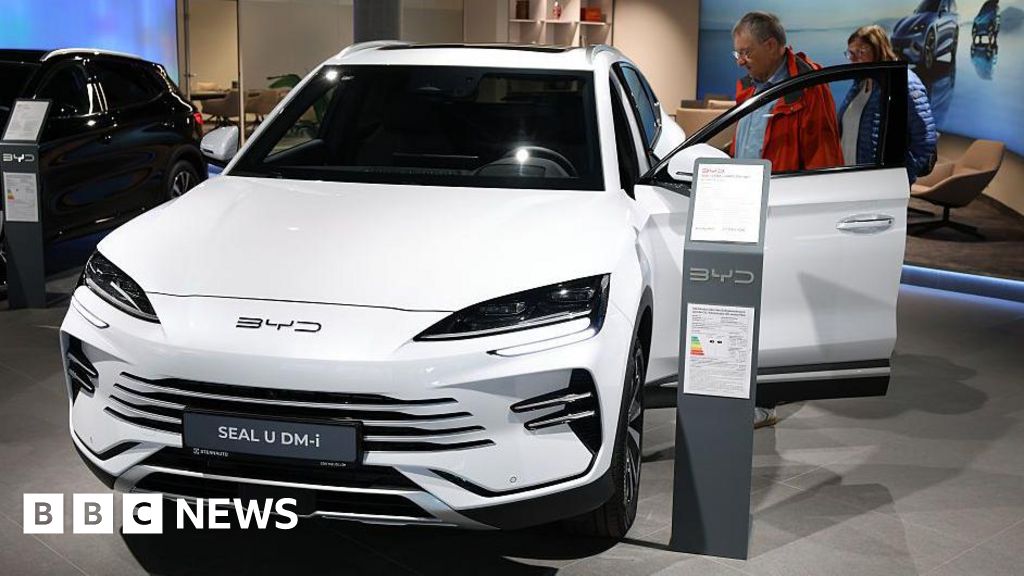
    In October, BYD said the UK had become its biggest market outside China. The firm said that its sales in Britain surged by 880% in the year to the end of September, driven by strong demand for the plug-in hybrid version of its Seal U sports utility vehicle (SUV).

    Continue Reading

  • Dollar makes a soft start to 2026 after sharpest drop in 8 years

    SINGAPORE: The U.S. dollar made a feeble start to 2026 on Friday after struggling against most currencies last year, while the yen steadied near 10-month lows as traders awaited economic data this month to gauge the path of interest rates.

    A dwindling interest rate difference between the U.S. and other economies has cast a shadow over the currency market, resulting in most currencies gaining sharply against the dollar in 2025, with the yen an exception.

    The euro was steady at $1.1752 in early Asian hours after surging 13.5% last year, while sterling last bought $1.3474 following a 7.7% increase in 2025. Both currencies clocked their steepest annual rises since 2017.

    The yen was last at 156.74 per U.S. dollar after rising less than 1% against the greenback in 2025 and hovering close to the 10-month low of 157.90 it touched in November that sparked worries of intervention from Tokyo.

    Severe verbal warnings from authorities in Tokyo through December managed to push the yen away from the intervention zone but those fears still linger.

    With markets in Japan and China closed, volumes are likely to be thin and moves muted during Asian hours.

    Anthony Doyle, chief investment strategist at Pinnacle Investment Management, said the global economy enters 2026 with reasonable momentum, with the probability of recession remaining low.

    “Outside of the United States, the central bank rate cut impulse is fading, which is a feature not a bug: fewer rate surprises reduce one-way market moves and raise the importance of selection across regions, factors and asset classes.”

    The dollar index , which measures the U.S. currency against six other units, was at 98.243 after registering a 9.4% decline in 2025, its biggest drop in eight years as interest rate cuts, erratic trade policies and worries about the Federal Reserve’s independence under the Trump administration weighed.

    Economic data including the U.S. payrolls report and jobless data are due next week and will provide clues on the health of the labour market and where U.S. rates may end up this year.

    Much of the focus in the early part of the year will also be on who U.S. President Donald Trump picks to be the next Fed Chair as current head Jerome Powell’s term ends in May.

    Investors are bracing for Trump’s pick to be more dovish and cut rates after Trump repeatedly criticised the Fed and Powell last year for not cutting rates more swiftly or deeply. Traders are pricing in two rate cuts in the year compared to one predicted by a divided Fed.

    “We expect that concerns around central bank independence will extend into 2026, and see the upcoming change in Fed leadership as one of several reasons why risks around our Fed funds rate forecast skew dovish,” Goldman strategists said.

    The Australian and New Zealand dollars both started the new year on the front foot. The Aussie was 0.1% higher at $0.66805 after a nearly 8% rise in 2025, its strongest yearly performance since 2020.

    The kiwi snapped its three-year losing streak with a nearly 3% gain last year. On Friday, it was little changed at $0.5755.


    Continue Reading

  • SBP reserves rise $4.2bn in 2025 – Dawn

    1. SBP reserves rise $4.2bn in 2025  Dawn
    2. Pakistan’s short-term FX liabilities reach around $31bn  Mettis Global
    3. State Bank of Pakistan Foreign Reserves Rise $16 Million  The Daily CPEC
    4. SBP forex reserves register jump of Rs1.3 crore  24 News HD
    5. State Bank’s reserves edge up to $15.91b  The Express Tribune

    Continue Reading

  • BBVA drives biomethane as an efficient solution to support companies in their decarbonisation efforts

    BBVA drives biomethane as an efficient solution to support companies in their decarbonisation efforts

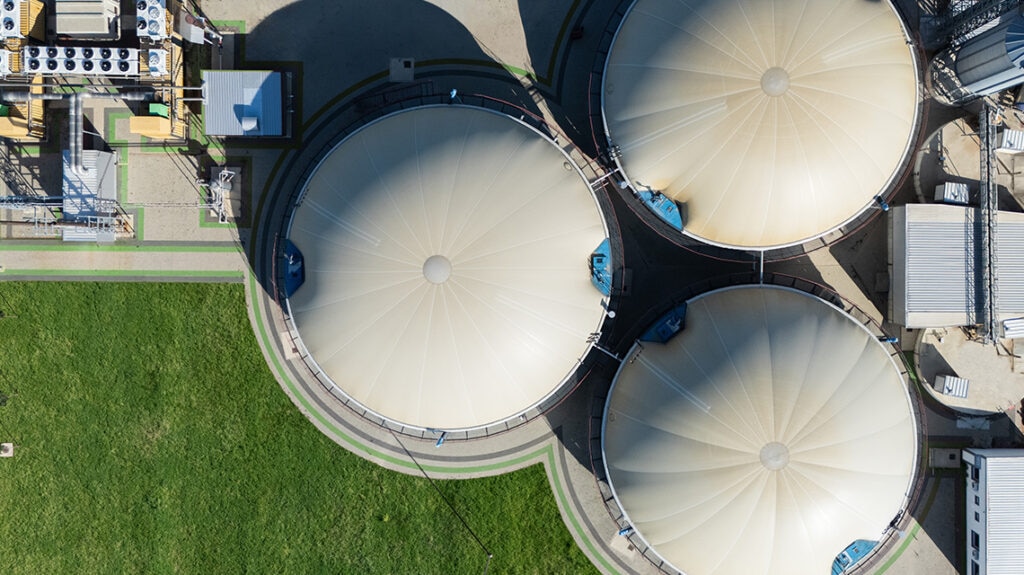
    While adoption in Spain and Italy has been more gradual compared to other European markets, its growth potential is substantial. “Spain and Portugal are among the largest waste producers in Europe,” says Ceño, “which positions them as key markets for the development of this technology. Moreover, the current European regulatory framework is significantly accelerating its deployment.”

    Beyond Europe, BBVA’s investment banking team sees strong potential in Latin America, especially in countries with a solid agricultural and livestock base such as Brazil and Argentina. The experience and progress achieved in Europe will serve as a blueprint for the global scale-up of biomethane, supporting a more inclusive and sustainable energy transition.

    Leadership in financing and expert advisory

    BBVA has taken a proactive approach to financing biomethane projects, with a strong emphasis on project finance as an effective model to mobilise sustainable investment. This approach allows financing to be based on the cash flows generated by the project itself, aligning stakeholder interests, distributing risk and enabling scalability.

    “We have been pioneers in financing biomethane projects under project finance structures,” says Karla Ceño. “Thanks to this financial solution, we have participated in landmark transactions such as Ence’s project in La Galera (Spain), the financing of Verdalia, and the three plants closed with Total at the end of last year. One of the most notable examples in Europe this year was the structuring of our first biomethane financing in Italy alongside Suma Capital, which involved the conversion of seven biogas plants and has paved the way for the financing of additional portfolios in the country.”

    “We have been pioneers in financing biomethane projects under project finance structures”

    These transactions demonstrate BBVA CIB’s ability to structure advanced financial solutions tailored to each client’s needs. Its deep sector expertise, combined with a global outlook, enables the integration of various clean technologies into long-term strategies, supporting enterprises across all sectors in transforming their production models.

    The push for biomethane is part of this broader strategy to support the energy transition. This technology falls under the “green molecules” vertical, one of the four strategic pillars of Cleantech, alongside energy storage, electric mobility and the CO₂ value chain, all of which BBVA promotes to accelerate the decarbonisation of the corporate sector.

    With its ability to mobilise global investment, structure sustainable financing and provide expert advisory, BBVA reaffirms its commitment to innovation and sustainability. Its mission is to help companies transform their production models, making them more competitive, efficient and environmentally responsible. Biomethane is not only a bet on a proven technology, it is a tangible example of BBVA’s role as a strategic partner in the transition towards a decarbonised and circular economy.

    Continue Reading

  • New appointments bring experience to Water Corporation Board

    New appointments bring experience to Water Corporation Board

    • Neema Premji and Louise Pratt appointed to Water
      Corporation Board
    • Deputy Chair Helen Creed to step down from the
      Board effective 31 December 2025

    Two
    influential leaders with decades of experience in governance, infrastructure,
    and public policy have been appointed to Water Corporation’s Board.

    Neema
    Premji and Louise Pratt have joined as Non-Executive Directors, reinforcing the
    utility’s commitment to strong leadership and strategic direction.

    Ms
    Premji is a highly experienced Non-Executive Director and Independent Chair, who
    currently serves on the Audit and Risk Committee for the Department of Local
    Government, Sport and Cultural Industries.

    A
    civil engineer, she brings more than 25 years of experience across
    infrastructure, utilities, mining and government trading enterprises, with
    expertise in financial and asset management, strategic planning and corporate
    governance.

    Ms
    Pratt is a respected leader, social advocate and communications professional with
    two decades of experience in community, government and parliamentary roles. She
    has served in both the Upper Houses of State and Federal Parliament, most
    recently as a WA Senator.

    During
    her time in the Australian Parliament, Ms Pratt engaged in extensive committee
    work, including as Chair of the Senate Finance and Public Administration
    Legislation Committee.

    Both
    non-executive appointments are for a three-year term.

    Deputy
    Chair Helen Creed stepped down on 31 December 2025 and a new Deputy Chair will
    be announced in due course.

    Water
    Corporation Chief Executive Officer Pat Donovan also concludes his tenure on
    the Board. In 2023, his term as CEO was renewed for five years and he was
    appointed Executive Director for two years to provide continuity during the
    Board’s leadership transition. He remains as CEO.

    Comments attributed to Water Minister Don
    Punch:

    “The
    appointment of Neema Premji and Louise Pratt introduces fresh skills and
    insights to Water Corporation’s Board, while maintaining a depth of experience
    to support robust oversight and effective decision-making.

    “Ms
    Premji brings exceptional expertise in governance and infrastructure, while Ms
    Pratt’s distinguished parliamentary career and social advocacy will strengthen the
    ability of Water Corporation to deliver for the community.

    “Their
    appointment also reflects the Cook Government’s continued commitment to
    increasing female representation on Government boards.

    “I
    also want to thank outgoing Deputy Chair Helen Creed for her leadership and
    service during her tenure.”

    Continue Reading