THE WOODLANDS, Texas, Dec. 29, 2025 /PRNewswire/ — Huntsman Corporation (NYSE: HUN) announced that Amy Smedley has joined the company as Executive Vice President, General Counsel & Secretary effective Jan. 5, 2026. Ms. Smedley will succeed Huntsman’s current General Counsel, David Stryker, who is retiring.
Ms. Smedley has extensive experience in litigation, compliance, and corporate governance. Most recently, she has served as Executive Vice President and Chief Legal Officer at Savage Companies since 2022.
Prior to joining Savage Companies, Ms. Smedley spent 16 years at Huntsman, where she built a successful career as an essential member of the Legal team. With Huntsman, she advanced through key legal leadership roles, ultimately serving as Vice President and Deputy General Counsel. In that time, her tenure included leading high-profile cases, notably the successful Albemarle litigation, along with other critical legal matters. Ms. Smedley previously clerked for the Honorable William T. Thurman, United States Bankruptcy Judge, and practiced at Snell & Wilmer L.L.P. in Salt Lake City, Utah.
Peter R. Huntsman, our President, CEO and Chairman, commented:
“We look forward to welcoming Amy back to Huntsman. Since leaving Huntsman, Amy has served as the General Counsel of Savage Companies, a privately held, multi-billion dollar international company. During her time at Huntsman, she was Deputy General Counsel and worked extensively with our litigation and business development groups. Amy will bring a depth and breadth of knowledge and experience to our senior leadership team and continued drive to create shareholder value.”
About Huntsman: Huntsman Corporation is a publicly traded global manufacturer and marketer of differentiated and specialty chemicals with 2024 revenues of approximately $6 billion. Our chemical products number in the thousands and are sold worldwide to manufacturers serving a broad and diverse range of consumer and industrial end markets. We operate more than 60 manufacturing, R&D and operations facilities in approximately 25 countries and employ approximately 6,300 associates within our continuing operations. For more information about Huntsman, please visit the company’s website at www.huntsman.com.
Social Media: X: www.x.com/Huntsman_Corp Facebook: www.facebook.com/huntsmancorp LinkedIn: www.linkedin.com/company/huntsman
Forward-Looking Statements: Certain information in this release constitutes forward-looking statements within the meaning of Section 27A of the Securities Act of 1933 and Section 21E of the Securities Exchange Act of 1934. These statements are based on management’s current beliefs and expectations. The forward-looking statements in this release are subject to uncertainty and changes in circumstances and involve risks and uncertainties that may affect the company’s operations, markets, products, services, prices and other factors as discussed under the caption “Risk Factors” in the Huntsman companies’ filings with the U.S. Securities and Exchange Commission. Significant risks and uncertainties may relate to, but are not limited to, volatile global economic conditions, cyclical and volatile product markets, disruptions in production at manufacturing facilities, reorganization or restructuring of Huntsman’s operations, including any delay of, or other negative developments affecting the ability to implement cost reductions, timing of proposed transactions, and manufacturing optimization improvements in Huntsman businesses and realize anticipated cost savings, and other financial, economic, competitive, environmental, political, legal, regulatory and technological factors. The company assumes no obligation to provide revisions to any forward-looking statements should circumstances change, except as otherwise required by applicable laws.
View original content to download multimedia:https://www.prnewswire.com/news-releases/huntsman-corporation-appoints-amy-smedley-as-executive-vice-president-general-counsel–secretary-302650329.html
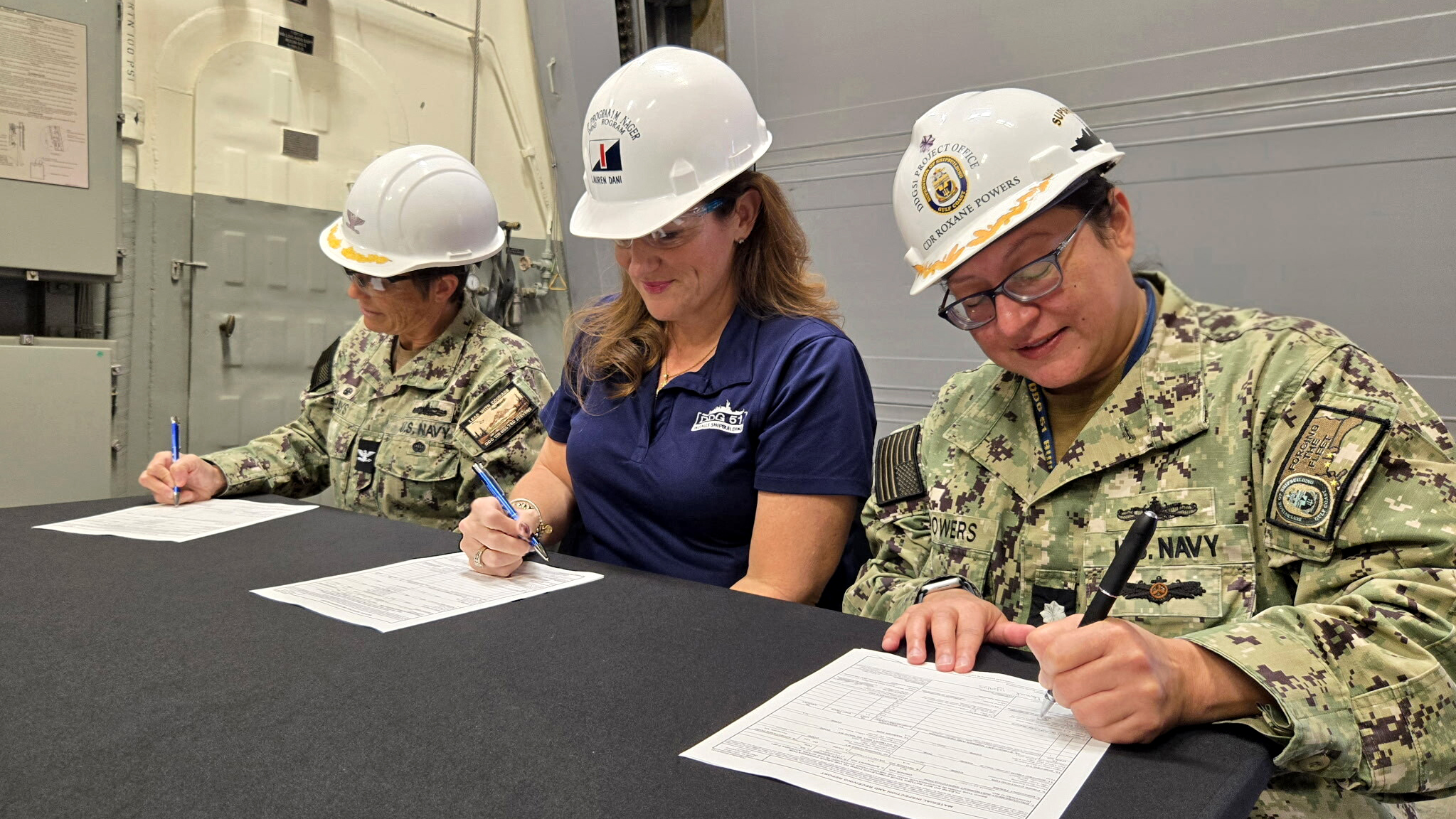
PASCAGOULA, Miss., (Dec. 29, 2025) — HII’s (NYSE: HII) Ingalls Shipbuilding division has delivered Arleigh Burke-class guided missile destroyer Ted Stevens (DDG 128) to the U.S. Navy. This marks the second Flight III Arleigh Burke-class destroyer to be delivered by Ingalls shipbuilders.
“The delivery of Ted Stevens reflects the strong momentum of our destroyer program as we accelerate Flight III production and bring enhanced capabilities to the fleet,” said Brian Blanchette, Ingalls Shipbuilding president. “We are honored to deliver DDG 128 to the Navy knowing that it will stand as a powerful asset in strengthening U.S. maritime security for decades to come.”
The future USS Ted Stevens represents the next generation of surface combatants for the U.S. Navy, featuring the second-in-class Flight III AN/SPY-6 (V)1 radar system and the Aegis Baseline 10 combat system, designed to counter threats well into the 21st century.
At Ingalls Shipbuilding there are four more Flight III destroyers under fabrication and another seven moving through early pre-planning stages of construction. To increase the throughput and meet the increased demand for ships by the U.S. Navy, Ingalls recently embarked on a distributed shipbuilding initiative to improve schedule adherence for all ships built at Ingalls by partnering with shipyards and fabricators beyond the company’s traditional labor market.
To date, Ingalls Shipbuilding has delivered 36 Arleigh Burke-class destroyers to the U.S. Navy, including the first Flight III, USS Jack H. Lucas (DDG 125) and Ted Stevens (DDG 128). The four Flight III destroyers under construction include: Jeremiah Denton (DDG 129), George M. Neal(DDG 131), Sam Nunn (DDG 133), and Thad Cochran (DDG 135). Additionally, Ingalls is in early pre-planning and material procurement phases for John F. Lehman (DDG 137), Telesforo Trinidad (DDG 139), Ernest E. Evans (DDG 141), Charles French (DDG 142), Richard J. Danzig (DDG 143), Intrepid (DDG 145) and Robert Kerrey (DDG 146).
HOUSTON and TUPELO, Miss., Dec. 29, 2025 /PRNewswire/ — Cadence Bank (NYSE: CADE) will release its fourth quarter 2025 earnings and annual financial results on Thursday, January 22, 2026, prior to the opening of the financial markets. The release will be found on the company’s investor relations website and distributed on PR Newswire.
About Cadence Bank Cadence Bank (NYSE: CADE) is a $53 billion regional bank committed to helping people, companies and communities prosper. With more than 390 locations spanning the South and Texas, Cadence offers comprehensive banking, investment, trust and mortgage products and services to meet the needs of individuals, businesses and corporations. Accolades include being recognized as one of the nation’s best employers by Forbes and U.S. News & World Report and as a 2025 America’s Best Banks by Forbes. Cadence has dutifully served customers for nearly 150 years. Learn more at www.cadencebank.com. Cadence Bank, Member FDIC. Equal Housing Lender.
PLEASANTON, Calif., Dec. 29, 2025 /PRNewswire/ — 10x Genomics, Inc. (Nasdaq: TXG), a leader in single cell and spatial biology, announced today that members of its management team will present at the 44th Annual J.P. Morgan Healthcare Conference on Monday, January 12, 2026 at 8:15 a.m. Pacific Time.
Interested parties may access a live webcast of the fireside chat on the “Investors” section of the company’s website at: https://investors.10xgenomics.com/. The webcast will be archived and available for replay for at least 30 days after the event.
About 10x Genomics
10x Genomics is a life science technology company building products to accelerate the mastery of biology and advance human health. Our integrated research solutions include instruments, consumables and software for single cell and spatial biology, which help academic and translational researchers and biopharmaceutical companies understand biological systems at a resolution and scale that matches the complexity of biology. Our products are behind breakthroughs in oncology, immunology, neuroscience and more, fueling powerful discoveries that are transforming the world’s understanding of health and disease. To learn more, visit 10xgenomics.com or connect with us on LinkedIn, X, Facebook, Bluesky or YouTube.
Disclosure Information
10x Genomics uses filings with the Securities and Exchange Commission, our website (www.10xgenomics.com), press releases, public conference calls, public webcasts and our social media accounts as means of disclosing material non-public information and for complying with our disclosure obligations under Regulation FD.
When Savannah listed her old iPhone for sale on Facebook Marketplace, she didn’t expect any trouble.
The single mum has been selling on the platform for years, and always followed Facebook’s official advice — never giving out her real address and meeting in open, public spaces for exchange.
Savannah was conscious that the high price of her sale item could attract scams, and thought she needed to be “a bit more careful”.
She felt safe meeting her prospective buyer at 3pm on a busy street in broad daylight. But that quickly changed.
“He was kind of trembling. He kept asking questions … but he wasn’t really listening to what I was saying,” she recalled.
“So that was when I went, ‘Uh oh, something weird is going to happen’.”
Savannah says she still feels shaken by her experience and is unsure if she’ll use Facebook Marketplace again. (ABC News: Yasmine Wright Gittins)
Moments later, the man — who was already holding and examining the phone for sale — lunged for Savannah’s personal phone that she held in her hand, causing her to fall.
“He freaked out and took off,” she said, taking with him the phone she’d had for sale.
Frustrated and shaken, she called police and lodged a report for the stolen phone.
“Essentially [they] said that they can’t do anything because the guy was on foot and there was nothing like a car registration,” she said.
The man’s Facebook profile was also fake, and he blocked Savannah after the incident.
She had been scammed.
Savannah says she went “through a process of being angry, sad, then almost blaming myself”, after she was scammed. (ABC News: Yasmine Wright Gittins)
‘I was too eager’
Online marketplace scams are included under the broader category of shopping scams.
This year, more than 19,000 reports of shopping scams have been made to Scamwatch, totalling $8.6 million in losses — a 19 per cent increase on the same period last year.
“They can be really quite sophisticated and detailed in the execution of these scams,” Catriona Lowe, Australian Competition and Consumer Commission (ACCC) deputy chair, said.
With scams on the rise, the National Anti-Scam Centre, run by the ACCC, is urging buyers and sellers to “stop, check, protect”.
Ms Lowe said the “stop” category was key.
“The stop part is really just not being rushed, because scammers know very well that when we’re in what’s called a ‘hot state’ — if we’re stressed or we’re hurried or we’re worried — that’s when some of our natural caution will be lower and we can be susceptible to the crime that they are trying to commit,” Ms Lowe said.
Jack Lenffer says she’s been using online marketplaces much less since she, her mother and her boss were scammed. (Supplied: Jack Lenffer)
Slowing down and taking more time to make a purchase is something Jack Lenffer wishes she’d done when she went to buy tickets for Canberra’s Spilt Milk festival in 2024.
She was scammed into sending money to a seller for a resold ticket.
“I think I didn’t want to admit to anyone that I’d actually been scammed, but you look back at it and you read the messages and you’re like, ‘Oh I was just too eager,’” she said.
The chef regularly shops on Marketplace and is becoming increasingly frustrated by scams.
She encountered some more recently, while trying to buy a couch.
“I noticed every single ad was just fake people who just wouldn’t reply, or they’re just demanding money straight away when you haven’t even gone over and looked at it yet,” Ms Lenffer said.
“They’re already asking for deposits and lying about how interest [in the item] is so high that you need to pay the money first.“
And while she says she can now identify a scam “pretty quickly,” she worries for those who can’t, with her mum and boss recently falling victim.
So, what are some of the red flags people should look out for when buying and selling via online marketplaces, and how can you protect against scams?
Since its launch in 2016, Facebook Marketplace has been a popular platform for people to buy and sell second-hand goods. (ABC News: Yasmine Wright Gittins)
Common online shopping red flags
Scammers can pose as both buyers and sellers on online marketplaces.
Those pretending to be sellers might advertise an item for sale at a price that’s too good to be true.
“Often there’s a compromised social media profile involved, and once a person pays for that item, the profile disappears and the product never arrives,” Ms Lowe said.
“Often that scammer will claim they’re travelling, or that they’ve moved overseas or a similar story like that, and that they only send the goods once the payment is received.
“And of course, that’s how they part people with their money.”
Ms Lowe said the scammer might also use the transaction to send phishing links to obtain personal and payment information, so you shouldn’t click on any links they send you or download anything to your computer.
Another thing to look out for is sellers insisting on payment up-front, or requesting unusual payment methods.
“Wire transfers, cryptocurrency, gift cards, or direct transfers all should put people on alert that they need to be careful,” Ms Lowe said.
If you are selling an item, Ms Lowe said to look out for fake payment confirmations from scammers posing as buyers.
“Typically what we see is that they will send a fake payment confirmation to a seller, like a screenshot, and claim that they’ve accidentally overpaid and seek a refund for this so-called overpayment amount,” Ms Lowe said.
“Of course, there was no payment, let alone an overpayment, so it’s a way of extracting money from the seller.“
Catriona Lowe urges people to report scams that they encounter to Scamwatch. (ABC News: Kyle Harley)
Tips when buying
As a buyer, Ms Lowe advises doing your due diligence onthe seller.
Search for duplicate listings for an item and check the seller’s account profile.
“Sometimes we’ll see a number of very similar profiles with just slightly different names,” Ms Lowe said.
“Also if the profile is very recently created or there’s bad or no reviews about that profile, these are all red flags.“
If you’re buying in-person, don’t hand over money until you see the item for sale.
If you can’t see the item before purchasing — for example, if it is to be mailed — then consider asking to see multiple photos of the item, a live video, or an original sales receipt.
When paying for an item electronically, Ms Lowe said it was important to use secure payment methods.
“If you’re using PayPal or BPAY, for example, there are dispute resolution processes that those providers have, and if you use a credit card and you don’t receive the goods, you can charge back for those items,” Ms Lowe said.
For those who regularly purchase online, Ms Lowe said it was important to have multi-factor authentication set up for accounts.
She also suggested setting up a separate credit card with a low limit.
“Only use that card for online purchases so that even if it’s compromised, that limits the amount of loss that a consumer might be facing,” she said.
Tips when selling
When selling, Ms Lowe suggests not handing over items until you’ve received payment.
If selling for cash, take a moment to check the money isn’t counterfeit.
If payment is being made electronically, check your bank account to verify the money is there — don’t rely on the buyer providing transaction evidence.
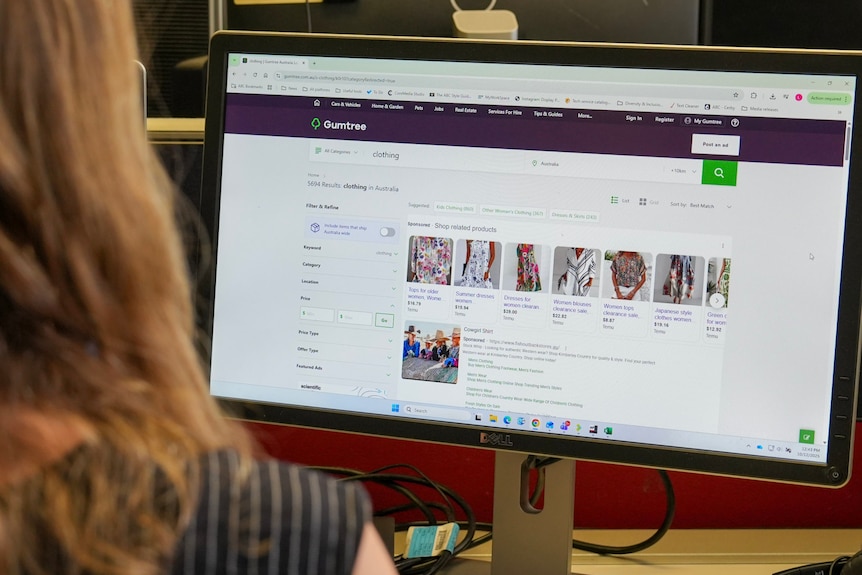
When shopping on Gumtree and Facebook Marketplace, it is a good idea to check for duplicate listings of the item you want to buy. (ABC News: Yasmine Wright Gittins)
When meeting someone in person to exchange, choose a public well-lit location, ideally one covered by CCTV.
If possible choose a time when there are likely to be other people around, or consider taking a friend or family member along with you.
Victoria Police has set up 35 “safer exchange sites” across the state for this purpose, and police in some other jurisdictions have encouraged people to use station car parks.
What to do if you think you’ve been scammed
Ms Lowe said to trust your instinct: if you feel like something may be wrong it’s best to act quickly.
The National Anti-Scam Council recommends:
Contacting your bank immediately if you think you’ve lost money or shared financial details;
Contacting IDCARE if you have shared personal information and think you are at risk of identify theft;
Reporting the scam to Scamwatch and police to help protect others;
Changing passwords and security details if you think they’ve been compromised;
Monitoring your bank statements and credit reports for unusual activity.
“Even if you’ve spotted the scam and disengaged you should still report it, because we use that intelligence to warn other people and also to disrupt the scams,” Ms Lowe said.
Studies flag low insurance penetration, informal gold trade and market dominance as key challenges
At current prices, the looted gold is worth around $70 million. PHOTO: PIXABAY
ISLAMABAD:
The Competition Commission of Pakistan (CCP) expanded its market research activity in 2025, releasing competition assessment studies covering key sectors, including insurance, power, gold, pesticides, steel, LNG, road infrastructure, sugar and fertiliser.
According to a statement issued on Monday,the Commission also established a Centre of Excellence in Competition Law (CECL) to support evidence-based policymaking and legal and regulatory reforms. The centre is conducting studies on the automobile industry, civil aviation market, solar energy market, cement sector and the impact of mergers in the telecom sector.
A detailed CCP report on the state of competition in Pakistan’s insurance industry identified low insurance penetration, limited outreach and a fragmented legal and regulatory framework as major challenges. The report noted that insurance penetration in Pakistan stands at 0.87%, compared to a global average of 6.7%, and highlighted the need for reforms to improve competition and consumer welfare.
The Commission also released its first Competition Assessment Study of the gold market. The report provided an evidence-based analysis of a sector characterised by informality and pricing opacity. It found that more than 90% of gold trading takes place outside formal channels. The study examined the potential impact of the Reko Diq copper-gold project on domestic supply chains and recommended the creation of a Gemstone and Gold Regulatory Authority.
In addition, CCP issued competition studies on the pesticide, steel and LNG sectors. The pesticide sector report highlighted Pakistan’s reliance on imported agricultural chemicals, the prevalence of counterfeit and substandard products, regulatory bottlenecks and weak enforcement affecting farmers and crop yields.
The LNG study identified dominant positions held by state-owned enterprises, limited private sector participation, restricted access to infrastructure and the impact of circular debt exceeding Rs2.8 trillion on market competition. The steel sector assessment outlined competition challenges and policy gaps affecting efficiency and market outcomes. The Commission also issued a Competition Assessment Study of the fertiliser industry, identifying barriers to competition across production, distribution and retail segments in a sector critical to agricultural productivity.
To strengthen inter-agency coordination, the CCP signed several memoranda of understanding during 2025. These included an MoU with the Federal Antimonopoly Service of the Russian Federation covering cooperation on cartel enforcement, merger control and competition policy research.
At the national level, the CCP entered into MoUs with the Drug Regulatory Authority of Pakistan and the Punjab Food Authority to address deceptive marketing practices and improve monitoring of product claims.
A view shows oil pump jacks outside Almetyevsk, in the Republic of Tatarstan, Russia July 14, 2025. Photo: Reuters
NEW YORK/BENGALURU:
Oil prices rose by more than $1 on Monday as traders braced for potential supply disruptions in the Middle East due to rising tensions in Yemen, and Russia accused Ukraine of launching a drone attack on its President Vladimir Putin’s residence.
Brent crude futures rose $1, or 1.7%, to $61.64 a barrel by 1818 GMT, while US West Texas Intermediate crude was up $1.10, or 1.9%, at $57.84.
“The market’s focus has shifted toward the Middle East, where fresh instability, including Saudi air strikes in Yemen, is keeping supply-disruption headlines in play,” Gelber & Associates said in a note.
Yemen’s Saudi-led coalition said any military moves by the main southern separatist group in the eastern province of Hadramout that undermined de-escalation efforts would be countered to protect civilians, the Saudi state news agency reported on Saturday.
An escalation of fighting on Thursday killed two people from the separatist group Southern Transitional Council’s Hadhrami Elite Forces in Hadramout, the group said in its statement. Saudi airstrikes followed early on Friday, targeting the STC forces in the area, a source told Reuters.
Elsewhere, Moscow accused Ukraine of launching a drone attack on the Russian presidential residence in northern Russia, due to which Moscow now plans to review its position in peace talks. Ukraine dismissed Russian statements about the drone attack and its foreign minister said Moscow was seeking “false justifications” for further strikes against its neighbor.
Prior to these developments, Ukrainian President Volodymyr Zelenskiy had said on Monday that significant progress had been made in talks with US counterpart Donald Trump and agreed that US and Ukrainian teams would meet next week to finalise issues aimed at ending Russia’s war in Ukraine.
Trump had also held a “positive call” with Putin about the war in Ukraine, White House spokeswoman Karoline Leavitt said earlier on Monday.
Oil benchmarks had dropped more than 2% on Friday, partly due to rising hopes of a Ukraine peace deal.
Strong Chinese waterborne crude imports are also helping tighten oil markets, said UBS analyst Giovanni Staunovo.
He added that $60 a barrel was the soft floor for Brent, with prices expected to recover slightly in 2026 because non-OPEC+ supply growth is likely to stall in the middle of 2026.
Energy investors are also waiting for data on US stockpiles for the week ended December 19. The report, which was expected to be published at 10:30 a.m. ET on Monday, was delayed without assigning a new publication time.
An extended Reuters poll showed US crude oil inventories were expected to have fallen in the week ended December 19, while distillate and gasoline inventories were expected to have risen.
WASHINGTON — The Internal Revenue Service today announced that the optional standard mileage rate for business use of automobiles will increase by 2.5 cents in 2026, while the mileage rate for vehicles used for medical purposes will decrease by half a cent, reflecting updated cost data and annual inflation adjustments.
Optional standard mileage rates are used to calculate the deductible costs of operating vehicles for business, charitable, and medical purposes. Additionally, the optional standard mileage rate may be used to calculate the deductible costs of operating vehicles for moving purposes for certain active-duty members of the Armed Forces, and now, under the One, Big, Beautiful Bill, certain members of the intelligence community.
Beginning Jan. 1, 2026, the standard mileage rates for the use of a car, van, pickup or panel truck will be:
72.5 cents per mile driven for business use, up 2.5 cents from 2025.
20.5 cents per mile driven for medical purposes, down a half cent from 2025.
20.5 cents per mile driven for moving purposes for certain active-duty members of the Armed Forces (and now certain members of the intelligence community), reduced by a half cent from last year.
14 cents per mile driven in service of charitable organizations, equal to the rate in 2025.
The rates apply to fully-electric and hybrid automobiles, as well as gasoline and diesel-powered vehicles.
While the mileage rate for charitable use is set by statute, the mileage rate for business use is based on an annual study of the fixed and variable costs of operating an automobile. The rate for medical and moving purposes, meanwhile, is based on only the variable costs from the annual study.
Under the law, taxpayers cannot claim a miscellaneous itemized deduction for unreimbursed employee travel expenses, except for certain educator expenses. However, deductions for expenses that are deductible in determining adjusted gross income remain allowable, such as for certain members of a reserve component of the Armed Forces, certain state and local government officials, certain performing artists, and eligible educators. Alternatively, eligible educators may claim an itemized deduction for certain unreimbursed employee travel expenses. In addition, only taxpayers who are members of the military on active duty or certain members of the intelligence community may claim a deduction for moving expenses incurred while relocating under orders to a permanent change of station.
Use of the standard mileage rates is optional. Taxpayers may instead choose to calculate the actual costs of using their vehicle.
Taxpayers using the standard mileage rate for a vehicle they own and use for business must choose to use the rate in the first year the automobile is available for business use. Then, in later years, they can choose to use the standard mileage rate or actual expenses.
For a leased vehicle, taxpayers using the standard mileage rate must employ that method for the entire lease period, including renewals.
Notice-2026-10 PDF contains the optional 2026 standard mileage rates, as well as the maximum automobile cost used to calculate mileage reimbursement allowances under a fixed-and variable rate plan. The notice also provides the maximum fair market value of employer-provided automobiles first made available to employees for personal use in 2026 for which employers may calculate mileage allowances using a cents-per-mile valuation rule or the fleet-average-valuation rule.
Staying compliant with federal, state and provincial meal and rest break laws is a growing challenge for employers. Employment law compliance requirements vary widely across jurisdictions, and rules change frequently. Businesses that rely on manual processes for tracking meal and rest break policies risk costly penalties and operational disruptions.
A recent webcast, Compliance in Action: Compliance Strategies for Managing Fatigue, Meal and Rest Breaks, hosted by Paul Kramer, director of compliance, and Bryan Thumme, solution consultant at WorkForce Software, an ADP company, covered best practices for adhering to employment rest break rules and addressed some new laws set to go into effect in 2026. The following article is a brief recap of the expert strategies discussed in this session.
What are the FLSA rules for meal and break requirements?
The Fair Labor Standards Act (FLSA) sets the federal baseline for workplace break policies in the United States. While the FLSA leaves most break requirements to individual states, several jurisdictions in the U.S. and Canada have enacted complex meal and break laws. Here are a few key rules that employers should know:
If employers choose to provide short rest breaks (typically 5-20 minutes), these are considered compensable for work hours and must be included when calculating overtime.
In contrast, meal periods (usually 30 minutes or more) do not have to be paid and are not counted as work time, provided the employee is relieved of all duties during the meal period.
The FLSA requires that employers must provide nursing mothers with reasonable break times and private, concealed spaces to express breast milk for up to one year after childbirth.
Employers are not obligated to count unauthorized extensions of breaks as work time if rules are clearly communicated and enforced.
Watch the full webinar below to discover even more best practices for navigating meal and rest break rules.
Challenging and evolving meal and rest break regulations in key places
While the FLSA leaves most break requirements to individual states and provinces, several jurisdictions have enacted new or uniquely challenging laws. These laws are often updated and can vary even within states or provinces, making compliance especially challenging for multijurisdictional employers. Here is an overview of significant rules from several U.S. and Canada locations:
Illinois
Governed by the One Day Rest in Seven Act (ODRISA), in effect since January 2023.
Requires employers to provide at least 24 consecutive hours of rest in every seven-day period.
ODRISA has exceptions for part-time employees, emergencies, jobs covered by collective bargaining agreements (CBAs) and certain executive, administrative, professional (EAP) or outside sales positions as defined by the FLSA.
Employees must also receive a 20-minute meal period for every 7.5 hours worked, and those who work through meal periods must be paid.
California
California has some of the most rigorous break laws. Employers are encouraged to carefully review these laws before setting company break policies.
Employers may not require an employee to work more than five hours per day without a 30-minute unpaid, off-duty meal break, with additional requirements for longer shifts and strict penalties (called premiums) for noncompliance (an extra hour of pay per missed meal break).
Employers must authorize and permit paid rest breaks for all nonexempt employees whose total daily work time is at least three and a half hours.
Employees must be provided with paid 10-minute rest breaks for every four hours worked, or a major fraction thereof.
Washington
Employees are entitled to paid 10-minute, duty-free rest breaks every four hours and a 30-minute meal period for shifts exceeding five hours (to be taken between the second and fifth hour of work).
Employees must be provided with reasonable restroom breaks, and access to them cannot be unreasonably restricted.
Colorado
Employees must receive an uninterrupted 30-minute meal period for shifts of more than five hours, with paid meal periods required if duties can’t be relinquished.
To the extent practical, meal periods must be at least 1 hour before the start of a shift and at least 1 hour after the end of a shift.
The state mandates paid 10-minute rest breaks per four hours worked, or a major fraction thereof.
Minnesota
Minnesota will have new meal and break laws going into effect in January 2026.
Employers must provide at least 15-minute rest breaks (or longer if needed to use the restroom) every four hours of consecutive work.
Employers must provide a 30-minute meal break for shifts of six or more consecutive hours.
Failure to provide breaks may result in pay penalties and liquidated damages.
Alberta
Hours of work and breaks are governed by the Alberta Employment Standards Code.
Employees are entitled to one 30-minute break after the first five hours of work for shifts between five and 10 hours, with a second break for shifts of 10 hours or longer.
For shifts of 10 hours or longer, employees are entitled to two 30-minute breaks.
Employees are generally entitled to at least one day of rest each workweek.
Ontario
Rules are governed by the Ontario Employment Standards Act (ESA).
Employees must not work more than five consecutive hours without a 30-minute off-duty meal break.
Rest breaks are generally not required in Ontario. If a rest break is provided and the employee is free to leave the premises, the break does not have to be paid.
How can time tracking software simplify meal and rest break compliance?
The complex set of federal, state and provincial regulations can make manual tracking for rest breaks impractical. The risk of penalties for non-compliance is significant, especially for organizations operating in several regions. Modern time tracking solutions like ADP WorkForce Suite’s Time and Attendance are invaluable for employers who want to improve compliance standards and reduce workplace risks.
How time and attendance solutions help
Automated scheduling and alerts: Dynamically tracking for shift lengths, issuing real-time reminders for required breaks and flagging potential violations before they occur
Accurate recordkeeping: Digital time tracking aids in maintaining precise records of work hours and breaks, simplifying audits and demonstrating compliance
Pay penalty automation: When break requirements aren’t met, the system can automatically apply required premiums, helping avoid costly wage-and-hour lawsuits
Proactive fatigue management: Intelligent systems enable managers to anticipate compliance risks, such as excessive consecutive workdays or missed breaks, and quickly reassign or schedule relief staff as needed
Transparency across teams: Automated solutions bridge gaps between managers and schedulers, helping everyone stay aware of break requirements and compliance status in real time
Staying informed of the latest legal requirements and proactively tracking new meal and rest break rules is crucial for efficient operations. Investing in the right technology helps prevent costly violations and fosters a culture of trust, efficiency and compliance, ultimately positioning your organization for long-term success.
WorkForce Software, an ADP company, provides updates throughout the year on best practices for meeting employment law requirements and strategies for addressing emerging regulations and trends across the United States and Canada. This article originally published on their blog,

 View original content to download multimedia:https://www.prnewswire.com/news-releases/huntsman-corporation-appoints-amy-smedley-as-executive-vice-president-general-counsel–secretary-302650329.html