Category: 3. Business

  • New York subway ends its MetroCard era and switches fully to tap-and-go fares

    New York subway ends its MetroCard era and switches fully to tap-and-go fares

    NEW YORK — When the MetroCard replaced the New York City subway token in 1994, the swipeable plastic card infused much-needed modernity into one of the world’s oldest and largest transit systems.

    Now, more than three decades later, the gold-hued fare card and its notoriously finicky magnetic strip are following the token into retirement.

    The last day to buy or refill a MetroCard is Dec. 31, 2025, as the transit system fully transitions to OMNY, a contactless payment system that allows riders to tap their credit card, phone or other smart device to pay fares, much like they do for other everyday purchases.

    Transit officials say more than 90% of subway and bus trips are now paid using the tap-and-go system, introduced in 2019.

    Major cities around the world, including London and Singapore, have long used similar contactless systems. In the U.S., San Francisco launched a pay-go system earlier this year, joining Chicago and others.

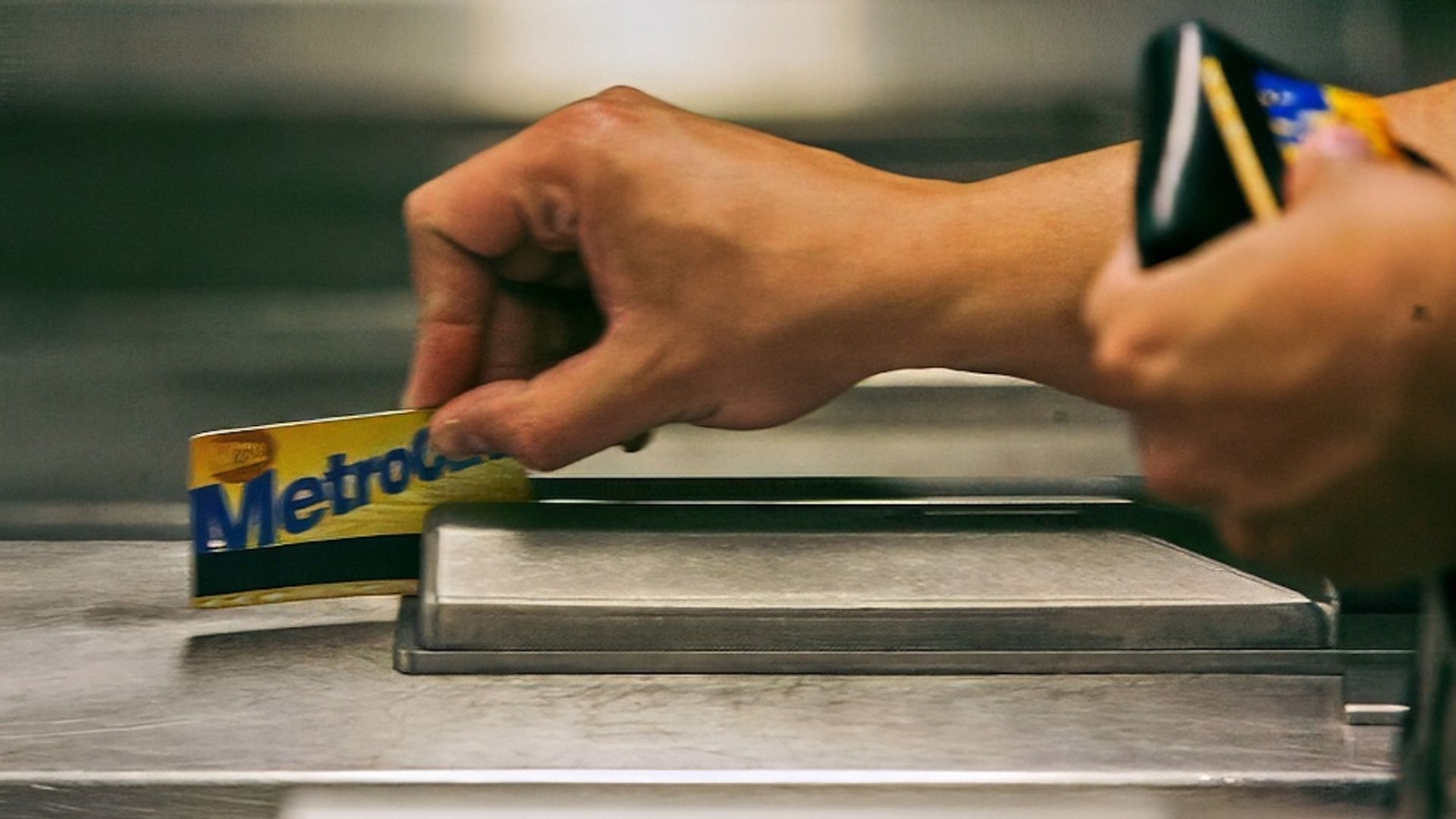
    A subway rider swipes his MetroCard in a turnstile as he enters the 34th St. subway station, July 23, 2007, in New York.

    AP Photo/Mary Altaffer, File

    MetroCards upended how New Yorkers commute

    The humble MetroCard may have outlasted its useful life, but in its day it was revolutionary, says Jodi Shapiro, curator at the New York Transit Museum in Brooklyn, which opened an exhibit earlier this month reflecting on the MetroCard’s legacy.

    Before MetroCards, bus and subway riders relied on tokens, the brass-colored coins introduced in 1953 that were purchased from station booths. When the subway opened in 1904, paper tickets cost just a nickel, or about $1.82 in today’s dollars.

    “There was a resistance to change from tokens to something else because tokens work,” Shapiro said on a recent visit to the museum, housed underground in a decommissioned subway station. “MetroCards introduced a whole other level of thinking for New Yorkers.”

    Russell Chin, left, helps Angie Hoyle, 3, as she tries on a hat made of MetroCards shaped as the Brooklyn Bridge during the Easter Parade on New York's 5th Avenue, March 23, 2008.

    Russell Chin, left, helps Angie Hoyle, 3, as she tries on a hat made of MetroCards shaped as the Brooklyn Bridge during the Easter Parade on New York’s 5th Avenue, March 23, 2008.

    AP Photo/Tina Fineberg, File

    The Metropolitan Transportation Authority launched public campaigns to teach commuters how to swipe the originally blue-colored cards correctly, hoping to avoid the dreaded error message or lost fares. Officials even briefly toyed with the idea of an quirky mascot, the Cardvaark, before coming to their senses.

    The cards quickly became collectors items as the transit system rolled out special commemorative editions marking major events, such as the “Subway Series” between baseball’s New York Mets and the New York Yankees in the 2000 World Series. At the time, a fare cost $1.50.

    Artists from David Bowie and Olivia Rodrigo to seminal New York hip hop acts, such as the Wu-Tang Clan, the Notorious B.I.G. and LL Cool J, have also graced the plastic card over the years, as have iconic New York shows like Seinfeld and Law & Order.

    “For me, the most special cards are cards which present New York City to the world,” said Lev Radin, a collector in the Bronx. “Not only photos of landmarks, skylines, but also about people who live and make New York special.”

    Lev Radin poses for a picture with his MetroCard collection, Dec. 10, 2025, in New York.

    Lev Radin poses for a picture with his MetroCard collection, Dec. 10, 2025, in New York.

    AP Photo/Yuki Iwamura

    Perfecting the correct angle and velocity of the MetroCard swipe also became something of a point of pride separating real New Yorkers from those just visiting.

    During her failed 2016 presidential campaign, Hillary Clinton, a former U.S. Senator from New York, took an excruciating five swipes at a Bronx turnstile. In fairness, her chief Democratic opponent at the time, U.S. Sen. Bernie Sanders of Vermont, a native Brooklynite, didn’t even appear to realize tokens had been discontinued.

    Former Democrat presidential candidate Hillary Clinton holds her MetroCard as she goes through the turnstile to enter the subway in the Bronx borough of New York, April 7, 2016.

    Former Democrat presidential candidate Hillary Clinton holds her MetroCard as she goes through the turnstile to enter the subway in the Bronx borough of New York, April 7, 2016.

    AP Photo/Richard Drew, File

    Cost savings and lingering concerns

    Unlike the MetroCard rollout, OMNY has required little adjustment.

    Riders reluctant to use a credit card or smart device can purchase an OMNY card they can reload, similar to a MetroCard. Existing MetroCards will also continue to work into 2026, allowing riders to use remaining balances.

    MTA spokespersons declined to comment, pointing instead to their many public statements as the deadline approaches.

    The agency has said the changeover saves at least $20 million annually in MetroCard-related costs.

    The new system also allows unlimited free rides within a seven-day period because the fare is capped after 12 rides. It’ll max out at $35 a week once the fare rises to $3 in January.

    Still, new changes come with tradeoffs, with some critics raising concerns about data collection and surveillance.

    Near Times Square on a recent morning, Ronald Minor was among the dwindling group of “straphangers” still swiping MetroCards.

    The 70-year-old Manhattan resident said he’s sad to see them go. He has an OMNY card but found the vending machines to reload it more cumbersome.

    “It’s hard for the elders,” Minor said as he caught a train to Brooklyn. “Don’t push us aside and make it like we don’t count. You push these machines away, you push us away.”

    John Sacchetti, another MetroCard user at the Port Authority stop, said he likes being able to see his balance as he swipes through a turnstile so he knows how much he’s been spending on rides.

    “It’s just like everything else, just something to get used to,” he said as he headed uptown. “Once I get used to it, I think it’ll be okay.”

    Shoppers swipe their MetroCards as they enter the subway turnstiles, Nov. 29, 2024, in New York.

    Shoppers swipe their MetroCards as they enter the subway turnstiles, Nov. 29, 2024, in New York.

    (AP Photo/Heather Khalifa, File

    ———-

    * Get Eyewitness News Delivered

    * More Manhattan news

    * Send us a news tip

    * Download the abc7NY app for breaking news alerts

    * Follow us on YouTube


    Submit a tip or story idea to Eyewitness News

    Have a breaking news tip or an idea for a story we should cover? Send it to Eyewitness News using the form below. If attaching a video or photo, terms of use apply.

    Copyright © 2025 by The Associated Press. All Rights Reserved.

    Continue Reading

  • Deep in holiday debt? How to start repaying overdue credit and buy now, pay later bills

    Deep in holiday debt? How to start repaying overdue credit and buy now, pay later bills

    Christmas lunch is over, all the presents are unwrapped. Now comes the hard part: paying for it all.

    If you’re in that position, you’re not alone. Personal credit and charge-card balances racking up interest hit a four-year high of A$18.4 billion in September this year – even before the Black Friday and Christmas sales.

    Last year, a survey for the Australian Securities and Investments Commission (ASIC) found almost half of Australian adults with debt had struggled to make repayments in the past 12 months.

    That same survey for ASIC found Millennials aged in their late 20s to early 40s were the generation most likely to experience financial hardship. Yet most were unaware of their right to apply for hardship help through their lender.

    Especially at this time of year, it’s easy to rack up big bills on credit cards or buy now, pay later payments. Here’s what you need to know about starting to repay those common debts, especially if you have more than one loan.

    Watch the interest on your credit card

    Over recent years, credit has overtaken cash to be the second most popular way to buy things in Australia, behind only debit cards, which tend to have lower checkout fees.

    If you’re able to repay the full balance each month, buying on credit is not necessarily a problem.

    But more than one in three (36%) of Australians have unpaid credit card bills accruing interest, according to a Roy Morgan survey of more than 22,000 credit card holders published in November. That survey found the median amount owed with interest was $1,037. People paying off mortgages tended to owe more: $1,342.

    According to Reserve Bank of Australia, average interest rates on credit cards at the end of October were up to 20.99% a year. In contrast, low-rate cards charge 13.49% per year. That’s a big difference. So choosing the right card can save you a lot in interest repayments.

    One of the ways people often get into trouble is by not reading and understanding the product disclosure statement, which sets out the credit terms, then finding their credit use is stretching their budget too far.

    The rise of buy now, pay later

    Buy now, pay later lets you buy a product immediately, while delaying the repayments – sometimes over just a few weeks, but potentially over longer periods.

    Almost a third of Australians were already using it by mid-2023.

    But overseas research suggests people who use buy-now, pay-later services – especially, younger shoppers and those with lower incomes – end up spending more online than those who don’t.


    Read more:
    Research suggests those who use buy-now-pay-later services end up spending more


    How to start reining in your debts

    Don’t beat yourself up over your holiday spending. Anxiety, shame and feelings of failure can stop people getting help. So forgive yourself – then start taking control of your money.

    Contact your bank or lender’s financial hardship team to get out of high interest loans as soon as possible. Under the law, lenders have to respond to your request for help.

    Switch to a zero or low-rate card, or refinance with a lower cost personal bank loan. Then look at negotiating a suitable payment plan with the loan provider based on your income and what you have available after necessary expenses.

    While paying off your debt, actively visit comparison websites and compare credit card interest rates and offers. Sometimes credit card companies offer interest-free periods if you refinance your existing credit card balance with them.

    The 2024 ASIC survey found many Australians are so reluctant to apply for financial hardship assistance that they would rather sell belongings (42%) or get a second job (40%) first. Don’t avoid seeking assistance – but both of those ideas may help too.

    To lighten your debt burden, sell or return any unwanted gifts or unused items.


    Read more:
    Can you return gifts without a receipt or packaging? A legal expert explains


    If you feel comfortable, you can also ask your employer for extra paid hours, or to sell back some of your annual leave.

    If it’s not a conflict with your main job, consider taking on a second job outside work, such as weekend, night or public holiday shifts to take advantage of penalty or overtime rates.

    Talk to family and friends. Whether you ask for money or not – and that can be tricky for everyone – don’t keep your debts a secret.

    Where to get more help

    Free, confidential financial or personal support is available from:


    Disclaimer: This article provides general information only and is not intended as financial advice.

    Continue Reading

  • UC Santa Barbara’s 2035 Initiative Charts a Clean Heat Future for U.S. Industry

    UC Santa Barbara’s 2035 Initiative Charts a Clean Heat Future for U.S. Industry

    In a virtual launch on December 16, UC Santa Barbara’s 2035 Initiative unveiled a detailed roadmap for a seemingly obvious target of climate action: cleaning up the industrial sector.

    Titled The Clean Heat Climate Opportunity, the new report maps out a pathway for electrifying low- and medium-temperature industrial heat — the kind used in making everything from paper and plastics to beer and frozen pizza. And the findings are clear: This shift could slash U.S. climate pollution by as much as 26 percent in key sectors while unlocking nearly half a trillion dollars in public health benefits by 2050.

    “To hit our climate goals, it’s not just cars and buildings that need to go electric — it’s also big factories,” said Leah C. Stokes, one of the report’s principal investigators and an Associate Professor at UCSB. “Most of what we eat, drink, and use every day gets made with heat from burning fossil fuels. Fortunately, we can swap out dirty technologies with clean alternatives like electric heat pumps that can cut pollution, improve air quality, and modernize U.S. manufacturing.”

    As stated early on in the presentation, industrial operations account for roughly a quarter of America’s greenhouse gas emissions, and the U.S. is second only to China as the world’s largest emitter. 

    Enter the 2035 Initiative, UCSB’s own “think-and-do tank,” which blends engineering models, public policy research, and on-the-ground engagement to accelerate climate solutions. This particular project was co-led as principal investigators by Stokes and Professor Eric Masanet, who holds the Mellichamp Chair in Sustainability Science for Emerging Technologies.

    “To hit our climate goals, it’s not just cars and buildings that need to go electric — it’s also big factories,” said Leah C. Stokes, one of the new report’s principal investigators and an Associate Professor at UCSB. | Credit: Courtesy

    “The industrial sector is complex, which often makes smart policy hard to design,” Masanet said. “Our engineering models cut through that complexity to pinpoint opportunities that are both realistic and actionable in real-world plants.”

    According to the report, electrifying heat processes in three energy-intensive sectors — chemicals, pulp and paper, and food and beverage — could cut cumulative emissions by 930 to 1,320 million metric tons of CO₂-equivalent through 2050. That’s up to 26 percent of the climate pollution from major facilities in these sectors.

    And there is financial incentive. The analysis estimates $288 billion to $475 billion in avoided public health costs from reduced air pollutants like nitrogen oxides and fine particulate matter. These emissions are linked to respiratory illness, heart disease, and cancer.

    “These programs are the future of our country,” said Senator Martin Heinrich (D-NM), who spoke during the launch event alongside Senator Sheldon Whitehouse (D-RI). “People want hot showers and cold beer — same approach to the industrial sector.” Heinrich expanded that to mean that we can get the same output with a cleaner, and more cost-effective, setup. 

    Whitehouse didn’t mince words about the stakes. “Don’t buy the lie that clean energy is expensive,” he said. “The Trump administration lies about the cost.”

    The report lands at a time when federal climate policy is being sharply reversed. Since returning to office, President Trump has cut billions from key clean energy programs, including the $7 billion “Solar for All” initiative aimed at low-income households, and canceled hundreds of Department of Energy awards that had supported battery production, hydrogen hubs, and EV manufacturing. The administration has also paused new approvals for wind energy — including offshore — while ramping up fossil fuel development on federal lands. Lawsuits challenging these moves are now playing out in courts across the country.

    “States can unlock progress on industrial electrification today,” said Stokes. “Making electric heat technologies more affordable lets more facilities swap out dirty fossil fuel boilers for clean electric options.”

    Energy efficiency upgrades, meanwhile, are a no-brainer according to the duo. Measures like steam system optimization and process controls can shrink electricity demand while boosting savings for businesses.

    This work is part of a growing portfolio at the 2035 Initiative, which is also developing global climate opinion maps, working on grid resilience for vulnerable communities, and tracking climate concern in small island nations.

    Though headquartered on UCSB’s campus, the Initiative’s work aims to reach Washington, D.C. “This roadmap is meant to show policymakers where the low-hanging fruit is,” Stokes said. “There are facilities across the country that should start looking at swapping out their fossil fuels ASAP because it might save them money.”

    For more information, visit this link. 

    Update: Evacuation Warning, Flood Watch Issued as Powerful Holiday Storm Bears Down on Santa Barbara County

    Continue Reading

  • Bankers and investors sees a healthy pipeline for IPOs in 2026, but rate hikes loom as a potential roadblock

    Bankers and investors sees a healthy pipeline for IPOs in 2026, but rate hikes loom as a potential roadblock

    What are the prospects for the nation’s equity capital markets in 2026? The Australian Financial Review spoke to investment bankers and a fund manager to gauge their views on the pipeline for floats and the structural challenges facing public markets.

    Participating in the discussion were JPMorgan’s head of equity capital markets Justin Grimmond, UBS’s head of ECM origination Charlie Daish, WAM Capital portfolio manager Oscar Oberg, Morgan Stanley’s head of ECM Luke Boeg and Citi’s asset managers and ECM chief John McLean.

    Loading…

    Continue Reading

  • Pasritamig (JNJ-78278343): A Next-Generation T-Cell Engager for Metastatic Castration-Resistant Prostate Cancer

    Pasritamig (JNJ-78278343): A Next-Generation T-Cell Engager for Metastatic Castration-Resistant Prostate Cancer

    Metastatic castration-resistant prostate cancer (mCRPC) remains a lethal disease despite major therapeutic advances over the past decade. Although androgen receptor pathway inhibitors (ARPIs), taxane chemotherapy, PARP inhibitors in selected populations, and PSMA-targeted radioligand therapies have extended survival, most patients eventually progress, and durable disease control after multiple lines of therapy remains uncommon. Immunotherapy with immune checkpoint inhibitors has shown limited benefit in unselected mCRPC populations, underscoring the need for alternative immune-based strategies that can overcome prostate cancer’s immunologically “cold” tumor microenvironment (Stein et al., 2025; Antonarakis et al., 2020).

    Pasritamig (JNJ-78278343) represents a novel attempt to address this unmet need through T-cell redirection, a strategy that has transformed outcomes in hematologic malignancies but has historically faced substantial safety and efficacy barriers in solid tumors. By targeting human kallikrein-2 (KLK2), a prostate-lineage–restricted antigen, Pasritamig is designed to activate cytotoxic T cells selectively at the tumor site, potentially widening the therapeutic window compared with earlier T-cell engager approaches (National Cancer Institute, 2024).

    Photo: Depositphotos

    Molecular Design and Mechanism of Action

    Pasritamig is a humanized IgG1 bispecific antibody that simultaneously binds CD3ε on T lymphocytes and KLK2 expressed on prostate cancer cells. This dual engagement brings T cells into close proximity with tumor cells, triggering immune synapse formation, T-cell activation, and perforin/granzyme-mediated tumor cell lysis independent of major histocompatibility complex (MHC) presentation (NCI Drug Dictionary, 2024).

    KLK2 is a serine protease closely regulated by androgen receptor signaling and is predominantly expressed in prostate tissue. Its restricted expression profile provides the biological rationale for using KLK2 as a target to limit off-tumor toxicity, a key challenge that has constrained the development of T-cell engagers in solid tumors (Stein et al., 2025). Preclinical studies demonstrated that KLK2-directed T-cell redirection induces potent cytotoxicity in KLK2-expressing prostate cancer models while sparing non-prostatic tissues, supporting clinical translation (Baldini et al., 2025).

    Early Clinical Development and Phase I Study Design

    The first-in-human clinical evaluation of Pasritamig was conducted in a multicenter Phase I trial (NCT04898634) enrolling patients with heavily pretreated mCRPC. The primary objectives were to assess safety, dose-limiting toxicities, and pharmacokinetics, while secondary and exploratory objectives included antitumor activity and immune pharmacodynamics (Stein et al., 2025).

    Patients enrolled in the trial had received a median of approximately four prior systemic therapies, including universal exposure to androgen receptor pathway inhibitors and high rates of prior taxane chemotherapy. Both intravenous and subcutaneous formulations were explored early in development, with multiple step-up dosing schedules tested to mitigate cytokine release syndrome (CRS), a known class effect of T-cell–redirecting therapies (Baldini et al., 2025).

    Pasritamig

    Photo: Depositphotos

    Dose Optimization and Outpatient-Friendly Administration

    A key achievement of the Phase I program was the identification of a recommended Phase II dose (RP2D) that balances immune activation with tolerability. The selected regimen incorporated step-up dosing (3.5 mg on Day 1 and 18 mg on Day 8), followed by a target dose of 300 mg intravenously on Day 15 and subsequent every-6-week (Q6W) maintenance dosing (Johnson & Johnson, 2025).

    This extended dosing interval is particularly notable in the context of T-cell engagers, which often require weekly or biweekly administration. A Q6W schedule has important implications for patient convenience, healthcare resource utilization, and feasibility in outpatient oncology settings, especially for older mCRPC populations with multiple comorbidities (Stein et al., 2025).

    Safety Profile and Cytokine Release Syndrome

    Safety has historically been the major limiting factor for T-cell–redirecting therapies in solid tumors. In the Pasritamig Phase I trial, treatment-related adverse events were common but largely manageable. Importantly, at the RP2D, cytokine release syndrome occurred in fewer than 10% of patients and was exclusively Grade 1, with no reported Grade ≥3 CRS events (Baldini et al., 2025).

    Other immune-related toxicities, including neurotoxicity, were infrequent and generally low grade. These findings suggest that careful dose engineering and step-up administration can substantially reduce acute immune toxicity without abrogating antitumor activity, a critical requirement for broader clinical adoption (Stein et al., 2025).

    Early Signals of Antitumor Activity

    Although the Phase I study was not designed to assess efficacy definitively, encouraging signals of clinical activity were observed. Among patients treated at the RP2D on the Q6W schedule, approximately 42% achieved a ≥50% decline in prostate-specific antigen (PSA) levels, a commonly used biomarker of response in mCRPC (Johnson & Johnson, 2025).

    Radiographic outcomes further supported biological activity, with a reported median radiographic progression-free survival of 7.9 months in this heavily pretreated population. At the time of data cutoff, roughly one-fifth of patients remained on therapy, suggesting the potential for durable disease control in selected individuals (Baldini et al., 2025).

    While cross-trial comparisons should be interpreted cautiously, these outcomes are notable given the advanced disease state and extensive prior treatment exposure of the enrolled population (Stein et al., 2025).

    Translational Insights and Immune Pharmacodynamics

    Translational analyses presented alongside the clinical data explored T-cell activation markers, cytokine profiles, and pharmacokinetic-pharmacodynamic relationships. These studies demonstrated dose-dependent T-cell engagement and activation without sustained systemic cytokine elevations, supporting the biological plausibility of intermittent, high-dose administration rather than continuous exposure (van Aken et al., 2025).

    Such findings are particularly relevant in solid tumors, where excessive or prolonged immune activation can lead to toxicity without improving efficacy. The Pasritamig program highlights the importance of integrating translational immunology into early-phase clinical development to optimize therapeutic index (van Aken et al., 2025).

    Regulatory Progress and Ongoing Phase III Development

    Based on the totality of early clinical and translational data, Pasritamig has received FDA Fast Track designation for the treatment of mCRPC, reflecting the significant unmet medical need in this population and the drug’s potential to address it (Urology Times, 2025).

    Multiple Phase III trials are currently underway to further define the role of Pasritamig in mCRPC, including randomized studies evaluating Pasritamig-based regimens versus placebo or standard of care, as well as combination strategies with established agents such as docetaxel (ClinicalTrials.gov, 2025). These studies will be critical in determining whether early PSA and rPFS signals translate into meaningful overall survival benefits.

    Potential Clinical Positioning and Future Directions

    If ongoing Phase III trials confirm a favorable balance of efficacy and safety, Pasritamig could emerge as a novel immune-based option for patients with mCRPC who have exhausted standard therapies. Its prostate-restricted target, manageable CRS profile, and infrequent dosing schedule differentiate it from earlier T-cell engager approaches and may enable use beyond highly specialized centers (Stein et al., 2025).

    Future research will need to clarify optimal patient selection, including the role of KLK2 expression levels, tumor heterogeneity, and immune contexture in predicting response. Combination strategies, particularly with chemotherapy or other immune-modulating agents, may further enhance activity while maintaining tolerability (Antonarakis et al., 2020).

    Conclusion

    Pasritamig (JNJ-78278343) represents a promising step forward in the application of T-cell–redirecting therapies to solid tumors, specifically metastatic castration-resistant prostate cancer. Early-phase data demonstrate that KLK2-directed T-cell engagement can produce clinically meaningful antitumor activity with a manageable safety profile when supported by rational dose and schedule optimization. As Phase III trials mature, Pasritamig will help determine whether T-cell engagers can finally secure a durable role in the treatment landscape of advanced prostate cancer.

    Continue Reading

  • Our Chicago: Dick Clark’s New Year’s Rockin’ Eve With Ryan Seacrest Comes To Chicago

    Our Chicago: Dick Clark’s New Year’s Rockin’ Eve With Ryan Seacrest Comes To Chicago

    CHICAGO (WLS) — For the first time in its history Dick Clark’s New Year’s Rockin’ Eve with Ryan Seacrest will have a countdown to midnight here in the central time zone.

    And by here, we mean right here, in Chicago. While millions will watch the celebrations on TV, Chicagoans can be there. Kristen Reynolds has been President and CEO of Choose Chicago since May. She says Mayor Brandon Johnson told her right away that he wanted to put Chicago on the map on New Year’s Eve.

    For the first time in its history Dick Clark’s New Year’s Rockin’ Eve with Ryan Seacrest will have a countdown to midnight here in the central time zone.

    She says “we’re going to do just that.” The celebration will begin at 7 p.m.

    “It’s going to be beautiful. There’s going to be a wonderful, custom, audio-visual production on the Merchandise Mart, Art on the Mart.” At 9pm, the entertainment starts. Reynolds says it’s really going to showcase “our vibe in Chicago.” The entertainment includes DJ Mike Dunn, DJ Mike P, poet and artist J. Ivy, Blues singer Shemekia Copeland and Grammy winner Chance the Rapper.

    “If you think about the kinds of New Year’s Eve in Times Square, this is the vibe we’re going for.”

    The stage will be at Wacker and Franklin. Those who want to attend will have to go through one of two entrances, one on Wells and one on Lake Street. For those who want to attend Reynolds says “you just show up”, they do not need to get tickets in advance.

    “All you have to do is pack your patience, because it is going to be very tight security getting into the event, understandably. We want it to be a safe event for everyone who’s in attendance.” She recommends that people arrive early.

    For the first time in its history Dick Clark’s New Year’s Rockin’ Eve with Ryan Seacrest will have a countdown to midnight here in the central time zone.

    So, what does it mean that Chicago’s going to be in the national spotlight on New Year’s Eve, “If you think about it, there are three cities that are going to be featured on New Year’s Eve.

    It starts with New York City which has established itself as this iconic New Year’s Eve. And then it’s wonderful to be in that same realm. Chicago should be exactly aligned with that.”

    For more information:

    https://www.choosechicago.com/articles/holidays/new-years-eve-celebrate-in-chicago/

    Copyright © 2025 WLS-TV. All Rights Reserved.

    Continue Reading

  • Louis Gerstner, man credited with turning around IBM, dies aged 83 | IBM

    Louis Gerstner, man credited with turning around IBM, dies aged 83 | IBM

    Louis Gerstner, the businessman credited with turning around IBM, has died aged 83, the company announced on Sunday.

    Gerstner was chair and CEO of IBM from 1993 to 2002, a time when the company was struggling for relevance in the face of competition from rivals such as Microsoft and Sun Microsystems.

    After becoming the first outsider to run the company, Gerstner abandoned a plan to split IBM, which was known as Big Blue, into a number of autonomous “Baby Blues” that would have focused on specific product areas such as processors or software.

    IBM’s current chair and CEO, Arvind Krishna, told staff in an email on Sunday that this decision was key to the company’s survival because “Lou understood that clients didn’t want fragmented technology, they wanted integrated solutions.”

    “Lou arrived at IBM at a moment when the company’s future was genuinely uncertain,” he wrote.

    “The industry was changing rapidly, our business was under pressure, and there was serious debate about whether IBM should even remain whole. His leadership during that period reshaped the company. Not by looking backward, but by focusing relentlessly on what our clients would need next.”

    IBM had dominated the technology sector in the 1960s and 1970s with its mainframe computers. But having developed the IBM personal computer in 1981, the company lost ground in the booming PC market as competitors created “IBM-compatible” machines using Intel processors and Microsoft’s MS-DOS and Windows operating systems.

    Gerstner startled reporters after arriving at the then loss-making IBM by declaring that “the last thing IBM needs right now is a vision” and insisting the top priority was restore the company to profitability and serve customers better.

    One of his many decisions was to abandon its OS/2 operating system, which it had hoped to use to challenge Microsoft’s dominance of PC operating systems.

    Gerstner had previously worked as president of American Express and CEO of RJR Nabisco before joining IBM. After he left, he chaired the Carlyle Group.

    Krishna said Gerstner had been a “direct” leader who expected preparation and challenged assumptions.

    “I have my own memory of Lou from the mid-1990s, at a small town hall with a few hundred people,” he told staff. “What stood out was his intensity and focus. He had an ability to hold the short term and the long term in his head at the same time.

    “He pushed hard on delivery, but he was equally focused on innovation, doing work that clients would remember, not just consume.”

    Continue Reading

  • Waterford police target illegal sales of alcohol and vape products to minors

    Waterford police target illegal sales of alcohol and vape products to minors

    WATERFORD TOWNSHIP, Mich. – The Waterford Police Department has stepped up efforts to prevent the sale of alcohol and vape products to minors.

    Throughout December, undercover visits targeted more than 80 licensed retailers of beer, wine, and vape products throughout Waterford Township.

    The operation aimed to ensure these businesses comply with Michigan laws prohibiting sales to anyone under 21.

    Underage decoys attempted to purchase alcohol and vape products at each location.

    While most retailers acted responsibly by checking IDs and refusing sales, one alcohol retailer and 12 vape shops violated state law by selling to minors:

    Alcohol Violations

    • Express Tobacco, Beer/Fine Wine, 64 Williams Lake Road

    Vape Products Violations

    • The Glass House, 5949 Highland Road

    • Lakeview Party Store, 990 S. Cass Lake Road

    • The Smoke Shoppe, 7938 Cooley Lake Road (twice)

    • Sunoco, 5676 Dixie Highway

    • The Glass House, 4883 Dixie Highway (twice)

    • Clintonville Market, 4494 Clintonville Road

    • Smoke Buddy, 1033 S. Cass Lake Road

    • Mobil, 3480 Elizabeth Lake Road

    • Vape Land, 3417 Elizabeth Lake Road

    • Walton Liquor Store, 4120 Walton Blvd.

    • Shell, 4805 Dixie Highway

    • Crave, 1062 W. Huron

    Waterford police say they will continue random compliance checks throughout the year to deter illegal sales.

    “Those under age seeking to purchase alcohol, as well as those furnishing alcohol and or vape products to minors, are forewarned that enforcement efforts will continue,” Chief Scott Underwood said.

    The retailer that sold alcohol to minors, who is licensed by the State of Michigan, will be referred to the Liquor Control Commission for further action.

    Vape and smoke shops that sold those products to minors were cited under State law.

    Copyright 2025 by WDIV ClickOnDetroit – All rights reserved.

    Continue Reading

  • What Mattered in 2025 for IP Practice

    What Mattered in 2025 for IP Practice

    “Taken together, 2025 was a year of recalibration rather than reinvention—one where how IP rights are managed, challenged, and enforced evolved despite stagnant patent law reform efforts in Congress.” – Richard D. Coller III, Sterne, Kessler, Goldstein & Fox

    Each year IPWatchdog surveys the IP community to get their thoughts on what the biggest moments in IP were that year. Some years, the comments vary greatly depending on respondents’ practice or perspective. Other years, there are clear winners for what mattered most that year, and 2025 fits this bill. With a few outliers for big trademark moments, the comments below almost exclusively highlight U.S. Patent and Trademark Office (USPTO) Director John Squires’ and Deputy Director Coke Morgan Stewart’s aggressive approach to reining in Patent Trial and Appeal Board (PTAB) proceedings and the various court decisions on artificial intelligence (AI) and copyright that have come down. These two issues promise to change IP practice most substantively in the near future and we’re sure to see more on both fronts in 2026. So without further delay, here is what our respondents had to say.

    “One of the most consequential IP developments of 2025 has been Director Squires reclaiming PTAB institution authority, meaning he now personally decides whether the PTAB will institute AIA trials. For years, that power rested with PTAB panels of administrative patent judges. By pulling it back into the Director’s office, he shifted the balance of power in post-grant practice and transformed institution from an adjudicatory determination into an explicit policy choice. Initially, this resulted in the summary denial of every IPR petition he reviewed. Although industry pushback led to the institution of a handful of petitions, the broader signal remains unmistakable: the Director, not the Board, will decide when patents enter post-grant review. The impact has been immediate and measurable. With most petitions now being summarily denied, filings have fallen from an average of roughly 110 per month to just 66 in November. At that pace, IPR filings could slow to a trickle by early next year, reshaping the post-grant landscape in a way that will reverberate well beyond 2025.”

    “One of the biggest IP stories of 2025 was that courts finally reached the merits on whether copying copyrighted works for AI training can be fair use. The key district court decisions did not settle the debate, but they turned it from a policy argument into an evidence-driven one that clients must plan around.

    In Thomson Reuters v. Ross, the court rejected a fair use defense where Westlaw headnotes were used to train a competing research tool. The opinion highlighted how market substitution and the competitive relationship between products can dominate the fair use analysis.

    Bartz v. Anthropic drew a sharper line. The court treated training itself as fair use on the record presented, yet kept large exposure on the table for building and retaining a pirated central library of books. That split result showed that provenance can matter as much as transformation.

    Kadrey v. Meta then focused attention on proof of market harm, treating theories about lost licensing and market dilution as testable rather than rhetorical.

    Together, these decisions tell AI developers and rightsholders that training cases will turn on concrete facts about data sourcing, product design, and measurable economic impact. That is a real shift.”

    “In 2025, U.S. IP practice was reshaped by a flurry of agency guidance and evolving litigation strategy.

    A recent key moment came when the USPTO reaffirmed that AI systems cannot be named as inventors, clarifying that traditional inventorship standards still apply even when AI plays a meaningful role in R&D.

    At the PTAB, procedural and discretionary developments continued to influence how post-grant challenges are brought and defended. The early returns have been a significant drop in IPR institution rates, especially for older patents subject to the “settled expectations” doctrine. This has opened the door to increased use of ex parte reexamination by some patent challengers.

    Meanwhile, patent litigation trends reflected growing sophistication, with increased use of analytics, AI-enabled tools, and portfolio-level strategy by both operating companies and patent assertion entities.

    Taken together, 2025 was a year of recalibration rather than reinvention—one where how IP rights are managed, challenged, and enforced evolved despite stagnant patent law reform efforts in Congress.”

    Brennan Swain

    Gregory Cordrey

    “Several developments defined IP in 2025. First, the continued decline of IPR challenges, driven by Commissioner Squires’ expanded decision-making authority and increased discretionary denials based on “settled expectations,” significantly reduced predictability in PTAB institution decisions. While Squires’ authority may have limited the success of settled expectations arguments, the overall effect weakened a key defensive tool for patent infringement defendants.

    Second, the USPTO issued memoranda on Subject Matter Eligibility Declarations (SMED), allowing applicants to rely more heavily on objective factual evidence when responding to subject-matter eligibility rejections. This shift provides practitioners with a clearer and more structured path to address §101 challenges during prosecution.

    Relatedly, the USPTO updated the MPEP following the precedential Appeals Review Panel decision in Ex Parte Desjardins. These updates clarified how examiners should evaluate improvements to computer functionality or other technologies, reinforcing Federal Circuit guidance from Enfish v. Microsoft and strengthening arguments for software and technology-based inventions.

    Finally, the Supreme Court’s unanimous decision in Dewberry Group v. Dewberry Engineers limited disgorgement of profits to named defendants only, excluding legally separate corporate affiliates. This ruling forces plaintiffs to identify all relevant profit centers early in litigation. The Court’s denial of cert on the right to a jury trial for trademark disgorgement claims left a significant circuit split unresolved, preserving uncertainty in trademark enforcement strategy.”

    “This year’s most significant developments in IP centered on AI and the system’s ongoing effort to keep pace. The Federal Circuit’s April decision in Recentive Analytics set a more demanding tone for AI-related patentability. The court held that simply applying established AI techniques in a new context, without advancing the underlying technology, does not amount to a patentable invention. This set a higher bar for claims that rely on AI tools but do not meaningfully improve them.

    In November, the USPTO’s updated guidance on AI-assisted invention arrived as a moderating force. It reaffirmed that inventorship must be grounded in human contribution, but called for greater transparency in how AI is used during conception and drafting. The guidance positioned the Office to strike a middle path: acknowledging AI’s role while preserving a meaningful threshold for human ingenuity.

    Even with the USPTO’s August memo reminding examiners to issue Section101 rejections only when ineligibility is ‘more likely than not,’ Recentive introduced uncertainty about how the Office’s current approach to AI-related eligibility must adapt.

    This year will be remembered for when the patent system directly confronted the realities of AI-enabled innovation and exposed the widening gap between administrative guidance and case law.”

    “The increased exercise of Director authority over PTAB proceedings was, hands down, the Biggest Moment in IP for 2025. From expanded use of discretionary denials of IPR institution, to moving institution decisions from the PTAB to the Director, to increased use of Director Review to address issues such as inconsistent claim-construction positions between underlying district-court cases and IPRs, both Director Squires and (then-Acting and now) Deputy Director Stewart have fundamentally changed the calculations of both patent owners and challengers.  Although mandamus challenges to several of these actions remain pending at the Federal Circuit, none have been successful so far.”

    “The USPTO has dramatically changed the way in which it handles petitions for inter partes review, and these changes have substantially altered patent litigation defense strategies.

    In the past few months, the USPTO has proposed rule changes that would substantially reduce serial and parallel challenges to patentability, which the USPTO has concluded “have undermined the reliability of patent rights and deterred investment in new technologies.”    While these proposed rule changes remain under consideration, USPTO Director Squires has announced that the Director will be making decisions on both the merits of patent challenges and whether petitions for IPR should be denied based on discretionary factors.

    The net result of these changes is that IPR institution rates have dropped dramatically, and what has historically been seen as a favorable venue for parties challenging patent validity may no longer be available to many litigants.  As a result, many defendants in patent litigation will likely be forced to alter their defense strategies and present prior art-based challenges in district court and ITC proceedings.  Similarly, defendants named in multi-defendant parallel infringement actions, will be heavily incentivized to coordinate their defense strategies if the USPTO adopts rules designed to avoid parallel IPR proceedings.”

    “In 2015, Vegadelphia Foods registered the trademark for “Where Great Taste Is Plant-Based.” Vegadelphia Foods v. Beyond Meat Inc (U.S. District Court for the District of Massachusetts, No. 1:23-cv-10690). Beyond Meat launched national advertising campaigns using the slogans “Plant-Based, Great Taste” and later “Great Taste, Plant-Based,” in partnership with Dunkin’ Donuts for breakfast sandwiches. Vegadelphia alleged that these slogans were confusingly similar to its trademark. Despite receiving notice of Vegadelphia’s rights, Beyond Meat continued using the slogans, prompting Vegadelphia to file suit for trademark infringement.

    The jury found Beyond Meat liable for trademark infringement, concluding that its slogans were confusingly similar to Vegadelphia’s registered mark. The court rejected Beyond Meat’s fair use defense, noting that the company had applied to register its own slogans as trademarks, undermining its claim of purely descriptive use. The jury awarded an astounding $38.9 million in combined actual damages and disgorged profits, making this one of the largest trademark verdicts in the food industry in recent years.”

    “Among the larger IP developments during 2025 are the summary judgment rulings in the Bartz v. Anthropic and Kadrey v. Meta cases, as these determined that, as of now, it appears to be transformative fair use per se to use copyrighted materials as training data for an AI model. Related to this was the settlement of the Anthropic case for the unlawfully procured copies of copyrighted works, since the courts have determined that it is lawful to train an AI model using copyrighted material, provided you lawfully obtained the copyrighted material. Another development from December 2025 is the settlement/collaboration between Disney and OpenAI to provide licensing of Disney characters and access to OpenAI’s generative AI capabilities.”

    “In trademark law, what mattered was the Supreme Courts’ Dewberry Group, Inc. v. Dewberry Engineers, Inc. opinion, where the Court held that the Lanham Act only allows recovery of disgorgement damages for the named plaintiff, and not affiliated companies, even if they are under common ownership. Moving forward in 2026, companies may need to look at, and revise, their structures for IP ownership and selection of plaintiffs to avoid a similar result.

    In copyright law, what mattered is, to quote the band Rush, if you choose not to decide, you still have made a choice. In its 2025 cert denial in McGucken v. Valnet, Inc., the Supreme Court declined to decide whether the 9th Circuit’s ‘server test’ for copyright infringement claims involving embedded works should be overruled. Thus, the dispute between proponents of the ‘server test’ vs. those citing the Copyright Act’s § 106 display right remains unresolved. Which may be a good thing in 2026. Or not.

    In trade secret law, what mattered was the Supreme Court’s cert denial of the 7th Circuit’s Motorola Solutions v. Hytera Communications decision that allowed the plaintiff to pursue foreign damages under the Defend Trade Secrets Act (DTSA), so long as an ‘act in furtherance’ of the misappropriation occurred in the United States. Given the Court’s more restrictive 2023 holding on extraterritorial damages under the Lanham Act (Abitron Austria GmbH), and the multiple large DTSA verdicts in 2025, companies can expect a likely surge in claims in 2026.”

    “One of the most significant IP developments of 2025 was the USPTO’s deliberate effort to restore greater balance and predictability to the U.S. patent system. Through updated eligibility guidance, proposed PTAB changes, and a renewed emphasis on consistent examination, the Office signaled a clear intent to strengthen patent rights rather than weaken them.

    At the same time, these developments highlight how much of modern patent law is now being shaped by administrative action rather than clear statutory or common law guidance. That reality, while perhaps necessary in the short term, is not indicative of a healthy system operating according to established functions defined by the separation of powers as envisioned by the Framers – where Congress sets policy, courts interpret the law, and the executive branch faithfully executes it.”

    Ahsan Shaikh, McDermott Will & Schulte  

    “The biggest IP moment of 2025 was the pair of Northern District of California decisions, Bartz v. Anthropic and Kadrey v. Meta, holding that training large language models on lawfully acquired copyrighted books can qualify as transformative fair use.

    For the first time, courts drew a clear distinction between (i) training on legitimately obtained works for a genuinely new purpose, and (ii) training on pirated datasets or using outputs that substitute for the originals. While those rulings did not bless AI training wholesale, IP lawyers nonetheless seemed to move almost overnight from existential uncertainty (“Is model training infringing?”) to operational governance (“Which datasets? Which licenses? Which indemnities?”).

    This shift — copyright doctrine translated into practical AI-risk management — is the development that will shape IP and AI strategy for the foreseeable future.”

    “The most consequential development of 2025 was the PTAB’s total reversal over instituting IPRs. What had previously been a high institution rate with few opportunities to defeat institution on anything but the merits became a low institution rate with most petitions failing on procedural grounds.  That tectonic shift has significantly changed the landscape for patentees looking to monetize their patents.

    The other headline for 2025 is the prominence of AI.  Inventions concerning AI have produced diametrically opposed results at the Patent Office and in the courts.  The Patent Office whole-heartedly embraced AI innovations.  But, in Recentive Analytics, the Federal Circuit determined that most AI-based innovations are patent ineligible.

    Lawyers’ use of AI has also been the subject of much debate.  Although many lawyers see AI as a tool that can increase efficiency, it is also a cause of great concern.  Attorneys are being sanctioned for improper reliance on cases found by AI that might or might not actually exist.  And, as AI use for patent analyses is still in its infancy, significant time is often required to verify those analyses.  Given the high-stakes and complex nature of patent work, that may always be the case.”
     

    Continue Reading

  • Butt, T. A., Iqbal, R., Shah, S. C. & Umar, T. Social internet of vehicles: Architecture and enabling technologies. Comput. Electr. Eng.69, 68–84 (2018).

    Google Scholar 

  • Khan, A. R. et al. Dsrc technology in vehicle-to-vehicle (v2v) and vehicle-to-infrastructure (v2i) iot system for intelligent transportation system (its): A review. Recent trends in mechatronics towards industry 4.0: selected articles from iM3F 2020, Malaysia 97–106 (2022).

  • Cynthia, J., Sakthipriya, G., Sudhahar, J. C. & Suguna, M. Intelligent transportation system: A review of vanet applications for urban areas, technologies, and protocols. Sustainable Digital Technologies for Smart Cities 99–112 (2023).

  • Xing, L., Zhao, P., Gao, J., Wu, H. & Ma, H. A survey of the social internet of vehicles: Secure data issues, solutions, and federated learning. IEEE Intell. Transp. Syst. Mag.15, 70–84 (2022).

    Google Scholar 

  • Kaur, T. & Kaur, P. D. The emergence of the social internet of vehicles (siov): A comprehensive analysis of architecture, technologies, and applications. In International Conference on Advancements in Smart Computing and Information Security, 335–347 (Springer, 2024).

  • Ismail, S., Hammad, E. & Iqbal, R. Towards holochain-based adaptive trust management in social internet of vehicles. In 2025 IEEE 15th Annual Computing and Communication Workshop and Conference (CCWC), 00878–00884 (IEEE, 2025).

  • Roopa, M. et al. Dtcms: Dynamic traffic congestion management in social internet of vehicles (siov). IOT16, 100311 (2021).

    Google Scholar 

  • Hemmati, A., Zarei, M. & Souri, A. Blockchain-based internet of vehicles (biov): A systematic review of surveys and reviews. Secur. Privacy6, e317 (2023).

    Google Scholar 

  • Vegni, A. M. & Loscri, V. A survey on vehicular social networks. IEEE Commun. Surv. Tutorials17, 2397–2419 (2015).

    Google Scholar 

  • Hassan, I. M. & Hassan, K. R. Vehicular social networks and vehicular ad-hoc networks, applications, modelling tools and challenges: A survey. Int. J. Comput. Appl.176, 32–38 (2020).

    Google Scholar 

  • Mohammed, B. A. et al. Service based veins framework for vehicular ad-hoc network (vanet): A systematic review of state-of-the-art. Peer-to-Peer Netw. Appl.17, 2259–2281 (2024).

    Google Scholar 

  • Chang, S. Y., He, J. & Nallanathan, A. Application of Gromov-Wasserstein matching for vehicular social network security profiling. IEEE Trans. Veh. Technol. https://doi.org/10.1109/TVT.2025.3564560 (2025).

    Google Scholar 

  • Cui, M. et al. Secure data sharing for consortium blockchain enabled vehicular social networks. IEEE Trans. Veh. Technol.73, 19682–19695 (2024).

    Google Scholar 

  • Wan, Q., Liu, M., Wang, L., Wang, F. & Zhang, M. Dual-policy attribute-based searchable encryption with secure keyword update for vehicular social networks. Electronics14, 266 (2025).

    Google Scholar 

  • Mazhar, S. et al. State-of-the-art authentication and verification schemes in vanets: A survey. Veh. Commun.49, 100804 (2024).

    Google Scholar 

  • Azam, F. Ensuring security and privacy in vanet: A comprehensive survey of authentication approaches. J. Comput. Netw. Commun.2024, 1818079 (2024).

    Google Scholar 

  • Mishra, D. & Nagar, M. Comprehensive survey of post-quantum secure lattice-based authentication schemes for vanets. In 2025 International Conference on Computational, Communication and Information Technology (ICCCIT), 787–792 (IEEE, 2025).

  • Sood, S. K. et al. Scientometric analysis of quantum algorithms for vanet optimization. IEEE Trans. Syst. Man Cybern. Syst. https://doi.org/10.1109/TSMC.2024.3428707 (2024).

    Google Scholar 

  • Dwivedi, S. K. et al. Dbke: Design of blockchain-envisioned vehicle-to-vehicle secure key management protocol using ecc. IEEE Trans. Intell. Transp. Syst. https://doi.org/10.1109/TITS.2025.3572305 (2025).

    Google Scholar 

  • Tao, Q., Cui, X., Ding, H., Shen, Z. & Li, Y. Elsp-ma: An efficient lightweight and security-enhanced privacy-preserving message authentication scheme for vanets. IEEE Trans. Veh. Technol. https://doi.org/10.1109/TVT.2025.3571380 (2025).

    Google Scholar 

  • Bai, Y. A lightweight bidirectional secure authentication protocol for mobile edge computing in 6g networks. Internet Technol. Lett.8, e70001 (2025).

    Google Scholar 

  • Suman, A., Suman, P., Varshney, S. & Kumar, C. Secured vanet using privacy-preserving authentication approach. SN Comput. Sci.6, 1–11 (2025).

    Google Scholar 

  • Lwamo, N. M. et al. Suaa: A secure user authentication scheme with anonymity for the single & multi-server environments. Inf. Sci.477, 369–385 (2019).

    Google Scholar 

  • Xiao, J., Li, W.-J., Geng, H.-Y. & Zhai, Y.-B. An anti-dos attack rfid security authentication protocol in the internet of vehicles. J. Beijing Univ. Posts Telecommun.42, 114 (2019).

    Google Scholar 

  • Zhu, H., Liu, T., Wei, G. & Li, H. Ppas: privacy protection authentication scheme for vanet. Clust. Comput.16, 873–886 (2013).

    Google Scholar 

  • Limbasiya, T. & Das, D. Secure message confirmation scheme based on batch verification in vehicular cloud computing. Phys. Commun.34, 310–320 (2019).

    Google Scholar 

  • Shekhawat, H. & Gupta, D. S. A survey on lattice-based security and authentication schemes for smart-grid networks in the post-quantum era. Concurr. Comput. Pract. Exp.36, e8080 (2024).

    Google Scholar 

  • Dharminder, D. et al. Secure cloud-based data storage scheme using postquantum integer lattices-based signcryption for iot applications. Trans. Emerg. Telecommun. Technol.33, e4540 (2022).

    Google Scholar 

  • Imran, M. A quantum algorithm for semidirect discrete logarithm problem on elliptic curves. IACR Cryptol. ePrint Arch.2023, 1052 (2023).

    Google Scholar 

  • Abdullah, A. & Mahalanobis, A. A zero minor solves the elliptic curve discrete logarithm problem. Exp. Math. https://doi.org/10.1080/10586458.2025.2525844 (2025).

    Google Scholar 

  • Wong, H. Y. Shor’s algorithm. In Introduction to Quantum Computing: From a Layperson to a Programmer in 30 Steps, 289–298 (Springer, 2023).

  • Kumar, M. & Mondal, B. Study on implementation of shor’s factorization algorithm on quantum computer. SN Comput. Sci.5, 413 (2024).

    Google Scholar 

  • Akçay, L. & Yalçın, B. Ö. Lightweight asip design for lattice-based post-quantum cryptography algorithms. Arab. J. Sci. Eng.50, 835–849 (2025).

    Google Scholar 

  • Nguyen, T.-H., Pham, C.-K. & Hoang, T.-T. A high-efficiency modular multiplication digital signal processing for lattice-based post-quantum cryptography. Cryptography7, 46 (2023).

    Google Scholar 

  • Singh, D. K. & Bhardwaj, D. An eaade: Effective authentication approach for data exchange in vehicular social network for iov. Secur. Privacy8, e457 (2025).

    Google Scholar 

  • Sikarwar, H. & Das, D. Smmap. Secure mac-based mutual authentication protocol for iov In 330–335 (2023).

  • Chen, C.-M. et al. A provably secure key transfer protocol for the fog-enabled social internet of vehicles based on a confidential computing environment. Veh. Commun.39, 100567 (2023).

    Google Scholar 

  • Ayed, S., Hbaieb, A. & Chaari, L. Blockchain and trust-based clustering scheme for the iov. Ad Hoc Netw.142, 103093 (2023).

    Google Scholar 

  • Arafeh, M. et al. Data independent warmup scheme for non-iid federated learning. Inf. Sci.623, 342–360 (2023).

    Google Scholar 

  • Al-Mekhlafi, Z. G., Al-Shareeda, M. A., Manickam, S., Mohammed, B. A. & Qtaish, A. Lattice-based lightweight quantum resistant scheme in 5g-enabled vehicular networks. Mathematics11, 399 (2023).

    Google Scholar 

Continue Reading