Category: 3. Business

  • VIDEO: New Sault port would be ‘huge for the community’

    VIDEO: New Sault port would be ‘huge for the community’

    During a recent interview in our SooToday studio, Mayor Matthew Shoemaker laid out the positive economic impacts of a potential Port of Algoma project

    The concept has been discussed for decades: a public-access port in Sault Ste. Marie that could unleash the economic potential of our waterway access.

    A new feasibility study is nearly complete, thanks to funding from the federal government. And this fall, the city and the Hamilton Oshawa Port Authority announced a partnership for the proposed multimodal marine port, which the vision of connecting northern Ontario’s resources with southern Ontario’s industry.

    “It would be huge for the community,” said Mayor Matthew Shoemaker, during a recent interview in our SooToday studio. “It would use our maritime resources, our waterway access, as an asset that we haven’t used in the past.”

    Shoemaker said the port concept is especially timely, in light of the pending layoffs at Algoma Steel.

    “Developing additional capacity in the system would not only help those industries that are currently here, but it would also help attract industries that need water access to be able to get their products either into the Northern Ontario landscape or out of the Northern Ontario landscape,” he said. “That’s the potential that the port represents.”

    You can watch the full interview HERE.


    Continue Reading

  • Gull, NPD merger should bring fuel prices down – AA

    Gull, NPD merger should bring fuel prices down – AA

    The proposal is subject to Commerce Commission approval.
    Photo: RNZ / Dan Cook

    The Automobile Association believes a proposed merger between two fuel companies should drive down pump prices.

    NPD and Gull want to combine sites, teams and supply chains to form what they say would be the largest independent, majority New Zealand-owned fuel company.

    The proposal is subject to Commerce Commission approval.

    The South Island-based Sheridan family would own half of the new company, with Barry Sheridan – current NPD owner and chief executive – to become the head of the new company.

    Australasian private equity firm Allegro Funds, which owns Gull, would hold the other half.

    In a joint statement, NPD and Gull said each of their combined 240 sites would retain their distinctive brand.

    AA principal policy advisor Terry Collins said both companies had a low-cost business model.

    “What that means is that the savings are passed onto customers. When Gull first arrived with that model in New Zealand it became known as the Gull effect because it dropped the prices and competitors had to match it,” he said.

    “Now you’ve got two strong companies with a similar model seeking to merge their business and utilise their assets a lot more efficiently. If they do that, then we’ll obviously see lower prices as they pass them on, but how much savings they can make and pass on is yet to be seen.”

    Collins believed merging would be a smart business move for both companies.

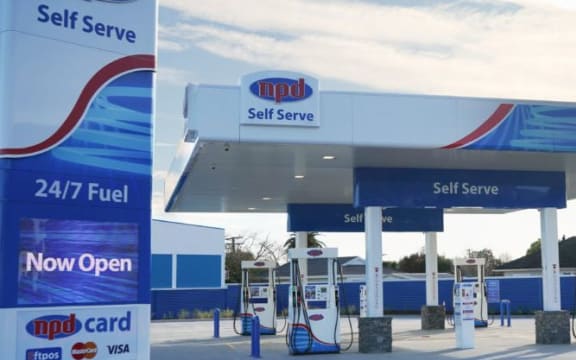
    An NPD petrol station

    An NPD petrol station
    Photo: Supplied/ NPD

    “Basically it secures their supply for the company, and it also has the synergy of their own terminal in Mount Maunganui that Gull had and all the freight and trucking logistics in the South Island that NPD did,” he said.

    “Gull was owned by an investment company out of Australia and NPD is a family-owned operator, so they’ve got two sharp kind of management teams together who have known their business for a long time.”

    Collins noted that over this holiday period, generally all the oil companies seemed to be making excessive margins.

    “We’ve been tracking the price of fuel for the last couple of months and we’re watching as the international landed prices dropped, the retail prices haven’t dropped at the same level,” he said.

    “I think what they need to be doing is drop some of those prices more. Fuel in the first quarter of next year should be much cheaper unless something major geopolitically happens.

    “The price of oil has been below US$60 at some stages and we want to see those savings passed on to our motorists.”

    Sign up for Ngā Pitopito Kōrero, a daily newsletter curated by our editors and delivered straight to your inbox every weekday.

    Continue Reading

  • Fintech access outpaces usage

    Fintech access outpaces usage


    KARACHI:

    Pakistan’s fintech sector has made visible progress in expanding digital access over the past decade, but industry leaders and development partners increasingly warn that the country’s real challenge lies not in onboarding users, but in converting access into everyday usage. An Asian Development Bank (ADB) assessment of the digital finance landscape notes that while millions now hold mobile wallets, cash continues to dominate daily transactions due to affordability concerns, trust deficits, uneven infrastructure and regulatory frictions.

    “The real challenge for fintech in Pakistan is moving from access to everyday usage,” said Khayyam Siddiqi, Head of Communication and Customer Care at JazzCash. “Digital payments only replace cash when they are affordable, trusted and embedded in daily life.” With over 55 million customers, processing more than 13 million transactions a day and handling Rs15 trillion in value during 2025, JazzCash reflects the scale fintech has already achieved. Yet Siddiqi’s remarks underline a broader industry concern: scale alone does not guarantee behavioural change.

    One of the most persistent challenges is users’ cost sensitivity. For low-income households and small merchants, even marginal transaction fees can discourage digital payments, according to the ADB report ‘Unlocking the Potential of Fintech in Central Asia’, December 2025. Cash, despite its inefficiencies, is still perceived as “free”, immediate and reliable. Until digital transactions consistently undercut cash in both cost and convenience, adoption is likely to remain transactional rather than habitual.

    Trust is another major constraint. While awareness of digital wallets has improved, concerns over fraud, data misuse and failed transactions continue to limit user confidence. Cybersecurity incidents, phishing attempts and social engineering scams have disproportionately affected first-time users, particularly in underserved and low-literacy segments. Industry analysts argue that without stronger consumer protection frameworks, effective dispute resolution mechanisms and sustained public awareness campaigns, trust gaps will persist.

    Infrastructure bottlenecks further complicate the picture. Reliable mobile internet coverage remains uneven, especially outside major urban centres. Frequent network disruptions, slow internet speeds and electricity outages directly affect transaction reliability, reinforcing users’ preference for cash. For merchants, unreliable connectivity translates into lost sales, making them reluctant to fully commit to digital acceptance.

    Interoperability across platforms is another structural weakness. Despite regulatory efforts, Pakistan’s digital payments ecosystem remains fragmented, with wallets, banks and merchants often operating in silos. Limited interoperability reduces network effects, forcing users to maintain multiple wallets or revert to cash when counterparties use different platforms. This fragmentation also raises costs for merchants, who must manage multiple QR codes or settlement arrangements.

    Regulatory complexity poses additional challenges, particularly for innovation beyond basic payments. While the State Bank of Pakistan (SBP) has introduced electronic money institution (EMI) regulations and digital banking frameworks, compliance costs remain high for startups. Lengthy approval processes and overlapping regulatory jurisdictions can slow product launches, discouraging experimentation in areas such as micro-investments, embedded finance and open banking.

    Access to capital is another constraint for fintech firms seeking to scale responsibly. Venture funding has moderated amid global tightening in financial conditions, making it harder for startups to absorb regulatory costs, invest in cybersecurity and expand infrastructure. Smaller players, in particular, struggle to compete with large, well-capitalised platforms backed by telecom operators or banks.

    Beyond commercial use cases, fintech’s role in government-to-person (G2P) payments highlights both opportunity and challenge. Digital wallets have become critical channels for welfare disbursements, enabling greater transparency and reducing leakages. Siddiqi noted that such payments help drive scale and trust by familiarising beneficiaries with digital transactions. However, sustaining usage beyond welfare receipts remains difficult, as many users cash out immediately rather than transact digitally.

    Financial literacy remains a cross-cutting issue. While onboarding numbers continue to rise, understanding of digital financial products is limited. Users often lack clarity on fees, security practices and the benefits of retaining funds digitally. Without sustained literacy initiatives, fintech risks remaining a payments utility rather than a gateway to broader financial inclusion.

    The transition from payments to more advanced services such as digital lending, insurance and investments also faces constraints. Risk assessment for underserved populations remains data-poor, increasing default risks and limiting product depth. Regulatory caution around consumer protection, while necessary, further slows innovation in these segments.

    Despite these challenges, industry players remain cautiously optimistic. Digital platforms are expanding nationwide merchant and agent networks, now exceeding one million touchpoints, to embed digital payments into daily commerce across urban and underserved communities. As users grow more comfortable, providers are gradually layering additional services to support broader financial participation.

    The ADB’s emphasis on inclusion-led fintech growth suggests that Pakistan’s next phase will depend less on headline user numbers and more on system-wide trust, affordability and reliability. Until digital payments become cheaper than cash, more reliable than informal channels and universally accepted across platforms, Pakistan’s fintech revolution will remain a work in progress rather than a fully cashless transformation.

    Continue Reading

  • US stocks register weekly gains

    US stocks register weekly gains

    .


    NEW YORK:

    Wall Street ended a light-volume post-Christmas session nearly unchanged on Friday, with few catalysts to fuel much conviction one way or the other. All three major US stock indexes closed nominally lower, snapping a five-session rally, but logged weekly gains.

    “We had a very strong five-day rally, so in a way we’re just simply catching our breath today (Friday) after the holiday,” said Ryan Detrick, chief market strategist at Carson Group in Omaha. “This is only day two of the official Santa Claus rally period, so we still have some time, and we think there’s going to be a little more upward bias going forward.”

    Market participants watched for signs of a seasonal phenomenon called the “Santa Claus rally,” in which the S&P 500 advances through the last five trading days of the current year and the first two in the new one, a period that began on Wednesday and will run through January 5. Such a rally would bode well for stock performance in 2026.

    Just three trading days remain in a turbulent year in which tariff jitters, simmering geopolitical tensions and the rapid growth of artificial intelligence-related momentum stocks took investors on a bumpy ride, but one in which the three major indexes are on track to register double-digit percentage gains.

    Continue Reading

  • Rupee gains 1.8pc in July-December – Dawn

    1. Rupee gains 1.8pc in July-December  Dawn
    2. Rupee records gain against US dollar  Business Recorder
    3. Currency Exchange Rates in Pakistan Today – 27 December 2025  Daily Pakistan
    4. US dollar slips further in Karachi interbank market  Dunya News
    5. Rupee gains 03 paisa against dollar  The Nation (Pakistan )

    Continue Reading

  • PIA deal propels PSX to record high in rollover week – Dawn

    1. PIA deal propels PSX to record high in rollover week  Dawn
    2. Pakistan stocks expected to remain best-performing asset class in 2026: report  Business Recorder
    3. PIA deal, rate cut push PSX to peak  The Express Tribune
    4. PSX closes week at record high as KSE-100 gains over 1,500 points  Profit by Pakistan
    5. Stocks hit record closing above 172,000 level  Dawn

    Continue Reading

  • Winners Announced for 2025 Lompoc Holiday Lights and Decoration Contest


    Press releases are posted on Independent.com as a free community service.


    LOMPOC, CA, December 22, 2025 – The Lompoc Beautification and Appearance Commission is pleased to announce the 2025 Holiday Lights & Decoration Contest Winners. A PDF map of winning locations can be accessed on the city’s website.

    Winners are as follows for this year’s contest, with judging having taken place on Tuesday, December 16th:

    Residential:

    A Classic Christmas

    1. 1004 Rock Rose Ln
    2. 1200 Alden Ct
    3. 1041 N. Poppy

    A Shining Star

    1. 621 N. 10th St
    2. 1424 Michael Ct
    3. 1205 N. B St

    A Coastal Christmas

    1. 356 Ladera

    An Inflatable Christmas

    1. 816 Canfield Ave
    2. 501 S. P St
    3. 1100 Archer St

    A Space Age Christmas

    1. 421 S. Hawthorne St

    Business:

    Window Displays

    1. Lompoc Valley Florist – 322 N. H St
    2. The Box Shop – 740 N. H St
    3. 3 C’s Dog Grooming – 406 W. Ocean Ave

    Outdoor Decorations

    1. La Purisima Concepcion Public School – 219 W. Olive Ave

    A total of 34 residential and 7 business nominations were considered.

    The Lompoc Beautification and Appearance Commission thanks all who participated in this year’s holiday lights and decoration contest, and those who made nominations.

    City of Lompoc

    The City of Lompoc was founded as a town in 1874 and incorporated as a city on August 13, 1888. Prior to the City’s establishment, the building of La Purisima Mission in 1787 marked the earliest European settlement in the Lompoc Valley. Growth in the Lompoc Valley was sparked by the 1901 completion of the coastal railroad between San Francisco and Los Angeles, which included the extension of a spur into Lompoc. The Lompoc Valley is home to Vandenberg Space Force Base, the first missile base of the United States Air Force. Today, the City of Lompoc is a travel destination known for its downtown mural program, local wines and acclaimed cuisine, historic landmarks, parks and nearby beaches. For more information, visit: http://www.cityoflompoc.com/

    Continue Reading

  • PIA deal propels PSX to record high in rollover week – Dawn

    1. PIA deal propels PSX to record high in rollover week  Dawn
    2. Weekly Market Roundup  Mettis Global
    3. PSX closes week at record high as KSE-100 gains over 1,500 points  Profit by Pakistan
    4. PIA deal, rate cut push PSX to peak  The Express Tribune
    5. PSX gains 1,570 points to close at 172,400 points  The Nation (Pakistan )

    Continue Reading

  • Gold scales new peak amid nil imports – Dawn

    1. Gold scales new peak amid nil imports  Dawn
    2. Gold per tola gains Rs2,300 in Pakistan  Business Recorder
    3. Silver price in Pakistan for today, December 27, 2025  Profit by Pakistan
    4. ‘FOMO’ fuels gold rally  The Express Tribune
    5. Gold and Silver Hit New Highs in Pakistan as Global Precious Metals Rally Intensifies  ProPakistani

    Continue Reading

  • Mountain West Food Group, LLC Recalls Ground Beef Products Due To Possible E. Coli O26 Contamination

    Mountain West Food Group, LLC Recalls Ground Beef Products Due To Possible E. Coli O26 Contamination

    WASHINGTON, Dec. 27, 2025 – Mountain West Food Group, LLC, a Heyburn, Idaho establishment, is recalling approximately 2,855 pounds of raw ground beef products that may be contaminated with E. coli O26, the U.S. Department of Agriculture’s Food Safety and Inspection Service (FSIS) announced today.

    The raw ground beef item was produced on Dec. 16, 2025. The following product is subject to recall [view labels]:

    • 16-oz. (1-lb.) vacuum-sealed packages containing “FORWARD FARMS GRASS-FED GROUND BEEF” with “USE OF FREEZE BY 01/13/26 EST 2083” printed on the side of the packaging.

    The product subject to recall bears establishment number “EST 2083” printed on the side of the packaging. The product was shipped to distributors in California, Colorado, Idaho, Montana, Pennsylvania, and Washington for further distribution for retail sales.                                 

    The problem was discovered during routine FSIS testing and the sampling results showed the presence of E. coli O26.

    There have been no confirmed reports of illness due to consumption of these products. Anyone concerned about an illness should contact a healthcare provider.  

    E. coli O26, like the more common E. coli O157:H7, is a serovar of Shiga toxin-producing E. coli (STEC). People can become ill from STECs 28 days (average of 34 days) after exposure to the organism.

    Most people infected with STEC O26 develop diarrhea (often bloody) and vomiting. Some illnesses last longer and can be more severe. Infection is usually diagnosed by testing of a stool sample. Vigorous rehydration and other supportive care is the usual treatment; antibiotic treatment is generally not recommended. Most people recover within a week, but, rarely, some develop a more severe infection. Hemolytic uremic syndrome (HUS), a type of kidney failure, is uncommon with STEC O26 infection. HUS can occur in people of any age but is most common in children under 5 years old, older adults and persons with weakened immune systems. It is marked by easy bruising, pallor and decreased urine output. Persons who experience these symptoms should seek emergency medical care immediately.

    FSIS is concerned that some product may be in consumers’ refrigerators or freezers. Consumers who have purchased these products are urged not to consume them. These products should be thrown away or returned to the place of purchase.

    FSIS routinely conducts recall effectiveness checks to verify recalling firms notify their customers of the recall and that steps are taken to make certain that the product is no longer available to consumers. When available, the retail distribution list(s) will be posted on the FSIS website at www.fsis.usda.gov/recalls.

    FSIS advises all consumers to safely prepare their raw meat products, including fresh and frozen, and only consume ground beef that has been cooked to a temperature of 160 degrees F. The only way to confirm that ground beef is cooked to a temperature high enough to kill harmful bacteria is to use a food thermometer that measures internal temperature, https://www.fsis.usda.gov/safetempchart.

    Media and consumers with questions regarding the recall can contact Jeremy Anderson, CEO of Mountain West Food Group, LLC, at 208-679-3765 or info@mountainwestfoodgroup.com.

    Consumers with food safety questions can call the toll-free USDA Meat and Poultry Hotline at 888-MPHotline (888-674-6854) or send a question via email to MPHotline@usda.gov. For consumers that need to report a problem with a meat, poultry, or egg product, the online Electronic Consumer Complaint Monitoring System can be accessed 24 hours a day at https://foodcomplaint.fsis.usda.gov/eCCF/.

    Continue Reading