Category: 3. Business

  • Summary of Governing Council deliberations: Fixed announcement date of December 10, 2025

    Summary of Governing Council deliberations: Fixed announcement date of December 10, 2025

    Canadian economy and inflation outlook

    Members then turned their attention to recent economic developments in Canada. Since the October Report, Statistics Canada published data on gross domestic product (GDP) for the third quarter and revised national accounts data for prior years.

    Upward revisions to GDP for the three years ending in 2024 meant that the economy began 2025 on more solid footing than previously thought. Demand was more robust leading up to the US trade conflict. Stronger investment and some improvement in productivity growth also increased the economy’s productive capacity. Members agreed that this may explain some of the resilience in Canada’s economy in the face of the trade shock.

    After declining by 1.8% in the second quarter, GDP grew by 2.6% in the third quarter, which was stronger than expected. Members noted that the strength in third quarter GDP was primarily driven by a large decline in imports. Additionally, inventory accumulation was less pronounced than expected and therefore less of a drag on growth. After a sharp contraction in the second quarter, exports were up but only modestly. Final domestic demand was flat, with declines in business investment and consumption. Members acknowledged that uncertainty and volatility in the data made it more difficult to get a clear signal about the strength of the economy. Given the absence of US trade data, members noted there could be more and larger revisions than usual going forward. They expected fourth-quarter GDP to be soft, with increases in consumption, housing activity and government spending offsetting weakness in business investment and net exports.

    Members were encouraged by the job gains reported in the Labour Force Survey for November. Three months of solid employment growth had pushed the unemployment rate down to 6.5%. While this was a sign the labour market was improving, a broader set of indicators showed a mixed picture. After large job losses over the summer, employment in the sectors most exposed to trade had stabilized at a lower level than before the trade conflict. Other sectors, particularly services, had boosted overall employment in recent months. Governing Council members noted that much of the hiring over the past three months was in part-time jobs. They also noted that vacancies were low and that surveys of businesses indicated that hiring intentions were subdued.

    CPI inflation eased to 2.2% in October, in line with expectations. With only one month of data since their last decision, members saw little change in inflation dynamics. Measures of core inflation were between 2½% and 3%, and the three-month measures generally remained slightly below the 12-month measures. Members agreed that underlying inflation continued to be around 2½%.

    Members noted that, in the next few months, CPI inflation is likely to rise slightly. Year-over-year CPI inflation rates of some goods and services components would be higher because the prices had temporarily dropped during the GST/HST holiday a year ago. Looking through the near-term choppiness, Governing Council still expected soft demand and ongoing slack in the economy to roughly offset cost pressures associated with the reconfiguration of trade, keeping CPI inflation close to the 2% target. Core measures of inflation were expected to ease gradually in the coming months.

    Continue Reading

  • Hybrid fishing boat prepares for maiden voyage in Sitka

    Hybrid fishing boat prepares for maiden voyage in Sitka

    On a cold, snowy day at Sitka’s marine haulout, men welded and worked on boat parks inside a giant, unheated commercial workspace. Off to one side were two giant engines — one white and one dark grey — stuck together in an intricate pattern of metal and tubing. The engine is hybrid electric, and it was about to be put in the Mirage, a 50-foot fishing vessel.

    The Mirage could be Alaska’s first official hybrid electric fishing boat, and it’s one step closer to hitting the water. The boat is part of a pilot program based in Sitka to address high fuel costs for the fishing fleet and maybe make fishing just a little bit greener.

    “We hauled out at the end of October, early November, cracked a lot of eggs, making this big omelet,” said Ben Matthys, of Southeast Sparks, who’s been working to adapt and install the hybrid engine for the boat’s owner the past couple of months. He said they’re pioneering this technology to the fleet to prove that hybridization is viable.

    “Diesel is reliable,” he said, “but as we’re looking to save beyond those low hanging fruits, where do we go? And we decided that diesel electric is the way forward.”

    The program is funded by a $500,000 grant from the U.S. Department of Energy, and includes converting two hybrid commercial fishing boats and one fully electric mariculture boat.

    Ben Matthys stands behind the hybrid engine.

    While the initial investment is high, Matthys said hopefully it’ll pay off for fishermen down the line.

    “The margins for fishing are getting tighter,” he said. “The price per pound of what people can market the fish for, or what’s purchased at the plant, is lower, and fuel and all operating costs are higher, so most are still tied to going to spaces A, B and C to go get the fish, and even sometimes having to work harder to find that same amount of fish to pay the bills. So as we move forward to the next options to save and become more profitable, this is it.”

    Another benefit is helping to address the climate impacts of fossil fuels, and make it healthier for fishermen onboard who are often exposed to harmful fumes, according to Linda Behnken, a commercial fisherman and director of the Alaska Longline Fishermen’s Association (ALFA), which is pioneering the program. Fishermen might even be able to market their product as greener than the next guy and may be able to get a better price for their fish.

    “So we think there are health benefits for fishermen, as well as for the ocean, and for people’s bottom line,” Behnken said.

    She said they’ve worked for years to find ways for the fleet to operate more efficiently, by changing certain boat operations, or making certain modifications to vessels. And after a lot of input from people at the National Renewable Energy Laboratory, they identified hybrid technologies as the next best step for fishing boats operating out of small communities.

    “At a national level, there’s definitely a lot of interest across the country in hybrid or fully electric vessels,” Behnken said. “Folks in Maine at the Island Institute there have been working with their fleet to look at electric and hybrid. There’s some work being done in Norway on electric and hybrid, or alternative fuels. But up here, we’re really breaking new ground.”

    Jeff Turner owns the Mirage. He fishes for spot prawns, salmon and halibut, to name a few, throughout the Gulf of Alaska.

    Turner said he used to longline out of Kodiak, which took about three days to travel to one way. At the end of the trip, he said, he’d rack up about $3,500 in fuel costs. If he could knock that down by a couple thousand dollars by longlining on a battery, he said that could be huge.

    “Hybridization, for me, started with, ‘Oh my god, I’m spending so much on fuel. There’s got to be a better way,’” Turner said. “This grant money came up and there was interest…I raised my hand and said, ‘I’ll try this.”

    Jeff Turner, owner of the Mirage, works on his boat on Dec. 9, 2025.

    Jeff Turner, owner of the Mirage, works on his boat on Dec. 9, 2025.

    Throughout the process, Turner said, he’s been learning a lot, and there’s still a lot left to learn. But, he said, he’s ready to install the engine and hopefully hit the water in January.

    “I’m really excited about the data they’re going to collect, [to see] how it changes the way I fish and what other people can do with it too,” he said. “So, I mean, it’s exciting [that] every day I go out, I’m going, ‘I’m fishing and researching.’ So it’s kind of nice that way too.”

    Matthys, the marine electrician, said that collecting data is going to be important when proving to other fishermen that converting to hybrid energy will be worth the investment.

    “I’m excited to see the technology move forward, advance the fleet. We’re running mostly on 100 plus year old technology moving boats around. And I can understand, you know, grandpa did it, dad did it. It worked for them, and it’s working for me type deal. But as we advance to new technologies, I’m excited to see this stuff come forward,” Matthys said. “I look forward to serving the fleet, both in a traditional sense, and then in this new realm of technology.”

    After the Mirage hits the water, Matthys will be working on installing an electric propulsion system on a gillnetter from Juneau and setting up a fully-electric mariculture vessel in Kodiak.

    Continue Reading

  • Full Goods Diner at Pearl to close in late December

    Full Goods Diner at Pearl to close in late December

    SAN ANTONIO – A diner at Pearl is expected to close at the end of December.

    Full Goods Diner is set to close its doors on Dec. 31, according to a statement from the restaurant.

    The downtown restaurant opened three years ago in the 200 block of East Grayson Street. It’s mostly known for brunch items such as croissants, coffee cakes and frittatas, as well as coffees and teas.

    “While our chapter comes to an end as plans for this space have evolved, we’re deeply grateful for our guests, neighbors, and team for the support, and the San Antonio community that made Full Goods so special over the past three years,” the restaurant said.

    Potluck Hospitality, a partner of the restaurant, also released a statement.

    “We can confirm that Full Goods Diner and Potluck have mutually decided to conclude our partnership,” they said. “After three years, we want to thank Full Goods Diner for being part of Pearl’s ecosystem and wish them all the best. We are assisting associates in transitioning to new roles within Pearl and look forward to introducing another outstanding concept in that space in the near future.”

    Full Goods Diner is just one of the restaurants that closed its doors this year. You can find the full list here.


    Read more on KSAT:

    Copyright 2025 by KSAT – All rights reserved.

    Continue Reading

  • Linking knowledge, attitudes, and practices to sustainable solid waste, water, and energy use in Egyptian households

    Linking knowledge, attitudes, and practices to sustainable solid waste, water, and energy use in Egyptian households

    Since 2000, Egypt has recorded an annual growth in municipal solid waste exceeding 36%. However, Egyptian authorities have not conducted studies on household waste management awareness or practices19. Furthermore, with a predicted population of 160 million by 2050, water availability is expected to decrease to less than 350 m2 per capita per year20. It was also noticed that, since 2001, frequent power interruptions have been a continuous problem21. Therefore, it is critical to improve public knowledge about conservation and sustainable practices.

    KAP of participants

    SWM

    In Egypt, KAP of SWM was studied among municipal solid waste workers, health workers, and students, staff, and employees of educational institutes22,23,24. Whereas this study is just limited to households. Municipal SWM in Egypt is considered a significant challenge due to rapid population growth, low awareness, high illiteracy rates, unregulated slum areas, inadequate waste collection and disposal systems, and limited financial resources25.

    Based on the results, it was found that the overall mean scores of the participants’ knowledge, attitude, and practice for SWM were (4.73 ± 1.77), (27.38 ± 3.34), and (4.09 ± 1.15) out of 7, 35, and 8, respectively, as displayed in [Table 3]. This reveals that participants had a high knowledge and attitude toward municipal SWM. However, their practices were moderate.

    Contrary to this study’s results, it was stated that rural women in the rural villages of El-Gharbia Governorate had poor knowledge and practice regarding SWM, yet they had a positive attitude26. This might be due to the lack of awareness regarding improper solid waste disposal and management, environmental impact, and the lack of awareness campaigns in Egyptian rural areas. At one of the Sohag governorate villages in Egypt, the families’ knowledge, attitudes, and practices regarding household waste management improved after the implementation of a health awareness package25.

    Water and energy conservation

    Regarding water and energy conservation KAP, as displayed in Table 6, the overall mean scores were (5.5 ± 1.7), (37.88 ± 4.7), and (3.8 ± 1.4) out of 8, 45, and 8, respectively. Participants showed high Knowledge and attitude, but low practice levels. This agreed with the results of a study indicating that the UK had positive knowledge and attitudes towards water conservation, but showed poor practices9. The same results were found in Spring City, China27. Likewise, the people of Gaza had good water and energy conservation awareness and attitudes in their houses28.

    In a survey conducted in four governorates in Egypt (Cairo, El-Minya, Assiut, and Sohag), a strong correlation was found between participants’ knowledge of the water crisis and their readiness to implement water conservation techniques8.

    As for energy saving in Egypt, there was a lack of data related to household KAP. Sustainable consumption was only studied among university students29,30.

    Effect of gender

    SWM

    According to Table 3, there was a statistical significance between female participants and their knowledge and practices regarding solid waste management. They had higher mean SWM knowledge and practice than males. As per a survey conducted in 2005, it was reported that gender can influence domestic SWM perceptions7.

    In Egypt, women are seen as the primary generators of municipal SW because they are known to be preoccupied with all household tasks, including preparing food, shopping, and housekeeping, which involves managing and disposing of SW26. On the other hand, working females are more dependent on readymade products, leading to increased solid waste31. This aligns with the results of a study in Sohag, Egypt, where more than two-thirds of waste managers at the household level were females25. Furthermore, another study found that young Egyptian females have good knowledge regarding the use and hazards of plastic bag disposal, while older females over 40 had good practice32.

    Water and energy conservation

    Gender norms directly impact the public’s beliefs regarding expectations of home duties33. In this study, a statistically significant difference in KAP between genders was revealed; females showed better knowledge and attitude than males, as demonstrated in Table 6. The results were the same as in the two studies that analyzed the KAP of individuals regarding water and energy conservation34,35. This also agrees with the findings of a study conducted among university students in Egypt, which found that female students showed better knowledge and practice than male students29.

    On the other hand, the findings contradicted a study conducted in 2024, which reported that females in Egypt had a lower level of awareness regarding the water crisis8. The contradiction may be due to the variation in how awareness and knowledge terms were defined and measured. Also, the geographical scope of the two studies may offer a key explanation for the contradiction.

    Effect of age

    SWM

    The statistical analysis, in Table 3, showed that age had a significant effect on both knowledge (p < 0.001) and practice (p = 0.001) in WM. Nevertheless, there were no significant differences in attitude within different age groups (p = 0.126). The (31–40) age group had the highest knowledge level (5.20 ± 1.49), while the (41–50) age group exhibited the best practices (4.50 ± 1.25). The (18–20) age group had the lowest knowledge and practice levels (3.36 ± 1.78) and (3.72 ± 1.23), respectively. This almost complies with a study conducted in Palestine, where the knowledge and practice levels were much higher in the age group (25–44) than those aged (18–24)36. It also aligns with the findings of a study conducted in Egypt, which focused solely on the disposal of plastic bags. The young age group < 40 demonstrated high knowledge, while people aged > 40 exhibited the best practice32.

    However, another study that specifically focused on waste segregation as a type of SWM practice concluded that respondents aged between 50 and 65 segregated more often than those aged between 35 and 4937.

    In Egypt, middle-aged groups balance family duties with perceptions gained from education and media, while younger individuals lack maturity due to their limited real-world experiences. In contrast, older generations tend to exhibit practices shaped by their accumulated habits and responsibilities. This is consistent with the Theory of Planned Behavior, which implies that age has an impact on the perceived behavioral control through experience38.

    Water and energy conservation

    A one-way ANOVA, as demonstrated in Table 6, revealed statistically significant differences in knowledge, attitude, and practice in terms of water and energy conservation over different age groups. The (41–50) age group had the highest knowledge score (6.18 ± 1.37), while the (18–20) age group had the lowest practice score (3.39 ± 1.20). On the other hand, the 51 + age group had the highest attitude, with a score of (39.54 ± 3.26). Local socio-economic and cultural factors can explain the findings in the Egyptian setting. People of the age (41–50) possibly have the highest knowledge because of their role as household decision makers. On the other hand, the low practice level at the age of 18–20 may reflect their limited responsibilities for utility bills, while a positive attitude in those over 51 may be due to the traditional values of economy in Egyptian culture. However, this positive attitude may not lead to good practice if they lack access to modern water-saving technologies and modern appliances.

    These results agree with prior studies showing that elderly individuals conserve water more frequently39,40. Furthermore, it was confirmed in another study that people aged 35 will consume 26% more energy than people aged 7041. This could be due to the observation that older people have fewer home appliances than younger ones, which leads to a decrease in energy consumption42.

    Effect of marital status

    SWM

    The results, displayed in Table 3, show a significant difference in knowledge scores between single and married individuals (p < 0.001). Those who were married (5.00 ± 1.59) had much higher knowledge levels than single participants. Meanwhile, no significant variations were found between the groups regarding their attitudes and practices towards SWM.

    This is in agreement with the results of two studies conducted in 2021 and 2022, which found that marital status is non-significant in household solid waste practice37,43. At the same time, two different studies discovered an association between marital status and improper solid waste management44,45.

    In Egypt, marriage indicates moving to an independent household, leading couples to engage in daily SWM. However, there were no significant differences in attitudes and practices, which means that while marriage can aid in gaining knowledge, these attitudes and practices might be hindered. This is due to poor recycling infrastructure and inconsistent waste collection.

    Water and energy conservation

    The analysis from [Table 6] stated that married participants reported better practices (p = 0.006) compared to single individuals. However, no significant difference in knowledge levels was observed between the two groups (p = 0.052).

    Married people adopted more energy-saving behaviors than the others46. This can be attributed to the economic pressure that marriage causes in Egypt, as it exposes married couples to the financial cost of utility bills. This creates motivation towards water and energy conservation. On the other hand, it was concluded in another study that married people tend to save less water than singles39. The contradiction may be due to cultural differences in water availability, utility bills, and housing situations.

    Effect of education

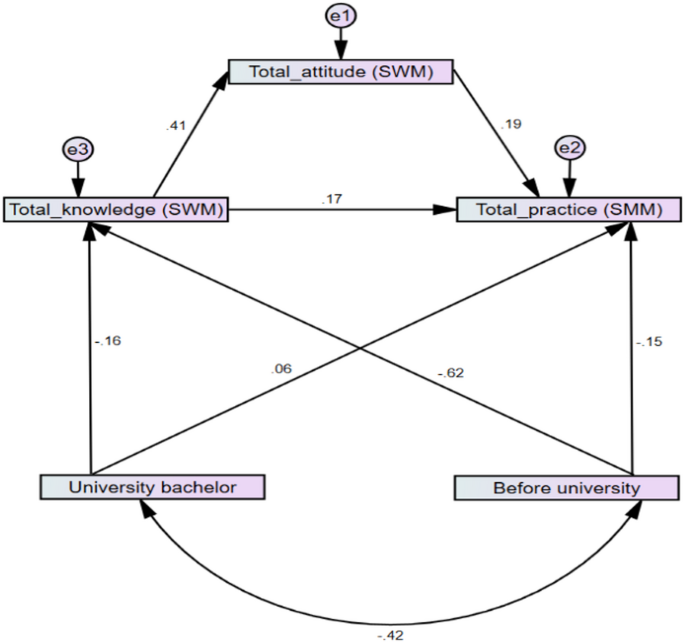
    The path analysis model, shown in Figs. 1 and 2 and stated in Tables 5 and 8, proved that higher education levels improve the knowledge level of SWM as well as water & energy conservation. This, in turn, will enhance attitudes and sustainable practices. The results indicated that education level was the most important factor affecting participants’ KAP.

    SWM

    The results highlighted a significant association between the education level and solid waste management KAP (p < 0.001). Moreover, a pattern was discovered, as mean scores improved from the Before university to the University and Postgraduate groups. [Table 3] showed that postgraduates and university students have higher mean KAP scores for SWM, (4.95 ± 1.49) & (5.55 ± 1.26) respectively, than those with lower educational levels.

    Education levels had an impact on the awareness, attitude, and practices of SWM47,48. Nowadays, the higher education system in Egypt includes more topics regarding environmental science and sustainability, which equip students with essential knowledge49. Being skilled in English and digital literacy also allowed them to better understand global sustainability issues.

    Water and energy conservation

    It was also noted that an increase in education level leads to an enhancement in the KAP of water and energy conservation, based on the results from [Table 6]. Several studies support the belief that households with high education levels frequently have stronger intentions toward water or energy conservation40,50,51.

    A significant observation in this study’s results was that improved knowledge of water and energy conservation promotes positive attitudes, leading to enhanced practices. The model showed that knowledge does not automatically result in action. Instead, it creates a favorable mindset and a sense of responsibility. This strengthened attitude serves as the crucial step, eventually motivating individuals to adopt sustainable behaviors in their daily lives.

    Financial challenges and rising utility bills often increase households’ need for practical and cost-effective approaches. Families tend to actively seek advice on reducing consumption, such as understanding appliance energy use, taking shorter showers, and using appliances more efficiently. This knowledge becomes essential for financial survival. However, the stress of managing limited finances can hinder engagement with broader information campaigns and education focused on long-term environmental benefits. High initial costs of energy-efficient appliances or water-saving technologies can make them seem irrelevant. Thus, while financial strain may raise interest in immediate, low-cost savings, it can limit curiosity about knowledge that requires financial commitment or does not result in quick bill reductions.

    In Egypt, water scarcity is a pressing issue that strengthens the connection between attitude and action52. Due to limited resources and economic pressure, education is considered vital for providing individuals with the knowledge needed to mitigate sustainability challenges49.

    Home appliances practice

    Around 47% stated that their home appliances were more than 5 years old, as shown in Table 9. Older appliances may have lower energy efficiency compared to contemporary models53, and this raises a conflict between environmental regulations and residential energy use. On one side, keeping these appliances may increase energy consumption and greenhouse gas emissions. On the other hand, appliance replacement would result in a significant amount of e-waste. The recycling and management of e-waste have a considerable environmental impact54. As a result, a trade-off exists between enhancing energy efficiency and addressing the environmental effects of appliance manufacturing and disposal. This is further complicated by the study results, which indicate a knowledge gap. Many respondents were unaware of their appliances’ age, indicating a potential lack of awareness about long-term energy costs and the environmental impacts associated with appliance ownership.

    The long lifespan of home appliances confuses consumers as to whether to replace or fix their devices, and each phase of the home appliance life cycle affects the environment. The correlation between life span, repair frequency, and maintenance behavior was assessed, and it was suggested that the environmental effects of early replacement for household devices might differ based on numerous factors, including the appliance type, the new model’s energy efficiency, and the methods employed for disposing of the old appliance55,56.

    The most reported devices used in the week, as presented in Fig. 3, were kettles, gas heaters, microwaves, and fans, with percentages of 77.6%, 67%, 66.4%, and 60.5%, respectively. The survey did not include fridges, TVs, computers, or laptops in this question, as it was assumed that these are the most used devices in every house. For example, fridges work nonstop the whole day. Considering the climate conditions and culture, the observed usage frequencies make sense. However, one of the main factors influencing energy demand is the significant use of air conditioners, particularly by households that own them (24.5% have two or more units). The number of home appliances has increased over the last 20 years. The frequency of using these appliances plays a significant role in energy consumption57. About 70% of houses’ carbon dioxide emissions are generated from home appliances. Air conditioners, refrigerators, and televisions are responsible for half of those carbon dioxide emissions58. Other studies revealed that unreasonable usage and purchasing habits of home appliances were the leading causes of energy waste in houses59. According to the Egyptian Electricity Holding Company, Domestic energy consumption was responsible for more than half of the total energy consumption in Egypt60.

    Study limitations

    The current study has several limitations. The non-randomized sampling and reliance on an online questionnaire likely introduced selection bias, favoring those with internet access and digital literacy. Accordingly, there was an overrepresentation of highly educated participants compared to the national average, and the sample did not fully represent all Egyptian governorates, limiting the generalizability of the findings. In addition, self-reported data may have introduced biases, such as recall or social desirability bias. Although the study measured attitudes and behaviors effectively, it may have failed to detect the value-action gap that arises from external barriers such as financial constraints.


    Continue Reading

  • Winter safety: Staying prepared during the cold months

    HAMILTON, ON – Winter is here, Hamilton and the City is sharing tips for residents to stay safe and warm. Cold temperatures, snow and icy conditions can impact everything from local commutes and health, to home safety and a little preparation can help reduce risks and keep everyone safe. 

    Residents can visit the City’s website at Hamilton.ca for up-to-date information on all City of Hamilton services during the Holidays.

    Protecting yourself and staying warm

    • Dress warmly in layers of clothing, keeping inner layers dry as wet clothing increases the risk of injury.
    • Protect your face, ears and hands with a scarf, hat and gloves.
    • Check in on your neighbours, older adults and those who may need extra support.
    • Visit the City of Hamilton website for Cold Weather Alerts (when active) and remain indoors where possible. 
    • The City’s overnight drop-in and evening warming spaces operate December 1 until March 31, regardless of the temperature outdoors, to support those individuals living unhoused:
      • 25 evening warming spaces for people of all genders at Mission Services Night Link
      • 45 overnight warming spaces for women and gender diverse individuals at Mission Services Willow’s Place
      • 35 overnight drop-in spaces for women and gender diverse individuals at YWCA Carole Anne’s Place (CAP)
      • Up to 50 overnight warming spaces for men at Urban Core’s St. Paul’s Church
    • Help reduce the spread of respiratory infections by ensuring you have received your flu vaccine, COVID-19 vaccine, and RSV vaccine if eligible. It is one of the most effective ways to reduce the risk of serious illness.
    • To reduce the spread of respiratory viruses, use protective measures which include staying at home when sick, washing hands often, covering coughs and sneezes, cleaning high touch surfaces and items, wearing a tight-fitting, well-constructed mask in indoor crowded spaces and spending time outdoors or in well-ventilated indoor spaces when possible. 

    Be prepared for winter conditions

    • Road conditions can change quickly so remember to drive slow, leave extra time and space, use winter tires and keep an emergency kit in your vehicle.
    • Plan ahead and check the City site for road closures and snow plow tracking. In heavy snowfall or harsh winter conditions, consider waiting until the roads are clearer.
    • Before snow is expected or the temperature is expected to drop below freezing, spread a small amount of salt on your driveway and walkways. 
    • When clearing your driveway after snowfall, do not blow or place snow onto the roadway and consider the direction of travel of any snow plows, move snow to the side of your property that the plow finishes on so less snow will be spread back across the driveway.
    • Keep hydrants in front of your home clear of snow

    Residents can follow the City’s Plows using the Plow Tracker: Plow Tracker

    • To prevent frozen pipes in your home, seal air leaks in your home and garage, shut off and drain all outdoor taps and hoses, install insulated pipe sleeves on exposed pipes in unheated areas of your home
    • If you are leaving for an extended period of time during the winter season, it is recommended to shut off the water to your home.

    Should residents experience a frozen pipe, the City has steps to attempt to thaw them: Frozen Pipes
     

    Be aware of potential hazards 

    Stay off frozen creeks and stormwater management ponds. While they may appear to be fully frozen, several factors contribute to the unpredictability of stormwater management ponds, such as the ice depth, which varies across the pond’s surface.

    Stormwater ponds are typically located in remote or hard to access areas making it difficult for crews to get through in an emergency, and due to the continuous flow of water in these ponds, the ice that forms during winter months is unstable and is never 100% safe.

    Winter safety is a shared responsibility and small, proactive steps can help ensure a comfortable and healthy season for everyone. 

    The City of Hamilton wishes residents a safe and happy winter season.

    Continue Reading

  • Access Denied


    Access Denied

    Access Denied

    The BLS is committed to providing data promptly and according to established schedules. Automated retrieval programs (commonly called “robots” or “bots”) can cause delays and interfere with other customers’ timely access to information. Therefore, bot activity that doesn’t conform to BLS usage policy is prohibited.

    We apologize for any inconvenience. If you believe we have made an error, please contact us.

    Please contact your administrator with the error code: 0.8c5e6cc1.1766510746.24338e45

    Continue Reading

  • ATA Truck Tonnage Index Rose 0.2% in November

    ATA Truck Tonnage Index Rose 0.2% in November

    “November’s tonnage reading continues to point to a constrained freight market despite the small sequential increase,” said ATA Chief Economist Bob Costello. “The index was also down from a year earlier, the second straight year-over-year decline. In addition to challenging volumes, more capacity appears to be leaving the industry after a prolonged freight downturn and increased government enforcement measures targeting unqualified drivers and noncompliant carriers.”

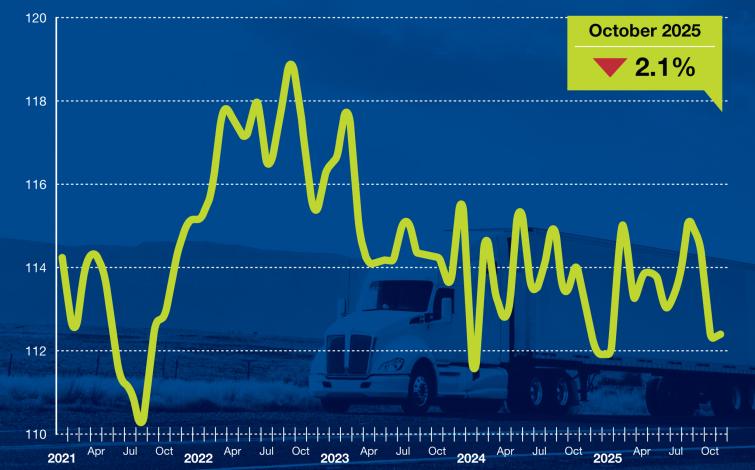
    In November, the ATA advanced seasonally adjusted For-Hire Truck Tonnage Index equaled 112.4, up from 112.2 in October. The index, which is based on 2015 as 100, contracted 0.3% from the same month last year after decreasing 1.5% in October. Year-to-date, compared with the same period in 2024, tonnage was unchanged. 

    October’s SA decrease was revised up slightly from what was first reported in our November 18 press release.

    The not seasonally adjusted index, which calculates raw changes in tonnage hauled, equaled 107.3 in November, 10.2% below October’s reading of 119.5. 

    Trucking serves as a barometer of the U.S. economy, representing 72.7% of tonnage carried by all modes of domestic freight transportation, including manufactured and retail goods. Trucks hauled 11.27 billion tons of freight in 2024.  Motor carriers collected $906 billion, or 76.9% of total revenue earned by all transport modes. 

    Both indices are dominated by contract freight, as opposed to traditional spot market freight. The tonnage index is calculated on surveys from its membership and has been doing so since the 1970s. This is a preliminary figure and subject to change in the final report issued around the 5th day of each month. The report includes month-to-month and year-over-year results, relevant economic comparisons, and key financial indicators. 

    * 2024 estimates include forecasts.

    Continue Reading

  • Public Workshop and Request for Information (RFI) Space Conditioning And Water Heating Equipment Data Tracking Second RFI on Draft Express Terms

    The California Energy Commission (CEC) is considering development of data collection regulations to ensure that it has access to sufficient information for its analytical, policy, and program mandates. The CEC is requesting that stakeholders and interested members of the public provide written information and feedback on potential data reporting requirements for space heating, air conditioning, and water heating equipment sales in California as described further below.

    In addition to seeking written feedback, the CEC staff will host a public workshop to discuss the proposed regulations and receive oral feedback from participants. This is a hybrid meeting, with both a publicly accessible physical location and public access online or by phone through Zoom. 

    A quorum of commissioners may participate in person, but no votes will be taken. The public can participate in the workshop consistent with the attendance instructions below. The CEC aims to begin promptly at the start time posted and the end time is an estimate based on the proposed agenda. The workshop may end sooner or later than the posted end time.

    Notice and Agenda

    Remote Attendance

    Remote participants may join via Zoom by internet or phone.

    • Attend Workshop via Zoom, or log in at the Zoom website, enter the Webinar ID 889 1273 6019 and passcode 754963, and follow all prompts.
    • To join by telephone. Call toll-free at (888) 475-4499 or toll at (669) 219-2599. When prompted, enter the Webinar ID 889 1273 6019 and passcode 754963.

    Zoom Closed Captioning Service. At the bottom of the screen, click the Live Transcript CC icon and choose “Show Subtitle” or “View Full Transcript” from the pop-up menu. To stop closed captioning, close the “Live Transcript” or select “Hide Subtitle” from the pop-up menu. If joining by phone, closed captioning is automatic and cannot be turned off. While closed captioning is available in real-time, it can include errors. A more accurate transcript of the workshop will be docketed and posted as soon as possible after the meeting concludes.

    Zoom Difficulty. Contact Zoom at (888) 799-9666 ext. 2, or the CEC Public Advisor at publicadvisor@energy.ca.gov, or by phone at (916) 269-9595.

    In-Person Attendance


    California Natural Resources Agency Building
    CNRA Media Room
    715 P Street, 
    Sacramento, CA 95814


    CNRA Media Room (go directly north from the main entrance on P Street, passing the lobby and two-story display screen, take the stairs on the left to the second floor, turn left at the landing and head directly forward. Meeting room is through the double doors.).

    If participants bring a device to join the meeting via Zoom at the physical location, the system audio must be muted, or the audio should not be joined. This is to avoid disruptive feedback during the meeting. Audio will be provided through an onsite sound system.

    Continue Reading

  • SEC Issues Further Crypto Asset Security Guidance, Addresses Broker-Dealer Physical Possession and Asset Pairs Trading | Insights

    SEC Issues Further Crypto Asset Security Guidance, Addresses Broker-Dealer Physical Possession and Asset Pairs Trading | Insights

    On December 17, 2025, the staff in the SEC of Trading and Markets (Staff) issued a statement expressing its views on how a broker-dealer can maintain physical possession of a crypto asset security it carries for the account of a customer for purposes of complying with the Customer Protection Rule, Securities Exchange Act (SEA) Rule 15c3-3(b)(1).1 The same day, the Staff supplemented its FAQs on Crypto Asset Activities and Distributed Ledger Technology with new Q&As addressing crypto asset trading and settlement activities involving national securities exchanges (NSEs) and alternative trading systems (ATSs).2 Commissioner Hester Peirce posed a number of related questions to solicit feedback regarding NSE and ATS trading.3

    How Can a Broker-Dealer Maintain Physical Possession of Crypto Asset Securities?

    A broker-dealer that takes the following measures will be deemed to have “physical possession” of a fully paid or excess margin security of a customer that is a crypto asset security:

    • maintain full access to the crypto asset security and the ability to transfer that asset on the relevant distributed ledger technology — in other words, the broker-dealer has access to the private keys necessary to sign transactions on the relevant blockchain for the crypto asset security4
    • establish and enforce written policies and procedures aligned with industry customs to protect against access to private keys
    • establish and enforce written policies and procedures to identify and assess potential risks of the distributed ledger technology and associated network prior to undertaking the asset and at continuous intervals after
    • establish and enforce written policies and procedures that (i) identify steps the broker-dealer will take if certain events occur that could affect the firm’s possession of crypto asset securities, including blockchain malfunctions, 51% attacks, hard forks, or airdrops; (ii) allow for the broker-dealer to comply with a lawful order as to seizing, freezing, burning, or prevention of transfer of the crypto asset securities; and (iii) allow for the transfer of the crypto asset securities held by the broker-dealer to a trustee or similar person in the event the broker-dealer can no longer continue or self-liquidates

    Additionally, a broker-dealer does not have possession of a crypto asset security if it is aware of any material security or operational problems related to the distributed ledger technology and associated network used to access and transfer the asset or is aware of risks associated with custody of the asset.

    What Is Different From Previous SEC Staff Custody Guidance?

    In May 2025, the Staff expressed views only on how a broker-dealer could establish “control” of a crypto asset security that is a fully paid or excess margin security of a customer for purposes of SEA Rule 15c3-3(b). The guidance was silent on the question of how a broker-dealer could maintain “physical possession” of any such crypto asset security.5 The May guidance noted that the Staff would not object to a broker-dealer establishing “control” if the crypto asset securities are held at a qualifying control location under SEA Rule 15c3-3(c), such as a federal bank.

    The SEC’s 2020 Special Purpose Broker Dealer Statement,6 which is set to expire soon, permit limited-purpose broker-dealers to custody crypto asset securities. The new guidance expands the path for broker-dealers that are not special-purpose broker dealers to engage in activities in crypto asset securities.

    What Is the Significance of the Custody Guidance?

    The May 2025 crypto asset security custody guidance addressed reliance by a broker-dealer on a “control” location to satisfy the requirements in SEA Rule 15c3-3(b)(1) regarding fully paid or excess margin securities of customers, including through use of certain arrangements with banking entities.7 The latest guidance contemplates “possession” to satisfy the requirement.

    What Custody Questions Remain Unanswered?

    In connection with the “possession” guidance, additional clarifying guidance from the SEC and the Financial Industry Regulatory Authority (FINRA) would be helpful to establish what they will view to be “reasonably designed written policies” and being “aware of any material security or operational problems or weaknesses” regarding the relevant distributed ledger technology and associated network. Questions also remain about how broker-dealers that custody crypto asset securities can comply with other broker-dealer financial responsibility rules. These areas include the following.

    • A carrying broker-dealer is subject to an annual audit of its financial statements and a compliance report under SEA Rule 17a-5(d) that generally is subject to the requirements of the Public Company Accounting Oversight Board (PCAOB). The new standards in the guidance must also be judged through the lens of PCAOB requirements that govern external auditors.
    • A broker-dealer will have to reasonably satisfy its auditor’s need to determine whether securities are in the “possession” of the broker-dealer. This raises a question of whether the broker-dealer would hand over the private key to the auditor, which would give full transferability to a third party and consequently introduce additional risks.
    • Broker-dealers are required, pursuant to SEA Rule 17a-13, to engage in quarterly count of all securities held, or custodied, for proprietary accounts or the accounts of customers. Failing to maintain possession or control over customers’ fully paid or excess margin securities would constitute noncompliance with SEA Rules and a “material weakness” in internal compliance controls.
    • Broker-dealers will need to decide how to reflect crypto asset securities on their stock record. For example, this includes what constitutes the appropriate “short” location to ensure adequate stock record “counts” and to test against short securities differences.

    The guidance therefore highlights some tension between crypto-native infrastructure and legacy broker-dealer regulatory constructs. As audit methodologies, custody technologies, and on-chain market structures continue to evolve, further engagement among regulators, auditors, and market participants will likely be necessary to ensure that regulatory requirements appropriately reflect technological realities without undermining the core principles of customer protection, financial responsibility, and market integrity.

    Absent additional regulatory guidance, it may be easier for a broker-dealer to rely on the May 2025 FAQ guidance on “control” rather than try to show “possession.” FINRA has not yet provided its own guidance and could impose substantial other conditions. Firms that seek to achieve “possession” of crypto asset securities may wish to discuss with FINRA whether a “materiality consultation” or “continuing membership application” is needed.

    Can NSEs and ATSs List and Trade Both Crypto Asset Securities and Nonsecurities?

    Yes. The FAQs provide that an NSE or ATS can offer pairs trading — trading that involves a crypto asset that is a security and a crypto asset that is not a security — as long as the NSE or ATS satisfies its obligations under the federal securities laws. An NSE trading pair may need to amend its rules, and National Market System (NMS) plan amendments may be necessary. An ATS trading pair would need to comply with Regulation ATS (among other applicable rules), including by noticing its pairs trading activities as required by Form ATS or Form ATS-N. According to the FAQs, Form ATS and ATS-N can sufficiently accommodate disclosures about trading operations that involve crypto asset securities, including pairs trading.

    The FAQs address how an ATS should comply with the requirements in Regulation ATS Rules 301(b)(8) and (9) regarding recording and reporting transactions in USD when a transaction is based on the value of non-USD assets, such as nonsecurity crypto assets. For these transactions, an ATS could provide transaction value data in USD using consistent and impartial methods commonly applied for converting the value of an asset that is not quoted in USD.

    Separately, the FAQs confirm that a broker-dealer operator of an ATS can engage in certain broker, custodial, or clearing functions in addition to operating its ATS. For example, according to the guidance, a broker-dealer operator of an ATS does not need to register as a clearing agency when it clears and settles transactions in crypto asset securities for its own customers by debiting and crediting the appropriate customer accounts on its internal books and records.

    How Soon Can NSEs and ATSs Facilitate Trading of Securities and Nonsecurities?

    The FAQs state that the federal securities laws do not prohibit NSEs and ATSs from offering pairs trading of securities and nonsecurities. However, the process for implementing rule updates for an NSE or ATS to facilitate such trading and remain in compliance with the federal securities laws will likely delay the facilitation of these activities. An NSE that seeks to change its rules must submit the proposed rule changes to the SEC for consideration, a process that includes a period for public notice and comment.8 A similar process is required for NMS plan amendments.9 Broker-dealer operators of ATSs may also need FINRA approval to operate an ATS that offers trading in nonsecurity crypto assets if the operation of the ATS is a change to the broker-dealer’s business plan.

    Can NSEs/ATSs Trade Tokenized NMS Securities?

    The FAQs state that an ATS that trades NMS stock that displays subscriber orders in an NMS stock to non-ATS employees and meets certain volume thresholds would need to comply with Rules 301(b)(3) and (4) of Regulation ATS, which set forth order display and fee cap obligations for certain NMS stock ATSs. For orders based on non-USD, the ATS could convert the value of the non-USD asset using the process described above before providing the orders to the NSE or national securities association.

    In response to the FAQs, Commissioner Peirce posed questions inviting feedback to the Crypto Task Force in a number of areas.10 The questions include a statement that ATSs that trade crypto asset securities that are NMS stocks are subject to Rule 304 of Regulation ATS, which requires an NMS stock ATS to file public disclosures on Form ATS-N.11

    Will the SEC Object to Crypto Exchange-Traded Product Trading Under Regulation M?

    No, the Staff would not recommend enforcement action against persons who transact in crypto exchange-traded products as long as they operate under circumstances described in the Staff’s no-action letter related to commodity-based investment vehicles.12 Such persons must still abide by other antifraud and antimanipulation securities laws in conducting these transactions.

    What Other Rules Might Still Apply to Trading Crypto Asset Securities?

    Other rules that may apply to the trading of the crypto asset securities depend in large part on the nature of the underlying security (e.g., NMS stock, over-the-counter equity security, fixed-income, security etc.). In this regard, the FAQs notably do not provide relief from the requirements for Regulation SHO, Regulation SCI, the market access rule (SEA Rule 15c3-5), SEA Rule 15c2-11 (with respect to non-NMS stocks), and Regulation NMS (with respect to NMS stocks).

    How Does This All Fit Together?

    The guidance expressly contemplates activities in crypto asset securities in a way that further opens the door for the development of a robust tokenized securities market. The SEC’s issuance last week of a no-action letter permitting DTC to launch a tokenization service combined with the new guidance on broker-dealer possession or control and tokenized ATS trading move toward supporting a complete trading and post-trade environment for crypto asset securities. Additionally, the ability for financial intermediaries to support multiple asset types, including NMS securities, crypto asset securities, and nonsecurity crypto assets, moves toward Chairman Paul Atkins’s vision of a unified “superapp” capable of seamlessly accommodating diverse financial instruments within a single platform.


    Div. of Trading & Mkts., SEC, Statement on the Custody of Crypto Asset Securities by Broker-Dealers (Dec. 17, 2025).

    Div. of Trading & Mkts., SEC, Frequently Asked Questions Relating to Crypto Asset Activities and Distributed Ledger Technology (Updated Dec. 17, 2025).

    Commn’r Hester M. Peirce, And Then Some: Request for Information Regarding National Securities Exchanges and Alternative Trading Systems Trading Crypto Assets (Dec. 17, 2025).

    Alternatively, it could be sufficient signing authority to transact in a multiparty computation (MPC) arrangement. Previously, under now-withdrawn guidance, the staff raised concerns with the fact that a broker-dealer (or its third-party custodian) who maintains a private key may not be sufficient evidence by itself that the broker-dealer has exclusive control of the digital asset security (e.g., it may not be able to demonstrate that no other party has a copy of the private key and could transfer the digital asset security without the broker-dealer’s consent). The staff no longer raises this as a concern, likely a reflection of developments in market practices around private key storage.

    See SEC Paves the Way for Crypto Asset Activities by Broker-Dealers and Transfer Agents, Sidley Update (May 19, 2025).

    See Custody of Digital Asset Securities by Special Purpose Broker-Dealers, Securities Exchange Act Release No. 90788 (Dec. 23, 2020), 86 FR 11627 (Feb. 26, 2021).

    Digital Asset Securities Custody: U.S. SEC Issues Broker-Dealers Enforcement Relief and Requests Industry Comment, Sidley Update (Dec. 28, 2020).

    On December 12, the Office of the Comptroller of the Currency conditionally approved five national trust bank charter applications for firms seeking to provide crypto asset custody, signaling an expansion in bank control locations. See Office of the Comptroller of the Currency, OCC Announces Conditional Approvals for Five National Trust Bank Charter Applications (Dec. 12, 2025).

    15 U.S.C. § 78s(b)(2); 17 C.F.R. § 240.19b-4.

    17 C.F.R. § 242.608(b)(2)(i).

    10 See supra note 3.

    11 Commn’r Hester M. Peirce, No Longer Special: Statement on the Division of Trading and Markets’ Statement Related to the Custody of Crypto Asset Securities by Broker-Dealers (Dec. 17, 2025).

    12 SEC No-Action Letter, June 21, 2006, TP 06-81, https://www.sec.gov/divisions/marketreg/mr-noaction/currencyshares062106-10a1.pdf.

    Continue Reading

  • VISN 8 Innovators Poised To Transform Veteran Care At The 2025 Veterans Health Make-a-thon | VA Tampa Health Care

    VISN 8 Innovators Poised To Transform Veteran Care At The 2025 Veterans Health Make-a-thon | VA Tampa Health Care

    VISN 8 continues to lead the way in health care innovation within the Veterans Health Administration.

    After the successful completion of the 2024 Veterans Health Venture Studio program, which saw 7 teams create working prototypes, the 2025 cohort kicked off with the Hackathon this past August. Of the 51 concepts developed at the Hackathon, 17 teams were selected to join the Make-a-thon (December 2025 – March 2026), where teams will advance their concepts into technical designs ready to prototype. A subset of these teams will advance to the Accelerator, where they will collaborate with technical experts to create working prototypes prepared for pilot testing within VA.

    Dr. Sandal describes the vision of VHVS as “simple yet powerful: to create technology by the people who will use it, alongside those people.” The Studio aims to develop five or more technologies each year, created by clinicians and Veterans, that can be rolled out across the entire VA system—delivering solutions that Veterans can proudly say they helped create.

    Representing James A. Haley Veterans’ Hospital, Orlando VAMC, San Juan VAMC, Malcolm Randall VAMC, C.W. Bill Young VAMC , Thomas H. Corey VAMC, and VA facilities from across Florida, Puerto Rico, and the Caribbean, these innovators are prepared to tackle some of the most pressing challenges facing Veteran care. Their participation reflects VISN 8’s commitment to fostering collaboration and breakthrough solutions that improve outcomes for Veterans across the region and beyond.

    David Dunning, Interim Director of Veterans Integrated Service Network 8 (VISN 8), The Sunshine Network, shares the personal motivation behind this innovation effort:

    “It’s very personal for me. I get my care here, my spouse is a Veteran, my dad was a Veteran, her dad was a Veteran. So, seeing how we can get better at what we’re doing—it’s about tearing it down and building it back up into something transformational.”

    Veterans Health Venture Studio: Founded and Led by VISN 8 Innovation Leader

    The Veterans Health Venture Studio (VHVS), founded and led by Dr. Indra Sandal, Chief of Innovation at James A. Haley Veterans’ Hospital, fuels innovation by providing a structured pipeline that supports projects from initial ideation to pilot and scale phases. Focused on People Development, Technology Development, and Community Development, VHVS cultivates innovation capacity, launches new technologies, and builds partnerships to enhance health care delivery.

    The VHVS program includes a Hackathon, Make-a-thon, and Accelerator in Year 1, followed by piloting and scaling in Year 2. This structure ensures VISN 8 projects receive the mentorship, resources, and support needed to evolve from concepts into practical, deployable solutions.

    Highlights from the 2025 Veterans Health Hackathon

    The 2025 Hackathon energized VISN 8 with over 350 participants collaborating across 17 VISNs and more than 100 VA and community organizations. Teams competed across three critical tracks:

    • Timely Access to Care
    • Optimizing Enterprise-wide Costs and Operational Efficiency
    • Improving Community Care Coordination

    Judged by 17 experts, nine winning teams emerged, showcasing innovative solutions ranging from appointment scheduling portals to AI-powered referral management tools. VISN 8 proudly claims several winners and finalists from its regional facilities, reflecting a strong culture of innovation dedicated to Veteran-centered care.

    VISN 8 Teams Advancing to the Make-a-thon

    Seventeen teams—comprising the nine Hackathon winners and eight additional rigorously selected projects—will advance to the Make-a-thon. These teams represent a powerful cross-section of VISN 8 expertise, including:

    Timely Access to Care

    • Bravo Zulu Health – Streamlines appointment and test scheduling into a single portal to reduce missed care and cancellations.
      • Antonio Romero, C.W. Bill Young VAMC
      • Onelis Cardona Lorenzo, Malcolm Randall VAMC
    • SPEED Access Care – Uses AI to screen high-risk symptoms, preventing delayed diagnoses and guiding provider routing.
      • Claudia Legaspi, C.W. Bill Young VAMC
      • Alysa Werkheiser-Quillen, James A. Haley VAMC
      • Sylvia Santiago-Rodriguez, James A. Haley VAMC
      • Dana Glenn, James A. Haley VAMC
      • Yolanda Showers, James A. Haley VAMC


    • CareBridge – Empowers Veterans and providers with real-time access to care plans, discharge summaries, and chatbot support.
    • Referral IQ – Enhances consult completeness through AI pre-validation against service line rules.
      • Pedro Diaz-Rosario, San Juan VAMC
      • Jorge Montanez, San Juan VAMC
      • Grace Cruz-Lamboy, San Juan VAMC


    • PIVOT – Reduces no-shows and boosts engagement via an AI hub enabling appointment rescheduling across preferred channels.
      • Richard Paul, Orlando VAMC
      • Erin Bohannon-Chenault, James A. Haley VAMC


    Optimizing Costs and Efficiency

    • VA Resource Allocation Mapping (VA R.A.M.) – Tracks medical supply inventories using AI to limit waste from surpluses and expirations.
      • Farrah Noronha, Orlando VAMC
      • Robert Eaton, Malcolm Randall VAMC


    • autoVAte – Streamlines ePAS workflows with AI-driven assessment, triaging, and auto-approval.
      • Ashley Rush, Orlando VAMC
      • Candace McNulty, Orlando VAMC
      • Catherine Javellana, Malcolm Randall VAMC


    • CareNav – Reduces misdiagnosis by suggesting CPT/ICD codes from clinical notes using AI.
      • Nitza Robles Sanchez, James A. Haley VAMC
      • Hayley Stevenson, James A. Haley VAMC
    • Exit Strategy – Improves discharge planning and clinical capacity through a real-time dashboard.
      • Alexandra Kennedy, James A. Haley VAMC
      • Hope Hunter, James A. Haley VAMC


    • Improving Outcomes – Uses a digital CHF tool to promote adherence and monitor patient weight, reducing readmissions.
      • David Beck, James A. Haley VAMC
      • Mohamad Anas Sukkari, Malcolm Randall VAMC
      • Caitlyn Morley, Thomas H. Corey VAMC


    Enhancing Community Care Coordination

    • Mission Fax Impossible – Automates community care records management to reduce treatment delays.
      • Edward Martin, Malcolm Randall VAMC


    • Laser Focus – Increases referral transparency through AI-powered document scanning and validation.
      • Jessica DelleChiaie, James A. Haley VAMC
      • Gilberto Balderas, Orlando VAMC
      • Carlos Gonzalez-Rodriguez, San Juan VAMC
      • Rafael Giraud Carcano, San Juan VAMC
      • Mia Lind Correa, San Juan VAMC


    • Care Continuity – Provides Veteran-focused tracking with real-time views, AI alerts, and secure messaging.
      • Karen Cionci, James A. Haley VAMC


    • Care Ninjas  – Integrates a scalable mobile and MyHealtheVet referral tracker to build Veteran trust.
      • Tiffany Anthony, James A. Haley VAMC
      • Angela Rozar, James A. Haley VAMC
      • Catherine Clark Martin, James A. Haley VAMC
      • Sandra Dompkosky, Thomas H. Corey VAMC
      • Michele Laney, James A. Haley VAMC


    • Care Connect – Streamlines prescribing with pharmacist-led, standardized intake and secure messaging.
      • Michael Pitter, Orlando VAMC
      • Charmaine Leighton‑Stewart, James A. Haley VAMC


    • Shadow PACT – Preserves care continuity by scanning provider notes with AI for clinical triggers and auto-generating information packets.

    The Path Forward: Make-a-thon and Beyond

    The Make-a-thon will begin with an immersive bootcamp, providing teams with training, mentorship, and strategic support to refine their solutions into functional prototypes ready for pilot testing across VISN 8 and the broader VA system. This phase is designed to align leadership, cultivate innovation, and prepare high-potential projects for sustainable impact.

    VISN 8’s innovators have already benefited from nearly 5,000 person-hours of training, demonstrating their readiness to deliver transformative solutions that enhance Veteran care and operational efficiency.

    Collaboration Powering VISN 8 Innovation

    The Make-a-thon thrives on collaboration among VA leadership, the Office of Healthcare Innovation and Learning, The American Legion, and Microsoft. Microsoft plays a pivotal role by providing comprehensive training, and mentorship, empowering teams to accelerate their innovations.

    These partners serve as Advisory Council members and expert faculty, guiding VHVS’s strategic vision and working closely with teams throughout the Make-a-thon to refine and validate solutions. This collective expertise ensures VISN 8’s innovations are positioned for meaningful, scalable impact throughout the VA.

    Continue Reading