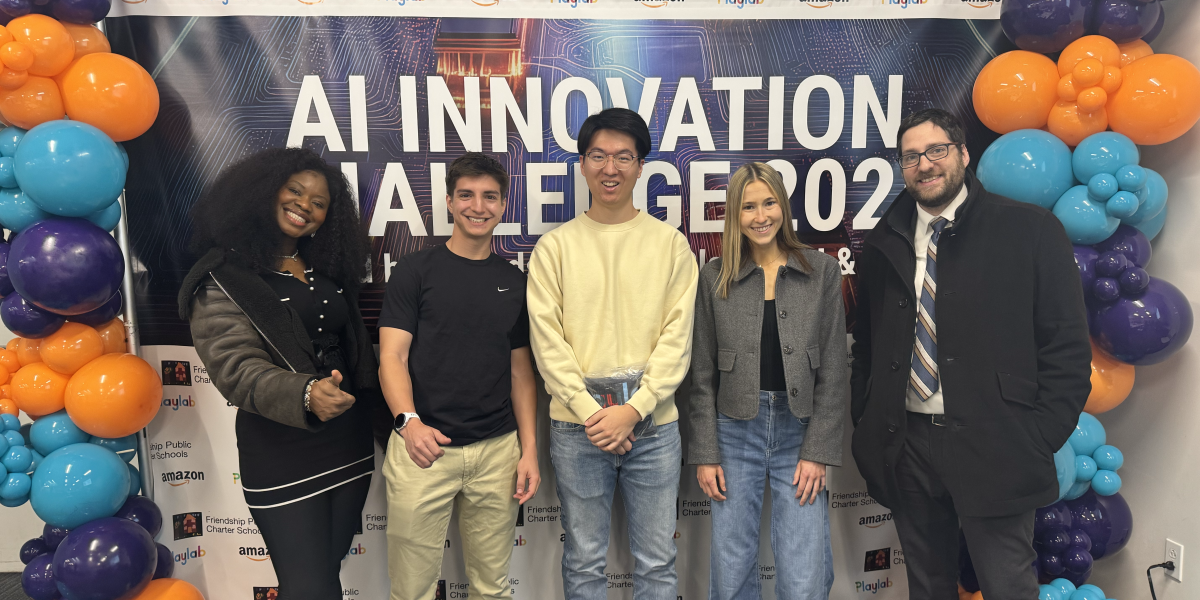
In Fairfax County Public Schools, the district is scaling participation to reach all high school students. In Washington, DC, Amazon and PlayLab hosted a two-day immersive workshop with 60 middle and high school students from Friendship Charter Schools, where students built and tested AI-powered solutions to real challenges in their communities. Other partners are focusing on educator professional development, student innovation projects, or district-wide AI adoption strategies aligned to local priorities.
Category: 3. Business
-

Attorney General Tong Leads Opposition to Trump Rollbacks of PFAS Regulations
Press Releases
12/22/2025Attorney General Tong Leads Opposition to Trump Rollbacks of PFAS Regulations
(Hartford, CT) – Attorney General William Tong today led a coalition of 15 attorneys general opposing the Trump Administration’s efforts to gut data reporting and recording keeping requirements for PFAS forever chemicals.
In a comment letter sent today to U.S. Environmental Protection Agency Administrator Lee Zeldin, the attorneys general oppose rollbacks to PFAS reporting requirements mandated by Congress in 2019 under the Toxic Substances Control Act and promulgated by EPA in October 2023. Under the reporting requirements, manufacturers and importers of PFAS are asked to report whatever information they already know about the PFAS in their products, during a one-time reporting requirement currently scheduled to begin in April 2026. This would include information such as the identities and amounts of PFAS chemicals manufactured, any known effects on human health or the environment, and how many workers are exposed to these chemicals.
PFAS are a group of thousands of manmade chemicals that have been used in numerous consumer products since the 1940s, including clothing, non-stick cookware, food packaging, car seats and strollers, stain resistant furnishings, and floor waxes. But certain manufacturers spent decades hiding that their PFAS were toxic and contaminated human blood; state and federal regulators are still uncovering the chemicals in our everyday household items and the PFAS reporting rule is an important tool to do that.
“PFAS forever chemicals are a toxic menace to human health and our environment. Trump’s latest effort to gut PFAS regulation is an insult to the families, workers, and especially the firefighters who have been disproportionately exposed to these dangerous chemicals. We urge the EPA to abandon this proposal,” said Attorney General Tong.
If adopted, the Trump Administration proposal would shield from reporting over 98 percent of entities that are expected to have relevant, vital information about PFAS under six new carveouts that had been previously considered and rejected by EPA. The proposed new exemptions include: (1) a de minimis exemption for articles with PFAS concentrations below 0.1%; (2) an imported articles exemption; (3) an exemption for PFAS manufactured as byproducts; (4) an exemption for PFAS manufactured as impurities; (5) an exemption for PFAS manufactured as non-isolated intermediates; and (6) a research and development exemption.
Today, nearly all humans have PFAS in their blood. PFAS chemicals are toxic and can persist in the environment indefinitely. PFAS chemicals can travel through the environment, including into drinking water sources, and accumulate in human blood. Even modest releases of PFAS can cause widespread pollution and damage. EPA itself has concluded that many PFAS are known to cause severe adverse human health effects, including increased risk of kidney, breast, pancreas, prostate, and testicular cancers, liver damage, decreased birth weight and birth defects, decreased vaccine response, high cholesterol, and infertility.
TSCA requires manufacturers and processors of chemical substances to maintain records and submit to EPA reports regarding the production, importation, use, and disposal of chemical substances, as well as reports of all existing information concerning the environmental and health effects of each chemical, and information regarding individuals who have been or will be exposed to those substances. Through these mechanisms, TSCA directs EPA to ensure that chemical substances entering or already in commerce are subject to oversight commensurate with the hazards they may pose.
In 2019, Congress established specialized reporting obligations for PFAS under TSCA. Attorney General Tong supported the proposed rule ultimately adopted by EPA in 2023. Now, just two years later, EPA is seeking to gut the rule.
In their comment letter, the attorneys general urge EPA to preserve the integrity of the rule and to continue collection of PFAS data without further delay.
“If EPA adopts its proposal as a final rule, vital information about the types of PFAS used in American commerce and the risks these chemicals pose will remain hidden away, needlessly undermining States trying to protect human health and the environment and undermining EPA’s mandate under TSCA to evaluate and minimize chemical risks, in violation of the APA,” the attorneys general write.
Attorney General Tong has two pending lawsuits against 28 chemical manufacturers responsible for knowingly contaminating Connecticut waters and natural resources and harming public health with toxic PFAS “forever chemicals.” The complaints seek both injunctive and monetary relief—compelling the companies to dispose of their toxic chemical stocks, abate all pollution in Connecticut, disclose all research, and to compensate the state for past and future remediation and testing expenses. The complaints seek tens of thousands of dollars per day in penalties for widespread violations of numerous state laws dating back decades.
The attorneys general of California, Hawaii, Maryland, Massachusetts, Michigan, Minnesota, New Jersey, New York, North Carolina, Oregon, Rhode Island, Washington and Wisconsin joined today’s comments, led by Attorney General Tong and Illinois Attorney General Kwame Raoul.
Assistant Attorney General Christopher Kelly and Deputy Associate Attorney General Matthew Levine, Chief of the Environment Section assisted the Attorney General in this matter.
- Twitter: @AGWilliamTong
- Facebook: CT Attorney General
Media Contact:
Elizabeth Benton
elizabeth.benton@ct.govConsumer Inquiries:
860-808-5318
attorney.general@ct.gov
Continue Reading
-
How to avoid scams and beat the fraudsters this festive shopping season – Microsoft Source
- How to avoid scams and beat the fraudsters this festive shopping season Microsoft Source
- ‘Game of cat and mouse’ – What happens when you call a scammer? RTE.ie
- Gifts that don’t exist and fake invoices to busy staff: Scams doing the rounds this Christmas The Journal
- Lidl and Tesco among leading retailers being impersonated by fraudsters in social media ad scams The Irish Times
- Scam social media ads impersonating retailers increase over Christmas period, bank warns laois-nationalist.ie
Continue Reading
-
Kirkland Advises The Carlyle Group on Acquisition of KFC Korea | News
Kirkland & Ellis is advising The Carlyle Group in its acquisition of 100% equity securities of KFC Korea Co., Ltd., the operator of the Kentucky Fried Chicken (KFC) fast-food restaurant business in Korea, along with long term master franchise arrangements with the brand owner, Yum! Brands. The transaction was signed on December 18, 2025.
Read the transaction announcement
The Kirkland team included corporate lawyers Jesse Sheley and Jiayi Wang and technology & IP transactions lawyers Jeffery S. Norman and Min Wang.Continue Reading
-
Kirkland Advises Clearwater Analytics on $8.4 Billion Acquisition by Investor Group Led by Permira and Warburg Pincus | News
Kirkland & Ellis advised Clearwater Analytics (NYSE: CWAN) on its agreement to be acquired in a transaction valued at approximately $8.4 billion by a Permira and Warburg Pincus-led Investor Group, with participation from Temasek. The Investor Group has key support from Francisco Partners. Under the terms of the agreement, CWAN stockholders will receive $24.55 per share in cash upon completion of the proposed transaction. After a thorough process including engaging with certain strategics and financial sponsors, the Special Committee of the CWAN Board of Directors, composed entirely of independent and disinterested directors, upon the advice of its independent outside legal counsel and financial advisor, unanimously recommended this transaction. The CWAN Board of Directors subsequently approved this transaction. The acquisition was announced on December 21, 2025 and is expected to close in the first half of 2026, subject to approval by CWAN’s stockholders (including a majority of votes cast by disinterested stockholders), as well as customary closing conditions, including receipt of regulatory approvals.
Read the transaction press release
The Kirkland team included corporate lawyers Constantine Skarvelis, David Feirstein, Marshall Shaffer, Andrew Norwich, William Vaughan Kelly, Lilly Rohan and Alex Beckham; debt finance lawyers Judson Oswald and Andrew Hurley; capital markets lawyers Ross Leff and Christie Mok; tax lawyers Sara Zablotney, Joseph Tootle, and Grace Nielsen; shareholder activism & hostile takeover defense lawyers Shaun Mathew, Evan Johnson and Vera Lee; antitrust & competition lawyers Maria Raptis and Edward Sharon; international trade & national lawyers Luci Hague and John Kabealo; employee benefits lawyers Alexandra Mihalas and Anthony Aliantro; executive compensation lawyer Devin Kern; employment & labor lawyers Jackie Heffernan and Jon Link; technology & IP transactions lawyers Matt Darch, Matt Lovell and Dan Sotos; real estate lawyers John Goldman and Zeina Kazour; and environmental transaction lawyers Jonathan Kidwell and Isaac Lawrence.
Continue Reading
-
Newfoundland and Labrador Hydro Enters Temporary Power Agreement with Corner Brook Pulp and Paper
Newfoundland and Labrador Hydro has agreed to a short-term power purchase agreement with Corner Brook Pulp and Paper Limited to buy clean hydroelectricity. This agreement provides the Provincial Government an opportunity to review and consider Kruger’s proposed approach to diversification at Corner Brook Pulp and Paper.
What’s in the agreement?
- Newfoundland and Labrador Hydro will buy up to 140,000 megawatt hours of power at $187 per megawatt hour.
- It starts after the current agreement ends (estimated in January 2026) and runs until June 30, 2026.
- The current agreement, in place since 2024, costs $275 per megawatt hour.
- NL Hydro can use Corner Brook Pulp and Paper’s power supply when needed.
- This will not increase electricity rates for customers.
Corner Brook Pulp and Paper is a long-standing employer in rural Newfoundland and Labrador and a key part of the forestry industry. The Provincial Government will work to ensure rural Newfoundland and Labrador economies can grow and thrive, and that the people of the province are the first to benefit from its natural resources.
Quotes
“This agreement ensures stability while we carefully review the Corner Brook Pulp and Paper Diversification Project proposal. Our priority is to create opportunities that strengthen rural economies and ensure the people of this province are the first to benefit from projects that drive growth and sustainability”
Honourable Craig Pardy
Minister of Finance“Corner Brook Pulp and Paper is a long-standing part of our province’s forest sector, ensuring jobs for many in the industry. This agreement allows the time necessary to work with Kruger on their diversification project to make sure it is in the best interest of all those who make a living working in forestry.”
Honorable Pleaman Forsey
Minister of Forestry, Agriculture and Lands“This temporary agreement will provide additional capacity for NL Hydro at a lower cost as compared to what was signed by the previous administration as our government ensures due diligence in reviewing the Kruger proposal.”
Honourable Lloyd Parrott
Minister of Energy and Mines-30-
2025 12 22
12:40 pmContinue Reading
-
Multistate Settlement with Mercedes Benz USA and Daimler AG Over Emissions Fraud
Press Releases
12/22/2025Attorney General Tong Leads Nearly $150 Million Multistate Settlement with Mercedes-Benz USA and Daimler AG Over Emissions Fraud
Connecticut to receive $4,989,276
(Hartford, CT) – Attorney General William Tong today led a coalition of 50 attorneys general announcing a $149,673,750 settlement with Mercedes-Benz USA and Daimler AG for violating state laws prohibiting unfair or deceptive trade practices by marketing, selling and leasing vehicles equipped with undisclosed emissions defeat devices that illegally circumvented Connecticut’s strong emissions standards. The settlement also includes more than $200 million in potential consumer relief.
“Mercedes-Benz and Daimler hid devices inside their vehicles to cheat emissions tests, knowingly pumping out toxic emissions far exceeding legal limits. Their deception hurt their customers and harmed air quality for all Americans, and we’re holding them accountable. This settlement, as with others previously reached with Volkswagen and Fiat Chrysler, sends millions of dollars back to states as well as comprehensive relief for consumers who purchased these defective vehicles. Connecticut led the nationwide coalition reaching today’s settlement and will continue to lead in protecting consumers from bad actors who defraud and deceive the American people,” said Attorney General Tong.
“Consumers deserve to know exactly what they are purchasing, and they should be able to reasonably assume that any new car they buy is in compliance with all laws and regulations,” said Department of Consumer Protection Commissioner Bryan T. Cafferelli. “This deception was unfair to consumers and a clear violation of public trust. Thank you to the Attorney General’s office for their work to hold companies accountable for their advertising and marketing practices.”
Beginning in 2008 and continuing to 2016, the states allege Mercedes manufactured, marketed, advertised, and distributed nationwide more than 211,000 diesel passenger cars and vans equipped with software defeat devices that optimized emission controls during emissions tests, while reducing those controls outside of normal operations. The defeat devices enabled vehicles to exceed legal limits of nitrogen oxides (NOx) emissions, a harmful pollutant that causes respiratory illness and contributes to the formation of smog. Mercedes engaged in this conduct to achieve design and performance goals, such as increased fuel efficiency and reduced maintenance, that it was unable to meet while complying with applicable emission standards. Mercedes concealed the existence of these defeat devices from state and federal regulators and the public. At the same time, Mercedes marketed the vehicles to consumers as “environmentally-friendly” and in compliance with applicable emissions regulations.
Today’s settlement requires Mercedes-Benz USA and Daimler AG to pay $120 million to the states upon the effective date of the settlement. An additional $29,673,750 will be suspended and potentially waived pending completion of a comprehensive consumer relief program.
Connecticut will receive $4,989,276 through today’s settlement. It is estimated that there are 3,181 impacted vehicles registered in Connecticut.
The consumer relief program extends to the estimated 39,565 vehicles that had not been repaired or permanently removed from the road in the United States by August 1, 2023. Mercedes must bear the cost of installing approved emission modification software on each of the affected vehicles. The companies must provide participating consumers with an extended warranty and will pay consumers $2,000 per subject vehicle.
The companies must also comply with reporting requirements, reform their practices, and refrain from including a prohibition on any further unfair or deceptive marketing or sale of diesel vehicles, including misrepresentations regarding emissions and compliance.
Today’s settlement follows similar settlements reached previously between the states and Volkswagen, Fiat Chrysler and German engineering company Robert Bosch GmbH over its development of the cheat software. Automaker Fiat Chrysler and its subsidiaries paid $72.5 million to the states in 2019. Bosch paid $98.7 million in 2019. Volkswagen reached a $570 million settlement with the states in 2016.
The attorneys general of Connecticut, Delaware, and Maryland led the multistate investigation and settlement, and were assisted by Alabama, Georgia, New Jersey, New York, South Carolina, and Texas. The final settlement was also joined by Alaska, Arkansas, Colorado, the District of Columbia, Florida, Hawaii, Idaho, Illinois, Indiana, Iowa, Kansas, Kentucky, Louisiana, Maine, Massachusetts, Michigan, Minnesota, Mississippi, Missouri, Montana, Nebraska, Nevada, New Hampshire, New Mexico, North Carolina, North Dakota, Ohio, Oklahoma, Oregon, Pennsylvania, Rhode Island, South Dakota, Tennessee, Utah, Vermont, Virginia, Washington, West Virginia, Wisconsin, Wyoming, and Puerto Rico.
Assistant Attorneys General Brendan Flynn, Scott Koschwitz, and Rebecca Quinn and Deputy Associate Attorney General Michael Wertheimer, Chief of the Consumer Protection Section and Deputy Associate Attorney General Matthew Levine, Chief of the Environment Section assisted the Attorney General in this matter.
- Twitter: @AGWilliamTong
- Facebook: CT Attorney General
Media Contact:
Elizabeth Benton
elizabeth.benton@ct.govConsumer Inquiries:
860-808-5318
attorney.general@ct.gov
Continue Reading
-

Artificial metabolism turns waste CO2 into useful chemicals: For Journalists
- New system successfully transforms simple carbon molecules into acetyl-CoA
- A building block of life, acetyl-CoA can be used to make a variety of materials
- To build the system, scientists screened 66 enzymes and 3,000 enzyme variants
- Enzyme screening and system use molecular machinery outside of living cells
EVANSTON, Ill. — In a breakthrough that defies nature, Northwestern University and Stanford University synthetic biologists have created a new artificial metabolism that transforms waste carbon dioxide (CO2) into useful biological building blocks.
In the new study, the team engineered a biological system that can convert formate — a simple liquid molecule easily made from CO2 — into acetyl-CoA, a universal metabolite used by all living cells. As a proof of concept, the engineers then used the same system to convert acetyl-CoA into malate, a commercially valuable chemical used in foods, cosmetics and biodegradable plastics.
Unlike natural metabolic routes, the new system is entirely synthetic and operates outside of living cells. The engineers built the system, called the Reductive Formate Pathway (ReForm), from engineered enzymes that performed metabolic reactions never before seen in nature.
The work marks a major advance for synthetic biology and carbon recycling, opening the door for developing sustainable, carbon-neutral fuels and materials.
The study was published today (Dec. 22) in the journal Nature Chemical Engineering.
“The unabated release of CO2 has caused many pressing social and economic challenges for humanity,” said Northwestern’s Ashty Karim, who co-led the study. “If we’re going to address this global challenge, we critically need new routes to carbon-negative manufacturing of goods. While nature has evolved several pathways to metabolize CO2, it is unable to keep up with the rapid increase in the amount of atmospheric CO2. Inspired by nature, we sought to use biological enzymes to convert formate derived from CO2 into more valuable materials. Because there isn’t a set of enzymes in nature that can do that, we decided to engineer one.”
“ReForm can readily use diverse carbon sources, including formate, formaldehyde and methanol,” said Stanford’s Michael Jewett, who co-led the study with Karim. “This is the first demonstration of a synthetic metabolic pathway architecture that can do so. By combining electrochemistry and synthetic biology, the ReForm pathway also expands possible solutions for generalizable CO2-fixation strategies. We anticipate that hybrid technologies that integrate the best of chemistry and the best of biology will provide transformative new directions for a carbon- and energy-efficient future.”
An expert in synthetic biology and biotechnology, Karim is an assistant professor of chemical and biological engineering at Northwestern’s McCormick School of Engineering and a member of the Center for Synthetic Biology (CSB). Jewett is an adjunct professor at Northwestern, founding co-director of CSB and a professor of bioengineering at Stanford.
Looking beyond nature
As researchers search for solutions to help fight the ever-warming atmosphere, many have sought to upcycle captured CO2 into valuable chemicals. Because it’s easy to make from electricity and water, formate has emerged as a promising starting point. Then, biological systems could perform the work needed to convert formate into useful materials.
But, unfortunately, living cells struggle to use formate efficiently. Only a few rare microbes can digest formate naturally, and those microbes are difficult to engineer for large-scale production.
“Cells naturally use metabolic reactions to convert one chemical into another,” Karim said. “For example, cells can take glucose, or sugar, and convert it into energy. But, in nature, nothing can turn formate into acetyl-CoA. There are some enzymes that can act on formate, but they cannot build it up into something useful. So, we started with a theoretical pathway design and the need for enzymes with functionalities that did not exist in nature.”
Testing thousands of enzymes per week
Before building the metabolic pathway, the research team needed enzymes that could perform these non-natural reactions. To rapidly express and test large numbers of enzyme variants, the team turned to cell-free synthetic biology. In this approach, scientists essentially remove a cell’s wall, collect its molecular machinery (enzymes, cofactors and small molecules) and put it all into a test tube. Scientists then can use this machinery — outside of a living organism — to make a product in a safe, inexpensive and rapid manner.
“It’s like opening the hood of a car and removing the engine,” Jewett said. “Then, we can use that ‘engine’ for different purposes, free from the constraints of the car.”
Using a cell-free system enabled the team to rapidly screen 66 enzymes and more than 3,000 enzyme variants to find the ones that worked best. This process was much faster and more flexible than using live cells, which would have been slow and laborious.
“Typically, people will test a handful of enzymes, and that takes months or more,” Karim said. “The cell-free environment enabled us to test thousands per week.”
How it works
With this process, the researchers engineered five distinct enzymes. The final pathway design comprises six total reaction steps, in which each enzyme performs one step. Together, the series of reactions successfully transformed formate into acetyl-CoA.
Much like the enzyme testing, the entire system is run outside of living cells. That means the team could precisely control enzyme concentrations, cofactors and conditions — something that’s nearly impossible to accomplish inside a living organism.
After establishing the system, Karim, Jewett and their teams used ReForm to convert acetyl-CoA into malate. The team also demonstrated ReForm can accept other carbon-based inputs, including formaldehyde and methanol.
“From here, we can imagine this work going in a couple different directions,” Karim said. “We would like to further optimize this pathway and explore other designs to make one-carbon conversions more efficient. We also can imagine using the tools that we developed to engineer all kinds of other new enzymes and pathways. It gives us hope for a future where we can combine multiple technologies, both biological and abiological, in unique ways to find new solutions.”
The study, “A synthetic cell-free pathway for biocatalytic upgrading of formate from electrochemically reduced carbon dioxide,” was supported by the U.S. Department of Energy (award number DE-SC0023278) and the National Science Foundation.
Continue Reading
-
A. Lange & Söhne opens new flagship boutique in Singapore
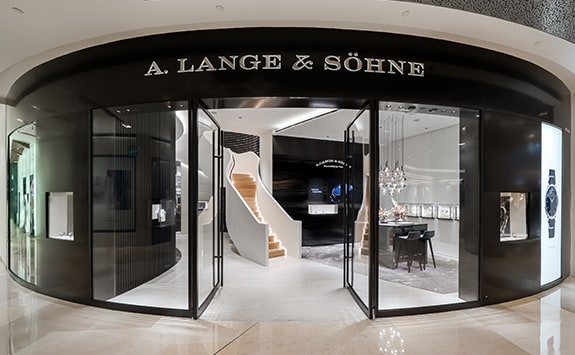
In the welcome area, a digital “History Wall” enhances the introduction to the brand’s rich heritage. Vitrines showcasing models of all watch families, as well as curated historic pocket watches, emphasise Lange’s craftsmanship. The manufacture’s visual identity unfolds in stately black and grey tones, offset by soft white walls, textured finishes, and plush furnishings. The spatial layout organically guides customers through the reception and consultation areas. Meanwhile, a discreet bar behind the sales counter offers a private space where customers can try on timepieces in comfort.
A sweeping staircase leads to the upper floor, where the boutique transitions into a luxurious private area. This space comprises two sales salons, a lounge, a presentation and theatre section, as well as an exclusive watchmaking experience corner. Surrounded by elegant bookcases, objets d’art, and rare timepieces, the upper level is designed to inspire conversation and discovery.
“We are delighted to welcome watch enthusiasts to our new flagship boutique at ION Orchard. This location not only represents a milestone in our retail journey, but also beautifully articulates our motto “never stand still”. At A. Lange & Söhne, we are constantly innovating– both through our watches, as well as with the experiences that we offer – for watch lovers and Lange enthusiasts here in Singapore and across the region,” says Wilhelm Schmid, CEO of A. Lange & Söhne.
Continue Reading
-
Cushman & Wakefield Closes $11.93M Sale of the 6400 Building in Fort Lauderdale | US
FORT LAUDERDALE, Florida, December 22, 2025 – Cushman & Wakefield announced today that the firm represented PEBB Enterprises in its disposition of the 6400 Building in Fort Lauderdale. PEBB Enterprises acquired the asset in 2004 for $6.31M, and it served as their corporate headquarters before relocating to Boca Raton.
Cushman & Wakefield’s Scott O’Donnell, Mike Ciadella, Greg Miller and Miguel Alcivar represented the seller in its $11.93 million transaction with a private family office.
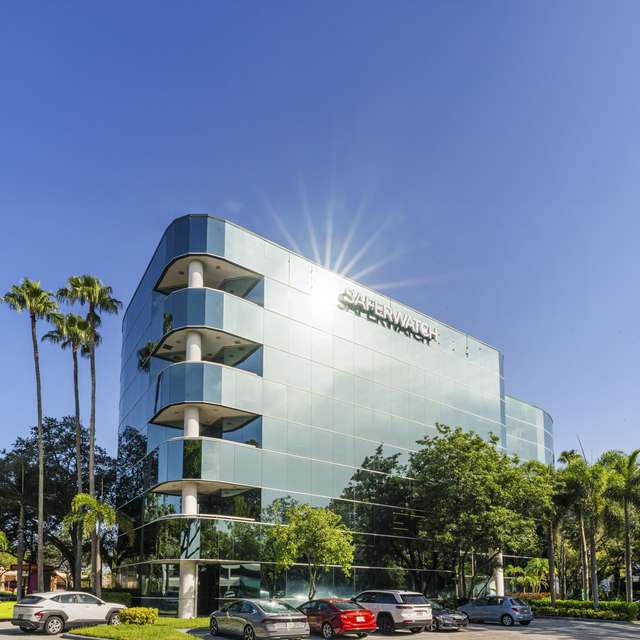
Located at 6400 N. Andrews Avenue in Fort Lauderdale’s Uptown Urban Village, the 6400 Building totals 55,241 square feet and is 89% leased, providing both a secure income stream and significant upside potential. With average suite sizes of 3,724 square feet, the 6400 Building caters to small and mid-sized users, the segment that represents the majority of leasing demand in the market.
The property is distinguished by its high-profile signage at the Cypress Creek Road interchange of I-95, visible to approximately 260,000 cars daily, an identity typically reserved for much larger corporate assets. Its central location, just north of Downtown Fort Lauderdale, offers direct connectivity to I-95, Cypress Creek Road, Commercial Boulevard and Federal Highway, delivering tenants a cost-effective alternative to the congestion and higher rents of the CBD while maintaining access to South Florida’s key business hubs.
“Our team is witnessing increasing demand from private-capital investors for well-located, high-quality assets that cater to the small to mid-size tenants that have remained resilient through the past few years,” said O’Donnell, Cushman & Wakefield Executive Managing Director. “This asset’s visibility from I-95 and access to the Cypress Creek Interchange drove strong investor interest.”
Continue Reading