Category: 3. Business

  • Bosses at City & Guilds handed million-pound bonuses after training firm is privatised | Business

    Bosses at City & Guilds handed million-pound bonuses after training firm is privatised | Business

    A pair of City & Guilds executives have each been awarded million-pound bonuses and sizeable salary increases after the skills charity’s business was acquired by an international company in October, the Guardian understands.

    The payments – which are understood to include a £1.7m award for the chief executive, Kirstie Donnelly, and £1.2m to the finance director, Abid Ismail – have emerged at a sensitive time for the training and qualifications business, as it navigates its first few months in the private sector.

    Last week it was revealed how City & Guilds has embarked on a £22m cost-cutting drive and is shrinking its UK workforce after being sold by its charity owner to PeopleCert, an international certification company.

    Alongside the bonuses, the Guardian understands that Donnelly has also been granted a £100,000 increase to her salary, which now stands at about £430,000. Ismail’s salary is also believed to have been increased by 30%, rising by about £70,000 to £300,000.

    Founded in 1878 by the City of London and a group of 16 livery companies, the original institute developed a national system of technical education, offering qualifications and apprenticeships in fields ranging from manufacturing and mechanical engineering to hairdressing and horticulture. It was awarded a royal charter by Queen Victoria in 1900 and the body says that it helps about 1.1m people a year.

    The TV chef Jamie Oliver has a City & Guilds qualification. Photograph: Ian West/PA

    It has enjoyed a storied history with the body’s famous alumni including the chefs Jamie Oliver, Marcus Wareing and Gordon Ramsey, the former England football manager Gareth Southgate, as well as the celebrity gardener Alan Titchmarsh and the fashion designer Karen Millen.

    The institute’s business was owned under the umbrella of a charity, City & Guilds London Institute (CGLI), which announced in the autumn that it was selling its training and awards operation, City & Guilds (C&G), to PeopleCert.

    The sale gave the charity, which provides grants to people in need of vocational training, a cash windfall of between £180m and £200m, which was presented as ensuring the long-term future of the institution to pursue its charitable objectives, as well as providing increased opportunities and investment for the now-private training business.

    These ambitions appear to coincide with plans for a restructuring of the C&G training business. Earlier this month PeopleCert published a presentation aimed at its financial backers in which it said it had identified £22m of savings at C&G, of which £13m were “personnel cost synergies” that would largely be achieved by failing to replace staff leaving the institute with hires from the UK.

    The document implied that C&G, which has more than 1,600 staff members and 1,800 “associates” on short-term contracts, has a “churn” rate equivalent to about 300 people leaving a year and outlined how PeopleCert plans to relocate a third of those jobs to Greece “at a cost [of] up to 50% lower”. The same quantity of roles “are due to not be replaced due to overlapping functions”, the presentation added, while the remainder of leavers will be replaced with hires in the UK.

    The presentation appears to have been removed from the PeopleCert website after the Guardian published the cost-cutting plans.

    Under the terms of the sale, the privatised City & Guilds will continue to use the brand that it shares with its former charity owner.

    A spokesperson for City & Guilds said: “[The charity] CGLI will be publishing its accounts in January 2026 and details on pay and remuneration will be reported appropriately in those accounts as always. Bonuses for eligible employees reflecting performance in 2025 are payable in line with CGLI remuneration policy. No payments outside of CGLI’s existing bonus schemes have been made. The CGLI annual accounts will report on the long-term future that is now protected for the charity. At the same time, this transaction unlocks future investment for the commercial awarding and training businesses that continue to operate in a highly competitive marketplace.

    “The accounts for City & Guilds Ltd will be published at year end in 2026, as required for private limited companies. Any awards to employees are a matter for City & Guilds Ltd and are guided by standard commercial practice to ensure critical expertise and experience is retained.”

    Continue Reading

  • Nuvalent to Present at the 44th Annual J.P. Morgan Healthcare Conference

    Nuvalent to Present at the 44th Annual J.P. Morgan Healthcare Conference

    CAMBRIDGE, Mass., Dec. 22, 2025 /PRNewswire/ — Nuvalent, Inc. (Nasdaq: NUVL), a clinical-stage biopharmaceutical company focused on creating precisely targeted therapies for clinically proven kinase targets in cancer, today announced that James Porter, Ph.D., Chief Executive Officer, will present at the 44th Annual J.P. Morgan Healthcare Conference on Tuesday, January 13, 2026, at 9:00 a.m. PT in San Francisco. 

    A live webcast will be available in the Investors section of the company’s website at www.nuvalent.com, and archived for 30 days following the presentation.

    About Nuvalent
    Nuvalent, Inc. (Nasdaq: NUVL) is a clinical-stage biopharmaceutical company focused on creating precisely targeted therapies for patients with cancer, designed to overcome the limitations of existing therapies for clinically proven kinase targets. Leveraging deep expertise in chemistry and structure-based drug design, we develop innovative small molecules that have the potential to overcome resistance, minimize adverse events, address brain metastases, and drive more durable responses. Nuvalent is advancing a robust pipeline with investigational candidates for ROS1-positive, ALK-positive, and HER2-altered non-small cell lung cancer, and multiple discovery-stage research programs.

    SOURCE Nuvalent, Inc.

    Continue Reading

  • The 2025 EU Industrial R&D Investment Scoreboard

    The 2025 EU Industrial R&D Investment Scoreboard

    The 2025 EU Industrial R&D Investment Scoreboard reveals a slowdown in overall R&D investment growth among EU companies. Against this trend, the European health and energy sectors increased their R&D investments well above global peers. 

    Produced since 2004 by the European Commission’s Joint Research Centre in collaboration with the Directorate General Research & Innovation, the EU Industrial R&D Investment Scoreboard provides economic information from the latest financial accounts of the world’s top 2000 R&D investors. It also includes an extended sample of the top 800 R&D investing companies based in the EU. Investments from the companies covered in the Scoreboard account for almost 90% of global private R&D funding. 

    EU: Health and energy sectors shine in a year of slowdown

    In 2024, EU-headquartered companies reported a total R&D investment of €233.8 billion. This is an investment growth rate of 2.9%, down from 9.3% in 2023.   

    Despite this overall slowdown, there were bright spots in specific sectors. EU companies in the health sector increased R&D investments by 13%, outperforming other regions such as the United States (7.1%), Japan (9.1%), and China (0.1%). Similarly, the EU’s energy sector, especially companies focusing on electricity and renewable energy, experienced a 19.8% increase, outpacing global competitors like the United States (6%), Japan (-14.2%), and China (3.8%).

    However, performance varied across sectors. The EU ICT sector declined investments by 8.9%. Meanwhile, the automotive industry, the EU’s largest R&D investor at €87 billion, showed stagnation (0.8% growth rate), lagging behind China (11.9%) and Japan (12.3%) growth rates.

    ICT, health and automotive industries fuel R&D worldwide

    Globally, R&D investment continues to rise. In 2024, the top 2,000 global companies invested €1,442.6 billion in R&D, marking a 6.3% growth rate, slightly above the previous year’s 6.0%. The United States and the rest of the world (ROW) experienced the highest growth rates, with 7.8% and 8.1% respectively, followed by Japan at 7.1%. In contrast, the EU’s growth was more moderate at 2.9%, closely matching China’s 3.9%.

    Sector-wise, R&D investments remain heavily concentrated in four key areas: ICT software, ICT hardware, health industries, and automotive. Together, these four sectors account for over 80% of the total Scoreboard R&D investment. US firms continue to dominate in ICT-related sectors and health, while EU companies retain a global lead in automotive R&D. 

    Concentration of innovation and profits

    Global R&D investment is becoming increasingly concentrated, driven largely by the top 5 investing companies (Amazon, Alphabet, Meta, Microsoft and Apple). Over the past decade, these companies doubled their share of global R&D investment, now accounting for approximately 15% of the total R&D investment. This concentration is mirrored in profits, rising from 3% to 15% between 2011 and 2024.  The concentration of such innovation and business capacity in a handful of companies raises questions of market dynamism and broader innovation diffusion within the global economy.

    Scoreboard dataset publicly available 

    The Scoreboard provides a reliable, up-to-date benchmarking tool for comparisons between companies, sectors, and geographical areas, as well as to monitor and analyse emerging investment trends and patterns. It is based on company data extracted directly from each company’s annual report. 

    Its annual publication has become a reference for science, industry and policy actors. It has contributed to numerous publications of European and international institutions, including the Draghi and Heitor Reports, the  Science, Research & Innovation Performance Report and the yearly European Investment Bank Investment Reports.

    The Scoreboard emphasises open data practices, making its database publicly available for stakeholders to conduct their benchmarking and monitoring exercises, in accordance with the Commission’s open science practice.   

    Related content

    Find out the report, the dataset and a visual dashboard on JRC’s economics of industrial research and innovation web page. 

    Continue Reading

  • Simplifying the insurance rules – FCA’s policy statement PS25/21

    Simplifying the insurance rules – FCA’s policy statement PS25/21

    The FCA has published Policy Statement PS25/21 setting out its final rules and options for future changes for simplifying the insurance rules. Firms will welcome the FCA’s aim of a more flexible and proportionate regime for the insurance sector that it has said is designed to reduce regulatory costs. The FCA has gone ahead with many of the proposed rules that it consulted on without many significant amendments. It has also set out some changes to look out for in the future.

    Our Financial Services Regulation Partner, Andrzej Wieckowski says…  

    “Whilst some in the market wanted the FCA to go further, the more flexible and proportionate regime will be welcome news for firms, in particular those dealing with commercial customers. Firms will now need to focus on maximising the benefits of the changes.”

    Ben Player, our Financial Services Regulation Partner, has focused on the impact on insurance intermediaries…

    “Whilst some of the rule changes appear initially to focus on insurers, there are a number of benefits for insurance intermediaries in the new rules, which they will need to work with insurers to leverage. As the new rules came into effect immediately on publishing the Policy Statement, there is no time to waste in reviewing the new rules and making the appropriate changes”

    The points not to miss…

    Continue Reading

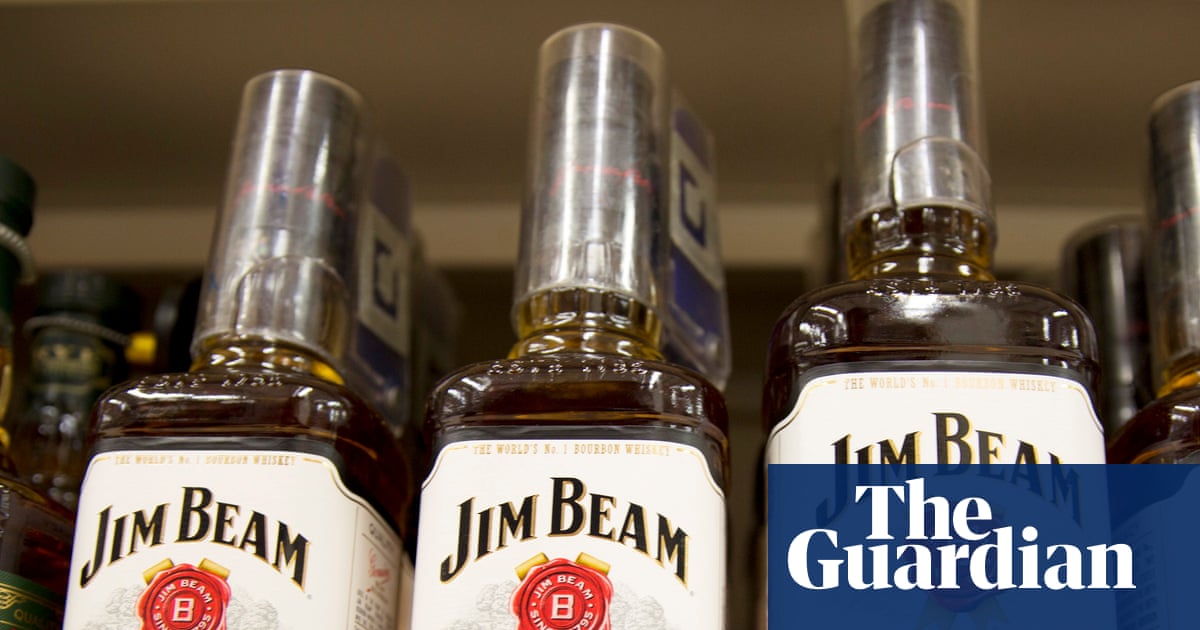
  • Bourbon maker Jim Beam stops production at Kentucky site for 2026 | Food & drink industry

    Bourbon maker Jim Beam stops production at Kentucky site for 2026 | Food & drink industry

    The maker of Jim Beam bourbon whiskey will halt production at its main site in Kentucky for all of 2026.

    The company said in a statement it would close its distillery in Clermont until it took the “opportunity to invest in site enhancements”.

    “We are always assessing production levels to best meet consumer demand and recently met with our team to discuss our volumes for 2026,” it said.

    It comes as whiskey distillers in the US face uncertainty around Donald Trump’s trade tariffs, as well as declining rates of alcohol consumption.

    In October, the Kentucky Distillers’ Association (KDA) trade body said there was a record amount of bourbon in warehouses across the state – more than 16m barrels.

    The KDA warned distillers faced a “crushing” $75m (£65m) in taxes on their inventory this year, as the state charges tax on ageing barrels of spirits.

    Jim Beam said it was assessing how it would use its workforce while it paused production and was in talks with its workers’ union.

    The company’s other operations in Kentucky, including another distillery and its bottling and warehouse plants, would remain open next year. Its visitor centre in Kentucky will also stay open.

    Jim Beam is owned by the Japanese drinks group Suntory Global Spirits, which employs more than 6,000 people around the world, with more than 1,000 people across its sites in Kentucky.

    Known for its celebrated single malt whiskies, Suntory’s brands also include Haku vodka and Sipsmith gin, as well as soft drinks Orangina and Lucozade. It acquired the US maker of Jim Beam in 2014 for $16bn, securing its status as one of the world’s biggest spirits makers.

    In September, its chief executive, Takeshi Niinami, resigned from the company after police raided his home as part of an investigation into suspected illegal supplements.

    Niinami, who has denied any wrongdoing, had joined Suntory in 2014, becoming the first executive from outside the founding family, after 12 years as chief executive of the convenience store chain Lawson.

    Trump’s tariffs have cast a shadow of uncertainty across the spirits industry this year. In March, some Canadian provinces pulled American spirits from stores as a retaliatory move against US tariffs on Canadian goods. Since then some provinces have resumed buying American alcohol.

    In the UK, whisky distillers are subject to a 10% tariff on goods exported to the US. The Scotch Whisky Association has estimated that it costs the sector £4m a week.

    Continue Reading

  • Ambitious regeneration programme delivers transformed town centre for Tamworth

    • £21million Future High Streets Fund programme transforms Tamworth town centre
    • Final public realm paving works complete this month, connecting all regeneration sites
    • Heritage buildings restored, new spaces created, and independent businesses supported

    Tamworth Borough Council is celebrating the completion of major works in its ambitious £21.65 million Future High Streets Fund regeneration programme, as the final piece of public realm paving work comes together.

    The programme, which began in 2020, has transformed Tamworth town centre from somewhere people had to visit into somewhere they want to visit – addressing key challenges including declining footfall and a dated environment.

    The final phase of paving work, which connects all the regeneration projects together, creates a seamless link from St Editha’s Square, through Middle Entry to Town Hall Place, and the new Castle Gateway. This brings together the council’s vision of connecting the town’s three ancient monuments: Tamworth Castle, the Town Hall and St Editha’s Church.

    The programme has delivered a diverse range of projects, from sympathetic heritage restoration to bold new builds designed for 21st century needs.

    Major achievements in 2025 include:

    The Elizabeth Bradford Business Centre in Colehill – the council has beautifully restored this 19th century building, offering 14 serviced offices for growing businesses, complete with original features including stained glass windows, decorative staircases and parquet flooring.

    The former Peel Café on Market Street – matching its original Georgian style and now home to Nationwide Building Society, which relocated from its 1970s building to make way for the new Castle Gateway.

    Castle Gateway – the council demolished the former Nationwide building to create a wider, more open bridge into the Castle Grounds with enhanced views of the castle and castle herringbone walls from the town centre.

    St Editha’s Square – refurbished with new paving and lighting, to create an attractive space for the market and community events.

    Town Hall Place – seven individual retail units in a striking new building opposite the Town Hall, specifically designed to support independent small businesses with affordable, flexible leases. The building is complete and internal fit-out work is underway, with new businesses preparing to open in the New Year.

    Public realm improvements – new paving throughout the town centre creates cohesive, accessible spaces that link all projects together.

    The regeneration programme was shaped by extensive consultation with local people and businesses in 2019, who told Tamworth Borough Council what they wanted and needed from their town centre. Tamworth was one of just 72 towns to receive Future High Streets Fund support and was awarded the fourth highest amount – one of only 15 towns to receive the full amount requested.

    Combined with South Staffordshire College’s new facility in St Editha’s Square, which opened in September and welcomes over 1,000 students daily, the projects represent a combined investment of over £40 million in Tamworth town centre.

    Councillor Carol Dean, leader of Tamworth Borough Council, said: “We’re incredibly proud of what’s been achieved through this once-in-a-generation regeneration programme. With seven major build projects completing in 2025, the transformation of our town centre is remarkable.

    “Beautiful historic buildings have been bought back to life, stunning new spaces have been created for people to enjoy, and there are now opportunities for education, enterprise and independent businesses to thrive.

    “This final piece of paving work quite literally brings everything together – you can now walk seamlessly from the Castle Grounds, through our historic market square, past the new college and business centres, connecting our town’s incredible heritage.

    “Town Hall Place is ready to welcome its first independent businesses in the New Year. These units were specifically designed for start-ups and niche traders – businesses bringing something new and different to Tamworth that we don’t already have. We’re working closely with entrepreneurs to help them establish their ventures, and I’m excited to see these spaces come alive with activity.

    “Tamworth’s community has been incredibly patient throughout the disruption, and I want to thank residents, visitors, market traders and businesses for their support. We now have a town centre fit for the 21st century that we can all be proud of – somewhere people want to visit, not just somewhere they have to visit.”

    Tamworth Borough Council worked in partnership with Speller Metcalfe, appointed as delivery partner in January 2023, who brought expertise in complex town centre regeneration schemes and working within conservation areas. Throughout the programme, the council worked in consultation with Historic England and the heritage and conservation experts.

    The final project in the regeneration programme – restoring three Grade II listed properties on Market Street next to Tamworth Castle – will begin in Spring 2026. Heritage conservation specialists BSN Group Construction have been appointed to carry out this sensitive restoration work, bringing these historic buildings back into active use.

    Completing these major works marks a significant milestone, but not the end of Tamworth Borough Council’s ambitions for the town centre. Plans are being developed for further regeneration in the Gungate area, building on the momentum and success of the Future High Streets Fund programme. Tamworth Borough Council remains committed to continuing investment and improvement across Tamworth town centre.

    Continue Reading

  • Rupee stays broadly stable amid stronger reserves and steady foreign inflows-INP

    Rupee stays broadly stable amid stronger reserves and steady foreign inflows-INP

    Moaaz Manzoor

    The Pakistani rupee remained broadly stable during the third week of December, recording only marginal movements against major global currencies as improved foreign exchange inflows and a sharp rise in reserves supported market confidence.

    According to the State Bank of Pakistan, the rupee opened the week on Monday at 280.0800 (buying) and 280.5051 (selling) against the US dollar. It edged slightly higher on Tuesday to 280.0768 and 280.5019, before firming further midweek at 280.0236 and 280.4487 on Wednesday. The trend remained largely steady on Thursday at 280.0203 and 280.4454, with the rupee closing the week on Friday at 280.0067 and 280.4318, reflecting a mild appreciation over the period.

    In the euro market, the rupee showed limited volatility. It traded at 328.6395 (buying) and 329.1308 (selling) at the start of the week before moving to 329.1235 and 329.6221 on Tuesday. It eased midweek to 328.3466 and 328.8445, then traded at 328.6979 and 329.1938 on Thursday, closing the week slightly lower at 328.1022 and 328.5930.

    The British pound recorded comparatively firmer levels. It opened the week at 374.2124 (buying) and 374.8059 (selling), edged up to 374.2894 and 374.8777 on Tuesday, and strengthened further to 374.7434 and 375.3203 midweek. The currency remained elevated on Thursday at 374.3595 and 374.9345, ending the week near 374.4986 and 375.0916.

    The Chinese yuan traded in a narrow range throughout the week. The exchange rates were 39.7352 and 39.7861 on Monday, rising slightly to 39.7750 and 39.8260 on Tuesday, and hovering around 39.7814 and 39.8319 midweek. It eased marginally on Thursday to 39.7712 and 39.8217, before closing at 39.7748 and 39.8252.

    Similarly, the Saudi riyal remained stable, fluctuating within a tight band from 74.6437 and 74.7513 at the start of the week to 74.6499 and 74.7585 by Friday. The Japanese yen also saw limited movement, trading between 1.8048 and 1.8074 early in the week and closing at 1.7945 and 1.7971, reflecting modest week-long variation.

    Brokerage houses attributed the rupee’s stability to a sharp improvement in external buffers. Arif Habib Limited noted that the rupee appreciated 0.023% week-on-week to close at PKR 280.25 per US dollar, while SBP-held reserves rose by USD 1.3 billion to USD 15.9 billion during the week. The brokerage added that commercial bank reserves increased by USD 0.2 billion to USD 5.2 billion, lifting overall liquidity conditions.

    Echoing this view, AKD Securities reported that the rupee gained 0.02% week-on-week against the greenback, ending the week at PKR 280.25 per US dollar, while SBP-held foreign exchange reserves climbed USD 1.3 billion following the receipt of IMF disbursements under the EFF and RSF.

    Analysts said the rupee’s calm performance reflected strengthened reserve buffers, controlled demand for foreign exchange, and improving external inflows, with expectations that stability may persist in the near term barring any major external shocks.

    Credit: INP-WealthPk


    Continue Reading

  • Judgment on strike out application in £1.3BN Quincecare case

    In Arena Television Limited (in liquidation) v Bank of Scotland plc & Lloyds Bank plc [2025] EWHC 3036 (Comm), Butcher J dismissed strike out applications by two banks in respect of so-called Quincecare claims said to be in excess of £1.3bn, on the grounds that the directors of Arena had actual authority to authorise payments out of the company’s bank account pursuant to a fraud on asset based lenders.  

    On the main issue in the applications, the Judge accepted that it is arguable with a realistic prospect of success that the relevant law is that (at least in the absence of express agreement of the principal otherwise) an agent only has actual authority to act honestly in pursuit of the interests of the principal and there is no realistic or workable distinction which can be drawn in a case like this between frauds on and by the principal.  The judgment includes detailed consideration of the Supreme Court’s decision in Philipp v Barclays Bank UK plc [2024] AC 346.

    However, the banks succeeded in their application for strike out in relation to the claim advanced for damages representing the difference between the customers’ liability to lenders as at a date in 2008 or 2009 and their liability to lenders upon their administration.  Applying the scope of duty principle set out in Manchester Building Society v Grant Thornton [2022] AC 783 and related ‘SAAMCO’ cases, Butcher J held that in the normal case the purpose of the bank’s duty is to avoid the making of unauthorised payments, and its liability for damages is limited accordingly to the quantum of those unauthorised payments. 

    Butcher J also left open the argument that where the claimant is a ‘one-man company’, the reasoning in Singularis Holdings Ltd v Daiwa Capital Markets Ltd [2020] AC 1189 will not apply. He therefore declined to strike out the banks’ contingent counterclaims in deceit and unlawful means conspiracy. 

    William Day was led by Lance Ashworth KC at the hearing, instructed by Alex Jay, Elaina Bailes and Harry Spendlove of Stewarts Law. The judgment can be found here. 

    Continue Reading

  • Fuel margins remain “persistently high” and this is not explained by operating costs, CMA finds

    Fuel margins remain “persistently high” and this is not explained by operating costs, CMA finds

    • New analysis shows fuel retailer operating costs do not explain why fuel margins remain at persistently high levels 

    • Fuel finder set to launch next year to help drivers get the cheapest prices and boost competition in the sector 

    • CMA publishes enforcement guidance setting out what happens if businesses don’t comply with the new fuel finder regulations 

    The Competition and Markets Authority (CMA) has warned that fuel margins remain high, despite falling pump prices in the past year. In the first annual road fuel monitoring report under its new powers, the CMA found that operating costs have not impacted fuel retailers’ profitability and do not explain why fuel margins remain high compared to historic levels.

    This work aligns with the CMA’s mission to promote competition and protect consumers with a clear end goal in mind: to drive economic growth and improve household prosperity. It builds on the CMA’s road fuel market study which made recommendations to help drivers get more competitive fuel prices. The report captures developments in the road fuel market up to October 2025.

    Dan Turnbull, Senior Director of Markets at the CMA, said: 

    Fuel margins remain at persistently high levels – and our new analysis shows operating costs do not explain this. This indicates competition in the sector is weak – if it was working well, drivers could see lower prices at the pump. 

    We know fuel costs are a big issue for drivers, especially at this time of year with millions making journeys across the country. This is why the fuel finder scheme is crucial – it will put power back in the hands of motorists and save households money.

    Fuel prices   

    Fuel prices across the UK decreased for both petrol and diesel between November 2024 and October 2025. This trend can be explained by changes to crude oil prices, the exchange rate and refining spread.   

    The average price of petrol was 135 pence per litre (ppl) between November 2024 and October 2025, 8 ppl lower than the same period in the previous year. The average price of diesel was 142 ppl between November 2024 and October 2025, 8 ppl lower than the same period in the previous year.   

    Fuel margins  

    The report sets out average fuel margins for supermarket and non-supermarket fuel retailers across the UK using data up to September 2025. A retailer’s fuel margin is the difference between what it pays for fuel and what it sells it at. The CMA found that fuel margins remain above historic levels, indicating that competition in the road fuel retail market remains weak.   

    Average fuel margins for supermarket fuel retailers on a ppl basis have trended downwards from a high of 10.9 ppl in 2022 to 9.6 ppl for the 2025 year to date (January to September 2025). However, average fuel margins for non-supermarket fuel retailers on a ppl basis for the 2025 year to date are broadly increasing, with fuel margins at 11.1 ppl compared to a margin of 10.8 ppl in the previous year.  

    Operating costs  

    The report finds that operating profit margins for large fuel retailers are increasing. Declining or flat operating profit margins would be expected if operating cost increases were impacting the profitability of retailers’ road fuel businesses.  

    These findings challenge claims made by some fuel retailers that high fuel margins could be explained by operating costs. This analysis uses data collected for the period between 2020 and June 2025.  

    Retail spreads  

    The CMA also looked at the retail spread – the average price that drivers pay at the pump compared to the benchmarked price that retailers buy fuel at – between November 2024 and October 2025.   

    While spread analysis can give a quick overview of trends in the sector, it is a less reliable indicator of competitive intensity than individual retailers’ fuel margins. Retail spreads increase and decrease in response to the volatility of wholesale prices but should return to a normal range over time if the market is working well.  

    The petrol and diesel retail spreads averaged 13.9 ppl and 14.6 ppl respectively during this time. Although this is lower than the average over the previous 12-month period, petrol and diesel retail spreads remain significantly above the 2015 to 2019 averages, which were 6.5 ppl for petrol and 8.6 ppl for diesel.

    Fuel finder 

    The ‘fuel finder’ scheme will allow drivers to compare real-time fuel prices, such as through navigation apps and price comparison websites. This will allow drivers to find the best deals and spur competition as fuel retailers compete for customers.  

    This follows the CMA’s market study which made recommendations for a new monitoring function and fuel finder scheme. The government accepted these recommendations and confirmed that the fuel finder scheme will be up and running from next year. These two measures should reinforce one another to help bring about better outcomes for drivers.

    The CMA has an enforcement role under new regulations to ensure fuel retailers provide data for the fuel finder scheme. It can take action to tackle any breaches such as issuing fines. The CMA has published new guidance and provided an update on its approach to enforcement noting that up to at least May 2026 its focus will be on supporting businesses to comply with the new regime rather than enforcement action. 

    Notes to editors 

    1. All enquiries from journalists should be directed to the CMA press office by email on press@cma.gov.uk or by phone on 020 3738 6460.

    Continue Reading

  • Shionogi Expands Rare Disease Presence with Planned Acquisition of Global Rights to Tanabe Pharma Corporation’s RADICAVA ORS® (edaravone) and IV RADICAVA

    OSAKA, Japan, December 22, 2025 Shionogi & Co., Ltd. (Head Office: Osaka, Japan; Chief Executive Officer: Isao Teshirogi, Ph.D.; hereafter “Shionogi”) announced that its Board of Directors, at a meeting held on December 22, 2025, resolved to acquire a newly established company that Tanabe Pharma Corporation (Head Office: Osaka, Japan; Chief Executive Officer: Akihisa Harada; hereafter “Tanabe Pharma”) will create to hold the rights to RADICAVA ORS® (edaravone) and IV RADICAVA. Tanabe Pharma plans to form this new entity, and Shionogi intends to purchase 100% of its shares. The agreement between Shionogi and Tanabe Pharma was signed this afternoon. As part of the transaction, a new business company established by Tanabe for RADICAVA in the U.S. will become a wholly owned subsidiary of Shionogi Inc.


    RADICAVA ORS is approved by the U.S. Food and Drug Administration (FDA) and other regulatory agencies around the world for the treatment of amyotrophic lateral sclerosis (ALS), a progressive neurodegenerative disease for which there is no cure and few treatment options. RADICAVA ORS, along with a previously available intravenous formulation, have been used to treat more than 20,000 people with ALS in the U.S. to date. 


    “We are pleased to welcome RADICAVA to Shionogi. This critically important medicine was created to reduce the devastating burden of ALS, and we are honored to assume responsibility for it and to sustain and grow the relationships Tanabe Pharma has established with the patient and healthcare communities in the U.S.,” said Isao Teshirogi, Ph.D., CEO of Shionogi. “We recognize the significant responsibility that comes with a widely utilized breakthrough medicine and will be conscientious stewards of this important drug.”   


    “We are very excited to welcome this team and outstanding medicine to our U.S. business. This planned acquisition will solidify our strategic focus in rare disease and immediately add capabilities to ensure long term success in this important category,” said Nathan McCutcheon, President and CEO, Shionogi Inc. “Going forward, this infrastructure will support future launches in rare disease including Shionogi’s development programs in Fragile X syndrome, Jordan’s Syndrome and Pompe disease.” 


    Purpose and Background of the Acquisition


    Shionogi has identified “Contributing to a Healthy and Enriched Life” as a materiality (key issue) to address in order to create new value for customers and society. To realize a society where everyone can live vibrantly and true to themselves, we have designated disease areas with significant anticipated future unmet needs—classified as “high social impact QOL disorders” (such as sleep disorders, hearing loss, and rare diseases)—as priority areas for research and development, and we are advancing initiatives to deliver solutions.


    Within the category of high social impact QOL disorders, Shionogi is establishing a presence in rare disease through existing research programs in Fragile X syndrome, Jordan’s syndrome and Pompe disease. In addition to potential early phase rare disease assets that recently became part of Shionogi’s pipeline,1 this acquisition creates the commercial infrastructure to accelerate delivery of new rare disease medicines once regulatory approvals are obtained. 


    Key Assets and Capabilities to Be Secured Through This Acquisition

    • Acquisition of all rights, including global marketing rights for RADICAVA ORS® and IV RADICAVA
    • Establishing a strong rare disease commercial platform in the U.S. market
    • Integration of talent and business expertise in the rare disease area


    Under this agreement, Shionogi will pay a lump sum of USD 2.5 billion to Tanabe Pharma through Shionogi Inc., upon completion of the procedures. Additionally, Shionogi may pay a royalty on future sales, subject to certain conditions. Going forward, the RADICAVA ORS® and IV RADICAVA business company will commence operations as a wholly owned subsidiary of Shionogi Inc.


    1.     Resolution Date of Board Meeting

    December 22, 2025


    2.     Agreement Date

    December 22, 2025


    3.     Target Closing Date

    On or after April 1, 2026 (Scheduled)


    4.     Future Prospects

    The impact of making this company a wholly owned subsidiary on Shionogi’s consolidated financial results for the fiscal year ending March 31, 2026 is expected to be immaterial.


    Advisors

    Cleary Gottlieb Steen & Hamilton LLP served as legal advisor to Shionogi. Centerview Partners LLC served as lead financial advisor and Ropes & Gray LLP served as legal advisor to Tanabe. Goldman Sachs also provided financial advice to Tanabe. Bank of America served as financial advisor to Bain Capital.


    About RADICAVA ORS® (edaravone)
    RADICAVA ORS received approval from the U.S. Food and Drug Administration (FDA) in 2022 for the treatment of amyotrophic lateral sclerosis (ALS), a progressive neurogenerative disease for which there is no cure and few treatment options. In 2024, FDA granted RADICAVA ORS Orphan Drug Exclusivity based on its major contribution to patient care by providing an oral suspension route of administration that avoids the burdens of IV administration. To date, in the U.S., RADICAVA ORS, along with the previously available intravenous formulation have been used to treat nearly 20,000 people with ALS.


    Edaravone was discovered and developed for ALS by Mitsubishi Tanabe Pharma Corporation (MTPC) and commercialized in the U.S. by Mitsubishi Tanabe Pharma America, Inc. (MTPA). The MTPC group companies began researching ALS in 2001 through an iterative clinical platform over a 13-year period. In 2015, edaravone was approved as RADICUT® for the treatment of ALS in Japan and South Korea. Marketing authorizations were subsequently granted in Canada (October 2018), Switzerland (January 2019), Indonesia (July 2020), Thailand (April 2021), Malaysia (December 2021), Australia (February 2023) and Brazil (February 2024). Marketing authorization for RADICAVA® Oral Suspension was granted in Canada (November 2022) and Switzerland (May 2023), and RADICUT® Oral Suspension 2.1% was granted regulatory approval in Japan in December 2022.


    【About ALS】

    ALS (Amyotrophic Lateral Sclerosis) is a progressive neurodegenerative disease characterized by the selective degeneration and loss of motor neurons, leading to muscle weakness and respiratory impairment. After onset, muscle atrophy gradually progresses, and ultimately respiratory muscle paralysis severely impacts life expectancy. Globally, the annual incidence is estimated at approximately 1–2 cases per 100,000 population, making it a rare disease for which no fundamental cure currently exists.2 Multiple factors, including oxidative stress and glutamate-induced excitotoxicity, are involved in its pathophysiology, and treatment options to slow disease progression remain extremely limited. For this reason, ALS is recognized as a disease with a high level of unmet medical need, and the development and delivery of innovative therapies are strongly required.


    About Tanabe Pharma America, Inc.

    Based in Jersey City, N.J., Tanabe Pharma America, Inc. (TPA) is a wholly-owned subsidiary of Tanabe Pharma Corporation. It was established by Tanabe Pharma Corporation to develop and advance our pipeline as well as commercialize approved pharmaceutical products in North America. For more information, please visit https://us.tanabe-pharma.com or follow us on X (formerly Twitter), Facebook and LinkedIn.


    About Tanabe Pharma Corporation, Inc.

    Tanabe Pharma Corporation is one of the oldest pharmaceutical companies in the world, founded in 1678. Tanabe Pharma is headquartered in Doshomachi, Osaka, the birthplace of Japan’s pharmaceutical industry. Tanabe Pharma sets the MISSION of “Creating hope for all facing illness.” To that end, Tanabe Pharma is working on the disease areas of central nervous system, immuno-inflammation, diabetes and kidney, and cancer. Tanabe Pharma is focusing on “precision medicine” to provide drugs with high treatment satisfaction and additionally working to develop “around the pill solutions” to address specific patient concerns based on therapeutic medicine, including prevention of diseases, pre-symptomatic disease care, prevention of aggravation and prognosis. For more information, go to https://www.tanabe-pharma.com/en/index.html.


    About Shionogi in Rare Disease

    Shionogi is committed to the research and development of innovative medicines that address unmet medical needs for people worldwide. Rare diseases often have limited treatment options and affect the daily lives of individuals and families around the world. In the U.S., Shionogi is advancing clinical programs for rare diseases and disorders including Fragile X syndrome, Jordan’s Syndrome and Pompe disease. For more information, view our pipeline here: https://www.shionogi.com/us/en/innovation/pipeline.html.


    About Shionogi & Co., Ltd.

    Shionogi & Co., Ltd. is a leading global research-driven pharmaceutical company dedicated to bringing benefits to patients based on its corporate philosophy of “supplying the best possible medicine to protect the health and well-being of the patients we serve.” Shionogi has discovered and developed novel antibiotics, medicines for HIV and influenza, and currently markets medicines for infectious diseases and central nervous system disorders. Shionogi’s global pipeline includes research programs in infectious disease, pain/CNS, metabolic disorders, rare disease, oncology and stroke. For more information, visit https://www.shionogi.com/global/en. 


    References

    1.       Press Release: December 1, 2025:
    Notice regarding Completion of Succession of Japan Tobacco Inc.’s Pharmaceutical Business through Simplified Absorption-Type Company Split

    2.       Xu, et al. Global variation in prevalence and incidence of amyotrophic lateral sclerosis: a systematic review and meta-analysis. J Neurol. 2020 Apr;267(4):944-953. DOI: 10.1007/s00415-019-09652-y


    Forward-Looking Statements

    This announcement contains forward-looking statements. These statements are based on expectations in light of the information currently available, assumptions that are subject to risks and uncertainties which could cause actual results to differ materially from these statements. Risks and uncertainties include general domestic and international economic conditions such as general industry and market conditions, and changes of interest rate and currency exchange rate. These risks and uncertainties particularly apply with respect to product-related forward-looking statements. Product risks and uncertainties include, but are not limited to, completion and discontinuation of clinical trials; obtaining regulatory approvals; claims and concerns about product safety and efficacy; technological advances; adverse outcome of important litigation; domestic and foreign healthcare reforms and changes of laws and regulations. Also for existing products, there are manufacturing and marketing risks, which include, but are not limited to, inability to build production capacity to meet demand, lack of availability of raw materials and entry of competitive products. The company disclaims any intention or obligation to update or revise any forward-looking statements whether as a result of new information, future events or otherwise.


    For Further Information, Contact:

    SHIONOGI Website Inquiry Form: https://www.shionogi.com/global/en/contact.html

    Shionogi Inc.: ShionogiCommunications@shionogi.com

    Shionogi Europe Press Office: pressoffice@shionogi.eu



    Continue Reading