The change has been prompted by a major update to the timetable on the East Coast Main Line, the busy route between London, Leeds, York, Newcastle and Edinburgh.
EMR, external and LNER, external trains share part of the route, including a section between Grantham and Peterborough. There is also a bottleneck near Newark caused by a flat crossing where London to Edinburgh and Nottingham to Lincoln lines pass over each other, limiting the number of trains allowed to pass.
The timings of almost all LNER trains calling at Newark Northgate in Nottinghamshire will change.
There will be more trains to London, Doncaster, Wakefield, Leeds and Bradford Forster Square, with faster journey times, it was confirmed.
There will be hourly direct trains to Leeds and Edinburgh all day, seven days a week.
Further up the line, the timing of LNER and Hull Trains services calling at Retford will change. There will be slightly more LNER trains stopping on weekdays but fewer on Sundays.
A request to push back the delivery of a long-awaited local centre and shops in a new housing estate has been turned down.
More than 1,300 homes at Stanton Cross in Wellingborough, Northamptonshire have been occupied since construction began in May 2018.
That should have triggered a legally binding promise from developers to add the amenities once the 1,200th home had been sold.
But Stanton Cross Developments sought permission from North Northamptonshire Council to delay building the shops until there were 2,000 homes, despite objections from residents.
Planners unanimously rejected the request, the local Democracy Reporting Service said.
On Nov. 1, the Asian Community Development Council (ACDC) debuted its Trade School Readiness Boot Camp at the College of Southern Nevada to assist more than 100 Asian American, Native Hawaiian and Pacific Islander (AANHPI) students and parents in evaluating vocational school options and provide guidance on pursuing skill sets in students’ chosen fields.
Funding from Sands Cares enabled ACDC to host the first-time event, which has been a long-term goal of the organization as part of its quest to serve a greater number of youth in career planning. Sands’ support for this event complements the company’s funding for ACDC’s College Readiness Boot Camp, which has been held annually since 2015.
“The Trade School Boot Camp has been our goal for a very long time, and we’re grateful that Sands saw value in providing insights into trade and vocational career opportunities for youth in our community,” ACDC CEO and founder Vida Lin said. “We want to help all youth realize their goals, and the knowledge and tools presented at the boot camp will give a greater number of community members the opportunity to pursue successful careers.”
ACDC kicked off the boot camp with remarks from Lin, who outlined the breadth of opportunities available through trade schools.
“We want you to have choices,” Lin told attendees. “We want you to discover careers that are hands-on, high-paying, and meaningful – careers where you can use your talent, build something real and go home proud of what you accomplished. Your success does not need to look like anyone else’s. I want you to choose a future that brings you joy, not just tired feet. We are proud to be here with you today, and even more excited for everything you will become.”
The first session featured a panel discussion with representatives from The Culinary Academy; CSN’s heating, ventilation and air conditioning (HVAC) program; the NateOvation Institute of OSHA Safety, Welding, Forklift and Electrician School; and Nevada Partners, a nonprofit organization that offers comprehensive services in housing, education, health and career development. The discussion covered insights into specific trades as well as information on obtaining certifications and credentials.
Following the panel, a series of guest speakers covered career and financial planning. Herbie Walker, founder of Walker College Consultants, spoke about financial aid and the Federal Student Aid (FAFSA) process and forms. Mae Calilung, a home mortgage sales consultant with Wells Fargo, discussed personal banking basics and financial literacy topics. Finally, Roselyn Noriega of EmployNV, the state’s largest job database, outlined workforce opportunities.
Sands has supported ACDC’s youth programs for the past two years, along with providing funding for the organization’s API Language Link service since 2021 and the HAPI Medical Center since in 2022. Sands increased its youth program contribution in 2025 to enable ACDC to launch the trade school boot camp.
“The trade school boot camp is a natural fit with our commitment to workforce development and economic empowerment, particularly as a hospitality company,” Ron Reese, senior vice president of global communications and global affairs, said. “Our industry is built on trade and vocational jobs, so this new boot camp aligns perfectly with our goal to help build a strong and capable workforce in hospitality as well as in our region.”
Sands’ support for ACDC’s youth development programs addresses the company’s priorities on education and building the workforce of the future. To learn more about the Sands Cares community engagement program, visit https://www.sands.com/responsibility.
To learn more about the Asian Community Development Council, visit https://acdcnv.org/.
The TBCRC-056 Trial was designed to evaluate a chemotherapy-free neoadjuvant regimen combining the PARP inhibitor niraparib with the anti–PD-1 antibody dostarlimab in patients with germline BRCA1/2 or PALB2–mutated, HER2-negative breast cancer.
Germline BRCA1/2 and PALB2 mutations define a biologically distinct subset of breast cancer characterized by homologous recombination deficiency and sensitivity to PARP inhibition. PARP inhibitors have an established role in the management of germline BRCA-mutated breast cancer, and when used as neoadjuvant monotherapy, pathologic complete response (pCR) rates approaching 50% have been reported in triple-negative breast cancer (TNBC).
Preclinical data further suggest synergy between PARP inhibition and immunotherapy, with PARP inhibitors activating the cGAS–STING pathway, promoting CD8+ T-cell recruitment and potentially sensitizing tumors to immune checkpoint blockade. While combinations of PARP inhibitors and anti–PD-1/PD-L1 agents have not improved outcomes in the metastatic setting, this strategy may have greater impact in earlier, less immunosuppressed disease.
Study Design and Methods
TBCRC-056 is a prospective, multicenter, investigator-initiated phase II study with three arms. Arms A and B enrolled patients with stage I–III TNBC (tumor size ≥1.0 cm, ER <10%, HER2-negative) harboring germline BRCA1/2 or PALB2 mutations, while Arm C was an exploratory cohort for ER-positive disease.
Patients in the TNBC cohorts were randomized to one of two treatment strategies.
Arm A received upfront niraparib plus dostarlimab for 18 weeks.
Arm B received a 3-week lead-in of niraparib monotherapy followed by the addition of dostarlimab for a total of 15 weeks.
Niraparib was administered orally at 200 mg daily, and dostarlimab was given intravenously at 500 mg every three weeks. After completion of neoadjuvant therapy, patients proceeded to surgery or crossed over to receive additional preoperative systemic therapy if indicated. Mandatory tumor biopsies were obtained at baseline and at cycle 2 day 1 to assess stromal tumor-infiltrating lymphocytes (sTILs).
The primary objectives were to evaluate the pCR rate with preoperative niraparib and dostarlimab and to assess changes in stromal TILs from baseline to cycle 2.
Patient Characteristics and Treatment Exposure
A total of 46 patients with TNBC were enrolled into Arms A and B between January 2021 and February 2025 across eight TBCRC sites. The median age was 39 years, with approximately half of patients presenting with stage II disease and 24% having node-positive disease. Germline BRCA1 mutations were present in 83% of patients, and BRCA2 mutations in 17%.
Treatment exposure was high, with 82.6% of patients completing the target number of cycles of both dostarlimab and niraparib. The mean number of cycles received was 5.1 for dostarlimab and 5.7 for niraparib. Eleven patients (23.9%) received additional neoadjuvant therapy prior to surgery.
Results
At surgery, 23 of 46 patients (50%) achieved a pCR (RCB-0), meeting the primary efficacy endpoint of the study. pCR rates were identical in Arms A and B. When residual cancer burden was evaluated, an RCB-0/I rate of 60% was observed, with RCB-II or III in 40% of patients. pCR rates were similar between patients with BRCA1 and BRCA2 mutations.
Immune Correlates and sTILs Analysis
Thirty-seven patients had evaluable paired baseline and cycle 2 biopsies for stromal TIL assessment. Exposure to therapy led to a significant increase in sTILs at 3 weeks, fulfilling the second primary endpoint. The mean increase in sTILs was 11.4% in Arm A (upfront combination; p=0.009) and 22.7% in Arm B (niraparib lead-in; p=0.0003). Representative histologic examples demonstrated both modest and marked increases in immune infiltration, with some tumors increasing from <1% to 5% sTILs and others from 15% to 85%.
Baseline sTILs were evaluable in 45 patients, with a median baseline score of 10%. When analyzed as a continuous variable, higher baseline sTILs were significantly associated with pCR or RCB-0/I at surgery. In contrast, change in sTILs from baseline to cycle 2, baseline PD-L1 expression, and baseline ER status were not associated with pathologic response.
The safety profile was consistent with the known toxicities of niraparib and dostarlimab. Six patients (13%) discontinued all protocol therapy early, including three due to toxicity and three due to inadequate response or disease progression. Treatment-related adverse events occurring in ≥10% of patients included anemia, fatigue, hypertension, hypothyroidism, neutropenia, rash, and headache. Grade 3 or higher events were infrequent, and one grade 4 neutropenia was reported.
Conclusions and Clinical Implications
In patients with germline BRCA-mutated stage I–III TNBC, 18 weeks of a non-chemotherapy neoadjuvant regimen with niraparib plus dostarlimab, with or without a PARP inhibitor lead-in, met both primary endpoints of the TBCRC-056 study. The regimen achieved a pCR rate of 50%, an RCB-0/I rate of 60%, and induced early increases in stromal TILs after one cycle of therapy. The contribution of immunotherapy beyond PARP inhibition in this setting remains unclear. Higher baseline sTILs were associated with pathologic response, and ongoing correlative studies aim to further define the tumor microenvironment changes associated with this approach.
Roula Khalaf, Editor of the FT, selects her favourite stories in this weekly newsletter.
Delivery Hero has defended its under-fire chief executive after the German food group responded to shareholder pressure over its falling share price by exploring a sale of assets.
Chair Kristin Skogen Lund told the Financial Times that “despite headwinds” the company’s performance “remained strong”, even after its share price had fallen 30 per cent over the past 12 months to wipe about €1.5bn off its market capitalisation.
“We share the frustration that that’s not reflected in the share price and we’re committed to trying to do something about that,” she said.
Earlier this week, Skogen Lund wrote to investors to announce the company was reviewing its strategy and would consider options such as “best-owner evaluations”, “partnerships” and “capital market transactions”. The group’s shares rose more than 13 per cent in the days after the announcement, but then pared back some of the gains.
The letter — co-authored by the company’s chief executive and founder, Niklas Östberg — came weeks after reports that disgruntled shareholders were pushing its leadership to look at divestments.
Delivery Hero operates in 70 countries worldwide and counts brands such as Talabat, Glovo and Foodpanda among its portfolio of companies, but has faced stiff competition, particularly in the Middle East from competitors such as China’s Meituan.
Asked if she felt the Östberg was the right person to continue leading the group, Skogen Lund said “[yes] because Niklas founded this company and he knows it in and out”.
“We think that the company now needs stability and the opportunity to keep focusing on improving that operational performance in the hope that will eventually be better reflected in the share price,” she added.
Skogen Lund said the company’s market performance had “probably been influenced” by a number of external factors, including the “Prosus situation”, which she admitted was “not resolved yet”.
In August, Amsterdam-based Prosus, which is Delivery Hero’s largest shareholder, agreed to sell down its 27 per cent stake to “single figures” to appease Brussels competition authorities reviewing its €4.1bn takeover of Delivery Hero rival Just Eat Takeaway.
Prosus was evaluating options on how to conduct the sale of its shares, said a person familiar with the matter, which must be completed by August 2026.
Other headwinds Skogen Lund cited included a €329mn EU fine in June on Delivery Hero, alongside its Spanish subsidiary Glovo, for taking part in an “online food delivery cartel”.
At the time, the company said the settlement enabled “stakeholders to move on swiftly”, and reiterated its “commitment to continuing a culture of compliance throughout its organisation”.
Skogen Lund said she wanted to “kill a myth” that the board did not want to participate in the strategic review, adding management will “do what it takes to improve how that value is reflected in the share price”.
The Business Council of Australia says the Federal Government’s announcement of new regulation on supermarkets is not supported by evidence and risks increasing costs.
BCA Chief Executive Bran Black said the Australian Competition and Consumer Commission (ACCC) year-long inquiry found no evidence of supermarkets engaging in excessive pricing.
“We all want lower prices for Australians, but regulation should be based on evidence. The ACCC did not find that supermarkets are driving inflation, and it also found grocery prices being pushed up by the rising costs of getting goods onto shelves — including energy, transport and insurance costs,” Mr Black said.
October ABS data reinforces this point — headline CPI inflation was 3.8 per cent, while food and non-alcoholic beverage inflation was 3.2 per cent.
These outcomes reflect broader cost increases across energy, freight, labour and production rather than retailer pricing practices.
Mr Black said supermarket profit margins remain modest and stable, with Coles reporting around 2.4 per cent and Woolworths around 2.0 per cent in FY25 — levels inconsistent with claims of excessive pricing.
“The ACCC identified higher energy, freight, labour, insurance and production costs as the key pressures on grocery prices across the entire supply chain. Adding further pricing regulation risks introducing complexity and cost at a time when Australians need the system working as efficiently as possible.”
The BCA’s submission warns that the proposed regulations could lead to significant direct and indirect compliance costs, distort competition and — contrary to the Government’s intent — ultimately risk higher prices for consumers.
Mr Black said that with productivity growth and business investment weak, adding new regulatory burdens is not the right approach.
“If Australia wants lower prices and better outcomes for consumers, we need to focus on reducing unnecessary regulation and addressing the underlying cost pressures across supply chains — not increasing the regulatory burden without evidence that doing so will deliver benefits.”
Gen Z couples are the most likely to argue with their partner about finances and harbour money secrets, a survey indicates.
Around nine in 10 (91%) of Gen Z (people aged 18 to 28) said they have argued with their partner about finances, compared with 76% across all age groups.
Not saving enough, spending too much on non-essentials, and having different financial priorities are among the common reasons for a row being sparked, according to the research for Starling Bank.
This age group was found to be the most likely of all generations surveyed to keep financial secrets from a partner, with 45% doing so, compared with an average of 37%.
Hidden bank accounts, secret purchases and misrepresenting income were among the secrets being kept under wraps.
But the survey of more than 2,000 couples across the UK also indicated that Gen Z are particularly financially literate and among the generations most likely to prioritise financial compatibility.
To help couples communicate better and improve their relationship with money, Starling has created an interactive tool that aims to strengthen financial communication.
Becca Stroud, a personal finance expert at Starling, said: “It’s great that Gen Z are so financially literate, but it’s crucial for this literacy to be balanced out by an appreciation for how we all approach money slightly differently.
“Everyone has their own take on finances which can lead to disconnect, conflict, or tension – which is why it’s so important for all to learn about the variety of money languages people speak.
“This can help us to understand each other’s perspectives and learn how to best communicate with each other money wise. That’s why we built Starling’s money languages tool.”
Mortar Research was commissioned by Starling to carry out a survey of more than 2,000 people who are in a long-term romantic relationship lasting at least a year.
BEIJING, Dec. 14 (Xinhua) — China National Offshore Oil Corporation announced Sunday that the secondary development project of the Liuhua Oilfield, the country’s first deepwater oilfield, has fully commenced operation.
The milestone marks a major breakthrough in China’s ability to develop complex deepwater oil and gas reservoirs.
Located in the Pearl River Mouth Basin, the Liuhua Oilfield is China’s largest offshore reef limestone oilfield in terms of proven geological reserves. Since its initial commissioning in 1996, the oilfield has produced over 20 million tonnes of crude oil.
However, substantial reserves estimated at 140 million tonnes remain in the seabed strata, necessitating secondary development to tap into the potential.
The secondary development project comprises two oilfields, Liuhua 11-1 and Liuhua 4-1, situated in an area with an average water depth of approximately 305 meters. The project involves 32 production wells.
Since the first batch of wells began operation in September 2024, daily crude oil output has climbed to a record high of 3,900 tonnes. ■
Tasmania’s proud maritime legacy has been taken to new heights today, with the launch of the largest battery-powered ship in the world by Incat Tasmania in Hobart.
Premier Jeremy Rockliff said today was a celebration of what Tasmania does best.
“Today isn’t just significant in Tasmania, it has global implications, and the eyes of the world are on Incat,” the Premier said.
“Incat is a household name in Tasmania for a reason – it is a world leader and I know Tasmanians are so proud of the ship builder’s innovation and craftsmanship.
“Our advanced manufacturing capabilities continue to grow because of visionary companies like Incat.
“I want to congratulate Bob Clifford and the entire team at Incat – your work is world-leading, and you should be immensely proud.
“Tasmanian manufacturers are playing a vital role in boosting Australia’s sovereign defence capability and in doing so, they’re creating highly skilled jobs and delivering real economic benefits here at home.
“Manufacturing contributes nearly $2 billion a year to Tasmania’s economy and supports more than 20,000 direct jobs.
“We’re working together with Tasmanian success stories like Incat to move our state forward.”
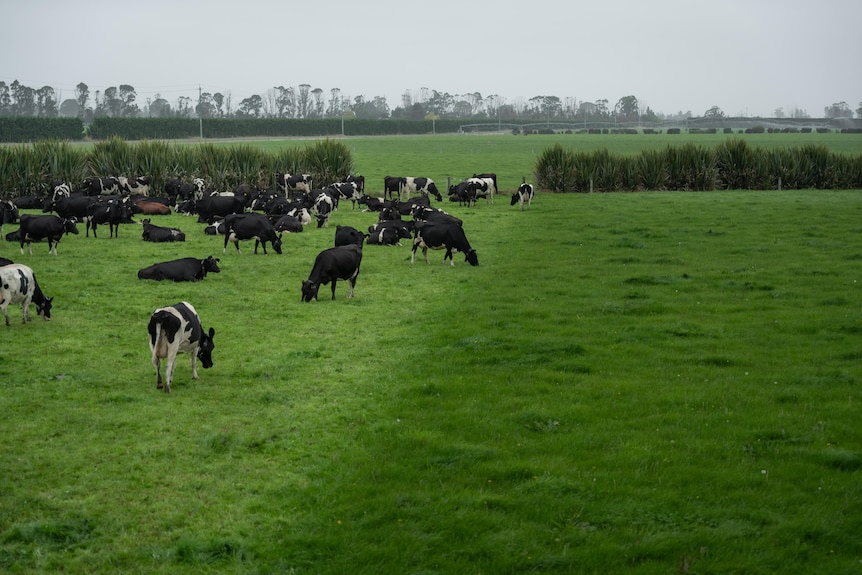
Virtual fencing has been legalised in New South Wales, with users of the technology already labelling it a “lifesaver”.
It allows livestock to be moved or confined without the need for physical fences or gates.
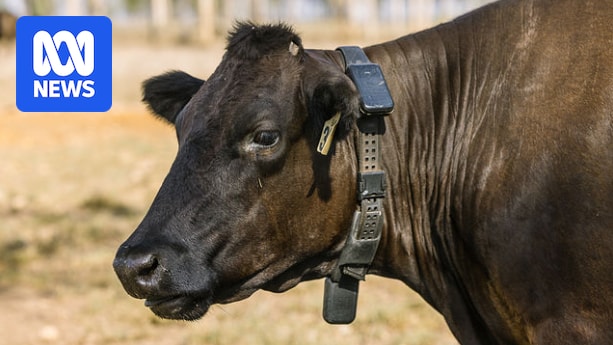
The technology involves the use of a collar on livestock that sends out noises and an electric pulse if an animal leaves the designated area.
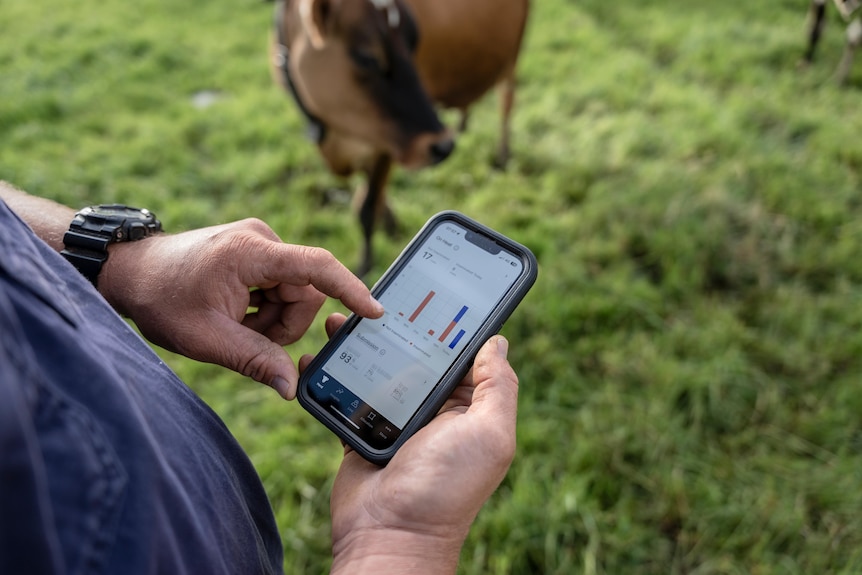
Farmers can change the boundaries and check in on an animal’s individual data on a mobile app.
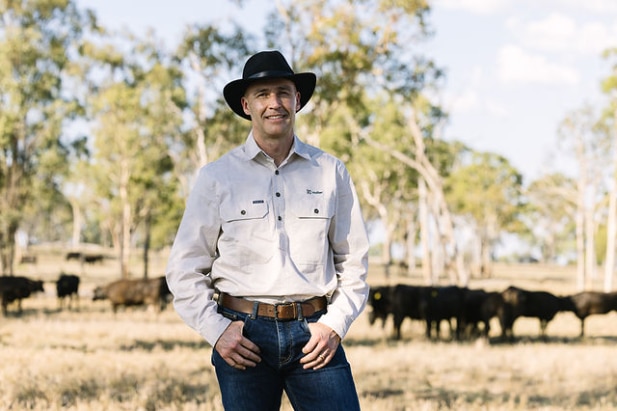
Angus McIntosh is a mixed farmer from Molong. (Supplied: Angus McIntosh)
Virtual fencing is already legal in some other states, where farmers have credited it as a success.
However, some in NSW remain undecided.
“I see the advantage of virtual fencing … but the maintenance of the collars, or the technology, how reliable they are … they’re the real concerns,” farmer Angus McIntosh said.
And with the electronics reliant on telecommunication towers and satellites, some farmers have questioned how they will perform during emergencies.
Virtual fences have been made legal in NSW. (ABC Rural: Emily Middleton)
What is the cost?
Mr McIntosh currently operates roughly 2,000 sheep and 100 cows on just over 1,400 hectares of grazing land in Molong in the state’s central west.
He has been thinking about using the technology, but is worried about the cost.
“On our level, it needs to be affordable to do a couple hundred head of cattle at a time, so the price point will be the deciding factor of how well it gets taken up,” he said.
Collars use solar panels to charge. (Supplied: Halter)
In addition to the collars, which can cost several hundred dollars per cow, towers are needed on properties for farmers to set up their virtual fences.
Livestock researcher for the Kondinin Group, Pamela Lawson, said one provider’s towers cost about $6,000 each.
“Which depends on the topography of your land and how many towers you’re going to need,” she said.
The systems are then controlled via an app, which is charged at about $2 to $2.50 per cow per month.
How does the technology work?
Director of strategic relations at virtual fence manufacturer Halter, Brent Thomas, described the technology as an “Apple Watch for cows”.
Brent Thomas says the collars can give farmers lots of useful information. (Supplied: Brent Thomas)
He said Halter’s solar-powered collars monitored animals as well as controlled their movements.
“The [collars] can tell the farmer if there’s any health problems or any kind of fertility indicators,” he said.
The technology for Halter’s collars involves the installation of a tower on the property that connects to the individual farmer’s internet or telephone service, which provides a backup if there is a fault.
Virtual fencing relies on the use of telecommunication technology such as satellite and service towers. (Supplied: Halter)
Ms Lawson said virtual fencing was already being used in about 23 per cent of Tasmania’s dairy herd, but the take-up in the beef sector may be slower.
“It’s just a bit more questionable about the sort of more broadacre general beef farmers on more extensive grazing country, how it will all work, given the amount of collars they will need and the area they are covering,” Ms Lawson said.
However, Mr Thomas said the fences were currently used on “really big ranches” in Montana and Texas.
“They’re able to work on really large properties,” he said.
Member for Orange, Phil Donato, and Minister for Agriculture, Tara Moriarty. (ABC Rural: Emily Middleton)
Cost savings?
Traditional fencing costs about $12,000 per kilometre, with an average farmer expected to install around two to three kilometres of fencing every year.
The set-up costs of virtual fencing will vary depending on the number of animals it is used for and the topography of a property; however, it’s estimated that the first year’s costs could be comparable to a farmer’s annual fencing budget, with costs after that reducing significantly.
Orange MP, Phil Donato, who has been pushing for virtual fencing to be legalised in NSW for five years, said farmers in other states have reported cost savings.
“I spoke to a farmer in Tasmania who’s been using it … his fuel bill went from $1,000 to $100 a month because he’s not driving around on a quad bike early in the morning,” Mr Donato said.
“He’s got more time to spend with his kids and his wife.”
Emergency performance
When it comes to emergencies like bushfires and flooding, farmers have expressed concern over how the technology will hold up.
Mr Thomas said the collars were put to the test during severe storms in Tasmania last year.
The technology allows farmers to define boundaries without physical fences. (Supplied: Halter)
“Farmers were able to move their animals remotely without sending out staff and putting them in danger in the middle of the night,” he said.
NSW Farmers Association Animal Welfare Committee chair Robert McIntosh said while virtual fencing will be a “game changer” in emergencies, there would be a problem if the technology were reliant on just mobile phone signals due to poor connectivity in rural communities.
However, a lot of the technology also uses satellite navigation.
“That’s a lot more consistent and more reliable for farmers,” he said.