Category: 3. Business

  • AI tools transform Christmas shopping as people turn to chatbots

    AI tools transform Christmas shopping as people turn to chatbots

    Danielle KayeBusiness reporter

    Bloomberg via Getty Images Three shoppers carry large shopping bags while crossing the street, in front of a Macy's store decorated with holiday lights.Bloomberg via Getty Images

    Shoppers carry Target bags outside of Macy’s flagship store on Black Friday in New York, US, on Friday, Nov. 28, 2025.

    Rachael Dunfell knew two things about her husband’s 21-year-old cousin: that he liked specialised racing bikes and that he was interested in the Vikings.

    But those pieces of information yielded few ideas for a suitable Christmas gift. So Rachael, 33, from Manchester, turned to artificial intelligence.

    She inputted his age, his hobby and his interest into Copilot, the Microsoft-owned chatbot, which led her to the website of a niche retailer that sells Viking-themed metal bike parts.

    “It’s just something that I really would never have known existed,” she said, “but it was perfect.”

    AI is shifting the holiday shopping experience.

    People are increasingly turning to AI tools, from Copilot to OpenAI’s ChatGPT to Google’s Gemini, for help with gift ideas and to compare prices, with implications for bargain hunters and retailers alike.

    John Harmon, a senior technology analyst at Coresight Research in New York, called this year the first holiday season shaped by AI-powered shopping.

    While there is not a great deal of data on spending directly linked to AI, Salesforce has said AI is expected to drive 21% of all holiday orders globally, for a total of $263bn (£197bn) in sales.

    More than half of US consumers say they would probably or definitely use AI to help with their shopping, a Coresight survey found.

    In the UK and Ireland, a survey of 2,000 consumers by technology company CI&T, released this month, found that 61% use or have used AI tools while shopping – most often to find where to buy an item or locate the best deal.

    But more than two-thirds of respondents could not think of an AI-powered retail experience that impressed them.

    Businesses are scrambling to make the most of AI channels to promote their products.

    “Retailers feel the urgency because AI is already shaping what people buy,” said Melanie Nuce-Hilton, senior vice president of customer success at GS1 US, an information standards organisation.

    “If the product information the model learned from is outdated or inconsistent, the recommendation can miss the mark, and it’s often small brands that lose visibility when that happens,” she added.

    Rachael Dunfell A woman wearing a baseball cap smiles on a hike, standing beside a man wearing an orange jacket.Rachael Dunfell

    Rachael Dunfell used ChatGPT to find a niche gift for her husband’s 21-year-old cousin

    AI firms ‘hold the cards’

    The technology is starting to move beyond using AI tools to help find a product on a retailer’s website, to letting shoppers buy items without even leaving a chat-bot.

    OpenAI at the end of September announced an Instant Checkout feature. In the weeks since, the ChatGPT maker has announced partnerships with several major retailers and marketplaces to list some of their products directly on the chat service. Etsy and Shopify led the pack, followed by Walmart in October and Salesforce and Target in November.

    Walmart, for example, said its partnership with OpenAI “allows customers and Sam’s Club members to plan meals, restock essentials, or discover new products simply by chatting”.

    But at this stage, there are limitations for shoppers seeking to offload their holiday shopping entirely. Buying items without leaving AI chats is still a nascent phenomenon, only weeks in the making.

    And AI companies hold the cards, analysts said.

    Not every retailer is set up for direct purchases within ChatGPT, Mr Harmon said. Some have not yet received approval from OpenAI.

    “It’s OpenAI’s game. They’re in control of who is listed and how long it takes,” he said.

    “The smaller ones will be left out for the time being, until they’re able to convert their data and get approved to have it listed on OpenAI.”

    Analysts said retailers could draw in shoppers by prioritising partnerships with AI companies.

    The agreements have the potential to boost brand perception among consumers, said Yanliu Huang, a marketing professor at Drexel University. She noted the benefits for a company like Walmart, which is known for its low prices but is seeking to appeal to higher-educated and younger consumers, too.

    Ms Huang predicted that other large retailers like Costco, as well as smaller brands, are likely to follow suit.

    Burlap & Barrel, a spice company based in the US, sees AI-powered shopping as an opportunity to boost sales.

    Ori Zohar, the firm’s co-founder and co-chief executive, acknowledged that the company is better positioned than many other small businesses in his sector to draw in shoppers, given its robust online presence.

    “That ended up being really, really good content to feed into the AI models,” Mr Zohar said. He attributed the company’s recent growth, in part, to AI searches that led customers to its website.

    But Mr Zohar said Burlap & Barrel is not currently seeking direct partnerships with AI companies like OpenAI. Executives are instead focused on building out the company’s own database of spices – information that AI tools can pick up and put on shoppers’ radar.

    Ori Zohar Ori Zohar poses wearing a white shirt and red braces, standing in front of a brick wall.Ori Zohar

    Ori Zohar, the co-founder of spice company Burlap & Barrel, said AI-powered shopping presents an opportunity to boost sales

    Benefits and risks

    Allan Binder, a teacher and sound engineer currently based in Hanoi, Vietnam, said he started using AI last year to brainstorm gift ideas for friends and family in the US.

    Having already used AI tools for research purposes, using them to find niche presents felt like a “natural extension”, said Allan, 35, originally from Detroit, Michigan.

    Among his AI-powered discoveries: scissors from an artisan manufacturer in England and pottery from Indonesia, a birthday gift for his mother last summer.

    This holiday gifting season, his AI searches have led him to historic prints.

    “[Chatbots] have the potential to connect very targeted products with their audience,” he said.

    But he acknowledged the risks of offloading shopping to AI agents, especially for those who undertake less research on their own to supplement AI-generated results.

    “I think AI shopping will help informed consumers become more informed,” he said, “while making it easier for uninformed consumers to buy without much thought.”


    Continue Reading

  • Gold prices steady as markets brace for ‘hawkish’ Fed tone

    Gold prices steady as markets brace for ‘hawkish’ Fed tone

    Gold traded flat on Tuesday as investors had largely priced in a Federal Reserve rate cut.

    Frame Studio | Moment | Getty Images

    Gold traded flat on Tuesday as investors had largely priced in a Federal Reserve rate cut, while bracing for signals that the U.S. central bank may pursue a milder-than-expected easing cycle at its two-day policy meeting starting later in the day.

    Spot gold held steady at $4,189.17 per ounce, as of 0444 GMT. U.S. gold futures for December delivery was flat at $4,218.50 per ounce.

    Investors are largely repositioning ahead of the Federal Reserve’s policy meeting, OANDA senior market analyst Kelvin Wong said.

    “Earlier in the month, Powell signaled hawkish rate-cut guidance during his press conference. So investors in the U.S. Treasury market are adjusting their positions.”

    The benchmark U.S. 10-year Treasury yields held near a 2-1/2-month peak hit on Monday.

    Analysts widely expect a “hawkish cut” this week accompanied by guidance and forecasts that signal a high threshold for further easing into next year.

    Last week, data showed the U.S. Personal Consumption Expenditures (PCE) Price Index, the Fed’s preferred inflation gauge, landed in line with expectations, while consumer sentiment improved in December.

    Private payrolls for November recorded their sharpest drop in more than 2-1/2 years, but jobless claims fell to a three-year low for the week ended November 28.

    Markets now assign an 89% probability of a quarter-point cut at the Fed’s December 9–10 meeting, according to CME’s FedWatch Tool. 

    Lower interest rates tend to favor non-yielding assets such as gold.

    Meanwhile, silver rose 0.2% to $58.24 per ounce, not far from the record high of $59.32 hit on Friday.

    “Right now, silver is more of a higher-beta play among precious metals,” Wong said, adding that low inventories, strong industrial demand, and expectations of Fed rate cuts are driving its momentum, pushing it into risk-on mode and outperforming gold.

    Platinum gained 0.4% to $1,649.10, while palladium added 0.7% to $1,475.38.

    Continue Reading

  • Assessing Expedia After Its 2025 Surge And Strengthening Travel Recovery Narrative

    Assessing Expedia After Its 2025 Surge And Strengthening Travel Recovery Narrative

    • Wondering if Expedia Group is still a smart buy after its run up, or if the easy money has already been made? Let us unpack whether the current share price lines up with the underlying value.

    • Expedia has quietly kept climbing, with the stock up 2.1% over the last week, 2.4% over the past month, and 42.7% year to date, adding to a 40.6% gain over 1 year and 178.8% over 3 years.

    • Recent headlines have focused on the travel recovery gaining momentum and Expedia sharpening its focus on core platforms and loyalty programs, which has helped rebuild investor confidence in the business model. At the same time, analysts have been highlighting the long term shift to online and app based bookings and framing Expedia as a key beneficiary of that structural trend.

    • Right now, Expedia Group scores 5/6 on our valuation checks, suggesting it looks undervalued on most of the metrics we track but not all. Next we will walk through those different valuation approaches, and then return at the end with a broader way to think about what the stock may be worth.

    Expedia Group delivered 40.6% returns over the last year. See how this stacks up to the rest of the Hospitality industry.

    A Discounted Cash Flow model estimates what a business is worth by projecting the cash it can generate in the future and then discounting those cash flows back to today in $ terms.

    For Expedia Group, the model uses a 2 Stage Free Cash Flow to Equity approach. The company generated roughly $2.93 billion in free cash flow over the last twelve months, and analysts expect this to grow steadily as the travel platform scales. Based on analyst inputs and extrapolated trends, free cash flow is projected to reach around $4.87 billion by 2035, with intermediate milestones such as about $3.34 billion in 2028 and $3.68 billion in 2029.

    When all these future cash flows are discounted back to today, the model arrives at an intrinsic value of about $520.55 per share. This implies the stock is trading at roughly a 49.2% discount to its estimated fair value, based on these model assumptions.

    Result: UNDERVALUED

    Our Discounted Cash Flow (DCF) analysis suggests Expedia Group is undervalued by 49.2%. Track this in your watchlist or portfolio, or discover 901 more undervalued stocks based on cash flows.

    EXPE Discounted Cash Flow as at Dec 2025

    Head to the Valuation section of our Company Report for more details on how we arrive at this Fair Value for Expedia Group.

    For a profitable business like Expedia Group, the price to earnings ratio is a practical way to gauge whether investors are paying a reasonable price for each dollar of current profits. In general, companies with faster, more reliable earnings growth and lower risk tend to justify higher PE ratios, while slower growth or higher uncertainty usually calls for a lower multiple.

    Continue Reading

  • Renault Group and Ford form a strategic partnership for passenger and commercial vehicles, starting with two affordable electric cars in Europe

    Renault Group and Ford form a strategic partnership for passenger and commercial vehicles, starting with two affordable electric cars in Europe

    Paris, France and Cologne, Germany – December 9, 2025

    Renault Group and Ford today announced a landmark strategic partnership aimed at expanding Ford’s electric vehicles offering to European customers, significantly enhancing competitiveness for both companies in the rapidly evolving automotive landscape in Europe.

    A cornerstone of this collaboration is a partnership agreement for the development of two distinct Ford-branded electric vehicles. The new models will be based on the Ampere platform, leveraging Renault Group’s strong EV assets and competitiveness, and produced by Renault Group in the North of France, illustrating Ampere’s ElectriCity’s “state-of-the-art” manufacturing capabilities and expertise.

    Designed by Ford, developed with Renault Group, the two cars will feature distinctive driving dynamics, authentic Ford-brand DNA and intuitive experiences. They mark the first step in a comprehensive new product offensive for Ford in Europe. The first of the two vehicles is expected in showrooms in early 2028.

    In addition to collaborating on EVs, Renault Group and Ford have also signed a Letter of Intent (LOI) for a European light commercial vehicle collaboration. Under this LOI, the partners will explore the opportunity to jointly develop and manufacture Renault and Ford’s branded selected light commercial vehicles (LCVs).

    François Provost, CEO Renault Group said: “Renault Group is proud to announce a new strategic cooperation with Ford, an iconic car manufacturer. This partnership shows the strength of our partnership know-how and competitiveness in Europe. In the long term, combining our strengths with Ford will make us more innovative and more responsive in a fast-changing European automotive market.”

    Jim Farley, president and CEO, Ford Motor Company said: “The strategic partnership with Renault Group marks an important step for Ford and supports our strategy to build a highly efficient and fit-for-the future business in Europe. We will combine Renault Group’s industrial scale and EV assets with Ford’s iconic design and driving dynamics to create vehicles that are fun, capable, and distinctly Ford in spirit.”

    Combining strengths

    The companies will take advantage of the proven capabilities and competitiveness of Renault Group’s Ampere platform, EV manufacturing ecosystem and industrial capacities in the North of France (ElectriCity) to produce two all-new Ford-branded electric passenger vehicles.

    By joining their expertise as major players in Europe, in innovation, design, software, and service delivery, Renault Group and Ford will aim to address industry challenges and better serve customers in both the retail and commercial vehicles segments.

    The Renault Group and Ford strategic partnership will combine decades of experience in the light commercial vehicle segment, as well as the industrial scale and extensive supply base of both companies, creating a formidable force poised to drive innovation and efficiency in the European market.

    Continue Reading

  • Morning Bid: Markets riddled with anxiety on almost-Fed day – Reuters

    1. Morning Bid: Markets riddled with anxiety on almost-Fed day  Reuters
    2. The probability of the Federal Reserve cutting interest rates by 25 basis points in December reaches 89.4%  Bitget
    3. Take Five: Worth the wait? By Reuters  Investing.com
    4. Fed Preview: Deep Split Complicates December Decision  ig.com
    5. FOMC Meeting Preview: How the FOMC’s December Dot Plot Will Affect the US Dollar (DXY)  marketpulse.com

    Continue Reading

  • The RBA is stuck in a tug-of-war, as it holds rates steady

    The RBA is stuck in a tug-of-war, as it holds rates steady

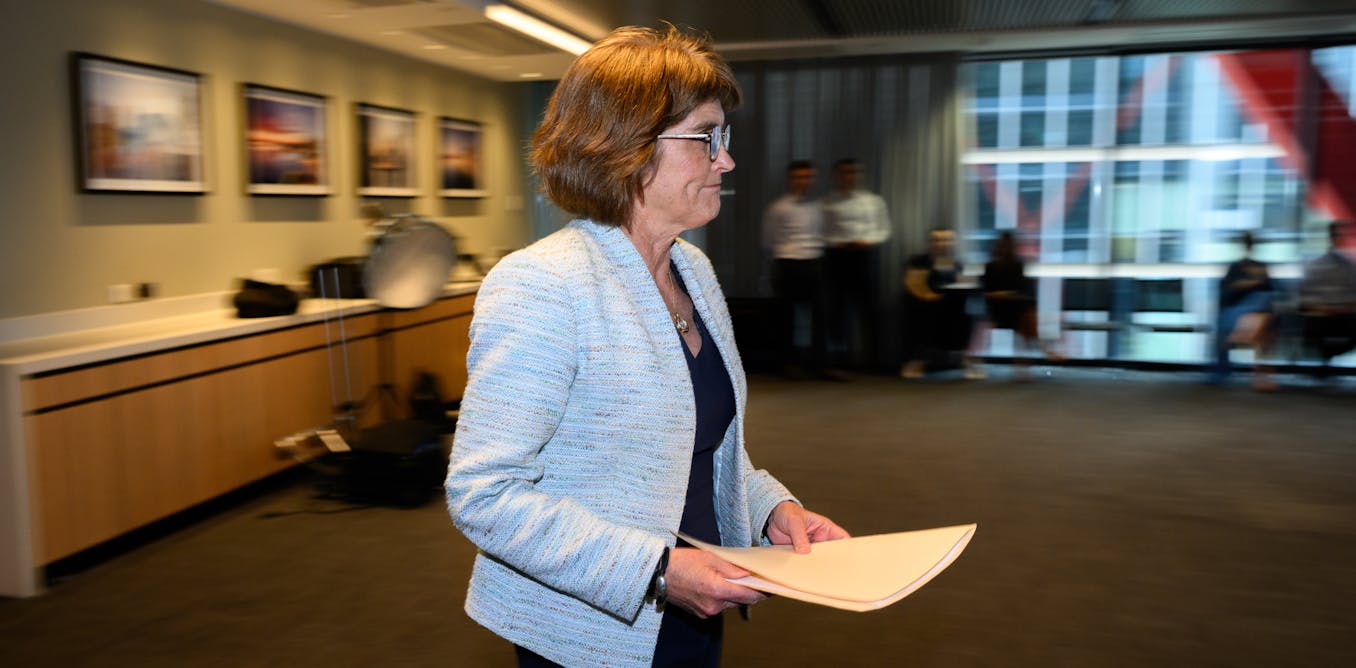
    The Reserve Bank of Australia (RBA) has ended the year with a steady hand, keeping the cash rate at 3.6% at its final meeting of 2025. The decision was widely expected, but the real story is in the statement by the monetary policy board and what it reveals about the RBA’s thinking for next year.

    The RBA acknowledged inflation has become more complicated. While price pressures have eased significantly since the 2022 peak, the bank noted inflation “has picked up more recently”. It said the latest data:

    suggest some signs of a more broadly based pick-up in inflation, part of which may be persistent and will bear close monitoring.

    In short, rate cuts are off the table for now.

    A recovering economy

    At the same time, the broader economy is healing. Growth has strengthened in recent months, particularly in private demand, and the housing market remains firm.

    The RBA highlighted that “economic activity continues to recover”, reflecting firmer spending and investment. But the labour market, while still tight, is gradually losing momentum.

    Together, these crosscurrents give the RBA reason to stay put.

    Why the RBA stayed put

    Today’s decision reflects two forces pulling in opposite directions.

    Inflation is still too high and has been rising in recent months. Services inflation has been sticky. Cutting rates now would risk undoing the progress made over the past two years.

    But the economy isn’t strong enough to justify a hike either. Private demand has improved, but households remain under pressure, discretionary spending is weak, and hiring has softened. A rate rise now could stall the recovery.

    With these pressures pulling in different directions, the RBA has chosen patience. The central bank wants more information from upcoming inflation reports, wages data early next year, and labour market conditions before making its next move.

    What’s changed — and why it matters

    The tone of today’s statement is cautious. The RBA emphasised “the risks to inflation have tilted to the upside,” but balanced that by noting it will “update its view of the outlook as the data evolve”.

    The bank also stressed it is approaching the outlook with care:

    The board will be attentive to the data and the evolving assessment of the outlook and risks to guide its decisions.

    This is deliberate neutrality. In recent weeks, some economists had suggested the RBA might lean toward a rate hike, but today’s comments avoid signalling a bias towards higher rates.

    A hike remains a risk — especially if inflation continues to rise — but it is not the central scenario.

    That neutrality matters. The RBA is telling us it wants to see how the data evolves before committing to a direction.

    This is important for shaping expectations ahead of 2026. Talk of an rate increase early in the new year appears premature based on today’s language.

    What markets and banks expect

    Australia’s big four banks all expect an extended period of steady rates, with no move until at least May 2026.

    Markets are broadly in the same camp, pricing in a long pause ahead of at least one rate increase by the end of 2026.

    Crucially, none of the major banks are forecasting a near-term hike. Their central view is that the RBA will hold for a long stretch.

    Westpac is the only one expecting a cut — and even then, only if inflation makes more convincing progress. Taken together, this reinforces the message in today’s statement: policy is leaning neither toward tightening nor easing.

    The bigger picture

    Australia is not alone in navigating this kind of mixed economic picture. The US Federal Reserve has cut rates twice this year — in September and again in October. However, those moves have been cautious because inflation in the US remains a concern.

    The RBA said uncertainty in the global economy “remains significant”, but it also added there has been little impact on growth or on trade with Australia’s major trading partners.

    Looking toward 2026

    Today’s “no change” decision sets up next year’s discussion. Inflation is still too high to cut rates, but growth is too soft to hike. That leaves the RBA likely to stay patient well into 2026.

    The key question for early next year is whether services inflation finally begins to ease. If it does, attention will turn to when rate cuts might become possible. If it doesn’t, the risk of another hike will grow — but again, this is not the RBA’s central scenario today.

    For now, the RBA ends the year in steady, watchful mode. Stability, rather than movement, is the story — and it’s likely to stay that way until the data offers a clearer signal.

    Continue Reading

  • IEEFA statement regarding attributed analysis in recent media coverage

    IEEFA statement regarding attributed analysis in recent media coverage

    9 December 2025 (IEEFA Australia): IEEFA offers the following statement regarding analysis that was attributed to us in recent media articles. 

    On 30 October 2025, several Australian newspapers published the article ETU reveals massive gap in Qld coal power maintenance budget. The article reports on comments made by Peter Ong, QLD/NT State Secretary of the Electrical Trades Union (ETU), during an appearance before a Queensland parliamentary hearing. 

    Mr Ong is reported to have cited IEEFA analysis regarding the maintenance bill for coal generators in Queensland. However, the figures were ETU analysis, as detailed in the ETU submission to the QLD Governance, Energy and Finance Committee Energy Roadmap Amendment Bill 2025. This ETU analysis drew upon IEEFA historical coal generator refurbishment cost figures from our April 2025 report Delaying coal power exits: A risk we can’t afford
     

    About IEEFA: The Institute for Energy Economics and Financial Analysis (IEEFA) examines issues related to energy markets, trends, and policies. The Institute’s mission is to accelerate the transition to a diverse, sustainable and profitable energy economy. (ieefa.org)

    Continue Reading

  • Stock market today: Live updates

    Stock market today: Live updates

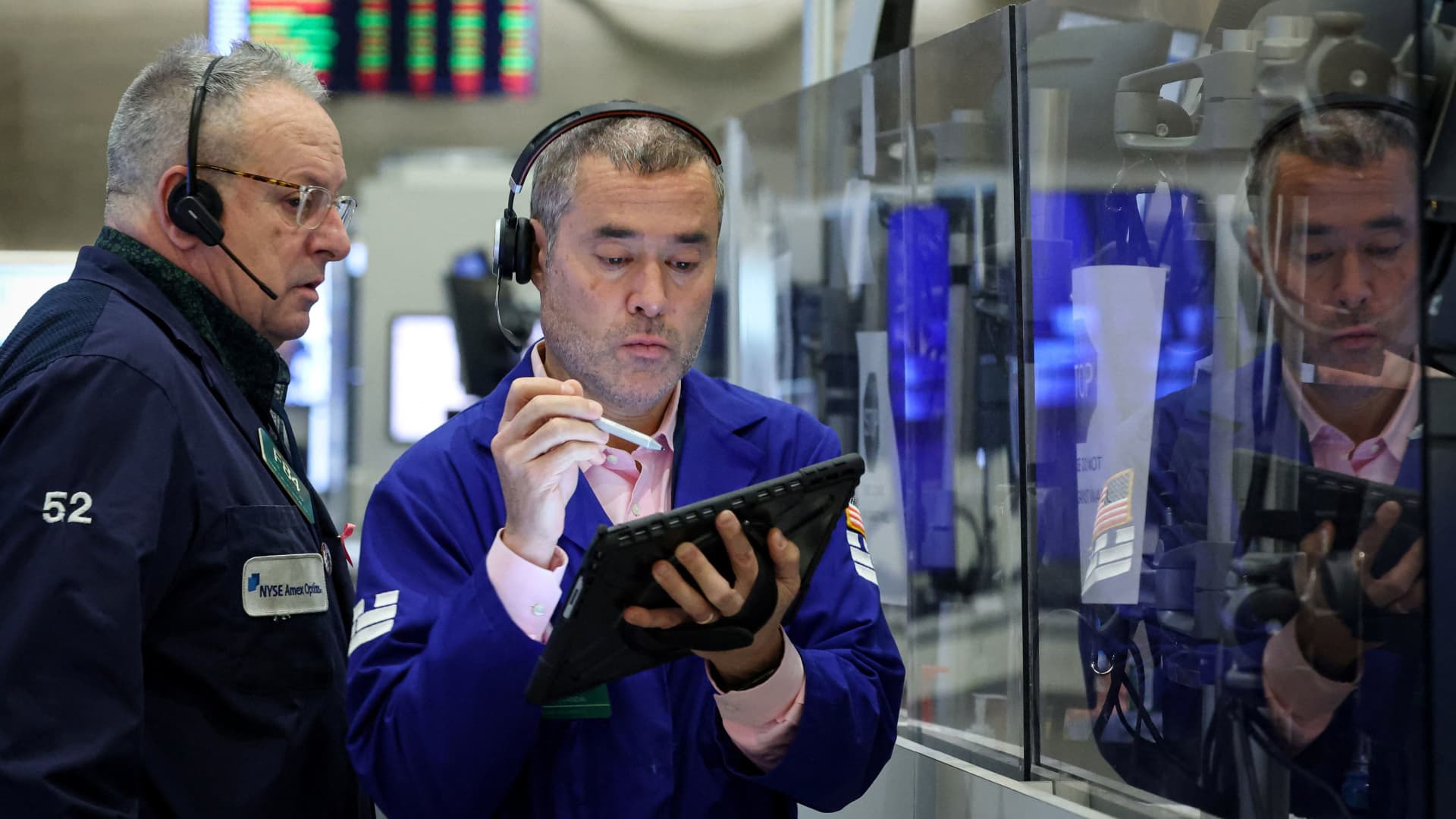
    Futures-options traders work on the floor at the New York Stock Exchange’s NYSE American (AMEX) in New York City, U.S., Dec. 8, 2025.

    Brendan McDermid | Reuters

    Stock futures were little changed Tuesday morning, despite a bump in Nvidia shares after President Donald Trump approved H200 chip sales to China in a deal that gives the U.S. government a hefty cut.

    Futures tied to the Dow Jones Industrial Average hovered slightly above the flatline. Futures for both the S&P and the Nasdaq 100 added less than 0.1%.

    In after-hours trading, Nvidia climbed more than 2% following a Truth Social post Monday evening that said the chipmaking giant could ship its H200 chips to “approved customers” in China and elsewhere under the condition that a quarter of the sales will be paid to the U.S. government. Trump wrote that Chinese President Xi Jinping “responded positively” to the deal. Nvidia Chief Executive Jensen Huang met with Trump last week, and the agreement marks a win for the tech giant after months of trade talks.

    In Monday’s trading session, tech stocks were the winner. Out of the 11 S&P 500 sectors, the tech sector was the only one that closed in the green, buoyed by gains in a slew of semiconductor names. Shares of Broadcom rose almost 3%, while Nvidia and Microsoft each added about 2%, on the back of a report from The Information that Microsoft is considering designing custom chips with Broadcom. 

    Each of the three major U.S. stock indexes declined in the previous trading session, meanwhile, while the 10-year Treasury yield continued to climb as worries remain about the impact of persistent inflation.

    Traders this week are waiting for the Federal Reserve’s highly awaited interest rate decision on Wednesday, which will be the last of the year. Markets are betting that the Fed will lower its key overnight lending rate by another quarter percentage point as it did at its meetings in September and October. Fed funds futures suggest an 89% chance of a decrease, up from under 67% about a month ago, according to CME’s FedWatch tool.

    “While a rate cut feels almost certain at this point, the Fed’s economic projections and Chairman Powell’s commentary will play a big role in how markets react — not only this week, but it could possibly set the tone for the remainder of the month,” Bret Kenwell, U.S. investment analyst at eToro, said. “After the recent pullback in stocks and crypto, risk-on investors are hoping the Fed will grease the rails for a year-end rally rather than pour cold water on the recent rebound.”

    Softer-than-expected September core personal consumption expenditures price index data released Friday had given stocks a boost last week. The three major U.S. stock averages closed higher for the second week in a row.

    Kenwell noted that the Fed is balancing a confluence of factors heading into its decision: sticky inflation, a cloudy macroeconomic landscape, economic data delayed by the record U.S. government shutdown and expectations of a new chairman.

    “There are a lot of moving parts for the Fed in 2026. … That brings up the key question: Will the Fed be able to strike an accommodative tone if these factors persist into 2026, or will its dual mandate keep the doves in check?” he said.

    Separately, investors this week will digest earnings reports from key artificial intelligence plays Oracle and Broadcom, along with retailers Costco and Lululemon.

    Continue Reading

  • FDA OKs First Cell Therapy for Severe Aplastic Anemia – Medscape

    1. FDA OKs First Cell Therapy for Severe Aplastic Anemia  Medscape
    2. Aplastic Anemia Market Expected to Experience Major Growth by 2034, According to DelveInsight  openPR.com
    3. Additional Positive Results for Omisirge(R) in Treating Severe Aplastic Anemia Presented at ASH  Lexington Herald Leader
    4. Gamida Cell’s Omisirge becomes first FDA-cleared cell therapy for rare blood disorder  FirstWord Pharma
    5. FDA approves omidubicel-onlv as first HSCT therapy to treat severe aplastic anemia  Contemporary Pediatrics

    Continue Reading

  • ‘I feel it’s a friend’: quarter of teenagers turn to AI chatbots for mental health support | Chatbots

    ‘I feel it’s a friend’: quarter of teenagers turn to AI chatbots for mental health support | Chatbots

    It was after one friend was shot and another stabbed, both fatally, that Shan asked ChatGPT for help. She had tried conventional mental health services but “chat”, as she came to know her AI “friend”, felt safer, less intimidating and, crucially, more available when it came to handling the trauma from the deaths of her young friends.

    As she started consulting the AI model, the Tottenham teenager joined about 40% of 13- to 17-year-olds in England and Wales affected by youth violence who are turning to AI chatbots for mental health support, according to research among more than 11,000 young people.

    It found that both victims and perpetrators of violence were markedly more likely to be using AI for such support than other teenagers. The findings, from the Youth Endowment Fund, have sparked warnings from youth leaders that children at risk “need a human not a bot”.

    The results suggest chatbots are fulfilling demand unmet by conventional mental health services, which have long waiting lists and which some young users find lacking in empathy. The supposed privacy of the chatbot is another key factor in driving use by victims or perpetrators of crimes.

    After her friends were killed Shan, 18, not her real name, started using Snapchat’s AI before switching to ChatGPT, which she can talk to at any time of day or night with two clicks on her smartphone.

    “I feel like it definitely is a friend,” she said, adding that it was less intimidating, more private and less judgmental than her experience with conventional NHS and charity mental health support.

    “The more you talk to it like a friend it will be talking to you like a friend back. If I say to chat ‘Hey bestie, I need some advice’. Chat will talk back to me like it’s my best friend, she’ll say, ‘Hey bestie, I got you girl’.”

    One in four of 13- to 17-year-olds have used an AI chatbot for mental health support in the past year, with black children twice as likely as white children to have done so, the study found. Teenagers were more likely to go online for support, including using AI, if they were on a waiting list for treatment or diagnosis or had been denied, than if they were already receiving in-person support.

    Crucially, Shan said, the AI was “accessible 24/7” and would not tell teachers or parents about what she had disclosed. She felt this was a considerable advantage over telling a school therapist, after her own experience of what she thought were confidences being shared with teachers and her mother.

    Boys who were involved in gang activities felt safer asking chatbots for advice about other safer ways to make money than a teacher or parent who might leak the information to police or other gang members, putting them in danger, she said.

    Another young person, who has been using AI for mental health support but asked not to be named, told the Guardian: “The current system is so broken for offering help for young people. Chatbots provide immediate answers. If you’re going to be on the waiting list for one to two years to get anything, or you can have an immediate answer within a few minutes … that’s where the desire to use AI comes from.”

    Jon Yates, the chief executive of the Youth Endowment Fund, which commissioned the research, said: “Too many young people are struggling with their mental health and can’t get the support they need. It’s no surprise that some are turning to technology for help. We have to do better for our children, especially those most at risk. They need a human not a bot.”

    There have been growing concerns about the dangers of chatbots when children engage with them at length. OpenAI, the US company behind ChatGPT, is facing several lawsuits including from families of young people who have killed themselves after long engagements.

    In the case of the Californian 16-year-old Adam Raine, who took his life in April, OpenAI has denied it was caused by the chatbot. It has said it has been improving its technology “to recognise and respond to signs of mental or emotional distress, de-escalate conversations, and guide people toward real-world support.”. The startup said in September it could start contacting authorities in cases where users start talking seriously about suicide.

    Hanna Jones, a youth violence and mental health researcher in London, said: “To have this tool that could tell you technically anything – it’s almost like a fairytale. You’ve got this magic book that can solve all your problems. That sounds incredible.”

    But she is worried about the lack of regulation.

    “People are using ChatGPT for mental health support, when it’s not designed for that,” she said. “What we need now is to increase regulations that are evidence-backed but also youth-led. This is not going to be solved by adults making decisions for young people. Young people need to be in the driving seat to make decisions around ChatGPT and mental health support that uses AI, because it’s so different to our world. We didn’t grow up with this. We can’t even imagine what it is to be a young person today.”

    In the UK, the youth suicide charity Papyrus can be contacted on 0800 068 4141 or email pat@papyrus-uk.org, and in the UK and Ireland Samaritans can be contacted on freephone 116 123, or email jo@samaritans.org or jo@samaritans.ie. In the US, the 988 Suicide & Crisis Lifeline is at 988 or chat for support. In Australia, the crisis support service Lifeline is 13 11 14. Other international helplines can be found at befrienders.org

    Continue Reading