Category: 3. Business

  • ​​Bitcoin Price Update: BTC Stabilises Near $88K, Eyes $94K Resistance Amid Liquidity Stress​

    ​​Bitcoin Price Update: BTC Stabilises Near $88K, Eyes $94K Resistance Amid Liquidity Stress​

    Bitcoin grinds higher

    Bitcoin (BTC) has started December under pressure, reflecting renewed risk-off sentiment and broad market weakness.

    ​On 1 December, the cryptocurrency plunged to as low as roughly $84,000.00, a steep drop that analysts attribute to a wave of liquidations across crypto markets, thinning liquidity, and falling risk appetite among investors.

    ​In the days following that sell-off, Bitcoin rebounded moderately, recovering past $94,000.00, before slipping back towards the $88,000.00 region where it found support.

    ​Some market watchers view this stabilisation as evidence that near-term fear may be easing and that interest in high-quality crypto assets could be resurfacing.

    ​Nevertheless, the outlook remains fragile and conflicted. The early December sell-off wiped out much of Bitcoin’s earlier gains: what had been a rally peaking near record highs has given way to renewed uncertainty.

    ​With institutional demand softening in November and spot exchange-traded fund (ETF) outflows mounting – including record withdrawals from major funds – liquidity stress and investor re-evaluation of risk are weighing heavily on BTC’s near-term prospects.

    ​Beyond price moves, recent institutional dynamics have added nuance to the market picture.

    ​One of the largest corporate holders of Bitcoin, Strategy, which amassed hundreds of thousands of BTC in prior years, has now indicated it may liquidate part of its holdings.

    ​The company’s shift away from its long-time “buy and hold” posture has raised concern among market participants who wonder whether more heavy sellers could emerge if Bitcoin’s value does not recover.

    ​At the same time, some argue that the ongoing dip in BTC presents a potential entry point for long-term investors, provided macroeconomic conditions – particularly interest-rate expectations and liquidity in traditional markets – do not deteriorate further.

    ​In sum, the past few weeks have seen Bitcoin swing between sharp declines and tentative rebounds, reflecting a crypto market deeply influenced by macroeconomic uncertainty, shifting institutional flows, and evolving investor sentiment.

    ​Whether the current bounce evolves into a sustained recovery or remains a temporary reprieve will depend heavily on developments in global markets, institutional behaviour, and broader confidence in risk assets.

    ​Bitcoin bullish case:

    ​Bitcoin is gradually heading towards its early December high at $94,213.50. A daily chart close above this level on a daily chart closing basis may lead to the psychological $100,000 region being revisited.

    ​For the bulls to be back in control, however, the 11 November high at $107,461.75 would need to be overcome.

    ​Bitcoin bearish case:

    ​While the 3 December high at $94,213.50  isn’t overcome on a daily chart closing basis, downside pressure may once more rear its head with the $80,000.00 zone remaining in sight.

    ​For this to be the case, a resumption of the bear trend and fall through Sunday’s low at $87,783.05 would need to ensue.

    Short-term outlook: neutral while below $94,213.50

    Medium-term outlook: neutral while below the 3 December high at $94,213.50 and above its $80,619.71 late November low 

    Continue Reading

  • AL-S takes mAb to Phase III after mid-stage ALS success

    AL-S takes mAb to Phase III after mid-stage ALS success

    AL-S Pharma is planning a registrational study for its amyotrophic lateral sclerosis (ALS) monoclonal antibody (mAb), AP-101, after the drug met its efficacy and safety endpoints in a mid-stage trial.

    During the Phase II study (NCT05039099), ALS patients treated early with AP-101 displayed prolonged survival and delayed ventilatory support after 12 months of treatment compared to those who received placebo for six months then AP-101 for six months. This benefit was observed across both the sporadic ALS and superoxide dismutase 1 (SOD1) mutation carrier cohorts.

    Discover B2B Marketing That Performs

    Combine business intelligence and editorial excellence to reach engaged professionals across 36 leading media platforms.

    Find out more

    The SOD1-targeting mAb also triggered disease stabilisation, as measured by King’s staging, which qualitatively categorises disease progression based on the condition of the bulbar, upper and lower limb and diaphragm regions.

    Patients receiving AP-101 also experienced reduced functional decline in patients with elevated, misfolded SOD1 levels at baseline, as well as those with SOD1 mutations.

    Alongside the drug’s impact on disease progression and stabilisation, patients receiving AP-101 experienced changes to neurofilament biomarkers, which AL-S claims “aligns with AP-101’s clinical benefit”.

    While AL-S did not provide specifics on the drug’s safety profile, the Swiss biotech did note that adverse events (AEs) were similar between the placebo and treatment groups. There were no antibody responses to AP-101 observed during the 12-month study.

    AL-S presented the data at the 36th International Symposium on ALS/MND, which was held from 5 to 7 December in San Diego; however, the company had previously confirmed the drug met the trial endpoints.

    According to the CEO of AL-S Pharma, Michael Salzmann, the biotech now plans to discuss next steps for AP-101 with regulators in the coming months, as the company prepares to initiate a confirmatory Phase III study.

    Homing in on SOD1

    While ALS has typically been a challenging indication to treat, there are now four therapies that have gained approval from the US Food and Drug Administration (FDA).

    This includes Biogen and Ionis Pharmaceuticals’ SOD1-targeting antisense oligonucleotide, Qalsody (tofersen), which gained accelerated approval from the FDA in 2023, despite the VALOR trial failing to meet its primary endpoint of improved ALSFRS-R scores over 28 weeks. The FDA granted the drug approval based on changes in plasma levels of neurofilament light (NfL) protein.

    While Qalsody’s results have been mixed thus far, SOD1 has been a target of interest across the ALS research space, with four drugs, including AP-101, in active development, according to GlobalData’s Pharmaceutical Intelligence Center.

    GlobalData is the parent company of Clinical Trials Arena.

    The ALS Association currently estimates that SOD1 gene mutations are observed in 10-20% of familial ALS cases, while 1-2% of sporadic ALS cases are linked to this mutation.

    If AL-S’s SOD1-directed AP-101 were to get the FDA go-ahead, it would offer an alternative dosing option to Qalsody, as AP-101 can be administered intravenously, while Qalsody requires patients to undergo an intrathecal injection.

    According to GlobalData’s patient-based forecast, Qalsody will make $68m for Biogen and Ionis in 2029.

    Clinical Trials Arena Excellence Awards – Nominations Closed

    Nominations are now closed for the Clinical Trials Arena Excellence Awards. A big thanks to all the organisations that entered – your response has been outstanding, showcasing exceptional innovation, leadership, and impact.

    Excellence in Action

    YPrime won the Innovation award for AI in Clinical Trials and the Environmental award for Sustainable Trials, thanks to its eCOA, IRT and eConsent platforms. Explore how purpose-built AI, paperless workflows and circular hardware practices are reshaping timelines, data quality and ESG performance in clinical research.

    Discover the Impact


    Continue Reading

  • Netflix gets a downgrade after announcing Warner Bros. film and streaming acquisition

    Netflix gets a downgrade after announcing Warner Bros. film and streaming acquisition

    Continue Reading

  • Quantum Source Report Outlines Engineering Pathways to Fault-Tolerant Quantum Computing

    Quantum Source Report Outlines Engineering Pathways to Fault-Tolerant Quantum Computing

    Insider Brief:

    • Quantum Source released a comprehensive technical report, developed with The Quantum Insider, that compares all major qubit modalities and outlines engineering pathways toward fault-tolerant quantum computing.
    • The report highlights that the field has moved from theoretical exploration to practical engineering, with recent demonstrations from Google and Quantinuum showing logical qubits outperforming physical ones.
    • It introduces a unified framework comparing qubit systems by qubit carrier and computational model, showing that while no modality currently dominates, hybrid approaches may have the potential to overcome key scalability limits.
    • A case study on Quantum Source’s deterministic atom–photon platform shows how their design replaces probabilistic photonic entanglement with efficient, repeatable atom-mediated processes, reducing hardware overhead and enabling scalable, modular architectures for future fault-tolerant systems.

    Quantum Source, a pioneering company developing scalable photonic quantum computing systems, has released a new industry report, From Qubits to Logic: Engineering Fault-Tolerant Quantum Systems, offering one of the most comprehensive technical assessments to date of the global push toward fault-tolerant quantum computing.

    The report, developed in partnership with The Quantum Insider, synthesizes progress across all major qubit modalities and introduces a comparative framework linking physical qubit performance, quantum-error-correction (QEC) strategies, and scalability. The report emphasizes that the path to fault tolerance has shifted from a theoretical goal to an engineering challenge, defined by how well systems scale, and integrate control, architecture, and error-correction design.

    The Transition from Theory to Demonstration

    The report defines fault tolerance as the capability of a quantum computer to perform arbitrarily long computations reliably, even when each underlying physical gate or measurement is prone to error. Achieving this requires encoding logical qubits across many physical qubits and applying continuous error detection and correction.

    As explained in the report, recent milestones such as Google’s Willow processor achieving error suppression below the surface-code threshold and Quantinuum’s demonstration of logical gates outperforming physical ones confirm that the field has entered a new phase. Logical qubits are now capable of surpassing physical fidelity, which is an essential crucial step toward scalable, useful quantum machines

    “For more than two decades, the theoretical foundations of quantum error correction have matured,” said Michael Slutsky, Head of Theory at Quantum Source. “In recent years, the first functional logical elements have been experimentally demonstrated across a broad range of hardware platforms, showing steadily improving performance and marking real progress toward the fault-tolerant era. We’re not there yet—but the future is coming into focus.”

    A Unified Framework for Comparing Qubit Modalities

    The report organizes today’s quantum hardware landscape along two fundamental axes:

    • The physical nature of the qubit carrier (matter-based vs. photon-based), and
    • The computational model (circuit-based vs. measurement-based quantum computing, MBQC).

    This two-axis perspective clarifies both the constraints and opportunities inherent to each modality:

    • Superconducting qubits – Fast gate speeds and mature fabrication, but cryogenic wiring and variability limit scaling.
    • Trapped-ion qubits – Record-setting fidelities and all-to-all connectivity, yet scaling is constrained by mode crowding and control complexity.
    • Neutral-atom qubits – Large, reconfigurable arrays with second-scale coherence, but two-qubit fidelities must exceed 99.9 %.
    • Semiconductor spin qubits – CMOS compatibility and density advantages offset by device variability and cryogenic control challenges.
    • Photonic qubits – Operate at room temperature and excel at networking, but photon loss and probabilistic entanglement limit scalability.

    The comparative framework reveals that no modality yet leads the path to fault tolerance. Each platform carries its own engineering trade-offs, from coherence limits to fabrication challenges, making progress uneven and interdependent. While hybrid approaches remain unproven, they represent a promising area of exploration, particularly for addressing bottlenecks that no single technology can overcome alone. It is within this emerging space that Quantum Source is positioning its deterministic atom–photon architecture.

    Quantum Source’s Deterministic Atom–Photon Architecture

    At the center of the report there is a case study on Quantum Source’s hybrid atom–photon platform, which replaces probabilistic two-photon fusion with deterministic atom-mediated entanglement.

    In conventional measurement-based photonic computing, millions of synchronized photon sources and switches are needed to compensate for low entangling-gate success rates. Quantum Source’s design solves this by using single trapped atoms as reusable entanglement mediators:

    • A photon is first entangled with an atom inside a high-finesse optical cavity.
    • The atomic state is then mapped onto a second photon, entangling the two photons deterministically through the shared atomic state.
    • The same atom can repeat this process, efficiently generating large photonic cluster states.

    This deterministic atom–photon mechanism reduces hardware overhead, requiring fewer photon sources, switches, and detectors. It also maintains full compatibility with room-temperature photonic systems.

    “By harnessing deterministic photon–atom interactions on a chip, we can generate entangled photonic states with unprecedented efficiency, at room temperature, in a compact and scalable architecture,” said Oded Melamed, CEO of Quantum Source. 

    The report concludes that this hybrid approach “directly addresses the primary photonic bottleneck of two-photon entanglement” and could enable modular, distributed FTQC architectures where matter qubits handle deterministic logic and photons manage long-distance communication

    Implications for Industry and Policy

    The paper frames FTQC as both a technological and strategic inflection point.

    For industry, success will depend on co-optimizing hardware, software, and error-correction stacks to minimize overhead. For investors and policymakers, diversification across hardware modalities is essential: each contributes unique value to the developing ecosystem.

    The report forecasts that within the next decade, logical qubits will likely outperform physical ones and million-qubit systems will become a realistic engineering target. Hybrid innovations such as Quantum Source’s atom–photon platform may play an essential role in achieving those goals.

    About the Report

    From Qubits to Logic: Engineering Fault-Tolerant Quantum Systems is a 2025 technical white paper by Quantum Source, developed in partnership with The Quantum Insider.

    The report presents a comprehensive comparative analysis of major qubit modalities and introduces a framework for evaluating fault-tolerant scalability across hardware classes. It includes expert commentary from leading researchers and references to recent experimental breakthroughs spanning superconducting, ion-trap, neutral-atom, spin, and photonic platforms.

    For more information or to access the full report, visit this link.

    Continue Reading

  • Morning Bid: The final Fed countdown

    Morning Bid: The final Fed countdown

    By Yoruk Bahceli

    LONDON, Dec 8 (Reuters) – By Yoruk Bahceli, markets correspondent

    What matters in U.S. and global markets today

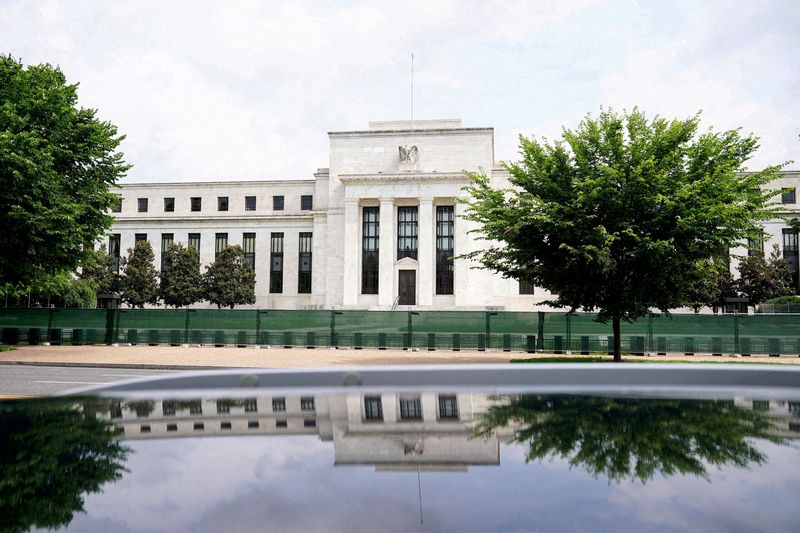
    The Federal Reserve meeting is fast approaching on Wednesday – and the stakes are high. Rising bets for a December cut seem to have saved equities from AI jitters for now. But the effect on the dollar, which dipped further on ​Monday, has been more pain.

    I’ll get into all the market news below.

    But first check out Mike Dolan’s latest column where he discusses what is at the heart of the problem facing ‌the Federal Reserve this week and throughout 2026.

    And listen to the latest episode of the new Morning Bid daily podcast. Subscribe to hear Mike and other Reuters journalists discuss the biggest news in markets and finance seven days a week.

    Today’s Market Minute

    * ‌China’s exports topped forecasts in November, driven by asurge in shipments to non-U.S. markets as manufacturers deepentrade ties with the rest of the world in light of PresidentDonald Trump’s prohibitively high tariffs. * A wave of flight cancellations by IndiGo, India’s largestairline, sparked a week of chaos and grounded tens of thousandsof passengers, laying bare the risks of having a duopoly-likesituation in the world’s fastest-growing aviation market. * U.S. lawmakers on Sunday unveiled an annual defense policybill authorizing a record $901 billion in national securityspending next year, billions more than President Donald Trump’srequest, and provides $400 million in military assistance toUkraine. * China’s imports of major commodities were on divergenttracks in November, with crude oil ⁠and iron ore powering aheadbut copper and coal losing steam. The contrasting ‌outcomes makeit difficult to come up with a single narrative for demand inthe world’s biggest buyer of natural resources, writes ROICommodities and Energy Columnist Clyde Russell. * The G7’s proposed plan to bar tankers from hauling Russianoil ups the ante in the West’s economic stand-off with Moscow,but the ultimate bite hinges on whether governments ‍will ratchetup punishments on those skirting sanctions, argues ROI EnergyColumnist Ron Bousso

    The final Fed countdown

    No surprise: It’s all about the Fed this week, with traders pretty confident — and hopeful — the bank will deliver a 25 basis-point rate cut on Wednesday.

    After all, bets that the Fed will cut rates have helped the S&P 500 bounce back from AI woes and jump 5% since late November, so equity traders need Jerome Powell and co to deliver.

    As for the dollar, the ​market verdict is more pain.

    Continue Reading

  • Blyth offshore wind farm marks 25-year milestone

    Blyth offshore wind farm marks 25-year milestone

    PA Media A wind turbine at the Blyth offshore wind farm. Next to it is a large vessel heading towards it. The wind turbine is white, with a yellow base submerged in the water. The vessel is black and white and has a mechanical winch-type arm on the back of it.PA Media

    The offshore wind farm in Blyth turns 25 this month

    The “critical role” played by the UK’s first offshore wind farm has been celebrated 25 years after it was built.

    The first turbines were erected at the site in Blyth, Northumberland, in December 2000, with the sector having since become the second largest power source in the country after gas.

    Energy minister Michael Shanks marked the milestone with a visit to the site and said offshore wind was the “backbone” of the UK’s clean energy system.

    “I don’t think anyone could’ve fully appreciated the critical role that offshore wind would play in the future,” he said.

    He added switching on the first turbines at Blyth had marked a “hugely important moment”, putting the UK at the forefront of offshore energy.

    According to analysis by energy think tank Ember, there are 47 operational offshore wind farms, supplying nearly a fifth (17%) of Britain’s electricity generation and employing about 40,000 people.

    PA Media A photo of the wind turbines being built in Blyth. There is a large concrete structure supporting four turbines. A black vessel with the name "Bernica Newcastle" is next to it.PA Media

    The wind farm is 1km (0.6 miles) off the Northumberland coast

    Frankie Mayo, an analyst at Ember, said the engineering and innovation in British offshore wind should be “a real point of pride”.

    He added: “With seabeds and wind speeds second-to-none for this kind of technology, Britain has truly led the world in showing its potential.”

    Labour is pushing ahead with efforts to hit its target to remove almost all fossil fuels from the UK’s electricity supply by 2030.

    On whether the government will achieve the goal, Shanks said: “Yes, full stop.”

    He added there was momentum in the industry “to build big things and to do it faster”.

    The Conservatives have previously said Labour’s “rush” to decarbonise the electricity system would push up electricity prices and cause more hardship for people across Britain.

    Continue Reading

  • Canada Is Courting Asia After a Challenging Year of Trade Under Trump

    Canada Is Courting Asia After a Challenging Year of Trade Under Trump

    Canada has had a very busy year.

    Within a year, the US’s second-largest trading partner has rapidly ramped up efforts to explore new deals with regional powers in Asia, or to revive talks that had been previously put on ice.

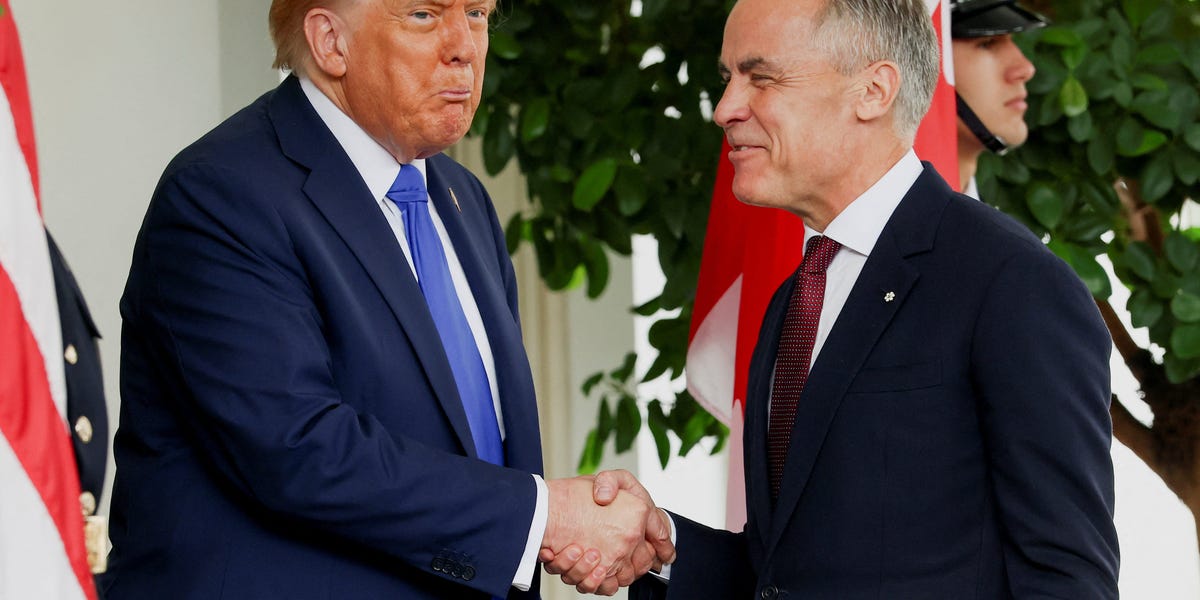
    As of November, the US has imposed a 35% tariff on all goods from Canada that are not covered by the USMCA. Canadian exports of steel and aluminum to the US also face a 50% duty. The northern neighbor has since matched some of Trump’s levies, and Trump has repeatedly threatened to end trade negotiations with Canada.

    International trade experts in both Canada and the US told Business Insider that the pivot is spurred by a lack of progress in negotiations with the Trump administration, which has made tariffs a cornerstone of its policy, and doubt about whether a good deal with the current administration is still possible.

    Phil Luck, the director of the Economics Program at the Center for Strategic and International Studies, told Business Insider that he observed similar efforts to diversify trade during the first Trump administration, and that the current trend is “an indication” of how trade discussions have progressed with the US this year.

    “Canada took our extreme turn in our trade relationship with them pretty seriously,” said Luck, “because this is a very big change in how the US has sort of traditionally treated Canada, and it has really drawn the ire of the Canadian people as a result.”

    “So even if there was a somewhat palatable sort of middle ground, our partners also have democracies, and they need to find a solution that’s palatable to their population,” Luck added.

    The diversification push

    In September, Ottawa signed a comprehensive free-trade agreement with Indonesia, the first with the Asian Pacific country. Two months later, Canada secured a bilateral investment treaty with the United Arab Emirates that came with an expanded air-services pact. Canada is also fast-tracking a previously stalled trade agreement with India and pushing for a free trade agreement with the entirety of ASEAN by the end of 2026.

    A campaign page promoting foreign investment had appeared by August on the Canadian government website, featuring a slogan that reads, “Diversification is a national imperative.”

    Meredith Lilly, professor of international affairs at Carleton University and a former International Trade Advisor to former Canadian Prime Minister Stephen Harper, told Business Insider that even though some negotiations with Asian countries have been in the works for a long time, the current government of Canada is touting the efforts that the country is making and accelerating them as a “response to slow and difficult negotiations” with the US.

    “It is a very difficult administration to work with at the moment,” said Lilly of Trump’s team. “But we should have no expectation that these diversification efforts can move quickly — it’s a project that we should always be undertaking, and we should be working on it consistently.”

    There is more that Canada can do, too, Lilly said.

    One thing Canada can do more quickly to make up for the US tariffs’ impact on the economy is to increase trade relations with countries it already has agreements with. That includes Korea, Japan, and the 12 Pacific Rim countries that are part of the Trans-Pacific Partnership, Lilly said, all of which are highly interested in Canada’s natural resources.

    According to data from the Canada Energy Regulator, Canadian oil exports outside the US reached a record 525,000 barrels per day in July 2025 and remain elevated throughout the third quarter of 2025.

    Canada, while initially expecting a larger hit on the economy due to Trump’s tariffs, has also reported surprisingly robust GDP growth. In the third quarter of 2025, the country reported a 2.6% GDP growth rate, according to Statistics Canada, surpassing a previously revised 1.8% projection.

    A decline in confidence in the US

    Carlo Dade, the Director of International Policy at the School of Public Policy at the University of Calgary, told Business Insider that it may not be worth it to make a deal with the US now, because most Canadian goods are covered by the existing USMCA trade agreement, and because many of Trump’s foreign policy moves seem “personal.”

    “I argue that we shouldn’t be trying to get an agreement with the US,” said Dade. “If you look at what happened to Malaysia, Vietnam, the UK — if that’s a deal, do you want that?”

    Malaysia and Vietnam, despite agreeing to remove most tariffs on the US, still ended up with 19% and 20% of tariffs, respectively. The UK, despite having secured a deal with Trump fairly early in the year, is not exempt from a general 10% tariff on most goods and a 25% duty on steel and aluminum.

    “No one gets a good deal from Trump. ‘The Art of the Deal’ says there are winners and there are losers, and the US is going to be the winner,” Dade added, referring to Trump’s book on dealmaking strategies. “So what you’re looking for is not a good deal. You’re looking for the least worst deal.”

    Luck said that even though the US has a lot of leverage over its closest trading partners, he is concerned about the long-term reputational damage the country will suffer among allies.

    “Just because you have the biggest stick doesn’t mean you have to use it,” said Luck. “If you insist on cashing in on all your leverage today, you have a situation where you have the most ability to harm and therefore the most leverage over your closest allies and partners whose trade is most integrated with yours.”


    Continue Reading

  • Prudential PLC Shares Rise After India JV Files for IPO Prospectus

    Prudential PLC Shares Rise After India JV Files for IPO Prospectus

    By Joe Stonor

    Prudential PLC shares rose after the company's Indian joint venture ICICI Prudential Asset Management filed its initial public offering prospectus with authorities, seizing on an IPO boom in the country.

    Shares in London were up 28 pence, or 2.6% at 11.06 pounds, leading the FTSE 100 index risers. They are currently up 74% over the year to date.

    The fund manager filed a Red Herring Prospectus dated Dec. 6 with the Securities and Exchange Board of India, BSE Ltd., and the National Stock Exchange of India.

    As part of the IPO, Prudential's subsidiary Prudential Corporation Holdings is selling 9.9% of the stock in ICICI Prudential.

    ICICI Prudential is a joint venture between India's ICICI Bank and U.K. insurer Prudential, with the two owning 51% and 49%, respectively. Details on the IPO, including the amount offered for sale, remain subject to market conditions and other factors, Prudential said.

    Prudential said it is also considering a private sale of 2% of ICICI Prudential to ICICI Bank. The insurer is also weighing up offering shares to select institutional investors pre-IPO.

    In February, Prudential said it was considering listing the Indian joint venture and a partial divestment of its shares. It said then that net proceeds of such a divestment would be returned to shareholders.

    The Indian IPO market is running hot as domestic investors fuel a fundraising gold rush, with companies raising $19.6 billion so far this year, according to Bloomberg.

    Write to Joe Stonor at josephmichael.stonor@wsj.com

    (END) Dow Jones Newswires

    December 08, 2025 06:11 ET (11:11 GMT)

    Copyright (c) 2025 Dow Jones & Company, Inc.

    Continue Reading

  • JPMorganChase names Todd Combs to head Strategic Investment Group of Security and Resiliency Initiative; Company also announces external advisory council to inform SRI’s strategy and investment priorities

    JPMorganChase today announced that Todd Combs, Investment Manager of Berkshire Hathaway, Chief Executive Officer of GEICO and a former member of JPMorganChase’s Board of Directors, will head the $10 billion Strategic Investment Group of the firm’s new Security and Resiliency Initiative (SRI), which the firm recently launched to help companies enhance their growth, spur innovation and accelerate manufacturing, primarily in the United States.

    Combs, one of the world’s leading investors, will work closely with the Commercial & Investment Bank (CIB) and Asset & Wealth Management (AWM) to identify opportunities that cut across middle-market and large corporate clients in the defense, aerospace, healthcare and energy sectors. He will also act as a Special Advisor to Jamie Dimon, Chairman and Chief Executive Officer, and to the firm’s Operating Committee on specific strategic issues. In addition, Combs will be a member of the SRI’s External Advisory Council, which was announced today (see below).

    Dimon said: “Todd Combs is one of the greatest investors and leaders I’ve known, having successfully managed investments alongside the most respected and successful long-term investor of our time, Warren Buffett. Having served nine years on our Board, he truly understands all aspects of our company, and he supports the role we play helping make the world better and safer for all its citizens.” Dimon added: “I deeply value Todd’s experience, character and judgment, and we are honored he will be joining our team in this role.”

    Combs said: “As a member of JPMorganChase’s Board, I have seen up close the quality of the individuals who lead this firm and their commitment to always doing the right thing and helping communities around them. The SRI is a perfect example of this — committing $1.5 trillion to spurring economic growth and innovation to make the world more secure.”

    Combs will join the company in January 2026. He stepped off the JPMorganChase Board, effective immediately, to accept this critical role, reporting to Jamie Dimon, and working closely with Doug Petno and Troy Rohrbaugh, Co-CEOs of the Commercial and Investment Bank, Mary Erdoes, CEO of Asset and Wealth Management, and other leaders of SRI. As announced earlier today, Combs will step down from his leadership roles at Berkshire Hathaway and GEICO.

    In another significant step forward for the SRI, JPMorganChase announced the formation of an external advisory council of experienced leaders and exceptional thinkers from across the public and private sectors to help guide the SRI’s long-term strategy. The council will initially be chaired by Jamie Dimon and will include:

    • Jeff Bezos, Executive Chairman of Amazon and Founder of Blue Origin
    • Chris Cavoli, General (retired); Supreme Allied Commander Europe and Commander of U.S. European Command
    • Todd Combs, head (effective January 2026) of the SRI Strategic Investment Group
    • Michael Dell, Chairman and CEO of Dell Technologies
    • Ann Dunwoody, retired Commanding General of U.S. Army Material Command
    • Jim Farley, President and CEO of Ford Motor Company
    • Robert Gates, former U.S. Secretary of Defense
    • Alex Gorsky, former Chairman and CEO of Johnson & Johnson
    • Paul Nakasone, General (retired), former NSA Director and Commander of Cybersecurity Command
    • Condoleezza Rice, former U.S. Secretary of State
    • Paul Ryan, Partner at Solamere Capital, former Speaker of the U.S. House of Representatives
    • Phebe Novakovic, Chairman and CEO of General Dynamics

    The council, which will convene periodically, will work with JPMorganChase’s top leadership as appropriate and inform the SRI’s strategy and investment priorities, with clear perspectives on risks and opportunities to help spur growth and innovation in industries critical to the United States’ national security and economic resiliency.

    “We are humbled by the extraordinary group of leaders and public servants who have agreed to join our efforts as senior advisors to the SRI,” said Jamie Dimon. “With their help, we can ensure that our firm takes a holistic approach to addressing key issues facing the United States — supporting companies across all sizes and development stages through advice, financing and equity capital.”

    About JPMorganChase

    JPMorgan Chase & Co. (NYSE: JPM) is a leading financial services firm based in the United States of America (“U.S.”), with operations worldwide. JPMorganChase had $4.6 trillion in assets and $360 billion in stockholders’ equity as of September 30, 2025. The Firm is a leader in investment banking, financial services for consumers and small businesses, commercial banking, financial transaction processing and asset management. Under the J.P. Morgan and Chase brands, the Firm serves millions of customers in the U.S., and many of the world’s most prominent corporate, institutional and government clients globally. Information about JPMorgan Chase & Co. is available at www.jpmorganchase.com.

    Continue Reading

  • L’Oréal shares dip as it bets on Galderma and science-based skincare

    L’Oréal shares dip as it bets on Galderma and science-based skincare

    Published on
    Updated

    Shares in L’Oréal slipped almost 1.5% during morning trading in Paris after the firm announced that it would double its stake in Swiss skincare firm Galderma.

    Galderma shares had risen almost 2% in Zurich by around 11:00 CET, dropping from a more dramatic high seen earlier in the day.

    L’Oréal will purchase 24 million extra shares in the Swiss firm, bringing its ownership to 20%, from a consortium led by the Swedish private equity group EQT.

    The purchase price is undisclosed and the deal is expected to close in the first quarter of 2026. Galderma will also consider nominating two L’Oréal representatives to its board, replacing the consortium led by EQT.

    “Our initial strategic investment made in 2024 in Galderma has proven very successful and therefore we are eager to solidify and extend the partnership further,” said L’Oréal CEO Nicolas Hieronimus.

    The firm stressed that it did not plan to increase its stake further.

    Flemming Ørnskov, CEO of Galderma, said: “Galderma continues to deliver impressive growth, strong innovation and category leadership across its broad, science-based dermatology portfolio…We are pleased with L’Oréal’s increased investment, which affirms our direction and the meaningful value creation we expect in the years ahead.”

    A shift towards innovation

    Galderma was originally set up by L’Oréal and Swiss food group Nestlé in 1981. In 2014, Nestlé bought out its partner’s 50% stake, and it then sold Galderma to private equity group EQT in 2019.

    Last year, L’Oréal then acquired a 10% stake in Galderma, estimated at €1.7 billion.

    The move notably signalled a shift towards more cutting-edge beauty technology, as Galderma is focused on the skin aesthetics market, offering a broad portfolio of dermo-cosmetics, dermatologic drugs, and hyaluronic acid fillers, among other products.

    “Aesthetics is a key adjacency to our core beauty business that we are keen to continue to explore,” said CEO of L’Oréal Nicolas Hieronimus on Monday.

    L’Oréal’s dermatological portfolio already includes major brands such as La Roche-Posay and CeraVe, brands boosted by an increased interest in science-driven skincare promoted on social media.

    The fresh deal with Galderma is the latest in a series of acquisitions made by the French beauty giant in recent years. In October, L’Oréal announced it would buy Kering’s struggling beauty business, including perfume maker House of Creed. L’Oréal will also enter into 50-year licensing arrangements for some of Kering’s most iconic brands, specifically Gucci, Bottega Veneta, and Balenciaga.

    Other brands that L’Oréal has added to its portfolio in recent years include UK skincare brand Medik8 and Australian soapmaker Aesop.

    Continue Reading