Category: 3. Business

  • Letter for the article Is Sham Acupuncture Equally Effective for Prima

    Letter for the article Is Sham Acupuncture Equally Effective for Prima

    Dear editor

    Randomized controlled trials (RCTs) are gold standard for evaluating intervention efficacy. Yet, for complex physical interventions like acupuncture, establishing an adequate placebo control remains challenging.1 Common placebo procedures include shallow needling (SN), non-penetrating needle device (NPND), non-acupoint needling, and needling at acupoints not traditionally indicated for the target condition, either alone or in combination.2 A critical question is which placebo technique is optimal.

    Wang et al recently addressed this using a Bayesian Network Meta-Analysis (NMA) in primary insomnia (PI). They concluded that NPND is preferable to SN as a placebo control in acupuncture RCTs for PI, citing comparable effects on reducing PSQI scores and altering objective sleep parameters, but a lower overall ranking for NPND on the SUCRA curve, suggesting weaker therapeutic activity.3

    While we acknowledge the rigor of this study, we respectfully offer a different perspective to stimulate further discussion.

    Evidence for NPND Inertness Remains Restricted

    An ideal control should be physiologically inert, exerting no therapeutic effect while ensuring participant blinding.1 Validating NPND necessitates rigorous demonstration of inertness. Wang et al reported no significant difference between NPND and non-acupuncture controls in improving subjective sleep—but this relied on only two trials: one with a no-treatment control (n = 16)4 and another permitting any insomnia treatment except acupuncture and herbal medicine—potentially including CBTi or hypnotics (n = 49).5 This limited evidence introduces substantial uncertainty. Furthermore, if NPND produces outcomes comparable to conventional treatments, it might possess intrinsic efficacy rather than being inert. Future studies should compare within-group outcomes before and after NPND intervention to confirm inertness.

    Beyond Efficacy: Practical Considerations in Placebo Selection

    Wang et al’s conclusion—that NPND is preferable to SN based exclusively on therapeutic outcomes in sleep—oversimplifies the methodological complexity of acupuncture RCTs. Practical factors must also be considered.

    First, insomnia treatment often involves head acupoints (eg, GV20, EX-HN1),6 typically needled transversely (≤15° relative to the skin surface). NPND like Streitberger or Park devices relies on adhesive bases and perpendicular application, making them unsuitable for simulating transverse needling. Moreover, in participants with abundant scalp hair, device adhesion is often compromised, potentially necessitating shaving—a requirement that further undermines feasibility in clinical trials.

    Second, blinding efficacy with NPND may be inadequate in participants familiar with acupuncture. Pilot data from our previous RCT on perimenopausal insomnia revealed that participants could readily distinguish NPND from real needles based on tactile sensation and perceived penetration. Consequently, we substituted NPND with SN at non-insomnia-relevant acupoints. The sham group achieved a Bang’s Blinding Index of −0.14 (within −0.20 to 0.20), indicating successful blinding.7

    The Unique Advantages of SN as a Control Should Not Be Overlooked

    Beyond enhancing blinding credibility through a more authentic needling sensation, SN offers additional advantages over NPND, including: (1) Superior cost-effectiveness and accessibility, as it utilizes standard acupuncture needles instead of costly specialized devices; (2) Enhanced clinical relevance and external validity, by reframing the research question around a clinically meaningful dose-response relationship (ie, therapeutic deep needling versus minimal shallow needling), the findings of which directly inform real-world practice; (3) Greater ethical acceptability, owing to the mild physiological stimulus provided even at non-indication points, thereby alleviating concerns associated with administering a completely inert intervention.

    While NPND remains appropriate in certain contexts—such as acupuncture-naïve populations in Western settings, or trials restricted to perpendicularly needled acupoints (eg, HT7, PC6)—SN may be preferable in East Asian participants familiar with acupuncture, in RCTs involving scalp acupoints, or when budget constraints are considerable.

    Conclusion

    In RCTs of acupuncture for insomnia, placebo selection should not only consider inertness but also other factors such as blinding effect, applicability across different needling techniques, costs, cultural context, and ethics. Rather than pursuing a single “ideal” placebo, we recommend making context-specific choices tailored to the study population, clinical setting, and research objectives. Adopting such a nuanced and flexible approach can enhance the internal validity of RCTs while ensuring the clinical relevance of the findings.

    Abbreviations

    CBTi, Cognitive Behavioral Therapy for Insomnia; NMA, Network Meta-Analysis; NPND, Non-Penetrating Needle Device; PI, Primary Insomnia; PSQI, Pittsburgh Sleep Quality Index; RCT(s), Randomized Controlled Trial(s); SN, Shallow Needling; SUCRA, Surface Under the Cumulative Ranking; TCM, Traditional Chinese Medicine.

    Data Sharing Statement

    Data availability is not applicable as no new data was generated or analyzed in this communication.

    Author Contributions

    Fei-Yi Zhao – Conceptualization, Formal analysis, Investigation, Writing – original draft; Wen-Jing Zhang – Formal analysis, Supervision, Writing – review & editing; Qiang-Qiang Fu – Conceptualization, Formal analysis, Investigation, Writing – review & editing. All authors gave final approval of the version to be published; have agreed on the journal to which the article has been submitted; and agree to be accountable for all aspects of the work.

    Funding

    No funding was received.

    Disclosure

    The authors declare no competing interests.

    References

    1. Zhang CS, Tan HY, Zhang GS, Zhang AL, Xue CC, Xie YM. Placebo devices as effective control methods in acupuncture clinical trials: a systematic review. PLoS One. 2015;10(11):e0140825. doi:10.1371/journal.pone.0140825

    2. Appleyard I, Lundeberg T, Robinson N. Should systematic reviews assess the risk of bias from sham–placebo acupuncture control procedures? Eur J Int Med. 2014;6(2):234–243. doi:10.1016/j.eujim.2014.03.004

    3. Wang Y, Wu M, Zhang J, et al. Is Sham acupuncture equally effective for primary insomnia? A Bayesian network meta-analysis. Nat Sci Sleep. 2025;17:1997–2012. doi:10.2147/NSS.S541797

    4. Xu SF, Sun YN, Wang S, Wu JY, Yin P. Clinical observation of electroacupuncture at Baihui (GV20) and Shenting (GV24) for the treatment of primary insomnia. Sichuan J Tradit Chin Med. 2014;32(5):154–156.

    5. Lee B, Kim BK, Kim HJ, et al. Efficacy and safety of electroacupuncture for insomnia disorder: a multicenter, randomized, assessor-blinded, controlled trial. Nat Sci Sleep. 2020;12:1145–1159. doi:10.2147/NSS.S281231

    6. Zhao FY, Spencer SJ, Kennedy GA, et al. Acupuncture for primary insomnia: effectiveness, safety, mechanisms and recommendations for clinical practice. Sleep Med Rev. 2024;74:101892. doi:10.1016/j.smrv.2023.101892

    7. Zhao FY, Zheng Z, Fu QQ, et al. Acupuncture for comorbid depression and insomnia in perimenopause: a feasibility patient-assessor-blinded, randomized, and sham-controlled clinical trial. Front Public Health. 2023;11:1120567. doi:10.3389/fpubh.2023.1120567


    Continue Reading

  • Bakery chain Gail’s plans to open 40 more outlets as sales soar | Food & drink industry

    Bakery chain Gail’s plans to open 40 more outlets as sales soar | Food & drink industry

    The upmarket bakery chain Gail’s is planning 40 more outlets after sales rose by a fifth last year as it opened 36 new bakeries and sales to supermarkets increased.

    The cafe and retailer, which currently has 185 sites, said sales rose to £278m in the year to the end of February but that pre-tax losses widened to £7.8m, from £7.4m a year before, as costs rose and it spent millions on opening new outlets.

    Gail’s directors said staff and energy costs had risen, hitting profit margins, while it spent £51m on store reopening costs.

    Sales at its retail arm rose almost 23%, more than double the pace of its wholesale division, which supplies clients including Waitrose, Ocado and Amazon from bakeries in London, Manchester and Bath.

    A Gail’s spokesperson told the Propel trade journal: “We are pleased to have delivered strong year-on-year growth. This performance is underpinned by the increasing demand for high-quality, nutrient dense food, and by the support of the communities we serve. We will continue to build on this momentum by growing with purpose and remaining committed to improving access to good food.”

    Speaking at a conference organised by Propel this month, Tom Molnar, who co-founded Gail’s 20 years ago, said the business was “still early in our growth”.

    He said: “We do have a lot of bakeries now, but it took 20 years to get there. It wasn’t easy, and it wasn’t very fast. Twice, we had to stop growing altogether, because we didn’t think that we could be better; we were worried about getting consumed by speed. We’re still early in our growth. You take McDonald’s, Greggs or any other successful food business here in the UK – they operate from thousands of sites, and we’re still below 200.”

    Gail’s owners, led by the private equity group Bain Capital, last year reportedly hired the financial advisory company Goldman Sachs to help find new investors in an effort to drive expansion. The chain was said to be worth as much as £500m.

    The bakery was founded by Yael (Gail) Mejia in the early 1990s serving restaurants and other venues in London. In 2003, Molnar and a few others joined Mejia and the group opened the first bakery cafe in Hampstead in 2005.

    skip past newsletter promotion

    The rapidly expanding chain has become an unlikely political bellwether – used by the Liberal Democrats to help identify areas where voters might be ready to switch from the Conservatives.

    Its expansion has also spurred local protests, including a heated one in Walthamstow, east London, where a petition to stop a Gail’s opening was signed by hundreds of residents. A new branch in Brighton was spray-painted with the world “boring” and a large image of a penis, according the local newspaper the Argus.

    Continue Reading

  • Assessing ASICS (TSE:7936) Valuation as Investor Interest Remains Strong

    Assessing ASICS (TSE:7936) Valuation as Investor Interest Remains Strong

    ASICS (TSE:7936) has seen its stock shift in recent trading sessions, drawing attention from investors curious about evolving trends. Looking at recent price moves, the shares have tracked a modest range this month with slight downward pressure.

    See our latest analysis for ASICS.

    Stepping back, ASICS has delivered standout long-term results, with a total shareholder return of 25.4% over the last year and an astonishing 415.75% in the past three years. While the last few months saw some mild share price weakness, the bigger picture still points to sustained momentum and renewed interest from investors looking for growth in consumer brands.

    If you’re curious about what other fast-rising companies are catching attention lately, this is a great time to discover fast growing stocks with high insider ownership

    With shares still trading at a notable discount to analyst targets and robust fundamentals in play, the key question is whether ASICS remains undervalued or if the market has already accounted for its next stage of growth.

    ASICS currently trades at a price-to-earnings (PE) ratio of 31.5x, far above both its peer average and the luxury sector as a whole. This raises questions about whether such a premium is warranted for the brand’s earnings outlook.

    The price-to-earnings ratio measures how much investors are paying for each unit of profit. In consumer brands like ASICS, this multiple often reflects not just present profitability but also expectations for future growth and brand strength.

    Despite strong recent earnings growth and a robust return on equity, this 31.5x multiple is more than double the industry average of 14.9x and also well above our estimated fair ratio of 23.1x. The current valuation suggests that the market is highly optimistic about future performance, potentially pricing in ambitious targets for sustained growth and profitability. If expectations fade, the multiple could contract significantly to better align with peers or its intrinsic potential.

    Explore the SWS fair ratio for ASICS

    Result: Price-to-Earnings of 31.5x (OVERVALUED)

    However, slowing revenue growth and a potential pullback from recent highs could expose the stock to volatility if market sentiment shifts.

    Find out about the key risks to this ASICS narrative.

    Taking a different approach, our SWS DCF model estimates ASICS to be overvalued, with shares trading above the model’s calculated fair value of ¥3,286. While multiples suggest high optimism, the DCF model indicates that future cash flows may not fully support the current market price. Could analyst optimism be running ahead of fundamentals?

    Look into how the SWS DCF model arrives at its fair value.

    7936 Discounted Cash Flow as at Nov 2025

    Simply Wall St performs a discounted cash flow (DCF) on every stock in the world every day (check out ASICS for example). We show the entire calculation in full. You can track the result in your watchlist or portfolio and be alerted when this changes, or use our stock screener to discover 914 undervalued stocks based on their cash flows. If you save a screener we even alert you when new companies match – so you never miss a potential opportunity.

    If you see things differently or want to uncover your own perspective, it’s easy to analyze the numbers and tell your version of the story in just a few minutes. Do it your way

    A good starting point is our analysis highlighting 3 key rewards investors are optimistic about regarding ASICS.

    Every investor deserves the smartest tools. Open the door to new opportunities with Simply Wall Street’s screeners and stay a step ahead in today’s dynamic market.

    This article by Simply Wall St is general in nature. We provide commentary based on historical data and analyst forecasts only using an unbiased methodology and our articles are not intended to be financial advice. It does not constitute a recommendation to buy or sell any stock, and does not take account of your objectives, or your financial situation. We aim to bring you long-term focused analysis driven by fundamental data. Note that our analysis may not factor in the latest price-sensitive company announcements or qualitative material. Simply Wall St has no position in any stocks mentioned.

    Companies discussed in this article include 7936.T.

    Have feedback on this article? Concerned about the content? Get in touch with us directly. Alternatively, email editorial-team@simplywallst.com

    Continue Reading

  • A Fresh Look at Valuation as Investor Sentiment Wavers

    A Fresh Look at Valuation as Investor Sentiment Wavers

    SailPoint (SAIL) has seen its stock move lately, with investors keeping an eye on the company’s recent performance numbers and trends. Shares changed only slightly in the last day but have lagged over the past month, showing a cautious sentiment around the name.

    See our latest analysis for SailPoint.

    Looking at the bigger picture, SailPoint’s 1-month share price return of -15.04% highlights a notable loss of momentum. This result caps off an already weak trend so far this year, despite steady demand for its identity security solutions. In a single stroke, the stock has underperformed both recently and over the longer term, signaling that appetite for risk in this corner of enterprise software remains muted.

    If you’re curious to see what else is out there, this could be the perfect time to broaden your search and discover fast growing stocks with high insider ownership

    With shares sitting well below analyst targets, the question facing investors now is whether SailPoint’s recent weakness signals a buying opportunity or if the market has already factored in all of its future growth prospects.

    SailPoint trades at a price-to-sales (P/S) ratio of 10.6x, which is notably higher than both its peer group and industry averages. For investors, this premium valuation raises the question of whether the company’s revenue growth profile is strong enough to justify such a hefty price tag.

    The price-to-sales ratio measures how much investors are willing to pay per dollar of revenue. It is a popular metric for software companies, many of which are still working towards consistent profitability, because it focuses on revenue generation rather than profit. When a P/S ratio stands well above the norm, the market is often anticipating robust revenue growth or defensibility.

    In SailPoint’s case, the current P/S of 10.6x is elevated compared to both the US Software industry average of 4.9x and its peer group average of 8.6x. In addition, our fair P/S ratio estimate is 7.1x, suggesting further downside if expectations moderate. The market is clearly assigning a premium that is above historical or sector benchmarks, implying high confidence in future sales growth or strategic positioning.

    Explore the SWS fair ratio for SailPoint

    Result: Price-to-Sales of 10.6x (OVERVALUED)

    However, slowing revenue growth or persistent operating losses could challenge investor confidence and force a reassessment of SailPoint’s elevated valuation.

    Find out about the key risks to this SailPoint narrative.

    While the price-to-sales ratio points to an overvalued stock, another angle comes from the SWS DCF model. This method looks at the present value of expected future cash flows, rather than just revenue.

    Our DCF model finds SailPoint trading above its estimate of fair value. This suggests investors might be paying a premium for future growth that is not yet guaranteed. Could this mean further downside risk, or is the market simply seeing something others miss?

    Look into how the SWS DCF model arrives at its fair value.

    SAIL Discounted Cash Flow as at Nov 2025

    Simply Wall St performs a discounted cash flow (DCF) on every stock in the world every day (check out SailPoint for example). We show the entire calculation in full. You can track the result in your watchlist or portfolio and be alerted when this changes, or use our stock screener to discover 914 undervalued stocks based on their cash flows. If you save a screener we even alert you when new companies match – so you never miss a potential opportunity.

    If you see things differently or want to dig into the details yourself, building your own analysis is quick and straightforward. Try it out: Do it your way

    A great starting point for your SailPoint research is our analysis highlighting 2 key rewards and 2 important warning signs that could impact your investment decision.

    Take control of your portfolio and seize opportunities now. Expand your watchlist by checking out these handpicked stock ideas, each targeting a key trend in today’s market.

    This article by Simply Wall St is general in nature. We provide commentary based on historical data and analyst forecasts only using an unbiased methodology and our articles are not intended to be financial advice. It does not constitute a recommendation to buy or sell any stock, and does not take account of your objectives, or your financial situation. We aim to bring you long-term focused analysis driven by fundamental data. Note that our analysis may not factor in the latest price-sensitive company announcements or qualitative material. Simply Wall St has no position in any stocks mentioned.

    Companies discussed in this article include SAIL.

    Have feedback on this article? Concerned about the content? Get in touch with us directly. Alternatively, email editorial-team@simplywallst.com

    Continue Reading

  • Bringing Indigenous languages back from the brink – Full Story podcast | Indigenous Australians

    Bringing Indigenous languages back from the brink – Full Story podcast | Indigenous Australians

    More than 250 languages were spoken across Australia before British colonisation. Now only half are still in use as a result of policies that suppressed and prevented First Nations people from speaking their mother tongues.

    Indigenous affairs reporter Ella Archibald-Binge travels to two communities including her country to hear from elders, teachers and students about efforts to revive native languages and close the education gap

    Continue Reading

  • US Options Market Grapples With ‘Concentration Risk’ in Clearing

    US Options Market Grapples With ‘Concentration Risk’ in Clearing

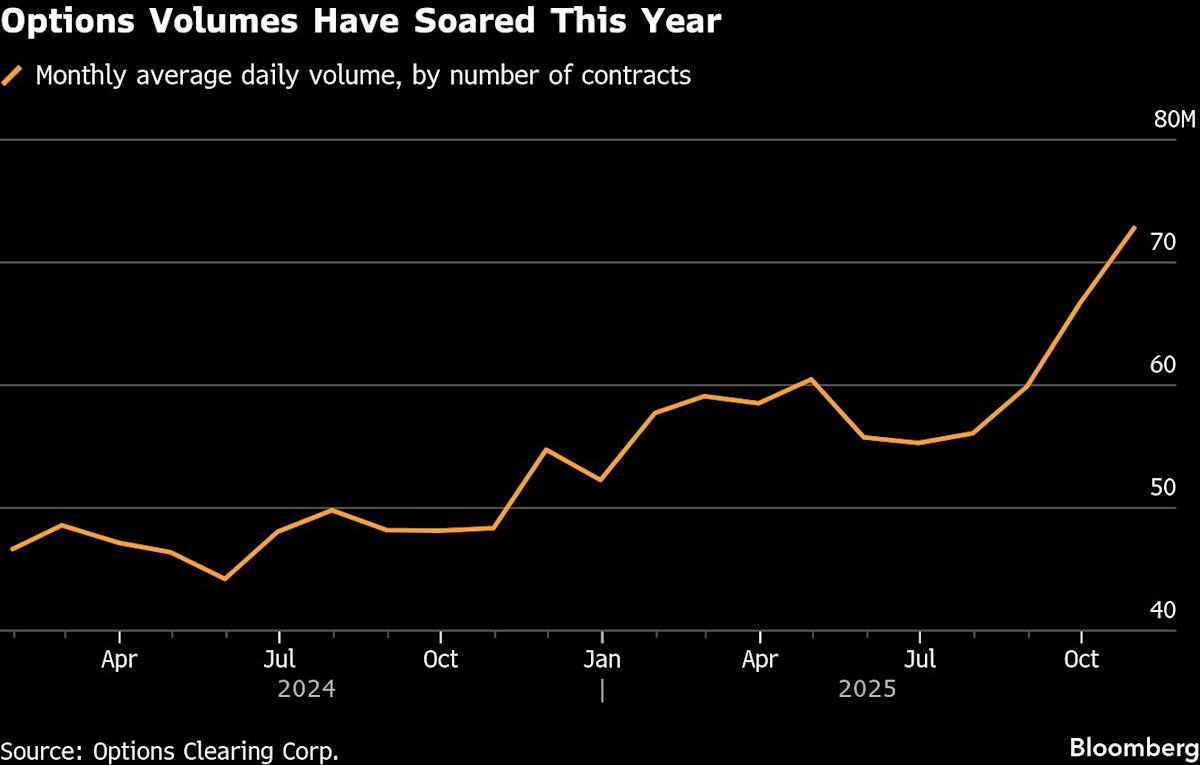
    As the US options market heads for a sixth straight year of record volume, some best-known names in the industry are growing nervous about its over-reliance on a small group of banks to guarantee trades for the biggest market makers.

    Every listed US options trade goes through The Options Clearing Corp., a central counterparty that handles more than 70 million contracts a day during busy periods. The trades are submitted to the OCC by its members — who help trades get to the clearing house and act as guarantors in case their clients go bust.

    Most Read from Bloomberg

    There’s a small group of firms at the top. Out of dozens of members, the top five contributed almost half of the OCC’s default fund in the second quarter of 2025. Market participants cite Bank of America Corp., Goldman Sachs Group, Inc. and ABN Amro Bank NV as the three biggest, handling most positions from market makers, who take the other side of almost every options trade. The fact so much volume goes through such a small number of firms raises the risk of widespread losses if one of them should fail.

    “I think there is significant concentration risk in clearing intermediation,” Craig Donohue, chief executive officer of Cboe Global Markets, Inc., said in an interview, without naming specific banks. “I do worry about that.”

    The risk of a major bank failing is unlikely — but not unheard of. Donohue has his own battle scars from a clearing member default: in October 2011, when he was CEO of CME Group Inc., MF Global declared bankruptcy.

    The more immediate risk is that these banks may run out of capacity to support the extraordinary growth of the listed derivatives market, with OCC average daily volume soaring 52% in October from a year earlier. That’s leading to a rise in “self-clearing” by market makers — meaning they become more direct members of the clearing house — which comes with its own risks, given that market makers are more thinly capitalized than banks.

    Bank of America and Goldman Sachs declined to comment. ABN Amro did not immediately respond to a request for comment.

    Related: SGX to List Perpetual Futures to Rival Crypto ‘Bucket Shops’

    Only a handful of clearing brokers have the ability to cross-margin between futures and options, where opposite positions in related instruments can cancel each other out, reducing the amount of margin needed. For example, if a trader is long S&P 500 E-Mini Futures, but short S&P 500 Index Options, the net risk position would be reduced.

    Continue Reading

  • The man behind Google Meet went from being ‘the only Indian kid in my class’ to connecting 3 billion users worldwide. He test-drives the product every day

    The man behind Google Meet went from being ‘the only Indian kid in my class’ to connecting 3 billion users worldwide. He test-drives the product every day

    Awaneesh Verma leads Google Meet, Google Voice, and other real-time communication products at Alphabet, overseeing a massive network reaching about 3 billion users and 11 million companies worldwide.

    However, his drive to eliminate communication friction and ensure people are “truly understanding each other” is rooted in a personal journey that stretches back before his time at Uber and Duolingo—to when he learned how barriers can keep people from communicating.

    Born in the UK to parents who had immigrated from India, Verma spent his young childhood in the midlands city of Sheffield. He recalled in a recent interview with Fortune that, for the longest time, he was “the only Indian kid in my class.”

    While his hometown is “a great place,” he couldn’t help but wonder “what the rest of the world felt and looked like.” He recalled how he was fascinated with a physical atlas in the days before Google Maps. “I’m like just looking at maps and drawing places based on that.”

    Years later, when Verma was an engineering major at Carnegie Mellon University in Pittsburgh, he heard Google’s head of engineering, Alan Eustace, give a talk about ongoing projects, including Google Translate. “I was like, ‘Wow, this is the future of connecting people.” Within a few years, Verma was working on Google Translate, part of a journey that took him to Duolingo as its first ever head of product, before a stop at Uber, also as head of project, and a return to Google.

    Verma told Fortune that he loves his work because he has always loved the idea of something having to do with travel, saying he wanted to be a travel show host when he was a kid.

    “I really liked the appeal of meeting people in different cultures and then truly understanding each other,” he said, adding that he’s been lucky to do a job that lets him do the same thing.

    Beta-testing while driving the machine

    As head of Google Meet, Verma told Fortune that he is always beta-testing his product, which billions of users depend on to do business. (Although more specifically, he said he’s always testing the product internally, from early research proof-of-concepts to end-user prototypes and beta.) He said the beauty of Google Meet is that it’s part of Google Workspace, which means that all the notes you take on it become part of your Google Drive.

    Verma said he uses Take Notes with Gemini in “pretty much all of my meetings.” With a single click, this tool instantly creates a live Google document of meeting notes, which become the team’s “decision of record,” transforming discussions into something “durable and sticky.”

    He noted that this reliability has made distributed collaboration easier, recalling a time when a third of his team in Stockholm felt confident skipping an inconvenient meeting, a huge change from just a few years ago. The team was trying to get some feedback from some Bay Area-based executives, but the timing just wasn’t right. Nevertheless, they felt confident in the meeting going on without them. “We trust that you’ll represent our point of view well and we’ll read the notes and we’ll read the transcript later on.”

    The Google Meet chief also relayed that he often debriefs on projects, and he asks team members what went well and what could have gone differently. Once all of those are written on a whiteboard, he cross-references them with what the Gemini AI notetaker thought of the meeting. “When in doubt, you can go back and read the transcript,” he said, noting that Gemini includes citations, so the minute anything is in doubt, “there’s a one click to that part of the transcript where you can then just read what happened there.”

    The goal is to use AI to facilitate the high fidelity of human conversation, including tone and emotion, allowing teams to reach resolutions faster than asynchronous communication. Verma illustrated this by recounting a 60-minute discussion with an engineering counterpart. By using Ask Gemini to summarize, they immediately produced a 15-bullet product specification.

    Real-time translate

    The innovations from Verma and his team spring to life when Fortune talks to Niklas Blum, a native German speaker based in Google’s aforementioned Stockholm office. He demonstrates Google’s real-time speech translator, a very different product from Google Translate.

    “Don’t you hear me, Nick? I’m speaking German to you now,” Blum said, as this journalist could hear him speaking in the background in something that sounded Germanic, while, with a few seconds delay, his voice came through the speakers in English, somewhat uncannily.

    Blum explained that AI technology has now progressed to the point where it clones his voice in real time to make it sound like he is talking in English.

    He added that Verma’s team worked closely with Google’s DeepMind on the various technologies, with multiple layers of AI working: the translation plus the generation of the translated voice. To some extent, he said, the lag is very dependent on the language being translated, since the AI has to account for the grammar and complexity of the language being used. German often puts the verb toward the end of the sentence, for instance, so there is a lag as the AI makes sure it has the correct meaning.

    This real-time translation tool came together over the course of about two years, Blum said, adding that it began as an exploration without a certain deadline. But the more they communicated with global companies that do business across language barriers, they saw a need in the marketplace.

    He said it was “really hard” for team conversations across different languages to be held while making sure that everyone received all the correct information. “We want Google Meet to not only be a tool to connect people, but [something] that creates value in the conversation,” he added.

    “The beauty of technology is not just the fact that it can automate and make it easier,” Verma said, but that you can trust “that it truly is neutrally representing everything that was said.”

    There’s an imperative behind this, of course, somehow providing a fix to the post-pandemic onslaught of endless meetings that define most workdays.

    Verma notes that these are often ineffective, leaving participants unsure of what was decided and what comes next. He said he feels a real need to address “meeting fatigue” that comes from meetings just not being run well.

    Verma affirms that every improvement is filtered through the question, “how could we have helped them do this better?”

    Continue Reading

  • AI could be revolutionary, but don’t ‘lose your diversification,’ advisor says

    AI could be revolutionary, but don’t ‘lose your diversification,’ advisor says

    Continue Reading

  • Dewsbury recycling centre to move for railway upgrade work

    Dewsbury recycling centre to move for railway upgrade work

    A waste and recycling centre in Dewsbury is to be relocated from one side of its current site to the other so work can be carried out on a nearby railway track.

    It comes after the council-run Weaving Lane site was acquired by Network Rail as part of its multibillion-pound Transpennine route upgrade.

    The firm said the move was necessary so engineers could access the railway line to build a new retaining wall and create space for new tracks.

    The centre was expected to be closed on Sunday 30 November while containers and facilities were moved to the other side of the current site, and it was due to reopen in its new location on Monday 1 December, according to Kirklees Council.

    Access to the new location would still be through Thornhill Road and Weaving Lane, but visitors would need to turn left after the entrance gates instead of right, a council spokesperson said.

    Tyler Hawkins, cabinet member for highways and waste, said: “This has been a fantastic opportunity to deliver real improvements to recycling facilities in Kirklees.

    “The new layout will provide a more accessible facility over two levels with additional parking, making it much easier and safer for the public to access the containers and dispose of their household waste.”

    Andrew Campbell, Transpennine route upgrade sponsor, said the work would enable the firm “to press ahead with plans to install more tracks throughout this section of railway and beyond so that faster, more frequent, services can run in the future.

    “The Transpennine route upgrade will deliver improved rail journeys across the North, and our ongoing collaboration with Kirklees Council is vital.”

    Continue Reading

  • Implementation of an Acute Tonsillitis Protocol in a District General Hospital: A Two-Cycle Audit

    Implementation of an Acute Tonsillitis Protocol in a District General Hospital: A Two-Cycle Audit

    Continue Reading