Category: 3. Business

  • Assessing Cmb.Tech After Strategic Green Energy Partnerships and a 10% Price Surge

    Assessing Cmb.Tech After Strategic Green Energy Partnerships and a 10% Price Surge

    • Ever wondered if Cmb.Tech is genuinely a bargain or just another stock passing through the market spotlight? You are not alone. A lot of investors are watching for hints about its true value.

    • Cmb.Tech’s price has jumped 10.3% in the last week and is now up 15.2% over the past month, but it is still down 11.9% over the past year, showing both upside potential and a history of volatility.

    • Much of the recent momentum follows updates about Cmb.Tech’s strategic partnerships in green energy solutions, which have drawn positive attention from environmentally focused investors. Industry news around new regulations and funding for sustainable technologies has also helped shine a light on the company’s growth prospects.

    • On our valuation checklist, Cmb.Tech scores a 3 out of 6, putting it in the middle of the pack for undervaluation signals. Let’s break down what goes into this score and explore the traditional methods. Keep an eye out for a smarter, more comprehensive approach coming up at the end of this article.

    Find out why Cmb.Tech’s -11.9% return over the last year is lagging behind its peers.

    A Discounted Cash Flow (DCF) model estimates the intrinsic value of a business by projecting its future cash flows and discounting them back to today’s dollars. This approach helps investors see the true worth of a company, beyond current market sentiment, by focusing on what it can actually generate in free cash.

    Looking at Cmb.Tech, the latest reported Free Cash Flow (FCF) stands at approximately $-502 million. While this is a negative figure now, forecasts show a sharp turnaround. Analysts project FCF to swing to $634 million by the end of 2027, with further projections (using Simply Wall St’s growth methodology) rising to over $4.2 billion by 2035. These figures indicate expectations of accelerating growth over the next decade.

    All cash flows were calculated in US dollars. By discounting these future values to the present, the DCF model estimates Cmb.Tech’s intrinsic value at $138.49 per share. This price is a striking 93.1% higher than where the stock is currently trading, suggesting substantial undervaluation.

    Result: UNDERVALUED

    Our Discounted Cash Flow (DCF) analysis suggests Cmb.Tech is undervalued by 93.1%. Track this in your watchlist or portfolio, or discover 914 more undervalued stocks based on cash flows.

    CMBT Discounted Cash Flow as at Nov 2025

    Head to the Valuation section of our Company Report for more details on how we arrive at this Fair Value for Cmb.Tech.

    The Price-to-Earnings (PE) ratio is a popular and intuitive metric for valuing profitable companies, as it shows how much investors are willing to pay for each unit of earnings. For businesses like Cmb.Tech, which have moved into profitability and are expected to grow, the PE ratio helps contextualize current and future earning power.

    Continue Reading

  • Illegal weight-loss drugs being sold in UK by firms with high Trustpilot scores | Health

    Illegal weight-loss drugs being sold in UK by firms with high Trustpilot scores | Health

    Companies selling illegal weight-loss drugs are amassing positive Trustpilot reviews as critics say regulatory gaps allow high-risk operators to appear credible.

    A Guardian investigation found that Retatrutide UK had a score of 4.4 on the global review site, despite purporting to offer a drug that is unlicensed and illegal to sell or buy. Its website sells a 20mg retatrutide pen for £132.

    It is among a number of operators promoting themselves on the review website to appear legitimate. Academics have said the findings are alarming, showing how easy it is for people to be drawn into unregulated markets.

    One reviewer of Retatrutide UK on Trustpilot wrote: “So far so good. My pen arrived quickly and … First few pounds off and still feeling well with it. Would recommend.” The company did not respond to a request for a comment.

    Retatrutide, which has not yet completed clinical trials, is an experimental injection developed by the US drugmaker Eli Lilly that targets three gut hormones: GLP-1, GIP and glucagon.

    Early studies suggest it could help patients lose up to a quarter of their body weight, leading to it being hailed online as the next Ozempic. Ozempic is not licensed in the UK as a weight-loss drug.

    Buying Retatrutide illegally, however, carries serious risks. Because the drug is still experimental, products sold online or through unofficial channels are unregulated and may not contain the correct ingredients or dosage and may not be sterilised to the correct standard.

    Contaminated or incorrectly dosed injectable hormones can cause infections, dangerous blood sugar crashes, pancreatitisand cardiovascular side effects. Using an unfinished clinical-trial drug outside legitimate medical settings is unsafe and potentially life-threatening.

    Alluvi Health Care, the company at the centre of a recent weight-loss drug raid by the Medicines and Healthcare products Regulatory Agency, was also reviewed on Trustpilot. The MHRA and police raided an illicit facility manufacturing and distributing unlicensed products labelled as being produced by Alluvi in October.

    Alluvi Health Care, the company at the centre of a recent weight-loss drug raid by the MHRA, was also reviewed on Trustpilot. Photograph: MHRA/PA

    The company nevertheless had a 3.5 Trustpilot rating, accompanied by an AI-generated summary stating: “Customers are generally satisfied with the company’s products, order processing and delivery service.” Alluvi Health Care did not respond to a request for a comment.

    Another seller, operating under the name Retatide claims to be “powered by retatrutide, a cutting-edge triple-action peptide formula”. It tells customers that “people are switching daily after stalling on Mounjaro or Tirzepatide”.

    Its Trustpilot page gives a 4.6 rating with a plethora of five-star reviews. When approached by the Guardian, the seller said it had “disengaged from Retatide.com and Retatrutide … several months ago”.

    A separate site, Retatrutide Pens, had a 4.7-star Trustpilot rating, but its webpage displayed an “immediate closure notice”. Trustpilot’s algorithm provided an upbeat overview, saying customers “overwhelmingly had a great experience”, praising the product’s discreet packaging.

    It comes as TikTok accounts offer Black Friday deals on retatrutide and similar drugs. One company posted: “Yep … it’s happening” alongside a banner advertising “20% off + free next day” delivery, using hashtags such as “ratatouille” – code for retatrutide – and “tirzepatide”. Another account advertised “reta 40mg” at 25% off.

    The trading and marketing of high-risk goods and services is not allowed, according to a TikTok spokesperson. They said it had banned the hashtags #retatrutide and #reta, and would continue to remove content that violates guidelines.

    Emily Rickard, of the University of Bath, who researches the political economy of the pharmaceutical industry, said: “In our research we consistently uncover advertising rule breaches across regulated online weight-loss services, exposing how weak the current safeguards are even surrounding officially approved products.

    “Against that backdrop, the prevalence of illegal sellers offering unlicensed drugs like retatrutide – and presenting themselves as legitimate via glowing Trustpilot reviews – is especially alarming and dangerous. It shows how within just a few clicks people can be drawn into unsafe, unregulated markets.”

    Piotr Ozieranski, a reader in sociology at Bath, said: “The regulators should move towards starting investigations into suspected unethical practices proactively and use administrative fines linked to company turnover or market share.

    “Currently, it feels that the worst that can happen is that a company gets a slap on the wrist, and the public is often left unprotected.”

    Chris Emmis, the co-founder of the verification firm KwikChex, said: “Rogue and criminal operators rely on social media and supposedly ‘trusted’ online reviews to persuade consumers to buy these products. Urgent action is needed.”

    Trustpilot has since taken action to block all businesses highlighted in the Guardian’s investigation. It said it was an “open review platform, meaning that anyone can create a profile for a business and submit a review”, but that it removes and blocks business thatdo not align with its ethical standards.

    A spokesperson said: “As with other misuse, such as review fabrication, bad actors are continuously evolving their tactics in an attempt to circumvent our detection. Alongside other high-risk industries, we continue to investigate companies selling drug-related products and evolve our processes to protect the integrity of the platform.”

    A spokesperson for the MHRA said: “Public safety is the number one priority for the MHRA, and its criminal enforcement unit works hard to prevent, detect and investigate illegal activity involving medicines and medical devices and takes robust enforcement action where necessary.”

    Continue Reading

  • Wizz Air plans hub in Israel by April, CEO says – Reuters

    1. Wizz Air plans hub in Israel by April, CEO says  Reuters
    2. Low-cost Wizz Air commits to open Israel hub by spring 2026 in bid to cut high fares  The Times of Israel
    3. Cheaper flights? Wizz Air CEO says airline to open base in Israel by April  Ynetnews
    4. Wizz CEO: We’re going to invest $1 billion in Israel market  The Jerusalem Post
    5. Wizz Air CEO: We’ll open Israel hub in April  גלובס

    Continue Reading

  • Amazon Job Search Success: How Rethinking My Strategy Landed Me a Role

    Amazon Job Search Success: How Rethinking My Strategy Landed Me a Role

    This ‘as-told-to’ essay is based on a conversation with Jugal Bhatt, a 24-year-old software engineer at Amazon based in Phoenix. Business Insider has verified his employment with documentation. This essay has been edited for length and clarity.

    Eight months before graduation, I began searching for a software engineering role. I thought my job search approach was solid, but in hindsight, it was holding me back.

    In 2024, I moved to the US from India to pursue a master’s in computer science at the University of Illinois. I kicked off my job search that September — not just to give myself time before my May 2025 graduation, but because I’d heard that August, September, and October were peak hiring months.

    I struggled to gain traction, and for the first few months, I didn’t land any interviews. Slowly but surely, I realized I needed to make a change.

    After implementing a new approach that incorporated Boolean search techniques, strategic networking, and targeted LinkedIn posting, I began receiving interviews. My strategy eventually helped me land a software engineering role at Amazon.

    My initial approach was flawed

    At the start of my job hunt, I was mostly cold-applying for software engineering jobs — whatever I could find of interest on company websites and job platforms. I didn’t ask many connections for referrals or reach out to many recruiters, and I used the same résumé for every application.

    My strategy shift began around the end of last year. One of the new things I focused on was making connections with recruiters, hiring managers, and employees at companies of interest in the hopes of giving my application an edge.

    I got strategic with Boolean searches and networking

    I started by making a list of 100 to 150 companies I wanted to work for, a mix of startups and larger tech firms. Every morning, I’d spend time searching for people from these companies on LinkedIn. I did so in part by using Boolean search techniques — searching terms like “recruiter” or “hiring manager” in quotation marks, along with the company name.

    I’d identify more than a dozen people from each company and try to connect with or follow them. Once I found them, I’d comment on their LinkedIn posts to get on their radar — and eventually reach out about roles of interest. I think the comments served their purpose because conversations seemed to flow more naturally when they were familiar with me.

    When it came to my résumé, I started tailoring it to each role I applied for.

    Being active on LinkedIn and GitHub helped me land my first job offer

    I also started writing a lot more posts on LinkedIn — sharing my projects and thoughts on different startup products. After doing that, I started getting more messages from recruiters.

    But I didn’t just work on my own projects. Some startups had publicly available repositories on GitHub, and I began contributing to them to increase my visibility.

    My efforts eventually started to pay off, and this strategy helped me land my first job interviews, including one for a founding software engineer role at the startup LiteLLM. I had commented on LinkedIn posts of the company’s founder and contributed to their GitHub repository, and someone from the company reached out and asked if I’d be interested in interviewing for a role I hadn’t applied for.

    I later accepted an offer with them to start full-time after graduation.

    A connection with an Amazon recruiter helped me land a job

    When I accepted the offer at LiteLLM, I was still being considered for other roles, including a software engineering position at Amazon.

    That opportunity began when an Amazon recruiter reached out to me via email about a role that typically required more than three years of experience, which I didn’t have at the time. I asked if there were any more junior-level openings, and they told me to keep an eye out and reach out if I spotted any good fits. It sounded like they might be able to help get my résumé a closer look.

    Around the end of March, I spotted three or four roles that seemed like a good fit and emailed the recruiter. I was asked to complete an online assessment for a software engineering position before participating in a series of interviews.

    In July, I received an offer from Amazon and resigned from LiteLLM.

    My advice for Amazon applicants

    I believe my connection with the Amazon recruiter gave me a competitive edge in the application process. Now that I work at Amazon, I’ve seen how recruiters can flag promising candidates and help their applications stand out.

    My top advice for anyone looking to land a job at Amazon is to identify the recruiters and hiring managers involved in the decision-making process, whether through LinkedIn searches or connections within Amazon.

    Additionally, I recommend you take ample time to prepare for the company’s interview process. Reflecting on my time at Amazon, the work has definitely been challenging — but in some ways, the interview preparation was harder than the job itself.


    Continue Reading

  • Fashion Brands That Filed for Bankruptcy in 2025

    Fashion Brands That Filed for Bankruptcy in 2025

    It’s been a busy year for corporate bankruptcies, and fashion brands and retailers aren’t immune.

    An uncertain economic environment has led some consumers to be more selective about where they spend their money. As a result, some are reaching for cheaper styles — fast-fashion retailers like Shein took market share from competing brands in 2024, according to data and analytics company GlobalData — or buying secondhand clothing.

    Many retailers and restaurants, such as baby apparel brand Carter’s and department store chain Macy’s, have been shuttering stores. More than 3,700 stores have closed across the US in 2025, by Business Insider’s count.

    President Donald Trump’s tariffs have also created new challenges for fashion brands, from Abercrombie & Fitch to Nike, some of which have said they’re raising prices or altering their supply chains to minimize the financial impact.

    However, other companies haven’t been able to bounce back from waning traffic, tariffs, and more. These apparel brands filed for bankruptcy protection in 2025.

    Forever 21


    A sign advertising a storewide sale is displayed in a window at a Forever 21 store that is preparing to close on February 20, 2025 in San Francisco.

    Forever 21 cited a weakened ability to compete with foreign online retailers

    Justin Sullivan/Getty Images


    Forever 21 was once a mainstay in fast fashion for young women shopping at the mall. The past six years have been marked by financial losses, and the company filed for Chapter 11 bankruptcy protection twice.

    The rise of online fast-fashion brands like Shein and Temu, which typically offer styles at a lower price than Forever 21’s already budget-friendly offerings, has hurt the brand in recent years.

    In a March 2025 bankruptcy filing, the company cited the “de minimis” rule, which had permitted shipments valued under $800 to enter the US without tariffs, as a key factor that weakened its ability to compete on price with foreign online retailers.

    Authentic Brands Group, the owner of Forever 21’s intellectual property, said in September that it found new partners to renew the US business and transform it into a digital-led brand.

    Ssense


    ssense storefront

    Ssense filed for bankruptcy in August.

    NurPhoto/NurPhoto via Getty Images


    Online retailer Ssense is known for selling niche luxury fashion brands. In August, the marketplace filed for Canada’s equivalent of bankruptcy protection in the Quebec Superior Court.

    Business of Fashion reported that Ssense CEO Rami Atallah blamed the company’s downfall on the Trump administration’s trade policy, in an email sent to staff. Canada faces a 35% tariff on goods that are not covered by a free trade agreement between the nations.

    Liberated Brands


    clothing hangers

    Liberated Brands filed for bankruptcy in February.

    Nano Calvo/VW Pics/Universal Images Group via Getty Images


    Liberated Brands, which operated Billabong and Quicksilver, filed for Chapter 11 bankruptcy in February. The case was dismissed in May, and the company has shut down its US and Canadian retail operations.

    In February court filings, Liberated Brands said it had been hit by macroeconomic pressures, supply-chain disruptions, and declining profits.

    Sneakersnstuff

    The popular Stockholm-based sneaker retailer filed for bankruptcy in January, as Swedish outlet Ehandel first reported. It was confirmed by Sneakersnstuff cofounder Peter Jansson in a now-deleted Instagram post.

    The company was acquired by German investment company Reziprok Ventures in February.


    Continue Reading

  • AI-assisted shopping is the talk of the holiday shopping season

    AI-assisted shopping is the talk of the holiday shopping season

    NEW YORK — Major retail chains and tech companies are offering new or updated artificial intelligence tools in time for the holiday shopping season, hoping to give consumers an easier gift-buying experience and themselves an augmented share of online spending.

    Although AI-powered purchases are in early stages, the shopping assistants and agents rolled out by the likes of Walmart, Amazon and Google can do more than the chatbots of holidays past. The latest versions were designed to provide personalized product recommendations, track prices and to place some orders through unscripted “conversations” with customers.

    Those features are on top of shopping updates from AI platforms like OpenAI’s ChatGPT and Google Gemini. In one of the season’s most talked-about launches, Google this month introduced an AI agent that can be instructed to call local stores to ask if a desired product is in stock.

    San Francisco software company Salesforce estimated that AI would influence $73 billion, or 22%, of all global sales in one way or another from the Tuesday before Thanksgiving through Monday after the holiday, according to Caila Schwartz, Salesforce’s director of consumer insights.

    The figure, which stood at $60 billion a year ago, encompasses everything from a ChatGPT query to AI-supplied gift suggestions on a retailer’s website, Schwartz said.

    Despite the advancements, AI’s impact on holiday shopping will be “relatively limited” this year since not every shopping site has useful tools and not every shopper is willing to try them, said Brad Jashinsky, a senior retail industry analyst at information technology research and consulting firm Gartner.

    “The more retailers that launch these tools, the better they get, and the more that consumers get comfortable and start to seek them out,” Jashinsky said. “But customer behavior takes a long time to change.”

    Here are three ways the technology is poised to influence holiday shopping habits in 2025:

    AI’s potential to simplify the search for the perfect present is most apparent so far in tools that promise to give shoppers faster and more detailed results than a web browser with a lot fewer clicks.

    OpenAI upgraded ChatGPT with a shopping research feature that provides personalized buyers’ guides. The information comes from product pages, reviews. prices and a user’s previous interactions with the chatbot. The tool works best for complicated products like electronics and appliances, or for “detail-heavy” items like beauty or sporting goods, OpenAI said.

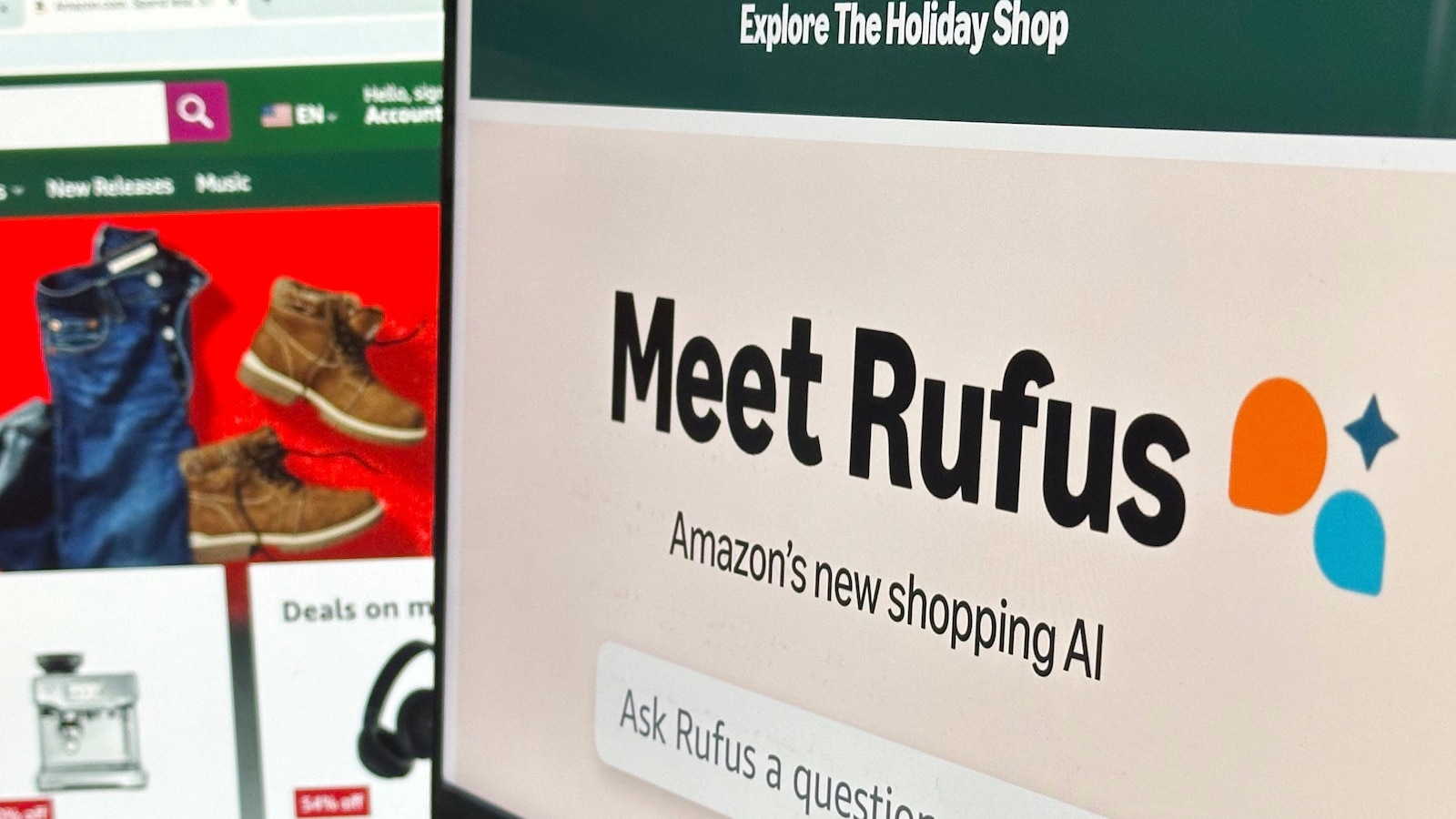
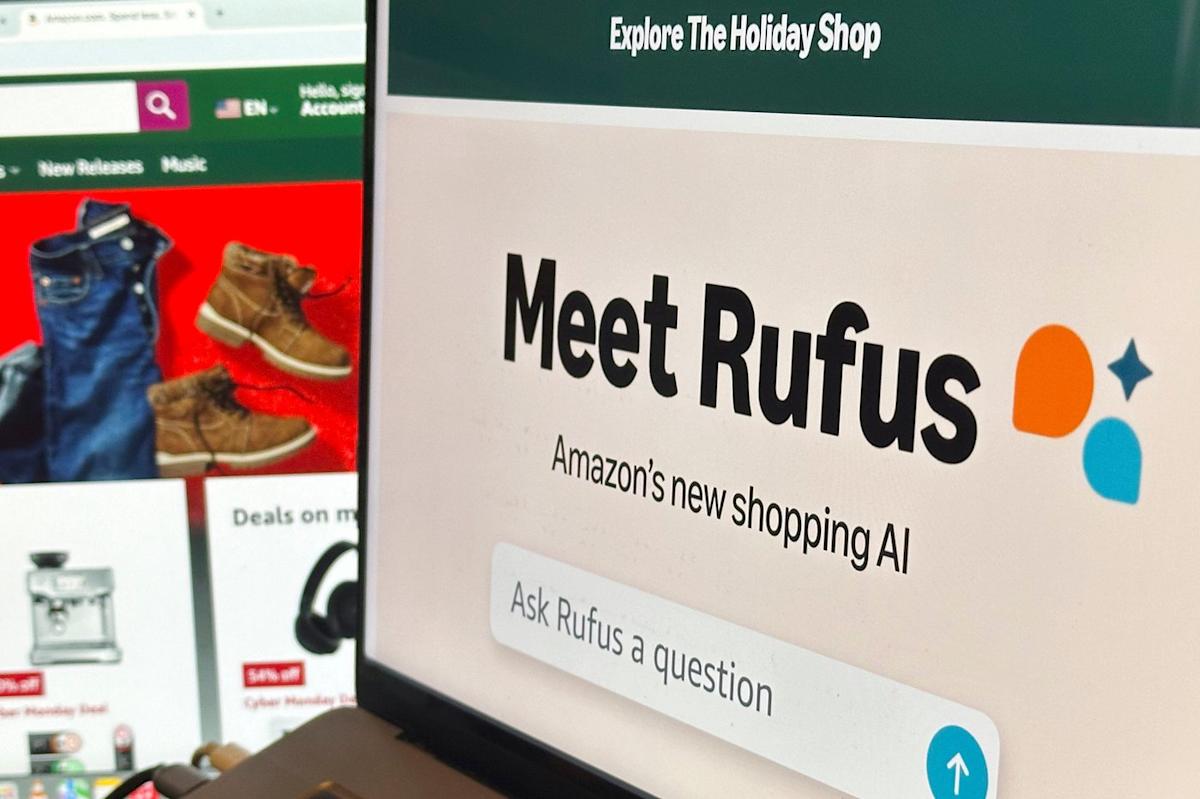
    Then there’s Rufus, the shopping assistant that Amazon rolled out last year. It now remembers information customers previously fed it, like having four children that all like board games, for example. A user’s browsing and purchase history and reviews are used to personalize recommendations.

    Google upgraded its AI Mode search tool to provide answers to detailed questions composed in natural language. For example, users can tell the agent they want to buy a casual sweater to wear with skirt or jeans in New York in January that goes with a skirt or jeans,

    Responses are pulled from Google’s 50 billion product listings. The tool can also produce charts with side-by-side comparisons of prices, features, reviews and other factors. Previously, shoppers had to use keywords, filters and product links to find the information they needed.

    “This is an expansionary moment, I think, for all of technology and for commerce,” Lilian Rincon, vice president of product, consumer shopping at Google, recently told The Associated Press.

    Meanwhile, Walmart’s AI shopping assistant, Sparky, offers occasion-based recommendations and synthesizes reviews. An AI-powered gift finder on Target’s app exclusively for the holidays responds to prompts such as the age and special hobbies of the recipient.

    Tools for tracking online prices have been around for years, including CamelCamelCamel, a third-party service for Amazon prices, as well as Paypal’s Honey browser extension for monitoring thousands of online shops.

    This holiday season, shoppers have new options.

    Amazon launched a 90-day pricing history tracker this month for virtually everything it sells. Shoppers also now can set up alerts to receive notifications when prices on specific items fall within their budgets.

    Google, which for years had a basic price tracker, launched a more advanced version that lets users refine their requests with details like a garment’s size and color. Microsoft’s Copilot also launched a price tracker this year.

    Jason Goldberg, chief commerce strategy officer at Publicis Groupe, said he thinks the new pricing tools will add more pressure on retailers to make sure their prices are competitive.

    “A lot of consumers that weren’t even looking for price alerts are going to discover price alerts for the first time,” Goldberg predicted.

    Amazon, OpenAI and Google are racing to create tools that would allow for seamless AI-powered shopping by taking consumers from browsing to buying within the same program instead of having to go to a retailer’s website to complete a purchase.

    OpenAI launched a new instant checkout feature that lets users buy products suggested by ChatGPT without leaving the app. Users can order merchandise from Etsy sellers and from some brands that use Shopify, including Glossier, Skims and Spanx.

    OpenAI and Walmart announced a similar deal in October, saying the partnership would allow ChatGPT members to use the instant checkout feature to shop for nearly everything available on Walmart’s website except for fresh food. For now, however, the feature only supports buying one item at a time.

    A different deal Target struck with OpenAI lets shoppers put multiple items in a cart on ChatGPT, including fresh food products. But when customers are ready to pay for their orders, they are directed away from the chatbot to the Target app.

    New tools from Amazon and Google will give shoppers a taste of having autonomous AI assistants do the buying for them. While the services still are limited, “agentic AI” is intended to be more independent and advanced than the generative AI chatbots that excel at research and writing, experts say.

    Amazon is now letting Rufus automatically purchase items for customers who click an “auto buy” button while setting up price alerts. Once a product’s price drops to the desired level, customers receive notice of their completed orders and have a limited window to cancel, the company said.

    The e-commerce giant also started allowing shoppers to use Rufus searches for brand-name products on the Amazon app as a gateway to other retailers. If Amazon doesn’t carry a desired item in its store, a “Shop Direct” button will take them to the website of a place that does.

    Google’s AI Mode price tracker also includes a “buy for me” option that automatically makes a customer’s purchase through Google Pay when the price is right. The feature is available for products sold by Wayfair, Chewy, Quince and some Shopify merchants, and Google expects to keep adding more stores, the company said. sellers.

    Google also expanded its web browser with an automated AI call feature that phones local businesses on behalf of customers looking for information or specific products. Google’s program discloses to the store that it’s an AI caller, and stores can choose not to participate, the company said.

    Google said it’s applying the feature initially to specific product categories: toys, health and beauty, and electronics. Target and Walmart declined to comment on whether this type of service would be part of their future plans.

    Continue Reading

  • Strong Operational Performance Steers Analyst Confidence in Nutanix (NTNX)

    Strong Operational Performance Steers Analyst Confidence in Nutanix (NTNX)

    Nutanix, Inc. (NASDAQ:NTNX) is included in our list of the 12 oversold global stocks to invest in.

    Strong Operational Performance Steers Analyst Confidence in Nutanix (NTNX)

    On November 26, 2025, Nutanix, Inc. (NASDAQ:NTNX) saw Morgan Stanley’s Sanjit Singh reiterate a “Buy” rating and reduce the price target to $82. The company reported 13% YoY revenue growth in Q1 to $670.6 million. Singh noted that this growth, though slightly below expectations due to several deals with deferred start dates, does not reflect deteriorating demand. Meanwhile, the company’s continued operational strength was highlighted by the analyst, including 18% ARR growth, 17% net-new ARR expansion, maintained FY26 operating margin guidance, and a $10 million boost to free cash flow guidance. These positives drove the analyst’s bullish stance.

    Meanwhile, Nutanix, Inc. (NASDAQ:NTNX) reported fiscal Q1 2026 results on November 25, which marked resilient demand for its hybrid multicloud platform. This was evident from the quarter’s bookings, which came in slightly ahead of expectations. Furthermore, free cash flow remained strong at $174.5 million, up from $151.9 million in Q1 2025. While management noted some revenue shifting from Q1 to future quarters, they emphasized that total revenue over time remains the same.

    Looking ahead, Nutanix, Inc. (NASDAQ:NTNX)’s management remains optimistic, thanks to continued partner momentum driven by expanded collaborations with Dell and Microsoft. Building on this perceived momentum, the company raised its free cash flow outlook for the year. Non-GAAP net income per share (diluted) of $0.41 was recorded for the quarter, which represents a YoY increase of $0.05.

    Nutanix, Inc. (NASDAQ:NTNX) is focused on delivering a unified hybrid multicloud software platform that enables over 29,000 customers worldwide to run applications and manage data seamlessly.

    While we acknowledge the potential of NTNX as an investment, we believe certain AI stocks offer greater upside potential and carry less downside risk. If you’re looking for an extremely undervalued AI stock that also stands to benefit significantly from Trump-era tariffs and the onshoring trend, see our free report on the best short-term AI stock.

    READ NEXT: 10 Best Small-Cap Biotech Stocks to Buy According to Analysts and 11 Overlooked Tech Stocks to Invest In.

    Disclosure: None.

    Continue Reading

  • Ascletis Selects Its First Oral GLP-1R/GIPR/GCGR Triple Peptide Agonist, ASC37, for Clinical Development

    –  Utilizing Ascletis’ Peptide Oral Transport ENhancement Technology (POTENT), ASC37 oral tablets achieved average absolute oral bioavailability of 4.2%, approximately 9, 30, and 60-fold higher than semaglutide, tirzepatide, and retatrutide in the oral SNAC formulation, respectively, in head-to-head non-human primate (NHP) studies.

    –  ASC37 oral tablets’ drug exposure, as measured by the area under curve (AUC), was approximately 57-fold of retatrutide’s drug exposure in head-to-head NHP studies.

    –  Average observed half-life of ASC37 oral tablets was approximately 56 hours in NHP studies, supporting once daily and less frequent oral dosing.

    –  ASC37 in vitro activity was approximately 5-, 4- and 4-fold more potent than retatrutide for GLP-1R, GIPR and GCGR, respectively.

    –  Submission of an Investigational New Drug Application (IND) to the U.S. Food and Drug Administration (FDA) for ASC37 oral tablets is expected in the second quarter of 2026.

    –  The Company will host a conference call in Mandarin at 10:00 a.m. China Standard Time on December 1, 2025.

    HONG KONG, Nov. 30, 2025 /PRNewswire/ — Ascletis Pharma Inc. (HKEX: 1672, “Ascletis”) announces that it has selected ASC37 oral tablets, its first oral GLP-1R/GIPR/GCGR[1] triple peptide agonist, as a clinical development candidate. Ascletis expects to submit an Investigational New Drug Application (IND) to the U.S. Food and Drug Administration (FDA) for ASC37 oral tablets for the treatment of obesity in the second quarter of 2026.

    ASC37 oral tablets is the Company’s first incretin drug candidate developed with its proprietary Peptide Oral Transport ENhancement Technology (POTENT). 

    ASC37, a GLP-1R, GIPR, and GCGR triple peptide agonist, was discovered and optimized in-house utilizing Ascletis’ Artificial Intelligence-Assisted Structure-Based Drug Discovery (AISBDD). ASC37 in vitro activity was approximately 5-, 4-, and 4-fold more potent than retatrutide for GLP-1R, GIPR and GCGR, respectively.

    Utilizing Ascletis’ POTENT technology, ASC37 oral tablets achieved average absolute oral bioavailability[2] of 4.2%, which was approximately 9-, 30-, and 60-fold higher than semaglutide, tirzepatide, and retatrutide in the oral SNAC [3] formulation, respectively, in head-to-head non-human primate (NHP) studies. Furthermore, after oral administration, ASC37 oral tablets’ drug exposure, as measured by the area under curve (AUC), with the POTENT formulation was approximately 57-fold of retatrutide’s drug exposure with the oral SNAC formulation, in head-to-head NHP studies.

    Average observed half-life of ASC37 oral tablets was approximately 56 hours in NHP studies, supporting once daily and less frequent oral dosing.

     “Selection of ASC37, a promising oral GLP-1R/GIPR/GCGR triple peptide agonist, for clinical development once again demonstrates our strong R&D capabilities and our commitment to address the unmet needs for the treatment of obesity,” said Jinzi Jason Wu, Ph.D., Founder, Chairman and CEO of Ascletis, “Leveraging our proprietary technology platforms, including AISBDD and POTENT, Ascletis has successfully established a highly competitive, differentiated and diverse pipeline portfolio which can potentially effectively address the various treatment needs of patients with obesity and other metabolic diseases.”

    [1] GLP-1R: glucagon-like peptide 1 receptor, GIPR: gastric inhibitory polypeptide receptor, GCGR: glucagon receptor

    [2] absolute oral bioavailability: the percentage of an orally administered drug that reaches the systemic circulation (bloodstream), compared to an intravenous (IV) dose of the same drug

    [3] SNAC: Salcaprozate Sodium

    Conference Call

    Ascletis will host a conference call in Mandarin at 10:00 a.m. China Standard Time on December 1, 2025. A live webcast of the call will be available via Tencent Meeting/ VooV Meeting, with the Meeting ID: 495-266-842, or access links of:

    Chinese Mainland: https://meeting.tencent.com/dm/10ve6whW8Rbl; or

    International: https://voovmeeting.com/dm/10ve6whW8Rbl.

    About Ascletis Pharma Inc.

    Ascletis Pharma Inc. is a fully integrated biotechnology company focused on the development and commercialization of potential best-in-class and first-in-class therapeutics to treat metabolic diseases. Utilizing its proprietary Artificial Intelligence-Assisted Structure-Based Drug Discovery (AISBDD) and Ultra-Long-Acting Platform (ULAP) technologies as well as Peptide Oral Transport ENhancement Technology (POTENT), Ascletis has developed multiple drug candidates in-house, including both small molecules and peptides, such as its lead program, ASC30, a small molecule GLP-1R agonist designed to be administered once daily orally and once monthly to once quarterly subcutaneously as a treatment therapy and a maintenance therapy for chronic weight management; ASC36, a once-monthly subcutaneously administered amylin receptor peptide agonist, ASC35, a once-monthly subcutaneously administered GLP-1R/GIPR dual peptide agonist and ASC37, an oral GLP-1R/GIPR/GCGR triple peptide agonist for chronic weight management. Ascletis is listed on the Hong Kong Stock Exchange (1672.HK).

    For more information, please visit www.ascletis.com.

    Contact:

    Peter Vozzo
    ICR Healthcare
    443-231-0505 (U.S.)
    [email protected] 

    Ascletis Pharma Inc. PR and IR teams
    +86-181-0650-9129 (China)
    [email protected]
    [email protected] 

    SOURCE Ascletis Pharma Inc.

    Continue Reading

  • AI-assisted shopping is the talk of the holiday shopping season

    AI-assisted shopping is the talk of the holiday shopping season

    NEW YORK (AP) — Major retail chains and tech companies are offering new or updated artificial intelligence tools in time for the holiday shopping season, hoping to give consumers an easier gift-buying experience and themselves an augmented share of online spending.

    Although AI-powered purchases are in early stages, the shopping assistants and agents rolled out by the likes of Walmart, Amazon and Google can do more than the chatbots of holidays past. The latest versions were designed to provide personalized product recommendations, track prices and to place some orders through unscripted “conversations” with customers.

    Those features are on top of shopping updates from AI platforms like OpenAI’s ChatGPT and Google Gemini. In one of the season’s most talked-about launches, Google this month introduced an AI agent that can be instructed to call local stores to ask if a desired product is in stock.

    San Francisco software company Salesforce estimated that AI would influence $73 billion, or 22%, of all global sales in one way or another from the Tuesday before Thanksgiving through Monday after the holiday, according to Caila Schwartz, Salesforce’s director of consumer insights.

    The figure, which stood at $60 billion a year ago, encompasses everything from a ChatGPT query to AI-supplied gift suggestions on a retailer’s website, Schwartz said.

    Despite the advancements, AI’s impact on holiday shopping will be “relatively limited” this year since not every shopping site has useful tools and not every shopper is willing to try them, said Brad Jashinsky, a senior retail industry analyst at information technology research and consulting firm Gartner.

    “The more retailers that launch these tools, the better they get, and the more that consumers get comfortable and start to seek them out,” Jashinsky said. “But customer behavior takes a long time to change.”

    Here are three ways the technology is poised to influence holiday shopping habits in 2025:

    Bypassing the search bar

    AI’s potential to simplify the search for the perfect present is most apparent so far in tools that promise to give shoppers faster and more detailed results than a web browser with a lot fewer clicks.

    OpenAI upgraded ChatGPT with a shopping research feature that provides personalized buyers’ guides. The information comes from product pages, reviews. prices and a user’s previous interactions with the chatbot. The tool works best for complicated products like electronics and appliances, or for “detail-heavy” items like beauty or sporting goods, OpenAI said.

    Then there’s Rufus, the shopping assistant that Amazon rolled out last year. It now remembers information customers previously fed it, like having four children that all like board games, for example. A user’s browsing and purchase history and reviews are used to personalize recommendations.

    Google upgraded its AI Mode search tool to provide answers to detailed questions composed in natural language. For example, users can tell the agent they want to buy a casual sweater to wear with skirt or jeans in New York in January that goes with a skirt or jeans,

    Responses are pulled from Google’s 50 billion product listings. The tool can also produce charts with side-by-side comparisons of prices, features, reviews and other factors. Previously, shoppers had to use keywords, filters and product links to find the information they needed.

    “This is an expansionary moment, I think, for all of technology and for commerce,” Lilian Rincon, vice president of product, consumer shopping at Google, recently told The Associated Press.

    Meanwhile, Walmart’s AI shopping assistant, Sparky, offers occasion-based recommendations and synthesizes reviews. An AI-powered gift finder on Target’s app exclusively for the holidays responds to prompts such as the age and special hobbies of the recipient.

    New pricing tools and alerts

    Tools for tracking online prices have been around for years, including CamelCamelCamel, a third-party service for Amazon prices, as well as Paypal’s Honey browser extension for monitoring thousands of online shops.

    This holiday season, shoppers have new options.

    Amazon launched a 90-day pricing history tracker this month for virtually everything it sells. Shoppers also now can set up alerts to receive notifications when prices on specific items fall within their budgets.

    Google, which for years had a basic price tracker, launched a more advanced version that lets users refine their requests with details like a garment’s size and color. Microsoft’s Copilot also launched a price tracker this year.

    Jason Goldberg, chief commerce strategy officer at Publicis Groupe, said he thinks the new pricing tools will add more pressure on retailers to make sure their prices are competitive.

    “A lot of consumers that weren’t even looking for price alerts are going to discover price alerts for the first time,” Goldberg predicted.

    New ways to buy

    Amazon, OpenAI and Google are racing to create tools that would allow for seamless AI-powered shopping by taking consumers from browsing to buying within the same program instead of having to go to a retailer’s website to complete a purchase.

    OpenAI launched a new instant checkout feature that lets users buy products suggested by ChatGPT without leaving the app. Users can order merchandise from Etsy sellers and from some brands that use Shopify, including Glossier, Skims and Spanx.

    OpenAI and Walmart announced a similar deal in October, saying the partnership would allow ChatGPT members to use the instant checkout feature to shop for nearly everything available on Walmart’s website except for fresh food. For now, however, the feature only supports buying one item at a time.

    A different deal Target struck with OpenAI lets shoppers put multiple items in a cart on ChatGPT, including fresh food products. But when customers are ready to pay for their orders, they are directed away from the chatbot to the Target app.

    New tools from Amazon and Google will give shoppers a taste of having autonomous AI assistants do the buying for them. While the services still are limited, “agentic AI” is intended to be more independent and advanced than the generative AI chatbots that excel at research and writing, experts say.

    Amazon is now letting Rufus automatically purchase items for customers who click an “auto buy” button while setting up price alerts. Once a product’s price drops to the desired level, customers receive notice of their completed orders and have a limited window to cancel, the company said.

    The e-commerce giant also started allowing shoppers to use Rufus searches for brand-name products on the Amazon app as a gateway to other retailers. If Amazon doesn’t carry a desired item in its store, a “Shop Direct” button will take them to the website of a place that does.

    Google’s AI Mode price tracker also includes a “buy for me” option that automatically makes a customer’s purchase through Google Pay when the price is right. The feature is available for products sold by Wayfair, Chewy, Quince and some Shopify merchants, and Google expects to keep adding more stores, the company said. sellers.

    Google also expanded its web browser with an automated AI call feature that phones local businesses on behalf of customers looking for information or specific products. Google’s program discloses to the store that it’s an AI caller, and stores can choose not to participate, the company said.

    Google said it’s applying the feature initially to specific product categories: toys, health and beauty, and electronics. Target and Walmart declined to comment on whether this type of service would be part of their future plans.

    Anne D’innocenzio, The Associated Press

    Continue Reading

  • The Rare Earth Metal Driving Tensions Between the US and China

    The Rare Earth Metal Driving Tensions Between the US and China

    The alarm hasn’t yet reached the general public, but tension is beginning to build in the corridors of the aerospace industry, in microchip laboratories, and in government offices. For months, an element almost invisible to the world—yttrium—has become the silent center of a new global dispute. Supplies are thinning, prices are skyrocketing, deliveries are stalling. And while China and the United States have promised a truce over rare earth minerals, the wheels of advanced technology are beginning to slow.

    Although a late-October meeting in South Korea between Chinese president Xi Jinping and his US counterpart Donald Trump raised hopes for a détente, the Chinese export restrictions introduced last April remain substantially in place. Beijing granted a one-year reprieve on the mandatory government licensing system for shipments of rare earths and products containing related materials (including those made abroad with at least 0.1 percent Chinese resources), in exchange for a similar suspension of the White House’s latest restrictions on technology supply chains.

    A Crucial Element in a Market Under Pressure

    But other measures introduced before the latest escalation remain in place. The result is a tightening of the international supply chain that threatens to slow advanced technological production, raise costs, and challenge entire industrial sectors. Yttrium plays a crucial role in the functioning of contemporary technologies. Without yttrium, the production of aircraft engines, high-efficiency turbines, advanced energy systems, and semiconductors would immediately slow down.

    Yttrium’s value lies in its ability to impart thermal and mechanical strength to materials subjected to extreme temperatures. Jet engines blades, for example, must withstand prolonged overheating and intense vibration; yttrium is what allows them to maintain structural integrity and efficiency. The same is true for industrial chip manufacturing, where yttrium-based coatings protect machinery from chemical wear and ensure precision in plasma etching. Its indispensable nature has made it a key element of modern technology and the military.

    China’s Role

    The problem is that, as with several other resources, China controls almost the entire global yttrium supply chain. Not only does it produce most of it, but it also has the know-how and infrastructure to refine and separate it from other rare earth minerals, a complex and technologically advanced process. According to US data, the United States imports 100 percent of its yttrium needs, 93 percent of which comes directly from China. Such stark dependence creates enormous geopolitical vulnerability.

    When Beijing decided to introduce export restrictions as a response to US tariffs, the entire international supply structure began to falter. Companies reported delays, difficulties in obtaining licenses, and uncertainty about delivery times. In the rare earths trade, lack of predictability is often more damaging than reduced volumes: An industry accustomed to just-in-time deliveries can be thrown into crisis by even a few weeks of delay.

    The effects were immediate. In Europe, yttrium oxide prices have soared, reaching a 4,400 percent increase since the beginning of the year. Aerospace companies, which rely heavily on this material, have expressed alarm and demanded urgent measures from the US government to expand domestic production. The semiconductor industry is no less concerned: Some companies have called the situation a “serious” threat, predicting impacts on costs, efficiency, and production timelines. Gas-fired power plants, which use yttrium in the protective coatings of turbines, are also monitoring Chinese developments with increasing attention, although they maintain that they have not yet experienced disruptions.

    Continue Reading