Category: 3. Business

  • Are data centers headed to space? Tech giants consider the leap

    Are data centers headed to space? Tech giants consider the leap

    Space may soon find itself populated with data centers from Earth and at the forefront of this achievement may be Google. “Obviously, it’s a moonshot,” Google CEO Sundar Pichai said on the “Google AI: Release Notes” podcast this week.

    Pichai acknowledged that the notion seems “crazy” today, but “when you truly step back and envision the amount of compute we’re going to need, it starts making sense and it’s a matter of time.”

    A data center is a specialized facility that houses computer systems, storage devices, and networking equipment used to store, process, and manage digital data. It contains servers, storage systems, routers, switches, and security devices, all supported by reliable power supplies and cooling systems to ensure continuous operation. 

    Data centers power cloud services, websites, streaming platforms, enterprise IT operations, and big data analytics, making them the backbone of modern digital infrastructure. They can be owned by a single company (enterprise), rented out as colocation space, or operated by cloud providers like Amazon, Google, or Microsoft. 

    READ: US tech firms hesitant to lease large data centers in India (

    Essentially, data centers are the physical “engine rooms” of the internet, enabling organizations and individuals to access and process data reliably and at scale.

    Pichai was referring to “Project Suncatcher,” a new long-term research bet that Google announced in November. “Maybe we’ll meet a Tesla Roadster,” he quipped.

    Other tech giants have also chimed in on this with Tesla CEO Elon Musk writing in an X post, “Starship should be able to deliver around 300 GW per year of solar-powered AI satellites to orbit, maybe 500 GW. The ‘per year’ part is what makes this such a big deal.”

    “I do guess that a lot of the world gets covered in data centers over time,” OpenAI CEO Sam Altman told comedian and podcaster Theo Von in a July interview. “But I don’t know, because maybe we put them in space. Like maybe we build a big Dyson sphere on the solar system and say, ‘Hey, it actually makes no sense to put these on Earth.’”

    “The lowest cost place for data centers is space,” Salesforce CEO Marc Benioff wrote in a post on X earlier this month, referring to a video clip of Musk touting the benefits of orbital AI at the U.S.-Saudi Investment Forum earlier this month.

    READ: GMI Cloud to build AI data center in Taiwan for $500 million with Nvidia chips (

    “The sun only receives roughly one, two billionth of the sun’s energy,” Musk said at the event. “So, if you want to have something that is, say, a million times more energy than Earth could possibly produce, you must go into space. This is where it’s kind of handy to have a space company.”

    The discussions by tech leaders suggest that the future of computing and data centers could extend far beyond Earth, reflecting both the increasing demand for computational power and the creative approaches companies are exploring to meet it. Concepts such as orbital or lunar data centers, solar-powered AI satellites, and even megastructures like Dyson spheres illustrate how space may become a frontier for innovation in digital infrastructure, though their feasibility remains highly speculative. 

    While these ideas may seem ambitious or speculative today, they highlight the pressures driving technological advancement on Earth and the lengths companies are willing to explore for scalable, low-cost, and energy-efficient solutions. At the same time, this vision underscores the continuing importance of conventional data centers, which remain the backbone of current cloud services, enterprise computing, and digital operations. Whether on Earth or in space, the timeline, scale, and practical impact of such space-based data centers remain uncertain.

    Continue Reading

  • Michael Burry Takes on Nvidia’s AI Surge

    Michael Burry Takes on Nvidia’s AI Surge

    This article first appeared on GuruFocus.

    Nvidia (NASDAQ:NVDA) just got a loud new critic, and it happens to be one of Wall Street’s most famous bears. Michael Burry (Trades, Portfolio), the investor made famous by The Big Short, is once again sounding the alarm, this time about the AI frenzy and Nvidia’s place at the center of it. The stock is up more than 1,000% over the past 3 years and recently crossed a $4 trillion market value, but Burry says the excitement has started to run ahead of reality.

    He’s not just talking. Recent filings show Burry has taken big put positions against Nvidia and Palantir, betting at least some of the hype unwinds. He’s also questioned how companies are accounting for expensive AI chips, arguing that longer depreciation schedules could be making financial results look better than they really are. In his view, some AI demand may be fueled more by investor cash than by real customers.

    The debate spilled into public view when Palantir CEO Alex Karp called Burry’s concerns crazy, prompting a sharp reply. when a high-profile short seller speaks up, it can change how investors think. rally continues, but the AI debate is only getting louder.

    Continue Reading

  • Second Step staff to take strike action across the West

    Second Step staff to take strike action across the West

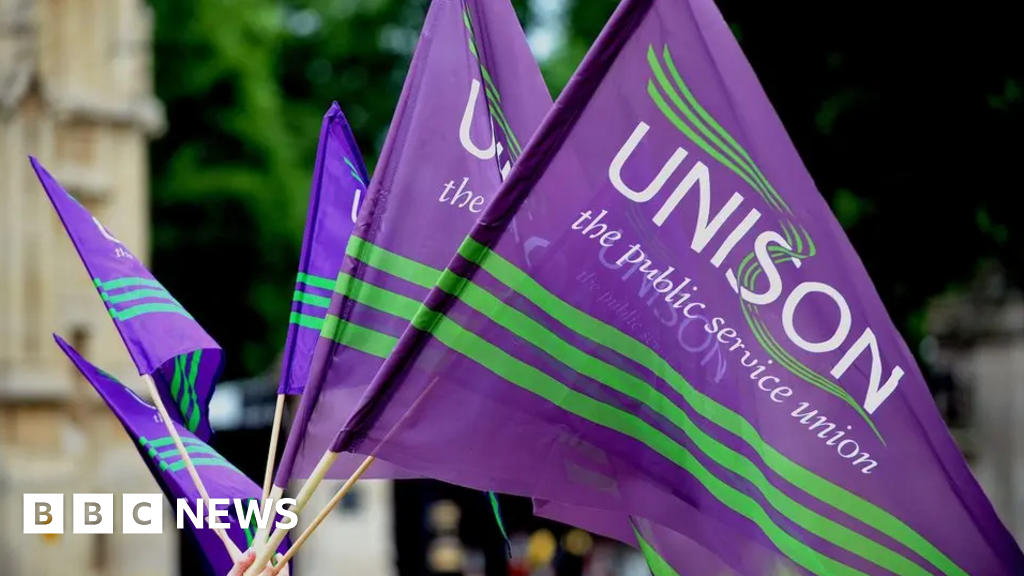
    Staff at a mental health charity in the West have voted to strike in a dispute over pay.

    Second Step delivers council and NHS-funded mental health services across Bristol, Somerset, North Somerset, South Gloucestershire, Bath, Swindon and Wiltshire.

    More than 100 people at the charity have voted to strike following concerns about wages, according to Unison.

    A spokesperson from Second Step said a plan is in place to avoid potential strike disruption, adding: “Our priority is to maintain safe, continuous support for the people who rely on our services.”

    Those who have voted to strike include support workers, recovery specialists, accommodation workers and central staff.

    Unison South West regional secretary Kerry Baigent said: “These workers would prefer to focus on supporting their clients. Instead, many are struggling to support themselves. Some of them are relying on foodbanks and payday loans to get by.

    “It’s disappointing that seven months since this dispute began, Second Step management has failed to improve its offer in any way.”

    Representatives from Unison and Second Step are taking part in talks through arbitration service Acas, in an effort to avoid industrial action, for which a potential date has not yet been announced.

    A spokesperson from Second Step said: “Our priority is to maintain safe, continuous support for the people who rely on our services.

    “We have plans in place to manage any potential disruption. We have plans in place to manage any potential disruption.

    “We recognise the concerns staff have raised, and we’re in active discussions with Unison through Acas to work towards a fair and constructive resolution.

    “Our focus is on reaching an outcome that supports our clients and our staff.”

    Continue Reading

  • Londoners told to be vigilant with messages after cyber-attack on council | Local government

    Londoners told to be vigilant with messages after cyber-attack on council | Local government

    A London council has urged thousands of residents to be “extra vigilant” when receiving calls, emails or text messages after confirming that data had been taken in a cyber-attack.

    The Royal Borough of Kensington and Chelsea (RBKC), which has 147,500 residents, said some data had been copied from its systems in an attack this week. The council said it believed the theft related to “historical data” but it was checking whether it contained any personal or financial details of residents, customers or service users.

    “With advice from the National Cyber Security Centre (NCSC), we are encouraging all residents, customers, and service users to be extra vigilant when called, emailed or sent text messages,” the council said.

    Three London councils have been affected by cyber-attacks this week, with RBKC and Westminster city council saying a number of systems had been affected across both authorities, including phone lines. The borough of Hammersmith and Fulham was also affected and has said it is “working around the clock” to restore its systems.

    RBKC said it was working with the NCSC, the National Crime Agency and the Metropolitan police to identify the assailants. The council said it faced at least two weeks of “significant disruption” and was working to bring its systems back online after services were affected.

    Public bodies and private businesses across the UK have been hit in recent years by ransomware attacks, where criminal gangs typically based in the former Soviet Union lock up a target’s IT systems with malware and extract data at the same time. The gang members then demand a payment in cryptocurrency for the systems to be decrypted and the data returned.

    None of the councils have indicated whether ransomware was involved. Westminster city council and the borough of Hammersmith and Fulham have not confirmed whether data was stolen in their attacks. In 2020 a ransomware attack on Hackney council accessed and encrypted 440,000 files, resulting in a reprimand from the UK’s data watchdog.

    The councillor Elizabeth Campbell, the Conservative leader of the Royal Borough of Kensington and Chelsea, said warning residents their data might have been taken was “the right thing to do”.

    “All I know is – as a resident myself – I would want to know this information as soon as possible and then be able to make my own choices, follow advice and protect myself if I think necessary.”

    Continue Reading

  • Vivendi Takeover by Bollore Less Likely After Court Rules in Favor of Billionaire – The Wall Street Journal

    1. Vivendi Takeover by Bollore Less Likely After Court Rules in Favor of Billionaire  The Wall Street Journal
    2. Bolloré Gets Court Boost to Avoid Vivendi Shareholder Payout  Bloomberg.com
    3. Bolloré Wins Supreme Court Victory in Vivendi Buyout Case  MarketScreener
    4. French court hears opening arguments in Bolloré/Vivendi break-up dispute  The Mighty 790 KFGO
    5. French top court strikes down Vivendi ruling, prolongs multi-billion buyout question  TradingView

    Continue Reading

  • Ryanair axes loyalty scheme after passengers took too many cheap flights

    Ryanair axes loyalty scheme after passengers took too many cheap flights

    Unlock the Editor’s Digest for free

    Ryanair has scrapped its loyalty programme after just eight months because passengers were costing the airline money by taking too many discounted flights.

    The scheme offered early access to discounted tickets and free seat reservations on up to 12 journeys, for a flat fee of €79 or £79, and was capped at 250,000 passengers.

    About 55,000 people signed up, generating €4.4mn in subscription fees for the business.

    “However, our Prime members have received over €6mn in fare discounts, so this trial has cost more money than it generates,” said Ryanair marketing chief Dara Brady.

    “This level of memberships, or subscription revenue does not justify the time and effort it takes to launch monthly exclusive Prime seat sales for our 55,000 Prime members.”

    While those who paid for the service can continue using it until October next year, the airline on Friday said it would not sign up any new members.

    “We are grateful to our 55,000 Prime members who signed up to this Prime trial over the last eight months, and they can rest assured that they will continue to enjoy exclusive flight and seat savings for the remainder of their 12-month membership,” added Brady.

    Which? Travel concluded after the scheme was introduced that the “calculations Ryanair provides shows very few travellers would save money by subscribing”.

    Chief executive Michael O’Leary earlier this year admitted that the airline had underpriced the scheme. 

    Prime was the first time Ryanair had ventured from its zero-frills model to offer such a scheme. The airline took until 2014 to introduce allocated seating.

    Rival Wizz Air already has an “all you can fly” offering that costs €499 a year. The London-listed carrier recently expanded the number of people who could sign up for the scheme.

    EasyJet also has a loyalty programme that gives customers greater flexibility to change flights as well as faster boarding and access to premium seats for £249 a year.

    Despite its loss from the scheme, Ryanair profits rose by 40 per cent over the summer owing to robust demand, helped by more Europeans holidaying within the region rather than travelling to the US.

    Continue Reading

  • Drinks sales back in marginal growth as Christmas trading begins

    Drinks sales back in marginal growth as Christmas trading begins

    CGA by NIQ’s latest Daily Drinks Tracker shows average sales in managed venues in the week to 8 November were 2.3% ahead of the same period in 2024. This was followed by growth of 0.5% in the following seven days to 15 November. 


    Both figures are below the UK’s rate of inflation, as measured by the Consumer Prices Index. However, they reverse three consecutive weeks of negative trading in October, and raise hopes that some consumers are lifting their spending on the run-in to Christmas and New Year.  


    Trading in early November was boosted by Bonfire Night and firework displays, as well as a busy programme of Premier League, Champions League and international football fixtures, plus big rugby union fixtures for England, Scotland and Wales. The start of Christmas markets may also have lifted footfall in many British cities and towns. 


    However, the arrival of Storm Claudia curtailed visits to pubs and bars in some parts of the country towards the end of the fortnight—especially on Saturday 14 November, when sales dropped by 8.2% year-on-year. 


    Live sport has been a boost to Long Alcoholic Drinks categories, with beer sales rising by 3.6% and 1.7% in the weeks to 8 and 15 November respectively. Cider performed even better, with growth of 5.5% and 2.9%. Soft drinks also had a positive fortnight, increasing by 5.4% and 1.3%. 


    Trends in other drinks categories were less encouraging. On Premise sales of spirits fell by 3.8% and 2.0% in the two weeks. Wine had fractional growth of 0.1% in the week to 8 November, but sales then dipped 2.8% in the following seven days. 


    Rachel Weller, NIQ’s commercial lead, UK & Ireland, said: While sales growth in the first half of November has been marginal, it lifts optimism that consumers are starting to increase their visits to pubs and bars as Christmas occasions get into full swing. Storm Claudia was another reminder of the damage that bad weather can do to trading, and operators and suppliers will be keeping fingers crossed for bright days that bring people out of home in the weeks aheadThere’s all to play for this festive season, and after a tough 2025 it could make or break the year for many businesses.”
     

    The Daily Drinks Tracker provides analysis of sales at managed licensed premises across Britain and is part of NIQ’s suite of research services delivering in-depth data on category, supplier and brand rate of sale performance. To learn more, click here and contact the NIQ team.

    Continue Reading

  • Blackstone Continues To Expand Its Data Center Footprint On The Heels Of A $3.5 Billion Refinancing Deal

    Blackstone Continues To Expand Its Data Center Footprint On The Heels Of A $3.5 Billion Refinancing Deal

    Blackstone (NYSE:BK) continues to expand its daat center footprint as artificial intelligence elevates demand for these buildings. Lenders also feel optimistic about data centers, based on Blackstone’s being able to refinance 10 data centers owned by subsidiary QTS in a $3.5 billion deal, according to BisNow.

    Blackstone entered the data center industry when it acquired QTS Realty Trust in 2021 for $10 billion. QTS now operates more than 70 data centers, marking an eightfold increase in less than five years.

    Don’t Miss:

    Those facilities support more than three gigawatts of capacity, making it a viable option for hyperscalers like Meta Platforms (NASDAQ:META) and Amazon (NASDAQ:AMZN) that need more energy for their AI ambitions.

    Blackstone’s latest refinance unlocks more capital from its data center portfolio. The funds give the firm flexibility to buy additional facilities or use the cash for other business segments.

    Data centers require significant capital to go from concepts to finished buildings, and that’s part of the reason why companies like Blackstone are refinancing their existing properties. Financing makes it easier to build more facilities, and the strong demand for AI and cloud computing suggests that more capital will flow into the industry.

    Trending: Forget Flipping Houses—This Fund Lets You Invest in Home Equity Like Wall Street Does

    These facilities currently consume 5% of U.S. power, and that figure is set to double thanks to a $6.7 trillion buildout. Heavy data center concentrations are associated with higher electricity bills, according to CNBC. Higher energy costs and intense capital requirements haven’t stopped companies from building and scaling their data center portfolios.

    Tech giants have also committed to lucrative deals that make these facilities more attractive in the long run. Meta announced a $27 billion joint venture with Blue Owl Capital (NYSE:OWL) in October to develop the Hyperion data center campus in Richland Parish, Louisiana.

    The refinancing deal comes as interest rates continue to drop. The Federal Reserve has cut interest rates twice this year, with the possibility of a third rate cut in December. Lower rates make it more affordable for Blackstone and other firms to borrow money. As rates drop, demand for commercial-backed mortgage securities may increase.

    Continue Reading

  • Starbucks workers’ union escalates strike on Black Friday

    Starbucks workers’ union escalates strike on Black Friday

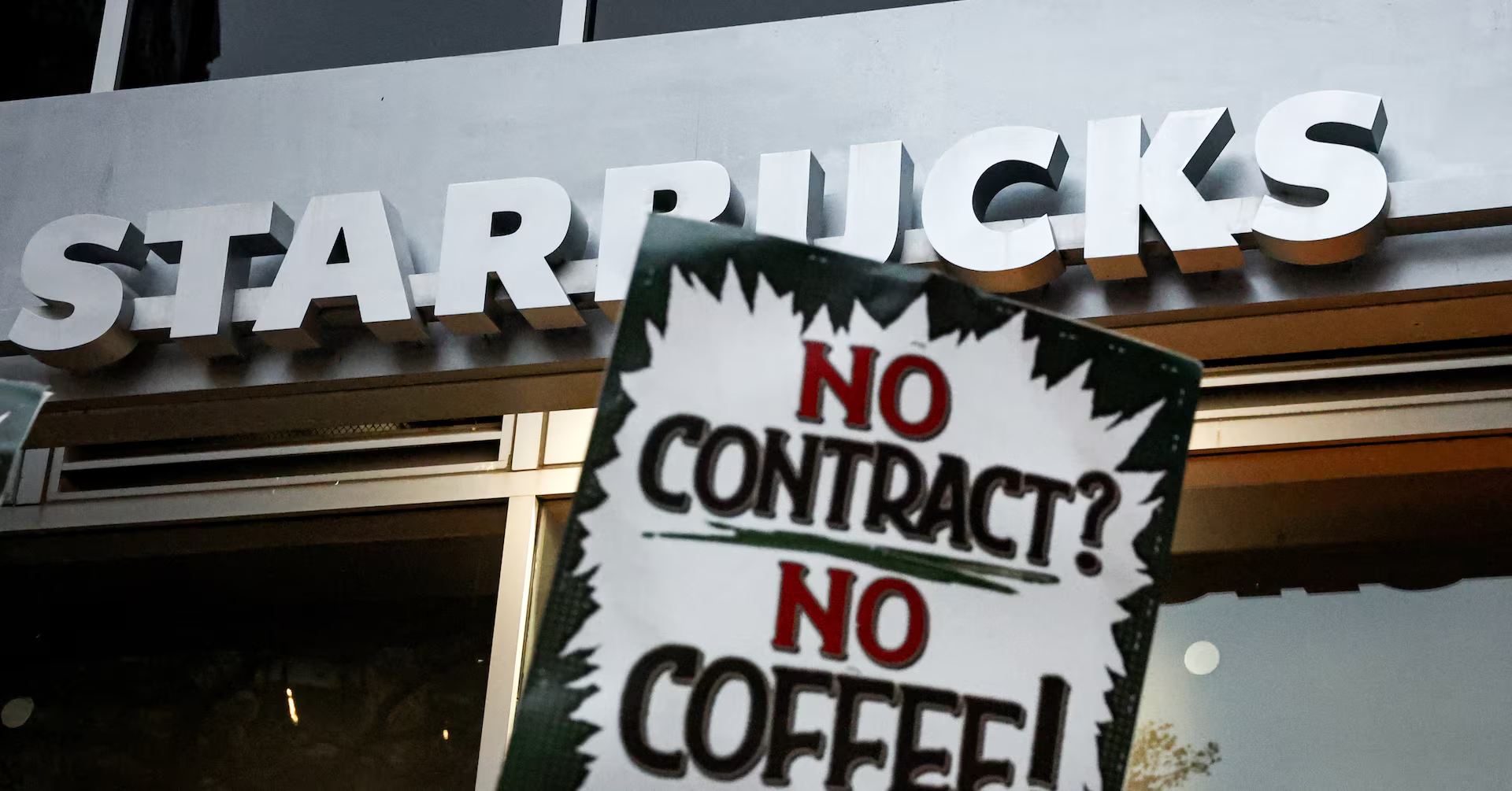
    Nov 28 (Reuters) – The Starbucks workers’ union (SBUX.O), opens new tab said on Friday it is escalating an indefinite strike to more than 120 stores and 85 cities, demanding higher pay and staffing levels at the coffee chain.
    The walkout, set to be the longest strike in the history of Starbucks, began on its Red Cup Day on November 13 with 65 stores and more than 40 cities.

    Sign up here.

    The strike comes on Black Friday, the busiest time of year for retailers when shoppers hunt for bargains on everything from food and groceries to apparel and appliances.
    Workers also went on strike at Amazon warehouses in Germany on Black Friday, aiming to disrupt operations on a key sales day as they push for a collective bargaining agreement, with separate protests also planned outside Zara stores in Spain.

    A long-term strike will likely impact public relations over the intermediate time horizon, but “in light of market volatility caused by tariffs and other factors, Starbucks would want to make this a short-term affair,” said Michael Duff, a professor at the Saint Louis University School of Law.

    Starbucks, which has more than 17,000 coffeehouses in the U.S., said 99% of its locations in the country remain open.

    “Regardless of the union’s plans, we do not anticipate any meaningful disruption,” a spokesperson for Starbucks said.

    Striking baristas are demanding higher wages, improved working hours and the resolution of hundreds of unfair labor practice charges for union busting.

    Contract talks remain stalled despite mediation efforts in February, with both sides trading blame after delegates rejected Starbucks’ proposed package in April that guaranteed annual raises of at least 2%.

    “The law allows management to hire replacements in this kind of strike, so the workers just don’t have a lot of leverage,” Harry Katz, a professor at the Cornell University School of Industrial and Labor Relations said.

    Workers United said it represents over 11,000 baristas and about 550 Starbucks stores.

    Starbucks Workers United has repeatedly targeted the company’s busy holiday season and Red Cup Day, when Starbucks hands out reusable red holiday-themed cups to customers for free on coffee purchases.

    Reporting by Chandni Shah in Bengaluru; Editing by Arun Koyyur and Shinjini Ganguli

    Our Standards: The Thomson Reuters Trust Principles., opens new tab

    Continue Reading

  • Canada budget deficit over first six months of 2025/26 rises to C$16.09 bln – Reuters

    1. Canada budget deficit over first six months of 2025/26 rises to C$16.09 bln  Reuters
    2. Ottawa runs budgetary deficit of $16.1 billion for April-to-September period  Toronto Star
    3. Canada Government Budget Deficit Widens in September  TradingView
    4. Canada Budget Deficit Widened on Year in September  MarketScreener
    5. Canada’s budget deficit rises to C$16.09 billion in first half of 2025/26  Investing.com

    Continue Reading