Category: 3. Business

  • Aluminum giants hit major milestone with low-carbon…

    Aluminum giants hit major milestone with low-carbon…

    Around the world, smelters use massive amounts of electricity — often generated by fossil fuels — to turn raw materials into aluminum. As more carbon-free energy comes onto the grid, these power-hungry facilities will get progressively cleaner. But smelters will never be entirely emissions-free until producers can solve a much trickier technical problem.

    That’s because modern aluminum plants rely on a 19th-century process that uses big blocks of carbon, which account for almost one-sixth of the greenhouse gases associated with producing new aluminum globally. Replacing the blocks is crucial to decarbonizing this key industrial process.

    Now the industry may be one step closer to reaching that goal.

    Earlier this month, the Canadian firm Elysis said it hit a major milestone when it deployed an industrial-size, carbon-free anode inside an existing smelter in Alma, Quebec. Elysis is a joint venture of the U.S. aluminum giant Alcoa and global mining company Rio Tinto, both of which produce aluminum in the Canadian province.

    This is really a first for the aluminum industry, and a worldwide first as well,” François Perras, president and CEO of Elysis, told Canary Media.

    Elysis installed its inert,” or chemically inactive, anode technology in a 450-kiloampere (kA) cell, the same amount of electric current used in many large, modern smelters. The full-scale prototype is a significant step up from the company’s 100 kA pilot unit, which has produced low-carbon aluminum used in certain Apple laptops and iPhones, Michelob Ultra beer cans, and the wheels for Audi’s electric sports car.

    Elysis launched in 2018 and has raised over 650 million Canadian dollars ($460 million) in investment for the effort, including from the governments of Canada and Quebec. The 450 kA cell will undergo several more years of testing as the company works to measure and validate how the larger unit performs inside a commercial smelter.

    Rio Tinto, meanwhile, has already licensed the inert-anode technology from Elysis. The manufacturer plans to build a demonstration plant with 10 of the 100 kA cells at its existing Arvida smelter in Quebec, possibly by 2027, through a joint venture with the provincial government.

    We’re trying to replace a process that has been used for close to 140 years,” Perras said of the initiatives.

    Elysis’ 450-kiloampere cell operates inside Rio Tinto’s existing smelter in Quebec. (Elysis)

    Smelting involves dissolving powdery alumina in a molten salt, which is heated to over 1,700 degrees Fahrenheit. Large carbon anodes are lowered into the highly corrosive bath, and electrical currents run through the entire structure. Aluminum then deposits at the bottom as oxygen combines with carbon in the blocks, creating CO2 as a by-product. It also releases perfluorochemicals (PFCs) — long-lasting greenhouse gases — as well as harmful sulfur dioxide pollution.

    The anodes themselves are made using petroleum coke, a rocklike by-product of oil refining.

    The Hall–Héroult process was revolutionary, but it is extremely energy-intensive. Most of the emissions associated with producing aluminum are tied to electricity production. In the United States, more than 70% of CO2 pollution from six operating smelters came from the power supply in 2021, according to the Environmental Integrity Project. (The U.S. now has four smelters left, three of which rely on fossil-fuel power.)

    Another 20% of U.S. smelters’ carbon emissions were directly from the electrochemical process, the EIP study found. Smelting was also responsible for virtually all the PFCs reported by metal producers to the Environmental Protection Agency that year.

    The solution to reducing electricity-related emissions is relatively straightforward: Deploy vast amounts of wind, solar, battery storage, and other clean energy sources. But completely eliminating emissions from the smelting process requires redesigning how the anodes and cells work — and researchers are only just beginning to develop alternatives.

    Continue Reading

  • AECOM to deliver HKIA Dongguan Logistics Park, setting new benchmark in logistics infrastructure and driving economic growth in the Greater Bay Area

    AECOM to deliver HKIA Dongguan Logistics Park, setting new benchmark in logistics infrastructure and driving economic growth in the Greater Bay Area

    HONG KONG (November 25, 2025) — AECOM, the world’s trusted infrastructure consulting firm, today announced its appointment by the Hong Kong-Dongguan Sea-Air Intermodal Transshipment Logistics Park Management (Dongguan) Limited, a wholly-owned subsidiary of Airport Authority Hong Kong (AAHK), to deliver the HKIA Dongguan Logistics Park (The Park). This strategic initiative will establish a direct link between Hong Kong International Airport (HKIA) and Dongguan, a key manufacturing hub in the Chinese Mainland. By combining Hong Kong’s robust air cargo ecosystem and Dongguan’s export-driven manufacturing strength, this project aims to unlock new efficiencies and drive significant economic growth across the Greater Bay Area (GBA).

    As the lead consultant for Phase 1 of the Park, AECOM is overseeing the design, contract and construction management of the key infrastructure, building on the team’s previous end-to-end services, spanning master planning, design, and technical studies. This initial phase includes an air cargo terminal complex, a barge terminal, freight forwarder warehouses, and highly-automated facilities. A wide array of advanced digital technologies are introduced, including an intelligent guided vehicle (IGV) system and customized containers. This integrated approach sets a new benchmark for logistics infrastructure in the region

    The Park will be the world’s first sea-air intermodal transshipment hub. Export cargo will be screened, palletized, and airline-approved in Dongguan to comply with Hong Kong’s air cargo security requirements. Dedicated vessels will then transport the cargo directly to the airside of HKIA for onward transshipment to global destinations. Once operational, the Park is expected to handle up to one million tons of cargo annually, further strengthening HKIA’s status as a leading global logistics hub.

    “We are leveraging our multidisciplinary expertise and cross-regional capabilities to deliver this first-of-its-kind logistics park,” said Ian Chung, Regional Chief Executive, Asia. “Featuring an innovative operational model and a state-of-the-art autonomous cargo handling system, the project sets a new benchmark for logistics infrastructure and efficiency — significantly enhancing the economic and physical connectivity between the GBA and global markets.”

    “Our deep understanding of the cross-border market enables us to meet client needs with precision, setting us apart in the industry,” added Kelvin Law, Vice President, Strategic Planning, Urbanism+Planning, Asia. “From master planning to completion, we deliver a future-ready, one-stop solution that brings this iconic GBA project to life.”

    AECOM brings deep expertise in delivering complex logistics infrastructure across the GBA, with a proven track record that includes the Cainiao Smart Gateway — a cutting-edge e-commerce logistics hub at HKIA — and the Kwai Chung Cold Storage Logistics Centre, a multi-story, multi-tenant facility with integrated office and public parking. These landmark projects reinforce AECOM’s position as the partner of choice in shaping the future of logistics across the GBA.

    About AECOM 

    AECOM is the global infrastructure leader, committed to delivering a better world. As a trusted professional services firm powered by deep technical abilities, we solve our clients’ complex challenges in water, environment, energy, transportation and buildings. Our teams partner with public- and private-sector clients to create innovative, sustainable and resilient solutions throughout the project lifecycle – from advisory, planning, design and engineering to program and construction management. AECOM is a Fortune 500 firm that had revenue of US$16.1 billion in fiscal year 2024. Learn more at AECOM.

    Media Contact:
    Daisy Lam
    Marketing & Communications Lead – Asia Business Lines, Hong Kong, Taiwan
    Daisy.Lam@aecom.com

    Continue Reading

  • Assessing Hermès After 2025 Price Dip and Expansion Into New International Markets

    Assessing Hermès After 2025 Price Dip and Expansion Into New International Markets

    • If you have ever wondered whether Hermès International Société en commandite par actions is truly worth its luxury stock price, you are in the right place for a fresh look at its value.

    • While the stock is up a stunning 168.5% over the past five years and 3.0% over the last twelve months, it has dipped by 3.8% this past month and is down 8.3% year-to-date. This points to some shifting market sentiment.

    • Recent headlines have highlighted Hermès’ successful expansion into new international markets and continued product innovation, both contributing to investor optimism. However, the company now faces questions about whether current pricing fully reflects future growth as analysts and market watchers debate its next steps.

    • On our valuation checks, Hermès International Société en commandite par actions scores 0 out of 6 for being undervalued. This makes for a compelling case to dig deeper. Let’s break down how different valuation approaches view Hermès, and stick around for a smarter way to gauge value at the end of this article.

    Hermès International Société en commandite par actions scores just 0/6 on our valuation checks. See what other red flags we found in the full valuation breakdown.

    The Discounted Cash Flow (DCF) model estimates what a company is truly worth by projecting its future cash flows and discounting them back to their present value. For Hermès International Société en commandite par actions, this approach uses recent financial performance and analyst forecasts to estimate future value.

    Currently, Hermès generates trailing twelve month free cash flow of approximately €4.34 billion. Analyst estimates project continued growth, with free cash flow expected to rise to around €5.19 billion by 2027. Over the following years, projections from Simply Wall St extrapolate a steady annual increase, reaching about €6.78 billion by 2035. These growth estimates are crucial in shaping the DCF outcome.

    The DCF model arrives at an intrinsic value of €897.10 per share for Hermès. In comparison, the current market price is over 135% higher than this estimated fair value, indicating the stock is significantly overvalued based on these cash flow projections.

    Result: OVERVALUED

    Our Discounted Cash Flow (DCF) analysis suggests Hermès International Société en commandite par actions may be overvalued by 135.2%. Discover 921 undervalued stocks or create your own screener to find better value opportunities.

    RMS Discounted Cash Flow as at Nov 2025

    Head to the Valuation section of our Company Report for more details on how we arrive at this Fair Value for Hermès International Société en commandite par actions.

    The Price-to-Earnings (PE) ratio is widely recognized as a go-to valuation tool for established, profitable companies like Hermès International Société en commandite par actions. It helps investors weigh the stock price relative to how much profit the company generates, providing context for whether shares are expensive or reasonably priced compared to earnings.

    However, a “normal” or “fair” PE ratio can shift depending on a company’s growth prospects and risk profile. Strong earnings growth or stability can justify higher PE multiples, while elevated risk usually leads to a lower fair multiple. It is important to compare Hermès not only to broad industry standards but also to custom benchmarks that reflect these nuances.

    Currently, Hermès trades on a lofty 49.4x PE ratio. For context, the average for European luxury sector peers is 32.1x, while the broader luxury industry sits much lower at 17.4x. On the surface, Hermès appears much more expensive than both its closest rivals and the industry overall.

    This is where Simply Wall St’s proprietary “Fair Ratio” comes into play. Unlike raw peer or industry comparisons, the Fair Ratio incorporates the company’s earnings growth, margins, risks, size, and sector specifics, offering a more customized and insightful benchmark for valuation. The Fair Ratio for Hermès stands at 31.9x, which reflects its above-average profitability, healthy growth, and sector leadership.

    With Hermès’ current valuation well above its Fair Ratio, the stock looks significantly expensive according to this method as well.

    Result: OVERVALUED

    ENXTPA:RMS PE Ratio as at Nov 2025
    ENXTPA:RMS PE Ratio as at Nov 2025

    PE ratios tell one story, but what if the real opportunity lies elsewhere? Discover 1440 companies where insiders are betting big on explosive growth.

    Earlier we mentioned that there is an even better way to understand valuation, so let’s introduce you to Narratives, a dynamic tool that connects your view of Hermès International Société en commandite par actions’ story with its key financial forecasts and a resulting fair value. This allows you to move beyond just ratios or peer comparisons.

    With Narratives, you outline your perspective on Hermès by defining how you think the business will perform in terms of future revenue, profit margins, and growth, which then drives your fair value estimate for the stock. Narratives make valuation personal and actionable because you link your assumptions to the company’s numbers, and the platform shows you whether Hermès looks undervalued or overvalued at today’s share price.

    This approach is both simple and interactive, and it is available to everyone in the Community area of Simply Wall St, where millions of investors regularly share and update their views. Narratives are not static. They automatically adjust when new information arises, like earnings results or news, keeping your outlook relevant. For example, some investors see high long-term growth and strong margins, and have a fair value above €3,000 per share for Hermès, while others highlight risks and slower growth, resulting in a fair value closer to €1,580. This illustrates exactly how different views lead to different investment decisions and timing.

    Do you think there’s more to the story for Hermès International Société en commandite par actions? Head over to our Community to see what others are saying!

    ENXTPA:RMS Community Fair Values as at Nov 2025
    ENXTPA:RMS Community Fair Values as at Nov 2025

    This article by Simply Wall St is general in nature. We provide commentary based on historical data and analyst forecasts only using an unbiased methodology and our articles are not intended to be financial advice. It does not constitute a recommendation to buy or sell any stock, and does not take account of your objectives, or your financial situation. We aim to bring you long-term focused analysis driven by fundamental data. Note that our analysis may not factor in the latest price-sensitive company announcements or qualitative material. Simply Wall St has no position in any stocks mentioned.

    Companies discussed in this article include RMS.PA.

    Have feedback on this article? Concerned about the content? Get in touch with us directly. Alternatively, email editorial-team@simplywallst.com

    Continue Reading

  • Sandvik signs EUR 500 million loan agreement with the European Investment Bank

    Sandvik has signed a EUR 500 million loan agreement with the European Investment Bank (EIB) at favorable terms. The loan has a seven-year tenor and will support Sandvik’s R&D (research and development) investment plans until 2030, aimed at developing new advanced, productive, safe and sustainable solutions across the Group’s businesses.

    EIB is the lending arm of the European Union (EU), and a core mission of the bank is to strengthen EU competitiveness, technological innovation and sustainable development by providing financing for R&D projects conducted within the region.

    “We have a strong strategic focus on developing solutions that strengthen our technology leadership, and that enhances productivity, safety and sustainability for our customers. The EIB financing supports our R&D initiatives and provides flexibility to our overall funding strategy,” says Stefan Widing, President and CEO of Sandvik.

    Stockholm, November 25, 2025
    Sandvik AB

    For further information, contact Louise Tjeder, VP Investor relations, phone: +46 (0) 70782 6374 or Johannes Hellström, Press and Media Relations Manager, phone: +46 (0) 70721 1008

    Sandvik EUR 500 million loan agreement with the European Investment Bank (PDF)

    Continue Reading

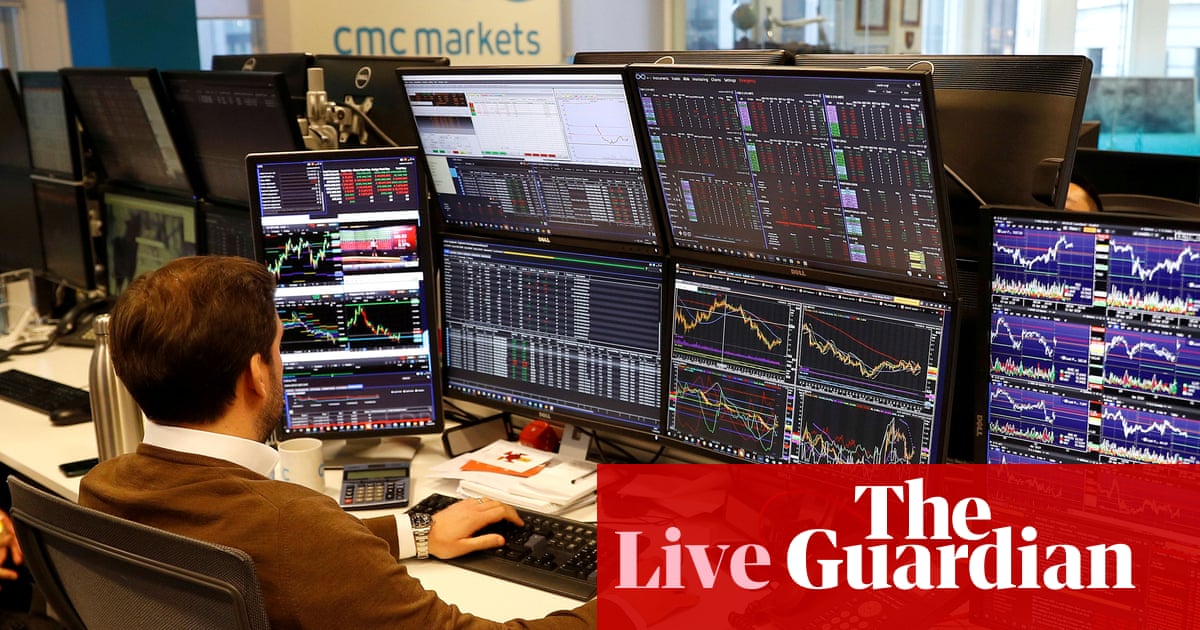
  • Sterling volatility expected around the budget; German economy stagnating – business live | Business

    Sterling volatility expected around the budget; German economy stagnating – business live | Business

    Introduction: Sterling volatility expected around the budget

    Good morning, and welcome to our rolling coverage of business, the financial markets and the world economy.

    The pound is in the spotlight as investors brace for tomorrow’s budget, fearful of a negative market reaction to Rachel Reeves’s plans.

    The pound has weakened over the last few months, down from $1.36 in mid-September to $1.31 today, having hit a seven-month around $1.30 at the start of this month.

    Traders are anxious as to whether the chancellor will manage to rebuild, or even increase, her headroom to hit the government’s fiscal targets in coming years.

    Matthew Ryan, head of market strategy at financial services firm Ebury, predicts the pound will be volatile this week:

    “It’s unclear if there will be enough room to raise taxes sufficiently to reach the required £25-30 billion shortfall, with the government reportedly ruling out hiking income tax rates and seemingly unable to cut fiscal expenditure.

    “We instead see a sort of patchwork of assorted and targeted tax increases, but the devil will be in the details, and if Reeves is unable to convince markets that she has a credible long-term plan for fiscal sustainability, then the pound could struggle on Wednesday. At any rate, brace for volatility in sterling this week.”

    According to the Financial Times this morning, traders have been “piling into bets” that the budget will push the pound lower against the dollar,

    They report that trading volumes in put options, used to speculate on or hedge against a fall in the pound, have outstripped those of bullish call options by more than four to one over the past week, according to derivatives firm CME Group.

    News yesterday that the UK’s growth forecasts will be downgraded has further dampened the mood:

    The flurry of reports of potential budget measures over recent weeks – with an income tax rise first on, then off, the agenda – hasn’t reassured the markets.

    Thomas Pugh, chief economist at audit, tax and consulting firm RSM UK, says this “chaos” is costly:

    “The flip-flopping, U-turning and general chaos of the last couple of months means we are much less certain of what to expect in this week’s budget than usual.

    “This raises three issues. First, chaos has a cost. The recent economic data make it clear that worries about the Budget is dragging on growth. Second, uncertainty raises the chances of an adverse reaction in gilt markets on the day if the budget disappoints. Third, the chances of additional rate cuts next year are falling quickly because it looks like the budget will be less deflationary and more backloaded.

    A tax-heavy budget is likely to weigh on growth, increasing the possibility that the Bank of England cuts interest rates in December and again in 2026.

    Ipek Ozkardeskaya, senior analyst at Swissquote, says tomorrow’s budget is “make-or-break’ for sterling, because…

    ..either the Bank of England steps in to prevent a gilt flare-up if investors dislike what they hear, or to cushion the economy if tax hikes bite hard.

    The agenda

    • 11am GMT: CBI distributive trades report on UK retail

    • 1.30pm GMT: US retail sales report

    • 2pm GMT: Case-Shiller US house price index

    • 3pm GMT: Pending US home sales report

    • 3pm GMT: US consumer confidence report

    Share

    Key events

    “How do you spell stagnation? G-E-R-M-A-N-Y.”

    We have confirmation this morning that Germany’s economy failed to grow in the last quarter.

    German GDP was unchanged in the July-September period, statistics body Destatis has reported, which matche the initial estimate last month.

    Ruth Brand, president of the Federal Statistical Office, says:

    “Economic activity was hampered in the third quarter by weak exports, while investments increased slightly.”

    The lack of growth is a blow to chancellor Friedrich Merz’s efforts to stimulate the economy with a major spending programme.

    Carsten Brzeski, global head of macro at ING, fears that Germamy is in a state of “apparently never-ending paralysis”, with tariffs, the stronger exchange rate, and political tensions and uncertainty all hurting its economy.

    Brzeski told clients:

    How do you spell stagnation? G-E-R-M-A-N-Y. In the past three years, the German economy has recorded only two quarters of positive growth. On average, the economy has shrunk by 0.1% quarter-on-quarter in every single quarter since the fourth quarter of 2022.

    The just-released second estimate of German GDP in the third quarter of 2025 has confirmed this sad record of yet another stagnating quarter. On the year, the economy grew by a meagre 0.3%.

    Share

    Continue Reading

  • Alphabet to omega in AI?

    Alphabet to omega in AI?

    A Google logo is at the announcement of Google’s biggest-ever investment in Germany on November 11, 2025 in Berlin, Germany.

    Sean Gallup | Getty Images News | Getty Images

    Alphabet on Monday resuscitated the artificial intelligence trade, which had been flagging the previous week. Its stock jumped 6.3%, lifting associated AI names such as Broadcom, Micron Technology and AMD. Major indexes rallied, with the Nasdaq Composite posting its best day in six months.

    Investors were particularly enthusiastic about Broadcom because it helps to design and manufacture Google-parent Alphabet's custom AI chips. In other words, the more market share Alphabet's AI offerings gain, the greater the benefit to Broadcom — rather like Nvidia and the broader AI sector at the moment. Broadcom shares surged 11.1% on this notion, making it the S&P 500's top gainer.

    But while investors may cheer Alphabet's leadership on Monday, not everyone wants it to have the last word.

    "Some investors are petrified that Alphabet will win the AI war due to huge improvements in its Gemini AI model and ongoing benefits from its custom TPU chip," Melius Research analyst Ben Reitzes wrote to clients in a Monday note. "GOOGL winning would actually hurt several stocks we cover — so prepare for volatility."

    Approaching the market's moves from another angle, Melissa Brown, managing director of investment decision research at SimCorp, said it's a concern when just one stock lifts the market. "That just doesn't seem to me to be a sustainable force behind driving the market higher over the next however many days," she added.

    Alphabet on Monday may have brought about alpha — in the sense of market outperformance and potentially beginning a new phase of AI enthusiasm — but letting it be the omega as well could pose problems for investors.

    What you need to know today

    U.S. tech stocks roar back. The Nasdaq Composite popped 2.69%, its best day since May 12, on investors enthusiasm over Alphabet. Other major indexes rose in tandem. Asia-Pacific markets were mostly Tuesday as AI-related stocks ticked up.

    Record outflows from BlackRock's bitcoin ETF. The iShares Bitcoin Trust ETF has seen an exodus of $2.2 billion this month as of Monday stateside, according to FactSet data. That's almost eight times more in losses than last October, or its second-worst month on record.

    Sandisk joins the S&P 500. The flash storage vendor will replace marketing company Interpublic Group in the index before trading begins on Nov. 28 stateside. Shares of Sandisk jumped 7% in extended trading on Monday.

    Trump has back-to-back calls with Xi and Takaichi. But the Beijing-Tokyo spat is unlikely to be resolved soon. U.S. President Donald Trump has stayed publicly silent, adding uncertainty for Japan and Taiwan at a tense moment. 

    [PRO] The S&P 500's dividend yield is looking dismal. For investors who are still looking to hold dividend-paying stocks, however, research firm Trivariate Research has a few suggestions on the top performers.

    And finally...

    MUMBAI, INDIA - OCTOBER 22: Executive chair at the South Korean automaker Hyundai Motor Group Euisun Chung and managing director and CEO at India's National Stock Exchange (NSE) Ashish Kumar Chauhan and Jaehoon Chang, Chief Executive Officer (CEO) and President of Hyundai Motor Company pose for a photo during the listing ceremony of Hyundai Motor India for its initial public offering (IPO) at the NSE in Mumbai, India on October 22, 2024.

    Anadolu | Anadolu | Getty Images


    Continue Reading

  • UK's easyJet exceeds annual profit expectations, raises target for holidays business – Reuters

    1. UK’s easyJet exceeds annual profit expectations, raises target for holidays business  Reuters
    2. Week 48 2025: Dubai’s big buys; EasyJet annual results  FlightGlobal
    3. EasyJet’s Q4 revenue at £3.6B, up 7%  breakingthenews.net
    4. FTSE 100 Live 25 November: Index lower despite US advance, B&Q owner lifts guidance  London Evening Standard
    5. Tuesday preview: EasyJet results, US retail sales in focus  Sharecast.com

    Continue Reading

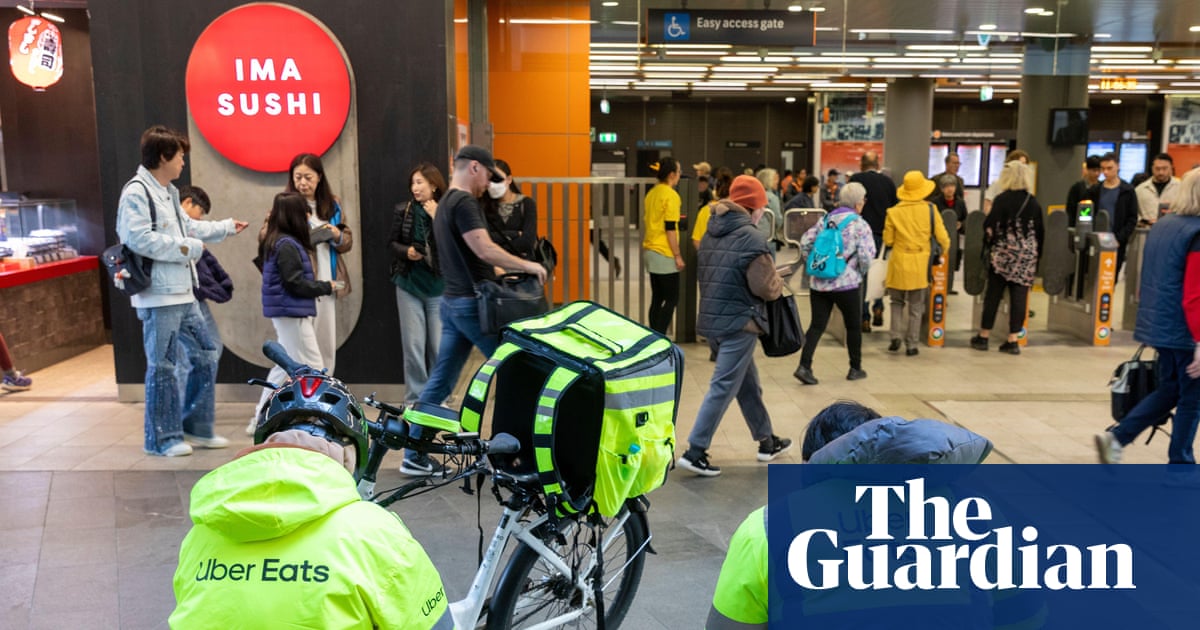
  • Australia is bringing in ‘world first’ minimum pay for food delivery drivers – here’s how it will work | Gig economy

    Australia is bringing in ‘world first’ minimum pay for food delivery drivers – here’s how it will work | Gig economy

    Food delivery companies in Australia have teamed up with the Transport Workers’ Union to set new minimum standards for delivery drivers, including a minimum hourly wage and accident insurance for injuries sustained on the job.

    In a deal described as a “world first”, the country’s two largest food delivery services, DoorDash and Uber Eats, have submitted a joint application with the Transport Workers’ Union to the Fair Work Commission.

    The deal still requires approval from the industrial umpire, but here’s what we know so far.


    What is changing for delivery drivers and their pay?

    The application to the FWC comes after a wide range of workplace reforms was introduced by the Albanese government, which included empowering the industrial umpire to set minimum standards for gig workers.

    DoorDash, Uber Eats and the TWU have agreed on new protections for delivery drivers after years of talks. The deal is likely to have involved concessions from either side of the negotiating table, including the union agreeing to call the workers “employee-like”.

    Among the protections that would be legally enforceable under the new standards is a minimum “safety net” rate of pay of at least $31.30 an hour which would come into effect from 1 July 2026 and increase slightly from 1 January 2027.

    The safety net would apply to all modes of transport used by delivery drivers, with the rate varying slightly depending on the type of vehicle used.

    The protections also include new dispute resolution processes, new engagement and feedback mechanisms, representation rights and accident insurance for injured workers.

    Eric Ireland, a driver in Melbourne who has worked for several platforms, believes the new standards will result in an increase in pay because it means he and his colleagues will get paid even if they have to wait for a restaurant to finish preparing the food.

    “The peace of mind that you are actually getting paid while you’re on the job … can only be a good thing,” he says.

    Ireland says while some working conditions have improved since he started delivering food six years ago, pay has not kept up with the cost of living.

    “I sort of worked out on average I get about $22 an hour before I pay for petrol,” he says. “Sometimes you can earn a lot more than that if you do what they call a ‘quest’, which is doing 10 jobs in a weekend or something.”

    However, as the workplace relations expert Prof Alex Veen points out, the safety net is different to a “minimum wage” in the way you may typically think of one.

    The deal does not include penalty rates for things such as working late at night and, Veen says, the minimum hourly rate does not apply to time spent waiting between delivery jobs.

    “What it materially means for gig workers is that when they’re working in periods of low demand they are unlikely to make that as their hourly pay,” Veen, a lecturer at the University of Sydney’s business school, says.

    But he says there are many positives to the deal, including clarifying who is responsible for insuring both vehicles and the workers themselves.


    How will the accident insurance work?

    The application to the FWC states that workers are responsible for maintaining third-party insurances on the vehicles they use for deliveries, so if they get in an accident and damage another vehicle the delivery platform will not be liable for the cost.

    On the other hand, Uber Eats and DoorDash will have to organise and pay for personal accident insurance that “provides a reasonable minimum level of cover” for their delivery workers. As Veen points out, that is “obviously open to interpretation”.

    The TWU says 23 gig workers have been killed in Australia since 2017 and the figure could be higher because some are never reported as workplace deaths.


    Will customers pay more for food delivery?

    While Uber Eats and DoorDash are yet to confirm how they plan to fund an increase in operating costs, Veen says the platforms are most likely to pass them on to consumers.

    “They may try to pass some of the costs on to restaurants and they could take a smaller [profit] margin themselves, although that’s not in their interests to do so,” he says.

    Dr Michael Rawling, an associate professor who teaches workplace law at the University of Technology Sydney, says there may be a small increase in the price of a takeaway ordered through a third-party delivery app.

    “In Australia we like to see workers treated fairly and if the consumer knows that then I think they’ll cop a small increase,” he says.


    Is it really a world first?

    Rawling agrees the deal is “world leading” and “very significant”.

    He says while the deal hasn’t been ratified by the FWC, the “major players” who will be affected by the new standard have agreed on its content, which the industrial umpire will factor into its decision.

    “[Typically] what the parties have actually consented to is a preferred direction for the FWC to go into for that particular matter,” he says.


    What comes next?

    The FWC needs to approve the deal before it can come into effect.

    Prof Andrew Stewart, a workplace relations expert at the Queensland University of Technology, says it is “not a done deal”, especially as the FWC will have to consult with other stakeholders – including other delivery platforms.

    “Potentially a huge fly in the ointment is that the FWC is going to have to come to a view as to whether the workers are eligible for a minimum standards order,” he says. “Because there’s a perfectly credible argument that the workers are already employees [and not employee-like].”

    Stewart says if the FWC ruled that food delivery drivers were employees and not “employee-like” this would be a landmark ruling that would likely result in a challenge from the delivery platforms that could go all the way to the high court.

    He is not ruling out this outcome, even though he says it is more likely the FWC will accept the application as it stands.

    “I do not want to understate the significance of this deal,” he says. “It is a really important agreement that makes it much more likely we will get a minimum standards order much more quickly than we would if the TWU and the platforms were fighting over the details.”


    What does this mean for the gig economy more broadly?

    Overall, Stewart says the agreement on the application brings Australia a lot closer to having a safety net for at least one part of the gig economy.

    It could also influence future FWC decisions relating to minimum standards. At the moment, the commission is considering similar gig workers in other sectors including package delivery. And the TWU has previously flagged it will submit an application to cover ride-share drivers.

    Continue Reading

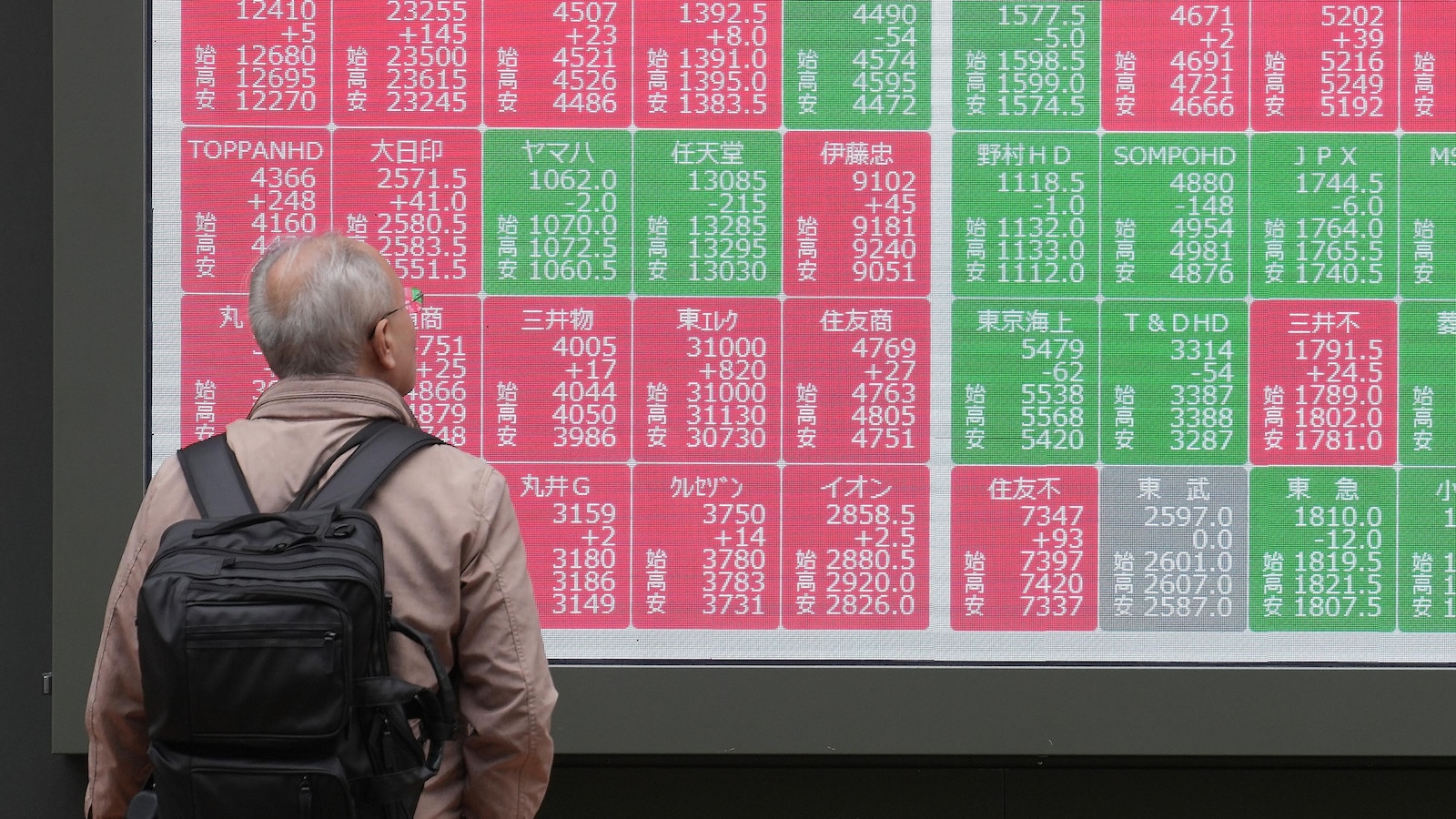
  • Asian shares advance after Wall Street gets a lift from hopes for a Fed rate cut

    Asian shares advance after Wall Street gets a lift from hopes for a Fed rate cut

    BANGKOK — Asian shares mostly gained on Tuesday after U.S. stocks rallied on hopes the Federal Reserve will cut interest rates soon.

    U.S. futures edged lower and oil prices also declined.

    Tokyo’s Nikkei 225 was nearly unchanged at 48,628.85, after reopening from a holiday.

    A plunge in technology giant SoftBank’s shares weighed on the market. It fell 10.3% on concerns that returns from its heavy investments in OpenAI may be threatened by the next generation Gemini artificial intelligenc e model that Google launched last week.

    In South Korea, the Kospi gained 0.3% to 3,859.12. Taiwan’s Taiex jumped 1.5%.

    Chinese markets also advanced. In Hong Kong, the Hang Seng climbed 0.4% to 25,821.47, while the Shanghai Composite index jumped 0.9% to 3,872.45.

    E-commerce giant Alibaba, which was due to report its earnings late Tuesday, gained 1.6%.

    Australia’s S&P/ASX rebounded to edge 0.1% higher, closing at 8,537.00.

    U.S. markets will be closed on Thursday for the Thanksgiving holiday. A day later, it’s on to the rush of Black Friday and Cyber Monday.

    The U.S. stock market rallied on Monday, at the start of a week with shortened trading because of the Thanksgiving holiday.

    The S&P 500 climbed 1.5% to 6,705.12 in one of its best days since the summer. The Dow Jones Industrial Average rose 0.4% to 46,448.27, and the Nasdaq composite jumped 2.7% to 22,872.01.

    Stocks got a lift from rising hopes that the Fed will cut its main interest rate again at its next meeting in December, a move that could boost the economy and investment prices.

    The market also benefited from strength for stocks caught up in the artificial-intelligence frenzy. Alphabet, which has been getting praise for its newest Gemini AI model, rallied 6.3% and was one of the strongest forces lifting the S&P 500. Nvidia rose 2.1%.

    Monday’s gains followed sharp swings in recent weeks, not just day to day but also hour to hour, caused by uncertainty about what the Fed will do with interest rates and whether too much money is pouring into AI and creating a bubble. All the worries are creating the biggest test for investors since an April sell-off, when President Donald Trump shocked the world with his “Liberation Day” tariffs.

    Despite all the recent fear, the S&P 500 remains within 2.7% of its record set last month.

    Several tests for the market lie ahead this week. One of the biggest will arrive Tuesday when the U.S. government will deliver data on inflation at the wholesale level in September.

    Economists expect it to show a 2.6% rise in prices from a year earlier, the same as in August. A higher-than-expected reading could deter the Fed from cutting its main interest rate in December for a third time this year, because lower rates can worsen inflation. Some Fed officials have already argued against a December cut in part because inflation has stubbornly remained above their 2% target.

    Traders are nevertheless betting on a nearly 85% probability that the Fed will cut rates next month, up from 71% on Friday and from less than a coin flip’s chance seen a week ago, according to data from CME Group.

    In other dealings early Tuesday, U.S. benchmark crude oil lost 25 cents to $58.59 per barrel. Brent crude, the international standard, shed 30 cents to $62.42 per barrel.

    The dollar fell to 156.70 Japanese yen from 156.91 yen. The euro slipped to $1.1517 from $1.1521.

    Bitcoin fell 1.1% to $88,100. It was near $125,000 last month.

    Continue Reading

  • Progress on share buyback programme

    Progress on share buyback programme

    Amsterdam,

    ING announced today that, as part of our €1.1 billion share buyback programme announced on 30 October 2025, in total 2,767,892 shares were repurchased during the week of 17 November up to and including 21 November 2025.

    The shares were repurchased at an average price of €21.60 for a total amount of €59,777,931.11.

    In line with the purpose of the programme to reduce the share capital of ING, the total number of shares repurchased under this programme to date is 7,899,202 at an average price of €22.02 for a total consideration of €173,950,206.98. To date approximately 15.81% of the maximum total value of the share buyback programme has been completed.

    For detailed information on the daily repurchased shares, individual share purchase transactions and weekly reports, see share buy back programme.

    Note for editors

    More on investor information, go to the investor relations section on this site.

    For news updates, go to the newsroom on this site or via X (@ING_news feed).

    For ING photos such as board members, buildings, go to Flickr.

    ING PROFILE

    ING is a global financial institution with a strong European base, offering banking services through its operating company ING Bank. The purpose of ING Bank is: empowering people to stay a step ahead in life and in business. ING Bank’s more than 60,000 employees offer retail and wholesale banking services to customers in over 100 countries.

    ING Group shares are listed on the exchanges of Amsterdam (INGA NA, INGA.AS), Brussels and on the New York Stock Exchange (ADRs: ING US, ING.N).

    ING aims to put sustainability at the heart of what we do. Our policies and actions are assessed by independent research and ratings providers, which give updates on them annually. ING’s ESG rating by MSCI was reconfirmed by MSCI as ‘AA’ in August 2024 for the fifth year. As of December 2023, in Sustainalytics’ view, ING’s management of ESG material risk is ‘Strong’. Our current ESG Risk Rating, is 17.2 (Low Risk). ING Group shares are also included in major sustainability and ESG index products of leading providers. Here are some examples: Euronext, STOXX, Morningstar and FTSE Russell. Society is transitioning to a low-carbon economy. So are our clients, and so is ING. We finance a lot of sustainable activities, but we still finance more that’s not. Follow our progress on ing.com/climate.

    Important legal information

    Elements of this press release contain or may contain information about ING Groep N.V. and/ or ING Bank N.V. within the meaning of Article 7(1) to (4) of EU Regulation No 596/2014 (‘Market Abuse Regulation’).

    ING Group’s annual accounts are prepared in accordance with International Financial Reporting Standards as adopted by the European Union (‘IFRS- EU’). In preparing the financial information in this document, except as described otherwise, the same accounting principles are applied as in the 2024 ING Group consolidated annual accounts. All figures in this document are unaudited. Small differences are possible in the tables due to rounding.

    Certain of the statements contained herein are not historical facts, including, without limitation, certain statements made of future expectations and other forward-looking statements that are based on management’s current views and assumptions and involve known and unknown risks and uncertainties that could cause actual results, performance or events to differ materially from those expressed or implied in such statements. Actual results, performance or events may differ materially from those in such statements due to a number of factors, including, without limitation: (1) changes in general economic conditions and customer behaviour, in particular economic conditions in ING’s core markets, including changes affecting currency exchange rates and the regional and global economic impact of the invasion of Russia into Ukraine and related international response measures (2) changes affecting interest rate levels (3) any default of a major market participant and related market disruption (4) changes in performance of financial markets, including in Europe and developing markets (5) fiscal uncertainty in Europe and the United States (6) discontinuation of or changes in ‘benchmark’ indices (7) inflation and deflation in our principal markets (8) changes in conditions in the credit and capital markets generally, including changes in borrower and counterparty creditworthiness (9) failures of banks falling under the scope of state compensation schemes (10) non- compliance with or changes in laws and regulations, including those concerning financial services, financial economic crimes and tax laws, and the interpretation and application thereof (11) geopolitical risks, political instabilities and policies and actions of governmental and regulatory authorities, including in connection with the invasion of Russia into Ukraine and the related international response measures (12) legal and regulatory risks in certain countries with less developed legal and regulatory frameworks (13) prudential supervision and regulations, including in relation to stress tests and regulatory restrictions on dividends and distributions (also among members of the group) (14) ING’s ability to meet minimum capital and other prudential regulatory requirements (15) changes in regulation of US commodities and derivatives businesses of ING and its customers (16) application of bank recovery and resolution regimes, including write down and conversion powers in relation to our securities (17) outcome of current and future litigation, enforcement proceedings, investigations or other regulatory actions, including claims by customers or stakeholders who feel misled or treated unfairly, and other conduct issues (18) changes in tax laws and regulations and risks of non-compliance or investigation in connection with tax laws, including FATCA (19) operational and IT risks, such as system disruptions or failures, breaches of security, cyber-attacks, human error, changes in operational practices or inadequate controls including in respect of third parties with which we do business and including any risks as a result of incomplete, inaccurate, or otherwise flawed outputs from the algorithms and data sets utilized in artificial intelligence (20) risks and challenges related to cybercrime including the effects of cyberattacks and changes in legislation and regulation related to cybersecurity and data privacy, including such risks and challenges as a consequence of the use of emerging technologies, such as advanced forms of artificial intelligence and quantum computing (21) changes in general competitive factors, including ability to increase or maintain market share (22) inability to protect our intellectual property and infringement claims by third parties (23) inability of counterparties to meet financial obligations or ability to enforce rights against such counterparties (24) changes in credit ratings (25) business, operational, regulatory, reputation, transition and other risks and challenges in connection with climate change, diversity, equity and inclusion and other ESG-related matters, including data gathering and reporting and also including managing the conflicting laws and requirements of governments, regulators and authorities with respect to these topics (26) inability to attract and retain key personnel (27) future liabilities under defined benefit retirement plans (28) failure to manage business risks, including in connection with use of models, use of derivatives, or maintaining appropriate policies and guidelines (29) changes in capital and credit markets, including interbank funding, as well as customer deposits, which provide the liquidity and capital required to fund our operations, and (30) the other risks and uncertainties detailed in the most recent annual report of ING Groep N.V. (including the Risk Factors contained therein) and ING’s more recent disclosures, including press releases, which are available on www.ING.com.

    This document may contain ESG-related material that has been prepared by ING on the basis of publicly available information, internally developed data and other third-party sources believed to be reliable. ING has not sought to independently verify information obtained from public and third-party sources and makes no representations or warranties as to accuracy, completeness, reasonableness or reliability of such information. This document may also discuss one or more specific transactions and/or contain general statements about ING’s ESG approach. The approach and criteria referred to in this document are intended to be applied in accordance with applicable law. Due to the fact that there may be different or even conflicting laws, the approach, criteria or the application thereof, could be different.

    Materiality, as used in the context of ESG, is distinct from, and should not be confused with, such term as defined in the Market Abuse Regulation or as defined for Securities and Exchange Commission (‘SEC’) reporting purposes. Any issues identified as material for purposes of ESG in this document are therefore not necessarily material as defined in the Market Abuse Regulation or for SEC reporting purposes. In addition, there is currently no single, globally recognized set of accepted definitions in assessing whether activities are “green” or “sustainable.” Without limiting any of the statements contained herein, we make no representation or warranty as to whether any of our securities constitutes a green or sustainable security or conforms to present or future investor expectations or objectives for green or sustainable investing. For information on characteristics of a security, use of proceeds, a description of applicable project(s) and/or any other relevant information, please reference the offering documents for such security.

    This document may contain inactive textual addresses to internet websites operated by us and third parties. Reference to such websites is made for information purposes only, and information found at such websites is not incorporated by reference into this document. ING does not make any representation or warranty with respect to the accuracy or completeness of, or take any responsibility for, any information found at any websites operated by third parties. ING specifically disclaims any liability with respect to any information found at websites operated by third parties. ING cannot guarantee that websites operated by third parties remain available following the publication of this document, or that any information found at such websites will not change following the filing of this document. Many of those factors are beyond ING’s control.

    Any forward-looking statements made by or on behalf of ING speak only as of the date they are made, and ING assumes no obligation to publicly update or revise any forward-looking statements, whether as a result of new information or for any other reason.

    This document does not constitute an offer to sell, or a solicitation of an offer to purchase, any securities in the United States or any other jurisdiction.



    Continue Reading