Category: 3. Business

  • BHP makes renewed takeover bid for Anglo American: Reuters

    BHP makes renewed takeover bid for Anglo American: Reuters

    Bloomberg | Bloomberg | Getty Images

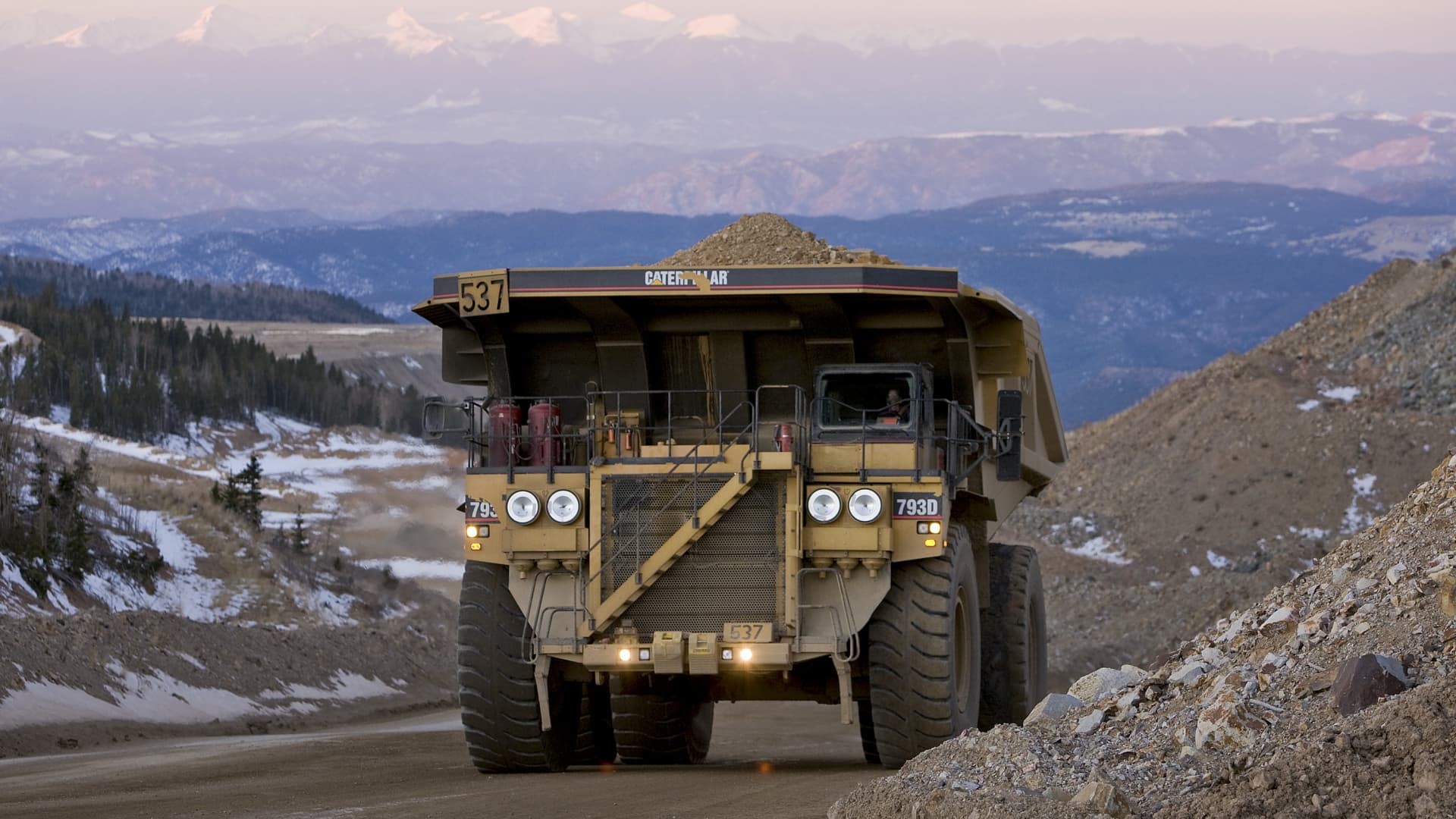
    Mining company BHP has made a renewed takeover approach to rival Anglo American, a source familiar with the matter told Reuters on Sunday, just months after the London-listed miner agreed merger plans with Canada’s Teck Resources to create a global copper-focused heavyweight.

    Anglo American declined to comment. BHP did not immediately respond to a request for comment outside regular business hours.

    BHP has made overtures to Anglo American in recent days, Bloomberg News reported earlier, citing people familiar with the matter, adding that deliberations are ongoing and there is no certainty of a deal.

    Anglo American’s market capitalisation is about $41.80 billion, while BHP’s is around $132.18 billion, based on LSEG data.

    In September, Anglo American agreed to plans to merge with Teck in an all-share deal, marking the sector’s second-biggest M&A deal ever.

    The deal came just over a year after BHP scrapped a $49 billion bid for Anglo, a deal that would have boosted the Australian miner’s holdings of copper, the metal seen as essential for the transition to greener energy.

    If the BHP/Anglo deal had gone ahead, the combined entity would have been the world’s largest copper producer, with a total annual production of around 1.9 million metric tons.

    The new Anglo Teck group is expected to have a combined annual copper production capacity of approximately 1.2 million tons, still second to BHP.

    Continue Reading

  • Does Amer Sports’ 40% 2025 Surge Reflect Real Value After Retail Partnership News?

    Does Amer Sports’ 40% 2025 Surge Reflect Real Value After Retail Partnership News?

    • Thinking about whether Amer Sports is a bargain or overpriced? You are not alone, and the answer might surprise you!

    • The stock has surged lately, climbing 12.2% over the past week, 7.2% in the last month, and is up 40.2% for the year so far.

    • Much of this action is tied to renewed interest in sportswear brands and several high-profile retail partnerships that have grabbed investor attention. These recent news stories are fueling expectations for stronger demand and have changed how traders are approaching Amer Sports’ stock.

    • The company currently scores 1 out of 6 on our undervaluation checklist, which means there is plenty to discuss about how we assess its value. We will walk through the common valuation methods, then reveal a different way to get the full picture at the end of this article.

    Amer Sports scores just 1/6 on our valuation checks. See what other red flags we found in the full valuation breakdown.

    The Discounted Cash Flow (DCF) model works by estimating a company’s future cash flows and then discounting them back to today’s value. This process provides an intrinsic value for the stock. For Amer Sports, this method relies on both analyst forecasts and advanced extrapolations for years beyond typical coverage.

    Amer Sports is currently generating $254.13 million in Free Cash Flow. Analysts project this number to reach about $732.5 million by the end of 2029, with estimates for 2026 through 2029 ranging from approximately $462.67 million to $828 million. Beyond those years, projections are calculated based on historical trends and expected stability.

    Using these projections, the DCF model estimates Amer Sports’ intrinsic value at $16.86 per share. With the stock trading much higher, this means the current share price is 102% above its estimated fair value. This suggests the stock is significantly overvalued on this measure.

    Result: OVERVALUED

    Our Discounted Cash Flow (DCF) analysis suggests Amer Sports may be overvalued by 102.0%. Discover 926 undervalued stocks or create your own screener to find better value opportunities.

    AS Discounted Cash Flow as at Nov 2025

    Head to the Valuation section of our Company Report for more details on how we arrive at this Fair Value for Amer Sports.

    The Price-to-Earnings (PE) ratio is a widely used method for assessing the value of profitable companies like Amer Sports. It reflects how much investors are willing to pay today for a dollar of current earnings, making it a useful shorthand for gauging market expectations and relative value.

    A “normal” or “fair” PE ratio varies widely depending on a company’s growth prospects and perceived risks. Fast-growing or lower-risk companies typically command higher PE ratios, while slower-growing or riskier ones are valued at lower multiples.

    At present, Amer Sports trades at a PE ratio of 60.68x. For context, this is significantly higher than both the luxury industry average of 19.66x and the average of its direct peers, which is 32.55x. By these traditional yardsticks, the company appears richly valued.

    However, Simply Wall St’s “Fair Ratio” is designed to capture much more nuance. It combines factors like Amer Sports’ projected earnings growth, profit margins, its position within the market, and company-specific risks, offering a tailored benchmark. In this case, the Fair Ratio for Amer Sports is 26.17x, which more accurately reflects what a multiple should be for this specific company right now.

    This means Amer Sports’ actual PE ratio is more than double its Fair Ratio, suggesting that, despite growth optimism and industry momentum, the stock is trading at a clear premium to its fundamentals.

    Result: OVERVALUED

    NYSE:AS PE Ratio as at Nov 2025
    NYSE:AS PE Ratio as at Nov 2025

    PE ratios tell one story, but what if the real opportunity lies elsewhere? Discover 1430 companies where insiders are betting big on explosive growth.

    Earlier we mentioned that there’s an even better way to understand valuation, so let’s introduce you to Narratives. A Narrative is your personal story for a company, where you set your own estimates for future revenue, earnings, and profit margins, and use them to calculate what you think is a fair value for the stock based on your expectations.

    Narratives work by connecting a company’s business outlook with concrete financial forecasts, then linking those projections to a calculated fair value. This approach puts you in the driver’s seat, letting your unique perspective shape what you believe the stock is truly worth. Narratives are available right now on Simply Wall St’s Community page, used by millions of investors to share, debate, and learn from each other’s views.

    This tool makes investing more actionable; by comparing your Narrative Fair Value with today’s share price, you can clearly see for yourself whether you think Amer Sports is a buy, a hold, or a sell. Plus, Narratives automatically respond to new developments. When news or fresh earnings hit, your calculations update in real time so you never fall behind.

    For example, recent Narratives about Amer Sports set fair values as high as $52 if you expect explosive earnings growth led by premium brand expansion, or as low as $34 if you’re more cautious about long-term risks and competition. This shows how your story and your numbers can be entirely your own.

    Do you think there’s more to the story for Amer Sports? Head over to our Community to see what others are saying!

    NYSE:AS Community Fair Values as at Nov 2025
    NYSE:AS Community Fair Values as at Nov 2025

    This article by Simply Wall St is general in nature. We provide commentary based on historical data and analyst forecasts only using an unbiased methodology and our articles are not intended to be financial advice. It does not constitute a recommendation to buy or sell any stock, and does not take account of your objectives, or your financial situation. We aim to bring you long-term focused analysis driven by fundamental data. Note that our analysis may not factor in the latest price-sensitive company announcements or qualitative material. Simply Wall St has no position in any stocks mentioned.

    Companies discussed in this article include AS.

    Have feedback on this article? Concerned about the content? Get in touch with us directly. Alternatively, email editorial-team@simplywallst.com

    Continue Reading

  • Evaluating Carrier Global After Recent Sustainable Building Solutions Expansion and Share Price Drop

    Evaluating Carrier Global After Recent Sustainable Building Solutions Expansion and Share Price Drop

    • If you have ever wondered whether Carrier Global is truly a bargain or just another name in the headlines, you’re in the right place.

    • The stock has seen notable movement lately, dropping 3.1% over the past week and 9.4% for the month, with a year-to-date return of -23.3% and down 31.0% in the last year. Yet, if you zoom out, it is still up more than 48% over five years.

    • Recently, Carrier Global has made headlines with its strategic expansion into sustainable building solutions, catching the attention of both industry watchers and environmentally conscious investors. Developments like these could reshape the growth narrative and have contributed to recent volatility in the share price.

    • Based on our current assessment, Carrier Global scores a 4 out of 6 on key valuation checks, suggesting there are several signals it might be undervalued. We will break down these valuation methods and explore a smarter way to approach fair value throughout the rest of the article.

    Find out why Carrier Global’s -31.0% return over the last year is lagging behind its peers.

    The Discounted Cash Flow (DCF) model estimates a company’s intrinsic value by projecting its future cash flows and discounting them back to today’s value. This approach helps investors determine whether the current stock price reflects the real worth of the business based on its ability to generate cash over time.

    For Carrier Global, current Free Cash Flow stands at $1.13 Billion. According to analyst forecasts, Free Cash Flow is expected to grow and reach $3.09 Billion by 2028. Beyond the analyst estimates, projections are extrapolated and indicate continued healthy increases in future cash flows throughout the next decade.

    Applying the DCF approach, Carrier Global’s estimated fair value is $68.13 per share. This suggests the stock is trading at a 23.1% discount to its intrinsic value based on current forecasts.

    Carrier Global currently appears undervalued by the market. This may indicate a potential opportunity for investors looking for growth and value in the building solutions sector.

    Result: UNDERVALUED

    Our Discounted Cash Flow (DCF) analysis suggests Carrier Global is undervalued by 23.1%. Track this in your watchlist or portfolio, or discover 926 more undervalued stocks based on cash flows.

    CARR Discounted Cash Flow as at Nov 2025

    Head to the Valuation section of our Company Report for more details on how we arrive at this Fair Value for Carrier Global.

    For profitable companies like Carrier Global, the Price-to-Earnings (PE) ratio is a widely preferred valuation metric. It offers a snapshot of how much investors are willing to pay for each dollar of the company’s earnings, making it a fast and useful measure for companies with consistent profits.

    It is important to remember that what counts as a “normal” or “fair” PE ratio is not universal. Growth expectations and risk levels can drive meaningful differences. Rapidly growing companies or those perceived as safer often command higher PE ratios, while slower-growing or riskier companies tend to have lower ones.

    Carrier Global currently trades at a PE ratio of 32x. This is higher than the Building industry average of 17.3x and above the selected peer average of 28.1x. On the surface, this could suggest that Carrier Global is priced at a premium compared to many of its direct competitors.

    Simply Wall St’s proprietary “Fair Ratio” helps place this in context. Rather than just comparing Carrier Global to peers or industry norms, the Fair Ratio weighs factors such as expected growth, profit margins, company size, and business model risks. In Carrier Global’s case, the Fair Ratio is 38.6x, reflecting these company-specific dynamics.

    Because Carrier Global’s current PE of 32x is below its Fair Ratio of 38.6x, this suggests the stock is undervalued on a relative basis, even if it looks expensive next to industry and peer averages. The Fair Ratio method gives a more accurate picture, as it is tailored to Carrier’s unique situation rather than broad benchmarks.

    Result: UNDERVALUED

    NYSE:CARR PE Ratio as at Nov 2025
    NYSE:CARR PE Ratio as at Nov 2025

    PE ratios tell one story, but what if the real opportunity lies elsewhere? Discover 1430 companies where insiders are betting big on explosive growth.

    Earlier we mentioned that there is an even better way to understand valuation, so let’s introduce you to Narratives.

    A Narrative is a simple, approachable way to tell the story behind a company’s numbers, showing how your expectations for Carrier Global’s future revenue, earnings, and profit margins shape your view of its fair value.

    Rather than just focusing on the raw financial data, Narratives help you connect the dots between a company’s real-world developments, your personal perspective on where it is headed, and what you think the shares are truly worth.

    On Simply Wall St’s Community page, which is home to millions of investors worldwide, you can explore or create these dynamic Narratives yourself. Narratives are designed to make investing easier by letting you visualize how financial forecasts, news, and new earnings reports instantly update the share’s fair value, allowing you to make smarter buy and sell decisions as the facts change.

    For instance, within Carrier Global’s Narratives, some investors with a bullish outlook see fair value as high as $100 per share, while more cautious users set their estimates closer to $65, demonstrating how Narratives help capture different viewpoints, investment theses, and risk tolerances with full transparency.

    Do you think there’s more to the story for Carrier Global? Head over to our Community to see what others are saying!

    NYSE:CARR Community Fair Values as at Nov 2025
    NYSE:CARR Community Fair Values as at Nov 2025

    This article by Simply Wall St is general in nature. We provide commentary based on historical data and analyst forecasts only using an unbiased methodology and our articles are not intended to be financial advice. It does not constitute a recommendation to buy or sell any stock, and does not take account of your objectives, or your financial situation. We aim to bring you long-term focused analysis driven by fundamental data. Note that our analysis may not factor in the latest price-sensitive company announcements or qualitative material. Simply Wall St has no position in any stocks mentioned.

    Companies discussed in this article include CARR.

    Have feedback on this article? Concerned about the content? Get in touch with us directly. Alternatively, email editorial-team@simplywallst.com

    Continue Reading

  • Will Kraft Heinz’s (KHC) Breakup and New Products Shift Its Growth and Cash Flow Narrative?

    Will Kraft Heinz’s (KHC) Breakup and New Products Shift Its Growth and Cash Flow Narrative?

    • In the past week, Kraft Heinz unveiled plans to break up its business into two separate entities and launched new product initiatives including Heinz Leftover Gravy in the US and Heinz Ketchup Zero in Dubai, aiming to attract millennial hosts and health-conscious consumers.

    • This restructuring marks a major shift in Kraft Heinz’s approach, as the company seeks to revive growth and unlock greater shareholder value amid evolving consumer preferences and changing holiday traditions.

    • We’ll explore how Kraft Heinz’s planned business separation could reshape the investment outlook, especially regarding future growth initiatives and cash flow priorities.

    The best AI stocks today may lie beyond giants like Nvidia and Microsoft. Find the next big opportunity with these 26 smaller AI-focused companies with strong growth potential through early-stage innovation in machine learning, automation, and data intelligence that could fund your retirement.

    To be a Kraft Heinz shareholder today, you need confidence that the upcoming business separation can unlock value while stabilizing core North American revenues in the face of persistent volume declines. The recent announcement broadly supports the company’s push for relevance, but the restructuring itself remains the biggest short-term catalyst and source of risk, new product launches alone are unlikely to materially shift this calculus in the immediate future.

    Among recent product initiatives, the launch of Heinz Ketchup Zero in Dubai stands out. This move directly ties into Kraft Heinz’s ongoing focus on health-conscious innovation, a potential catalyst as health and wellness trends influence consumer choices and could impact the company’s future revenue mix.

    Yet, it’s important to recognize that unlike the promise of new products, the risk of execution missteps and cost pressures tied to the business separation represents information that investors should be aware of…

    Read the full narrative on Kraft Heinz (it’s free!)

    Kraft Heinz’s outlook forecasts $26.1 billion in revenue and $3.3 billion in earnings by 2028. This assumes a yearly revenue growth rate of 1.0% and a $8.6 billion increase in earnings from the current -$5.3 billion.

    Uncover how Kraft Heinz’s forecasts yield a $27.13 fair value, a 7% upside to its current price.

    KHC Community Fair Values as at Nov 2025

    Fair value estimates from 22 Simply Wall St Community members range from US$23.95 to US$68.79, showing wide disagreement about Kraft Heinz’s true worth. Many are watching whether innovation can meaningfully offset weak core market performance, making it valuable to explore several alternative viewpoints.

    Explore 22 other fair value estimates on Kraft Heinz – why the stock might be worth 5% less than the current price!

    Disagree with existing narratives? Create your own in under 3 minutes – extraordinary investment returns rarely come from following the herd.

    Our daily scans reveal stocks with breakout potential. Don’t miss this chance:

    This article by Simply Wall St is general in nature. We provide commentary based on historical data and analyst forecasts only using an unbiased methodology and our articles are not intended to be financial advice. It does not constitute a recommendation to buy or sell any stock, and does not take account of your objectives, or your financial situation. We aim to bring you long-term focused analysis driven by fundamental data. Note that our analysis may not factor in the latest price-sensitive company announcements or qualitative material. Simply Wall St has no position in any stocks mentioned.

    Companies discussed in this article include KHC.

    Have feedback on this article? Concerned about the content? Get in touch with us directly. Alternatively, email editorial-team@simplywallst.com

    Continue Reading

  • Why Hewlett Packard Enterprise (HPE) Is Down 10.1% After Juniper Deal Challenges and Rising Memory Costs

    Why Hewlett Packard Enterprise (HPE) Is Down 10.1% After Juniper Deal Challenges and Rising Memory Costs

    • In the past week, Morgan Stanley downgraded Hewlett Packard Enterprise, citing challenges from the Juniper Networks acquisition and the impact of rising memory costs on future profit margins and earnings forecasts.

    • This development highlights analyst concerns around HPE’s ability to manage integration risks while maintaining margin expansion and earnings growth amid industry-wide cost pressures.

    • We’ll look at how margin pressure from higher memory costs and the recent Juniper integration may affect Hewlett Packard Enterprise’s investment narrative.

    These 11 companies survived and thrived after COVID and have the right ingredients to survive Trump’s tariffs. Discover why before your portfolio feels the trade war pinch.

    To be a Hewlett Packard Enterprise shareholder today, you need confidence in the company’s ability to execute its transition to higher-margin software, services, and AI-centric infrastructure, despite short-term integration risks from the Juniper Networks acquisition and near-term cost pressures from rising memory prices. Morgan Stanley’s recent downgrade underscores concerns that these issues may weigh on anticipated margin expansion, although no material shift has been signaled in the company’s core long-term narrative or fundamental catalyst: successful execution on AI and networking-led growth.

    Among recent announcements, HPE’s launch of next-generation Cray supercomputing solutions stands out for its relevance to the investment case. These innovations support the company’s push into AI-ready compute, positioning HPE to benefit from industry AI adoption trends, the very catalyst that could offset margin pressure from integration challenges and higher hardware input costs.

    By contrast, investors should keep in mind the potential consequences if Juniper integration risks are not managed effectively and …

    Read the full narrative on Hewlett Packard Enterprise (it’s free!)

    Hewlett Packard Enterprise’s narrative projects $44.4 billion revenue and $2.7 billion earnings by 2028. This requires 10.3% yearly revenue growth and a $1.6 billion earnings increase from $1.1 billion today.

    Uncover how Hewlett Packard Enterprise’s forecasts yield a $26.51 fair value, a 29% upside to its current price.

    HPE Community Fair Values as at Nov 2025

    Five members of the Simply Wall St Community have estimated HPE’s fair value in a broad range from US$17.90 to US$33.26 per share. Considering concerns about execution on recent acquisitions, these varied outlooks highlight the importance of understanding both upside potential and risks when making investment decisions.

    Explore 5 other fair value estimates on Hewlett Packard Enterprise – why the stock might be worth as much as 62% more than the current price!

    Disagree with existing narratives? Create your own in under 3 minutes – extraordinary investment returns rarely come from following the herd.

    These stocks are moving-our analysis flagged them today. Act fast before the price catches up:

    This article by Simply Wall St is general in nature. We provide commentary based on historical data and analyst forecasts only using an unbiased methodology and our articles are not intended to be financial advice. It does not constitute a recommendation to buy or sell any stock, and does not take account of your objectives, or your financial situation. We aim to bring you long-term focused analysis driven by fundamental data. Note that our analysis may not factor in the latest price-sensitive company announcements or qualitative material. Simply Wall St has no position in any stocks mentioned.

    Companies discussed in this article include HPE.

    Have feedback on this article? Concerned about the content? Get in touch with us directly. Alternatively, email editorial-team@simplywallst.com

    Continue Reading

  • Wild ride on Wall Street as the crypto crash spooks risk complex

    Wild ride on Wall Street as the crypto crash spooks risk complex

    Wall Street’s risk machine didn’t break this week — Friday’s rebound spared it. But it flinched. And in doing so, it revealed how fragile the current market cycle has become.

    The shift was subtle, then sudden. For weeks, the riskiest trades in finance — crypto, AI stocks, meme names, high-octane momentum bets — had been slipping. On Thursday, that slow-motion retreat snapped. The Nasdaq 100 sank nearly 5% from its intraday peak, its sharpest reversal since April. Nvidia Corp. at one point shed nearly $400 billion despite beating earnings expectations. Bitcoin hit a seven-month low. Momentum names dropped in near-perfect sync.

    It was a vivid reminder of how easily pressure can cascade through crowded trades, and how markets powered by momentum and retail enthusiasm can buckle without warning.

    There was no obvious trigger. No policy shift. No data surprise. No earnings miss. Just a sudden wave of selling, and an equally abrupt recovery. What rattled investors wasn’t just the scale of the moves, but their speed, and what that speed suggested: a momentum-driven market, prone to synchronized swings and fragile under strain.

    “There are real cracks,” said Nathan Thooft, chief investment officer at Manulife Investment Management, which oversees $160 billion. “When you have valuations at these levels and many assets priced for near perfection, any cracks and headline risks cause outsized reactions.”

    Thooft began paring back equity exposure two weeks ago, reducing exposure to equity risk in tactical portfolios from overweight to neutral as volatility picked up. He now sees a market that’s splintering, not with a single story, but with “plenty to cheer about for the optimists and plenty of worries for the pessimists.”

    The numbers are hard to ignore. Bitcoin is down more than 20% in November, its worst month since the 2022 crypto crash. Nvidia is heading for its steepest monthly decline since March. A Goldman Sachs index of retail-favored stocks has fallen 17% from its October high. Volatility has surged. Demand for crash protection has returned.

    But the most visible tremors, and perhaps the most amplified, are playing out in crypto. The selloff in Bitcoin has mirrored the fall in high-beta stocks, strengthening the case that crypto is now moving in lockstep with broader risk assets.

    The short-term correlation between Bitcoin and the Nasdaq 100 hit a record earlier this month, according to data compiled by Bloomberg. Even the S&P 500 showed unusual synchronicity with digital assets.

    “There is perhaps an investor base — the more speculative and more levered segment of retail investors — that is common to both crypto and equity markets,” wrote JPMorgan strategist Nikolaos Panigirtzoglou, noting that blockchain innovation underpins a growing bridge between the two spheres.

    data-srcyload

    Ed Yardeni tied part of Thursday’s equity drop to Bitcoin’s plunge, calling the connection too tight to dismiss. And billionaire investor Bill Ackman offered his own comparison — claiming that his stake in Fannie Mae and Freddie Mac effectively acts as a kind of crypto proxy.

    That dynamic — in which digital tokens rise and fall alongside speculative equities — tends to fade in quiet markets, only to return in moments of stress. “Like the Rockettes, they all dance in lockstep,” said Sam Stovall, chief investment strategist at CFRA. “Bitcoin is a representative of the risk-on, risk-off sentiment on steroids.”

    While some claim crypto is leading the downturn, the case is thin. Institutional exposure is limited, and the asset’s price action tends to be more sentiment-prone than fundamental. Rather than setting the tone, crypto may simply register market stress in its most visible — and visceral — form: a highly leveraged, retail-heavy barometer where speculative nerves show first.

    Other explanations for febrile stock trading are technical: volatility-linked funds shifting exposure, algorithmic flows tipping thresholds, options positioning unwinding. But all point to the same conclusion: in a crowded market, even small tremors can cascade.

    Thursday’s sharp reversal only magnified that anxiety. The so-called fear gauge, the VIX, spiked to its highest level since April’s “Liberation Day” selloff. Traders rushed to buy crash protection. Adrian Helfert, chief investment officer at Westwood, was among those who had already begun repositioning in recent weeks, adding tail-risk hedges in anticipation of a regime shift. The crypto slump reinforces the broader retreat from risk assets, he said.

    “Investors are viewing it less as a safe haven and more as a speculative holding to shed as market fear rises, leading to deleveraging and rapid ‘despeculation’ across high-risk segments,” Helfert said. “This is reinforcing the move away from risk assets.”

    data-srcyload

    Even Nvidia’s blowout earnings couldn’t hold the line. Despite topping expectations, the AI heavyweight fell sharply during the week, underscoring the broader pressure on tech valuations. The Nasdaq 100 notched its third straight weekly loss, shedding about 3%. Retail flows into single-name stocks also flipped negative for the week, according to JPMorgan estimates. And though the market bounced Friday — following dovish comments from New York Fed President John Williams — the rebound did little to erase the deeper sense of unease.

    All of it points to a retreat from the frothiest parts of the market, where AI exuberance, speculative positioning, and cheap leverage have powered much of this year’s gains — and where conviction is now harder to find. And until recently, crash protection was difficult to justify. Risk assets had rallied hard since May, and those betting against the boom had repeatedly been burned. But now, even long-time bulls are looking over their shoulders.

    “A lot of folks who have done well are right now discussing 2026 risk budgets, and obviously AI concerns are top of mind,” said Amy Wu Silverman, head of derivatives strategy at RBC Capital Markets. “A number of investors I have spoken with have wanted to hedge for a while. We jokingly call them the ‘fully invested bears.’”

    Continue Reading

  • Better AI Stock to Buy Right Now: Nvidia vs. Oracle

    Better AI Stock to Buy Right Now: Nvidia vs. Oracle

    • Nvidia is growing revenue and profits much faster than Oracle, thanks to surging demand for its AI computing platforms.

    • Oracle is leaning on its cloud backlog and large AI deals, but its current growth still trails Nvidia.

    • Both stocks trade at high valuations, yet Nvidia offers a clearer risk-reward profile for long-term investors.

    • 10 stocks we like better than Nvidia ›

    Nvidia (NASDAQ: NVDA) and Oracle (NYSE: ORCL) sit near the center of the rush to build modern artificial intelligence (AI) infrastructure, making them good candidates for investors searching for AI winners.

    The two businesses, however, attack the trend from different angles. Nvidia designs chips and full AI computing platforms, while Oracle is the longtime enterprise software provider racing to become a major cloud infrastructure provider for AI workloads. For investors choosing between them, Nvidia brings faster growth and higher profitability, while Oracle leans on a massive installed base of customers using its software, as well as a growing cloud computing business.

    Image source: Getty Images.

    It’s difficult to overstate how exciting Nvidia’s growth story is. It’s staggering. Nvidia’s fiscal third-quarter revenue rose 62% year over year to $57.0 billion, up from 56% growth in fiscal Q2. Data center revenue, which includes its AI platforms and represents the bulk of Nvidia’s sales, jumped 66% year over year to $51.2 billion as customers ramped up spending on newer Blackwell systems.

    During the company’s latest earnings call, CEO Jensen Huang argued that Nvidia is benefiting from what he called “three massive platform shifts” occurring simultaneously. The implication is that demand is not tied to a single product cycle but to a broad shift in how computing is done.

    In other words, Huang thinks these are still early days — quite a statement for a company that already commands a market capitalization of $4.4 trillion.

    Additionally, Nvidia’s profitability is extraordinary. The company’s gross margin for fiscal Q3 was 73.4%, and it continues to convert a large portion of revenue into free cash flow. Free cash flow for the quarter, for instance, was $22.1 billion — up from $13.5 billion in the year-ago quarter.

    Of course, investors have to pay up for this growth story. The stock commands a price-to-earnings ratio of 45 as of this writing.

    Oracle’s business is growing much more slowly than Nvidia. However, if the company’s remaining performance obligations (RPOs) are an indicator of how things could unfold in the future, this could change.

    Continue Reading

  • Son threatened mother with knives and told family he would ‘cut your heads off’ – The Irish Times

    Son threatened mother with knives and told family he would ‘cut your heads off’ – The Irish Times

    An elderly couple has been given protection orders after alleging their adult son threatened his mother with two knives and told her and other family members he would “cut your heads off”.

    Their adult daughter, who said her brother is a crack addict, also got a protection order from the emergency domestic violence court at Dolphin House in Dublin.

    She told Judge Gerard Furlong that she, her parents and other family members were sitting around the kitchen table one evening recently when her brother came in shouting and demanding keys.

    He lifted the table up and then grabbed two knives and threatened her mother, aged in her seventies, with them, she said. “She was just doing the crossword.”

    Her brother, aged in his thirties, has been a crack addict for about nine or 10 years and has started to get “stuff” delivered to their home.

    “I haven’t spoken to him for about 10 to 15 years but I had to defend my mother.”

    Her brother pushed her, gardaí were called and they removed him, she said. Gardaí told the family the man was given a letter to go voluntarily to a psychiatric unit.

    However, he returned to the house that same evening and threatened family members, describing them as “rats”, the woman said. “He threatens to kill anyone who comes to the house, to slice their heads off.”

    When the judge said there was enough evidence for the couple to get an interim barring order against their son requiring him to leave the house, the father said he did not want to see him on the streets. “I’m kind of giving him a chance, I want to see what happens.”

    In a separate ex parte (one side only represented) application on Friday, a mother got an interim barring order against her adult son.

    He has had alcohol and drug issues for years but, after she got a barring order in 2022, he went for treatment and came out “a different man” for about a year, she said. He has relapsed since, the woman, becoming tearful, said.

    She permitted him return home for a few days but that turned into months and he will not leave, she said. He is “abusive and aggressive”, she does not feel safe or respected in her home and he was physically abusive to her on an occasion last September, she said.

    “I feel afraid,” she said. Grandchildren living with her are seeing this behaviour and she has “begged” her son to get a job and treatment. “I’m here with a heavy heart,” she said, weeping. “I love him.”

    A woman who said she has pictures on her phone and doctors’ letters to support her claims that her ex partner had beaten her, fractured her spine, headbutted her and was “very possessive and controlling” during their four relationship got a protection order.

    She was living in his home but she had left and is now in a hostel, she said. “I’m safe there now.”

    In another case, a woman got a protection order against her estranged husband. “I go to bed scared,” she said.

    Her husband moved into her home after they got married more than ten years ago and was verbally and physically abusive to her, including spitting at and pushing her and constantly undermining her, she said. He was “very controlling” in many aspects of her life, including financial.

    She ended the relationship in Spring last year after he threatened to assault her and his status as an occupier of her house, a council house, has been removed, she said.

    Since he left the property, he has tried to get her to resume the relationship, she said. He has a significant problem with alcohol and tablets and she felt sorry for him and had sometimes let him back into the house, she said.

    Over the past month, he had become “very abusive” and she wanted no contact but he continues to come to the house, she said. He has no key but, after noticing he had removed a bolt from inside the front door, she changed the locks. He had insisted he had a room in the house and “will be back”. He has threatened to kill himself, saying he had “nothing to lose” and she is constantly fearful he might break in. “I just want it to stop.”

    Continue Reading

  • Archer, Anduril deal shows defense tech profiting from eVTOL progress

    Archer, Anduril deal shows defense tech profiting from eVTOL progress

    Log-in here if you’re already a subscriber

    DUBAI — For the past four years, Archer Aviation has had a clear strategy for commercializing its electric vertical take-off and landing aircraft: concentrate its engineering resources on developing the vehicle’s electric powertrain, and outsource as much as it can of everything else to suppliers. Now, the eVTOL developer has become a supplier itself, providing its electric motors and batteries to defense tech firm Anduril Industries for its recently unveiled hybrid-electric Omen drone.

    The agreement was announced Nov. 18 at the Dubai Airshow, where Anduril displayed a mock-up of Omen at the sprawling Edge Group booth. Anduril the week prior announced a joint venture with United Arab Emirates-based Edge to develop the large tail-sitting drone, which will take off and land vertically on its tail and rotate to fly on the wing in forward flight. Edge is contributing nearly $200 million towards Omen’s three-year development program and the UAE has committed to buying the first 50 Omen systems.

    Related: Archer Aviation CEO delves into the strategy behind Anduril deal

    Archer’s supplier agreement with Anduril — which is separate from its previously announced partnership with the company to develop a hybrid-electric military aircraft — underscores how much the eVTOL industry has evolved since 2021, when Archer, Joby Aviation and other electric air taxi developers listed on the public markets in a wave of investor enthusiasm for urban air mobility.

    Subscribe to Continue Reading

    Our award-winning aerospace reporting combines the highest standards of journalism with the level of technical detail and rigor expected by a sophisticated industry audience.

    • Exclusive reporting and analysis on the strategy and technology of flying
    • Full access to our archive of industry intelligence
    • We respect your time; everything we publish earns your attention

    Subscribe

    Continue Reading

  • US EXIM to invest $100 billion in critical mineral projects in Egypt, Pakistan and Europe – Arab News

    1. US EXIM to invest $100 billion in critical mineral projects in Egypt, Pakistan and Europe  Arab News
    2. US EXIM to invest $100 billion to secure critical mineral supplies, FT says  Business Recorder
    3. Export-Import Bank to spend $100bn to achieve US energy dominance – FT  MarketScreener
    4. Export-Import Bank to spend $100bn to achieve US energy dominance  Financial Times
    5. US Export-Import Bank to invest in Pakistans critical mineral projects  Geo News

    Continue Reading