Category: 3. Business

  • The bidding war for Warner Bros Discovery begins

    The bidding war for Warner Bros Discovery begins

    This is an audio transcript of the FT News Briefing podcast episode: ‘The bidding war for Warner Bros Discovery begins

    Marc Filippino
    Good morning from the Financial Times. Today is Thursday, November 20th, and this is your FT News Briefing. Nvidia released another splashy earnings report and the bidding war for Warner Bros Discovery officially kicks off today. Plus, critics say that China’s growth numbers don’t quite add up. We’ll explain why. I’m Marc Filippino and here’s the news you need to start your day.

    [MUSIC PLAYING]

    News about the AI sector has been pretty gloomy lately, but Big Tech investors saw a ray of sunshine yesterday. Nvidia reported that sales of its chips grew even faster than Wall Street expected last quarter and its revenue forecast for the current quarter was well above estimates. Nvidia’s shares were higher in after-hours trading. They were down 11 per cent from their peak in early November before the earnings report came out.

    Nvidia’s results are a bellwether for the health of the AI sector. That’s because it’s advanced chips power important models like ChatGPT. The earnings report could help soothe investor worries about massive valuations of big US tech groups and all the money those companies are spending on chips and data centres.

    [MUSIC PLAYING]

    For the fourth time since September, Paramount’s chief executive David Ellison is making a bid to buy Warner Bros Discovery. But this time he has some competition and this bidding war has been described as Paramount’s to lose. Here to tell us more is the FT’s James Fontanella-Khan, our US finance editor. Hey James.

    James Fontanella-Khan
    Hi, Marc.

    Marc Filippino
    James, can you tell us a little bit about David Ellison’s back-story when it comes to bidding for Warner Bros Discovery? 

    James Fontanella-Khan
    I think we need to take a step back and remind our listeners that David Ellison acquired Paramount not long ago. With the ink barely dry on that deal, he immediately started preparing a bid for Warner to create one of the most powerful Hollywood entertainment and sport media companies, and that’s where we are at the moment. He thought he didn’t have any competition to start with. Essentially, he put it in play and others came knocking because it’s a once-in-a-generation opportunity to buy a famed movie studio and more.

    Marc Filippino
    Yeah, and more includes HBO, which is nothing to sniff at. This competition you’re talking about James, who else is out there at the moment? 

    James Fontanella-Khan
    In addition to Paramount, you have Comcast, which is a kinda more traditional rival of Warner, and then more surprisingly, you have Netflix.

    Now, nobody really expected Netflix to be there. The streaming giant has never really done any mega M&A and nobody thought they’d be interested in owning some of the other assets that are currently in the Warner stable, particularly its cable and its news business. And in fact, there is a vibrant debate inside of Netflix over whether they should even be in the mix.

    A lot of people think they’re just participating in the deal because, again, it’s a rare opportunity to look a little closer into the business of a rival.

    Marc Filippino
    James, do bids have to get in today?

    James Fontanella-Khan
    Bids will start trickling in and then what we should expect is a little back and forth with Warner examining the offers and then it’ll go back to the various parties involved and see who wants to counterbid. And that’s how the bidding process will go on for at least a couple of weeks.

    Marc Filippino
    I mentioned earlier that this is Ellison’s and Paramount’s bid to lose. Why is that the case? 

    James Fontanella-Khan
    First and foremost, he was the first one to come out in the open to express interest in this asset. He has the capital. His dad is Larry Ellison. They own Oracle, the family. They are flush with cash. In addition to that, they’ve been talking to additional backers, including in the Middle East. So from a regulatory perspective, probably faces the least amount of opposition. And finally, these days, every deal has to go through Washington, DC. We can say that Larry Ellison is a good friend of US President Donald Trump, and he would probably be happy to note the Ellison’s control CBS and CNN, who have a, let’s say, history with the current US president.

    Marc Filippino
    Now, James, you had described this potential deal between Warner Bros Discovery in Paramount as historic. What impact could this ultimately have on the business of Hollywood? 

    James Fontanella-Khan
    This is gonna be cataclysmic for Hollywood. For starters, you’re seeing what’s going on at Paramount. There’s already been quite a few job cuts as part of a broader restructuring that Ellison is imposing at Paramount. And you can only expect if you bring two big companies together, there’ll be more job cuts.

    On the flip side though, from an investor perspective, if Ellison does emerge on top, you’ll have a much larger, more robust player in that space that can precisely compete with Netflix, who can compete with Amazon, who can compete with Google. Because let’s remember Google owns YouTube, which is a huge player when it comes to media and entertainment. 

    Marc Filippino
    A lot at stake here. James Fontanella-Khan is the FT’s US finance editor. Thanks, James.

    James Fontanella-Khan
    Thank you.

    [MUSIC PLAYING]

    Marc Filippino
    UK inflation fell to 3.6 per cent in October. That’s down from 3.8 per cent a month earlier. And this has raised expectations that the Bank of England will cut interest rates next month. Traders are betting on a quarter-point rate cut in December. The data comes just a week ahead of the UK’s autumn budget. Chancellor Rachel Reeves is expected to raise taxes as the country’s economy continues to struggle. It grew just a 10th of a per cent last quarter.

    [MUSIC PLAYING]

    For decades, China’s growth rates were the envy of the world. Although its official statistics were considered somewhat unreliable. Now, a loss of momentum caused by trade tensions with the US and a property slowdown have made questions about the data more urgent. People are trying to work out what’s going on in one of the world’s most important economies.

    I’m joined now by Thomas Hale, the FT Shanghai correspondent, to discuss this. Hi Tom.

    Thomas Hale
    Hi. Thanks for having me.

    Marc Filippino
    So what are the main problems with China’s official economic data? 

    Thomas Hale
    I think the biggest problem right now is that the type of GDP data that other major economies publish every quarter, which involves a breakdown loosely of investment consumption and net exports, we are not getting that quarterly data in China. And it makes analysing the economy within a given year more difficult than it would be elsewhere.

    But really just stepping back over the decades of China’s economic transition, China retains a target-driven economic system. It sets targets for GDP growth. So we’ve seen concerns over local officials reporting inflated data, and there is evidence that the National Bureau of Statistics has made adjustments, downwards adjustments to the data it receives from local governments because of that issue. 

    Marc Filippino
    Now, can you give us an example of where the data fall short?

    Thomas Hale
    Yes. So in other major economies, we would be getting quarterly GDP data on investment. In China, we’re not getting this, and instead, China produces its own monthly investment data called fixed asset investment. And analysts rely very heavily on this data to interpret what’s going on with investment in China.

    Now currently, that data is showing a very steep decline. But we are not seeing a comparable impact on overall GDP in China. So this poses a real puzzle to analysts as to how we can interpret this fall in China’s unique fixed asset investment data and how its GDP growth will ultimately reflect that investment decline.

    Marc Filippino
    Let’s go back a little bit, Tom. How has China’s approach to data evolved in recent decades since it started opening up its economy in the 1990s. 

    Thomas Hale
    China adopted GDP as a kind of international standard in as late as 1993. And obviously, there was a monumental, practical challenge. And there was a lot of collaboration with the west on that front. And what we’ve really seen is a decline in that engagement.

    And so right now we have a lot less visibility than we would’ve 10, 15 years ago. The other major challenge is that certain data that was available in the past has been discontinued by the National Bureau of Statistics. For example, before 2018 we had breakdowns of fixed asset investment by different sectors in terms of the amount of investment and from 2018 onwards, we no longer have that. 

    Marc Filippino
    Now, Tom, you got at this a little bit earlier, but how else does China’s data differ from other major economies? 

    Thomas Hale
    Although China has transitioned from a planned economy decades ago, there are certain elements that appear to linger. One of them is that China’s data focuses very much on hard production data, the kind of countable data that would’ve played a big role prior to its opening up as well.

    So I think the data China is producing is differing somewhat from the kind of data you would get in the US and the UK where the economies are much more focused on services. Targets might make more sense on hard production data or on investment, which might be seen as more easily measurable than something like consumption of services.

    So I think there are definitely relationships between the way an economy is structured and the way economy is run and the type of data which arises from that economy. 

    Marc Filippino
    And so given everything that we’ve discussed, is there any chance that China might ever be more transparent with its economic data?

    Thomas Hale
    If we zoom out and think about the development of China’s economy is in many ways unrecognisable to the economy that it had in the 1980s. We do see a much more services-based economy. If China continues to develop in that direction, there might be a case to be made that the way it approaches its data, the way it approaches its statistics will ultimately change.

    Marc Filippino
    Tom Hale is the FT. Shanghai correspondent. Thanks, Tom.

    Thomas Hale
    Thank you.

    Marc Filippino
    Before we go, we told you earlier this week that even though the US government has reopened, it still has a hole in its economic data. The FT’s Myles McCormick told us that while federal employees were furloughed, they couldn’t collect all the usual data to compile inflation and jobs reports for the month of October, which are key metrics the Federal Reserve will use when it meets next to decide on interest rates.

    Myles McCormick
    We’ll still be flying blind to some extent. It’s unlikely to have October information for inflation on the labour market and it may or may not have information for the month of November.

    Marc Filippino
    And Myles was right. The Bureau of Labor Statistics said yesterday, it won’t publish the October jobs report in full, but it is set to release all of September’s data today. We’ll see how the Fed handles all this when it meets next month. The central bank reported minutes from the last meeting yesterday. It showed members were split over a rate cut in December.

    [MUSIC PLAYING]

    You can read more on all these stories for free when you click the links in our show notes. This has been your daily FT News Briefing. Check back tomorrow for the latest business news.

    Continue Reading

  • Republic of Colombia Announces the Expiration of the Tender Offer for its U.S. Dollar Bonds

    BOGOTÁ, Colombia, Nov. 19, 2025/PRNewswire/ — The Republic of Colombia’s (“Colombia“) previously announced tender offer (the “Tender Offer“) to purchase its outstanding global bonds listed in the table below, on the terms and subject to the conditions contained in the Offer to Purchase, dated November 14, 2025 (the “Offer to Purchase“), expired as scheduled for the U.S. Dollar Bonds (as defined below) at 5:00 p.m., New York City time, on Wednesday, November 19, 2025 (the “U.S. Dollar Bonds Tender Period Expiration Time“). Non-U.S. Dollar Bonds (as defined in the Offer to Purchase) may continue to be tendered until 5:00 p.m., New York City time, on Friday, November 21, 2025 (the “Non-U.S. Dollar Bonds Tender Period Expiration Time“).

    The Purchase Price for each series of U.S. Dollar Bonds and the Non-U.S. Dollar Bonds (collectively, the “Old Bonds“) validly accepted pursuant to the Tender Offer is the fixed purchase price identified for such series of Old Bonds in the Offer to Purchase and Colombia’s press release issued on November 14, 2025. In addition, holders will receive accrued and unpaid interest on their Old Bonds up to (but excluding) the Tender Offer Settlement Date (as defined below).

    Based on the principal amount of each series of U.S. Dollar Bonds tendered at the U.S. Dollar Bonds Tender Period Expiration Time, Colombia currently anticipates that the aggregate purchase price to be paid for the U.S. Dollar Bonds will be in the range of U.S.$4-6 billion.  The purchases remain subject to the conditions set out in the Offer to Purchase and are anticipated to be funded by funds available to Colombia as well as the borrowing or issuance of debt.  No assurance can be given as to the ultimate aggregate purchase price to be paid for the U.S. Dollar Bonds or Maximum Purchase Amount (as defined in the Offer to Purchase), which may be smaller or larger at Colombia’s sole discretion and is expected to be communicated as described below. The table below provides, among other information, the aggregate principal amount of U.S. Dollar Bonds tendered at the U.S. Dollar Bonds Tender Period Expiration Time and the illustrative acceptance prioritization among the U.S. Dollar Bonds.  Colombia expects to accept any and all EUR 3.875% Global Bonds due 2026 tendered prior to the Non-U.S. Dollar Bonds Tender Period Expiration Time.

    U.S. Dollar Bonds


    Old Bonds

    Outstanding
    Principal Amount
    as of November 14,
    2025

    Security Identifier

    Fixed Purchase
    Price(1)

    Aggregate Principal
    Amount tendered at
    the U.S. Dollar
    Bonds Tender
    Period Expiration
    Time

    Indicative
    acceptance
    prioritization
    among the
    U.S Dollar
    Bonds
    Tendered(2)

    3.875% Global
    Bonds due 2027

    U.S.$1,740,144,000

    CUSIP: 195325DL6

    ISIN: US195325DL65

    $1,000.00

    U.S.$342,668,000

    4.500% Global
    Bonds due 2029

    U.S.$2,000,000,000

    CUSIP: 195325DP7

    ISIN: US195325DP79

    $1,000.00

    U.S.$656,155,000

    3.000% Global
    Bonds due 2030

    U.S.$1,542,968,000

    CUSIP: 195325DR3

    ISIN: US195325DR36

    $918.75

    U.S.$635,568,000

    7.375% Global
    Bonds due 2030

    U.S.$1,900,000,000

    CUSIP: 195325 ER2

    ISIN: US195325ER27

    $1,086.25

    U.S.$1,193,626,000

    1

    10.375% Global
    Bonds due 2033

    U.S.$340,511,000

    CUSIP: 195325BB0

    ISIN: US195325BB02

    $1,277.50

    U.S.$157,376,000

    8.000% Global
    Bonds due 2033

    U.S.$1,624,241,000

    CUSIP: 195325EF8

    ISIN: US195325EF88

    $1,127.50

    U.S.$804,328,000

    7.500% Global
    Bonds due 2034

    U.S.$2,200,000,000

    CUSIP: 195325EG6

    ISIN: US195325EG61

    $1,087.50

    U.S.$1,198,328,000

    2

    8.500% Global
    Bonds due 2035

    U.S.$1,900,000,000

    CUSIP: 195325ES0

    ISIN: US195325ES00

    $1,160.00

    U.S.$1,329,101,000

    3

    8.000% Global
    Bonds due 2035

    U.S.$1,900,000,000

    CUSIP: 195325EL5

    ISIN: US195325EL56

    $1,117.50

    U.S.$954,847,000

    4

    7.750% Global
    Bonds due 2036

    U.S.$2,000,000,000

    CUSIP: 195325EP6

    ISIN: US195325EP60

    $1,090.00

    U.S.$1,098,921,000

    7.375% Global
    Bonds due 2037

    U.S.$1,818,400,000

    CUSIP: 195325BK0

    ISIN: US195325BK01

    $1,066.25

    U.S.$485,310,000

    5

    6.125% Global
    Bonds due 2041

    U.S.$2,500,000,000

    CUSIP:195325BM6

    ISIN: US195325BM66

    $928.75

    U.S.$427,136,000

    5.000% Global
    Bonds due 2045

    U.S.$3,670,948,000

    CUSIP: 195325CU7

    ISIN: US195325CU73

    $787.50

    U.S.$622,372,000

    8.750% Global
    Bonds due 2053

    U.S.$1,900,000,000

    CUSIP: 195325EM3

    ISIN: US195325EM30

    $1,192.50

    U.S.$1,054,625,000

    8.375% Global
    Bonds due 2054
    (together with the
    other U.S. dollar
    denominated bonds
    listed above, the
    U.S. Dollar
    Bonds
    “)

    U.S.$1,640,000,000

    CUSIP: 195325EQ4

    ISIN: US195325EQ44

    $1,147.50

    U.S.$1,085,538,000


    (1)

    Per $1,000 for the U.S. Dollar Bonds.

    (2)

    Note that the indicative acceptance prioritization set forth above is for illustrative purposes only, where number 1 represents the highest priority through the number 5, which is the lowest priority. A dash (–) denotes an indicative priority that the Tender is not expected to be accepted.  Colombia reserves the right, as set forth in the Offer to Purchase, to accept or not accept any or all tenders for any reason, subject to applicable law, as well as to change the indicative prioritization prior to announcing the aggregate principal amount of Old Bonds accepted, in Colombia’s sole discretion.  Actual acceptance of tendered Old Bonds will be communicated as set forth below.

    On Friday, November 21, 2025, or as soon as possible thereafter, Colombia expects to (i) announce the aggregate principal dollar amount tendered of Non-U.S. Dollar Bonds, (ii) accept, subject to proration and other terms and conditions as described in the Offer to Purchase, valid tenders of U.S. Dollar Bonds and Non-U.S. Dollar Bonds, (iii) announce the Maximum Purchase Amount, (iv) announce the aggregate principal amount of U.S. Dollar Bonds and Non-U.S. Dollar Bonds that have been accepted, and (v) announce whether any proration has occurred for Old Bonds accepted. 

    The settlement of the Tender Offer is scheduled to occur on Wednesday, November 26, 2025 (the “Tender Offer Settlement Date“), subject to the conditions in the Offer to Purchase, including the Financing Condition (as defined in the Offer to Purchase), and subject to change without notice. 

    Colombia reserves the right, in its sole discretion, not to accept any or all Tenders and to terminate the Tender Offer for any reason.

    The Offer to Purchase may be downloaded from the Information Agent’s website at www.gbsc-usa.com/colombia or obtained from the Information Agent, Global Bondholder Services Corporation, at +1 (855) 654-2014 or from any of the Dealer Managers.

    The Dealer Managers for the Tender Offer are:

    Dealer Managers

    Goldman Sachs & Co. LLC

    Attention: Liability
    Management

    200 West Street

    New York, New York 10282

    United States of America

    Toll Free: +1 (800) 828-3182

    Collect: +1 (212) 357-1452

    J.P. Morgan Securities LLC

    Attention: Latin American
    Debt Capital Markets

    270 Park Avenue

    New York, New York 10017

    United States of America

    Toll-Free: +1 (866) 846-2874

    Collect: +1 (212) 834-7279

    Santander U.S. Capital Markets LLC

    Attention: Liability Management

    437 Madison Avenue

    New York, New York 10022

    United States of America

    U.S. Toll Free: +1 (855) 404-3636

    U.S. Collect: +1 (212) 350-0660

    Email (U.S.): [email protected]

    Email (Europe) (Banco Santander, S.A.):
    [email protected]

    Questions regarding the Tender Offer may be directed to the Dealer Managers at the above contact.

    Contact information for the Tender Agent and Information Agent:                 

    Global Bondholder Services Corporation
    65 Broadway, Suite 404
    New York, New York 10006
    Attn: Corporate Actions Banks and Brokers call: +1 (212) 430-3774
    Toll free: +1 (855) 654-2014
    Email: [email protected]
    Website: https://www.gbsc-usa.com/colombia/

    Important Notice

    The distribution of materials relating to the Tender Offer and the transactions contemplated by the Tender Offer may be restricted by law in certain jurisdictions. The Tender Offer is void in all jurisdictions where it is prohibited. If materials relating to the Tender Offer come into a holder’s possession, the holder is required by Colombia to inform itself of and to observe all of these restrictions. The materials relating to the Tender Offer, including this communication, do not constitute, and may not be used in connection with, an offer or solicitation in any place where offers or solicitations are not permitted by law. If a jurisdiction requires that the Tender Offer be made by a licensed broker or dealer and a Dealer Manager or any affiliate of a Dealer Manager is a licensed broker or dealer in that jurisdiction, the Tender Offer, as the case may be, shall be deemed to be made by the Dealer Manager or such affiliate on behalf of Colombia in that jurisdiction. Owners who may lawfully participate in the Tender Offer in accordance with the terms thereof are referred to as “holders.”

    This press release shall not constitute an offer to sell or the solicitation of an offer to buy any securities nor will there be any sale of Old Bonds or any offer made pursuant to the Tender Offer in any state or other jurisdiction in which such offer, solicitation or sale would be unlawful prior to registration or qualification under the securities laws of any such state or other jurisdiction. The offering of any securities will be made only by means of a prospectus supplement and the accompanying prospectus and an offer to purchase in Canada, under applicable exemptions from any prospectus or registration requirements.

    The Tender Offer is made in Canada only to a person deemed to be a principal that is an accredited investor, as defined in National Instrument 45-106 Prospectus Exemptions or subsection 73.3(1) of the Securities Act (Ontario), and is a permitted client, as defined in National Instrument 31-103 Registration Requirements, Exemptions and Ongoing Registrant Obligations, and who is not an individual.

    The Offer to Purchase, and any other documents or materials related to such offers have not been and will not be registered with the Italian Securities Exchange Commission ( Commissione Nazionale per le Società e la Borsa,  the “CONSOB“) pursuant to applicable Italian laws and regulations. The Tender Offer is being carried out pursuant to the exemptions provided for, with respect to the Tender Offer, in Article 101 bis, paragraph 3 bis of Legislative Decree No. 58 of 24 February 1998, as amended (the “Consolidated Financial Act“) and Article 35 bis, paragraph 4, of CONSOB Regulation No. 11971 of 14 May 1999, as amended.

    Holders or beneficial owners of the Old Bonds that are resident and/or located in Italy can tender the Old Bonds for purchase through authorized persons (such as investment firms, banks or financial intermediaries permitted to conduct such activities in Italy in accordance with Regulation (EU) 2017/1129, the Consolidated Financial Act, the CONSOB Regulation No. 20307 of 15 February 2018, as amended, and Legislative Decree No. 385 of September 1, 1993, as amended) and in compliance with any other applicable laws and regulations or with any requirements imposed by CONSOB or any other Italian authority. Each intermediary must comply with the applicable laws and regulations concerning information duties vis à vis its clients in connection with the bonds or the relevant offering.

    The Offer to Purchase, nor any other documents or materials relating to the Tender Offer have been approved by, or will be submitted for the approval of, the Mexican National Banking and Securities Commission ( Comisión Nacional Bancaria y de Valores , the “CNBV“) and, therefore, the Old Bonds have not been, and may not be offered or sold publicly in Mexico. However, investors that qualify as institutional or qualified investors pursuant to the private placement exemption set forth in article 8 of the Mexican Securities Market Law ( Ley del Mercado de Valores ) may be contacted in connection with, and may participate in, the Tender Offer. The participation in the Tender Offer will be made under such investor’s own responsibility.

    The Tender Offer is not intended for any person who is not qualified as an institutional investor, in accordance with provisions set forth in Resolution SMV No. 021-2013-SMV-01 issued by Superintendency of Capital Markets (Superintendencia del Mercado de Valores) of Peru, and as subsequently amended. No legal, financial, tax or any other kind of advice is hereby being provided.

    The Offer to Purchase has not been and will not be registered as a prospectus with the Monetary Authority of Singapore. The Tender Offer constitutes an offering of securities in Singapore pursuant to the Securities and Futures Act, Chapter 289 of Singapore (the “SFA“).

    Neither the communication of the Offer to Purchase nor any other offer material relating to the Tender Offer has been approved by an authorized person for the purposes of section 21 of the Financial Services and Markets Act 2000 (as amended, the “FSMA“). Accordingly, the Offer to Purchase is not being distributed to, and must not be passed on to, the general public in the United Kingdom (“UK“). The Offer to Purchase is only being distributed to and is only directed at (i) persons who are outside the UK; (ii) investment professionals falling within Article 19(5) of the Financial Services and Markets Act 2000 (Financial Promotion) Order 2005 (as amended, the “Order“); or (iii) high net worth entities and other persons to whom it may be lawfully communicated falling within Article 49(2)(a) to (d) of the Order (all such persons falling within (i)-(iii) together being referred to as “relevant persons”). Any investment or investment activity to which the Offer to Purchase relates is available only to relevant persons and will be engaged in only with relevant persons. Any person who is not a relevant person should not act or rely on the Offer to Purchase or any of its contents.

    SOURCE Republic of Colombia

    Continue Reading

  • Investment bank CICC to acquire rivals as China pushes for consolidation

    Investment bank CICC to acquire rivals as China pushes for consolidation

    Unlock the Editor’s Digest for free

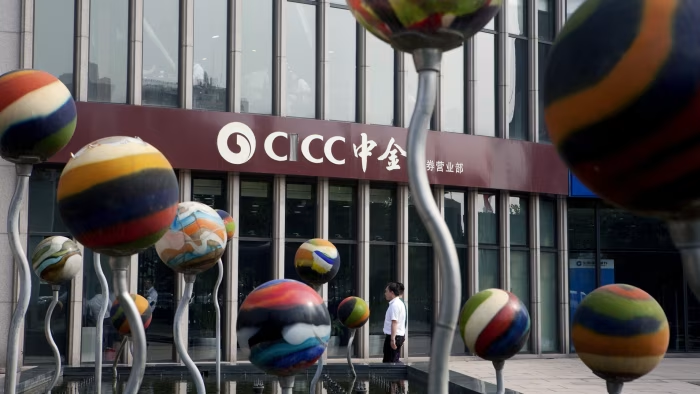
    China International Capital Corporation (CICC), a prominent investment bank in the country, has said it will acquire two smaller brokerages as part of a government push to create financial giants with global scale.

    Under the deal, the state-owned CICC was set to absorb Dongxing Securities and Cinda Securities through a share-swap transaction, all three companies said in stock exchange statements filed late on Wednesday.

    The three have combined total assets of just over Rmb1tn ($140bn) as of the end of September, according to exchange data compiled by Financial Times, making the proposed merged entity the fourth-largest brokerage in the country.

    CICC said the merger would significantly strengthen its net capital base, currently at Rmb46bn, and give the combined entity a “sharp focus on its core mission of serving national strategies and the real economy”.

    The pricing of the swap for the CICC merger has not been disclosed.

    China’s vast financial sector has seen a wave of consolidation as economic growth slows and Beijing works to cultivate bigger financial players closer to the scale of the likes of JPMorgan and Morgan Stanley.

    “The consolidation drive is fundamentally about constraining risk,” said Han Shen Lin, a professor at NYU Shanghai, who added assets and institutions were being pulled under “tighter state umbrellas”.

    CICC, which was founded in 1995, was originally formed as a joint venture mainly backed by China Construction Bank and Morgan Stanley, which fully exited in 2010.

    President Xi Jinping in 2023 chaired a Central Financial Work Conference, a high-level party meeting, which emphasised the need to cultivate “first-class investment banks and institutions” and to “support large state-owned financial institutions in becoming stronger and better”.

    In a statement, CICC referenced the “guiding principles” of the Central Financial Work Conference.

    Last year, Guotai Junan Securities and Haitong Securities also merged to create a brokerage with around $230bn in assets, the largest in China at the time.

    Central Huijin, an arm of China’s sovereign wealth fund, has direct or indirect stakes in all three players in the CICC deal. Central Huijin is also a major player in the country’s so-called national team of stock market investors.

    Leading state-owned financial firms such as CICC have cut pay, including for top executives, amid a government campaign to rein in bankers’ wages and subdued deal activity.

    China’s stock market has rebounded in the past year, following a series of policy measures last September, including support for share buybacks.

    The CSI 300 index of Shanghai- and Shenzhen-listed stocks is up 20 per cent since January.

    With contributions from Cheng Leng in Beijing

    Continue Reading

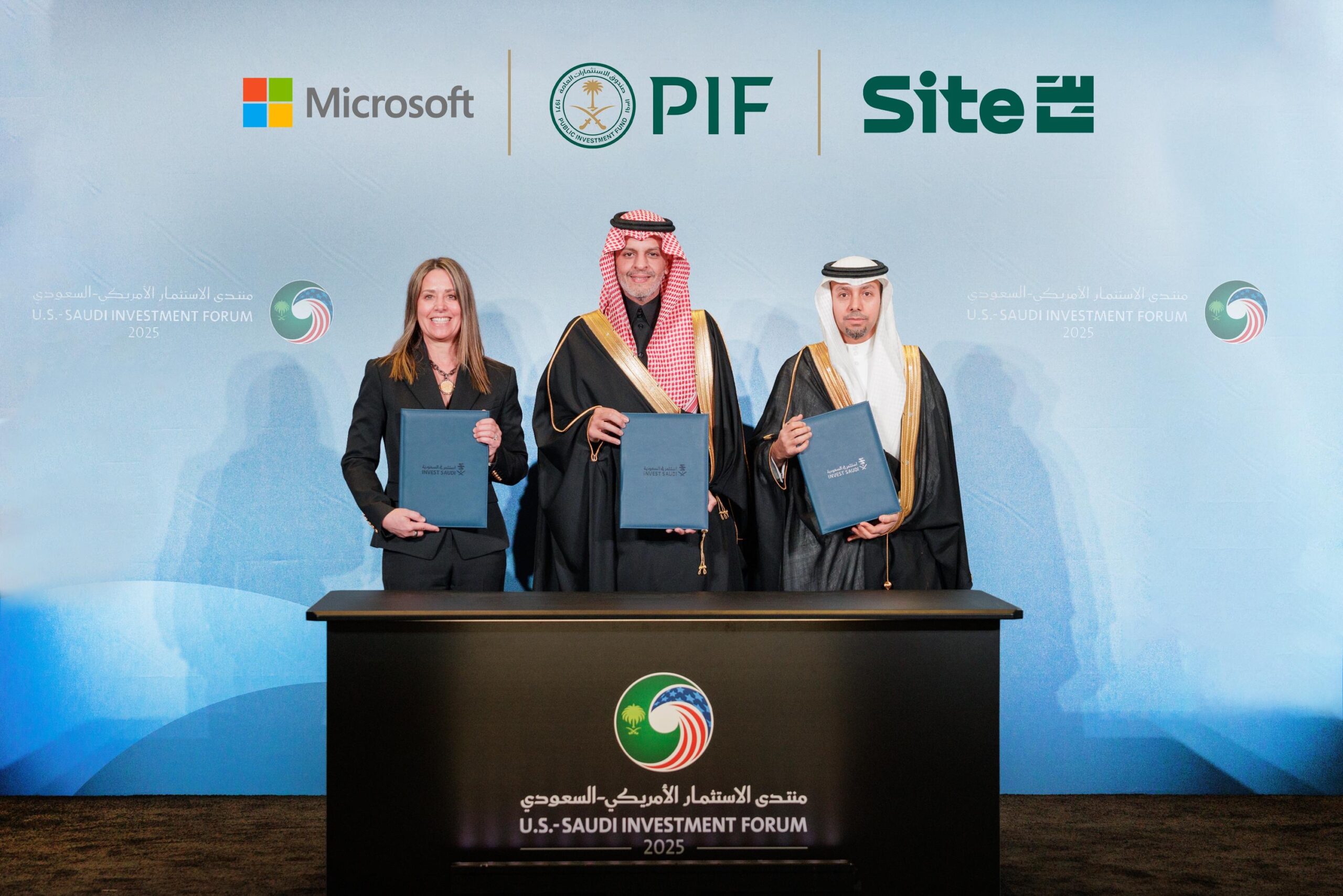
  • PIF, SITE and Microsoft sign MoU to explore sovereign‑cloud services in Saudi Arabia

    PIF, SITE and Microsoft sign MoU to explore sovereign‑cloud services in Saudi Arabia

    PIF, Saudi Information Technology Company (SITE), and Microsoft today announced the signing of a memorandum of understanding (MoU) to explore the delivery of Microsoft’s sovereign-cloud services in Saudi Arabia, seeking to enhance the security, confidentiality and sovereignty of data within Saudi Arabia and to access cutting-edge cloud and AI technologies.

    Microsoft brings extensive experience in delivering sovereign-cloud capabilities that enable governments and highly regulated industries across the world to adopt cloud while maintaining national controls over data, in line with the laws of specific regions and countries.

    Under the MoU, Microsoft will work alongside PIF and SITE to assess how its sovereign-cloud model can further support Saudi Arabia’s security, compliance and data residency priorities, while providing access to advanced cloud and AI technologies. The MoU also aims to strengthen collaboration in areas such as joint research, development and innovation, and knowledge transfer.

    PIF’s strategy for the information and communication technology sector contributes to positioning Saudi Arabia as a globally competitive hub by innovating and building capacity, in its mission to enable the development and diversification of the domestic economy.

    The non-binding MoU is subject to satisfying certain necessary requirements and regulatory approvals, as applicable.

    Continue Reading

  • Dubai Air Navigation Services, Emirates Airline, and Thales sign Collaborative Research Agreement to advance flight efficiency through innovative solutions – Thales Group

    1. Dubai Air Navigation Services, Emirates Airline, and Thales sign Collaborative Research Agreement to advance flight efficiency through innovative solutions  Thales Group
    2. Tawazun Council for Defence Enablement and Thales collaborated to Advance Air Traffic Flow Management Innovation in the UAE  ATC Network
    3. Thales partners with Tawazun to set up optronic MRO facilities in UAE  Media India Group

    Continue Reading

  • Stocks soar as Nvidia earnings ease AI valuation fears, jobs data in view – Reuters

    1. Stocks soar as Nvidia earnings ease AI valuation fears, jobs data in view  Reuters
    2. Stocks making the biggest moves after hours: Nvidia, Palo Alto Networks, Oddity Tech, AMD and more  CNBC
    3. CoreWeave, Core Scientific ‘Pick-and-Shovel’ Rally After Nvidia Earnings  Benzinga
    4. Tech shares turbocharged by Nvidia’s stellar earnings  TradingView
    5. After-hours movers: NVIDIA, CoreWeave, Palo Alto Networks, and more  StreetInsider

    Continue Reading

  • Starbucks Coffee Company and Tata Starbucks re-affirm coffee leadership and announce a Farmer Support Partnership (FSP) to strengthen the coffee value chain from Bean to Cup – Starbucks

    Starbucks Coffee Company and Tata Starbucks re-affirm coffee leadership and announce a Farmer Support Partnership (FSP) to strengthen the coffee value chain from Bean to Cup – Starbucks

    1. Starbucks Coffee Company and Tata Starbucks re-affirm coffee leadership and announce a Farmer Support Partnership (FSP) to strengthen the coffee value chain from Bean to Cup  Starbucks
    2. Starbucks CEO: India key part of growth plan  The Times of India
    3. Starbucks to keep India plans brewing despite competition  The Economic Times
    4. Starbucks CEO Brian Niccol says India is one of its fastest-growing markets, will double down on growth plans  CNBC TV18
    5. Starbucks marks its 500th store with a nationwide OOH celebration  Media4Growth

    Continue Reading

  • Maersk Launches Flagship Logistics Centre in Shanghai Lin-gang

    Maersk Launches Flagship Logistics Centre in Shanghai Lin-gang

    Shanghai, China – A.P. Moller – Maersk (Maersk) celebrates the grand opening of its flagship logistics centre in Shanghai’s Lin-gang area, marking one of the company’s largest warehousing investments globally. Built with an investment of over USD 140 million, the state-of-the-art facility spans 113,000 square meters in size and offers 147,000 square meters of storage space.

    The Lin-gang Flagship Logistics Centre offers a full suite of fulfilment services and is designed to serve customers in China, across Asia-Pacific, and beyond. As part of Maersk’s integrated logistics network, the centre aims to empower businesses with greater efficiency, flexibility, and resilience in trade operations.


    Our new state-of-the-art logistics centre in Lin-gang is another milestone in the implementation of Maersk’s integrated logistics strategy in the Chinese market. China is not only the world’s largest exporter but also a key consumer market. This facility significantly enhances our omnichannel fulfilment capabilities and further strengthens the connection between China and international markets. It’s another testament to our commitment towards continuously evolving our logistics solutions, helping customers overcome trade challenges and unlock new growth opportunities.

    Vincent Clerc

    CEO at Maersk


    Zhao Yihuai, Vice Chairman of Lin-gang Special Area Administration, Jens Alsbirk, Consul General of the Consulate General of the Kingdom of Denmark in Shanghai, Zhou Ying, Deputy Director General of the Shanghai Municipal Transportation Commission, along with representatives from the Shanghai Municipal Development and Reform Commission, Yangshan Customs, the Market Regulation Bureau, and the Lingang Tax Bureau, joined Maersk’s customers, executives, and employees at the opening ceremony.

    A Stronger Integrated Logistics Network

    Benefiting from Shanghai’s strength as a global shipping hub with well-developed transportation infrastructure, the Lin-gang Logistics Centre is well-positioned to serve both domestic and international customers. It is only about 40km away from the Shanghai Yangshan Port, one of Maersk’s most strategic nodes for global shipping.

    The logistics centre integrates seamlessly with Maersk’s ocean, air, and land services, creating a network whose scale-driven synergy enables Maersk to deliver more efficient and cost-effective solutions.

    Solutions for International Omnichannel Fulfilment

    The logistics centre offers four core capabilities: export distribution centre, import distribution centre, regional/global hub, and cross-border e-commerce. It also provides value-added services such as temperature-controlled storage, and customised solutions to meet diverse customer needs.

    With Maersk’s in-house customs expertise and certifications such as Authorised Economic Operator (AEO), the facility delivers fast, cost-efficient customs clearance for international shipments. It also offers the flexibility to handle both bonded and non-bonded goods under one roof, enabling storage and conversion without additional customs processing.


    China’s international trade is evolving from an export-driven model to a more diversified approach encompassing export, import, and transshipment. Increasingly, brands are seeking unified inventory management to meet a wide range of trade demands. With the omnichannel fulfilment capabilities of this new warehouse, customers can now achieve this goal and efficiently meet both B2B and B2C requirements.

    Silvia Ding

    Managing Director of Maersk Greater China


    Future-Ready Logistics: Automated, Intelligent, and Low-GHG-Emission

    The facility comprises four high-standard ramp warehouses and one fully automated intelligent warehouse, equipped with cutting-edge systems including automated storage and retrieval systems (ASRS), stacker cranes, rail-guided vehicles, and autonomous mobile robots.

    Powered by advanced warehouse management software and automated systems, the facility enables real-time inventory control, dynamic task scheduling, and data-driven decision-making. These innovations reduce costs, improve accuracy, and boost operational efficiency.

    The logistics centre also incorporates features such as solar panels expected to supply over 70% of its electricity and fully electric equipment, as well as rainwater harvesting and resource recycling. The facility has applied for LEED Gold certification, a globally recognised standard awarded to buildings that meet high benchmarks for energy efficiency, water conservation, and sustainable design.

    About Maersk

    A.P. Moller – Maersk is an integrated logistics company working to connect and simplify its customers’ supply chains. As a global leader in logistics services, the company operates in more than 130 countries and employs around 100,000 people. Maersk is aiming to reach net zero GHG emissions by 2040 across the entire business with new technologies, new vessels, and reduced GHG emissions fuels*.

    *Maersk defines “reduced GHG emissions fuels” as fuels with at least 65% reductions in GHG emissions on a lifecycle basis compared to fossil of 94 g CO2e/MJ.


    For further information, please contact:

    Continue Reading

  • Tipping point or bubble? Nvidia CEO sees AI transformation while skeptics count the risks – Reuters

    1. Tipping point or bubble? Nvidia CEO sees AI transformation while skeptics count the risks  Reuters
    2. Nvidia’s Jensen Huang Says Customers Will Determine Financing of AI Buildout  The Wall Street Journal
    3. ‘Slow down, hyperscalers’: For the first time in 20 years, investors say companies are overinvesting, Bank of America says  CNBC
    4. The World Craves A.I. Chips  The New York Times
    5. Nvidia, Microsoft, and Google Just Changed the AI Market  Nasdaq

    Continue Reading

  • Exclusive: Trump’s semiconductor tariff plan likely delayed, officials say

    Exclusive: Trump’s semiconductor tariff plan likely delayed, officials say

    • Officials see potential delay in semiconductor tariffs
    • White House says Trump is committed to boosting domestic manufacturing
    • Trump has walked back some tariffs and wants to maintain China truce
    • China calls for ‘mutually beneficial cooperation’ on chips
    WASHINGTON, Nov 19 (Reuters) – U.S. officials are privately saying that they might not levy long-promised semiconductor tariffs soon, potentially delaying a centerpiece of President Donald Trump’s economic agenda.

    Officials relayed these messages over the last several days to stakeholders in government and private industry, according to two people with direct knowledge of the matter and a third person briefed on the conversations. A fourth person following the matter also said the administration was taking a more cautious approach to avoid provoking China. The discussions have not been previously reported.

    Sign up here.

    Trump aides are taking their time on chip tariffs as they work to avoid a rupture with Beijing over trade issues, which would risk a return to a tit-for-tat trade war and disruption of the flow of critical rare earth minerals, according to two of the people.

    Those people cautioned that no decision is final until the administration signs off on it, and also said that triple-digit tariffs could be imposed at any time. The sources spoke anonymously in order to recount private conversations about policy deliberations.

    Trump said in August that the United States would impose a tariff of about 100% on imports of semiconductors but exempted companies that are manufacturing in the U.S. or have committed to do so. Privately, over the last several months, Washington officials had told people that the administration would roll out the tariffs soon. That guidance has now changed as the administration has continued to debate the timing and other details.

    A White House spokesman and a Commerce Department official, asked about the discussions, disputed that the administration had adjusted its posture.

    “The Trump Administration remains committed to using every lever of executive power to reshore the manufacturing that’s critical to our national and economic security,” said the spokesman, Kush Desai. “Any anonymously-sourced reports suggesting otherwise are simply Fake News.”

    The Commerce official said, “There is no change in department policy regarding semiconductor 232 tariffs.” Neither specified how soon tariffs that have been threatened since the early days of the Trump administration would be finalized, nor did they offer any other details.

    The Chinese embassy in Washington said cooperation between the two countries on semiconductors is the best approach. “We welcome the U.S. to work with China to implement the consensus reached at the Busan summit between the two heads of state, create a favorable environment for mutually beneficial cooperation between companies from both sides, and jointly maintain the stability of the global semiconductor supply chain,” said the spokesperson, Liu Pengyu.

    TRUMP FACES PRESSURE ON CONSUMER PRICES

    Any decision by the administration to slow down or narrow the scope of chip tariffs would come at a sensitive time for Trump. The Republican president is facing growing consumer angst over prices heading into the holiday shopping season.

    Hiking taxes on imported semiconductors could raise consumer costs on the gadgets they power, from refrigerators to smartphones. Reuters reported in September that the Trump administration was looking at a plan that would also tax foreign electronic devices based on the number of chips in each one.

    Trump rolled back tariffs on more than 200 food products last week, but he has also said that his import taxes have made no significant contribution to inflation. The U.S. government shutdown has delayed recent data on consumer prices, but inflation has been running above the Federal Reserve’s target since former President Joe Biden held office.
    Trump is also trying to maintain a delicate trade truce with China, a top manufacturer of both semiconductors and devices powered by them. Last month, Trump met Chinese President Xi Jinping in Busan, South Korea, and reached an agreement to set aside their trade issues, for now.

    During those conversations in Korea, U.S. officials nonetheless warned their Chinese counterparts that they could take national security steps in the coming months that Beijing might find objectionable, according to two people familiar with those conversations. Trump has bet that tariffs can revive domestic factory jobs lost over decades to countries including China.

    In April, the Trump administration announced investigations into imports of pharmaceuticals and semiconductors as part of a bid to impose tariffs on them, arguing that extensive reliance on their foreign production poses a national security threat.

    Reporting by Laurie Chen in Beijing, Trevor Hunnicutt in Washington and Jeffrey Dastin in San Francisco; Additional reporting by Alexandra Alper in Washington; Editing by Chris Sanders, Matthew Lewis and Jacqueline Wong

    Our Standards: The Thomson Reuters Trust Principles., opens new tab

    Continue Reading