Category: 3. Business

  • Nearly 70 schools to close in Australia over fears of asbestos in play sand

    Nearly 70 schools to close in Australia over fears of asbestos in play sand

    A total of 69 schools in the Australian Capital Territory (ACT) will be forced to close on Monday after coloured play sand was recalled due to asbestos risk, the government has said.

    A recall for the products, which were found to have traces of asbestos in some samples, was issued by Kmart and Target on Saturday.

    The Australian Competition & Consumer Commission (ACCC) said there was a “low” risk that the asbestos could become airborne or fine enough for inhalation.

    Inspections of the schools are under way and could “take days”, said ACT Education Minister Yvette Berry in a post on Facebook. She added that air testing so far has come back “negative to airborne asbestos” from all schools.

    State Emergency Service volunteers and school staff have been walking through buildings and “mapping all coloured sand they see” over the weekend, she added.

    The ACT government said that people who have been in contact with the product do not require a clinical assessment.

    Berry said despite the minimal risk, the government is “required to eliminate risk as much as reasonably practicable”.

    Up to 23 schools will remain open as they either have “small stocks” of the sand or do not have any of the product.

    The products set out in the recall notice are labelled as Active Sandtub 14 piece Sand Castle Building Set, and Blue, Green and Pink Magic Sand.

    Asbestos, once widely used in building materials, can release toxic fibres into the air if disturbed or processed that can cling to the lungs and – over decades – cause cancer.

    Importing or exporting asbestos or goods containing asbestos is prohibited under Australian law.

    Continue Reading

  • Business secretary backs shift to electric arc furnaces at British Steel plant | British Steel

    Business secretary backs shift to electric arc furnaces at British Steel plant | British Steel

    The business secretary, Peter Kyle, has backed a shift to cleaner electric arc technology at the state-controlled British Steel plant, raising questions about the future of the UK’s last remaining blast furnaces.

    Kyle said the government was “keen to see that transition happen”, as he works on a new steel strategy, which is expected to be published in December.

    A shift to electric arc furnaces at Scunthorpe, Lincolnshire, would secure the future of steel production at the plant – under emergency state control since April – as the UK tries to meet its target of net zero carbon emissions.

    However, it would also raise doubts about the fate of blast furnaces that employ thousands of people, and the UK government’s previous pledges to preserve Britain’s primary steelmaking ability, producing steel from iron ore.

    When the government recalled parliament in April to take control of British Steel, it feared the site’s Chinese owner, Jingye Steel, was planning to close it permanently, with the loss of as many as 2,700 jobs. Ministers have not yet outlined plans for Scunthorpe’s longer-term future.

    The government set aside £2.5bn for the steel industry in its election manifesto last year, but Kyle confirmed that it has already spent hundreds of millions of pounds of that money to keep operations going at British Steel and another manufacturer, Liberty Steel, which fell into insolvency in August.

    Kyle said the government had been forced to change plans as the global steel industry faced a slew of crises.

    “Britain is operating in a highly complex global environment, which includes, of course, the impact of tariffs, but also the impact of oversupply,” he said. Donald Trump has caused chaos with trade levies, while a huge amount of steel has continued to flood global markets from China as it looks for other markets.

    Using up the money set aside for the steel industry would probably mean less money for capital investment. Nevertheless, asked if he thought there would be electric arc furnaces in Scunthorpe, Kyle responded: “I do.” He said he would provide more details in the government’s steel strategy.

    Steelworkers will be cautious of the plans after the experience of Tata Steel, which last year cut 2,500 jobs at Port Talbot, in south Wales, as it switched to electric arc furnaces. The plan would also require a deal with Jingye, still the legal owner, to walk away.

    A move away from blast furnaces would also raise questions over the UK’s ability to make virgin steel. Jonathan Reynolds, Kyle’s predecessor as business secretary, repeatedly said the government was taking control of the Scunthorpe site to preserve “primary steelmaking”, the ability to produce steel from iron ore.

    Alasdair McDiarmid, the assistant general secretary of Community, a union representing steelworkers, said he welcomed “the government’s firm commitment to a just transition”.

    skip past newsletter promotion

    However, he added that it would be important to “maintain primary steelmaking capacity here in the UK”.

    The UK has relied on blast furnaces to produce primary steel, but they generally vent huge amounts of carbon dioxide into the atmosphere. Electric arc furnaces, by contrast, use electricity to melt down scrap steel, not iron ore.

    The government is considering investing in a separate facility to turn iron ore into direct reduced iron (DRI), which is compatible with electric arc furnaces. That DRI could then be produced using clean hydrogen, preserving primary steelmaking ability with much lower carbon emissions. However, industry sources have cast doubt on the financial viability of such an arrangement.

    Frank Aaskov, the director of energy and climate change policy at UK Steel, a lobby group, said it was “encouraging to see the secretary of state set out a clear future vision for the UK steel industry and British Steel”.

    He said the steel industry needs “a stronger business environment through lower power prices and robust trade policies”.

    Kyle spoke to the Guardian from Cardiff, where he was meeting small businesses to hear about productivity improvements using digital technology. He said the government wanted to play a “greater role” in coordinating AI training for companies.

    Continue Reading

  • Samsung, Hyundai announce domestic investments after US-South Korea trade deal – Reuters

    1. Samsung, Hyundai announce domestic investments after US-South Korea trade deal  Reuters
    2. Hyundai Motor Group to invest $86 bln in South Korea in next 5 years  TradingView
    3. Kia : Hyundai Motor Group to Invest KRW 125.2 Trillion in Korea Over Next Five Years to 2030  MarketScreener
    4. Hyundai Motor Announces $86 Billion Investment in South Korea After US Trade Deal  US News Money
    5. Hyundai to Lift US Investment to $26 Billion After Lee Visit  The Business Download |

    Continue Reading

  • Hong Kong economy to retain growth momentum in 2026

    Hong Kong economy to retain growth momentum in 2026

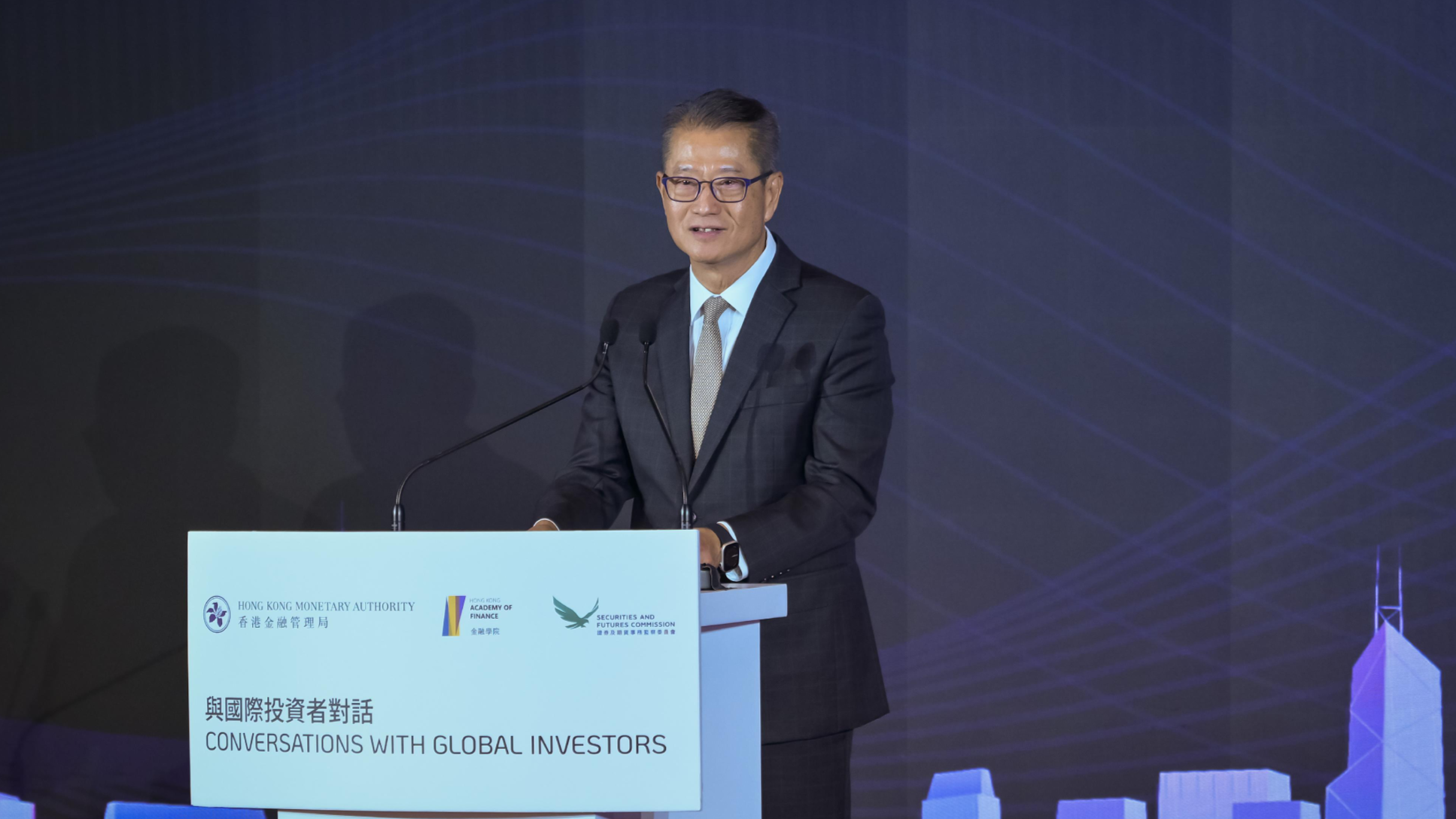
    Hong Kong Financial Secretary Paul Chan Mo-po speaks at the Global Financial Leaders’ Investment Summit — Conversations with Global Investors in Hong Kong, Nov 5, 2025. (PHOTO / HKSAR GOVT)

    Hong Kong’s economy is expected to maintain its expansion into next year, underpinned by resilient exports, firm investment sentiment and recovering consumer demand, Financial Secretary Paul Chan Mo-po said on Sunday.

    Writing in his weekly blog, Chan said the city’s exports in 2026 will be supported by a moderately growing global economy, as most international institutions anticipate, and by a recent easing in trade tensions. Locally, improving consumer and business sentiment will sustain spending and investment.

    The Hong Kong Special Administrative Region government will seize emerging opportunities while staying vigilant to external risks, such as uncertainty surrounding the pace of US interest rate cuts and potential shifts in global trade, the finance chief said.

    The SAR’s gross domestic product has been expanding for 11 consecutive quarters on a year-on-year basis. In the third quarter of this year, the GDP grew by 3.8 percent in real terms — the strongest in more than 18 months.

    ALSO READ: HKSAR to revise GDP forecast upward as economic performance improves

    With robust performance in exports, consumption and investment, the SAR government has revised up its full-year growth forecast for 2025 to 3.2 percent from the previous range of 2 to 3 percent.

    Merchandise exports in the first three quarters surged 11.3 percent in real terms, powered by shipments to the Chinese mainland and the Association of Southeast Asian Nations, which jumped 14.6 percent and 27.1 percent in volume terms, respectively.

    Moreover, Chan noted, the continued rise in fixed investment and local consumption has provided a solid underpinning for economic growth, reinforced by sustained capital inflows, a buoyant stock market and a stabilizing property sector.

    The Hang Seng Index — the local stock market benchmark — has risen more than 30 percent so far this year. Average daily turnover in the first 10 months reached HK$258 billion ($33.17 billion) — nearly double that of last year’s full-year average. Over the same period, 81 new listings had raised around HK$216 billion — almost triple the amount a year earlier. This has placed Hong Kong as the world’s top initial public offering destination.

    ALSO READ: Economist: HK seen as global growth epicenter

    Hong Kong’s status as a financial hub continues to draw global wealth. Since 2022, more than 200 family offices have established or expanded operations in the city with the help of investment promotion agency InvestHK. By the end of last year, assets under management had exceeded HK$35 trillion, up 13 percent year-on-year. These strong factors have helped lift financial services exports by 11 percent this year, contributing over a tenth of GDP growth.

    The property market has also turned the corner amid a strong local economy and US interest-rate cuts from September, Chan said.

    Sales activities of non-residential properties have picked up from a year ago, and vacancy rates in major shopping districts have fallen since early this year although prices and rents have remained soft.

    Riding high on Hong Kong’s recovery momentum, more companies have stepped up investment in offices, some buying multiple floors or entire buildings, and overseas financial institutions increasing their leases of Grade-A space.

    READ MORE: HK to secure sustainable economic growth impetus

    Tourism has rebounded steadily, with visitor arrivals in the first 10 months climbing 12 percent year-on-year to 41 million, benefiting the catering and retail sectors.

    With the economy maintaining strong momentum and market sentiment improving, Chan said, the latest unemployment and underemployment figures to be released on Tuesday are expected to show continued stability.


    irisli@chinadailyhk.com

    Continue Reading

  • Hyundai Motor Group to Invest KRW 125.2 Trillion in Korea Over Next Five Years to 2030

    Hyundai Motor Group to Invest KRW 125.2 Trillion in Korea Over Next Five Years to 2030

    SEOUL, November 16, 2025 – Hyundai Motor Group (the Group) announced today it will invest KRW 125.2 trillion in South Korea over the five-year period from 2026 to the end of 2030, representing the company’s largest-ever domestic investment commitment.

    The investment plan significantly expands on the Group’s previous commitment, exceeding the KRW 89.1 trillion investment in Korea from 2021 to 2025 by KRW 36.1 trillion. The new five-year commitment marks an annual average investment of KRW 25.04 trillion over this future period, and a more than 40 percent increase from the annual average over the past five years of KRW 17.8 trillion.

    This significant domestic investment strategy highlights the Group’s agility in actively responding to the rapidly changing global business environment, positioning the Group effectively for long-term growth. The plan aims to strengthen South Korea’s status as a global mobility innovation hub as well as stimulate broader economic growth by advancing the AI/Robotics industry and progressing the green energy ecosystem.

    The KRW 125.2 trillion investment will be allocated across three key areas:

    • •  KRW 50.5 trillion in future business investment across AI, Software Defined Vehicles (SDVs), electrification, robotics, and hydrogen
    • •  KRW 38.5 trillion in research and development to develop new products and core technologies
    • •  KRW 36.2 trillion in capital investment to optimize production facilities and construct the Group’s Global Business Center (GBC)

    A significant portion of the investment will focus on new businesses based on advanced AI technologies, such as robotics, contributing to the development of Korea’s AI/Robotics innovation ecosystem.

    The Group is also expected to play a key role in promoting balanced regional development through the establishment of EV-dedicated facilities and the upgrading of production lines at regional manufacturing facilities for new model launches, as well as the construction of a PEM electrolyzer plant in the southwestern region.

    Through this mid-to long-term investment, Hyundai Motor Group will support Korea in further strengthening its position as a key global hub for mobility production. The Group plans to diversify export destinations for vehicles produced at domestic plants and significantly expand exports by developing Korea’s EV-dedicated facilities into global export bases.

    The Group aims export 2.47 million units by 2030, up from 2.18 million units in 2024, and expand EV exports – including EVs, PHEVs, HEVs, and FCEVs – from 690,000 units to 1.76 million units over the same period.

    Focused Investment in Korea’s AI/Robotics Industry and Green Energy Ecosystem

    To drive a paradigm shift in the domestic industrial landscape, the Group’s investments will nurture the AI/Robotics industry. This will focus on building AI infrastructure and expanding advanced ecosystems, such as AI-powered robotics.

    Hyundai Motor Group recently announced its strengthened collaboration with NVIDIA and is actively enhancing its AI capabilities across in-vehicle AI, autonomous driving, smart factories, and robotics.

    To process the massive amount of data required for AI model training and operations, the Group is reviewing the establishment of a high-power AI data center. The data center is planned to feature petabyte-scale storage capacity for AI training data generated by physical AI robots and autonomous vehicles.

    The Group is also pushing forward the establishment of the ‘Hyundai Motor Group Physical AI Application Center’, which will play a central role in advancing the physical AI ecosystem. This center will verify the completeness and safety of robots trained on large-scale behavioral data through AI and is expected to serve as an innovation testbed to ensure reliability before deployment in real-world industrial settings

    Based on customer-tailored robotics technologies developed through physical AI, Hyundai Motor Group will build a robotics manufacturing and foundry facility. This will enable the Group to produce complete robotics systems in-house and offer foundry services for SMEs lacking manufacturing expertise.

    In parallel, the Group will actively support R&D in robotics components by existing automotive parts suppliers. By accelerating the entry of automotive parts suppliers into the robotics sector, these suppliers are expected to contribute to the localization of core components and the export of high-value-added products, further accelerating Korea’s industrial transformation.

    The Group is also planning investments in the development of water electrolyzers for green hydrogen production to enhance the green energy ecosystem.

    Hyundai Motor Group plans to build a 1GW PEM electrolysis plant in the southwest, capitalizing on the readily available supply of renewable energy, along with nearby hydrogen shipment centers and refueling stations.

    To accelerate Korea’s transition to a hydrogen economy, the Group will also establish facilities for manufacturing PEM electrolyzers and hydrogen fuel cell components, positioning these operations as a global export business.

    Hyundai Motor Group also plans to actively consider investments – through consultation with the Korean government and local authorities – to establish a hydrogen AI Smart City that integrates the Group’s core technologies, including AI, hydrogen energy, and V2X.

    Through expanded investment across various regions, Hyundai Motor Group aims to stimulate local economic growth and lay the foundation for the sustainable growth of Korea and its mobility industry.

    Currently, Hyundai Motor Group operates vehicle and parts manufacturing plants in all key geographical regions across Korea. Over the next five years, the company will continue to invest in production line optimization to accommodate the launch of new vehicle models.

    New plants are also under construction. Hyundai’s dedicated EV plant in Ulsan will be completed next year, and a new hydrogen fuel cell production facility is scheduled to begin operations in 2027. Kia has completed a new dedicated EV plant for PBVs in Hwaseong, Gyeonggi Province, and is preparing to commence operations.

    Hyundai Steel Company is building an LNG power plant at its Dangjin steelworks, with KRW billions also being invested in blast furnace upgrades. Hyundai Engineering Co. Ltd. is expanding nationwide infrastructure, such as EV charging stations, to address underserved areas.

    Investment Strategy and Timeline

    Hyundai Motor Group’s investment plans by sector from 2026 to 2030 include: KRW 50.5 trillion in future business investment, KRW 38.5 trillion in R&D investments, and KRW 36.2 trillion in capital investments.


    Future business investment will be allocated in key technological areas, such as AI-powered autonomous driving, AI-driven autonomous manufacturing, AI robotics, electrification and SDVs, and hydrogen energy to solidify the Group’s foundation for sustainable growth. Key areas of future business investment include:

    • •  AI autonomous driving
      o AI-powered autonomous driving technology enables a vehicle to perceive its surroundings using sensor data and make real-time driving decisions independently through AI
      o The Group is developing this technology through its end-to-end deep learning model, Atria AI, and is actively collaborating with 42dot and Motional to bring this vision to life
      o In parallel, the Group is focusing on the development of AI-driven autonomous manufacturing by integrating AI with robotics and digital twin technologies
      o Enable AI to independently operate and optimize production processes
    • •  Software Defined Vehicle Development
      o Recently announced ‘Pleos’ mobility software brand
      o Plans to unveil an SDV Pace Car in the second half of 2026, decoupling vehicle hardware and software
    • •  Powertrain and Lineup Diversification
      o Continue to strengthen electrification capabilities
      o Introduce Extended Range Electrified Vehicles (EREVs) with over 900 km driving range
    • •  Battery Technology Internalization
      o Strengthen investments to improve battery safety and marketability
      o Focus on internalizing design and development capabilities for various battery types
    • •  Hydrogen Energy Business Expansion
      o Enhance the development of next-generation fuel cell systems, hydrogen buses, and trucks
      o Aim to solidify global leadership in hydrogen fuel cell vehicles
      o Build a hydrogen ecosystem as well as a full end-to-end hydrogen value chain spanning production, supply, storage, and utilization with various Hyundai Motor Group affiliates


    R&D investment will focus on strengthening the Group’s competitiveness in the mobility industry and developing new products and core technologies to flexibly respond to global market conditions.

    • •  Develop new products and core technologies
      o Focus on the development of hybrid engines for rear-wheel drive applications
      o Pursue regional strategic models and technology strategies to meet the needs and environments of key global markets


    Capital investment will be directed to enhance production optimization in Korea, innovation in manufacturing technology, and the expansion of customer service hubs.

    • •  Hyundai Motor Group’s Global Business Complex (GBC)
      o Construction will begin after completing the Seoul city permit process
      o GBC will be a global innovation hub as well as a landmark for Korea and will create significant economic impact during and after construction

    Hyundai Motor Group expects the large-scale domestic investment to advance related industries, contribute to strengthening Korea’s position as a global mobility innovation hub, and further energize the national economy.

    Continue Reading

  • Alibaba revamps Qwen chatbot as some see Silicon Valley ‘panic’ over firm’s AI progress

    Alibaba revamps Qwen chatbot as some see Silicon Valley ‘panic’ over firm’s AI progress

    Alibaba Group Holding has begun a revamp of its artificial intelligence chatbot in a move to match OpenAI’s ChatGPT, according to app store information and media reports, as some observers see “panic” in Silicon Valley over the Chinese tech giant’s rapid AI progress.

    The new chatbot app, Qwen, an upgraded and renamed version of the previous app, Tongyi, became available on Android and Apple app stores on Friday.

    Alibaba dubbed the updated app the “most powerful official AI assistant for its models” and “the primary entry point for experiencing the latest and most powerful Qwen model”, in app-store descriptions. Alibaba owns the South China Morning Post.

    The company also planned to add agentic-AI features to the app to boost shopping on platforms including the main Taobao marketplace, Bloomberg reported.

    Alibaba did not immediately reply to a request for comment.

    The tech giant, based in Hangzhou, the capital of eastern China’s Zhejiang province, has been pushing adoption and commercialisation of the Qwen series of AI models over the past two years amid the global AI frenzy kicked off by OpenAI.

    Continue Reading

  • Does gravity cause ageing? Deepinder Goyal’s claim triggers online jokes about ‘upside-down living’

    Does gravity cause ageing? Deepinder Goyal’s claim triggers online jokes about ‘upside-down living’

    Eternal founder Deepinder Goyal has shared a series of posts on X outlining what he calls a “scientific yet unconventional” hypothesis suggesting that gravity may play a direct role in human ageing. Introducing the idea, Goyal wrote, “I’m not sharing this as the CEO of Eternal, but as a fellow human, curious enough to follow a strange thread… Newton gave us a word for it. Einstein said it bends spacetime. I am saying gravity shortens lifespan.”

    Connecting posture, blood flow and the ageing process

    In a follow-up post, Goyal expanded on his reasoning, noting that he was drawing links between three established ideas: slight reductions in brain blood flow due to upright posture, the sensitivity of hypothalamus and brainstem neurons to even small drops in circulation, and the role these regions play in regulating ageing.

    “The new part is connecting these 3 known facts,” he wrote, describing the theory as a single, testable mechanism for ageing. Goyal added that scientific scrutiny had strengthened his belief that the concept connects biology, physics and evolution.

    “Countering gravity without escaping it”

    Goyal argued that the solution is not to eliminate gravity but to mitigate its effects. “We don’t have to escape gravity to counteract the negative effects it has on us… We just have to learn how to live longer and better at one G,” he said.

    He emphasised the need to pay greater attention to Brain Flow, calling it an important but “overlooked” biomarker of ageing.

    Inversions as a possible intervention

    Pointing to early findings, Goyal highlighted the potential benefits of inversion practices. “Inversions are already popular for lymphatic fluid drainage. We found that inversions are also the most effective way to counteract the negative effects of gravity on our brains,” he wrote.

    According to Goyal, six weeks of using inversion tables for more than ten minutes a day led to a “baseline increase of seven percent” in daily average Brain Flow, which he said could “possibly nullify ten years of loss”. He noted that passive inversions produced stronger results than active ones, but added a disclaimer urging readers to seek medical advice.

    Scientists respond as Goyal calls for empirical testing

    In another post, Goyal said, “Eminent scientists from around the world have shown their support for the Gravity Aging Hypothesis. Some of them even said that it could be groundbreaking for human longevity. But that’s not enough. It’s time for empirical proof. I believe this theory deserves rigorous scientific scrutiny.”

    He noted that Continue Research is now working with researchers to test and challenge the idea, stressing that the intention is not to present gravity as the only cause of ageing but as a potentially fundamental contributor.

    Internet reacts

    The thread has surpassed four million views on X, drawing varied responses as users reacted with surprise, amusement and curiosity to the unconventional proposition.

    One user wrote, “Beating gravitational ageing by lying in bed all day,” while another echoed similar scepticism.

    Continue Reading

  • Surgical Management of a Separated Instrument and Radicular Cyst: A Nine-Month Cone Beam Computed Tomography (CBCT) Follow-up

    Surgical Management of a Separated Instrument and Radicular Cyst: A Nine-Month Cone Beam Computed Tomography (CBCT) Follow-up

    Continue Reading

  • Overcoming energy constraints is key to delivering on Europe’s data centre goals – Analysis

    Overcoming energy constraints is key to delivering on Europe’s data centre goals – Analysis

    When a data centre is built, it means adding a large and concentrated source of demand for power. However, while a data centre typically takes one to two years to build, much longer lead times are needed to expand electricity infrastructure. Data centres also tend to cluster close to urban areas, where the local grids are often strained.

    Today, most installed data centre capacity is concentrated in a few hubs across Europe: Frankfurt, London, Amsterdam, Paris and Dublin (often referred as FLAP-D). Copenhagen and Milan also play increasingly significant roles. In recent years, Dublin and Amsterdam have had to pause new projects, citing the lack of grid availability and the inability to integrate new large power loads. This highlights the challenge of expanding data centre capacity in the face of energy sector constraints.

    The IEA’s analysis of project announcements indicates that new data centre hubs in the region are set to emerge in coming years, including in Spain and Finland. However, most announced capacity in Europe is still planned for existing hubs, potentially increasing the pressure on grids there. At the same time, the average project size is growing significantly. For example, in the Netherlands, the average capacity of planned data centre projects is more than three times larger than the average capacity of data centres in operation today. In Spain, planned projects are seven times larger on average.

    If the project pipeline for data centres in the region is fully realised, it would represent substantial additional power loads in some cases. In large countries like Germany and France, fully implementing the project pipeline would see the installed capacity of data centres climb to represent around 4-5% of peak electricity demand today. In countries like Spain or the Netherlands, it would rise to around 10%. And in smaller electricity markets, the share of data centres in peak demand would be even larger.

    Continue Reading

  • Venture Life Group (LON:VLG) delivers shareholders impressive 27% CAGR over 3 years, surging 10% in the last week alone

    Venture Life Group (LON:VLG) delivers shareholders impressive 27% CAGR over 3 years, surging 10% in the last week alone

    It might seem bad, but the worst that can happen when you buy a stock (without leverage) is that its share price goes to zero. But if you buy shares in a really great company, you can more than double your money. For instance the Venture Life Group plc (LON:VLG) share price is 107% higher than it was three years ago. Most would be happy with that. And in the last week the share price has popped 10%.

    The past week has proven to be lucrative for Venture Life Group investors, so let’s see if fundamentals drove the company’s three-year performance.

    AI is about to change healthcare. These 20 stocks are working on everything from early diagnostics to drug discovery. The best part – they are all under $10bn in marketcap – there is still time to get in early.

    To quote Buffett, ‘Ships will sail around the world but the Flat Earth Society will flourish. There will continue to be wide discrepancies between price and value in the marketplace…’ One way to examine how market sentiment has changed over time is to look at the interaction between a company’s share price and its earnings per share (EPS).

    Over the last three years, Venture Life Group failed to grow earnings per share, which fell 113% (annualized).

    This means it’s unlikely the market is judging the company based on earnings growth. Since the change in EPS doesn’t seem to correlate with the change in share price, it’s worth taking a look at other metrics.

    The revenue drop of 22% is as underwhelming as some politicians. The only thing that’s clear is there is low correlation between Venture Life Group’s share price and its historic fundamental data. Further research may be required!

    The image below shows how earnings and revenue have tracked over time (if you click on the image you can see greater detail).

    AIM:VLG Earnings and Revenue Growth November 16th 2025

    We consider it positive that insiders have made significant purchases in the last year. Having said that, most people consider earnings and revenue growth trends to be a more meaningful guide to the business. So we recommend checking out this free report showing consensus forecasts

    It’s nice to see that Venture Life Group shareholders have received a total shareholder return of 46% over the last year. That certainly beats the loss of about 7% per year over the last half decade. We generally put more weight on the long term performance over the short term, but the recent improvement could hint at a (positive) inflection point within the business. While it is well worth considering the different impacts that market conditions can have on the share price, there are other factors that are even more important. Case in point: We’ve spotted 2 warning signs for Venture Life Group you should be aware of, and 1 of them makes us a bit uncomfortable.

    Venture Life Group is not the only stock insiders are buying. So take a peek at this free list of small cap companies at attractive valuations which insiders have been buying.

    Please note, the market returns quoted in this article reflect the market weighted average returns of stocks that currently trade on British exchanges.

    Have feedback on this article? Concerned about the content? Get in touch with us directly. Alternatively, email editorial-team (at) simplywallst.com.

    This article by Simply Wall St is general in nature. We provide commentary based on historical data and analyst forecasts only using an unbiased methodology and our articles are not intended to be financial advice. It does not constitute a recommendation to buy or sell any stock, and does not take account of your objectives, or your financial situation. We aim to bring you long-term focused analysis driven by fundamental data. Note that our analysis may not factor in the latest price-sensitive company announcements or qualitative material. Simply Wall St has no position in any stocks mentioned.

    Continue Reading