Category: 3. Business

  • ‘We’re proud to be pioneers’: inside Spain’s community energy revolution | Solar power

    ‘We’re proud to be pioneers’: inside Spain’s community energy revolution | Solar power

    It began in the small Catalan town of Taradell as a plan to provide local people with allotments where they could grow their own food.

    Four activists came together with the aim of promoting good environmental practices in local agriculture and business, as well as supplying renewable energy. The project, however, was about much more than growing vegetables.

    The town has a strong tradition of community action, and as the initiative gathered momentum, the activists formed a cooperative, Taradell Sostenible, which now has 111 members and supplies power to more than 100 households. These include some of the area’s most vulnerable citizens, says Eugeni Vila, the coop’s president. “The question was how could people with few resources join the coop when membership costs €100,” says Vila. “We agreed that people designated as poor by the local authority could join for only €25 and thus benefit from the cheap electricity we generate.”

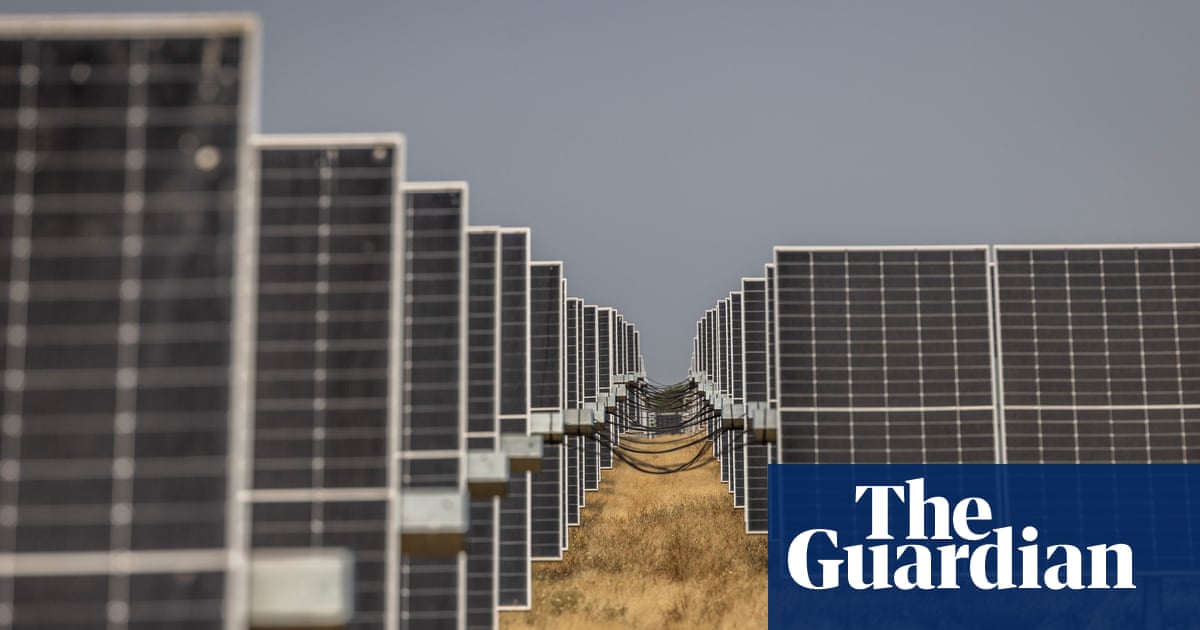
    Taradell Sostenible have installed solar panels on the roofs of a sports centre and a cultural centre to supply electricity to the community, with funding from the government’s Institute for the Diversification and Saving of Energy (IDAE), which is working to expand energy communities across the country.

    “We’re very proud of the fact that IDAE describes us as pioneers,” says Vila. “The EU’s Next Generation funding, which we got through IDAE, helped us to complete these two projects.”

    Once they were up and running, they realised they needed more professional management, so in 2022 they combined forces with other local energy communities.

    Renewable energy is flourishing in Spain, a country with no gas or oil and little coal of its own, but an abundance of sunshine. For years, solar installation was held back by the notorious “sunshine tax” introduced in 2015. Rather than reward individuals for installing solar power, the government taxed them after the big power companies successfully argued that energy self-sufficiency amounted to unfair competition.

    That tax was abolished in 2018, and energy self-sufficiency, mainly through photovoltaic panels, has increased 17-fold, according to the IDAE. The institute is now turning its attention from subsidising solar installations on individual homes to prioritising energy communities such as Taradell, with initial funding of €148.5m (£130m) earmarked for 200 projects.

    The IDAE policy aims to bring cheap electricity to households suffering from pobreza energética (fuel poverty) who cannot afford the upfront cost of installing panels. Photograph: Bloomberg/Getty Images

    Environmentalists have long advocated the spread of energy communities, in which solar panels on the rooftops of government buildings, warehouses and sports facilities supply electricity to nearby homes and business. Until recently, this was limited to a 500 metres radius, but that limit has now been extended to 2,000 metres – and it is taking off across the country, thanks to government support channeled through the IDAE.

    The institute’s policy aims to bring cheap electricity to households suffering from pobreza energética (fuel poverty) who cannot afford the upfront cost of installing solar panels – typically €5,000-6,000 for each household.

    The institute defines fuel poverty as low-income, energy-inefficient households where a high proportion of income is spent on energy supply.

    As well as fostering the development of energy communities, the IDAE encourages the communities to talk to each other, to form a patchwork of autonomous but integrated groups. Taradell has now teamed up with two nearby energy communities in Balenyà and La Tonenca.

    “We’ve developed a formula to help people who are struggling to get by through incorporating them into a network that helps them to improve their situation,” he says. “We’ve taken advantage of the EU Sun4All scheme to develop a system to assess who are the vulnerable families, and not just in terms of fuel poverty.” The Sun4All project, which finished last year, was an EU project supporting solar power projects that helped low income families.

    skip past newsletter promotion

    On the other side of the country, 1,150km (715 miles) away, the island of Ons off Spain’s Atlantic coast is also in line to benefit from the new IDAE policy. Ons, population 92, will soon be able to do away with the generator that has been its only source of electricity and replace it with solar power.

    “With these subsidies, we’re going to install solar panels on the local authority buildings to supply energy to the islanders, most of whom are elderly and vulnerable,” said José Antonio Fernández Bouzas, the head of the Atlantic Islands national park.

    The Galician regional government has already installed solar panels on the nearby Cíes Islands, helping local businesses to dispense with diesel-run generators.

    “These are protected areas and we want them to be self-sufficient in energy,” Bouzas said.

    In addition to supplying cheap and clean electricity, localised energy communities reduce the transportation costs and pollution associated with large solar and wind farms. They also make a lot of sense in a country where 65% of the population live in apartment blocks rather than individual houses.

    This localised, community approach may also make the country’s grid system less vulnerable to events such as the massive blackout on April 28 this year which left all of Spain and Portugal without electricity for most of the day.

    Continue Reading

  • BlackRock moves to take on hedge fund giants

    BlackRock moves to take on hedge fund giants

    Stay informed with free updates

    The world’s largest asset manager BlackRock is revamping its flagship quant hedge fund as it seeks to take on industry giants such as DE Shaw, Citadel and Millennium.

    The investment group is adding stockpickers to Systematic Total Alpha (STA), its top mathematical and data-driven hedge fund, following a strategy pursued by multi-manager hedge funds that house human and computer-driven strategies under one roof.

    The quant fund is also expanding fundraising efforts to challenge larger rivals after securing the three-year trading record required by many allocators to invest.

    STA had $7bn in capital to invest as of the end of October — up from $5bn in August, but still a relative minnow compared with the multi-strategy firms Citadel and Millennium.

    Between its launch in June 2022 and October, it returned 14 per cent on an annualised basis, net of fees: a strong performance for a three-year period, but one that STA will need to show it can maintain over a longer horizon.

    STA is only part of BlackRock’s wider hedge fund business, which has about $90bn in client assets, making it one of the biggest hedge fund platforms in the world. BlackRock has increasingly been investing in its alternative asset management business, having purchased private credit manager HPS for $12bn last year.

    The decision to add stocks picked by humans to the quant fund reflects how the hedge fund industry has increasingly evolved away from individual star managers running their own funds.

    BlackRock does not plan to recruit from outside the group but to make use of existing employees elsewhere in its hedge fund business to help increase the stability of STA’s returns. Portfolio managers would generate returns in specific sectors in off years for the main quant strategies.

    BlackRock’s best-known stockpicker is Alister Hibbert, who together with Michael Constantis manages a $10.5bn hedge fund.

    The evolution of BlackRock’s quant hedge fund to include stockpicking mirrors the evolution of US rival DE Shaw, which was founded by David Shaw in 1988. While DE Shaw started out in quantitative investing, it later added stockpickers and macro traders. More than half of its hedge fund assets are now managed by humans rather than machines.

    While BlackRock hopes to take on industry giants such as DE Shaw, Citadel and Millennium, STA uses a variation on a traditional “2 and 20” fee structure, which has proved a stumbling block for other hedge funds that have sought to take on the multi-managers.

    Instead of imposing a 1.5 or 2 per cent fee on assets each year and 20 per cent on any positive returns, many multi-managers pass forgo an annual fee and pass on all costs including bonuses, data and technology direct to investors.

    This has helped supercharge pay in the industry and sparked a talent war, making it difficult for hedge funds using the traditional fee model to compete. While DE Shaw does not charge pass through fees, it charges a management fee of up to 3.5 per cent and up to 40 per cent of profits, investor documents show.

    These top firms also manage far more money than STA, giving them the financial firepower to pay star traders packages that would be difficult to emulate with a smaller asset bases. Millennium manages $81bn while DE Shaw and Citadel manage $70bn and $69bn respectively.

    BlackRock declined to comment.

    Continue Reading

  • Plan for Australia’s largest carbon capture project near Darwin criticised as creating ‘dumping ground’ | Carbon capture and storage (CCS)

    Plan for Australia’s largest carbon capture project near Darwin criticised as creating ‘dumping ground’ | Carbon capture and storage (CCS)

    Oil and gas giant Inpex has proposed Australia’s largest carbon capture facility in waters off the Northern Territory, which climate advocates have warned could turn Darwin into a carbon dumping ground.

    The Bonaparte carbon capture and storage (CCS) project proposes to pipe and store 8m to 10m tonnes of carbon dioxide (CO2) into an underground aquifer located about 250km offshore west of Darwin, according to documents lodged with the federal environment department.

    Analysts said those volumes – if achieved – would make it one of the largest CCS projects in the world, while noting that most failed to meet their targets.

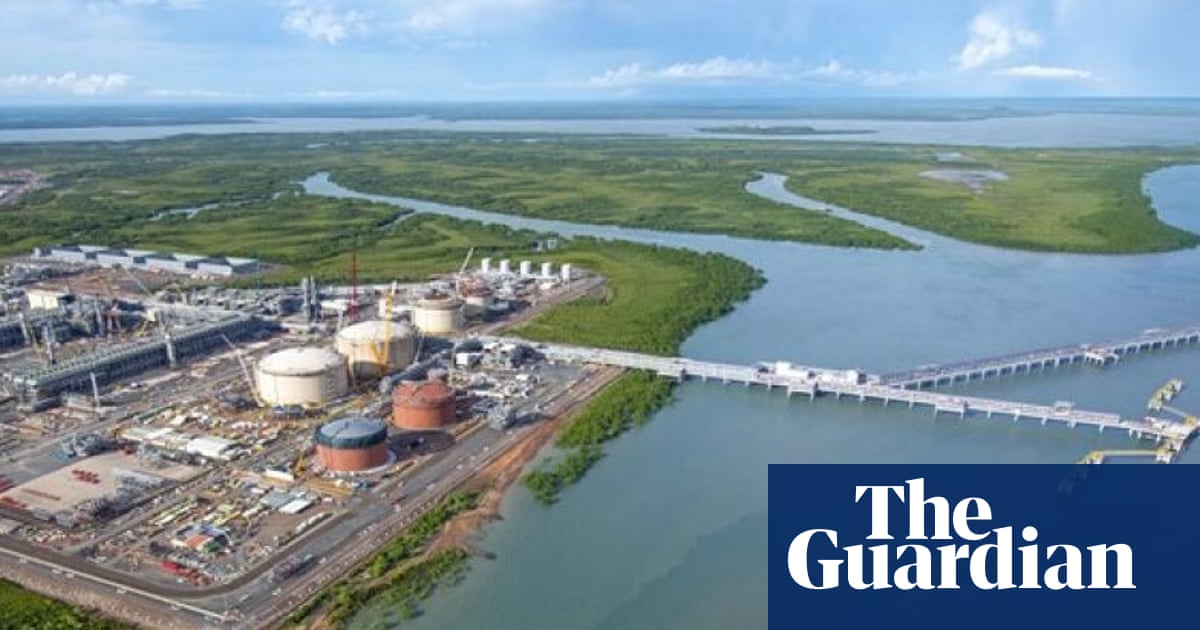
    The Bonaparte project, a joint venture between Inpex, TotalEnergies and Woodside Energy, involved sourcing CO2 from “a range of industrial facilities in the region”, including nearby liquefied natural gas plants, and eventually imports from the Asia Pacific. Carbon emissions would be transported offshore via a pipeline through Darwin harbour.

    Sign up to get climate and environment editor Adam Morton’s Clear Air column as a free newsletter

    Environmentalists have raised concerns that the project would be used to justify the further expansion of fossil fuels in the territory.

    Globally, 77 CCS projects were now in operation, capturing about 64m tonnes a year, according to an industry status report.

    Josh Runciman, the lead Australian gas analyst at the Institute for Energy Economics and Financial Analysis, said most CO2 captured by the industry was used for enhanced oil recovery, a way to extract more oil and gas from reservoirs.

    In practice, he said most CCS projects designed purely to capture and store carbon dioxide had “massively underperformed”, and many ceased operation sooner than intended.

    Australia now had two commercial scale CCS projects: Santos’s Moomba project in South Australia and Chevron’s Gorgon facility in Western Australia. The Inpex proposal would be much larger.

    “A 10m tonne per annum target would make this the largest CCS project globally,” Runciman said – but even assuming it reached those targets, that would be a “very small fraction” of the CO2 emissions globally from oil and gas.

    The Gorgon facility, which started injecting carbon dioxide in 2019, had captured less than half of the volumes it had originally intended, at a cost of more than $200 a tonne, he said.

    The Guardian contacted Inpex for comment but did not receive a response. In July, the company’s managing director, Tetsu Murayama, said in a statement: “The Bonaparte CCS project could substantially contribute to decarbonising northern Australia and potentially the wider Indo-Pacific region.”

    skip past newsletter promotion

    The Bonaparte project was one component of larger plans to convert Darwin’s Middle Arm Peninsula into a hub for carbon import and storage, with Dutch company Vopak separately developing a dedicated import terminal for liquefied CO2.

    Environment Centre NT said the proposals risked turning the Top End into the “world’s largest carbon dumping ground”.

    The group’s senior climate campaigner, Bree Ahrens, said: “This is a dirty deal to import the world’s pollution, and the Albanese Government needs to rule it out.”

    The environmental organisation expressed concerns that CCS was being used to greenwash a massive expansion of gas production in the Northern Territory.

    “Carbon capture and storage is just a fossil fuel industry’s excuse to keep extracting coal and gas while pretending to care about climate change.

    Continue Reading

  • NTT DATA named a Leader in Agentic AI Services and Generative AI Services by ISG Provider Lens®

    NTT DATA named a Leader in Agentic AI Services and Generative AI Services by ISG Provider Lens®

    November 14, 2025

    NTT DATA Group Corporation

    TOKYO – November 14, 2025 – NTT DATA, a global leader in AI, digital business and technology services, today announced it has been named a Leader in Agentic AI Services and Generative AI Services in reports published by ISG Provider Lens®. This marks the second consecutive year that NTT DATA has been recognized as a Leader in the Generative AI Services category.

    The reports analyzed market trends and competitive dynamics among providers of GenAI services, as well as those that have shaped the evolution of agentic AI and autonomous systems. Across both reports, ISG Provider Lens® celebrated NTT DATA’s strategic consulting in organization-wide AI and comprehensive agentic AI ecosystem.

    Agentic AI Development and Deployment Services

    The ISG Provider Lens® Agentic AI Services Quadrant report highlighted NTT DATA’s comprehensive Smart AI Agent™ Ecosystem. This ecosystem covers the full stack, spanning infrastructure, orchestration, development and observability. It supports both pro-code and low-code development, with reusable components such as prompt generators, task planners, multi-agent orchestration frameworks, compliance packs, and observability probes, delivering measurable outcomes including efficiency gains of 30-50%, reduced downtime, and improved customer satisfaction.

    “Being named a Leader in Agentic AI Services and Generative AI Services by ISG Provider Lens® underscores our commitment in delivering impactful solutions for our clients and furthering the adoption of agentic and generative AI across the business landscape”, said Marv Mouchawar, Head of Global Innovation, NTT DATA. “Our Smart AI Agent™ Ecosystem and Gen AI consulting capabilities help clients achieve the full of potential of AI, driving measurable outcomes and improving customer experiences. We remain dedicated to responsible innovation, driven by our deep industry expertise and strategic partnerships worldwide.”

    NTT DATA’s strategic alliances were also recognized as a strength by ISG Provider Lens®. Through NTT DATA’s deep partnerships with leading businesses across the enterprise landscape, it integrates key frameworks into client solutions that ensure interoperability across hyper-scaler platforms.

    Gowtham Sampath, Assistant Director and Principal Analyst at ISG Provider Lens® comments: “NTT DATA supports end-to-end agentic AI ecosystems with Smart AI Agent™, TechHub and AgentOps, enabling scalable, secure and low-/pro-code agent deployment. With industry-specific agents delivering efficiency gains and deep alliances with Amazon Web Services, Google Cloud, Microsoft and OpenAI, it drives measurable outcomes across sectors.”

    Generative AI Strategy and Consulting Services

    The ISG Provider Lens® report also praised NTT DATA for its holistic GenAI consulting capabilities, scalable innovation hub, and robust skill-building programs, including its GenAI Academy, which offers tailored role-based certification across the organization.

    NTT DATA’s consulting portfolio helps clients align GenAI with business ambitions, supporting strategic planning through to technical deployment, making use of formal readiness assessments, FinOps guardrails and proprietary ROI models that quantify value pre-build and track outcomes post-launch. Internally, NTT DATA takes a Client Zero approach, testing agentic patterns and controls before client deployment ensuring the highest quality service.

    NTT DATA’s approach encompasses strategic assessment and planning to identify and prioritize high-impact GenAI applications. This is followed by the development of tailored implementation roadmaps and the design of innovative solutions that ensure seamless technology integration, with a strong emphasis on user experience.

    “NTT DATA advances GenAI adoption with strategic consulting, enterprise training through GenAI Academy, and innovative tools and platforms like tsuzumi LLM and GenAI TechHub. Strategic alliances with Mistral AI and OpenAI strengthen its ability to deliver secure, scalable and business-focused GenAI solutions across industries,” said Gowtham Sampath, Assistant Director and Principal Analyst.

    For more information, find the ISG Provider Lens® Generative AI Services – Large and Midsize Quadrant report here, and the ISG Provider Lens® Agentic AI Services Quadrant report here.

    About NTT DATA

    NTT DATA is a $30+ billion business and technology services leader, serving 75% of the Fortune Global 100. We are committed to accelerating client success and positively impacting society through responsible innovation. We are one of the world’s leading AI and digital infrastructure providers, with unmatched capabilities in enterprise-scale AI, cloud, security, connectivity, data centers and application services. Our consulting and industry solutions help organizations and society move confidently and sustainably into the digital future. As a Global Top Employer, we have experts in more than 70 countries. We also offer clients access to a robust ecosystem of innovation centers as well as established and start-up partners. NTT DATA is part of NTT Group, which invests over $3 billion each year in R&D.
    Visit us at nttdata.com

    About ISG Provider Lens® Research

    The ISG Provider Lens™ Quadrant research series is the only service provider evaluation of its kind to combine empirical, data-driven research and market analysis with the real-world experience and observations of ISG’s global advisory team. Enterprises will find a wealth of detailed data and market analysis to help guide their selection of appropriate sourcing partners, while ISG advisors use the reports to validate their own market knowledge and make recommendations to ISG’s enterprise clients. The research currently covers providers offering their services globally, across Europe, as well as in the U.S., Canada, Mexico, Brazil, the U.K., France, Benelux, Germany, Switzerland, the Nordics, Australia and Singapore/Malaysia, with additional markets to be added in the future. For more information about ISG Provider Lens® research, please visit this webpage.

    About ISG

    ISG (Information Services Group) (Nasdaq: III) is a leading global technology research and advisory firm. A trusted business partner to more than 900 clients, including more than 75 of the world’s top 100 enterprises, ISG is committed to helping corporations, public sector organizations, and service and technology providers achieve operational excellence and faster growth. The firm specializes in digital transformation services, including AI, cloud and data analytics; sourcing advisory; managed governance and risk services; network carrier services; strategy and operations design; change management; market intelligence and technology research and analysis. Founded in 2006, and based in Stamford, Conn., ISG employs more than 1,600 digital-ready professionals operating in more than 20 countries-a global team known for its innovative thinking, market influence, deep industry and technology expertise, and world-class research and analytical capabilities based on the industry’s most comprehensive marketplace data. For more information, visit www.isg-one.com.

    Continue Reading

  • Dollar headed for weekly loss on worries of what clearing US data fog might show – Reuters

    1. Dollar headed for weekly loss on worries of what clearing US data fog might show  Reuters
    2. Dollar eases as traders eye December Fed cut on weakening US jobs market  Business Recorder
    3. Markets are assessing the US Dollar’s performance as trading activity stabilises, according to Scotiabank analysts  VT Markets
    4. Dollar Set for Weekly Fall on Economic Worries  TradingView
    5. Dollar Retreats as the US Government Reopens  Nasdaq

    Continue Reading

  • South Korean growers sue state power utility, blaming climate change for crop damage

    South Korean growers sue state power utility, blaming climate change for crop damage

    SEOSAN, South Korea — Hwang Seong-yeol stood at the edge of a golden field, watching nervously as a combine harvester crawled through his rice, churning up mud and stalks. Its steady hum filled the damp autumn air as grain poured into a truck waiting at the other end of the muddy paddy.

    It was the final day of what Hwang said was one of his toughest seasons in three decades of farming. He and other farmers feel helpless against increasingly erratic weather that they link to climate change and damage to their crops. It has complicated their work and cast uncertainty over their futures.

    Hwang is one of five South Korean farmers who recently sued the state utility Korea Electric Power Corporation and its power-generating subsidiaries, alleging that their reliance on coal and other fossil fuels has accelerated climate change and damaged their crops.

    The lawsuit raises questions about whether power companies’ role in driving climate change, and the resulting agricultural losses, can be quantified. It is the first of its kind in South Korea, said Yeny Kim, a lawyer with the Seoul-based nonprofit Solutions for Our Climate, who is handling the case.

    The case underscores the challenges South Korea, a manufacturing power that industrialized long after the Western nations now pressuring others to abandon fossil fuels, faces in transitioning to cleaner energy.

    Hwang’s fields are on a reclaimed coastal plain along South Korea’s western sea, where glimmering waterways crisscross dark, rich soil and flocks of migratory geese drift overhead, moving like a giant, living quilt.

    A remarkably rainy September and October followed a bitterly cold spring that stunted plant growth. Summer floods caused further damage before the wet autumn bred fungal disease.

    Hwang would have preferred to harvest in drier weather but had to do so sooner as relentless rains pushed rice stalks into the soil, causing the ripe grains to sprout. That day in late October was only the second dry day after 18 straight days of rain.

    “It’s really unsettling – we know how much rice we should normally get from 30,000 pyeong (25 acres) of land, but the yield has been steadily declining every year,” said Hwang, who expects this year’s harvest to be 20% to 25% below normal.

    “We began to question why it’s always the farmers — who haven’t done anything wrong — that end up suffering the consequences of the climate crisis. Shouldn’t we be demanding something from those who are actually causing it?”

    Farmers are “inherently vulnerable” to climate change, said Kim, the lawyer.

    In an annual climate report in April, South Korea’s government detailed how a year of extreme weather events in 2024, the country’s hottest year ever, triggered a series of “agricultural disasters” of heavy summer rains that destroyed thousands of hectares (acres) of cropland, followed by weeks of intense heat that wrecked still more crops, mostly rice.

    Kim and her colleagues decided to file the lawsuit, which represents plaintiffs from across South Korea, after speaking with Hwang and others at farmers markets.

    They say KEPCO, which holds a monopoly on electricity transmission and fully owns its subsidiaries, should bear some blame for the destabilized weather, citing what they say are excessive carbon emissions and a lagging transition to renewable energy.

    From 2011-2022, the companies produced about 30% of South Korea’s greenhouse gas emissions and roughly 0.4% of global emissions, based on Kim’s analysis of publicly available data.

    “Therefore, they should also bear 0.4% of the responsibility for the farmers’ losses,” Kim said.

    The lawsuit seeks initial damage claims of 5 million won ($3,400) per client, an amount likely to be adjusted as the case proceeds. The plaintiffs are also symbolically seeking 2,035 won ($1.4) each to urge the government to phase out coal power plants by 2035, ahead of its 2040 target.

    Renewable energy accounted for only 10.5% of the national energy mix in 2024, and the five KEPCO subsidiaries relied on coal for more than 71% of the electricity they produced that year, according to government data.

    KEPCO told The Associated Press it considers carbon reduction a key responsibility, citing its goal of cutting emissions 40% by 2030 from 2018 levels. But it declined to comment further on the lawsuit, saying it “cannot share information that could influence the verdict.”

    Experts say mounting debt, now at over 200 trillion won ($137 billion), that accumulated over decades of government policies that kept electricity rates low for households and industries, limits the utility’s ability to expand and modernize the power grid or invest in renewable energy.

    Yun Sun-Jin, a professor at Seoul National University, said the lawsuit has symbolic value but questioned whether blame could fall solely on KEPCO, given that everyone benefits from its cheap electricity.

    It would be difficult to prove the utility directly caused farm losses, when climate change is a “global problem,” she said.

    It does draw attention to South Korea’s need for a more effective approach to renewable energy, Yun said, including deregulating solar investments, expanding sources such as offshore wind, and ending KEPCO’s monopoly over electricity transmission to encourage other competitors with diverse technologies.

    South Korea is expected to reach its target of 32.95% renewable energy by around 2038 — far slower than the 33.49% average in 2023 among developed economies in the Organization for Economic Cooperation and Development, according to the Institute for Energy Economics and Financial Analysis.

    Some experts, including Yun, warn that South Korea’s slow shift to renewable energy could hinder its ambitions in advanced semiconductors and artificial intelligence, as its tech giants face global pressure to operate on clean power.

    “Climate change and carbon neutrality are not just environmental concerns — they are economic issues, ultimately about jobs and our survival,” Yun said.

    The impact of extreme weather resulting from climate change is far reaching in South Korea.

    Farmers now face higher costs and must use more labor to produce the same or lower yields.

    Ma Yong-un, an apple farmer in the southeastern town of Hamyang, said he is using more pesticides as pests and diseases become harder to control due to prolonged heat and humidity. The apples that thrived in cooler weather during his father’s days are less plentiful and tasty, he said.

    From tangerine farmers on Jeju island to strawberry growers in Sancheong to the southeast, farmers are trying to devise ways to survive.

    For the first time since he began farming in 2011, Ma coated all the fruit on his 2,200 trees with a mixture of copper sulfate and lime to prevent fungal infections and skin damage from intense sunlight.

    He began to think seriously about climate change in 2018, when a heavy April snowstorm damaged flower buds, leading to one of his worst harvests. Farming is becoming harder each year and he constantly wonders how much longer he can carry on.

    “I think about that every day,” said Ma, who is raising two teenage boys with his wife. “The biggest concern is my children.”

    Continue Reading

  • China house prices decline by most in a year

    China house prices decline by most in a year

    Stay informed with free updates

    China’s house prices have declined by the most in a year, while industrial production and investment figures both missed expectations, underlining pressure on policymakers to maintain growth in the world’s second-largest economy.

    New home prices fell 0.45 per cent in October from the previous month, the most since October last year and greater than a 0.4 per cent decline in September, according to data released by China’s National Bureau of Statistics on Friday.

    Industrial production rose 4.9 per cent from a year earlier, trailing a forecast of 5.5 per cent in an analyst poll by Reuters and the 6.5 per cent growth in September. Retail sales in October expanded 2.9 per cent, better than expectations of 2.8 per cent in the Reuters poll but down from 3 per cent the previous month. Both were the weakest readings since August 2024.

    Fixed asset investment, meanwhile, continued to fall, recording a 1.7 per cent decline year to date on a year earlier year, worse than forecasts of a 0.8 per cent drop and a 0.5 per cent contraction to September.

    Fu Linghui, spokesperson of the National Bureau of Statistics, said that while the overall economy was operating “relatively smoothly”, with progress in developing new industries, there were “many unstable and uncertain factors in the external environment”.

    “There is significant pressure to adjust domestic economic structure, which pose several challenges to maintaining stable economic operation,” Fu said.

    Some content could not load. Check your internet connection or browser settings.

    China is grappling with what economists call a “two-speed” economy, with trade and exports broadly holding up growth despite US President Donald Trump’s trade war, while the domestic economy suffers from weak demand and a prolonged bout of deflation.

    Authorities announced a pivot to bolstering domestic demand more than a year ago, which has included easing monetary policy, issuing stimulus bonds and unveiling programmes to support households.

    But those efforts have yet to significantly revitalise consumption, which has been hit by a years-long slowdown in the real estate market that has weighing on household spending and consumer confidence.

    The NBS said the year-to-date decline in property development investment had deepened from 13.9 per cent to 14.7 year on year by the end of October.

    “Today’s data signals the ongoing weakness in housing investment and developer sentiment,” Yuhan Zhang, principal economist at the Conference Board said in a new report. “The second-hand market, in particular, reflects structural oversupply and weak consumer confidence.”

    He said China had modest and uneven growth in fixed-asset investment in manufacturing, led by autos and transport equipment.

    “We will continue to see policy-directed investment in infrastructure, advanced manufacturing, and industrial upgrading,” Zhang said.

    Additional contributions by Wenjie Ding in Beijing. Data visualisation by Haohsiang Ko in Hong Kong

    Continue Reading

  • CEO Southeast Asia’s top bank DBS says AI adoption already paying off

    CEO Southeast Asia’s top bank DBS says AI adoption already paying off

    Tan Su Shan, chief executive officer of DBS Group Holdings Ltd., speaking at the Singapore Fintech Festival in Singapore, on Nov. 12, 2025.

    Bloomberg | Bloomberg | Getty Images

    SINGAPORE – Amid fears of an artificial intelligence bubble, much has been made of recent reports suggesting that AI has yet to generate returns for companies investing billions into adopting the tech. 

    But that’s not what the chief executive of Southeast Asia’s largest bank is seeing — she says her firm is already reaping the rewards of its AI initiatives, and it’s only just the beginning. 

    “It’s not hope. It’s now. It’s already happening. And it will get even better,” DBS CEO Tan Su Shan told CNBC  on the sidelines of Singapore Fintech Week, when asked about the promise of AI adoption.  

    DBS has been working to implement artificial intelligence across its bank for over a decade, which helped prepare its internal data analytics for recent waves of generative and agentic AI. 

    Agentic AI is a type of artificial intelligence that relies on data to proactively make independent decisions, plan and execute tasks autonomously, with minimal human oversight.

    Tan expects AI adoption to bring DBS an overall revenue bump of more than 1 billion Singapore dollars (about $768 million) this year, compared to SG$750 million in 2024. That assessment is based on about 370 AI use cases powered by over 1,500 models throughout its business. 

    “The proliferation of generative AI has been transformative for us,” Tan said, adding that the company was experiencing a “snowballing effect” of benefits thanks to machine learning. 

    A major area in which DBS has applied AI is in its financial services to institutional clients, with AI used to collect and leverage data for clients in order to better contextualize and personalize offerings. 

    According to Tan, this has resulted in “faster and more resilient” teams. The CEO believes that these uses of AI have contributed to a recent uptick in the bank’s deposit growth as compared to competitors’.

    The company also recently launched a newly enhanced AI-powered assistant for corporate clients known as “DBS Joy,” which assists clients with unique corporate banking queries around the clock. 

    ROI concerns 

    Despite Tan’s strong convictions about AI, recent evidence suggests that many companies are struggling to turn their AI investments into tangible profits. 

    MIT released a report in July that found 95% of 300 publicly disclosed AI initiatives, encompassing generative AI investments of $30–$40 billion, had failed to achieve real returns. 

    However, at least in the banking sector, there are signs that the tides are turning. 

    While DBS doesn’t differentiate spending in generative AI from other in-house investments, other major banks have recently offered this comparison. 

    JPMorgan Chase CEO Jamie Dimon stated in an interview with Bloomberg TV last month that the bank is already breaking even on its approximately $2 billion of annual investments in AI adoption. That represents “just the tip of the iceberg,” he added.

    Those expectations are shared by DBS, which plans to continue to accelerate its AI development to become an AI-powered bank.

    The ultimate goal, according to Tan, is for its generative AI to develop into a trusted financial advisor for clients, including retail users who are expected to interact with personalized AI agents through the DBS banking app. 

    The bank already has over 100 AI algorithms that analyze users’ data to provide them with personalized “nudges,” such as alerts on incoming shortfalls, product recommendations, and other insights. 

    Continued AI investments 

    While DBS may already be reaping rewards from its AI adoption, Tan acknowledged that it will require continued investments, not only in capital, but in the time needed to reskill employees. 

    The company has launched several AI reskilling initiatives across departments this year and has even deployed a generative AI-powered coaching tool to support these efforts. 

    This will help the company automate mundane work and refocus its staff on building and maintaining human-to-human relationships with customers, rather than reducing headcount, Tan said. 

    “We’re not freezing hiring, but it does mean reskilling. And that’s a journey. It’s a never-ending journey … a constant evolution.”

    Continue Reading

  • Access Denied


    Access Denied

    You don’t have permission to access “http://www.business-standard.com/markets/news/asian-stocks-slide-as-hawkish-fed-comments-crush-hopes-of-early-rate-cut-125111400117_1.html” on this server.

    Reference #18.d6632617.1763091878.2198a619

    https://errors.edgesuite.net/18.d6632617.1763091878.2198a619

    Continue Reading

  • BHP Faces UK Ruling On 2015 Brazil Mine Disaster

    BHP Faces UK Ruling On 2015 Brazil Mine Disaster

    A British court will decide on Friday whether Australian mining giant BHP is liable for one of Brazil’s worst environmental disasters, potentially paving the way for billions of pounds in compensation.

    The Barron’s news department was not involved in the creation of the content above. This article was produced by AFP. For more information go to AFP.com.
    © Agence France-Presse

    Continue Reading