
A battle for control of a little-known chipmaker has threatened global auto production by choking off the semiconductor supply chain, though there are signs the crisis is inching toward a resolution.
The power struggle over Nexperia, a Chinese-owned Dutch semiconductor maker, highlights how technology supply chain vulnerabilities are squeezing auto makers, most notably forcing Honda to halt production at a Mexican factory making its popular HR-V crossover for North American markets. It also exposes how Europe is caught in the middle of the wider geopolitical showdown between Washington and Beijing.
Here’s a look at the dispute:
The turmoil erupted into public view in mid-October, when the Dutch government announced it had invoked a rarely used World War II-era law to take effective control of Nexperia weeks earlier.
The Dutch ministry of economic affairs said it took action because of national security concerns. Officials said they intervened because of “serious governance shortcomings” at Nexperia, asserting control to prevent the loss of crucial tech know-how that could threaten Europe’s economic security.
Nexperia’s Chinese owner Wingtech Technology, a partially state-owned company, is at the heart of the dispute. Amid the boardroom battle, a Dutch court granted the ministry’s request to oust Nexperia’s Chinese CEO Zhang Xuezheng. American officials told the Dutch government he would have to be replaced to avoid trade restrictions, according to a court filing.
Nexperia makes simple semiconductors such as switches and logic chips. The auto industry — one of Nexperia’s biggest markets — uses its chips for numerous functions, such as adaptive LED headlight controllers, electric vehicle battery management systems and anti-lock brakes.
Headquartered in the Dutch city of Nijmegen, Nexperia was spun off from Philips Semiconductors two decades ago. It was eventually purchased by China’s Wingtech Technology in 2018 for $3.6 billion.
Nexperia has wafer fabrication plants in Britain and Germany. It operates an assembly and testing center in China’s southern manufacturing heartland of Guangdong — which accounts for around 70% of its end-product capacity — and similar centers in the Philippines and Malaysia.
The dispute is part of the broader struggle between the U.S. and China over tech supremacy, which has left Europe caught in the middle.
It stems from Washington’s decision late last year to place Wingtech on its “entity list,” which subjects companies to export controls because of national security risks. In late September, the U.S. expanded that list to Wingtech’s subsidiaries, including Nexperia, pressuring allies to follow suit.
After the Dutch government asserted control of Nexperia, Beijing responded soon after, blocking the export of Nexperia chips from its assembly plant in the Chinese city of Dongguan. It blamed the Netherlands for “turmoil and chaos” in the chip supply chain.
There were signs of hope following last month’s high-profile meeting between U.S. President Donald Trump and Chinese leader Xi Jinping, when the White House said Beijing would ease the export ban as part of a U.S.-China trade truce.
Despite Beijing also confirming exports would be allowed to resume, Nexperia’s Chinese unit said headquarters suspended shipments of wafers used to make chips to its Chinese factory, potentially crimping its ability to deliver finished products.
Nexperia’s head office hit back in a statement Wednesday, saying the Chinese unit refused to pay for the wafers and accused it of “ignoring the lawful instructions” from its global management team. The company said it can’t guarantee the quality of any chips delivered from its China plant since October 13.
Modern automobiles rely on so-called discrete chips made by companies like Nexperia, which, unlike more advanced microprocessors, perform a single function. Leaders at big carmakers spelled out their worries in the latest round of earnings calls, saying that finding a replacement for Nexperia at scale in the short term will be difficult.

“While Nexperia makes up only about 5% of the automotive silicon discrete market in term of revenue, its share is much higher in terms of discrete chip volume,” S&P Global Mobility analysts wrote in a recent note.
Nexperia’s parts are widely used across vehicle systems — often dozens to hundreds per vehicle — and carmakers in North America, Japan and South Korea are at risk, they added.
“It’s an industrywide issue. A quick breakthrough is really necessary to avoid fourth quarter production losses for the entire industry,” Ford CEO Jim Farley said.
General Motors CEO Mary Barra warned that production could be hit. The company has “teams working around the clock with our supply chain partners to minimize possible disruptions,” she said.
Nissan CEO Ivan Espinosa told CNBC that the company is setting aside a 25 billion yen ($163 million) provision for supply risks, in part to “absorb” the impact from the Nexperia crisis on production.
Mercedes-Benz is “scurrying around the world to look for alternatives,” CEO Ola Kallenius said. The European Automobile Manufacturers’ Association said members including BMW, Renault, Volkswagen and Volvo have been forced to use their reserve stockpiles of chips and warned of assembly line stoppages if they run out.
The European Union’s trade commissioner, Maros Sefcovic, on Saturday noted “encouraging progress,” writing on X that China’s Commerce Ministry had confirmed “further simplification” of export procedures for Nexperia chips to the EU and global customers.

In Beijing, the Commerce Ministry also said Saturday that it agreed to a Dutch request to send representatives to China for “consultations.”
But it noted that the Netherlands had not taken any concrete actions yet to restore the global semiconductor supply chain since the Dutch government said days earlier it would take “appropriate steps on our part where necessary.”
Economics Affairs Minister Vincent Karremans had said in that statement that “the Netherlands trusts that the supply of chips from China to Europe and the rest of the world will reach Nexperia’s customers over the coming days.”
Honda has received word that Nexperia’s shipments from China have resumed, Executive Vice President Noriya Kaihara told reporters Friday. He said the Japanese automaker expects to resume production during the week of Nov. 21 at its plant in Celaya, Mexico, which can make up to 200,000 vehicles a year.
Published – November 10, 2025 09:34 am IST

As the Middle East markets navigate a dynamic landscape, Abu Dhabi’s benchmark index has shown resilience with recent gains, while Dubai’s index edges up amid cautious global sentiment. In this environment, identifying promising stocks often involves looking for companies that demonstrate robust financial health and strategic positioning to capitalize on regional economic trends.
|
Name |
Debt To Equity |
Revenue Growth |
Earnings Growth |
Health Rating |
|---|---|---|---|---|
|
Mendelson Infrastructures & Industries |
23.85% |
5.17% |
7.38% |
★★★★★★ |
|
Al Wathba National Insurance Company PJSC |
10.97% |
10.37% |
3.14% |
★★★★★★ |
|
Baazeem Trading |
8.48% |
-1.74% |
-2.37% |
★★★★★★ |
|
Analyst I.M.S. Investment Management Services |
NA |
29.00% |
42.23% |
★★★★★★ |
|
Saudi Azm for Communication and Information Technology |
3.26% |
17.17% |
23.30% |
★★★★★★ |
|
Najran Cement |
14.76% |
-3.67% |
-26.79% |
★★★★★★ |
|
Y.D. More Investments |
50.84% |
28.28% |
35.02% |
★★★★★☆ |
|
Sönmez Filament Sentetik Iplik ve Elyaf Sanayi |
NA |
55.06% |
42.78% |
★★★★★☆ |
|
Rotshtein Realestate |
142.50% |
22.29% |
13.79% |
★★★★☆☆ |
|
Amir Marketing and Investments in Agriculture |
25.54% |
4.63% |
6.37% |
★★★★☆☆ |
Click here to see the full list of 206 stocks from our Middle Eastern Undiscovered Gems With Strong Fundamentals screener.
We’re going to check out a few of the best picks from our screener tool.
Simply Wall St Value Rating: ★★★★☆☆
Overview: Katilimevim Tasarruf Finansman Anonim Sirketi operates in Turkey, offering savings finance solutions for purchasing houses and cars, with a market capitalization of TRY30.47 billion.
Operations: Katilimevim generates revenue primarily from its financial services in the consumer segment, totaling TRY8.95 billion. The company’s net profit margin is 15%, reflecting its efficiency in converting revenue into actual profit.
Katilimevim Tasarruf Finansman Anonim Sirketi has been turning heads with its remarkable earnings growth of 210.7% over the past year, outpacing the Consumer Finance industry’s 9.8%. The company’s net income for Q2 soared to TRY 1,710.73 million from TRY 26 million a year ago, showcasing substantial profitability improvements. Despite high share price volatility recently, KTLEV’s Price-To-Earnings ratio of 7.2x suggests it is undervalued compared to the TR market average of 21.3x. With more cash than total debt and inclusion in the S&P Global BMI Index, KTLEV seems poised for continued attention in financial circles.

The mistrial was confirmed by William Fick, a lawyer for Anton Peraire-Bueno at Fick & Marx [File]
| Photo Credit: REUTERS
A federal judge on Friday declared a mistrial in the case of two Massachusetts Institute of Technology-educated brothers charged with carrying out a novel scheme to steal $25 million worth of cryptocurrency in 12 seconds that prosecutors said exploited the Ethereum blockchain’s integrity.
U.S. District Judge Jessica Clarke in Manhattan sent jurors home after they were unable to reach agreement on whether to convict or acquit Anton Peraire-Bueno and James Peraire-Bueno of charges that they carried out a first-of-its-kind wire fraud and money laundering scheme.

The mistrial was confirmed by William Fick, a lawyer for Anton Peraire-Bueno at Fick & Marx. A spokesperson for Manhattan U.S. Attorney Jay Clayton did not respond to a request for comment.
Both brothers attended Cambridge, Massachusetts-based MIT, where prosecutors say they studied computer science and developed the skills they relied on for their trading strategy.
They were indicted in May 2024, before U.S. President Donald Trump’s administration came into office, ushering in a new, crypto-friendly approach to enforcement. Despite the shift in priorities, the case against the brothers proceeded to trial.
Assistant U.S. Attorney Ryan Nees in his opening statement on October 15 accused the brothers of carrying out a “high-speed bait-and-switch” designed to lure trading bots into a trap and drain the accounts of other cryptocurrency traders.
Prosecutors said that for months, the Peraire-Bueno brothers plotted to manipulate and tamper with the protocols used to validate transactions for inclusion on the Ethereum blockchain, a public ledger that records each cryptocurrency transaction.

They did so by exploiting a vulnerability in the code of software called MEV-boost that is used by most Ethereum network “validators,” who are responsible for checking that new transactions are valid before they are added to the blockchain, prosecutors said.
“Then they planted a trade that looked like one thing from the outside, but was secretly something else,” Nees told jurors in his opening statement. “Then, just as the defendants planned, the victims took the bait.”
Katherine Trefz, a lawyer for James Peraire-Bueno at Williams & Connolly, countered that the trading strategy they executed was not just novel but legitimate and “consistent with the principles at play in this very competitive trading environment.”
Published – November 10, 2025 08:59 am IST
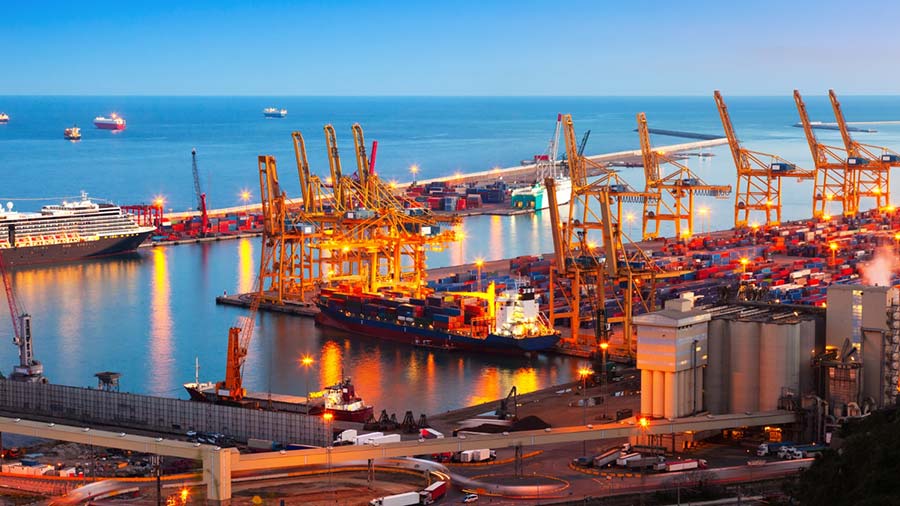
Thailand’s position as a manufacturing and logistics hub makes customs management a central factor in investment and supply-chain decisions. In 2024, Thailand recorded US$300.53 billion in exports and US$306.81 billion in imports, reflecting its high trade integration within global supply networks. For foreign companies, the ability to align free trade agreements (FTAs), tariff classification, and duty recovery mechanisms determines not only compliance efficiency but also margin stability.
Related Reading
These instruments operate best when used together as a single cost-management system. By integrating them within a coordinated framework, companies can achieve both regulatory certainty and predictable landed costs in Thailand’s trade environment.
Thailand’s customs framework operates under the Customs Act B.E. 2560 (2017), administered by the Thai Customs Department under the supervision of the Ministry of Commerce. The Act modernized valuation, classification, and post-clearance audit procedures, replacing the 1926 law.
Digital reforms such as the National Single Window and the electronic certificate of origin (e-CO) platform have accelerated customs processes and improved traceability. These systems enable businesses to integrate trade documentation with enterprise resource planning tools and monitor import and export flows in real time.
Thailand participates in ASEAN, the Regional Comprehensive Economic Partnership (RCEP), and bilateral trade agreements with Japan, China, Australia, and India. Each framework offers different tariff concessions and documentation requirements, making the choice of mechanism dependent on a company’s sourcing model and compliance capability.
Effective duty planning begins with precise product classification under the ASEAN Harmonized Tariff Nomenclature (AHTN 2022), which determines base duty rates, licensing requirements, and eligibility for preferential treatment. Where uncertainty exists, importers may request a binding tariff classification ruling from Thai Customs before importation to ensure certainty and avoid reassessment.
Preferential tariff rates apply when goods meet the rules of origin (ROO) established under an FTA and are accompanied by a certificate of origin, such as Form D under ASEAN or Form AJ under ASEAN–Japan. Rules of origin vary by product and agreement, covering criteria such as regional value content or change in tariff heading. Businesses should apply the specific product rule rather than rely on generic thresholds.
When production relies heavily on regional inputs, FTA use can reduce or remove tariffs with manageable documentation requirements. When supply chains depend on global sourcing or record-keeping is inconsistent, paying the Most Favored Nation (MFN) rate may be safer to avoid post-clearance reassessment.
Find Business Support

Under the 2017 Customs Act, misclassification or unsupported origin claims can attract penalties of up to four times the unpaid duty and possible seizure of goods. For firms with regular shipments, linking HS codes and FTA eligibility within automated systems helps maintain compliance and capture savings sustainably.
Thailand allows duty drawback for imported inputs used in export production under Section 19 bis of the Customs Act, administered by the Duty Drawback and Compensation Division. To qualify, companies must demonstrate a traceable link between import entries, production records, and export documentation. Claims must be submitted within prescribed timelines, and refunds are issued once Customs verification is complete.
Where liquidity or mixed domestic and export sales are key concerns, free zones and bonded warehouses permit duty suspension until goods enter the domestic market. These facilities fall under Thai Customs supervision and, in some cases, align with Board of Investment (BOI) or industrial-estate programs.
The choice between refund and suspension depends on a firm’s export ratio, documentation discipline, and cash-flow needs. Export-heavy manufacturers often gain more from duty drawback, while regional distributors may benefit from deferred-duty schemes. Firms should evaluate refund lead times and administrative costs against deferred-payment advantages using their internal production and logistics data.
Manufacturers with investment promotion can combine preferential tariffs with drawback mechanisms where exported goods meet both BOI and Customs requirements. Importers and distributors outside the BOI regime should maintain strict classification governance and complete origin records to minimize audit exposure under Thailand’s risk-based inspection system.
Find Business Support
For multinational enterprises using Thailand as a regional logistics base, Free Zone and Bonded Warehouse structures offer the flexibility to consolidate imports, defer duties, and re-export throughout ASEAN. In 2024, total U.S.–Thailand goods trade reached US$81.2 billion, reflecting the strategic scale of Thailand’s role as a regional manufacturing and re-export hub. The most efficient customs configuration depends on a combined assessment of landed cost, refund timing, audit risk, and administrative capacity.
Properly designed, customs management functions as a form of operational governance, aligning compliance with financial control.
Customs compliance in Thailand demands continuous oversight. Annual reviews of tariff classifications, verification of rules of origin, and ongoing updates to internal systems are necessary as trade agreements evolve. Maintaining complete digital archives of import, origin, and refund documentation enables a rapid response to audit inquiries. Cooperation with licensed Thai customs brokers and trade advisors supports accuracy in submissions and ensures alignment with current procedures.
Proactive governance preserves transparency with authorities and enables foreign investors to sustain predictable cost structures as Thailand’s trade environment continues to evolve under regional integration. Effective customs governance ultimately protects both compliance integrity and profit margins.
About Us
ASEAN Briefing is one of five regional publications under the Asia Briefing brand. It is supported by Dezan Shira & Associates, a pan-Asia, multi-disciplinary professional services firm that assists foreign investors throughout Asia, including through offices in Jakarta, Indonesia; Singapore; Hanoi, Ho Chi Minh City, and Da Nang in Vietnam; and Kuala Lumpur in Malaysia. Dezan Shira & Associates also maintains offices or has alliance partners assisting foreign investors in China, Hong Kong SAR, Mongolia, Dubai (UAE), Japan, South Korea, Nepal, The Philippines, Sri Lanka, Thailand, Italy, Germany, Bangladesh, Australia, United States, and United Kingdom and Ireland.
For a complimentary subscription to ASEAN Briefing’s content products, please click here. For support with establishing a business in ASEAN or for assistance in analyzing and entering markets, please contact the firm at asean@dezshira.com or visit our website at www.dezshira.com.

Namnyak, a Maasai herder in north Tanzania, fears a carbon credit scheme linked to Volkswagen — dismissed by NGOs as “greenwashing” — could destroy her community’s way of life.
Under the scheme, local Maasai are being offered money to keep their cattle on a strict “rotational grazing” scheme so that the grass grows longer and captures more carbon.
The idea is that Volkswagen, and possibly other companies, will pay for this through “carbon credits” which are supposed to offset carbon emissions from its factories and operations.
Many researchers and NGOs question the whole concept, saying such schemes disrupt local communities while doing little to improve the environment, existing only to allow companies to keep polluting elsewhere.
The scheme in northern Tanzania is run by Volkswagen partner Soils for the Future Tanzania (SftFTZ), covering the districts of Longido and Monduli, an area of 16,000 square kilometres (6,200 square miles) — roughly 20 times the size of New York City.
For Namnyak, a 33-year-old mother of three in Longido, it seems absurd.
Local Maasai have been sustainably living on the land — rotating grazing in line with the weather and seasons — for centuries.
Many locals, she said, fear the company has ulterior motives and may one day seize their land.
“It does not matter how much money they give us. We depend on our land for our cattle, our crops and our beekeeping. This is our lives, and the ones of the future generations,” she told AFP.
– ‘Implausible’ –
SftFTZ and Volkswagen deny any desire to take their land, but many locals remain suspicious and feel they are getting money for nothing.
A 2023 study of a similar scheme in neighbouring Kenya by Survival International, an NGO supporting Indigenous communities around the world, found it was “highly implausible” that the new grazing regime was actually being implemented.
“To the contrary, the vegetation appears to continue to deteriorate in large parts of the project area,” it said.
Verra, the main international body that validates carbon credit projects, suspended credits from a major forestry project in Zimbabwe in September, for which Volkswagen was also a client, saying its benefits had been exaggerated.
Verra told AFP it had yet to audit the project in Tanzania, or a competing carbon credit scheme proposed by US-based Nature Conservancy in the same region.
– ‘Scam’ –
Several researchers and NGOs believe the Maasai are unwitting participants in a vast “greenwashing” scheme by Volkswagen.
Chinese vice premier to visit Guinea, Sierra Leone, attend inauguration of Simandou mine as Xi’s special representative
BEIJING, Nov. 10 — Chinese Vice Premier Liu Guozhong will visit Guinea and Sierra Leone from Nov. 10 to 16, a Chinese foreign ministry spokesperson announced on Monday.
Liu, also a member of the Political Bureau of the Communist Party of China Central Committee, will pay the visits at the invitation of the governments of Guinea and Sierra Leone, said the spokesperson.
At the invitation of Guinean President Mamadi Doumbouya, Liu will also attend the inauguration of the Simandou iron ore mine project on Nov. 11 as President Xi Jinping’s special representative, said the spokesperson.

Israeli Spyware Maker NSO Gets New Owners, Leadership and Seeks to Mend Reputation
Investors led by Hollywood producer Robert Simonds have taken a controlling stake in the company behind Pegasus, and former Trump official David Friedman has been named executive chairman.
—-
Visa, Mastercard Near Deal With Merchants That Would Change Rewards Landscape
The deal under discussion would lower credit-card interchange fees for merchants, but could make it harder for consumers to use rewards cards at the register.
—-
FAA Orders Grounding of MD-11 Planes After Kentucky Crash
UPS and FedEx had earlier removed cargo planes from service as the death toll in Louisville climbs to 14.
—-
BBC Director General and News Chief Resign After Criticism of Editorial Practices
Tim Davie and Deborah Turness are leaving the news organization following criticism over the editing of remarks by President Trump that were included in a documentary program.
—-
Pfizer and Metsera Reach Deal Expected to Top $10 Billion
Pfizer prevailed over Novo Nordisk after an unusual bidding war for the weight-loss startup.
—-
Why Car Insurers Are Under Pressure to Cut Rates
Car insurers have been bracing for the fallout from a trade war, but it’s a price war they should be more worried about.
—-
Disney-YouTube TV Blackout Has Customers Scrambling and Getting Creative
Fans of football and ‘Dancing With the Stars’ are hooking up antennas to stay tuned in.
—-
Riding in a Chinese Robotaxi Is Pretty Smooth-That’s a Problem for Waymo
While U.S. companies dominate their home market, other countries are looking to China for driverless technology.
—-
Samsung Wants to Launch a U.S. Credit Card and Challenge Apple in Consumer Finance
The South Korean tech giant and Barclays are in advanced talks to launch a credit card, with both seeking bigger inroads into Americans’ financial lives.
—-
Affirm Eyes Card Payments as Next Era of Buy Now, Pay Later
Buy now, pay later companies like Affirm are aiming to compete more closely with credit-card companies.
—-
Sony and CBS Settle ‘Wheel of Fortune’ and ‘Jeopardy!’ Fight
Sony Pictures Television will take over distribution of the two shows from CBS starting with international sales later this year, followed by domestic sales to local TV stations in the fall of 2028.
—-
KKR Defied Private-Equity Fundraising Slump in the Third Quarter
The private-markets managers leaders sought to counter the gloomy headlines that have dampened the mood of many private-equity investors.
—-
Six Flags Mulling Park Sales After Revenue Drops
Six Flags reported lower third-quarter revenue and said its efforts to grow demand were unsuccessful in the quarter.
—-
Brookfield Sees Strong Fundraising Ahead on Heels of Banking $30 Billion
The infrastructure investor is shopping for capital for its first strategy dedicated to artificial intelligence.
—-
First Brands Wins Approval to Tap Bankruptcy Loan to Fund Operations
A bankruptcy judge in Houston authorized the auto-parts supplier access to $600 million in a loan to continue funding its business.
—-
Wendy’s to Close Hundreds of Stores
Wendy’s logged lower sales and profit for the third quarter as consumers continue to cut their spending at restaurants.
(END) Dow Jones Newswires
November 09, 2025 21:15 ET (02:15 GMT)
Copyright (c) 2025 Dow Jones & Company, Inc.
