Category: 3. Business

  • Baker McKenzie and Taipei Chinese Arbitration Association Join Forces to Host the “Geopolitics and Arbitration Conference” at 2025 Taiwan Arbitration Week | Newsroom

    Baker McKenzie and Taipei Chinese Arbitration Association Join Forces to Host the “Geopolitics and Arbitration Conference” at 2025 Taiwan Arbitration Week | Newsroom

    Helping Taiwanese businesses strengthen cross-border dispute response strategies amid rising geopolitical risks

    The “2025 Taiwan Arbitration Week: Geopolitics and Arbitration Conference,” co-hosted by the Chinese Arbitration Association, Taipei (CAA) and Baker McKenzie Taipei, takes place on 5 November in Taipei and 6 November in Kaohsiung. Through the theme of “Geopolitics and Arbitration,” the event invites Taiwanese businesses with overseas operations that may face cross-border disputes to engage in in-depth discussions on how arbitration can serve as a critical tool for corporate risk management and international dispute resolution amid global uncertainties.

    The conference features international arbitration experts from Baker McKenzie’s offices and member firms in Taipei, Singapore, Hong Kong and Malaysia, sharing the latest arbitration trends and practical case studies to help businesses navigate turbulent global political and economic conditions while minimizing legal risks.

    ________________________________________

    As geopolitical risks escalate, arbitration becomes a corporate stabilizer

    Amid supply chain reorganization and heightened geopolitical tensions, arbitration agreements have become essential tools for businesses to reduce cross-border risks and ensure transaction stability. Anna Hwang, executive partner at Baker McKenzie Taipei, notes:

    “Baker McKenzie conducts annual predictions and analyses of global dispute cases. Both the 2025 and 2024 forecasts indicate that geopolitical risks will continue to dominate corporate dispute types, including supply chain disruptions, artificial intelligence, ESG issues and post-M&A integration. Businesses should prioritize arbitration as their dispute resolution mechanism and maintain commercial thinking during disputes — this is the key strategy for risk reduction and maintaining stability.”
    ________________________________________

    Investor-state disputes: Arbitration safeguards in overseas expansion

    When facing trade wars and geopolitical pressures, businesses should leverage international investment agreements for protection. Tony Tang, partner at Baker McKenzie Taipei, states:

    “As businesses adjust their overseas strategies in response to trade wars and geopolitical pressures, political risks associated with the host country pose major challenges to corporate risk management capabilities. Through proper investment structure design and ensuring that overseas investments are covered by appropriate international investment agreements, businesses can ensure that investment disputes with host countries will be resolved through neutral, professional and effective international arbitration — a key strategy for avoiding unlawful interference and protecting overseas investment interests.”
    ________________________________________

    Renewable energy and arbitration: Legal defense for high-risk industries

    Energy transition presents tremendous opportunities, but also significant risks. Tom Chou, senior consultant at Baker McKenzie Taipei, points out:

    “Post-pandemic renewable energy projects face heightened supply chain and price volatility risks, underscoring the need for enforceable financial guarantees, price adjustment mechanisms and strict adherence to cross-border contract terms — even amid sudden market changes such as polysilicon price surges. Stable and long-term electricity price guarantees are crucial for attracting renewable energy investment; retroactive changes to such systems by governments may expose them to expensive international arbitration disputes.”
    ________________________________________

    Dispute boards: Prevention-over-resolution strategic thinking

    Dispute boards have proven highly effective in international engineering and large-scale projects, and they are increasingly becoming important tools for corporate risk prevention. Chien-Hung Lai, partner at Baker McKenzie Taipei, states:

    “Dispute boards can proactively manage risks, enhance efficiency and cooperation, and encourage early dialogue between parties — achieving dispute prevention, more focused arbitration and cost reduction. With successful track records in both Taiwan and internationally, they are worthy of incorporation into corporate contract management and dispute resolution strategies.”
    ________________________________________

    Post-award challenges: Procedural understanding and risk control

    Arbitration awards are not the end of dispute resolution. Terrence Wang, associate at Baker McKenzie Taipei, points out:

    “In today’s tightly interconnected yet uncertain global supply chain environment, arbitration has become an important tool for resolving cross-border commercial disputes. However, after an arbitration award is rendered, businesses in Taiwan still face two important procedures: first, actions to set aside arbitration awards; and second, applications for the recognition of foreign arbitration awards. Understanding and effectively utilizing these follow-up mechanisms is critical for ensuring stable operations in global supply chains, cross-border investment decisions and prevention of potential legal risks.”
    ________________________________________

    Cross-cultural arbitration strategies: Practical insights from Singapore, Hong Kong and Malaysia

    Partner Chien-Hung Lai states:

    “With its neutrality, credibility and flexibility, arbitration has become the preferred mechanism for managing cross-border disputes in today’s geopolitical world. When Taiwanese businesses expand overseas, they must develop a deep understanding of local cultures and business practices, tailor arbitration clauses accordingly, and carefully select arbitration seats — these are key to effective risk management and enhancing contract enforceability.”

    Baker McKenzie’s specialists from Singapore, Hong Kong and Malaysia share distinctive features of each jurisdiction’s arbitration system, along with practical recommendations to help Taiwanese businesses effectively utilize arbitration mechanisms in overseas operations. Tjen Wee Wong, principal at Baker McKenzie Wong & Leow in Singapore, states:

    “Singapore arbitration and the Singapore International Arbitration Centre are among the world’s top choices for dispute resolution, offering high enforceability, efficiency and neutrality. The 2025 rules emphasize procedural simplification, reasonable cost structures and accelerated timelines, aiming to provide effective, flexible and internationally recognized arbitration outcomes.”

    Philipp Hanusch, partner at Baker McKenzie Hong Kong, notes:

    “Hong Kong’s arbitration system offers multiple advantages for Taiwanese businesses. It features a modern arbitration law framework based on the UNCITRAL Model Law, along with diverse arbitrator selection and neutral courts that support arbitration and respect party autonomy. Both English and Chinese are its official languages. Notably, if a Hong Kong arbitration is administered by the Hong Kong International Arbitration Centre or other designated institutions, parties can apply to Chinese Mainland courts for interim measures, which are then directly enforceable in the Chinese Mainland.”

    Janice Tay, partner at Wong & Partners in Malaysia, states:

    “Malaysia’s arbitration system is built on a modern legal framework that meets international standards, particularly the UNCITRAL Model Law. Supported by the Asian International Arbitration Centre and reinforced by a pro-arbitration judiciary, the system offers efficient, flexible and cost-effective procedures, making Malaysia a trusted strategic hub in Asia for handling complex cross-border disputes.”
    ________________________________________

    Arbitration is the legal foundation for Taiwanese businesses’ global expansion

    This conference not only presents the latest arbitration trends and practical case studies but also highlights arbitration’s critical role amid rising geopolitical risks. Through contract design, treaty planning and system selection, Taiwanese businesses can establish robust legal defenses in the global market. Executive Partner Anna Hwang emphasizes, “Arbitration clauses are not just part of contracts — they are key to maintaining stability and flexibility for businesses in an uncertain world.”


    Continue Reading

  • UK's FTSE 100 clinches new record close; focus on BoE, earnings – Reuters

    1. UK’s FTSE 100 clinches new record close; focus on BoE, earnings  Reuters
    2. UK’s FTSE 100 defies global sell-off on healthcare gains and pound weakness  Reuters
    3. Selloff halted as stocks rebound  FXStreet
    4. London midday: FTSE flat, avoids broader market selloff.  investments.halifax.co.uk
    5. FTSE 100 closes higher as US markets rally after tech falls  London Evening Standard

    Continue Reading

  • Deputy Secretary-General’s remarks at the Closing of the Private Sector Forum [as prepared for delivery] | Secretary-General

    Excellencies, Distinguished delegates, Ladies and gentlemen,

    What a day this has been.

    Let me begin by expressing my deep gratitude to our co-hosts: UN DESA, the UN Global Compact, and the International Organization of Employers, for bringing us together. To every panelist, speaker, and participant who contributed today: your insights and commitment have made this forum what it was meant to be.

    The energy in this room, the honest conversations we’ve had, the solutions you’ve shared.

    Three decades after Copenhagen, we’re not here to repeat old promises. 

    We’re here because every business leader like you in this room today understands something fundamental: business can be the most powerful engine for social development, but only when it’s guided by principles that put people and planet at the centre.

    To that end, today revealed four truths that we cannot afford to ignore. 

    Four principles that should guide everything we do when we leave Doha.

    First truth: Skills without markets are promises we can’t keep.

    We know the possibilities that open up with education, training, and lifelong learning. But we have to stop preparing people for jobs that will soon no longer exist and start preparing them for the jobs that may not even exist yet. 

    Education disconnected from market realities is a betrayal of young people and of workers trying to adapt. It also leaves employers scrambling for skilled talents and undermines efforts to build future-ready economies.

    We should be intentional about connecting what people learn to what markets need. 

    The second truth is that responsible business conduct builds the world your business needs.

    We heard compelling examples today of companies embedding human rights into operations, engaging with workers, ensuring decent work and living wages across supply chains, letting environmental standards guide their decisions. 

    What these stories revealed is that when the work environment is a fair one, when you invest in labour rights, fair wages, and safe conditions, you enhance productivity, strengthen the foundation of your business stands on. 

    You’re also laying a stronger foundation for stable societies that benefit everyone. 

    The Ten Principles of the UN Global Compact on human rights, labour, the environment and anti-corruption provide the roadmap for this approach. 

    Third truth: Inclusive business models scale because they are profitable, not because they’re ‘nice to have’.

    The companies making real impact aren’t treating inclusion as a corporate social responsibility box-ticking exercise. It’s part of the DNA of their core business. These models succeed because they’re solving real problems for real people. When you scale solutions that generate inclusive employment, including addressing the needs of workers in the informal economy, you are reducing vulnerabilities across communities and societies – and that’s smart business. 

    Fourth, and finally: finance flows to what we value, so let’s amplify those values.

    Small and medium enterprises are the backbone of every economy, yet so many – especially those led by women, young people, persons with disabilities, older persons and marginalized groups – can’t access the capital they need to grow. 

    Technology is changing that. A woman entrepreneur in a rural village can now access credit through her mobile phone. 

    A young innovator can sell products directly to customers halfway around the world through e-commerce. 

    Financial literacy that once required a bank branch now reaches people wherever they are. 

    Technology isn’t just bridging the divide – it’s creating opportunities that never existed before, lowering barriers that once kept millions locked out.

    When we expand financial inclusion, when we align investment with social objectives, use blended finance and impact investing to channel resources toward enterprises that deliver both economic and social returns, we are unlocking growth that’s been sitting there, waiting.

    Ladies and gentlemen, 

    So here’s what we do when we leave Doha.

    We go beyond acknowledging these truths and make them the principles that drive our actions.  

    We dig deep. 

    We connect education systems to today’s and tomorrow’s labour market realities. 

    We make responsible conduct non-negotiable across our operations. 

    We scale the inclusive models that are profitable. 

    We open up finance to the entrepreneurs who will drive the next wave of growth.

    The Doha Political Declaration calls for renewed solidarity and collaboration. What that means in practice is this: business, government, civil society, UN entities – all of us working together and acknowledging the final truth that underscores everything we have discussed today – none of us can do this alone. 

    This forum should be a launchpad, so let’s make sure we deliver.

    Thank you.

    Continue Reading

  • Tesla sales in Germany have cratered from last year, data shows

    Tesla sales in Germany have cratered from last year, data shows

    Elon Musk, CEO of Tesla Inc., arrives at the Tesla plant in Gruenheide, Germany, on March 13, 2024.

    Krisztian Bocsi | Bloomberg | Getty Images

    Tesla sold just 750 electric vehicles in Germany for October 2025, less than half of what it sold a year ago, according to data out Wednesday from the country’s federal transport authority, known as KBA.

    In October last year, Tesla sold 1,607 EVs in Germany.

    KBA data shows 434,627 new battery electric vehicles year to date, the KBA data said, up nearly 40% from the same period last year. Of those EVs, 15,595 were Teslas, a decline of 50% for Elon Musk’s automaker this year.

    Tesla operates a massive vehicle assembly plant in Brandenburg, Germany, which is outside of Berlin, but the company is not a hometown favorite.

    Musk’s incendiary political rhetoric and endorsement of AfD, Germany’s extremist, anti-immigrant party, have weighed on left-leaning consumers’ interest in the Tesla brand there.

    Tesla also faces a passel of European and Chinese competitors throughout Europe offering smaller and more affordable EVs, many priced below 35,000 euros.

    During October, Tesla began selling a new, lower-cost version of its Model Y SUV in Germany. The stripped-down version of the SUV was priced at 39,990 euros for the German market — about 5,000 euros lower than the cheapest, previously available versions of the Model Y there.

    It remains to be seen whether Tesla’s new, lower-priced model variants can help revitalize demand for their EVs in Germany or Europe.

    Policy changes ahead may lift EV sales in Germany, overall.

    Germany scrapped incentives to boost purchases of fully electric vehicles about two years ago, a policy change that led to a sharp drop in demand for fully electric vehicles, initially. The country is now poised to start up a new EV incentive program that goes into effect in January 2026, and is intended to help lower- and middle-income buyers adopt zero tailpipe emission vehicles.

    Continue Reading

  • US Starbucks workers prepare to strike if contract is not finalized by next week | Starbucks

    US Starbucks workers prepare to strike if contract is not finalized by next week | Starbucks

    Unionized Starbucks baristas voted to authorize an open-ended strike ahead of Starbucks’s high-traffic holiday season, announced Starbucks Workers United on Wednesday.

    The union said workers are prepared to strike if a contract is not finalized by 13 November, which is the company’s Red Cup Day, and strike actions could hit more than 25 cities and escalate if there is a lack of progress.

    Starbucks Workers United, which represents more than 9,000 workers out of Starbucks’s over 200,000 baristas, has filed more than 1,000 charges against Starbucks for alleged unfair labor practices to the National Labor Relations Board, the union said.

    Michelle Eisen, a spokesperson for the union who left Starbucks after a 15-year career at the company, said in a statement: “If Starbucks keeps stonewalling, they should expect to see their business grind to a halt. The ball is in Starbucks’ court.”

    The Starbucks Workers United union, had been in talks with the company since last year, and said in October it will vote on picketing in about 60 cities, demanding a contract that reflects “improved staffing, better pay and on-the-job protections”.

    Both sides blame the other for ending talks late last year and say they are ready to return to discussions.

    Starbucks said in a statement that “any agreement needs to reflect the reality that Starbucks already offers the best job in retail.”

    Continue Reading

  • Check Point Software Achieves the Highest Security Effectiveness at 99.59% in NSS Labs Enterprise Firewall Test

    Check Point® Software Technologies Ltd. (NASDAQ: CHKP), a pioneer and global leader of cyber security solutions, today announced it has been named as a Recommended vendor in the NSS Labs 2025 Enterprise Firewall Comparative Report, with the highest security effectiveness score. Achieving an outstanding 99.59% overall security effectiveness rating, including 99.91% exploit coverage and complete protection from evasion strategies. As AI redefines cyber threats, NSS Labs recognition highlights Check Point’s leadership in prevention-first security, with its network security firewall outperforming all competitors in security effectiveness.

    “Check Point has maintained an extraordinary level of consistency in their security effectiveness over the years,” said Vikram Phatak, CEO, NSS Labs, “Check Point’s network security firewall should be on every buyer’s short list.”

    The NSS Labs enterprise firewall test evaluated vendors against real-world attack techniques and enterprise workloads. With AI accelerating the pace and sophistication of cyber attacks, which are up 44% year-over-year, the need for prevention-first security has never been greater.. The wide gap between Check Point’s superior results and other vendors underscores its leadership in stopping threats before they impact business operations, ensuring continuity and resilience.

    “These benchmark results reflect our relentless focus on security effectiveness. We are proud that our network security firewall outperformed every competitor in reliability and stability, setting the standard for prevention-first security,” said Eyal Manor, VP of Product. “Check Point keeps organizations ahead of attackers with AI-driven protection across their hybrid environments.”

    The Results Speak for Themselves:

    • 99.59% overall security effectiveness- the highest in the industry
    • 99.28% malware block rate and 99.91% exploit block rate
    • 35% false positive accuracy
    • 100% exploit evasion resistance
    • 100% resilience during prolonged attacks & high load conditions

    Product Reliability & Stability
    NSS Labs tested firewall resilience during prolonged attacks and high-load situations to ensure consistent policy enforcement and protection. Check Point achieved 100% firewall evasion resistance. Through its evaluation, NSS Labs also referenced CISA’s Known Exploited Vulnerability (KEV) tracking, where Check Point experienced only 1 vulnerability in the same period that the other leading vendors had 10X – 23X more exploited product vulnerabilities. Hence, Check Point’s network security firewall ensures the highest product integrity against being breached and eliminates the need for constant emergency patches. This reduces enterprise security risk and lowers their cost of ownership.

    This recognition adds to Check Point’s growing list of third-party validations. In the 2025 Miercom Enterprise and Hybrid Mesh Firewall Security Report, Check Point was also named the top provider, further validating its commitment to delivering best-in-class, prevention-first cyber security.

    Access a free copy of the NSS Labs’ Enterprise Firewall Reports by visiting our website and blog.

    Follow Check Point on LinkedIn, X (formerly Twitter),Facebook, YouTube and our blog.

    About Check Point Software Technologies Ltd. 

    Check Point Software Technologies Ltd. (www.checkpoint.com) is a leading protector of digital trust, utilizing AI-powered cyber security solutions to safeguard over 100,000 organizations globally. Through its Infinity Platform and an open garden ecosystem, Check Point’s prevention-first approach delivers industry-leading security efficacy while reducing risk. Employing a hybrid mesh network architecture with SASE at its core, the Infinity Platform unifies the management of on-premises, cloud, and workspace environments to offer flexibility, simplicity and scale for enterprises and service providers.

    Legal Notice Regarding Forward-Looking Statements
    This press release contains forward-looking statements. Forward-looking statements generally relate to future events or our future financial or operating performance. Forward-looking statements in this press release include, but are not limited to, statements related to our expectations regarding our products and solutions, our expectations regarding future growth, the expansion of Check Point’s industry leadership, the enhancement of shareholder value and the delivery of an industry-leading cyber security platform to customers worldwide. Our expectations and beliefs regarding these matters may not materialize, and actual results or events in the future are subject to risks and uncertainties that could cause actual results or events to differ materially from those projected. The forward-looking statements contained in this press release are also subject to other risks and uncertainties, including those more fully described in our filings with the Securities and Exchange Commission, including our Annual Report on Form 20-F filed with the Securities and Exchange Commission on March 17, 2025. The forward-looking statements in this press release are based on information available to Check Point as of the date hereof, and Check Point disclaims any obligation to update any forward-looking statements, except as required by law.


    Continue Reading

  • Trump Westinghouse investment could lead to IPO with U.S. as shareholder

    Trump Westinghouse investment could lead to IPO with U.S. as shareholder

    The Vogtle nuclear power plant is located in Burke County, near Waynesboro, Georgia in USA. Each of the two existing units have a Westinghouse pressurized water reactor (PWR), with a General Electric turbine and electric generator, producing approximately 2,400 MW of electricity. Two Westinghouse made AP 1000 reactors are under construction here.

    Pallava Bagla | Corbis News | Getty Images

    The Trump administration’s plan to spend tens of billions of dollars on Westinghouse nuclear plants could transform it into an independent, publicly traded company with the U.S. government as a major shareholder.

    The Commerce Department signed a deal last week with Westinghouse owners Cameco and Brookfield Asset Management to spend $80 billion to build the company’s nuclear plants across the U.S.

    Under the deal, the U.S. government is granted a participation interest in Westinghouse and can require an initial public offering on or before January 2029 if the company’s value surges to $30 billion or more.

    The government could become an 8% shareholder in Westinghouse under this scenario, said Cameco Chief Operating Officer Grant Isaac on the company’s third-quarter earnings call Wednesday. It is not entitled to a stake in Cameco or Brookfield under the deal, Isaac said.

    Cameco would consider spinning out Westinghouse as an independent company in 2029 depending on the circumstances, the executive said.

    “There is definitely a unique interest in investing just in Westinghouse,” Isaac said. “Cameco is a funny proxy for that. Brookfield’s probably an even funnier proxy to invest in just Westinghouse.”

    Cameco is one of the largest uranium miners in the world and Brookfield is one of the biggest investors in energy generation.

    “We’re going to keep all options on the table,” Isaac said. “This partnership agreement does not force us to leave Westinghouse in 2029. We don’t have to sell any of our share — or we may if the value of Westinghouse is so significant come 2029 when that window opens up.”

    U.S. government financing

    The government’s interest in Westinghouse vests only if it makes a final investment decision with definitive agreements to build new reactors in the U.S. with a total value of $80 billion.

    The U.S. could use tools like Department of Energy loans or financing from “other jurisdictions” to finance the projects among other options, Isaac said.

    “We’re assured that there is a lot of interest in investing this minimum $80 billion in order to begin the process,” the executive said.

    Westinghouse has designed a big modern nuclear reactor called the AP1000 that the Trump administration wants to deploy across the U.S. to meet rising electricity demand from data centers and manufacturing. It generates a gigawatt of electricity, which is enough power for more than 750,000 homes.

    President Donald Trump signed an executive order in May that called for the U.S. to start construction on 10 large new nuclear reactors by 2030. Westinghouse CEO Dan Sumner said in July that the company would meet Trump’s call with the AP1000.

    But Westinghouse has struggled in the past to deliver the AP1000 on time and on budget. It went bankrupt in 2017 from cost overruns at big nuclear projects in Georgia and South Carolina.

    The first two AP1000 reactors in the U.S. came online at Plant Vogtle in Georgia in 2023 and 2024 but the South Carolina project was canceled.

    Westinghouse was bought by Brookfield and Cameco in 2023, five years after it emerged from bankruptcy. Brookfield has a 51% stake in Westinghouse and Cameco owns 49% of it.

    The nuclear industry needs a big order of reactors to stimulate the market and supply chains, Isaac said. The U.S. government is serving that role, the executive said.

    “What the U.S. government has done is committed to step in and be that stimulant if you will, their commitment is to facilitate the financing,” he said.

    Continue Reading

  • People in Middle-Income Countries Say Climate Change Is Affecting Their Community

    People in Middle-Income Countries Say Climate Change Is Affecting Their Community

    Children play at a reservoir run dry due to drought in Kuta Cot Glie, Indonesia, on Jan. 24, 2024. (Chaideer Mahyuddin/AFP via Getty Images)
    How we did this

    This Pew Research Center analysis focuses on public opinion of climate change and its effects in nine middle-income countries. Opinions surrounding climate change are examined in the context of long-term trend data.

    A map showing Countries included in this report

    This analysis draws on nationally representative surveys of 12,375 adults conducted from Jan. 8 to April 21, 2025. Surveys were conducted face-to-face in Argentina, Brazil, India, Indonesia, Kenya, Mexico, Nigeria, South Africa and Turkey.

    For the purpose of comparing educational groups across countries, we standardize education levels based on the United Nations’ International Standard Classification of Education (ISCED). The lower education category is lower secondary education or below and the higher category is upper secondary or above in middle-income countries (as defined by the World Bank).

    Here are the questions used for this analysis, along with responses, and the survey methodology.

    A bar chart showing that Most people in 9 middle-income countries say climate change is affecting the area where they live

    A new survey of nine middle-income nations finds widespread concerns about climate change. Large majorities in these countries say global climate change is affecting the area where they live. In the three Latin American nations polled, around half of adults or more say it is affecting their community
    a great deal.

    What is a median?

    In this analysis, median scores are used to help readers see overall patterns in the data. The median percentage is the middle number in a list of all percentages sorted from highest to lowest.

    Most people in these countries also say they are willing to make at least some adjustments to the way they live and work to reduce the effects of climate change. And most have at least some confidence in the international community to address this issue.

    Impact of climate change

    A median of 56% of adults across nine middle-income countries say they are very concerned that global climate change will harm them personally in their lifetime. About six-in-ten or more hold this view in Argentina, Indonesia, Kenya and South Africa, compared with about a third in Turkey.

    A bar chart showing that Many in middle-income countries are concerned climate change will harm them personally
    A bar chart showing that Droughts and water shortages are a top climate concern

    While many continue to express concern that climate change will harm them personally, the share saying this has decreased since 2015 in Argentina, Brazil, India, Mexico and Nigeria. Concern is up, on the other hand, in Indonesia (+18 percentage points), South Africa (+13) and Turkey (+7). Opinion is largely unchanged in Kenya.

    When asked which of four possible effects of climate change concerns them most, respondents named droughts or waters shortages more than twice as often as any other option. Fewer say long periods of unusually hot weather, floods or intense storms, or rising sea levels concern them most.

    Since 2015, the share pointing to droughts as their biggest concern is up in Indonesia, Mexico, South Africa and Turkey.

    Why these countries?

    We surveyed 25 countries in spring 2025, including 16 high-income countries and nine middle-income countries as classified by the World Bank. The nine middle-income countries included in this report are Argentina, Brazil, India, Indonesia, Kenya, Mexico, Nigeria, South Africa and Turkey. Surveys in these countries were conducted face-to-face, a mode that gives us more time with respondents to explore topics we might not otherwise be able to. By comparison, respondents in high-income countries were surveyed over the phone or online. For more on our survey methods, read the country-specific methodologies.

    Dealing with climate change

    A bar chart showing that Majorities are willing to make lifestyle changes to help reduce the effects of climate change

    Most people across the middle-income countries surveyed – a median of 80% – are willing to make at least some changes to how they live and work to help reduce the effects of climate change. A median of 18% say they would be willing to make only a few or no changes at all. The shares saying they would make a lot of changes range from 17% in Turkey to 53% in Kenya.

    And most – a median of 62% – express confidence in the international community’s ability to significantly reduce the effects of climate change. Seven-in-ten adults or more in India, Indonesia and Kenya have at least some confidence that the actions of the international community will reduce effects of climate change. But around half or fewer agree in Argentina, Mexico and Turkey.

    A set of bar charts showing that People in middle-income countries are confident that the international community can reduce the effects of climate change and most say a country’s carbon emissions should influence how much it does to address the issue

    One major international actor is the United Nations, which has been targeting environmental issues since the 1970s. In six of the nine middle-income countries surveyed, people with a favorable view of the UN are more likely than those with an unfavorable view to have confidence in actions taken by the international community.

    Related: United Nations seen favorably by many across 25 countries

    We also asked people which factor should matter more in deciding a country’s responsibility to address climate change: its wealth or its carbon emissions. A 59% median say carbon emissions are the more important consideration. On balance, this is the most common view in every country except Turkey, where opinion is divided.

    Young adults more willing to make lifestyle changes to reduce climate change

    Age is a factor in views of the impact of climate change and how to handle it. Across most of the nine middle-income countries, younger people (ages 18 to 34) are more likely than older people (ages 50 and older) to say they would be willing to make some or a lot of changes to the way they live and work to help reduce the effects of climate change.

    A dot plot showing that Younger adults especially willing to make changes to their lives to curb effects of climate change

    Young adults in India, Indonesia, Turkey and Mexico are also more likely than older people to be concerned that climate change will harm them in their lifetime.

    (In India, older adults were less likely to provide a response on both questions.)

    In five countries, younger people are more likely than older people to say the amount a country contributes to carbon emissions should matter more than how wealthy a country is in deciding what to do to address climate change, though older adults in these countries are less likely to provide an answer.

    Continue Reading

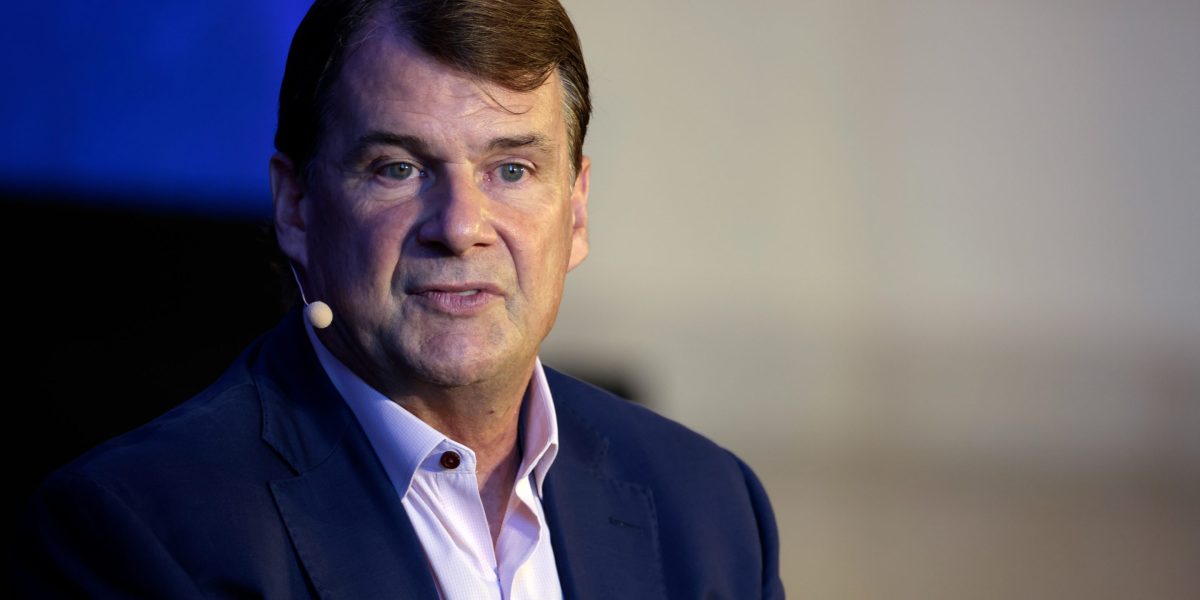
  • Ford CEO Jim Farley strikes a cautious tone on Apple’s new CarPlay Ultra and its increasing control over cars: ‘Do you want the Apple brand to start the car?’

    Ford CEO Jim Farley strikes a cautious tone on Apple’s new CarPlay Ultra and its increasing control over cars: ‘Do you want the Apple brand to start the car?’

    Automakers are in revolt over Apple CarPlay, and some, like Ford CEO Jim Farley, are questioning how much control the tech company should have over a car’s systems.

    At the center of the conflict between Big Tech and Big Auto is CarPlay Ultra, the newest version of the popular CarPlay system that can mirror a user’s iPhone interface on a screen within a vehicle. Announced earlier this year, CarPlay Ultra is going a step further by also displaying car functions like fuel level and speed. It also lets drivers control the air conditioning, radio, and driving modes, all from the same screen. Aston Martin is the only automaker that has fully integrated CarPlay Ultra into its vehicles.

    While Ford is committed to Apple, CEO Farley said “We don’t like the execution of Ultra in round one.” 

    “I’ve talked to Tim [Cook] many times about this. Ford does not have the right, in our opinion, to disrupt someone’s digital life when they get in their car,” Farley told The Verge in an interview.

    Farley later said Apple needs to make a decision on how much it wants to encroach into a vehicle’s systems. Giving an outside company power over a car’s mechanics could be a slippery slope, he added.

    “How far do you want the Apple brand to go? Do you want the Apple brand to start the car? Do you want the Apple brand to limit the speed? Do you want the Apple brand to limit access?” asked Farley.

    The conflict over Apple CarPlay heated up earlier this year when GM CEO Mary Barra said the company’s future vehicles would no longer support Apple CarPlay or its Google counterpart, Android Auto. The company first began phasing out compatibility for both systems in its EVs in 2023. 

    Since the release of CarPlay Ultra, other automakers, including Audi, Mercedes-Benz, Polestar, Volvo, and Renault, currently have no plans to integrate the new system into their cars, the Financial Times reported, despite Apple touting them as committed in a 2022 WWDC announcement. 

    Carmakers are in a tough spot as Apple CarPlay and Android Auto are considered must-haves for many new car buyers, according to preliminary data from research firm AutoPacific. A McKinsey report from 2023 found that 85% of car owners who had CarPlay or a similar system preferred it over the carmaker’s operating system.

    Still, the data hasn’t yet persuaded carmakers enough to give up control of the dash. Mercedes introduced its own Mercedes‑Benz Operating System (MB.OS) that combines infotainment and car functions. Other car companies like Toyota and Volvo are also developing their own systems, according to the Daily Mail.

    Whatever Ford ultimately decides on CarPlay Ultra, it is clear to Farley that a car’s digital experience is quickly becoming one of its most important specs.

    “The difference between car companies where you have a software-defined vehicle is not going to be what your sheet metal looks like. It won’t be how powerful your EV motor is. That’s all math. All the cars look nice. It’s going to be this digital experience that says why someone buys this or that,” he said.

    Continue Reading

  • Norwegian Cruise Line Holdings Ltd. (NCLH)

    Norwegian Cruise Line Holdings Ltd. (NCLH)

    – Starting Today, the Popular Free at Sea™ Package is Back and Better Than Ever Delivering Additional Perks to More Guests –

    – The Black Friday Sale is Applicable Across All Itineraries and Ships, Including the All-New Norwegian Aqua and Soon-to-Debut Norwegian Luna

    MIAMI, Nov. 5, 2025 /PRNewswire/ — Norwegian Cruise Line® (NCL), the innovator in global cruise travel, today announced its highly anticipated best sale of the year for Black Friday, offering 50% off all cruises plus the guest-favorite Free at Sea™ package, back by popular demand.

    Beginning today, Nov. 5, the limited-time Black Friday sale applies to all Norwegian itineraries and ships, including the all-new Norwegian Aqua™ and the soon-to-debut Norwegian Luna™. Sailing to nearly 350 destinations around the world, guests can take advantage of this offer to book their next bucket-list trip to Alaska, Europe, the Caribbean, the Bahamas—including NCL’s private island, Great Stirrup Cay—and more.

    “With 50% off all cruises, now is the best time to plan your 2026 family vacation,” said Harry Sommer, president and chief executive officer of Norwegian Cruise Line Holdings Ltd. “Norwegian’s curated itineraries and shipboard experiences allow our guests to effortlessly reconnect with those who matter all while maximizing value to make the most of every moment.”

    Building on Norwegian’s legacy of freedom and flexibility, NCL is bringing back one of its most popular promotions – Free at Sea™. The package, available for all sailings beginning today, offers guest-favorite amenities valuing over $2,000 in savings, including the most valuable beverage package at sea, Wi-Fi, dining experiences and shore excursion credits. Free at Sea™ is the most convenient way to sail and now, the package has been simplified to provide a more effortless and consistent offer to more guests.

    For a standard seven-night sailing, the enhanced Free at Sea™ package includes: unlimited open bar including premium spirits, 20% off all bottles of champagne or wine, 150 minutes of high-speed internet, discounts off upgrades to the unlimited Wi-Fi package, three multi-course specialty dining meals for the first and second guest on the reservation and a $50 credit off each shore excursion for the first guest on the reservation. This improved Free at Sea™ package is tailored to deliver more value to a greater percentage of guests as an expanded number of them will receive additional Wi-Fi minutes, enjoy added savings on the unlimited beverage package, and more dining credits. Guests are only responsible for covering gratuities, making it an incredible value that far exceeds land-based offerings. On over 650 select NCL sailings, kids can also sail free, and with free airfare for the second guest, Free at Sea™ makes it easier than ever for families to travel together.

    Offering something for everyone, Norwegian redefines family travel with an array of industry-exclusive experiences and exceptional value, making it a premiere choice for multi-generational cruising. Guests of all ages can enjoy a thoughtfully curated selection of onboard activities designed to appeal to every generation. From thrilling attractions like the world’s first hybrid rollercoaster waterslide and the only racetracks at sea, to tranquil afternoons at the award-winning Mandara Spa – recognized by Cruise Critic as the “Best Spa at Sea” – NCL offers something for every type of traveler. Norwegian’s world-class dining caters to a range of tastes, featuring a variety of culinary options including premium steakhouses, French bistros, hibachi-style venues, authentic Italian cuisine and more. Whether seeking adventure or relaxation, families will find that cruising with NCL delivers unforgettable moments at sea with the people who matter most. With Black Friday deals available now, it is the perfect time for families to start planning their 2026 summer vacations.

    Island Hopping Through the Caribbean & Bahamas

    In 2026, NCL will offer an expansive lineup of 18 ships sailing the Caribbean and Bahamas, including the all-new Norwegian Luna™. Debuting in Spring 2026, NCL’s newest ship will feature many of the same renowned offerings of sister ship Norwegian Aqua including the Aqua Slidecoaster. With fun-in-the-sun itineraries ranging from convenient three-day getaways to 10-day voyages, guests have the flexibility to create their dream cruise vacation.

    Guests can sail the Caribbean from nine convenient homeports including Miami, Port Canaveral, Jacksonville, and Tampa, Fla.; Galveston, Texas; New Orleans; New York City; Punta Cana, Dominican Republic; and San Juan, Puerto Rico. These sailings feature calls to some of the region’s most beautiful islands, such as St. Thomas, U.S. Virgin Islands; Tortola, British Virgin Islands; Willemstad, Curacao; Oranjestad, Aruba; George Town, Grand Cayman, and more across the Eastern Caribbean. Western Caribbean highlights include Cozumel and Costa Maya, Mexico; Roatan, Honduras; and Harvest Caye, NCL’s resort destination in Belize.

    Many of Norwegian’s Caribbean and Bahamas voyages include a visit to the Brand’s exclusive private island destination, Great Stirrup Cay. The island is being enhanced to provide guests with more exciting experiences to “escape to the great life.” Opening later this year, guests will be able to enjoy a new 1.4-acre pool area complete with swim-up bars and a dedicated kids splash zone, as well as an all-new Vibe Shore Club, the adults-only area featuring a chic ambiance and plenty of loungers and umbrellas. And, beginning Summer 2026, guests will be among the first to experience the debut of the Great Tides Waterpark featuring 19 thrilling water slides, cliff jumps and a dynamic river. 

    Majestic Sailings Across the Alaska Coastline

    For travelers seeking to unplug and reconnect with the great outdoors, Norwegian’s Alaska sailings offer a once-in-a-lifetime experience. Cruising remains the most immersive way to explore the region, granting access to remote corners of Alaska’s natural beauty, such as Glacier Bay National Park, which is not accessible by road.

    Next summer, NCL will sail three of the Company’s largest ships– Norwegian Encore®, Norwegian Joy® and the recently renovated Norwegian Bliss® in the region. Guests can choose from week-long, nine-day and 10-day sailings departing conveniently from Seattle, Vancouver, British Columbia and Whittier, Alaska.

    For an extended trip along the scenic Alaska coastline, Norwegian Joy will sail nine and 10- day voyages from Seattle, with visits to Sitka, Juneau, Skagway and Icy Strait Point, Alaska and more. For travelers craving a truly unique experience of two sought-after destinations, Norwegian Spirit® will sail 16-day Fire and Ice voyages between Honolulu and Vancouver, British Columbia with visits across Alaska and the Hawaiian Islands from mid-July through mid-September 2026.

    Immersive Experiences Throughout Europe’s Top Destinations

    Norwegian sails from many of Europe’s most iconic cities including Barcelona; Lisbon, Portugal; Rome; Athens; Copenhagen, Denmark and others. In 2026, Norwegian will have nine ships sailing across the Mediterranean, Greek Isles and North Europe regions, including Norwegian Viva®, one of the newest NCL ships.

    These immersive European itineraries allow guests to explore multiple countries in a single voyage, with minimal sea days and extended port stays – often featuring over 10 hours in port – giving families the opportunity to be present, connect, and create lasting memories in culturally rich destinations.

    For the latest holiday deals available through the end of the year, guests are encouraged to visit NCL.com.

    For more information about the Company’s award-winning fleet and worldwide itineraries, or to book a cruise, please contact a travel professional, call 888-NCL-CRUISE (625-2784), or visitwww.ncl.com.


    About Norwegian Cruise Line

    As the innovator in global cruise travel, Norwegian Cruise Line® has been breaking the boundaries of traditional cruising for 59 years. Most notably, the cruise line revolutionized the industry by offering guests the freedom and flexibility to design their ideal vacation on their preferred schedule with no assigned dining and entertainment times and no formal dress codes. Today, the company continues to deliver curated, effortless experiences that cater to every type of traveler – from seasoned cruisers to families of every size. With award-winning entertainment, globally inspired dining and thoughtfully designed accommodations, including solo staterooms, Club Balcony Suites, and The Haven by Norwegian®, the brand’s exclusive ship-within-a-ship concept, NCL ensures every guest enjoys a seamless and personalized journey. To further deliver guests with more value, the Company’s signature Free at Sea™ package provides added benefits and inclusions such as unlimited open bar; specialty dining credits; high-speed Wi-Fi; shore excursions credits; and with select sailings guests can enjoy free airfareas well as third and fourth guests sail free. Its fleet of 20 contemporary ships sail to nearly 350 of the world’s most desirable destinations, including Great Stirrup Cay, the company’s private island in the Bahamas and its resort destination Harvest Caye in Belize. For additional information or to book a cruise, contact a travel professional, call 888-NCL-CRUISE (625-2784) or visit www.ncl.com. For the latest news and exclusive content, visit the NCL Newsroom and follow Norwegian Cruise Line on Facebook, Instagram, Tik Tok and YouTube @NorwegianCruiseLine; and Twitter @CruiseNorwegian.

    Norwegian Cruise Line is a wholly owned subsidiary of Norwegian Cruise Line Holdings Ltd. To learn more, visit www.nclhltd.com.

    Norwegian Cruise Line

    Cision View original content to download multimedia:https://www.prnewswire.com/news-releases/norwegian-cruise-line-announces-biggest-sale-of-the-year-for-black-friday-50-off-all-cruises-plus-the-return-of-the-guest-favorite-free-at-sea-package-302605966.html

    SOURCE Norwegian Cruise Line

    Continue Reading