Category: 3. Business

  • Instagram breach reportedly exposes sensitive data belonging to 17.5M accounts

    Instagram breach reportedly exposes sensitive data belonging to 17.5M accounts

    A woman holds a smartphone displaying the Instagram logo on the loading screen in Chiang Mai, Thailand, April 6, 2021. (Adobe Stock Photo)

    January 11, 2026 10:41 AM GMT+03:00

    Instagram, one of the world’s most popular social media platforms owned by U.S.-based tech giant Meta, is reportedly facing a major cybersecurity crisis after hackers reportedly got their hands on the personal information of around 17.5 million users.

    The leaked data may include usernames, email addresses, phone numbers, and even physical addresses—enough to raise serious privacy concerns.

    More to Read

    Password reset chaos raises fears of coordinated attack

    According to user reports from around the world, the trouble began in the early hours of Jan. 8, when people started receiving password reset emails they hadn’t requested. The messages looked legitimate; they came from Instagram’s official domain, used proper formatting, and featured the familiar branding.

    Yet confusion spread quickly as recipients found no record of these emails within the app’s security history and continued to receive them even after changing their passwords manually.

    At first, the wave of password reset emails led some to suspect a technical glitch or a misconfigured email system. But as reports multiplied and the pattern became clearer, it pointed to a deliberate and malicious act, possibly affecting 17.5 million accounts, according to cybersecurity firm Malwarebytes.

    Cybercriminals are believed to have used the compromised data to trigger legitimate password reset requests, possibly to test which accounts were still active or to attempt unauthorized access.

    Screenshot of a legitimate-looking Instagram password reset email that was sent to users on January 8, 2026. (Image via X/@Malwarebytes)

    Screenshot of a legitimate-looking Instagram password reset email that was sent to users on January 8, 2026. (Image via X/@Malwarebytes)

    Meta denies breach, blames e-mail trigger bug

    CyberInsider, a cybersecurity news outlet, reported that the stolen data is already being sold on the dark web and that the breach may be linked to an unpatched API vulnerability in Instagram from 2024, which could have allowed large-scale data extraction.

    However, a Meta spokesperson said that there was no data breach and that Instagram accounts remain secure, the British news outlet Daily Mail reported. The spokesperson explained that the issue was caused by a bug that allowed an external party to trigger password reset emails for some users, adding that the problem has since been fixed.

    In the meantime, cybersecurity experts are urging users to take immediate action to protect their accounts. They advise against clicking on any links in unsolicited password reset emails, regardless of how legitimate they may seem.

    Instead, users should manually reset their passwords through the Instagram app and activate Two-Factor Authentication (2FA) to add an extra layer of security.

    January 11, 2026 10:41 AM GMT+03:00


    Continue Reading

  • Renewables Jobs See First Slowdown Amid Global Deployment Growth

    Renewables Jobs See First Slowdown Amid Global Deployment Growth

    New report calls for stronger public role in building domestic supply chains and inclusive workforce.

    Abu Dhabi, UAE/Geneva, Switzerland, 11 January 2026 – Despite renewable energy installations hitting a new peak, jobs in the sector only increased by 2.3% from 2023, reaching 16.6 million in 2024. The newly released Renewable Energy and Jobs – Annual Review 2025 by the International Renewable Energy Agency (IRENA) and the International Labour Organization (ILO) highlights the increasing impact of geopolitical and geoeconomic frictions, as well as growing automation, to the renewable energy workforce.

    As in previous years, uneven development continues across the world. China remains the preeminent force in both deployment of generating capacities and equipment manufacturing, mainly due to its integrated, large-scale supply chains that deliver equipment at unmatched prices.

    In 2024, China created an estimated 7.3 million renewable energy jobs, or 44% of the global total. The EU followed suit with the same total as in 2023 at 1.8 million jobs. Brazil’s renewables employment runs to 1.4 million, while India’s and the United States’ barely grew from around 1 million to 1.3 million and 1.1 million, respectively.

    Commenting on this trend, IRENA Director-General, Francesco La Camera, said, “Renewable energy deployment is booming, but the human side of the story is as important as the technological side. Governments must put people at the centre of their energy and climate objectives through trade and industrial policies that drive investments, build domestic capacity, and develop a skilled workforce along the supply chain. The geographical imbalance of the job growth reminds us to get international collaboration back on track. Countries that are lagging behind in the energy transition must be supported by the international community. This is essential not only to meet the goal of tripling renewable power capacity by 2030, but also to ensure that socio-economic benefits become lived realities for all, helping to shore up popular support for the transition.”

    In terms of employment by technology, solar photovoltaics (PV) retains the lead, owing to the continued rapid expansion of installations and panel manufacturing plants. The industry employed 7.3 million people in 2024. Asian countries hosted 75% of the world’s PV jobs with China garnering the bulk of the employment at 4.2 million.

    Liquid biofuels follow after solar PV, creating 2.6 million jobs in 2024 with 46.5% of the total jobs generated in Asia. Hydropower came in third place with 2.3 million jobs, and wind follows with 1.9 million jobs.
    Beyond the numbers, this edition of the annual report underscores the need for more inclusion and equity in the renewable energy workforce. A just transition demands that no population groups—such as women and people with disabilities—are left at the margins. The renewables-based energy future must be shaped by diverse talents and perspectives. To this day, both groups’ potential remains under-utilised, which calls for deliberate, multifaceted and systemic action.

    ILO Director-General, Gilbert F. Houngbo highlighted that “A just transition to a renewables-based future must be grounded in inclusion, dignity, and equal opportunity. As countries scale up renewable energy investments and job creation, we have a particular responsibility to ensure that accessibility for persons with disabilities – who too often face barriers to inclusion in labour markets despite their skills, experience and talent – is built into every stage of policy design and implementation. This requires accessible training systems, inclusive hiring practices, and workplaces that accommodate, welcome and respond to diverse needs and respect every worker’s rights. Disability inclusion is not only a matter of justice; it is essential for resilient labour markets and sustainable development. By removing barriers to equality and promoting decent work, we strengthen economies and ensure that the energy transition truly works for all.”

    Fostering a culture that respects diversity and upholds inclusion and fairness requires sustained, inclusive policy frameworks including accessible education and training, labour market services, and other measures. Designing and shaping such policies requires that all stakeholders have a seat at the table, especially those who are all too readily sidelined. Discriminatory practices and outdated social and cultural norms must be left in the past for the energy transition to truly drive more successful economies for all members of the community.

    This 12th edition of the Annual Review is part of IRENA’s extensive analytical work on the socio-economic impacts of a renewables-based energy transition. This is the 5th edition developed in collaboration with ILO. Building on its expertise on the world of work, the ILO contributed the report’s chapter on inclusion of people with disabilities.

    Read the full report here. 

    Continue Reading

  • Digital euro ‘only defence’ against deepening US control of money, economists warn

    Digital euro ‘only defence’ against deepening US control of money, economists warn

    Stay informed with free updates

    More than 60 economists have implored EU parliamentarians to back the digital euro, warning the Eurozone would “lose control” of its own money and become more dependent on US companies were the project to fail.

    “A strong public digital euro is not a nice-to-have, it is an essential safeguard of European sovereignty, stability, and resilience,” the economists, including French academic Thomas Piketty, argue in an open letter to MEPs ahead of a European parliament hearing on the subject next week.

    The European Council has supported the European Central Bank’s plan to launch an electronic equivalent to cash by 2029. But it is unclear if the proposal will receive the necessary backing by a majority of the European parliament in a crucial vote later this year.

    The 68 signatories of the open letter, who also include European academics such as France’s Eric Monnet, Germany’s Jan Pieter Krahnen and London-based Daniela Gabor, argue the region is overly dependent on US-based digital payments services, potentially exposing it to “geopolitical leverage, foreign commercial interests, and systemic risks beyond Europe’s control”.

    Thomas Piketty © Ludovic Marin/AFP/Getty Images

    Thirteen euro area countries lack any domestic digital payments option, the economists point out, and rely “entirely on international card schemes” such as Visa, Mastercard and PayPal.

    Without naming US President Donald Trump, the letter refers to “recent developments” that have made such risks “more than a hypothetical”.

    “Europe will lose control over the most fundamental element in our economy: our money. A robust public digital euro is our only defence,” they write in the letter sent to the 720 members of the European parliament on Friday and seen by the FT.

    Europe’s banking industry has been lobbying to scale down the digital euro project. In November, 14 of the region’s biggest lenders, including Deutsche Bank, BNP Paribas and ING, warned that the digital euro could undermine private sector efforts in Europe to rival US payment systems.

    Germany’s Banking Industry Committee, the country’s top banking lobby group, has called the ECB’s plans “too complex” and “too expensive”, warning that it offered “little tangible benefit for consumers”.

    Fernando Navarrete, a conservative MEP from Spain appointed by the European parliament to assess the digital euro, has also argued for a significantly scaled-down version of the project.

    The 68 economists urge EU policymakers to “resist the shortsighted financial lobby”.

    The open letter was initiated by Utrecht-based academic think-tank Sustainable Finance Lab and Dutch-based Triodos Bank, a sustainability-focused lender that is supporting the ECB’s plan.

    Triodos chief economist Hans Stegeman, who is among the letter’s signatories, said he thought other banks were concerned that they might lose a fair chunk of deposits from retail clients, who currently represent a cheap and predictable source of funding.

    Under current plans, each individual would be able to hold up to €3,000 in their digital wallet. This money would not be available as a cash deposit for private-sector banks.

    “We want to have a financial system that serves society and not the other way around,” Stegeman said, adding that a public electronic payments system was an important component of that.

    Continue Reading

  • How Bain took over a $1.6bn Native American casino in South Korea

    How Bain took over a $1.6bn Native American casino in South Korea

    Unlock the Editor’s Digest for free

    One of the world’s largest private equity groups is embroiled in an unusual tug of war with a Native American tribe over the future of a sprawling casino complex in Asia.

    The Inspire Resort, with three five-star hotels, a 15,000-seat K-pop arena and a foreigners-only casino, had its grand opening in 2024 by the Mohegan tribe. The development on an island near South Korea’s Incheon international airport was the first outside North America for the tribe, which has a 600-acre reservation in Connecticut.

    But in February Bain Capital, which provided $275mn of financing for the project, called the loan two years early and took control of the project after Mohegan failed to hit covenants related to growth targets.

    The decision shut Mohegan out of a project it had been developing for almost a decade, and led to Bain taking ownership of a foreign casino and gaming licence complete with billions of dollars in refinancing and investment obligations.

    Now Bain is back in talks with Mohegan over a possible return to the $1.6bn project, according to the new leadership of the tribe, which wants to continue to play a role in its flagship overseas venture.

    “Mohegan has put a lot of effort, time and commitment into this project going back 10 years, so we obviously have a keen interest in seeing it through,” said Bobby Soper, Mohegan’s international president.

    “We have had continued discussions with Bain, and I think they understand our position in that regard,” he added. “It’s our hope that we’ll have a resolution that achieves our goals and makes both parties happy, but not at any price and it has to make sense.”

    People familiar with Bain confirmed that it was talking to Mohegan over a possible return to the project, after taking over running the resort itself while exploring bringing on operating partners over the past few months.

    In a statement the private equity firm said: “Bain Capital and Inspire’s management team have worked closely to strengthen operations and enhance the overall guest experience. We remain focused on the resort’s long-term success and continue to have a strong relationship with all stakeholders.”

    Only one South Korean casino is open to domestic customers and so the sector relies almost entirely on foreign tourists, especially from China.

    Although the country’s casino revenues are still a fraction of those generated in the Chinese territory of Macau, industry executives expect booming demand this year. Growing China-Japan tension could drive more Chinese tourists to South Korea instead, while Seoul has also recently restored a visa-free travel policy for Chinese group tourists.

    The Inspire Resort in Incheon competes with domestic rivals such as Paradise, GKL and Lotte Tour.

    The resort initially appeared a success following its soft opening in November 2023, helping Mohegan Gaming to achieve record revenues for the second quarter of 2024.

    But its performance deteriorated by early 2025 as it struggled to attract and retain return visitors.

    Soper said the resort had also suffered from a dramatic decline in foreign tourism in the wake of then-president Yoon Suk Yeol’s botched attempt at imposing martial law in South Korea in December 2024.

    He added that even accounting for the fact that such resorts tend to face challenges in their early stages, the business “did not grow as quickly as anticipated”.

    Soper also said the casino had even had an unhelpful string of winning customers.

    “The players [at the casino] were very lucky,” said Soper. “That’s fine, it’s the nature of the business, but when you’re growing at the beginning and you’re building your customer database it creates further challenges.”

    A person familiar with Mohegan’s operations in South Korea said the casino operator had also struggled to cater to a different customer base in Asia, including by neglecting provisions for guests to arrive by public transport.

    A second person familiar with the talks between the two companies said Bain had been concerned about its exposure but “ended up with more on their plate than they bargained for”.

    The person also said Bain could have found itself in a “legal grey area” over the casino licence, although other people close to Bain rejected this as a concern.

    Soper said Mohegan had been that surprised Bain had called the loan. “It’s one thing if you miss an interest payment or a principal payment, but in this case it was simply missing a covenant,” he said.

    Mohegan “still believes that Korea represents a long-term opportunity”, he added. “North America has a limited supply of opportunities.”

    The resort has returned to operating profit and visitor numbers and gaming revenue have been rising this year, the people close to Bain said.

    Soper said Mohegan had invested more than $300mn in equity in the casino project and said any terms for its re-entry to the project remained to be negotiated.

    “There’s outstanding claims on both sides, and perhaps a solution could be to participate back in the project whether as an owner or a manager or both — but those are discussions we still need to have,” he said.

    Additional reporting by Song Jung-a in Seoul

    Continue Reading

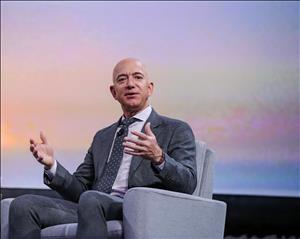
  • Amazon founder Jeff Bezos announces he’s leaving Seattle on November 1, 2023.

    Amazon founder Jeff Bezos announces he’s leaving Seattle on November 1, 2023.

    On November 1, 2023, Amazon founder and former CEO Jeff Bezos announces in an Instagram post that he is leaving Seattle after nearly 30 years and moving to Miami. No stranger to the Sunshine State, the billionaire and tech entrepreneur spent his teenage years there where he worked at a McDonald’s and graduated as class valedictorian in 1982 from Miami Palmetto High School. Bezos says he wants to be closer to his parents, who recently moved to Florida. Also, Miami is more convenient for his frequent trips to Cape Canaveral, a prime launch site for Blue Origin, the aerospace technology company founded by Bezos in 2000. At the time of the announcement, Bezos is believed to be the second-wealthiest man in the U.S. and the third-richest in the world with a net worth of $161 billion.

    “A Piece of My Heart”

    An Instagram post written by Jeff Bezos (b. 1964) created a frenzy of media attention when it appeared on November 1, 2023: Bezos was leaving Seattle to move to Miami. The post included a 1994 video tour of Amazon’s first office, a garage attached to a three-bedroom Craftsman-style house in Bellevue, where Bezos was living at the time. His father shot the original hand-held footage. In the video, Bezos points out several computers, a dry-erase board covered with notes, and a fax machine sitting on a filing cabinet. At the end of the footage, a youthful Bezos proclaims, “And, uh, that’s about it … It doesn’t take long to tour the offices of Amazon-dot-com Inc.” (Mike Ives).

    Noting it was both an exciting move and an emotional one, Bezos wrote that he wanted to be closer to his parents, Jacqueline and Miguel Bezos, who had recently relocated to Florida. In noting the bittersweet nature of the announcement, Bezos said: “I’ve lived in Seattle longer than I’ve lived anywhere else and have so many amazing memories here … Seattle, you will always have a piece of my heart” (“Jeff Bezos is Leaving …”).

    Bezos’s career path took a few turns before he arrived in Seattle in 1994. He graduated summa cum laude from Princeton in 1986 with a bachelor of science in engineering and went to work at several Wall Street investment firms. Inspired by the explosive growth of the internet, he left New York and moved to Seattle, a region already home to Microsoft. There he began a start-up business as an online bookstore; “Amazon” was his third choice for a company name. After launching a beta version of his e-tail site, Bezos moved the business into the SODO neighborhood south of downtown Seattle. Amazon.com officially launched on July 16, 1995. By its second year, the company had 11 employees, and within six years, it had grown to 9,000 workers.

    At the time he announced the Florida move, Amazon employed about 65,000 workers at campuses in Seattle’s South Lake Union neighborhood and Bellevue. Worldwide, Amazon employees numbered about 1.5 million by the end of 2023. Two years earlier, in 2021, Bezos had stepped down as CEO, turning the company over to Andy Jassy (b. 1968), the former head of Amazon Web Services, the company’s cloud-computing division. Although Bezos retained the title of executive chair, he devoted much of his time to overseeing his two other interests: Blue Origin, a space travel company, and the Washington Post.

    An Outsized Corporate Footprint

    Although Amazon has plenty of critics, there is no denying that the company had significant impact on Seattle. “As Amazon grew over the years into a colossus of internet commerce, becoming the world’s largest retail seller outside China in 2021, it poured billions of dollars into Seattle’s economy and helped to reshape its global reputation. But Amazon has faced pushback from workers and regulators over its labor practices and corporate tactics. And Mr. Bezos, who owns The Washington Post and the world’s largest sailing yacht, among other things, has plenty of detractors in Seattle and beyond” (Mike Ives).

    The dramatic economic and job-creation growth engendered by the company’s success had its downside in an affordable-housing crisis and transportation headaches. Bezos tried to ameliorate some of these issues through numerous charitable donations. In 2018, he created the Bezos Fund, allocating $2 billion to preschools, low-income communities, and nonprofit organizations such as Mary’s Place, which provides shelter and outreach for homeless women, children, and families. The environment was also one his favorite causes. “Some of Bezos’ most benevolent pledges have been toward combatting climate change. Amazon secured the naming rights to the former Key Arena, but rather than slapping the company’s logo atop the famous roof, Bezos saw it as an opportunity. Climate Pledge Arena, the home of the Seattle Kraken, brands the facility’s sustainability efforts” (“Seattle’s Frenemy”). The arena naming rights were estimated to cost the company between $300 million and $400 million.

    There was speculation that Bezos’s decision to relocate was a result of Washington’s new capital-gains tax and a wealth-tax proposal. Florida had neither. Just months before he made his announcement, in March 2023, Washington’s Supreme Court upheld a controversial capital-gains tax after years of legal appeals that would levy a 7 percent tax on financial assets, such as stocks and bonds. Neither state has a state income tax. 

    Properties Here and There

    Before the relocation announcement, Bezos had purchased two homes in the Miami area. One was a waterfront mansion in Indian Creek, a barrier island near the greater Miami area, for which he paid $68 million in August 2023. In October of that year, he purchased the mansion next door for $79 million. Around the same time, In November 2023, Amazon began looking to lease 50,000 square feet of office space in Miami where the company employed 400 workers. However, an Amazon spokesperson noted that the office-space search was already in the works before Bezos announced his relocation plans. “Rather than being connected to Bezos’s move, the search is driven by Amazon’s ‘organic growth’ in the area, the spokesperson said” (“Is Amazon Following …”).   

    Also at this time, Bezos listed his property at Yarrow Point on the east side of Lake Washington for $4.4 million. The home, built in 2018, had five bedrooms and 4,300-square feet of space; it sold for $4.2 million in January 2024. The Yarrow Point home is just one of the estimated $190 million worth of Washington real estate owned by the billionaire.

    In addition to moving closer to family, Bezos welcomed the opportunity to be closer to Cape Canaveral, a space hub just over 200 miles north of Miami. The aerospace manufacturing company, Blue Origin, which Bezos had launched in 2000 in Kent, had been increasingly shifting its focus to Florida. Earlier that year, in May 2023, Blue Origin won a $3.4 billion contract from NASA to develop a lunar-landing system. The project would help support the Artemis program, which is working to develop a spacecraft to transport people from Earth to the moon. Blue Origin had previously lost out on an earlier NASA contract that had gone to another privately owned space travel company, SpaceX, owned by Elon Musk.


    Sources:

    HistoryLink Online Encyclopedia of Washington State History, “Amazon: The Early Years (1995-1999)” (by Jennie Cecil Moore) www.historylink.org (accessed November 1, 2025); “Jeff Bezos is Leaving Seattle, Moving to Miami,” The Seattle Times, November 2, 2023, Section: Business (seattletimes.com); Lauren Rosenblatt, “What Amazon Founder Jeff Bezos’ Move from Seattle Has to do with Taxes,” Ibid., November 3, 2023, Section: Business; Lauren Rosenblatt, “Bezos’ Plan to Move Sparks Speculation about His Motives,” Ibid., November 4, 2023, p. A-1; Lauren Rosenblatt, “Is Amazon Following Jeff Bezos to Miami? Not Exactly,” Ibid., November 28, 2023, Section: Business; “Jeff Bezos to Sell a Seattle-Area Property,” Ibid., December 8, 2023, p. A-16; Alex Halverson, “Seattle’s Frenemy,” Puget Sound Business Journal, July 2, 2021; Alex Halverson, “NASA Taps Blue Origin for Moon Landing Mission,” Ibid., May 19, 2023; Alex Halverson, “Amazon Founder Jeff Bezos to Leave Seattle for Miami,” Ibid., November 2, 2023; J. C. Carnahan and Marissa Nall, “Blue Origin Launches New Glenn Rocket to Orbit,” Ibid., January 16, 2025 (www.bizjournals.com/seattle); Mike Ives, “Bezos to Move to Miami Area from Seattle,” The New York Times, November 4, 2023, p. B-4.


    Licensing: This essay is licensed under a Creative Commons license that
    encourages reproduction with attribution. Credit should be given to both
    HistoryLink.org and to the author, and sources must be included with any
    reproduction. Click the icon for more info. Please note that this
    Creative Commons license applies to text only, and not to images. For
    more information regarding individual photos or images, please contact
    the source noted in the image credit.


    Major Support for HistoryLink.org Provided
    By:
    The State of Washington | Patsy Bullitt Collins
    | Paul G. Allen Family Foundation | Museum Of History & Industry
    | 4Culture (King County Lodging Tax Revenue) | City of Seattle
    | City of Bellevue | City of Tacoma | King County | The Peach
    Foundation | Microsoft Corporation, Other Public and Private
    Sponsors and Visitors Like You

    Continue Reading

  • The FTSE 100 has hit a record high. Is now the time to start investing?

    The FTSE 100 has hit a record high. Is now the time to start investing?

    People can invest their money in many different ways and in different things. Various apps and platforms have made it easy to do.

    Crucially, the value of investments can go up and down. Invest £100 and there is no guarantee that the investment is still worth £100 after a month, a year, or 10 years.

    But, in general, long-term investments can be lucrative. The rise of the FTSE 100 is evidence of that. Shareholders may also receive dividends, which they could take as income or reinvest.

    For years, the advice has been to treat investments as a long-term strategy. Give it time, and your pot of money will grow much bigger than if it was in a savings account.

    In contrast, cash savings are much more steady and safe. The amount of interest varies between account providers, but savers know what returns will be. Savings rates have held up quite well over the last year, but interest rates are generally thought to be on the way down.

    Savings accounts are popular when putting money aside for emergencies, or for holidays, a wedding or a car – for one predominant reason: you can usually withdraw the money quickly and easily.

    “It is important that everyone has savings. It gives you access when you need it,” says Anna Bowes, savings expert at financial advisers The Private Office (TPO).

    “It means you do not need to cash out your investments at the wrong time.”

    Continue Reading

  • Potholes map rates council road repair progress

    Potholes map rates council road repair progress

    The government committed £7.3bn in November’s Budget to fix roads over the next four years.

    The DFT rated 154 local highway authorities as red, amber or green based on road conditions and how well they were using government funds.

    The vast majority were rated as amber, meaning they were patching up roads and had preventative measures in place but there was still room for improvement.

    Derbyshire – once rated the “pothole capital of the UK” – scored the lowest for road maintenance.

    In December, the RAC found that Derbyshire had received the biggest increase in claims for compensation for potholes between 2021 and 2024. The council’s cabinet member for potholes, highways and transport, Charlotte Hill, said claims had fallen by 72% since May 2025.

    Councils rated red will receive extra support, including an additional £300,000 each, to help them improve.

    The government said that future funding would be “linked to performance” to encourage councils to use “taxpayer money efficiently to repair and maintain their roads before potholes form”.

    Continue Reading

  • PSX hits uncharted highs in bullish week on liquidity surge – Dawn

    1. PSX hits uncharted highs in bullish week on liquidity surge  Dawn
    2. Equities extend losses on profit-taking  Dawn
    3. Bulls dominate as KSE-100 breaks past 186,000 mark  Geo News
    4. CY26 buying, macros propel PSX further higher  The Express Tribune
    5. PSX trades mixed as investors adopt cautious approach  Daily Times

    Continue Reading

  • American families struggle with soaring energy prices

    American families struggle with soaring energy prices

    Danielle KayeBusiness reporter

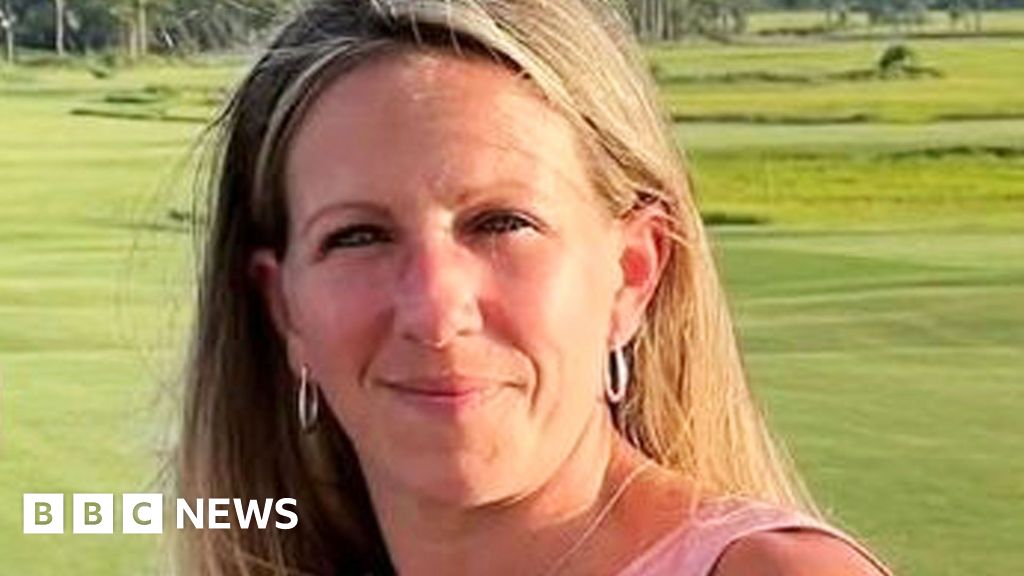
    Kristy Hallowell A woman wearing a pink shirt holds a glass while posing in front of a green lawn.Kristy Hallowell

    Kristy Hallowell was left without electricity at her home in Greenwood Lake, New York for half of 2025

    Kristy Hallowell had just lost her job when her energy bill unexpectedly tripled to $1,800 a month.

    Unable to pay, her gas and electricity were cut off and she, her two children and her mother spent six months of last year relying on a generator to light and heat their house.

    The 44-year-old is one of millions of Americans who have fallen behind on their energy bills as prices have soared over the past year.

    The electricity is now back on at her home in Greenwood Lake, New York, after a local non-profit helped reach an agreement with the utility to accept a partial payment.

    But the gas is still off and electricity bills keep mounting this winter, leaving her in fear of another shut-off. She said she now had about $3,000 in utility debt.

    “This has been traumatic, to say the least,” she said.

    Nearly one in 20 households are at risk of having their utility debt sent to collections heading into the winter months, according to a recent report.

    The number of households with severely overdue utility debt rose by 3.8% in the first six months of Trump’s second term, the analysis of consumer credit data, compiled by the Century Foundation and Protect Borrowers, found.

    Residential energy bills have emerged as a key cost-of-living concern among American consumers, as many buckle under the weight of rising prices and sour on US President Donald Trump’s handling of the economy.

    Official economic data from November shows electricity prices rose 6.9% from the year before – much faster than overall inflation.

    Trump, who during his campaign said he would cut energy bills in half, has claimed that costs are falling. “Costs under the TRUMP ADMINISTRATION are tumbling down, helped greatly by gasoline and ENERGY,” he posted on social media in November.

    The White House blames former President Joe Biden and US central bank interest rates for the lingering economic pain.

    But in the wake of Democratic wins in recent state and city elections and polls showing waning consumer confidence, the Trump administration has shifted its messaging to focus on affordability, in a bid to allay voter anxiety about the cost of living in the US.

    At the same time, the federal government has proposed slashing the funds it gives to states to help low-income residents pay their utility bills.

    Experts also warn that the Trump administration’s rollback of clean energy projects – including its recent decision to pause leases for offshore wind energy projects being built near the Atlantic coastline – could drive electric bills even higher.

    “This is going to be a huge deal, both as a policy matter and a political matter,” said Alex Jacquez, chief of policy and advocacy at the Groundwork Collaborative, a progressive economic think tank.

    Laurie Wheelock, executive director of the Public Utility Law Project of New York, said many of her clients – low-income utility customers in New York state seeking help with their bills – have let utilities fall to the side as rent, health insurance and other costs keep getting more expensive.

    In 2025, the non-profit saw an increase in utility account terminations for unpaid bills, Ms Wheelock said.

    Before the pandemic, clients who approached the organisation typically owed $400 to $900 in utility debt. Now, people often owe upwards of $6,000, she said.

    “There’s been this difficult mix of increased costs and financial instability,” she added.

    Winter heating costs are expected to jump 9.2% this season, according to the National Energy Assistance Directors Association, driven by rising electricity and natural gas prices and unusually cold weather.

    Energy bills tend to be among the highest in the northeast US, the report shows. But households from California to Georgia to South Dakota are also feeling the strain of rising costs over the past year.

    Power-hungry tech companies

    There are several reasons for rising residential energy costs, analysts say.

    For one, the price of natural gas, which is a crucial component of nearly half of electricity generation in the US, has jumped over the past year. The natural gas industry is pushing more and more production overseas, contributing to higher domestic prices.

    Electricity generation is “being saddled with ever-increasing costs of fuel”, said John Quigley, a senior fellow at the Kleinman Center for Energy Policy at the University of Pennsylvania.

    Recent shifts away from clean energy investments could also be at play. A report from the climate advocacy group Climate Power cites the Trump administration’s cancellation of projects that would have produced enough electricity to power the equivalent of 13 million homes.

    The gutting of clean energy projects has contributed to a 13% jump in electricity bills since Trump returned to the White House, the report found, as the US increases its dependence on foreign oil.

    AFP via Getty Images An aerial view shows cooling vent fans on the roof next to generators on the lower level of a Digital Realty data centre in Ashburn, VirginiaAFP via Getty Images

    Energy-hungry data centres have proliferated in places like Virginia

    Another key factor: energy demand from the artificial intelligence boom is straining the power grid.

    Technology companies from Alphabet to Amazon are ramping up their investments in AI infrastructure, and data centres require massive amounts of electricity.

    Continued and increasing electricity demand for data centres is pushing up prices for everyone, Quigley said.

    ‘You can deal with people’s frustrations’

    Treasury Secretary Scott Bessent told ABC News in November that electricity prices were a “state problem”.

    “There are things that the federal government can control. Local electricity prices are not one of them,” he said.

    But some analysts argue that if the federal government were to embrace clean energy, it would help lower prices.

    On the state level, some lawmakers have proposed requiring large data centres to supply their own power, so families don’t shoulder the costs.

    In Virginia, where data centres have proliferated, governor-elect Abigail Spanberger has announced plans to ensure tech companies are “paying their fair share”, encouraging clean on-site and off-site generation and storage at data centres.

    Virginia utility regulators recently authorised a separate rate category for the biggest electricity customers, like data centres, requiring them to pay a larger share to shield other ratepayers.

    “You can deal in the near term with people’s frustrations around prices while dealing with these long-term structural fixes,” said Groundwork Collaborative’s Alex Jacquez.

    But any relief for consumers will take time. Residential energy prices are likely to stay elevated in the coming months.

    Ibrahim Awadallah Ibrahim Awadallah, a 30-year-old man, with a dark beard and moustache and wearing a suit, stands in front of a green lawn.Ibrahim Awadallah

    Ibrahim Awadallah is concerned that a data centre project near his home in Charlotte, North Carolina could drive up electricity costs

    Last year, Ibrahim Awadallah, 30, installed solar panels on his home in Charlotte, North Carolina in the hopes of reducing his energy costs.

    His plan largely worked. His electricity bills tend to be lower than his neighbours’, even taking into account the $180 he pays per month on his solar panel loan.

    Still, in October, Awadallah noticed his bill from his utility company getting more expensive – a roughly 10% increase – even though he was out of town much of the month.

    A telecommunications developer has proposed building a data centre nearby in east Charlotte. Awadallah is concerned that the project, if approved, will drive up electric costs even more.

    “I don’t think things are getting better anytime soon,” he said.

    Continue Reading

  • Google employee made redundant after reporting sexual harassment, court hears

    Google employee made redundant after reporting sexual harassment, court hears

    In 2023, Google started a redundancy process that resulted in the departures of her boss and one of the senior managers who failed to report the sexual harassment, according to court documents.

    In May that year, Woodall took her concerns about a boys’ club culture and the retaliation she was facing to the top of the organisation.

    In her witness statement, she says she met with Debbie Weinstein, then vice president of Google UK and Ireland after hearing from a HR colleague that she was concerned about the team and the experiences of women.

    Following their discussion, Weinstein, now president of Europe, Middle East and Africa, appeared shocked by Woodall’s claims. Court documents show she messaged a member of HR: “Just met Vicki [Woodall]. Holy moly. Want to get you for 10 mins today.”

    Then in November 2023, as Google prepared for a broader reorganisation and redundancy process, Woodall claims there was a final push to remove her from the agency team.

    That month, Weinstein messaged Dyana Najdi, Google’s managing director for UK and Ireland advertising, to say: “keep pushing…for solution on how you can run a process including agency [Woodall’s team]… gotta use this as a chance to exit people”, according to messages of their conversation submitted to court.

    In March 2024, Woodall was made redundant alongside the second senior manager involved in the misconduct investigation, however she remains employed by the company receiving long-term sickness payments for work-related stress, according to her claim.

    Google denies that Woodall was made redundant for whistleblowing, adding that her role was one of 26 across the team and wider department closed, according to its defence.

    It disputes that Weinstein attempted to make Woodall redundant, saying she was very supportive towards her and instigated the investigation into the culture of the agency team.

    The company accepts that Woodall’s report of the manager accused of misconduct was an act of whistleblowing, but denies any retaliation against her, saying the subsequent events were perfectly normal business decisions.

    Continue Reading