Category: 3. Business

  • Japan’s factory activity falls at fastest pace in 19 months, PMI shows

    Japan’s factory activity falls at fastest pace in 19 months, PMI shows

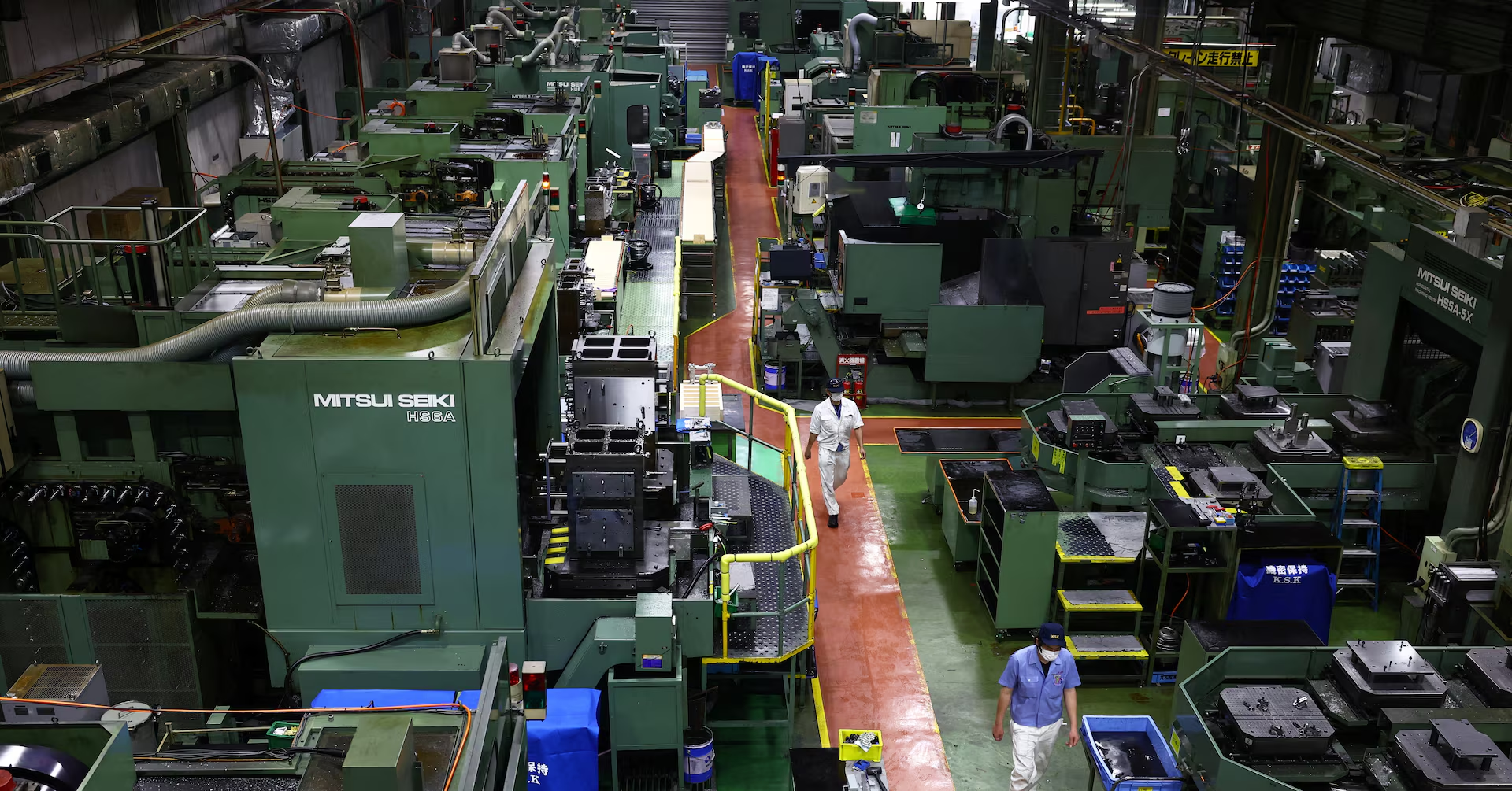
    TOKYO, Nov 4 (Reuters) – Japan’s manufacturing activity shrank in October at the fastest pace in 19 months, hit by slumping demand in the key automotive and semiconductor sectors, a private-sector survey showed on Tuesday.

    The S&P Global Japan Manufacturing Purchasing Managers’ Index (PMI) slipped to 48.2 in October from 48.5 in September, undershooting the flash reading of 49.3 and hitting the lowest since March 2024.

    Sign up here.

    The headline index has remained below the 50.0 mark that separates growth from contraction for four consecutive months.

    New orders dropped at the quickest pace in 20 months, driven by constrained client budgets and weak demand, the survey found. Export orders continued to fall for a 44th month, particularly from Asia, Europe and the United States, but the rate of contraction was the slowest since March.

    “Demand weakness, particularly in the automotive and semiconductor sectors, weighed on the Japanese manufacturing industry,” said Pollyanna De Lima, Economics Associate Director at S&P Global Market Intelligence.

    Despite reduced demand, the drop in production output was less severe than in September, as manufacturers adjusted to shortages in new work, according to the survey.

    Input cost inflation accelerated to a four-month high, driven by rising expenses in labour, materials and transportation. Firms’ output prices rose to a three-month high as they rushed to protect profit margins in response.

    Japanese consumer inflation has been accelerating, government data on prices in Tokyo showed on Friday, keeping the Bank of Japan under pressure after it kept interest rates steady at 0.5% at last week’s policy meeting.

    Manufacturers’ outlook for output turned more optimistic in October, supported by hopes for new products, growing AI adoption and auto and semiconductor sector recoveries as global trade conditions normalise, the PMI survey showed.

    “They generally hope that new product releases will be successful and that the detrimental impact of U.S. tariffs will fade,” De Lima noted.

    Reporting by Kantaro Komiya; Editing by Sam Holmes

    Our Standards: The Thomson Reuters Trust Principles., opens new tab

    Continue Reading

  • Urolithin A recharges aging immune cells and boosts mitochondrial fitness in midlife adults

    Urolithin A recharges aging immune cells and boosts mitochondrial fitness in midlife adults

    A month of Urolithin A supplementation restored youthful energy metabolism in immune cells, hinting at a safe nutritional strategy to counter immune aging and improve resilience to infections.

    Study: Effect of the mitophagy inducer urolithin A on age-related immune decline: a randomized, placebo-controlled trial. Image Credit: CI Photos / Shutterstock

    In a recent study published in Nature Aging, researchers evaluated whether oral Urolithin A (UA), a mitophagy-inducing postbiotic, can remodel immune cell phenotypes and metabolism in healthy middle-aged adults compared with placebo.

    How Aging Impacts Immunity and Mitochondrial Function

    By age 50, many people notice slower recovery, weaker vaccine responses, and lingering infections, signs of immune aging. This process involves a decline in naïve T cells and persistent low-grade inflammation (“inflammaging”).

    Mitochondria, the body’s primary energy generators, and mitophagy, their quality control process, play key roles in maintaining immune balance. When mitophagy falters, immune cells lean toward exhaustion and inflammation. Scientists have hypothesized that safe, food-derived molecules that improve mitochondrial quality could strengthen immunity and enhance vaccine effectiveness, but targeted interventions require further study.

    Randomized Trial Design and Participant Overview

    The trial was randomized, double-blind, and placebo-controlled, enrolling 50 healthy adults aged 45–70 years. Participants received either 1,000 mg of oral UA daily or placebo for 28 days. Assessments occurred at baseline, day 7, and day 28.

    Primary outcomes included changes in CD3⁺ T-cell subsets and immune metabolic remodeling. Secondary endpoints assessed included cytokine levels (IL-6, TNF, IL-1β, IL-10, and IL-2), immune population shifts, mitochondrial measures, and functional assays. PBMCs were analyzed using spectral flow cytometry.

    Measuring Cellular Energy and Mitochondrial Activity

    Single-cell energetic metabolism profiling (SCENITH) evaluated energy pathway use under translational blockade, assessing oxidative phosphorylation (OXPHOS), fatty acid oxidation (FAO), and amino acid oxidation (AAO).

    Mitochondrial content and activity were measured via MitoTracker dyes and PGC-1α, a key regulator of mitochondrial biogenesis. Safety labs and adverse events were tracked throughout, in accordance with CONSORT guidelines, with Institutional Review Board approval.

    Urolithin A Reprograms CD8⁺ T-Cell Function

    UA supplementation reshaped the CD8⁺ T-cell profile toward a “ready-to-respond” state. Compared with placebo, UA increased naïve-like CD8⁺ T cells and Ki-67 expression (linked to proliferation and reinvigoration) while reducing TOX, a transcription factor associated with exhaustion. PD-1 expression was unchanged, and CD4⁺ subsets remained stable, indicating selective CD8⁺ rejuvenation without global activation.

    Quantitatively, UA increased naïve-like CD8⁺ cells by 0.50 percentage points (95% CI 0.16–0.83; P = 0.0437) and boosted FAO/AAO capacity by 14.72 percentage points (95% CI 6.46–22.99; P = 0.0061).

    Enhanced Metabolic Efficiency and Energy Flexibility

    SCENITH analysis revealed that UA reduced glucose dependence and enhanced fatty acid and amino acid oxidation in CD8⁺ T cells, particularly in naïve cells, thereby favoring a durable, oxidative energy profile. NK cells displayed similar metabolic gains, while monocytes stayed glycolytic and CD4⁺ T cells were largely unchanged.

    These changes indicate improved mitochondrial efficiency, characteristic of youthful immune energy management and sustained cellular readiness.

    Broader Immune Remodeling Beyond T Cells

    UA’s effects extended to other immune compartments. Circulating CD56dim CD16bright NK cells and nonclassical monocytes (CD14lo CD16hi) increased, whereas classical monocytes showed fewer HLA-DRhi cells, suggesting reduced inflammatory priming. B-cell and dendritic-cell totals remained stable.

    In CD8⁺ T cells, PGC-1α expression rose, indicating mitochondrial biogenesis balanced by ongoing mitophagy. Despite these shifts, senescence markers (p16, p21, KLRG1, CD57) remained unchanged, suggesting rejuvenation without reversal of senescence.

    Systemic and Cytokine-Level Immune Effects

    At the systemic level, plasma IL-2 decreased without unwanted increases in pro-inflammatory cytokines. Upon ex vivo stimulation, UA-treated CD8⁺ T cells produced more TNF but not IL-4, signifying a stronger type-1 immune response without type-2 skewing.

    Monocytes from UA recipients demonstrated greater phagocytosis of E. coli, suggesting improved bacterial clearance potential. Cytokine analyses involved approximately 15–20 matched samples per cytokine and were exploratory in scope.

    Transcriptomic Insights from Single-Cell RNA Sequencing

    Single-cell RNA sequencing (scRNA-seq) revealed that UA upregulated TCF7, LEF1, and IL7R (genes linked to T-cell stemness and memory) while downregulating exhaustion-associated genes NR4A2 and CREM.

    Pathway analyses revealed the activation of TCR signaling and the suppression of GPCR–Gαs–PKA inhibitory checkpoints, consistent with enhanced T-cell motility and responsiveness. Across NK cells, monocytes, and B cells, UA reduced inflammatory transcriptional programs and upregulated cytoskeletal and adhesion pathways.

    Monocytes also increased NAMPT expression, part of the NAD salvage pathway associated with anti-inflammatory states. These exploratory transcriptomic findings (from five post-randomization participants) warrant cautious interpretation.

    Safety, Tolerability, and Study Limitations

    UA was bioavailable and well-tolerated, with adverse events comparable to those of the placebo over 28 days. While the study detected cellular and molecular rejuvenation signatures, it was limited by small sample size, short duration, and absence of infection or vaccine-response outcomes.

    Conclusions: Urolithin A as a Potential Immune Rejuvenator

    In healthy middle-aged adults, a 28-day UA regimen shifted CD8⁺ T cells toward a youthful, less exhausted phenotype, reprogrammed metabolism toward mitochondrial oxidation, expanded beneficial NK subsets, and enhanced monocyte bacterial clearance.

    These molecular and metabolic improvements suggest better mitochondrial quality control and reduced inhibitory signaling, potentially translating to stronger immune defenses with age. Larger, longer trials are necessary to assess clinical benefits, optimize dosing, and evaluate synergy with vaccines or immunotherapies.

    Journal reference:

    • Denk, D., Singh, A., Kasler, H. G., D’Amico, D., Rey, J., Alcober-Boquet, L., Gorol, J. M., Steup, C., Tiwari, R., Kwok, R., Argüello, R. J., Faitg, J., Sprinzl, K., Zeuzem, S., Nekljudova, V., Loibl, S., Verdin, E., Rinsch, C., & Greten, F. R. (2025). Effect of the mitophagy inducer urolithin A on age-related immune decline: a randomized, placebo-controlled trial. Nature Aging. DOI: 10.1038/s43587-025-00996-x https://www.nature.com/articles/s43587-025-00996-x

    Continue Reading

  • Losses Deepen 10.3% Annually, Revenue Forecast to Grow 33.8% Per Year

    Losses Deepen 10.3% Annually, Revenue Forecast to Grow 33.8% Per Year

    Cipher Mining (CIFR) continues to operate at a loss, with annual losses deepening by 10.3% per year for the past five years. Looking ahead, the company is expected to remain unprofitable for at least three more years; however, revenue is forecast to accelerate at 33.8% per year, outpacing the US market average of 10.5%. With no signs of improvement in net profit margins, the spotlight for investors remains firmly on Cipher Mining’s high revenue growth potential amid ongoing unprofitability and share price volatility.

    See our full analysis for Cipher Mining.

    Next up, we will see how these numbers compare with the prevailing narratives about Cipher Mining, including where the reality strengthens or disputes community and market expectations.

    See what the community is saying about Cipher Mining

    NasdaqGS:CIFR Earnings & Revenue History as at Nov 2025
    • Operating margins remain deeply negative, with Cipher Mining’s profit margin at -96.9%, highlighting that almost all revenue is currently absorbed by operating costs and depreciation rather than dropping to the bottom line.

    • Consensus narrative underscores that while long-term, low-cost power agreements like Odessa’s five-year fixed price Power Purchase Agreement are intended to stabilize costs, variability at other sites and rising depreciation from ongoing infrastructure upgrades threaten to compress margins further.

      • Unfavorable shifts in energy markets or potential regulatory changes, such as carbon taxes, could materially increase operating costs and cast doubt on the ability to sustain targeted margin improvements.

      • Heavy reliance on constant hardware investment means any lag in efficiency upgrades or unexpected hikes in energy prices may prevent Cipher from closing the gap with competitors on profitability.

    • To support growth, the number of shares outstanding is expected to rise by 7.0% annually for the next three years, pointing to ongoing dilution for existing shareholders as Cipher finances aggressive new projects and upgrades.

    • Analysts’ consensus view spotlights the friction here: while the company expands production capacity through new deployments like Black Pearl Phase 1 and 2 and invests in next-generation miners, recurring capital expenditures could dilute near-term earnings per share and asset returns.

      • Bears highlight that new ventures into high-performance computing and the need for modular, flexible data center infrastructure run the risk of tying up capital in underperforming assets if demand or lease agreements fall short of expectations.

      • There remains a delicate balance between funding further expansion to capture future upside and overextending now, which may erode long-term shareholder value.

    Continue Reading

  • What’s likely to move the market in the next trading session

    What’s likely to move the market in the next trading session

    Continue Reading

  • Experts find flaws in hundreds of tests that check AI safety and effectiveness | Artificial intelligence (AI)

    Experts find flaws in hundreds of tests that check AI safety and effectiveness | Artificial intelligence (AI)

    Experts have found weaknesses, some serious, in hundreds of tests used to check the safety and effectiveness of new artificial intelligence models being released into the world.

    Computer scientists from the British government’s AI Security Institute, and experts at universities including Stanford, Berkeley and Oxford, examined more than 440 benchmarks that provide an important safety net.

    They found flaws that “undermine the validity of the resulting claims”, that “almost all … have weaknesses in at least one area”, and resulting scores might be “irrelevant or even misleading”.

    Many of the benchmarks are used to evaluate the latest AI models released by the big technology companies, said the study’s lead author, Andrew Bean, a researcher at the Oxford Internet Institute.

    In the absence of nationwide AI regulation in the UK and US, benchmarks are used to check if new AIs are safe, align to human interests and achieve their claimed capabilities in reasoning, maths and coding.

    The investigation into the tests comes amid rising concern over the safety and effectiveness of AIs, which are being released at a high pace by competing technology companies. Some have recently been forced to withdraw or tighten restrictions on AIs after they contributed to harms ranging from character defamation to suicide.

    “Benchmarks underpin nearly all claims about advances in AI,” Bean said. “But without shared definitions and sound measurement, it becomes hard to know whether models are genuinely improving or just appearing to.”

    Google this weekend withdrew one of its latest AIs, Gemma, after it made up unfounded allegations about a US senator having a non-consensual sexual relationship with a state trooper including fake links to news stories.

    “There has never been such an accusation, there is no such individual, and there are no such new stories,” Marsha Blackburn, a Republican senator from Tennessee, told Sundar Pichai, Google’s chief executive, in a letter.

    “This is not a harmless hallucination. It is an act of defamation produced and distributed by a Google-owned AI model. A publicly accessible tool that invents false criminal allegations about a sitting US senator represents a catastrophic failure of oversight and ethical responsibility.”

    Google said its Gemma models were built for AI developers and researchers, not for factual assistance or for consumers. It withdrew them from its AI Studio platform after what it described as “reports of non-developers trying to use them”.

    “Hallucinations – where models simply make things up about all types of things – and sycophancy – where models tell users what they want to hear – are challenges across the AI industry, particularly smaller open models like Gemma,” it said. “We remain committed to minimising hallucinations and continually improving all our models.”

    skip past newsletter promotion

    Last week, Character.ai, the popular chatbot startup, banned teenagers from engaging in open-ended conversations with its AI chatbots. It followed a series of controversies, including a 14-year-old killing himself in Florida after becoming obsessed with an AI-powered chatbot that his mother claimed had manipulated him into taking his own life, and a US lawsuit from the family of a teenager who claimed a chatbot manipulated him to self-harm and encouraged him to murder his parents.

    The research examined widely available benchmarks but leading AI companies also have their own internal benchmarks that were not examined.

    It concluded there was a “pressing need for shared standards and best practices”.

    Bean said a “shocking” finding was that only a small minority (16%) of the benchmarks used uncertainty estimates or statistical tests to show how likely a benchmark was to be accurate. In other cases where benchmarks set out to evaluate an AI’s characteristics – for example its “harmlessness” – the definition of the concept being examined was contested or ill-defined, rendering the benchmark less useful.

    Continue Reading

  • Dutch households spend less of their income on fixed and necessary expenditures

    In recent years, much attention has been paid to household finances in the Netherlands. With the large bouts of inflation in 2022 and 2023, there are increasing concerns about whether households are still able to bear the increased costs of living. A recent study shows that one in eight households in the Netherlands do not have sufficient liquidity buffers to absorb financial shocks (Ciurila et al. 2024). Other studies using survey data give even higher estimates, with a quarter to half of Dutch households having low liquidity buffers (Deloitte 2024, Nationale Monitor Geldzaken 2024).

    The level of fixed and necessary expenditures may help explain why households find it difficult to absorb financial shocks. When these expenditures are high, households cannot fully adjust their consumption, and additional costs or a drop in income could lead to financial distress. There is, however, little empirical research using real, household-level data that studies the fixed and necessary expenditures of households. This is not unique to the Netherlands. In many countries, policymakers lack detailed information to effectively assess household expenditures, making it difficult to design targeted and effective policies.

    In a recent paper (Van der Plaat et al. 2025), we present new data on the fixed and necessary expenditures of middle-income Dutch households. We use detailed administrative data between 2019 and 2023 on all households with a standardised household income between €21,000 and €70,000, which is about 83% of all households in the Netherlands. Fixed expenditures are expenses that are fixed for a period of time and are therefore difficult to adjust. They include rent and mortgage payments, for example. Necessary expenditures, on the other hand, can be adjusted but only to a limited extent, because households need to incur these costs in order to live and participate in society. Examples are food expenditures and expenditures for personal care. We focus on the household expenditure ratio, which is equal to the sum of fixed and necessary expenditures divided by the disposable household income.

    Incomes increase faster than fixed and necessary expenditures

    On average, the level of fixed and necessary expenditures for middle-income households remained stable between 2019 and 2022. Between 2019 and 2022, the average household incurred around €21,000 in such expenditures (Figure 1, left). In 2023, however, there was an increase of about €2,000 in fixed and necessary expenditures. Most of this increase was the result of higher energy costs, directly via higher gas and electricity expenditures (+€300), but also indirectly via higher food expenditures (+€900).

    Figure 1 Fixed and necessary expenditures grew, but the household expenditure ratio decreased between 2019 and 2023

    Sources: Microdata from Statistics Netherlands, Nibud, and authors’ calculations.

    Yet, the average household expenditure ratio decreased slightly between 2019 and 2023, falling from 50% in 2019 to 46% in 2023 (Figure 1, right). This decline was largely due to an increase in disposable income. Average disposable incomes grew by around 23% between 2019 and 2023, while expenditures rose by 11%. Notably, despite the energy crisis, the average expenditure ratio in 2023 was only slightly higher than in 2022. Allowances such as the energy allowance and other benefits that Dutch households received during that period appear to have played a role. For example, in 2022, all households in the Netherlands received €380 in compensation for increased energy costs. Without these allowances, the expense ratio would have increased more sharply.

    Housing costs are the largest component of the household expenditure ratio, with rent or mortgage payments, but also property taxes, accounting for around 40%. Together with other expenditures such as energy and water expenses, housing expenditures are roughly half of all fixed and necessary expenditures. In terms of income, this amounts to about a quarter spent on housing. However, households are spending an increasingly smaller portion of their income on housing as housing costs remained fairly stable at around €9,000 annually between 2019 and 2023 while their income increased.

    The most marked differences are between homeowners and tenants

    There are large differences between homeowners and tenants. The average homeowner has a household expenditure ratio of around 42% (Figure 2). The expenditure ratio for tenants is almost 15 percentage points higher, at around 57%. Tenants in private rental accommodation spend roughly the same on fixed and necessary expenditures as homeowners, but spend a larger proportion of their income on housing. Given that their incomes are lower than those of homeowners, we observe higher household expenditure ratios for private tenants than for homeowners. Tenants in social housing spend less on average on fixed and necessary expenditures. However, their income is also lower, which means that their expenditure ratio is higher than that of homeowners.

    Figure 2 Homeowners have on average the lowest expenditure ratios

    Sources: Microdata from Statistics Netherlands, Nibud, and authors’ calculations.

    When we stratify homeowners and tenants into three age groups, diverging patterns appear. For young homeowners, we observe much higher expenditure ratios than for young tenants, even after controlling for other household characteristics. For example, young tenants in social housing have, on average, a 3.4 percentage point lower expenditure ratio than young homeowners. For retired households, it is the other way around: retired tenants in private housing have, on average, 4 percentage point higher expenditure ratios than retired homeowners. The reason behind these diverging patterns is most likely that young homeowners often face mortgage repayments, while retired households have usually paid off most of their mortgage or benefit from interest-only loans. Housing rents do not decrease over time but are tied to wage developments and inflation, leaving older tenants worse off.

    Large dispersion among household expenditure ratios

    The household expenditure ratio varies widely across households. Figure 3 shows its distribution for 2019 and 2023. The share of households with high ratios has fallen: about 25% of households had a ratio of 60% or higher in 2019 (around 1.4 million), compared with 18% in 2023 (1.1 million). Households with such high ratios are particularly vulnerable to income shocks, as a large share of their income goes to fixed and necessary expenditures. Meanwhile, the number of households with low expenditure ratios has risen sharply – from about 2.3 million with ratios below 40% in 2019 to 3.3 million in 2023.

    Figure 3 The spread of expenditure ratios is large, but ratios decrease for many households, 2019 vs 2023

    Sources: Microdata from Statistics Netherlands, Nibud, and authors’ calculations.

    Conclusion

    Fixed and necessary expenditures for middle-income households rose between 2019 and 2023, mainly due to higher energy and food costs. Disposable incomes, however, grew faster than these expenditures, leading to a modest decline in the average expenditure ratio.

    There are important differences between subgroups of households. Tenants – especially in the private sector – spend a much larger share of their income on essential costs than homeowners, making them more vulnerable to shocks. Overall, there are more households in 2023 with low expenditure ratios compared to 2019, which indicates that most households have become somewhat more resilient to financial shocks during this period.

    Our study shows that more detailed information on household expenditures can help policymakers in several ways. First, it helps identifying vulnerable households and why these households are vulnerable. These data can also help policymakers assess policy effectiveness. In the case of the Netherlands, they can be used to assess the energy allowance of 2022 and 2023. Or they could, for example, be used to assess housing market policies and social support programmes. Moreover, these data allow policymakers to better understand household heterogeneity, as households could be split into a number of more specific groups, as we did by grouping households along age groups and homeownership.

    References

    Ciurila, N, A Huizinga, P Kastelein, and K Tranakieva (2024), Verschillen tussen hand-to-mouth-huishoudens in Nederland, Centraal Planbureau.

    Deloitte (2024), Financiële gezondheid: Samen navigeren door onzekere tijden, Deloitte The Netherlands.

    Nationale Monitor Geldzaken (2024), Nationale Monitor Geldzorgen (December 2024).

    Van der Plaat, M, A Huizinga, and R Swierstra (2025), Vaste en noodzakelijke lasten van middeninkomens, CPB Netherlands Bureau for Economic Policy Analysis.

    Continue Reading

  • Bitcoin falls below a key level. The crypto may head toward $94,200 next.

    Bitcoin falls below a key level. The crypto may head toward $94,200 next.

    By Frances Yue

    Still, the long-term momentum points to the upside, one technical analyst says

    Bitcoin fell below its 200-day moving average on Monday.

    Bitcoin has broken below an important technical level, which could signal further downside for the cryptocurrency, according to Katie Stockton, founder and managing partner at Fairlead Strategies.

    Bitcoin (BTCUSD) has fallen below its 200-day moving average at $109,800, Stockton wrote in a Monday note. The 200-day moving average is one of the most widely followed indicators that may be used to define a long-term trend, and also acts as a support level for bitcoin in this case.

    “We assume the corrective phase will keep hold of bitcoin for another few weeks,” based on technical indicators, Stockton wrote. Bitcoin’s next support level stands at around $94,200, she said.

    Still, the long-term momentum of bitcoin remains positive, she noted, eyeing a potential price target at $134,500 in the long term if the technical trend is complete.

    Bitcoin fell 3.9% on Monday to trade at around $106,400, as some large bitcoin holders sold part of their holdings, based on blockchain data.

    It is unclear what triggered the move lower, analysts at crypto trading firm QCP said. “Recent selloffs, including today’s, came with no clear macro catalyst,” they wrote.

    -Frances Yue

    This content was created by MarketWatch, which is operated by Dow Jones & Co. MarketWatch is published independently from Dow Jones Newswires and The Wall Street Journal.

    (END) Dow Jones Newswires

    11-03-25 1839ET

    Copyright (c) 2025 Dow Jones & Company, Inc.

    Continue Reading

  • Legal Wins in South Africa Protect Communities and the Environment From Fossil Fuel Expansion

    Legal Wins in South Africa Protect Communities and the Environment From Fossil Fuel Expansion

    Community and environmental advocates recently won two legal challenges against fossil fuel polluters in South Africa. These resounding victories show that despite setbacks in places like the United States, international leadership and common sense can still prevail in the global fight to curb climate change.  

    Earthjustice partnered with Natural Justice and the Green Connection on behalf of coastal communities fighting a plan from Total Energy and Shell to drill multiple oil and gas exploration wells off the West Coast of South Africa, roughly between Cape Town and Cape Agulhas. This region’s unique, ecologically rich, and diverse marine and coastal ecosystems not only provide habitat for numerous species but also support the cultural traditions and livelihoods of the many communities living along the coast. These communities are deeply concerned about the risks of oil spills from the exploration wells, which could reach the shoreline in as little as half a day, depending on weather conditions and the season. 

    In a landmark decision in August, the Western Cape High Court set aside the project’s environmental authorization, effectively halting the project and protecting 10,000 square-kilometers (3,861 square-mi) of open ocean from the risk of catastrophic oil spills and habitat destruction that would devastate marine species.  This case has had an immediate impact because the Minister paused consideration of all other oil and gas projects until the government’s appeal of this case is decided, which could take up to six to eight months.  And if this case is upheld on appeal, it is likely that it will send all the pending oil and gas applications back to the drawing board. 

    The court’s decision was a powerful rebuke to the companies and the government. First, it found that the project proposal failed to assess the cultural and economic impacts of a catastrophic oil spill on communities, which violated South Africa’s environmental review law and regulations. The court also ruled that the company’s proposal failed to consider transboundary impacts on Namibia from an oil spill.  

    And importantly, the Court held that only considering the climate impacts of exploratory drilling, without considering the impacts of full-scale production drilling, was unlawful. The court agreed with our partners that exploration and production are inherently intertwined, noting, “[t]here would be no point in conducting an exploration activity unless an entity hoped to proceed to the next phase of production.”  

    Another decision took the government to task for failing to adequately account for the harms caused by fossil fuels: the Supreme Court of Appeal of South Africa, the country’s second highest court, handed our partners Natural Justice, South Durban Community Environmental Alliance, and groundWork a critical victory rejecting a proposal to build a massive 3000 MW gas power plant in Richards Bay. In South Africa’s first ever legal challenge against a gas power plant, the court set aside the power plant’s environmental permit. This requires Eskom, South Africa’s state-run utility monopoly, to start from scratch if it wants to advance this ill-conceived project.  

    The court found that the government and Eskom should have considered renewable energy alternatives to the proposed power plant and that “the preferred alternative must be the final choice after comparing the social, environmental, technical, and economic impacts of all the considered options” with sustainable development remaining the goal. The court also found that the government and Eskom failed to assess the cumulative impacts of extraction and transportation of the gas supplying the power plant, and that the public was denied adequate opportunities to participate in the environmental authorization process.  

    This case could not have come at a more opportune time, as there are more than a dozen gas plants proposed across South Africa, and we plan to support our partners to hold the government and Eskom accountable the impacts of this gas build-out. 

    Earthjustice proudly supported our partners in developing their legal arguments and look forward to continuing our work together to guarantee the right to a healthy and safe environment in South Africa, including the right to safe, clean, and affordable energy.

    Continue Reading

  • Dan Loeb bet on these international AI stocks, adding to winning Nvidia and TSMC plays

    Dan Loeb bet on these international AI stocks, adding to winning Nvidia and TSMC plays

    By Emily Bary

    Third Point looked overseas to find a cheaper way to play the memory-chip boom

    Third Point cheered SK Hynix’s market-leading status.

    Daniel Loeb’s Third Point LLC made a bet on SK Hynix in the third quarter as it saw a way to play the artificial-intelligence trade in a cheaper way than U.S. options afforded.

    His third-quarter investor letter mentioned new investments in SK Hynix (KR:000660), a South Korean memory player, and Ebara (JP:6361), a Japanese maker of semiconductor-production equipment. “We believe both companies are leaders in their respective industries, significant beneficiaries of the AI buildout, and trade at undemanding absolute valuations and meaningful discounts to their U.S. peers,” he wrote.

    See also: 10 stocks that let you invest like Nvidia in the next hot AI trade

    Loeb continues to see opportunities for SK Hynix, which has seen its stock surge more than 250% so far this year. The company competes against Micron Technology (MU) and Samsung Electronics (KR:005930) in the oligopolistic memory market that’s “in the early innings of de-commoditization.”

    “AI workloads have been driving substantial growth in high bandwidth memory…where Hynix is the market leader with over 50% market share,” he wrote. And high-bandwidth memory confers various benefits, such as “design stickiness,” that Loeb thinks can reduce earnings volatility in the traditionally cyclical memory industry.

    See also: The surprising stocks leading the tech sector this year thanks to an AI renaissance

    He noted that SK Hynix is trading “at a mere 7x” estimated 2026 earnings, whereas Micron commands a 10x multiple and Samsung has a 12x multiple. Loeb also invested in SK Square (KR:402340), a “related holding company,” which has a 20% stake in SK Hynix and thereby lets investors “buy SK Hynix at a nearly 60% discount.”

    Loeb also discussed the investment in Ebara, which makes chip-production equipment. The company is “a major beneficiary of the advanced packaging structures critical in AI semiconductors across both logic and memory,” he wrote, but he noted that shares trade at a “substantial discount” to rivals.

    That discount reflects “an overextended cost structure as well as unnecessarily discounted pricing,” which Loeb said has hurt margins, but Third Point is “in active dialogue with Ebara’s new management team.”

    U.S. artificial-intelligence investments served Third Point well in the third quarter, according to the letter, as Taiwan Semiconductor Manufacturing (TSM) (TW:2330) and Nvidia (NVDA) were its two biggest winners.

    Loeb commented that OpenAI is expanding its computing capacity at a scale “difficult to comprehend” – but one nonetheless emphasizing “a compute-constrained world…that has benefited our existing investments in TSMC and Nvidia as two integral pieces in this buildout.”

    Third Point’s flagship Offshore Fund returned 3.2% in the third quarter, trailing the S&P 500’s SPX 8.1% return and the MSCI World Index’s XX:990100 7.4% return.

    “Our performance for the quarter and year has been below our expectations due to the weak performance of several of our largest event-driven positions including Kenvue,” the letter noted.

    That stock stands to be less of a detractor in the fourth quarter, as Kimberly-Clark (KMB) announced Monday plans to purchase Kenvue (KVUE) at a 46% premium to the stock’s Friday close.

    See: Could Huggies and Tylenol be a good fit? Kimberly-Clark is buying Kenvue for $48 billion

    -Emily Bary

    This content was created by MarketWatch, which is operated by Dow Jones & Co. MarketWatch is published independently from Dow Jones Newswires and The Wall Street Journal.

    (END) Dow Jones Newswires

    11-03-25 1829ET

    Copyright (c) 2025 Dow Jones & Company, Inc.

    Continue Reading

  • US family sues Tesla, alleging wrongful death due to faulty doors | Automotive Industry News

    US family sues Tesla, alleging wrongful death due to faulty doors | Automotive Industry News

    The lawsuit, filed on Friday, alleges the lithium-ion battery pack in the Model S caused the electronic door systems to fail.

    Electric Vehicle company Tesla has been sued over a fiery crash in the United States that killed all five occupants of a Model S, who were allegedly trapped inside because of a design flaw that prevented them from opening the sedan’s doors.

    Jeffrey Bauer, 54, and Michelle Bauer, 55, of Crandon, Wisconsin, were passengers in a Model S when the car went off the road and struck a tree in Verona, Wisconsin, a suburb of Madison, on November 1, 2024. They died the next day.

    Recommended Stories

    list of 4 itemsend of list

    According to a complaint filed on Friday by four of the Bauers’ children, the couple’s fate was sealed because the Model S’s lithium-ion battery pack caused the electronic door systems to fail.

    The children said that Tesla knew this could happen based on earlier fires, yet made a “conscious departure from known, feasible safety practices”.

    Tesla, based in Austin, Texas, and led by Elon Musk, did not immediately respond to requests for comment on Monday by the Reuters news agency.

    The automaker has also been sued by families of two college students killed in a Cybertruck crash last November in a San Francisco suburb, after allegedly being locked in the burning vehicle because of its door handle design.

    In September, the National Highway Traffic Safety Administration disclosed a probe into the possible defects on some Tesla doors, following reports that handles could fail.

    The Bauer children said that Model S rear seat passengers, like Michelle Bauer, were particularly vulnerable in the event of a crash, because they would have to lift carpeting to find a metal tab allowing their escape, which is not intuitive.

    A nearby homeowner told 911 that she heard screaming from within the Bauers’ vehicle, the complaint said.

    “Tesla’s design choices created a highly foreseeable risk: that occupants who survived a crash would remain trapped inside a burning vehicle,” according to the complaint.

    Other defendants include the estate of the car’s driver, whom the Bauer children accused of negligent driving.

    On Wall Street, Tesla’s stock finished the day up 2.5 percent.

    Continue Reading