The dollar is wrapping up its second best month of the year as lack of official data muddies the outlook for the US economy and the Federal Reserve’s interest-rate path.
The Bloomberg Dollar Spot Index advanced for a third day on Friday, bringing October’s gain to 1.6%. The greenback got a boost this week when Fed Chair Jerome Powell said that another rate cut this year is far from certain. Meanwhile, the dollar’s peers from developed countries — namely the euro, British pound and Japanese yen — are being bogged down by their domestic troubles.
NVIDIA CEO Jensen Huang’s Chimaek Gathering Wins Hearts, Boosts Sales 조선일보
Nvidia expands global AI rollout with bumper South Korea deals BBC
Three billionaires went out for chicken and beer, and paid for everyone’s meal CNN
Samsung Teams With NVIDIA To Lead the Transformation of Global Intelligent Manufacturing Through New AI Megafactory samsung.com
NVIDIA, South Korea Government and Industrial Giants Build AI Infrastructure and Ecosystem to Fuel Korea Innovation, Industries and Jobs NVIDIA Newsroom
(Bloomberg) — Wall Street’s blistering bull market got fresh fuel at end of a month that’s lived up to its volatile reputation, with stocks rising as the artificial-intelligence euphoria shows no signs of abating.
Following a brief pause in the S&P 500’s $17 trillion rally, the gauge bounced on solid earnings from Amazon.com Inc. and Apple Inc. The bond market steadied after a post-Federal Reserve rout. The dollar rose. A jump in oil waned as President Donald Trump denied he’d made a decision to strike military targets in Venezuela.
Subscribe to the Stock Movers Podcast on Apple, Spotify and other Podcast Platforms.
From geopolitical to trade risks, a US government shutdown and high valuations, equity traders had a lot to digest in October. Ultimately what’s prevailing is confidence in Corporate America and optimism that Fed rate cuts will keep momentum going for earnings.
To Mark Hackett at Nationwide, it’s been a test of investors’ bullish thesis, with news on trade, monetary policy and earnings.
“There is increased skepticism about the participation in the rally, though many see this as the next in the line of ‘glass half empty’ arguments from bears that have seen most of their previous arguments fade,” he said. “Most indicators continue to support a strong market through year end.”
Since the April meltdown, the S&P 500 has soared almost 40% and is now on pace for its longest streak of monthly gains since 2021. The superlative is even better for the Nasdaq 100: a seven-month surge that’s set to be the longest in eight years, buoyed by big tech’s pristine balance-sheets and AI bullishness.
The S&P 500 hovered near 6,835. A gauge of the Magnificent Seven megacaps climbed about 1.5% Friday, poised for its longest monthly run since 2023. Amazon jumped 11%. Apple was little changed after gaining as much as 2.2%.
The Treasury market was set for a month of gains even as momentum stalled after Fed Chair Jerome Powell downplayed a December rate cut – and some officials said they did not support a reduction this week. The dollar headed toward its best month since July.
While the backdrop for equities remains positive, there’s been concern about narrowing breadth that could jeopardize the advance in the near term.
“The stock market’s narrowing participation suggests that while some stocks are enjoying a Halloween treat, many others are left empty-handed,” said Craig Johnson at Piper Sandler. “Given current divergences in market breadth, we maintain our view that the better risk/reward opportunities lie in buying dips within this six-month bull cycle.”
If history is any guide, November kicks off the best six months of the year for US equities. But the question is whether those year-end gains have already been priced into the market following one of the S&P 500’s biggest stretches since the 1950s.
From a valuation perspective, the gauge trades at 23 times forward earnings, well above its average of 16 over the past two decades. For the cohort of tech megacaps, valuations are even higher, at 31 times forward earnings.
Michael Burry, the man who made his name shorting the US housing market, sent what appears to be a cryptic warning to retail investors about market exuberance.
We now enter the best two-month seasonal period on the calendar, with an average return of 3.3% since 1950, according to Hackett at Nationwide.
“We are in the seasonally strong fourth quarter, so we are buying dips,” said Thomas Lee at Fundstrat Global Advisors. “There are many sectors posting double digit growth, so this is not only an AI story but rather demonstrates US corporates and multinationals are able to generate strong earnings gains.”
Earnings season remains top of mind for equity investors, and so far it’s going very well. Results from more than 60% the companies in the S&P 500 are in, and the vast majority of those firms have topped estimates, according to data compiled by Bloomberg.
There’s no question that flows remain supportive for stocks. Global equities lured $17.2 billion in the week ending Oct. 29, said Bank of America Corp., citing EPFR data. And BofA strategist Michael Hartnett bets the AI equity leadership “ain’t budging for the time being.”
“We maintain our conviction that AI-related stocks should drive further equity performance and believe that underallocated investors should add exposure to the theme through a diversified approach,” said Mark Haefele at UBS Global Wealth Management.
Ryan Grabinski at Strategas noted that mentions of “AI” in corporate transcripts continue to accelerate.
“Any concerns I previously had about a slowdown in capital expenditure appear to have been put to rest, at least for another quarter, as investment activity remains strong,” he said.
As enthusiasm and spending around artificial intelligence expands, AI is becoming increasingly integrated into sectors beyond technology, Grabinski said.
“This trend not only creates broader opportunities, but should also help support a more diversified market advance,” he concluded.
So far this year, the S&P 500 is up around 16%. Historically, January through October gains in excess of 10% have presaged positive results over the next two months, according to Jay Kaeppel at SentimenTrader.
“An 86% historical win rate during a typically seasonally strong time of year suggests favorable odds,” he said. “Nevertheless, traders are encouraged to allocate capital intelligently and to contemplate what action they might take if things do not go as planned.”
With markets hovering around all-time highs, driven once again by a handful of stocks, a key question we’ve been receiving in meetings lately is whether performance will broaden out, according to Chris Senyek at Wolfe Research.
Even though valuations remain at their long-term median for mid caps, the lack of earnings growth over the past several years led him to conclude that the market weighted large cap leadership will continue through year-end.
“Our sense is, with the AI spending narrative continuing to play a key role in markets, combined with large cap fund flows/retail investor engagement, large caps will likely continue to be favored,” Senyek said. “We don’t see the market broadening out until there is a sustainable shift in fundamentals/earnings for small and mid caps.”
Growth stocks trade at a wide valuation premium to value stocks today, but there is a crucial difference from 2000: Fundamentals are helping to support current valuations, noted Jeremiah Buckley at Janus Henderson Investors.
The gap in profitability between growth and value indexes has widened over time, helping explain why the valuation gap has grown as well, he said.
“Since 2002, increases in price-to-book ratios have been matched by comparable increases in return on equity. During the 2000 tech bubble, by contrast, growth valuations surged without any fundamental support,” Buckley concluded.
Corporate Highlights:
Amazon.com Inc. posted robust cloud growth that reassured investors that the tens of billions of dollars the company and its peers are pouring into artificial intelligence will pay off. Apple Inc. delivered mixed results in the latest quarter, including a surprise sales decline in China, tempering investor excitement for what promises to be a busy holiday season. Nvidia Corp. Chief Executive Officer Jensen Huang still hopes to sell chips from the company’s Blackwell lineup to customers in China, though he has no current plans to do so, he told reporters Friday. Just this month, Meta Platforms Inc. has secured about $60 billion in capital to build data centers, part of its spending to get ahead in the artificial intelligence race. Half of that won’t show up on the social media giant’s balance sheet as debt. Exxon Mobil Corp. and Chevron Corp. outperformed Wall Street expectations after new oilfield projects and acquisitions boosted crude output. Cloudflare Inc. posted better-than-expected sales figures that topped quarterly and annual estimates, following a reorganization and the addition of more large enterprise customers. Coinbase Global Inc., the largest US crypto exchange, reported revenue that exceeded Wall Street’s third-quarter estimates on the back of an uptick in trading while token prices climbed to record highs. Tether Holdings SA recorded more than $10 billion in unaudited profit for the first nine months of 2025, according to a blog post on Friday. Carlyle Group Inc. posted a slide in earnings at its private equity arm during the third quarter, leaning on the credit and secondaries businesses to carry the firm as it navigates a choppy dealmaking recovery. Colgate-Palmolive Co. reported third-quarter earnings above Wall Street’s consensus, driven by resilient consumer demand in Latin America. AbbVie Inc.’s beauty business weakened again last quarter, underscoring ongoing struggles in its aesthetics division even as booming sales of new anti-inflammatory drugs fueled higher-than-expected revenue and a raised annual forecast. What Bloomberg Strategists say…
“A major leg higher for the S&P 500 will require a fresh catalyst, but a declining vol backdrop should keep stocks melting up even as the macro outlook grows murkier.”
—Michael Ball, Macro Strategist, Markets Live. For the full analysis, click here.
Some of the main moves in markets:
Stocks
The S&P 500 rose 0.2% as of 2:04 p.m. New York time The Nasdaq 100 rose 0.4% The Dow Jones Industrial Average was little changed The MSCI World Index rose 0.1% Bloomberg Magnificent 7 Total Return Index rose 1.3% The Russell 2000 Index was little changed Currencies
The Bloomberg Dollar Spot Index rose 0.2% The euro fell 0.4% to $1.1524 The British pound fell 0.1% to $1.3134 The Japanese yen was little changed at 154.08 per dollar Cryptocurrencies
Bitcoin rose 1.7% to $109,355.01 Ether rose 1.9% to $3,827.29 Bonds
The yield on 10-year Treasuries was little changed at 4.09% Germany’s 10-year yield declined one basis point to 2.63% Britain’s 10-year yield declined one basis point to 4.41% The yield on 2-year Treasuries was little changed at 3.60% The yield on 30-year Treasuries advanced one basis point to 4.67% Commodities
West Texas Intermediate crude rose 0.6% to $60.93 a barrel Spot gold fell 0.7% to $3,997.25 an ounce –With assistance from Phil Kuntz.
Whatever Next? One of the UK’s largest clothing retailers is shrugging off its rather dull image and spreading its wings internationally, even as many high street rivals suffer.
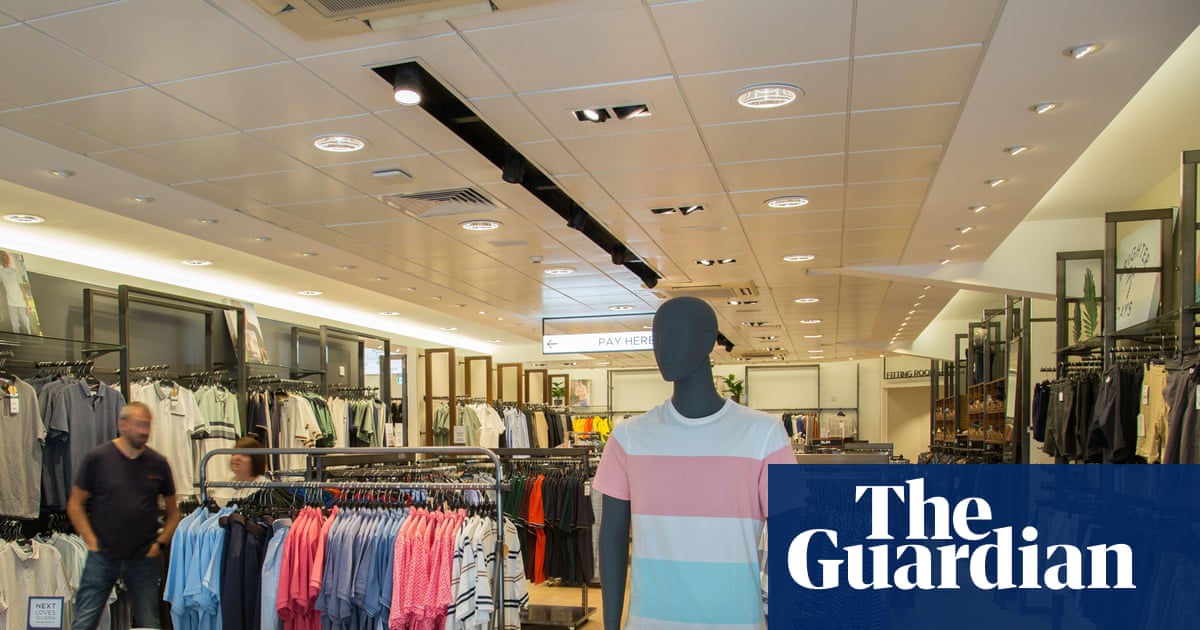
You may think of Next as a place to buy reliable work clothes, a nice cushion or to kit out the kids – it is the UK’s biggest children’s clothing seller. However, it has quietly been morphing into something much bigger.
Its shop on London’s Oxford Street tells some of the story – it houses not only a giant kids clothing department, but a big men’s suiting section and womenswear. Many of the parents shopping there appear to be waiting for teenage daughters who are thronging the Victoria’s Secret section upstairs and the neighbouring Bath & Body Works and Gap stores.
We can expect to see an even broader range of labels appear within Next stores as, over the past five years, it has snapped up brands from Cath Kidston and FatFace to furniture group Made. It alsocontrols the UK rights to distribution of Victoria’s Secret, Bath & Body Works and Gap through joint ventures with their US parent groups. It is already selling these brands online.
Under its leader, Simon Wolfson, known for producing chunky financial reports that give his detailed views on the economy as well as the Next’s performance, the company has also taken majority stakes in the UK brands Reiss and Joules, as well as smaller investments in the sofa maker Swoon, outdoorwear brand Sealskinz and quirky homeware label Rockett St George. Next has also built a plethora of licence deals, including Ted Baker, AllSaints kids ranges and Laura Ashley homeware and fashion.
Last year sales of non-Next brands online in the UK topped £1bn, up from £434m five years ago and more than 40% of the business’s online sales. Overseas, non-Next products made up a fifth of the group’s £930m international sales last year.
Richard Chamberlain, a retail analyst at RBC Capital Markets, says that more effort on design, quality and marketing has also helped improve the appeal of the Next brand, and some of its smaller labels, overseas.
Last year the company booked £930m of sales overseas, more than double the figure in 2020. And last week, Next said a 39% surge in international sales was largely behind a much stronger than expected performance this summer and that the company now expects to make annual profits of £1.14bn – £30m more than expected.
Emily Salter, a lead retail analyst at GlobalData, says: “Next’s range of brands and price positions allows it to cater to a wide range of consumers, including those who are focusing more on quality and trading up.”
Next’s performance was helped by problems at its big rival Marks & Spencer, which was forced to close its online business for several weeks after an Easter cyberattack, and Next also cited an improvement in the flow of stock from its Asian suppliers compared with last year.
However, the figures indicate that Next was able to hold on to some of those new shoppers even when M&S reopened, and that it is gaining a new fanbase overseas.
It is not really about Next stores. In the past five years Next has closed about 40 stores, taking its total to 457 in the UK. It has switched to larger, better-located spots, and UK retail sales are at about the same level they were five years ago.
Sales of the Next brand continues to increase online, especially overseas, but that growth is being outpaced by its wholly owned, licensed and third party brands.
skip past newsletter promotion
after newsletter promotion
Next has been able to sign up those brands after heavy investment in IT and logistics so that it can help operate websites and the delivery network required to make them fly.
Richard Lim, the chief executive of Retail Economics research firm, says: “Next is so far ahead of the curve in terms of its multi-channel offer it is leaving many competitors behind.”
That is partly down to history. Next, which was founded in 1982 after the men’s tailoring firm J Hepworth & Son bought up the Kendalls rainwear stores to create a womenswear chain, has been steeped in home delivery from its early days.
The Next Directory launched in 1988 to shake up the then fusty world of catalogue shopping, after the Hepworths bought the Grattan agency catalogue business.
By the noughties, when online shopping began to take off, Next had all the logistical systems already in place so that it could make the transition much more smoothly than rivals. It has often led the pace on quick delivery and uses its big network of stores to offer a cheap option for picking up and dropping off parcels – something online specialists such as Asos struggle with.
Chamberlain says Next’s strengths lie in its “its relatively fast, automated logistics and its well developed customer loyalty and analytics.”
Abu Dhabi-based investment firm Lunate has committed $1bn to a new investment platform launched by HPS Investment Partners, deepening its presence in global private markets.
The new vehicle, HPS Strategic Solutions Partners, will focus on privately negotiated equity and debt investments in large corporates across the U.S. and Europe, catering to rising demand for alternative and structured financing solutions.
The platform will be anchored by Lunate’s investment and will also open access to institutional investors in the Middle East, according to HPS.
HPS, which manages around $165bn in assets, was recently acquired by BlackRock in a $12bn all-stock deal, one of the largest transactions ever in the alternatives space. The partnership comes as BlackRock seeks to expand its private markets footprint globally through its newly acquired credit arm.
Lunate, managing $110bn in assets, has been aggressively scaling its exposure to alternative investments since its establishment in 2023 under the Abu Dhabi royal family’s investment network, led by Sheikh Tahnoon bin Zayed Al Nahyan.
The firm has recently anchored TPG’s sports investment fund, acquired a stake in Brevan Howard Asset Management, and joined Blackstone in a $5bn regional logistics platform. It also holds interests in major real estate assets, including Dubai’s largest office tower.
The HPS partnership represents another strategic step in Lunate’s efforts to build long-term collaborations with top-tier global managers and diversify across private equity, credit, and infrastructure.
As corporates increasingly turn to private capital for flexible, large-scale funding, the move positions both HPS and Lunate to capitalise on the growing convergence between private equity and private credit.
If you think we missed any important news, please do not hesitate to contact us at news@pe-insights.com.
The Oil and Gas Regulatory Authority (OGRA) has slashed the maximum price of liquefied petroleum gas (LPG) for November, citing a drop in international prices and a slightly stronger rupee.
Starting November 1, the maximum consumer price for an 11.8 kg LPG cylinder will be Rs. 2,378.89, down Rs. 69.44 (2.83%) from October’s price of Rs. 2,448.33.
The per kilogram price has dropped by Rs. 5.88.
OGRA said the cut follows a 3.52% decrease in the Saudi Aramco Contract Price (CP), which is used as a benchmark for local rates, and a 0.15% appreciation in the average dollar exchange rate.
Producer prices have also been reduced, with the notified rate for November set at Rs. 1,891.55 per 11.8 kg cylinder, compared to Rs. 1,960.99 last month.