Category: 3. Business

  • FCA Consultation on ESG Ratings Providers: UK vs EU Overview

    FCA Consultation on ESG Ratings Providers: UK vs EU Overview

    This bulletin contains a high-level summary of the FCA’s position, and a snapshot comparing the UK and EU regimes.

    New UK regime for ESG ratings providers

    The FCA’s consultation paper on ESG ratings providers (CP 25/34) has been a long time coming.

    • On March 30, 2023, HM Treasury launched a consultation proposing to bring ESG ratings providers within the scope of FCA regulation—this received support from industry. Over two years later, in October 2025, the government published legislation to this end. In December 2025, the legislation was issued in final form.
    • The Financial Services and Markets Act 2000 (Regulated Activities) (ESG Ratings) Order 2025 amends the Financial Services and Markets Act 2000 (Regulated Activities) Order 2001 (RAO) to make the provision of ESG ratings a regulated activity for the purposes of UK law, subject to exceptions.
    • The new regulated activity is set out in Article 63U of the RAO.
    • The order comes into full force on June 29, 2028, but certain provisions apply before then to enable the new regulatory regime for ESG ratings providers to be put into place.

    The FCA’s consultation paper was published for that purpose on December 1, 2025:

    • It includes draft new rules for ESG ratings providers—these are to be introduced by inserting a new Chapter 6 into the FCA’s ESG Sourcebook. Chapter 6 is titled “Conduct rules for ESG ratings providers”.
    • Draft guidance is to be added to the FCA’s Perimeter Guidance manual (PERG) on when activities are likely to amount to the new regulated activity of providing an ESG rating.
    • As regards the “baseline” FCA rules that apply to most types of regulated firms, the consultation paper explains how the FCA proposes for these to apply to ESG ratings providers (e.g., PRIN, GEN, SUP, SYSC, TC, etc). The upshot is that much of the “baseline” regime will apply to ESG ratings providers, subject to specific exceptions—e.g., there is no need for an MLRO, a bespoke conflicts regime applies under the ESG sourcebook instead of the one in SYSC, the FCA’s consumer duty is disapplied, etc.

    NB: On the subject of prudential requirements, interestingly, the following view has been taken: “We do not propose to introduce bespoke prudential requirements for rating providers. Our view is that existing requirements—Threshold Condition 2D (Appropriate resources), COND 2.4 and Principle 4 (a firm must maintain adequate financial resources)—provide a proportionate baseline.” Firms must therefore assess and maintain adequate financial resources and also have robust arrangements for an orderly wind-down. The FCA also makes clear the question of prudential requirements will remain under review

    • Finally, the FCA uses the consultation paper to set out its approach to authorisation applications and to explain how it proposes to supervise ESG ratings providers going forward.

    The FCA is to be commended for the overall approach taken to the consultation—it has engaged with industry extensively on the subject of ESG ratings providers, and signalled its desire to take an open, practical and collaborative approach. Since the consultation was issued, it has continued these efforts, with further extensive stakeholder engagement, which has been very well received.

    Key points from the FCA’s draft rules

    The new Chapter 6 to be inserted into the FCA’s ESG sourcebook for ESG ratings providers includes provisions on the following topics:

    • Governance, systems and controls—including the methodology for formulating ESG ratings, and quality control, record keeping and outsourcing requirements, as well as the need to rely on up-to-date information when formulating ratings. One interesting point to note is that the FCA prohibits a firm from outsourcing “operational responsibility for the ESG ratings process”.
    • Engagement—including the obligation to make certain notifications when the firm first decides to produce a particular ESG rating. Such a notification must include (among other things) the nature of the rating, the methodology, a summary of key data inputs, and an explanation of any rights to request data and how to notify the firm of errors. The FCA rules require information rights to be given to “notifiable persons”1 (e.g., so they can obtain certain data). The rules also impose various obligations—e.g., the firm must establish a procedure for receiving and processing feedback from stakeholders, and comply with certain requirements when requesting data.
    • Complaints handling—the new regime will enable complaints by a ratings user, a “notifiable person” and “any other person with an interest in the ESG rating”.
    • Transparency—this includes rules and guidance on disclosures designed to enhance the transparency and comparability of ESG ratings. It includes: (1) minimum public facing disclosures (including on conflicts and complaints handling); (2) disclosures and notifications to ESG ratings users and other “notifiable persons”. Further requirements apply where the firm wishes to make a change to a methodology.

    The requirements on transparency contain an exception where information would qualify as a trade secret—the rules then prescribe what disclosures must be made instead.

    • Conflicts—there is a bespoke and fairly extensive regime in ESG 6 on conflicts. Among other things, this includes rules on information barriers, and a conflicts of interest report to be regularly provided to senior management. The FCA rules also require ESG ratings to be free from political or economic interference.

    Recommendations for firms

    • Firms that will fall within the scope of the new regime will presumably be getting up to speed on the draft new rules proposed by the FCA and considering how to approach implementation and an authorisation application process.
    • Firms that are frequent users of ESG ratings, and entities or firms that are (or have products that are) the subject of ESG ratings, may wish to review the FCA’s consultation paper so as to provide a response.

    They may also wish to get involved in the work being done by relevant industry bodies on the subject of ESG ratings generally.

    Broader landscape

    Three other points worth mentioning from the consultation paper:

    • The FCA notes that the UK government has identified sustainable finance as a growth-driving sector of the UK economy in “The UK’s Modern Industrial Strategy”.2
    • The FCA notes that total global spending on ESG data is estimated to reach around USD2.2 billion in 2025, with further growth expected beyond that.
    • The FCA refers to the evolving international landscape and the fact that several jurisdictions (including the EU) are introducing regulatory frameworks for ESG ratings providers. “Our proposals are designed to be consistent with international standards, particularly the IOSCO recommendations, to support cross-border coherence and reduce the risk of regulatory fragmentation.”

    It is not clear, however, how much comfort this last statement by the FCA will provide in practice. For international groups, or firms doing business globally, having to face slightly different regulatory requirements across a number of different jurisdictions is far from ideal.

    EU position

    Turning then to the EU position, this is working to a timeline slightly ahead of the UK.

    • The EU has introduced Regulation (EU) 2024/3005 of the European Parliament and of the Council of 27 November 2024 on the transparency and integrity of Environmental, Social and Governance (ESG) rating activities.
    • This will begin to apply in the main from July 2, 2026. The UK regime, in the main, will begin to apply from June 29, 2028.
    • ESMA has been working on regulatory technical standards (RTS) to support the new regime, and on October 15, 2025, published a final report on three draft RTS:

    – One on authorisation and recognition—this deals with the information to be provided in applications to ESMA for authorisation and recognition.

    – One on the separation of business (i.e., to address conflicts risks)—this deals with safeguards to be put in place to mitigate conflicts risks within firms that conduct more than just ESG ratings activities.

    – One on disclosures to be made by ESG ratings providers to the public, users of ratings, rated entities, and (where relevant) the providers or issuers of rated items.

    ESMA also confirmed as follows: “ESMA has submitted the draft technical standards to the European Commission for adoption by means of a Commission Delegated Regulation (for RTS). The technical standards will also be subject to non-objection by the European Parliament and Council.”

    UK vs. EU position

    In terms of a side-by-side comparison on scope, see the following.
    Continue Reading

  • Nyrstar marks Port Pirie’s first shipment of Australian-produced Antimony metal

    Nyrstar marks Port Pirie’s first shipment of Australian-produced Antimony metal

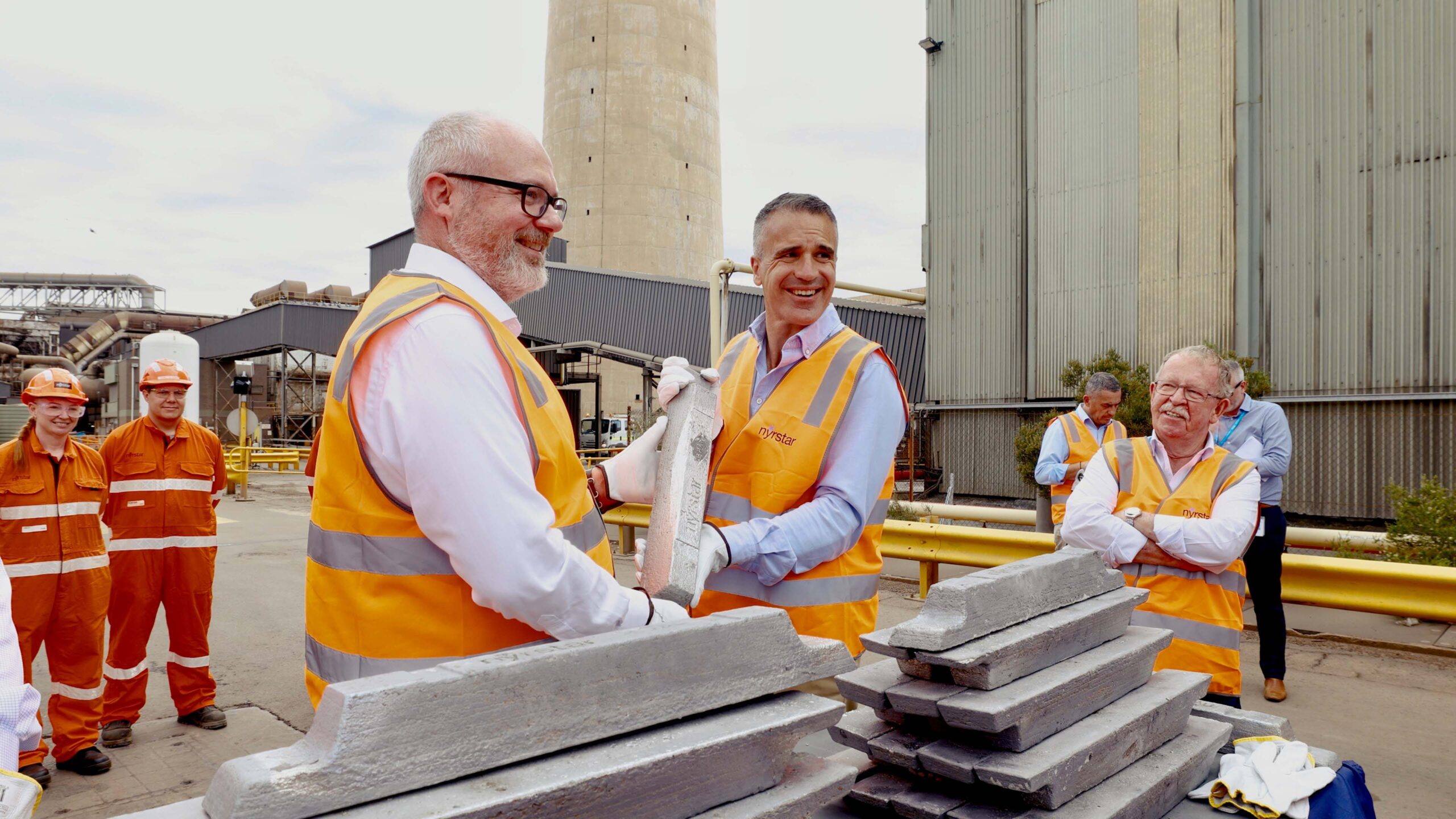
    Port Pirie, Australia, 17 February 2026 – International producer of critical and strategic metals Nyrstar, today announced the first shipment of Australian‑produced commercial-grade Antimony metal from its Port Pirie multi‑metals facility, marking a milestone in the nation’s efforts to build and strengthen mine-to-metal supply chains for critical minerals.

    This inaugural shipment from the Demonstration Plant marks an important step in establishing an independent and sovereign supply of Antimony metal from Australia, a critical metal used in defence, semiconductors, energy and automotive industries globally. The first shipment will be used by an Australian domestic manufacturer on the east coast of Australia with future shipments destined for export to customers in Europe, Asia or the US, supporting a more diverse and resilient supply chain for strategic materials.

    This new product has been enabled by rapid construction and commissioning of Nyrstar’s Antimony pilot and demonstration plants, allowing Australia to produce Antimony metal from a wide range of local and global concentrates, leveraging Port Pirie’s existing multi-metals processing infrastructure and capabilities.

    The accelerated delivery of Nyrstar’s Antimony demonstration plant was supported by the Australian and South Australian Governments, ensuring the first batches of Antimony metal could be produced and shipped well ahead of schedule.

    Darin Cooper, Nyrstar Port Pirie General Manager, said today’s milestone highlights the strategic role Port Pirie and Australia can play in helping global markets with an alternative, reliable and transparent supply of critical minerals.

    “The first shipment of Antimony metal from Port Pirie demonstrates the importance of investing in nationally strategic smelters. Mining alone doesn’t create supply chain security – it’s the smelting, refining and conversion into critical metals that ensures Australia can play a strategic role for itself and its allies,” Mr Cooper said.

    “Antimony metal is essential for modern societies, and global customers have been increasingly seeking secure supply from trusted sources. Nyrstar at Port Pirie is responding to the challenge, demonstrating that mine-to-metals capability in Australia is possible, and with the support of government can be delivered at speed and scale.” Mr Cooper said.

    As Australia’s only lead refiner, Nyrstar’s Port Pirie multi-metals facility will have the potential capacity to produce up to 5,000 tonnes of Antimony metal per annum, representing approximately 15% of the global market and the equivalent of nearly 100% of US imports in 2023. Nyrstar will continue to work closely with Federal and State Governments and commercial partners to secure support for this potential expansion and modernisation of its Australian assets.

    Nyrstar’s production of Antimony at Port Pirie was identified last year in the pipeline of critical minerals projects as part of the US–Australia Critical Minerals Framework, and Antimony is a priority mineral for the Australian Government’s Strategic Reserve. Antimony is recognised as a key metal at risk requiring urgent new supply pathways and Nyrstar is also in discussions with organisations across Japan, Europe and the United States on formal offtake partnerships for long‑term supply.

    In addition to Antimony production, with government support Nyrstar is also exploring the potential to produce Bismuth and Tellurium at Port Pirie, as well as Germanium at its Hobart Zinc Works.

    Continue Reading

  • Access Denied


    Access Denied

    You don’t have permission to access “http://www.unilever.com/news/press-and-media/press-releases/2026/google-cloud-partnership-pioneers-next-generation-of-consumer-goods-technologies/” on this server.

    Reference #18.a2f01002.1771318799.1650b3bc

    https://errors.edgesuite.net/18.a2f01002.1771318799.1650b3bc

    Continue Reading

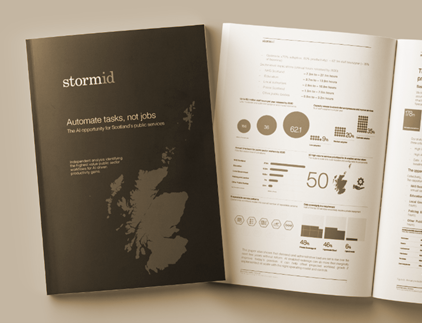
  • Automate tasks, not jobs: How AI can return 62 million hours to Scotland’s public services

    Automate tasks, not jobs: How AI can return 62 million hours to Scotland’s public services

    Scotland’s public services are facing a productivity crisis, not just a funding crisis. While the 2026/27 Scottish Budget and Spending Review underline the need for efficiency, the route to achieving it is no longer just about cutting costs, it is about releasing capacity.

    Across health, education, local government and justice, many of Scotland’s most highly-trained professionals are spending too much of their week on routine administrative tasks such as documentation, record keeping, correspondence and processing rather than the complex, human work that only people can do.

    That is why Storm ID has undertaken and published new research in “Automate tasks, not jobs: The AI opportunity for Scotland’s public services”. Our conclusion is straightforward – AI is now mature enough to reduce administrative drag at a meaningful scale and that makes it a practical lever for public service reform not just a futuristic concept that is happening elsewhere.

    Capacity release means time back, not just cash savings

    Public debate about “efficiency” often focuses narrowly on cash savings, but in public services, the true currency of value is time. Capacity release means returning hours to frontline teams. The goal is not to replace people, but to strip away the administrative drag that causes burnout and backlogs. By automating, the routine would allow, for example, justice professionals to focus on complex casework, healthcare professionals to focus on care, and give teachers more time in the classroom.

    62 million hours is the size of the prize

    We analysed 50 high-volume Scottish public services where AI-enabled redesign could credibly reduce administrative burden. The potential is huge.

    Our modelling suggests that by 2030, AI adoption could release between 16.6 million (conservative) and 62.1 million (optimistic) hours of capacity annually.

    To put that in perspective, the moderate scenario (36m hours) represents a 20% release of total capacity across the workflows assessed. Two main sectors stand out in the analysis:

    • NHS Scotland: The single largest opportunity lies in clinical documentation. This accounts for 68.2 million baseline hours. Reducing this burden isn’t about automating judgment, it’s about freeing clinicians from data entry so they can spend more time with patients.
    • Education: The “always on” administrative workload of planning, resource creation and data entry is competing with pupil time. AI offers a way to reset this balance.

    Scale through patterns, not pilots

    While public services vary enormously in mission we found that many of their underlying workflows are very similar. Our analysis of the 50 services highlights that a lot of staff time clusters into just a few repeatable patterns, including case management, application processing, decision making and knowledge-intensive documentation.

    This insight offers a clear path forward. Scotland does not need 50 bespoke AI tools with 50 separate assurance regimes. The faster and safer route is to build reusable, configurable components that solve these common problems once. By integrating a suite of trusted, shared tools into existing systems we could eliminate duplication of effort and accelerate adoption at scale.

    What policymakers need to do next

    Turning potential into capacity by 2030 is a leadership agenda as much as a technology one. The paper identifies five key areas of focus:

    1. Start with high-volume, lower-risk services to demonstrate value quickly and build institutional capability.
    2. Invest in shared components that can be configured locally, rather than reinvented repeatedly.
    3. Around half of the services we analysed involve sensitive data (clinical and justice). These require Private AI models running on sovereign infrastructure, not just use of public cloud wrappers from hyperscalers such as AWS and Azure.
    4. Scaling requires clear accountability, audit trails, testing and monitoring, cyber controls and defined human oversight consistent with Scotland’s commitment to trustworthy and inclusive AI.
    5. Staff engagement in redesign, training and continuous improvement is essential so that time saved becomes better outcomes, not just absorbed by unmanaged demand. Redesign must be done with the workforce, not to them.

    The cost of inaction

    Unless we systematically reduce administrative burden, rising demand will outpace capacity no matter how committed the workforce may be.

    The message for policymakers is simple. AI is a practical, immediate lever for the productivity step-change Scotland requires. We must choose to govern it well, scale it deliberately and use it to return time to the work that only people can do.

    Paul McGinness is Founder and Chair of Storm ID

    Continue Reading

  • Stoxx 600, FTSE, DAX, CAC, miner earnings, data

    Stoxx 600, FTSE, DAX, CAC, miner earnings, data

    The City of London skyline at sunset.

    Gary Yeowell | Digitalvision | Getty Images

    LONDON — European stocks are expected to open lower on Tuesday as investors keep an eye on earnings.

    The U.K.’s FTSE index is seen opening 0.2% lower, and Germany’s DAX, France’s CAC 40 and Italy’s FTSE MIB are all seen down 0.4%, according to data from IG.

    Regional markets edged higher on Monday, as investors digested comments from this year’s Munich Security Conference.

    Earnings remain in focus for investors, with miners Antofagasta and BHP Group due to report Tuesday, as well as InterContinental Hotels Group and EssilorLuxottica. Data releases include German inflation and economic sentiment and U.K. unemployment figures.

    Overnight, S&P 500 futures were near flat following two straight negative weeks for the benchmark; U.S markets were shut on Monday for Presidents’ Day.

    Asian financial markets were treading carefully on Tuesday in holiday-thinned trading, with mainland Chinese, Hong Kong, Singapore, Taiwan and South Korea markets closed on Tuesday for Lunar New Year holidays.

    Continue Reading

  • McDonald’s pulls more digital traffic than any grocer or delivery app

    McDonald’s pulls more digital traffic than any grocer or delivery app

    Key stat: McDonald’s leads all US food and grocery sites and apps with 57 million unique visitors, outpacing DoorDash (52.8 million) and nearly doubling the top traditional grocer Kroger (31.3 million), according to November 2025 data from Comscore.

    Beyond the chart:

    • Digital deals are a key traffic driver. 64% of grocery shoppers used digital discounts or cash back promotions in the last month, according to Ibotta, helping explain why food brands with strong app-based deals are pulling consumers online.
    • Meanwhile, value-seeking is pushing more diners onto QSR apps. 44% of lower-income US fast-food consumers have curbed eating out, according to YouGov, making mobile order deals and loyalty rewards a critical tool for chains to recapture traffic.

    Use this chart: Drop this in your next digital strategy deck to challenge the assumption that grocery and delivery apps own food commerce traffic. Use McDonald’s 57 million visitor lead to benchmark your brand’s digital reach against QSR leaders. Show this to teams planning food and grocery partnerships.

    Related EMARKETER reports:

    We prepared this article with the assistance of generative AI tools and stand behind its accuracy, quality, and originality.

    Continue Reading

  • ‘Landmark’ greenwashing case against Australian gas giant Santos dismissed by federal court | Santos

    ‘Landmark’ greenwashing case against Australian gas giant Santos dismissed by federal court | Santos

    Gas company Santos has successfully defended a landmark greenwashing case in which it was accused of making misleading claims about its net zero plans and being a producer of “clean” energy.

    In a blow for climate activists, the federal court on Tuesday dismissed the case brought by the shareholder advocacy group the Australasian Centre for Corporate Responsibility (ACCR).

    The ACCR, represented by the Environmental Defenders Office, alleged the gas company breached the Corporations Act by engaging in misleading or deceptive conduct in its 2020 annual report, an investor briefing and a 2021 climate change report.

    Central to these allegations were three key claims by Santos: that it was a producer of “clean energy” and natural gas was a “clean fuel”; that hydrogen it produced with carbon capture and storage was “zero emissions hydrogen” and “clean hydrogen”; and that it had a clear and credible pathway to net zero by 2040.

    Santos argued ACCR’s case ignored years of its work in the lead-up to its 2020 investor briefing and annual report, and its 2021 climate change report.

    Sign up to get climate and environment editor Adam Morton’s Clear Air column as a free newsletter

    It told the court its climate targets – to reduce emissions by 26% to 30% by 2030 and reach net zero emissions by 2040 – represented a statement of “present intention” and “not a promise or prediction”.

    Justice Brigitte Markovic dismissed ACCR’s case in a brief hearing on Tuesday, and ordered the organisation to pay Santos’s costs. The reasons for the decision will be published on 23 February.

    The case, heard over 13 days in 2024, was a test for how courts assess statements made by companies about how they are managing the net zero transition.

    The ACCR holds shares in fossil fuel companies, such as Santos, to try to force them to meet the goals of the Paris climate agreement.

    Brynn O’Brien, the co-chief executive of the ACCR, said the organisation was disappointed and would now consider the “complex” judgment and its more than 250 pages of reasons.

    “This was a landmark case that paved the way for others around the world to challenge corporate net zero claims in court,” she said.

    “It has been a David versus Goliath battle, and Goliath won this round.

    “While the court found that Santos’s conduct was insufficient to breach the law, the case has shone a powerful spotlight on how Santos’s plans were developed and used to secure market advantage.”

    O’Brien said the case was about “standing up for market integrity and ensuring that investors are given all the information necessary to confidently assess emissions targets and net zero plans” – and was not aimed at “punishing climate ambition”.

    Comment has been sought from Santos.

    Continue Reading

  • Alibaba unveils Qwen3.5 as China’s chatbot race shifts to AI agents

    Alibaba unveils Qwen3.5 as China’s chatbot race shifts to AI agents

    Qwen3 is Alibaba’s latest large language model, which it says combines traditional LLM capabilities with “advanced, dynamic reasoning.”

    Sopa Images | Lightrocket | Getty Images

    Alibaba Group has released its newest AI model series, featuring enhanced capabilities, as it faces intensifying competition in China’s AI space with several models launched in the past week. 

    The Qwen3.5 AI model comes in an open-weight version, which allows users to download, run, fine-tune, and deploy it on their own infrastructure. Alibaba also released a “hosted version,” meaning the model can run on Alibaba’s own servers.

    Both models were made available on Monday, the eve of the Chinese New Year, and come just a week after Alibaba released a new AI model designed for robots.

    The company highlighted that Qwen3.5 offers improvements in performance and cost and was built with “native multimodal capabilities,” enabling the models to understand text, images and video simultaneously within one system.

    Leaning into a major AI trend this year, the model also supports new coding and agentic capabilities and is compatible with open-source AI agents like those from OpenClaw, which recently surged in popularity.

    AI agents are systems that can independently take actions and complete multi-step tasks on a user’s behalf with minimal supervision.

    These agents and their abilities have garnered a lot of attention in recent weeks, after American AI company Anthropic released new agent tools. The potential for these agents to replace the work of software as a service companies, amongst others, has rocked markets.

    Alibaba’s local competitors such as ByteDance and Zhipu AI also released upgraded models in the past week aimed at supporting more agent capabilities.

    The company said that its new Qwen3.5 open-weight model comes with 397 billion parameters — variables that shape how an AI system learns and reasons. While less than its previous flagship model, the company said the latest model showed significant improvement based on self-reported benchmark evaluations.

    Alibaba provided benchmark tests showing that Qwen-3.5’s performance was on par with leading models from OpenAI, Anthropic and Google DeepMind, though the comparisons were self-reported.

    Meanwhile, it also released a “hosted model” called the Qwen-3.5-Plus through its cloud platform Model Studio. Alibaba said this version also demonstrated performance on par with leading competitors. CNBC could not independently verify those claims.

    The new Qwen3.5 models also support 201 languages and dialects, up from the previous generation’s 82. 

    Alibaba is expected to release more open-weight models during this Chinese New Year, Lin Junyang, technical lead of Alibaba Cloud’s Qwen team said in a social media post.

    Following the release of Anthropic’s latest Claude AI agent tools, other American AI giants have been accelerating the development of agentic capabilities. OpenAI CEO Sam Altman said Sunday that the creator of the OpenClaw would be joining the company.

    Last month, Google DeepMind head Demis Hassabis told CNBC that Chinese AI models were just “months” behind Western rivals.

    Continue Reading

  • Evaluating Tadano (TSE:6395) After Recent Share Price Strength And Valuation Discount

    Evaluating Tadano (TSE:6395) After Recent Share Price Strength And Valuation Discount

    Make better investment decisions with Simply Wall St’s easy, visual tools that give you a competitive edge.

    Tadano (TSE:6395) has caught investor attention after recent share price moves, with gains over the month and past 3 months prompting closer inspection of how its current valuation lines up with underlying business results.

    See our latest analysis for Tadano.

    At a share price of ¥1,379.0, Tadano has seen a 19.19% 1 month share price return and a 35.73% 3 month share price return, while the 1 year total shareholder return of 28.32% points to momentum that has been building rather than fading.

    If this move in construction equipment is on your radar, it could be a good moment to look across the sector using our screener of 32 robotics and automation stocks as another source of ideas.

    So with Tadano trading at ¥1,379 and an intrinsic discount flagging potential value even after a 36% 3 month run, is this still a mispriced crane maker, or are markets already reflecting expectations for future growth?

    Tadano is flagged as good value on a P/E of 9.5x, with the shares at ¥1,379 compared to both peer and industry averages that sit materially higher.

    The P/E multiple compares the current share price to earnings per share, so for a machinery manufacturer like Tadano it is a simple way to see what investors are currently paying for its profits.

    Here, Tadano screens as good value versus three separate reference points. It trades below the estimated fair P/E of 12.8x, below the Japan Machinery industry average of 14.1x, and below a peer average of 20.3x, which suggests the market is pricing its earnings more conservatively than many comparables and below a level the fair ratio analysis indicates it could move toward.

    That discount sits alongside a company that has recently grown earnings and improved net profit margins from 2.3% to 5.2%. It is considered good value in aggregate based on these relative checks, even though earnings are forecast to decline by an average of 5.8% per year over the next 3 years and revenue growth of 2.9% per year is expected to trail the broader JP market.

    Explore the SWS fair ratio for Tadano

    Result: Price-to-earnings of 9.5x (UNDERVALUED)

    However, earnings growth pressure and any shift in expectations around Tadano’s current intrinsic discount could quickly challenge the idea that the shares remain mispriced.

    Find out about the key risks to this Tadano narrative.

    While Tadano screens as good value on a 9.5x P/E, our DCF model paints an even starker picture. With the shares at ¥1,379 and our estimate of future cash flow value at ¥3,171.71, the stock is flagged as trading at a 56.5% discount. That kind of gap can look attractive, but it also raises a question: which view do you trust more, the simple earnings multiple or the cash flow model?

    Look into how the SWS DCF model arrives at its fair value.

    6395 Discounted Cash Flow as at Feb 2026

    Simply Wall St performs a discounted cash flow (DCF) on every stock in the world every day (check out Tadano for example). We show the entire calculation in full. You can track the result in your watchlist or portfolio and be alerted when this changes, or use our stock screener to discover 19 high quality undervalued stocks. If you save a screener we even alert you when new companies match – so you never miss a potential opportunity.

    If you see Tadano’s numbers differently or want to test your own assumptions against the data, you can build a custom view in just a few minutes by starting with Do it your way.

    A great starting point for your Tadano research is our analysis highlighting 3 key rewards and 4 important warning signs that could impact your investment decision.

    If you are weighing up Tadano’s valuation, it is a smart time to widen your watchlist with a few focused screens that surface different types of opportunities.

    This article by Simply Wall St is general in nature. We provide commentary based on historical data and analyst forecasts only using an unbiased methodology and our articles are not intended to be financial advice. It does not constitute a recommendation to buy or sell any stock, and does not take account of your objectives, or your financial situation. We aim to bring you long-term focused analysis driven by fundamental data. Note that our analysis may not factor in the latest price-sensitive company announcements or qualitative material. Simply Wall St has no position in any stocks mentioned.

    Companies discussed in this article include 6395.T.

    Have feedback on this article? Concerned about the content? Get in touch with us directly. Alternatively, email editorial-team@simplywallst.com

    Continue Reading

  • Asia markets make cautious start, oil rises on U.S.-Iran talks

    Asia markets make cautious start, oil rises on U.S.-Iran talks

    The Tokyo Stock Exchange (TSE), operated by Japan Exchange Group Inc. (JPX), in Tokyo, Japan, on Monday, Aug. 5, 2024. 

    Noriko Hayashi | Bloomberg | Getty Images

    Asian financial markets were treading carefully on Tuesday in holiday-thinned trading, but oil pushed higher with U.S and Iran nuclear negotiations in Geneva due to begin later in the day.

    Mainland Chinese, Hong Kong, Singapore, Taiwan and South Korea markets were closed on Tuesday for Lunar New Year holidays. U.S markets were shut on Monday for Presidents’ Day.

    Japan’s Nikkei 225 was down 0.5% and the broader Topix slid 0.2% to 3,779.29.

    In Australia, the S&P/ASX200 was trading almost 0.5% higher.

    Ten-year Treasury yields slipped 1 basis point to 4.044% on Tuesday, hitting the lowest since early December. Japan’s five-year yield fell 2 basis points to 1.65%, its lowest since February 2.

    In early Asian trading hours, Nasdaq futures were down 0.1% and S&P 500 futures up 0.2%.

    The dollar index, a measure of the U.S. currency against major rivals, was last flat at 97.07, after a small gain of 0.2% overnight.

    Japan’s weakening economy remained in focus on Tuesday, one day after much softer than expected GDP numbers.

    The country on Monday reported its economy grew an annualised 0.2% in the fourth quarter, far below the 1.6% gain forecast as government spending dragged on activity. On Tuesday, The Japanese yen strengthened 0.15% against the greenback to 153.28 per dollar.

    The weak figures highlight the challenges ahead for Prime Minister Sanae Takaichi and should support her push for more aggressive fiscal stimulus, economists said.

    The BOJ next meets on rates in March, with traders forecasting only a slim chance for a hike. Economists polled by Reuters last month expected the central bank to wait until July before tightening policy again

    “The market has likely assumed that softer GDP data in the fourth quarter will encourage PM Takaichi’s plans to offer additional fiscal support and reduce the sales tax on food,” NAB analysts wrote in a research note.

    “Pricing for BoJ rate hikes nudged a little lower post the GDP data, with only 4 basis points priced for the March meeting and 16 basis points priced for April.”

    Australia’s central bank said on Tuesday it had concluded inflation would stay stubbornly high if it had not hiked interest rates as it did this month, and was not yet sure if further tightening would be necessary.

    Oil prices were higher ahead of U.S.-Iran talks aimed at de-escalating tensions against a backdrop of expected OPEC+ supply increases.

    U.S. West Texas Intermediate crude was up 1.29%. Brent crude futures rose 1.33% overnight.

    Iran’s Revolutionary Guards navy held a drill in the Hormuz Strait on Monday, the semi-official Tasnim news agency reported, a day prior to renewed Iran-U.S. nuclear negotiations. The passage accounts for about 20% of global oil shipments.

    “The market remains unsettled by geopolitical uncertainties, with investors cautious due to the pending US-Iran and Ukraine negotiations this week,” ANZ analysts said.

    “Speculative positions have been increasing in recent weeks. If tension in the Middle East eases or meaningful progress is made on the Ukraine war, the risk premium currently built into oil prices could swiftly unwind.”

    Gold was down 0.85% at $4949.5 per ounce as a higher dollar on Monday made greenback-priced bullion more expensive for holders of other currencies. Spot silver was 2% lower.

    Continue Reading