CHICAGO (WLS) — Celebrate the Year of the Horse with Mariano’s!
Lion dances and authentic cuisine will take over Mariano’s South Loop for their annual Lunar New Year celebration. It all kicks off Saturday, February 7th, at 1615 S Clark St, Chicago, IL 60616. You’ll learn about different cultural traditions while trying some amazing dishes.
Chef Bill Kim, owner of Urbanbelly, visited ABC7 Chicago to talk all about this year’s celebration and show us how to make Japchae, a popular Korean dish.
Japchae Recipe
Ingredients
8 oz sweet potato starch noodles (dangmyeon)
8 oz white mushrooms, cleaned and sliced
1 small white onion (about 8 oz), sliced -inch thick
1 large carrot, peeled and cut into matchsticks (2 inches long, -inch thick)
cup stir-fried sauce, divided (recipe below)
3 tbsp olive oil
1 tsp garlic, minced
8 oz marinated beef or chicken (recipe below)
8 oz baby spinach
1 cup egg crepe, sliced thin (recipe below)
cup scallions, chopped
1 tbsp sesame oil
Stir-Fried Sauce
cup gluten-free soy sauce
cup water
4 tbsp sugar
2 tbsp sesame oil
1 tbsp garlic, minced
1 tbsp roasted sesame seeds
tsp ground black pepper
Whisk all ingredients together in a small bowl.
Egg Crepe Garnish
2 whole eggs, scrambled
Pinch of kosher salt
1 tsp olive oil
Whisk eggs with salt. Heat oil in a nonstick pan over medium-high. Pour in egg mixture, tilting pan to coat evenly. Cook for 1 minute without browning. Flip, remove from heat, cool 5 minutes, then slice into thin strips
Marinated Steak (or Chicken)
8 oz beef skirt steak or chicken breast, cut into -inch strips
cup stir-fried sauce
Combine meat with sauce and marinate for at least 1 hour.
Preparation:
Soak the sweet potato noodles in cold water for 45 minutes until soft. Drain.
Bring 8 cups of water to a boil. Cook noodles for 4 minutes, until soft and translucent. Drain and transfer to a large bowl. Toss with cup stir-fried sauce.
Heat a large sauté pan over medium-high heat. Add olive oil, then garlic, carrots, mushrooms, onions, and scallions. Cook for about 2 minutes until tender and translucent.
Add marinated beef or chicken, remaining stir-fried sauce, and spinach. Cook for 2 more minutes.
Add noodles and cook for 1 additional minute, mixing well.
Transfer to a serving plate. Garnish with egg crepe strips, chopped scallions, and drizzle with sesame oil.
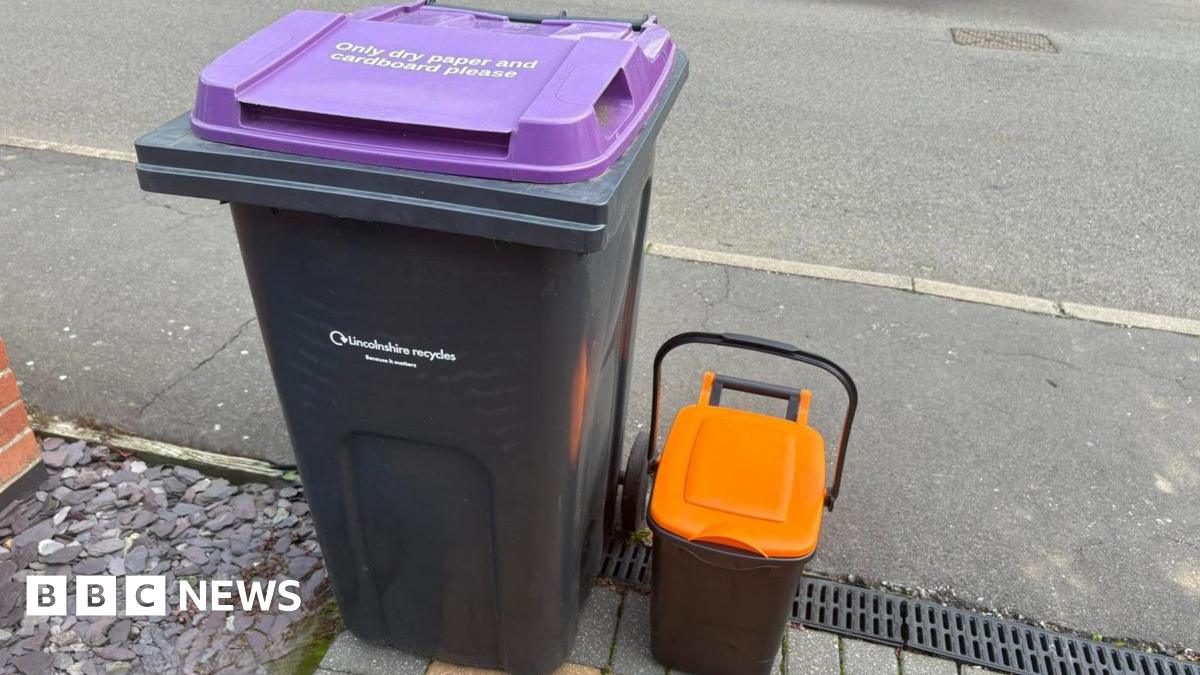
Residents will also be provided with an initial roll of caddy liners to help them get started, the council said.
Waste such as plate scrapings, peelings, tea bags, coffee grounds and other items can be placed in the liner, tied up, and transferred to the outdoor caddy for the weekly collection.
Collected food waste will then be sent to a specialist anaerobic digestion facility, where it will be converted into renewable energy and nutrient-rich fertiliser, helping to support local farming and power homes and businesses.
The council’s cabinet member for environment and waste, Councillor Rhys Baker, said: “Many residents are already enthusiastic recyclers and I am sure they will embrace this new system to see where it can take us.
“This is a simple change with a powerful impact. Together, we can reduce waste, generate clean energy, and make Lincolnshire greener for generations to come.”
East Lindsey, Boston and South Holland are expected to roll out their own food waste collection service in the autumn.
The landscape of shopping is undergoing a fundamental shift as AI agents increasingly help consumers discover, compare, and decide what to buy. To power this evolution, commerce infrastructure needs to be open, secure, and interoperable. That’s why we are proud to announce PayPal’s support of Google’s Universal Commerce Protocol (UCP), launched today. As part of our support, PayPal will soon be a payment option available within a new checkout feature on Google, powered by UCP.
This collaboration and the launch of UCP marks a milestone for the industry. Much like the introduction of other open standards, Google’s UCP is a breakthrough moment that will soon enable merchants to make their products available and purchasable in AI Mode in Google Search and the Gemini app.
“The next generation of commerce will be defined by how well we build open, trusted infrastructure that serves everyone,” said Michelle Gill, GM of Small Business and Financial Services, PayPal. “Supporting and collaborating with Google on UCP reflects our role in bringing a trusted payments experience layer that makes agentic commerce a reality for consumers.”
Expanding payment choice
For merchants, the challenge of agentic commerce has been the complexity of fragmented platforms. PayPal solves this by acting as a trusted infrastructure layer for agentic commerce. For more than 25 years, we have connected hundreds of millions of consumers and tens of millions of merchants through reliable payments and fraud protection, along with our buyer and seller protections. As commerce becomes more agent-driven, those foundations matter more than ever.
“Protocols like UCP turn agentic commerce into something merchants can actually adopt at scale,” said Prakhar Mehrotra, SVP and Head of AI at PayPal. “Interoperability is what allows retailers to connect once and reach many environments, while maintaining trust, transparency, and control.”
The future is built together
Last year, agentic commerce made the leap from theoretical idea to practical reality for merchants and consumers alike. At PayPal, we’re committed to building the trusted infrastructure that makes this future possible with the ecosystem.
“For agentic commerce to scale, it’s critical for the industry to align on a common set of standards. We are proud to have PayPal endorse the Universal Commerce Protocol as the foundation for that future,” said Ashish Gupta, VP/GM, Merchant Shopping, Google.
Our work with Google on UCP is one step in that journey, reinforcing our belief that the next era of commerce should be open, trusted, and built together. Because the future of commerce isn’t about who controls the interface. It’s about who helps the ecosystem work.
For more information about PayPal’s agentic commerce offerings and approach, visit PayPal.ai.
BENTONVILLE, Ark., Jan. 11, 2026 — Today, Walmart Inc. and Google share plans to launch a new experience that pairs the intelligence of Google’s Gemini with Walmart and Sam’s Club’s unmatched assortment, value and convenience, to make shopping more intuitive, reliable and perfectly aligned with the rhythms of everyday life. The new experience — built by Walmart and accessible directly within Gemini using the Universal Commerce Protocol — addresses several key customer needs:
Great items, at great prices: Gemini will automatically include Walmart and Sam’s Club in-store and online products when it’s relevant. For example, when a customer asks for advice on camping equipment for the spring season, it will return items from the retailer’s large inventory of products. And since people talk back-and-forth with Gemini, there are more opportunities to show relevant products and services throughout the conversation
Personalization and familiarity: When customers discover items in Gemini, Walmart helps them move from inspiration to purchase in a seamless, trusted experience — all within the familiar Walmart and Sam’s environments they know and love. When customers link their accounts, Walmart will recommend complementary items based on their past online and in-store purchases, combine their order with other items they’ve put in their Walmart or Sam’s Club carts, and provide all the benefits of their Walmart+ and Sam’s Club memberships.
Fast delivery: Customers and members can get in-store and club items delivered right where and when they want it, with hundreds of thousands of locally curated products delivered in under three hours and as fast as 30 minutes.
“The transition from traditional web or app search to agent-led commerce represents the next great evolution in retail. We aren’t just watching the shift, we are driving it,” said John Furner, President and CEO of Walmart U.S. and incoming President and CEO of Walmart Inc. “We want to help customers get what they need and want, when and where they want it. Partnering with Google to bring the Walmart experience directly into Gemini is another step toward creating seamless shopping experiences for customers and members that are more intuitive and personal than ever before.”
“AI can improve every step of the consumer journey, from discovery to delivery. Walmart is an innovator in retail and we are excited to partner with them on a new open standard to make agentic commerce a reality. Customers will soon be able to experience everything they love about Walmart directly in the Gemini app,” said Sundar Pichai, CEO of Google and Alphabet.
Authentic Brands Group Taps Google Cloud and Gemini to Power the Future of Brand Building with AI
Authentic Brands Group, a global sports, media, entertainment and lifestyle platform, adopts Google’s Gemini and Google Cloud infrastructure to power Authentic Intelligence
NEW YORK, Jan. 11, 2026 /PRNewswire/ — Today at NRF 2026: Retail’s Big Show, Google Cloud and Authentic Brands Group (Authentic), a global brand development and licensing platform, announced a strategic partnership leveraging Google’s Gemini and Google Cloud’s Vertex AI platform to supercharge collaboration and creativity across the organization.
As the owner of more than 50 global brands generating over $32 billion in retail sales across 150 countries, Authentic is uniquely positioned to leverage AI to be faster, stronger, and more profitable. To realize that opportunity, Authentic built a proprietary AI platform, Authentic Intelligence, harnessing Google Cloud’s Vertex AI platform as a core component of its technology stack.
“Authentic Intelligence empowers our teams to create and grow our business with the entrepreneurial spirit our company was built on: independence, hustle and excellence,” said Adam Kronengold, chief digital officer, Authentic. “Building our Authentic Intelligence toolbox with Google Cloud’s AI capabilities allows our teams to rapidly scale workflows, asset creation and reporting, while maintaining consistency across our brands and organizational processes.”
Currently 80% of Authentic employees across departments—from marketing and creative to finance and business development—use the platform on a weekly basis. In early testing, ad creative for Reebok, enhanced by Authentic Intelligence, delivered up to 60% higher return on ad spend (ROAS) compared to traditional product imagery.
Authentic Intelligence’s 15+ specialized agents power Authentic’s key business functions including:
In business development, agents build comprehensive profiles of potential partners to accelerate lead generation and unlock new licensing opportunities.
For brand management and creative, brand-specific agents help maintain authentic brand voice and visual identity across all channels, while integrations with Google Veo generate brand-specific videos from text prompts.
In licensing and legal, Authentic Intelligence assists with contract review and analysis, ensuring accuracy and accelerating turnaround times.
“In an environment that moves fast, you can’t afford to wait weeks for creative ideas. Authentic is using AI to give its teams their time back,” said Jose Gomes, vice president, Retail & Consumer Goods, Google Cloud. “By using Google Cloud and Gemini, Authentic is working faster and smarter—proving that a spark of inspiration can quickly become a global campaign—all while ensuring every piece of content, from SHAQ to Reebok and Juicy Couture, stays true to the brand’s DNA.”
About Authentic Brands Group Authentic Brands Group (Authentic) is a leading sports, media, entertainment and lifestyle platform. As the owner of some of the most iconic and beloved intellectual property in the world, Authentic acquires and invests in brands to create long-term value for all of its stakeholders.
A digital-first, asset-light platform, Authentic sits at the intersection of culture, commerce and technology. It brings brands to life and cultivates fandom through powerful storytelling, premium content and unforgettable live experiences. Together with nearly 2,000 best-in-class licensing partners across 150 countries and an expansive distribution network, Authentic’s brands drive more than $32 billion in annual systemwide retail sales worldwide.
Authentic’s diversified portfolio spans more than 50 brands and reaches nearly one billion social media followers. Its roster includes Reebok, Champion, Shaquille O’Neal, David Beckham, Kevin Hart, Sports Illustrated, Elvis Presley, Muhammad Ali, Marilyn Monroe, Aéropostale, Nautica, Eddie Bauer, Lucky Brand, Nine West, Brooks Brothers, Juicy Couture, Vince Camuto, Izod, Van Heusen, Dockers, Ted Baker, Hart Schaffner Marx, Vince, Barneys New York, Judith Leiber, Quiksilver, Spyder, Billabong, Volcom, Roxy, RVCA, DC Shoes, Prince, Sperry and Hunter.
For more information, visit authentic.com. Follow Authentic on LinkedIn, Instagram and WeChat.
About Google Cloud Google Cloud is the new way to the cloud, providing AI, infrastructure, developer, data, security, and collaboration tools built for today and tomorrow. Google Cloud offers a powerful, fully integrated and optimized AI stack with its own planet-scale infrastructure, custom-built chips, generative AI models and development platform, as well as AI-powered applications, to help organizations transform. Customers in more than 200 countries and territories turn to Google Cloud as their trusted technology partner.
Are mom-and-pop stores going bankrupt at historically high levels? That would seem to be the impression you’d get from recent news reports referencing data released from Epiq Bankruptcy Analytics, a provider of legal services that specializes in bankruptcy services.
Uh-oh! Some have seen this as proof that Donald Trump’s policies are bankrupting Main Street. Well, no, not quite.
It is true that, according Epiq’s data, there were 2,221 filings for bankruptcy protection under a special provision for small businesses of the bankruptcy code – subchapter V – that was created for this purpose back in 2019. And it is true that the number of filings increased last year. But by how much? Ten. No, you’re not misreading this. There were 2,211 filings in 2024, 10 fewer than 2025.
What about prior years? Between 2020 (the first year of inception of subchapter V) and 2023 there were an average of 1,379 filings, so you can make a case that, as the law became more well known, more filings were made by small businesses. However, let’s remember that there are more than 33m small businesses in the US, according to the Small Business Administration. The historically high 2,221 bankruptcies is statistically (and laughably) meaningless.
And even if you consider all the bankruptcies filed for all business sizes, the numbers are still not a cause for concern. Bankruptcy filings by the end of the Biden administration in 2024 had risen more than 25% compared with when Joe Biden took office. Covid didn’t help. And yet those filings were still 25-50% lower than the bankruptcy filings from 2009 to 2019 and remained that way in 2025. The number of US businesses going bankrupt is still at historically low levels.
But should they be this low?
It’s common knowledge that the typical lifespan of a startup is two to five years, with 70% going out of business before reaching their fifth year. The period between 2019 and 2024 saw the largest spike in new business filings in US history, with more than 21m new business applications submitted during that period. Intuit says that side-gig activity is “booming” and “33% of US adults plan to start a business or side hustle next year – a 94% year-over-year increase”. LinkedIn reports that small business creation jumped 69% as “entrepreneurs bet big on growth”.
Good for them. But where are all the busts? Given all these new companies and, given the rate of failure for such companies, shouldn’t there be more going out of business in those subsequent years? Why aren’t bankruptcy filings spiking as a result?
One big reason is that bankruptcy filings are pretty rare for small businesses and startups. I’ve worked directly with hundreds of businesses over the past two decades and have hardly ever encountered one that files for bankruptcy. That’s because when a business goes belly up, many business owners walk away rather than paying the costs of bankruptcy. And because small businesses spend smaller dollars, their suppliers generally write off their losses, lick their wounds and move on. This doesn’t happen in every case, obviously. But for the most part, people know the risks they’re incurring and don’t want to throw money at lawyers to make up for their bad decisions.
The reality is that most small businesses did pretty well in 2025 and a great majority are optimistic about the next year. The National Federation of Independent Businesses reports optimism higher than its 52-year average. Comerica Bank says that 79% of small businesses are expecting revenue growth next year. The US Chamber of Commerce reports a high level of confidence among its members heading into 2026.
Sure, mom-and-pop bankruptcies under a special section of the bankruptcy code are now at a “historic high”. However, the numbers need to be put into a better context. There are plenty of other legitimate reasons to criticize Trump. An increase in mom-and-pop bankruptcies isn’t one of them.
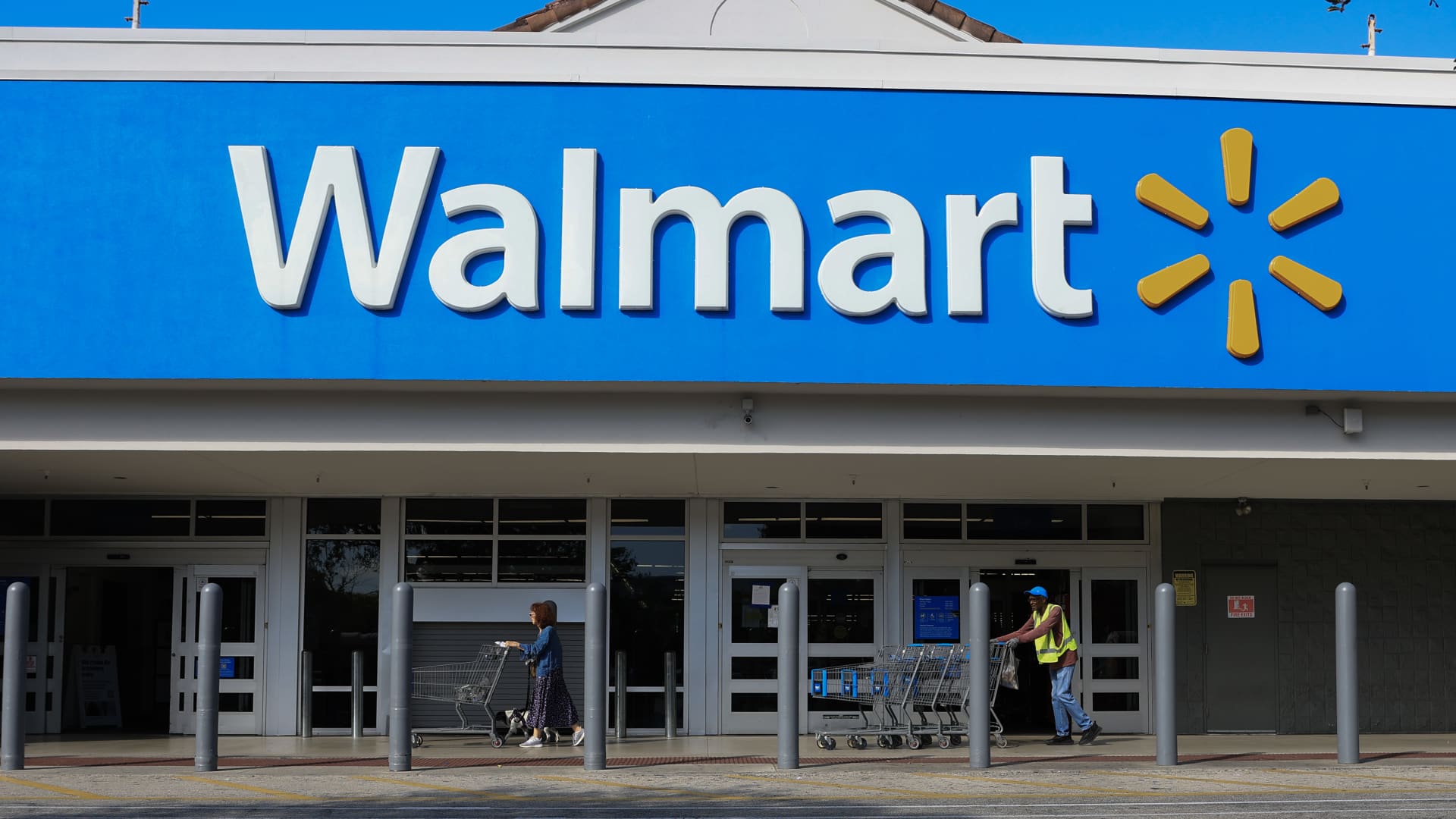
A Walmart sign hangs on the exterior of the store on Nov. 20, 2025 in Hollywood, Florida.
Joe Raedle | Getty Images
Walmart and Google said Sunday that shoppers will soon be able to use Google’s artificial intelligence assistant Gemini to more easily discover and buy products from the retail giant and its warehouse club, Sam’s Club.
Incoming Walmart CEO John Furner and Google CEO Sundar Pichai announced that the companies have teamed up on stage at the National Retail Federation’s Big Show, an annual industry conference held at New York City’s Javits Center.
The CEOs did not say when the new feature will launch or share financial terms. The company said the experience will start first in the U.S. and then expand internationally.
With the Google deal, Walmart is boosting its effort to keep up with customers who are using AI chatbots to save time or look for inspiration. Walmart announced a deal with a rival to Gemini, OpenAI’s ChatGPT, in October to allow shoppers to make purchases with “Instant Checkout,” a feature that allows them to buy an item without leaving the AI chatbot. OpenAI recently launched that feature with Walmart and it has Instant Checkout deals with other retailers, including Etsy and several Shopify merchants like Skims, Vuori and Spanx.
Walmart also has its own AI chatbot, a yellow smiley-faced assistant on its app called Sparky.
“The transition from traditional web or app search to agent-led commerce represents the next great evolution in retail,” Furner said in a news release. “We aren’t just watching the shift, we are driving it.”
In his remarks on stage, Furner, who will step into Walmart’s top role on Feb. 1, said Walmart is “rewriting the retail playbook” and, with AI, it’s “trying to close the gap between I want it and I have it.”
Pichai said that Google is excited to work with Walmart and described the adoption of AI as a “transformative” moment.
For Walmart, the evolution of customers’ shopping habits — such as searches that start in an AI chatbot rather than its own app or website — is reshaping the retailer’s digital strategy. In a statement, David Guggina, Walmart U.S.’s chief ecommerce officer, said agentic AI “helps us meet customers earlier in their shopping journey and in more places.”
“Over time, these agents will make it easier for customers to find what they need, want and love,” he said.
Walmart leaders have also been vocal about how AI will change the workforce and employees’ roles, comments that carry additional weight as the company is the largest private employer in the U.S.
Walmart CEO Doug McMillon, who is retiring and will be succeeded by Furner, has spoken about the sweeping impact of the technology, saying that “it’s very clear that AI is going to change literally every job.”
Google has removed some of its artificial intelligence health summaries after a Guardian investigation found people were being put at risk of harm by false and misleading information.
The company has said its AI Overviews, which use generative AI to provide snapshots of essential information about a topic or question, are “helpful” and “reliable”.
But some of the summaries, which appear at the top of search results, served up inaccurate health information, putting users at risk of harm.
In one case that experts described as “dangerous” and “alarming”, Google provided bogus information about crucial liver function tests that could leave people with serious liver disease wrongly thinking they were healthy.
Typing “what is the normal range for liver blood tests” served up masses of numbers, little context and no accounting for nationality, sex, ethnicity or age of patients, the Guardian found.
What Google’s AI Overviews said was normal may vary drastically from what was actually considered normal, experts said. The summaries could lead to seriously ill patients wrongly thinking they had a normal test result, and not bother to attend follow-up healthcare meetings.
After the investigation, the company has removed AI Overviews for the search terms “what is the normal range for liver blood tests” and “what is the normal range for liver function tests”.
A Google spokesperson said: “We do not comment on individual removals within Search. In cases where AI Overviews miss some context, we work to make broad improvements, and we also take action under our policies where appropriate.”
Vanessa Hebditch, the director of communications and policy at the British Liver Trust, a liver health charity, said: “This is excellent news, and we’re pleased to see the removal of the Google AI Overviews in these instances.
“However, if the question is asked in a different way, a potentially misleading AI Overview may still be given and we remain concerned other AI‑produced health information can be inaccurate and confusing.”
The Guardian found that typing slight variations of the original queries into Google, such as “lft reference range” or “lft test reference range”, prompted AI Overviews. That was a big worry, Hebditch said.
“A liver function test or LFT is a collection of different blood tests. Understanding the results and what to do next is complex and involves a lot more than comparing a set of numbers.
“But the AI Overviews present a list of tests in bold, making it very easy for readers to miss that these numbers might not even be the right ones for their test.
“In addition, the AI Overviews fail to warn that someone can get normal results for these tests when they have serious liver disease and need further medical care. This false reassurance could be very harmful.”
Google, which has a 91% share of the global search engine market, said it was reviewing the new examples provided to it by the Guardian.
Hebditch said: “Our bigger concern with all this is that it is nit-picking a single search result and Google can just shut off the AI Overviews for that but it’s not tackling the bigger issue of AI Overviews for health.”
Sue Farrington, the chair of the Patient Information Forum, which promotes evidence-based health information to patients, the public and healthcare professionals, welcomed the removal of the summaries but said she still had concerns.
“This is a good result but it is only the very first step in what is needed to maintain trust in Google’s health-related search results. There are still too many examples out there of Google AI Overviews giving people inaccurate health information.”
Millions of adults worldwide already struggle to access trusted health information, Farrington said. “That’s why it is so important that Google signposts people to robust, researched health information and offers of care from trusted health organisations.”
AI Overviews still pop up for other examples the Guardian originally highlighted to Google. They include summaries of information about cancer and mental health that experts described as “completely wrong” and “really dangerous”.
Asked why these AI Overviews had not also been removed, Google said they linked to well-known and reputable sources, and informed people when it was important to seek out expert advice.
A spokesperson said: “Our internal team of clinicians reviewed what’s been shared with us and found that in many instances, the information was not inaccurate and was also supported by high quality websites.”
Victor Tangermann, a senior editor at the technology website Futurism, said the results of the Guardian’s investigation showed Google had work to do “to ensure that its AI tool isn’t dispensing dangerous health misinformation”.
Quick Guide
Contact Andrew Gregory about this story
Show
If you have something to share about this story, you can contact Andrew using one of the following methods.
The Guardian app has a tool to send tips about stories. Messages are end to end encrypted and concealed within the routine activity that every Guardian mobile app performs. This prevents an observer from knowing that you are communicating with us at all, let alone what is being said.
If you don’t already have the Guardian app, download it (iOS/Android) and go to the menu. Select ‘Secure Messaging’.
Email (not secure)
If you don’t need a high level of security or confidentiality you can email andrew.gregory@theguardian.com
SecureDrop and other secure methods
If you can safely use the tor network without being observed or monitored you can send messages and documents to the Guardian via our SecureDrop platform.
Finally, our guide at theguardian.com/tips lists several ways to contact us securely, and discusses the pros and cons of each.
Illustration: Guardian Design / Rich Cousins
Google said AI Overviews only show up on queries where it has high confidence in the quality of the responses. The company constantly measures and reviews the quality of its summaries across many different categories of information, it added.
In an article for Search Engine Journal, senior writer Matt Southern said: “AI Overviews appear above ranked results. When the topic is health, errors carry more weight.”