Category: 3. Business

  • Stocks Climb in Asia, Silver Whipsaws After Record: Markets Wrap

    Stocks Climb in Asia, Silver Whipsaws After Record: Markets Wrap

    (Bloomberg) — Asian stocks rose for a seventh straight day, helping extend a global equities rally, while trading in silver turned volatile after it jumped to yet another record.

    MSCI Inc.’s gauge of Asia Pacific shares advanced 0.6%, with the tech sector leading gains. A seven-day winning streak would be its longest since mid-September. Mining stocks in the region climbed as a broad measure of commodities gained for a sixth session. US futures were steady after the S&P 500 finished near an all-time high on Friday.

    Silver gyrated after smashing through $80 an ounce for the first time amid a historic surge powered by speculative trades and a persistent mismatch between supply and demand. Gold was lower after reaching a new peak in the previous session, while copper jumped more than 6% to hit a record on the London Metal Exchange.

    Precious metals have emerged as a hot corner of financial markets in recent months, boosted by elevated central-bank purchases, inflows to exchange-traded funds and three successive rate cuts by the Federal Reserve. Lower borrowing costs are a tailwind for the commodities, which don’t pay interest, and traders are betting on more rate cuts in 2026.

    “We are witnessing a generational bubble playing out in silver,” Tony Sycamore, market analyst at IG Australia, wrote in a note Sunday. “Relentless industrial demand from solar panels, EVs, AI data centers and electronics, pushing against depleting inventories, has driven physical premiums to extremes.”

    Monday’s early momentum for precious metals had come after a comment by Elon Musk over the weekend that highlighted the growing investor frenzy around them. Musk replied to a tweet on Chinese export restrictions by saying on X: “This is not good. Silver is needed in many industrial processes.”

    In the last week, frictions in Venezuela — where the US has blockaded oil tankers — and strikes by Washington on Islamic State in Nigeria have also added to the haven appeal of these metals. With silver inventories near their lowest on record, there’s a risk of supply shortages that could impact multiple sectors.

    What Bloomberg Strategists say…

    “Silver has particular drivers which mean it is understandable for it to be outperforming the general rally in metals, precious and otherwise, against the US dollar. Nevertheless it is very tough to justify the parabolic ramp-up in silver as it leaves peers behind.”

    Garfield Reynolds, Markets Live Strategist. For full analysis, click here.

    The MSCI All Country World Index — one of the broadest measures of the equity market — was up 0.1% in Asia after climbing 1.4% last week to an all-time high as a much-expected year-end rally took hold.

    “The focus this week will be on the release of the FOMC minutes” from the Fed’s December meeting, according to Sycamore. “Markets will scour the minutes for deeper insights into the committee debates on the balance of risks and the timing of future easing.”

    Chinese stocks on the mainland underperformed the Asian benchmark on Monday. Data over the weekend showed industrial profits fell for a second month in November, adding to signs that weakening domestic demand and persistent deflation are weighing on corporate earnings.

    The nation on Sunday pledged to broaden its fiscal spending base in 2026, signaling sustained government support to drive growth in a challenging external environment. Separately, Chinese state media cautioned against making one-way bets on the yuan, signaling growing official discomfort about the pace of recent gains in the currency. The yuan advanced past 7 per dollar last week in offshore trading for the first time since September 2024.

    Geopolitics also drew attention at the start of a new week. Defense stocks in China and Taiwan rose as the former conducted military drills in waters and airspace surrounding Taiwan starting Monday. Meanwhile, Donald Trump said he made “a lot of progress” in talks with Ukrainian President Volodymyr Zelenskiy over a possible peace deal, but that it might take a few weeks to get it done and there’s no set timeline.

    Elsewhere in markets, oil was higher on prospects for improved Chinese demand in 2026. It is still on track for a fifth monthly drop in December, which would be the longest losing streak in more than two years. Bitcoin rallied about 3% while a gauge of the dollar was steady.

    The gauge equities gauge has risen nearly 22% in 2025, heading for a third straight annual gain and the biggest since 2019.

    Trends in AI, the key driver of this year’s rally, as well as the path of the Fed’s interest rates are seen by investors as two of the most crucial factors that will determine how equities perform in 2026.

    “Stocks can continue their party into 2026 because rate cuts are coming, global growth is robust, and the worst of the tariff threats seem to be already in the price,” said Nirgunan Tiruchelvam, an analyst at Aletheia Capital.

    Stocks

    S&P 500 futures were little changed as of 1:47 p.m. Tokyo time Japan’s Topix rose 0.2% Australia’s S&P/ASX 200 fell 0.3% Hong Kong’s Hang Seng rose 0.3% The Shanghai Composite rose 0.3% Euro Stoxx 50 futures rose 0.3% Currencies

    The Bloomberg Dollar Spot Index was little changed The euro was little changed at $1.1765 The Japanese yen rose 0.2% to 156.33 per dollar The offshore yuan was little changed at 7.0092 per dollar Cryptocurrencies

    Bitcoin rose 3% to $90,175.03 Ether rose 3.6% to $3,042.66 Bonds

    The yield on 10-year Treasuries was little changed at 4.14% Australia’s 10-year yield advanced two basis points to 4.76% Commodities

    West Texas Intermediate crude rose 1% to $57.30 a barrel Spot gold fell 0.4% to $4,515.14 an ounce This story was produced with the assistance of Bloomberg Automation.

    –With assistance from Carmeli Argana, Rita Nazareth, Ruth Carson and Abhishek Vishnoi.

    ©2025 Bloomberg L.P.

    Continue Reading

  • Deterra Royalties Limited (ASX:DRR) is definitely on the radar of institutional investors who own 49% of the company

    Deterra Royalties Limited (ASX:DRR) is definitely on the radar of institutional investors who own 49% of the company

    • Significantly high institutional ownership implies Deterra Royalties’ stock price is sensitive to their trading actions

    • 53% of the business is held by the top 7 shareholders

    • Recent purchases by insiders

    We’ve found 21 US stocks that are forecast to pay a dividend yield of over 6% next year. See the full list for free.

    If you want to know who really controls Deterra Royalties Limited (ASX:DRR), then you’ll have to look at the makeup of its share registry. With 49% stake, institutions possess the maximum shares in the company. Put another way, the group faces the maximum upside potential (or downside risk).

    Because institutional owners have a huge pool of resources and liquidity, their investing decisions tend to carry a great deal of weight, especially with individual investors. Hence, having a considerable amount of institutional money invested in a company is often regarded as a desirable trait.

    In the chart below, we zoom in on the different ownership groups of Deterra Royalties.

    View our latest analysis for Deterra Royalties

    ASX:DRR Ownership Breakdown December 29th 2025

    Institutional investors commonly compare their own returns to the returns of a commonly followed index. So they generally do consider buying larger companies that are included in the relevant benchmark index.

    We can see that Deterra Royalties does have institutional investors; and they hold a good portion of the company’s stock. This suggests some credibility amongst professional investors. But we can’t rely on that fact alone since institutions make bad investments sometimes, just like everyone does. It is not uncommon to see a big share price drop if two large institutional investors try to sell out of a stock at the same time. So it is worth checking the past earnings trajectory of Deterra Royalties, (below). Of course, keep in mind that there are other factors to consider, too.

    earnings-and-revenue-growth
    ASX:DRR Earnings and Revenue Growth December 29th 2025

    We note that hedge funds don’t have a meaningful investment in Deterra Royalties. Our data shows that Iluka Resources Limited is the largest shareholder with 20% of shares outstanding. In comparison, the second and third largest shareholders hold about 6.8% and 6.1% of the stock.

    On further inspection, we found that more than half the company’s shares are owned by the top 7 shareholders, suggesting that the interests of the larger shareholders are balanced out to an extent by the smaller ones.

    Researching institutional ownership is a good way to gauge and filter a stock’s expected performance. The same can be achieved by studying analyst sentiments. Quite a few analysts cover the stock, so you could look into forecast growth quite easily.

    Continue Reading

  • Oil Rises as U.S.-Venezuela Tensions Escalate – The Wall Street Journal

    1. Oil Rises as U.S.-Venezuela Tensions Escalate  The Wall Street Journal
    2. Oil falls on looming supply glut  Business Recorder
    3. How Ukraine peace signals impact the global economy  AnewZ
    4. Oil Prices Edge Higher as Energy Strikes Darken Russia-Ukraine Peace Hopes  Crude Oil Prices Today | OilPrice.com
    5. Oil gains as investors weigh Middle East tensions  Reuters

    Continue Reading

  • Harbour BioMed Enters into Long-Term Strategic Collaboration with Lannacheng to Advance Next-Generation Radionuclide Drug Conjugates

    Harbour BioMed Enters into Long-Term Strategic Collaboration with Lannacheng to Advance Next-Generation Radionuclide Drug Conjugates

    CAMBRIDGE, Mass., ROTTERDAM, Netherlands and SHANGHAI, Dec. 28, 2025 /PRNewswire/ — Harbour BioMed (HKEX: 02142), a global biopharmaceutical company committed to the discovery and development of novel antibody therapeutics in immunology and oncology, today announced that it has entered into a long-term strategic collaboration with Yantai Lannacheng Biotechnology Co., Ltd. (“Lannacheng”). The two parties will leverage their respective resources and strengths to jointly advance the development of next-generation radionuclide drug conjugates (RDCs).

    Compared with conventional radiotherapy, RDCs utilize tumor antigen–specific ligands to deliver radionuclides directly to tumor lesions for targeted radiotherapy, thereby effectively reducing damage to surrounding healthy tissues. In contrast to antibody–drug conjugates (ADCs), the radionuclides in RDCs can also exert cytotoxic effects on neighboring tumor cells and the tumor microenvironment, even if those cells do not express the target antigen. This mechanism offers a potential advantage in overcoming tumor heterogeneity and drug resistance. In addition, this technology holds the potential to achieve theranostics—integrating both diagnosis and treatment.

    With its advanced technology platforms and deep expertise, Harbour BioMed has built a solid foundation in antibody discovery and development. The company’s proprietary Harbour Mice® platform enables the generation of fully human monoclonal antibodies in both conventional (H2L2) and heavy chain-only (HCAb) formats, eliminating the need for additional engineering or humanization. The HCAb technology, in particular, produces unique, fully human heavy chain-only antibodies that are approximately half the size of conventional IgGs, offering significant advantages for next-generation antibody therapeutics. In the development of RDCs, fully human antibodies—characterized by low immunogenicity, superior tissue penetration, and high specificity and stability—can significantly enhance the efficiency of targeted delivery, thereby improving therapeutic efficacy while effectively reducing drug-related toxicity and side effects.

    Founded in 2021, Lannacheng is a clinical-stage biotechnology company dedicated to the discovery, development, and commercialization of integrated theranostic radiopharmaceuticals for oncology. The company’s R&D engine, enhanced by its proprietary pharmacokinetic optimization and dual-targeting drug development platforms, combines target validation, radioisotope selection, and linker design to improve pharmacokinetic profiles and advance the development of dual-targeting radiopharmaceutical candidates. Its strengths are further solidified through end-to-end integration of capabilities supported by its controlling shareholder, Dongcheng Biochem, including R&D resources, a stable supply of radioisotopes, and a GMP production facility currently under construction in Yantai. Together, these elements ensure a sustainable, scalable, and rapidly innovating radiopharmaceutical pipeline.

    Jingsong Wang, MD, PhD, Founder, Chairman, and CEO of Harbour BioMed, commented: “We are very pleased to establish a long-term strategic collaboration with Lannacheng to jointly advance the development of next-generation RDCs. Harbour BioMed is committed to providing efficient and highly differentiated antibody solutions for innovative therapies through our globally leading Harbour Mice® fully human antibody platform. This collaboration will deeply integrate Harbour BioMed’s expertise in antibody discovery with Lannacheng’s strengths in radiopharmaceutical R&D and commercialization, accelerating the development of more precise, effective and safe cancer therapies and bringing new hope to patients worldwide.”

    Wu Xiaoming, General Manager of Lannacheng, stated: “We are delighted to establish a long-term strategic collaboration with Harbour BioMed to jointly advance the R&D and translation of next-generation radiopharmaceuticals. Lannacheng is committed to leveraging our systematic radiopharmaceutical technology platform, comprehensive industrial capabilities, and global collaboration network to provide efficient, innovative, and differentiated integrated solutions for tumor diagnosis and treatment. This collaboration will fully combine Lannacheng’s strengths in radiopharmaceutical R&D and commercialization and Harbour BioMed’s deep expertise in antibody discovery. Together, we aim to accelerate the development of more precise, effective, and safe cancer treatment therapies, bringing new hope to patients worldwide.”

    About Harbour BioMed

    Harbour BioMed (HKEX: 02142) is a global biopharmaceutical company committed to the discovery and development of novel antibody therapeutics in immunology and oncology. The company is building a robust and differentiated pipeline through internal R&D capabilities, strategic global collaborations in co-discovery and co-development, and selective acquisitions.

    Harbour BioMed’s proprietary antibody technology platform, Harbour Mice®, generates fully human monoclonal antibodies in both the conventional two heavy and two light chain (H2L2) format and the heavy chain-only (HCAb) format. Building upon HCAb antibodies, the HCAb-based immune cell engagers (HBICE®) bispecific antibody technology enables tumor-killing effects that traditional combination therapies cannot achieve. Additionally, the HCAb-based bispecific immune cell antagonist (HBICA™) technology empowers the development of innovative biologics for immunological and inflammatory diseases. By integrating Harbour Mice®, HBICE®, and HBICA™ with a single B-cell cloning platform, Harbour BioMed has built a highly efficient and distinctive antibody discovery engine for developing next-generation therapeutic antibodies. For more information, please visit www.harbourbiomed.com.

    About Yantai Lannacheng Biotechnology Co., Ltd.

    Founded in 2021, Lannacheng is a clinical-stage biotechnology company dedicated to the discovery, development, and commercialization of integrated theranostic radiopharmaceuticals for oncology. The company’s R&D engine, enhanced by its proprietary pharmacokinetic optimization and dual-targeting drug development platforms, combines target validation, radioisotope selection, and linker design to improve pharmacokinetic profiles and advance the development of dual-targeting radiopharmaceutical candidates. Its strengths are further solidified through end-to-end integration of capabilities supported by its controlling shareholder, Dongcheng Biochem, including R&D resources, a stable supply of radioisotopes, and a GMP production facility currently under construction in Yantai. Together, these elements ensure a sustainable, scalable, and rapidly innovating radiopharmaceutical pipeline.

    SOURCE Harbour BioMed

    Continue Reading

  • China outlines rules to regulate human-like AI companion apps

    China outlines rules to regulate human-like AI companion apps

    China’s internet regulator issued new draft rules on Saturday that aim to regulate the use of artificial intelligence “companions,” which are defined as systems that interact with humans and display “human-like traits and behavior.”

    The new rules, called “Interim Measures for the Administration of Anthropomorphic Interactive Services Using Artificial Intelligence,” were issued by the Cyberspace Administration of China or CAC, and will be up for public comment until January 25, 2026, Reuters reported.

    According to the CAC, the rules would be applied to any application or service that uses AI to simulate human personality traits and offer what it terms “anthropomorphic interactive services.”

    The proposed regulations will require makers of AI companion apps to make it clear to their users that they’re interacting with an AI system, and not a human, through regular pop-up warnings. They must also ask users to take a break after two-hours of continuous use, the rules state. In addition, they’ll be required to create systems that can assess user’s emotions and identify if they’re becoming dependent or addicted to the AI. If they identify such a case, they’ll be required to restrict their service to the user in question.

    Furthermore, AI companion apps will be required to establish an emergency protocol, so that if a user expresses thoughts about suicide or self-harm, a human will take over the interaction from the AI system.

    There are a number of prohibitions in the draft document, too. It bars AI companions from endangering national security, spreading rumors and inciting “illegal religious activities,” and they’re also not allowed to use obscenities or promote violence or criminal acts. In addition, chatbots must be prevented from encouraging self-harm or suicide or making false promises. Controls must also be introduced to prevent chatbots from “emotional manipulation” that convinces users to make bad decisions.

    The draft Chinese law comes at a time when adoption of AI companion apps is dramatically accelerating. In October, a report by the South China Morning Post revealed there are now more than 515 million generative AI users in China, resulting in growing concern about the psychological impact they have.

    The market for AI companion apps has become too large and consequential for regulators to ignore, with various studies showing how they can form emotional bonds with their users and, in some cases, cause significant harm. Earlier this year, a Frontiers in Psychology study showed that 45.8% of Chinese university students reported using AI chatbots in the last 30 days, and those that did so exhibited significantly higher levels of depression compared to non-users.

    China isn’t the only country that’s stepped in to try and regulate the use of AI companions. In the U.S., California became the first state to pass similar legislation, when Governor Gavin Newsom signed Senate Bill 243 into law in October. That bill, which will take effect on January 1, requires app makers to remind minors every three hours that they’re speaking to an AI system and not a human, and urge them to take a break.

    The SB 243 bill also mandates companion apps to introduce age verification and prohibits them from representing themselves as healthcare professionals or showing sexually explicit images to minors. The law stipulates that individuals can sue companies for violations and seek up to $1,000 per incident in compensation, plus legal costs.

    When he signed SB 243 into law, Newsom warned of the risk of AI technology exploiting, misleading and endangering children, and China’s regulatory authority has cited similar justifications for its own law. According to the CAC, the new rules will “promote the healthy development and standardized application of artificial intelligence-based anthropomorphic interactive services, safeguard national security and public interests, and protect the legitimate rights and interests of citizens, legal persons and other organizations.”

    Image: SiliconANGLE/Dreamina

    Support our mission to keep content open and free by engaging with theCUBE community. Join theCUBE’s Alumni Trust Network, where technology leaders connect, share intelligence and create opportunities.

    • 15M+ viewers of theCUBE videos, powering conversations across AI, cloud, cybersecurity and more
    • 11.4k+ theCUBE alumni — Connect with more than 11,400 tech and business leaders shaping the future through a unique trusted-based network.

    About SiliconANGLE Media

    SiliconANGLE Media is a recognized leader in digital media innovation, uniting breakthrough technology, strategic insights and real-time audience engagement. As the parent company of SiliconANGLE, theCUBE Network, theCUBE Research, CUBE365, theCUBE AI and theCUBE SuperStudios — with flagship locations in Silicon Valley and the New York Stock Exchange — SiliconANGLE Media operates at the intersection of media, technology and AI.

    Founded by tech visionaries John Furrier and Dave Vellante, SiliconANGLE Media has built a dynamic ecosystem of industry-leading digital media brands that reach 15+ million elite tech professionals. Our new proprietary theCUBE AI Video Cloud is breaking ground in audience interaction, leveraging theCUBEai.com neural network to help technology companies make data-driven decisions and stay at the forefront of industry conversations.

    Continue Reading

  • Climate leadership requires a realistic approach to transition

    Climate leadership requires a realistic approach to transition

    The debate surrounding Canadian Prime Minister Mark Carney’s recent positioning on fossil fuels (“Carney’s fossil fuels pivot undoes climate legacy”, Report, December 15) reveals a recurring flaw in how climate leadership is assessed.

    From the standpoint of industrial systems, including fashion and textiles, climate transition failures rarely stem from insufficient ambition. They arise from misaligned sequencing. Energy policy, material innovation, labour systems and capital flows move at different speeds, yet are often treated as if they can be transformed simultaneously.

    In fashion, one of the most energy- and resource-intensive global industries, this misalignment is already visible. Brands are urged to decarbonise faster than clean energy access expands. Recycling mandates advance ahead of viable infrastructure. Capital is redirected without ensuring that low-carbon materials and skilled labour are available at scale. When this happens, companies do not transform. They substitute, offshore or relabel.

    This is not an argument for preserving fossil fuel dependence, nor a defence of delay. It is an argument for realism. Abrupt withdrawal of incumbent systems without credible alternatives in place does not accelerate decarbonisation. It displaces emissions, weakens regulatory trust and fuels public scepticism.

    Climate leadership should therefore be judged less by symbolic positioning and more by whether policies are designed to carry industries through transition without fracture. Finance plays a central role here, not only through divestment, but through disciplined sequencing. Capital must build the bridge before burning it.

    If sustainability is to retain economic and political credibility, it must be governed as a design problem, not a moral contest. Markets respond to coherence. They punish confusion swiftly.

    Nirbhay Rana
    Professor of Design & Sustainable Systems, IILM University, Gurugram, India; and Programme Coordinator, Fashion, Regional Editor (Asia), Bloomsbury Fashion Business Cases, Bloomsbury Publishing

    Continue Reading

  • Oil prices rise as Middle East tensions stoke supply concerns, Russia–Ukraine talks stall

    Oil prices rose on Monday as investors weighed Middle East tensions that could disrupt supply, while a major hurdle remains in the Russia–Ukraine peace talks.

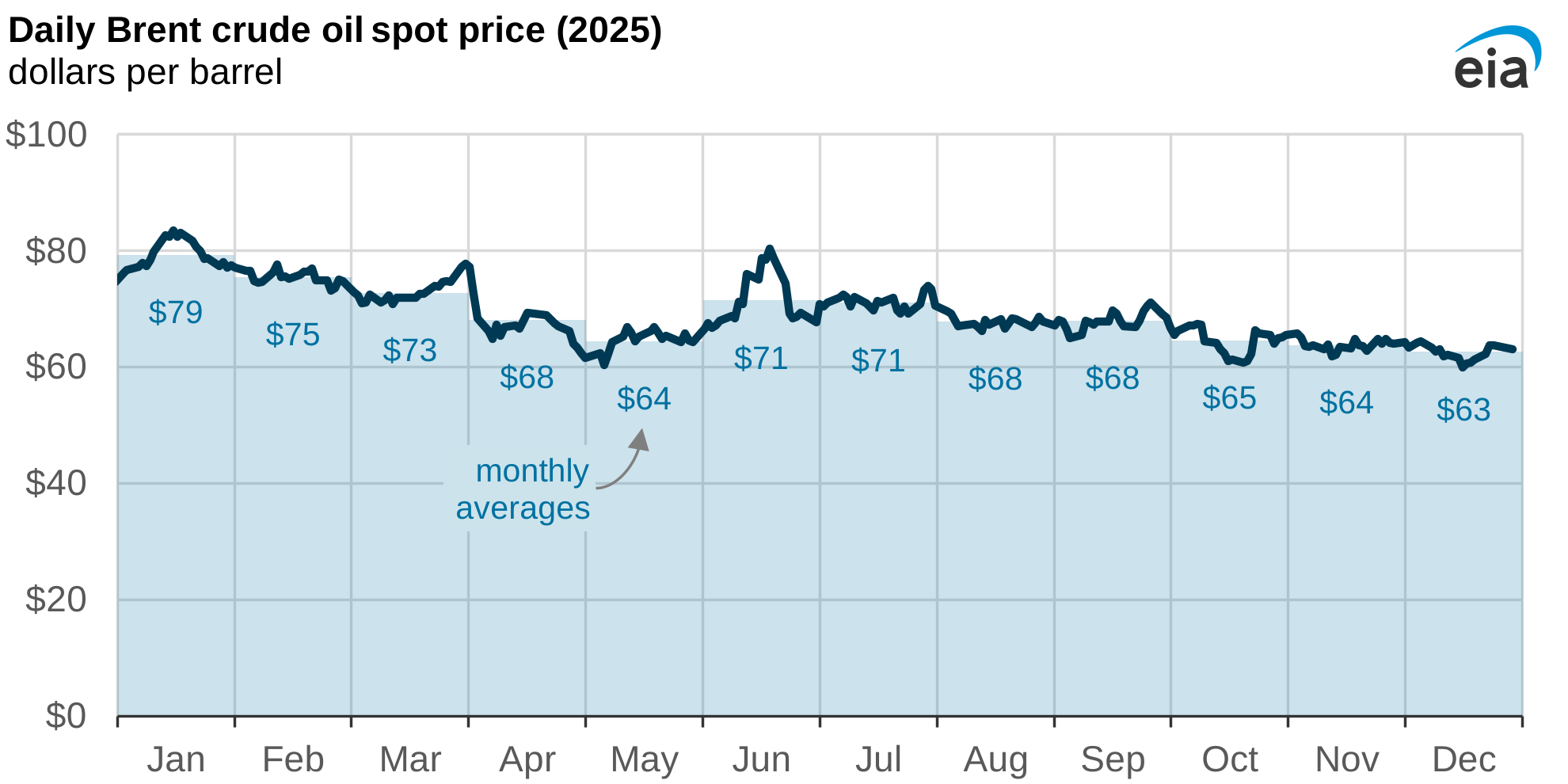
    Brent crude futures rose 56 cents, or 0.92%, to $61.20 per barrel at 0236 GMT, while U.S. West Texas Intermediate crude was up 51 cents, or 0.9%, to $57.25.

    Both benchmark prices fell more than 2% on Friday as investors weighed a looming global supply glut and the possibility of a Ukraine peace deal ahead of weekend talks between Ukrainian President Volodymyr Zelenskiy and U.S. President Donald Trump.

    “The main reason prices are rising is that geopolitical tensions remain elevated, as Russia and Ukraine continued striking each other’s energy infrastructure over the weekend,” said Yang An, a China-based analyst at Haitong Futures.

    “The Middle East has also been unsettled recently, with Saudi air strikes in Yemen and Iran saying the country is in a ‘full-scale war’ with the U.S., Europe, and Israel. This may be what’s driving market concerns about potential supply disruptions,” Yang added.

    U.S. President Donald Trump said on Sunday that he and Ukrainian President Volodymyr Zelenskiy were “getting a lot closer, maybe very close” to an agreement to end the war in Ukraine, though both leaders acknowledged that some of the thorniest details remained unresolved.

    The two leaders spoke at a joint press conference late Sunday afternoon after meeting at Trump’s Mar-a-Lago resort in Florida. Trump said it will be clear “in a few weeks” whether negotiations to end the war will succeed.

    While the peace talks were positive, there was no breakthrough and a significant hurdle remained in terms of territorial control over the Donbas region, IG analyst Tony Sycamore said.

    WTI is expected to trade within a $55-$60 range with an eye also on U.S. enforcement actions against Venezuelan oil shipments and any fallout from the U.S. military strike against ISIS targets in Nigeria, which produces about 1.5 million barrels per day, Sycamore said in a note


    Continue Reading

  • Motorcycle handguard for Kawasaki GTR1400 Concours Z1000SX for NI&JA 1000 H2 H2R ZX10R Universal Motorcycle Hand Guard Handguard Protector System (Color : Black)

    For KAWASAKI GTR1400 Concours Z1000SX for NI&JA 1000 H2 H2R ZX10R Universal Motorcycle Hand Guard Handguard Protector System
    Item Type: Handlebar Windshield
    Motorcycle cross-country handguards Motorcycle handlebar protectors
    Provide eye-catching show-off and personalize your motorcycle.
    Placement on vehicle: front
    Adaptation: motorcycles, electric motorcycles
    Color: as shown in the picture
    Material: PP
    Dimensions: 22 x 18 cm
    Package Contents:
    2 x handlebar windshield
    1 set x mounting accessories
    Handguards are mounted on the ends of the handlebars, these handguards add comfort, appearance and shine, not only making it look better but also improving the appearance of the bike. Perfect for your motorcycle decoration!

    Continue Reading

  • Home Sales, Fed Meeting Minutes, and Manufacturing Data to Usher in the New Year – Barron's

    1. Home Sales, Fed Meeting Minutes, and Manufacturing Data to Usher in the New Year  Barron’s
    2. US stock markets prepare for a quiet end to a rollercoaster year as 2026 approaches  livemint.com
    3. Catalyst Watch: Defense stocks in play, FOMC minutes, and opening 2026 trades  Seeking Alpha
    4. 兰亭-阿萍(@langting088)’s insights  Binance
    5. The Federal Reserve minutes become the market focus next week, precious metal prices reach new highs  Bitget

    Continue Reading

  • Baptist Health-Cigna contract dispute could lead to disruption in care

    Baptist Health-Cigna contract dispute could lead to disruption in care

    SAN ANTONIO – Baptist Health System’s parent company, Tenet Healthcare, is in an ongoing contract dispute with insurance provider Cigna.

    Should the two sides be unable to reach terms before the Dec. 31 deadline, Baptist Health said 1.4 million Texas families that use Tenet facilities and providers could face higher costs or disruptions in their healthcare.

    As tensions flare between two companies during a dispute, you may get messages that seem scary.

    Experts say it is important to remain calm and remember that these are often negotiation tactics.

    Here are steps you can follow to prepare if a contract dispute extends beyond its negotiating deadline, from the Centers for Medicare & Medicaid Services:

    Confirm whether you are impacted

    Not every health insurance plan is included in a coverage dispute.

    Should the dispute between Cigna and Baptist Health extend past Dec. 31, patients should call both their companies to confirm whether they are impacted.

    Some questions you can ask include:

    • Is (name of your doctor or location) now considered out-of-network for my insurance plan?

    • I have an appointment on (specific date). Will this be considered in-network or out-of-network?

    • Will in-network rates be honored for patients who were already in active treatment?

    • Do you offer payment plans, discounts or financial assistance if my premiums go up?

    Be sure to take note of who you spoke with and the date and time of the call, in case you need to reference it with another representative.

    Ask if you can continue care

    Health insurance plans sometimes offer continuity-of-care or transition-of care policies for when a contracted provider treating certain conditions is no longer considered in-network.

    Those impacted should ask their provider if they are eligible for continuing care. If so, ask your insurance provider the following questions:

    • Where can I find the forms to apply?

    • What is the deadline to submit this request?

    • How long will services be covered if granted?

    Consider whether to change plans or providers

    Disputes usually don’t last very long, but if they do, you may consider switching care or health insurance plans.

    If your care is relatively routine, you may ask your insurance provider if there are other in-network options accepting new patients.

    You may also choose to enroll in a different plan through your employer or the marketplace, though you will need to ask your HR department or a marketplace representative whether you qualify for a special enrollment period.

    Baptist Health System provided an interview with KSAT for this story. We will refrain from publishing statements from either side until both companies have had an opportunity to comment.


    Read also:

    Copyright 2025 by KSAT – All rights reserved.

    Continue Reading