Category: 3. Business

  • Sudbury Delta Charities continues happy holiday tradition

    Sudbury Delta Charities continues happy holiday tradition

    For the 29th consecutive year, Delta Bingo and Gaming Sudbury are spreading holiday cheer by helping local organizations provide Christmas turkeys and holiday meals to families across Greater Sudbury

    Delta Bingo and Gaming Sudbury is once again stepping up to continue a happy holiday tradition by giving to families in need in Sudbury.

    For the 29th consecutive year, Delta Bingo and Gaming Sudbury and its Charitable Gaming partners – Sudbury Charities Foundation and ACT/UCT Sudbury – are spreading holiday cheer by helping local organizations provide Christmas turkeys and holiday meals to families across Greater Sudbury, said a company news release.

    Since 1996, this well known community initiative, founded by Ray Loiselle, has helped thousands of families share a warm holiday meal together, said the release. To date, the program has contributed an estimated $425,000 to The Salvation Army to continue to support local families in need.

    The success is thanks to many local partnerships, said the release. The continued partnership of organizations such as Club Richelieu de Sudbury, Ten Rainbows Children’s Foundation, and the Minnow Lake Lions Club ensures the initiative reaches approximately 1,200 families each Christmas.

    Christina Nupponen, Charity Association Coordinator, said the effort is more than giving free food.

    “This event has always been about more than providing a turkey; it’s about bringing hope and

    comfort to our community,” said Nupponen.

    “Each year, I’m inspired by the generosity of our local charities and the difference this partnership makes in the lives of so many families. The continued support and compassion shown by our community truly captures the spirit of the holiday season,” she added.

    This year, the tradition grew even stronger, said the release. In addition to supporting the Christmas turkey campaign, ACT-UCT donated a total of $50,000 to local community groups such as Inner City Home, Better Beginnings Better Futures, Go-Give Project, Our Children Our Future, Camp Quality, House of Kin, and Maison McCulloch Hospice, allowing even more local families and individuals to experience the spirit of the season. said Delta.

    Funds raised through Delta Bingo and Gaming Sudbury’s Charitable Gaming partners continue to empower our charitable groups to make a difference in the lives of thousands in our community.

    Partnered donations like these make long-standing programs possible, reflecting the lasting impact of Charitable Gaming in building stronger, more connected communities, said the release.

    Delta Bingo and Gaming Sudbury is an innovator in the charitable gaming industry, offering both paper and electronic bingo as well as Vegas-style gaming machines. Delta Bingo Sudbury has been proudly serving the community since 1984, helping to raise over $55 million for local charities, said the release.

    Continue Reading

  • Does investing locally matter to Canadians amid tariff war?

    Does investing locally matter to Canadians amid tariff war?

    Listen to this article

    Estimated 5 minutes

    The audio version of this article is generated by AI-based technology. Mispronunciations can occur. We are working with our partners to continually review and improve the results.

    A Vancouver-based company hopes Canadians look to keep some of their investment dollars local and create an impact — even as the trend of money flowing south of the border looks set to continue into 2026.

    In 2025, the “Buy Canadian” movement took off amid the ongoing tariff war and U.S. President Donald Trump’s public threats to make the country the 51st state.

    But despite the surge in interest in Canadian products, the country’s investors steadfastly continued to park their financial assets offshore this year — with much of it in the U.S.

    One financial adviser says that just like buying Canadian, the idea of investing domestically may have cooled off since the beginning of 2025.

    Daisy Mak, a certified financial planner at Vancouver Financial Planners, said a broad swath of her clients came to her looking to invest Canadian assets when Trump was re-elected.

    “My advice was just to point out, ‘OK, so how do you think we’re gonna do this?’” Mak said.

    “We can’t 100 per cent divest away from the U.S.,” she added. “It’s just not practical and it’s not realistic.”


    Mak said that despite Canada’s banking and insurance sectors continuing to be a wise investment decision, the country still has to catch up in other sectors like technology or pharmaceuticals.

    While investing in Canada should be a part of your portfolio, she explained it should be a smaller part of a diversified portfolio that takes other countries into account.

    “It’s one thing to say, ‘I’m gonna go all Canadian,’ but … I feel like you’re cutting off your nose to spite your face,” the financial planner said.

    Hopes for local investments

    Statistics Canada recently revealed U.S. financial assets accounted for $111 billion of the foreign securities acquired by Canadians in the first three quarters of 2025.

    That works out to be 92 per cent of the total, with Canada recording a net outflow of $61.9 billion from January to September when it came to securities transactions.


    Despite the overwhelming trends, Blake Bunting, the Vancouver-based co-founder of GoParity Canada, says his online investment platform felt the surge in Canadian patriotism this year.

    “A lot of folks want to be investing, and making a return on their investment, but knowing that money actually is doing something positive for the community,” he said.

    GoParity calls itself a “community capital” or crowd-lending platform, where Bunting says users usually chip in between $1,500 and $2,500 to help community projects with loans.

    The investors then earn money on the interest from the loans, with projects as diverse as clean energy on Vancouver Island or an Indigenous-run daycare in Stephenville, N.S.

    “It’s not moving all of your assets into supporting small businesses, it’s a portion of that — to know that … you can have a really outsized impact compared to, say, the majority of your portfolio,” Bunting said.

    A group of three young people smile next to an ocean.
    From left to right: Emily Mercy, Elliot Warner and Blake Bunting are the co-founders of GoParity Canada. (Submitted by Blake Bunting)

    Responsible investing still valued

    A Nov. 25 report from the Responsible Investment Association found that for wealth managers, it remained important that investments are well-certified through an environmental, social and corporate governance (ESG) framework.

    Over 80 Canadian asset and investment managers indicated in the survey that greenhouse gas emissions and climate change mitigation remained amongst the top considerations when making their organization’s investment decisions, despite a pushback championed by Trump on net zero policies.

    A man speaks in front of a screen reading 'Drill, Baby, Drill' as a woman looks on.
    Trump speaks at a campaign town hall, as South Dakota Gov. Kristi Noem, right, looks on during last year’s U.S. presidential campaign, in Oaks, Pa., on Oct. 14, 2024. Trump has abandoned many U.S. climate initiatives and his Republican Party has criticized “net zero” policies around the globe. (Alex Brandon/The Associated Press)

    But the report notes “negative media coverage” of responsible investment from other jurisdictions is the top factor that could deter the growth of responsible investing.

    “This isn’t necessarily a surprise given the myriad of anti-ESG headlines witnessed over the last year,” the report shared.

    “Mistrust/concerns about greenwashing was surpassed by negative media coverage and is now much less of a concern.”

    WATCH | How to tell if your investments are really green:

    How to keep your investments fossil-fuel free

    Investors may be keen to put their money in greener portfolios, but a lack of standardization in the financial industry can make it difficult. Nisha Patel explains how to tell if those investments are really green.

    For Bunting, his platform offers more than a way for investors to feel like they’re supporting environmentally-sustainable projects, like a rooftop solar project in Port Hardy.

    He says offering small businesses smaller-scale funding options like GoParity means they can get help at a time when money is tight.

    “There’s no shortage of businesses that are looking for financing that don’t quite meet the bank’s criteria,” he said.

    “This is a market that is growing fast in Canada, and it continues to grow,” he added. “And … it’s not even really competing against banks, we’re filling gaps where the banks aren’t.”

    Continue Reading

  • New York subway ends its MetroCard era and switches fully to tap-and-go fares

    New York subway ends its MetroCard era and switches fully to tap-and-go fares

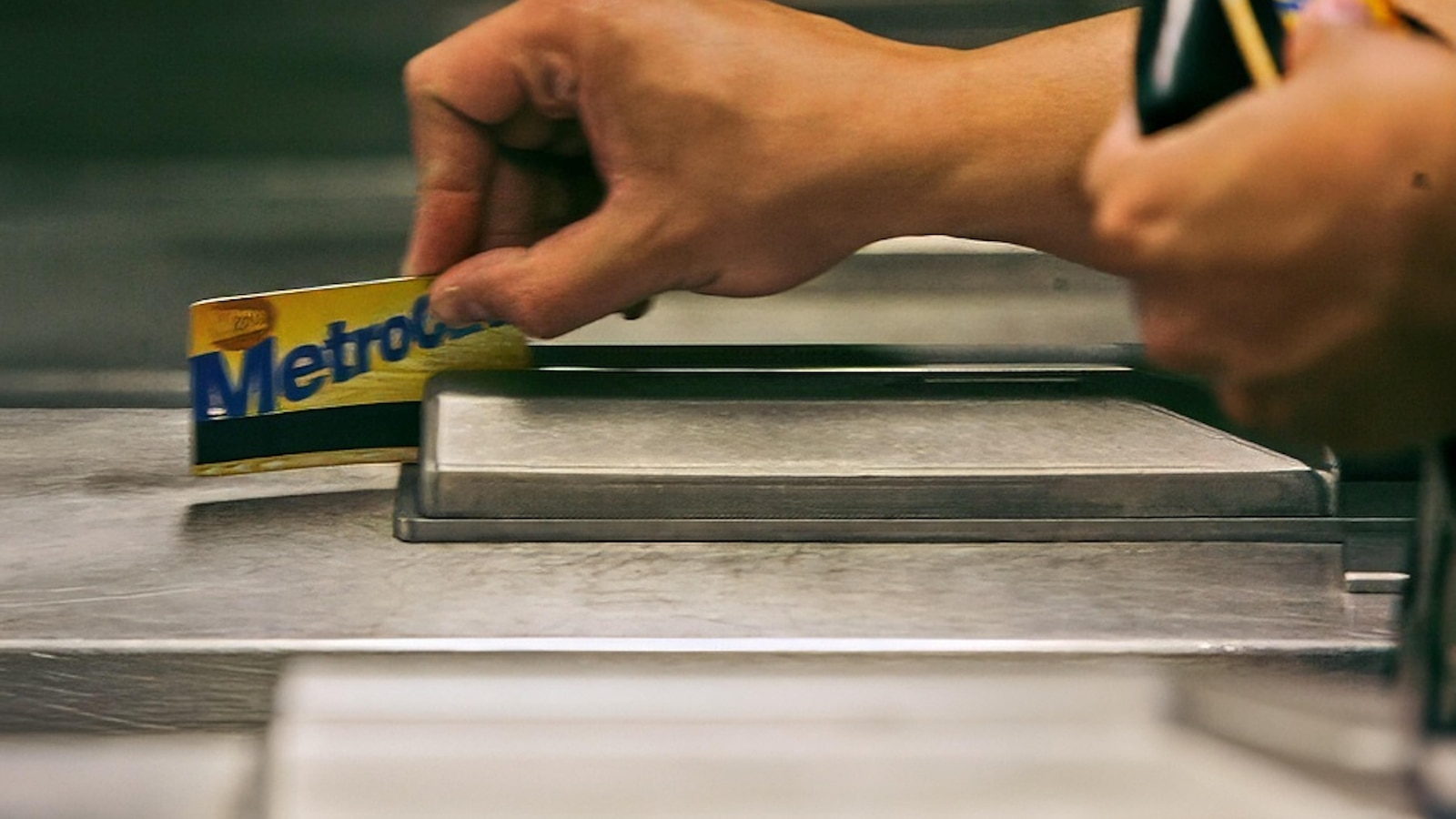
    NEW YORK — When the MetroCard replaced the New York City subway token in 1994, the swipeable plastic card infused much-needed modernity into one of the world’s oldest and largest transit systems.

    Now, more than three decades later, the gold-hued fare card and its notoriously finicky magnetic strip are following the token into retirement.

    The last day to buy or refill a MetroCard is Dec. 31, 2025, as the transit system fully transitions to OMNY, a contactless payment system that allows riders to tap their credit card, phone or other smart device to pay fares, much like they do for other everyday purchases.

    Transit officials say more than 90% of subway and bus trips are now paid using the tap-and-go system, introduced in 2019.

    Major cities around the world, including London and Singapore, have long used similar contactless systems. In the U.S., San Francisco launched a pay-go system earlier this year, joining Chicago and others.

    The humble MetroCard may have outlasted its useful life, but in its day it was revolutionary, says Jodi Shapiro, curator at the New York Transit Museum in Brooklyn, which opened an exhibit earlier this month reflecting on the MetroCard’s legacy.

    Before MetroCards, bus and subway riders relied on tokens, the brass-colored coins introduced in 1953 that were purchased from station booths. When the subway opened in 1904, paper tickets cost just a nickel, or about $1.82 in today’s dollars.

    “There was a resistance to change from tokens to something else because tokens work,” Shapiro said on a recent visit to the museum, housed underground in a decommissioned subway station. “MetroCards introduced a whole other level of thinking for New Yorkers.”

    The Metropolitan Transportation Authority launched public campaigns to teach commuters how to swipe the originally blue-colored cards correctly, hoping to avoid the dreaded error message or lost fares. Officials even briefly toyed with the idea of an quirky mascot, the Cardvaark, before coming to their senses.

    The cards quickly became collectors items as the transit system rolled out special commemorative editions marking major events, such as the “Subway Series” between baseball’s New York Mets and the New York Yankees in the 2000 World Series. At the time, a fare cost $1.50.

    Artists from David Bowie and Olivia Rodrigo to seminal New York hip hop acts, such as the Wu-Tang Clan, the Notorious B.I.G. and LL Cool J, have also graced the plastic card over the years, as have iconic New York shows like Seinfeld and Law & Order.

    “For me, the most special cards are cards which present New York City to the world,” said Lev Radin, a collector in the Bronx. “Not only photos of landmarks, skylines, but also about people who live and make New York special.”

    Perfecting the correct angle and velocity of the MetroCard swipe also became something of a point of pride separating real New Yorkers from those just visiting.

    During her failed 2016 presidential campaign, Hillary Clinton, a former U.S. Senator from New York, took an excruciating five swipes at a Bronx turnstile. In fairness, her chief Democratic opponent at the time, U.S. Sen. Bernie Sanders of Vermont, a native Brooklynite, didn’t even appear to realize tokens had been discontinued.

    Unlike the MetroCard rollout, OMNY has required little adjustment.

    Riders reluctant to use a credit card or smart device can purchase an OMNY card they can reload, similar to a MetroCard. Existing MetroCards will also continue to work into 2026, allowing riders to use remaining balances.

    MTA spokespersons declined to comment, pointing instead to their many public statements as the deadline approaches.

    The agency has said the changeover saves at least $20 million annually in MetroCard-related costs.

    The new system also allows unlimited free rides within a seven-day period because the fare is capped after 12 rides. It’ll max out at $35 a week once the fare rises to $3 in January.

    Still, new changes come with tradeoffs, with some critics raising concerns about data collection and surveillance.

    Near Times Square on a recent morning, Ronald Minor was among the dwindling group of “straphangers” still swiping MetroCards.

    The 70-year-old Manhattan resident said he’s sad to see them go. He has an OMNY card but found the vending machines to reload it more cumbersome.

    “It’s hard for the elders,” Minor said as he caught a train to Brooklyn. “Don’t push us aside and make it like we don’t count. You push these machines away, you push us away.”

    John Sacchetti, another MetroCard user at the Port Authority stop, said he likes being able to see his balance as he swipes through a turnstile so he knows how much he’s been spending on rides.

    “It’s just like everything else, just something to get used to,” he said as he headed uptown. “Once I get used to it, I think it’ll be okay.”

    ___

    Follow Philip Marcelo at https://x.com/philmarcelo

    Continue Reading

  • Minimum wage will rise in 19 states starting Jan. 1 – Axios

    1. Minimum wage will rise in 19 states starting Jan. 1  Axios
    2. New year, new laws: What laws go into effect on Jan. 1 in Nebraska?  KETV
    3. Minimum Wage Increases in the City of Sonoma Beginning January 1, 2026  Sonoma Valley Sun
    4. Is Mississippi one of 19 states raising its minimum wage? What we know  The Clarion-Ledger
    5. Oregon, Washington both to increase minimum wage in 2026  KCBY

    Continue Reading

  • Why your holiday gift returns might go to a landfill and what you can do about it

    Why your holiday gift returns might go to a landfill and what you can do about it

    The holiday season will soon come to a close, but the busiest time of the year for product returns is just beginning.

    The National Retail Federation estimates 17% of holiday purchases will be sent back this year. More retailers are reporting extended return windows and increased holiday staff to handle the rush this year.

    A major driver for returns is uncertainty. When we buy for other people, finding what they want is a bit of a guessing game. Online purchases have higher return rates because finding the right size and color is tough when you’re just staring at images on screens.

    “Clothing and footwear, as you can imagine, because fit is such an important criteria, they have higher rates of returns,” said Saskia van Gendt, chief sustainability officer at Blue Yonder, which sells software designed to improve companies’ supply chain management.

    Returns come with an environmental cost, but there’s a lot consumers and companies are doing to minimize it.

    The impact of returns
    If a company sells a thing, it’s probably packaged in plastic. Plastic is made from oil, and oil production releases emissions that warm the planet. If that thing is bought online, it’s put on a plane or a train or a truck that usually uses oil-based fuel.

    If you buy a thing and return it, it goes through most or all of that all over again.

    And once those products are back with the retailer, they may be sent along to a refurbisher, liquidator, recycler or landfill. All these steps require more travel, packaging and energy, ultimately translating to more emissions. Joseph Sarkis, who teaches supply chain management at Worcester Polytechnic Institute, estimates that returning an item increases its impact on the planet by 25% to 30%.

    Roughly a third of the time, those returns don’t make their way to another consumer. Because frequently, it’s not worth reselling.

    If, for example, you get a phone, but you send it back because you don’t like the color, the seller has to pay for the fuel and equipment to get the phone back, and then has to pay for the labor to assess whether it has been damaged since leaving the facility.

    “It can be quite expensive,” said Sarkis. “And if you send it out to a new customer and the phone is bad, imagine the reputational hit you’ll get. You’ll get another return and you’ll lose a customer who’s unhappy with the product or material. So the companies are hesitant to take that chance.”

    Something as expensive as a phone might get sold to a secondary or refurbishment market. But that $6 silicone spatula you got off Amazon? Probably not worth it. Plus, some stuff — think a bathing suit or a bra — is less attractive to customers if there’s a chance it’s been resold. The companies know that.

    And that’s where the costs of returns are more than just environmental — and consumers wind up paying. Even free returns aren’t really free.

    “Refurbishment, inspection, repackaging, all of these things get factored into the retail price,” said Christopher Faires, assistant professor of logistics and supply chain management at Georgia Southern University.

    What consumers can do about it
    If you want to reduce the impact of your returns, the first move is to increase their chances of resale. Be careful not to damage it, and reuse the packaging to send it back, said Cardiff University logistics and operations management lecturer Danni Zhang.

    If you have to return something, do it quickly. That ugly Christmas sweater you got at the white elephant office party has a much better chance of selling on Dec. 20 than it does on Jan. 5. Zhang said it’s not worth the cost to the company to store that sweater once it’s gone out of season.

    Another tip: in-person shopping is better than online because purchases get returned less often, and in-person returns are better, too — because those items get resold more often. Zhang said it reduces landfill waste. Sarkis said it reduces emissions because companies with brick-and-mortar locations spread out across the country and closer to consumers thus move restocked goods shorter distances.

    “If I can return in-store, then I definitely will,” Zhang said. “The managers can put that stuff back to the market as soon as possible.”

    Obviously the best thing consumers can do is minimize returns. Many shoppers engage in “bracketing behavior,” or buying multiple sizes of the same item, keeping what fits, and returning the rest.

    “This behavior of bringing the dressing room to our homes is not sustainable,” said Faires.

    If you’re buying for someone else, you can also consider taking the guesswork out of the equation and going for a gift card.

    “I know we do really want to pick up something really nice to express our love for our friends or our family. But if we are more sustainable, probably the gift card will be much better than just purchasing the product,” Zhang said.

    What businesses can do about it
    Sarkis wants to see companies provide more information in product descriptions about the environmental impact of returning an item, or how much of the purchase price factors in return costs.

    “But I don’t know if they want to send a negative message,” he said. “If you’re telling someone to stop something because of negative results, that’s not going to sell.”

    Sarkis and Zhang both say charging for returns would help. Already Amazon is requiring customers pay in certain situations.

    On the tech side, Blue Yonder’s recent acquisition of Optoro, a company that provides a return management system for retailers and brands, uses a software to quickly assess the condition of returned products and route them to stores that are most likely to resell them.

    “Having that process be more digitized, you can quickly assess the condition and put it back into inventory,” said van Gendt. “So that’s a big way to just avoid landfill and also all of the carbon emissions that are associated with that.”

    Clothing is returned most often. Many sizes do not reflect specific measurements, like women’s dresses, so they vary a lot between brands. Zhang said better sizing could help reduce the need for returns. On top of that, Sarkis said more 3D imaging and virtual reality programs could help customers be more accurate with their purchases, saving some returns.


    Continue Reading

  • The year in AI and culture – NPR

    The year in AI and culture – NPR

    1. The year in AI and culture  NPR
    2. 60 of our biggest AI announcements in 2025  blog.google
    3. What we explored in 2025—plus book recommendations!  The Ken
    4. Top AI announcements from 2025: Nano Banana, Sora, Perplexity’s AI Browser and More  Gadgets 360
    5. AI in 2025 vs 2026: From Intelligence to Integration  SMEStreet

    Continue Reading

  • New report says Maine’s wood product manufacturing sales rose 45% between 2019 and 2024

    New report says Maine’s wood product manufacturing sales rose 45% between 2019 and 2024

    Maine’s wood product manufacturing sales increased by 45% in a five-year period. That’s according to a report published in October from the Maine Forest Products Council on the economic contribution of the state’s forest products sector from 2019 to 2024.

    Executive director Krysta West says during that period, Maine saw a lot of investment in sawmills, both in the expansion of existing infrastructure and in new facilities that are able to process lower grade lumber that would have previously gone to pulp and paper.

    “Everybody was staying home during the pandemic building things. It was a real boom time for that sector of the industry,” West says. “Since then, interest rates and inflation have caught up, and it’s slowed down significantly in that sector as well.”

    During that same time period, the state’s pulp and paper industry continued to contract, with paper manufacturing sales falling by 41%.

    West says despite the instability, the overall economic contribution of Maine’s forest product sector is still $8.3 billion, and the industry is actively trying to diversify.


    Continue Reading

  • Taliban’s cooperation allows Switzerland to deport Afghan criminals

    Taliban’s cooperation allows Switzerland to deport Afghan criminals


    Switzerland deports another Afghan back home


    Keystone-SDA

    In mid-December, the Swiss government deported a second Afghan criminal. After a failed repatriation attempt last year, Switzerland’s negotiations with the Taliban regime now appear to be yielding results.

    Another offender was deported to Kabul in mid-December, the State Secretariat for Migration (SEM) confirmed on Sunday at the request of the Keystone-SDA news agency in response to a report by Sonntagsblick newpaper.

    +Get the most important news from Switzerland in your inbox

    Of twenty convicted Afghans nationals in Switzerland, only two have been deported. The Taliban have been in power since 2021 making deportations to Afghanistan difficult as Switzerland has no official relations with the Taliban government.

    Just over a year ago, an attempt to deport an Afghan criminal failed. Having already landed in Kabul, the man had to travel back to Switzerland. In August, the SEM therefore invited representatives of the unofficial Taliban government to Geneva airport for negotiations in order to organise future deportations.

    More

    Federal government wants to deport rejected asylum seekers from Afghanistan

    More


    Foreign Affairs

    Swiss government to deport rejected asylum seekers from Afghanistan


    This content was published on


    The State Secretariat for Migration (SEM) is changing its asylum policy for Afghanistan. Single men with rejected applications can now be deported.


    Read more: Swiss government to deport rejected asylum seekers from Afghanistan

    The Taliban representatives identified 13 out of a total of twenty offenders from Afghanistan. Among them was the man who was deported to Afghanistan in December, the SEM told Keystone-SDA. According to the SEM, preparations are underway for further deportations.

    Adapted from German by DeepL/ac

    We select the most relevant news for an international audience and use automatic translation tools to translate them into English. A journalist then reviews the translation for clarity and accuracy before publication.  

    Providing you with automatically translated news gives us the time to write more in-depth articles. The news stories we select have been written and carefully fact-checked by an external editorial team from news agencies such as Bloomberg or Keystone.

    If you have any questions about how we work, write to us at english@swissinfo.ch

    Continue Reading

  • Late shopper rush drives Boxing Day sale traffic

    Late shopper rush drives Boxing Day sale traffic

    By 3pm on 26 December, it appeared there had been a muted reaction to the sales, according to early MRI data with high street visits down 1.5% compared to 2024 and shopping centre visits down 0.6%.

    MRI counts footfall in more than 660 retail locations across the UK and retail analyst Jenni Matthews said that as the day progressed, it became clear that shoppers were deciding to head out but just a bit later in the day.

    “The boost in activity was driven by a peak in visits across all UK retail destinations from 5pm – 11pm averaging +9.6% versus an average increase of +3.1% from 6am-5pm,” she said.

    With many stores not reopening until 28 December, Ms Matthews said it was likely that hospitality and leisure venues would have benefited from the increase in foot traffic.

    “This is an early indicator that the retail sector may well end the year on a positive note given the challenging times faced at the beginning of the year,” she said.

    Shoppers were also out in force on Saturday, according to the MRI data, with footfall across retail destinations up by 1.6% compared to 27 December last year.

    Ms Matthews said that with family gatherings ending and the new year looming, MRI anticipates footfall will continue to rise over the coming days.

    “Consumers [will be] likely shopping the sales, making the most of the festive events and attractions within towns and cities, and stocking up on New Year’s Eve essentials, keeping the festive retail period firmly in motion,” she said.

    Continue Reading

  • Late shopper rush drives Boxing Day sale traffic

    Late shopper rush drives Boxing Day sale traffic

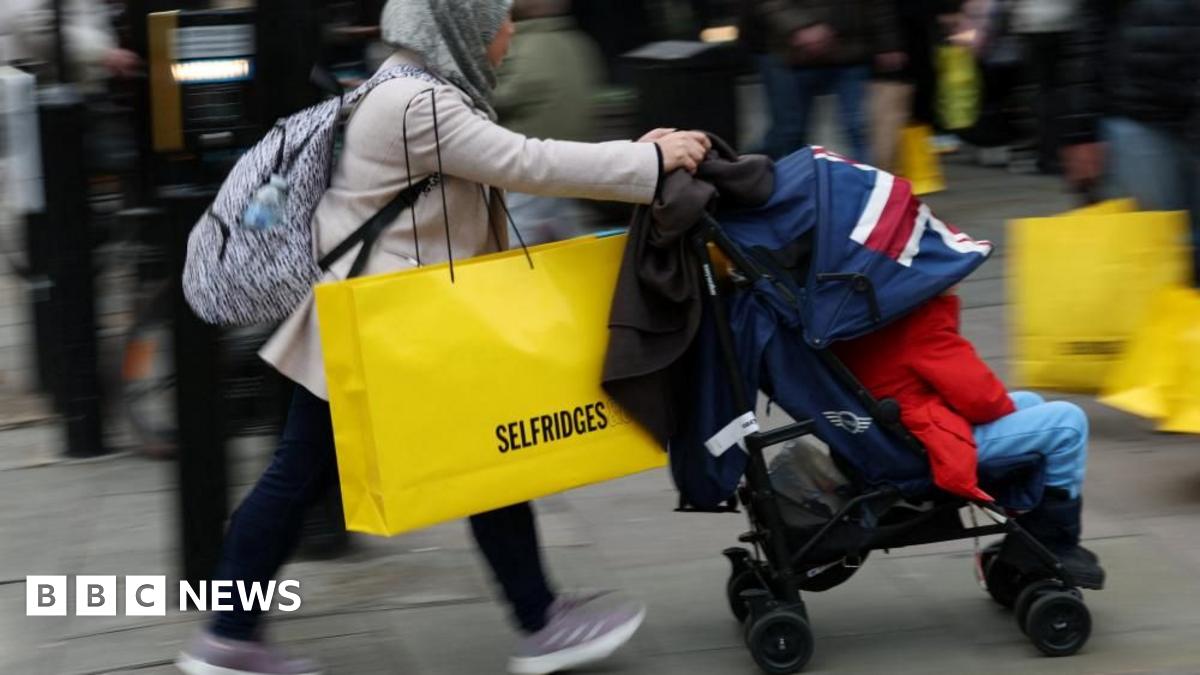
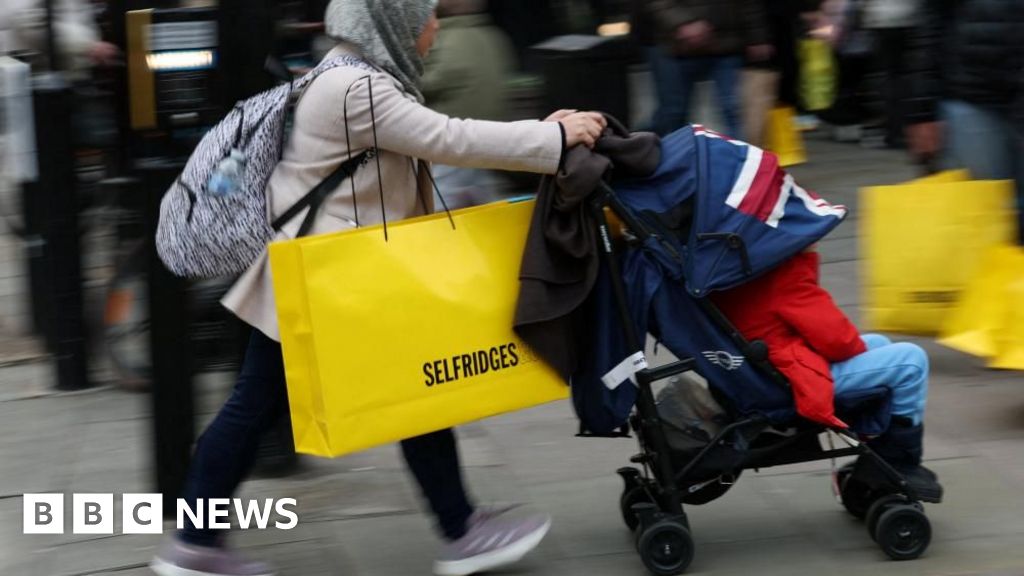
    An evening surge in shoppers keen on Boxing Day bargains drove a decade-high increase in footfall for the annual sales, figures suggest.

    It was up by 4.4% across all UK retail destinations including high streets and shopping centres compared to the same day last year, according to data from MRI Software.

    Footfall also remained strong on Saturday, and MRI anticipated the strong post-Christmas shopping momentum to continue into the new year.

    But higher footfall does not necessarily translate into higher spending, and Barclays has forecast that consumers would spend £1bn less on this year’s Boxing Day deals.

    By 3pm on 26 December, it appeared there had been a muted reaction to the sales, according to early MRI data with high street visits down 1.5% compared to 2024 and shopping centre visits down 0.6%.

    MRI counts footfall in more than 660 retail locations across the UK and retail analyst Jenni Matthews said that as the day progressed, it became clear that shoppers were deciding to head out but just a bit later in the day.

    “The boost in activity was driven by a peak in visits across all UK retail destinations from 5pm – 11pm averaging +9.6% versus an average increase of +3.1% from 6am-5pm,” she said.

    With many stores not reopening until 28 December, Ms Matthews said it was likely that hospitality and leisure venues would have benefited from the increase in foot traffic.

    “This is an early indicator that the retail sector may well end the year on a positive note given the challenging times faced at the beginning of the year,” she said.

    Shoppers were also out in force on Saturday, according to the MRI data, with footfall across retail destinations up by 1.6% compared to 27 December last year.

    Ms Matthews said that with family gatherings ending and the new year looming, MRI anticipates footfall will continue to rise over the coming days.

    “Consumers [will be] likely shopping the sales, making the most of the festive events and attractions within towns and cities, and stocking up on New Year’s Eve essentials, keeping the festive retail period firmly in motion,” she said.

    Analysts say 2025 has been a challenging year for people as rising prices and other factors have squeezed household finances.

    Barclays’ consumer spend report suggested that fewer people planned to take advantage of the sales, forecasting shoppers to spending £3.6bn, down from £4.6bn last year.

    Recent retail spending data from the Office for National Statistics showed that many shoppers resisted the lure of November’s Black Friday sales, with only a 0.1% lift in sales volumes.

    Continue Reading