Category: 3. Business

  • Datadog’s stock soars 20% on Q3 earnings beat, strong forecast

    Datadog’s stock soars 20% on Q3 earnings beat, strong forecast

    Omar Marques | SOPA Images | Lightrocket | Getty Images

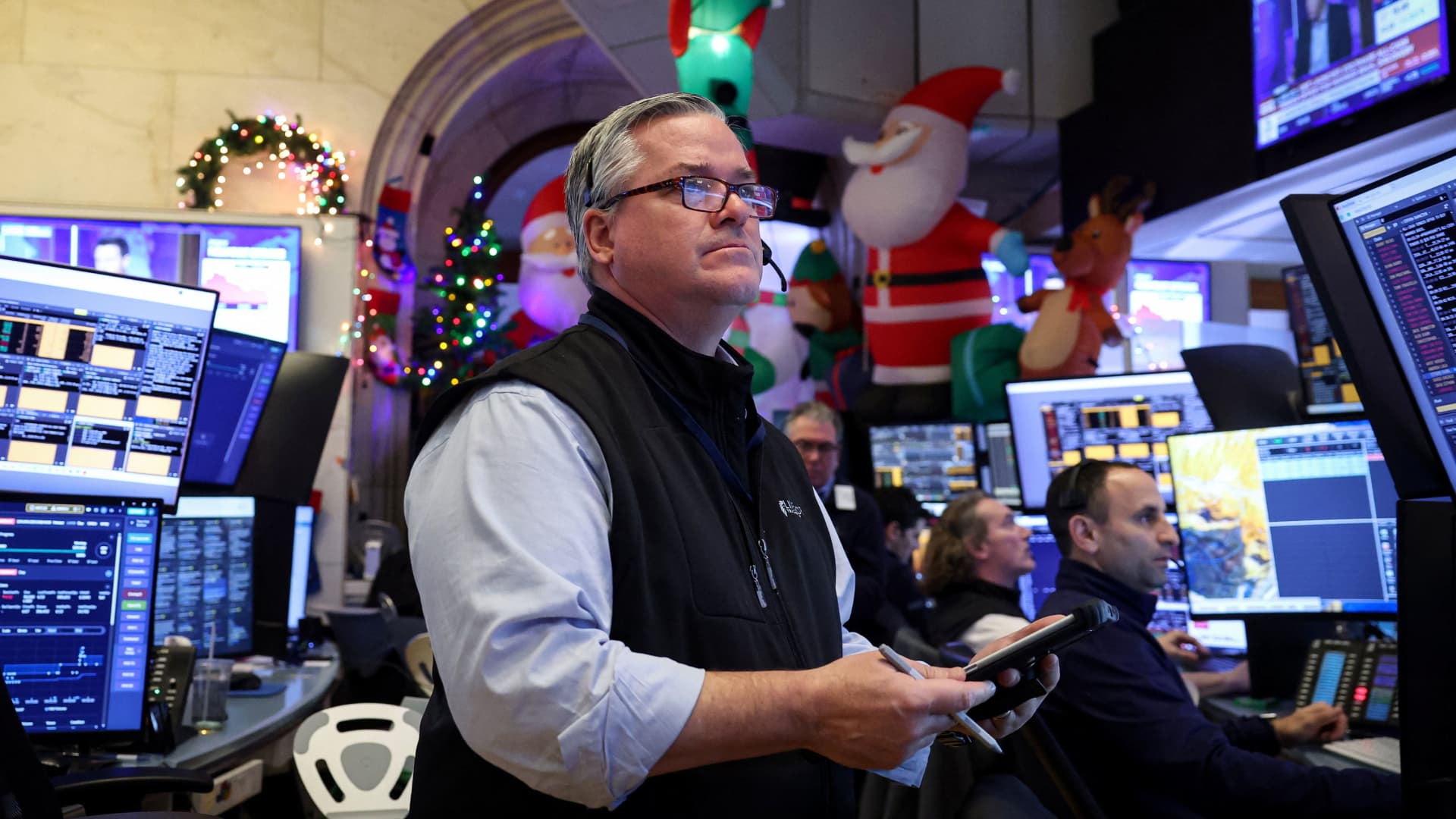
    Datadog shares jumped 20% on Thursday after the software company reported third-quarter revenue that topped Wall Street estimates and issued a strong forecast for the fourth quarter.

    The company reported revenue of $885.7 million, which was up 28% year over year, and topped the $852.8 million expected by LSEG analysts.

    The cloud software company expects fourth quarter revenue to reach between $912 million and $916 million, far surpassing Wall Street’s projections of $887 million.

    As artificial intelligence-driven demand for cloud-security products has continued to increase, Datadog has been rolling out multiple AI technologies and security tools over the past year.

    “The Datadog R&D team is innovating rapidly to help our customers solve problems in the AI space,” CEO Olivier Pomel said in a release.

    The company launched in June Bits AI Agents for SRE, an AI assistant that immediately investigates alerts and drafts incident responses and status updates. Datadog also added multiple new features to its LLM Observability over the summer, including agentic AI monitoring and expanded LLM experimentation.

    In June, Datadog also released its MCP Server, which connects AI agents with data sources, and its foundation model TOTO.

    Adjusted earnings per share came in at 55 cents, which beat FactSet analyst expectations of 45 cents.

    The number of customers with at least $100,000 in annual recurring revenue grew 16% for the quarter.

    Datadog reported net income of 33.9 million, or 10 cents per share. Last year, the company had $51.7 million in net income, or 14 cents per share.

    Stock Chart IconStock chart icon

    Datadog year-to-date stock chart.

    Continue Reading

  • Boeing Company – Boeing Pioneering Next-Generation Training Tools with Launch of Virtual Airplane

    Boeing Company – Boeing Pioneering Next-Generation Training Tools with Launch of Virtual Airplane

    –          Boeing launches Virtual Airplane Procedures Trainer powered by Microsoft Azure and Microsoft Flight Simulator
    –          Enables pilots to practice procedures outside of traditional training environments

    CASCAIS, Portugal, Nov. 6, 2025 /PRNewswire/ — Boeing [NYSE: BA] announced the launch of its latest product, Virtual Airplane Procedures Trainer (VAPT) at the European Aviation Training Summit.  A training platform powered by Microsoft Azure and Microsoft Flight Simulator, the tool is designed to empower pilots and flight training teams with immersive, accessible and customizable tools that elevate pilot learning and readiness.

    “We’re very excited about the launch of Virtual Airplane. This new software will significantly impact how and when pilots and operators train and will provide them with much needed flexibility,” said Chris Raymond, Chief Executive Officer of Boeing Global Services. “This new platform reflects Boeing’s commitment to digital innovation as we seek to leverage the latest technologies to improve our offerings and outcomes for our customers.”

    The Procedures Trainer is the first application within the Virtual Airplane product suite and equips flight training teams with tools for realistic flight-deck practice.

    • High-fidelity simulations: Pilots experience 3D simulations in light-weight devices to help standardize training, reduce simulator familiarization time and improve readiness before working with flight training devices.
    • Intuitive authoring tool: Training operators manage content through an intuitive, configurable self-service authoring tool that lets them author, customize and distribute training lessons across their training programs. With the authoring tool, airlines can launch or change procedures instantly to their pilot pool.

    “The launch of Virtual Airplane underscores our commitment to pilot training and enhancing aviation safety. With this product, pilots can hone their skills and training operators can tailor lessons to meet individual and organizational needs,” said Chris Broom, vice president of Boeing Global Services, Commercial Training Solutions.

    “Microsoft is committed to accelerating learning while optimizing confidence for pilots with safety at the core. Partnering with Boeing, we are advancing the future of flight by empowering the people at the heart of it,” said Dayan Rodriguez, Corporate Vice President, Manufacturing and Mobility, Microsoft.

    Virtual Airplane is enabled for use on computers and iPad devices for Boeing 737 MAX, with additional Boeing models coming soon.

    For more information about Virtual Airplane, visit: https://services.boeing.com/training-solutions/flight-training/virtual-airplane

    A leading global aerospace company and top U.S. exporter, Boeing develops, manufactures and services commercial airplanes, defense products and space systems for customers in more than 150 countries. Our U.S. and global workforce and supplier base drive innovation, economic opportunity, sustainability and community impact. Boeing is committed to fostering a culture based on our core values of safety, quality and integrity.  

    Contact
    Boeing Media Relations
    media@boeing.com


    Cision View original content to download multimedia:https://www.prnewswire.com/news-releases/boeing-pioneering-next-generation-training-tools-with-launch-of-virtual-airplane-302607464.html

    SOURCE Boeing

    Continue Reading

  • UBS to liquidate funds with substantial First Brands exposure

    UBS to liquidate funds with substantial First Brands exposure

    Unlock the Editor’s Digest for free

    UBS has told clients that it will wind down an investment vehicle with significant debt exposure to First Brands Group, in the first major fund liquidation following the US auto parts maker’s shock bankruptcy.

    The Swiss bank is grappling with more than $500mn of exposure to First Brands across its asset management and investment arms, while facing particularly acute challenges at US hedge fund units that provided invoice-linked financing to First Brands.

    UBS has told clients of its Chicago-based O’Connor subsidiary that it is liquidating several invoice finance funds, according to people familiar with the matter, including a strategy that did not have exposure to First Brands.

    “We informed investors last month that O’Connor’s Working Capital Opportunistic funds are being wound down and the majority of the funds’ assets will be monetised by the end of the year,” UBS told the Financial Times.

    “As a priority, we’re taking steps to protect clients’ interests and maximise recovery of the remaining First Brands Group-related positions through the complex bankruptcy process.”

    The FT reported last month that a fund specialising in invoice finance at O’Connor, a private credit and commodities specialist, had 30 per cent of its portfolio tied to First Brands.

    The level of exposure has sparked anger among some investors who were previously assured that the fund would not hold more than 20 per cent of assets in a single “position”. UBS has argued that it complied with these rules, however, as 21.4 per cent of the exposure was “indirect” and split across First Brands’ various customers.

    On an earnings call last week, UBS’s chief financial officer Todd Tuckner confirmed that the bank itself “does not have balance sheet exposure to First Brands”, with “only a small number of funds” impacted, although it was “always unfortunate when clients generate losses”.

    “That said, it’s important to note that the most affected funds were targeted at sophisticated investors and had clear risk disclosures,” he added. “No investment guidelines were breached.”

    UBS is aiming to “monetise” 70 per cent of the O’Connor fund with First Brands exposure by the end of the year, according to a person familiar with the matter.

    The bank is also liquidating a “High Grade” fund that invested in invoices linked to less risky companies, even though it did not have exposure to First Brands. The whole of that fund’s assets are expected to be sold by year-end, the person added. The invoice finance funds have a total of around $600mn in assets.

    The fund liquidation comes amid growing concerns around the validity of First Brands’ customer invoices and wider jitters around the fast-growing market for private lending against corporate assets.

    First Brands this week claimed in a lawsuit against its founder and longtime chief executive Patrick James that the group had raised financing against “erroneous or fabricated invoices”. James has denied allegations of fraud and financial impropriety.

    O’Connor is in the process of being sold by UBS to Cantor Fitzgerald, the Wall Street brokerage whose longtime leader, Howard Lutnick, stepped down as chair and chief executive in February to become Donald Trump’s commerce secretary. The fund liquidations are likely to prompt the terms of that deal to be renegotiated, however.

    The invoice financing platform that O’Connor used for its investments has also come under scrutiny.

    Raistone, which was founded by a former Greensill Capital employee, became heavily dependent on arranging financing for First Brands and is also experiencing difficulties as a consequence of the bankruptcy. UBS confirmed to the FT last month that an O’Connor fund also holds an equity stake in Raistone.

    Raistone is one of many parties involved in a First Brands bankruptcy hearing in Houston, Texas on Thursday, where various creditors that hold nearly $12bn in debt are expected to clash over competing claims on various collateral.

    Continue Reading

  • Finerenone shows positive results for kidney disease in T1D – Breakthrough T1D

    1. Finerenone shows positive results for kidney disease in T1D  Breakthrough T1D
    2. Kerendia® (finerenone) meets primary endpoint in phase III clinical trial for adults with type 1 diabetes and chronic kidney disease  MarketScreener
    3. Kidney drug trial raises hopes for new type 1 diabetes treatment  upi.com
    4. Bayer (BAYRY) reports Kerendia met Phase III goal; 25% UACR cut in T1D CKD trial  Stock Titan
    5. Finerenone versus spironolactone in patients with chronic kidney disease and type 2 diabetes: a target trial emulation  Nature

    Continue Reading

  • WFW advises lenders on £235m financing for 680 MW BESS project

    WFW advises lenders on £235m financing for 680 MW BESS project

    Watson Farley & Williams (“WFW”) advised a consortium of lenders – comprising Lloyds, NatWest, Mizuho, Santander, SEB and Siemens Financial Services through Siemens Bank – on a £235m financing granted to Statera Energy (“Statera”) to develop a 680 MW BESS project in Carrington, Greater Manchester, UK.

    Due for completion in 2026, the project is Statera’s largest consented BESS project to date and, once energised, will be one of the largest of its kind in Europe. Once completed, the project will be optimised by Statkraft Markets GmbH.

    Statera, a part of the EQT group, is a builder, owner and operator of grid-scale energy storage and flexible generation technology. Founded in 2015, it has a portfolio of 2.1 GW of operational or in construction projects across the UK.

    The multidisciplinary WFW London Energy team that advised the lenders was led by London Projects Partner Jennifer Charles, supported by Associates Sindana Ulaganathan and Elias Votta. Senior Associate James Fryer advised on project development matters, with Partner John Rosmini, Counsel Charlotte Williams and Associate Mia Langston leading on the real estate aspects of the transaction. Partner Nick Walker and Associate Hamish Ungless provided RPC expertise.

    Jennifer commented: “We’re proud to have once again advised on a major UK BESS project deal that will help the UK meet its 2030 target to decarbonise its electricity grid. Being instructed on such a deal, which furthers Statera’s aims of strengthening grid resilience and decarbonising power systems, reinforces WFW’s reputation as a leader in this space”.

    Continue Reading

  • Fitch Rates Capital Power Corporation's Senior Unsecured Notes 'BBB-' – Fitch Ratings

    1. Fitch Rates Capital Power Corporation’s Senior Unsecured Notes ‘BBB-‘  Fitch Ratings
    2. Capital Power announces a C$600 million medium term note offering and its intention to redeem C$300 million of medium term notes  Yahoo Finance
    3. Capital Power Launches C$600 Million Note Offering and Plans Debt Redemption  TipRanks
    4. Capital Power Brief: Announcing a C$600 Million Medium Term Note Offering and Intention to Redeem C$300 Million of Medium Term Notes  MarketScreener
    5. Capital Power prices C$600M medium-term notes offering  MSN

    Continue Reading

  • Metsera weighs rival bids from Pfizer, Novo in $10 billion obesity drug battle – Reuters

    1. Metsera weighs rival bids from Pfizer, Novo in $10 billion obesity drug battle  Reuters
    2. Pfizer matches Novo bid for obesity biotech Metsera as takeover battle rages  Financial Times
    3. FTC Questions Novo Nordisk’s Two-Step Acquisition of Metsera Over Antitrust Concerns  geneonline.com
    4. Pfizer Responds to Delaware Chancery Court Ruling  The AI Journal
    5. Metsera issues statement in response to litigation ruling  MarketScreener

    Continue Reading

  • A&O Shearman advises TT Electronics on recommended GBP287 million takeover offer from Cicor Technologies

    A&O Shearman advises TT Electronics on recommended GBP287 million takeover offer from Cicor Technologies

    A&O Shearman is pleased to announce its role advising TT Electronics plc (TT) on the recommended cash and share offer from Cicor Technologies Ltd. (Cicor).

    TT is listed on the main market of the London Stock Exchange and is a global provider of engineered electronics for performance critical applications. TT serves market-leading customers across healthcare, aerospace and defense, and automation and electrification end markets, providing engineering and manufacturing solutions. Its portfolio of products includes power management devices, sensors, and connectivity solutions, with products designed and manufactured for harsh environments and regulated sectors. 

    Cicor is a globally active provider of full-cycle electronic solutions, from research and development to manufacturing and supply chain management, serving businesses in the healthcare and medical, industrial, and aerospace and defense industries. Cicor’s shares are listed on the SIX Swiss Exchange.

    The transaction values TT at GBP287m and is expected to complete in the first half of 2026, subject to customary regulatory conditions and approval from TT’s shareholders. 

    The transaction marks the latest chapter in A&O Shearman’s long-standing relationship with TT, which has included advising TT on the disposal of its Transportation Sensing and Control division and on its public takeover of UK-listed Stadium Group plc. 

    Annabelle Croker, M&A partner at A&O Shearman, said: “The acquisition represents a compelling strategic proposition for TT’s stakeholders, bringing together two highly reputable and complementary brands in the Electronics Manufacturing Services sector. The transaction delivers accelerated value for TT’s shareholders, whilst retaining the ability for them to benefit from potential synergies and future upside from continued ownership in the combined business. Our team has worked closely with TT for many years, and we are delighted to be supporting them on this transaction.”

    The A&O Shearman team was led by London M&A partners Annabelle Croker and Matt Hamilton-Foyn, with support from senior associates Anthony Bowen and Gina Malone, associates Maryam Usman, Charles Ashie, and Lewis Devonald, and trainees James Dickinson, Yasmine Chbary, and Callum Donnelly. Incentives advice is being provided by partner Mahesh Varia and associate Betty Lorimer. Antitrust and FDI advice is being provided by partner Tom Masterman and associate Alexander Westin-Hardy. Tax advice is being provided by partner Tim Harrop and associate Maria Clezy. 

    Continue Reading

  • Cockroaches in the Coal Mine

    Cockroaches in the Coal Mine


    Pardon the mixed metaphor, but I couldn’t resist.

    Jamie Dimon, Chairman and Chief Executive Officer of JP Morgan Chase, whose comments are always insightful and direct, said the following last month with regard to the bankruptcy filings from First Brands, an auto parts supplier, and Tricolor, a seller of and subprime lender against used cars: “My antenna goes up when things like that happen. And I probably shouldn’t say this, but when you see one cockroach, there are probably more . . . everyone should be forewarned on this one.”

    And we all know that coal miners used to bring along a canary when they entered a mine, since its tiny body would succumb to any gas that was present before the gas could pose a threat to the miners. Both the cockroach and the canary can be precursors of problems ahead. We’ve heard both sayings in use in the last month, and we’re likely to hear them more.

    One of the most prominent characteristics of the financial markets that I’ve detected over the years is their tendency to obsess over a single topic at a given point in time. The topic eventually changes to another, but before it does, it’s often the thing people want to discuss to the near exclusion of everything else. Today it’s the recent string of episodes in sub-investment grade credit.

    Current Events

    Given the suggestion that fraud may have played a role in both the First Brands and Tricolor bankruptcies, and given that both companies had borrowed in the private credit market, people saw a connection. Is this the beginning of a problem?

    As I mentioned in my memo Gimme Credit in March, the thing people have asked me about most often over the last few years is private credit. The sector took root around 2011, when banks were limited in making loans following the Global Financial Crisis and money managers stepped in to fill the void, primarily lending to leverage-hungry private equity sponsors. Because lenders were few, those who would put out money were able to demand high interest rates and a high level of safety. These loans looked good to investors in the low-rate environment that prevailed. Thus, private credit was anointed as a magic investment solution, with perhaps $2 trillion flowing into the sector in the subsequent years. The arrival of new entrants and a great deal of incremental capital created more competition to lend and inevitably reduced some of the lenders’ advantages.

    When asked about private credit, I answered that the investment environment had been mostly benign over the years since 2011, meaning – to echo Warren Buffett – the tide had never gone out on private credit (i.e., it hadn’t been tested). Now, with two high-profile bankruptcies in short order, people thought they might be starting to see cracks.

    The tone turned more serious when it became clear that not only were there failures, but also there might be something sinister behind them. There are allegations that First Brands – which had both public and private debt outstanding – used the same receivables as collateral for multiple loans. Tricolor turns out to have made loans to buyers lacking credit scores or driver’s licenses and had been previously cited by regulators for practices such as selling cars for which it lacked titles.

    And then, last month, as Robert Armstrong of the Financial Times noted in his daily online column, “Unhedged” (which is one of my favorites):

    On [October 15], Zions Bancorp disclosed in a regulatory filing that it “recently became aware of . . . apparent misrepresentations and contractual defaults” by two corporate borrowers that did not respond to the bank’s subsequent inquiries, and would take a $50mn writedown on the loans.

    And on [October 16] another mid-sized bank, Western Alliance, disclosed that back in August it had initiated a fraud lawsuit against one of its commercial real estate borrowers.

    Most recently, it’s been revealed that two small telecom firms under common control, Broadband Telecom and Bridgevoice, borrowed extensively on the basis of fabricated receivables and have filed for bankruptcy. If one is an isolated instance and two hint at a pattern, are six an ominous trend?

    As I pointed out in my memo What Does the Market Know? in 2016, in real life things fluctuate between pretty good and not so hot, but in investors’ minds they go from flawless to hopeless. We saw a very strong reaction in this case: notably, the stock prices of some prominent alternative asset managers were down 5-7% on October 16, close on the heels of the regional banks’ disclosures.

    The truth is that there are always defaults and not infrequently defalcations (how’s that for a good old-fashioned word?). Over my 47 years in the high yield bond market, more than 2% of all bonds by value have defaulted in a typical year, and many more during crises. If you apply that percentage to the number of sub-investment grade issuers, which runs in the thousands, it shouldn’t come as a surprise if there are a few dozen defaults in a normal year.

    So no, I don’t think this is necessarily the beginning of a trend. It’s not an indictment of the whole sub-investment grade debt market, or the whole private credit market. Rather, it’s just a reminder that the yield spreads people care about so much are there for a reason: because sub-investment grade debt entails credit risk. And thus a reminder that credit skills are always a necessity for debt investors . . . even if the need for those skills isn’t apparent in good times.

    The Cycle in Attitudes Toward Risk

    In 2016, when I first sat down to write my book Mastering the Market Cycle: Getting the Odds on Your Side, I had an idea what topics I would cover – the economic cycle, the profit cycle, the cycle in investor psychology, the credit cycle, the distressed debt cycle, and the real estate cycle. The chapter I didn’t plan to write – and the one that became the most important chapter in the book and one of the longest – was the one titled “The Cycle in Attitudes Toward Risk.” Security prices fluctuate much more than do the intrinsic value and prospects of the underlying companies, and the main reason for this is the extreme volatility in the way people feel about risk.

    When the economy is humming, companies are reporting growing earnings, security prices are rising, and profits are piling up, people say things like: “Risk is my friend. The more risk I take, the more money I make. And anyway, I don’t see anything to worry about.” In good times, ambiguous developments are interpreted positively, and negative ones are easily brushed aside. And when times have been good for a while, the possibility of loss recedes from consciousness. Rather, missing out on potential gains and
    falling behind one’s competitors becomes the dominant concern. Investors’ risk tolerance grows, and they tend to focus less on due diligence and more on bidding aggressively for deals (see my memo The Race to the Bottom, February 2007). In all these ways, the result is a lowering of standards.

    Eventually, the economy turns down, corporate profits decline, the markets slump, and people lose money. Now, the refrain is, “Bearing risk is just a way to lose money. I’ll never do it again. Get me out at any price.” Now it’s the negatives that are exaggerated and the positives that are ignored. People regret the due diligence they didn’t perform and the iffy deals they didn’t reject, and they’re reminded that there’s something worse than missing out on gains. The pendulum has swung in the other direction, and risk aversion takes over from risk tolerance. As a result, the standard for investing and lending becomes elevated.

    One of the quotations I have the most use for is said to come from Mark Twain: “History does not repeat itself, but it does rhyme.” This is particularly relevant in the world of finance, where certain themes reappear in cycle after cycle. The recurring roller coaster of psychology and the resulting behavior is the most important of them.

    The key observation is that good times lead to complacency, risk tolerance, and carelessness, as people bid aggressively for assets and compete to make loans. And then, bad times expose the results of that carelessness, as investments that were entered into without an adequate investigation and margin for error fail to hold up in a hostile environment.

    This is nothing new. As financial historian Edward Chancellor wrote in his 2022 book The Price of Time:

    The Manchester banker John Mills commented perceptively [in 1865] that “as a rule, panics do not destroy capital; they merely revealed the extent to which it has previously been destroyed by its betrayal into hopelessly unproductive works.”

    In other words, many flawed decisions, which the economist Friedrich Hayek aptly described as “malinvestment,” are made in booms and exposed in busts. It will ever be so. This is summed up most concisely in a great banking adage: “The worst of loans are made in the best of times.”

    A Good Bezzle

    Charlie Munger and I used to enjoy talking about the economist John Kenneth Galbraith. Galbraith was the source of many of my favorite expressions with regard to the financial markets. One I haven’t mentioned since my memo The Long View in 2009 is the “bezzle,” a concept Galbraith introduced in his book The Great Crash 1929.

    What’s a bezzle? In short, according to Galbraith, it’s the wealth financial fraudsters or embezzlers appear to have created, which lifts the spirits of the beneficiaries up until the time they’re found out. Charlie used to say the good times described above, in giving rise to a low level of prudence, create the necessary conditions for “a good bezzle.” Here’s how economist Michael Pettis described the cyclicality of this phenomenon in his newsletter:

    Certain periods . . . Galbraith further noted, are conducive to the creation of bezzle, and at particular times this inflated sense of value is more likely to be unleashed, giving it a systematic quality:

    This inventory [of fraudulently inflated wealth] . . . varies in size with the business cycle. In good times, people are relaxed, trusting, and money is plentiful. But even though money is plentiful, there are always many people who need more. Under these circumstances, the rate of embezzlement grows, the rate of discovery falls off, and the bezzle increases rapidly. In depression, all this is reversed. Money is watched with a narrow, suspicious eye. The man who handles it is assumed to be dishonest until he proves himself otherwise. Audits are penetrating and meticulous. Commercial morality is enormously improved. The bezzle shrinks.

    (China Financial Markets, August 23, 2021)

    The overconfidence, incaution, and inattentiveness that lead to unwise investments in good times also present the perfect conditions for fraudulent schemes. Risk tolerance, FOMO (fear of missing out), inadequate due diligence, and fevered buying provide fertile soil for financial scams. In heady times, rather than say, “That’s too good to be true,” people are more likely to ask, “How can I get in on that?”

    The markets aren’t crooked per se, but they’re full of money, and thus they tend to attract crooks. And, intelligently, the crooks are most active in times when conducting due diligence is in retreat and loose change becomes more readily accessible. It shouldn’t come as a surprise in the years ahead if the last sixteen years of largely uninterrupted economic growth, rising markets, and profitable risk taking are shown to have produced a bumper crop of frauds.

    Nowadays, I’m often asked whether the issues described above are “systemic.” In other words, are they “pertaining to the system” or “affecting the system,” as opposed to idiosyncratic occurrences that don’t say anything about the system. For an example of something systemic, consider the counterparty risk that arose during the Global Financial Crisis. Because financial institutions had entered into hedging transactions with each other, one bank’s weakness weakened the others, impacting the system overall. I think “hardwired into the system” is a good way to describe something that’s systemic.

    I don’t think today’s issues are systemic in the sense that there’s something wrong with the lending system, or that they will trigger other defaults and lead to a breakdown of the system. In simpler words, there’s nothing wrong with the plumbing. But imprudent loans and business frauds often occur in clusters for the simple reason that people who make investments and loans are highly prone to error in good times. Investors and lenders are supposed to be risk-averse and thus exercise discipline and vigilance, but sometimes they fail in this regard. This isn’t part of the plumbing of the financial system but rather a regularly recurring behavioral phenomenon. So, it isn’t ‘‘systemic,’’ but it is “systematic.”

    A Case in Point: First Brands

    In September, First Brands, a non-household-name auto parts supplier, rocketed into the news with a bankruptcy filing. While possibly an isolated instance, this attracted significant attention as the first high-profile bankruptcy involving a borrower in the adolescent private credit market.

    The problem at First Brands appears to stem primarily from its borrowings against receivables. In many fields, it’s normal for manufacturers and wholesalers to ship goods to their retailer customers on credit and, to make efficient use of their capital, sell the resulting receivables to financial institutions at discounts that give those institutions their return. This process is called “factoring,” and it’s been a very normal practice in various industries for as long as I’ve been in the business world.

    In the case of First Brands, however, one part of the practice was different. Rather than payments being made by retailers directly to the financial institutions that bought the receivables, some went to First Brands for forwarding to the institutions. This allegedly permitted First Brands to sell receivables more than once and, perhaps, to retain some payments rather than forward them to the factoring firms.

    In an analysis we conducted last summer, we found that, in addition to these factoring arrangements, the company made aggressive use of other forms of off-balance-sheet financing. For example, First Brands sold inventory to related special-purpose vehicles, which then used the purchased inventory as borrowing base assets to obtain loans. In most cases, the inventory was required to be sold back to First Brands, so while this served as a source of temporary liquidity, it left First Brands with layered, complex obligations that ballooned to several billion dollars.

    The scale of off-balance-sheet financing was striking; we’ve learned through bankruptcy filings that First Brands’s total obligations are $11.6 billion (inclusive of $9.3 billion of debt) versus the debt level of $5.9 billion that had been disclosed during a financing process undertaken in July. The complexity and opaqueness of these factoring and financing arrangements caused a creditor’s lawyer to say $2.3 billion had “simply vanished.”

    Byzantine corporate structures and extensive off-balance-sheet financing have been present in many corporate frauds we’ve witnessed, exemplified by Enron Corporation. But even in advance of First Brands’s bankruptcy filing in late September, Oaktree’s research turned up the following red flags:

    • only six years of operating history but already $5 billion of annual sales

    • controlled by an individual with almost no media references or online profile

    • a significant litigation history, including allegations of misconduct

    • reported profit margins above the industry average

    • a large number of M&A transactions creating a web of corporate entities

    • other aspects of weak controls

    You might wonder how a company as described above could attract financing. First, private credit often involves companies that don’t file disclosure documents with the SEC. Thus, initial investment decisions are usually based heavily on information provided by bankers and auditors. Investors have little choice but to rely on these sources, and usually they can do so safely. Only after they’ve made an initial commitment and are considering increasing it do most investors gain access to a company’s “data room” and engage in extensive research.

    Second, while the truth is often clear after the fact – and especially after a bankruptcy filing – the picture can be more nuanced beforehand. After all, these are companies that have passed muster with underwriters, auditors, and investors. If the negatives surrounding the company were totally evident, either it wouldn’t have been able to obtain financing in the first place, or its debt would be selling at bankruptcy prices by the time a holder catches on, making it too late to benefit from analysis.

    In investment research, conclusions usually aren’t compellingly obvious, but instead built up from inferences and probabilities. It’s not a matter of one decisive discovery at an “aha moment” but rather the assembly of individual snippets of information into a “mosaic” that leans toward a conclusion based on what in law is called “a preponderance of the evidence.”

    In the case of First Brands, having taken a small position, we dug deeper early last summer. The red flags listed above weren’t conclusive, especially given that we didn’t have the full picture that became clear through the bankruptcy filing. Rather, these observations hinted at weaknesses and suggested problems.

    Importantly, Oaktree’s span and scale provided multiple points of contact with First Brands through a number of our strategies, helping us to assemble the necessary mosaic. Further, a thorough job of credit research costs the same whether you’re considering investing $50 million or $500 million. Greater scale allows an investor to spread the cost of in-depth research over larger holdings. In investing, size has both pros and cons, but here we’re talking about one of the former.

    This is how analysis should be done, and in this case I’m glad to say it was. Of course, I’m writing about our experience with First Brands because we reached the correct conclusion. We don’t always do this as well as we did in this case, and I want to say right here that over our 47 years of investing in sub-investment grade debt, we’ve experienced plenty of defaults and even a few frauds. That’s an inevitable part of life when your business consists of knowingly bearing credit risk for profit. But these caveats don’t keep the First Brands case from proving a valuable opportunity for learning.

    What are the key takeaways?

    • Defaults are a normal part of life in sub-investment grade investing.

    • However, bullish conditions in good times usually lead to a lowering of lending standards, giving rise to elevated defaults and an occasional fraud.

    • It’s absolutely essential to always balance the desire to put money to work with the need for prudence.

    • Superior credit analysis is a matter of second-level thinking – thinking that’s different from that of others and better – based on a mosaic of information and inferences.

    • In detecting credit defects, the big payoff is for being early. If you reach a negative conclusion at the same time as everyone else, the price you’ll get for your holdings is likely to be marked down to fully reflect the negatives – that’s market efficiency.

    • It’s important to note that whereas private credit has been the rage of late, all else being equal, it’s great to hold public debt that can be exited more readily if you sour on the credit.

    We’ve lived through generally good times in the last 16 years. The coming period is likely to be more “interesting,” as errors that were made in those good times come to light.

    On the other hand, the frauds described above have probably chastened lenders and investors, putting them on alert. Thus, they’re likely to incorporate a re-elevated level of prudence in their decisions in the coming months and perhaps years. This would be a positive development.

    November 6, 2025

    Legal Information and Disclosures

    This memorandum expresses the views of the author as of the date indicated and such views are subject to change without notice. Oaktree has no duty or obligation to update the information contained herein. Further, Oaktree makes no representation, and it should not be assumed, that past investment performance is an indication of future results. Moreover, wherever there is the potential for profit there is also the possibility of loss.

    This memorandum is being made available for educational purposes only and should not be used for any other purpose. The information contained herein does not constitute and should not be construed as an offering of advisory services or an offer to sell or solicitation to buy any securities or related financial instruments in any jurisdiction. Certain information contained herein concerning economic trends and performance is based on or derived from information provided by independent third-party sources. Oaktree Capital Management, L.P. (“Oaktree”) believes that the sources from which such information has been obtained are reliable; however, it cannot guarantee the accuracy of such information and has not independently verified the accuracy or completeness of such information or the assumptions on which such information is based.

    This memorandum, including the information contained herein, may not be copied, reproduced, republished, or posted in whole or in part, in any form without the prior written consent of Oaktree.

    © 2025 Oaktree Capital Management, L.P.


    Continue Reading

  • What investment limited partnership’s investors need to know about 2025 GST/HST and QST information requests

    What investment limited partnership’s investors need to know about 2025 GST/HST and QST information requests


    Leaving Dentons

    Beijing Dacheng Law Offices, LLP (“大成”) is an independent law firm, and not a member or affiliate of Dentons. 大成 is a partnership law firm organized under the laws of the People’s Republic of China, and is Dentons’ Preferred Law Firm in China, with offices in more than 40 locations throughout China. Dentons Group (a Swiss Verein) (“Dentons”) is a separate international law firm with members and affiliates in more than 160 locations around the world, including Hong Kong SAR, China. For more information, please see dacheng.com/legal-notices or dentons.com/legal-notices.

    Continue Reading