Category: 3. Business

  • adidas brand momentum drives record revenues, strong third-quarter results, and upgrade of full-year 2025 outlook

    adidas brand momentum drives record revenues, strong third-quarter results, and upgrade of full-year 2025 outlook

    Major developments Q3 2025:

    • Brand adidas grows 12% currency-neutral, leading to record net sales of € 6.6 billion
    • Broad-based double-digit growth across markets, divisions, categories, and channels
    • Gross margin improves 0.5 percentage points to 51.8%, despite unfavorable effects from currencies and tariffs
    • Operating profit up 23% to € 736 million
    • Operating margin improves 1.8 percentage points to 11.1%
    • Net income of € 485 million, as hyperinflation-related effects weigh on financial result

    Major developments 9M 2025:

    • Brand adidas grows 14%, with double-digit increases in all markets and channels
    • Operating profit up 48% to € 1.9 billion, reflecting an operating margin of 10.1%
    • Net income increases 52% to € 1.3 billion

    Increased outlook for FY 2025:

    • Double-digit currency-neutral revenue growth for adidas brand
    • Company revenues to increase by around 9% (previously: high-single-digit increase)
    • Operating profit to increase to around € 2.0 billion (previously: € 1.7 – € 1.8 billion)

    adidas CEO Bjørn Gulden:
    “I am extremely proud of what our teams achieved in the third quarter with actually record revenues. 12% growth for the adidas brand leading to total revenue of € 6.63 billion is the highest we have ever achieved as a company in a quarter. I am especially happy to see that our performance business is growing strongly across categories and in all regions.

    The environment is volatile with the tariff increases in the US and a lot of uncertainty among both retailers and consumers around the world, but our teams work hard, and our brand and our products resonate well with consumers.

    Given the positive development in Q3, we have narrowed our top-line guidance and raised our full-year EBIT outlook from between € 1.7 billion and € 1.8 billion to around € 2.0 billion. 

    2025 is a success for us already. 14% growth for the adidas brand year-to-date and an EBIT margin above 10% is proof how strong our brand is. Being a global brand with a local mindset, empowering our markets to win their local consumers is the right strategy to be globally successful and is driving these strong results. 

    The focus is now on transitioning well into 2026, which will be another exciting sports year with the Winter Olympics right at the beginning, the biggest Football World Cup ever, and many more great events to look forward to.

    adidas is a sports company that connects sports and street culture. We sell performance, comfort, and lifestyle. We see global demand for all these segments continue to grow. That is why we look positive into the future!”

    Third-quarter results

    adidas brand with 12% currency-neutral growth in Q3
    In the third quarter of 2025, currency-neutral revenues for the adidas brand increased 12% versus the prior year, or more than € 700 million in absolute terms, reflecting its continued and broad-based momentum. Having completed the sale of the remaining Yeezy inventory at the end of last year, the company’s results for the third quarter of 2025 do not include any Yeezy revenues (2024: around € 200 million). Including Yeezy sales in the prior year, currency-neutral revenues increased 8%. In euro terms, revenues reached a record level of € 6,630 million (2024: € 6,438 million) in the quarter, despite the strengthening of the euro against several currencies, which led to an unfavorable translation impact of more than € 300 million.

    Double-digit increase in both footwear and apparel
    Footwear revenues for the adidas brand grew 11% during the quarter on a currency-neutral basis. The broader and deeper product offering drove double-digit footwear growth in major sports categories, including Running, Football, Training, and Specialist Sports. Strong growth in Originals and Sportswear also contributed to the increase in footwear. Apparel sales grew 16% during the quarter as brand and product momentum continued to expand. Differentiated and locally relevant apparel collections fueled double-digit increases in Originals, Football, Running, Specialist Sports, and US Sports. Accessories grew 1% during the quarter.

    Double-digit growth in both Performance and Lifestyle
    Performance revenues increased 17% on a currency-neutral basis during the third quarter, led by strong double-digit growth in Running and Football. Momentum in Running increased further with growth of more than 30%, driven by Adizero. The Adios Pro Evo 2 and Adios Pro 4 secured multiple marathon victories, including wins in Tokyo, Berlin, and Chicago, while the Prime X Evo concept shoe broke the six-hour barrier, setting a new world record for the 100 kilometers at the ‘Chasing 100’ project in Italy. Given these strong performance credentials, adidas continued to expand its successful Evo SL franchise, offering Adizero features at a compelling price point, and also recorded growth in everyday running franchises such as Supernova. In Football, growth was fueled by new season on-pitch kits and culturally inspired collections for the brand’s major clubs. The launch of a wide range of product for Liverpool FC, the brand’s latest addition to its unique portfolio of partners, was particularly successful across the globe. Updated packs for the F50 and Predator footwear franchises further drove excitement and growth. adidas players Ousmane Dembélé, Aitana Bonmatí, Gianluigi Donnarumma, Lamine Yamal, and Vicky López all having been awarded at the Ballon d’Or provided positive halo effects across the brand’s entire Football offering. Several other categories, including Training, Specialist Sports, US Sports, and Motorsport also contributed to the broad-based growth in Performance on the back of product innovation and newness that resonate strongly with consumers. Examples include the Dropset and Rapidmove footwear franchises for strength athletes, broader and deeper offerings for credibility sports such as American football, tennis, swimming, rugby, and field hockey, or the extensive merchandise collection in partnership with the Mercedes-AMG PETRONAS Formula 1 team. 

    Lifestyle revenues for the adidas brand increased 10% on a currency-neutral basis in the third quarter, driven by double-digit growth in Originals. The popular Terrace franchises continued to see healthy demand backed by seasonal updates in colorways, materials, and new collaborations that cater to local consumer tastes. At the same time, the brand’s Low Profile offering continued to expand, with growth driven by updated looks for the Tokyo, Japan, and Taekwondo franchises, including animal-print and metallic iterations, as well as football- and ballet-inspired styles. After relaunching one of its most iconic franchises earlier this year, the brand also began to sequentially scale the Superstar, backed by a global campaign and market-led activations. In addition to evolving its classics footwear business, adidas continued to evolve its lifestyle running and lifestyle football offerings. Following successful activations, including the sought-after Pharrell Williams Adistar Jellyfish, the brand started to make silhouettes such as the Adistar Control, Goukana, and Megaride, as well as street-ready versions of the Predator and F50 more widely available. Building on the broad-based footwear momentum, Originals’ apparel offering continued to gain traction. The Firebird and Teamgeist collections see particularly strong demand, driven by their heritage and the use of differentiated materials such as knit and denim, as well as bold colors. Collaborations with Oasis, Wales Bonner, Edison Chen, Sporty & Rich, and collections created with several retail partners further supported growth in Originals. In Sportswear, increases were driven by growing demand for the brand’s commercial range, while innovative products such as the 3D-printed Climacool shoe and the revamped Z.N.E. apparel collection complemented the brand’s portfolio of sport-inspired lifestyle products.

    Strong growth across all markets
    In terms of regional performance during the third quarter, currency-neutral net sales for the adidas brand grew 12% in Europe, driven by double-digit growth in both wholesale and the brand’s direct-to-consumer (DTC) business. Revenues in Greater China (+10%), Emerging Markets (+13%), Latin America (+21%), and Japan/South Korea (+11%) were also up double-digits, with particularly strong increases in the company’s DTC channels in all regions. Revenues for the adidas brand in North America were up 8%, reflecting double-digit growth in both footwear and apparel, while accessories sales declined during the quarter.

    Double-digit growth across all channels
    From a channel perspective, growth for the adidas brand was equally broad-based with double-digit increases in all channels. Strong sell-through rates in our retail partners’ stores and increased shelf space allocations continued to drive wholesale revenues, which increased 10% on a currency-neutral basis. Own retail revenues were up 13%, driven by strong like-for-like growth in the company’s global fleet of own stores and continued investments into retail doors. E‑commerce sales increased 15%, with a continued focus on full-price propositions and on top of more than 25% growth in the prior-year quarter. As a result, sales in the brand’s DTC business grew 14% in Q3.

    Gross margin improves 0.5 percentage points to 51.8%
    The company’s gross margin increased 0.5 percentage points to 51.8% during the third quarter (2024: 51.3%). The positive development was mainly driven by lower product and freight costs, a better business mix, as well as continued strong sell-throughs, which more than offset the negative impacts from unfavorable currency fluctuations and higher US tariffs.

    Continued brand investments and overhead discipline
    Other operating expenses decreased by 3% to € 2,740 million in the third quarter (2024: € 2,837 million). As a percentage of sales, other operating expenses decreased 2.7 percentage points to 41.3% (2024: 44.1%). Marketing and point-of-sales expenses were up 10% to € 798 million (2024: € 724 million) as brand investments remained a priority. Next to ‘You Got This,’ its overarching brand campaign, adidas executed several dedicated product campaigns. These featured growing franchises such as the Superstar and Evo SL and involved a multitude of market-led physical events to connect with local sport and streetwear culture. In addition, the increase in marketing expenses reflects new and extended partnerships. Recent brand partner signings include Liverpool FC, the future Audi Formula 1 team, Jeremiah Smith, Penn State, and Tennessee Athletics. As a percentage of sales, marketing and point-of-sale expenses were up 0.8 percentage points to 12.0% (2024: 11.2%). Operating overhead expenses decreased 8% to € 1,943 million (2024: € 2,114 million), as the company continued to invest into its sales and distribution capabilities while managing its overall cost base. As a percentage of sales, operating overhead expenses decreased 3.5 percentage points to 29.3% (2024: 32.8%), reflecting strong operating leverage.

    Operating profit growing to € 736 million reflects operating margin of 11.1% in Q3
    The company’s operating profit increased by 23% to € 736 million in the third quarter (2024: € 598 million), reaching an operating margin of 11.1%, up 1.8 percentage points compared to the previous year (2024: 9.3%). Having completed the sale of the remaining Yeezy inventory at the end of last year, there was no Yeezy contribution to the company’s operating profit in the quarter (2024: around € 50 million).

    Net income from continuing operations increases to € 482 million
    Net financial expenses amounted to € 86 million (2024: net financial income of € 4 million), with the development mainly driven by currency and hyperinflation-related effects. Financial expenses had fallen significantly in the prior-year quarter due to favorable currency and hyperinflation-related effects. In contrast, the company recorded a significant negative impact from currency and hyperinflation-related effects in Q3 this year and financial expenses increased accordingly. Against an income before taxes of € 650 million (2024: € 601 million), the company recorded income taxes of € 169 million (2024: € 133 million). The tax rate reached 25.9% (2024: 22.1%), reflecting timing effects related to the recognition of withholding taxes. As a result, net income from continuing operations increased by 3% to € 482 million (2024: € 469 million) and led to basic and diluted EPS from continuing operations of € 2.57 (2024: € 2.44).

    First nine months results

    adidas brand revenues up 14% currency-neutral in the first nine months of the year
    Currency-neutral revenues for the adidas brand increased 14% in the first nine months of 2025, or more than € 2.2 billion in absolute terms. Having completed the sale of the remaining Yeezy inventory at the end of last year, the company’s results for the first nine months of 2025 do not include any Yeezy revenues (2024: more than € 550 million). Including Yeezy sales in the prior year, currency-neutral revenues increased 10%. In euro terms, revenues were up 6% to € 18,735 million (2024: € 17,718 million), as currency developments had an unfavorable translation impact.

    Strong adidas brand momentum drives double-digit growth in footwear and apparel
    Footwear revenues for the adidas brand increased 14% on a currency-neutral basis during the first nine months of the year, reflecting strong double-digit growth in Originals, Sportswear, Running, Training, Performance Basketball, and Specialist Sports. Apparel sales grew 14%, led by double-digit growth in Originals and Running, while Football, Training, Golf, Specialist Sports, and Sportswear also posted strong increases. Accessories grew 6% during the first nine months of the year.

    adidas brand with double-digit growth in all markets
    In the first nine months of 2025, currency-neutral revenues for the adidas brand increased at double-digit rates in all markets. Europe grew 11%, North America was up 12%, and Greater China also increased 12%. In addition, Latin America (+24%), Emerging Markets (+17%), and Japan/South Korea (+14%) also recorded double-digit increases. 

    adidas brand up double digits across all channels
    From a channel perspective, the adidas brand also showed strong and broad-based growth in the first nine months of 2025. Wholesale revenues increased 14% on a currency-neutral basis and the DTC business grew 13%. Within DTC, own retail revenues were up 12% and e‑commerce sales increased 14%. 

    Gross margin improves 0.8 percentage points to 51.9%
    During the first nine months of the year, the company’s gross margin increased 0.8 percentage points to 51.9% (2024: 51.1%). The year-over-year increase of the adidas brand gross margin was even stronger. The positive development was mainly driven by lower product and freight costs, a better business mix, as well as continued strong sell-throughs, which more than offset unfavorable impacts from currencies and higher tariffs. 

    Operating margin of 10.1% in the first nine months of 2025
    Other operating expenses decreased by 1% to € 7,905 million (2024: € 7,953 million) in the first nine months of 2025. As a percentage of sales, other operating expenses decreased 2.7 percentage points to 42.2% (2024: 44.9%). Marketing and point-of-sale expenses were up 8% to € 2,255 million (2024: € 2,087 million). As a percentage of sales, marketing and point-of-sale expenses increased 0.3 percentage points to 12.0% (2024: 11.8%). Operating overhead expenses decreased 4% to € 5,650 million (2024: € 5,866 million). As a percentage of sales, operating overhead expenses decreased 2.9 percentage points to 30.2% (2024: 33.1%). As a result, the company’s operating profit increased 48% to € 1,892 million (2024: € 1,280 million), reflecting an operating margin of 10.1%, up 2.9 percentage points compared to the previous year (2024: 7.2%). Having completed the sale of the remaining Yeezy inventory at the end of last year, there was no Yeezy contribution to the company’s operating profit in the first nine months of 2025 (2024: around € 150 million). Net income from continuing operations increased by 52% to € 1,293 million (2024: € 851 million), while basic and diluted earnings per share from continuing operations increased to € 7.04 (2024: basic earnings per share from continuing operations of € 4.50; diluted earnings per share from continuing operations of € 4.49).

    Average operating working capital as a percentage of sales at 21.9%
    Inventories increased 21% to € 5,471 million as at September 30, 2025 (2024: € 4,524 million) and were up 26% in currency-neutral terms. In addition to the support for the planned top-line growth, this development reflects the low comparison base in the prior year, earlier product purchases for World Cup-related products, as well as faster inbound deliveries. Current or future season products continue to account for the vast majority of the inventory position. Operating working capital was up 26% to € 6,179 million (2024: € 4,886 million) and average operating working capital as a percentage of sales increased 1.3 percentage points to 21.9% (2024: 20.6%). 

    Healthy leverage ratio of 1.6x
    Cash and cash equivalents amounted to € 1,030 million at September 30, 2025 (2024: € 1,781 million), reflecting the increased dividend payout in May and operating working capital investments in the first nine months of 2025. Adjusted net borrowings increased 14% to € 4,787 million at September 30, 2025 (2024: € 4,211 million), mainly due to the decline in cash and cash equivalents. The company’s ratio of adjusted net borrowings over EBITDA decreased to 1.6x (2024: 2.1x).

    Full-year outlook

    Increased outlook with operating profit now expected to reach around € 2.0 billion
    On October 21, adidas upgraded its full-year financial guidance. For the full year, the company continues to expect double-digit currency-neutral revenue growth for the adidas brand. Including Yeezy sales in the prior year (2024: around € 650 million), currency-neutral revenues are now expected to increase by around 9% (previously: increase at a high-single-digit rate). The company’s operating profit is now expected to increase to a level of around € 2.0 billion (previously: to reach a level of between € 1.7 billion and € 1.8 billion). The improved profitability outlook reflects continued brand momentum, the better-than-expected business performance, as well as the company’s successful efforts to partly mitigate the additional costs resulting from increased US tariffs.
    Continue Reading

  • Stoxx 600, FTSE, CAC, DAX, Fed rate cut

    Stoxx 600, FTSE, CAC, DAX, Fed rate cut

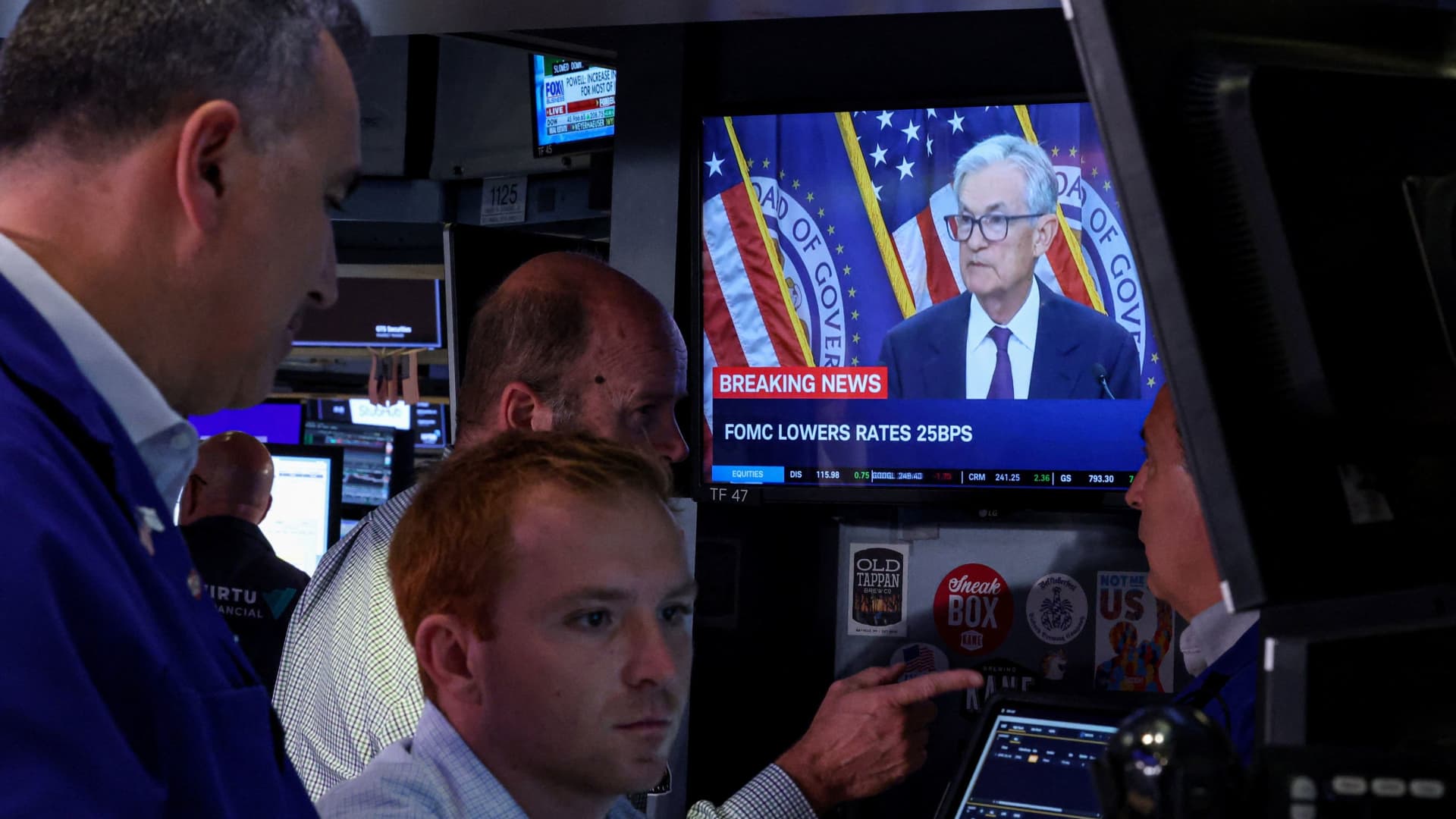
    Traders work, as a screen broadcasts a news conference by U.S. Federal Reserve Chair Jerome Powell following the Fed rate announcement, on the floor of the New York Stock Exchange (NYSE) in New York City, U.S., Sept. 17, 2025.

    Brendan McDermid | Reuters

    LONDON — European stocks are expected to open in negative territory on Wednesday as investors await the conclusion of the U.S. Federal Reserve’s meeting.

    The U.K.’s FTSE index is seen opening slightly below the flatline, Germany’s DAX 0.4% lower, France’s CAC 40 down 0.16% and Italy’s FTSE MIB 0.12% lower, according to data from IG.

    The big event for markets is the Fed’s interest rate cut today with a quarter-point trim widely seen as a done deal by traders. If the Federal Open Market Committee acts as expected, it will bring the federal funds rate to a range between 3.75%-4.00%.

    What’s less certain is whether Chair Jerome Powell will strike a dovish tone in his post-meeting comments.

    Following the cut this week, 84% of respondents see another reduction in December, and 54% see a third in January, according to the October CNBC Fed Survey. A total of 100 basis points of rate cuts are forecast this year and next, bringing the fed funds rate down to 3.2% by the end of 2026.

    Earnings are also dominating market attention this week with Alphabet, Meta Platforms and Microsoft set to report after the U.S. close on Wednesday. Apple and Amazon post results on Thursday.

    Trade tensions between the U.S. and China appear to be abating ahead of President Donald Trump’s meeting with Chinese President Xi Jinping on Thursday. Trump said Wednesday that he expects to lower fentanyl-linked tariffs on China ahead of the meeting.

    It’s a busy day for earnings in Europe on Thursday with Airbus, UBS, Banco Santander, Equinor, Deutsche Bank, BASF, Adidas, GSK and Endesa set to report. Data releases include Spanish GDP.

    — CNBC’s Steve Liesman and Sarah Min contributed to this market report.

    Continue Reading

  • Pakistan’s scheduled banks’ investments in gov’t securities up 19 pct-Xinhua

    ISLAMABAD, Oct. 29 (Xinhua) — Scheduled banks in Pakistan increased their investments in government securities by more than 5.8 trillion rupees (about 20.64 billion U.S. dollars) during the first nine months of 2025, reflecting both their continued preference for risk-free assets and the government’s rising financing needs, official data showed Wednesday.

    According to figures released by the State Bank of Pakistan (SBP), total investments of scheduled banks rose to 35.85 trillion rupees by September 2025 from 30 trillion rupees in January, marking a 19.3 percent increase.

    The banking sector’s total assets expanded to 52.4 percent of gross domestic product (GDP) in the 2024-25 fiscal year, up from 49.1 percent a year earlier, the SBP said.

    Data showed that banks continued to prefer government papers, from which they earn the bulk of their profits, while private lending remains subdued.

    Corporate investments in government securities also increased, reaching 7.86 trillion rupees by June 2025, or roughly 17 percent of total holdings, added the SBP.

    Meanwhile, deposits in the banking system rose by 4.19 trillion rupees over the same nine-month period, reaching 35.21 trillion rupees by September 2025 from 31 trillion rupees in January. (1 U.S. dollar equals 281 Pakistani rupees)

    Continue Reading

  • Solar farm plans for Gorefield countryside submitted

    Solar farm plans for Gorefield countryside submitted

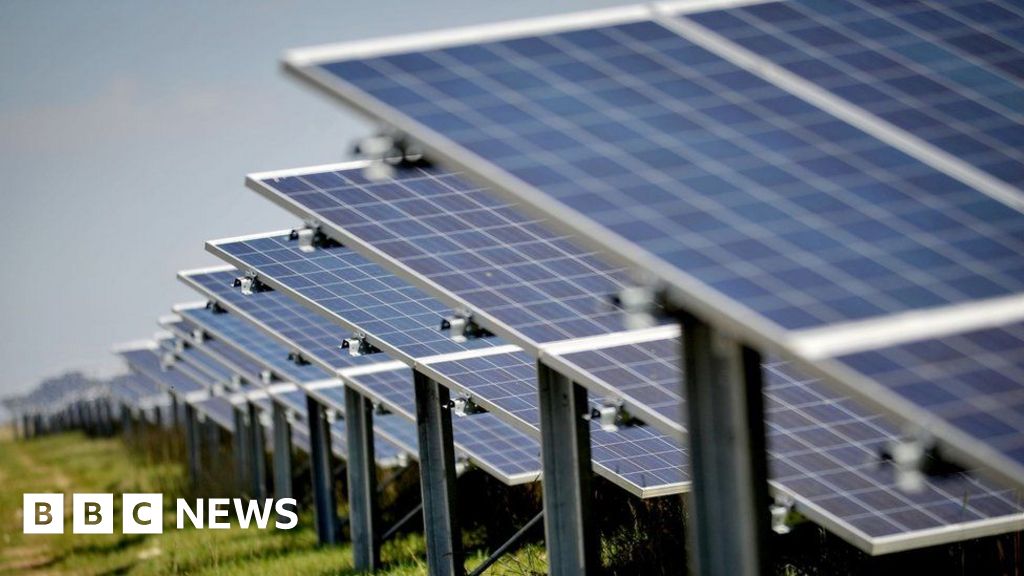
    A solar farm built in the countryside could power more than 18,000 homes a year, a developer said.

    Renewable Connections Developments wants to install panels on about 96 hectares (237 acres) of farmland off Treading Bank, near Gorefield in Cambridgeshire.

    It said there was a “significant” need for more solar farms and after 40 years the land would be returned to agricultural use.

    Plans for the Treading Bank Solar Farm have been submitted to Fenland District Council.

    The planning documents stated the site would be linked directly to the electricity grid and said there were no proposals for a battery storage system on site.

    The developer highlighted government targets to reduce emissions and that decarbonising the power sector “is integral to achieving this goal”, the Local Democracy Reporting Service said.

    The plans said the farmland where the solar farm was proposed was mostly made up of a mix of “good quality” and “very good quality” agricultural land.

    The developer said it had looked at other sites but concluded there were no other “suitable and available” places to build it that would make a “comparable contribution to renewable energy”.

    A spokesperson wrote in the application: “At the end of the operational lifespan (circa 40 years), the solar panels and other infrastructure would be removed, and the site restored back to full agricultural use.”

    Continue Reading

  • Bristol artist’s anger at finding work on site without permission

    Bristol artist’s anger at finding work on site without permission

    Jenny Urquhart Wearing a blue top, Jenny smiles at the camera whilst posing in front of one of her artworks. She has blonde hair hanging loose below her shoulders. The art depicts hot air balloons flying over Bristol. The Clifton Suspension Bridge can be seen in the work behind her, as can children playing in a park. Jenny Urquhart

    Jenny Urquhart said she had found hundreds of items for sale on Temu using her art without permission

    An artist has said it felt “infuriating” to discover “hundreds” of items featuring her work for sale on an online marketplace without her permission.

    Jenny Urquhart, 49, from Bristol, decided to visit Temu after reading a recent BBC report about card firms complaining about rip-off greeting cards being available for sale on the website.

    She said she found “pages and pages” of items using her designs, including men’s underwear, cushions and car mats. “You think of a gift item and I’d find one of my images printed on it,” added Mrs Urquhart.

    A spokesperson for Temu said the company had immediately removed the listings in question when it was made aware of the situation.

    Founded in Boston, Massachusetts, in 2022 but owned by Chinese e-commerce company PDD Holdings, Temu describes itself on its website as “honest, ethical and trustworthy”, offering low prices by shipping products direct from factories to consumers.

    In April 2024, the BBC reported on a number of complaints against the company including one from a Kent-based illustrator who found copies of her designs on the site.

    Mrs Urquhart said she had been prompted to look for unauthorised copies of her own work after reading that the company had agreed to work with the greeting card industry to remove copies from its site.

    Temu A screenshot of the Temu website shows men's boxer shorts for sale, emblazoned with an artwork by Jenny UrquhartTemu

    Mrs Urquhart found dozens of items for sale using her art, including boxer shorts

    After speaking about her case on BBC Breakfast, Mrs Urquhart said the majority of items featuring her work no longer appear on the website.

    “It’s really hard at the moment to make money out of art because quite rightly buying art comes well below obviously, paying the mortgage, buying food, paying the bills,” she said.

    “At the moment we’re really struggling. As soon as I get an order on my website I’m overjoyed – every single sale counts.

    “To think there’s some multi-million pound business on the other side of the world just flogging your stuff. It’s completely out of your control and infuriating.”

    A Temu spokesperson said the company had “immediately reviewed and removed” the listings when they were notified of them last week.

    “Temu takes intellectual property rights seriously and requires all third-party sellers to comply with applicable laws and platform policies,” they said.

    “We act promptly to remove infringing content once identified.”

    Continue Reading

  • The Fed’s balance sheet takes center stage as liquidity concerns rise

    The Fed’s balance sheet takes center stage as liquidity concerns rise

    Continue Reading

  • EBRD co-finances major renewable energy project in Central Asia

    EBRD co-finances major renewable energy project in Central Asia

    • EBRD providing US$ 142 million for major renewable-energy and battery development in Uzbekistan
    • Funds will help to construct 1 GW of solar and 1,336 MWh of battery energy storage capacity
    • New solar plants will be owned by ACWA Power and Japanese investors

    The European Bank for Reconstruction and Development (EBRD) is providing a comprehensive financing package of US$ 142 million (€121 million) for two special-purpose vehicles (SPVs) that will develop Uzbekistan’s and Central Asia’s largest combined solar photovoltaic and battery energy storage project to date.

    The two SPVs (ACWA Power Sazagan Solar 1 and ACWA Power Sazagan Solar 2) will be majority owned by ACWA Power – an international developer, investor, co-owner and operator of a portfolio of power-generation and desalinated-water-production plants. The SPVs will be co-owned by Sumitomo Corporation, Shikoku Electric Power Company and Chubu Electric Power Company. The investment marks the first foray into renewable-energy and battery energy storage systems (BESSs) in Uzbekistan by the Japanese investors. 

    The financing package consists of two senior secured loans. The first loan, of US$ 61 million (€52 million equivalent), will be provided to ACWA Power Sazagan Solar 1 for the development, construction and operation of a 500 MW solar photovoltaic power plant and a 668 MWh BESS in the Samarkand region of Uzbekistan. The second loan, of US$ 81 million (€69 million equivalent), will be made available to ACWA Power Sazagan Solar 2 for the development, construction and operation of a 500 MW solar photovoltaic power plant in the Samarkand region and a 668 MWh BESS in Uzbekistan’s Bukhara region.

    The project is expected to be co-financed by the Japan Bank for International Cooperation, Nippon Export and Investment Insurance covered lenders, the Asian Development Bank and Islamic Development Bank. Together, the two SPVs will introduce the largest combined solar photovoltaic (1 GW) and BESS (1,336 MWh) capacity in Uzbekistan and across the region. This unprecedented deployment of BESS capacity will help the grid to mitigate the intermittency of renewable energy sources. The BESS technology will improve grid reliability and flexibility by making additional energy capacity available during periods of peak demand. 

    The project will contribute to the government’s renewables plan, which is supported by the EBRD and targets the development of 25 GW of solar and wind capacity by 2030. Once commissioned, the new renewable energy capacity is expected to generate around 2,300 GWh of electricity per year that can power 600,000 households annually. 

    The EBRD is a major financier of green energy projects in Uzbekistan. To date the Bank has supported 1.65 GW of wind capacity, 1.4 GW of solar photovoltaic and 334 MW/501 MWh of BESS in the country – projects sponsored by experienced international developers.  

    The EBRD has invested over €5.35 billion in Uzbekistan to date across 188 projects, with the majority of this funding supporting private entrepreneurship, contributing to the country’s economic development. 

    Continue Reading

  • 39th Annual Asia Pacific Tax Conference | Insight

    39th Annual Asia Pacific Tax Conference | Insight

    The Future of Tax in a Geopolitically Transformed World

    We are delighted to announce that we will be hosting Baker McKenzie’s 39th Annual Asia Pacific Tax Conference, which will be held in Tokyo on 12 and 13 November 2025.

    This prestigious event will bring our leading tax lawyers and practitioners from across Asia Pacific, Europe, and the United States to share strategic insights into the latest developments and trends shaping the global and regional tax landscape.

    In an era of ongoing global uncertainty, we will examine pressing issues such as the impact of continued tariff shifts and the growing complexity of global and local tax environments on your business models and strategies. We will discuss how you can achieve resilience and growth amidst these challenges, providing guidance on managing tax affairs, optimizing positions, and mitigating compliance risks.

    In addition to jurisdiction-specific updates covering Australia, Mainland China, Hong Kong, India, Indonesia, Japan, Korea, Malaysia, Philippines, Singapore, Taiwan, Thailand and Vietnam, we will discuss some of the most critical issues shaping the tax landscape. Key themes include addressing the tax and transfer pricing challenges arising from ongoing tariff turbulence, as well as the complexities of Pillar Two. We will also cover other high-impact topics in a series of focused breakout sessions, including cross-border M&A structuring, intragroup reorganizations, tax audit and controversy management, recent developments in tax case law, strategic approaches to APAs, MAP, and ICAP, the evolving VAT/GST landscape, tariff mitigation strategies and supply chain resilience, and outbound investments from Japan.


    Conference materials will be made available on this page prior to the event. Please revisit for updates.

    Continue Reading

  • Donald Trump tells CEOs in South Korea that US is “going to have a good deal” with China

    Donald Trump tells CEOs in South Korea that US is “going to have a good deal” with China

    ‘No Trump! No China!’: South Korea caught between superpowerspublished at 05:19 GMT

    Laura Bicker
    China correspondent, reporting from Gyeongju

    Close-up of a sign that reads "No Trump!" in red bold lettersImage source, EPA/Shutterstock

    “No Trump!” a rally of hundreds shouted in the centre of South Korea’s capital Seoul over the weekend.

    “No China,” chanted another rally nearby.

    This is an indication of the diplomatic dance South Korea’s President Lee Jae Myung will have to perform this week as he hosts the leaders of both the US and China.

    Seoul is – and has long been – a key US ally. It still needs Washington’s protection, but it also needs China, its biggest trading partner and a vital market for exports.

    After Lee visited the White House in August, South Korea thought it had appeased its powerful friend – Trump agreed to lower tariffs from 25% to 15%.

    But then more than 300 South Koreans were detained in a massive immigration raid at a Hyundai plant in the US state of Georgia. This has shaken ties – especially because Hyundai is a major investor in the US.

    Anti-Chinese sentiment in South Korea has also grown steadily in recent years. Chinese interference became a common trope in conspiracy theories about former South Korean president Yoon Suk Yeol.

    However Lee chooses to navigate between the world’s two biggest economies, it’s hard to imagine how he can afford to alienate either.

    Read more about South Korea’s delicate dance between the US and China.

    Continue Reading

  • $12bn of debt — How First Brands Group collapsed

    $12bn of debt — How First Brands Group collapsed

    This is an audio transcript of the Behind the Money podcast episode: ‘$12bn of debt — How First Brands Group collapsed

    Michela Tindera
    What does it take to inflict damage on some of the world’s biggest financial institutions? Well, as it turns out, one secret of businessman with a track record of battling creditors in court, and it all starts with a tip.

    Ortenca Aliaj
    I was having breakfast and I got a message from a contact who said they had heard of this interesting company that was potentially having issues.

    Michela Tindera
    That’s the FT’s Ortenca Aliaj. The tip centred around a huge auto parts company, which is a bit out of her field — she’s the FT’s banking editor. But lots of big financial firms had lent this company money, and now it was running into trouble. So, Ortenca mentions it to our colleague Robert Smith. He’s the FT’s corporate finance editor, and he reaches out to some of his contacts. For a while, he doesn’t hear anything back. And then in August, Rob gets a call.

    Robert Smith
    I was sitting there with sort of an incredibly experienced, incredible person telling me that one of the biggest companies in its sector in America was a ticking time bomb.

    Michela Tindera
    The company we’re talking about is called First Brands Group. Not exactly a household name but it’s a business with a collection of factories from Pennsylvania to California — ones that make spark plugs, brake components and windshield wipers. It’s an auto parts supplier basically, and it’s from the Rust Belt of the United States.

    So not typically the kind of company that would cause the upper echelons of Wall Street to lose sleep over. Yet that’s exactly what happened last month when First Brands collapsed.

    And as Rob, Ortenca and our colleagues worked together on the First Brands story, they unveiled something possibly even more troubling: a form of Wall Street lending that’s exposed financial markets to broader risk, risk that’s even got central bank leaders worried.

    [MUSIC PLAYING]

    I’m Michela Tindera from the Financial Times. Today on Behind the Money, First Brands’ bankruptcy has raised questions about one of Wall Street’s favoured forms of financial innovation: the $2tn private credit market. This form of lending is often opaque, and there’s concern that after years of loosening lending standards, First Brands’ demise could be an omen.

     [MUSIC PLAYING]

    There are many questions in this story, but let’s start with one of the biggest. It concerns the founder of First Brands, a mysterious businessman called Patrick James. How did this obscure entrepreneur, based in the Midwest state of Ohio, enlist some of the biggest names in finance to lend his firm, not just millions, but billions?

    Who is he? Well, the story begins sometime after the 2008 financial crisis when Patrick James goes on a debt-fuelled acquisition spree. Here’s Rob.

    Robert Smith
    So Patrick James, he borrowed a lot of money to buy existing companies and sort of piece them together. So one of the early deals he did was in 2014, and he bought a windscreen wiper maker or a windshield wiper maker, as you say in the US, called Trico. And then sort of every year he’d announced any deals. So you know, buying a carburettor maker, buying a spark plug manufacturer. And each time he did it, he borrowed more and more money and the group became bigger and bigger. And then it was in 2020, I believe, he rebranded the company First Brands Group.

    So, you know, he’s kind of saying: We’ve got all the brands. We are the First Brands Group. If you want your Trico windscreen wipers, we’re there. You know, if you want your Michelin-branded tires, we are the guys. And like a lot of schemes that go awry or like a lot of companies that blow up, he had a good pitch.

    Michela Tindera
    One of the first major Wall Street firms to latch on to the First Brands’ pitch is the investment bank Jefferies.

    Robert Smith
    Jefferies got involved with First Brands very early, so in 2014, before it was even called First Brands, and they basically were there to shepherd it into the market to help it borrow this money from these private investment firms.

    And Jefferies, it’s tried to model itself from what it would describe as a pure play investment bank. So sort of like the investment banks of your . . . where kind of swaggering bankers went out and won business. And they lived and died by the strength of the service they could offer their clients.

    Michela Tindera
    Jefferies isn’t the only firm to give them money. In fact, Jefferies has since pointed out that they were aware of nine other banks being involved in acquisitions or loan arrangements for First Brands. And that’s because in part, as Patrick James builds up First Brands in the wake of the financial crisis, a new area of finance is on the rise: private credit. It’s a form of lending that Ortenca as the FT’s banking editor is watching closely.

    Ortenca Aliaj
    After the financial crisis, regulators sought to restrain banks because they’ve been doing all of these risky trades that almost led to the collapse of the global economy. And one of the repercussions of this was that they would effectively make it much more onerous for banks to lend to highly levered borrowers or companies that have a lot of debt on their balance sheet, which tend to be mid-sized businesses.

    And what happened was that there were, these very, very smart people on Wall Street who thought, well, if banks can no longer enter these businesses, we could set up firms that can. And that was sort of the genesis of the private credit industry. It wasn’t that it hadn’t existed before, but there was this kind of new borrower or new market that they could easily cater to.

    And so it was kind of fortunate that as Patrick James was trying to build this business of his, there was a group of lenders ready to lend to him that perhaps are more lenient in terms of scrutiny than maybe a bank would’ve been.

    Michela Tindera
    So First Brands grows alongside this boom in private credit. Lots of big financial institutions from Zurich to Tokyo become tied up in this business. Along the way, Patrick James amasses the trappings of a billionaire.

    Robert Smith
    I think what’s interesting is before the collapse of First Brands, this was sort of a big immigrant success story. Patrick James, he’s Malaysian. He’s from like a family of Indian descent and then he later moved to America for college with seemingly not a lot of wealth. But he sort of stuck around in Ohio and he very quickly became involved in a lot of different industrial businesses.

    And then at the sort of peak of First Brands, he amassed this very lavish sort of lifestyle. He had oceanfront properties on both coasts. So he had a big oceanfront property in Malibu, had a big oceanfront property in the Hamptons. He had almost, like, I’d call it almost like a compound in Ohio. So it’s sort of like five houses and a tennis court. So you had a lot of trophy homes all around America.

    Michela Tindera
    And that brings us up to this past summer and the tips we heard about earlier, the ones Ortenca and Rob received from their contacts. Now, as they’re digging in, they learn something. In early August, First Brands had been working to refinance its debt once again with the investment bank Jefferies. But this time something went wrong.

    Robert Smith
    So this company raised debts constantly. It needed to keep accessing debt markets to survive. So they tried to do a $6bn debt refinancing. So that’s essentially when you raise new debt to pay off the old debt. It’s quite a large deal. And it ran aground because lenders took a look at this and they had concerns about the financial statements.

    But what we discovered through our sources was that First Brands was also raising sort of a lot of less visible financing, stuff that behaved a lot like debt but perhaps wasn’t disclosed as debt on the balance sheet. And we sort of had people saying that they believed there could be billions of dollars, more of this stuff than perhaps everyone realised.

    Michela Tindera
    OK. So to sum it up here, this company, you’ve just received a tip about. You have people telling you that it could have billions more dollars of debt than anyone knows about. I mean, what was going through your mind as you uncovered all this?

    Robert Smith
    I think the thing that really shocked us was this was a company neither of us had heard of.

    Ortenca Aliaj
    Yes.

    Robert Smith
    And we write a lot about debt markets. And as soon as we did our research, we found out this thing was a debt monster, and we kind of discovered that some of the biggest names in international finance had exposures that weren’t well understood. So for us it was kind of an “Oh, my God” sort of moment. There’s this sort of debt bomb lurking out there that no one really seems to know anything about.

    Michela Tindera
    So Rob and Ortenca have found a debt bomb hidden away and supposedly it could go off at any moment. So they and two of our colleagues write about this in the FT, and the reaction to their reporting is fairly muted.

    Robert Smith
    No one really freaked out. And then about, I think it was just over a week later, we published a second story.

    Michela Tindera
    This time, people sit up and take note.

    Robert Smith
    And in that second story, we revealed that a very big Wall Street firm called Apollo Global Management had taken a short position against First Brands’ debt. Now, that meant that it would make money if the company entered financial difficulties. So, debt can trade like a stock can trade, and when people have concerns around a company, that debt trade is down and the company’s debt immediately crashed. And from there, in a matter of weeks, it went from this kind of freak out in debt markets to the company filing for bankruptcy.

    Michela Tindera
    September 28th this year. That’s when First Brands files for bankruptcy.

    Robert Smith
    When we first wrote about the company, it had told investors it had $800mn of cash on its balance sheet. When it filed for bankruptcy at the end of September, it had $12mn in the bank. So something went completely wrong with this company. There was almost like a bank run on the company’s cash and it was just a complete fire sale. So some of the biggest institutions on Wall Street were just dumping their debt. I don’t think it’s too hyperbolic to say it was complete carnage.

    Michela Tindera
    A couple weeks later, the US Department of Justice announces its launching an inquiry into the collapse of the firm. Days after that, First Brands CEO Patrick James steps down and all the while Rob, Ortenca and some of our colleagues are parsing through these bankruptcy documents. That’s where they learned that what their sources had told them that First Brands had billions more of this off-balance sheet debt, that it was even more true than they had imagined.

    Robert Smith
    So First Brands had about $6bn of loans. So those are like the normal sort of loans that in the past would’ve been made by banks. A lot of them were made by investment firms. But on top of that, it had a lot of what is called off-balance sheet debt, and what that broadly means is that in the company’s accounts, this wasn’t disclosed as debt.

    Michela Tindera
    Well, how does that work? How does a company accumulate debt but then the debt doesn’t appear on its balance sheet?

    Robert Smith
    So, you know, First Brands was borrowing money; it was borrowing money from lenders. But on top of that, it was raising this other form of financing that was tied to its invoices and tied to the little bits and bobs of metal sitting around in its warehouse. And this is all quite normal stuff in finance.

    The crucial point there is that while you owe money to a bank, it’s not classed as debt on your balance sheet. It’s sort of mingled in with all the other invoices you pay suppliers. So it’s a bit of a loophole where if companies abuse it, they can rack up hidden debts quite quickly.

    So it came out in the bankruptcy that there was a total of nearly $5.5bn of this off balance sheet financing in different forms. So you had people who thought: OK, there’s $6bn of debt out here. And then they wake up one morning and read the disclosure in the bankruptcy and they realise: Oh my God, there’s nearly $12bn of debt here.

    Ortenca Aliaj
    It’s almost double, basically. And it’s really crucial to make the point that — and maybe it’s a simple point, but should still be made — having a high debt load, not a crime, there’s a lot of highly leveraged companies. That’s fine. Having debt that your creditors don’t know about, can become quite a problem for you and your creditors.

    [MUSIC PLAYING]

    Michela Tindera
    Big financial names like UBS’s Chicago-based hedge fund unit O’Connor, US hedge fund giant Millennium and Japan’s Mitsui & Co and Norinchukin Bank, all provided this form of financing: off balance sheet financing to First Brands. And the story of how other lenders missed all that debt, that’s a story that tells us a lot about how private credit markets work and how opaque they can be.

     [MUSIC PLAYING]

    In the course of their reporting, Rob and Ortenca found a number of red flags at First Brands that Wall Street lenders either missed or chose not to be concerned about. One of their first stops was to look into the background of First Brands CEO, that mysterious businessman Patrick James.

    Ortenca Aliaj
    So usually when we’re dealing with a person that we are not familiar within the business world, what I will try to do is go through various government filings to see if they’ve been mentioned in anything.

    And I’m looking on the Securities and Exchange Commission website, which houses corporate filings, and I find a reference to Patrick James and the company First Brands Group. It’s in relation to an acquisition that they made a couple of years back. I’m sort of like: Well, great. We’re gonna find some more details about him.

    But the profile of James is basically one line, and I think all it says is that he has extensive experience in the automotive after-market industry. So we find ourselves in this position where we really know very little about him. We can find biographies from the high school that he went to, but we don’t know what this person has been doing in the corporate world for the past 30 years.

    Michela Tindera
    Even First Brands’ lenders were in the dark about who Patrick James is.

    Robert Smith
    When we talk to the lenders who are the people who should know the most about this company, they didn’t know anything or very little about Patrick James either. And this guy was the chief executive, but he was also the 100 per cent owner of the company.

    Ortenca Aliaj
    And again, this is a man who, despite all of that, has accrued $12bn of debt. And we can’t, you know, we can’t find any reference to him really . . . any meaningful reference to him on the internet.

    Robert Smith
    So it was kind of a strange moment and almost the red flag in and of itself.

    Michela Tindera
    One of the things Rob and Ortenca were able to find out quite quickly though was James’s colourful legal past, which included a string of failed companies behind him.

    Ortenca Aliaj
    And very quickly we uncovered that there had been prior accusations of fraud against James, and the accusations were eerily similar to what we were hearing on First Brands Group.

    Michela Tindera
    More than a decade ago, two lenders in separate cases sued Patrick James.

    Robert Smith
    So in one of those lawsuits, the bank that filed the claim against Patrick James, it accused him and his businesses of making “misrepresentations and omissions” relating to their invoices and inventory. So that was really interesting because it seemed to be relating to the same sort of financing that was at the heart of First Brands collapse.

    And then there was another lawsuit where James was accused of creating a “web of companies” to transfer out funds “in an attempt to defraud” creditors. So he was basically accused of creating this very complicated, shifting group of companies in which the allegation was that money was siphoned out of them.

    Michela Tindera
    It’s worth noting that Patrick James, through a spokesman has said these allegations are, quote, categorically false. The cases were robustly defended and never tried after settlements were reached. These were civil claims where serious allegations are often made, which turn out to have little substance. Certainly nothing criminal was ever brought against Patrick James.

    In fact, James’s spokesman also told the FT about our reporting on his back-story that James hasn’t been accused of any wrongdoing and is confident that the board’s independent investigation will vindicate him. But beyond Patrick James’ legal history, there were other issues that Rob and Ortenca learned about related to the First Brands’ business and its debt.

    Robert Smith
    So a really easy one was that First Brands Group had significantly higher margins than its peers. And the auto sector generally is quite a tight margin business, right? These guys ring out every cost they can, and they found that they just couldn’t really get a good explanation of that. And that was something that made some investors like not lend to the company and other lenders decide to not lend in the future.

    Michela Tindera
    Plus, there was the issue of collateral for First Brands loans. As Rob mentioned, the company was using its inventory, the bits and bobs of metal in its warehouses as collateral, but many lenders didn’t bother to check whether that collateral even existed.

    Robert Smith
    Now the classic thing you do when you lend against inventory is you go to the warehouse. You look at the stock list, you go around, you see if the things are there, you, know, you kick a few boxes. And we discovered that First Brands, so Patrick James’ brother Ed James was sort of the point man, shall we say, for the stuff.

    And we talked to some lenders who, you know, were approached about doing inventory finance. And they said: OK, great. Well we’ll come down to your warehouse and we’ll check it against the stock list. And then they were sort of cut off there. You know, supposedly Ed James said: No, no, no, no, no. We don’t let lenders into the warehouse. You can’t do that.

    So you can imagine for a lot of people that was just a non-starter. They were like: We’re not gonna lend against a bunch of stock in a warehouse if we haven’t even seen it.

    Michela Tindera
    Now we should be clear that the business First Brands has not been charged formally with fraud. Still, it all begs the question: where was the due diligence? How did First Brands manage to keep securing more and more from lenders with no one lifting up the hood on its business?

    Robert Smith
    What I think this tells you about the structure of modern finance is that it doesn’t pay to do deep due diligence on the companies you’re lending to. People in managed investment funds, the way they make money is by earning fees, and the way they earn fees is by lending. So a lot of these people were relying on the disclosures that were given to them by the company and by the investment bank, which was often Jefferies, and they perhaps didn’t have the time to really dig into the accounts.

    Michela Tindera
    But Ortenca says there’s a big picture to consider too.

    Ortenca Aliaj
    We’ve had 10 or 15 years of what we like to call the easy money era, where there’s been this abundance of cash going into the private capital industry, so they’ve had to find more and more opportunities to use it, and that can lead to slightly looser lending standards. Mark Rowan, the chief executive of Apollo, who as we’ve said, made a bet against First Brands before the company went under, has called these “late-cycle accidents”.

    Michela Tindera
    Add to that a sense that someone else, another lender, was assumed to be doing their homework on First Brands.

    Ortenca Aliaj
    Usually what these companies do when something does happen like this is they’ll pass the buck. They’ll say: Oh, well the company had an auditor. It’s the auditor’s fault. And then some will say: Well, you know, we bought the debt from a bank. The bank should have done the due diligence. Then, you know, an investor in private credit say: Well, well, private credit bought the loan. So why would we do the due diligence?

    So it’s sort of like everyone relies on the fact that the person before them performed good due diligence on the company and they are almost absolved of responsibility of actually having done it themselves.

    Michela Tindera
    So Rob, how likely is it that we see more of these situations pop up?

    Robert Smith
    I was lucky enough a couple of weeks ago to talk to Jim Chanos, who’s one of the most famous short sellers on Wall Street. You know, he’s known as the man who spotted the Enron fraud before it unravelled. Right? And he had a really interesting thing to say. He was basically saying what he calls the fraud cycle follows the financial cycle. So what he meant by that is when money rushes into an asset class, that is a fertile ground for fraud.

    So the way he explained it is like the longer a sort of boom goes on, the more investors’ healthy scepticism starts to erode because everyone else is making massive returns and you know, they might not really be doing the work.

    So you start to think: Oh, well, you know. Ah, I dunno about this, but God, if everyone else is doing it, you know, I’ve got my end investors turning around to me and saying, why aren’t you investing in these companies? Why aren’t you doing these loans?

    So it just sort of wears you down. And if there’s like years and years without incident on Wall Street, you think, OK, well. Yeah, it’s probably safe. I don’t fully understand it, but I’ll just go with it.

    [MUSIC PLAYING]

    Michela Tindera
    So a few weeks ago, our listeners might remember that we covered the collapse of the Texas-based subprime auto lender called Tricolor Holdings. Looking at these two stories, there are a lot of similarities. How should we think about that?

    Robert Smith
    Yeah. I think what’s interesting here is when you have an incident like this, it obviously frightens people. So what you get is you get people taking a closer look at the sort of lending they’ve done.

    You know, Jamie Dimon, the CEO of JPMorgan, on an earnings call recently, he said: There’s rarely one cockroach. So you know, the analogy there is you see a cockroach in your kitchen, there’s probably a few more of the guys, right?

    So I think that’s what everyone’s trying to work out at the moment. People are looking over the asset-backed lending they’ve done, they’re looking over the corporate loans they’ve done and they’re trying to see: Is there another First Brands?

    Michela Tindera
    Do we know anything about how regulators are thinking about the news of these recent collapses?

    Robert Smith
    I think it’s really caught the attention of regulators because in the financial crisis a lot of the issues were with banks, and although it was, you know, nearly catastrophic, regulators do have a lot of insight over banks.

    Partly because of the rules that they introduced to stop this happening again, a lot of that lending is migrated away from banks and into investment funds, and regulators just have much less visibility in what’s going on there. There’s also a phenomenon where often the banks are lending to the private credit funds, so there can still be a knock-on into the banking system.

    And this is the area where sort of central bank governors, policymakers, those sort of people are getting worried. So Andrew Bailey, who’s the governor of the Bank of England, he said earlier this month that alarm bells were sort of ringing over what’s going on in private credit. And he mentioned First Brands and Tricolor by name.

    You also had the head of the IMF, the International Monetary Fund, she said there’d been a very significant shift in financing away from the banks to what they call non-bank lenders. And again, she mentioned Tricolor and First Brands as sort of worrying signs of what might be going on.

    [MUSIC PLAYING]

    Michela Tindera
    Behind the Money is hosted by me, Michela Tindera. This episode was produced by me and Saffeya Ahmed. Our executive producer is Manuel Saragosa. Fact-checking by Simon Greaves. Sound design and mixing by Sam Giovinco. Original music is by Hannis Brown Topher Forhecz is the FT’s acting co-head of audio. Thanks for listening. See you next week.

    Continue Reading