The initial positive sentiment around US-China trade talks faded as the oil market progressed through yesterday’s trading session, with ICE Brent settling almost 0.5% lower. Meanwhile, the market continues to digest the impact of US sanctions on Russian oil flows on Rosneft and Lukoil. And for now, a comfortable supply outlook continues to support the market.
However, one part of the oil market that continues to see strength is middle distillates. The ICE gasoil crack rallied above US$31/bbl, after trading around US$23/bbl mid-month. Meanwhile, the ICE gasoil Nov/Dec timespread surged to almost $20/t backwardation yesterday, though it’s given back some of those gains in early morning trading today.
The latest sanctions on Russia threaten diesel flows, as Russia exports around 1m b/d of diesel. So clearly, a significant amount of supply is at risk. Furthermore, there is also the risk that Indian refiners reduce run rates if they stop buying Russian oil. This would lead to lower middle distillate export volumes from India. In addition, the Ukrainian president has said that Ukraine will increase the scale of attacks on Russian refineries, posing further supply risks to the middle distillate market. There have been concerns about tightness in the middle distillate market for several months now, and the potential impact of these sanctions will do little to ease them.
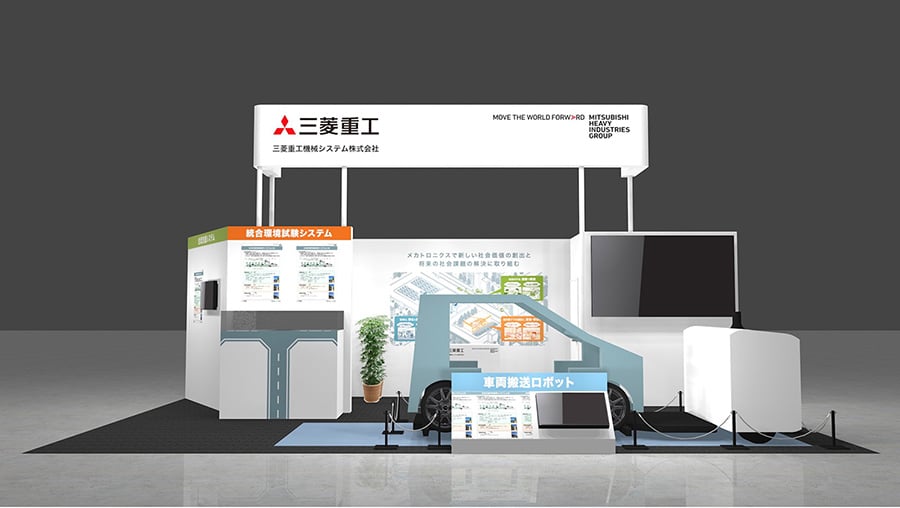
Tokyo, October 28, 2025 – Mitsubishi Heavy Industries Machinery Systems (MHI-MS), a part of Mitsubishi Heavy Industries (MHI) Group, will exhibit at the “Japan Mobility Show 2025″(Note1) held at Tokyo Big Sight (Koto-ku, Tokyo) from October 30 to November 9. At East Hall 7, MHI-MS will present its autonomous parking robot, merging support system, and adverse weather automated-driving research environment demonstrating how these technologies and applications will help create a more comfortable and safer ‘mobility society’ in the near future.
■ Autonomous Parking Robot
This robot autonomously transports and parks vehicles on behalf of people. It is designed for use in finished vehicle automated transport(Note2) and automated valet parking(Note3).
Finished vehicle automated transport significantly improves working conditions for personnel engaged in vehicle transport, even in harsh environments such as severe weather or extreme heat. It also addresses logistics industry demands, including digital transformation (DX) and decarbonization.
Automated valet parking enables the robot to find and park vehicles in vacant spaces, effectively turning distant, underutilized parking spots into “close” ones. This reduces driver distraction caused by searching for parking spaces, thereby preventing accidents related to inattention. Moreover, by reducing vehicle circulation within parking facilities, it helps reduce CO2 emissions, contributing to a society that is good for both people and the environment.
At the venue, visitors will have the opportunity to experience the future of mobility firsthand with the first public display of the actual autonomous parking robot.
Autonomous Parking Robot
■ Merging Support System
This system supports safe and smooth merging onto main highways, one of the most challenging scenarios in autonomous vehicle demonstration tests. The mechanism will be introduced through video presentations at the show.
Merging Support System (Vehicle Detection Sensor)
■ Adverse Weather Automated-driving Research Environment
To ensure a safe and secure mobility society, this facility recreates harsh natural environments indoors, including rain, fog, snow, and glare, and combines these with various driving scenarios with high precision and repeatability. It allows efficient evaluation of the safety and reliability of advanced driver assistance systems and highly automated vehicles under any weather conditions, accelerating the social implementation of autonomous driving. The venue will feature videos of testing operations and exhibits explaining the facility.
Adverse Weather Automated-driving Research Environment
MHI-MS and the Mitsubishi Heavy Industries Group leverage their expertise in traffic system development, plant construction, and manufacturing of diverse machinery to support efficient development and verification of automated mobility. This is achieved through advanced monitoring and communication technologies, sophisticated environmental control, digital twin technologies, and mechatronics, all contributing to shaping the future of mobility.
1 See the following website regarding the Japan Mobility Show 2025. https://www.japan-mobility-show.com/en/
2 Finished vehicle automated transport: Systems that autonomously move finished vehicles within automobile factories, dealerships, inspection centers, and motor pools. They operate 24/7, addressing driver shortages while ensuring safe and cost-effective transport.
3 Automated valet parking: After the driver stops at a designated boarding/disembarking area near the destination, the vehicle transport robot moves the vehicle to a vacant parking space. When retrieving the vehicle, the robot returns it to the designated area at the pre-specified time via a smartphone app. This eliminates the inconvenience of searching for parking and reduces the risk of door dings and collisions with adjacent vehicles.
(Bloomberg) — The record-setting advance in global equities took a breather in Asian trading, as investors braced for a flurry of earnings from megacap technology companies and policy announcements from major central banks this week.
MSCI’s Asia Pacific gauge dipped 0.2% as indexes in Japan and South Korea retreated from their all-time highs. An index in Shanghai broke above the psychological barrier of 4,000 for the first time in a decade. The moves came after US indexes had closed at all-time highs as Chinese and US trade negotiators lined up an array of diplomatic wins for Donald Trump and Xi Jinping to unveil at a summit this week.
Easing trade tensions have helped fuel a stock rally, while US companies have so far emerged largely unscathed by tariffs, protecting margins through price increases and cost cuts. That optimism faces a reality check this week as investors look to the Federal Reserve meeting for clues on the path of rate cuts, while major technology firms including Amazon.com Inc. and Microsoft Corp. reveal whether earnings momentum can be sustained.
“With the Fed on track to cut rates, extending the run would appear to hinge on this week’s lineup of high-profile earnings releases,” said Chris Larkin at E*Trade from Morgan Stanley.
In other corners of the market, the yuan climbed to its strongest level in nearly a year, amid optimism over a potential China-US trade deal. The yen also gained while a gauge of the dollar edged lower for a second day. Treasuries were little changed. Gold held near $4,000 an ounce as progress in trade talks sapped demand for haven assets.
Copper — a bellwether for global growth — advanced and traded roughly $60 shy of a record set last year as investors assessed the cooling of trade tensions between the US and China.
Technology stocks were in focus after Amazon.com planned to cut as many as 30,000 jobs, Reuters reported. Earlier, Qualcomm Inc. shares rose to their highest price in 15 months after unveiling chips and computers for the lucrative AI data center market, aiming to challenge Nvidia Corp. in the fastest-growing part of the industry.
On Wednesday and Thursday, five firms that account for about a quarter of the US benchmark — Microsoft Corp., Alphabet Inc., Meta Platforms Inc., Amazon.com and Apple Inc. — will report results. A gauge of the “Magnificent Seven” megacaps jumped 2.6%.
On trade, Trump told reporters on Monday that “I really feel good” about a deal with China, after officials unveiled a slew of agreements to ease tensions.
While markets cheered the latest developments, some analysts cautioned the deal now teed up for Trump and Xi to sign in South Korea ignored thorny issues.
Fundamental fights over national security appeared untouched, they said, along with Trump’s stated core mission of rebalancing trade. Making that harder, Chinese investment into America remains heavily restricted.
“While these developments have lifted market spirits, analysts remain skeptical that the underlying issues — such as national security and tech competition — will be fully resolved,” said Fawad Razaqzada at City Index and Forex.com. “Nevertheless, traders have embraced the risk-on mood.”
What Bloomberg strategists say…
USD/JPY is slipping on Tuesday amid a combination of President Trump’s arrival in Japan, lower Treasury yields and supportive chatter from Japanese officials. Yet, what FX traders really want to see is more than two dissenters at this week’s Bank of Japan meeting to turn aggressively bullish on the yen.
— Mark Cranfield, Markets Live strategist. Click here for the full analysis.
Meanwhile, Trump hailed the US’s alliance with Japan, reaffirming ties with a longstanding partner and praising new Prime Minister Sanae Takaichi on her plans to ratchet up defense spending as the pair met in Tokyo. Trump and Takaichi signed a framework on critical minerals.
Takaichi is navigating implementation of a trade deal brokered under her predecessor that includes a nebulous pledge for Japan to fund $550 billion in US projects.
Corporate News:
Domino’s Pizza Enterprises Ltd. shares soared after the Australian Financial Review reported Bain Capital is considering buying the fast-food chain in a deal worth as much as A$4 billion ($2.6 billion). Nidec Corp. shares tumbled as much as their daily limit of 19% on Tuesday as the company was set to be removed from the Nikkei 225 Stock Average and was flagged for special oversight by the Tokyo Stock Exchange. CSL Ltd. plunged to the lowest in almost seven years after Australia’s biggest drugmaker postponed plans to spin off its vaccines business, as falling US flu immunizations deepen concern over a slowdown in its Seqirus unit. Some of the main moves in markets:
Stocks
S&P 500 futures were little changed as of 12:01 p.m. Tokyo time Japan’s Topix fell 0.5% Australia’s S&P/ASX 200 fell 0.5% Hong Kong’s Hang Seng fell 0.2% The Shanghai Composite was little changed Euro Stoxx 50 futures fell 0.2% Currencies
The Bloomberg Dollar Spot Index was little changed The euro rose 0.1% to $1.1657 The Japanese yen rose 0.3% to 152.41 per dollar The offshore yuan rose 0.1% to 7.1016 per dollar Cryptocurrencies
Bitcoin fell 0.4% to $113,968.33 Ether fell 0.8% to $4,094.96 Bonds
The yield on 10-year Treasuries was little changed at 3.98% Japan’s 10-year yield declined 1.5 basis points to 1.650% Australia’s 10-year yield was little changed at 4.17% Commodities
West Texas Intermediate crude was little changed Spot gold was little changed This story was produced with the assistance of Bloomberg Automation.
Linklaters acted as the Hong Kong and US counsel for the sole sponsor and other underwriters on the global offering and listing of H shares of SANY Heavy Industry Co., Ltd. (SANY Heavy Industry) on the Main Board of the Hong Kong Stock Exchange (HKEX), raising approximately US$1.72bn.
This listing marks one of the world’s largest heavy industry IPOs in recent years. It is also the third-largest IPO in Hong Kong SAR this year. The offering attracted a strong line-up of 23 cornerstone investors with a total cornerstone investment of over US$700m, reflecting robust market recognition of SANY Heavy Industry and underscoring Hong Kong’s status as a premier international capital market.
SANY Heavy Industry is an innovation- and technology-driven global leader in the construction machinery industry. It is China’s largest and the world’s third-largest construction machinery company. As one of the pioneering Chinese construction machinery companies to expand internationally, it has established an integrated global ecosystem across operations, products, services, research and development and manufacturing. Its products have reached customers in over 150 countries and regions.
The Linklaters team was led by partner and Head of Greater China ECM Christine Xu, Special Senior Adviser and New Economy Team Leader (Greater China) Oliver Zhong, capital markets partner Lipton Li and corporate partner Donnelly Chan, supported by counsel Queenie Tong. Litigation, Arbitration & Investigations Counsel Michael Lamson also provided specialist support on international trade.
Partner and Head of Greater China ECM Christine Xu commented:
“We are delighted to have supported this landmark transaction for SANY Heavy Industry. This successful listing highlights Hong Kong’s role as an international capital markets hub and demonstrates strong investor confidence in SANY’s innovation-driven and technology-focused strategy. It also reflects our team’s ability to deliver seamless, cross-border legal advice on complex, high-profile offerings. We look forward to continuing to support more companies as they access global capital markets.”
Linklaters’ highly acclaimed Greater China ECM team provides seamless legal support on pre-IPO investments, IPOs, post-listing compliance and equity financing, including advising on the recent HKEX IPOs of CATL, Chery and Sanhua Intelligent, as well as share placings for Minieye Technology and RoboSense.
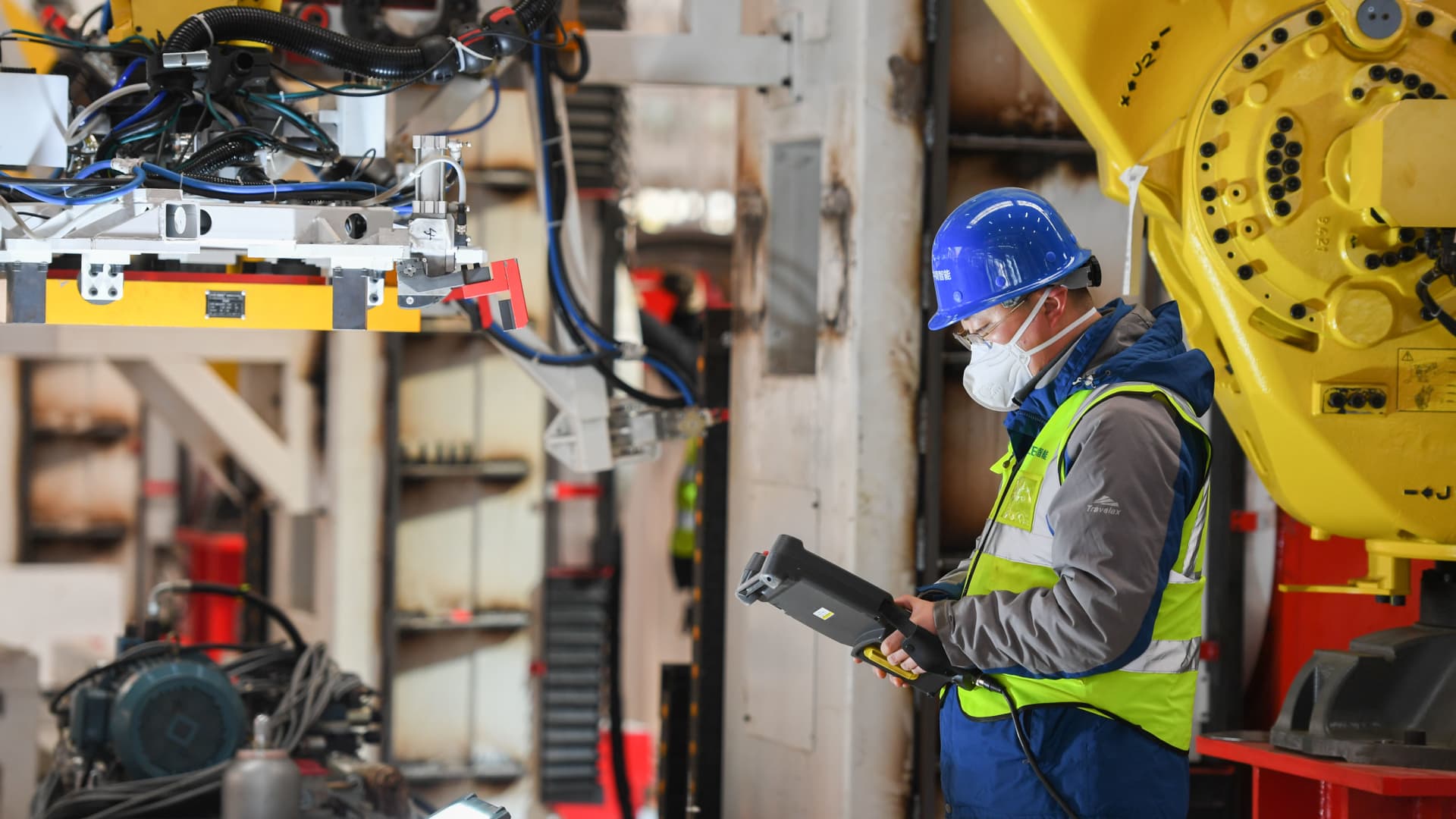
A worker debugs a robot at a Sany Heavy Industry plant in Changsha, central China’s Hunan Province, on Feb. 20, 2020.
Chen Zeguo | Xinhua News Agency | Getty Images
China’s Sany Heavy Industry traded flat on its Hong Kong trading debut Tuesday after raising HKD$12.36 billion ($1.59 billion) in one of the city’s largest listings this year.
Shares were priced at HK$21.30 apiece. The listing adds to a pickup in Hong Kong equity fundraising, following recent sizable offerings such as Zijin Gold International’s $3.2 billion initial public offering on Sept. 30.
Sany’s Shanghai-listed stock has gained over 35% so far this year. The company, founded in 1994, is among the world’s largest makers of construction machinery, producing excavators, cranes, road-building equipment and pile drivers.
China International Capital Corp. acted as the sole sponsor and overall coordinator for the initial public offering. Other banks on the deal included BOC International, Industrial and Commercial Bank of China, Agricultural Bank of China and China Merchants Bank.
Cornerstone investors included Hillhouse, BlackRock, Temasek and Infore Capital. Sany said it plans to use the funds for overseas expansion, R&D, digital upgrades and sustainability efforts.
(Bloomberg) — The record-setting advance in global equities took a breather in early Asian trading Tuesday, as investors braced for a flurry of megacap technology earnings and policy announcements from major central banks this week.
Equity gauges in Japan and South Korea retreated from record highs, while shares in Australia also fell at the open. US indexes closed at all-time highs as Chinese and US trade negotiators lined up an array of diplomatic wins for Donald Trump and Xi Jinping to unveil at a summit this week. An index of US-listed Chinese shares rose 1.6%.
The yen gained after seven consecutive days of weakening as a minister said the government will monitor the currency’s weakness. Gold rebounded after slumping more than 3% to trade below $4,000 an ounce in the previous session while a gauge of the dollar edged lower for a second day. Technology stocks will be in focus after Amazon.com Inc. planned to cut as many as 30,000 jobs, Reuters reported. Treasuries inched higher Tuesday.
Easing trade tensions have helped fuel a stock rally, while US companies have so far emerged largely unscathed by tariffs, protecting margins through price increases and cost cuts. That optimism faces a reality check this week as investors look to the Federal Reserve meeting for clues on the path of rate cuts, while major technology firms including Amazon and Microsoft Corp. reveal whether earnings momentum can be sustained.
“With the Fed on track to cut rates, extending the run would appear to hinge on this week’s lineup of high-profile earnings releases,” said Chris Larkin at E*Trade from Morgan Stanley. “And it may, barring any surprises in US-China trade negotiations.”
The S&P 500 topped 6,875 — notching its best three-day rally since May. Qualcomm Inc. shares rose to their highest price in 15 months after unveiling chips and computers for the lucrative AI data center market, aiming to challenge Nvidia Corp. in the fastest-growing part of the industry.
On Wednesday and Thursday, five firms that account for about a quarter of the US benchmark — Microsoft Corp., Alphabet Inc., Meta Platforms Inc., Amazon.com and Apple Inc. — will report results. A gauge of the “Magnificent Seven” megacaps jumped 2.6%.
On trade, Trump told reporters on Monday that “I really feel good” about a deal with China, after officials unveiled a slew of agreements to ease tensions.
Trump is in Tokyo Tuesday to meet with Japanese leaders.
While markets cheered the latest developments, some analysts cautioned the deal now teed up for Trump and Xi to sign in South Korea ignored thorny issues.
Fundamental fights over national security appeared untouched, they said, along with Trump’s stated core mission of rebalancing trade. Making that harder, Chinese investment into America remains heavily restricted.
“While these developments have lifted market spirits, analysts remain skeptical that the underlying issues — such as national security and tech competition — will be fully resolved,” said Fawad Razaqzada at City Index and Forex.com. “Nevertheless, traders have embraced the risk-on mood.”
Chinese bonds will also be in focus Tuesday after reports by state-owned media that the People’s Bank of China will restart its sovereign bond trading operations, a move that analysts said may be aimed at supporting the debt market and boosting liquidity.
Corporate News:
Domino’s Pizza Enterprises Ltd. shares soared after the Australian Financial Review reported Bain Capital is considering buying the fast-food chain in a deal worth as much as A$4 billion ($2.6 billion). Nidec Corp. shares tumbled as much as their daily limit of 19% on Tuesday as the company is set to be removed from the Nikkei 225 Stock Average and was flagged for special oversight by the Tokyo Stock Exchange. CSL Ltd. shares slumped after Australia’s largest drugmaker scrapped plans to complete a demerger of its Seqirus vaccines business by June 2026, citing heightened volatility in the US influenza vaccine market that it said would prevent the move from realizing full value for shareholders. Some of the main moves in markets:
Stocks
S&P 500 futures were little changed as of 9:56 a.m. Tokyo time Hang Seng futures rose 0.4% Nikkei 225 futures (OSE) fell 0.3% Japan’s Topix fell 0.5% Australia’s S&P/ASX 200 fell 0.4% Euro Stoxx 50 futures were little changed Currencies
The Bloomberg Dollar Spot Index was little changed The euro was little changed at $1.1656 The Japanese yen rose 0.2% to 152.52 per dollar The offshore yuan was little changed at 7.1048 per dollar The Australian dollar was little changed at $0.6559 Cryptocurrencies
Bitcoin fell 0.4% to $113,955.01 Ether fell 0.3% to $4,116.02 Bonds
The yield on 10-year Treasuries was little changed at 3.98% Japan’s 10-year yield declined 1.5 basis points to 1.650% Australia’s 10-year yield declined two basis points to 4.16% Commodities
West Texas Intermediate crude fell 0.2% to $61.19 a barrel Spot gold rose 0.6% to $4,006.35 an ounce This story was produced with the assistance of Bloomberg Automation.
(Bloomberg) — The record-setting advance in global equities took a breather in early Asian trading Tuesday, as investors braced for a flurry of megacap technology earnings and policy announcements from major central banks this week.
Equity gauges in Japan and South Korea retreated from record highs, while shares in Australia also fell at the open. US indexes closed at all-time highs as Chinese and US trade negotiators lined up an array of diplomatic wins for Donald Trump and Xi Jinping to unveil at a summit this week. An index of US-listed Chinese shares rose 1.6%.
The yen gained after seven consecutive days of weakening as a minister said the government will monitor the currency’s weakness. Gold rebounded after slumping more than 3% to trade below $4,000 an ounce in the previous session while a gauge of the dollar edged lower for a second day. Technology stocks will be in focus after Amazon.com Inc. planned to cut as many as 30,000 jobs, Reuters reported. Treasuries inched higher Tuesday.
Easing trade tensions have helped fuel a stock rally, while US companies have so far emerged largely unscathed by tariffs, protecting margins through price increases and cost cuts. That optimism faces a reality check this week as investors look to the Federal Reserve meeting for clues on the path of rate cuts, while major technology firms including Amazon and Microsoft Corp. reveal whether earnings momentum can be sustained.
“With the Fed on track to cut rates, extending the run would appear to hinge on this week’s lineup of high-profile earnings releases,” said Chris Larkin at E*Trade from Morgan Stanley. “And it may, barring any surprises in US-China trade negotiations.”
The S&P 500 topped 6,875 — notching its best three-day rally since May. Qualcomm Inc. shares rose to their highest price in 15 months after unveiling chips and computers for the lucrative AI data center market, aiming to challenge Nvidia Corp. in the fastest-growing part of the industry.
On Wednesday and Thursday, five firms that account for about a quarter of the US benchmark — Microsoft Corp., Alphabet Inc., Meta Platforms Inc., Amazon.com and Apple Inc. — will report results. A gauge of the “Magnificent Seven” megacaps jumped 2.6%.
On trade, Trump told reporters on Monday that “I really feel good” about a deal with China, after officials unveiled a slew of agreements to ease tensions.
Trump is in Tokyo Tuesday to meet with Japanese leaders.
While markets cheered the latest developments, some analysts cautioned the deal now teed up for Trump and Xi to sign in South Korea ignored thorny issues.
Fundamental fights over national security appeared untouched, they said, along with Trump’s stated core mission of rebalancing trade. Making that harder, Chinese investment into America remains heavily restricted.
“While these developments have lifted market spirits, analysts remain skeptical that the underlying issues — such as national security and tech competition — will be fully resolved,” said Fawad Razaqzada at City Index and Forex.com. “Nevertheless, traders have embraced the risk-on mood.”
Chinese bonds will also be in focus Tuesday after reports by state-owned media that the People’s Bank of China will restart its sovereign bond trading operations, a move that analysts said may be aimed at supporting the debt market and boosting liquidity.
Corporate News:
Domino’s Pizza Enterprises Ltd. shares soared after the Australian Financial Review reported Bain Capital is considering buying the fast-food chain in a deal worth as much as A$4 billion ($2.6 billion). Nidec Corp. shares tumbled as much as their daily limit of 19% on Tuesday as the company is set to be removed from the Nikkei 225 Stock Average and was flagged for special oversight by the Tokyo Stock Exchange. CSL Ltd. shares slumped after Australia’s largest drugmaker scrapped plans to complete a demerger of its Seqirus vaccines business by June 2026, citing heightened volatility in the US influenza vaccine market that it said would prevent the move from realizing full value for shareholders. Some of the main moves in markets:
Stocks
S&P 500 futures were little changed as of 9:56 a.m. Tokyo time Hang Seng futures rose 0.4% Nikkei 225 futures (OSE) fell 0.3% Japan’s Topix fell 0.5% Australia’s S&P/ASX 200 fell 0.4% Euro Stoxx 50 futures were little changed Currencies
The Bloomberg Dollar Spot Index was little changed The euro was little changed at $1.1656 The Japanese yen rose 0.2% to 152.52 per dollar The offshore yuan was little changed at 7.1048 per dollar The Australian dollar was little changed at $0.6559 Cryptocurrencies
Bitcoin fell 0.4% to $113,955.01 Ether fell 0.3% to $4,116.02 Bonds
The yield on 10-year Treasuries was little changed at 3.98% Japan’s 10-year yield declined 1.5 basis points to 1.650% Australia’s 10-year yield declined two basis points to 4.16% Commodities
West Texas Intermediate crude fell 0.2% to $61.19 a barrel Spot gold rose 0.6% to $4,006.35 an ounce This story was produced with the assistance of Bloomberg Automation.
Renewable energy is often pitched as cheaper to produce than fossil fuel energy. To quantify whether this is true, we have been studying the financial impact of expanding wind energy in the UK. Our results are surprising.
From 2010 to 2023, wind power delivered a benefit of £147.5 billion — £14.2 billion from lower electricity prices and £133.3 billion from reduced natural gas prices. If we offset the £43.2 billion in wind energy subsidies, UK consumers saved £104.3 billion compared with what their energy bills would have been without investment in wind generation.
UK wind energy production has transformed over the past 15 years. In 2010, more than 75% of electricity was generated from fossil fuels. By 2025, coal has ceased and wind is the largest source of power at 30% – more than natural gas at 26%.
This massive expansion of UK offshore wind is partly due to UK government subsidies. The Contracts for Difference scheme provides a guaranteed price for electricity generated, so when the price drops below this level, electricity producers still get the same amount of money.
The expansion is also partly due to how well UK conditions suit offshore wind. The North Sea provides both ample winds and relatively shallow waters that make installation more accessible.
Read more:
How a more flexible energy grid can cope better with swings in Britain’s weather
The positive contribution of wind power to reducing the UK’s carbon footprint is well known. According to Christopher Vogel, a professor of engineering who specialises in offshore renewables at the University of Oxford, wind turbines in the UK recoup the energy used in their manufacture, transport and installation within 12-to-24 months, and they can generate electricity for 20-to-25 years. The financial benefits of wind power have largely been overlooked though, until now.
Our study explores the economics of wind in the energy system. We take a long-term modelling approach and consider what would happen if the UK had continued to invest in gas instead of wind generation. In this scenario, the result is a significant increased demand for gas and therefore higher prices. Unlike previous short-term modelling studies, this approach highlights the longer-term financial benefit that wind has delivered to the UK consumer.
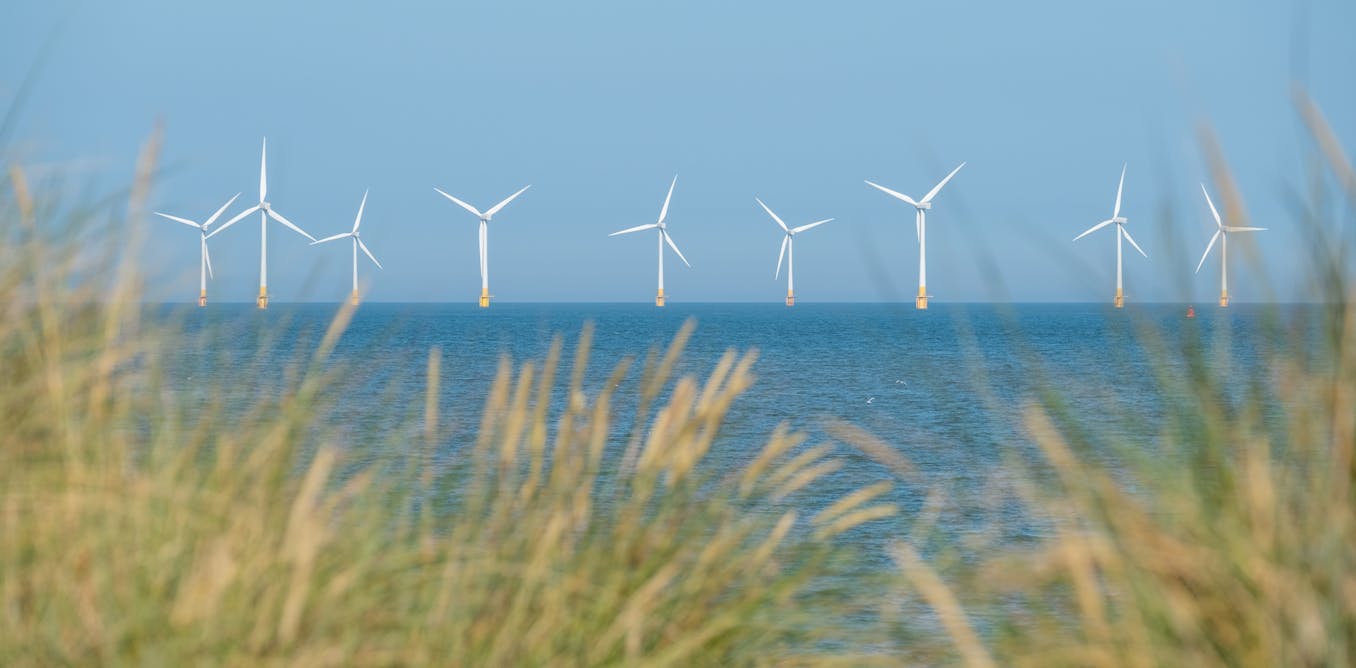
The authors’ new study quantifies the financial benefit of wind v fossil fuels to consumers. Igor Hotinsky/Shutterstock
Central to this study is the assumption that without the additional wind energy, the UK would have needed new gas capacity. This alternative scenario of gas rather than wind generation in Europe implies an annual, ongoing increase in UK demand for gas larger than the reduction in Russian pipeline gas that caused the energy crisis of 2022.
Given the significant increase in the cost of natural gas, we calculate the UK would have paid an extra £133.3 billion for energy between 2010 and 2023.
There was also a direct financial benefit from wind generation in lower electricity prices – about £14.2 billion. This combined saving is far larger than the total wind subsidies in that period of £43.2 billion, amounting to a net benefit to UK consumers of £104.3 billion.
Wind power is a public good
Wind generators reduce market prices, creating value for others while limiting their own profitability. This is the mirror image of industries with negative environmental consequences, such as tobacco and sugar, where the industry does not pay for the increased associated healthcare costs.
This means that the profitability of wind generators is a flawed measure of the financial value of the sector to the UK. The payments via the UK government are not subsidies creating an industry with excess profits, or one creating a financial drain. They are investments facilitating cheaper energy for UK consumers.
Wind power should be viewed as a public good — like roads or schools — where government support leads to national gains. The current funding model makes electricity users bear the cost while gas users benefit. This huge subsidy to gas consumers raises fairness concerns.
Wind investment has significantly lowered fossil fuel prices, underscoring the need for a strategic, equitable energy policy that aligns with long-term national interests. Reframing UK government support as a high-return national investment rather than a subsidy would be more accurate and effective.
Sustainability, security and affordability do not need to be in conflict. Wind energy is essential for energy security and climate goals – plus it makes over £100 billion of financial sense.
Don’t have time to read about climate change as much as you’d like?
Get a weekly roundup in your inbox instead. Every Wednesday, The Conversation’s environment editor writes Imagine, a short email that goes a little deeper into just one climate issue. Join the 45,000+ readers who’ve subscribed so far.