Category: 3. Business

  • Evaluating Valuation After Karachaganak Production Cut Linked to Geopolitical Tensions

    Evaluating Valuation After Karachaganak Production Cut Linked to Geopolitical Tensions

    Chevron, one of the world’s largest energy companies, has cut production at the Karachaganak field after a Ukrainian drone strike damaged a nearby gas processing plant in Russia. This move highlights how quickly geopolitical risks can ripple through global oil operations and affect supply stability.

    See our latest analysis for Chevron.

    The recent production cut at Karachaganak comes not long after Chevron completed its $53 billion all-stock acquisition of Hess Corp., and just ahead of the company’s third-quarter earnings release. Over the past year, Chevron’s total shareholder return climbed 7.8% while its share price has recovered 6% year-to-date, reflecting some resilience despite choppy oil prices and mixed industry sentiment. Momentum appears steady rather than surging, as geopolitical developments continue to drive both risk and opportunity across the energy sector.

    If supply disruptions and shifting global energy dynamics have you looking for new investment angles, it is a good time to broaden your search and discover fast growing stocks with high insider ownership

    With shares hovering below analyst price targets and mixed expectations for future earnings, the question facing investors is clear. Is Chevron trading at a discount, or is the market already pricing in all potential upside?

    Chevron’s last close of $155.56 sits below the most widely followed narrative’s fair value estimate of $168.78. The modest upside signals analysts see potential value ahead, underpinned by positive operational catalysts and sector shifts. But what’s driving that optimism?

    The integration of Hess synergies, new low-cost assets, and share buybacks will be cash flow accretive and boost EPS, even as Chevron sustains high shareholder returns regardless of commodity price cycles.

    Read the complete narrative.

    What is powering this valuation uplift? The narrative hinges on a cluster of bold assumptions about future efficiencies, margin expansion, and a potential decline in share count. What numbers are backing these projections, and are they too optimistic or just right? Uncover the levers and tension points shaping Chevron’s fair value by following the full narrative.

    Result: Fair Value of $168.78 (UNDERVALUED)

    Have a read of the narrative in full and understand what’s behind the forecasts.

    However, Chevron’s heavy reliance on oil and gas combined with slow progress on renewables could challenge long-term revenue and margin goals if energy demand shifts faster than expected.

    Find out about the key risks to this Chevron narrative.
    Looking beyond fair value estimates, Chevron currently trades at a price-to-earnings ratio of 23x. This is higher than both the US Oil and Gas industry average of 12.8x and its peer group’s 20.3x. The fair ratio, shaped by historical trends, is 22.3x. This suggests Chevron may be trading at a premium compared to its sector, potentially limiting upside if the market corrects. So, is this premium warranted by future growth or could it expose investors to greater downside risk?

    See what the numbers say about this price — find out in our valuation breakdown.

    NYSE:CVX PE Ratio as at Oct 2025

    If you see things differently or want to dig into the numbers your own way, you can create a Chevron narrative for yourself in just a few minutes. Do it your way

    A great starting point for your Chevron research is our analysis highlighting 3 key rewards and 1 important warning sign that could impact your investment decision.

    If you are serious about building wealth, do not limit your search to just energy giants. Powerful trends and hidden gems await in every corner of the market.

    This article by Simply Wall St is general in nature. We provide commentary based on historical data and analyst forecasts only using an unbiased methodology and our articles are not intended to be financial advice. It does not constitute a recommendation to buy or sell any stock, and does not take account of your objectives, or your financial situation. We aim to bring you long-term focused analysis driven by fundamental data. Note that our analysis may not factor in the latest price-sensitive company announcements or qualitative material. Simply Wall St has no position in any stocks mentioned.

    Companies discussed in this article include CVX.

    Have feedback on this article? Concerned about the content? Get in touch with us directly. Alternatively, email editorial-team@simplywallst.com

    Continue Reading

  • Tony Blair Institute undertakes restructuring as losses mount

    Tony Blair Institute undertakes restructuring as losses mount

    Unlock the Editor’s Digest for free

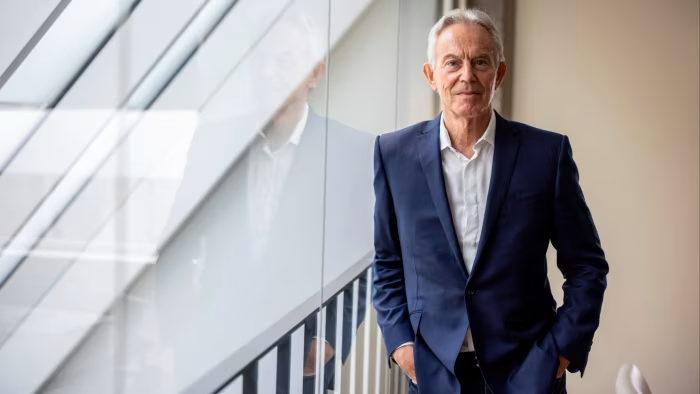
    The Tony Blair Institute is undergoing a major restructuring that includes staff lay-offs, as the not-for-profit set-up by the former UK prime minister searches for a more sustainable funding model.

    Sir Tony Blair, whose institute advises nearly 50 governments worldwide, emailed staff on Thursday to inform them the TBI would be entering a “new stage of its journey” including changes in senior management, said three people familiar with the matter.

    The email spelled out a number of changes affecting the leadership of the organisation including the appointment of a new finance chief and operating officer, while setting out plans for a regional managing director in Europe.

    The TBI would also now focus on four global functions with an emphasis on “[artificial intelligence] and innovation”, including the appointment of a new chief AI and innovation officer, former Treasury official and longtime Blair adviser Benedict Macon-Cooney.

    “This is a genuine restructuring,” TBI said in a statement to the Financial Times. “We’re evolving, particularly as we focus on governing in the age of AI and the technology revolution.”

    Changes come as the not-for-profit, which undertakes commercial consulting to fund pro-bono work for governments, suffered deepening losses last year. TBI reported a $4.3mn loss in 2024 despite turnover increasing 11 per cent to $161mn, according to accounts published earlier this month.

    The TBI attributed increased expenditure to rising staff costs — it recruited former Finnish prime minister Sanna Marin and former UK chief of defence staff general Sir Nick Carter last year — as its portfolio of work grew and it expanded to eight new countries.

    TBI said: “We have taken the decision in the last couple of years to invest in expansion and run a small deficit, given our strong reserves and cash position.” The TBI had reserves of more than $33mn at the end of 2024.

    Staff numbers climbed to 786 in 2024, up from 719 a year earlier, with the bulk of the increase in the not-for-profit’s advisory arm. It incurred $2.2mn in costs attached to redundancies last year, triple the amount incurred in 2023.

    Two people familiar with the matter said the not-for-profit has been seeking to increase sources of funding, particularly through consulting work, amid concerns that it was dependent on too few individual donors.

    Oracle co-founder Larry Ellison has pledged or contributed nearly $350mn since 2021, according to public filings © Anna Moneymaker/Getty Images

    Billionaire Larry Ellison’s contribution in 2023 was equivalent to more than a third of the TBI’s operating costs in the same year.

    The Oracle co-founder has pledged or contributed nearly $350mn since 2021, according to public filings. Blair, who serves as the institute’s executive chair, has a close personal relationship with Ellison spanning back to his time serving as Britain’s premier.

    “TBI income this year has grown again and will do so again next year. And every year for the last three TBI has increased its own income from sources other than donors,” the not-for-profit added.

    The TBI also receives grant funding from organisations including the Gates Foundation, Wellcome Trust and World Bank.

    Blair left Downing Street in 2007 after a decade in power. Since leaving office the former British premier has dispensed advice to governments across the globe, while he is expected to play a role on a supervisory board overseeing the running of postwar Gaza.

    The TBI has been criticised for undertaking advisory work for controversial clients such as Saudi Arabia, while the FT previously reported that staff were involved in a project alongside Boston Consulting Group that envisaged a “Trump Riviera” in Gaza.

    Although Blair does not take a salary from the institute, TBI’s other four directors were paid a total of $2.1mn last year, up from $2mn in the previous 12 months. The highest-paid director took home $1.3mn. The director is not named in the accounts.

    Additional reporting by Kieran Smith and Peter Andringa

    Continue Reading

  • Thames Water paid £20mn to cover KKR’s due diligence for abortive bid

    Thames Water paid £20mn to cover KKR’s due diligence for abortive bid

    Unlock the Editor’s Digest for free

    Near-bankrupt Thames Water paid £20mn to cover the due diligence costs of KKR for its abortive attempt to rescue the UK’s largest water utility.

    Thames Water selected KKR, the private equity giant, as its preferred bidder for an emergency rescue earlier this year. Thames Water was obliged to pay for the cost to potential buyers of assessing and researching the state of the utility’s infrastructure, operations and finances under the terms of the deal. The cost of that exercise topped £20mn, according to people familiar with the situation, largely due to fees paid to KKR’s advisers.

    KKR pulled out of the deal in June, citing the risk of government intervention. It then passed its due diligence to lenders that are now trying to win approval from regulators for their own takeover of Thames Water, which provides water and sewerage services to about 16mn customers. Any deal will also need to be approved by London’s High Court.

    The fees will raise concerns that cash is leaking out of the utility, which receives all of its income from customer water bills. Thames Water is struggling under the weight of £20bn debt and is trying to avoid temporary renationalisation under the government’s special administration regime after its previous owners — a clutch of pension and sovereign wealth funds — wrote off their investments and walked away from the business in 2024.

    The scale of the due diligence effort, which included site visits to water and waste treatment facilities, was borne from the poor visibility Thames Water has over the state of its crumbling infrastructure, with documents revealing last year that the utility has failed to map almost a third of its sewage pipe network.

    Reports produced by KKR and the creditors underscored the dangers of so-called “single point of failure risk” at some of Thames Water’s biggest sites, according to people familiar with the matter and documents seen by the Financial Times.

    Beckton sewage works, which KKR and Thames Water creditor analysis suggests is at risk of failure © Jeff Gilbert/Alamy

    Coppermills water treatment works and Beckton sewage treatment works in East London were identified as the two facilities at the highest risk of outages, according to this analysis.

    The cost of the due diligence work has added to a multimillion pound fee bonanza for advisers, bankers and lawyers trying to secure the financial future of the troubled company. The total advisory bill could top £200mn a debt restructuring is agreed, the High Court heard earlier this year; costs that the utility itself is covering from its own cash-strapped balance sheet.

    KKR’s advisers on its abandoned bid included investment bank PJT Partners, law firm Kirkland & Ellis and management consultant Roland Berger.

    Had KKR completed its rescue of Thames Water, the private equity firm would have covered the costs of its due diligence, according to a person familiar with the situation.

    The senior creditors — which include US investment firms Elliott Management and Apollo Global Management — submitted their latest rescue proposal to regulator Ofwat earlier this month, pledging £3.15bn in equity and a 25 per cent writedown of the nominal value of their exposure. 

    They have also asked for concessions on regulatory fines and targets. The creditors said they had “an ambition” to reduce sewage outflows by 30 per cent by 2030, well below the government’s target of 50 per cent.

    Rival potential buyers including CK Infrastructure, owner of Northumbrian Water, have recently written to Ofwat claiming they have been “excluded” from the bidding process meaning it was unlikely to get the best deal for customers. CKI has indicated it would bid for Thames Water if the government puts it into its SAR.

    The creditors said their plan “will see £20.5bn invested over the next five years and is the fastest and most reliable route to turn around Thames Water, deliver on customer priorities, clean up waterways and rebuild public trust.”  

    KKR declined to comment on its due diligence costs.

    Thames Water said: “Advisor fees are part of an extensive, complex recapitalisation; customers will not pay for these fees. We remain focused on securing a market-led recapitalisation that establishes the financial and regulatory foundations required to support the investment and performance improvements our customers expect and return the company to a stable financial foundation.”    

    Continue Reading

  • AFR-IX telecom secures US backing and €14,3 million EU funding for Medusa Africa – Submarine Networks

    1. AFR-IX telecom secures US backing and €14,3 million EU funding for Medusa Africa  Submarine Networks
    2. Etihad Salam and AFR-IX to connect Medusa cable to the Red Sea  Developing Telecoms
    3. Capacity Europe 2025: Etihad Salam partners with AFR-IX on Medusa cable  capacityglobal.com
    4. Etihad Salam teams up with AFR-IX telecom for onward connectivity for Medusa cable  Telecompaper
    5. AFR-IX signs Medusa connectivity deal with Saudi telecoms firm Salam  Data Center Dynamics

    Continue Reading

  • Deep Value Signals as Shares Trade Well Below DCF Fair Value

    Deep Value Signals as Shares Trade Well Below DCF Fair Value

    Komplett (OB:KOMPL) remains unprofitable, but has managed to reduce its losses at an average annual rate of 11.2% over the past five years. With earnings forecast to jump 103.84% per year and profitability expected within the next three years, investors are watching a possible transition from losses to sustained profit. Meanwhile, revenue is projected to outpace the Norwegian market at 6.2% per year.

    See our full analysis for Komplett.

    Next, we’ll see how these headline numbers stack up against the dominant narratives driving sentiment in the market. Some views may get reinforced, and others could be challenged.

    Curious how numbers become stories that shape markets? Explore Community Narratives

    OB:KOMPL Earnings & Revenue History as at Oct 2025
    • Komplett trades at just 0.2x Price-To-Sales, far below the peer average of 0.6x and industry average of 0.4x.

    • Prevailing market view points to investors leaning into the company as a potential value pick, given the significant discount to sector norms.

    • The current share price of NOK13 is well below the DCF fair value estimate of NOK59.83, representing a steep implied discount.

    • The prevailing market view highlights how this wide gap could attract investors expecting future profit growth.

    • Over the past three months, Komplett’s stock price has been notably unstable, standing out as the main risk flagged in recent filings.

    • Prevailing market view underscores the importance of this volatility for cautious investors.

    Don’t just look at this quarter; the real story is in the long-term trend. We’ve done an in-depth analysis on Komplett’s growth and its valuation to see if today’s price is a bargain. Add the company to your watchlist or portfolio now so you don’t miss the next big move.

    Komplett’s outlook is clouded by persistent share price volatility and lingering doubts about the timing of its shift to sustainable profitability.

    If you’d prefer companies with consistent momentum and more predictable earnings, use our stable growth stocks screener (2098 results) to discover businesses delivering steady results year after year.

    This article by Simply Wall St is general in nature. We provide commentary based on historical data and analyst forecasts only using an unbiased methodology and our articles are not intended to be financial advice. It does not constitute a recommendation to buy or sell any stock, and does not take account of your objectives, or your financial situation. We aim to bring you long-term focused analysis driven by fundamental data. Note that our analysis may not factor in the latest price-sensitive company announcements or qualitative material. Simply Wall St has no position in any stocks mentioned.

    Continue Reading

  • Profit Turnaround Forecast Challenges Bearish Narrative on Ongoing Losses

    Profit Turnaround Forecast Challenges Bearish Narrative on Ongoing Losses

    SSH Communications Security Oyj (HLSE:SSH1V) is forecast to swing back to profitability within three years, with projected earnings growth of 128.13% per year. Revenue is also expected to rise at an impressive 24.5% annually, easily outpacing the Finnish market’s 4.1% average. However, the company remains unprofitable for now, with losses having grown by 1.4% per year over the last five years, and its share price has been notably volatile over the past three months. The outlook highlights the balance between high growth expectations, the risks associated with premium valuation, and ongoing losses.

    See our full analysis for SSH Communications Security Oyj.

    Let’s see how these numbers compare to the broader narratives discussed among investors and where they might cause some rethinking.

    Curious how numbers become stories that shape markets? Explore Community Narratives

    HLSE:SSH1V Earnings & Revenue History as at Oct 2025
    • Losses have increased by 1.4% per year over the last five years, even as revenue is projected to grow at a significant 24.5% annually going forward.

    • Prevailing optimism centers on the idea that strong sector-wide demand for cybersecurity should eventually enable a turnaround. However, the persistent loss trend highlights a key tension:

      • While bulls anticipate that ongoing digital threats will create a major runway for SSH Communications Security Oyj, the reality is that the company has yet to translate that sector tailwind into bottom-line improvement.

      • This sustained loss trajectory means investors face a meaningful lag between narrative-driven optimism and demonstrated profitability, unlike more established peers.

    • SSH1V trades at a Price-to-Sales ratio of 6.9x, compared to 3.9x for direct peers and 2.3x for the broader European software industry.

    • The market is pricing in a sizable improvement for SSH Communications Security Oyj relative to its competitors. This heightens the risk that any stalling in revenue growth could lead to multiple compression:

      • Investors expecting premium valuation to persist are betting that SSH1V will out-execute both peers and the sector on contract wins or technology upgrades.

      • However, the current premium leaves little room for disappointment if near-term growth targets or margins do not materialize as expected.

    • SSH1V’s share price has experienced notable volatility over the last three months, despite forecasts for a return to profitability within three years.

    • This volatility creates a dilemma for long-term investors:

      • The company’s ambitious earnings growth forecast of 128.13% per year could attract momentum-oriented buyers, but the unstable share price underscores ongoing uncertainty about timing and sustainability of profits.

      • Until the shift to consistent profitability is visible in actual results, sentiment is likely to be highly reactive to even modest news developments.

    Continue Reading

  • Zalaris (OB:ZAL) Margin Growth Surpasses Peers, Reinforcing Bullish Narratives Despite Valuation Concerns

    Zalaris (OB:ZAL) Margin Growth Surpasses Peers, Reinforcing Bullish Narratives Despite Valuation Concerns

    Zalaris (OB:ZAL) has become profitable over the last five years, with annual earnings growth averaging 26.3%. Over the past year, earnings growth accelerated to 40.2% and net profit margins increased to 4.5%, up from 3.8% previously. This highlights the company’s focus on high-quality earnings.

    See our full analysis for Zalaris.

    Next, let’s see how these results compare to the community narratives and whether the latest surge in profitability is changing the story for Zalaris.

    Curious how numbers become stories that shape markets? Explore Community Narratives

    OB:ZAL Earnings & Revenue History as at Oct 2025
    • Net profit margin reached 4.5%, moving further above the previous year’s 3.8% and demonstrating a notable step up in quality of earnings compared to peers in professional services.

    • What stands out against the prevailing market view is that the margin expansion helps set Zalaris apart, even while peer companies in the sector commonly report lower or flat profitability trends.

      • The 4.5% margin is supported by 40.2% annual earnings growth, a pace that amplifies the importance of sustaining this quality of profit.

      • This momentum signals that Zalaris’ operational model is delivering more value per krone earned, even as sector averages trend lower.

    • Zalaris trades at NOK92.80 per share, nearly three times the DCF fair value of NOK32.06, and at a price-to-earnings ratio of 31x, which is well above both the industry average (21x) and the peer group (13x).

    • Critics highlight that the wide premium over DCF fair value makes the bullish case harder to justify, especially since the valuation gap has widened alongside the profit gains.

      • While profit quality has strengthened, this outperformance is already “priced in,” leaving limited room for additional surprise upside unless growth accelerates even further.

      • The market’s optimism puts pressure on Zalaris to maintain this level of growth or risk a correction toward the DCF benchmark.

    • Despite profit growth, Zalaris is flagged as not being in a good financial position according to the latest risk signals, which could limit flexibility for reinvestment or weathering downturns.

    • Another key viewpoint is that, although recent performance is strong, balance sheet resilience is not keeping pace. Bears argue this mismatch could amplify downside risk if sector conditions tighten.

      • Questions linger about whether margin improvements are sustainable without a stronger financial footing.

      • Financial health concerns may weigh on investor confidence even if the income statement looks robust for now.

    Continue Reading

  • Primis Financial (FRST) Earnings Turn Positive, But Revenue Decline Challenges Bullish Narratives

    Primis Financial (FRST) Earnings Turn Positive, But Revenue Decline Challenges Bullish Narratives

    Primis Financial (FRST) has turned the corner to profitability in the past year, with earnings now positive after years of steep declines. Earnings had been down 45.3% per year over the last five years. While earnings are forecast to surge by 61.4% per year, revenue is expected to decline 4.3% annually across the next three years. This sets up a sharp contrast for investors to consider. The combination of outsized forecasted earnings growth and ongoing revenue headwinds comes as the stock commands a price-to-earnings ratio of 30.7x, far above both industry (11.2x) and peer (14.3x) averages.

    See our full analysis for Primis Financial.

    Now, let’s see how these reported numbers stack up against the broader market and community narratives that have shaped sentiment around Primis Financial.

    See what the community is saying about Primis Financial

    NasdaqGM:FRST Revenue & Expenses Breakdown as at Oct 2025
    • Core expense reductions are set to trim approximately $1.5 million per quarter through 2026, driven by renegotiated technology contracts, vendor consolidation, and workforce reallocation.

    • Analysts’ consensus view stresses that these operational moves materially support higher net margins and greater earnings durability, yet highlight two key tensions:

    • To see how efficiency shapes future profit forecasts, check the full consensus argument in the company’s narrative. 📊 Read the full Primis Financial Consensus Narrative.

    • Revenue is forecast to shrink by 3.7% per year over the next three years, with guidance reflecting the impact of weaker loan growth and more cautious expansion in specialized business lines.

    • Analysts’ consensus view outlines two main themes in the revenue story:

    • With a price-to-earnings ratio of 30.7x, Primis Financial trades at a substantial premium to both its peer group (14.3x) and the US Banks sector average (11.2x), raising the bar for future performance to justify this valuation.

    • Analysts’ consensus view spotlights the following tensions in the valuation narrative:

    To see how these results tie into long-term growth, risks, and valuation, check out the full range of community narratives for Primis Financial on Simply Wall St. Add the company to your watchlist or portfolio so you’ll be alerted when the story evolves.

    View the data from a different angle? You can transform your outlook into a personal narrative in just a few minutes, and Do it your way.

    A great starting point for your Primis Financial research is our analysis highlighting 2 key rewards and 3 important warning signs that could impact your investment decision.

    Primis Financial’s forecast for shrinking revenue, uncertain margin expansion, and a steep valuation premium all signal big hurdles for sustained investor returns.

    If you want steadier opportunities, use stable growth stocks screener (2098 results) to find companies consistently delivering reliable revenue and earnings growth year after year.

    This article by Simply Wall St is general in nature. We provide commentary based on historical data and analyst forecasts only using an unbiased methodology and our articles are not intended to be financial advice. It does not constitute a recommendation to buy or sell any stock, and does not take account of your objectives, or your financial situation. We aim to bring you long-term focused analysis driven by fundamental data. Note that our analysis may not factor in the latest price-sensitive company announcements or qualitative material. Simply Wall St has no position in any stocks mentioned.

    Companies discussed in this article include FRST.

    Have feedback on this article? Concerned about the content? Get in touch with us directly. Alternatively, email editorial-team@simplywallst.com

    Continue Reading

  • US beef prices are soaring. Will Trump’s plans lower them?

    US beef prices are soaring. Will Trump’s plans lower them?

    Danielle KayeBusiness reporter

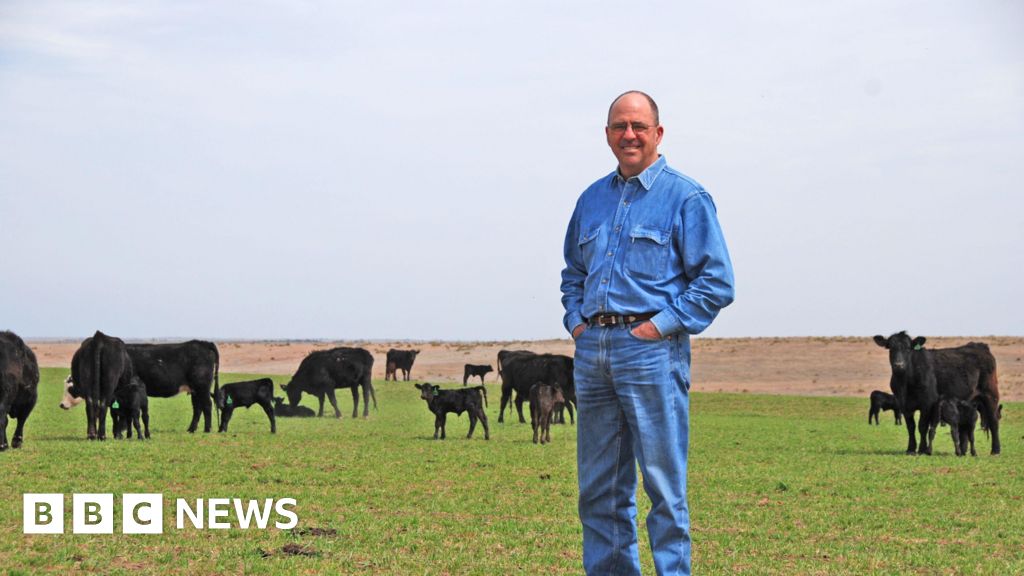
    Mike Callicrate A man wearing denim stands on a grassy plot of land with his hands in his pockets. Several cows graze the land in the background. Mike Callicrate

    Mike Callicrate, a cattle rancher who has built a direct-to-consumer operation, at his farm in St Francis, Kansas.

    Beef prices have gotten so high in the US that it has become a political problem.

    Even Donald Trump, who long ago declared inflation “dead”, is talking about it, as the issue threatens to undercut his promises to bring down grocery prices for Americans.

    This week, he took to social media, urging ranchers to lower prices for their cattle.

    But his demand – and other proposals his administration has floated to address the issue – has sparked a backlash among ranchers, who worry some of his solutions will make it harder for them to make a living, while making little dent at the grocery store.

    The number of beef cattle farmers and ranchers in the US has dwindled steadily since 1980, reducing domestic supplies and driving up prices, as demand remains high.

    The country’s cattle inventory has fallen to its lowest level in nearly 75 years, while the US has lost more than 150,000 cattle ranches just since 2017 – a 17% drop, according to the Agriculture Department.

    Ranchers say they are under pressure from four decades of consolidation among the meat processors that buy their livestock, while high costs for key inputs like fertiliser and equipment have intensified the strain.

    The contraction in the industry has worsened, as several years of drought have forced ranchers to slash their herds.

    Christian Lovell, a cattle rancher in Illinois, said parts of his farm that were lush and grassy when he was a child have now dried up, limiting where his cows can graze.

    “You put all these together and you have a recipe for a really broken market,” said Mr Lovell, who works with advocacy group Farm Action.

    Beef inflation

    Retail prices for ground beef rose 12.9% over the 12 months to September, and beef steaks were up 16.6%, according to US inflation data published Friday by the Bureau of Labor Statistics.

    A pound of ground chuck now costs an average of $6.33 (£4.75), compared with $5.58 a year ago.

    The increases have significantly outpaced general food inflation, which stood at 3.1%.

    “The cattle herd has been getting smaller for the last several years, yet people are still wanting that American beef – hence the high prices,” said Brenda Boetel, a professor of agricultural economics at the University of Wisconsin, River Falls.

    Derrell Peel, a professor of agricultural economics at Oklahoma State University said he expected prices to remain elevated until at least the end of the decade, noting that it takes years to replenish herds.

    The Trump administration’s “hands are tied” when it comes to interventions that will help lower prices, Mr Peel added.

    Reuters Two men wearing suits stand in front of the American and Argentinian flags. One man points toward the camera.Reuters

    US President Donald Trump with Javier Milei, president of Argentina, which accounts for just 2% of American beef imports

    ‘Chaos’ for American producers

    The Agriculture Department this week unveiled what it called a “big package” aimed at ramping up domestic beef production, by opening more land for cattle grazing and supporting small meat processors.

    That proposal came after Trump drew the ire of ranchers when he proposed to import more beef from Argentina, potentially quadrupling the purchases.

    Eight House Republicans responded with a letter to the White House expressing concern about Trump’s import plans.

    Even the National Cattlemen’s Beef Association, which has voiced support for Trump’s policies in the past, said the import plan “only creates chaos at a critical time of the year for American cattle producers, while doing nothing to lower grocery store prices”.

    Trump responded by assuring farmers that he was helping them in other ways, noting tariffs that are limiting imports from Brazil.

    “It would be nice if they would understand that, but they also have to get their prices down, because the consumer is a very big factor in my thinking, also,” Trump wrote.

    But that has failed to quell the furore.

    Justin Tupper, president of the US Cattlemen’s Association, said he thought that only the big four meat packers would benefit from Trump’s import plan.

    “I don’t see that lowering prices here at all,” Mr Tupper said.

    ‘These are consolidated markets’

    Some say the government could make an impact if it focused on the way a handful of companies dominate the market for meat processing.

    Today, just four companies control more than 80% of the beef slaughtering and packing market.

    “These are consolidated markets gouging ranchers and gouging consumers at the store,” said Austin Frerick, an agricultural and antitrust policy expert and a fellow at Yale University.

    The meat processing firms – Tyson, JBS, Cargill and National Beef – have faced several lawsuits, including one filed by McDonald’s alleging they colluded to inflate the price of beef.

    Though Trump revoked a Biden-era order earlier this year that directed agencies to tackle corporate consolidation across the food system, his administration has taken other steps to investigate competition issues in the agricultural industry.

    ‘We’re not going to rebuild this cow herd’

    Mike Callicrate runs a cattle ranch in St Francis, Kansas. He said the only way he has managed to stay in the industry was by cutting out the middleman and setting up his own stores to reach consumers directly.

    But Mr Callicrate acknowledged that most ranchers do not have the money to make that shift. Many have left the industry – and see no incentive to jump back in.

    “We’re not going to rebuild this cow herd – not until we address market concentration,” Mr Callicrate said.

    He said he supported the Agriculture Department’s plans to open up more cattle grazing land to boost production and bring down retail prices.

    “But unless we have a market,” he added, you’re a “fool to get into the cattle business”

    Bill Bullard A man wearing a cowboy hat speaks into a microphone.Bill Bullard

    Bill Bullard, the chief executive of R-CALF USA, a cattle producer trade association, said ranchers have seen a recovery in cattle prices over the past year.

    Bill Bullard found himself in the first wave of ranchers pushed out as the meat processing industry started to consolidate in the early 1980s.

    He closed down his 300-cow operation in South Dakota in 1985.

    Mr Bullard, who is now the chief executive of R-CALF USA, a cattle producer trade association, said it was only in the last year or so that ranchers had received good prices for their livestock, as supply dropped to such a low level that the prices paid by meat processors “simply had to increase”.

    Still, reliance on imports and meat packers’ buying power persist, Mr Bullard said, meaning ranchers “lack confidence in the integrity of the marketplace” and remain reluctant to grow their herds.

    He said he did not have confidence that the president’s ideas would fix the issues.

    “He’s focused on the symptoms and not the problems,” he said.

    Continue Reading

  • Harvard Ave Acquisition Corporation Announces Closing of

    Harvard Ave Acquisition Corporation Announces Closing of

    New York, NY, Oct. 24, 2025 (GLOBE NEWSWIRE) — Harvard Ave Acquisition Corporation (Nasdaq: HAVAU) (the “Company”) announced today the closing of its initial public offering of 14,500,000 units at $10.00 per unit. The gross proceeds from the offering were $145 million before deducting underwriting discounts and estimated offering expenses. The units were listed on the Nasdaq Global Market (“Nasdaq”) and began trading under the ticker symbol “HAVAU” on October 23, 2025. Each unit consists of one Class A ordinary share and one right to receive one-tenth of one Class A ordinary share. Once the securities comprising the units begin separate trading, the Class A ordinary shares and rights are expected to be listed on Nasdaq under the symbols “HAVA” and “HAVAR”, respectively.

    The Company is a blank check company incorporated as an exempted company under the laws of the Cayman Islands, which will seek to effect a merger, share exchange, asset acquisition, share purchase, reorganization or similar business combination with one or more businesses or entities. While it may pursue an acquisition opportunity in any business, industry, sector or geographical location, it intends to focus on industries or sectors that complement the management team’s background.

    D. Boral Capital LLC acted as the sole book-running manager in the offering.

    Robinson & Cole LLP served as legal counsel to the Company. Winston & Strawn LLP served as legal counsel to D. Boral Capital LLC.

    A registration statement on Form S-1 (333-284826) relating to these securities has been filed with the Securities and Exchange Commission (“SEC”), and was declared effective on September 30, 2025. The offering was made only by means of a prospectus. Copies of the prospectus may be obtained from D. Boral Capital LLC, 590 Madison Avenue, 39th Floor, New York, NY 10022, by telephone at +1 (212) 970-5150, by email at info@dboralcapital.com, or from the SEC website at www.sec.gov.

    This press release shall not constitute an offer to sell or a solicitation of an offer to buy, nor shall there be any sale of these securities in any state or jurisdiction in which such offer, solicitation or sale would be unlawful prior to registration or qualification under the securities laws of any such state or jurisdiction.

    Forward-Looking Statements

    This press release includes forward-looking statements that involve risks and uncertainties. Forward-looking statements are statements that are not historical facts. Such forward-looking statements are subject to risks and uncertainties, which could cause actual results to differ from the forward-looking statements. The Company expressly disclaims any obligations or undertaking to release publicly any updates or revisions to any forward-looking statements contained herein to reflect any change in the Company’s expectations with respect thereto or any change in events, conditions or circumstances on which any statement is based. No assurance can be given that the offering discussed above will be completed on the terms described, or at all. Forward-looking statements are subject to numerous conditions, many of which are beyond the control of the Company, including those set forth in the Risk Factors section of the registration statement and related prospectus filed in connection with the initial public offering with the SEC. Copies are available on the SEC’s website, www.sec.gov.

    Contact Information:

    Harvard Ave Acquisition Corporation

    Sung Hyuk Lee
    Chief Executive Officer

    3rd Floor, 166 Yeongsin-ro
    Yeongdengpo-gu, Seoul, 07362

    Email: sunghyuk.lee23@gmail.com

    Continue Reading