Category: 3. Business

  • PUMA AND JJJJOUND INTRODUCE A CAPSULE OF ARCHIVAL, OFF-COURT DESIGNS

    PUMA AND JJJJOUND INTRODUCE A CAPSULE OF ARCHIVAL, OFF-COURT DESIGNS

    For this limited release, PUMA and JJJJound present an ode to retired professionals, grounded in comfort and style, no longer strictly chasing performance.  

    A tribute to legacy sportswear, the capsule spans footwear and apparel, designed to feel familiar yet reenvisioned. Three footwear styles anchor the collection, starting with two all-leather Speedcats in tonal black and tonal brown, crafted with smooth Italian leather uppers. The navy PUMA Suede – a follow-up on previous JJJJound Suede collaborations – is rendered in premium materials, featuring the same attention to detail and deconstructed minimalist aesthetic. Each pair is elevated through its material choice, subtle branding, and a refined color story. Logos are either removed or debossed, with pared-back design elements, allowing each iconic silhouette to speak for itself.  

    “We gravitate toward products that don’t need explanation, things that feel familiar, but strangely untouched,” explains JJJJound. “It’s about living with clarity, not needing to prove anything. The collection reflects that attitude.” 

    The accompanying apparel draws from early 2000s golf attire, a key reference point for JJJJound. A jacquard long-sleeve polo with repeating graphic motifs is paired with matching T7 track pants featuring a prominent side stripe. Together, the pieces nod to retro leisurewear, balancing sports and elegance, once reserved for the clubhouse. 

    The latest from PUMA x JJJJound will be available starting October 16, 2025, on JJJJound.com, and from November 8, 2025, at selected PUMA retailers. 

    Continue Reading

  • Chart: Solar is driving renewable energy to new…

    Chart: Solar is driving renewable energy to new…

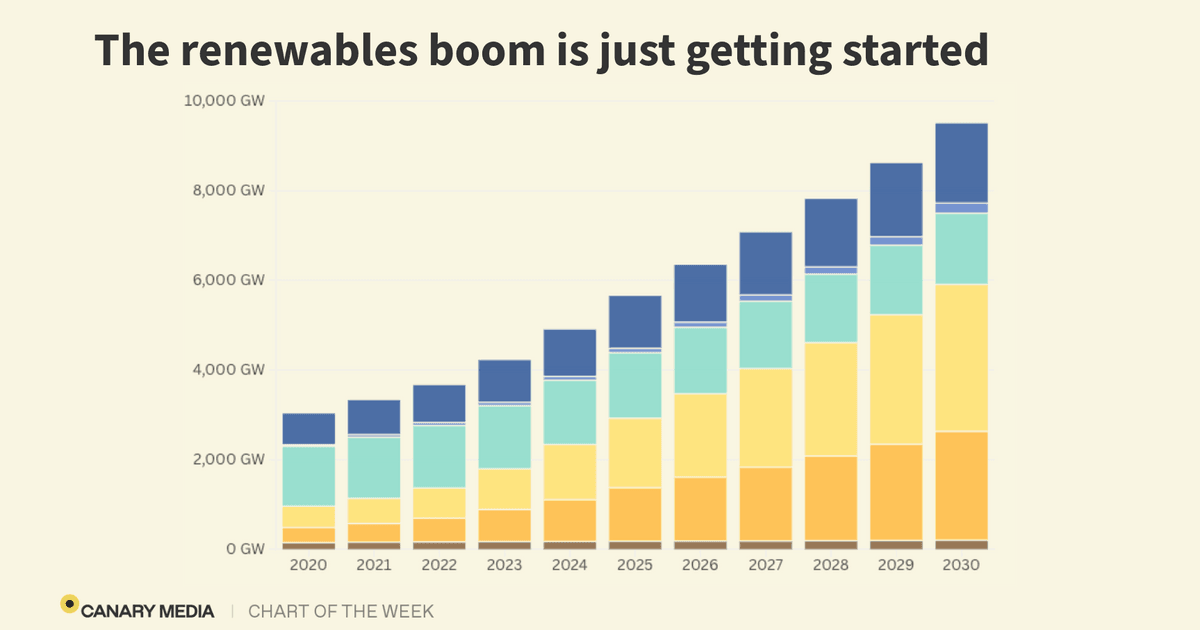
    Between 2025 and 2030, the world is expected to build nearly 4,600 gigawatts — or 4.6 terawatts, if you please — of clean power, according to a new report from the International Energy Agency.

    That’s nearly double the amount built over the previous five-year period, which was in turn more than double the amount built across the five years before that. Put differently, the growth has essentially been exponential.

    Solar is the driving force behind this expansion, which is key to transitioning the world away from planet-warming fossil fuels. It accounts for more than three-quarters of the expected increase in renewables between 2025 and 2030 — the result, IEA says, of not only low equipment costs but also solid permitting rules and a broad social acceptance of the tech.

    This solar boom will be almost equally split between utility-scale installations and distributed projects, meaning panels atop roofs or shade structures in parking lots, for example. Just over 2 TW of large-scale projects will be built compared to 1.5 TW of the smaller, distributed stuff, IEA predicts. The latter category is increasingly popular both in countries with rising electricity rates and in places with unreliable grids, like Pakistan, where residents are taking refuge in the affordable and stable nature of the tech.

    Continue Reading

  • Hydrogel Shows Promise as Safe Weight-Loss Option – Medscape

    1. Hydrogel Shows Promise as Safe Weight-Loss Option  Medscape
    2. Oral GLP-1 set for TGA submission  Medical Republic
    3. Orforglipron Pill: What We Know So Far About The New Weight Loss Pill  MedicalNewsToday
    4. Orforglipron Achieves Up to 12% Weight Loss in Obesity Phase 3 Study: Daily Dose  Patient Care Online
    5. Medical breakthrough in new weight-loss pill  MSN

    Continue Reading

  • Hydrogen Europe

    Hydrogen Europe

    German companies Daimler Truck and Hamburger Hafen und Logistik (HHLA) have signed a memorandum of understanding (MoU) with Japanese Kawasaki Heavy Industries to explore the development of a green liquid hydrogen supply chain via the Port of Hamburg to the European hinterland.

    As disclosed, the partnership intends to enable the import of liquid hydrogen from hydrogen-producing countries to Germany. Over the coming months, the companies are expected to assess the logistical requirements for transshipment and onward transport by road and rail.

    Andreas Gorbach, Member of the Board of Management, Daimler Truck, and Head of Truck Technology, said: “Europe will continue to rely on green energy imports in the future and hydrogen will play a key role here. The partnership is an important step in this direction, and we will need more initiatives like this to strengthen Europe’s position as a leader in liquid hydrogen. What makes it special is that our Mercedes-Benz GenH2 Truck can not only be powered by liquid green hydrogen – the truck can also transport it via road. And the best thing about it: Hydrogen allows us to increase the speed of decarbonization – and reduce the scope and cost of the already slow expansion of the power grid.”

    Click here to read more

    Continue Reading

  • Warning after Cornwall fireworks displays axed over safety fears

    Warning after Cornwall fireworks displays axed over safety fears

    A warning has been issued to those planning to set off fireworks after the cancellation of organised displays.

    Truro’s annual bonfire and firework display has been cancelled following concerns over traffic congestion, along with another display organised by Falmouth Fire Station.

    Cornwall Fire and Rescue Service said the event had been cancelled as it could not be delivered “to the standard of safety and organisation that our community rightly expects”.

    It urged those planning to set off fireworks at home to “only buy fireworks with a CE mark [those that comply with the current safety standards]”.

    Truro City Council said the decision to cancel the event on 6 November was made after consulting with the safety advisory group.

    Council clerk David Rodda said although the news would be “disappointing” for many residents, safety was the authority’s “highest priority”.

    The fire service warned “children, including babies and toddlers, suffer over half of all firework-related injuries”.

    It advised they should be “closely supervised” around sparklers, bonfires and fireworks, and those planning private events at home should “follow the instructions carefully and let your neighbours know in advance so they can keep pets indoors”.

    Continue Reading

  • Countries, regulators and partners urge a collaborative approach to advance safe and equitable AI in health

    Countries, regulators and partners urge a collaborative approach to advance safe and equitable AI in health

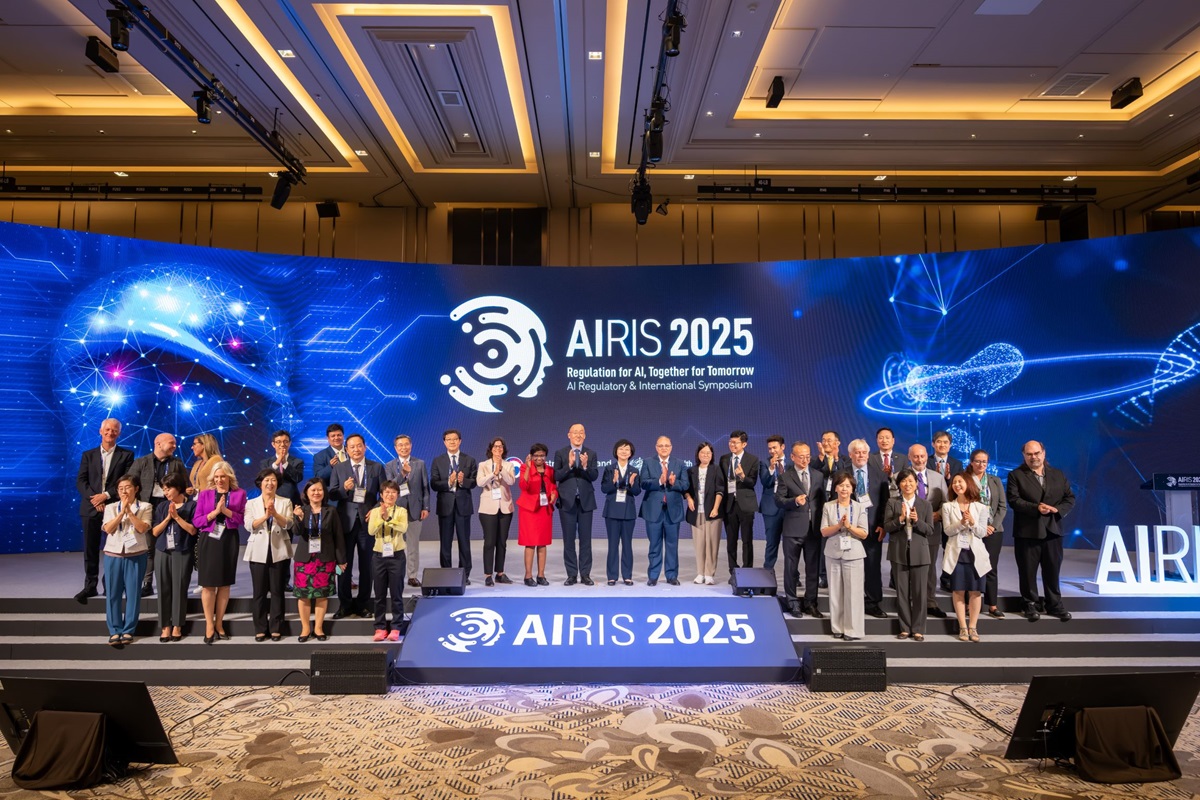
    Building on progress made at the AI Regulatory and International Symposium (AIRIS) in Seoul in 2024, the World Health Organization (WHO) and the Ministry of Food and Drug Safety (MFDS), Republic of Korea successfully co-hosted AIRIS 2025 in Incheon, in the Republic of Korea. The meeting brought together regulators, academia, industry and WHO to shape the responsible use of artificial intelligence (AI) in health. 

    “As AI becomes more sophisticated and its health applications expand, so must our efforts to make them safe, effective, ethical, and equitable,” said Dr Tedros Adhanom Ghebreyesus, WHO Director-General. 

    Held under the theme “Regulation for AI, Together for Tomorrow,”  AIRIS 2025 served as a global platform to discuss the safe, ethical, and effective use of AI in health. The symposium showcased leading regulatory frameworks and best practices for the use of AI across the medical product lifecycle. Participants underscored the importance of ensuring that AI systems are developed and deployed in ways that are safe, ethical, inclusive and accountable. 

    The Outcome Statement from AIRIS Incheon 2025 calls for: 

    • a lifecycle-based regulatory approach spanning medical product development, clinical trials, manufacturing, evaluation and post-market surveillance; 
    • risk-proportionate regulation tailored to national contexts and health system needs; 
    • stronger international collaboration to close gaps between countries and foster a trustworthy global AI ecosystem; and 
    • sustained global governance through AIRIS as a regular platform for dialogue among regulators, international organizations and technical partners. 

    By promoting transparency, equity and accessibility in AI governance, AIRIS 2025 reinforced its role as a key global platform to advance safe and responsible use of AI in health WHO and MFDS reaffirmed their commitment to continue co-hosting AIRIS in the coming years, expanding its reach and impact. 

    Continue Reading

  • Delayed inflation report expected to show US prices ticked up last month

    Delayed inflation report expected to show US prices ticked up last month

    WASHINGTON — Friday’s inflation report is likely to show that consumer prices worsened in September for the second straight month as President Donald Trump’s tariffs have lifted the cost of some groceries and other goods.

    The report on the consumer price index is being issued more than a week late because of the government shutdown, now in its fourth week. The Trump administration recalled some Labor Department employees to produce the figures because they are used to set the annual cost-of-living adjustment for roughly 70 million Social Security recipients.

    Friday’s inflation report will be the first comprehensive economic data to be released in more than three weeks and will attract intense interest from Wall Street and officials at the Federal Reserve. Fed officials are cutting their short-term interest rate to buoy the economy and hiring, but they are taking some risk doing so because inflation is still above their 2% target.

    The issues of affordability and the cost of necessities are gaining in political importance. Concerns over the costs of rent and groceries have played a key role in the mayoral race in New York City. And Trump, who has acknowledged that the spike in grocery prices under President Joe Biden helped him win the 2024 election, has been considering importing Argentine beef to reduce record-high U.S. beef prices, angering U.S. cattle ranchers.

    The cost of ground beef has jumped to $6.32 a pound, a record, in part because of tariffs on imports from countries such as Brazil, which faces a 50% duty. Years of drought that have reduced cattle herds have also raised prices.

    Friday’s report is forecast to show that inflation rose 3.1% in September from a year earlier, according to a survey of economists by data provider FactSet. That would be up from 2.9% in August and the highest in 18 months. On a monthly basis, inflation is projected to be 0.4% in September, the same as in August.

    Excluding the volatile food and energy categories, core inflation in September was likely 3.1% for the third straight month. On a monthly basis, core prices likely rose 0.3%, economists project, also for the third straight month.

    Such figures are unlikely to deter the Fed from cutting its key rate by another quarter-point when it meets next week, to about 3.9%. It would be the second cut this year and is driven by Fed Chair Jerome Powell’s concerns that hiring is weakening and poses a threat to the economy.

    Even as inflation has fallen sharply from its peak of 9.1% more than three years ago, it remains a major concern for consumers. About half of all Americans say the cost of groceries is a “major” source of stress, according to an August poll by The Associated Press-NORC Center for Public Affairs Research.

    And the Conference Board, a business research group, finds that consumers are still referencing prices and inflation in responses to its monthly survey on consumer confidence.

    Still, inflation has not risen as much as many economists feared when Trump first announced a sweeping set of tariffs. Many importers built up inventories of goods before the duties took effect, while Trump reduced many import taxes, including as part of trade deals with China, the United Kingdom, and Vietnam.

    And many economists, as well as some Fed officials, expect that the tariffs will create a one-time lift to prices that will fade by early next year. At the same time, inflation excluding the tariffs is cooling, they argue: Rental price increases, for example, are declining on average nationwide.

    Yet Trump is imposing tariffs in an ongoing fashion that could raise prices in a more sustained fashion.

    For example, the Trump administration is investigating whether to slap 100% tariffs on imports from Nicaragua over alleged human rights violations. The prospect of such steep duties is a major headache for Dan Rattigan, the co-founder of premium chocolate maker French Broad, based in Asheville, N.C.

    “We’ve been shouldering some significant additional costs,” Rattigan said. The United States barely produces any cocoa, so his company imports it from Nicaragua, the Dominican Republic, and Uganda. The imports from Nicaragua were duty-free because the country had a trade agreement with the United States, but now faces an 18% import tax.

    Cocoa prices have more than doubled over the past two years because of poor weather and blights in West Africa, which produces more than 70% of the world’s cocoa. The tariffs are an additional hit on top of that. Rattigan is also paying more for almonds, hazelnuts, and chocolate-making equipment from Italy, which has also been hit with tariffs.

    French Broad raised its prices slightly earlier this year and doesn’t have any plans to do so again. But after the winter holidays, “all bets are off … in what is a very unpredictable business climate,” Rattigan said.

    Continue Reading

  • The ancient art of Istanbul’s porters survives modern challenges in Turkiye | Gallery

    The ancient art of Istanbul’s porters survives modern challenges in Turkiye | Gallery

    On the streets of Istanbul in Turkiye, porters hauling massive sacks wrapped in white plastic—on their backs or in handcarts—represent an essential yet often invisible thread in the city’s cultural tapestry.

    This profession, called hamallık in Turkish, has survived from Ottoman times into the modern era.

    The practice thrives particularly in Istanbul’s historic commercial centres—the Egyptian Bazaar, the Grand Bazaar, and the Eminonu district—where traditional hans (commercial buildings) house workshops producing jewellery, textiles, and various goods.

    These porters remain vital because many centuries-old hans lack modern amenities like elevators and are nestled within narrow streets where vehicles cannot pass. In Eminonu, daytime traffic restrictions further heighten their importance.

    Using a semer—a traditional wooden and leather harness—porters can transport between 200 and 300 kilogrammes (440–660 pounds) of merchandise up to a han’s fifth floor. These specialised harnesses often become family heirlooms, passed from father to son, highlighting the profession’s hereditary nature. (The occupation remains predominantly male, with female porters being exceptionally uncommon.)

    The porters operate within organised divisions led by managers who ensure fair work distribution. Members earn daily wages based on their loads’ quantity and weight.

    This demanding profession requires remarkable physical strength and stamina, limiting entry to those capable of meeting its rigorous demands. Porters take considerable pride in their work and carefully select new members.

    Omer Okan, 60, has worked as a porter for 30 years, routinely carrying more than 500kg (1,100 pounds) on his back daily.

    The occupation offers little security. Okan explains that most porters lack insurance and earn nothing when ill or injured. Employment opportunities have diminished as major wholesale merchants relocate from Eminonu, where he works.

    “Some days we return home without earning any money,” he said.

    Okan inherited the profession from his grandfather and takes pride in his work, though he sometimes feels undervalued by the society that depends on his service.

    “When I started this profession, people treated us with great respect,” he said. “Now, no one in Turkiye has any respect for anyone else.”

    Continue Reading

  • Gold sales give surprise boost to UK retail in September – Reuters

    1. Gold sales give surprise boost to UK retail in September  Reuters
    2. British Retail Sales Rise Unexpectedly in September  US News Money
    3. EUR/GBP remains subdued near 0.8700 following UK Retail Sales, awaits PMI data  FXStreet
    4. UK’s retail sales rise 1.5% Y/Y in September  MSN
    5. BREAKING: UK Retail Sales rise 0.5% MoM in September vs. -0.2% expected  FXStreet

    Continue Reading

  • Prospective Study on Clinical Performance of Host DNA Methylation Assay for Triage in Women Who Are HPV-Positive — 4 Provinces, China, 2018–2021


    Introduction: Effective detection methods to distinguish between transient human papillomavirus (HPV) infection and clinically relevant high-risk HPV (hrHPV)-induced diseases are lacking, leading to excessive referrals and overtreatment. This study evaluated the clinical performance of a host DNA six-methylation marker panel (ASTN1, DLX1, ITGA4, RXFP3, SOX17, and ZNF671) to triage Chinese women who were hrHPV-positive.


    Methods: This prospective multicenter study enrolled women aged 21–65 years with positive hrHPV testing. hrHPV genotyping, cytology, colposcopy, and the six-methylation marker assay were performed. High-grade cervical lesions were defined as histologically confirmed CIN2+. Forest plots analyses were performed to assess the triage performance of the methylation assay.


    Results: Of the 1,806 patients recruited from 4 hospitals in China, 1,659 were included. The methylation assay positivity rates were 7.5%, 73.9%, 88.9%, and 100% for CIN1, CIN2, CIN3, and cervical cancer, respectively. The six-methylation marker assay demonstrated sensitivities of 82.2% and 90.3% and specificities of 92.4% and 84.1% for CIN2+ and CIN3+, respectively, which were higher than those of HPV genotype testing and cytology (≥ASCUS) screening; the areas under the curve for CIN3+ detection were 0.87 (0.84–0.90), 0.68 (0.64–0.72), and 0.64 (0.60–0.69), respectively. The six-methylation marker assay showed the lowest colposcopy referral rate (24.2%) and required the fewest referrals for detection, with 1.32 and 2.39 referrals per CIN2+ and CIN3+ cases, respectively. In women aged <30 years, the six-methylation marker assay had the highest specificity for CIN2+ (95.7%) and a sensitivity and specificity for CIN3+ of 80.8% and 88.9%, respectively. It had the lowest referral rate (17.17%) and colposcopy referrals, with 1.24 and 2.43 per CIN2+ and CIN3+ cases, respectively.


    Conclusions: The host DNA six-methylation marker assay is a reliable triage tool for women who are hrHPV-positive, providing evidence supporting the application of methylation markers in China.


    Cervical cancer is the second most common gynecological malignancy that causes death among female patients, with approximately 529,800 new cases and 275,100 deaths annually worldwide. Notably, China accounts for 28% of global cases and 50% of new cases in Asia each year, representing 25%–33% of the annual deaths in Asia (1). Persistent infection with hrHPV is considered the primary cause of cervical cancer and its precancerous lesions. However, HPV genotype testing demonstrates a low specificity of only 31.8% for CIN3 and worse (2). This is because most HPV infections are transient and clear naturally, especially in women younger than 30 years, who have regression rates of 60% (3). Therefore, given China’s large population and the substantial number of women who test HPV-positive annually, a reliable triage tool for high-grade intraepithelial lesions (HSIL) is urgently needed.


    Ideal triage strategies require a balance between safety, sensitivity, specificity, and screening-related burden; however, a consensus on the optimal triage test is lacking. Various triage methods have been proposed, including p16/Ki-67 cytological dual staining and methylation assays. While p16/Ki-67 staining demonstrates 90% sensitivity for CIN3+, its limited specificity (42%) fails to reduce colposcopy referral rates (4). A meta-analysis showed that the sensitivity and specificity of all methylation assays for CIN3+ were 0.708 and 0.780, respectively (5). Among these, a methylation panel comprising six markers (ASTN1, DLX1, ITGA4, RXFP3, SOX17, and ZNF671) is suitable for application in developing countries due to its superior specificity (88.7%–94.6%) for CIN3+ (3,6). However, data for this methylation panel come only from clinical trials conducted in Western countries, and the prevalence and distribution of HPV genotypes in China differ from those in Western countries, with significantly higher infection rates of HPV52 and HPV58. Furthermore, the applicability of the positive threshold of this methylation panel to Chinese women and differences in the expression of methylation markers are unclear.


    Therefore, this study hypothesized that the methylation pattern in China might be distinct and conducted a prospective multicenter study to evaluate the clinical performance of a host DNA six-methylation marker panel in Chinese women who were hrHPV-positive. This was the first prospective multicenter study in China with a large sample size to evaluate the feasibility of the six-methylation marker assay as a triage tool for hrHPV-positive women.


    Overall, 1,806 women from the colposcopy clinics of 4 hospitals across China underwent HPV genotype testing, cytological screening, methylation assays, and colposcopy between August 2018 and April 2021. The participating institutions included Peking University First Hospital, Nanjing Drum Tower Hospital, Hunan Provincial Maternal and Child Health Care Hospital, and The First Affiliated Hospital of Anhui Medical University, representing 4 different provinces. The inclusion criteria were as follows: 1) women aged 21–65 years with an intact cervix, 2) hrHPV-positive status with available cervical cytology results, and 3) cervical lesions confirmed through colposcopy biopsy. The exclusion criteria were as follows: 1) pregnant, maternal, or lactating women; 2) unwillingness to participate or inability to provide informed consent; and 3) a history of cervical cancer. This study received ethical approval from all 4 participating hospitals (ethics approval numbers: JNFL2020001, 2020-180-04, JNFL2018001, and PJ 2021-02-06).


    Samples were obtained by experienced gynecologists using a cervical brush. Cytology screening employed the liquid-based cytology (LBC) method, and the diagnosis was classified into 5 levels according to the 2014 Bethesda System (TBS) criteria. HPV genotype testing was performed using fluorescence quantification PCR, and results were categorized into 2 groups: HPV16/18-positive and positive for the other 12 hrHPV genotypes, i.e., “other-hrHPV positive.” Host DNA from LBC samples was heavy sulfite-transformed for methylation analyses. The methylation panel comprised 6 gene markers: DLX1, ASTN1, ITGA4, RXFP3, SOX17, and ZNF671. All procedures were performed according to standardized instructions. ZNF671 was assigned a score of 3 points, while the other 5 methylation markers were assigned 1 point each. The six-methylation marker assay was considered positive if the cumulative score across all 6 markers was ≥3. All HPV genotyping and methylation assays were conducted in a central laboratory. All women underwent colposcopy, and cervical biopsies were performed based on colposcopic impressions. Cervical lesions were histologically classified as CIN1/2/3 or cervical cancer (CC), while those with normal biopsy results or colposcopic impressions were categorized as “normal.”


    This study evaluated 5 triage strategies for detecting CIN2+ and CIN3+ in hrHPV-positive women using histopathology as the gold standard. The evaluated strategies were as follows: 1) HPV16/18 genotyping; 2) cytology (≥ASCUS); 3) six-methylation marker assay; 4) six-methylation marker assay and HPV16/18 co-screening; and 5) six-methylation marker assay and cytology (≥ASCUS) co-screening. The sensitivity, specificity, positive predictive value (PPV), negative predictive value (NPV), area under the receiver operating characteristic curve (AUC), and forest plots were calculated for each method. Statistical analyses were performed using SPSS (version 26.0, IBM Corp., NY, USA) and R (version 4.1.2, R Core Team, Vienna, Austria). Independent-sample t-tests were used to compare normally distributed continuous data, whereas nonparametric continuous variables were analyzed using the Mann-Whitney test. Categorical variables were assessed using the chi-squared or Fisher’s exact test. To compare methylation marker scores among different CIN groups that followed a non-normal distribution, this study employed the Kruskal-Wallis test, followed by Dunn’s test for pairwise comparisons. Two-sided P<0.05 were considered significant.


    Finally, 144 cases did not meet the inclusion criteria, and 3 cases were excluded due to unsuccessful methylation detection, resulting in 1,659 cases available for final analysis, as shown in Figure 1. Assessment using a mixed-effects model showed no significant center effect (P>0.05) on baseline characteristics or CIN2+/CIN3+ detection rates. Data from all centers were therefore pooled for final analysis. The study flowchart is presented in Figure 1.


    Figure 1. 

    Study flowchart of women who were hrHPV-positive.


    Abbreviation: HPV=human papillomavirus; TCT=ThinPrep Cytologic Test; CIN=cervical intraepithelial neoplasia.


    The mean patient age was 41.3 years (range: 21–65). Histopathological findings included 320 (19.3%), 184 (11.1%), 162 (9.8%), and 24 (1.4%) cases of CIN1, CIN2, CIN3, and CC, respectively. Among all cases, 37.1% (259/690) were HPV16/18-positive. The methylation assay demonstrated positivity rates of 7.5% (24/320), 73.9% (136/184), 88.9% (144/162), and 100% (24/24) for CIN1, CIN2, CIN3, and CC, respectively. The methylation scores increased significantly with the severity of cervical lesions (P<0.05). Characteristics of the CC screening and methylation assays are presented in Table 1.


    Table 1. 
    Cervical screening and six-methylation marker assay for cervical precancerous lesions and cervical cancer.


    The 3 most frequently positive methylation markers in the CIN2+ and CIN3+ groups were ZNF671 (65.8% vs. 88.2%), DLX1 (43.5% vs. 68.3%), and ASTN1 (37% vs. 61.3%). In the CIN1 group, DLX1 showed the highest positivity rate (21.6%). However, as the cervical lesions progressed in severity from CIN1 to CIN2, the positive methylation rate of ZNF671 increased dramatically by 59.2%, which was substantially higher than that of the other markers (Supplementary Table S1). The proportion of samples testing positive for all 6 markers increased from 2.3% in CIN1 to 11.4% in CIN2 and 24.1% in CIN3+. The mean numbers of positive markers in the CIN2, CIN3, and CC groups were 2.5, 3.5, and 4.6, respectively.


    The six-methylation marker assay as a single triage tool demonstrated a sensitivity of 82.2% for CIN2+ and a specificity of 92.4%. This sensitivity was significantly higher than that of HPV16/18 genotyping but comparable to that of cytology (≥ASCUS), while its specificity was the highest among all 3 methods. For CIN3+, the six-methylation marker assay achieved a sensitivity of 90.3% and a specificity of 84.1% (Table 2).


    Table 2. 
    Performance of different triage tools for the detection of CIN2+/CIN3+ among women who were hrHPV-positive.


    The AUCs of HPV16/18 genotyping, cytology (≥ASCUS), and the six-methylation marker assay for CIN2+ and CIN3+ were 0.61 and 0.64, 0.69 and 0.68, and 0.87 and 0.87, respectively. Combining the six-methylation marker assay with HPV16/18 genotyping (≥ one positive) as a triage tool for CIN2+/3+ resulted in a higher sensitivity but a lower specificity compared to HPV16/18 genotyping alone. The relative sensitivity and specificity with HPV16/18 genotyping and cytology (≥ASCUS) as the reference strategy for CIN2+ and CIN3+ are shown in Figures 2 and 3.


    Figure 2. 

    Forest plots showing the relative sensitivity and specificity for CIN2+ detection of different triage tools compared with HPV16/18 genotyping and cytology (≥ASCUS). The relative (A) sensitivity and (B) specificity of different triage tools compared with HPV16/18 genotyping; The relative (C) sensitivity and (D) specificity of different triage tools compared with cytology (≥ASCUS).


    Abbreviation: CIN2+=cervical intraepithelial neoplasia grade 2 or worse; HPV=human papillomavirus; ASCUS=atypical squamous cells of undetermined significance.


    Figure 3. 

    Forest plots showing the relative sensitivity and specificity for CIN3+ detection of different triage tools compared with HPV 16/18 genotyping and cytology (≥ASCUS). (A) The relative sensitivity of different triage tools compared with HPV 16/18 genotyping; (B) The relative specificity of different triage tools compared with HPV 16/18 genotyping; (C) The relative sensitivity of different triage tools compared with cytology (≥ASCUS); (D) The relative specificity of different triage tools compared with cytology (≥ASCUS).


    Abbreviation: CIN2+=cervical intraepithelial neoplasia grade 2 or worse; HPV=human papillomavirus; ASCUS=atypical squamous cells of undetermined significance.


    This study further analyzed the efficacy of different triage tools in women aged <30 years. The DNA methylation positivity rate among women who were <30 years of age and hrHPV-positive was 17.2% (51/297), which was lower than that among women >30 years of age (25.8%). The combination of the six-methylation marker assay and cytology had the highest sensitivity for CIN2+ (89.2%). However, the six-methylation marker assay showed the highest specificity (95.7%), with relative specificities of 1.34 and 1.8 compared to HPV genotyping and cytology (≥ASCUS), respectively. For CIN3+ detection, the six-methylation marker assay demonstrated relatively good sensitivity and specificity, with values of 80.8% and 88.9%, respectively (Supplementary Table S2). Notably, it also demonstrated the highest specificity among the 5 triage strategies in the overall cohort for the detection of CIN2+ or CIN3+, particularly in the subgroup analysis of women <30 years of age for CIN2+ (Table 2 and Supplementary Table S2).


    In addition, the six-methylation marker assay demonstrated the lowest colposcopy referral rate (24.23%) and the fewest referrals required for detection, with 1.32 and 2.39 referrals per CIN2+ and CIN3+ cases, respectively. In contrast, HPV16/18 genotyping and cytology (≥ASCUS) required approximately 3 referrals each per CIN2+ case, and 5.02 and 5.61 referrals per CIN3+ case, respectively. In the subgroup analysis of women <30 years of age, the six-methylation marker assay also demonstrated the lowest colposcopy referral rates (17.17%) and colposcopy referrals (Supplementary Table S3).




    Continue Reading