Category: 3. Business

  • The impact of interest: How loan rates shape firm investment

    Central banks have moved interest rates sharply in recent years, but the link from policy rates to corporate investment remains a black box. Do cheaper loans actually cause firms to invest more? If so, by how much and for which type of firms? Aggregate evidence indicates large effects on investment (e.g. Christiano et al. 2005) and highlights the role of lower credit costs (e.g. Gertler and Karadi 2015). However, these responses encompass many factors, including indirect effects such as demand, making it difficult to isolate the direct impact of financing costs. For policy purposes, it is crucial to pin down the size of this direct channel and the heterogeneity that makes transmission state-dependent over time (Gnewuch and Zhang 2025). Additionally, recent models emphasise the importance of the direct borrowing cost channel for heterogeneous households (Auclert et al. 2020) and firms (Koby and Wolf 2020).

    A survey approach: Confronting firms with hypothetical loan rate changes

    In a new paper (Best et al. 2025), we present novel evidence on the micro and macro effects of interest rates on investment. Using hypothetical vignettes, we elicit firms’ investment adjustments to loan rate changes, thereby isolating the direct borrowing cost channel. Open-ended responses reveal why some firms do not adjust and the extent to which the borrowing cost channel features in managers’ views of monetary policy. Additional vignettes, survey questions, and linked financial statements enrich the analysis. By embedding this in a large German firm panel, we can compare vignette responses with firms’ behaviour around actual monetary policy shocks. We use the ifo Business Survey, a monthly survey of a representative sample of German firms typically answered by C-level executives (Hennrich et al. 2023). Our main sample includes more than 3,200 firms.

    Firms’ investment adjustment to loan rate changes

    In December 2023, we asked firms to imagine a reduction in loan rates of 0.5, 1, 3, or 4 percentage points lasting two years, while holding everything else constant. This setup isolates the causal effect of loan rates – the key marginal cost of external finance for most German firms – on investment. The rate change applies to loans of all maturities and is defined relative to firms’ current expected rates. At the time, the ECB’s main refinancing rate was 4.5%, which was expected to remain elevated over the next two years. Panel A of Figure 1 shows the average adjustment to firms’ investment plans over the subsequent two years, expressed in percent.

    Figure 1 Semi-elasticity of investment with respect to loan rate changes

    Notes: Panel A: average investment adjustment in percent following hypothetical change in loan rate; Investment adjustment winsorized at 100%; sample restricted to firms that initially planned to invest in 2024 and 2025. Green dot shows the response of aggregate corporate investment in the first year after a monetary policy shock (with shaded 90% confidence interval), estimated using local projections and high-frequency identified monetary policy shocks (Jarociński and Karadi 2020); response scaled to a 1 percentage point reduction in firms’ cost of external financing. Panel B: share of firms adjusting their investment plans following hypothetical change in loan rate for firms with and without existing investment plans for the respective year.

    A one percentage point decrease in the loan rate raises planned investment by approximately 6% in the following year and by about 7% the year after that. A similar response is observed for a half-percentage point cut, rising to 12-15% for reductions in loan rates of 3-4 percentage points. This implies a lower elasticity for larger rate changes. In comparison, the overall monetary policy effect on corporate investment – capturing additional channels – amounts to about 15% in the first year following a shock that lowers borrowing costs by 1 percentage point. Thus, the total monetary policy effect is roughly twice the size of the impact of borrowing costs alone.

    There is substantial heterogeneity underlying the average investment adjustment. While most firms do not adjust investment at all, adjusting firms significantly revise plans by about 18-30%. Among firms initially planning to invest, the share of adjusters ranges from 30% for a 0.5 percentage point cut to 49% for a 4 percentage point cut. This percentage is much lower among firms without investment plans, which is consistent with fixed adjustment costs (see Panel B of Figure 1).

    We ask firms with existing investment plans that do not adjust their investment to explain their reasoning in an open-ended text format. Two narratives stand out. First, about 37% of firms argue that they have sufficient internal funds and prefer to use them for investment, in line with the pecking order theory (Myers 1984). Second, about 39% of firms report that they are not at the margin to adjust their investment plans. This could reflect either a low marginal return on capital, which is consistent with a lack of additional profitable investment opportunities, or a high marginal return on capital, in which case investment is driven by capacity or technological requirements rather than financing costs.

    Further heterogeneity analyses confirm the key role of the firms’ financial conditions for their interest rate sensitivity. Firms relying more on external funds, that have recently negotiated loans with banks, or that report financial constraints are more likely to increase investment following a reduction in the loan rate. Additionally, firms facing shortages of skilled labour and those operating in industries with more durable capital goods adjust their investment more strongly.

    In a follow-up vignette, we elicit how firms adjust their required returns on new investments, or ‘hurdle rates’, in response to changes in the loan rate. Consistent with prior evidence, hurdle rates are sticky (Graham 2022, Gormsen and Huber 2023): most firms do not adjust their hurdle rates after a loan rate cut. Although hurdle rate adjustment is strongly correlated with investment adjustment, firms are more likely to adjust investment than hurdle rates. This suggests that the insensitivity of hurdle rates to transitory loan rate changes does not necessarily impede investment.

    The macroeconomic relevance of the direct borrowing cost channel

    We assess the role of the direct borrowing cost channel for monetary policy using two approaches. First, in a later survey wave, we ask firms an open-text question about the discussions and considerations that typically arise in their investment planning when the ECB changes its key rate. Notably, more than half of the firms do not discuss the implications of monetary policy changes for their investment plans. A quarter refer to concrete transmission channels, with one dominating: 83% cite the direct interest rate channel via external financing, suggesting a crucial role of the mechanism we consider in our vignette for aggregate dynamics. Twelve percent mention changes in demand due to interest rate changes, and 11% refer to general-equilibrium effects.  Both are especially common among firms with high business cycle attachment, consistent with models of rational inattention.

    Figure 2 Perceived channels of monetary policy

    Note: Hand-coded perceived channels of monetary policy elicited in an open-ended question. Subsample of firms that clearly indicate which channel(s) they have in mind.

    Second, we leverage the survey’s panel dimension and examine whether responses to the one-time vignette regarding changes in borrowing costs predict dynamics following monetary policy shocks. Specifically, we analyse the monthly output dynamics of manufacturing firms in our sample in response to high-frequency identified monetary policy shocks over the past 23 years (Jarociński and Karadi 2020). Figure 3 shows that firms that do not adjust investment in the vignette also exhibit lower output responses after monetary policy shocks. This relationship is robust to many potential confounders. This underscores the importance of firms’ investment sensitivity to interest rates for the monetary transmission mechanism.

    Figure 3 Production response to monetary policy shock by interest sensitivity

    Notes: Impulse response functions at monthly frequency of cumulative production to a 1 pp monetary policy shock (Jarociński and Karadi 2020) estimated using local projections over 01/1999-12/2021. The sample is balanced over the horizons. Orange: firms adjusting investment in the vignettes. Blue: firms not adjusting investment in the vignettes. The sample is restricted to manufacturing firms that planned to invest in 2024 and 2025. Shaded areas represent the 90% confidence level. Standard errors are two-way clustered at the firm and the 2-digit-industry-by-month level.

    Policy implications

    There are at least three important policy implications. First, many firms do not adjust investment after borrowing costs decreases because they report having sufficient internal funds. In periods of heightened uncertainty (e.g. geopolitical risk), firms build precautionary cash buffers, which further reduces their sensitivity to loan rate changes. Second, firms’ sensitivity to borrowing costs decreases with the size of the change (e.g. due to managerial constraints). Thus, monetary policy becomes less effective when it has to counter weak demand. Lastly, many firms do not have the general-equilibrium effects of monetary policy in mind, consistent with ‘GE neglect’. As a result, firms’ demand may be lifted by monetary policy without managers linking it to policy, making transmission slower.

    References

    Auclert, A, M Rognlie and L Straub (2020), “Micro jumps, macro humps: Monetary policy and business cycles in an estimated HANK model”, NBER Working Paper 26647.

    Best, L, B Born M Menkhoff (2025), “The impact of interest: Firms’ investment sensitivity to interest rates”, CEPR Discussion Paper 20695.

    Christiano, L J, M Eichenbaum and C L Evans (2005), “Nominal rigidities and the dynamic effects of a shock to monetary policy”, Journal of Political Economy 113(1): 1–45.

    Gertler, M and P Karadi (2015), “Monetary policy surprises, credit costs, and economic activity”, American Economic Journal: Macroeconomics 7(1): 44–76.

    Gnewuch, M and D Zhang (2025), “Lumpy investment matters for the (heterogeneous) transmission of monetary policy”, VoxEU.org, 27 January.

    Gormsen, N J and K Huber (2023), “Firms’ required returns to capital and the missing investment puzzle”, VoxEU.org, 10 August.

    Graham, J R (2022), “Presidential address: corporate finance and reality”, Journal of Finance 77(4): 1975-2049.

    Hennrich, J, S Sauer and K Wohlrabe (2023), “Who reports the mood in German boardrooms? Evidence from the ifo business survey”, CESifo Working Paper 10571.

    Jarociński, M and P Karadi (2020), “Deconstructing Monetary Policy Surprises—The Role of Information Shocks”, American Economic Journal: Macroeconomics 12(2): 1-43.

    Koby, Y and C K Wolf (2020), “Aggregation in heterogeneous-firm models: Theory and measurement”, mimeo, Princeton University.

    Myers, S C (1984), “Capital structure puzzle”, Journal of Finance 39: 575-592.
    Continue Reading

  • Car production slumps to a 73-year low after JLR cyber-attack | Automotive industry

    Car production slumps to a 73-year low after JLR cyber-attack | Automotive industry

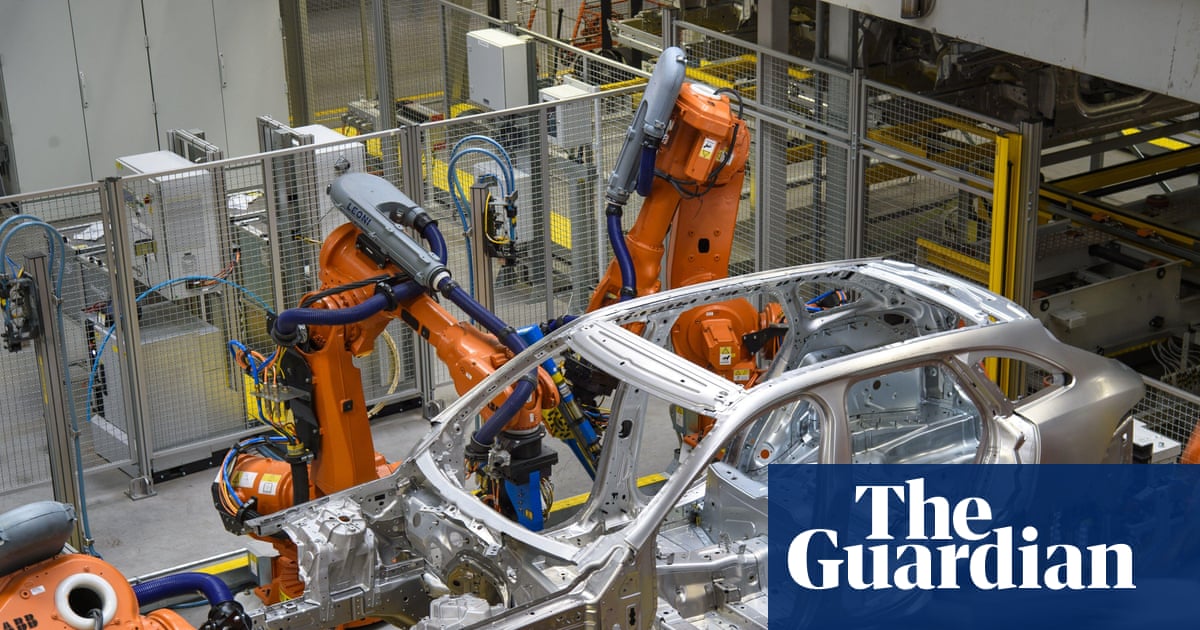
    Car production in British factories slumped in September to the lowest level for the month since 1952 after Jaguar Land Rover was hit by an unprecedented cyber-attack.

    JLR, Britain’s largest automotive employer, was forced to shut down all its computer systems at the start of September and was unable to make another car until early October.

    That contributed to a 27% slump in total UK car production in September compared with the same month a year earlier, according to the Society of Motor Manufacturers and Traders (SMMT), a lobby group.

    Car output dropped to 51,100, from 70,000 in September 2024, while output for the first nine months of the year was down by 8%. Van production has also slumped by nearly 40% so far this year, after the closure by the Vauxhall owner Stellantis of its factory in Luton.

    “September’s performance comes as no surprise given the total loss of production at Britain’s biggest automotive employer after a cyber incident,” said Mike Hawes, the SMMT’s chief executive. “While the situation has improved, the sector remains under immense pressure.”

    Automotive industry bosses and workers had been talking for more than a year of a “low-volume crisis” afflicting the sector, even before the JLR hack. The global automotive industry is under pressure in part because of a huge increase in competition from China and the need to invest in upgrading factories to produce electric cars. At the same time, higher interest rates and inflation have dented consumer appetite for new cars.

    The JLR hack added to the industry’s woes. The Cyber Monitoring Centre, a non-profit group, this week estimated that it has been the most costly hack in British history because of its widespread effects on the UK supply chain. The group estimated costs to the UK economy of about £1.9bn.

    Suppliers have been able to restart work as JLR goes through the careful job of ramping up demand and avoiding further costly disruption. One manufacturing executive said the ramp-up has gone better than expected, thanks in part to planning done earlier by JLR in partnership with larger suppliers.

    The car industry is also bracing for further disruption if a Dutch government takeover of the Chinese-owned chipmaker Nexperia affects supply. Germany’s car industry this week warned that “the situation could lead to considerable production restrictions in the near future”, after China retaliated by banning exports of finished products.

    The sales slump has driven the UK industry into repeated – and unwanted – comparisons with the 1950s, when British citizens still faced rationing after the second world war and the UK market was dominated by the British Motor Corporation, formed from the merger of Austin and Morris.

    Continue Reading

  • Samsung Electronics Launches Samsung Week 2025 Across 65 Countries – Samsung Global Newsroom

    Samsung Electronics Launches Samsung Week 2025 Across 65 Countries – Samsung Global Newsroom

    Samsung Electronics has launched Samsung Week 2025 across 65 countries, running from October 20 to November 1.1 This is an annual event held ahead of the company’s founding anniversary to thank customers for their ongoing support.

    Now in its sixth year, Samsung Week is the company’s largest promotional event — offering customers exclusive offers on a wide range of products through Samsung.com.

    Originally held in 32 countries, the event has since doubled its global reach and achieved more than fourfold growth in sales. With the addition of mobile live commerce and region-specific social media initiatives, Samsung has enhanced the customer experience and established Samsung Week as its flagship global promotion.

    This year’s theme, “Where Innovation Begins: From You,” emphasizes the company’s belief that customers are the driving force behind its innovation.

    Based on analyses of customer purchases this year, Samsung Week 2025 highlights2:

    • Best-selling products of the year such as the Galaxy S25 series, QLED TVs and Bespoke AI refrigerators
    • Most-searched products such as Galaxy Z Fold7, Music Frame, and the Bespoke AI Laundry Combo
    • Most registered products on SmartThings
    • Bundled products customized for diverse customer lifestyles

    Alongside the event, a ‘Personalized Product Recommendation’ feature has been newly introduced. When logged in with a Samsung account, customers receive tailored recommendation that consider factors such as product replacement cycles, purchase trends among users with similar devices and available rewards — providing a more convenient and personalized shopping experience.

    Frequent customers can enjoy even greater benefits during Samsung Week 2025. Depending on the region, they can redeem accumulated points at higher values, receive larger discounts for registering more products to their Samsung accounts and take advantage of trade-in offers for eligible products.3

    Additional benefits include Samsung Rewards — earned based on the products purchased and total amount spent and usable like cash on Samsung.com — as well as Samsung Care+ for professional product care.

    A Samsung Week character digital sticker pack, inspired by the diverse experiences of customers around the world, is available for free download on Samsung.com during the event period.

    Highlighting 56 years of customer-centric innovation, people can experience the campaign on large digital billboards in iconic locations worldwide, including Times Square in New York City and Piccadilly Circus in London.

    For more details about Samsung Week 2025 in each region, visit Samsung.com.

    ▲ Samsung Week 2025 campaign in New York City
    ▲ Samsung Week 2025 campaign in London

    Continue Reading

  • When AI ‘wokeness’ collides with safety – Politico

    1. When AI ‘wokeness’ collides with safety  Politico
    2. A statement from Dario Amodei on Anthropic’s commitment to American AI leadership  Anthropic
    3. Silicon Valley’s new clash: missionaries versus mercenaries  The Times
    4. Netflix earnings, Anthropic’s ‘woke’ problem, Travis Kelce’s Six Flags stake and more in Morning Squawk  CNBC
    5. Efforts by the tech industry to reduce AI’s pervasive bias stall as Trump pushes to end “woke AI”  Milwaukee Independent

    Continue Reading

  • Anthropic and Google Cloud strike blockbuster AI chips deal

    Anthropic and Google Cloud strike blockbuster AI chips deal

    Unlock the Editor’s Digest for free

    Anthropic has reached a deal to secure access to 1mn Google Cloud chips to train and run its artificial intelligence models, increasing its ties to one of its largest investors.

    Google, which has invested more than $3bn in Anthropic, will bring more than a gigawatt of AI computing capacity online for the start-up next year using its custom chips known as Tensor Processing Units, or TPUs. 

    Anthropic said the deal was worth tens of billions of dollars, but would not give a specific estimate.

    “Anthropic and Google have a long-standing partnership, and this latest expansion will help us continue to grow the compute we need to define the frontier of AI,” said Krishna Rao, Anthropic’s chief financial officer.

    “This expanded capacity ensures we can meet our exponentially growing demand while keeping our models at the cutting edge of the industry,” he added.

    The agreement follows a flurry of deals by Anthropic’s chief rival OpenAI to secure chips and computing capacity from Nvidia, AMD, Broadcom, Oracle and Google, estimated to be worth about $1.5tn.

    The circular arrangements between companies that act as suppliers, investors and customers of each other, combined with booming AI valuations, have added to concerns about a bubble in the sector.

    AI model developers have accelerated their fundraising and dealmaking for fear of falling behind in the arms race to secure enough computing power to remain competitive and meet customer demand.

    Anthropic raised $13bn during a funding round that closed in September, lifting its valuation to $183bn. It remains dwarfed by OpenAI’s $500bn valuation.

    San Francisco-based Anthropic, which makes the Claude chatbot, uses three different chip platforms to train and run its AI systems: Amazon’s Trainium, Nvidia’s GPUs and Google’s TPUs.

    The start-up said the diversified approach meant “we can continue advancing Claude’s capabilities while maintaining strong partnerships across the industry”.

    The arrangement pits Amazon, Nvidia and Google against each other in the competition for huge contracts to supply computing power.

    “Anthropic’s choice to significantly expand its usage of TPUs reflects the strong price-performance and efficiency its teams have seen with TPUs for several years,” Thomas Kurian, chief executive at Google Cloud, said in a statement.

    Amazon is the start-up’s “primary” cloud provider and a large investor in the company. It has invested $8bn in Anthropic and is building a 2.2GW data centre cluster in New Carlisle, Indiana, to help train its AI models.

    Earlier this year it weighed investing more in the start-up to deepen its relationship with the model developer, the Financial Times reported. 

    Anthropic said that it remained committed to its partnership with Amazon.

    Continue Reading

  • US FDA approve GSK's blood cancer treatment – Reuters

    1. US FDA approve GSK’s blood cancer treatment  Reuters
    2. FDA delivers split decision on GSK’s blood cancer drug Blenrep, approving its use in some cases  statnews.com
    3. Belantamab Mafodotin Can Help Fill Access Gaps in BCMA-Directed Myeloma Therapy: Hearn Jay Cho, MD, PhD  AJMC
    4. Blenrep approved by US FDA for use in treatment of relapsed/refractory multiple myeloma  Stock Titan
    5. Cancer Drug Pulled From the Market Regains FDA Approval  MedPage Today

    Continue Reading

  • Intel beats third-quarter profit estimates as cost cuts, investments pay off – Reuters

    1. Intel beats third-quarter profit estimates as cost cuts, investments pay off  Reuters
    2. With an Intel recovery underway, all eyes turn to its foundry business  TechCrunch
    3. Intel’s Q3 results show signs of recovery — and restraint  qz.com
    4. Intel Stock Soars as Chipmaker Swings to a Profit  Investopedia
    5. Intel Corp reports results for the quarter ended September 30 – Earnings Summary  TradingView

    Continue Reading

  • The mysterious ‘scam empire’ owner accused of stealing $14bn in crypto

    The mysterious ‘scam empire’ owner accused of stealing $14bn in crypto

    Jonathan HeadSouth East Asia correspondent

    Prince Group/Getty images Chen Zhi alongside a company buildingPrince Group/Getty images

    Just 37 years old, Chen Zhi is accused of being “the mastermind behind a sprawling cyber-fraud empire… a criminal enterprise built on human suffering”.

    With his wispy goatee beard and baby-faced features, he looks even younger than he is. He has certainly become very wealthy, very quickly.

    Last week the US Department of Justice charged him with running scam compounds in Cambodia that stole billions in cryptocurrency from victims all over the world. The US Treasury Department has confiscated more than $14bn (£10.5bn) worth of bitcoin that it says is linked to him – it said this was the largest ever crypto-currency seizure.

    His own company, the Cambodian Prince Group, describes him on its website as “a respected entrepreneur and renowned philanthropist” whose “vision and leadership have transformed Prince Group into a leading business group in Cambodia that adheres to international standards”. The BBC has contacted the Prince Group for comment.

    So, how much do we know about Chen Zhi, the mysterious figure allegedly running a scam empire?

    A startling rise

    Brought up in Fujian province in south-eastern China, he started with a small, and apparently not very successful internet gaming company, and moved to Cambodia in either late 2010 or 2011, where he began working in the then-booming real estate sector.

    His arrival coincided with the start of a speculative property boom in Cambodia. It was fuelled by the availability of large tracts of land expropriated by powerful, politically-connected figures and by a flood of Chinese capital.

    Some of it was pouring in on the tail end of Xi Jinping’s Belt and Road Initiative to export Chinese-made infrastructure, and some of it was from individual Chinese investors seeking more affordable alternatives to China’s overheated property market. The number of Chinese tourists visiting Cambodia was also rising fast.

    The skyline of the capital Phnom Penh changed dramatically. The characterful, low-rise cityscape of mustard-coloured French colonial mansions was transformed into another Asian high-rise forest of glass and steel towers.

    The transformation of Sihanoukville, a once quiet little seaside resort, was even more extreme. It was not just Chinese holidaymakers and property speculators heading there, but also gamblers – gambling is illegal in China.

    New casinos sprang up, alongside gaudy, luxury hotels and apartment blocks. There was plenty of money to be made.

    Even so, Chen Zhi’s trajectory was startling.

    In 2014 he became a Cambodian citizen, giving up his Chinese nationality. This enabled him to buy land in his own name, but required a minimum investment or donation to the government of $250,000.

    It was never clear where Chen Zhi’s money came from. When applying for a bank account on the Isle of Man in 2019 he listed an unnamed uncle who he said had given him $2m to start his first property company in 2011, but no evidence for this was ever provided.

    Getty Images This photo taken on April 8, 2025 shows people walking past Chinese restaurants and shops in Sihanoukville. Once a collection of sleepy fishing villages, vast Chinese investments have transformed the Cambodia's Sihanoukville into a half-finished gambling resort with signs everywhere in Mandarin.Getty Images

    Sihanoukville has been transformed by Chinese investment

    Chen Zhi founded the Prince Group in 2015, focused on property development, when he was still only 27 years old.

    He got a commercial banking licence in 2018 to establish Prince Bank. The same year he obtained a Cypriot passport, in return for a minimum investment there of $2.5m, giving him easy access to the European Union. He later acquired Vanuatu citizenship as well.

    He started Cambodia’s third airline, and in 2020 obtained a certificate to operate a fourth. There were luxury malls in Phnom Penh built by the Prince property arm, five-star hotels in Sihanoukville, and an ambitious scheme to construct a $16bn “eco-city” called “Bay of Lights” there.

    In 2020 Chen Zhi was awarded the highest title bestowed by Cambodia’s king, that of “Neak Oknha”, which requires a donation of at least $500,000 to the government.

    He had already been made an official adviser to Interior Minister Sar Kheng since 2017, was a business partner with his son Sar Sokha, and an official adviser to Cambodia’s most powerful man Hun Sen, and later his son Hun Manet after he succeeded his father as prime minister in 2023.

    Chen Zhi was lauded in the local media as a philanthropist, who had funded scholarships for low-income students and donated substantially to help Cambodia deal with the Covid pandemic.

    Yet he remained an enigmatic figure, staying out of the limelight, making few public statements.

    AFP via Getty Images Motorists ride past a branch of the Prince Bank in Phnom Penh on October 15, 2025.AFP via Getty Images

    A branch of the Prince Bank in Phnom Penh

    “Everyone I’ve spoken to who’s worked with him directly, been in the room with him, they all describe him as very courteous, very calm, very measured,” says Jack Adamovic Davies, a journalist who did a three year-long investigation of Chen Zhi which was published by Radio Free Asia last year.

    “I think not being the kind of flamboyant person that people will write tabloid-y things about was smart. Even those who no longer want to be associated with him are still impressed by his quiet charisma, his gravitas.”

    But where was all this wealth and power coming from?

    ‘A litany of transnational crimes’

    In 2019 the property bubble burst in Sihanoukville. The online gambling business had attracted Chinese criminal syndicates, who then began violent turf wars with each other. Tourists were scared off.

    Under pressure from China, then-prime minister Hun Sen banned online gambling in August that year. Around 450,000 Chinese left the city as its main business collapsed. Many of Prince Group’s residential blocks were left empty.

    Yet Chen Zhi continued to expand his business interests and spend freely.

    According to the UK authorities, in 2019 he bought a £12m mansion in north London and a £95m office block in the city’s financial district. The US says he and his associates bought properties in New York, private jets and superyachts, and a Picasso painting.

    And, they allege, Chen Zhi’s wealth came from the most profitable business in Asia today, online fraud, and the human trafficking and money laundering that go with it.

    The US and UK have imposed sanctions on 128 companies linked to Chen Zhi and Prince Group, and on 17 individuals from seven different nationalities who they allege helped run his scam empire. Assets linked to Chen Zhi in the US and UK have been frozen.

    US District Court EDNY A room full of racks that carry hundreds of mobile phones, each plugged into a power source.US District Court EDNY

    Court documents contained images of “phone farms” allegedly used to conduct scams

    The sanctions announcement describes an elaborate web of shell companies and cryptocurrency wallets through which money was moved to conceal its origins.

    It says: “Prince Group Transnational Crime Organisation profits from a litany of transnational crimes including sextortion – a type of fraud involving the solicitation for eventual blackmail of sexually explicit materials, often from minors – money laundering, various frauds and rackets, corruption, illegal online gambling, and the industrial-scale trafficking, torture, and extortion of enslaved workers in furtherance of the operation of at least 10 scam compounds in Cambodia.”

    The ‘scam empire’

    China too had been quietly investigating the Prince Group since at least 2020. There have been a number of court cases accusing the company of running online fraud schemes.

    The Beijing Municipal Public Security Bureau has established a task force “to investigate the “Prince Group, a major transnational online gambling syndicate based in Cambodia”.

    At its heart, the US and UK allege, were businesses like Golden Fortune Science and Technology Park, a compound built by the Prince Group in Chrey Thom, close to the Vietnamese border.

    In the past the Prince Group has denied any involvement in scams, and said it no longer has any connection to Golden Fortune, but the US and UK investigation argues that there is still a clear business link between them.

    Mr Adamovic Davies interviewed a number of people living and working near Golden Fortune for his investigation into Chen Zhi. They described brutal beatings of the mainly Chinese, Vietnamese and Malaysians who tried to escape from the compound, where they were forced to run online scams.

    “I think it’s the sheer scale of his operations which really makes Chen Zhi stand out,” he says, adding that it is shocking the Prince Group was able to build a “global footprint” without raising alarm bells given the serious criminal charges it now faces.

    “What should be uncomfortable for a lot of people is that Chen Zhi should never have been able to acquire all these assets, in Singapore, London or the US. Lawyers, accountants, real estate agents, bankers, all should have been looking at this group and saying, hang on, this doesn’t add up. And they didn’t.”

    AFP via Getty Images People walk past the Prince International Plaza in Phnom Penh on October 15, 2025. AFP via Getty Images

    The Prince International Plaza in Phnom Penh

    Today, after all the publicity generated by the US and UK sanctions, businesses are rushing to dissociate themselves from the Prince Group.

    The Cambodian Central Bank has had to issue a statement to nervous depositors assuring them they will be able to withdraw their funds from Prince Bank. The South Korean authorities have frozen $64m of its deposits held by Korean banks.

    The Singapore and Thai governments are promising investigations into Prince subsidiaries in their jurisdictions – of the 18 individuals targeted by the US and UK, three are Singaporeans.

    Cambodia’s government has said little, apart from urging the US and UK authorities to be sure they have sufficient evidence for their allegations.

    But it will be difficult for Cambodia’s ruling elite to distance themselves from Chen Zhi, after being so close to him for so long. Cambodia was already facing growing pressure over its tolerance of scam businesses, which some estimate may account for around half of the entire economy.

    And what of Chen Zhi himself?

    Nothing has been heard or seen of him since the sanctions were announced last week. The enigmatic tycoon, once among the most powerful figures in Cambodia, appears to have vanished.

    Continue Reading

  • Macron Tells EU to Weigh Using Strongest Trade Tool on China

    Macron Tells EU to Weigh Using Strongest Trade Tool on China

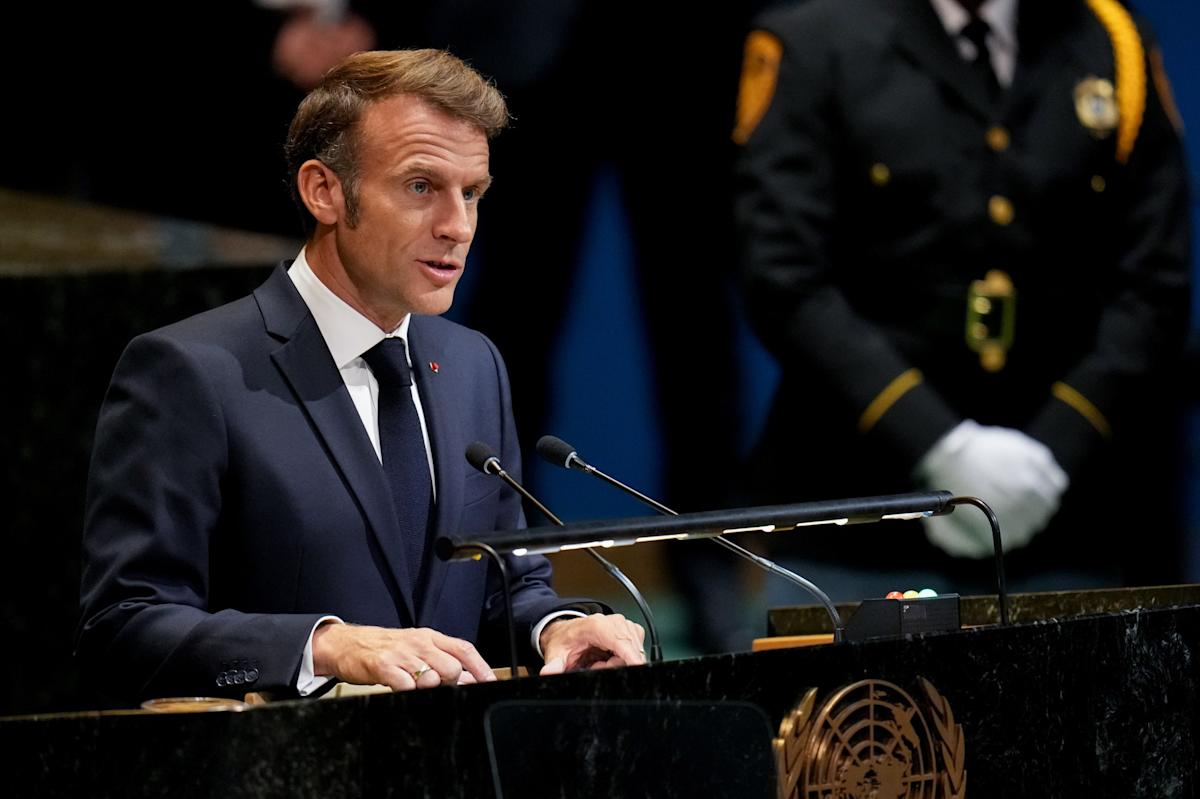
    France’s president Emmanuel Macron

    French President Emmanuel Macron told European Union leaders to consider using the bloc’s most powerful trade tool against China if they aren’t able to find a resolution to Beijing’s planned export controls on critical raw materials.

    Most Read from Bloomberg

    Macron said they need to weigh using all options available against China, including the EU’s so-called anti-coercion instrument, according to people familiar with the matter.

    He made the statement to his counterparts during a leaders’ summit in Brussels Thursday, said the people, who spoke on the condition of anonymity. The French presidency didn’t respond to a request for comment.

    “This is economic coercion,” Macron told reporters after the summit, referring to the Chinese announcement on rare earths, without commenting on the specifics of the closed-door conversation. “We can see the impact it is having on us and we need to be able to respond.”

    China announced plans to significantly tighten controls on its exports of rare earths and other critical materials earlier this month. Under the measures, overseas exporters of items that use even traces of certain rare earths sourced from China would need an export license.

    The export restrictions would pose a massive threat to Europe’s industry and security, as the inputs are critical across sectors and used in everything from electric vehicle batteries to defense manufacturing.

    Following the summit, German Chancellor Friedrich Merz confirmed that the anti-coercion tool was discussed but that no decision had been reached on using it. He said it was now up to the European Commission, which handles trade matters for the EU, to decide whether to deploy the ACI.

    The ACI, which has never been used, was designed primarily as a deterrent, and if needed, to respond to deliberate coercive actions from third countries that use trade measures as a means to pressure the policy choices of the EU or its members.

    The instrument was created as part of the EU’s effort to boost its trade defenses after the US imposed tariffs on the bloc’s exports during the first Trump administration. Another factor was China’s decision to place restrictions on Lithuanian goods after Taiwan opened a trade office in the Baltic nation.

    Use of the EU’s most potent trade tool is unlikely at this stage as it would significantly escalate tensions with China. France has called for using the instrument before, including during trade talks with the US. But the drive never fully gained traction.

    The commission is currently working on options that it could use if a diplomatic solution with China isn’t found.

    The commission is preparing a list of trade measures by the end of the month that can later be deployed against China to boost its negotiating leverage on the issue, Bloomberg reported earlier. The commission is also developing a plan to protect critical supplies in the short-term and secure other sources.

    The EU’s trade chief Maros Sefcovic held talks with his Chinese counterpart, Wang Wentao, earlier this week on the proposed export restrictions.

    “We have no interest in escalation,” Sefcovic told reporters after the call Tuesday. “However, this situation casts a shadow over our relationship, therefore a prompt resolution is essential.”

    –With assistance from Alberto Nardelli and Arne Delfs.

    (Updates with Macron quote in the fourth paragraph.)

    Most Read from Bloomberg Businessweek

    ©2025 Bloomberg L.P.

    Continue Reading

  • Macron Tells EU to Weigh Using Strongest Trade Tool on China

    Macron Tells EU to Weigh Using Strongest Trade Tool on China

    French President Emmanuel Macron told European Union leaders to consider using the bloc’s most powerful trade tool against China if they aren’t able to find a resolution to Beijing’s planned export controls on critical raw materials.

    Macron said they need to weigh using all options available against China, including the EU’s so-called anti-coercion instrument, according to people familiar with the matter.

    Continue Reading