Category: 3. Business

  • Pinsent Masons welcomes Fernando Tallón Martínez as a new partner

    Pinsent Masons welcomes Fernando Tallón Martínez as a new partner

    Pinsent Masons has welcomed Fernando Tallón Martínez, formerly of Ramón y Cajal, as a new partner in Litigation and Arbitration in Madrid.

    Francisco Aldavero, managing partner of Pinsent Masons in Spain, said: “In the current context of modernization of the Spanish judicial system, our clients—both domestic and international—require the best possible advice to navigate a constantly evolving regulatory framework. Fernando’s arrival strengthens our ability to remain a benchmark for our clients, even in a constantly changing legal landscape.”

    Photo by Juan Manuel Guzmán: Fernando Tallón Martínez and Francisco Aldavero, managing partner of Pinsent Masons

    Fernando Tallón Martínez

    With a solid track record in resolving complex civil and commercial disputes, often on an international scale, Tallón has extensive experience in contractual and non-contractual liability cases, both in court proceedings and in domestic and international arbitration.

    His experience covers a wide range of complex disputes, including those relating to construction contracts and commercial agreements. In addition, he advises on a wide variety of commercial dispute matters, including restructurings, insolvency proceedings, claims for damages arising from competition law infringements, and class actions.

    In terms of sector expertise, Tallón has solid specialization in the energy, financial services, construction, hospitality, insurance, real estate, and agri-food sectors, which constitute his main areas of activity.

    Continue Reading

  • BHP Operational Review for the quarter ended 30 September 2025

    BHP Operational Review for the quarter ended 30 September 2025

    BHP Operational Review for the quarter ended 30 September 2025 (PDF 132kb)

    BHP Operational Review for the quarter ended 30 September 2025 – Excel (Excel 491kb)

    BHP Chief Executive Officer, Mike Henry:

    “We’ve made a strong start to the year, highlighted by disciplined operating performance and execution of scheduled maintenance. Group copper production rose 4%, with record concentrator throughput at Escondida.

    In iron ore, WAIO delivered another standout quarter, achieving record material mined while completing critical infrastructure upgrades ahead of schedule.

    In steelmaking coal, production rose 8%, supported by strong mining rates at Broadmeadow and increased stripping at our open cut mines. We progressed key growth and decarbonisation milestones in the quarter, including securing environmental approval for the Laguna Seca Expansion at Escondida and Copper South Australia entering into its largest renewable electricity agreement.

    Both stages of the Jansen potash project in Canada are advancing, with Stage 1 reaching 73% completion and on track for production to begin in 2027, while Stage 2 is now 13% complete. The long-term demand fundamentals for potash are attractive and Jansen is expected to be one of the lowest cost producers.

    Overall macro-economic signals for commodity demand remain resilient, and global growth forecasts are moving higher. While we expect some deceleration in growth in H2 CY25, in China we still expect GDP growth of ~5% for the year. In copper, major disruptions at some of our competitors’ mines have tightened overall market fundamentals, benefitting our world-class portfolio of assets.

    With momentum from a strong first quarter, BHP is on track to deliver on full-year guidance and we are making progress on our growth pipeline across Australia and the Americas.”

    Continue Reading

  • Revealing the Invisible: How Bangkok’s BEYC teaches clean air awareness

    British Early Years Centre (BEYC) in Bangkok is a school known for its innovative educational approaches and nature-based learning philosophy. Through the use of an IQAir AirVisual Monitor, this international kindergarten helps protect students from air pollution while sparking awareness about the environment (1).

    An environment built for health, safety, and discovery

    Located in the family-friendly Ari neighborhood, BEYC caters to children ages 2 to 6, blending the British Early Years Foundation Stage Curriculum with Reggio Emilia principles like child-led learning and hands-on exploration.

    “Our philosophy is that the environment is the third teacher,” says Ms Liv, Head of School at BEYC. “If air quality is part of our environment, then understanding it becomes part of the learning journey.”

    For BEYC, air quality monitoring is a natural extension of its broader health-first policies. From its allergen-controlled campus and gluten-free meals to the use of natural materials and handmade organic soaps, BEYC’s daily operations reflect a commitment to child wellness.

    How air quality data shapes daily decisions

    Air quality data from the school’s IQAir AirVisual Monitor plays a practical role in daily safety decisions. When PM2.5 levels rise, teachers take swift action—adjusting outdoor play schedules, moving activities indoors, and ensuring windows remain closed to limit exposure.

    “Our air quality monitor gives us clear, real-time information we can act on,” explains Liv. “It makes invisible risks visible—for both teachers and families.”

    Staff members regularly reference the AQI (Air Quality Index) before outdoor play, and families are encouraged to check the school’s public air quality feed online, thanks to BEYC’s participation on IQAir’s AirVisual platform.

    Turning air quality into a teachable moment

    At BEYC, air quality monitoring isn’t just about risk mitigation—it’s also a learning tool. The Reggio Emilia philosophy emphasizes following children’s natural curiosity, and the AirVisual monitor often sparks questions from students:

    • “Why is the air red today?”
    • “What does PM2.5 mean?”
    • “How can we make the air better?”

    Teachers use these moments to introduce age-appropriate discussions about pollution, environmental responsibility, and how children can help care for their world.

    “Even at this young age, our students are beginning to make the connection between what they see on the air quality display and the choices we make that day,” says Liv. “That’s powerful learning.”

    Community impact beyond the classroom

    BEYC’s air quality station doesn’t just serve the school. With nearly 35,000 followers, their IQAir contributor profile has become a primary resource for the community to understand local air quality.

    “It’s incredible to think our data is helping so many people make important daily decisions about their health,” Liv said. “The platform makes sharing our data simple and meaningful,” says Liv. “It allows us to help families here in our area—and contributes to the wider air quality conversation globally.”

    With nearly 35,000 followers, their IQAir contributor profile has become a primary resource for the community to understand local air quality.

    BEYC’s participation is part of IQAir’s global school air monitoring initiative, a growing network of educational institutions helping to build one of the world’s most comprehensive air quality data networks.

    Conclusion

    British Early Years Centre shows that air quality awareness and education aren’t just for older students. By integrating IQAir’s monitoring technology into its health policies and curriculum, BEYC is equipping young learners with tools for understanding and protecting their well-being.

    In Bangkok, where pollution is a concern, BEYC stands as an example of how schools can empower children and families to make informed, healthy choices—one data point, one teaching moment, and one curious question at a time.

    Continue Reading

  • Access Denied


    Access Denied

    You don’t have permission to access “http://www.alvarezandmarsal.com/thought-leadership/the-equity-funded-distributions-rule-can-the-ato-compliance-approach-help-a-franking-integrity-measure-retain-some-of-its-integrity” on this server.

    Reference #18.8d5e6cc1.1760998031.2fb65ecc

    https://errors.edgesuite.net/18.8d5e6cc1.1760998031.2fb65ecc

    Continue Reading

  • Insurance and Tolerability Factors Considered in Recurrent RCC Treatment | Targeted Oncology

    Insurance and Tolerability Factors Considered in Recurrent RCC Treatment | Targeted Oncology

    Immunotherapy (IO) and tyrosine kinase inhibitor (TKI) combination regimens have dramatically changed outcomes for patients with metastatic clear cell renal cell carcinoma (RCC). Now, clinical experience and research are providing better guidance on how to respond when patients’ disease recurs after the use of combination therapy. In a virtual Case-Based Roundtable event for oncologists in Oklahoma and Texas, moderator Nizar M. Tannir, MD, professor of genitourinary medical oncology at The University of Texas MD Anderson Cancer Center in Houston, presented data on second-line treatment and beyond and asked participants to share their experiences. They discussed how many of their patients are able to delay subsequent treatment for several years thanks to frontline combinations and also considered the barriers to use for the newer agents tivozanib (Fotivda) and belzutifan (Welireg).

    Register today to join a Case-Based Roundtable near you.

    This article is part 2 of a 2-part series from a Case-Based Roundtable event.

    DISCUSSION QUESTIONS

    • What is your reaction to the efficacy data from the phase 3 TiNivo-2 study (NCT04987203)? ​
      • The nivolumab (Opdivo) plus tivozanib combination arm?​
      • The tivozanib monotherapy arm?​

    Nizar M. Tannir, MD: Vis-a-vis the combination arm; we already know that the combination should not be given after a prior therapy with nivolumab/ipilimumab or an IO/TKI. But what do you take out of this monotherapy arm with 9.2 months’ median progression-free survival [PFS] in patients who received 1.34 mg tivozanib as second line?1 Do you consider these results to be clinically meaningful, practice changing, or practice confirming?

    Stephen Barman, MD: I think it depends on what you use in the first line. I use a lot of nivolumab plus ipilimumab [Yervoy] in the first line, unless…I need a very quick response in the first line, [or] somebody’s got significant hypoxia from lung disease; then I like to use a TKI. I still like cabozantinib [Cabometyx] in the second line and tivozanib more in the third line. Do you think that the FDA will update the indication in the second line?

    Tannir: You bring up a very important point. Tivozanib is approved after at least 2 [prior therapies]. It’s not approved after only 1 line. The approval is based on the TIVO-3 trial [NCT02627963] vs sorafenib [Nexavar], and that trial required patients to have had 2 or 3 prior lines. Only 26% of those patients had [received] immune checkpoint inhibitors.2 The approval and the package insert [require that the patient] had to have received 2 lines, meaning the patient had to have an IO and a TKI.3 So…nivolumab/ipilimumab is considered dual immunotherapy in 1 line. Technically speaking, you’re going to have a hard time with insurance approving tivozanib after nivolumab/ipilimumab.

    This is an important question. I think the data are impressive for tivozanib as a second line after nivolumab/ipilimumab with an 32% objective response rate and median PFS of 9.2 months.1 I like to prescribe this regimen because I like to give my patients an agent that’s well tolerated. When you look at hand-foot syndrome, mucositis, fatigue—except for hypertension—tivozanib doesn’t produce much of that compared with cabozantinib or lenvatinib [Lenvima] plus everolimus [Afinitor]. Even axitinib [Inlyta] causes more mucositis and hand-foot syndrome and liver toxicity, etc. Tivozanib, despite its long half-life, is very well tolerated compared with the other TKIs.

    Rebecca Yarborough, MD: I have an older, frailer population as well, so I don’t use as much combination immunotherapy in my patients, unless they’re fitter or younger, and sometimes with more aggressive pathologies, such as sarcomatoid…. I use a lot of IO/TKI in the first line. A lot of times I go to cabozantinib in the second line. I’ve been in practice for 3 or 4 years, so I don’t have any patients beyond second line in my practice right now, so I haven’t had a chance to use tivozanib or belzutifan yet. I think it was very interesting to see the tivozanib data…. I would like to be able to use that more. I’m interested in its better tolerability compared with cabozantinib.

    Parth Khade, MD: I thought it was significant in the sense that it favors supporting monotherapy as opposed to immune checkpoint inhibition rechallenge with the combination arm, resulting in slightly lower median PFS, but I think it also supports using tivozanib as monotherapy [with] the expected response rate in a multicenter trial looking at a diverse patient population. I think it gives good evidence that tivozanib is effective. The question just becomes what line of therapy to use it in, whether it’s third line, second line, etc.

    Tannir: I can tell you, the earlier line you use any TKI is going to be a better result. If you wait for third or fourth line, your efficacy is going to drop, or radiographic PFS will be [shorter].

    DISCUSSION QUESTIONS

    • What are your reactions to the final analysis data from LITESPARK-005 (NCT04195750)? ​
      • Do you consider them practice changing or practice confirming?​
      • What do you think about the toxicity profile of belzutifan? ​

    Dai Chu Luu, MD: I think this is just practice confirming. When I think about how to choose between the 2, I’d pick tivozanib; it seems to be better tolerated. Of course, [belzutifan] was studied in a later line. With belzutifan it looks like anemia was a pretty big adverse event, whereas tivozanib seem to be well tolerated.1,4

    Khusroo Qureshi, MD: All these things are very impressive. When I started [practicing] oncology and was in fellowship 25 years ago, we used to use IL-2, so when you compare it with interleukin therapy, all these things are very impressive. At Texas Oncology, we use a lot of pathways to guide us. My frontline therapy often is axitinib and pembrolizumab [Keytruda]. I’ve had patients tolerate axitinib quite well. Sometimes I’ve had issues with skin rash or diarrhea, and I just have them hold it if it’s really bad or just skip the weekends and it’s pretty well tolerated. Right now, I think I have 4 or 5 patients on first-line therapy for metastatic RCC, and they’re all doing really well. Some of them have been on therapy for over 1 year. For second-line therapy, cabozantinib would still be my preferred [option].

    The data…including the singlet [tivozanib] vs tivozanib plus IO are very convincing, but it’s still not approved for second-line therapy, and we get a lot of pushback regarding whether something is on Compendia and whether it’s approved or not. Unless there’s a change, I probably would still hold tivozanib for the third line. As far as fourth line and belzutifan…I’ve not had a chance to use that. In the past, when I’ve had patients reach that point, I’ve sent patients to my colleague who runs our phase 1 research programs and I send patients to Mary Crowley Cancer Research [in Dallas, Texas] to see what else is available. But so far, I’ve had an excellent response on my first-line therapies, so I have not even had a chance to use a second line in the last 18 to 24 months.

    Ofobuike Okani, MD: I have the same experience at Texas Oncology. I treated a 68-year-old patient close to 3 years ago, and he had clear cell metastatic RCC. He received 24 months of pembrolizumab/axitinib and I stopped at 24 months. He still has no evidence of disease on all his scans. I treated another 89-year-old patient who couldn’t tolerate pembrolizumab/axitinib. He had liver toxicity which was pretty bad, so I kept him on only axitinib, and he’s doing well at 89 years old. Another patient with metastatic clear cell RCC is on maintenance pembrolizumab for close to 9 months. I have another patient who is in his 40s, who is getting axitinib/pembrolizumab, and he’s doing very well. The only patient I have treated with second-line cabozantinib was a patient I treated with The University of Texas MD Anderson Cancer Center, but other than that, I’ve never gone beyond the second line, so I have not used tivozanib. I have not had any experience with any of these agents treating beyond the second line.

    Register today to join a Case-Based Roundtable near you.

    DISCLOSURES: Tannir previously reported research funding from Bristol-Myers Squibb Company (BMS), Calithera Biosciences, Nektar Therapeutics, Exelixis, Pfizer, Novartis, Arrowhead Pharmaceuticals, Mirati Therapeutics, Takeda, Epizyme, and Eisai Medical Research; consulting, advisory, travel accommodations, and expenses from BMS, Calithera Biosciences, Nektar Therapeutics, Exelixis, Pfizer, Novartis, Eisai Medical Research, Ipsen, Lilly Oncology, Neoleukin Therapeutics, Surface Oncology, ONO Pharmaceutical, and Oncorena; and honoraria from BMS, Exelixis, Nektar Therapeutics, Calithera Biosciences, Eisai Medical Research, ONO Pharmaceutical, Eli Lilly, Oncorena, Ipsen, and Surface Oncology.

    References:

    1. Choueiri TK, Albiges L, Barthélémy P, et al. Tivozanib plus nivolumab versus tivozanib monotherapy in patients with renal cell carcinoma following an immune checkpoint inhibitor: results of the phase 3 TiNivo-2 study. Lancet. 2024;404(10460):1309-1320. doi:10.1016/S0140-6736(24)01758-6

    2. Rini BI, Pal SK, Escudier BJ, et al. Tivozanib versus sorafenib in patients with advanced renal cell carcinoma (TIVO-3): a phase 3, multicentre, randomised, controlled, open-label study. Lancet Oncol. 2020;21(1):95-104. doi:10.1016/S1470-2045(19)30735-1

    3. Fotivda. Prescribing information. Aveo Pharmaceuticals; 2021. Accessed October 20, 2025. https://www.accessdata.fda.gov/drugsatfda_docs/label/2021/212904s000lbl.pdf

    4. Choueiri TK, Powles T, Peltola K, et al. Belzutifan versus everolimus for advanced renal-cell carcinoma. N Engl J Med. 2024;391(8):710-721. doi:10.1056/NEJMoa2313906

    Continue Reading

  • Gilead to spotlight new virology data across HIV, viral hepatitis and respiratory diseases at IDWeek 2025

    Gilead to spotlight new virology data across HIV, viral hepatitis and respiratory diseases at IDWeek 2025

    – Additional Phase 3 PURPOSE data reinforce the safety profile of twice-yearly Yeztugo® as an effective HIV prevention option across diverse populations –

    – New data show higher treatment satisfaction after switching from IM CAB+RPV to Biktarvy® –

    – New research reaffirms Veklury® in high-risk COVID-19 populations and obeldesivir in emerging pathogens –

    Read the full company press release here.


    Source : Gilead Sciences, Inc.

    Continue Reading

  • Zanzalintinib Plus Atezolizumab Improves OS in Previously Treated Metastatic CRC

    Zanzalintinib Plus Atezolizumab Improves OS in Previously Treated Metastatic CRC

    The combination of zanzalintinib (XL092) and atezolizumab (Tecentriq) improved overall survival (OS) compared with regorafenib (Stivarga) in patients with previously treated metastatic colorectal cancer (CRC), according to findings from the phase 3 STELLAR-303 trial (NCT05425940) presented at the 2025 ESMO Congress and published concurrently in The Lancet.

    Across the intention-to-treat (ITT) population, data showed a median OS of 10.9 months with the zanzalintinib combination vs 9.4 months with regorafenib (HR, 0.80; 95% CI, 0.69-0.93; P = .0045). An interim analysis of findings in a subset of patients without liver metastases demonstrated a median OS of 15.9 months vs 12.7 months in each respective arm (stratified HR, 0.79; 95% CI, 0.61-1.03; P = .087).

    Investigators noted an OS improvement with zanzalintinib/atezolizumab vs regorafenib across most key subgroups, which included patients from Asia (HR, 0.77; 95% CI, 0.59-1.00) and the rest of the world (HR, 0.82; 95% CI, 0.68-0.99), as well as those with RAS wild-type (HR, 0.79; 95% CI, 0.61-1.01) and RAS-mutated disease (HR, 0.80; 95% CI, 0.66-0.98). Additionally, the experimental combination improved OS for patients with (HR, 0.78; 95% CI, 0.65-0.94) and without liver metastases (HR, 0.77; 95% CI, 0.59-1.01); this benefit extended to those with (HR, 0.80; 95% CI, 0.68-0.95) and without prior anti-VEGF antibody therapy (HR, 0.80; 95% CI, 0.56-1.15).

    The median progression-free survival (PFS) across the ITT population was 3.7 months with zanzalintinib/atezolizumab and 2.0 months with regorafenib; statistical significance for PFS could not be claimed at the time of analysis per prespecified hierarchical testing strategy (HR, 0.68; 95% CI, 0.59-0.79). The experimental combination generally conferred PFS improvements across patient subgroups.

    Data showed an objective response rate (ORR) of 4% (95% CI, 2%-6%) in the zanzalintinib/atezolizumab arm, which consisted entirely of partial responses (PRs). Additionally, the ORR was 1% (95% CI, 0%-3%) in the regorafenib arm, which consisted entirely of PRs. The disease control rate (DCR) in the experimental and control arms was 54% (95% CI, 49%-58%) vs 41% (95% CI, 36%-45%), respectively.

    “STELLAR-303 is the first phase 3 trial to show improved OS with an immune checkpoint inhibitor [ICI]–based combination in metastatic CRC that is not microsatellite instability–high [MSI-H] or mismatch repair deficient [dMMR]. The combination significantly prolonged OS compared to regorafenib in patients with previously treated metastatic CRC,” presenting author Anwaar Saeed, MD, a professor in the Department of Medicine of the Division of Hematology and Oncology at the University of Pittsburgh Medical Center and UPMC Hillman Cancer Center, stated in the presentation.1 “The combination of zanzalintinib and atezolizumab represents a potential novel chemotherapy-free for heavily pretreated [patients with] metastatic CRC in need of more improved therapy. The trial continues to the planned final OS in the subset of patients without liver metastases.”

    In the open-label phase 3 STELLAR-303 trial, 901 patients with metastatic CRC documented to not have MSI-H or dMMR status were randomly assigned 1:1 to receive zanzalintinib at 100 mg orally each day plus atezolizumab at 1200 mg intravenously every 3 weeks (n = 451) or regorafenib at 160 mg orally once day on days 1 to 21 of each 28-day cycle (n = 450).

    The trial’s dual primary end points were OS in the ITT population and among patients without liver metastases. Key secondary end points included PFS, ORR, and safety.

    Patients 18 years and older with metastatic disease that had radiographically progressed on, was refractory to, or showed intolerance to prior standard-of-care treatment including fluoropyrimidine plus irinotecan and oxaliplatin with or without an anti-VEGF antibody, an anti-EGFR antibody, and a BRAF inhibitor were eligible for enrollment on the trial. Investigators stratified patients based on geographic region, RAS mutation status, and presence of liver metastases.

    The median age was 60 years (range, 29-84) in the zanzalintinib/atezolizumab arm and 60 years (range, 29-85) in the regorafenib arm, with most patients from each being male (58% vs 60%), White (55% vs 53%), and from regions outside of Asia (65% vs 65%). Most patients from each respective arm had an ECOG performance status of 1 (53% vs 55%), a presence of liver metastases (59% vs 56%), BRAF wild-type status (75% vs 78%), and RAS-mutated disease (59% vs 60%). Nearly all patients across both arms received prior treatment with fluoropyrimidine plus irinotecan and oxaliplatin (>99% vs 100%).

    The median time from random assignment to first subsequent line of anticancer therapy was 4.5 months (range, 0.2-20.4) in the zanzalintinib/atezolizumab arm and 3.7 months (range, 0.1-17.6) in the regorafenib arm; 44% and 42% of patients in each arm received subsequent treatment. Most patients in each respective arm received subsequent therapy with TAS-102 (27% vs 25%), bevacizumab (Avastin; 20% vs 20%), and TAS-102 in combination with bevacizumab (16% vs 16%).

    Any-grade treatment-related adverse effects (TRAEs) occurred in 95% of the zanzalintinib/atezolizumab arm and 92% of the regorafenib arm; 57% and 42% from each experienced serious AEs, and 26% and 10% had serious TRAEs. Overall, 18% and 15% of patients in each arm had AEs resulting in treatment discontinuation, with 61% vs 40% requiring dose reduction of zanzalintinib and regorafenib, respectively, due to toxicity. Investigators noted treatment-related deaths due to intestinal perforation (n = 2) with zanzalintinib, pneumonitis (n = 1) and renal failure (n = 1) with atezolizumab, altered state of consciousness (n = 1) with zanzalintinib plus atezolizumab, and jejunal perforation (n = 1) with regorafenib.

    In the zanzalintinib/atezolizumab and regorafenib arms, respectively, the most common AEs included diarrhea (50% vs 24%), hypertension (34% vs 26%), fatigue (33% vs 20%), nausea (31% vs 13%), and decreased appetite (30% vs 20%).

    References

    1. Saeed A, Park YS, Tabernero J, et al. Zanzalintinib plus atezolizumab (zanza + atezo) vs regorafenib (rego) in patients (pts) with previously treated metastatic colorectal cancer (mCRC): primary overall survival (OS) analysis from the randomized, open-label, phase 3 STELLAR-303 study. Presented at the European Society for Medical Oncology (ESMO) Congress 2025; October 17-21, 2025; Berlin, Germany. LBA30.
    2. Hecht JR, Park YS, Tabernero J, et al. Zanzalintinib plus atezolizumab versus regorafenib in refractory colorectal cancer (STELLAR-303): a randomised, open-label, phase 3 trial. The Lancet. Published online October 19, 2025. doi:10.1016/S0140-6736(25)02025-2

    Continue Reading

  • Apple’s rally pulls Wall Street to the cusp of its record

    Apple’s rally pulls Wall Street to the cusp of its record

    Stocks rallied on Monday to the cusp of their records.

    The Standard & Poor’s 500 climbed 1.1% and pulled within 0.3% of its all-time high set this month. The Dow Jones Industrial Average jumped 515 points, or 1.1%, and the Nasdaq composite gained 1.4%.

    Apple led the way and rose 3.9% amid optimism about demand for its latest iPhone design. It was the strongest force lifting the S&P 500 and set its own record high.

    Cleveland-Cliffs jumped 21.5% after the steel company’s chief executive, Lourenco Goncalves, said it would provide details soon about a potential deal with a major global steel producer that could mean bigger profits. He also said his company has potentially found signs of rare earths at sites in Michigan and Minnesota.

    Such materials have grabbed the global spotlight after China recently put curbs on the export of its own rare earths, a move that President Trump characterized as hostile. Trump’s ensuing threat of higher tariffs triggered big swings for Wall Street, but the concerns eased a bit after he said such high tax rates on Chinese imports are unsustainable.

    Another source of worry for Wall Street, from the banking industry, also appears to be easing. Stocks of smaller and midsize banks climbed Monday, recovering some of their losses after a couple raised alarm bells last week by warning about potentially bad loans they’ve made.

    Zions Bancorp. gained 4.7% Monday after its 5.1% drop last week, when it said it had found “apparent misrepresentations and contractual defaults” related to a couple of borrowers.

    Amazon’s stock held up despite a widespread outage of its cloud computing service that caused disruption for internet users around the world Monday. Amazon’s stock rose 1.6%.

    All told, the S&P 500 added 71.12 points to 6,735.13. The Dow Jones Industrial Average climbed 515.97 to 46,706.58, and the Nasdaq composite gained 310.57 to 22,990.54.

    This week features a raft of big names reporting their latest quarterly results, including Coca-Cola on Tuesday, Tesla on Wednesday and Procter & Gamble on Friday.

    The pressure is on companies broadly to show that their profits are growing after a torrid run of 35% for the S&P 500 from a low in April. Delivering bigger profits is one of the easiest ways for companies to quiet criticism that stock prices have gone too high. The other is for stock prices to fall.

    Corporate profit reports have also taken on more importance because they offer windows into the strength of the U.S. economy when the federal government’s shutdown has delayed important economic updates.

    That’s making the job of the Federal Reserve more difficult, as it tries to decide whether high inflation or the slowing job market is the bigger issue for the economy. Fed officials have indicated they’re likely to cut rates several more times in order to give the economy a boost. But that could be a mistake if inflation worsens, because low interest rates can push it even higher.

    On Friday, the U.S. government will issue an update for inflation during September. The report was supposed to arrive earlier in month, and the Social Security Administration needs the numbers to calculate cost-of-living adjustments for beneficiaries. But the government also said, “No other releases will be rescheduled or produced until the resumption of regular government services.”

    In the bond market, Treasury yields held relatively steady. The yield on the 10-year Treasury eased to 3.98% from 4.02% late Friday.

    In stock markets abroad, indexes rose across much of Europe and Asia.

    Japan’s Nikkei 225 jumped 3.4%, after its governing Liberal Democrats found a new coalition partner, securing support for its leader Sanae Takaichi to become the country’s prime minister. Investors expect Takaichi, who would also be Japan’s first female prime minister, to push for low interest rates, higher government spending and other policies that could help the market.

    Indexes rose 2.4% in Hong Kong and 0.6% in Shanghai after China reported its economy grew at a 4.8% annual pace in the last quarter, supported by relatively strong exports as companies increased shipments to markets other than the U.S.

    Still, it was the slowest pace in a year. The world’s second-largest economy is still struggling to emerge from a prolonged downturn in its property market and to encourage consumers and businesses to spend more.

    Choe writes for the Associated Press.

    Continue Reading

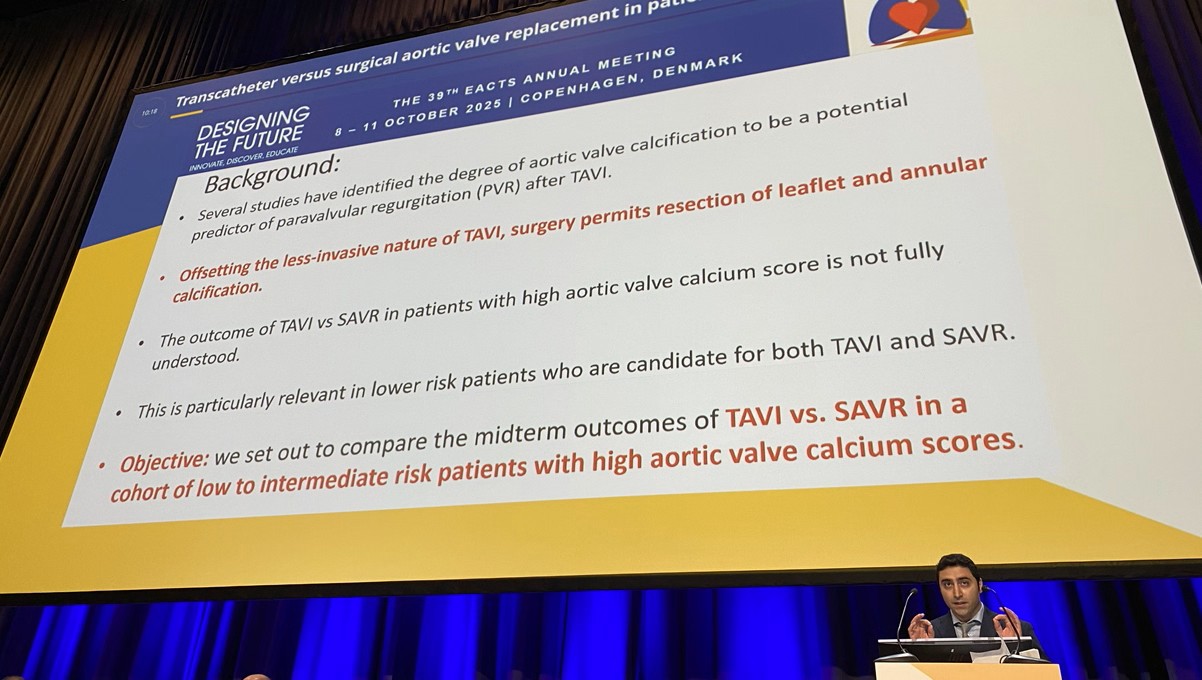
  • SAVR Bests TAVI in Patients With Highly Calcific Aortic Valves

    SAVR Bests TAVI in Patients With Highly Calcific Aortic Valves

    The results underscore the need to perform CT imaging when deciding between procedures in patients with aortic stenosis.

    COPENHAGEN, Denmark—Among patients with severe aortic stenosis at low- or intermediate-risk for surgery who also have very calcified aortic valves, SAVR is associated with lower risks of all-cause mortality, paravalvular regurgitation, and heart failure hospitalization compared with TAVI, according to new single-center data.

    “[A] calcium score could potentially be an important criteria to consider when deciding between TAVI versus SAVR in low- and intermediate-risk patients,” said Fadi Hage, MD (Lankenau Medical Center, Wynnewood, PA), who presented the findings at the 2025 European Association for Cardio-Thoracic Surgery meeting. “Further investigation into predictors of outcomes in lower-risk patients is warranted to improve patient selection and [make] a more informed heart team discussion.”

    Session moderator Alicja Zientara, MD (Universitätsklinikum Freiburg, Germany), said the results highlight the need for imaging in assessing patients for TAVI.

    “It’s not only about the clinical risk factors of patients and choosing the right valve, but very much about imaging and evaluating if a TAVR is very well feasible for a patient,” she told TCTMD. “We know that there is a risk of aortic regurgitation and there is a risk of pacemaker, and not every patient necessarily is the right one for this kind of treatment. So, we as surgeons have to work very much on implementing regular imaging in our daily practice to also evaluate the valve, like cardiologists do.”

    Better Outcomes With SAVR

    The analysis included 227 patients who underwent TAVI (mean age 82 years; 77% male) and 99 who had SAVR (mean age 68 years; 88% male) at their institution between June 2021 and December 2023. All patients were considered low-to-intermediate risk for surgery and had a high aortic valve calcium score (≥ 3,000 Agatston units). More patients in the TAVI arm had peripheral vascular disease (20% vs 6%) and fewer had bicuspid aortic valve anatomy (4% vs 39%) than in the surgery arm.

    In a propensity score-matched analysis, survival at 2 years was higher in the SAVR arm compared with TAVI (HR 0.17; P = 0.001). The same relationship was seen for freedom from paravalvular regurgitation (HR 0.05; P = 0.001) and heart failure rehospitalization (HR 0.33; P = 0.045). Unadjusted analyses showed advantages for SAVR over TAVI with regard to survival and freedom from paravalvular regurgitation, but not freedom from heart failure rehospitalization.

    There was a higher risk of new permanent pacemaker with TAVI compared with SAVR at 30 days (16% vs 6%; P = 0.01), but a lower rate of postoperative transfusion (7% vs 36%; P < 0.001).

    During the discussion, session panelist Ferdinand Vogt, MD (Paracelsus Medical University Nürnberg, Germany), pointed out a challenge for surgeons. “In the real world, we don’t have for every surgical patient an Agatston score,” he said, questioning whether this creates a “bias” in real-world practice when patients are deciding between TAVI and surgery.

    “It would be an important thing to consider,” Hage responded, adding that it’s not “very difficult to get” this information.

    In an informal poll of the audience, about one-third in the room raised their hands indicating that they do send patients for calcium score imaging before the procedure.

    Zientara said she was “a little” surprised by how few of the attendees use this kind of imaging in their workups. “But on the other hand, it’s always a hot topic,” she added. “We have new guidelines for the treatment of those patients where there are different opinions.”

    Panelist Gregory Fontana, MD (Cardiovascular Institute of Los Robles Health System, Thousand Oaks, CA), commented that CT scans prior to SAVR have “become the gold standard” at his institution.

    Hage, too, said he calculates his own CT measurements for each patient, enabling him to be “nonbiased.” As surgeons, he added, “we should select the right procedure for the right patients.”


    Continue Reading

  • Duffy says NASA will open Artemis 3 lander contract to competition

    Duffy says NASA will open Artemis 3 lander contract to competition

    WASHINGTON — NASA’s acting administrator says he plans to “open up the contract” SpaceX holds to land astronauts on the moon for the Artemis 3 mission because the company has fallen behind schedule.

    In appearances on CNBC and Fox News on Oct. 20, NASA Acting Administrator Sean Duffy said NASA would allow other companies to compete to land astronauts on the moon for Artemis 3, a mission currently assigned to SpaceX’s Starship under a Human Landing System (HLS) contract awarded in 2021.

    “SpaceX had the contract for Artemis 3,” Duffy said on CNBC. “The problem is they’re behind. They push their timelines out, and we’re in a race against China. The president and I want to get to the moon in this president’s term.”

    “So, I’m going to open up the contract,” he continued. “I’m going to let other space companies compete with SpaceX, like Blue Origin, and again, whatever one can get us there first, to the moon, we’re going to take.”

    Duffy made similar remarks on Fox News. “SpaceX has the contract. SpaceX is an amazing company. They do remarkable things, but they’re behind schedule,” he said. “So, I’m in the process of opening that contract up.”

    “We’re going to have a space race in regard to American companies competing to see who can actually get us back to the moon first,” he said.

    Duffy did not explain how such a “space race” would work or how it would be funded. Asked for further details, Bethany Stevens, NASA’s press secretary, provided only transcripts of Duffy’s television appearances. Most of NASA’s public affairs staff are currently furloughed because of the government shutdown that began Oct. 1.

    The comments are the first public acknowledgment by NASA’s acting leader that development of the HLS version of Starship is behind schedule. Duffy previously maintained that Artemis 3 would launch in 2027, the agency’s official target, even as multiple Starship test flight failures earlier this year made that timeline increasingly unlikely.

    In late July, Duffy told social media influencers attending the Crew-11 launch that SpaceX executives, including company president Gwynne Shotwell, assured him Starship would be ready for Artemis 3. “They feel very comfortable on Starship. They feel like they’re on pace for the lander,” he said then. “They said if there’s a holdup for Artemis 3, it’s not going to be them.”

    After former NASA Administrator Jim Bridenstine told a Senate committee in September it was unlikely the United States would return humans to the moon before China’s first crewed landing, Duffy pushed back. “We are going to beat the Chinese to the moon. We are going to make sure that we do this safely. We’re going to do it fast. We’re going to do it right,” he said in an internal NASA town hall, without suggesting a change in approach for Artemis 3.

    In his Oct. 20 interviews, Duffy acknowledged that Artemis 3 likely would not launch in 2027. On CNBC, after discussing Artemis 2’s planned launch as soon as next February, he said that “Artemis 3 comes a couple years after that.”

    One of the competitors Duffy mentioned was Blue Origin, which has a separate HLS award to develop its Blue Moon Mark 2 lander for missions beginning with Artemis 5. The company reportedly has studied ways to adapt its smaller Blue Moon Mark 1 lander for a crewed mission, although one industry source described those concepts as “jury-rigged” and noted that Mark 1 currently cannot lift off from the lunar surface with any useful payload.

    Other companies are also examining lunar lander concepts. “Throughout this year, Lockheed Martin has been performing significant technical and programmatic analysis for human lunar landers that would provide options to NASA for a safe solution to return humans to the moon as quickly as possible,” Bob Behnken, vice president of exploration and technology strategy at Lockheed Martin Space, said in a statement.

    “We have been working with a cross-industry team of companies, and together we are looking forward to addressing Secretary Duffy’s request to meet our country’s lunar objectives,” he said, without providing details about the Lockheed lander concept.

    SpaceX Chief Executive Elon Musk appeared unconcerned about potential competition. “They won’t,” he said in a social media post responding to a comment that it was “silly” to think another company would have a lander ready before Starship. “SpaceX is moving like lightning compared to the rest of the space industry.”

    “Moreover, Starship will end up doing the whole moon mission. Mark my words,” he added.

    Continue Reading