“One year ago, we set out with Amazon to reimagine the way in which we advance new energy projects in the United States, and how we power technologies like AI that are driving our economy forward,” said J. Clay Sell, chief executive officer of X-energy. “Over the past year, the support of Amazon has enabled us to accelerate progress on our technology, grow our team with world-class talent and expertise, and position the Cascade Advanced Energy Center at the forefront of energy innovation. The scale of this work is historic, and we are privileged to have world-class partners like Amazon and Energy Northwest in this effort.”
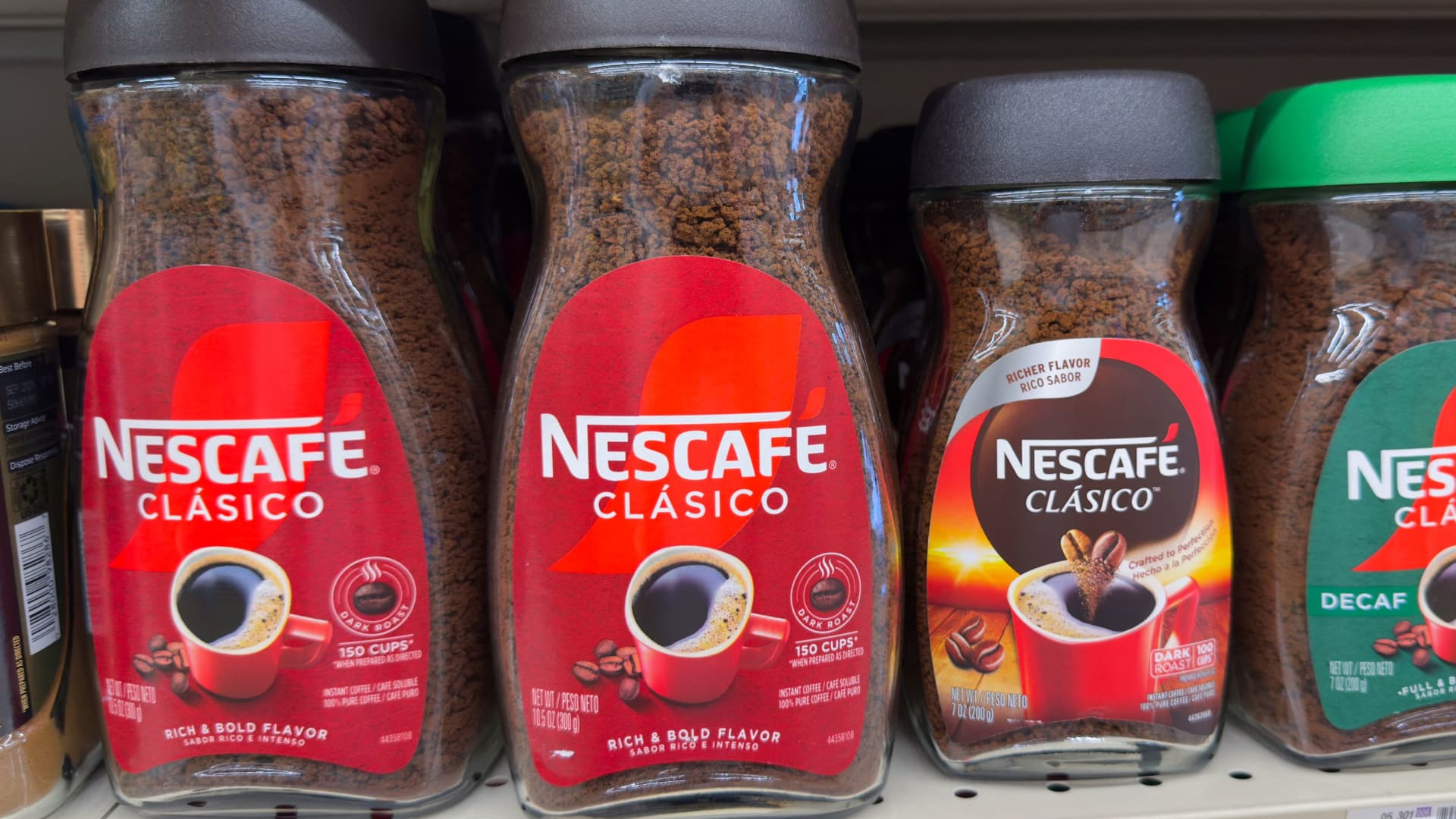
Jars of Nescafe Instant coffee, part of food giant Nestle’s portfolio, sit on a supermarket shelf in Encinitas, California, U.S., September 2, 2025.
Mike Blake | Reuters
Nestle said Thursday it will cut 16,000 jobs as the firm’s new CEO Philipp Navratil looks to accelerate a turnaround at the consumer goods giant.
In a bid to improve operational efficiency, the firm said it will cut 12,000 white-collar jobs and a further 4,000 roles will be reduced over the next two years.
Shares were last trading 7.2 higher on Thursday.
Under its former CEO Laurent Freixe, Nestle had already announced a cost-savings programme worth 2.5 billion Swiss francs ($3.14 billion). This has now been accelerated to 3 billion Swiss francs by the end of 2027.
The company posted a better-than-expected organic growth rate of 4.3% in the third quarter as it battles an uncertain consumer outlook amid U.S. tariffs and an increase in raw material prices, such as cocoa and coffee beans.
Notably, Real Internal Growth (RIG) returned to positive territory in the third quarter — up 1.5% — as the maker of Nespresso and KitKat saw growth investments pay off, also helped by easier comparisons.
A miss on RIG in the second quarter had led to a sharp underformance of Nestle shares. Ahead of the results, analysts at HSBC had already expected RIG to return to positive territory “owing to easier comparatives, incrementally greater benefits from Nestle’s own actions plus reduced elasticity effects from price increases.”
However, the company’s business in Greater China continued to underperform, with the region negatively impacting organic growth by 80 basis points and RIG by 40 basis points. Nestle added that “new management was now in place and it was executing its plan to transform the business.”
The firm’s strategy of focusing on winners and turnarounding its losers helped driver better-than-expected third quarter sales, said Jon Cox, head of European consumer equities, at Kepler Chevreux.
“Overall, it is extremely positive and certainly looks operationally as if the company has turned the corner with the better performance while the management upheaval over the summer fades into the background,” Cox said, adding that he expects the stock to react very positively.
Turbulent year
The Vevey, Switzerland-based consumer goods giant has come under pressure from investors as its operating and share performance have trailed peers.
Its shares are off more than 40% from its Dec 2021 peak, and have fallen 9% over the past 12 months.
Nestle’s shares
Nestle has endured a turbulent year, as it saw its CEO Laurent Freixe ousted over an undisclosed romantic relationship on September 1.
His successor, Navratil is the former CEO of the company’s Nespresso business. He has pledged to “fully embrace the company’s strategic direction, as well as the action plan in place to drive Nestle’s performance,” and vowed to “accelerate execution and to drive the value creation plan with intensity.”
Only two weeks later, Nestle saw itself forced to accelerate Chairman Paul Bulcke’s departure, owing to pressure from institutional shareholders over his handling of Freixe’s allegations.
Bulcke, also a former CEO of Nestle, stepped down from his role earlier than planned, handing over the reins to Vice Chairman and Chairman elect Pablo Isla, a former Inditex CEO, who was set to take over after Nestle’s AGM in April 2026.
Analysts say the new leadership duo will need to earn back trust from investors.
“Many long term investors … would have to hear more from someone who is relatively unknown to the market before becoming more positive,” Deutsche Bank analysts wrote in a September note.
While the initial focus will be on recovery in volume growth and its Chinese business, longer-term investors will be keen to receive updates on the partial sale of Nestle’s struggling water unit as well as its underperforming vitamins business, along with plans for its 20% stake in L’Oreal.
“Now we must do more and move faster to accelerate our growth momentum,” Navratil said Thursday in a statement on the company’s earnings.
“As Nestle moves forward, we will be rigorous in our approach to resource allocation, prioritising the opportunities and businesses with the highest potential return.”
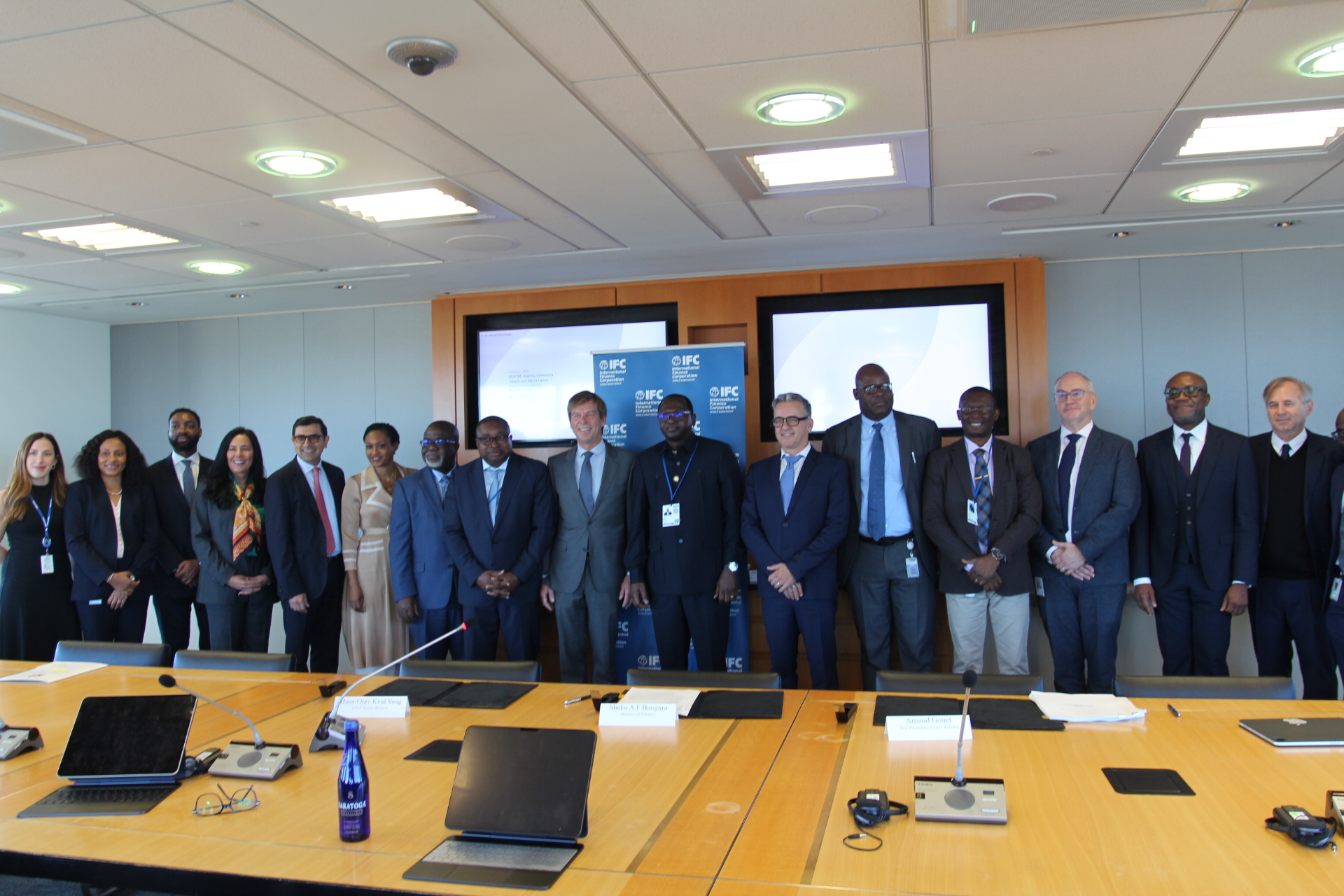
Oslo/Washington DC, 16 October 2025: Release by Scatec, majority owned by Scatec ASA has signed new lease agreements totalling 64 MW of solar power and 10 MWh of battery storage across Liberia and Sierra Leone.
“These agreements mark a significant step in strengthening our renewable energy presence and delivering flexible, modular “lease-to-own” solutions to utilities in Sub-Saharan Africa. The projects are designed to replace expensive fossil fuel generation, improve grid reliability, and support local economic development,” says Scatec CEO and Chairman of Release, Terje Pilskog.
Release receives support from the World Bank’s IFC through a USD 100 million loan and a USD 65 million guarantee facility, established in 2023, securing payment obligations from Release’s clients. This partnership enables Release to offer affordable, clean power to African utilities with reduced financial risk, simplifying renewable energy adoption.
In Liberia, Release has entered into a 15-year lease agreement with the state-owned Liberia Electricity Corporation (LEC) for the development of a 24 MW solar plant combined with a 10 MWh battery energy storage system (BESS) in Duazon, near Monrovia. Release also secured a 40 MW solar project in Sierra Leone through a lease agreement with the national utility EGTC and the Ministry of Energy.
These two projects will be the first projects where Release will use its newly introduced solar panel mounting structure designed by its engineering team in South Africa, representing a milestone for the company and marking a start to a new way of delivering its projects.
Release is owned by Scatec (68%) and Climate Fund Managers (CFM) (32%) via its EU-supported Climate Investor One Fund, a USD 1 billion blended finance facility focused on renewable energy infrastructure in emerging markets.
For further information, please contact: For analysts and investors: Andreas Austrell, SVP IR andreas.austrell@scatec.com +47 974 38 686
About Scatec Scatec is a leading renewable energy solutions provider, accelerating access to reliable and affordable clean energy in emerging markets. As a long-term player, we develop, build, own, and operate renewable energy plants, with 6.2 GW in operation and under construction across five continents today. We are committed to growing our renewable energy capacity, delivered by our passionate employees and partners who are driven by a common vision of ‘Improving our Future’. Scatec is headquartered in Oslo, Norway and listed on the Oslo Stock Exchange under the ticker symbol ‘SCATC’. To learn more, visit www.scatec.com or connect with us on LinkedIn.
About Release Designed to overcome financial and technical barriers associated with adopting solar energy, Release is a flexible leasing agreement of pre-assembled solar PV and battery equipment to deliver a low cost, clean, and reliable power solution. About Release – Release by Scatec
This information is subject to the disclosure requirements pursuant to Section 5-12 the Norwegian Securities Trading Act
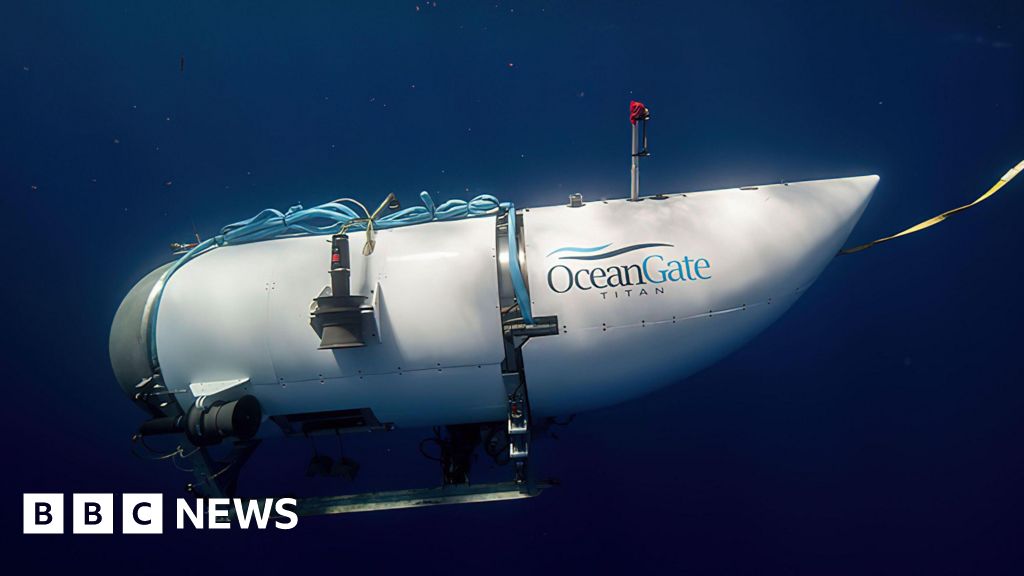
OceanGate’s Titan submersible imploded on its journey to the wreck of the Titantic because of poor engineering and multiple failures to test the vessel, according to an official report.
Titan imploded in June 2023, killing all five passengers on board including OceanGate’s chief executive.
The US National Transportation Safety Board (NTSB) found the engineering process behind the vehicle was “inadequate”, resulting in faults which meant it failed to meet strength and durability requirements.
The NTSB said because the firm did not adequately test Titan it did not know its actual strength. It was also unaware it was damaged and should have been removed from service before its last voyage.
Titan disappeared in the North Atlantic as it attempted to dive to the wreck of Titanic which lies some 372 miles from St. John’s in Newfoundland and Labrador in Canada.
In August, the US Coast Guard released a damning report into the implosion which found that the incident was “preventable” and criticised OceanGate’s “critically flawed” safety practices.
Stockton Rush, OceanGate’s chief executive, operated the Titan on its final journey.
The passengers, who paid $25,000 each to take part in the dive, deep-sea explorer Paul-Henri Nargeolet, Shahzada Dawood and his 19-year-old son Suleman Dawood and Hamish Harding.
Suryakali Vishwakarma says the fortified rice she’s rolling into balls helps her family stay healthy. Photo: WFP
For Suryakali Vishwakarma, all rice is not created equal.
The pearly grains might look and taste the same. But the fortified rice, along with wheat, that she collects from a government village shop in northern India’s Uttar Pradesh State – both packed with essential vitamins and minerals – have become her go-to staples.
“Providing good nutrition to our children is no longer a problem,” says the young mother, after rolling a bowlful of fortified rice for cooking. “We feel healthy and fine with the consumption of nutritious, fortified rice.”
In India, and across Asia and the Pacific, fortified rice and wheat are transforming diets and futures for millions of the world’s poorest and hungriest people – thanks to government-led initiatives in partnership with the World Food Programme (WFP) and the Gates Foundation. Regional bodies, like the Association of Southeast Asian Nations, are also catalytic, by helping member states share lessons, align standards and pilot new models – so that progress in one country drives broader change.
Across Asia and the Pacific, fortified rice and wheat are transforming diets and futures. Photo: WFP
“What connects all these efforts is strong government leadership, solid delivery systems and growing private sector engagement,” says Arvind Betigeri, WFP food fortification advisor for the Asia-Pacific region.
Packing up to eight essential nutrients, including iron, zinc, folic acid and vitamins A and B, the fortified grains amount to an inexpensive and powerful weapon in fighting malnutrition – in a region where poor diets leave one in three women anaemic, and nearly 80 million children stunted, or too short for their age.
Some of the most stunning results can be seen in India, the world’s most populous country, with high rates of anaemia and micronutrient deficiencies. More than half the population now has access to fortified food, especially staple rice, thanks to government leadership and WFP-supported pilots rolled out and expanded in some of the most vulnerable parts of the country.
Some of the most stunning results of fortification can be seen in India, the world’s most populous country, with high rates of anaemia and micronutrient deficiencies. Photo: WFP
“Improving nutrition outcomes has a direct implication on improving the national productivity and economic output for the country,” says WFP food fortification policy officer Reema Sood. She cites findings showing that every US$1 invested in fortification delivers US$27 in returns, in terms of better cognitive development, increased economic productivity and reduced expenditure on treating diseases and anaemia.
Game changers
In populous states like Uttar Pradesh – where fortified rice reaches millions – the pilots are improving local production capacity and the quality of fortified food. They are also expanding public availability and acceptance, through cooking classes and awareness campaigns. For the most vulnerable, including pregnant and breastfeeding women and young children, fortified rice and wheat are available free of charge, as part of government safety net and school feeding programmes.
A young pupil in Cambodia enjoys his fortified rice that’s part of WFP-supported school meals. Photo: WFP/Darapech Chea
“The fortified rice that is being provided is very beneficial for people’s health,” says mother Vishwakarma, who also credits her children’s strong marks to platefuls of fortified rice they receive at class.
“They are active throughout and their performance in school is also good,” she says of her two daughters. “They are the highest scorers in their school.“
In Sri Lanka – where many children suffer from a dearth of essential vitamins and minerals – WFP is collaborating with district governments to set up fortification facilities, which supply enriched rice to the national school meals programmes.
“This isn’t just a project, this is a game-changer for nutrition and education in Sri Lanka,” says Samir Wanmali, WFP Regional Director for Asia and the Pacific.
A school girl eats fortified food in Sri Lanka, where WFP is collaborating with district governments to set up fortification facilities. Photo: WFP
In Bangladesh, where micronutrient deficiency, known as ‘hidden hunger,’ is also widespread, WFP is providing technical and other support to the Government’s food fortification programme, which targets women like Shikha Akhtar.
“Since I started eating fortified rice, I’ve been in better health,” says Akhtar, a Dhaka-based mother of two, who has struggled with illness. The 30kg of free Government-fortified rice is a welcome windfall for the family, which survives on her husband’s meagre wages as a daily labourer. “I encourage my neighbours in the village to eat this rice,” she says.
“Our main objective is to reach every woman’s doorstep across the country” with fortified rice, says Sharmin Shaheen, deputy director of Bangladesh’s Women’s Affairs Department.
Powering private partnerships
In Pakistan, WFP provides technical support and training to small-scale millers known as chakkis. Photo: WFP
Along with governments, WFP is also working with the private sector to improve fortified food production across the region. A case in point is Pakistan, where WFP provides technical support and training to small-scale millers known as chakkis, to provide enriched wheat to local communities.
“These boost people’s health, helping to reduce malnutrition, especially for the elderly, women and children,” says one chakki owner, Rashid Nazir, who received WFP support for his business, located in a town outside the capital Islamabad.
The private sector is also key to scaling up food fortification in Nepal, one of the world’s poorest countries, where malnutrition among young children and mothers is high. In the remote, northwestern Karnali Province, WFP is supporting government efforts to make subsidized, fortified rice available to the poorest through social protection programmes, and in commercial markets.
In Nepal, WFP is supporting government efforts to make fortified rice available to the poorest, and companies to build their capacity. Photo: WFP
That includes supporting companies to build their capacity, so Himalayan communities can better access the nutrient-packed grains in a region where food, especially nutritious food, is scarce.
“People travel three-to-five hours by foot to buy the rice,” says Raj Bahadur Rai, a company manager in the Himalayan district of Mugu. “The consumers of this fortified rice have been gradually increasing. They are slowly realizing its value.”
WFP’s rice fortification initiatives in the Asia-Pacific Region are supported by the Gates Foundation, DSM-Firmenich, the Korea International Cooperation Agency (KOICA) and the UN-India Partnership Fund.
Learn more about WFP’s work in Bangladesh, India, Nepal, Pakistan and Sri Lanka
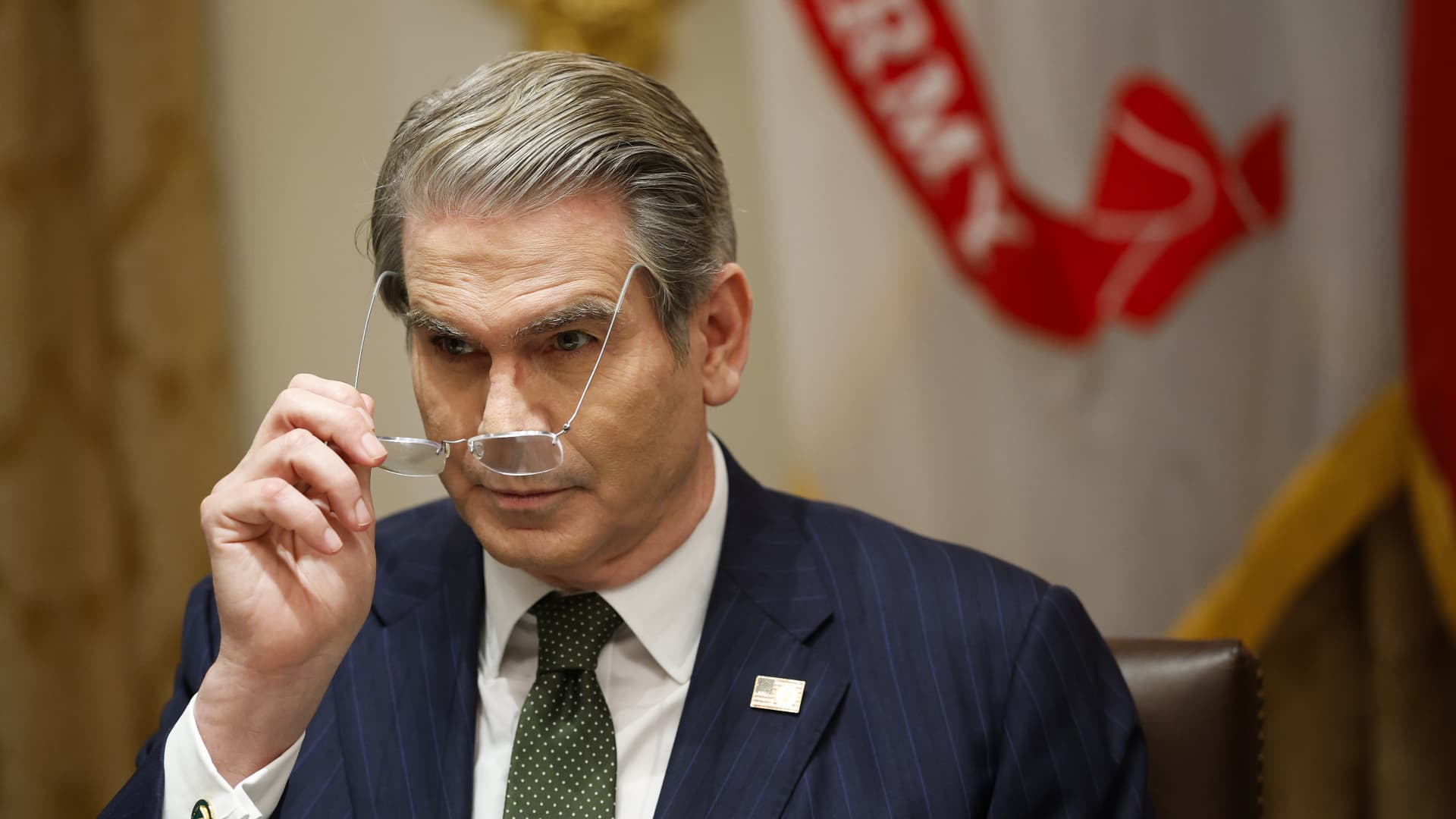
U.S. Treasury Secretary Scott Bessent adjusts his glasses during a meeting with U.S. President Donald Trump and President of Argentina Javier Milei in the Cabinet Room at the White House on Oct. 14, 2025 in Washington, DC.
Kevin Dietsch | Getty Images
China has been using its dominance in the rare earth industry to slash prices, driving foreign competitors out, U.S. Treasury Secretary Scott Bessent told CNBC on Wednesday stateside in an exclusive interview. He characterized the country as having "a nonmarket economy."
In response, the Trump administration will "exercise industrial policy" to set price floors in a range of industries. Price floors are a limit of how low suppliers can charge for goods or services. They are typically set above the market rate and are essentially a form of government price control.
Meanwhile, Bank of America and Morgan Stanley reported blockbuster second-quarter earnings that shot way past analyst expectations. They joined other major U.S. banks, such as JPMorgan Chase and Goldman Sachs, in ihaving a blowout quarter that was turbocharged by robust dealmaking and stock market highs.
And despite U.S. President Donald Trump's continued saber-rattling at China on the trade front, traders don't seem ready to let go of equities. On Wednesday stateside, the S&P 500 and Nasdaq Composite rose, and the Russell 2000 hit a fresh record. After all, earnings reports are indicating that the economy isn't yet faltering, despite firms already experiencing higher costs because of tariffs, according to the U.S. Federal Reserve's Beige Book.
Whether traders continue pushing equities to new highs amid fractious trade relations with China will depend, in part, on the earnings of major technology companies such as Tesla and Intel due next week.
What you need to know today
And finally...
A Chinese flag flutters on top of the Great Hall of the People ahead of the opening ceremony of the Belt and Road Forum (BRF), to mark 10th anniversary of the Belt and Road Initiative, in Beijing, China October 18, 2023.
Hear that? That’s the sound of the jobs market creaking, if not cracking.
Australia’s unemployment rate unexpectedly jumped to a four-year high of 4.5% in September, up from 4.3% the month before.
Jim Chalmers is in Washington DC attending a G20 summit, but still found time to put out a statement reminding us that the jobless measure is “still very low by historical standards”.
That’s a fair statement. Not counting the pandemic and its aftermath, you need to go back 17 years to find a lower jobless rate.
The jump in the share market after the data release pointed to firming bets that the Reserve Bank was now odds-on to deliver a rate cut at its Melbourne Cup day meeting.
But low unemployment is a prize we must not lose, and the latest figures from the Australian Bureau of Statistics will be a major worry for the treasurer – as it will be for all Australians.
The resilient labour market is the jewel in Labor’s crown when it comes to its economic record, even overshadowing the major decline in living standards that has been a feature of the post-pandemic landscape.
Chart showing jobless rate increasing
Unemployment at 4.5% is no disaster, but it is very much not part of the plan – and it raises the fear that it could go higher still.
The RBA had expected the jobless rate to peak at 4.3% this year and stay there through 2026, which aligns with the budget forecasts.
Sign up: AU Breaking News email
Two-a-half weeks ago the central bank’s monetary policy board held the cash rate as board members fretted that inflation would come in hotter-than-expected in the three months to September.
They will surely be reconsidering their options today, and Thursday’s figures mean the RBA is now favourite to act when it next meets.
The chance of a November rate cut jumped from 36% to 64% after the jobs report, according to pricing in financial markets, while the chance of a cut by December jumped from 60% to a near certainty.
There were even murmurings in the market on Thursday afternoon of a double rate cut, which is surely premature.
Rising inflation and climbing unemployment would be a headache for the central bank. Much now hinges on the September quarter consumer price report on 29 October, but it would have to be pretty bad to stay the central bank’s hand.
The key question is: was September’s labour force data a monthly blip, or the start of something worse?
The answers lie in the cross currents that have been shifting below what has been, until now at least, a largely becalmed jobs market.
Pat Bustamante, an economist at Westpac, says rapid hiring in government-backed sectors such as aged care and the NDIS helped drive the post-Covid employment boom, despite underwhelming economic growth. That impulse has since faded, and the dynamic has reversed: employment growth has slowed even as the economy has picked up.
Which means much depends on whether the private sector, which tends not to be as labour-intensive, can maintain enough hiring momentum to keep unemployment low – something RBA board members also discussed at their recent meeting.
If it can’t, then Bustamante calculates that the unemployment rate could reach as high as 4.8% early next year, which is perilously close to losing all the post-pandemic labour market gains.
That’s not something the central bank, or the government, would want to risk.
Paris, October 15th, 2025 – Broadcom Inc. today announced that the Caisse Nationale des Allocations Familiales (CNAF), a cornerstone of France’s public service, has selected VMware Cloud Foundation (VCF) to accelerate its digital transformation. CNAF’s new private cloud built on VCF will enable the institution to combine enhanced security, data sovereignty, and operational agility—critical priorities as the modernization of public services becomes a national imperative.
A System Under Regulatory and Security Constraints
Each year, CNAF manages millions of transactions while adhering to strict regulatory requirements, which demand extremely tight production timelines. Simultaneously, its cybersecurity teams face near-daily attack attempts, necessitating maximum resilience and responsiveness.
By delivering a single unified platform, VCF offers a holistic view of private cloud operations, improving productivity and delivering faster insights to enable more rapid incident response and better performance optimization, which is essential for the smooth operation of Caisses d’Allocations Familiales (CAF) across France.
Security and Sovereignty at the Core of the Strategy
With VCF, CNAF benefits from critical features such as live patching, Zero Trust micro-segmentation, and automated workload monitoring. These capabilities strengthen the protection of beneficiaries’ data while reducing the time required to deploy new applications.
“Security and sovereignty of our data are non-negotiable. With VCF, we help ensure that sensitive information remains within our data centers while leveraging trusted European clouds,” emphasizes Nicolas Poulain, Director of Operations & Technical Engineering at CNAF.
This approach aligns with France’s national strategy to bolster the resilience of public infrastructure, a key priority as digital sovereignty becomes a strategic focus.
Empowering Public Sector Innovation
“CNAF’s transformation exemplifies VMware solutions’ mission: enabling the public sector to combine innovation, security, and performance to meet the growing expectations of citizens. With VMware Cloud Foundation, we help organizations take the next step by building a trusted cloud foundation capable of supporting both today’s services and tomorrow’s emerging needs,” explains Marc Dollois, General Manager, France, Broadcom Software.
Innovation Serving Millions of Beneficiaries
Beyond technical gains, the platform’s modernization has a clear goal: improving the experience for beneficiaries. CNAF is working to automate benefit allocation, ensuring that eligible individuals receive their entitlements directly, without complex administrative procedures. This simplification will help reduce fraud, increase fairness, and make it easier for those with legitimate rights to access their allocations.
“Our mission is to provide a reliable, stable, and high-performing IT system, because behind every online process and payment are millions of families who depend on us,” notes Nicolas Poulain.
Committing to a More Efficient and Accessible Future
By adopting VCF, CNAF is also positioning itself to explore new use cases—such as artificial intelligence through VMware Private AI, or modern application orchestration with vSphere Kubernetes Services (VKS), delivering greater agility, resilience, and compliance for cloud-native applications.
The objective: to pave the way for a more proactive and automated public service, capable of anticipating needs and delivering allocations transparently and swiftly. The combination of a modernized infrastructure, enhanced security, and integrated AI capabilities places CNAF at the forefront of digital transformation in France’s public sector.
The UK economy expanded by 0.1% in August, according to official figures, giving a lift to Rachel Reeves ahead of next month’s crucial budget.
After the economy flatlined in July, the Office for National Statistics said gross domestic product had improved the following month. It keeps the UK on track to being one of the fastest-growing major economies this year.
The chancellor is weighing up raising funds from a series of tax rises in her 26 November budget to close a £20bn to £30bn budget spending gap that has opened up this year.
A Reuters poll of City economists expected a return to modest growth based mainly on a recovery in the manufacturing sector.
Inflation is forecast to begin easing before the end of the year and the Bank of England is expected to make further interest rate cuts in 2026, easing the pressure on household incomes.