Category: 3. Business

  • Climate Solutions Already Exist – Here’s How to Speed Up Adoption

    Climate Solutions Already Exist – Here’s How to Speed Up Adoption

    By Dr. Hao Xu, Head of Climate Innovation, Tencent

    We already have the technologies to fight climate change – so why aren’t we deploying them faster?

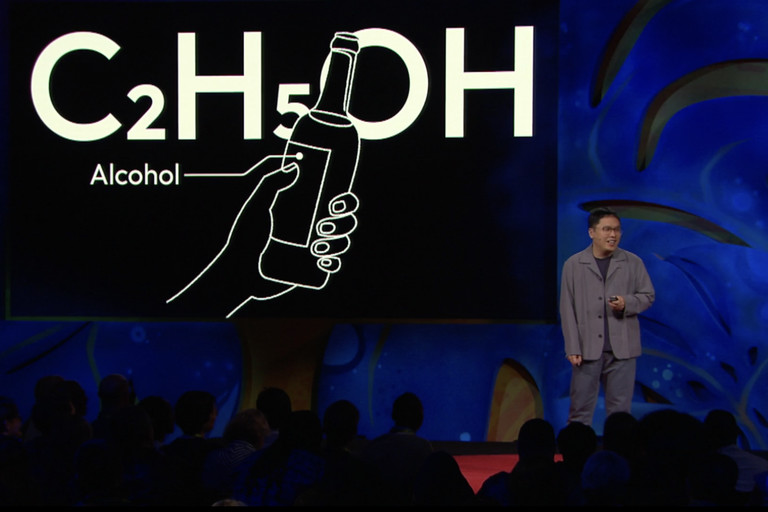
    That was the question I explored in my TED Countdown Talk. As Head of Climate Innovation at Tencent and an environmental engineer by training, I believe the biggest barrier to decarbonization isn’t the lack of technology – it’s how we work together.

    The good news? There’s a way forward. Many scalable climate solutions are available today. From bacteria that turn CO₂ into fuel, to cooling materials that help save glaciers, we can make real impact now. The key is accelerating them by uniting science, engineering, and business to turn bold ideas into real-world solutions that help decarbonize the planet.

    Catalyzing emerging low-carbon technology

    “I’m more optimistic than ever that we have the answer to accelerating climate innovation, and it’s simple.”

    Dr. Hao Xu, Head of Climate Innovation, Tencent

    Although Tencent is not a major emitter, we are deeply committed to sustainability and tackling climate change. We have pledged to achieve carbon neutrality in our operations and supply chain by 2030 and are leveraging our capabilities to fulfil our mission of creating tech for good.

    Beyond improving data center efficiency and sourcing renewable energy, we’re focused on how to catalyze the next generation of climate technology. That’s why we launched our CarbonX program in partnership with industry, investors and innovators. Three years in, I’m more optimistic than ever, because we think the right answer is not so complicated.

    Through CarbonX, we’ve learned that successful climate tech acceleration happens when four key areas work in harmony.

    1. Scientific innovation: saving decades of climate tech R&D

    Let’s start with the science, which is in advanced stages. We can capture solar energy, store it using cutting-edge chemistry, and convert CO₂ into valuable products – shaving decades off development.

    Take Gasgene, a startup we work with through CarbonX. Using CRISPR – a gene editing tool – to reprogram clostridium bacteria, they’ve essentially taught these microorganisms to “eat” carbon dioxide and produce butanol instead. Butanol is found in clothing, paint, water bottles, toys and the like. With engineered clostridium, we can make these everyday products from captured carbon instead of fossil fuels.

    2. Engineering expertise: scaling the science from lab to real world

    Next is engineering, which acts as the bridge from lab to production, bringing scientific ideas to life at scale.


    Imagine building a facility to produces 20,000 tons of butanol a year from captured CO₂. Engineers must decide: what size reactors are needed? Can we use standard equipment, or must systems be customized? How do we optimize for cost, safety and energy?

    Think of it like LEGO – you use existing blocks wherever possible to build something new quickly and efficiently.

    Feynman Dynamics, another CarbonX innovator, faced this challenge. Their goal: produce sustainable aviation fuel by combining captured CO₂ with green hydrogen. Their breakthrough? A catalyst that blends these ingredients at the molecular level, like a smoothie machine. Inspired by pharmaceutical chemistry, they created a reactor that delivers consistent, scalable performance, cutting waste and boosting efficiency.

    3. Business knowhow: turning innovation into industry

    However, even the best-engineered solution can fail without a viable business model. Markets, costs and customer demand drive adoption and innovations must make commercial sense.

    Yuanchu, a startup that captures CO₂ and turns it into calcium carbonate – used in paper, makeup, and toothpaste – found a smart market fit. Instead of mining limestone, they repurpose steel and industrial by-products, cutting both emissions and costs.

    Another example is Moguang, which developed cutting-edge radiative cooling material that reflects over 90 percent of sunlight. It cools objects naturally without using electricity. We piloted this technology on the endangered Dagu Glacier in southwestern China. After three years, melting slowed by 80 percent.

    Today, that same material is used in hundreds of thousands of smartphone screens and sports cameras. From glaciers to gadgets, climate tech innovation is full of possibilities.

    4. Integration: solving the bottlenecks

    So, what’s holding us back? It’s not invention, it’s isolation.

    Scientists focus on discovery. Engineers optimize performance. Businesses look at balance sheets. But rarely do they work together from day one.

    To accelerate climate solutions, however, these disciplines must collaborate from the start. That means:

    • Scientists asking: how much energy does it take to capture one ton of CO₂?
    • Engineers asking: can this be deployed at industrial levels?
    • Business leaders asking: when can we make this cost effective?

    These aren’t easy conversations. But such cross-disciplinary tensions are essential to speed up progress and get us closer to decarbonization.

    We’ve already seen this model succeed. With Gasgene, we helped form a clean chemical consortium, linking startups, chemical companies, and consumer brands to make carbon-based products a reality. That alignment enabled pilot deployment and scaling.

    To recap, we don’t need to wait for new inventions. We need to work faster, and work together. That’s how we can accelerate the transition to a low-carbon world!
    Continue Reading

  • SBP chief stresses economic stability – Dawn

    1. SBP chief stresses economic stability  Dawn
    2. Rate cut unlikely this month, says SBP governor  Dawn
    3. Pakistan Central Bank Says Further Rate Cuts Hinge on IMF Review  Bloomberg.com
    4. SBP sees recovery, analysts disagree  The Express Tribune
    5. Inflation projected to remain 5–7% despite flood pressures, says SBP governor  Profit by Pakistan Today

    Continue Reading

  • Newly developed eAxle adopted for TOYOTA’s new “bZ4X” | Newsroom | News

    Newly developed eAxle adopted for TOYOTA’s new “bZ4X” | Newsroom | News

    BluE Nexus Corporation (Headquarters: Anjo City, Aichi Prefecture; President: Hidetoshi Uchiyama, hereinafter “BluE”) and AISIN Corporation (Headquarters: Kariya City, Aichi Prefecture; President: Moritaka Yoshida, hereinafter “AISIN”), and DENSO CORPORATION (Headquarters: Kariya City, Aichi Prefecture; President: Shinnosuke Hayashi, hereinafter “DENSO”) have jointly developed an eAxle that achieves high power performance in a compact size, contributing to improved vehicle energy efficiency. This product will be installed in the new Toyota bZ4X.
      
    The newly adopted eAxle, new inverter with a flat, double-sided cooling structure that incorporates advanced SiC (silicon carbide) power semiconductors and cooling technology, thereby enhancing output density and efficiency. Furthermore, transmission efficiency has been improved by enhancing gear precision and reducing oil agitation resistance through casing shape optimization.
    Through these technological advancements in eAxle, we are supporting the creation of vehicles that not only enhance practicality, such as extending driving range, but also pursue the pleasant driving experience and comfort that defines the bZ4X. Furthermore, it contributes to TOYOTA’s “multi-pathway” approach, which addresses the diverse needs of customers in every country and region as we strive to achieve carbon neutrality.
     
    Moving forward, BluE, AISIN, and DENSO will continue to leverage our respective strengths and expertise to provide valuable technologies and products and contribute to a carbon-neutral society by having our products equipped in all types of electric vehicles.

    Continue Reading

  • Inflation projected to remain 5–7% despite flood pressures, says SBP governor

    Inflation projected to remain 5–7% despite flood pressures, says SBP governor

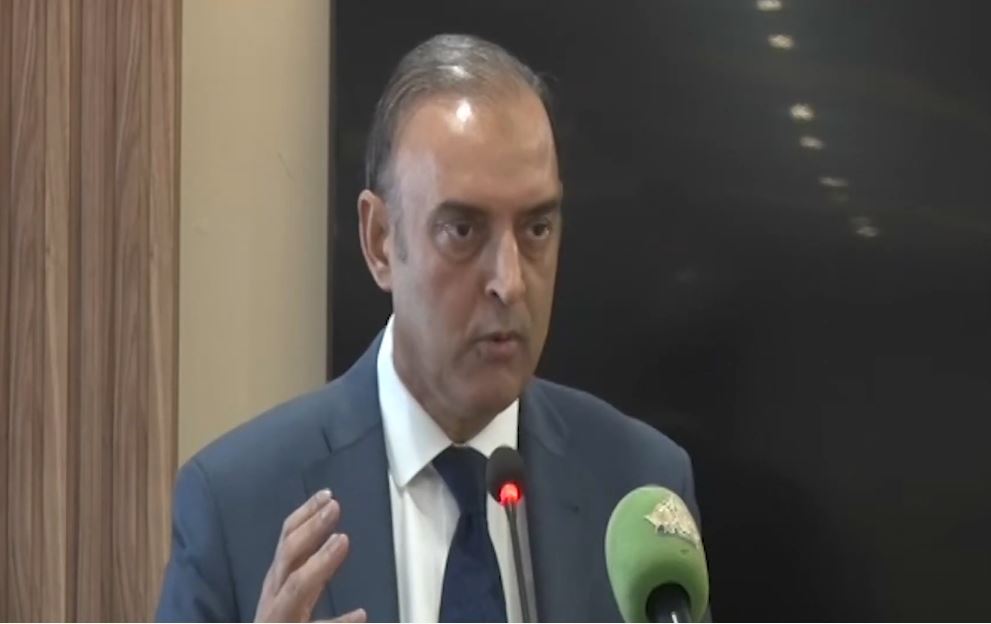
    The Governor of the State Bank of Pakistan (SBP), Jameel Ahmad, said that inflation has declined sharply and is projected to remain within the government’s target range of 5 to 7% over the medium term, although recent floods may exert temporary upward pressure on prices. 

    Addressing the 9th Annual Microfinance Conference on Thursday, organised by the Pakistan Microfinance Network under the theme “Renaissance of Microfinance,” Governor Ahmad reiterated that achieving inclusive economic growth requires durable macroeconomic stability that uplifts communities and ensures prosperity for all. He reaffirmed the central bank’s commitment to expanding financial inclusion and narrowing the gender gap.

    The governor said that the policy and regulatory measures implemented in recent years have established a period of macroeconomic stability, reflected in significant improvements in key economic indicators. 

    He noted the remarkable growth in Pakistan’s foreign exchange reserves since February 2023 and strategic interbank purchases, which have strengthened reserves and enabled the government to make timely debt repayments without borrowing at higher interest rates.

    Governor Ahmad emphasised that the SBP’s monetary policy and regulatory efforts have been complemented by sustained fiscal consolidation by the government, helping to contain demand-side pressures on inflation and the external account. 

    He pointed out that Pakistan’s debt dynamics have considerably improved over the past three years and that economic growth is on track to recover and is expected to accelerate further in the current fiscal year. Reflecting on two decades of progress, the Governor reaffirmed SBP’s commitment to microfinance as a driver of inclusive growth and explained that the central bank has revised the Prudential Regulations for Microfinance Banks, transitioning from a rules-based to a principles-based approach. These reforms have removed restrictions on microenterprise lending, allowed greater operational flexibility, introduced a dedicated Agriculture and Livestock loan category, and increased loan limits up to Rs 5 million for agriculture, microenterprise, and housing loans, and Rs 500,000 for general loans.

    He further highlighted the launch of the Climate Risk Fund under the World Bank-funded Resilient and Accessible Microfinance Project, which aims to support two million borrowers through liquidity facilities to mitigate the impact of climate shocks. 

    In collaboration with the government, SBP has also introduced a Risk Coverage Scheme for Small Farmers and Underserved Areas, providing 10% first-loss coverage and operational incentives to expand lending in underserved regions such as Balochistan, Khyber-Pakhtunkhwa, Azad Jammu & Kashmir, and Gilgit-Baltistan.

    Governor Ahmad underscored the progress under the National Financial Inclusion Strategy (NFIS) 2028, noting that financial inclusion rose from 47% in 2018 to 67% in June 2025, while the gender gap in financial access narrowed from 47% to 30%. He credited transformative digital initiatives including Raast, Asaan Mobile Account, Roshan Digital Account, the launch of Digital Banks, and the Banking on Equality Policy. He also reiterated the NFIS 2028 targets, which aim to expand financial inclusion in Pakistan to 75% and reduce the gender gap to 25% by 2028.

    The Governor urged microfinance institutions to strengthen risk management practices by utilizing alternative data sources, digital tools for credit scoring, conducting internal audits, training staff to prevent fraud, and maintaining adequate liquidity buffers. He emphasized that good corporate governance, transparent communication, and climate-risk mapping are essential to fostering long-term sustainability.


    Continue Reading

  • Chinese yuan strengthens to 7.1048 against USD Friday-Xinhua

    BEIJING, Oct. 10 (Xinhua) — The central parity rate of the Chinese currency renminbi, or the yuan, strengthened 54 pips to 7.1048 against the U.S. dollar Friday, according to the China Foreign Exchange Trade System.

    In China’s spot foreign exchange market, the yuan is allowed to rise or fall by 2 percent from the central parity rate each trading day.

    The central parity rate of the yuan against the U.S. dollar is based on a weighted average of prices offered by market makers before the opening of the interbank market each business day.

    Continue Reading

  • China’s wafer shake-up and the rise of ‘Silicon Desert’

    China’s wafer shake-up and the rise of ‘Silicon Desert’

    Hi everyone! This is Cheng Ting-Fang, your #techAsia host this week.

    Greetings from the “Silicon Desert” of Arizona, where I have had the rare opportunity to visit Intel’s newest and most advanced facility. Known as Fab 52, it has just begun production of the world’s most cutting-edge chips, marking a key milestone for the American chipmaker’s tech comeback bid.

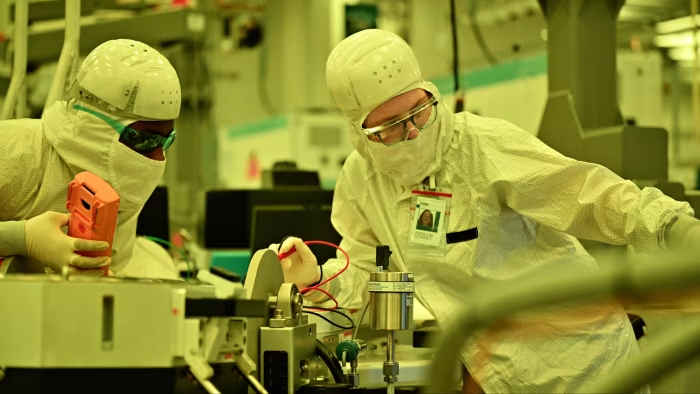
    Suiting up in a cleanroom gown was an experience. It started with a shower cap, then a full head cover that also covered my nose and mouth. Two pairs of gloves, one rubber and one cotton, to fully seal my hands were followed by shoe covers, cleanroom boots and protective eyewear. This provides a glimpse into the daily routine of a technician working on an ultra-advanced production line. And keep in mind, workers need to wear this gear the entirety of their 12-hour shifts.

    Factory manager Michael led us through the factory floor of Fab 52, home to Intel’s most advanced 18A chip production.

    Machines known as overhead hoist vehicles immediately caught everyone’s attention. Moving along tracks on the ceiling, they formed a kind of “multi-story superhighway” connecting all of Intel’s fabs across the campus. More than 2,100 of these driverless cars travel along about 30 miles of track, ferrying silicon wafers from one machine to another. We also stopped by ASML’s advanced extreme ultraviolet (EUV) lithography machines on the cleanroom floor. The tools are essential for printing the world’s tiniest transistor structures — and they are not the only cutting-edge feature of the plant.

    “Even the concrete used to build the new factory needs to be specially tailor-made to accommodate new machines and new technologies,” the factory manager said. According to Intel, about 600,000 cubic metres of concrete and 75,000 tonnes of steel reinforcement were used for Fab 52, roughly twice the amount used to construct the Burj Khalifa in Dubai, the world’s tallest building.

    Outside, under the azure October sky, stretched the sun-baked plains of the desert, dotted with iconic saguaro cacti and agave plants. Rugged mountains loomed in the distance.

    About an hour’s drive north from Intel’s campus in Chandler towers another impressive sight: “Big Red”, the largest crane in the US. Its presence is a sign that construction remains in full swing at another leading chipmaker, Taiwan Semiconductor Manufacturing Co. The company plans to start installing equipment at its second plant in north Phoenix next year, while construction on a third facility started earlier this year. Several more facilities are expected to follow, as TSMC has committed to investing a total of $165bn in the US.

    Arizona is a unique place where two of the world’s top chipmakers, Intel and TSMC, are building or plan to make their most advanced chips. Yet many industry leaders note that manufacturing in the US comes with higher costs and a shortage of skilled workers, challenges I witnessed first-hand during my trip.

    A simple meal of two sushi rolls with miso soup cost nearly $40, more than double what I would pay in Taiwan or Japan. A basic wash and blow-dry at a hair salon was over $50, with a 20 per cent tip expected as a matter of course. Similar services in Taipei or Tokyo cost about a third. (Though Arizona residents told me that the cost of living in the Grand Canyon State is still much more affordable than in California!)

    Even getting around day to day felt slower. An average Uber wait was around 10 to 12 minutes, compared with just 3 to 5 minutes in many Asian cities. Labor shortages were also clear: at two hotels where I stayed, a single staff member handled the entire breakfast shift, taking orders, brewing coffee and preparing everything from avocado toast and fried eggs to bagels.

    Still, several of my industry friends say that Arizona and the greater Phoenix area are quickly changing, becoming more vibrant as new investments pour in. They tell me that by the next time I visit, it won’t feel like a “food desert” anymore, with well-known Taiwanese restaurants opening branches, plans for mega malls and hotels and a new direct flight from Taipei launching in December.

    China makes waves in wafers

    China’s localisation bid for critical materials and components has started to rattle global players. The latest shock is in silicon wafers, the essential base material on which most chips are built.

    The market has long been dominated by a few major players: Japan’s Shin-Etsu Chemical and Sumco, Taiwan’s GlobalWafers and Germany’s Siltronic. However, Chinese suppliers are rapidly gaining ground, capturing meaningful market share as Beijing pushes to localise critical semiconductor materials. Silicon wafers have become a key focus in China’s drive to strengthen its domestic chip supply chain, Cheng Ting-Fang and Lauly Li report.

    China’s leading wafer maker, Xi’an Eswin Material Technology, is preparing to go public on the Shanghai STAR Market. The company is led by renowned tech entrepreneur Wang Dongsheng, founder of display giant BOE Technology Group. Eswin has already captured about 7 per cent of the global silicon wafer market as of 2024 and is expected to exceed 10 per cent in coming years. Overall, China’s self-sufficiency in using domestically produced wafers among its local chipmakers has already reached 50 per cent, and that rate is expected to rise significantly.

    Back in the game

    Global investors are tiptoeing back into China’s start-up world. After a freeze driven by US-China tensions and Beijing’s tech crackdown, several of the country’s biggest venture capital firms are again raising fresh US dollar funds, write the Financial Times’ Ryan McMorrow and Eleanor Olcott.

    ByteDance backer Source Code Capital and Pop Mart investor BA Capital have each secured about $150mn, while Lightspeed China Partners has raised over $200mn and Qiming Venture Partners is targeting $600mn for biotech bets.

    While the $1.1bn being raised by the VC groups is a far cry from the $30bn that was ploughed into China VC in 2021 and 2022, it marks a thaw after global investors retreated in 2023.

    VCs say the booming Hong Kong IPO market and a hot robotics and AI scene have reignited global investors’ interest.

    “The entire robotics supply chain is in China,” said Xing Meng of 5Y capital, adding that valuations were a fraction of those earned by start-ups in the US

    Overtaking the pack

    US chip investment is projected to accelerate sharply from 2027, outpacing other major chip economies including China, South Korea and Taiwan, Yifan Yu and Cheng Ting-Fang report from Phoenix, Arizona.

    According to the latest estimates by SEMI, investment in US chip manufacturing, including equipment purchases and facility construction, is expected to rise from around $21bn in 2025 and 2026 to $33bn in 2027 and $43bn in 2028. The total between 2027 and 2030 is forecast to reach $158bn.

    This surge in domestic chipmaking capacity is largely driven by government policies and a new tariff environment aimed at reshoring chip production, as well as the growing demand for AI computing, a sector in which US chip developers continue to lead the global market.

    SoftBank gets physical

    SoftBank said it will acquire the robotics business of Swiss-based automation solutions provider ABB for $5.4bn, as the Japanese conglomerate expands its AI investments into a new frontier, Nikkei Asia’s Tsubasa Suruga writes. SoftBank founder Masayoshi Son is betting big on “physical AI”, or embedding AI into machines such as cars or robots to create autonomous systems capable of acting and making decisions like humans. Adding ABB’s robotics business to the group’s portfolio is expected to be a major boost for such ambitions.

    Son’s push echoes that of Infineon’s CEO, who said in an exclusive interview with Nikkei Asia that “physical AI”, including humanoid robots, promise the most exciting growth opportunities for the emerging technology.

    Suggested reads

    1. China curbs use of Nokia and Ericsson in telecoms networks (FT)

    2. Indian logistics get tech overhaul to support supply chain shift (Nikkei Asia)

    3. EU pushes new AI strategy to reduce tech reliance on US and China (FT)

    4. America risks a dangerous dependence on Chinese chips (FT)

    5. Japan’s Ricoh eyes ink-jet tech to make flexible solar cells (Nikkei Asia)

    6. SoftBank’s Son looks to ‘next frontier’ of AI robots with ABB deal (Nikkei Asia)

    7. Convicted moguls Sean Combs and Miles Guo ponder AI platform after jail (FT)

    8. NTT and Broadcom to build key device for ultrafast optical network in 2026 (Nikkei Asia)

    9. Japan grapples with surge in exploding portable power banks (Nikkei Asia)

    10. India solar panel start-up to double capacity, with AI aiding inspections (Nikkei Asia)

    #techAsia is co-ordinated by Nikkei Asia’s Katherine Creel in Tokyo, with assistance from the FT tech desk in London. 

    Sign up here at Nikkei Asia to receive #techAsia each week. The editorial team can be reached at techasia@nex.nikkei.co.jp

    Continue Reading

  • Maersk and CATL Forge Global Strategic Partnership in Supply Chain Electrification and International Logistics

    Maersk and CATL Forge Global Strategic Partnership in Supply Chain Electrification and International Logistics

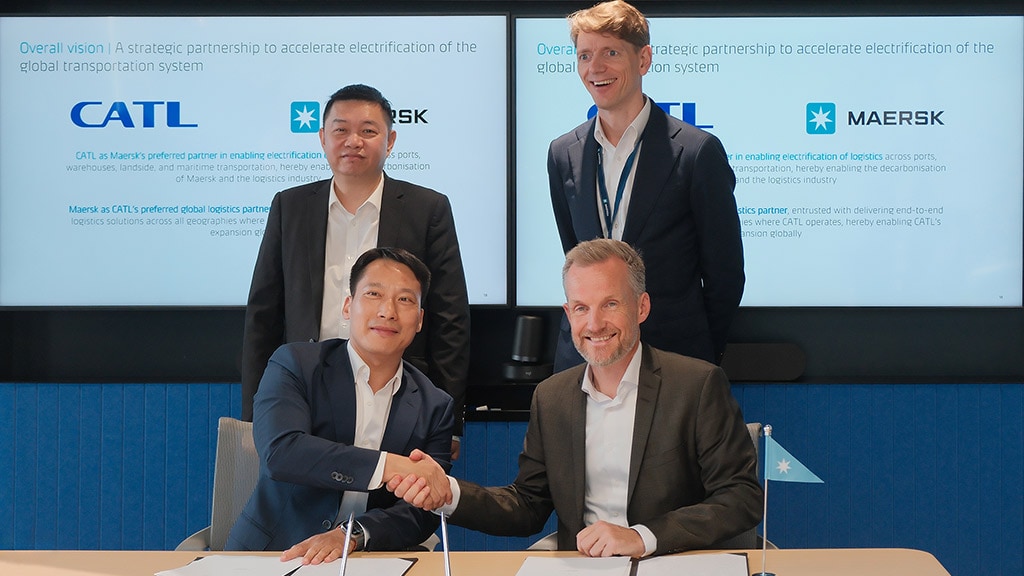
    Beijing, China – A.P. Moller – Maersk (Maersk), an integrated logistics company, and Contemporary Amperex Technology Co., Limited (CATL), a global leader in new energy innovative technologies, have signed a strategic Memorandum of Understanding (MoU) to jointly advance decarbonisation across global supply chains and further strengthen CATL’s global logistics.

    The signing ceremony, held on 9 October in Hong Kong, was attended by senior executives from both companies. The MoU was signed by Morten Bo Christiansen, Senior Vice President, Global Head of Energy Transition of A. P. Moller – Maersk, and Akin Li, Executive President of Overseas Car Business of CATL, and was witnessed by Robert Maersk Uggla, Chairman of A.P. Moller – Maersk, and Libin Tan, Chief Customer Officer, Co-President of Sales & Marketing of CATL, along with other senior leaders and representatives from both organisations.

    Supporting CATL’s Global Ambitions Through End-to-End Logistics

    The MoU builds on the five-year collaboration between Maersk and CATL, across ocean transportation, intermodal and other logistics solutions. Under this new agreement, Maersk will serve as CATL’s preferred global logistics partner, delivering integrated services including ocean freight, air freight, project logistics, and warehousing.
    The two parties will also explore effective and scalable models to help CATL maintain supply chain resilience in a rapidly evolving global landscape. Tailored solutions will be developed to meet the specific needs of diverse markets. These joint efforts aim to drive operational excellence across CATL’s supply chains and support its international growth ambitions.


    Accelerating the Transition to Lower Greenhouse Gas Logistics

    Maersk and CATL will also collaborate to electrify key nodes across the supply chain by leveraging CATL’s advanced battery technologies. This includes exploring the electrification of container shipping and the port ecosystem, inland transportation and warehousing. These initiatives will be supported by electric system design, energy management, and end-of-life battery recycling solutions. Under this agreement, CATL will be regarded as a preferred battery technology partner to support Maersk’s decarbonisation roadmap.

    Maersk has an ambitious target of achieving net-zero greenhouse gas emissions across its entire business by 2040. While reducing greenhouse gas emissions is a shared goal among many companies, this partnership will contribute to the transition by co-developing scalable electrification solutions that support a lower emissions future for the logistics industry.


    The collaboration between Maersk and CATL has continued to expand and evolve. We’re pleased to enter this new phase of partnership, combining CATL’s cutting-edge battery technologies with our integrated logistics capabilities to redefine what’s possible in logistics. This partnership presents a powerful opportunity to accelerate the decarbonisation of global logistics – not only for Maersk, but also for our customers and the broader industry.

    Morten Bo Christiansen

    Senior Vice President, Global Head of Energy Transition, A. P. Moller Maersk


    CATL is committed to becoming a zero-carbon technology company, focusing on three strategic business areas including transportation electrification, industrial decarbonisation, and zero-carbon grid. CATL plans to achieve carbon neutrality in its core operations by 2025 and across the battery supply chain by 2035.


    As a global giant of integrated logistics, A.P. Moller – Maersk, just like CATL, is committed to promoting energy transition and achieving a net-zero emissions future. At this new stage of development, both parties aim to deepen collaboration in shipping, end-to-end supply chain, digitalisation, and new energy applications, working together to accelerate decarbonisation in the global logistics industry.

    Libin Tan

    Chief Customer Officer, Co-President of Sales & Marketing of CATL


    Leveraging Maersk’s global logistics network and CATL’s industry-leading energy technologies, the two companies aim to jointly develop scalable electrification solutions, setting a new benchmark for decarbonising logistics and accelerating the industry’s energy transition.

    About CATL

    Contemporary Amperex Technology Co., Limited (CATL) is a global leader in new energy technology innovation, committed to providing premier solutions and services for new energy applications worldwide.

    In June 2018, the company went public on the Shenzhen Stock Exchange with stock code 300750 and is also listed on the Hong Kong Stock Exchange with stock code 03750 in May 2025. In 2024, CATL’s EV battery consumption volume has ranked No.1 in the world for eight consecutive years, and it has ranked first in the market share of global energy storage battery shipments for four straight years. CATL also enjoys wide recognition by global EV and energy storage partners.

    Committed to making an outstanding contribution to the energy transition of mankind, CATL in 2023 announced its strategic goals of achieving carbon neutrality in core operations by 2025 and across the battery supply chain by 2035.

    About Maersk

    A.P. Moller – Maersk is an integrated logistics company  working to connect and simplify its customers’ supply chains. As a global leader in logistics services, the company operates in more than 130 countries and employs around 100,000 people. Maersk is aiming to reach net zero GHG emissions by 2040 across the entire business with new technologies, new vessels, and reduced GHG emissions fuels*.

    *Maersk defines “reduced GHG emissions fuels” as fuels with at least 65% reductions in GHG emissions on a lifecycle basis compared to fossil of 94 g CO2e/MJ.


    For further information, please contact:

    Continue Reading

  • Latest Oil Market News and Analysis for Oct. 10

    Latest Oil Market News and Analysis for Oct. 10

    Oil held the biggest decline in a week on cautious optimism about easing tensions in the Middle East and the outlook for supply.

    Brent traded near $65 a barrel after closing 1.6% lower on Thursday, while West Texas Intermediate was below $62. Israel approved a framework that would see Hamas release hostages in exchange for prisoners, a major step forward for a peace agreement to end the bloody conflict in Gaza.

    Continue Reading

  • Mexico’s robust power targets hinge on private sector, but clarity is key: execs – S&P Global

    Mexico’s robust power targets hinge on private sector, but clarity is key: execs – S&P Global

    1. Mexico’s robust power targets hinge on private sector, but clarity is key: execs  S&P Global
    2. Lower fuel prices in 2024 resulted in the lowest U.S.-Mexico energy trade value since 2020  U.S. Energy Information Administration (EIA) (.gov)
    3. Mexico’s Energy Paradox: Abundance, but Dependence  Mexico Business News
    4. Ready for ​Renaissance:​ 11 Things to Know​ about Mexico’s Energy Transition​  BloombergNEF
    5. The Overlooked Thermal Energy Transition in Mexico  Mexico Business News

    Continue Reading

  • FX reserves up $20m despite debt payments

    FX reserves up $20m despite debt payments


    KARACHI:

    Pakistan’s foreign exchange reserves recorded a marginal increase during the week ended October 3, 2025, despite substantial external debt repayments.

    According to data released by the State Bank of Pakistan (SBP), the central bank’s reserves rose by $20 million to $14.42 billion. During the same period, the SBP made external debt payments, including the repayment of a $500 million Pakistan Sovereign Eurobond.

    The country’s total liquid foreign reserves stood at $19.81 billion, comprising $14.42 billion held by the SBP and $5.39 billion held by commercial banks.

    Meanwhile, the Pakistani rupee recorded a slight appreciation against the US dollar on Thursday, rising by Rs0.01 in the inter-bank market. By the end of the trading session, the rupee stood at 281.20 against the greenback, compared to 281.21 a day earlier.

    Moreover, gold prices in Pakistan remained unchanged at Rs425,178 per tola, despite a sharp fall in the international market where bullion lost over 1% and slipped below the $4,000 per ounce mark. The global decline followed a stronger US dollar and profit-taking by investors after the announcement of a ceasefire deal between Israel and Hamas.

    According to the All Pakistan Sarafa Gems and Jewellers Association, the price of 10 grams of gold also stayed stable at Rs364,521. A day earlier, gold had surged by Rs8,400 per tola, reaching a record high of Rs425,178 amid a rally in global markets that pushed bullion past the $4,000 milestone for the first time.

    Adnan Agar, market analyst and Director at Interactive Commodities, noted while gold prices hit historic highs, some correction was expected due to overbought conditions and global market pressure. He added that silver, which also reached an all-time high earlier this week, has started showing signs of consolidation as investors turn cautious after the extraordinary rally.

    Silver, spurred by momentum in the gold market, strong investment demand and a persistent supply deficit, rose above $50 per ounce for the first time, according to Reuters.

    Spot gold fell 1.1% to $3,993.41 per ounce by 12:38 pm ET (1638 GMT). US gold futures for December delivery fell 1.6% to $4,006.40.

    The US dollar index was up 0.5% and hovered near a two-month high, making dollar-priced bullion more expensive for overseas buyers.

    “Speculators are taking some gold chips off the table as the Gaza ceasefire takes effect since it reduces the temperature in a historically volatile region,” said Tai Wong, an independent metals trader.

    Continue Reading