Category: 3. Business

  • Burgundy bins in North Lincolnshire to be recycled and replaced

    Burgundy bins in North Lincolnshire to be recycled and replaced

    Under the new system, 70,000 larger recycling bins will be distributed across North Lincolnshire.

    A garden and food waste bin will be collected weekly with a general waste bin collected fortnightly, the authority said.

    Deputy council leader Neil Poole said: “We’re upgrading the system and making it easier for residents.

    “Every old bin collected is turned back into useful raw material, helping manufacturers around the country and cutting waste at the same time.”

    The council said the existing bins would be turned into pellets which can be used by manufacturers to create new products.

    Deliveries of the new bins and collection of the existing ones will begin shortly after the council receives its first shipment in January.

    Residents who would prefer to keep their current recycling bin can opt out of the scheme through an online form.

    Continue Reading

  • ‘Connect with natural world through forest bathing’, says Edenbridge woman

    ‘Connect with natural world through forest bathing’, says Edenbridge woman

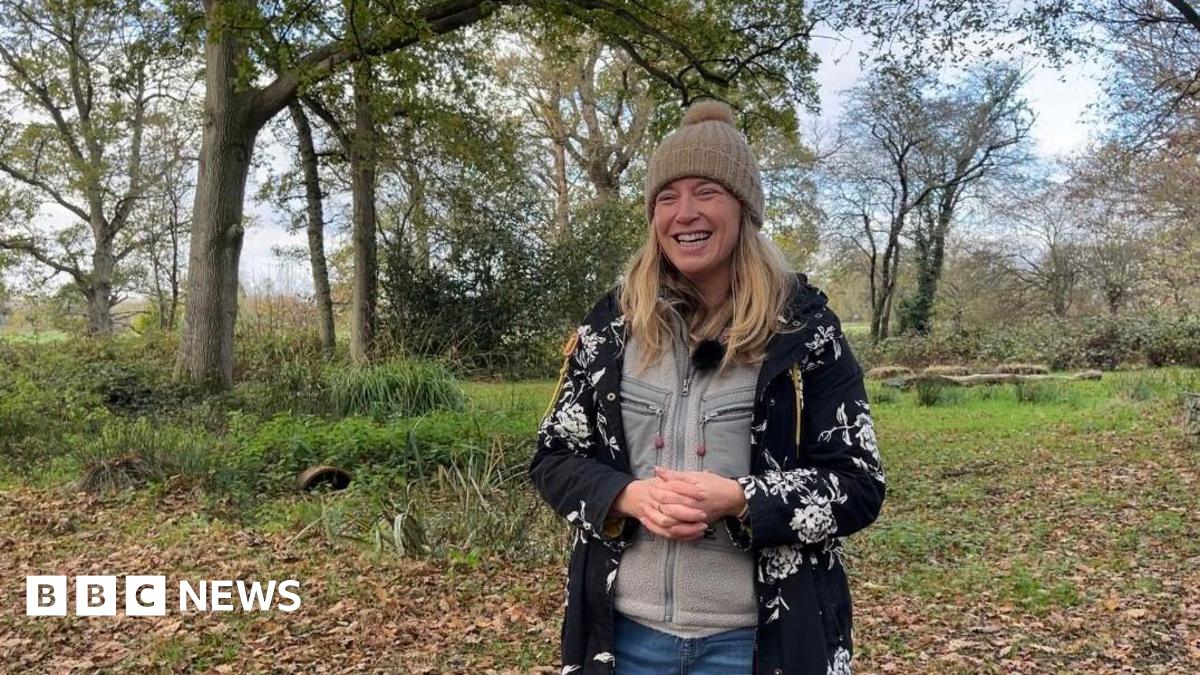
    A woman who runs forest bathing sessions in Kent says she believes people have “disconnected” from the natural world.

    Tansy Jane Dowman, from Edenbridge, runs regular mindfulness and meditation sessions at Hever Castle.

    “We have disconnected ourselves from the natural world, we have taken a gigantic step away,” she said.

    Shinrin-yoku, or forest bathing, is a Japanese pastime encouraged by the Japanese government in the 1980s as a way for people to escape the pressures of modern life.

    Continue Reading

  • Technip Energies completes acquisition of Ecovyst’s Advanced Materials & Catalysts business

    Technip Energies (PARIS:TE) announces completion of its acquisition of the Advanced Materials & Catalysts (AM&C) business from Ecovyst Inc. (NYSE: ECVT), a global leader in specialty catalysts and advanced materials.

    This strategic transaction expands Technip Energies’ portfolio by broadening its capabilities in advanced catalysts. It supports its disciplined growth strategy for the Technology, Products & Services (TPS) business segment in established markets by increasing recurring revenues while accelerating opportunities in sustainable fuels, circular chemistry, and carbon capture – key drivers of long-term value creation and critical areas for the energy transition.

    Following completion, the AM&C business will continue to operate under its existing leadership team, supported by dedicated R&D, manufacturing and commercial teams across its three facilities in the US and Europe. 330 employees will join Technip Energies. The portfolio includes Advanced Silicas, a leading supplier of specialty silica-based materials and catalysts, as well as Zeolyst International, a joint venture with Shell Catalysts & Technologies focused on custom zeolite-based materials and catalysts for hydrocracking, sustainable fuels, and advanced recycling.

    With over 40 years of proven expertise, AM&C is expected to deliver immediate earnings and cash flow accretion, reinforcing Technip Energies’ financial profile and unlocking new value-creation opportunities.

    Arnaud Pieton, CEO of Technip Energies, commented: “Closing this transaction is an important milestone in the evolution of Technip Energies. With Advanced Materials & Catalysts, we are combining a differentiated catalysts and advanced materials platform with our process technologies and engineering expertise, creating an integrated offering that helps our customers to improve efficiency, reliability and emissions performance across their assets. Advanced Materials & Catalysts’ strong recurring revenue base, attractive margins and long-standing customer relationships are fully aligned with our disciplined capital allocation strategy to drive long-term value creation and to grow the TPS segment. We are very happy to welcome Advanced Materials & Catalysts teams and look forward to working together to deliver the next phase of growth for our customers and stakeholders.”

    Kurt Bitting, CEO of Ecovyst, commented: “As a leading provider of technologies that are highly-valued by the energy industry, we believe Technip Energies provides the scale and technology development expertise that will further enhance product development and market reach for the Advanced Materials & Catalysts business. We want to thank our Advanced Materials & Catalysts colleagues for their dedication and contributions over their tenure with Ecovyst, and we wish them continued success in the future as part of the Technip Energies organization.”

    Paul Whittleston, President of Advanced Materials & Catalysts, said: “With the completion of this transaction, we reach an important milestone for Advanced Materials & Catalysts. As part of Technip Energies, we can now scale, accelerate innovation and deliver even greater value for our customers, while contributing together to a more sustainable future. We are excited to enter this next phase as part of Technip Energies and to build the next chapter of growth together.”

    Evercore acted as financial advisor, Gibson Dunn served as legal counsel and EY-Parthenon as accounting and tax advisor to Technip Energies in connection with this transaction.

    About Technip Energies

    Technip Energies is a global technology and engineering powerhouse. With leadership positions in LNG, hydrogen, ethylene, sustainable chemistry, and CO2 management, we are contributing to the development of critical markets such as energy, energy derivatives, decarbonization, and circularity. Our complementary business segments, Technology, Products and Services (TPS) and Project Delivery, turn innovation into scalable and industrial reality.

    Through collaboration and excellence in execution, our 17,000+ employees across 34 countries are fully committed to bridging prosperity with sustainability for a world designed to last.

    Technip Energies generated revenues of €6.9 billion in 2024 and is listed on Euronext Paris. The Company also has American Depositary Receipts trading over the counter.

    For further information: www.ten.com

    About Ecovyst Advanced Materials & Catalysts

    Ecovyst Inc. and subsidiaries is a leading integrated and innovative global provider of virgin sulfuric acid and sulfuric acid regeneration services. We support customers globally through our strategically located network of manufacturing facilities. We believe that our products and services contribute to improving the sustainability of the environment.

    Ecovyst continues to operate Ecoservices, which provides sulfuric acid recycling to the North American refining industry for the production of alkylate, and provides high quality and high strength virgin sulfuric acid for industrial and mining applications. Ecoservices also provides chemical waste handling and treatment services, as well as ex-situ catalyst activation services for the refining and petrochemical industry.

    Advanced Materials & Catalysts (“AM&C”) was formerly part of Ecovyst’s portfolio and has been purchased by Technip Energies following completion of this transaction. AM&C, through its Advanced Silicas business, provides finished silica catalysts, catalyst supports and functionalized silicas necessary to produce high-performing plastics and to enable sustainable chemistry, and through its Zeolyst Joint Venture, innovates and supplies specialty zeolites used in catalysts that support the production of sustainable fuelsand that are broadly applied in refining and petrochemical processes.

    For more information, see our website at https://www.ecovyst.com.

    Contacts

    Investor Relations
    Phillip Lindsay
    Vice-President Investor Relations
    Tel: +44 207 585 5051
    Email: Phillip Lindsay 

    Media Relations
    Jason Hyonne
    Press Relations & Social Media Manager
    Tel: +33 1 47 78 22 89
    Email: Jason Hyonne 

    Important Information for Investors and Securityholders

    Forward-Looking Statements

    This press release contains forward-looking statements that reflect Technip Energies’ (the “Company”) intentions, beliefs or current expectations and projections about the Company’s future results of operations, anticipated revenues, earnings, cashflows, financial condition, liquidity, performance, prospects, anticipated growth, strategies and opportunities and the markets in which the Company operates. Forward-looking statements are often identified by the words “believe”, “expect”, “anticipate”, “plan”, “intend”, “foresee”, “should”, “would”, “could”, “may”, “estimate”, “outlook”, and similar expressions, including the negative thereof. The absence of these words, however, does not mean that the statements are not forward-looking. These forward-looking statements are based on the Company’s current expectations, beliefs and assumptions concerning future developments and business conditions and their potential effect on the Company. While the Company believes that these forward-looking statements are reasonable as and when made, there can be no assurance that future developments affecting the Company will be those that the Company anticipates.

    All of the Company’s forward-looking statements involve risks and uncertainties, some of which are significant or beyond the Company’s control, and assumptions that could cause actual results to differ materially from the Company’s historical experience and the Company’s present expectations or projections. Should one or more of these risks or uncertainties materialize, or should underlying assumptions prove incorrect, actual results may vary materially from those set forth in the forward-looking statements.

    For information regarding known material factors that could cause actual results to differ from projected results, please see the Company’s risk factors set forth in the Company’s 2024 Annual Financial Report filed on March 10, 2025, with the Dutch Autoriteit Financiële Markten (AFM) and the French Autorité des Marchés Financiers (AMF) and in the Company’s 2025 Half-Year Report filed on July 31, 2025 with the AFM and the AMF, which include a discussion of factors that could affect the Company’s future performance and the markets in which the Company operates.

    Forward-looking statements involve inherent risks and uncertainties and speak only as of the date they are made. The Company undertakes no duty to and will not necessarily update any of the forward-looking statements in light of new information or future events, except to the extent required by applicable law.

    • Technip Energies completes acquisition of Ecovyst’s Advanced Materials & Catalysts business
    • Technip Energies completes acquisition of Ecovyst’s Advanced Materials & Catalysts business

    Continue Reading

  • RBI likely drawing a soft line at 90 for rupee, traders doubt it will stick – Reuters

    1. RBI likely drawing a soft line at 90 for rupee, traders doubt it will stick  Reuters
    2. Rupee kicks off 2026 weaker on corporate dollar demand  Reuters
    3. Indian rupee to mark time with traders seeking visibility on New Year flows  Business Recorder
    4. USD/INR Monthly Forecast January 2026: Skeptical Trading and Upwards Trajectory Continue  DailyForex
    5. INDIA RUPEE-RBI likely drawing a soft line at 90 for rupee, traders doubt it will stick  marketscreener.com

    Continue Reading

  • Wassailing: The folk tradition enjoying a revival – BBC

    Wassailing: The folk tradition enjoying a revival – BBC

    1. Wassailing: The folk tradition enjoying a revival  BBC
    2. Ancient Wassail returns to Headless Cross Community Orchard  The Redditch Standard
    3. Ancient cider tradition to take place at Sheppy’s near Taunton  Somerset County Gazette
    4. List: Where to go wassailing in Herefordshire  Yahoo News UK
    5. 2026 is here – so a-wassailing Somerset goes!  The Somerset Leveller

    Continue Reading

  • Foreign exchange rates in Pakistan for today, January 02, 2025 – Profit by Pakistan

    1. Foreign exchange rates in Pakistan for today, January 02, 2025  Profit by Pakistan
    2. Intra-day update: rupee records gain against US dollar  Business Recorder
    3. Currency Exchange Rates in Pakistan Today – Dollar, Euro, Pound, Riyal to PKR – 2 January 2026  Daily Pakistan
    4. Currency rates of NBP  Associated Press of Pakistan
    5. Rupee gains 1.8pc in July-December  Dawn

    Continue Reading

  • Department store in Yokohama opens for New Year with lucky bags

    Department store in Yokohama opens for New Year with lucky bags

    A department store in Yokohama, near Tokyo, opened for the New Year on Friday, drawing crowds of shoppers seeking bargain packages known as “lucky bags.”

    At Sogo Yokohama, many people lined up before the store opened at 9 a.m. Hoof-shaped sweets were handed out at the entrance, as the horse is the Chinese zodiac sign for 2026.

    The department store says it is offering many lucky bags filled with essential daily items, such as clothing and food, as consumers remain cost-conscious amid rising prices. It has also increased the number of lucky bags by about 30 percent from last year.

    A man in his 40s who visited the store with his 10-year-old child bought a bag of children’s clothing. He said it was helpful because the cost of clothes is high.

    Many department store operators chose to keep their stores closed on New Year’s Day this year, citing labor shortages and other factors.

    The manager of Sogo Yokohama said the store also took employees’ working arrangements into consideration and gave them New Year’s Day off.

    The manager added that while people continue to be careful about spending, they also want to treat themselves during the New Year holidays. He said the store has prepared a range of products to meet these different shopping needs.

    Continue Reading

  • Queensland housing market continues to rise as national growth slows

    Queensland housing market continues to rise as national growth slows

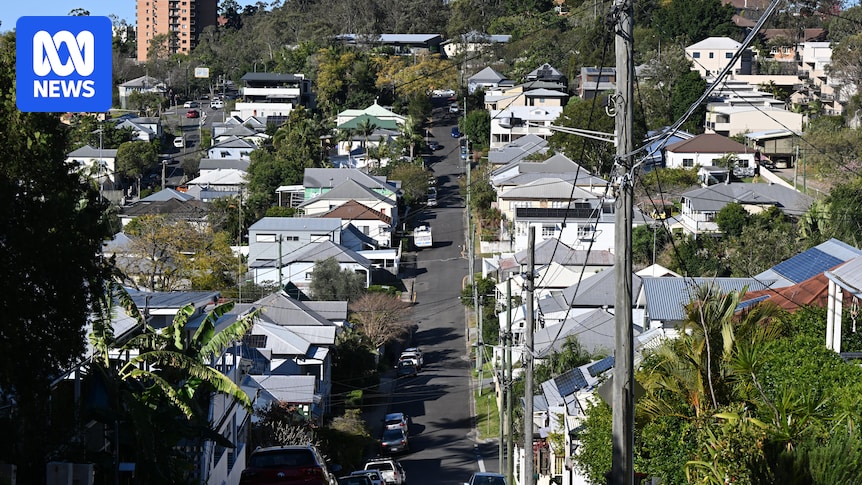
    Property data is pointing towards an increasingly expensive housing market across Queensland in 2026, even as price growth moderates in the big southern capitals.

    Cotality Research Director Tim Lawless said it was a great time for property owners, but becoming more difficult for those who were trying to get into the market.

    “If you own a home, that’s great news. But if you don’t, it’s probably becoming increasingly frustrating, how fast values are rising and how much it costs to get your foot in the door,” Mr Lawless said.

    Brisbane is extraordinarily unaffordable now.

    Brisbane’s property values increased by 1.6 per cent in December alone. That equates to an average of almost $16,000 per property — across both houses and units.

    By comparison, Sydney and Melbourne were the biggest drag on the headline growth, with values sliding 0.1 per cent lower. The decline in values across Australia’s two largest cities marked the first month-on-month fall since January last year.

    CoreLogic’s Tim Lawless says some investors are looking to invest outside the ACT.  (ABC News: Nickoles Coleman)

    “Brisbane has gone from being a market that’s around the middle-to-lower end of the pack for affordability, to one that’s now getting pretty close to one of the most unaffordable markets,” Mr Lawless said.

    “And the annual growth rate for Brisbane, at 14.5 per cent, implies the market is up about $131,000 over the year.”

    He said the unit sector was rising most rapidly, reflecting more buyers looking at apartments at lower price points than houses.

    “We’re also seeing more investment in south-east Queensland and investors do tend to be more active in the apartment sector,” Mr Lawless said.

    “As well as the ongoing undersupply, we’re not seeing much building happening across the housing market overall.”

    In Greater Brisbane, the 10 biggest increases were recorded in Springwood-Kingston (19.5 per cent), Sunnybank, Nathan, Rocklea-Acacia Ridge, Forest Lake-Oxley, Inner Ipswich, Chermside, Capalaba, Mt Gravatt, and Strathpine (16.1 per cent).

    Regional Growth

    Regional areas west of the state’s capital were the biggest winners among Queensland’s regional markets, with homes on the Granite Belt now boasting an average value of $592,873 — a 20.4 per cent increase over 12 months.

    “Toowoomba, the Granite Belt, the eastern area of the Darling Downs — they’ve all seen housing values rise between 18 and 20 per cent over the past 12 months,” Mr Lawless said.

    “Markets like Charters Towers also have seen a really strong rate of growth — up 16 per cent. South of Cairns, Central Highlands — including Emerald — and Maryborough. They’re all in the top 10 growth regions.”

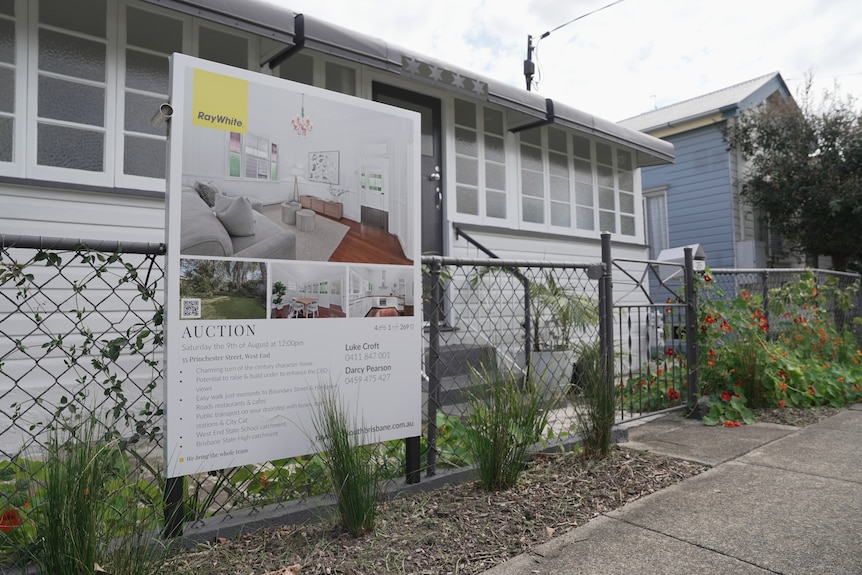
    A house with a wire fence and a auction sign out the front.

    Renewed speculation that the rate-cutting cycle is over has dented housing confidence. (ABC News: Eddy Gill)

    Other suburbs in that regional “top 10” list included Ormeau-Oxenford and Nerang on the Gold Coast, and northern areas of the Bowen Basin.

    Mr Lawless pointed to affordability and economic diversity in these areas, as well as access to amenities like schools and healthcare services.

    He predicted the market will not see the same level of price growth over 2026, pointing toward possible interest rate hikes in 2026, “which could take a bit of heat out of the market”.

    “I think there will be a slowing. But I don’t think we’ll see values going backwards simply because of the low supply in the market and population growth, particularly interstate migration coming into south-east Queensland that remains quite high. That, of course, supports demand,” Mr Lawless said.

    “It’s clearly an unsustainable brand of growth we’re seeing across many Queensland markets, not just Brisbane. I think we’re seeing the first signs of that momentum leaving the marketplace. We have seen a few months now where the rate of growth remains very high, but it is slowing down.”

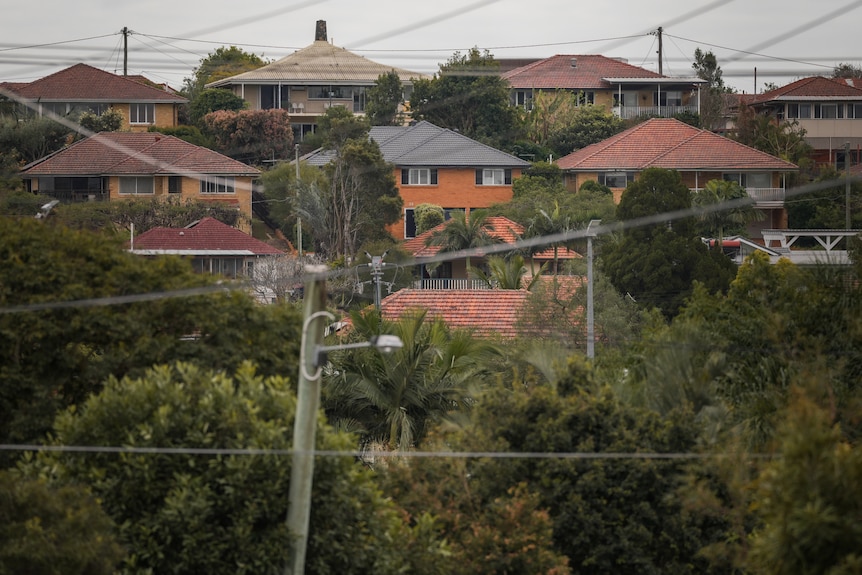
    Houses on a ridge, located in Annerley Queensland.

    The Brisbane trends are expected to make an already difficult rental market even tighter. (ABC News: Christopher Gillette)

    These trends will also affect renters over the coming 12 months.

    “It’s going to be a very tight rental market, rents are still going to rise. The past 12 months, we’ve seen Brisbane rents rise about 6.2 per cent — that’s a larger rate of growth than the national average, at 5.2 per cent,” Mr Lawless said. 

    He added rents had already risen substantially over the past five years, leading to more group households and multi-generational households forming.

    “We’ve got a vacancy rate across Brisbane of 2.1 per cent. It’s a lot lower across the apartment market — 1.4 per cent, only marginally off record lows,” Mr Lawless said.

    “House vacancy rates are 2.4 per cent. A normal, health vacancy rate is probably closer to 3.5 per cent.”

    Continue Reading

  • UK financial watchdog closes 100 probes to sharpen enforcement focus

    UK financial watchdog closes 100 probes to sharpen enforcement focus

    Stay informed with free updates

    The UK’s financial watchdog has closed 100 investigations without taking enforcement action in less than three years, slashing the number of active probes to the lowest for almost a decade.

    The unprecedented cull of legacy cases highlights a strategic change at the Financial Conduct Authority since Therese Chambers and Steve Smart became co-heads of its enforcement arm in April and June 2023 with the aim to focus on fewer but higher impact investigations.

    The FCA completed 24 investigations between April and November last year, of which nine were closed with no enforcement outcome and 15 resulted in it taking action, according to data the watchdog provided to the Financial Times.

    The watchdog also dropped 91 probes without any enforcement action over the two years to March 2025, taking the total since Chambers and Smart were appointed to 100, the biggest cull since it was created in 2013.

    In some of its closed cases, the FCA said it had imposed supervisory measures or action had been taken by a different authority.

    “We committed to carrying out fewer, more focused investigations and we are delivering,” said an FCA official. “We continue to take action where we see the most egregious misconduct and are getting outcomes in more of our cases.”

    City of London lawyers who represent companies in cases brought by the FCA said the watchdog had become more selective in which investigations it opened, focusing on clear-cut cases where it was more confident of an enforcement outcome.

    “This is good news from an efficiency point of view,” said Tracey Dovaston, a partner at law firm Pallas. “Cases no longer appear to be being opened merely for diagnostic purposes, which means less matters are opened and referred to enforcement.”

    The biggest fines the FCA imposed last year were for breaching its anti-money laundering rules, including a £44mn penalty for the building society Nationwide and a £39mn fine for Barclays Bank.

    The watchdog opened 23 investigations in the year to March 2025 and 25 the previous year, a drop from previous years when it regularly opened more than twice as many. Its stock of active cases almost halved from 230 in 2022 to 124 in October. 

    The government has been pushing the FCA and other financial regulators to ease business restrictions to support the UK’s struggling economy. 

    In response, the watchdog has tried to speed up its investigations. Last year it announced an outcome in seven investigations within 16 months of launching them, compared with a historical average of 42 months.

    However, the FCA has expanded its powers by launching a new regulatory regime for cryptoasset providers that will come into force in 2027.

    It has also introduced rules for non-financial misconduct, such as bullying, violence and harassment, that take effect in 2026 and it is due to take on supervision of anti-money laundering in professional services.

    Lorraine Johnston, a financial regulation partner at law firm Ashurst, said the watchdog’s expanded remit would not necessarily mean more investigation activity.

    “They have been clear that there is still quite a strong enforcement culture,” said Johnston. “But I still think the numbers will come down.”

    Officials at the watchdog said its enforcement output — measured by the number of criminal prosecutions, fines, bans, consumer redress payments or public censures it imposes — remained higher than usual, despite the closure of many inconclusive probes. 

    In 2024 it announced 41 enforcement actions, and in the 2025 calendar year there were 33, both above its historic annual average of between 20 and 25.

    “We are conducting fewer investigations, faster,” Chambers said in a recent speech. “But fewer investigations does not mean fewer outcomes. In fact, we are delivering more.”

    “Fewer investigations are ending with no further action,” she said. “Historically less than a third of our enforcement operations ended with an FCA enforcement outcome. Today the majority do.”

    Continue Reading

  • Five big finance questions for 2026

    Five big finance questions for 2026

    One note to start: In this special edition, we’re looking ahead to some of the biggest themes that will affect dealmaking, private equity, corporate finance and much more in the coming months. We’ll be back to our regular scheduled programming on Tuesday January 6. Thanks for reading and happy New Year from Arash, JFK and the whole DD crew.

    Welcome to Due Diligence, your briefing on dealmaking, private equity and corporate finance. This article is an on-site version of the newsletter. Premium subscribers can sign up here to get the newsletter delivered every Tuesday to Friday. Standard subscribers can upgrade to Premium here, or explore all FT newsletters. Get in touch with us anytime: Due.Diligence@ft.com

    1. Were First Brands and Tricolor one-offs or signs of blow-ups to come?

    Jamie Dimon captured the popular imagination when he described the shock bankruptcies of auto lender Tricolor (for which JPMorgan Chase had securitised most of its debts) and car parts supplier First Brands Group as “cockroaches” in the credit market. For those unaware of the adage, the idea is that when you see one cockroach scuttle out from under the floorboards, there are usually more lurking.

    These blow-ups have led to an epic blame game between public and private credit markets.

    In the case of First Brands, its $12bn debt pile had a bit of everything: financing from banks, syndicated loans placed with collateralised loan obligations, and opaque off-balance sheet financing largely provided by specialist private credit funds.

    Expected losses now stretch into the billions of dollars, with even a typically bombproof debtor-in-possession loan crashing to distressed levels in December.

    This is what makes First Brands so unnerving. Until the FT first revealed serious issues with the company’s balance sheet weeks before its bankruptcy, its senior debt was trading close to face value.

    Predicting when a credit market will turn is a fool’s errand, but it’s safe to assume that when the finest minds on Wall Street are oblivious to an impending $12bn car crash, there are likely to be more accidents to come.

    2. Will OpenAI, SpaceX and Anthropic go public?

    After years of false dawns in the US IPO market, investors are hoping 2026 delivers “an epic bonanza” in the form of three of the biggest listings of all time.

    Elon Musk’s rocket maker SpaceX and Silicon Valley’s most high-profile artificial intelligence start-ups, OpenAI and Anthropic, are all gearing up for public offerings.

    SpaceX is the most advanced, with executives telling investors they plan to go public next year barring major market ructions. Its backers argue that the 23-year-old company has such a dominant position in its field that it could list even in a downturn.

    Anthropic and OpenAI have taken steps towards IPOs: the former hired law firm Wilson Sonsini and the latter is in talks with various firms, including Cooley. Both are exposed to market sentiment on AI, which cooled in the last weeks of the year. They are also heavily lossmaking, complicating their paths to the public markets.

    SpaceX is valued at $800bn by investors and OpenAI at $500bn, while Anthropic is working on a funding round likely to be priced north of $300bn.

    Any of the three would rank among the biggest IPOs of all time — a list topped by Saudi Aramco’s 2019 flotation, which raised $29bn. All three going public would make 2026 a banner year.

    “The likelihood of all these companies listing next year is small, but possible, and would mean an epic bonanza for VCs, bankers and deal attorneys,” said Peter Hébert, co-founder of venture firm Lux Capital.

    3. Will the megadeal boom continue?

    The takeover battle for Warner Bros Discovery was a fitting end to 2025. It minted the biggest announced deal of the year, whether Netflix’s $83bn deal or Paramount’s $108bn hostile bid prevails. 

    Some 68 deals worth more than $10bn were announced in 2025, a record high, according to LSEG data. Will this continue? Yes and no.

    At first it may accelerate as chief executives dust off the combinations they’ve been wanting to do for years, but that have been held up by boards, financing, antitrust risks and/ or investors. 

    Defence and offence will drive them. Look to the oil and gas sector, where oil prices have crashed to a four-year low, for defensive consolidations. On the offensive utilities giants are ready to empire build, cashing in on a share price surge driven by artificial intelligence.

    But the boom may be shortlived if an economic downturn or shift of power at the US midterm elections ruins the appetite for riskier deals.

    The first half of this year was slow thanks to US President Donald Trump’s “liberation day” tariffs, but the second half was gangbusters. In 2026, expect the opposite.

    As one investment banker put it: 2026 will come “out of the gate like a lion and leave like a lamb”.

    4. Will corporate Europe get its act together? 

    European companies, spurred on by former European Central Bank president Mario Draghi’s 2024 report on competitiveness, understand the need for massive investment and cross-border mergers to compete with foreign rivals.

    But the barriers are still too high to forge stronger global competitors.

    Domestic politics stymied several potential cross-border deals in 2025, particularly in banking — where the region’s industry is losing out to American competitors. And in AI, Europe remains far behind the US and China when it comes to innovation and investment.

    In other sensitive sectors, particularly aerospace and defence, European champions are needed but the bureaucratic hurdles are high. For example, in October the groups Airbus, Thales and Leonardo struck a long-awaited deal to combine their space businesses, but they don’t expect the new entity to be operational until 2027.

    The backdrop is that Europe’s economy remains anaemic. That helps explain why so much dealmaking in Europe features investment groups searching for undervalued companies to acquire. 

    There are causes for hope such as Germany’s approval last year of new chancellor Friedrich Merz’s plan to inject up to €1tn into the nation’s military and infrastructure, the kind of bold spending that will be required to bolster European defence. 

    European leaders are well aware that massive investment, decisive strategy and cross-border takeovers are needed to strengthen the region’s industry, which still features some of the world’s leading companies. But Europe’s gap only seems to grow.

    5. Will banks start lending again?

    At the start of 2025, one topic was top of mind for bankers: deregulation. 

    The advent of another Trump presidency had US bank executives hoping that post-2008 crisis rules would finally be scrapped. Meanwhile, European and UK bank executives were worried they’d be left behind.

    Deregulation soon arrived in the US. Michelle Bowman, vice-chair for supervision at the US Federal Reserve, has presided over one of the most significant rule rollbacks in decades, with the aim of getting banks to lend more and take on more risk. 

    It seems regulators are waking up to the fact that risk hasn’t left the banking system, it has just been rerouted. While the riskier activity that banks used to do has moved into much more lightly regulated areas, such as private equity and private credit, banks are deeply intertwined with those firms through the extensive financing they provide. 

    It will be interesting to see how far banks will push their newfound freedoms. The US reforms are expected to free up $2.6tn in lending capacity, mainly by limiting the amount of capital lenders have to hold in case something goes wrong.

    Across the pond it’s creating an existential question. Fail to meet the US wave of deregulation and European banks are certain to lose more ground to their rivals. But as the architects of some of the most stringent rules they’ll have to undertake even more sweeping changes if they want a European banking champion.

    This year’s predictions:

    Take these with a grain of salt. We made only one accurate prediction last year.

    Will BP still be a standalone company at the end of 2026?

    Yes. Sometimes there’s smoke and fire. Sometimes there’s just smoke. 

    Will there be the first pharmaceutical megamerger in years?

    Yes. Big Pharma had been busy striking deals with Trump. Now expect them to strike deals with each other. At least one. Maybe two. 

    Will a boutique bank crack the 60% comp ratio?

    Lazard’s Peter Orszag said this year that he was hoping his firm could soon fall to a number starting with 5. But it’s not looking great at Lazard (or any of its publicly traded competitors) even as deal fees from M&A, restructuring and private capital are soaring. 

    Bankers are hot free agents and firms do not want to cede any market share. Revenue-to-pay is closer to 70 per cent across the industry, with bosses not even apologising to their shareholders for the bonus guarantees that they’re passing out like candy.

    Will Goldman Sachs buy a private capital giant?

    Public and private markets are converging quickly and Trump’s deregulatory efforts have tempted the imaginations of C-suites. Goldman will grow its asset management unit using a signature acquisition.

    Will a PE firm blow up?

    They say PE firms are hard to kill. But a decade of financial engineering has left many groups leveraged in a myriad of different directions, a recipe for disaster.

    Will Jared Kushner win the PE industry’s first Nobel Prize?

    We’ll take the over on Kushner’s chances of winning the prize, alongside his father-in-law, and the under on his private equity returns.

    Will Fannie Mae and Freddie Mac make their stock market debut?

    Yes. Bill Pulte, the director of the Federal Housing Finance Agency, has been laying the groundwork for months. If he had his way, they would have IPOed months ago. What we don’t know yet is which banks will lead the deal, and reap the fees.

    Will Izzy Englander finally step back from his hedge fund Millennium?

    Not so fast. We bet he’ll stay on for at least another year.

    Will UBS move its headquarters from Switzerland to the US?

    No, the place that brought you the Swiss Army Knife is too pragmatic to let its most important financial institution leave.

    Will banks start getting aggressive financing buyouts?

    Yes. Large money-centre banks have been chomping at the bit to compete with private credit shops. With the Trump administration rescinding so-called leveraged lending guidance, which restricted banks from financing the riskiest buyout loans, they will start taking shots again.

    Bankers expect they’ll still be working side-by-side with giants of the private credit industry, but they’re hopeful their risk committees will start to stretch when potentially lucrative financings from the likes of Blackstone, Thoma Bravo and KKR roll in.

    Some of our favourite work from the past year: 

    The secretive First Brands founder, his $12bn debt and the future of private credit

    How Trump is exploiting Big Law’s identity crisis

    Inside the downfall of trading titan and Blackpool FC owner Simon Sadler

    How Blackstone and its biggest rivals are drifting apart

    The hedge fund billionaire aiming to be king of Queens

    The billionaire elite who answered Donald Trump’s call on Panama Canal

    Inside the collapse of Microsoft-backed UK tech unicorn Builder.ai

    ‘JPMorgan has crossed a line’: How Altice’s debts ensnared US banking giant

    Kirkland & Ellis trains lawyers on communication style after investor tensions

    Kushner, Gulf money and desperate texts: inside Paramount’s hostile bid for Warner Bros

    Elliott’s ‘lone wolf’: the hedge fund maverick waging war on Big Oil

    Due Diligence is written by Arash Massoudi, Ivan Levingston, Ortenca Aliaj, Alexandra Heal and Robert Smith in London, James Fontanella-Khan, Sujeet Indap, Eric Platt, Antoine Gara, Amelia Pollard, Kaye Wiggins, Oliver Barnes, Tabby Kinder and Julia Rock in New York, George Hammond in San Francisco and Arjun Neil Alim in Hong Kong. Please send feedback to due.diligence@ft.com

    Recommended newsletters for you

    The AI Shift — John Burn-Murdoch and Sarah O’Connor dive into how AI is transforming the world of work. Sign up here

    Unhedged — Robert Armstrong dissects the most important market trends and discusses how Wall Street’s best minds respond to them. Sign up here

    Continue Reading