Category: 3. Business

  • New York State and City Legislative Update: Changes for All Employers in 2025 and 2026

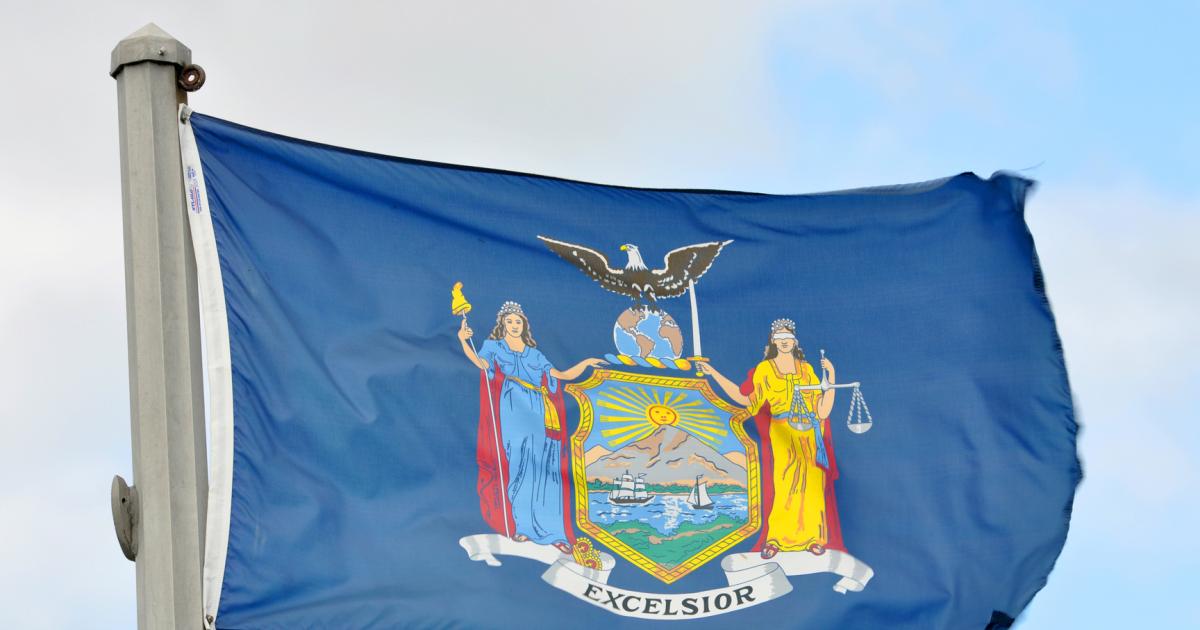
    New York State and City Legislative Update: Changes for All Employers in 2025 and 2026

    Takeaways

    • Effective immediately: New bar on New York State employers’ requiring “employment promissory notes” as a condition of employment. Also, an amendment to the New York State Human Rights Law clarifies that an actual or predictable adverse effect of an employer’s practice, regardless of intent, suffices as a prima facie showing of unlawful discrimination.
    • Effective 2.22.26: Changes to the New York City Earned Sick and Safe Time and Temporary Schedule Changes Acts.
    • Finally, effective 4.18.26: New restrictions to New York State employers’ ability to request or use consumer credit histories for employment purposes.

    Related links

    Article

    The New York State Assembly and Senate passed numerous pieces of legislation during the concluded legislative session in late December. This article reviews three enactments signed by Gov. Kathy Hochul into law and one bill she vetoed.

    Trapped at Work Act

    On Dec. 19, 2025, Gov. Hochul signed S4070, the “Trapped at Work Act,” adding new article 37 to the New York Labor Law, codified as Labor Law §§1050-1055. The law became effective “immediately” upon signing.

    Employers are prohibited from requiring “employment promissory notes” as a condition of employment. §1052(1). “Employment promissory notes” is defined as any instrument, agreement, or contract provision that requires a worker to pay the employer a sum of money if the employee leaves employment before the passage of a stated period of time. An “employment promissory note” expressly includes any such document that states payment of monies constitutes reimbursement for training provided to the worker by the employer or by a third party.

    Section 1052(2) contains important exceptions to the prohibition. The following agreements are permissible:

    (a)    Agreements requiring the worker to repay the employer for sums advanced to the worker, unless such sums were advanced to pay for training related to the employment.

    (b)    Agreements requiring the worker to pay the employer for any property sold or leased to the worker.

    (c)    Agreements requiring educational personnel to comply with the terms of sabbatical leaves.

    (d)    Agreements entered into as part of a program agreed by the worker’s collective bargaining representative.

    The law does not provide a private right of action. However, if an employee successfully defends a lawsuit brought by the employer to enforce a promissory note made void by the law, the employee can recover attorneys’ fees. Further, violations of the law can subject the employer to fines of not less than $1,000, but not more than $5,000, for each violation.

    Although the New York law is leaner than its California counterpart, it is no less confusing. Repayment of sign-on bonuses and retention bonuses appear to be permitted by the statute’s carve-out. The statute is silent about forfeiture or clawback of incentive compensation or restricted stock plans. That the statute appears to prohibit repayment of training costs agreements is unsurprising and consistent with certain New York case law construing such provisions as non-competition agreements.

    NYS Credit Check Limitations

    In 2026, New York State will join New York City and significantly restrict employers from requesting or using the consumer credit histories of applicants or employees for employment purposes. S3072 becomes effective on April 18, 2026.

    The enactment defines “consumer credit history” to include written and other information obtained through consumer credit reports or credit scores, or other information obtained directly from the applicant or employee: (i) detailing credit accounts or (ii) bankruptcies, liens or judgments. Consumer credit reports include any communication by a consumer reporting agency bearing on an individual’s creditworthiness, credit standing, credit capacity, or credit history.

    The law permits employers to request and consider the consumer credit history information of applicants and employees in certain, limited circumstances, as well as in response to any lawful subpoena, court order, or law enforcement investigation. Narrow exemptions to the new prohibition include:

    • Positions for which employers are required by law, regulation, or a self-regulatory organization to use an individual’s consumer credit history for employment purposes;
       
    • Peace officers or police officers as defined by law, or in a position with a law enforcement or investigative function in a law enforcement agency;
       
    • Position subject to background investigation by State agency, narrowly limited to appointed positions with a high degree of trust;
       
    • Positions that require the employee to be bonded under state, agency, or federal law;
       
    • Positions requiring a security clearance under federal or any state law;
       
    • Non-clerical positions that entail regular access to trade secrets or national security information;
       
    • Positions with signatory authority over third-party funds or assets valued at $10,000 or more, or positions that involve a fiduciary responsibility to the employer with the signatory authority over third-party funds or assets valued at $10,000 or more on behalf of the employer; or 
       
    • Positions with regular duties that allow the employee to modify digital security systems established to prevent the unauthorized use of networks or databases of the employer or the employer’s client.

    Codification of Disparate Impact into NYSHRL

    Gov. Hochul signed S8338, which took effect immediately on Dec. 19, 2025. The bill amends the New York State Human Rights Law (NYSHRL) by codifying the disparate impact theory of discrimination.

    The new law establishes that “an unlawful discriminatory practice may be established by a practice’s discriminatory effect, even if such practice was not motivated by a discriminatory intent.” Executive Law § 296(5-a)(a). This means that, if a practice has a discriminatory effect where it actually or predictably results in an adverse employment action against a protected group or person, absent any intent by the employer, a showing of this practice’s discriminatory effect is enough to preliminarily establish unlawful discrimination. See Executive Law § 296(5-a)(b).

    As the new law took effect immediately at signing, the law applies to all cases alleging employment discrimination occurring on or after Dec. 19, 2025. The bill does not specify whether the law applies to pending and unfiled claims that accrued prior to Dec. 19, 2025, but are still within the NYSHRL’s statute of limitations.

    Although the codification of disparate impact puts NYSHRL in sync, at least on paper, with Title VII of the Civil Rights Act of 1964, the new law is contrary to the Trump Administration current position. On April 23, 2025, President Trump signed an executive order directing the Equal Employment Opportunity Commission (EEOC) and other federal agencies to cease their pursuit of disparate impact claims in pending and future proceedings brought under Title VII. The new NYSHRL amendment provides a clear alternative state-level path for claims that could have been brought before the EEOC.

    Vetoed New York Labor Law Amendment

    Gov. Hochul vetoed bill S7388, “Remedial Construction of New York Labor Law Act,” an act to amend the Labor Law. The proposed legislation contained sweeping language that would have required a liberal construction of the Labor Law. It would have required the courts to interpret the Labor Law more favorably for workers than for employers (“[The Labor Law] shall be construed liberally for the accomplishment of the remedial purposes thereof …”).

    Moreover, the bill attempted to establish a unique stature for the Labor Law independent of how similarly worded provisions are interpreted under the Fair Labor Standards Act and other federal laws (“[The Labor Law] shall be construed liberally for the … remedial purposes thereof, regardless of whether federal labor laws, including but not limited to Fair Labor Standards Act … and other laws with provisions worded comparably ….”).

    While acknowledging that specific provisions of the Labor Law are being misinterpreted to better protect workers, Gov. Hochul noted in the veto memo that the amended language is a “vague and sweeping statutory mandate” that would have put “a thumb on the scale” in favor of workers.

    NYC: New Pay Equity Reporting, Upcoming Changes to ESTA

    On Oct. 9, 2025, the New York City Council approved amendments to local laws that would impose new pay equity reporting obligations on certain private employers and require the city to conduct annual pay equity studies.

    On Nov. 7, 2025, Mayor Eric Adams vetoed the law. On Dec. 4, 2025, however, the New York City Council voted to override Mayor Adams’ veto, enacting new local laws that significantly expand pay transparency obligations for private employers. (See New York City Adopts New Pay Data Reporting Requirements after Veto Override.)

    Proposed amendments to employers’ pay transparency obligations related to advertisements that would have expanded disclosure obligations did not come up for vote. They will need to be reintroduced next year.

    On and after Feb. 22, 2026, changes are coming to the New York City Earned Sick and Safe Time and Temporary Schedule Changes Acts. (See NYC Employer Obligation Changes: Amendments to Increase Earned Safe and Sick Time Act + Reduce Temporary Schedule Change Act Requirements.)

    * * *

    New York State employers should review policies and practices to ensure compliance with these developments. Please contact a Jackson Lewis attorney with any questions.


    Continue Reading

  • NC liquor sales | WUNC

    NC liquor sales | WUNC

    Tito’s Handmade Vodka dominated NC’s liquor market, yet again, with consumers buying about 300,000 bottles per month combined of the 750 milliliter and 1.75 liter options. Tito’s – the gluten-free vodka found in the brunch-favorite “Bloody Mary” – originates from the first legal distillery in Texas. It far outpaced the runner-up, Smirnoff Vodka PET 1.75 liter, which sold about 70,000 bottles per month on average.

    Generally, vodka remains the most popular spirit across North Carolina, with eight of the top ten most popular liquors in the state being a vodka brand, or vodka-containing drink. While Orange County follows suit, with Tito’s ranking as its top-seller, Durham County breaks the mold with Don Julio Reposado Tequila taking the lead.

    As Tito’s decade-long reign continues, a new kind of alcohol has risen in popularity: ready-to-drink cans. Tony Dubois, the Orange County ABC General Manager, said High Noon and Surfside have been recent top-selling ready-to-drink seltzers. Ready-to-drink seltzers are a relatively new addition to the liquor world, with High Noon Vodka Seltzers hitting the market in 2019 and Surfside in 2022.

    High Noon presents itself as a “low-calorie, naturally-flavored, hard seltzer made with real fruit juice.” Surfside followed suit in their marketing, branding themselves as a healthier canned seltzer with “real tea, 2 grams of sugar, and 0 bubbles.” Surfside even says it is “proudly” Kosher Rabbi approved.

    According to data from the NC Alcohol Beverage Commission, Stateside Surfside Cocktails 375 milliliters sales increased eightfold and High Noon Fiesta Cocktails 375 milliliters doubled from 2024 to 2025.

    Despite being the best seller, Tito’s actually saw a decrease in sales from 2024 – the handle by 3% and the fifth by 9%.

    “Alcohol sales overall have declined due to several factors,” Dubois said. Revenue data from the NC ABC Boards for the Fiscal Year 2025 (Jul. 1, 2024 – Jun. 30, 2025) reflects a .26% decrease in total sales. The ABC Commission posts annual revenue reports on its website dating to 2009. This is the first year that year-over-year total revenue declined.

    The ABC’s profit is composed of retail and mixed beverage sales. In FY 2025, North Carolinians bought .23% less liquor for at-home consumption, which the ABC Commission calls retail sales. Mixed beverage sales – sales to bars and restaurants – increased by .63%, as part of an ongoing rebound from Covid-19. 2020 and 2021 saw a significant decline in mixed-beverage sales due to lockdown measures but a spike in retail sales because people wanted to bring alcohol home. In 2025, this trend reversed.

    These big picture data are available because the state tightly controls liquor sales in the state. Profits from liquor sales are distributed to state and local governments as well as alcohol abuse prevention programs. NC ABC distributed nearly $15.2 million to law enforcement, $19.2 million to alcohol education, and $113 million to municipal counties.


    Continue Reading

  • Mercantile Bank Corporation Announces Completion of Merger with Eastern Michigan Financial Corporation

    Mercantile Bank Corporation Announces Completion of Merger with Eastern Michigan Financial Corporation

    GRAND RAPIDS, Mich., Dec. 31, 2025 /PRNewswire/ — Mercantile Bank Corporation (NASDAQ: MBWM) (“Mercantile”) announced today the completion of its previously announced merger with Eastern Michigan Financial Corporation (“Eastern”). This strategic combination brings together two financial institutions with shared values and deep commitments to serving Michigan’s families, businesses and communities.

    The newly acquired Eastern Michigan Bank will operate alongside Mercantile’s existing bank, Mercantile Bank, until the first quarter of 2027, at which time Mercantile plans to consolidate Eastern Michigan Bank into Mercantile Bank, subject to regulatory approvals from the Federal Deposit Insurance Corporation and the Michigan Department of Insurance and Financial Services. We believe this structure will ensure a smooth transition for customers and employees while maximizing the benefits of the combined organization.

    “Completing this merger is an exciting moment for both of our organizations,” said Raymond Reitsma, President and CEO of Mercantile. “We are thrilled to welcome Eastern into the Mercantile family. By joining forces, we are better equipped to support local businesses, invest in our neighborhoods, and offer innovative financial solutions tailored to Michigan’s unique needs. I am especially excited for the opportunity to enter the Eastern Michigan market and bring our personalized approach to even more communities.”

    Pursuant to the agreement and plan of merger, Eastern shareholders have the right to receive $32.32 per share and 0.7116 shares of Mercantile common stock in exchange for each share of Eastern common stock they own.

    About Mercantile Bank Corporation 
    Based in Grand Rapids, Michigan, Mercantile Bank Corporation is the bank holding company for Mercantile Bank, and, effective December 31, 2025, Eastern Michigan Bank. Mercantile Bank and Eastern Michigan Bank provide financial products and services in a professional and personalized manner designed to make banking easier for businesses, individuals, and governmental units. Distinguished by exceptional service, knowledgeable staffs, and commitments to the communities they serve, Mercantile Bank and Eastern Michigan Bank, as combined, comprise one of the largest Michigan-based banking organizations with total combined assets of approximately $6.9 billion. Mercantile Bank Corporation’s common stock is listed on the NASDAQ Global Select Market under the symbol “MBWM.” For more information about Mercantile, visit www.mercbank.com, and follow us on Facebook, Instagram, X (formerly Twitter) @MercBank, and LinkedIn @merc-bank.

    Forward-Looking Statements
    This news release contains statements or information that may constitute forward-looking statements within the meaning of the Private Securities Litigation Reform Act of 1995. Forward-looking statements can be identified by words such as: “anticipate,” “intend,” “plan,” “goal,” “seek,” “believe,” “project,” “estimate,” “expect,” “strategy,” “future,” “likely,” “may,” “should,” “will,” and similar references to future periods. Any such statements are based on current expectations that involve a number of risks and uncertainties. Actual results may differ materially from the results expressed in forward-looking statements. Factors that might cause such a difference include difficulties and delays in the integration of Mercantile and Eastern and achieving anticipated synergies, cost savings and other benefits from the transaction; higher than anticipated transaction costs; deposit attrition, operating costs, customer loss and business disruption following the merger, including difficulties in maintaining relationships with employees and customers, may be greater than expected; and the possibility regulatory approval for the merger of the banks in 2027 may not be received, the banks may never be combined, or such combination may take longer than expected. Additional factors that could cause actual results to differ materially from those expressed in the forward-looking statements are discussed in MBWM’s reports (such as the Annual Report on Form 10-K, Quarterly Reports on Form 10-Q and Current Reports on Form 8-K) filed with the Securities and Exchange Commission (the “SEC”) and available at the SEC’s website at www.sec.gov. All subsequent written and oral forward-looking statements concerning the proposed transaction or other matters attributable to MBWM or Eastern or any person acting on their behalf are expressly qualified in their entirety by the cautionary statements above. Except as required by law, MBWM and Eastern do not undertake any obligation to update any forward-looking statement to reflect circumstances or events that occur after the date the forward-looking statement is made.

    SOURCE Mercantile Bank Corporation

    Continue Reading

  • Trump media firm to issue new cryptocurrency to shareholders

    Trump media firm to issue new cryptocurrency to shareholders

    The firm behind US President Donald Trump’s Truth Social platform said it will issue a new cryptocurrency to its shareholders, marking the Trump family’s latest foray into digital assets.

    The digital token from Trump Media and Technology Group will add to the Trumps’ crypto ventures, which have generated hundreds of millions of dollars and have raised questions about conflicts of interest.

    Trump Media unveiled the new token on Wednesday and said investors will receive one for each share they hold. Trump, who is himself the largest Trump Media shareholder, has supported looser regulation of the crypto sector.

    Trump Media shares rose on Wednesday following the firm’s announcement.

    The token will be distributed to shareholders through a partnership with the Crypto.com exchange, Trump Media said in a statement. It is poised to operate on the Cronos blockchain.

    Devin Nunes, Trump Media’s chief executive, called it a “first-of-its kind token distribution” that will “reward Trump Media shareholders, and promote fair and transparent markets”.

    Nunes, a former Representative from California, also serves at the White House as the Chair of the Intelligence Advisory Board, providing advice to Trump about intelligence collection.

    The company said that shareholders will receive the tokens “in the near future”. It hinted at “various rewards” for token holders, such as discounts on Trump Media products.

    Trump Media, which was founded in 2021, has recently broadened its push into the crypto industry, while also expanding into artificial intelligence and financial services. But its shares have fallen more than 60% this year.

    Since returning to the White House in January, Trump has pushed for more favorable regulation of cryptocurrencies, as well as trading platforms and other parts of the industry. The once-fringe industry poured millions into the 2024 presidential election, backing candidates including Trump.

    Critics have expressed concerns about possible conflicts of interest arising from the various crypto ventures Trump, who once called crypto a scam, and his family members have launched. Those ventures – such as the TRUMP meme-coin and a token from World Liberty Financial, a Trump-backed finance project – have generated significant profits.

    In the summer, Trump signed the country’s first major national crypto legislation, which was widely seen as a step toward legitimising the sector and integrating crypto into the financial mainstream.

    His administration has also dropped several enforcement cases against crypto businesses and has pushed to make it easier for Americans to use retirement savings to invest in non-traditional assets like cryptocurrencies.

    Still, despite a crypto-friendly White House, investors have pulled back from crypto this year as they move away from assets seen as volatile.

    Bitcoin, the world’s largest cryptocurrency, is poised to post an annual loss, after a sharp decline from its record highs in October.

    Some of Trump’s crypto bets have also faltered.

    The digital coin called TRUMP launched ahead of Trump’s inauguration in January quickly became one of the most valuable crypto coins.

    But since then the meme-coin has lost more than 90% of its value.

    Continue Reading

  • Trump media firm to issue new cryptocurrency to shareholders

    Trump media firm to issue new cryptocurrency to shareholders

    The token will be distributed to shareholders through a partnership with the Crypto.com exchange, Trump Media said in a statement. It is poised to operate on the Cronos blockchain.

    Devin Nunes, Trump Media’s chief executive, called it a “first-of-its kind token distribution” that will “reward Trump Media shareholders, and promote fair and transparent markets”.

    Nunes, a former Representative from California, also serves at the White House as the Chair of the Intelligence Advisory Board, providing advice to Trump about intelligence collection.

    The company said that shareholders will receive the tokens “in the near future”. It hinted at “various rewards” for token holders, such as discounts on Trump Media products.

    Trump Media, which was founded in 2021, has recently broadened its push into the crypto industry, while also expanding into artificial intelligence and financial services. But its shares have fallen more than 60% this year.

    Since returning to the White House in January, Trump has pushed for more favorable regulation of cryptocurrencies, as well as trading platforms and other parts of the industry. The once-fringe industry poured millions into the 2024 presidential election, backing candidates including Trump.

    Critics have expressed concerns about possible conflicts of interest arising from the various crypto ventures Trump, who once called crypto a scam, and his family members have launched. Those ventures – such as the TRUMP meme-coin and a token from World Liberty Financial, a Trump-backed finance project – have generated significant profits.

    Continue Reading

  • Public Notice – Medicaid State Plan Changes for Jan. 1, 2026

    Public Notice – Medicaid State Plan Changes for Jan. 1, 2026

    Effective for dates of service on or after January 1, 2026, North Dakota Medicaid will be providing a 3.2% inflationary increase for all Nursing Facility services. In addition, North Dakota is transitioning to a new classification system titled ND PDPM, to more accurately reflects residents’ health and care needs. Medicaid expenditures for these services are expected to increase $20 million for a 12-month period.

    Effective for dates of service on or after January 1, 2026, North Dakota Medicaid will be providing a 2.0% inflationary increase for all Psychiatric Residential Treatment Facility services.  In addition to the 2.0% inflationary increase and consistent with Medicaid State Plan Authority, rates for Medicaid-eligible individuals residing in instate psychiatric residential treatment facilities will be adjusted, based on cost reports submitted by the facilities within the current rate methodology.  Medicaid expenditures for these services are expected to increase $2.3 million for a 12-month period.

    Effective January 1, 2026, North Dakota Medicaid will be submitting a State Plan Amendment to allow for reimbursement of reimburse therapeutic leave days for individuals residing in a Psychiatric Residential Treatment Facility. ND Medicaid will reimburse for up to fifteen days per certification of need period. Medicaid expenditures are expected to have a minimal impact for a 12-month period.

    Effective January 1, 2026, North Dakota Medicaid will be submitting a State Plan Amendment to update the In-State PPS Hospital Value-Based Program percentage of Medicaid revenue that may be returned to the state from 4% to 5%. Medicaid expenditures are expected to have a minimal impact for a 12-month period.

    Effective January 1, 2026, North Dakota Medicaid will be submitting a State Plan Amendment to refine the services provided under Behavioral Health Rehabilitative Services. These refinements will provide enhanced guidelines for services to determine the appropriate level of care for members.  North Dakota Medicaid will also set annual limitations on certain services to ensure all services provided are medically necessary. Medicaid expenditures are expected to have a minimal impact for a 12-month period.

    Effective January 1, 2026, North Dakota Medicaid will be submitting a State Plan Amendment to add Licensed Master Social Workers (LMSWs) as an Other Licensed Practitioner. Medicaid expenditures are expected to increase $700,000 for a 12-month period.

    Effective January 1, 2026, North Dakota Medicaid will be submitting a State Plan Amendment to allow Licensed Practical Nurses (LPNs) to provide Nursing Services provided in a School to Children with Complex Medical Needs. Medicaid expenditures are expected to increase $10,000 for a 12-month period.

    Effective for dates of service on or after January 1, 2026, and consistent with approved state plan language, ND Medicaid will update the payment rate for lodging to the amount established for the month of January 2026 by the General Services Administration.  Medicaid expenditures for these services are expected to increase $1,000 for a 12-month period.

    Effective for dates of service on or after January 1, 2026, ND Medicaid will reimburse unlisted professional service codes at 34% of billed charges.  Medicaid expenditures are expected to have a minimal impact for a 12-month period.

    The capitated monthly rate for Medicaid Expansion, effective January 1, 2026, is estimated to increase, based on actuarial certification of the rates and Blue Cross Blue Shield of North Dakota acceptance of those rates. Overall, there is expected to be a minimal fiscal impact.

    The benefits for ND Medicaid Expansion, as required by the Affordable Care Act and section 1937 of the Social Security Act, are provided through an Alternative Benefit Plan (ABP). Effective for dates of service on or after January 1, 2026, ND Medicaid will be submitting a state plan amendment which will clarify language for existing benefits, specifically as they relate to those under the age of 21. The amendment will align the ABP with the changes to traditional Medicaid described in other sections of this public notice.

    To assure compliance with 42 CFR 440.345, ND Medicaid compared the benefits available under the ABP to those available under Traditional Medicaid fee-for-service. The results of this comparison showed that the ABP benefits include Early and Periodic Screening, Diagnostic and Treatment (EPSDT) services for those enrolled with ND Medicaid Expansion who are under age 21 that are consistent with the current ND Medicaid state plan regarding the delivery of these services with minimal changes.

    Effective January 1, 2026, North Dakota Medicaid will be submitting a State Plan Amendment to the Alternative Benefit Plan (ABP) for the 21-64 year olds to align the ABP with the changes to traditional Medicaid described in other sections of this public notice.  Overall, there is expected to be a minimal fiscal impact.

    ND Medicaid follows the National Correct Coding Initiative (NCCI) Edits. These edits were developed by the Centers for Medicare and Medicaid Services (CMS) based on coding conventions defined in the American Medical Association’s Correct Procedure Terminology Manual, national and local polices and edits, coding guidelines developed by national societies, analysis of standard medical and surgical practices, and a review of current coding practices.  CMS annually updates the National Correct Coding Initiative Coding Policy Manual.

    Comments can be sent to and viewed at: Medical Services Division Room 309, ND Department of Health and Human Services, 600 E Boulevard Ave Dept 325, Bismarck, ND 58505-0250. Questions may be directed to human service zone offices, or individuals may contact the ND Medicaid Program at 1-800-755-2604.

    Continue Reading

  • Gold and silver stumble at the end of best year since the 1970s

    Gold and silver stumble at the end of best year since the 1970s

    Gold and silver fell on the last trading day of 2025, though both remained on track for the biggest annual gain in more than four decades as a banner year for precious metals draws to a close. 

    Spot gold hovered around $4,320 an ounce, while silver slid toward $71. The two have seen exceptional volatility in thin post-holiday trading, plunging Monday before recovering Tuesday and dropping again Wednesday. The big swings prompted exchange operator CME Group to raise margin requirements twice. 

    Both metals are still on track for their best year since 1979, supported by strong demand for haven assets amid mounting geopolitical risks, and by interest-rate cuts by the US Federal Reserve. The so-called debasement trade — triggered by fears of inflation and swelling debt burdens in developed economies — has helped supercharge the scorching rally.

    In gold, the bigger market by far, those factors spurred a rush by investors into bullion-backed exchange-traded funds, while central banks extended a years-long buying spree.

    Gold is up about 63% this year. In September, it eclipsed an inflation-adjusted peak set 45 years ago — a time when US currency pressures, spiking inflation and an unfolding recession pushed prices to $850. This time around, the record run saw prices smash through $4,000 in early October.

    “In my career, it’s unprecedented,” said John Reade, a market veteran and chief strategist at the World Gold Council. “Unprecedented by the number of new all-time highs, and unprecedented in the performance of gold exceeding the expectations of so many people by so much.”

    Silver has notched up a gain of more than 140% during the year, driven by speculative buying but also by industrial demand, with the metal used extensively in electronics, solar panels and electric cars. In October, it soared to a record as tariff concerns drove imports into the US, tightening the London market and triggering a historic squeeze.

    The new peak was then passed the following month as US rate cuts and speculative fervor drove prices higher, and the rally topped out above $80 earlier this week — in part reflecting elevated buying in China.

    Yet the latest move swiftly reversed, with the market closing down 9% on Monday then swinging the following two days. In response to the extreme volatility, CME Group again raised margins on precious-metal futures, meaning traders must put up more cash to keep their positions open. Some speculators may be forced to shrink or exit their trades — weighing on prices.

    “The key driver today is the CME raising margins for the second time in just a few days,” said Ross Norman, chief executive officer of Metals Daily, a pricing and analysis website. The higher collateral requirements are “cooling the markets off,” he said.

    Platinum, Palladium

    The enthusiasm for gold and silver has extended into the wider precious-metals complex in 2025, with platinum breaking out of a years-long holding pattern to hit a new high.

    The metal is on course for a third annual deficit, following disruptions in major producer South Africa, and supply will likely remain tight until there’s clarity on whether the Trump administration will impose tariffs — as well as on silver.

    Prices for silver, platinum and palladium all sagged on Wednesday, though there’s little sign of enthusiasm waning.

    “2025’s surprise was how safe-haven metals turned into momentum trades — silver in particular,” said Charu Chanana, chief market strategist at Saxo Markets in Singapore.

    Silver traded down 6% at $71.44 an ounce as of 12:28 p.m. in New York. Gold slipped 0.4% to $4,322.04 an ounce, while the Bloomberg Dollar Spot Index was up 0.1%.

    Continue Reading

  • Oil prices log steepest annual drop since 2020 – Reuters

    1. Oil prices log steepest annual drop since 2020  Reuters
    2. 2025 Oil Market Review: A Year of Weak Prices, Oversupply and Strategic Realignments in Global Energy  Dawan Africa
    3. Brent and Copper Slip as Dollar Stability and Supply Concerns Weigh on Markets  equiti.com
    4. Crude Prices Fall on Abundant Supplies and Dollar Strength  TradingView — Track All Markets
    5. Global oversupply remains unresolved! Crude oil to end 2025 on a bleak note, with Trump and OPEC+ as key variables.  富途牛牛

    Continue Reading

  • City of Courtenay launches monthly e-newsletter

    Stay connected with what’s happening in Courtenay. A new monthly City of Courtenay e-newsletter will deliver timely updates on City services, programs, projects and community events straight to residents’ inboxes.

    “Our community deserves clear, accurate information about the decisions and projects that shape Courtenay,” explains Mayor Bob Wells. “This e-newsletter is a direct line from the City to residents, ensuring transparency and trust remain at the heart of everything we do.”

    The free e-newsletter will feature Council highlights, links to City services, updates on major projects, recreation opportunities, and upcoming community events. Subscribers will gain a clearer picture of how City programs and services support quality of life in Courtenay.

    “Our resident surveys consistently show that people want more direct updates from the City on planning, engagement opportunities, financial information and more,” says Anne Guillo, the City’s manager of communications. “Email is a channel residents find especially useful, and this new tool will help us share timely updates about City news, services and initiatives that matter to our community.”

    The first issue will be released mid-January 2026 with future editions distributed at the beginning of each month. To mark the launch, subscribers can enter to win one of three $50 gift certificates to a Downtown Courtenay business. The random prize draw will take place on January 31, 2026.

    Sign up for the free monthly e-newsletter at www.courtenay.ca/subscribe.

    Continue Reading

  • Silver, gold and copper trounced stocks. Here’s what a key chart level suggests could be ahead for 2026.

    Silver, gold and copper trounced stocks. Here’s what a key chart level suggests could be ahead for 2026.

    By Joy Wiltermuth

    Despite year-end drops for gold and silver, both logged their biggest yearly percentage gains since 1979

    Gold, silver and copper were the big winners of 2025, even with year-end turbulence. What a key chart level may signal about the road ahead.

    Year-end turbulence only modestly slowed the surge in silver, gold and copper in 2025, with the metals providing important ballast to portfolios as President Donald Trump’s tariffs rattled markets and a spending frenzy around artificial intelligence entered a new debt-funded chapter.

    For the year, gold (GC00) logged a 64.37% gain and silver (SI00) was 141.44% higher, both notching their biggest annual percentage gains since 1979, according to Dow Jones Market Data based on the most-active metals contracts.

    Copper’s (HG00) 41.22% jump this year, while slightly more modest, still marks its largest yearly increase since 2009 and amount to more than double the S&P 500 index’s SPX 17% gain.

    The clamor around metals has stirred debate about potential bubbles forming in gold and silver that could end badly for investors, especially those arriving late to the party. Yet to close out 2025, all three metals were perched above their 50-day moving averages, a key technical level that can be a bullish signal for an asset’s price.

    “Big picture, it means there’s a lot more buyers than sellers,” Sameer Samana, head of global equities and real assets at the Wells Fargo Investment Institute, said of the uptrend. “That has to do with the dollar weakness in the early part of 2025, plus, you could argue, a lot of uncertainty around how countries will manage their fiscal health going forward.”

    The ICE U.S. dollar index DXY, a measure of the buck against a basket of rival currencies, booked its worst first half of the year since 1973, when Richard Nixon was president. It since has recouped some of its 2025 losses but was still 9.4% lower on the year through Wednesday, according to FactSet.

    A turbo rally in silver

    Unlike gold and silver, copper isn’t considered one of the world’s precious metals. Yet like silver, it was added to the U.S. Interior Department’s list of critical minerals this year, given its role in wiring, power generation and electrical transmissions, all which are essential to the AI buildout.

    Read: Why it’s time for investors to start treating copper like a precious metal

    Recent bullishness helped silver gain more than 51% in the past three months alone, while copper shot up more than 17%, gold rose nearly 12% and the S&P 500 added almost 3% over the same span, according to FactSet data.

    From a technical perspective, the most recent leg of the metals rally has pushed gold and silver above their 50-day moving averages for a relatively long 93 trading days through Wednesday, while copper was above that threshold for 25 trading days, according to Dow Jones Market Data based on most-active futures contracts.

    That has happened only four other times for gold since 1993 and five other times for silver since 1982, according to Dow Jones Market Data. Shorter stretches of at least 25 days for copper have been fairly common in recent years.

    While the past doesn’t predict the future, similarly long trading stretches above the 50-day moving average have tended to skew bullish for stocks and gold in the weeks and months that follow, while silver has been mixed and copper has seen most of its gains after the three-month mark.

    This table shows gold, silver, copper and stocks after previous stretches when the metals traded above their 50-day moving averages.

    Importantly, gold showed its resilience this year after equities sold off in April following Trump’s “liberation day” tariff announcement, which shocked investors and triggered an ugly reaction in the bond market.

    “Fixed income sort of helped, but crypto (BTCUSD) also fell by the wayside, while gold held up,” Samana at Wells Fargo said. “Given the nature of the beast, you look at your last best hedge when markets sell off, and I think it’s fair to say that’s gold.”

    Skepticism around inflation and whether it can be tamed next year, especially with tax breaks and the data-center boom likely to reaccelerate the economy, would likely work in favor of metals in 2026, Samana said.

    Spending on AI infrastructure is also not expected to let up in the years ahead. The U.S. already has nearly 3,750 data centers, according to the Data Center Map, an industry research tool launched in 2007.

    For every new data center, metals have a role in the process. “There’s copper for wiring and silver in a lot of chips,” Samana said. And at least globally, demands for power from data centers will mean harnessing alternative-energy sources, where silver has been playing a major role.

    Mike DeStefano and Brian Benner contributed.

    Opinion: China launches its silver weapon on Jan. 1. Here’s what that means for prices.

    -Joy Wiltermuth

    This content was created by MarketWatch, which is operated by Dow Jones & Co. MarketWatch is published independently from Dow Jones Newswires and The Wall Street Journal.

    (END) Dow Jones Newswires

    12-31-25 1507ET

    Copyright (c) 2025 Dow Jones & Company, Inc.

    Continue Reading