Category: 3. Business

  • Nvidia insists it isn’t Enron, but its AI deals are testing investor faith | Nvidia

    Nvidia insists it isn’t Enron, but its AI deals are testing investor faith | Nvidia

    Nvidia is, in crucial ways, nothing like Enron – the Houston energy giant that imploded through multibillion-dollar accounting fraud in 2001. Nor is it similar to companies such as Lucent or Worldcom that folded during the dotcom bubble.

    But the fact that it needs to reiterate this to its investors is less than ideal.

    Now worth more than $4tn (£3tn), Nvidia makes the specialised technology that powers the world’s AI surge: silicon chips and software packages that train and host systems such as ChatGPT. Its products fill datacentres from Norway to New Jersey.

    This year has been an exceptional one for the company: it has struck at least $125bn in deals, ranging from a $5bn investment into Intel – to facilitate its access to the PC market – to $100bn invested in OpenAI, the startup behind ChatGPT.

    But even as those deals have fuelled surging stock prices and paved the way for chief executive Jensen Huang’s energetic world tour, doubts have emerged about how Nvidia does business, especially as it has become increasingly central to the health of the global economy.

    The start of these concerns has been the circular nature of many of its deals. These arrangements resemble vendor financing: Nvidia lending money to customers so they can buy its products.

    The largest of these is its deal with OpenAI, which involves Nvidia investing $10bn into the company each year for the next 10 years – most of which will go to buying Nvidia’s chips. Another is its arrangement with CoreWeave, a company that provides on-demand computing capacity to big AI firms, essentially leasing out Nvidia’s chips.

    The circularity of these deals has drawn comparisons with Lucent Technologies, a telecoms company that also aggressively lent money to its customers, only to overextend itself and unravel in the early 2000s. Nvidia has aggressively rebutted suggestions of any similarity, saying in a leaked recent memo that it “does not rely on vendor financing arrangements to grow revenue”.

    The tech investor James Anderson has expressed concern about Nvidia’s deal with OpenAI. Photograph: Murdo MacLeod/The Guardian

    James Anderson, a renowned tech investor, describes himself as a “huge admirer” of Nvidia, but said this year that the OpenAI deal presented “more reason to be concerned there than before”.

    He added: “I have to say the words ‘vendor financing’ do not carry nice reflections to somebody of my age. It’s not quite like what many of the telecom suppliers were up to in 1999-2000, but it has certain rhymes to it. I don’t think it makes me feel entirely comfortable from that point of view.”

    Other high-profile recent deals include the tech firm Oracle spending $300bn on datacentres for OpenAI in the US – with the ChatGPT developer then paying back roughly the same amount to use those datacentres. In October, OpenAI and the chipmaker AMD signed a multibillion-dollar chip deal that also gave OpenAI the option to buy a stake in the Nvidia rival.

    There is also a deal with CoreWeave where, along with a commitment to buying $22bn of data centre capacity from the cloud provider, OpenAI is receiving $350m in CoreWeave stock. Asked this month about circularity in the AI industry, the chief executive of CoreWeave, Michael Intrator, said: “Companies are trying to address a violent change in supply and demand. You do that by working together.”

    All these moves form part of OpenAI’s $1.4tn bet on computing capacity to build and operate models that, it argues, will transform economies – and make back that expenditure. OpenAI argues that, while the Nvidia and AMD deals have an investment component, it only kicks in once the chips have been bought and deployed, while the investments themselves create aligned incentives to build out AI infrastructure at huge scale.

    Graphic showing the companies Nvidia has deals with and the types of deals they are

    Nvidia has also used structures called special-purpose vehicles (SPVs) in financing deals. The best-known example is the SPV linked to Elon Musk’s xAI: an entity into which Nvidia invested $2bn, money that will be used to buy Nvidia’s chips.

    This drew comparisons with Enron, which used SPVs to keep debts and toxic assets off its balance sheets, convincing investors and creditors that it was stable while concealing ballooning liabilities.

    Nvidia has also strongly denied that it is like Enron: in the same leaked memo where it discussed Lucent, it said its reporting was “complete and transparent” and “unlike Enron” it “does not use special-purpose entities to hide debt and inflate revenue”.

    The journalist Ed Zitron, a noted sceptic of the AI boom, agrees that Nvidia is not like either company. Unlike Lucent, it does not appear to be taking on a great deal of debt to finance its circular deals, he says, and most of the customers it is supporting are not as obviously risky as Lucent’s dotcom bubble partners. And it isn’t like Enron, Zitron argues, because it’s being fairly transparent about its own complex, off-balance sheet deals.

    So what could warrant a comparison? Nvidia “is not hiding debt, but it is leaning heavily on vendor-financed demand, which creates exposure if AI growth slows,” says Charlie Dai, an analyst at the research firm Forrester. “The concern is about sustainability, not legality.”

    Essentially, whether Nvidia is able to stick the landing depends on whether AI really takes off, generating billions for its corporate users and putting companies such as OpenAI, Anthropic and CoreWeave – Nvidia’s customers – firmly in the black, and able to keep buying its systems. That possibility alone is debatable. If this does not happen, says Dai, Nvidia “could face write-downs on equity stakes and unpaid receivables”: meaning, it could lose a lot of money and its stock price could then tank.

    Approached for comment, an Nvidia spokesperson referred the Guardian to remarks its chief financial officer, Colette Kress, made to investors in early December. Kress said they were not seeing an AI bubble, instead gesturing at trillions of dollars of business that lie ahead for Nvidia in the next decade.

    In particular, Kress argued that Nvidia’s recent – massive – deals are just the start for the company, and the real money will be made in the coming years, largely through replacing almost all the chips in existing datacentres with its products.

    There is another complexity, which is that Nvidia’s health – and therefore the health of the entire global economy – also depends on whether AI takes off in time for Nvidia and its customers to service the debt from their huge datacentre buildouts and significant capital expenditures.

    Huang signs autographs at a summit in Gyeongju. Nvidia’s deal with the South Korean government is estimated to be worth billions of dollars. Photograph: Lee Jin-man/AP

    Add to this a final category of concern: recent, big-ticket deals with countries such as South Korea and Saudi Arabia, worth multiple billions of dollars, whose terms are opaque. In October, Nvidia said that it would supply 260,000 of its Blackwell chips to South Korea’s government and South Korean companies. The value of this deal was not disclosed, but is estimated to be in the billions.

    Likewise with Saudi Arabia. Its government-owned AI startup, Humain, has committed to deploying up to 600,000 Nvidia chips: when that deployment will involve actual purchases, and at what price, is again undisclosed. Nvidia has a number of other strategic partnerships like this – with Italy, with the French AI champion Mistral and with Deutsche Telekom, for example – all involving thousands of chips and unknown sums.

    Governments are likely to pay. There’s nothing circular about a sovereign partnership with Germany. But the deals mean more – quite large – uncertainties nested within a straining web of commitments that require massive capital outlay, and rely on ambitious assumptions about the economy undergoing a revolution in the next years.

    “They concentrate risk in a few big customers,” says Dai. “If execution delays occur, Nvidia’s revenue recognition and cashflow could be affected.”


    Continue Reading

  • Some cannabis works about as well as ibuprofen against chronic pain, OHSU-led review finds

    Some cannabis works about as well as ibuprofen against chronic pain, OHSU-led review finds

    A systematic review of studies evaluating cannabis as a pain treatment concluded that some cannabis products do likely work to reduce chronic pain a little bit.

    The overall reduction in pain was small — lowering pain by about 1 point on a scale from 1 to 10. Yet most conventional painkillers, including ibuprofen and opioids, perform similarly in randomized controlled trials.

    But the review is likely to disappoint proponents of medical cannabis on one finding: It found that the pain reduction effect only occurred with products containing a significant amount of tetrahydrocannabinol, or THC.

    THC, one of the two main compounds in cannabis, is responsible for the psychoactive effects of the plant. The other main component is cannabidiol, or CBD.

    FILE – Marijuana plants are seen at a growing facility in Washington County, N.Y., May 12, 2023. (AP Photo/Hans Pennink, File)

    Hans Pennink / AP

    Oregon was the first state in the nation to decriminalize cannabis, and one of the first to legalize it for medical use and then for recreational use.

    The review, which was led by OHSU researchers and published in the Annals of Internal Medicine, analyzed the results of 25 randomized controlled trials of cannabis as a pain treatment in Europe, the United States and Canada. It was funded by the U.S. Department of Health and Human Services, as a follow-up to an earlier synthesis of the evidence on cannabis and pain.

    In recent years, pain patients and some researchers have pinned their hopes on CBD as a potential treatment that could reduce pain without inducing an unwanted “high” or other psychoactive effects. It’s also been appealing because there’s no concern that cannabidiol is addictive.

    CBD products like gummies, tinctures and salves have proliferated, and some have been marketed for pain relief.

    Roger Chou, a professor and pain management specialist at OHSU and the leading author of the review, said products containing CBD only had a trivial effect on pain in randomized controlled trials.

    “The idea or hope has been that the CBD component might be the one that provides the therapeutic effects,” Chou said. “Unfortunately, what we found was that the CBD products essentially had no impact on pain.”

    The review found that products with equal amounts of THC and CBD, or higher THC, while somewhat effective at reducing pain, were more likely to have side effects like nausea, sedation, and dizziness.

    Chou said drugs for chronic pain have a history of falling short.

    Controlled studies, he said, have found that most work about as well as non-pharmaceutical interventions like exercise, massage, and spinal manipulation.

    “We keep kind of finding that these treatments don’t work as good as we thought they would. But that’s part of what’s driven this search for other things that may work better,” he said.

    Chou said the review’s results shouldn’t necessarily dissuade anyone currently using CBD who is experiencing some benefit from it for their pain, noting that the studies measure an average response and individual experiences might be different.

    “I don’t think our study says anything that would say you have to stop your CBD,” he said.

    Additionally, the review only considered pain reduction and didn’t evaluate the evidence behind some of CBD’s other uses, like for some types of epilepsy and anxiety.drugsChou, an internal medicine doctor, said pain specialists are eager to identify safer alternatives to opioids. Patients, too, are very interested in cannabis for medical and recreational use, and have legal access to it in many states, making it important for doctors to carefully evaluate the costs and benefits.

    But, Chou said, it’s a challenging research question. Most of the products that have gone through randomized trials are medical-grade or lab-made, unlike most of the plant-based products for sale in states like Oregon that have legalized cannabis.

    Earlier this month, President Donald Trump ordered cannabis be moved to a lower schedule of drugs, paving the way for easier access and research into the plant.

    One product that the study concluded has some evidence of working, an oral spray combination THC-CBD product called nabiximols, is approved for medical use in the United Kingdom and Canada but not the United States.

    And while the review focused on cannabis’s two main components, THC and CBD, the plant contains a number of other compounds, Chou said.

    At present, the American College of Physicians recommends against cannabis as a chronic pain treatment for young adults and adolescents, patients with a history of substance use disorder, patients with serious mental illness, frail patients and those at risk of falling. Other adults should discuss the potential costs and benefits with their doctor.

    Continue Reading

  • Advancing Treatment Options for Pediatric Myasthenia Gravis: A Q&A With Jonathan Strober, MD

    Advancing Treatment Options for Pediatric Myasthenia Gravis: A Q&A With Jonathan Strober, MD

    In November during the 2025 American Association of Neuromuscular & Electrodiagnostic Medicine meeting, Jonathan Strober, MD, a pediatric neurologist from the University of California, San Francisco, and Benioff Children’s Hospital, presented new data from the ongoing phase 2/3 VIBRANCE-MG trial (NCT05265273). This trial is evaluating pediatric response to nipocalimab for generalized myasthenia gravis (MG) in patients 2 years to younger than 18 years (international arm) and in patients 8 years to younger than 18 years (US arm). At present, nipocalimab is approved for use in patients 12 years or older who are anti–acetylcholine receptor positive or anti–muscle-specific kinase antibody positive.

    In this interview, Strober emphasizes the positive safety and efficacy results seen in pediatric patients that are comparable with those seen in adult patients. He also speaks of the difficulties in diagnosing MG in a pediatric population, as well as the need to improve testing, standardize care, and overcome regulatory and insurance barriers to grant necessary treatment access to younger patients.

    This transcript was lightly edited for clarity and conciseness.

    AJMC: How was the VIBRANCE-MG trial designed to evaluate nipocalimab?

    Strober: The VIBRANCE-MG trial is the child and adolescent arm of the study that was done in the adult population on a drug called nipocalimab. Nipocalimab is an antibody that basically prevents the antibodies that you have, the immunoglobulins, from being able to be recycled. It basically drops the amount of immunoglobulins you have in your body. It doesn’t drop [the level] completely—so you still have the ability to fight infections, which is how we use the antibodies—but the antibodies are what cause a lot of the problems in myasthenia by attaching themselves to the receptors on the muscle, blocking them from being stimulated or causing them to be broken down. By dropping the antibodies you have in your blood, you can help prevent a lot of the problems that these antibodies cause and therefore improve the symptoms.

    AJMC: According to the data you presented at AANEM, what is the overall message regarding nipocalimab’s safety and efficacy?

    Strober: The trial that we presented data on looked at kids who were 12 years to just under 18 years. There is an ongoing trial for younger kids, 8 to 12 years in this country and 2 to 12 years internationally, so that we get a better sense of: does this work the same way as it does in adults and is it as beneficial as it was in adults? We’re happy to say that, yes, it kind of dropped the antibodies pretty much the same as it did for the adults, and the safety was actually really good. There was a very low risk of problems. Maybe a little bit of infection in the nose and pharynx being the most common, and COVID-19 was actually the other highest amount of adverse effects. But it’s hard. I don’t really consider that an adverse effect since people get COVID all the time. But we do know that because your antibodies are lower, you definitely are at higher risk of infection. Still, it doesn’t really seem to be that significant of a risk, which is great. Patients did really well with it.

    Most of the patients continued on through 72 weeks of taking this medication, so past the initial phase of the safety study. A lot of them were able to move from an every-other-week treatment to a once-a-month treatment. Only 1 patient had the flu during it and stopped for a little bit but then was able to go back on. Another patient had some worsening of symptoms, kind of outside the window, which happens in myasthenia—it is an up-and-down type of thing—but the patient was able to get treated for that bit of worsening and stayed on medication. Only 1 person stopped because they felt it wasn’t doing anything for them.

    AJMC: What are the next steps in your investigation of nipocalimab?

    Strober: We still have the trial ongoing, so we’re still following patients out longer. Only 3 patients had made it to the 72 weeks at the time of the cutoff when we looked at the data, so it takes a little while to kind of process the data and then be able to present it, since it all has to be scrutinized and checked out to make sure it’s all good for us to present. It is ongoing in the world; it’s international, and like I said earlier, we’re trying to get younger and younger kids into the trial.

    It’s just really hard for us to get patients into trials like these because [we have less chance of finding the antibodies in] the kids that we want to have in order to enroll them in the study, and a lot of them are not as severe as the adults. They only get problems with the eyes, or they just have mild weakness, and then some of them are really severe and then we can’t have them in a clinical trial—so it’s kind of a middle ground that we’re looking for in patients who have positive antibodies. We are still trying to recruit patients into the study. The first cohort was the 12-to-18 years range, and now the second cohort is a 2-to-12-year-old range.

    In the US, it’s only limited to 8 to 12 years, but internationally, it’s down to 2. That is the ongoing nipocalimab trial. It’s kind of an extension of this, it’s just the second cohort. We wanted to make sure it was safe in a slightly older population and ones that we have a better ability to test. Once you get down to the younger kids, it’s harder to do some of the functional testing that we do for these patients and really know if it’s helping, but we are enrolling patients in that cohort.

    AJMC: With myasthenia gravis being so rare in pediatric patients, what factors are thought to trigger the disease in younger patients?

    Strober: One is that a lot of kids, for some reason, don’t make the antibodies like we see in adults. It’s, again, something we know is working on the antibody level, so we want to make sure the patients who are in the trials have the antibodies that we can watch and make sure they’re dropping to make sure it’s effective for that. We do know that in some patients who have myasthenia, who we believe have myasthenia but are antibody negative, what we call seronegative, if we repeat their testing over time, eventually they do develop the antibodies. For whatever reason, the antibody levels get delayed in appearing in the blood.

    We’re also developing better tests to be able to pick up small amounts of antibodies better. We’re using better state-of-the-art testing to be able to confirm. We have other ways of confirming myasthenia in patients who are seronegative by doing electrical testing and testing with different medications to see if it’s something that we believe they truly have, even if they don’t have the antibodies. But again, for these studies, we need to make sure we’re really doing this study in a patient population that’s as similar as possible, and so having those antibodies helps us make sure that we’re trying to treat the same condition.

    AJMC: How do insurance and regulatory decisions influence whether patients can actually receive the most appropriate treatment?

    Strober: I don’t know exactly what they go through in Europe vs what we go through in this country. I can tell you that if it’s not approved by the FDA, it’s really hard to get insurance companies to cover it. Often they say it’s experimental if it’s not approved by the FDA, but even once it’s approved by the FDA, because the newer drugs tend to be a little bit more expensive than older drugs, and the older drugs [are] more generic [and] cheaper, a lot of insurance companies try to push us to use the older stuff, even though those still haven’t been approved for this specific condition. It’s just that they’re older and we’ve been using them for longer. It’s really important for these regulatory agencies to approve them or provide positive feedback so that these drugs can be used and [we] know they’re being used safely, but also that they can get paid for our patients.

    AJMC: What are some key unmet needs in the myasthenia gravis treatment landscape?

    Strober: I think one is, in pediatrics, again, trying to come up with better tests would be really nice. I think what we’re trying to do in our pediatric myasthenia gravis consortium, which has 6 centers currently, is to develop better tools to follow these patients but also develop a standard of care. There really is no standard of care for these patients. We’re just so used to using drugs that have only been approved for adults that people just try the different ones on kids and hope that they’re safe and hope we have the right dosing, and so kind of getting a better sense of what are people doing out there and what do we actually see in real life, in real time, what is actually working for the patients, so we can put together and say, “Hey, you know what, this is what we recommend as people who take care of these patients and take care of a good number of these patients, this is really the treatment options that you should go [with] and what route you should go in, what’s the safest for the patients, what’s the most effective for the patients.” That’s really what I want to see; I really want us to get a better understanding of pediatric myasthenia gravis and how we can follow these patients and best take care of them safely.

    I think also what I’ve learned is that the reason that there are so many studies is because now it’s become a requirement that in order to get approval for adult drugs, the companies have to have a pediatric arm. That’s been a wonderful thing.

    Just to be given the opportunity to talk about pediatric myasthenia gravis, that people are actually caring about kids with this condition, has been a huge step forward for those of us in the community who take care of it. I’ve had so many patients who have been told by providers, “Oh, myasthenia doesn’t happen in kids. They can’t have myasthenia.” We’re kind of used to that in pediatrics for these rarer diseases, so the fact that word’s getting out that, yes, kids can get myasthenia gravis and that we can treat them and we can treat them effectively and safely, it’s just wonderful to have that opportunity, so I appreciate that, and thank you.

    Continue Reading

  • Does investing locally matter to Canadians amid tariff war?

    Does investing locally matter to Canadians amid tariff war?

    Listen to this article

    Estimated 5 minutes

    The audio version of this article is generated by AI-based technology. Mispronunciations can occur. We are working with our partners to continually review and improve the results.

    A Vancouver-based company hopes Canadians look to keep some of their investment dollars local and create an impact — even as the trend of money flowing south of the border looks set to continue into 2026.

    In 2025, the “Buy Canadian” movement took off amid the ongoing tariff war and U.S. President Donald Trump’s public threats to make the country the 51st state.

    But despite the surge in interest in Canadian products, the country’s investors steadfastly continued to park their financial assets offshore this year — with much of it in the U.S.

    One financial adviser says that just like buying Canadian, the idea of investing domestically may have cooled off since the beginning of 2025.

    Daisy Mak, a certified financial planner at Vancouver Financial Planners, said a broad swath of her clients came to her looking to invest Canadian assets when Trump was re-elected.

    “My advice was just to point out, ‘OK, so how do you think we’re gonna do this?’” Mak said.

    “We can’t 100 per cent divest away from the U.S.,” she added. “It’s just not practical and it’s not realistic.”


    Mak said that despite Canada’s banking and insurance sectors continuing to be a wise investment decision, the country still has to catch up in other sectors like technology or pharmaceuticals.

    While investing in Canada should be a part of your portfolio, she explained it should be a smaller part of a diversified portfolio that takes other countries into account.

    “It’s one thing to say, ‘I’m gonna go all Canadian,’ but … I feel like you’re cutting off your nose to spite your face,” the financial planner said.

    Hopes for local investments

    Statistics Canada recently revealed U.S. financial assets accounted for $111 billion of the foreign securities acquired by Canadians in the first three quarters of 2025.

    That works out to be 92 per cent of the total, with Canada recording a net outflow of $61.9 billion from January to September when it came to securities transactions.


    Despite the overwhelming trends, Blake Bunting, the Vancouver-based co-founder of GoParity Canada, says his online investment platform felt the surge in Canadian patriotism this year.

    “A lot of folks want to be investing, and making a return on their investment, but knowing that money actually is doing something positive for the community,” he said.

    GoParity calls itself a “community capital” or crowd-lending platform, where Bunting says users usually chip in between $1,500 and $2,500 to help community projects with loans.

    The investors then earn money on the interest from the loans, with projects as diverse as clean energy on Vancouver Island or an Indigenous-run daycare in Stephenville, N.S.

    “It’s not moving all of your assets into supporting small businesses, it’s a portion of that — to know that … you can have a really outsized impact compared to, say, the majority of your portfolio,” Bunting said.

    A group of three young people smile next to an ocean.
    From left to right: Emily Mercy, Elliot Warner and Blake Bunting are the co-founders of GoParity Canada. (Submitted by Blake Bunting)

    Responsible investing still valued

    A Nov. 25 report from the Responsible Investment Association found that for wealth managers, it remained important that investments are well-certified through an environmental, social and corporate governance (ESG) framework.

    Over 80 Canadian asset and investment managers indicated in the survey that greenhouse gas emissions and climate change mitigation remained amongst the top considerations when making their organization’s investment decisions, despite a pushback championed by Trump on net zero policies.

    A man speaks in front of a screen reading 'Drill, Baby, Drill' as a woman looks on.
    Trump speaks at a campaign town hall, as South Dakota Gov. Kristi Noem, right, looks on during last year’s U.S. presidential campaign, in Oaks, Pa., on Oct. 14, 2024. Trump has abandoned many U.S. climate initiatives and his Republican Party has criticized “net zero” policies around the globe. (Alex Brandon/The Associated Press)

    But the report notes “negative media coverage” of responsible investment from other jurisdictions is the top factor that could deter the growth of responsible investing.

    “This isn’t necessarily a surprise given the myriad of anti-ESG headlines witnessed over the last year,” the report shared.

    “Mistrust/concerns about greenwashing was surpassed by negative media coverage and is now much less of a concern.”

    WATCH | How to tell if your investments are really green:

    How to keep your investments fossil-fuel free

    Investors may be keen to put their money in greener portfolios, but a lack of standardization in the financial industry can make it difficult. Nisha Patel explains how to tell if those investments are really green.

    For Bunting, his platform offers more than a way for investors to feel like they’re supporting environmentally-sustainable projects, like a rooftop solar project in Port Hardy.

    He says offering small businesses smaller-scale funding options like GoParity means they can get help at a time when money is tight.

    “There’s no shortage of businesses that are looking for financing that don’t quite meet the bank’s criteria,” he said.

    “This is a market that is growing fast in Canada, and it continues to grow,” he added. “And … it’s not even really competing against banks, we’re filling gaps where the banks aren’t.”

    Continue Reading

  • Sudbury Delta Charities continues happy holiday tradition

    Sudbury Delta Charities continues happy holiday tradition

    For the 29th consecutive year, Delta Bingo and Gaming Sudbury are spreading holiday cheer by helping local organizations provide Christmas turkeys and holiday meals to families across Greater Sudbury

    Delta Bingo and Gaming Sudbury is once again stepping up to continue a happy holiday tradition by giving to families in need in Sudbury.

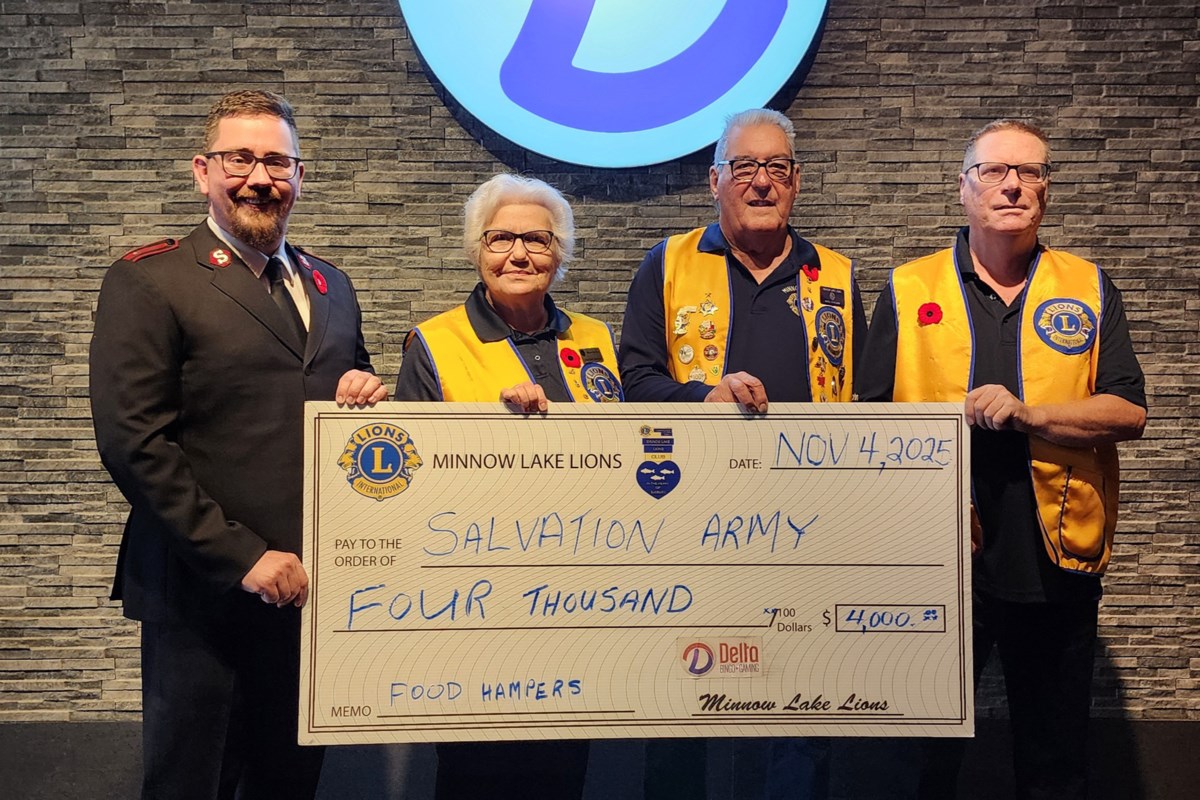
    For the 29th consecutive year, Delta Bingo and Gaming Sudbury and its Charitable Gaming partners – Sudbury Charities Foundation and ACT/UCT Sudbury – are spreading holiday cheer by helping local organizations provide Christmas turkeys and holiday meals to families across Greater Sudbury, said a company news release.

    Since 1996, this well known community initiative, founded by Ray Loiselle, has helped thousands of families share a warm holiday meal together, said the release. To date, the program has contributed an estimated $425,000 to The Salvation Army to continue to support local families in need.

    The success is thanks to many local partnerships, said the release. The continued partnership of organizations such as Club Richelieu de Sudbury, Ten Rainbows Children’s Foundation, and the Minnow Lake Lions Club ensures the initiative reaches approximately 1,200 families each Christmas.

    Christina Nupponen, Charity Association Coordinator, said the effort is more than giving free food.

    “This event has always been about more than providing a turkey; it’s about bringing hope and

    comfort to our community,” said Nupponen.

    “Each year, I’m inspired by the generosity of our local charities and the difference this partnership makes in the lives of so many families. The continued support and compassion shown by our community truly captures the spirit of the holiday season,” she added.

    This year, the tradition grew even stronger, said the release. In addition to supporting the Christmas turkey campaign, ACT-UCT donated a total of $50,000 to local community groups such as Inner City Home, Better Beginnings Better Futures, Go-Give Project, Our Children Our Future, Camp Quality, House of Kin, and Maison McCulloch Hospice, allowing even more local families and individuals to experience the spirit of the season. said Delta.

    Funds raised through Delta Bingo and Gaming Sudbury’s Charitable Gaming partners continue to empower our charitable groups to make a difference in the lives of thousands in our community.

    Partnered donations like these make long-standing programs possible, reflecting the lasting impact of Charitable Gaming in building stronger, more connected communities, said the release.

    Delta Bingo and Gaming Sudbury is an innovator in the charitable gaming industry, offering both paper and electronic bingo as well as Vegas-style gaming machines. Delta Bingo Sudbury has been proudly serving the community since 1984, helping to raise over $55 million for local charities, said the release.

    Continue Reading

  • New York subway ends its MetroCard era and switches fully to tap-and-go fares

    New York subway ends its MetroCard era and switches fully to tap-and-go fares

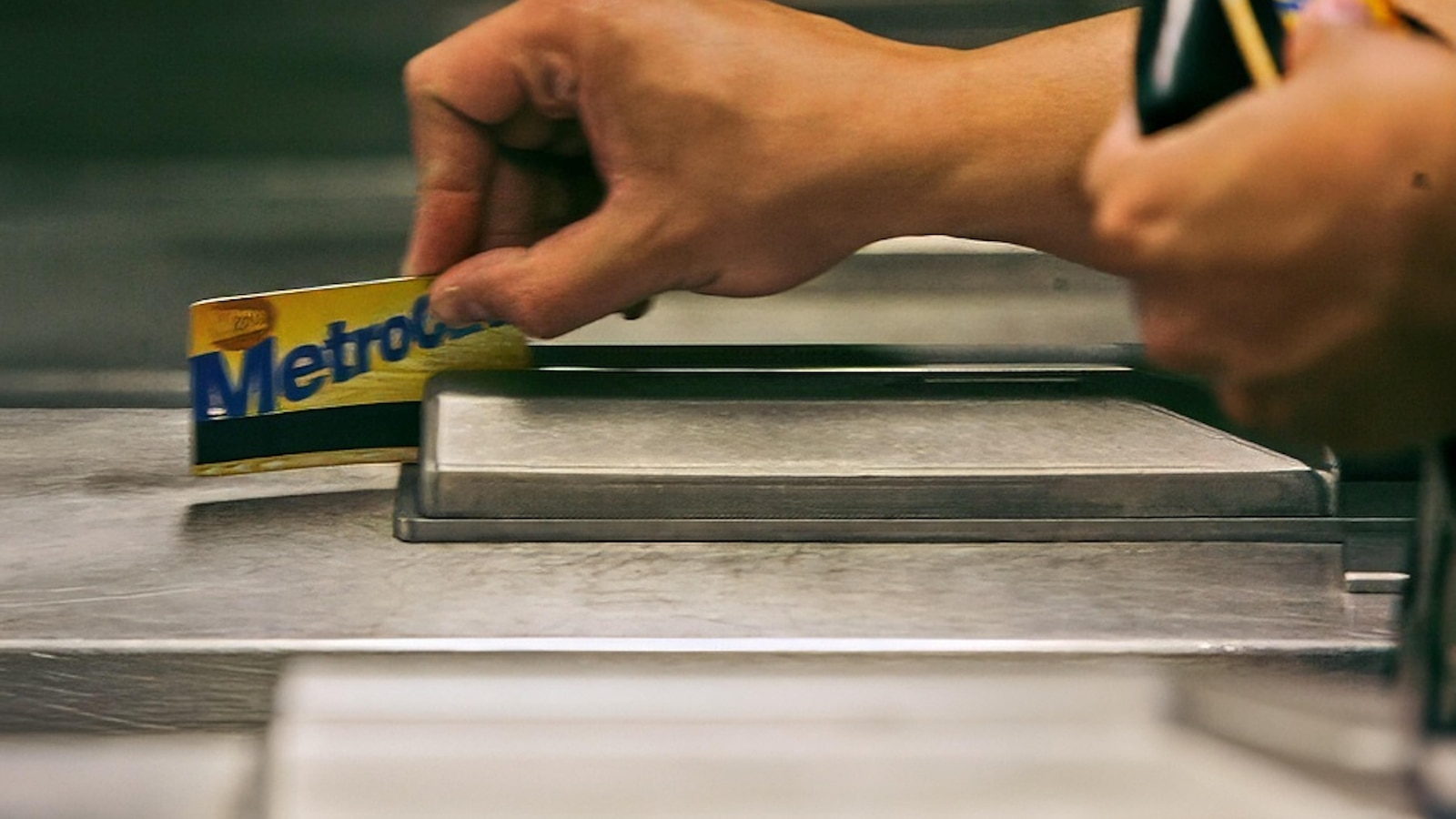
    NEW YORK — When the MetroCard replaced the New York City subway token in 1994, the swipeable plastic card infused much-needed modernity into one of the world’s oldest and largest transit systems.

    Now, more than three decades later, the gold-hued fare card and its notoriously finicky magnetic strip are following the token into retirement.

    The last day to buy or refill a MetroCard is Dec. 31, 2025, as the transit system fully transitions to OMNY, a contactless payment system that allows riders to tap their credit card, phone or other smart device to pay fares, much like they do for other everyday purchases.

    Transit officials say more than 90% of subway and bus trips are now paid using the tap-and-go system, introduced in 2019.

    Major cities around the world, including London and Singapore, have long used similar contactless systems. In the U.S., San Francisco launched a pay-go system earlier this year, joining Chicago and others.

    The humble MetroCard may have outlasted its useful life, but in its day it was revolutionary, says Jodi Shapiro, curator at the New York Transit Museum in Brooklyn, which opened an exhibit earlier this month reflecting on the MetroCard’s legacy.

    Before MetroCards, bus and subway riders relied on tokens, the brass-colored coins introduced in 1953 that were purchased from station booths. When the subway opened in 1904, paper tickets cost just a nickel, or about $1.82 in today’s dollars.

    “There was a resistance to change from tokens to something else because tokens work,” Shapiro said on a recent visit to the museum, housed underground in a decommissioned subway station. “MetroCards introduced a whole other level of thinking for New Yorkers.”

    The Metropolitan Transportation Authority launched public campaigns to teach commuters how to swipe the originally blue-colored cards correctly, hoping to avoid the dreaded error message or lost fares. Officials even briefly toyed with the idea of an quirky mascot, the Cardvaark, before coming to their senses.

    The cards quickly became collectors items as the transit system rolled out special commemorative editions marking major events, such as the “Subway Series” between baseball’s New York Mets and the New York Yankees in the 2000 World Series. At the time, a fare cost $1.50.

    Artists from David Bowie and Olivia Rodrigo to seminal New York hip hop acts, such as the Wu-Tang Clan, the Notorious B.I.G. and LL Cool J, have also graced the plastic card over the years, as have iconic New York shows like Seinfeld and Law & Order.

    “For me, the most special cards are cards which present New York City to the world,” said Lev Radin, a collector in the Bronx. “Not only photos of landmarks, skylines, but also about people who live and make New York special.”

    Perfecting the correct angle and velocity of the MetroCard swipe also became something of a point of pride separating real New Yorkers from those just visiting.

    During her failed 2016 presidential campaign, Hillary Clinton, a former U.S. Senator from New York, took an excruciating five swipes at a Bronx turnstile. In fairness, her chief Democratic opponent at the time, U.S. Sen. Bernie Sanders of Vermont, a native Brooklynite, didn’t even appear to realize tokens had been discontinued.

    Unlike the MetroCard rollout, OMNY has required little adjustment.

    Riders reluctant to use a credit card or smart device can purchase an OMNY card they can reload, similar to a MetroCard. Existing MetroCards will also continue to work into 2026, allowing riders to use remaining balances.

    MTA spokespersons declined to comment, pointing instead to their many public statements as the deadline approaches.

    The agency has said the changeover saves at least $20 million annually in MetroCard-related costs.

    The new system also allows unlimited free rides within a seven-day period because the fare is capped after 12 rides. It’ll max out at $35 a week once the fare rises to $3 in January.

    Still, new changes come with tradeoffs, with some critics raising concerns about data collection and surveillance.

    Near Times Square on a recent morning, Ronald Minor was among the dwindling group of “straphangers” still swiping MetroCards.

    The 70-year-old Manhattan resident said he’s sad to see them go. He has an OMNY card but found the vending machines to reload it more cumbersome.

    “It’s hard for the elders,” Minor said as he caught a train to Brooklyn. “Don’t push us aside and make it like we don’t count. You push these machines away, you push us away.”

    John Sacchetti, another MetroCard user at the Port Authority stop, said he likes being able to see his balance as he swipes through a turnstile so he knows how much he’s been spending on rides.

    “It’s just like everything else, just something to get used to,” he said as he headed uptown. “Once I get used to it, I think it’ll be okay.”

    ___

    Follow Philip Marcelo at https://x.com/philmarcelo

    Continue Reading

  • Minimum wage will rise in 19 states starting Jan. 1 – Axios

    1. Minimum wage will rise in 19 states starting Jan. 1  Axios
    2. New year, new laws: What laws go into effect on Jan. 1 in Nebraska?  KETV
    3. Minimum Wage Increases in the City of Sonoma Beginning January 1, 2026  Sonoma Valley Sun
    4. Is Mississippi one of 19 states raising its minimum wage? What we know  The Clarion-Ledger
    5. Oregon, Washington both to increase minimum wage in 2026  KCBY

    Continue Reading

  • Why your holiday gift returns might go to a landfill and what you can do about it

    Why your holiday gift returns might go to a landfill and what you can do about it

    The holiday season will soon come to a close, but the busiest time of the year for product returns is just beginning.

    The National Retail Federation estimates 17% of holiday purchases will be sent back this year. More retailers are reporting extended return windows and increased holiday staff to handle the rush this year.

    A major driver for returns is uncertainty. When we buy for other people, finding what they want is a bit of a guessing game. Online purchases have higher return rates because finding the right size and color is tough when you’re just staring at images on screens.

    “Clothing and footwear, as you can imagine, because fit is such an important criteria, they have higher rates of returns,” said Saskia van Gendt, chief sustainability officer at Blue Yonder, which sells software designed to improve companies’ supply chain management.

    Returns come with an environmental cost, but there’s a lot consumers and companies are doing to minimize it.

    The impact of returns
    If a company sells a thing, it’s probably packaged in plastic. Plastic is made from oil, and oil production releases emissions that warm the planet. If that thing is bought online, it’s put on a plane or a train or a truck that usually uses oil-based fuel.

    If you buy a thing and return it, it goes through most or all of that all over again.

    And once those products are back with the retailer, they may be sent along to a refurbisher, liquidator, recycler or landfill. All these steps require more travel, packaging and energy, ultimately translating to more emissions. Joseph Sarkis, who teaches supply chain management at Worcester Polytechnic Institute, estimates that returning an item increases its impact on the planet by 25% to 30%.

    Roughly a third of the time, those returns don’t make their way to another consumer. Because frequently, it’s not worth reselling.

    If, for example, you get a phone, but you send it back because you don’t like the color, the seller has to pay for the fuel and equipment to get the phone back, and then has to pay for the labor to assess whether it has been damaged since leaving the facility.

    “It can be quite expensive,” said Sarkis. “And if you send it out to a new customer and the phone is bad, imagine the reputational hit you’ll get. You’ll get another return and you’ll lose a customer who’s unhappy with the product or material. So the companies are hesitant to take that chance.”

    Something as expensive as a phone might get sold to a secondary or refurbishment market. But that $6 silicone spatula you got off Amazon? Probably not worth it. Plus, some stuff — think a bathing suit or a bra — is less attractive to customers if there’s a chance it’s been resold. The companies know that.

    And that’s where the costs of returns are more than just environmental — and consumers wind up paying. Even free returns aren’t really free.

    “Refurbishment, inspection, repackaging, all of these things get factored into the retail price,” said Christopher Faires, assistant professor of logistics and supply chain management at Georgia Southern University.

    What consumers can do about it
    If you want to reduce the impact of your returns, the first move is to increase their chances of resale. Be careful not to damage it, and reuse the packaging to send it back, said Cardiff University logistics and operations management lecturer Danni Zhang.

    If you have to return something, do it quickly. That ugly Christmas sweater you got at the white elephant office party has a much better chance of selling on Dec. 20 than it does on Jan. 5. Zhang said it’s not worth the cost to the company to store that sweater once it’s gone out of season.

    Another tip: in-person shopping is better than online because purchases get returned less often, and in-person returns are better, too — because those items get resold more often. Zhang said it reduces landfill waste. Sarkis said it reduces emissions because companies with brick-and-mortar locations spread out across the country and closer to consumers thus move restocked goods shorter distances.

    “If I can return in-store, then I definitely will,” Zhang said. “The managers can put that stuff back to the market as soon as possible.”

    Obviously the best thing consumers can do is minimize returns. Many shoppers engage in “bracketing behavior,” or buying multiple sizes of the same item, keeping what fits, and returning the rest.

    “This behavior of bringing the dressing room to our homes is not sustainable,” said Faires.

    If you’re buying for someone else, you can also consider taking the guesswork out of the equation and going for a gift card.

    “I know we do really want to pick up something really nice to express our love for our friends or our family. But if we are more sustainable, probably the gift card will be much better than just purchasing the product,” Zhang said.

    What businesses can do about it
    Sarkis wants to see companies provide more information in product descriptions about the environmental impact of returning an item, or how much of the purchase price factors in return costs.

    “But I don’t know if they want to send a negative message,” he said. “If you’re telling someone to stop something because of negative results, that’s not going to sell.”

    Sarkis and Zhang both say charging for returns would help. Already Amazon is requiring customers pay in certain situations.

    On the tech side, Blue Yonder’s recent acquisition of Optoro, a company that provides a return management system for retailers and brands, uses a software to quickly assess the condition of returned products and route them to stores that are most likely to resell them.

    “Having that process be more digitized, you can quickly assess the condition and put it back into inventory,” said van Gendt. “So that’s a big way to just avoid landfill and also all of the carbon emissions that are associated with that.”

    Clothing is returned most often. Many sizes do not reflect specific measurements, like women’s dresses, so they vary a lot between brands. Zhang said better sizing could help reduce the need for returns. On top of that, Sarkis said more 3D imaging and virtual reality programs could help customers be more accurate with their purchases, saving some returns.


    Continue Reading

  • The year in AI and culture – NPR

    The year in AI and culture – NPR

    1. The year in AI and culture  NPR
    2. 60 of our biggest AI announcements in 2025  blog.google
    3. What we explored in 2025—plus book recommendations!  The Ken
    4. Top AI announcements from 2025: Nano Banana, Sora, Perplexity’s AI Browser and More  Gadgets 360
    5. AI in 2025 vs 2026: From Intelligence to Integration  SMEStreet

    Continue Reading

  • New report says Maine’s wood product manufacturing sales rose 45% between 2019 and 2024

    New report says Maine’s wood product manufacturing sales rose 45% between 2019 and 2024

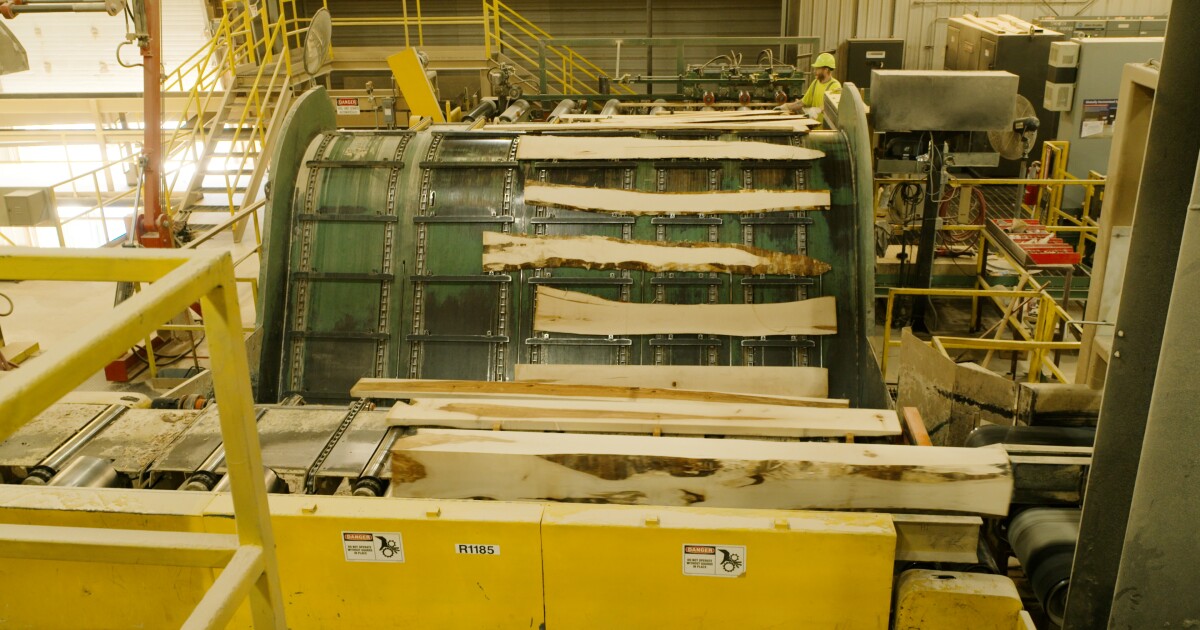
    Maine’s wood product manufacturing sales increased by 45% in a five-year period. That’s according to a report published in October from the Maine Forest Products Council on the economic contribution of the state’s forest products sector from 2019 to 2024.

    Executive director Krysta West says during that period, Maine saw a lot of investment in sawmills, both in the expansion of existing infrastructure and in new facilities that are able to process lower grade lumber that would have previously gone to pulp and paper.

    “Everybody was staying home during the pandemic building things. It was a real boom time for that sector of the industry,” West says. “Since then, interest rates and inflation have caught up, and it’s slowed down significantly in that sector as well.”

    During that same time period, the state’s pulp and paper industry continued to contract, with paper manufacturing sales falling by 41%.

    West says despite the instability, the overall economic contribution of Maine’s forest product sector is still $8.3 billion, and the industry is actively trying to diversify.


    Continue Reading