Category: 3. Business

  • New doctoral training programme set to tackle environmental challenges through engineering biology

    The Biotechnology and Biological Sciences Research Council (BBSRC) has
    announced the Engineering Biology for Environmental Applications Doctoral
    Focal Award (ENGBIO4ENV), a first-of-its-kind training programme in the UK.

    Part of the Cranfield University-led UKRI Environmental Biotechnology Innovation Centre, the ENGBIO4ENV programme has been designed to take the
    transformative advances made in engineering biology over the last few years
    and translate them into practical, real-world solutions.

    The programme will do that by adopting a systems-level approach rather than
    focusing on isolated disciplines. This will equip researchers with the
    interdisciplinary skills needed to transition between academia, industry and
    government.

    ENGBIO4ENV will train 52 doctoral candidates to tackle these key areas:

    • Drive the UK’s transition to a circular bioeconomy and net-zero
      economy.
    • Develop field-ready biotechnologies for pollution remediation,
      resource recovery, and real-time environmental monitoring.
    • Lead in sectors such as bio-based green economy, environmental
      resilience, clean growth, and data-driven environmental governance.
    • Address critical skills shortages in microbial community
      engineering, AI-driven bioprocess optimisation, bespoke biosecurity
      solutions, and process scale-up for industrial applications.
    • Influence policy through robust environmental techno-economic and
      risk assessments.

    Frederic Coulon, Professor of Environmental Chemistry and Microbiology at
    Cranfield University, said: “This is a fantastic opportunity for
    early-career researchers to make an impact in an area where the UK has a
    clear skills gap to fill.

    “The ENGBIO4ENV programme has been co-designed by 25 industry and Government
    partners to make sure that graduates have the skills needed to contribute in
    whatever area they choose. The programme goes far beyond a traditional PhD
    and also offers a variety of tailored career development activities, which
    will aid all students in their transition between studying and the world of
    work.”

    Professor Anne Ferguson-Smith, BBSRC Executive Chair, said: “Through these
    investments, UKRI is strengthening the UK’s leadership in critical
    technologies while creating meaningful opportunities for businesses,
    researchers and regions across the country. The industrial doctoral
    landscape awards and doctoral focal awards will equip a new generation of
    talented researchers with the skills to drive innovation, support
    high-growth sectors and improve lives.”

    The ENGBIO4ENV programme also includes researchers from
    Brunel University of London, Newcastle University, the University of Glasgow
    and the University of Southampton. It is further supported by the National
    Measurement Laboratory and the National Physical Laboratory. With global
    partnerships in the USA, Japan, Spain, Brazil, and Ireland, ENGBIO4ENV will
    enable the UK to share its expertise, adopt international best practices,
    and sustain its leadership in engineering biology and environmental
    biotechnology while applying those areas to tackle environmental challenges.

    The ENGBIO4ENV doctoral focal award is supported through the UKRI
    Engineering Biology initiative, with the Natural Environment Research
    Council acting as the direct sponsoring and administering council for this
    award.

    Continue Reading

  • Euro area international trade in goods surplus €18.4 bn – Euro indicators

    Euro area international trade in goods surplus €18.4 bn – Euro indicators

    Euro area

    The first estimates of euro area balance showed a €18.4 bn surplus in trade in goods with the rest of the world in October 2025, compared with + €7.1 bn in October 2024.

    The euro area exports of goods to the rest of the world in October 2025 were €258.0 bn, an increase of 1.0% compared with October 2024 (€255.5 bn).

    Imports from the rest of the world stood at €239.6 bn, a fall of 3.6% compared with October 2024 (€248.4 bn).

    In October 2025, the euro area balance remained stable compared to September 2025, with the overall surplus remaining at €18.4 bn. Although the surplus of chemicals and related products decreased from €28.5 bn in September 2025 to €18.4 bn in October 2025, improvements in other sectors helped maintain the overall balance.

    Compared to October 2024, the euro area balance increased by €11.3 bn. This positive change was primarily driven by significant improvements in the energy sector, where the deficit decreased from €-24.7 billion in October 2024 to €-17.0 bn in October 2025.

    Euro area balance by product group

    In January to October 2025, the euro area recorded a surplus of €144.6 bn, compared with €141.4 bn in January-October 2024.

    The euro area exports of goods to the rest of the world rose to €2 462.7 bn (an increase of 2.9% compared with January-October 2024), and imports rose to €2 318.1 bn (an increase of 3.0% compared with January-October 2024).

    Intra-euro area trade rose to €2 199.0 bn in January-October 2025, up by 1.6% compared with January-October 2024.

    Euro area trade – non seasonally adjusted data (bn €)

    Flows

    Oct 24

    Oct 25

    Growth

    Jan-Oct 24

    Jan-Oct 25

    Growth

    255.5

    258.0

    1.0%

    2 392.6

    2 462.7

    2.9%

    248.4

    239.6

    -3.6%

    2 251.2

    2 318.1

    3.0%

    7.1

    18.4

    141.4

    144.6

    234.3

    234.0

    -0.1%

    2 163.8

    2 199.0

    1.6%

    European Union

    The EU balance showed a €14.7 bn surplus in trade in goods with the rest of the world in October 2025, compared with +€3.1 bn in October 2024.

    The extra-EU exports of goods in October 2025 were €227.5 billion, down by 0.6% compared with October 2024 (€228.9 bn).

    Imports from the rest of the world stood at €212.8 bn, down by 5.8% compared with October 2024 (€225.8 bn).

    International trade in goods of the EU

    In October 2025, the EU balance showed a decline compared to September 2025, with the overall surplus decreasing from €15.4 bn to €14.7 bn. This change was primarily driven by a reduction in the chemicals and related products surplus, which fell from €26.5 bn in September 2025 to €16.4 bn in October 2025. However, the decline in the overall balance was partially mitigated by reductions in the deficits for both energy (from €-23.2 bn to €-19.9 bn) and other manufactured goods (from €-5.0 bn to €-0.5 bn).

    Compared to October 2024, the EU balance improved by €11.6 bn. This positive change was largely attributed to the reduction in deficit for energy products, which decreased from €-28.7 bn in October 2024 to €-19.9 bn in October 2025, and other manufactured goods, which decreased from €-4.4 to €-0.5.

    EU balance by product group

    In January to October 2025, the EU recorded a surplus of €116.7 bn, compared with €116.3 bn in January-October 2024.

    The extra-EU exports of goods rose to €2 215.3 bn (an increase of 2.6% compared with January-October 2024), and imports rose to €2 098.6 bn (an increase of 2.8% compared with January-October 2024).

    Intra-EU trade rose to €3 465.6 bn in January-October 2025, +2.3% compared with January-October 2024.

    EU trade – non seasonally adjusted data (bn €)

    Flows

    Oct 24

    Oct 25

    Growth

    Jan-Oct 24

    Jan-Oct 25

    Growth

    228.9

    227.5

    -0.6%

    2 158.5

    2 215.3

    2.6%

    225.8

    212.8

    -5.8%

    2 042.2

    2 098.6

    2.8%

    3.1

    14.7

    116.3

    116.7

    368.8

    374.9

    1.6%

    3 387.6

    3 465.6

    2.3%

    Main products – EU

    Bn €, monthly change compared to previous year

    Extra-EU exports

    Extra-EU imports

    Trade balance

    Oct 25

    Growth rates

    Oct 25

    Growth rates

    Oct 25

    Oct 24

    227.5

    -0.6%

    212.8

    -5.8%

    14.7

    3.1

    35.2

    -0.3%

    52.0

    -16.6%

    -16.8

    -27.1

    19.8

    0.9%

    15.0

    -1.1%

    4.8

    4.5

    6.1

    1.8%

    7.9

    -11.1%

    -1.8

    -2.9

    9.3

    -4.0%

    29.2

    -24.0%

    -19.9

    -28.7

    186.4

    -1.8%

    157.1

    -2.1%

    29.3

    29.4

    46.2

    -7.7%

    29.8

    -4.9%

    16.4

    18.7

    90.4

    1.5%

    76.9

    4.2%

    13.5

    15.2

    49.9

    -1.8%

    50.4

    -8.8%

    -0.5

    -4.4

    5.9

    57.9%

    3.6

    21.7%

    2.3

    0.7

    Main trading partners – EU

    Bn €, monthly change compared to previous year

    Extra-EU exports

    Extra-EU imports

    Trade balance

    Oct 25

    Growth rates

    Oct 25

    Growth rates

    Oct 25

    Oct 24

    40.7

    -14.7%

    29.5

    4.4%

    11.2

    19.5

    16.7

    -3.3%

    49.2

    -4.4%

    -32.5

    -34.1

    30.5

    -3.0%

    13.2

    -10.0%

    17.3

    16.7

    20.0

    16.5%

    13.8

    -7.7%

    6.2

    2.3

    9.8

    -3.2%

    9.3

    0.5%

    0.5

    0.9

    6.0

    6.1%

    7.2

    -13.6%

    -1.2

    -2.6

    5.7

    -7.8%

    5.6

    4.5%

    0.1

    0.8

    4.4

    4.2%

    6.1

    -14.8%

    -1.7

    -3.0

    4.5

    -5.3%

    5.7

    -8.9%

    -1.2

    -1.5

    4.9

    8.7%

    2.8

    9.6%

    2.1

    2.0

    Annex – Seasonally adjusted data

    In October 2025 compared with September 2025, euro area seasonally adjusted exports decreased by 4.6%, while imports decreased by 3.3%. The seasonally adjusted balance was €14.0 bn, a fall compared with September (€18.0 bn).

    In October 2025 compared with September 2025, EU seasonally adjusted exports decreased by 5.6%, while imports decreased by 4.3%. The seasonally adjusted balance was €11.8 bn, a fall compared with September (€15.1 bn).

    In August-October 2025, euro area exports to non-EA countries rose by 0.1%, while imports fell by 2.2%. Intra euro area trade rose by 0.4%. During the same period, EU exports to non-EU countries decreased by 0.6%, while imports fell by 2.9%. Intra-EU trade increased by 0.7%.

    EA and EU trade – seasonally adjusted data – (bn €)

    Sep 25

    Oct 25

    growth rates

    Aug-Oct 25

    Growth rates (compared to the previous three months)

    247.8

    236.3

    -4.6%

    721.2

    0.1%

    229.8

    222.3

    -3.3%

    679.1

    -2.2%

    18.0

    14.0

    42.2

    221.5

    218.3

    -1.5%

    658.9

    0.4%

    221.7

    209.4

    -5.6%

    643.2

    -0.6%

    206.6

    197.6

    -4.3%

    609.4

    -2.9%

    15.1

    11.8

    33.8

    349.7

    345.4

    -1.2%

    1 039.9

    0.7%

    International trade in goods balance

    Notes for users

    Revisions and timetable

    This News Release is based on information transmitted by Member States to Eurostat before 11 Dec 2025 figures are provisional. For more details, see information on data.

    Methods and definitions

    Statistics on trade in goods are transmitted monthly by the Member States, in accordance with the standard set out in Commission Implementing Regulation (EU) 2020/1197. For each reference month, Member States must compile statistics covering their total extra- and intra-EU trade by using estimates, where necessary. These data are available within 40 days after the end of the reference month, enabling euro area and EU aggregates to be disseminated within around 46 days.

    Member States provide Eurostat with raw data, which are adjusted for calendar and seasonal effects by Eurostat. The European aggregates are computed with the indirect approach (by Member States) for total imports and exports, which guarantees additivity between the aggregate and its respective components. The estimation of seasonally adjusted data is based on the Tramo-Seats procedure, which is available in the software JDemetra+.

    Data are broken down by broad categories of products as defined by the one-digit codes of the Standard international trade classification (SITC).

    Geographical information

    The euro area (EA20) includes Belgium, Germany, Estonia, Ireland, Greece, Spain, France, Croatia, Italy, Cyprus, Latvia, Lithuania, Luxembourg, Malta, the Netherlands, Austria, Portugal, Slovenia, Slovakia and Finland.

    The European Union (EU27) includes Belgium, Bulgaria, Czechia, Denmark, Germany, Estonia, Ireland, Greece, Spain, France, Croatia, Italy, Cyprus, Latvia, Lithuania, Luxembourg, Hungary, Malta, the Netherlands, Austria, Poland, Portugal, Romania, Slovenia, Slovakia, Finland and Sweden.

    For more information
    Continue Reading

  • FSA issues a precautionary warning to people with allergies not to eat Dubai-style chocolate

    FSA issues a precautionary warning to people with allergies not to eat Dubai-style chocolate

    The FSA issued a warning earlier this year that some Dubai-style chocolate products may be unsafe for people with allergies. The FSA is aware that some of these products may contain allergens such as peanut and sesame that are not declared on the label. This information has been shared with businesses and industry groups so they can take action to make sure the products they sell are safe and correctly labelled.   

    The FSA is currently reviewing sampling data from products on sale to check whether they meet the required food safety and labelling standards. Until the work is complete and the full results are known, the FSA is advising consumers with allergies to avoid Dubai-style chocolate as a precaution.  

    “Dubai-style chocolate has become hugely popular, but we’ve found that some products contain peanut and sesame that aren’t declared on the label. For someone with allergies, this could be dangerous. 

    With Christmas just around corner, there is a risk that some products on sale may not meet our strict UK standards. 

    People with an allergy should not eat Dubai-style chocolate. If you’re buying a gift for someone who lives with allergies, our advice is to avoid buying these products. This includes all allergies, not just peanut and sesame. People without allergies can consume these products, especially where they are supplied by reputable brands and retailers.  

    People should be able to trust that food in UK shops is safe and that it’s what it says it is, so we’re reminding businesses of their responsibility to ensure the safety of the food products they sell.  We’ve also shared our concerns with allergy charities so they can help us make sure consumers have the information they need to make informed choices.    

    We’re continuing to monitor these products and will provide further advice, so sign up to our food alerts to stay up to date.”

    Rebecca Sudworth, Director of Policy at the FSA

    “CTSI fully supports the FSA’s precautionary advice and share their commitment to protecting the safety and health of consumers, particularly when it comes to allergens in food; these can be fatal to those with food hypersensitivity.  

    The legal requirements on this are clear – any food containing allergens needs to be clearly identified and labelled as such to allow consumers to make informed and safe choices. To not do this is illegal and also highly dangerous as it makes such foods unsafe to those with food allergies. We urge all food businesses, including retailers and importers, to take immediate steps to comply. Businesses who are not sure if they are affected by this warning should contact their local Trading Standards service for advice and guidance.  

    The public should be assured that Trading Standards professionals nationwide – whether advising businesses or enforcing compliance – are working closely with the FSA and affected companies to ensure products meet all safety and labelling requirements. Together, we can help keep people safe and maintain trust in the food supply chain.” 

    Jessica Merryfield, Chartered Trading Standards Practitioner and Head of Policy and Campaigns at the Chartered Trading Standards Institute (CTSI)

    For people who do choose to buy Dubai-style chocolate, FSA advice is to buy from a reputable retailer and check that the product label is in English and contains the following information:  

    • the name of the food (e.g. milk chocolate with pistachio paste filling);    
    • a list of ingredients, with allergens emphasised;    
    • the weight of the food in grams;    
    • a best before or use by date; 
    • the name and address of the UK or EU business responsible for the product information. If the food is not from the UK or EU, the name and address of the importer must be included.  

    For more information on food allergies and how to stay safe, visit food.gov.uk.  

    Continue Reading

  • 32.7% of EU people used generative AI tools in 2025 – News articles

    32.7% of EU people used generative AI tools in 2025 – News articles

    In 2025, 32.7% of people aged 16-74 in the EU used generative artificial intelligence (AI) tools. Most people used them for personal purposes (25.1%), while 15.1% used them for work and 9.4% for formal education.

    This information comes from data on the use of ICT in households and by individuals published by Eurostat today. The article presents a handful of findings from the more detailed Statistics Explained article on digital economy and society statistics – households and individuals.

    Among EU countries, the use of generative AI tools was most widespread in Denmark (48.4%), Estonia (46.6%) and Malta (46.5%).

    In contrast, the lowest shares of people using generative AI tools were recorded in Romania (17.8%), Italy (19.9%) and Bulgaria (22.5%).

    Source dataset: isoc_ai_iaiu

    Continue Reading

  • EU Payment Observatory – Annual Report 2025 – CEPS

    EU Payment Observatory – Annual Report 2025 – CEPS


    Late payments remain an increasing problem in the EU, with more than half of companies reporting difficulties as a result in 2024. According to suppliers, average payment periods exceeded 60 days in both B2B and G2B transactions, with governments paying later than businesses in every Member State. As observed in every year analysed, the larger the company, the less likely it is to pay on time. At sector level, however, payment performance varies widely, differing more across Member States than across sectors within a single country.

    This edition of the Annual Report introduces a new section on payment terms. The analysis shows that longer payment terms are associated with longer payment periods in 87% of cases, and that most companies surveyed by the Commission support limiting payment terms.

    Amid economic uncertainty and a slowdown, companies are increasingly concerned about late payment practices, while structural issues persist. The consequences of a poor payment culture are diverse, with impacts on investment and growth most frequently cited. In addition, pursuing late payments represents a significant administrative burden for companies.

    The Annual Report is the Observatory’s main analytical output, providing a comprehensive overview of key trends and developments in payment performance related to commercial transactions in 2024.


    This report was written in the context of a European Commission project to set up a European Payment Observatory. The report was originally published here.

    Continue Reading

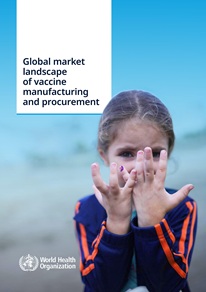
  • Global market landscape of vaccine manufacturing and procurement

    Global market landscape of vaccine manufacturing and procurement

    Overview

    This landscape analysis aims to present a current picture of the global vaccine ecosystem from the purchaser (country) and supplier (manufacturer) perspectives to help global, regional and country stakeholders understand the current distribution of global manufacturing and procurement for different markets, technologies and regions.

    Using data reported in 2023 from 204 countries and 98 vaccine manufacturers, the report broadly addresses the following questions.

    1. What is the geographic distribution of vaccine manufacturing across all production stages at the regional level? What trends are emerging?

    2. How is regional manufacturing related to supply security and pandemic preparedness? What can be learned from different regions’ and countries’ experiences?

    3. How do links among manufacturers across production stages affect supply security?

    4. What is the geographic distribution of vaccine technology platforms?

    Drawing on the insights generated through the analysis, the report concludes with a discussion of broader strategic considerations surrounding regional vaccine manufacturing. These include the distinction between local and regional production capacity and their respective implications for supply security; the opportunity for regions initiating manufacturing efforts to pursue public investments that strengthen access outcomes; and the critical importance of an enabling ecosystem to ensure the sustainability and success of regional manufacturing initiatives, while monitoring for potential externalities affecting global vaccine access.

    Continue Reading

  • Dollar slips ahead of payrolls; sterling gains despite weak jobs data – Investing.com

    1. Dollar slips ahead of payrolls; sterling gains despite weak jobs data  Investing.com
    2. Dollar drops against peers  Business Recorder
    3. Stocks Dip and Dollar Weakens as Job Report and Price Index Awaited  وكالة صدى نيوز
    4. U.S. Dollar Retreats As Unemployment Rate Jumps to 4.6%: Analysis For EUR/USD, GBP/USD, USD/CAD, USD/JPY  FXEmpire
    5. The USD is lower to start the trading week. What is the roadmap for traders today?  investingLive

    Continue Reading

  • ESB Networks’ welcomes publication of Price Review Six (PR6) Final Determination

    • Ambitious and challenging investment programme reflects strategic importance of electricity network to social, economic and environmental progress

    Tuesday 16th December 2025 

    ESB Networks welcomes the publication today by the Commission for Regulation of Utilities (CRU) of the Price Review Six (PR6) Final Determination, following an eighteen-month engagement process. 

    PR6 is the largest investment in the electricity network in Ireland’s history and will involve the delivery of more than 500 major capital projects which will allow Ireland to meet the increasing demand for electricity. This scale of investment reflects the strategic importance of the electricity network in enabling key policy targets, including those contained in the Government’s new housing plan –  Delivering Homes, Building Communities: An Action Plan on Housing Supply and Targeting Homelessness 2025-2030 – as well as the National Planning Framework, the National Development Plan and the Climate Action Plan.

    PR6 will allow ESB Networks to build on and accelerate the significant progress achieved during Price Review 5 (PR5) which included the connection of over 186,000 homes, farms and businesses, the addition of 2.1 GW of utility scale renewable generation and the installation of over 1.8 million smart meters.  

    Nicholas Tarrant, ESB Networks Managing Director, welcomed today’s determination by the CRU saying: “The final determination endorses the scale of ambition put forward by ESB Networks in our PR6 Business Plan. It will help pave the way for a more resilient, reliable and sustainable energy future for Ireland, supporting housing, jobs and climate action. We look forward to working in collaboration with our stakeholders, industry colleagues and all of society to deliver this historic and transformative investment in Ireland’s future.”  

    Continue Reading

  • UoM advancing UK biotech innovation through training

    UoM advancing UK biotech innovation through training

    Each programme brings together academic and industrial expertise to deliver high-quality doctoral training, with a strong emphasis on collaboration, innovation, and real-world impact.

    The three awards are:

    BioProcess: Biocatalysis and Protein Engineering Centre for Sustainable Synthesis

    Led by Professor Anthony Green at The University of Manchester and co-developed with AstraZeneca, BioProcess will offer training in biocatalysis, protein engineering and biomanufacturing with a specific industry focus. The programme will be delivered by a consortium of academic and industrial partners including the Universities of York and Bristol, and a network of multinational companies from across the pharmaceutical, chemical and biotechnology sectors.

    Students will be based in one of the three universities and will spend a minimum of three months working on industry placements to gain experience in a commercial setting. Training will span four scientific pillars: design and discovery of new enzyme chemistry, laboratory automation and AI for accelerated protein engineering, assembly of enzyme cascades and cell factories, and realising biotransformations at scale. The programme builds on the success of the Centre of Excellence for Biocatalysis (CoEBio3), which has already graduated 36 students and commercialised over 1,000 biocatalysts to date.

    BioProcess aims to equip this new generation of researchers with the technical and transferable skills needed to contribute to the UK’s bioeconomy, while fostering a collaborative and inclusive training environment.

    BioAID: AI-Driven Enzyme Design for Industry Biocatalysis

    BioAID, led by Queen’s University Belfast, with co-leads including Professor Sam Hay from the Manchester Institute of Biotechnology, and the Universities of Edinburgh and Bristol, will equip students with specialist knowledge in artificial intelligence and enzyme science to accelerate sustainable biomanufacturing.

    The programme responds to the growing demand for scalable, AI-enhanced enzyme solutions in sectors such as pharmaceuticals, agri-tech and clean energy. Students will receive training in machine learning, protein design and synthetic biology, supported by national computing infrastructure and hands-on laboratory experience.

    BioAID is designed to be interdisciplinary from the outset, with projects co-supervised across biosciences, AI, and engineering. Students will follow a structured training programme centred on three integrated scientific themes:

    • AI-Powered Enzyme Discovery (e.g. metagenomic mining and structure prediction)
    • AI-Guided Enzyme Design (e.g. active site tuning using ML tools)
    • AI-Enhanced Enzyme Applications (e.g. scalable biocatalysis in clean manufacturing) 

    The programme will deliver significant societal and economic benefits by embedding AI-driven enzyme innovation within the UK’s bioscience talent pipeline.

    CODE-M: Control and Design of Bioengineered Microbial Cells and Systems

    CODE-M will train PhD researchers in microbial bioengineering, with a focus on applications in biomedicine, clean growth, food systems, and environmental solutions. Led by Professors Michael Brockhurst and Neil Dixon at The University of Manchester, in partnership with the University of Liverpool, the programme will produce a cohort of highly-trained, highly employable bioengineers that will reinforce the UK’s position as a leader in green and biobased solutions. 

    Students will develop microbial biotechnologies that tackle global challenges, including improving health, driving clean growth, creating resilient food systems, and delivering environmental solutions. Training will be supported by advanced facilities including biofoundries, genomics platforms, and high-performance computing, and will be built around three themes:

    • Bottom-up design for bioengineering microbial cells and systems
    • Top-down control for bioengineering microbiomes
    • Disruptive technologies for microbial bioengineering

    The programme includes hands-on rotation projects, enabling skills training, and placements with industry and national institutes. CODE-M also places a strong emphasis on responsible research and innovation, equality and inclusion, and student-led activities such as stakeholder symposia and outreach.

    Building capability in the north-west

    Together, these three programmes represent a significant investment in the north-west and UK’s biotechnology training landscape. They will help to build a pipeline of skilled researchers equipped to tackle complex challenges in sustainable manufacturing, health, and environmental resilience.

    Each programme has been designed to align with UKRI’s doctoral investment priorities and national strategies including the UK Bioeconomy Strategy, Net Zero Strategy, and AI Strategy. By embedding industry collaboration, interdisciplinary training, and inclusive practices, these awards will support the development of a diverse and capable research workforce.

    Applications for the first cohort of studentships are expected to open in 2026, with further details to be announced in due course. 
     

    ';

    Continue Reading

  • EBRD supports MREL-eligible bond issuance in Serbia

    EBRD supports MREL-eligible bond issuance in Serbia

    • EBRD invests RSD 1.2 billion in landmark bond issuance by UniCredit Bank Serbia
    • Project sets new standard for raising of MREL-eligible funding in Serbia and wider Western Balkans
    • Investment contributes to Serbia’s capital market development and dinarisation

    The European Bank for Reconstruction and Development (EBRD) is investing RSD 1.2 billion (€10.2 million) in unsecured MREL-eligible bonds issued by UniCredit Bank Serbia (UCB) as one of the anchor investors, with UCB’s total issuance amounting to RSD 6.0 billion (€51.1 million). The bonds will be listed on the Belgrade Stock Exchange and will count towards UCB’s minimum requirement for own funds and eligible liabilities (MREL).

    This financing will support lending to micro, small and medium-sized enterprises (MSMEs) in Serbia. In accordance with the Financial Intermediaries Framework, UCB has committed to increasing its SME portfolio by a multiple of the EBRD’s funding, prioritising new clients and those in economically underdeveloped regions.

    At least 30 per cent of the proceeds from the EBRD’s subscription will be allocated to eligible green projects under the EBRD’s Green Economy Transition (GET) approach, supporting Serbia’s green transition.

    This transaction will strengthen UCB’s compliance with regulatory requirements, diversify its bail-in-able funding base and contribute to the development of Serbia’s local capital market. This is one of the first MREL-eligible bond issuances in the country and the wider Western Balkans, so it will also have a demonstration effect on other local banks.

    This investment in local currency is in line with the National Bank of Serbia’s dinarisation strategy, helping UCB to increase the Serbian dinar’s share of total funding and supporting the broader resilience of the financial sector.

    The EBRD is a leading institutional investor in Serbia, having invested more than €10 billion through almost 400 projects, most of which have supported the private sector. In Serbia, the Bank’s priorities include enhancing private-sector competitiveness, productivity and access to finance.

    Continue Reading