Category: 3. Business

  • Global standard-setting bodies publish assessment of margin requirements for non-centrally cleared derivatives

    Global standard-setting bodies publish assessment of margin requirements for non-centrally cleared derivatives

    • The Basel Committee on Banking Supervision (BCBS) and the International Organization of Securities Commissions (IOSCO) today published a report that reviews the implementation of margin requirements for non-centrally cleared derivatives.
    • The report concludes that the framework has been effectively implemented and finds no evidence of material issues. No changes to the framework are proposed.
    • The BCBS-IOSCO Working Group on Margining Requirements (WGMR) recommends ongoing monitoring through supervisory information exchange and the sharing of experiences among member authorities.

    The BCBS and IOSCO today published a report that reviews the implementation of margin requirements for non-centrally cleared derivatives. The assessment marks a milestone in the ongoing monitoring of the standard introduced in response to the 2011 G20 call to enhance the resilience of financial markets.

    The standard, first published in September 2013, establishes a framework for margin requirements for non-centrally cleared derivatives. The final phase of implementation occurred in September 2022, and implementation has now reached a steady state. The WGMR assessed the framework’s implementation, drawing on a 2024 quantitative impact study, a survey of WGMR members and recent international margin-related work.

    The assessment found no material issues with the framework. The amount of margin exchanged for non-centrally cleared derivatives has increased materially since 2012, contributing to greater financial system resilience. The framework has been effective in supporting the intended functioning of capital and centrally cleared margin frameworks, including during recent episodes of market stress.

    The BCBS and IOSCO do not propose changes to the framework, but recommend continued monitoring in the form of supervisory information exchange and the sharing of experiences among their members to address evolving market practices.

    The full report is available on the BCBS and IOSCO websites.


    Note to editors:

    The Basel Committee is the primary global standard setter for the prudential regulation of banks and provides a forum for cooperation on banking supervisory matters. Its mandate is to strengthen the regulation, supervision and practices of banks worldwide with the purpose of enhancing financial stability. The Committee reports to the Group of Central Bank Governors and Heads of Supervision and seeks its endorsement for major decisions. The Committee has no formal supranational authority, and its decisions have no legal force. Rather, the Committee relies on its members’ commitments to achieve its mandate. The Group of Central Bank Governors and Heads of Supervision is chaired by Tiff Macklem, Governor of the Bank of Canada. The Basel Committee is chaired by Erik Thedéen, Governor of the Sveriges Riksbank.

    More information about the Basel Committee is available here.

    Continue Reading

  • Aviation essential for the economy and calls for a national SAF fund

    Aviation essential for the economy and calls for a national SAF fund

    A national SAF fund: paving the way for ‘SAF Made in Holland’

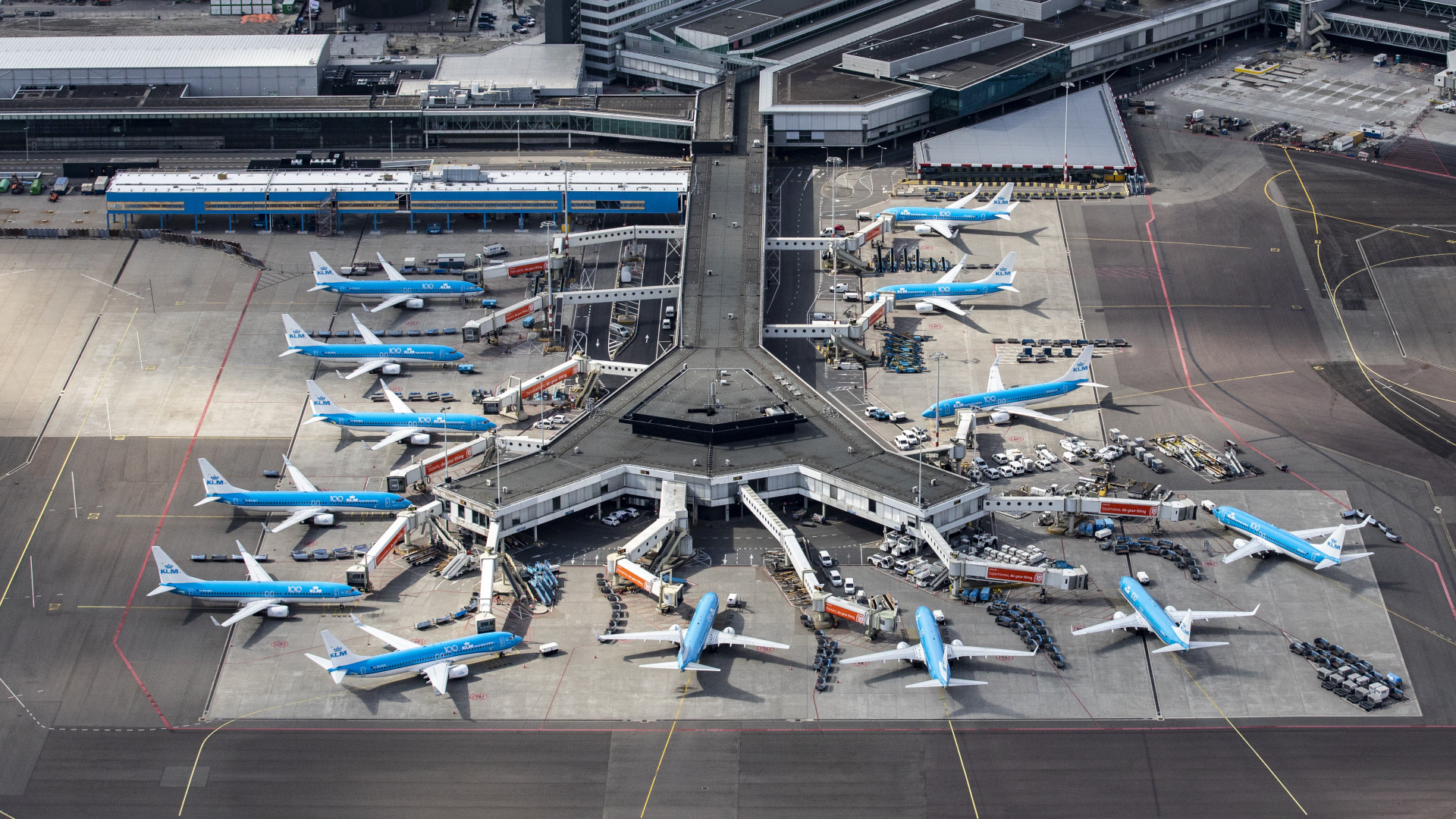
    The creation of a national SAF fund aligns with European efforts to accelerate the transition to sustainable fuels, including the Sustainable Transport Investment Plan (STIP), and would make ‘SAF Made in Holland’ a reality. In KLM’s view, a national SAF fund should focus on the following:

    1.      Making SAF affordable for airlines
    Bridge the price gap between SAF and fossil kerosene through an incentive fund, enabling airlines to actually use SAF and encouraging them to choose sustainable options. Based on current prices, an annual investment of €60 million could already deliver an additional 1% SAF blend.

    2.      Accelerating production and access to raw materials
    Improve access to sustainable raw materials for SAF production and remove barriers to accelerated SAF infrastructure development. This would allow the Netherlands to make significant progress in scaling up domestic production.

    3.      Investing in (e)SAF innovation to become a European leader
    Support the development of next-generation (e)SAF technologies and take a leading role in European innovation initiatives. The Dutch government has already taken a promising first step by joining a European pilot within the STIP programme.

    The national SAF fund could be financed through the revenues from the existing Dutch aviation tax. This would allow the Netherlands, and Dutch aviation, to take the lead in scaling up alternative aviation fuels and help ensure that the national ambition of a 14% SAF blend by 2030 remains within reach.

    ';

    Continue Reading

  • Global Stocks Hit All-Time Highs as Rally Widens: Markets Wrap

    Global Stocks Hit All-Time Highs as Rally Widens: Markets Wrap

    (Bloomberg) — Global stock gauges have record highs in their sights after a week in which affirmation that the Federal Reserve’s interest-rate easing cycle remains intact helped clear the way for a year-end rally.

    Europe’s Stoxx 600 rose as much as 0.5% to a fresh peak. A measure for Asia advanced to less than 2% from its all-time high. S&P 500 futures were slightly lower after the benchmark posted a new closing milestone in the previous session, when gauges for blue-chip and small-cap US stocks also pushed into record territory.

    Stocks pared some gains after China said it will implement export-license management for certain steel products starting next year, a reminder of the lingering trade friction that has fueled bouts of volatility throughout the year.

    Friday’s advances came even as tech gauges lagged, signaling a broadening of the rally that has put a global equity index on track for a third successive year of gains. Shares of Broadcom Inc., which is vying with Nvidia Corp. for artificial-intelligence computing revenue, fell 4.8% in premarket trading after its sales outlook failed to meet lofty expectations. Nasdaq 100 futures slid 0.4%.

    “Everyone is convincing themselves that there will be a Christmas rally, so it looks like there will be one, and to be honest, there’s no negative catalyst visible until the end of the year,” said Karen Georges, a fund manager at Ecofi Investissements in Paris. “Investors are keen to buy this year’s laggards, it’s a good time to diversify your portfolio at the moment.”

    Delivering a third consecutive rate reduction on Wednesday, Fed Chair Jerome Powell voiced optimism that the US economy will strengthen as the inflationary impact from tariffs fades. While officials kept their outlook for just one cut in 2026, traders have stuck to bets for two such moves.

    Bloomberg’s index of the dollar traded near a two-month low on Friday and was on track for a third weekly loss. Treasury 10-year yields advanced one basis point to 4.17%.

    In commodities, copper climbed to a fresh record as most other industrial metals firmed after the Fed move. Gold rose for a fourth day while silver extended its all-time high. Oil rallied from its lowest close in almost two months.

    Corporate News:

    Shares in UBS Group AG soared to the highest intraday level since early 2008 as a group of influential lawmakers proposed watering down the capital demands that Switzerland wants to impose on the bank. SoftBank Group Corp. is studying potential acquisitions including data center operator Switch Inc., people with knowledge of the matter said, underscoring billionaire founder Masayoshi Son’s growing ambitions to ride an AI-fueled boom in digital infrastructure. Broadcom Inc., a chip company vying with Nvidia Corp. for AI computing revenue, slumped after its sales outlook for the red-hot market failed to meet investors’ lofty expectations. Some of the main moves in markets:

    Stocks

    The Stoxx Europe 600 rose 0.5% as of 8:54 a.m. London time S&P 500 futures were little changed Nasdaq 100 futures fell 0.2% Futures on the Dow Jones Industrial Average rose 0.3% The MSCI Asia Pacific Index rose 1.3% The MSCI Emerging Markets Index rose 1% Currencies

    The Bloomberg Dollar Spot Index was little changed The euro was little changed at $1.1734 The Japanese yen fell 0.1% to 155.78 per dollar The offshore yuan was little changed at 7.0524 per dollar The British pound was little changed at $1.3383 Cryptocurrencies

    Bitcoin fell 0.7% to $92,274.78 Ether fell 0.1% to $3,246.64 Bonds

    The yield on 10-year Treasuries was little changed at 4.16% Germany’s 10-year yield advanced one basis point to 2.86% Britain’s 10-year yield was little changed at 4.48% Commodities

    Brent crude rose 0.5% to $61.57 a barrel Spot gold rose 0.7% to $4,308.43 an ounce This story was produced with the assistance of Bloomberg Automation.

    –With assistance from Shikhar Balwani.

    ©2025 Bloomberg L.P.

    Continue Reading

  • Practical Answers for Common Compliance Questions

    Practical Answers for Common Compliance Questions

    In this China Value Added Tax (VAT) Q&A, we provide clear guidance on invoicing, input tax credits, deemed sales, and cross-border transactions.


    Find Business Support

    VAT compliance in China involves complex rules and interpretations that can significantly affect daily business operations. To help companies navigate these challenges, this Q&A compiles frequently asked questions based on official announcements and prevailing regulations, aligned with the principles of the new VAT Law taking effect on January 1, 2026. The answers aim to clarify practical issues such as invoice issuance, deemed sales, input tax credits, and cross-border transactions, enabling businesses to maintain compliance while optimizing tax management.

    Explore vital economic, geographic, and regulatory insights for business investors, managers, or expats to navigate China’s business landscape. Our Online Business Guides offer explainer articles, news, useful tools, and videos from on-the-ground advisors who contribute to the Doing Business in China knowledge.
    Start exploring

    FAQs on VAT management in China

    Q1. Does issuing an invoice before receiving payment or delivering goods constitute false issuance?

    Answer:​ No. The parties have an actual transaction; the invoice is simply being issued in advance. According to the Interpretation of the Announcement of the State Taxation Administration on Issues Concerning Taxpayers’ Issuance of Special VAT Invoices to External Parties, as long as there is a subsequent actual transaction, issuing an invoice in advance based on the agreement does not constitute false issuance.

    Q2. Can a special VAT invoice be issued externally for transactions under the simplified tax calculation method?

    Answer:​ Yes. Items under the simplified tax calculation method are not within the scope of transactions for which Special VAT Invoices are prohibited from being issued.

    Q3. Can an invoice be issued for a business activity outside the company’s registered business scope?

    Answer:​ Yes. Issuing an invoice is not related to the business scope; invoices should be issued based on actual business activity. If such activities are conducted regularly, it is recommended to add them to the company’s business scope.

    Q4. If a company’s employees book air tickets through a travel agency and obtain an electronic general VAT invoice for brokerage agency services, can the input tax be credited?

    Answer:​ If the electronic general VAT invoice is issued specifically for brokerage agency services, the input tax cannot be credited. If it is an electronic general VAT invoice for domestic passenger transport services and meets the relevant conditions, the input tax can be credited.

    Q5. During the Mid-Autumn Festival, a company gives shopping cards purchased from a supermarket to employees. Does this need to be treated as a deemed sale?

    Answer:​ No. A shopping card is essentially a form of currency, not a good. It does not meet the conditions for a deemed sale, so it is not treated as one.

    Q6. If a company’s R&D department uses inventory goods for R&D purposes, does this need to be treated as a Deemed Sale for VAT purposes?

    Answer:​ No, it does not need to be treated as a deemed sale.

    Q7. A company lends money externally. The interest payment date specified in the original loan agreement was later changed by a supplementary agreement. When does the VAT liability arise for this loan interest, based on the original agreement or the supplementary agreement?

    Answer:​ The VAT liability arises based on the date stipulated in the supplementary agreement. According to Article 45 of Appendix 1 of Cai Shui [2016] No.36, if a written contract specifies a payment date, the VAT liability arises on that specified payment date.

    Q8. A company purchases machinery equipment, and the seller is also responsible for installation and debugging. Should the seller issue a single special VAT invoice for the equipment sale, or separate invoices for the equipment and the installation?

    Answer:​ If the seller manufactures the machinery and also provides installation services, the goods and the construction service should be accounted for separately, applying different tax rates or levy rates: 13 percent for the sale of goods, and nine percent or three percent for the installation service. If the equipment is purchased externally and the seller has already separately accounted for the sales of the machinery and the installation service according to the rules for concurrent operations, then the installation service can, under the “Supplier-Provided Equipment Project” provision, be subject to the simplified tax calculation method.

    Q9. When a company’s employees travel abroad on business and incur expenses for accommodation and car rental, must the company withhold and remit VAT on these payments?

    Answer:​ No. Accommodation and car rental expenses incurred by employees on business trips abroad are consumed overseas; they qualify as services entirely supplied outside China. This is because a) the service provider is an overseas entity or individual, b) the domestic company receives the service outside China, and c) the service starts and ends entirely outside China. Therefore, it does not fall within the scope of China’s VAT, and the company does not need to withhold and remit VAT.

    Q10. When a company pays an exhibition fee to attend a trade fair overseas, does it need to withhold and remit VAT and corporate income tax (CIT)?

    Answer:​ The exhibition organizer is not considered to be supplying services within China, so no VAT liability arises. Since the labor service is performed outside China, it does not constitute income sourced within China, and there is no need to withhold and remit CIT.

    Q11. A company invites an expert to give a lecture and agrees to cover their round-trip airfare. If the company obtains an air transport electronic ticket itinerary with the expert’s identification information, can the company credit the related input VAT?

    Answer:​ No. The expert is not an employee of the company. Even with an air transport electronic ticket itinerary containing identity information, the related input VAT cannot be credited. According to State Taxation Administration Announcement [2019] No. 31, creditable input VAT for “domestic passenger transport services” is limited to services used by employees who have signed a labor contract with the company or laborers dispatched to the company.

    Q12. A company’s employee travels abroad on business and submits an air ticket with their identity information for reimbursement. Can the company credit the related input VAT?

    Answer:​ No. Travel by an employee from within China to a foreign country constitutes an international transport service, not a domestic passenger transport service. Therefore, the input VAT cannot be credited.

    Key takeaway

    VAT compliance in China requires careful attention to invoice issuance, input tax credit eligibility, and the treatment of special scenarios such as deemed sales and cross-border transactions. While the current rules remain in force, businesses should also prepare for the new VAT Law effective January 1, 2026, which aims to enhance clarity and legal certainty. Maintaining accurate documentation and aligning practices with official interpretations will be critical for minimizing tax risks and ensuring smooth compliance during this transition.

    Our tax advisory teams include experienced tax accountants, lawyers, and former tax officials who deliver deep insight into Asia’s tax environments—providing clients with comprehensive advisory and compliance support tailored to regional requirements. To arrange a consultation, please contact China@dezshira.com. 

    About Us

    China Briefing is one of five regional Asia Briefing publications. It is supported by Dezan Shira & Associates, a pan-Asia, multi-disciplinary professional services firm that assists foreign investors throughout Asia, including through offices in Beijing, Tianjin, Dalian, Qingdao, Shanghai, Hangzhou, Ningbo, Suzhou, Guangzhou, Haikou, Zhongshan, Shenzhen, and Hong Kong in China. Dezan Shira & Associates also maintains offices or has alliance partners assisting foreign investors in Vietnam, Indonesia, Singapore, India, Malaysia, Mongolia, Dubai (UAE), Japan, South Korea, Nepal, The Philippines, Sri Lanka, Thailand, Italy, Germany, Bangladesh, Australia, United States, and United Kingdom and Ireland.

    For a complimentary subscription to China Briefing’s content products, please click here. For support with establishing a business in China or for assistance in analyzing and entering markets, please contact the firm at china@dezshira.com or visit our website at www.dezshira.com.

     

    Continue Reading

  • RWE commissions large-scale solar farms alongside German motorway

    RWE commissions large-scale solar farms alongside German motorway

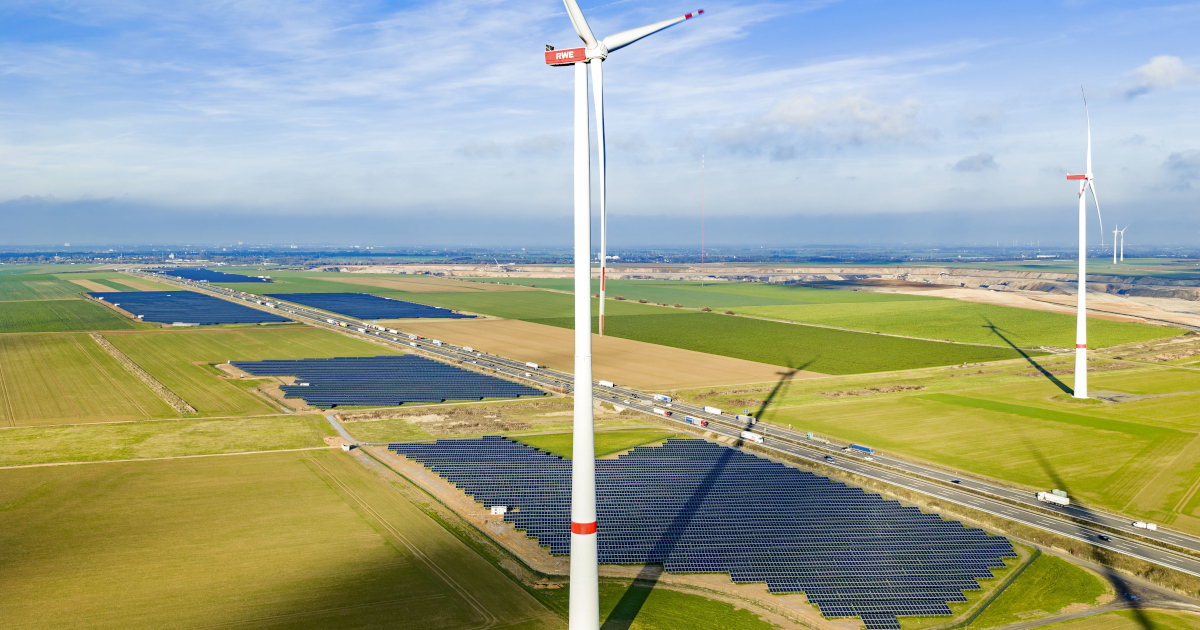
    RWE continues to keep up the pace with the expansion of its solar portfolio. The company has commissioned several solar farms along a motorway (A44n) in North Rhine-Westphalia following around eight months of construction. The total installed capacity amounts to 86.5 megawatts peak (74.6 MWac).

    With about 141,000 solar modules, the plants will generate enough electricity to supply the equivalent of 27,700 German households with climate-friendly electricity. The project sites in the Rhenish region lie to the west and east of the motorway between the towns of Bedburg and Jüchen and are on recultivated land at the Garzweiler opencast mine.

    Katja Wünschel, CEO RWE Renewables Europe & Australia: “The commissioning of the solar farms alongside the motorway shows that we are consistently driving forward the expansion of our solar portfolio. And we aren’t done there yet. Next year, we will add several thousand solar modules to the project. With wind and solar systems side by side, we are building a renewable energy road on recultivated land along the A44n motorway as a blueprint for further projects in the region.”

    Implementation of the solar farm’s second stage with a capacity of 19.9 megawatts peak (15,5 MWac) is planned for next year. More than 30,600 additional solar modules are to be installed on recultivated land in the municipal area of Jüchen. Subject to planning permission, the first half of 2026 could see the start of construction. Commissioning is planned for the end of 2026. Solar projects along motorways not only benefit from faster approval processes but in most cases also enjoy a higher level of public acceptance.

    RWE is also currently constructing the Bedburg 3 wind farm with nine turbines and a total capacity of around 60 megawatts close to the A44n solar sites. RWE builds and operates solar and wind projects with a total capacity of 540 megawatts in the Rhenish region.

    Dr Lars Kulik, CTO Lignite at RWE Power: “The solar and wind projects on recultivated land along the A44n emphasise that structural change and the expansion of renewables in the Rhenish lignite area are going hand in hand. There is plenty of space in and around our opencast mines that we are also using for renewables projects. In addition, the employees of RWE Power contribute their knowledge and experience to support the construction and subsequent operation of the solar and wind farms. This means we are creating further prospects for our employees here in the region.”

    Keeping up the pace for the expansion of solar energy in the Rhenish region

    A strip of land alongside the A44n near Bedburg became the site of a photovoltaic plant constructed by RWE last year. In the immediate vicinity, RWE is also trialling the combination of agriculture and green electricity generation at its agrivoltaics demonstration plant. All in all, RWE now operates nine solar projects in the Rhenish region, four with their own integrated battery storage units. Further photovoltaic projects in the region are at the planning stage. One of those is the Manheimer Bucht solar farm, which will be located in the southern part of the Hambach opencast mine in the municipal area of Kerpen. Next year, a total of about 26,500 solar modules will be constructed in an area of about 14.5 hectares, equivalent to about 20 football pitches. Following completion at the end of 2026, this solar farm will have a capacity of 17.2 megawatts peak (14.3 MWac).

    A map and pictures for media use are available at the RWE Media Centre (credit: RWE).

    Continue Reading

  • Crypto mogul Do Kwon sentenced to 15 years in prison for fraud | Cryptocurrencies

    Crypto mogul Do Kwon sentenced to 15 years in prison for fraud | Cryptocurrencies

    Do Kwon, the entrepreneur behind two cryptocurrencies that lost $40bn (£29.8bn) three years ago and caused the sector to crash, has been sentenced to 15 years in prison for fraud.

    The South Korean, 34, had pleaded guilty to two counts of US charges of conspiracy to defraud and wire fraud.

    Kwon, who co-founded Singapore-based Terraform Labs and developed the TerraUSD and Luna currencies, was sentenced at a hearing in New York.

    The US district judge Paul Engelmayer called his crimes “a fraud of epic generational scale”.

    The judge imposed a longer sentence than the 12 years sought by prosecutors, saying it would be too lenient given the harm he had caused to victims.

    “In the history of federal prosecutions very few cases have caused more monetary harm than you did,” he said.

    The US government had argued that Kwon’s fraudulent actions and treatment of customers had contributed to the “crypto winter” of 2022, and the failure of Sam Bankman-Fried’s FTX.

    “I don’t argue nor will I ever argue that my conduct was industry standard and market practice,” Kwon said. “If they were, they were bad industry standards and market practices and I as one of the market leaders should be personally responsible. The blame should be pointed at me for everyone’s suffering.

    “I have spent almost every waking moment of the last few years thinking of what I could have done different and what I can do now to make things right.”

    Kwon’s lawyers had argued that he should be sentenced to no more than five years in prison, arguing that his actions were motivated by a desire to prop up Terraform’s TerraUSD stablecoin, not personal gain.

    The judge called the request “wildly unreasonable”.

    Kwon has been in US custody since his extradition from Montenegro last year, where he was imprisoned for using a fake passport.

    As part of his guilty plea, Kwon agreed to forfeit $19.3m and some properties that prosecutors claimed he gained from the fraud.

    Prosecutors said they would support Kwon serving the second half of his sentence in South Korea, where he still faces charges, if he abides by the terms of his plea deal.

    Prosecutors said they would not seek restitution for the investors who lost a total of $40bn, saying the prospect of determining each of their losses would be too complex.

    The judge said that some of Kwon’s investors still believed in him, even after his guilty plea, and that reading some of their letters was like “reading the words of cult followers”.

    Engelmayer said he had received letters from 315 victims all over the world, many reporting they had lost their homes, retirement savings, money for medical expenses and college funds to Kwon’s fraud.

    A graduate of Stanford University, Kwon returned to South Korea and launched the startup that would become Terraform Labs in 2017 with the co-founder Daniel Shin.

    Prosecutors alleged that when TerraUSD slipped below its $1 peg in May 2021, Kwon told investors a computer algorithm known as “Terra Protocol” had restored the coin’s value.

    Instead, they said, he arranged for a high-frequency trading company to buy millions of dollars of the token secretly to artificially prop up its price.

    Prosecutors said that false claim, and others, drove retail and institutional investors to buy Terraform products and boost the value of Luna – a more traditional token that fluctuated in value but was closely linked to TerraUSD – to $50bn by the spring of 2022.

    Kwon is one of several cryptocurrency moguls to face federal charges after a slump in digital token prices in 2022 prompted the collapse of a number of companies.

    Bankman-Fried, the founder of the US’s largest crypto exchange, was sentenced to 25 years in prison in 2024.

    Continue Reading

  • ECB to assess banks’ stress testing capabilities to capture geopolitical risk

    ECB to assess banks’ stress testing capabilities to capture geopolitical risk

    12 December 2025

    • ECB to assess 110 directly supervised banks on the management of geopolitical risk
    • Banks to define scenario that would lead to pre-determined outcome of at least 300 basis point depletion in CET1
    • Aggregate results to be communicated in summer 2026

    The European Central Bank (ECB) will conduct a geopolitical risk reverse stress test on 110 directly supervised banks in 2026. In a reverse stress test, a pre-determined outcome is prescribed and each bank defines the scenario in which that outcome would materialise. This reverse stress test will complement the 2025 European Banking Authority stress test, which assumed a common scenario for all banks and led to differences in their capital depletion. The 2026 thematic stress test will ask banks to assess how geopolitical risk could affect their business model.

    Geopolitical risk is a cross-cutting risk driver that can have an impact on banks’ traditional risk categories, as it cuts across credit, market, liquidity, business model, governance and operational risks. It can also affect banks through multiple channels, including financial markets, the real economy and the safety and security of banks’ operations. As a key driver of macroeconomic uncertainty, it remains at the centre of the ECB’s supervisory priorities for 2026-28.

    The stress test will provide insights into the geopolitical risk-related scenarios that could materially affect banks, who should identify relevant geopolitical events and quantify their impact. In addition, they will be asked to describe how they would act to reduce that impact, if necessary, with a view to ensuring that they have robust governance and operational resilience frameworks in place.

    The exercise will assess the extent to which banks’ stress-testing capabilities take geopolitical risks into account. In this regard, the exercise will aim to foster banks’ own risk management capabilities, particularly in reverse stress testing, and their ability to design relevant and prudent capital and recovery plans.

    Specifically, each bank will be asked to identify the most relevant geopolitical risk events that could lead to at least a 300-basis point depletion in its Common Equity Tier 1 (CET1) capital. In addition to reporting on how the geopolitical risk scenario would affect their solvency positions, banks will also be asked to provide information about how it may affect their liquidity and funding conditions.

    To keep the exercise cost efficient, the reverse geopolitical risk stress test will be conducted as part of the 2026 banks’ internal capital adequacy assessment process (ICAAP). Banks will therefore primarily be able to utilise existing supervisory data collection templates.

    In line with previous ECB thematic stress tests conducted to comply with Article 100 of the Capital Requirements Directive (CRD), the geopolitical risk reverse stress test is not intended to have any implications for Pillar 2 Guidance (P2G). The outcome will be used to inform and complement the Supervisory Review and Evaluation Process (SREP) in a qualitative way and in line with the broader 2026 ICAAP. Weaknesses revealed by this stress test will feed into the SREP assessment, with a focus on banks’ ability to incorporate geopolitical risks into their risk materiality assessments, their stress-testing framework and capabilities and their risk data aggregation and reporting capabilities.

    The main aggregate conclusions of the reverse stress test will be communicated in the summer of 2026.

    For media queries, please contact Lina Bennar, tel.: +49 152 06556600.

    Notes

    • For the ECB, the 2026 thematic stress test also serves the purpose of complying with Article 100 of the CRD.
    • Some significant banks directly supervised by the ECB will not be part of the stress test. This may occur if, for example, they are subsidiaries of ECB-supervised significant banks that are already covered in the stress test at a higher level of consolidation. Other reasons for exclusion from the stress test might be that a bank is already included in another stress test being conducted at the same time (e.g. it is part of a comprehensive assessment) or is in the process of merging or restructuring.

    Continue Reading

  • Romanian inflation holds firm in November | snaps

    Romanian inflation holds firm in November | snaps

    The small upside divergences from the past two months led to an upward adjustment in our year-end 2025 forecast from 9.6% to 9.8%. This also means minor upward changes in next year’s inflation path. At this stage, our average inflation forecast for 2026 has inched up from 7.1% to 7.2%, with a year-end value of 4.5%, above the National Bank of Romania’s 3.7% projection.

    Risks to this outlook remain two-sided. On the upside, renewed energy price pressures, particularly gas bills from April 2026, could push inflation higher. On the downside, soft demand and moderating wages are likely to dominate the near-term picture, reducing the risk of second-round effects from the current inflationary upswing. Our commodities team also expects oil and natural gas prices to ease in 2026.

    Overall, this inflation episode looks far less intense than the surge that followed the Covid pandemic, as key drivers such as fiscal stimulus, commodity shocks and strong wage growth are absent. This should, in principle, allow the National Bank of Romania to begin reducing interest rates even before inflation starts to print meaningfully lower in 2026, shifting its attention more towards the downside pressures in economic activity. Our base case remains for a first rate cut in May 2026, with a total of 100bp in cuts next year.

    Continue Reading

  • Nuclear Energy Agency (NEA) – Training computer programs users

    Nuclear Energy Agency (NEA) – Training computer programs users

    NJOY training participants

    The NEA Data Bank Computer Program Service (CPS) has been conducting training activities for more than 30 years. These courses provide a unique opportunity to bring together code users from around the world, facilitating exchanges on the use of computer programs among users and with the code developers.

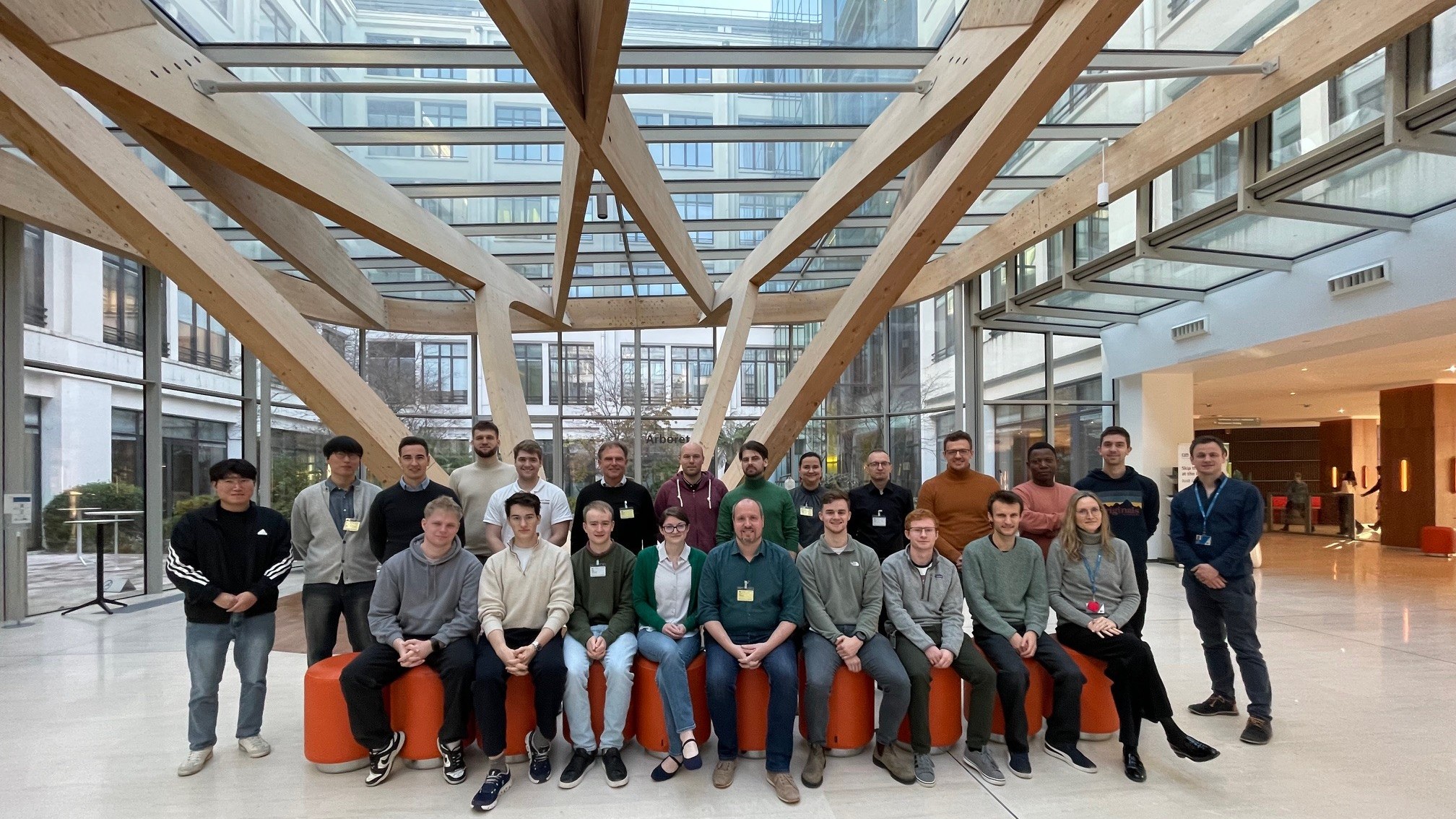
    The NEA organsied the third NJOY course in collaboration with Los Alamos National Laboratory 1 to 5 December 2025 in Paris, France. The NJOY Nuclear Data Processing System is the most widely-used software package designed to create application-specific data for the majority of nuclear simulation software across the world. The class introduced participants to the Evaluated Nuclear Data File (ENDF) format using Application Programming Interfaces (APIs) and covered the primary modules of the software. The course gathered 19 participants from 10 countries.

    The NEA also held an in-person training course on OpenMC on 24-28 November 2025 at the OECD offices in Paris, led by the core developer of the software from Argonne National Laboratory (United States). The course brought together 14 participants from France, Norway, Spain, Switzerland and South Korea and introduced them to the usage and application of OpenMC, an open-source Monte Carlo neutron and photon transport simulation code. The next OpenMC course will take place online in the second quarter of 2026.

    OpenMC course participants 

    The course on Analytical Benchmarks: case studies in neutron transport theory on 24-28 November 2025 was taught by Professor Barry Ganapol of the University of Arizona in Paris, France. The main objective of the course was to provide a basis for fundamental concepts of numerical evaluation of analytical solutions to a variety of neutron and neutral particle transport equations. The course brought together 22 participants from Argentina, France, Korea, Poland, Slovenia, Sweden, United Kingdom and Ukraine.

    Analytical Benchmarck-group pictureParticipants of the training on Analytical Benchmarks: case studies in neutron transport theory

    On 17-21 November, scientists and engineers gathered to the NEA to attend a training on SCALE/ORIGEN Standalone Fuel Depletion, Activation and Source Term Analysis, a computer program widely used for nuclear engineering and research. Some 22 participants from 11 countries benefited from the knowledge and dedication of the code developers team from the Oak Ridge National Laboratory.

    SCALE group picture 1 SCALE/ORIGEN course participants

    The SERPENT-2 in-person training course for beginners took place on 4-7 November 2025 and attracted nine participants from six countries. This five-day course introduced students to reactor physics applications and equipped them with the necessary skills to independently set up and run their SERPENT models. This highly demanded course will be organised again in the second quarter of 2026.

    SERPENT-group picture Participants of the SERPENT-2 training

    Continue Reading

  • Climate hypocrisy: EU industry cools on carbon levy with freebie phase out on horizon – Carbon Market Watch

    1. Climate hypocrisy: EU industry cools on carbon levy with freebie phase out on horizon  Carbon Market Watch
    2. Europe’s world-first carbon tariff is coming. Here’s what to know.  Canary Media
    3. EU expands carbon border tax to garden tools and washing machines  Financial Times
    4. CBAM changes trade rules: India needs carbon pricing, not exemptions  Vision IAS
    5. Massive trade shift incoming — EU’s carbon border tariff pressures China, India, Turkey, Brazil to clean up exports  Regtechtimes

    Continue Reading