Category: 3. Business

  • From Concept to Consensus: ASEAN+3’s Journey Toward a Stronger Regional Financial Safety Net – ASEAN+3 Macroeconomic Research Office

    From Concept to Consensus: ASEAN+3’s Journey Toward a Stronger Regional Financial Safety Net – ASEAN+3 Macroeconomic Research Office

    The global economy continues to navigate an uncertain and uneven path. Emerging challenges to financial stability, including shocks stemming from policy uncertainties in certain advanced economies, geo-economic fragmentation, and trade frictions, have underscored the need for robust global and regional financial safety nets. Against this background, ASEAN+3’s ongoing efforts to strengthen the regional financing arrangement (RFA), notably to explore a “Paid-in Capital” (PIC) structure, have become a cornerstone of regional financial cooperation.

    Established as a network of bilateral swap arrangements in 2010, the Chiang Mai Initiative Multilateralisation (CMIM), which is the RFA for the ASEAN+3 region, has provided the region with a cost-effective mechanism for mutual liquidity support. However, experience and analysis have revealed several structural limitations. The swap-based framework can introduce uncertainty in financing, limit the duration and flexibility of crisis support, and pose operational complexities in coordinating multiple transactions among members. Moreover, the absence of a legal entity constrains the RFA’s ability to manage risks, mobilize resources, and enhance credibility during crises.

    Transition from contractual arrangement to paid-in capital structure

    To address these challenges, ASEAN+3 members have begun in recent years exploring the potential transition of the RFA to a PIC structure—a model that would transform from the CMIM, which is based on a contractual arrangement, into a well-established institution with its own balance sheet and governance framework. Such a shift would allow the RFA to provide timely, credible, and well-governed financial support in response to shocks.

    At the ASEAN+3 Finance Ministers and Central Bank Governors’ Meeting (AFMGM+3) in May 2024, members reached a consensus on the potential benefits of a PIC structure and tasked their Deputies, supported by the ASEAN+3 Macroeconomic Research Office (AMRO, the dedicated international organization supporting the RFA to ensure its operational readiness), to narrow down feasible financing models by 2025.

    Based on AMRO’s analytical studies, Ministers and Governors agreed that a PIC structure could substantially enhance the RFA’s effectiveness in four key areas:

    • Credibility and Effectiveness — Establishing a legal entity with a separate and self-sustained balance sheet would strengthen the RFA’s autonomy, accountability, and ability to deliver predictable financing, strengthening the RFA as a more credible regional safety net.
    • Financial Strength and Stability — Pre-committed funds would ensure pooled resources can be mobilized swiftly to respond to liquidity shortages, while reducing uncertainty on members’ discretionary participation during crises.
    • Operational Efficiency — Centralized management of resources and programs would streamline financial operations, replacing complex bilateral transactions among members with direct and transparent institutional procedures.
    • Robust Risk Management — With sound governance and institutional safeguards, comprehensive frameworks could be developed for credit, liquidity, and operational risk management, shielding members from potential losses and boosting investor confidence.

    To shed more light on these potential benefits for developing a PIC structure, AMRO has conducted extensive consultations and jointly developed with members several prototype models in line with global best practices. When identifying the model best suited for the ASEAN+3 context, members have considered four guiding criteria developed by AMRO: capacity to deliver the RFA’s mandate; feasibility in the ASEAN+3 context, especially in terms of minimizing financial burden and ensuring equitable burden-sharing; the potential to realize the benefits of PIC, including a strong legal entity and robust governance; and financial viability, ensuring long-term sustainability and cost-efficiency.

    Based on this structured assessment, IMF-type models have emerged as the preferred option. Under this type of model, members contribute paid-in capital in reserve assets, local currencies, or in combination of both, drawing from certain features of the IMF financial operations. The model also ensures financing certainty and robust governance within a self-sustained legal entity. It satisfies all four criteria—offering crisis-resilient financing capacity, equitable burden-sharing, room for reserve recognition, and sound financial sustainability.

    Path toward designing an effective PIC structure

    As discussion advances from conceptual exploration to practical design, four critical issues merit particular attention to ensure that the future PIC structure meets ASEAN+3’s operational and institutional needs:

    Financial Viability – Ensure a sustainable capital base while easing pressure on members’ reserves through flexible contribution mechanisms and prudent income management.

    Appropriate Size — Tailor the PIC to a scale that caters to the region’s diverse economic landscape and capacities, balancing financial adequacy with sustainability.

    Strong Safeguards and Governance — Develop a centralized governance system with transparent qualification processes, robust risk management, and coherent program monitoring which are crucial for reserve asset recognition.

    Institutional and Legal Foundations – The PIC will be managed by a legal entity with its own balance sheet and privileges akin to international financial institutions, ensuring operational certainty and accountability.

    The ASEAN+3 RFA’s journey toward a PIC structure reflects a pragmatic, consensus-driven approach to regional financial integration. The focus has evolved from identifying potential benefits to determining how best to implement them through a model tailored to ASEAN+3 realities.

    At the May 2025 AFMGM+3, Ministers and Governors endorsed a proposal from its Task Force to concentrate on the IMF-type model and tasked Deputies—with AMRO’s continued technical and analytical support—to address remaining design issues such as governance, reserve recognition, sizing, and contribution currencies.

    This continued collaboration symbolizes ASEAN+3’s commitment to regional resilience. With the goal of building a credible, well-governed, and financially viable PIC structure, members are taking steps toward enhancing the RFA’s effectiveness and reinforcing the region’s collective ability to respond decisively to future shocks, and eventually turning a shared vision into a lasting institutional legacy.

    Continue Reading

  • Microsoft, Amazon bet big, but where does India stand in the global race?

    Microsoft, Amazon bet big, but where does India stand in the global race?

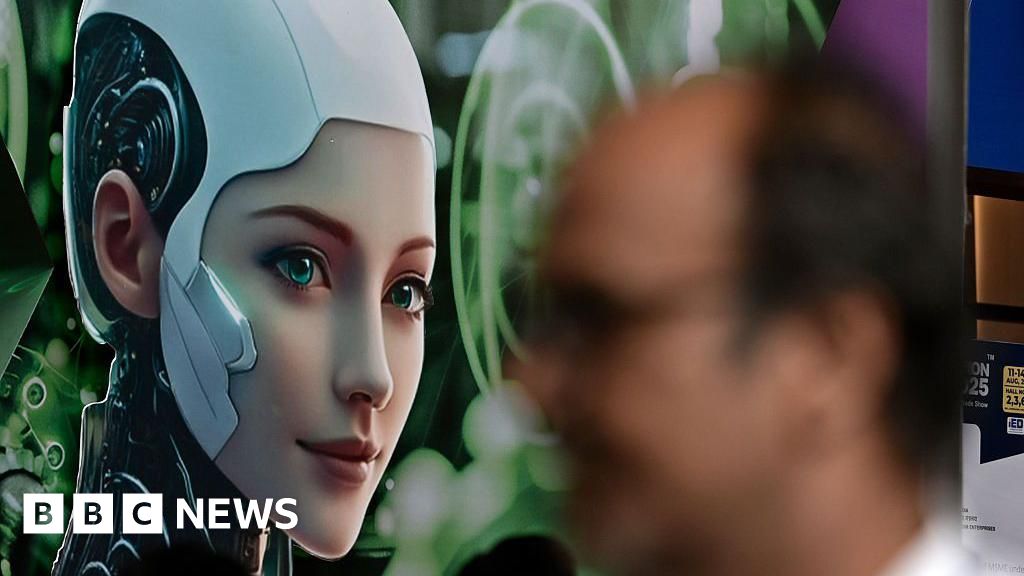
    NurPhoto via Getty Images) A man walks past a display featuring a humanoid robot illustration at the Automation Expo 2025 in Mumbai, India.NurPhoto via Getty Images)

    India is a hedge against the global AI bubble, some experts say

    This week, tech giants Amazon and Microsoft pledged an eye-popping $50bn-plus combined investment in India, putting artificial intelligence (AI) in the spotlight.

    Microsoft’s Satya Nadella announced his company’s largest investment ever in Asia – $17.5bn (£13.14bn) – “to help build the infrastructure, skills, and sovereign capabilities needed for India’s AI-first future”.

    Amazon followed suit, and said it was putting in more than $35bn in the country by 2030, with an unspecified chunk of that investment going into boosting AI capabilities.

    The announcements come at a particularly interesting juncture.

    As fears of an AI bubble swept global markets and tech stock valuations soared, several leading brokerages took a contrarian view on India’s AI landscape.

    Christopher Wood of Jefferies said the country’s stocks were a “reverse AI trade”. That basically means India should outperform other markets in the world “if the AI trade suddenly unwinds” – or simply put, the global bubble bursts.

    HSBC also held a similar view, saying Indian equities offered a “hedge and diversification” for those uneasy with the ongoing AI rally.

    This comes as Mumbai stocks have lagged behind their Asian peers over the past year, with foreign investors moving billions into Korean and Taiwanese AI-driven tech companies in the absence of comparable opportunities in India.

    In this backdrop, the Amazon and Microsoft investments provide a much-needed fillip – yet it remains worth asking where India truly stands in the global AI race.

    AFP via Getty Images Indian undergraduate students work on their computers as they take part in HackCBS, a 24 hour event of software development. Students gathered in teams to take part in a challenge to develop their ideas in the fields of Internet of Things (IoT), Artificial Intelligence (AI) an Blockchain among others. AFP via Getty Images

    India ranks among the top globally in terms of AI talent and developer activity

    There are no easy answers.

    The adoption of AI in India has been rapid. Investments into some parts of the value chain – such as data centres, the physical backbone of AI, or chip-making facilities – have begun trickling in. Just this week, American chipmaker Intel announced a collaboration with Mumbai-based Tata Electronics to manufacture chips locally.

    But when it comes to a sovereign AI model, it appears India is continuing to play catch-up.

    About a year-and-a-half ago, the Indian government launched an AI mission through which it began supplying start-ups, universities and researchers with high-end computing chips to develop a large homegrown AI model like OpenAI or China’s DeepSeek.

    According to the federal electronics ministry, the launch of the sovereign model – which supports more than 22 languages – is imminent. In the interim though, the likes of DeepSeek and OpenAI have made further advances, launching newer variants.

    While the government has recognised the need to reduce over-dependence on foreign platforms because of the risk of surveillance and sanctions, India’s $1.25bn sovereign mission is a shadow of France’s $117bn or Saudi Arabia’s $100bn programmes.

    The country’s ambitions also face numerous other hurdles – from semiconductor availability to skilled talent and fragmented data ecosystems, according to global consultancy EY.

    India currently lacks enough computational infrastructure or the billions of dollars of research and development (R&D) investment made over decades that gave China and the US a distinct leg up.

    Despite its global strength in AI talent, India struggles to keep its developers at home.

    “The current tightening of overseas work visas provides India a window of opportunity to retain domestic talent and attract Indian-origin talent at home. However, given that top-tier AI talent is mobile globally, attractive policy incentives need to be put in place to incentivise relocation to India,” the EY report says.

    China, for example, offers a range of incentives such as “financial support and subsidies, tax incentives and funding for research and development, special talent visas and fast-track immigration”, the report says.

    India has a much higher concentration of AI-skilled professionals than the global average – specifically, 2.5 times more. Policies that retain this talent are not yet in place.

    Bloomberg via Getty Images Industrial chiller at Yotta Data Services data centre, in Navi Mumbai, India. Bloomberg via Getty Images

    India has been attracting billions of dollars of investments into data centres

    Yet, despite the challenges, India – along with countries like Brazil and the Philippines – punches above its weight in AI, especially in the context of its stage of economic development, an UNCTAD (United Nations Conference on Trade and Development) study said.

    According to the widely tracked Stanford AI Index 2025, the country ranks among the top five in the world on new companies receiving AI investments.

    Last year, 74 new Indian AI startups received funding – a fraction of the more than 1,000 funded in the US.

    Indian AI startups raised just $1.16bn privately, compared with over $100bn in the US and nearly $10bn in China.

    But there’s enough intellectual engagement with AI in India, with the country accounting for 9.2% of AI article publications – slightly more than the US, but behind Europe and China according to the Stanford AI Index.

    Experts say India’s AI edge may lie less in building costly language models and more in using them downstream to spur entrepreneurship.

    “I think in the short term, there’s this big concentration of AI in the US. But over the next five-10 years, AI will have a massively democratising effect on the creation of new companies. Small founders and entrepreneurs will be numerous and the downstream effect will be amazing for places like India and the Asia-Pacific,” Shailendra Singh, managing director of Peak XV Partners which invests in AI start-ups, told the BBC.

    Mr Singh says India is seeing a surge in AI-powered consumer apps, with AI startup investments doubling from last year.

    Moreover, many Indian startups are now using AI to tackle real-world challenges for millions still on the wrong side of the digital divide.

    For example, MahaVISTAAR, an AI app run by the Maharashtra government, delivers vital agricultural information in the local Marathi language, reaching over 15 million farmers.

    “The hardest places to make artificial intelligence work are also the places where it matters most. If AI can serve India’s classrooms, clinics and farms, it can serve the world,” Nandan Nilekani, the architect of India’s biometric programme, wrote in The Economist magazine last month.

    Some of that has already begun to happen, as apps like MahaVISTAAR and others have shown.

    AI brings new opportunities, but could disrupt India’s IT services sector, which has driven its economy and created millions of jobs over the past 30 years.

    As AI upends some of their business functions, India’s billion-dollar IT firms will become a key area of “vulnerability”, according to Jefferies.

    That vulnerability is already showing.

    Growth in India’s IT back offices is slowing, stocks are underperforming, hiring has shrunk and wages have stagnated as the spectre of a new disruptor looms large.

    Follow BBC News India on Instagram, YouTube, X and Facebook.


    Continue Reading

  • Dollar slides as Fed dents hawks, markets eye two more rate cuts

    Dollar slides as Fed dents hawks, markets eye two more rate cuts

    The dollar fell on Thursday after the Federal Reserve delivered an outlook that was not as hawkish as some had anticipated.

    Oleg Dubyna / 500px | 500px | Getty Images

    The dollar fell on Thursday after the Federal Reserve delivered an outlook that was not as hawkish as some had anticipated, giving investors confidence to short the currency as they bet on two more rate cuts next year.

    The Fed at the conclusion of its two-day policy meeting lowered rates by 25 basis points as expected, but remarks from Chair Jerome Powell at his post-meeting press conference surprised some who had been positioned for a more hawkish tone.

    “For us, the big takeaway was a dovish tilt to the accompanying commentary, and at Fed Chair Powell’s press conference,” said Nick Rees, head of macro research at Monex Europe.

    As a result, investors sold the dollar, which in turn pushed the euro above the key $1.17 level and close to a two-month high of $1.1705 in early Asia trade on Thursday.

    Sterling touched a 1-1/2-month peak of $1.3391, while the yen, which has recently come under pressure from still-wide interest rate differentials between Japan and the rest of the world, rose 0.25% to 155.64 per dollar.

    Against a basket of currencies, the dollar fell to its lowest since October 21 at 98.543.

    “I think most were looking for a rerun of the same hawkish sentiment which we saw in that October FOMC meeting. But this has certainly a different tone about it, the commentary’s different, the T-bill buying supportive, the vote certainly wasn’t as hawkish as everybody expected,” said Tony Sycamore, a market analyst at IG.

    “This is, for me, the green light for risk assets to rally into year-end.”

    Wednesday’s outcome reinforced market expectations for two more rate cuts next year, against the Fed’s median expectation for a single quarter-percentage-point cut next year. 

    The central bank also announced that it would start buying short-dated government bonds to help manage market liquidity levels beginning December 12, with the initial round totaling around $40 billion in Treasury bills.

    That kept bonds supported, with the two-year U.S. Treasury yield falling about 3 bps to 3.5340%. The benchmark 10-year yield was similarly down 3 bps to 4.1332%. Bond yields move inversely to prices. 

    “The earlier start and size of the T-bill purchases surprised investors, leading (to) a meaningful rally led in Treasuries by the front-end,” said analysts at Societe Generale in a note.

    In other currencies, the Australian dollar retreated from a roughly three-month top hit in the previous session and was down 0.14% to $0.66665. The New Zealand dollar eased 0.07% to $0.5812.

    Continue Reading

  • ‘Ruined my Christmas spirit’: McDonald’s removes AI-generated ad after backlash | McDonald’s

    ‘Ruined my Christmas spirit’: McDonald’s removes AI-generated ad after backlash | McDonald’s

    McDonald’s says it has removed an AI-generated Christmas advertisement in the Netherlands after it was criticised online.

    The ad, titled “the most terrible time of the year”, depicts scenes of Christmas chaos, with Santa caught in a traffic jam and a gift-laden Dutch cyclist slipping in the snow. And the message? Retreat to a McDonald’s restaurant until January and ride out the festive season.

    But the generative AI advertisement from the Big Mac maker’s Netherlands division sparked a flurry of criticism on social media.

    “This commercial single-handedly ruined my Christmas spirit,” said one user. “Good riddance to AI slop,” posted another.

    McDonald’s Netherlands said in a statement on Wednesday: “The Christmas commercial was intended to show the stressful moments during the holidays in the Netherlands.

    “However, we notice – based on the social comments and international media coverage – that for many guests this period is ‘the most wonderful time of the year’.”

    Melanie Bridge, the chief executive of the Sweetshop Films, the company which made the ad, defended its use of AI in a post on LinkedIn.

    “It’s never about replacing craft, it’s about expanding the toolbox. The vision, the taste, the leadership … that will always be human,” she said.

    “And here’s the part people don’t see: the hours that went into this job far exceeded a traditional shoot. Ten people, five weeks, full-time.”

    But that too sparked online debate.

    Emlyn Davies, from the independent production company Bomper Studio, replied to the LinkedIn post: “What about the humans who would have been in it, the actors, the choir?

    “Ten people on a project like this is a tiny amount compared to shooting it traditionally live action.”

    Coca-Cola recently released its own AI-generated holiday ad, despite receiving backlash when it did the same last year.

    The company’s new offering avoids close-ups of humans and mostly features AI-generated images of cute animals in a wintry setting.

    Continue Reading

  • Asian Stocks Gain on Fed Cut, Nasdaq Futures Drop: Markets Wrap

    Asian Stocks Gain on Fed Cut, Nasdaq Futures Drop: Markets Wrap

    (Bloomberg) — Asian equities tracked gains on Wall Street after the Federal Reserve cut interest rates and Chair Jerome Powell voiced optimism that the US economy will strengthen as the inflationary impact from tariffs fades away.

    The MSCI Asia Pacific Index was up 0.5% after the S&P 500 rose 0.7% on Wednesday, just short of all-time highs, and the Russell 2000 gauge of small-caps jumped to a record. Bonds rallied as the Fed’s quarter-point rate reduction was accompanied by the authorization of fresh Treasury bill purchases to rebuild bank reserves.

    Nasdaq 100 futures were down 0.5% in early Asia trading after the bullish broader sentiment was dealt a blow by disappointing results from Oracle Corp. as markets closed in New York. Shares of the company, whose fate is deeply tied to the artificial intelligence boom, plunged in post-market trading. Nvidia Corp.’s stock also edged lower.

    Delivering a third consecutive cut, Powell suggested the Fed had now acted sufficiently to help stabilize the labor market while leaving rates high enough to continue weighing on price pressures. The reduction and the Fed’s tone matched Wall Street expectations for a “hawkish cut” as officials left intact their outlook for a single cut in 2026. They upgraded their median estimate for growth.

    “The combination of stronger growth expectations and softer inflation forecasts has increased market expectations for Fed rate cuts,” said Tomo Kinoshita, global market strategist at Invesco Asset Management Japan Ltd. “In Asia, I anticipate a positive tone for equities and currency appreciation. Export-oriented stocks should benefit from improved US growth prospects.”

    The US 10-year yield edged one basis point lower on Thursday. It dropped around four basis points in the previous session, stalling a prior run up in yields that pushed one global gauge to its highest since 2009. The policy-sensitive two-year yield fell eight basis points on Wednesday.

    In Asia, traders will be watching an auction of 20-year Japanese government bonds today as well as an interest-rate decision in the Philippines, where the central bank is predicted to cut its key interest rate for a fifth straight meeting.

    Meanwhile, Mexican lawmakers gave final approval for new tariffs on Asian imports, broadly aligning with US efforts to tighten trade barriers against China, as President Claudia Sheinbaum seeks to protect local industry.

    Elsewhere in markets, a gauge of the dollar edged lower after falling 0.4% on Wednesday. In commodities, gold held gains after the Fed cut while silver pushed to new highs. Oil extended an advance after the US seized a sanctioned tanker off Venezuela, deterring more shipments from the South American producer and raising the risk of a conflict.

    In Australia, the Aussie dollar dipped while bonds and stocks extended gains after data showing the economy unexpectedly shed jobs in November was seen weakening the case for rate hikes.

    Nine out of 12 voters on the Fed’s rate-setting committee supported the decision to lower rates. Powell also underscored the importance of upcoming economic reports while advising caution on assessing household jobs readouts, given technical distortions after a government shutdown caused a data blackout.

    The impact of President Donald Trump’s on-again, off-again tariff offensive has been a key consideration in how the Fed approaches efforts to bring inflation back down to its 2% target. Without the levies, inflation is probably “in the low 2s” right now, Powell said at the press conference following the decision. And their impact is likely to weaken in the second half of next year.

    Nick Twidale, chief analyst at AT Global Markets in Sydney, said he is “hesitant” on how much momentum the Fed’s cut will bring to global markets as “the forward guidance was probably less dovish than most investors were hoping for.”

    “We may see some fairly choppy markets in the sessions ahead as the market digests what Jerome Powell had to say,” he said.

    Corporate News

    SK Hynix Inc. fell after South Korea’s main bourse issued a higher-level warning on investing in the stock following strong gains sparked by expectations of a listing in New York. President Donald Trump signaled he’ll oppose a Warner Bros. Discovery Inc. deal that doesn’t include new ownership of CNN, a potential wrinkle for the bid from Netflix Inc. Japan’s stock market is witnessing a record wave of large private transactions known as block trades, stemming from companies reducing cross-shareholdings to improve corporate governance. Chinese artificial intelligence startup DeepSeek has relied on Nvidia Corp. chips that are banned in the country to develop an upcoming AI model, according to a new report in The Information. Coca-Cola Co. said Chief Executive Officer James Quincey is stepping down and will be replaced at the end of March by Henrique Braun, the company’s chief operating officer. Some of the main moves in markets:

    Stocks

    S&P 500 futures fell 0.3% as of 10:43 a.m. Tokyo time Japan’s Topix fell 0.2% Australia’s S&P/ASX 200 rose 0.5% Hong Kong’s Hang Seng rose 0.9% The Shanghai Composite was little changed Currencies

    The Bloomberg Dollar Spot Index was little changed The euro was little changed at $1.1703 The Japanese yen rose 0.2% to 155.68 per dollar The offshore yuan was little changed at 7.0571 per dollar The Australian dollar was little changed at $0.6672 Cryptocurrencies

    Bitcoin fell 1.5% to $90,990.76 Ether fell 2.2% to $3,266.04 Bonds

    The yield on 10-year Treasuries was little changed at 4.14% Japan’s 10-year yield declined 1.5 basis points to 1.940% Australia’s 10-year yield declined seven basis points to 4.74% Commodities

    West Texas Intermediate crude rose 0.7% to $58.89 a barrel Spot gold rose 0.2% to $4,237.14 an ounce This story was produced with the assistance of Bloomberg Automation.

    –With assistance from Winnie Hsu and Richard Henderson.

    ©2025 Bloomberg L.P.

    Continue Reading

  • Canon requests removal of toner cartridges from Amazon.com, including Toner Bank brand cartridges sold by Inkqueen

    Canon requests removal of toner cartridges from Amazon.com, including Toner Bank brand cartridges sold by Inkqueen

    Canon requests removal of toner cartridges from Amazon.com, including Toner Bank brand cartridges sold by Inkqueen

    TOKYO, December 11, 2025—Canon Inc. today announced that it has reported to Amazon that certain toner cartridges sold on Amazon infringe Canon’s patents and requested the removal of such listings from Amazon.com.

    In its reports to Amazon, Canon identified, among others, the product offerings shown in the table below and alleged that the cartridges sold under these offerings infringe Canon’s U.S. Patent No. 12,321,128. Canon requested that Amazon remove these product offerings from Amazon.com.

    At the time of this announcement, the product offerings listed above were no longer available on Amazon.com.

    Canon engages in extensive research and development so that it can deliver innovative and valuable products to customers all over the world. Through its research and development efforts, Canon has obtained a large and robust portfolio of patents. In order to protect its many innovations, Canon enforces its patents against various toner cartridge designs that Canon believes infringe its patent rights.

    Throughout the development, sales and marketing process, Canon respects the intellectual property of other companies and individuals and expects others to similarly respect Canon’s intellectual property rights. Canon remains committed to pursuing legal enforcement against those who do not respect Canon’s intellectual property.

    Continue Reading

  • Access Denied


    Access Denied

    You don’t have permission to access “http://www.spglobal.com/market-intelligence/en/news-insights/articles/2025/12/ldc-exits-iglu-great-point-acquires-majority-stake-in-lenis-group-96042492” on this server.

    Reference #18.daa0d517.1765422385.333cfc2a

    https://errors.edgesuite.net/18.daa0d517.1765422385.333cfc2a

    Continue Reading

  • Chewy+ subscriptions strength helps extend the streak of growing ‘pegged’ customers

    Chewy+ subscriptions strength helps extend the streak of growing ‘pegged’ customers

    By Tomi Kilgore

    Retention was stronger than expected, boosting key Autoship numbers, after the annual fee for Chewy+ subscription rose to $79 from $49

    Chewy sees Autoship sales continuing to increase as a percentage of total sales, helped by growth in the Chewy+ subscription program.

    Chewy on Wednesday reported fiscal third-quarter sales that rose above expectations, as more people than expected stayed with the online pet-products retailer’s Chewy+ subscription program despite a sharp price hike.

    And that fueled continued growth in a key sales metric that the company values because it helps keep customers “pegged” to Chewy rather than moving to competitors.

    The company (CHWY) reported fiscal third-quarter Autoship customer sales, which are set to automatically repeat, with a discount, that jumped 13.6% from a year ago to $2.64 billion, above the average analyst estimate compiled by FactSet of $2.59 billion.

    And Autoship sales as a percentage of overall sales increased to 83.9% from 83% in the previous quarter and from 80% a year ago, to mark the seventh straight quarter-over-quarter increase.

    Autoship sales are valued because they are “highly predictable” and allow for planning to cut costs and improve profitability, Chief Executive Sumit Singh explained on the post-earnings call with analysts, according to an AlphaSense transcript. The program also helps the company retain its more loyal customers.

    “Autoship is a rinse and repeat product merchandise program that has high reliability and accuracy, both in terms of planning, in terms of delivery, and high satisfaction rating,” an executive said on the call.

    With more than 80% of its members “now pegged” to the Autoship program, the company believes it will continue to scale and become more efficient.

    Meanwhile, Chewy’s stock seesawed during the day but closed up 1.5%.

    But perhaps better than the growth of Autoship sales, Singh said the Chewy+ membership program “continues to outperform expectations” and is driving higher order frequency, broader category engagement and higher adoption of the mobile app. It’s also helping boost Autoship participation.

    The company launched Chewy+ at an introductory annual price of $49, with a 30-day free trial, then raised the price to $79 a year at the end of October. While some subscriber drop-off after the price increase was expected, Singh said early data shows “continued growth and strong conversion” from free to paid memberships at a rate that was higher than forecast.

    Overall sales for the quarter, which ran through Nov. 2, increased 8.3% from last year to $3.12 billion, just above the FactSet consensus of $3.10 billion.

    Net income rose to $59 million from $4.2 million, while earnings per share of 14 cents beat the FactSet consensus of 12 cents.

    If there was a negative to the earnings report, the company said it expects revenue for the current fourth quarter of $3.24 billion to $3.26 billion, compared with analyst expectations of $3.261 billion.

    The stock has gained 3.7% in 2025, while the S&P 500 index SPX has advanced 16.3%.

    -Tomi Kilgore

    This content was created by MarketWatch, which is operated by Dow Jones & Co. MarketWatch is published independently from Dow Jones Newswires and The Wall Street Journal.

    (END) Dow Jones Newswires

    12-10-25 1924ET

    Copyright (c) 2025 Dow Jones & Company, Inc.

    Continue Reading

  • Asian Stocks Advance as Fed’s Rate Cut Lifts Mood: Markets Wrap

    Asian Stocks Advance as Fed’s Rate Cut Lifts Mood: Markets Wrap

    (Bloomberg) — Asian equities echoed gains on Wall Street after the Federal Reserve cut interest rates and Chair Jerome Powell voiced optimism that the US economy will strengthen as the inflationary impact from tariffs fades away.

    The MSCI Asia Pacific Index rose 0.5% in early trade, led by the tech and financial sectors. That’s after the S&P 500 closed up 0.7% on Wednesday, just short of all-time highs, while the Russell 2000 gauge of small-caps jumped 1.3% to a record. Bonds rallied as the Fed’s quarter-point rate reduction was accompanied by the authorization of fresh Treasury bill purchases to rebuild bank reserves.

    Nasdaq 100 futures were down 0.3% early in Asia as disappointing results from Oracle Corp. dealt the bullish sentiment a partial blow as markets closed in New York. Shares of the company, whose fate is deeply tied to the artificial intelligence boom, plunged in post-market trading. Nvidia Corp.’s stock also edged lower.

    Delivering a third consecutive cut, Powell suggested the Fed had now done enough to help stabilize the threat to employment while leaving rates high enough to continue weighing on price pressures. Officials maintained their outlook for just one cut in 2026 and upgraded their median outlook for growth.

    “The combination of stronger growth expectations and softer inflation forecasts has increased market expectations for Fed rate cuts,” said Tomo Kinoshita, global market strategist at Invesco Asset Management Japan Ltd. “In Asia, I anticipate a positive tone for equities and currency appreciation. Export-oriented stocks should benefit from improved US growth prospects.”

    Nine out of 12 voters on the Fed’s rate-setting committee supported the decision to lower rates. The reduction and the Fed’s tone matched Wall Street expectations for a “hawkish cut” while officials left intact their outlook for a single cut in 2026.

    The US 10-year yield fell around four basis points Wednesday, stalling a prior run up in yields that pushed one global gauge to its highest since 2009, while the policy-sensitive two-year yield fell eight basis points. The dollar weakened.

    In Asia, traders will be watching an auction of 20-year Japanese government bonds and an interest-rate decision in the Philippines today.

    Earlier, Bank of Canada held rates steady, saying current borrowing costs were appropriate to mitigate the trade war damage.

    In commodities, gold held gains after the Fed cut while silver pushed to new highs. Oil extended an advance after the US seized a sanctioned tanker off Venezuela, deterring more shipments from the South American producer and raising the risk of a conflict.

    The impact of President Donald Trump’s on-again, off-again tariff offensive has been a key consideration in how the Fed approaches efforts to bring inflation back down to its 2% target. Without the levies, inflation is probably “in the low 2s” right now, Powell said at the press conference following the decision. And their impact is likely to weaken in the second half of next year.

    Powell also underscored the importance of upcoming economic reports while advising caution on assessing household jobs readouts, given technical distortions after a government shutdown caused a data blackout.

    “The Fed emphasized that future moves will be data-dependent, shifting firmly to a meeting-by-meeting approach,” said Daniel Siluk, a portfolio manager at Janus Henderson Investors. “Chair Powell reinforced this stance in his press conference, noting that the Committee sees today’s cut as a ‘prudent adjustment’ rather than the start of a new cycle.”

    Corporate News

    SK Hynix Inc. fell after South Korea’s main bourse issued a higher-level warning on investing in the stock following strong gains sparked by expectations of a listing in New York. President Donald Trump signaled he’ll oppose a Warner Bros. Discovery Inc. deal that doesn’t include new ownership of CNN, a potential wrinkle for the bid from Netflix Inc. Japan’s stock market is witnessing a record wave of large private transactions known as block trades, stemming from companies reducing cross-shareholdings to improve corporate governance. Chinese artificial intelligence startup DeepSeek has relied on Nvidia Corp. chips that are banned in the country to develop an upcoming AI model, according to a new report in The Information. Coca-Cola Co. said Chief Executive Officer James Quincey is stepping down and will be replaced at the end of March by Henrique Braun, the company’s chief operating officer. Some of the main moves in markets:

    Stocks

    S&P 500 futures fell 0.1% as of 9:29 a.m. Tokyo time Hang Seng futures rose 0.3% Japan’s Topix rose 0.1% Australia’s S&P/ASX 200 rose 0.7% Currencies

    The Bloomberg Dollar Spot Index was little changed The euro was little changed at $1.1700 The Japanese yen rose 0.2% to 155.65 per dollar The offshore yuan was little changed at 7.0574 per dollar The Australian dollar was little changed at $0.6672 Cryptocurrencies

    Bitcoin fell 0.7% to $91,784.62 Ether fell 0.8% to $3,313.66 Bonds

    The yield on 10-year Treasuries declined one basis point to 4.14% Japan’s 10-year yield declined 1.5 basis points to 1.940% Australia’s 10-year yield declined nine basis points to 4.72% Commodities

    West Texas Intermediate crude rose 0.6% to $58.83 a barrel Spot gold rose 0.3% to $4,240.47 an ounce This story was produced with the assistance of Bloomberg Automation.

    –With assistance from Winnie Hsu.

    ©2025 Bloomberg L.P.

    Continue Reading

  • Federal Reserve cuts interest rates by 0.25%, Powell says there’s ‘no risk-free path’

    Federal Reserve cuts interest rates by 0.25%, Powell says there’s ‘no risk-free path’

    Markets reacted positively after the Fed cut interest rates by a quarter point on Wednesday.

    And part of the optimism seems to be around the Fed’s outlook for the economy, which it sees growing at a 2.3% rate in 2026 after this year’s 1.7% GDP growth.

    “The take on productivity and growth is very risk-friendly,” Evercore ISI’s Krishna Guha wrote in a note on Wednesday. “The Fed chair suggests productivity may be running about 2%, allowing the economy to grow faster without generating excess inflation.”

    In essence, lower rates, falling inflation, and faster economic growth is a recipe for higher corporate profits, a stabilization in the labor market, and as evidenced on Wednesday, higher stock prices.

    Fed officials expected to make one more rate cut next year, the same number projected in September. As of Wednesday afternoon, markets were pricing in additional rate cuts in April and June.

    Guha said Powell sounded “very upbeat on productivity and growth, including AI effects,” during his press conference on Wednesday.

    Adding Powell came across with a “calm rather than edgy in tone, suggesting he is comfortable and in charge rather than on the ropes as in October.”

    Continue Reading