Category: 3. Business

  • Google Cloud CEO lays out 3-part AI plan after identifying it as the ‘most problematic thing’

    Google Cloud CEO lays out 3-part AI plan after identifying it as the ‘most problematic thing’

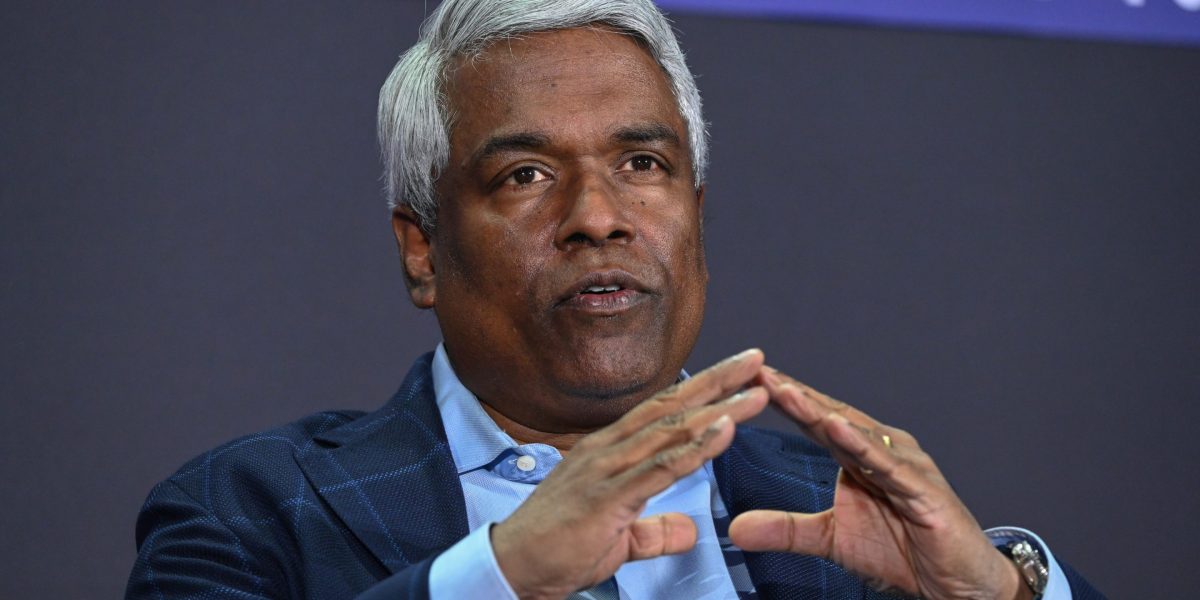
    The immense electricity needs of AI computing was flagged early on as a bottleneck, prompting Alphabet’s Google Cloud to plan for how to source energy and how to use it, according to Google Cloud CEO Thomas Kurian.

    Speaking at the Fortune Brainstorm AI event in San Francisco on Monday, he pointed out that the company—a key enabler in the AI infrastructure landscape—has been working on AI since well before large language models came along and took the long view.

    “We also knew that the the most problematic thing that was going to happen was going to be energy, because energy and data centers were going to become a bottleneck alongside chips,” Kurian told Fortune’sAndrew Nusca. “So we designed our machines to be super efficient.”

    The International Energy Agency has estimated that some AI-focused data centers consume as much electricity as 100,000 homes, and some of the largest facilities under construction could even use 20 times that amount.

    At the same time, worldwide data center capacity will increase by 46% over the next two years, equivalent to a jump of almost 21,000 megawatts, according to real estate consultancy Knight Frank.  

    At the Brainstorm event, Kurian laid out Google Cloud’s three-pronged approach to ensuring that there will be enough energy to meet all that demand.

    First, the company seeks to be as diversified as possible in the kinds of energy that power AI computation. While many people say any form of energy can be used, that’s actually not true, he said.

    “If you’re running a cluster for training and you bring it up and you start running a training job, the spike that you have with that computation draws so much energy that you can’t handle that from some forms of energy production,” Kurian explained.

    The second part of Google Cloud’s strategy is being as efficient as possible, including how it reuses energy within data centers, he added.

    In fact, the company uses AI in its control systems to monitor thermodynamic exchanges necessary in harnessing the energy that has already been brought into data centers.

    And third, Google Cloud is working on “some new fundamental technologies to actually create energy in new forms,” Kurian said without elaborating further.

    Earlier on Monday, utility company NextEra Energy and Google Cloud said they are expanding their partnership and will develop new U.S. data center campuses that will include with new power plants as well.

    Tech leaders have warned that energy supply is critical to AI development alongside innovations in chips and improved language models.

    The ability to build data centers is another potential chokepoint as well. Nvidia CEO Jensen Huang recently pointed out China’s advantage on that front compared to the U.S.

    “If you want to build a data center here in the United States, from breaking ground to standing up an AI supercomputer is probably about three years,” he said at the Center for Strategic and International Studies in late November. “They can build a hospital in a weekend.”


    Continue Reading

  • Aware Super CIO warns of 'orange' lights in AI financing as valuations soar – Reuters

    1. Aware Super CIO warns of ‘orange’ lights in AI financing as valuations soar  Reuters
    2. Former Intel CEO: Big AI firms are funding themselves — and that’s not real demand  Yahoo Finance
    3. Technology giants don’t look like they used to, as the asset-light era fades  Sherwood News
    4. Breakingviews – Big Tech valuation riddle is all about cash flow  Reuters
    5. Aware Super CIO warns of ’orange’ lights in AI financing as valuations soar By Reuters  Investing.com

    Continue Reading

  • Combination therapy may boost survival for people with aggressive lymphoma

    Combination therapy may boost survival for people with aggressive lymphoma

    A new clinical trial suggests that pairing bispecific antibodies and antibody-drug conjugates with CAR T-cell therapy may sharply boost one-year progression-free survival for people with aggressive lymphoma.

    In just a few years, treatment options for aggressive lymphoma have rapidly advanced. However, many patients show a consistent pattern: powerful new therapies act quickly but often fail to keep the lymphoma at bay permanently, says Jay Spiegel, M.D., a transplant and cellular therapy physician at Sylvester Comprehensive Cancer Center, part of the University of Miami Miller School of Medicine.

    Spiegel will present the early findings Dec. 8 at the 2025 American Society of Hematology (ASH) annual meeting in Orlando.

    We have made huge improvements in lymphoma care. But there are still many patients where the current approaches are not curative.”

    Jay Spiegel, M.D., a transplant and cellular therapy physician, Sylvester Comprehensive Cancer Center

    That challenge inspired a new clinical trial – the researchers, led by senior author Lazaros Lekakis, M.D., professor of clinical medicine at the Miller School, combined three of the most promising lymphoma treatments, aiming to improve outcomes.

    The clinical trial data indicate that combining these treatments may significantly enhance progression-free survival at one year.

    Layered therapies extend responses

    Large B-cell lymphoma is the most common aggressive lymphoma in adults. Its most frequent subtype, diffuse LBCL, affects about 25,000 people in the U.S. each year. First-round treatments work for approximately 70% of patients. 

    For the 30% whose lymphoma comes back or never fully disappears, the next step is often CAR T-cell therapy, such as axicabtagene ciloleucel, approved in 2017. It trains a patient’s immune cells to target lymphoma.

    “CAR T works incredibly well upfront,” Spiegel said, “but we’ve learned that it often falls short in the long-term – only about 40% of patients remain in remission after five years.”

    So, researchers have designed other new therapies. Mosunetuzumab is a two-headed bispecific antibody that links a T-cell to a lymphoma cell, activating the immune system to attack. Polatuzumab is an antibody–drug conjugate, meaning it delivers a small dose of chemotherapy directly into lymphoma cells. Both are effective initially but don’t reliably keep the disease away when used alone.

    To boost the durability of these new treatments, the Sylvester team integrated all three approaches. “Attacking three different antigens at once could help overcome several of the reasons CAR T fails,” Spiegel said. “The hope was that combining them could really jump the efficacy, and so far, it has been quite something.”

    The phase 2 study enrolled 25 adults with relapsed or refractory LBCL. They received mosunetuzumab and polatuzumab before and after the CAR T treatment. Of the 24 patients who reached day 90, 90% were in complete remission. At one year, about 80% were still in remission, a significant increase from an estimated 50% at one year with CAR T alone.

    “I did not think it would work this well,” Spiegel said. “To take patients with this type of aggressive disease and have so many still in remission at one year, that really surprised me.”

    The Sylvester trial might provide a way to achieve longer remissions. “We have an exciting result,” Spiegel said, “but now we need to show it can be done on a larger scale. That is the goal of the next study, to prove the juice is worth the squeeze.”

    As encouraging as the findings are, they arrive in a field moving at an extraordinary pace as researchers are continually testing new immunotherapies, improving CAR T treatments, and exploring fresh drug targets. “Everything in lymphoma is happening all at once,” Spiegel said. “It makes the field exciting but also complicated.”

    That pace presents both opportunity and complexity as clinicians work to understand how each advancement fits into the broader treatment landscape – and how they can work together. The current challenge is figuring out the best sequences and combinations for these new treatments – and how to use each without exhausting the immune system, Spiegel said.

    In this surge of treatment options, the message for patients is increasingly hopeful. “If you have relapsed disease, even aggressive disease, there are multiple approaches now that can still cure your lymphoma,” Spiegel said. “That was not true seven years ago.”

    Source:

    University of Miami Miller School of Medicine

    Continue Reading

  • Aware Super CIO warns of ‘orange’ lights in AI financing as valuations soar

    Aware Super CIO warns of ‘orange’ lights in AI financing as valuations soar

    By Scott Murdoch

    SYDNEY, Dec 9 (Reuters) – The chief investment officer of Australian pension fund Aware Super says there are flashing “orange” lights in some funding ​arrangements in the global artificial intelligence industry but earnings growth is backing up ‌the sector’s current valuations.

    Simon Warner, who became CIO of the A$210 billion ($135.75 billion) fund last week, said ‌the future trajectory of the AI industry’s economic model was the most prominent financial market risk in 2026.

    Soaring AI stock valuations have started to weigh on global markets as investors question when huge capital investments will translate into profits.

    “We’ve taken great comfort in most of ⁠the last few years that ‌the capital investment into both large language models, but also into the data centers and all the infrastructure to support AI, has ‍been from very stable sources of funding, largely from retained earnings,” Warner told Reuters in an interview.

    “There’s been some instances in the last six months or so where that’s softened a bit, ​there’s more circular financing, a bit more conduit financing. Nothing that flashes red, but ‌things that certainly flash orange.”

    Warner said there was an interdependence between capital expenditure valuations in the so called “Magnificent Seven” stocks and broader wealth effects and domestic demand in the U.S.

    “I do think there is a dynamic there, but if one of those pillars was to stumble, then we could have a correction,” he said.

    “That is something we ⁠are watching very closely.”

    Meta said in late October ​it had struck a $27 billion financing deal with ​Blue Owl Capital to fund its biggest data center project globally, as large technology companies race to build out the infrastructure needed to power ‍their artificial intelligence ambitions.

    Microsoft ⁠was Aware’s second-largest listed stock investment in its balanced fund at the end of June, according to filings. It also owns Nvidia, Apple, Alphabet and Meta among ⁠others.

    Warner said while some investors remained wary of AI and tech-related stocks valuations, there were risks to ‌those valuations if capital expenditure levels started to decline.

    ($1 = 1.5101 Australian dollars)

    (Reporting ‌by Scott Murdoch; Editing by Sonali Desai)

    Continue Reading

  • Council and Parliament strike a deal to simplify sustainability reporting and due diligence requirements and boost EU competitiveness – consilium.europa.eu

    1. Council and Parliament strike a deal to simplify sustainability reporting and due diligence requirements and boost EU competitiveness  consilium.europa.eu
    2. EU to weaken more environment reporting rules, draft document shows  Reuters
    3. EU: 100+ BHR practitioners, lawyers and academics call on co-legislators to preserve strong CSDDD in today’s final Omnibus I trilogue  Business and Human Rights Centre
    4. European Parliament: Parliament and member state negotiators reached a provisional deal to update EU rules on sustainability reporting and due diligence requirements for companies  marketscreener.com
    5. Analysis: EU softens ESG rules as compliance pressure builds for US  Resource Recycling

    Continue Reading

  • Oil steadies, Ukraine peace talks and US rate decision in spotlight – Reuters

    1. Oil steadies, Ukraine peace talks and US rate decision in spotlight  Reuters
    2. Oil falls 1pc amid ongoing Ukraine talks  Business Recorder
    3. Natural Gas, WTI Oil, Brent Oil Forecasts – Oil Falls As Iraq Restores Production At West Qurna 2  FXEmpire
    4. Iraq’s Massive West Qurna 2 Field Resumes Oil Flows After Brief Outage  Crude Oil Prices Today | OilPrice.com
    5. Repair work completed on damaged pipeline at Lukoil West Qurna 2 field, two sources say  marketscreener.com

    Continue Reading

  • Pepsi to cut product offering nearly 20% in deal with $4 billion activist Elliott

    Pepsi to cut product offering nearly 20% in deal with $4 billion activist Elliott

    PepsiCo plans to cut prices and eliminate some of its products under a deal with an activist investor announced Monday.

    The Purchase, New York-based company, which makes Cheetos, Tostitos and other Frito-Lay products as well as beverages, said it will cut nearly 20% of its product offerings by early next year. PepsiCo said it will use the savings to invest in marketing and improved value for consumers. It didn’t disclose which products or how much it would cut prices.

    PepsiCo said it also plans to accelerate the introduction of new offerings with simpler and more functional ingredients, including Doritos Protein and Simply NKD Cheetos and Doritos, which contain no artificial flavors or colors. The company also recently introduced a prebiotic version of its signature cola.

    PepsiCo is making the changes after prodding from Elliott Investment Management, which took a $4 billion stake in the company in September. In a letter to PepsiCo’s board, Elliott said the company is being hurt by a lack of strategic clarity, decelerating growth and eroding profitability in its North American food and beverage businesses.

    In a joint statement with PepsiCo Monday, Elliott Partner Marc Steinberg said the firm is confident that PepsiCo can create value for shareholders as it executes on its new plan.

    “We appreciate our collaborative engagement with PepsiCo’s management team and the urgency they have demonstrated,” Steinberg said. “We believe the plan announced today to invest in affordability, accelerate innovation and aggressively reduce costs will drive greater revenue and profit growth.”

    Elliott said it plans to continue working closely with the company.

    PepsiCo shares were flat in after-hours trading Monday.

    PepsiCo said it expects organic revenue to grow between 2% and 4% in 2026. The company’s organic revenue rose 1.5%. the first nine months of this year.

    PepsiCo also said it plans to review its supply chain and continue to make changes to its board, with a focus on global leaders who can help it reach its growth and profitability goals.

    “We feel encouraged about the actions and initiatives we are implementing with urgency to improve both marketplace and financial performance,” PepsiCo Chairman and CEO Ramon Laguarta said in a statement.

    PepsiCo said in February that years of double-digit price increases and changing customer preferences have weakened demand for its drinks and snacks. In July, the company said it was trying to combat perceptions that its products are too expensive by expanding distribution of value brands like Chester’s and Santitas.

    Continue Reading

  • NEC Wins TIP MUST Silver Badge with Advanced Network Operating System: Press Releases

    NEC Wins TIP MUST Silver Badge with Advanced Network Operating System: Press Releases

    Tokyo, December 9, 2025 – NEC Corporation (NEC; TSE: 6701) announced today that its Network Operating System (NOS) has been awarded the Silver Badge for compliance with requirements outlined by the Telecom Infra Project (TIP). The NOS meets the Mandatory Use Case Requirements for SDN for Transport (MUST) developed for TIP’s open and disaggregated 400G optical transponder solution, Phoenix. This recognition further demonstrates the advancement and commercial-level reliability of NEC’s optical transport solutions.

    MUST is being implemented by the TIP Open Optical and Packet Trasport (OOPT) MUST SubGroup, led by telecom operators such as Telefónica, Vodafone, Orange, Deutsche Telekom and Telia, which defines the target architecture and technical requirements for SDN-based transport networks. It requires that the control and management APIs for open optical terminals (O-OTs) comply with OpenConfig data models.

    The Phoenix solution is also part of TIP’s OOPT initiative, led by NTT, Telia, Telefonica, Vodafone, Deutsche Telekom, and MTN, which defines open technologies, architectures, and interfaces in the optical and IP networking domains. Phoenix is the result of close collaboration among operators, specifying technical requirements for evaluating solution compliance through TIP’s testing and validation process.

    In the process of becoming compliant with Phoenix, NEC has transitioned from a traditional optical transmission architecture to an advanced SDN management approach, adopting the SDN concept of centralized network resource management to enable flexible control and operation. Practical feedback from leading telecommunications operators such as Telefónica and Orange was important in refining NEC’s NOS solution to meet the specified requirements of TIP. The solution already earned a Gold Badge from TIP’s Phoenix Program in January 2025, and its growing maturity has now been further demonstrated by receiving the MUST Silver Badge.


    Continue Reading

  • Cursor internal AI Help Desk handles 80% of employees’ support tickets

    Cursor internal AI Help Desk handles 80% of employees’ support tickets

    AI coding-assistant start-up Cursor isn’t just using artificial intelligence to help developers write code, it’s deploying AI across its own internal operations, CEO, Michael Truell, told the audience at Fortune’s Brainstorm AI in San Francisco.

    Truell said the company had already automated roughly 80% of its customer support tickets with the help of the technology. He said the company had also implemented an internal AI-powered communication system that allows employees to query information across the organization. “We’ve actually done a lot of work internally on customizing that setup,” he said.

    Cursor also uses AI for internal communications, he said. “We have a system where folks can ask any question about the company and get it answered by an AI,” Truell said, as well as an project with “a few forward deployed engineers internally embedded throughout, building custom tooling right now for operations, for sales and experimenting,” he said. 

    Across the enterprise software landscape, some larger organizations are increasingly coming up against adoption challenges when attempting to integrate AI into workflows. 

    Data silos—where information is trapped in disconnected systems—prevent AI tools from accessing the full context they need to be useful, and technical sprawl—the accumulation of disparate tools and platforms over years of growth— can create integration issues. Many organizations are finding they need more dedicated technical expertise to help tailor AI models to specific business needs.

    Engineers are seeing productivity gains

    Cursor, which is valued at $29.3 billion, said last month it had crossed $1 billion in annualized revenue and now has more than 300 employees. The company has seen rapid growth since it was founded by a team of four MIT graduates in 2022. The company’s AI coding tool, which first launched in 2023, has been popular with software who use it to help both generate and edit code. 

    There has been some conflicting research about how helpful AI tools actually are for software engineering. A July 2025 study by the nonprofit research group METR found that experienced developers working on large, mature codebases actually took 19% longer to complete tasks when using AI tools such as Cursor and Claude, despite believing they had worked 20% faster. The researchers attributed the slowdown to time spent prompting AI, waiting for responses, and time reviewing generated code.

    A recent study conducted by University of Chicago found that teams using Cursor’s AI coding assistant in large companies merged 39% more pull requests (PRs) compared to non-users. The research also showed that senior developers created more detailed plans before writing code and demonstrated greater skill working with AI agents.

    “A lot of folks think that junior developers get the most out of AI,” Truell said. But “when these academics went in and looked at the data, it looked like senior engineers actually were more effective in using the tools and were accepting code at higher rates and were getting more value from that.”

    Truell noted that this surprised him as well: “We want to dig into to understand exactly why that’s the case.”

    Continue Reading

  • Has Uranium Energy’s 79% 2025 Surge Already Priced In Its Nuclear Fuel Growth Story?

    Has Uranium Energy’s 79% 2025 Surge Already Priced In Its Nuclear Fuel Growth Story?

    • Wondering if Uranium Energy is still a smart buy after its massive run, or if the easy money has already been made? This breakdown will help you decide if the current price still makes sense.

    • The stock has surged 16.1% over the last week, 11.9% over the past month, and is now up 79.1% year to date, building on a huge 70.4% gain over the last year and an eye catching 753.1% rise over five years.

    • These moves have come as uranium prices stay elevated and geopolitical tensions keep nuclear fuel security in the spotlight, drawing more institutional attention to producers and developers. Uranium Energy has also been active in expanding its resource base and advancing U.S. focused projects, which has helped fuel a narrative of long term strategic importance rather than just a short term commodity trade.

    • Despite all that excitement, Uranium Energy only scores 1 out of 6 on our valuation checks. In this article we will unpack what traditional valuation methods say, where they may fall short for a cyclical, growth driven uranium play, and introduce a more nuanced way to think about what this stock might be worth by the end of the article.

    Uranium Energy scores just 1/6 on our valuation checks. See what other red flags we found in the full valuation breakdown.

    The Discounted Cash Flow model estimates what a company is worth by projecting its future cash flows and discounting them back to today in $ terms. For Uranium Energy, this 2 stage Free Cash Flow to Equity model starts from a last twelve month free cash outflow of about $67.3 Million, then uses analyst forecasts for the next few years before extrapolating further out.

    Analysts see free cash flow turning positive and ramping up to around $86.7 Million by 2028. Beyond that, Simply Wall St extends those projections, with free cash flow rising to roughly $378.0 Million by 2035 as projects mature and scale. All of those future cash flows are discounted back to today to arrive at an estimated intrinsic value of $13.57 per share.

    With the DCF suggesting Uranium Energy is about 0.6% above its fair value, the model implies the stock is basically trading in line with its projected cash generating potential rather than at a clear bargain or obvious bubble level.

    Result: ABOUT RIGHT

    Uranium Energy is fairly valued according to our Discounted Cash Flow (DCF), but this can change at a moment’s notice. Track the value in your watchlist or portfolio and be alerted on when to act.

    UEC Discounted Cash Flow as at Dec 2025

    Head to the Valuation section of our Company Report for more details on how we arrive at this Fair Value for Uranium Energy.

    Continue Reading