Category: 3. Business

  • Italy’s market watchdog rules out secret pact in Mediobanca-Generali case, paper reports

    Italy’s market watchdog rules out secret pact in Mediobanca-Generali case, paper reports

    ROME, Dec 6 (Reuters) – Italy’s market regulator has found no evidence of a secret agreement involving Monte dei Paschi di Siena and some of its shareholders to gain control of Mediobanca and insurer Generali, Il Sole-24 Ore reported on Saturday.

    MPS, Italy’s oldest bank, completed a hostile takeover of Mediobanca in September, securing a majority stake. Mediobanca has historically been the main shareholder in insurance company Assicurazioni Generali.

    Sign up here.

    The Italian financial daily cited a document dated September 15 from Consob’s issuer supervision division and said it had found “no secret pact exists”.

    The regulator had addressed allegations of a “concerted effort” involving MPS’s CEO Luigi Lovaglio, Delfin’s chairman Francesco Milleri, and construction tycoon Francesco Gaetano Caltagirone, to gain control of Mediobanca and insurer Generali, while avoiding a mandatory takeover bid.

    A Consob spokesperson declined to comment.

    Milan prosecutors are investigating alleged market manipulation and the alleged obstruction of regulators in connection with the deal.

    Lovaglio, Milleri, and Caltagirone have denied any wrongdoing.

    Il Sole-24 Ore said the Consob document, which “completely diverges from the investigators’ hypotheses,” has been sent to the Milan prosecutor’s office.

    Reporting by Giselda Vagnoni; editing by Barbara Lewis

    Our Standards: The Thomson Reuters Trust Principles., opens new tab

    Continue Reading

  • Vertex Presents New Data on CASGEVY®, Including First-Ever Data in Children Ages 5-11 Years, at the American Society of Hematology Annual Meeting and Announces Plan for Global Regulatory Submissions

    – Data from pivotal studies of CASGEVY in children ages 5-11 years with severe sickle cell disease or transfusion-dependent beta thalassemia demonstrates the transformative potential of the therapy in younger patients –

    – Efficacy and safety data in children 5-11 years are consistent with the durable and positive benefit/risk profile established from clinical studies in patients 12 years of age and older –

    Vertex expects to initiate global regulatory submissions for CASGEVY in children 5-11 years in 1H 2026 –

    BOSTON–(BUSINESS WIRE)–Dec. 6, 2025–
    Vertex Pharmaceuticals Incorporated (Nasdaq: VRTX) today announced data from multiple studies demonstrating the clinical benefits of CASGEVY® (exagamglogene autotemcel) in people ages 5 years and older living with severe sickle cell disease (SCD) or transfusion-dependent beta thalassemia (TDT). The results, including the first presentation of clinical data from pivotal studies in children ages 5-11 years, and longer-term data from the pivotal studies of people with severe SCD and TDT ages 12 years and older, will be presented at the American Society of Hematology (ASH) Annual Meeting. CASGEVY is currently approved for eligible people ages 12 years and older with SCD or TDT in the United States, Great Britain, the European Union, the Kingdom of Saudi Arabia, the Kingdom of Bahrain, Kuwait, Qatar, Canada, Switzerland and the United Arab Emirates.

    “These results — the first clinical data ever presented on any genetic therapy for children ages 5-11 years with SCD — again demonstrate the transformative potential of CASGEVY,” said Carmen Bozic, M.D., Executive Vice President, Global Medicines Development and Medical Affairs, and Chief Medical Officer at Vertex. “With dosing completed in the 5-11 age group and the Commissioner’s National Priority Voucher for CASGEVY in this population in hand, we are excited to begin global regulatory filings in the first half of next year and bring this potentially transformative therapy to eligible children as soon as possible.”

    “As an investigator in the clinical program for patients 12 years and older and after having real-world experience with CASGEVY as an early commercial treatment center, I have seen firsthand the transformative impact this therapy has had on older patients with SCD or TDT. I am excited to hopefully be able to offer this option to my younger patients soon, early in life, before some of the most devastating impacts of these diseases begin,” said Haydar Frangoul, M.D., M.S., Medical Director of Pediatric Hematology and Oncology at Sarah Cannon Research Institute and HCA Healthcare’s TriStar Centennial Children’s Hospital, Member of Vertex’s SCD Program Steering Committee, and presenting author of the 5-11 years old CASGEVY data at ASH.

    First presentation of data in children ages 5-11 years treated with CASGEVY

    • In children with SCD, 11 patients have been dosed with CASGEVY in the Phase 3 CLIMB-151 clinical study, and all (4/4) patients with sufficient follow-up achieved the primary endpoint of being free from vaso-occlusive crises (VOCs) for at least 12 consecutive months (VF12).

      • No patient experienced a VOC following infusion with CASGEVY, with the longest duration of VOC-free of approximately two years (range 3.2–24.1 months).
    • In children with TDT, 13 patients have been dosed with CASGEVY in the Phase 3 CLIMB-141 clinical study, and all (6/6) patients with sufficient follow-up achieved the primary endpoint of transfusion independence for at least 12 consecutive months while maintaining a weighted average hemoglobin (Hb) of at least 9 g/dL (TI12).

      • Following CASGEVY infusion, 12/13 are transfusion free, with the longest duration of transfusion free just under two years (range 2.3–22.5 months).
      • One patient died from pneumonia in the setting of multi-organ failure due to severe veno-occlusive disease related to the busulfan conditioning.
    • The safety profile of CASGEVY in younger patients is consistent with myeloablative conditioning and autologous transplant in both SCD and TDT, as established in clinical studies in older patients.
    • Consistent with studies in older patients, children treated with CASGEVY have durable increases in fetal hemoglobin (HbF) and stable allelic editing.

    Longer-term data for people with SCD and TDT ages 12 years and older treated with CASGEVY

    New longer-term data from the pivotal clinical studies of CASGEVY in people 12 years and older will also be presented at ASH. These data, as of April 2025, continue to demonstrate the transformative, durable clinical benefits that CASGEVY provides to people living with SCD or TDT. In SCD, 100% of patients (45/45) achieved VF12 in either CLIMB-121 or the long-term follow-up study CLIMB-131, with a mean duration of VOC-free for 35.3 months (range 12.9–67.7 months). In TDT, 98.2% (55/56) achieved TI12 in either CLIMB-111 or CLIMB-131 with a mean duration of transfusion independence of 41.4 months (range 13–72.3 months). The safety profile remained consistent with myeloablative conditioning and autologous transplant in both SCD and TDT.

    About Sickle Cell Disease (SCD)

    SCD is a debilitating, progressive and life-shortening disease. It is an inherited blood disorder that affects the red blood cells, which are essential for carrying oxygen to all organs and tissues of the body. SCD causes severe pain, organ damage and shortened life span due to misshapen or “sickled” red blood cells. The clinical hallmark of SCD is vaso-occlusive crises (VOCs), which are caused by blockages of blood vessels by sickled red blood cells and result in severe and debilitating pain that can happen anywhere in the body at any time. SCD requires a lifetime of treatment and results in a reduced life expectancy. In the U.S., the median age of death for patients living with SCD is approximately 45 years. SCD patients report health-related quality of life scores well below the general population, and the lifetime health care costs in the U.S. of managing SCD for patients with recurrent VOCs is estimated between $4 and $6 million.

    About Transfusion-Dependent Beta Thalassemia (TDT)

    TDT is a serious, life-threatening genetic disease. It requires frequent blood transfusions and iron chelation therapy throughout a person’s life. Due to anemia, patients living with TDT may experience fatigue and shortness of breath, and infants may develop failure to thrive, jaundice and feeding problems. Complications of TDT can also include an enlarged spleen, liver and/or heart, misshapen bones and delayed puberty. TDT requires lifelong treatment and significant use of health care resources, and ultimately results in reduced life expectancy, decreased quality of life and reduced lifetime earnings and productivity. In the U.S., the median age of death for patients living with TDT is 37 years. TDT patients report health-related quality of life scores below the general population and the lifetime health care costs in the U.S. of managing TDT are estimated between $5 and $5.7 million.

    About CASGEVY® (exagamglogene autotemcel)

    CASGEVY is a non-viral, ex vivo CRISPR/Cas9 gene-edited cell therapy for eligible patients with SCD or TDT, in which a patient’s own hematopoietic stem and progenitor cells are edited at the erythroid specific enhancer region of the BCL11A gene through a precise double-strand break. This edit results in the production of high levels of fetal hemoglobin (HbF; hemoglobin F) in red blood cells. HbF is the form of the oxygen-carrying hemoglobin that is naturally present during fetal development, which then switches to the adult form of hemoglobin after birth. CASGEVY has been shown to reduce or eliminate VOCs for patients with SCD and transfusion requirements for patients with TDT.

    The use of CASGEVY in children ages 5-11 years is investigational.

    About the CLIMB Studies

    The Phase 1/2/3 open-label studies, CLIMB-111 and CLIMB-121, are designed to assess the safety and efficacy of a single dose of CASGEVY in patients ages 12-35 years with TDT or with SCD and recurrent VOCs. Patients will be followed for approximately two years after CASGEVY infusion in these studies. CLIMB-141 and CLIMB-151 are ongoing Phase 3 open-label studies, designed to assess the safety and efficacy of a single dose of exagamglogene autotemcel in patients ages 2-11 years with TDT or with SCD and recurrent VOCs. Enrollment and dosing are complete for the 5-11-years-old cohort in both studies with the plan to extend to ages 2-4 years.

    Each patient will be asked to participate in the ongoing long-term, open-label study, CLIMB-131. CLIMB-131 is designed to evaluate the long-term safety and efficacy of CASGEVY in patients with up to 15 years of follow up after CASGEVY infusion.

    Next steps for CASGEVY in children ages 5-11 years

    Enrollment and dosing are complete for the 5-11 years cohort in both studies. Vertex expects to initiate global regulatory filings for this age group, including a supplemental Biologics License Application (sBLA) in the U.S., in the first half of next year. Vertex recently received a Commissioner’s National Priority Voucher for CASGEVY in the 5-11 years age group from the U.S. Food and Drug Administration to accelerate the review of the sBLA once submitted. Products under the program will be subject to a 1–2-month review clock from the start of FDA’s review and will also benefit from enhanced communication opportunities with the agency.

    U.S. INDICATIONS AND IMPORTANT SAFETY INFORMATION FOR CASGEVY

    WHAT IS CASGEVY?

    CASGEVY is a one-time therapy used to treat people ages 12 years and older with:

    • sickle cell disease (SCD) who have frequent vaso-occlusive crises or VOCs
    • beta thalassemia (β-thalassemia) who need regular blood transfusions

    CASGEVY is made specifically for each patient, using the patient’s own edited blood stem cells, and increases the production of a special type of hemoglobin called hemoglobin F (fetal hemoglobin or HbF). Having more HbF increases overall hemoglobin levels and has been shown to improve the production and function of red blood cells. This can eliminate VOCs in people with sickle cell disease and eliminate the need for regular blood transfusions in people with beta thalassemia.

    IMPORTANT SAFETY INFORMATION

    What is the most important information I should know about CASGEVY?

    After treatment with CASGEVY, you will have fewer blood cells for a while until CASGEVY takes hold (engrafts) into your bone marrow. This includes low levels of platelets (cells that usually help the blood to clot) and white blood cells (cells that usually fight infections). Your doctor will monitor this and give you treatment as required. The doctor will tell you when blood cell levels return to safe levels.

    • Tell your healthcare provider right away if you experience any of the following, which could be signs of low levels of platelet cells:

      • severe headache
      • abnormal bruising
      • prolonged bleeding
      • bleeding without injury such as nosebleeds; bleeding from gums; blood in your urine, stool, or vomit; or coughing up blood
    • Tell your healthcare provider right away if you experience any of the following, which could be signs of low levels of white blood cells:

    You may experience side effects associated with other medicines administered as part of the treatment regimen for CASGEVY. Talk to your physician regarding those possible side effects. Your healthcare provider may give you other medicines to treat your side effects.

    How will I receive CASGEVY?

    Your healthcare provider will give you other medicines, including a conditioning medicine, as part of your treatment with CASGEVY. It’s important to talk to your healthcare provider about the risks and benefits of all medicines involved in your treatment.

    After receiving the conditioning medicine, it may not be possible for you to become pregnant or father a child. You should discuss options for fertility preservation with your healthcare provider before treatment.

    STEP 1: Before CASGEVY treatment, a doctor will give you mobilization medicine(s). This medicine moves blood stem cells from your bone marrow into the blood stream. The blood stem cells are then collected in a machine that separates the different blood cells (this is called apheresis). This entire process may happen more than once. Each time, it can take up to one week.

    During this step rescue cells are also collected and stored at the hospital. These are your existing blood stem cells and are kept untreated just in case there is a problem in the treatment process. If CASGEVY cannot be given after the conditioning medicine, or if the modified blood stem cells do not take hold (engraft) in the body, these rescue cells will be given back to you. If you are given rescue cells, you will not have any treatment benefit from CASGEVY.

    STEP 2: After they are collected, your blood stem cells will be sent to the manufacturing site where they are used to make CASGEVY. It may take up to 6 months from the time your cells are collected to manufacture and test CASGEVY before it is sent back to your healthcare provider.

    STEP 3: Shortly before your stem cell transplant, your healthcare provider will give you a conditioning medicine for a few days in hospital. This will prepare you for treatment by clearing cells from the bone marrow, so they can be replaced with the modified cells in CASGEVY. After you are given this medicine, your blood cell levels will fall to very low levels. You will stay in the hospital for this step and remain in the hospital until after the infusion with CASGEVY.

    STEP 4: One or more vials of CASGEVY will be given into a vein (intravenous infusion) over a short period of time.

    After the CASGEVY infusion, you will stay in hospital so that your healthcare provider can closely monitor your recovery. This can take 4-6 weeks, but times can vary. Your healthcare provider will decide when you can go home.

    What should I avoid after receiving CASGEVY?

    • Do not donate blood, organs, tissues, or cells at any time in the future

    What are the possible or reasonably likely side effects of CASGEVY?

    The most common side effects of CASGEVY include:

    • Low levels of platelet cells, which may reduce the ability of blood to clot and may cause bleeding
    • Low levels of white blood cells, which may make you more susceptible to infection

    Your healthcare provider will test your blood to check for low levels of blood cells (including platelets and white blood cells). Tell your healthcare provider right away if you get any of the following symptoms:

    • fever
    • chills
    • infections
    • severe headache
    • abnormal bruising
    • prolonged bleeding
    • bleeding without injury such as nosebleeds; bleeding from gums; blood in your urine, stool, or vomit; or coughing up blood

    These are not all the possible side effects of CASGEVY. Call your doctor for medical advice about side effects. You may report side effects to FDA at 1-800-FDA-1088.

    General information about the safe and effective use of CASGEVY

    Talk to your healthcare provider about any health concerns.

    Please see full Prescribing Information including Patient Information for CASGEVY.

    About Vertex

    Vertex is a global biotechnology company that invests in scientific innovation to create transformative medicines for people with serious diseases and conditions. The company has approved therapies for cystic fibrosis, sickle cell disease, transfusion-dependent beta thalassemia and acute pain, and it continues to advance clinical and research programs in these areas. Vertex also has a robust clinical pipeline of investigational therapies across a range of modalities in other serious diseases where it has deep insight into causal human biology, including neuropathic pain, APOL1-mediated kidney disease, IgA nephropathy, primary membranous nephropathy, autosomal dominant polycystic kidney disease, type 1 diabetes and myotonic dystrophy type 1.

    Vertex was founded in 1989 and has its global headquarters in Boston, with international headquarters in London. Additionally, the company has research and development sites and commercial offices in North America, Europe, Australia, Latin America and the Middle East. Vertex is consistently recognized as one of the industry’s top places to work, including 16 consecutive years on Science magazine’s Top Employers list and one of Fortune’s 100 Best Companies to Work For. For company updates and to learn more about Vertex’s history of innovation, visit www.vrtx.com or follow us on LinkedIn, Facebook, Instagram, YouTube and X.

    Vertex Special Note Regarding Forward-Looking Statements

    This press release contains forward-looking statements as defined in the Private Securities Litigation Reform Act of 1995, as amended, including, without limitation, statements made by Carmen Bozic, M.D., and Haydar Frangoul, M.D., M.S., and statements regarding expectations for the clinical benefits of CASGEVY, plans to initiate global regulatory submissions for children 5-11, including in the U.S., in the first half of 2026, expectations that the use of a Priority Voucher will accelerate the review of the sBLA, expectations for the design of the CLIMB studies, including plans to follow patients after infusion, expectations that each patient will be asked to participate in the CLIMB-131 study and expectations that the studies will be extended to children 2-4 years of age. While Vertex believes the forward-looking statements contained in this press release are accurate, these forward-looking statements represent the company’s beliefs only as of the date of this press release and there are a number of risks and uncertainties that could cause actual events or results to differ materially from those expressed or implied by such forward-looking statements. Those risks and uncertainties include, among other things, that data from the company’s research and development programs may not support registration or further development of its potential medicines in a timely manner, or at all, due to safety, efficacy or other reasons, that the company may be unable to make the anticipated regulatory submissions on the expected timeline, or at all, and other risks listed under the heading “Risk Factors” in Vertex‘s most recent annual report and subsequent quarterly reports filed with the Securities and Exchange Commission at www.sec.gov and available through the company’s website at www.vrtx.com. You should not place undue reliance on these statements, or the scientific data presented. Vertex disclaims any obligation to update the information contained in this press release as new information becomes available.

    (VRTX-GEN)

    Vertex Pharmaceuticals Incorporated

    Investors:

    InvestorInfo@vrtx.com or

    +1 617-341-6108

    Media:

    mediainfo@vrtx.com or

    617-341-6992

    Source: Vertex Pharmaceuticals Incorporated


    Continue Reading

  • Surging gas prices worsen affordability crisis for Americans

    Surging gas prices worsen affordability crisis for Americans

    US natural gas prices are soaring as the country ships record amounts of the fuel overseas, contributing to an affordability crisis that is causing political problems for Donald Trump. 

    Wholesale prices have jumped more than 70 per cent in the past 12 months, with the US benchmark Henry Hub price settling at $5.29 on Friday, its highest level since December 21 2022 during the energy crisis sparked by Russia’s full-scale invasion of Ukraine.

    The price surge is contributing to a deepening sense of runaway costs in the US, and flies in the face of Trump’s claims to have driven down energy prices during his first year back in office.

    It comes alongside frigid temperatures across the US, pushing up demand for power generation to heat homes and businesses.

    Trump has prioritised boosting LNG exports overseas and gas production at home to fuel the AI boom, as part of a strategy to unleash “US energy dominance”.

    But he faces growing pushback from consumers and industry concerned that rising power prices are worsening a “cost of living crisis” and denting competitiveness.

    “As North America exports more natural gas, it imports higher and more volatile gas prices as a result,” said Clark Williams-Derry, analyst at the Institute for Energy Economics and Financial Analysis, a think-tank backed by environmental foundations.

    “This is great news for the gas industry, which has seen a bump in revenues. But it’s not so great if you’re a US consumer who relies on gas for heating or power,” he said.

    Analysts say it may also reflect a structural shift in gas pricing, as an increasing share of production is diverted to booming LNG exports and an anticipated rise in demand from energy-hungry artificial intelligence data centres.

    “During the coldest days of winter, LNG exports and local consumers are competing for the same supply molecules. In extreme weather scenarios, there may not be enough gas supply to satisfy both,” said Eric McGuire, analyst at Wood Mackenzie, an energy consultancy.

    Industrial Energy Consumers of America, a group representing large energy-consuming manufacturers, said US policymakers should prioritise domestic customers over LNG exports.

    “As export volumes grow, price and reliability risks increase for US consumers and directly impact manufacturing competitiveness,” said Paul Cicio, chief executive of the Industrial Energy Consumers of America. 

    “We do not have an alternative. We are stuck at the end of a pipeline.”

    Some content could not load. Check your internet connection or browser settings.

    A Yahoo/YouGov poll published last week found that by a two-to-one margin, respondents believed Trump had done more to raise prices (49 per cent) than lower them (24%). This week, the president described cost-of-living concerns as a “con job by the Democrats”.   

    During last year’s election campaign Trump promised to cut energy prices in half during his first 12 months in office — a message that resonated with voters stung by high inflation and energy costs during the Biden administration.

    But since his election the cost of electricity and gas piped into homes has continued to climb, with rates increasing by 5.1 per cent and 11.7 per cent respectively in September, compared to a year earlier, data published by the US Bureau of Labor Statistics shows.

    The average price of natural gas paid by electric power plants this year will increase by 37 per cent and the price paid by industrial sector customers will rise by 21 per cent compared to the 2024 averages, according to the Energy Information Administration, the US government’s statistical arm.

    Residential and commercial consumers are expected to pay 4 per cent more this year on average, compared to last year.

    In September the US exported a record 9.41mn metric tonnes of LNG, up nearly 20 per cent in the same month a year earlier, according to the EIA.

    US LNG helped supply Europe during the worst energy crisis in decades, as the continent tried to wean itself off Russian energy after Moscow ordered the full-scale invasion of Ukraine, with the primary destination for US cargoes including Spain, France, the UK and the Netherlands.

    The LNG industry and gas producers argue surging LNG exports are not to blame for rising retail prices, as there is no shortage of gas to drill in the US. Instead, they blame a political failure to enable the construction of new pipelines and gas storage facilities, to supply key markets.

    “It’s not AI, it’s not LNG exports. It’s very simple. It’s because political force has overwhelmed market forces and political force has shown up in the form of pipeline and energy infrastructure blockages,” said Toby Rice, chief executive of EQT, the largest gas producer in the US.

    A lack of infrastructure is causing markets in the US to become disconnected, according to EQT, which expects to sell gas for approximately $4 per million British thermal units this winter in Appalachia while Boston and parts of New England will pay a much higher rate of close to $14 per mmbtu for natural gas, owing to very limited pipeline capacity to the city.

    “This isn’t just the most expensive natural gas in the country, it’s the most expensive natural gas in the world,” said Rice.  

    But analysts say booming LNG supply, growing demand from data centres and rising cost of extracting gas from some US basins, such as the Haynesville, would maintain pressure on natural gas prices.

    “Between now and 2030, LNG export capacity in the US Gulf Coast will double what it is currently and that will definitely have an impact on price,” said Mathieu Utting, analyst at Rystad.

    Continue Reading

  • Gen Z office survival guide: how to overcome telephobia and get up early | Young people

    Gen Z office survival guide: how to overcome telephobia and get up early | Young people

    If you are a millennial, part of gen X or a boomer, you probably do not give a second thought to picking up the phone to talk to someone or chit-chatting beside the office water cooler. But for gen Z, those common workplace moments are a huge source of anxiety.

    According to a study released this week, early mornings, working with older colleagues and making small talk are just some of the things employees born between 1997 and 2012 dread.

    The study, commissioned by Trinity College London, surveyed more than 1,500 people aged between 16 and 29 across the UK. It found that 38% of young people dread having to make small talk in the workplace. Almost 60% said they would struggle to work with older colleagues while 30% feared picking up the phone.

    Here, experts share their tips on how to overcome gen Z’s biggest anxieties.

    Telephobia

    “There’s a massive skill to learning to make calls,” says Liz Baxter, a careers adviser at Nottingham College who runs coaching sessions on phone confidence. She says demand for the college’s “telephobia” course is high.

    While previous generations grew up having no option but to pick up the phone, Baxter says texting, online booking platforms and AI customer service have made making a phone call one of the biggest generational divides.

    Baxter explains confidence comes with practice. She suggests calling friends and family first “to practise the ebb and flow of a two-way conversation in real time”.

    Baxter stresses the importance of sitting up straight, speaking slowly and smiling as “the caller will hear it in your voice”.

    Sophie Rains, a customer support and experience manager who manages a call centre, says that before dialling you should jot down “what the purpose of your call is and any relevant information. That way if you get nervous or confused you can refer back to your notes.”

    If someone is rude or angry, Rains says: “I usually let them vent and eventually they run out of steam and are often a bit calmer.”

    Rains says to remember not to take anything personally. “You don’t know what is going on in the caller’s life, or you might have caught them at a bad time.”

    Colleagues and office chit-chat

    Rather than fearing encounters with new people, Marie O’Riordan, an executive coach, suggests viewing it as an adventure, with many people making lifelong friends through work.

    The former editor-in-chief of Marie Claire and Elle UK, who now specialises in helping women transition into leadership roles, says small talk can often lead to other opportunities.

    She suggests starting with workplace topics such as how long someone has been with the company, rather than subjects such as someone’s home life, which could be considered too personal.

    “Gen Z often underestimate how flattering it is to be asked questions,” O’Riordan says. “It shows a generosity and you can learn so much from other people.”

    Early birds

    If you need to set an early alarm, Dr Radha Modgil, the author of Know Your Own Power: Inspiration, Motivation and Practical Tools for Life, suggests treating yourself as if you were a child going back to school after the summer holidays. In the weeks leading up to a new job, start by bringing your bedtime and getting-up time forward.

    For an efficient morning routine, take your start time and work backwards. “Look at travel timetables. Get your work clothes ready the night before. Lay out your breakfast,” Modgil says. “These are things that all sound very simple but they help prepare you and can reduce anxiety.”

    According to the report, 28% of gen Z favoured flexible working hours and no emails after 6pm, while 32% wanted mental health days as standard. A desire to work from home was expressed by 68% of the respondents. Modgil says a lot of trepidation stems from gen Z feeling like the workplace will be detrimental to their wellbeing.

    Modgil suggests treating each month like a marathon and coming up with a plan. “It helps to pace yourself so that you can be present and have the mental and emotional energy to work effectively.”

    Continue Reading

  • Israeli spyware targets Pakistani human rights lawyer

    Israeli spyware targets Pakistani human rights lawyer

    Report reveals spyware still active despite U.S. sanctions, with reported use in Pakistan

    A recent investigation into Intellexa, the Israeli spyware firm behind Predator— a one-click spyware tool that covertly infects devices to harvest sensitive data, including messages, photos, location, and audio, while also enabling remote surveillance and control — has uncovered evidence of its ongoing operations despite international sanctions, with some leaks indicating the use of the spyware in Pakistan

    Jointly published by Haaretz, Inside Story and WAV Research Collective, the leaks reveal that Intellexa continues to operate its spyware systems with minimal disruption. Despite being sanctioned by the U.S Treasury Department in 2024 for selling spyware to various governments, Intellexa’s tools remain active.

    Leaked documents suggest Intellexa staff retained remote access to customers’ surveillance operations. This included viewing data from devices infected by Predator, which exceeds what the firm has publicly disclosed and raises questions about the company’s accountability.

    In addition, Intellexa has reportedly developed a new infection vector called “Aladdin”, which uses malicious online advertisements to infect users’ devices. This zero-click exploit is more insidious than previous methods, as simply viewing an ad can result in an infection, making surveillance far more stealthy and difficult to detect.

    Predator in Pakistan

    Leaks suggest Predator spyware has been used in Pakistan. In 2025, a human-rights lawyer in Balochistan received a suspicious WhatsApp link later linked to Intellexa’s spyware. This is reported as the first confirmed case of Predator spyware use in the country.

    A senior Pakistani intelligence officer has reportedly rejected the claims, calling them “baseless” and suggesting the report was intended to undermine the country. Evidence from Amnesty’s Security Lab, including forensic data and technical analysis, suggests the situation is more complex

    According to the report, Intellexa’s founder, Tal Dilian, has denied any criminal activity.

    Once activated via the one-click method, Predator blends into background processes and collects sensitive information. It establishes a communication channel between the infected device and the attacker’s command-and-control server, allowing attackers to issue commands remotely.

    The spyware regularly sends the stolen data to a remote server, where it is stored for analysis or further use. This data transfer happens in the background, without triggering alerts on the device.


    Continue Reading

  • Identifying High-Growth Sectors in Malaysia with Business Intelligence

    Identifying High-Growth Sectors in Malaysia with Business Intelligence

    Malaysia recorded RM 329.5 billion (US$79.8 billion) in approved investments in 2024, with strong commitments flowing into manufacturing, services, and renewable energy. The momentum carried into the first half of 2025, supported by new technology facilities, logistics assets, and healthcare infrastructure across multiple states. Yet despite the scale of these inflows, opportunities are concentrated in specific regions rather than spread evenly nationwide.

    This concentration reflects a broader economic realignment underway in 2024 and 2025. Global supply chain restructuring, renewed investment incentives, and large-scale commitments to digital and green infrastructure are reshaping where and how foreign investors deploy capital. Malaysia is no longer approached as a single market but as a network of distinct industrial and services clusters, each with its own capabilities, constraints, and regulatory profile.

    Related Reading

    Business intelligence becomes essential in this environment. It allows investors to evaluate whether a cluster genuinely supports their operational model by examining sector maturity, infrastructure depth, labor availability, compliance requirements, and state-level competitiveness.

    The role of business intelligence in sector evaluation

    Sector growth does not automatically translate into feasibility. The semiconductor sector continues to expand, but only firms with relevant upstream linkages or advanced engineering capabilities can participate meaningfully. Data-center investment is accelerating, yet the underlying suitability depends on land availability, grid capacity, environmental clearances, and state-level planning. Healthcare, pharmaceuticals, and medical devices remain high-potential sectors, but licensing pathways and distribution standards impose constraints that vary across Malaysia.

    BI clarifies whether Malaysia possesses the upstream or downstream linkages required for the investor’s long-term competitiveness. It identifies whether talent depth, regulatory expectations, utilities, and vendor networks can support operations at scale. It distinguishes between theoretically attractive sectors and those that align with the investor’s capabilities, risk appetite, and operational model. BI also examines sustainability commitments, digital infrastructure requirements, and government policy direction to determine whether a sector is positioned for durable growth.

    Determining the sector fit for foreign investors

    A sector becomes suitable only when several conditions converge. The supply chain must be sufficiently mature to support the investor’s activity without adding friction. The regulatory landscape must allow the company to scale without unforeseen compliance burdens. Talent availability must be adequate for initial operations and long-term expansion. Infrastructure must match the investor’s reliance on power, connectivity, logistics, or data-handling requirements. State-level incentives and planning constraints must meaningfully influence cost structures or operational timelines.

    Find Business Support

    Malaysia’s sector opportunities are shaped by geography. Electronics consolidation occurs in Penang. Corporate services, pharmaceuticals, and digital operations anchor themselves in Selangor. Johor supports logistics-intensive, cross-border, and data-driven operations. Sarawak hosts renewable-energy-intensive industries. Sabah leverages tourism, coastal industries, and diversified resource-linked manufacturing.

    BI ties each opportunity to its corresponding cluster so that investors understand where their business model fits within Malaysia’s economic architecture.

    Positioning sector opportunities within Malaysia’s cluster map

    Malaysia’s cluster map reflects decades of industrial planning, infrastructure investment, and human-capital formation. Each cluster offers a different basis for competitiveness. BI evaluates not merely the presence of a sector but the conditions that allow it to operate seamlessly.

    Selangor: Headquarters, shared services, pharmaceuticals, and high-value digital services

    Selangor is Malaysia’s largest economic contributor and the country’s most talent-rich state. In 2024 it recorded GDP of RM 432.1 billion (US$104.6 billion), representing 26.2 percent of national output. It generated 32.9 percent of Malaysia’s manufacturing value added and 26.9 percent of the services sector. These fundamentals position Selangor as the natural command center for investors managing regional operations.

    Regional headquarters and service hubs

    Selangor’s services sector produced RM 263.9 billion (US$63.9 billion) in 2024, amounting to 61.1 percent of the state’s GDP and growing at 6.3 percent year-on-year. These conditions support headquarters functions, procurement operations, treasury management, compliance oversight, and shared-services centers that require a dense, stable talent pool and direct access to regulators, professional service firms, and major transportation hubs.

    Digital and technology services

    Malaysia’s electrical and electronics exports reached RM 601.18 billion (US$145.5 billion) in 2024. Selangor benefits from this momentum as Greater Kuala Lumpur and Cyberjaya continue to serve as Malaysia’s primary digital corridor. The state secured RM 101.1 billion (US$24.5 billion) in approved investments in 2024, with a significant share directed toward digital infrastructure, cloud services, and software development capabilities. Companies establish technology and data-driven operations in Selangor because of its engineering talent, connectivity, and regulatory proximity.

    Pharmaceuticals and medical devices

    Malaysia exported RM 37 billion (US$9 billion) in medical devices in 2024, a 31 percent year-on-year increase, while healthcare investments between 2021 and 2024 reached RM 20 billion (US$4.8 billion). Selangor sits at the center of this ecosystem due to its clustering of hospitals, research institutions, logistics capabilities, and Ministry of Health administrative units. Investors rely on Selangor for activities requiring clinical-grade distribution, regulatory submissions, and multi-market healthcare operations.

    Penang: Advanced electronics, precision manufacturing, and export-oriented services

    Penang remains Malaysia’s most competitive high-value manufacturing hub. It attracted RM 31.99 billion (US$7.7 billion) in approved investments in 2024 and generated RM 434.74 billion (US$105.2 billion) in exports in 2023, representing 30.5 percent of national exports. The state recorded RM 177.99 billion (US$43.1 billion) in exports between January and May 2024, reinforcing its role as the core of Malaysia’s electronics ecosystem.

    Electronics and semiconductor manufacturing

    Malaysia’s E&E sector is anchored in Penang. The country exported RM 601.18 billion (US$145.5 billion) in electronics in 2024, and Penang contributed substantially through semiconductor testing, advanced packaging, PCB assembly, and upstream component manufacturing. Multinationals rely on Penang for its long-established engineering base, precision vendors, automation specialists, and supply-chain reliability. The cluster allows companies to collocate production, engineering, and design activities for faster iteration cycles.

    Precision engineering and industrial equipment

    Penang’s precision-engineering sector supports machinery, robotics, molds, tooling, and aeronautical components. In 2023, the state secured RM 71.9 billion (US$17.4 billion) in investment commitments across 415 projects, creating more than 20,700 jobs. These capabilities position Penang as a high-accuracy manufacturing base capable of supporting industries that depend on tight tolerances and advanced machining requirements.

    Export-oriented services and design capabilities

    Penang’s manufacturing scale sustains a broader ecosystem supporting logistics, design services, engineering consultancies, procurement operations, and back-office functions. Investors choose Penang when production, R&D, and technical services need to operate within one integrated ecosystem.

    Johor: Regional logistics, cross-border manufacturing, and data-driven infrastructure

    Johor is Malaysia’s southern industrial and logistics hub. It attracted RM 48.50 billion (US$11.7 billion) in approved investments in 2024 and RM 56.0 billion (US$13.6 billion) in new investments during the first half of 2025. The Johor–Singapore SEZ, together with the strong performance of Johor’s ports, is positioning the state as a leading regional production and distribution platform.

    Cross-border manufacturing platforms

    Johor supports electronics assembly, chemicals, automotive components, food processing, and FMCG production, structured around proximity to Singapore. Companies locate manufacturing operations here to access both markets simultaneously. Industrial parks across Iskandar Malaysia provide the land, utilities, and logistics corridors necessary for scaling cross-border supply chains.

    Container ports and regional distribution

    The Port of Tanjung Pelepas handled 12.25 million TEUs in 2024, ranking it among the world’s most efficient and busiest container terminals. Johor uses this throughput to position itself as a distribution hub for ASEAN markets. Investors prioritizing predictable exports, consolidation centers, and short lead times rely on Johor’s logistics network.

    Data centers and digital infrastructure

    Malaysia approved RM 252.7 billion (US$61.1 billion) in services investments in 2024, much of it directed toward digital infrastructure. Johor has become a preferred location for hyperscale facilities because of its land availability, regional connectivity, and improved grid capacity. These strengths support companies building compute-intensive operations and cloud-service platforms.

    Sarawak: Renewable Energy, Resource Processing, and Green Industrial Corridors

    Sarawak’s competitiveness rests on renewable energy, land availability, and resource depth. In 2024 the state received RM 16.12 billion (US$3.9 billion) in approved investments.

    Find Business Support

    Hydropower plants at Bakun (2,520 MW), Murum (944 MW), and Batang Ai (94 MW) will be expanded by the 1,285 MW Baleh Hydroelectric Project, bringing total major renewable capacity to 4,843 MW by 2030.

    Hydropower-backed heavy industry

    Sarawak’s hydropower infrastructure supports aluminum smelting, silicon-based materials, chemicals, and other energy-intensive industries. Investors choose Sarawak for long-term power stability, predictable pricing, and alignment with international sustainability requirements.

    Downstream resource processing

    The state’s timber, gas, and agricultural endowments support downstream petrochemicals, engineered wood, food processing, and specialty materials. Renewable energy availability allows companies to scale industrial operations in a low-carbon environment.

    Emerging green industrial corridors

    Sarawak’s strategy includes hydrogen, ammonia, and low-carbon industrial parks integrated into its broader development plan. The state targets 10 GW of installed capacity by 2030, with renewables supplying at least 60 percent, reinforcing its role as a green industrial base.

    Sabah: Tourism, Blue Economy, and Diversified Manufacturing

    Sabah leverages natural assets, tourism demand, and coastal development to build a balanced economic base. Between 2021 and 2024, it recorded 7.85 million tourist arrivals and RM 16.84 billion (US$4.1 billion) in receipts. In 2024, Sabah welcomed 3.14 million visitors and generated RM 7.28 billion (US$1.8 billion) in revenue. Between 2021 and early 2025, the state recorded 10.67 million arrivals with RM 23.42 billion (US$5.7 billion) in spending.

    Eco-tourism and hospitality development

    Tourism supports more than 360,770 jobs in Sabah and continues to attract premium hospitality investments such as Sheraton Kota Kinabalu, InterContinental Papar, and Club Med Borneo Kuala Penyu. These projects reflect a long-term shift toward higher-value experiential travel, wellness, and marine tourism.

    Blue economy and coastal industries

    The Sabah Maju Jaya plan includes a Blue Economy Industrial Park in Kudat and coastal industrial development in Beaufort, Kimanis, Kota Marudu, and Kota Belud. Sabah recorded RM 107.8 billion (US$26.1 billion) in trade in 2024, with marine products, aquaculture, and fisheries forming a natural extension of the state’s coastal strengths.

    Manufacturing and investment pipelines

    Sabah secured RM 35.38 billion (US$8.6 billion) in approved investments across 420 projects between 2021 and 2024, with RM 5.38 billion (US$1.3 billion) approved in 2024 alone. Food processing, timber-based manufacturing, and cold-chain assets form the backbone of Sabah’s diversified industrial development.

    Contact Nadhila Ismiralda, Business Intelligence Lead for Malaysia at Dezan Shira & Associates

    Foreign investors evaluating sector opportunities, cluster positioning, and entry strategy in Malaysia may contact Nadhila Ismiralda, Business Intelligence Lead for Malaysia at Dezan Shira & Associates. Contact her at nadhila.ismiralda@dezshira.com.

    About Us

    ASEAN Briefing is one of five regional publications under the Asia Briefing brand. It is supported by Dezan Shira & Associates, a pan-Asia, multi-disciplinary professional services firm that assists foreign investors throughout Asia, including through offices in Jakarta, Indonesia; Singapore; Hanoi, Ho Chi Minh City, and Da Nang in Vietnam; and Kuala Lumpur in Malaysia. Dezan Shira & Associates also maintains offices or has alliance partners assisting foreign investors in China, Hong Kong SAR, Mongolia, Dubai (UAE), Japan, South Korea, Nepal, The Philippines, Sri Lanka, Thailand, Italy, Germany, Bangladesh, Australia, United States, and United Kingdom and Ireland.

    For a complimentary subscription to ASEAN Briefing’s content products, please click here. For support with establishing a business in ASEAN or for assistance in analyzing and entering markets, please contact the firm at asean@dezshira.com or visit our website at www.dezshira.com.


    Continue Reading

  • Got $500? 3 Cryptocurrencies to Buy and Hold for Decades

    Got $500? 3 Cryptocurrencies to Buy and Hold for Decades

    • Established cryptocurrencies have stronger long-term potential than newer ones.

    • If you’re new to crypto investing, Bitcoin and Ethereum are good places to start.

    • Chainlink could play a crucial role in providing data for blockchain projects in the years to come.

    • 10 stocks we like better than Bitcoin ›

    If you’ve got $500 to put into cryptocurrencies, it can be hard to know where to start. Before you even think about choosing individual cryptos, think about how these high-risk assets fit into your wider portfolio. The idea is to only include a small percentage of crypto and balance it out with a mix of less-risky assets, including stocks and bonds.

    Image source: Getty Images.

    Once you’ve done that, look for cryptocurrencies that are already relatively established and have real-world utility. These are more likely to survive long term.

    Here are three to consider.

    When I first started investing in cryptocurrencies, I got frustrated with lists like these that started with Bitcoin (CRYPTO: BTC). It’s the biggest and best-known crypto out there, and back then I wanted to find under-the-radar projects that still had the potential to go to the moon. Since then, I’ve seen prices plummet, and some of those lesser-known projects have collapsed completely.

    A look at historical prices shows that Bitcoin is one of the best choices for long-term investors. It is still volatile, but it’s always erased its losses and gone on to reach new highs. If you only hold one cryptocurrency, make it Bitcoin or Ethereum (CRYPTO: ETH).

    Bitcoin has potential as the backbone to the on-chain economy. It is already attracting increased institutional and corporate investment, and some governments have added it to their reserves. Another area where Bitcoin may stand out is as a form of digital gold — a safe asset that may offer a hedge against inflation. It has yet to prove itself in this regard, but it may do so as it continues to mature.

    Ethereum is the second-biggest crypto by market capitalization. It was the first crypto to introduce smart contracts, which are what make cryptocurrencies programmable. Smart contracts allow developers to use Ethereum’s ecosystem to build other cryptocurrencies, stablecoins, non-fungible tokens (NFTs), and a host of decentralized applications.

    Critics point to Ethereum’s high fees and relatively slow transaction times. That hasn’t stopped Ethereum from retaining its dominant position in decentralized finance. According to DefiLlama, almost 60% — more than $70 billion — of the funds in on-chain applications are on the Ethereum network. Some are turning to faster, lower-cost cryptocurrencies like Solana (CRYPTO: SOL), but when it comes to handling people’s money, reliability goes a long way.

    Continue Reading

  • Exclusive: Pilots’ union blocks Allegiant Air bid to get US residency for foreign hires​

    Exclusive: Pilots’ union blocks Allegiant Air bid to get US residency for foreign hires​

    • Union blocks wage certification in attempt to stop Allegiant from permanently hiring foreign pilots
    • Teamsters claims no pilot shortage, questions need for foreign residency applications
    • Pilots have been leaving Allegiant citing low pay, scheduling problems
    NEW YORK, Dec 6 (Reuters) – Allegiant Air’s (ALGT.O), opens new tab pilots’ union is blocking the airline’s attempt to secure permanent residency for dozens of foreign pilots from Chile, Australia and Singapore, leaving their immigration status – and the company’s staffing – in limbo.

    The union has refused to certify to the U.S. Department of Labor that the pilot positions, which start at about $50,000 a year, about half of what pilots at other regional airlines earn, meet “prevailing wage” standards. That certification is a crucial bureaucratic step and a requirement for the pilots’ green card applications.

    Sign up here.

    Instead of hiring foreign pilots, the Teamsters Local 2118 has asked Allegiant to offer industry-standard compensation and improvements to scheduling to retain pilots who are leaving for rivals.
    Allegiant said it, like most U.S. carriers, faced significant workforce challenges when travel surged after the pandemic. The carrier has also struggled to retain pilots in part due to low pay levels. To stabilize staffing, the carrier expanded recruitment to hire pilots under employment-based visa programs.

    The union alleges the airline misrepresented its intentions to permanently hire these pilots and that there is no longer a shortage in the U.S., making the move to pursue permanent residency for the pilots unnecessary.

    “They had such a hard time in 2023 finding pilots, they actually started hiring visa pilots out of Chile on an H-1B1 because they promised them citizenship, a green card verbally to come fly in America for 50,000 bucks a year,” Gregory Unterseher, director of the Airline Division of the International Brotherhood of Teamsters, told Reuters.

    “Because they’re having such a hard time keeping and maintaining pilots at such a low wage.”

    Allegiant said it currently employs approximately 62 pilots from Chile, Australia, and Singapore through H-1B1 and E-3 visa programs, or about 4% of its overall pilot count of 1,345.

    An Allegiant spokesperson said hiring pilots through visa programs is a small supplement to its broader workforce strategy, not a replacement for U.S. hires.

    The union declined to provide the letter needed for the permanent labor certification application submitted by the airline. A Labor Department-issued permanent labor certification allows employers to hire foreign workers to work permanently in the U.S.

    In a letter to pilots seen by Reuters, Allegiant wrote “as a result of the union’s failure to provide that information, we understand that the time to obtain your green card may be delayed.”

    “The company condemns the union’s decision to harm you by refusing to provide the updated letter requested by the Department of Labor,” the letter said.

    In a statement to Reuters, Allegiant said that “all of our hiring practices fully comply with federal labor laws, FAA regulations, and the collective bargaining agreements in place with our pilot union.”

    The status of many of the foreign pilots hangs in limbo with some instructed not to leave the country as President Donald Trump cracks down on foreign-born workers, the union said.

    “My heart goes out to them. They were told, I think recently that they shouldn’t even leave the country, right? Because they might not be able to get back in,” said Unterseher.

    ATTRITION ON THE RISE

    Attrition is on the rise at Allegiant, according to pilots, as some leave due to industry-low pay, frustrations with scheduling and a near-10-year-old labor contract.

    “First officers at Allegiant in their first year in most cases are making less than flight attendants at other major airlines or TSA agents,” one pilot who recently left Allegiant told Reuters, on the condition of anonymity.

    The carrier has expressed interest in expanding its operations, at one point discussing 1,400 more destinations it can add. But lack of staffing remains a sticky point, pilots told Reuters.

    “For the last 18 months, there was nowhere to go. Now that people have options, you are seeing people leaving. I’ve got five or six friends just in my little small group of people that I know that are leaving,” the pilot added.

    Doyinsola Oladipo in New York; Editing by David Gregorio

    Our Standards: The Thomson Reuters Trust Principles., opens new tab

    Continue Reading

  • Gulf Cooperation Council (GCC)— Enhancing Resilience to Global Shocks: Economic Prospects and Policy Challenges for the GCC Countries – International Monetary Fund

    1. Gulf Cooperation Council (GCC)— Enhancing Resilience to Global Shocks: Economic Prospects and Policy Challenges for the GCC Countries  International Monetary Fund
    2. World Bank report forecasts UAE economy to grow by 4.8%  Qazinform
    3. World Bank Forecasts 4.3% Growth for Saudi Economy, Supported by Non-Oil Activities  Asharq Al-awsat – English
    4. World Bank lifts Saudi growth forecast to 3.8%, highlights Gulf’s digital leap  Arab News
    5. GCC economic growth gains pace: World Bank  TradeArabia

    Continue Reading

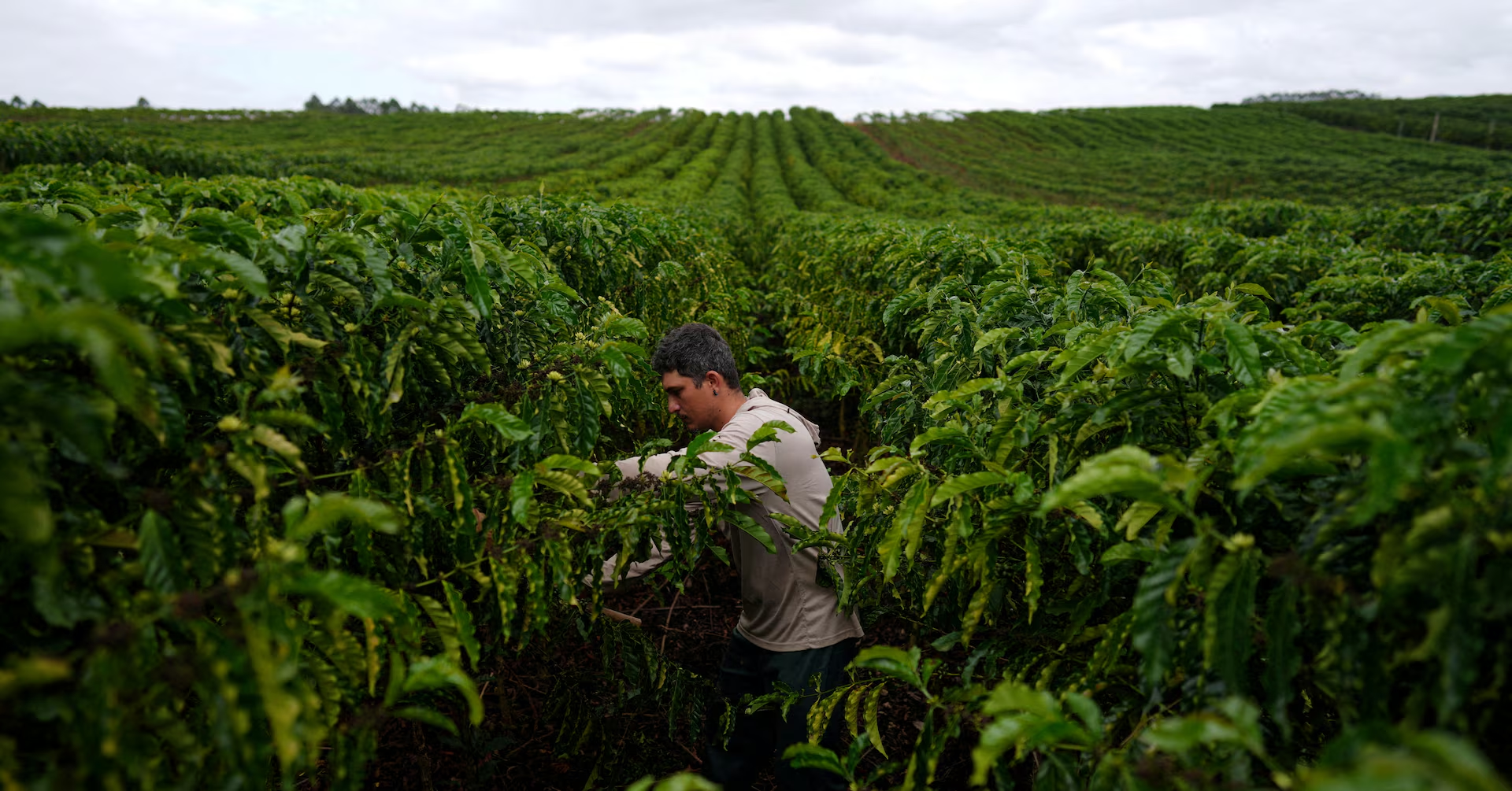
  • Brazil robusta coffee growers push for quality amid rising prices and climate concerns

    Brazil robusta coffee growers push for quality amid rising prices and climate concerns

    • Brazilian robusta farmers invest in quality amid climate threats
    • Espirito Santo aims for 1.5 million bags of specialty robusta by 2032
    • Rising robusta quality boosts demand and prices, exporter group says

    SAO DOMINGOS DO NORTE, Brazil, Dec 6 (Reuters) – Amid the din of a chic coffee shop on Sao Paulo’s posh Oscar Freire Avenue, a barista pulls an atypical espresso. Extra creamy, with an aroma of cocoa nibs, the shot lacks the hallmark acidity prized in coffee made from the finest arabica beans.

    That is because this premium espresso is made of 100% robusta beans, long derided in the coffee world as cheap filler better suited for instant coffee.

    Sign up here.

    “It’s a coffee that makes a wonderful crema … and has much more chocolatey notes,” said Marco Kerkmeester, co-founder of the Santo Grao coffee chain, noting the appeal of a variety cheekily labeled “0% Arabica.”

    CHANGE ON THE FARM

    As climate change threatens the arabica beans traditionally used in high-end brews, Brazilian robusta farmers are investing in harvesting and drying techniques to produce top-notch robusta that appeals to the most demanding consumers.

    Brazil is the world’s second-largest robusta producer after Vietnam and top arabica grower. However, a 2022 study found that more than three quarters of Brazil’s best land for growing arabica coffee could become unsuitable by 2050 due to higher temperatures and drought.

    With global coffee prices and consumption hitting record highs this year amid trade tensions and extreme weather, premium robusta beans also offer a way for roasters to lower the cost of espresso blends with more expensive arabica.

    “My dad is from a mountainous region where they produce high-quality arabica coffee,” said Lucas Venturim, a coffee farmer some 500 miles (805 km) away in Espirito Santo state, whose beans went into that espresso served on a corner of Oscar Freire. “He never accepted that robusta coffee is bad just because it’s robusta.”

    In the same spirit, the Specialty Coffee Association (SCA), which sets global specialty coffee standards, this year revised its evaluation course to appeal to would-be graders of both arabica and robusta beans. Now, anyone trained to assess top-notch coffee will be able to accurately describe and reward deserving brews, regardless of the species, or type of bean.

    “We saw the writing on the wall,” said Kim Ionescu, SCA’s chief strategy development officer, citing growing consumer demand for premium robusta in Southeast Asia, for example. “It just seems like species is not the thing that we should use to define specialty or non-specialty.”

    In 2026, SCA will begin to revise the lexicon of flavor descriptors used by coffee evaluators to include attributes associated with fine robusta, such as aromatic spice.

    Brands like Nguyen Coffee Supply, which offers quality robusta from Vietnam, have already blazed a path in the U.S., while coffee shops from London to Berlin are showcasing robusta’s finer qualities.

    FIRES OUT, DRYERS IN

    The opportunity has kicked off a transformation in Espirito Santo, home to most of Brazil’s robusta production, which now prioritizes not just yield but the highest quality.

    The state aims to produce 1.5 million 60-kg bags of specialty robusta annually by 2032, up from 10,000 currently, according to a presentation by the state agriculture secretariat seen by Reuters.

    That amounts to about a tenth of the state’s current output, requiring wider adoption of the best post-harvest practices now common among arabica producers, according to Jose Roberto Goncalves, agricultural manager of Brazil’s top robusta co-op, Cooabriel.

    In recent years, Cooabriel has participated in specialty coffee trade shows around the world.

    While some growers once dried robusta beans indirectly with fire, where smoke and high temperature could negatively affect the taste, Cooabriel is teaching farmers the advantages of using modern dryers and careful sorting practices, Goncalves said.

    Experts at state research agency Incaper and federal university IFES said they have seen a surge in robusta farmers looking to certify quantities of their beans as higher-priced specialty grade.

    “If in the past robusta coffee was considered lower quality, that perception is changing,” said Douglas Gonzaga de Sousa, coordinator of the Center for Specialty Coffees of Espirito Santo.

    The growing recognition of top-quality robusta in Brazil, along with historically high yields compared to arabica, has lured more arabica farmers to try their hand with robusta – bringing their savvy to the variety.

    Espirito Santo’s undersecretary for rural development, Michel Tesch, said the traffic is largely one-way.

    “We don’t have people leaving robusta to produce arabica,” he said.

    Cooabriel is expanding its robusta nursery in Espirito Santo to produce around 10 million saplings per year, from 2 million at present.

    PRICES JUMP

    The rising quality of Brazilian robusta has translated into stronger demand and higher prices, said Marcio Ferreira, the head of national coffee exporter group Cecafe.

    This year, the average price per bag of specialty Brazilian robusta surpassed $295 per 60-kilogram bag through October, more than double the average 2021 price, according to Cecafe data shared with Reuters. Robusta futures have risen over 80% since 2021 to around $4,370 per metric ton, while arabica futures grew by over 60% to $3.7254 per pound.

    “Improving quality allows you to increase the percentage of robusta in blends around the world,” Ferreira said, adding that roasters are more openly noting the robusta qualities in their espresso blends as they pare back the share of arabica.

    At the same time, specialty robusta is not trying to go toe-to-toe with arabica as a direct competitor, said Jordan Hooper, head of green coffee trading at Sucafina.

    “The original approach to specialty robusta was to kind of try to compete with specialty arabica,” he said. “Now it’s like: robusta can be interesting in and of itself.”

    Natalia Ramos Braga, the barista who pulled the all-robusta shot in Sao Paulo’s Santo Grao cafe, said Brazil is a natural hotbed for those tastes to evolve.

    “People, especially here in Brazil, tend to prefer coffee with a fuller mouthfeel and a more bitter finish,” she said. “If someone prefers more bitterness and a fuller body, great, we have a coffee for that: robusta.”

    Reporting by Oliver Griffin and Alexandre Meneghini
    Editing by Brad Haynes and Rod Nickel

    Our Standards: The Thomson Reuters Trust Principles., opens new tab

    Continue Reading