Category: 3. Business

  • China and India import more thermal coal, but price gains may weigh

    China and India import more thermal coal, but price gains may weigh

    LAUNCESTON, Australia, Dec 4 (Reuters) – Thermal coal imports by Asia’s heavyweights China and India ticked higher in November, but the accompanying rise in prices may cap further gains in volumes.

    China, the world’s biggest coal importer, saw arrivals of 30.96 million metric tons in November, up from 29.18 million in October, according to data compiled by analysts DBX Commodities.

    Sign up here.

    While November represented a third straight monthly gain for China’s imports, it’s worth noting that arrivals are still substantially below what they were last year, with November 2024 imports of the power-station fuel assessed at 38.19 million tons.

    India, the second-biggest coal buyer, saw thermal coal imports of 13.01 million tons in November, up from 12.38 million in October and also slightly above the 12.24 million in November last year, according to DBX data.

    Thermal coal imports by China, Japan, India

    The increase in imports by both China and India came after prices for the main seaborne thermal coal grades dropped to four-year lows in June.

    Australian coal with an energy content of 5,500 kilocalories per kilogram (kcal/kg) fell to $65.72 a ton in the week to June 6, the weakest since May 2021, according to data from price reporting agency Argus.

    The grade, which is popular with Chinese buyers, then traded sideways until August when it started to climb as Chinese buying interest picked up.

    This helped drive the price to a one-year high of $86.96 a ton by the week ended November 21, but it has since slipped to end at $84.60 last week.

    The import price largely mirrors movements in China’s domestic prices, where a rally from mid-June has recently stalled.

    The price of thermal coal at Qinhuangdao Port was assessed by consultants SteelHome at 810 yuan ($114.73) a ton on Wednesday, down from a one-year high of 835 yuan a ton on November 26, but still some 33% above the four-year low of 610 yuan a ton in mid-June.

    China’s domestic coal output has been constrained in recent months as part of Beijing’s “anti-involution” campaign aimed at combating overcapacity in key industries.

    China’s output of all grades of coal was 406.75 million tons in October, down 2.3% from the same month in 2024 and also down from 411.51 million tons in September, according to official data released on November 14.

    CHINA STOCKPILES

    With China bracing for record electricity demand this winter, it’s likely that coal power plants will have to burn more fuel, which in turn suggests that imports may remain resilient.

    However, the state planning agency said on November 27 that there were 230 million tons of coal in stockpiles, sufficient for 35 days’ consumption, a figure that suggests higher imports may not be required.

    China’s thermal coal imports for December are estimated at 31.33 million tons by DBX, which is up slightly from November but still down from the 35.03 million tons from December last year.

    India’s thermal coal imports tend to peak in summer, with a smaller lift for winter.

    This winter may see lower demand for imports as coal-fired electricity generation slips amid lower industrial demand and higher renewable energy output.

    India’s coal-fired generation fell 5.8% in November from the same month a year earlier, and has dropped on an annual basis in seven out of 11 months so far in 2025, Grid-India data showed.

    India’s imports of thermal coal are forecast by DBX to decline in December to 12.15 million tons from November’s 13.01 million.

    Higher prices are likely to be weighing on demand, with 4,200 kcal/kg Indonesian coal ending at $48.75 a ton in the week to November 28, down from a seven-month high of $49.19, but still some 20% above the four-year low of $40.45 hit in early July.

    Enjoying this column? Check out Reuters Open Interest (ROI), your essential new source for global financial commentary. ROI delivers thought-provoking, data-driven analysis of everything from swap rates to soybeans. Markets are moving faster than ever. ROI can help you keep up. Follow ROI on LinkedIn, opens new tab and X, opens new tab.

    The views expressed here are those of the author, a columnist for Reuters.

    Our Standards: The Thomson Reuters Trust Principles., opens new tab

    Continue Reading

  • focus on quality, cooperation and good working conditions

    focus on quality, cooperation and good working conditions

    Schiphol is taking an important step towards improving the quality of ground handling and the work done by ground handlers. On 4 December, the tendering procedure will begin for the selection of three ground handling companies who will be responsible for the baggage process and work done around aircraft, such as loading and unloading baggage, placing chocks under aircraft wheels and connecting ground power units. With this tender, the airport aims to improve quality of service and ensure better working conditions for thousands of employees who contribute to safe and efficient operations every day. There are currently six parties carrying out these activities. 

    Ground handling companies and their employees play a crucial role at Schiphol. They ensure that passengers and baggage enter and leave the aircraft on time and that all work around the aircraft is carried out with care. By outsourcing ground handling, we can intentionally select our partners and organise the collaboration more effectively. 

    From open market to higher standard  
    The current open market is characterised by fierce competition and limited control over quality. The introduction of a sector-wide collective labour agreement (CLA) in 2023 was an important step towards improving working conditions. This tender follows the decision by the Ministry of Infrastructure and Water Management, on the initiative of Schiphol, to work with a select group of handling companies. They will work at the airport under a concession agreement based on contracts they enter into with the airlines.  

    Quality requirements
    Reducing the number of handling companies offers opportunities for smarter and more efficient organisation. Ground handling companies are being asked to make more joint use of handling equipment, which creates space on the apron and ensures more sustainable use of resources. In addition, we are setting further requirements on the working conditions for employees and the quality of service. Travellers will notice this in the form of shorter waiting times for their baggage on arrival. The award criteria for this tender have been carefully drawn up and consulted with airlines, handlers, stakeholders and the trade union. 

    ';

    Continue Reading

  • Access Denied


    Access Denied

    You don’t have permission to access “http://www.spglobal.com/commodity-insights/en/news-research/latest-news/lng/120325-nov-jkm-futures-traded-volumes-and-end-month-open-interest-reach-record-highs” on this server.

    Reference #18.ca6656b8.1764851082.666224d4

    https://errors.edgesuite.net/18.ca6656b8.1764851082.666224d4

    Continue Reading

  • Hydrogen Europe

    Hydrogen Europe

    Press Release 

    Brussels, 4 December 

    Today, the European Commission launched the 3rd auction of the European Hydrogen Bank (EHB), with a budget of €1.3 billion supplemented by the mobilisation of another €1.7 billion from national budgets, bringing the total allocation to €3 billion.  

    This comes on top of the regular Innovation Fund call which will dedicate €2.9 billion for manufacturing of clean technologies and decarbonisation projects, meaning a cumulative €6 billion is potentially available to the hydrogen sector.  

    The EHB auction will allocate funds across multiple segments:  

    • €600 million allocated to a renewable fuel of non-biological origin (RFNBO) hydrogen basket,  
    • €400 million to a RFNBO and low-carbon hydrogen basket, 
    • €300 million for projects with offtakers in the maritime or aviation sector. 

    In addition, Germany and Spain have announced national top-up funds via the Auction-as-a-Service (AaaS) mechanism: 

    • Germany will contribute €1.3 billion for renewable hydrogen production that will flow into the Denmark–Germany pipeline, serving offtakers connected to the German Kernnetz.  
    • Spain will add €415 million (€278.6 million for renewable hydrogen and €136.4 million for the maritime and aviation basket), on top of the €487.5 million it allocated in the second auction.  

    These commitments underscore the growing importance of the AaaS model as a tool to scale national hydrogen projects across Member States, leveraging on the EU evaluation process. The deadline for bids to the 3rd auction is set for the 19 February 2026. 

    Furthermore, the European Commission launched the Innovation Fund 2025 (IF25) call for Net-Zero Technologies (regular grants). The total budget amounts to €2.9 billion, distributed across five topics:  

    • Cleantech (€1 billion),  
    • Large-scale projects (€1.2 billion),  
    • Medium-scale (€300 million),  
    • Pilot projects (€300 million), 
    • Small-scale projects (€100 million). 

    The cleantech, medium-scale, and pilot baskets have been increased by 40-50% each since IF24, while the large-scale and small-scale topics remain the same size. The deadline for the IF call is 23 April 2026. 

    Daniel Fraile, Chief Policy Officer of Hydrogen Europe, states: “The launch of the 3rd auction and call for grants is excellent news as we continue to support the growth of a decarbonised hydrogen market. We encourage the European Commission to continue supporting the Hydrogen Bank and Innovation Fund as a means of unlocking public and private investments into this important technology.” 

    Hydrogen Europe also welcomes: 

    • The opening of the EHB to low-carbon electrolytic hydrogen, in line with the Low-Carbon Delegated Act, as well as the increased funding share for maritime and aviation, two critical hard-to-abate sectors.  
    • Stricter project-readiness requirements, such as requiring developers to provide equity support, which will help ensure that only mature, investment-ready projects apply, reducing delays and enabling more realistic bids, 
    • The revision of cumulation rules, which now enable projects to access EU funding for their hydrogen consumption operational expenses, subject to safeguards against double funding. 

    However, we are concerned that the new resilience criteria, focused on components origin, creates loopholes for easy circumvention. This is a step back from the second auction’s process-based approach, which better captured real EU added value and safeguarded Europe’s industrial base.  

    We urge the European Commission to announce subsequent auctions and continue this valuable funding mechanism for the hydrogen sector.  

    For more information: 

    European Commission announcement: €5.2 billion of EU Emissions Trading revenues earmarked for clean transition technologies 

    Call document for 3rd EHB auction: Call document for the call “Innovation Fund fixed premium auction call 2025 for Hydrogen” 

    Call document for IF25 NZT call: Call document for the call “Innovation Fund call 2025 Net Zero Technologies” 

    European Hydrogen Bank 

    Link to Fixed Premium Auction for RFNBO hydrogen production call: EU Funding & Tenders Portal | EU Funding & Tenders Portal 

    Link to Fixed Premium Auction for RFNBO and/or electrolytic low-carbon hydrogen production call: EU Funding & Tenders Portal | EU Funding & Tenders Portal 

    Link to Fixed Premium Auction for RFNBO and/or electrolytic low-carbon hydrogen production for the maritime and aviation sectors call: EU Funding & Tenders Portal | EU Funding & Tenders Portal 

    Innovation Fund 

    Link to Innovation Fund 2025 Net Zero Technologies – General decarbonisation – Large-Scale Projects call: EU Funding & Tenders Portal | EU Funding & Tenders Portal 

    Link to Innovation Fund 2025 Net Zero Technologies – Pilot projects call: EU Funding & Tenders Portal | EU Funding & Tenders Portal 

    Link to Innovation Fund 2025 Net Zero Technologies – Clean-tech manufacturing call: EU Funding & Tenders Portal | EU Funding & Tenders Portal 

    Link to Innovation Fund 2025 Net Zero Technologies – General decarbonisation – Small-Scale Projects call: EU Funding & Tenders Portal | EU Funding & Tenders Portal 

    Link to Innovation Fund 2025 Net Zero Technologies – General decarbonisation – Medium-Scale Projects call: EU Funding & Tenders Portal | EU Funding & Tenders Portal  

    Continue Reading

  • ‘Never seen anything like this’: alarm at memo from top US vaccine official | US healthcare

    ‘Never seen anything like this’: alarm at memo from top US vaccine official | US healthcare

    America’s top vaccines official promised, in a long and argumentative memo to staff on Friday, to revamp vaccine regulation after claiming that at least 10 children died from Covid vaccination – but he offered no evidence for that allegation and scant details on the new approach.

    The top-down changes, without input from outside advisers or publication of data, worries experts who fear vaccines such as the flu shot may quickly disappear and that public trust will take a major hit.

    “The ultimate outcome will be fewer vaccines and more vaccine-preventable illness,” said Dan Jernigan, former director of the National Center for Emerging and Zoonotic Infectious Diseases until this year.

    The 10 child deaths were among children aged seven to 16 in 2021 to 2024 and reported in the Vaccine Adverse Event Reporting System (VAERS), a crowdsourced database to which anyone may submit reports, according to Vinay Prasad, director of the Center for Biologics Evaluation and Research (CBER) and the chief medical and scientific officer at the US Food and Drug Administration.

    Prasad offered no other details about the children’s cases, including which conditions led to their deaths, how those deaths were linked to vaccination, or why initial investigations ruled the deaths unrelated and why subsequent investigations disagreed.

    “For the first time, the US FDA will acknowledge that Covid vaccines have killed American children,” Prasad wrote in the memo, reviewed by the Guardian, calling into question whether Covid vaccines killed “more healthy kids than it saved”.

    Paul Offit, an infectious diseases physician at Children’s Hospital of Philadelphia, said of the memo: “When you make that kind of sensational claim, I think it’s incumbent upon you to provide evidence that supports that claim. He didn’t supply any evidence.”

    The Covid vaccines have been given to millions of people around the world and are safe and effective. The statements and the approach diverge sharply from the regulatory agency’s history.

    “I just have never seen anything like this,” said Jernigan, who worked at the Centers for Disease Control and Prevention (CDC) for 31 years, frequently in close collaboration with the FDA.

    It’s highly unusual for the top vaccines regulator to share information in an email to all staff without first convening the Vaccines and Related Biological Products Advisory Committee (VRBPAC), or publishing the data in a public presentation or study, Jernigan said.

    While there are no causes for mortality mentioned in the memo, Prasad highlights myocarditis, or heart inflammation, a very rare side effect that appeared after initial vaccination. Myocarditis is much more common and severe with Covid infection, and vaccination reduces the risk of infection and of severe illness. If myocarditis were behind some or all of the children’s deaths, an autopsy would reveal such damage – and autopsies are standard for children who die unexpectedly, Offit said.

    It would also be necessary to prove that myocarditis was caused by vaccination, not by infection with Covid or any other viruses that may cause heart damage, Offit added.

    Tracy Beth Høeg, a sports medicine physician who is now senior advisor for clinical sciences at FDA, began leading the investigation over the summer, Prasad said. Elsewhere in his memo, Prasad credited the FDA commissioner, Marty Makary, for finding these cases, vowing that the new regulatory changes would prevent such future searches.

    “Never again will the US FDA commissioner have to himself find deaths in children for staff to identify it,” Prasad wrote.

    The deaths are “certainly an underestimate” and “[t]he real number is higher”, Prasad wrote, without offering any evidence for the claim.

    The health department and Prasad did not respond by press time to the Guardian’s questions about evidence for attributing the children’s deaths to Covid vaccination or details of how regulations for vaccine approvals would change.

    The development of Covid vaccines under the first Trump administration was “one of the greatest scientific and medical advances in our lifetime”, said Offit, a member of VRBPAC until he was removed earlier this year. “Now you have the head of CBER saying that your vaccine killed at least 10 children?”

    The White House did not respond to the Guardian’s questions about claims that the Covid vaccines resulted in child deaths.

    With the deployment of Covid vaccines, officials stepped up communication about how to report any adverse events that happen after vaccination.

    “As Covid emerged, with it being a new vaccine and with the rollout to so many people, CDC increased its advertising and its requests for people to submit reports, essentially mandating physicians to report anything that they might see and then making sure that people knew that they could report them,” Jernigan said.

    The CDC even established a new system called V-safe, where recent vaccines received text messages asking about side effects and encouraging them to report all symptoms to VAERS, resulting in an influx of reports.

    Another database, called Vaccine Safety Datalink (VSD), draws on the medical records of about 10% of the US population, including 500,000 children. The VSD is a “robust” way to study whether the signals caught in VAERS are appearing in confirmed medical records, Jernigan said. That was how myocarditis was first detected after vaccination, and it was how very rare blood clots from the Johnson and Johnson Covid vaccine were quickly detected.

    While the Prasad memo focused largely on Covid vaccines, it made two apparent nods to other concerns common among anti-vaccine activists.

    Officials at the FDA “have not been focused on understanding the benefits and harms of giving multiple vaccines at the same time,” Prasad said, without listing such potential harms, for which there is no available evidence.

    The benefits, on the other hand, include greater access to and uptake of vaccines, since families have to make fewer trips to doctors’ offices, experts said. Yet Prasad said the FDA guidelines on offering multiple vaccines would be changed, without specifying how.

    “Concomitant vaccines have been used with the existing system for a long time with no evidence of harm,” said Dorit Reiss, professor of law at UC Hastings College of Law. Changing that “without evidence of harm will make it harder to put vaccines on the market”.

    The memo also briefly addressed measles, mumps, and rubella (MMR) vaccines. They provide benefits to those around them “when administered to high enough fractions of society”, Prasad wrote, but it is not clear if he believes the MMR shots would still be beneficial if uptake falls.

    Because of these determinations, the FDA will change how it regulates vaccines, including requiring randomized trials showing clinical outcomes – like the reduction of illness – instead of demonstrating immune responses for most new products, Prasad wrote. The FDA will “revise the annual flu vaccine framework”, including the surrogate assays – tests to understand how well the vaccines work, he wrote.

    For vaccines like the flu, conducting new trials each year instead of checking for immune responses is “not possible”, Offit said. Such studies would need to be conducted during flu season, which would mean the vaccines would be outdated and available far too late.

    While the new rules present challenges for all respiratory vaccines, updated flu and Covid shots especially “cannot be delayed”, Reiss said. “I don’t know if we will have influenza vaccines next year in the US.”

    Making the shots less accessible in the US would lead to preventable deaths, and it follows the second-worst influenza season on record, she said, noting: “It’s not a great time to take away influenza vaccines.”

    Undermining confidence in vaccines is “so dangerous and irresponsible”, Offit said. And the stakes are high, he said. “Children are getting hospitalized and children are still dying from this virus.”

    The confusion makes it harder for the public and physicians to understand what the evidence says and to trust the health agencies offering guidelines, Jernigan said.

    “It’s getting harder for them to know which recommendations to follow and who they can trust,” he said.

    Continue Reading

  • Alternative microfabrication processes for resource-efficient and sustainable thin-film space solar cells

    Alternative microfabrication processes for resource-efficient and sustainable thin-film space solar cells

    Enabling & Support

    04/12/2025
    19 views
    0 likes

    Since the late 1990s, high-efficiency III-V multi-junction solar cells have become the standard for satellite power systems due to their excellent efficiency and radiation tolerance. However, their production is resource- and energy-intensive, which conflicts with Green Space sustainability goals. 

    While material-efficient fabrication of terrestrial silicon solar cells is already commercially mature, such processes are generally incompatible with the harsh conditions of the space environment. To address this challenge, Fraunhofer ISE, supported by ESA’s Discovery & Preparation element, is developing a mask-and-plate microfabrication approach as a reliable alternative manufacturing method for III-V based solar cells for space applications.

    For more than 30 years, III-V solar cells have become the standard power source for satellites thanks to their high efficiency and strong radiation tolerance compared with silicon-based solar cells.

    These devices are fabricated by growing very thin semiconductor layers on germanium substrates using a process called epitaxy. After the layers are grown, the cells are manufactured using specific processes. This precise manufacturing approach is compatible with the harsh conditions in space, but it is resource and energy intensive, which clashes with Green Space sustainability goals.

    This resource intensity stems from three main factors: the reliance on germanium (Ge) as the substrate; the energy-intensive epitaxial growth process; and the subsequent microfabrication, which involves photolithography and metal evaporation steps – both costly, time-consuming, and energy-demanding steps.

    Low-cost thin-film space solar cells

    Promising work is underway to enable substrate re-use and efforts are targeting more efficient epitaxial processes. However, microfabrication is not really tackled yet for space solar cells. While material-efficient technologies are already available for conventional terrestrial silicon solar cells production, the requirements for space solar cells usually prevent their implementation, as some materials used in these technologies are incompatible with the reliability needs of the space environment.

    A team from Fraunhofer ISE is developing an innovative mask-and-plate approach to microfabricate III-V space solar cells without the use of photolithography or metal evaporation, a solution supported by the European Space Agency through its Discovery & Preparation element. The idea was submitted via ESA’s Open Discovery Ideas Channel (OSIP).

    A solution based on inkjet-printing technology

    AlternateSpace, the solution developed by the team, is a compelling alternative that addresses sustainability concerns by replacing photolithography with inkjet printing technology, a technique that is well-established in the graphics and TV screen manufacturing industries.

    The use of hotmelt inks in this process offers several advantages: the technique does not rely on toxic or photoactive materials, it can be applied directly in a precisely controlled pattern and it eliminates wet-chemical development steps, significantly simplifying the process chain and reducing chemical waste.

    For metal contact deposition, this innovative approach also replaces metal evaporation with electroplating. This allows metal to be deposited only on areas where the semiconductor material is not covered by ink with no subsequent lift-off steps required.

    This alternative solution required extensive optimisation, including testing various inks and adjusting parameters, such as resolution and temperature, to achieve reliable small contact openings. The mask’s chemical compatibility was verified by testing the hotmelt ink across different electrolytes, temperatures and pH values.

    The subsequent metallisation involved the evaluation of different metal stacks for electroplating and explored nickel-phosphorus plating as a non-ferromagnetic alternative to standard nickel. A final sample featuring silver front side contacts on nickel-phosphorus emerged as a space-compatible option.

    Towards fully functional thin-film space solar cells

    Towards fully functional thin-film space solar cells

    After a fully defined process route that incorporates all the newly developed steps, a fully functional photolithography-free solar cell based on space-compatible electroplated metal contacts is expected in December.

    “This work marks a key step toward cost-effective, sustainable and efficient III-V solar cell technology. It paves the way for a scalable and economically viable manufacturing route for next-generation III-V space photovoltaics. The results of the activity highlight the key role of ESA’s Discovery & Preparation programme in generating novel ideas that can drive the development of future space technologies”, commented Erminio Greco, Solar Generators Engineer at the European Space Agency.

    “By replacing photolithography and metal evaporation with scalable inkjet printing and electroplating, Fraunhofer ISE demonstrates a simplified process with significantly reduced chemical waste. This approach aligns with the goals of green space sustainability and cost reduction. After the successful demonstration of this approach, we aim towards a collaboration with industry to further develop, stabilise and finally scale the process towards industrial realisation”, commented Oliver Höhn, Head of the III-V Semiconductor Technology Group at Fraunhofer ISE.

    Continue Reading

  • The grid storage industry set a wild goal for 2025 —…

    The grid storage industry set a wild goal for 2025 —…

    In 2017, the early leaders in energy storage made an audacious bet: 35 gigawatts of the new grid technology would be installed in the United States by 2025.

    That goal sounded improbable even to some who believed that storage was on a growth trajectory. A smattering of independent developers and utilities had managed to install just 500 megawatts of batteries nationwide, equivalent to one good-size gas-fired power plant. Building 35 gigawatts would entail a 70-fold growth in just eight years.

    The number didn’t come out of thin air, though. The Energy Storage Association worked with Navigant Research to model scenarios based on a range of assumptions, recalled Praveen Kathpal, then chair of the ESA board of directors. The association decided to run with the most aggressive of the defensible scenarios in its November 2017 report.

    In 2021, ESA agreed to merge with the American Clean Power Association and ceased to exist. But, somehow, its boast proved not self-aggrandizing but prophetic.

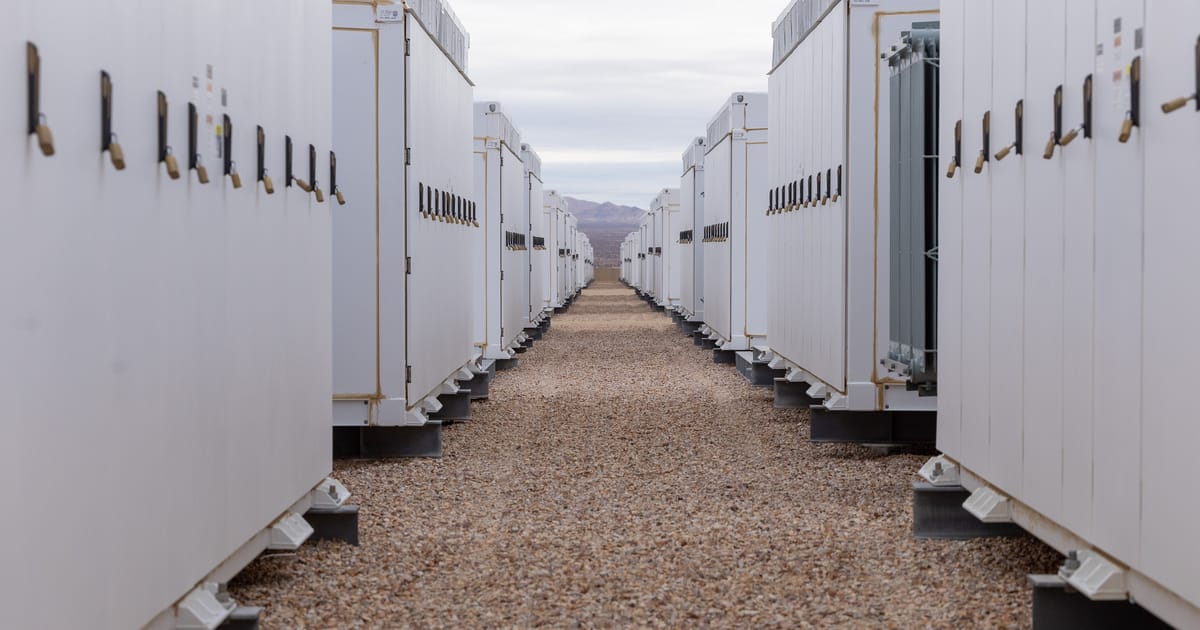
    The U.S. crossed the threshold of 35 gigawatts of battery installations this July and then passed 40 gigawatts in the third quarter, according to data from the American Clean Power Association. The group of vendors, developers, and installers who just eight years ago stood at the margins of the power industry is now second only to solar developers in gigawatts built per year. Storage capacity outnumbers gas power in the queues for future grid additions by a factor of 6.5, according to data compiled by Lawrence Berkeley National Laboratory.

    Storage has become the dominant form of new power addition,” Kathpal said. I think it’s fair to say that batteries are how America does capacity.”

    Getting from basically no grid batteries to 35 gigawatts

    Back in 2017, I was covering the young storage industry for an outlet called Greentech Media, a beat that was complicated by how little was happening. There was much to write about the enormous potential” of energy storage to make the grid more reliable and affordable, but it required caveats like if states change their grid regulations to allow this new technology to compete fairly on its merits, yada yada yada.”

    Those batteries that did get built in 2017 look tiny by today’s standards. The locally owned utility cooperative in Kauai built a trailblazing 13-megawatt/52-megawatt-hour battery, the first such utility-scale system designed to sit alongside a solar power plant. And 2017 saw the tail end of the Aliso Canyon procurement, a foundational trial for the storage industry in which developers built a series of batteries in Southern California in just a handful of months to shore up the grid after a record-busting gas leak — adding up to about 100 megawatts.

    You saw green shoots of a lot of where the industry has gone,” said Kathpal.

    California passed a law creating a storage mandate in 2010, then found a pressing need for the technology to neutralize the threat of summertime power shortages. Kauai’s small island grid quickly hit a saturation point with daytime solar, so the utility wanted a battery to shift that clean power into the nighttime. These installations weren’t research projects; they were solving real grid problems. But they were few and far in between.

    Kathpal recalled one moment that encapsulated the storage industry’s early lean era. At the time, he was developing storage projects for the independent power producer AES. One night around midnight, he parked a rented Camry off a dirt road and pointed a flashlight through a sheet of rain. It was his last stop on a trip to evaluate potential lease sites for grid storage ahead of a utility procurement — looking at available space, proximity to the grid, and stormwater characteristics. But once the utility saw the bids, it decided not to install any batteries after all.

    The storage market is built not only from Navigant reports but also from moments like that,” he said. We had to lose a lot of projects before we started winning.” 

    Now that same utility is putting out a call for storage near its substations — exactly the kind of setting Kathpal had toured in the rain all those years ago.

    Indeed, many of the projects connected to the grid this year started with developers anticipating future grid needs and putting money on the line for storage back around the time ESA was formulating its big goal, said Aaron Zubaty, CEO of early storage developer Eolian.

    Eolian began developing projects around major metro areas in the western U.S. starting in 2016 and putting the queue positions in that then became operational in 2025,” Zubaty said. The 200-megawatt Seaside battery site at a substation in Portland, Oregon, is one example.

    Storage market twists and turns

    Though the storage industry pioneers somehow nailed the 35-gigawatt goal, market growth defied their expectations in several important ways.

    ESA had expected more of a steady ramp to the 35 gigawatts, said Kelly Speakes-Backman, who served as its chief executive officer from 2017 to 2021. But the storage market ran into plenty of false starts, such as when states passed mandates to install batteries but never enforced them, and when federal regulators ordered wholesale markets to incorporate storage but regional implementation dragged on for years.

    Continue Reading

  • Fujitsu and Scaleway partner to accelerate European sustainable transformation and data sovereignty with FUJITSU-MONAKA CPU-based AI inference

    Fujitsu and Scaleway partner to accelerate European sustainable transformation and data sovereignty with FUJITSU-MONAKA CPU-based AI inference

    The rapid proliferation of generative AI has dramatically increased data center power consumption, creating a global societal challenge. In Europe, this has led to increased demand for infrastructures that reconcile performance, energy efficiency and data sovereignty. Specifically, many organizations now operate AI models continuously in production and require predictable performance, controlled operating costs and a reduced environmental footprint. CPU-based architectures are particularly well suited to these requirements because they offer stable performance, efficient energy use and simple integration within existing environments.

    Fujitsu, with its advanced computing technologies, is developing the FUJITSU-MONAKA processor, which employs world-leading technologies cultivated in its supercomputer development activities. Built on leading-edge 2-nanometer technology and featuring unique technologies such as its own microarchitecture optimized for advanced 3D packaging and ultra-low voltage circuit operation, it is designed to deliver both high performance and power efficiency across diverse computing applications including enterprise AI.

    Aligning with its objective to provide organizations, from innovative startups to large enterprises, with infrastructure that matches their operational and strategic requirements, Scaleway offers a full spectrum of cloud services, from its AI Factory with powerful GPUs to highly efficient computing infrastructure, to offer the appropriate architecture for each use case while maintaining full transparency on performance, cost and environmental impact.

    Building on their ongoing discussions to define key use cases, the two companies will commence this joint Proof of Concept (PoC) in the second half of 2026. Based on the results, the parties will consider establishing and providing pilot environments for customers from 2027 onwards. Moving forward, Fujitsu and Scaleway will explore the commercialization of new CPU-based AI inference services optimized for the European market.

    Continue Reading

  • Eversheds Sutherland helps power ILOS Energy’s solar portfolio in Ireland – Eversheds Sutherland

    1. Eversheds Sutherland helps power ILOS Energy’s solar portfolio in Ireland  Eversheds Sutherland
    2. Germany’s ILOS Energy secures €143m for 217MW Cork solar farm  Silicon Republic
    3. German energy company building €143m solar farm in Cork  Cork Beo
    4. ILOS Energy secures €143m finance for Cork solar farm project  Irish Examiner
    5. German renewables firm ILOS secures €143m debt deal for Cork solar farm  Business Post

    Continue Reading

  • ‘Tough market conditions’ hit half-year retail sales at Frasers Group | Frasers Group

    ‘Tough market conditions’ hit half-year retail sales at Frasers Group | Frasers Group

    The owner of Sports Direct and Flannels has said sales have fallen at its UK retail businesses amid heavy discounting by rivals and “very subdued” consumer confidence.

    Frasers, which is controlled by former Newcastle United owner Mike Ashley, said sales at its UK sports division were down 5.8% in the six months to 26 October to £1.3bn despite growth at the main Sports Direct chain because of “planned decline” at its Game outlets and the Studio Retail online arm.

    Michael Murray, the chief executive of Frasers Group, which also owns House of Fraser department stores, Jack Wills and dozens of other brands and a number of shopping centres, said “market conditions are tough” and “consumer confidence is very subdued”.

    The company said it remained cautious about the second half of its financial year but still expected to meet full-year profit expectations of up to £600m, after its bottom line was boosted by a big increase in the value of its investment in the Hugo Boss brand.

    Sales fell by 3.7% at its premium division as it said it had closed more House of Fraser, Jack Wills stores and outlets relating to a string of brands it bought from JD Sports in 2022 including Liam Gallagher’s Pretty Green and 1980s brand Tessuti.

    Total sales for the group rose 5% to £2.6bn in the half year, after strong growth internationally where the group has snapped up a number of new businesses, and pre-tax profits almost doubled to £412m largely as a result of the increased value of the Hugo Boss stake. Operating profits increased 18% to £219.8m.

    “Trading has improved compared to last year’s budget-affected period;
    it is still weaker than [the year to April 2024], with excess inventory in the sector continuing to weigh on the wider market,” Frasers said.

    skip past newsletter promotion

    Murray said: “We’ve made a solid start to [the year to April 2026] even though market conditions are tough, consumer confidence is very subdued and excess inventory continues to weigh on the industry, leading to increased promotional activity. While we remain cautious into the second half, our focus is unwavering as we confront these challenges head-on.”

    Continue Reading