Category: 3. Business

  • Exclusive: Unilever-backed audit finds deficiencies in financial controls, governance at Ben & Jerry’s Foundation

    Exclusive: Unilever-backed audit finds deficiencies in financial controls, governance at Ben & Jerry’s Foundation

    • Ben & Jerry’s audit conducted ahead of Magnum’s spin out from Unilever
    • Magnum trying to work with foundation to strengthen governance
    • Ben & Jerry’s a greater risk to Magnum than prior corporate owner Unilever

    NEW YORK, Dec 2 (Reuters) – An audit of the Ben & Jerry’s Foundation, a U.S.-based non-profit solely funded by the brand, found that it had deficiencies in financial controls and governance, according to Magnum, the Unilever unit set to be spun off next week that will own the ice-cream maker.

    The audit also found deficiencies in other compliance policies such as conflicts of interest, according to the statement from the Magnum Ice Cream Co, an independent unit of Unilever.

    Sign up here.

    Magnum is set to inherit a long-standing feud between Unilever (ULVR.L), opens new tab and Ben & Jerry’s stemming from the politically progressive brand’s stance on the Israeli-occupied Palestinian territories.

    Magnum conducted the audit as a matter of good governance in preparation for the upcoming spin-off, it said.

    A Unilever spokesperson echoed those reasons in a comment to Reuters, adding that Magnum is “taking appropriate steps” in response to the findings.

    Ben & Jerry’s and the foundation did not respond to requests for comment, but its co-founder Ben Cohen said in October that he expects the conflict between the brand and its new owner to grow after the spin-off.

    Magnum did not make public the details of its findings but said it has shared them with the Ben & Jerry’s Foundation and is trying to work with them on strengthening corporate governance by adopting a code of ethics, conflict-of-interest policy, term limits for trustees and due diligence and financial controls on grants.

    Magnum said the trustees have not fully addressed the deficiencies. The Unilever subsidiary shared the statement in response to Reuters’ questions about the audit.

    The trustees signed a code of ethics in recent weeks, according to two sources familiar with the matter, who asked not to be identified because they were not authorized to speak to the media. The sources added the audit did not find wrongdoing, ethical malpractice or violations.

    Unilever and Magnum have been upping the pressure on Ben & Jerry’s ahead of the spinout, as the renowned ice cream brand will make up a larger portion of the new company’s sales. The brand has been one of the few voices in corporate America speaking out against policies backed by U.S. President Donald Trump and Israel’s war in Gaza.

    Ben & Jerry’s annual revenue of 1.1 billion euros ($1.28 billion) accounts for almost 14% of Magnum’s global turnover, compared to just 1.8% of Unilever.

    Earlier this year, Unilever threatened to pull funding from the charity unless it agreed to the audit, Reuters reported. The foundation receives about $5 million annually from Ben & Jerry’s, and Magnum said it plans to continue fully funding the organization, provided the issues raised are addressed.

    Ben & Jerry’s co-founder Jerry Greenfield, who resigned as a “brand ambassador” earlier this year, is stepping down as trustee from the foundation, the sources said. Greenfield did not respond to a Reuters request for comment.

    LONG-LASTING FEUD

    Ben & Jerry’s secured substantial leeway in its 2000 merger with Unilever that others who have sold to big corporations have not enjoyed, including an independent board.

    The agreement also preserved the foundation, set up in 1985. It uses contributions from Ben & Jerry’s to make donations to other non-profit organizations focused on issues ranging from racial equity to environmental protection.

    But the relationship soured in 2021, when Ben & Jerry’s said it would stop selling in the Israeli-occupied West Bank, which had financial consequences for Unilever as investors supporting Israel pulled out of the global consumer goods conglomerate.

    The Ben & Jerry’s independent board has sued Unilever twice, most recently accusing its corporate parent of wrongfully muzzling it over statements it wanted to make on Gaza; Unilever has said the brand has evolved into one-sided advocacy on controversial topics.

    Cohen has launched an effort to buy back the brand; Magnum has said the unit is not for sale.

    He has said Magnum is censoring Ben & Jerry’s ability to speak out on progressive causes like Palestinian rights and U.S. immigration, a claim Magnum denies.

    In a draft prospectus for its public listing, Magnum warned that actions by Ben & Jerry’s could result in reputational damage, boycotts or investor claims.

    (This story has been refiled to fix a typo in paragraph 10)

    Reporting by Jessica DiNapoli in New York and Alexander Marrow in London; Editing by Aurora Ellis

    Our Standards: The Thomson Reuters Trust Principles., opens new tab

    Continue Reading

  • A rapid deployment of a space traffic management platform

    A rapid deployment of a space traffic management platform

    Each year, SpaceNews selects the people, programs and technologies that have most influenced the direction of the space industry in the past year. Started in 2017, our annual celebration recognizes outsized achievements in a business in which no ambition feels unattainable. This year’s winners of the 8th annual SpaceNews Icon Awards were announced and celebrated at a Dec. 2 ceremony hosted at the Johns Hopkins University Bloomberg Center in Washington, D.C. Congratulations to all of the winners and finalists.

    In 2018, the first Trump administration directed the development of a civil space traffic management system led by the Department of Commerce, taking over work that had for years been handled by the Defense Department. In 2025, that effort reached the finish line following years of procedural and financial challenges. It came even as the second Trump administration proposed canceling the program instead.

    The development of the Traffic Coordination System for Space, or TraCSS, got off to a slow start because of a lack of funding from Congress and skepticism that the Commerce Department was the best place to handle space traffic coordination. A 2020 report by the National Academy of Public Administration, concluded Commerce was the best agency for the job rather than NASA or the FAA. But it wasn’t until fiscal year 2023 that the Office of Space Commerce received the budget increase it needed to accelerate work on TraCSS.

    Once funding started, the office moved quickly to scale up and start putting TraCSS together. Leaders took on an agile development approach commonly used in software development to TraCSS, focusing first on making a basic “minimum viable product” and then incorporating new features and changes based on feedback.

    Besides the technical work needed to set up TraCSS, the Office of Space Commerce also had to build up relationships with the Space Force, which would be supplying the data for the system, as well as with companies that could also offer data and services. That included making sure that the basic and free space safety services that TraCSS would offer, such as notices of potential collisions, did not compete with more advanced offerings from those companies.

    In September 2024, the office started phase 1.0 of TraCSS, a beta test involving several satellite operators. Over time, more companies joined the test, including SpaceX, by far the largest satellite operator in the world with its Starlink constellation. The office started adding features to TraCSS in preparation for entering full service in early 2026.

    All that has taken place despite political headwinds in the last year. A move by the Commerce Department to lay off probationary, or new, employees in February temporarily included the TraCSS program manager, Dmitry Poisik, until he was brought back several days later. The fiscal year 2026 budget proposal for NOAA, which includes the Office of Space Commerce, proposed terminating TraCSS entirely, arguing private companies could handle the work.

    The commercial space industry has rallied behind TraCSS, saying it is essential to safe space operations. House and Senate appropriations bills would restore some of TraCSS budget. That’s enough, Poisik said in August, to do the “basic mission” of TraCSS, which has become more essential as the number of satellites in orbit grows.

    This article first appeared in the December 2025 issue of SpaceNews Magazine.

    Continue Reading

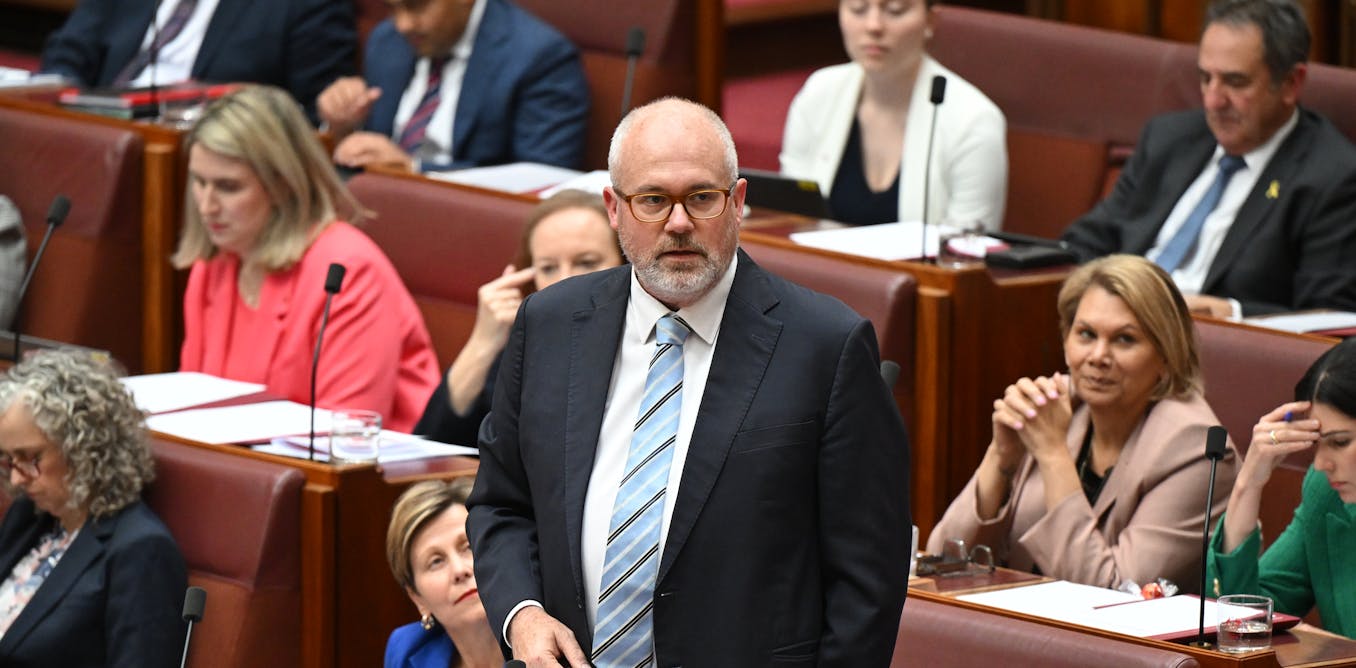
  • Tim Ayres on the AI rollout’s looming ‘bumps and glitches’

    Tim Ayres on the AI rollout’s looming ‘bumps and glitches’

    The federal government released its National AI Strategy this week, confirming it has dropped its earlier proposal for mandatory guardrails for high-risk artificial intelligence (AI).

    In responding to AI, the government has found itself caught between the unions, which have pushed for stricter regulation to protect workers and their jobs, and business wanting a “light-touch” approach to AI.

    To talk about how the government will keep up with effectively managing AI, as well as a long-overdue response to a “jobs for mates” review, we’re joined by the minister for industry, innovation and science, Tim Ayres.

    On the government’s decision not to introduce AI-specific laws, Ayres denies the Albanese government ended up going with a “light-touch” approach.

    It’s a pragmatic Australian approach that’s about the circumstances that Australia is in, in strategic terms and economic terms. We’ve got an existing regulatory framework now. Australian law applies now.

    The [new] AI Safety Institute is about making sure that we support our regulators. Advised, of course, by the best advice, whether it’s in the intelligence communities or security agencies, engaging with the trade union movement and civil society, getting the best advice to make sure that we’re uplifting government capability to analyse threats, to get into the new AI models and make sure that we’ve tested them properly, and supporting government capability across the board.

    On whether the rollout of AI will lead to some mistakes as Australian workers and industry get used to the technology, Ayers acknowledges there will be some “bumps”:

    I don’t want to be glib about that, but I do think that’s true […] that of course big social and technological changes are rarely free of bumps and glitches. We’re really keenly aware in the government of the human challenges here.

    And that’s why I just keep emphasising getting people together and having Australians and Australian institutions working together for a better deal is much better than standing back and letting these developments flow without us rolling our sleeves up and getting involved.

    Drawing on examples he’s seen in his role as minister for science, Ayres says AI had could deliver real benefits for Australians over the next five to ten years.

    [For example], the capacity of artificial intelligence to dramatically speed up pharmaceutical design so that we get more drugs, more targeted design developed in Australia into pharmacies to support Australians’ health, cancer treatment designs, composite material design. And in the energy sector, being able to […] smartly manage the energy grid so that we can expand renewables and expand electricity capability. There there is almost no area of technological improvement that won’t be touched by artificial intelligence.

    But with that rapid expansion comes real costs, including the vast amounts of electricity and water data centres consume.

    Ayres said he’ll resume working with state and territory governments on developing “data centre principles” very early next year. The Sydney Morning Herald and others have reported that the government is weighing up making new data centres invest in big wind and solar projects or else build their own batteries on-site.

    Ayres says if data centres and new digital infrastructure end up paying for new generation and transmission capability, “that’s a net addition to the electricity system, not a drain on resources”.

    Microsoft’s […] recent investment in Australia has been has underpinned and underwritten the development of a massive 300 megawatt solar farm north of Albury at Walla Walla. There are opportunities here if we have a planned approach to make sure that this supports development in the electricity system.

    Following week’s release of the review into “jobs for mates” – which the government held onto for two years and now declines to accept all recommendations – Ayres argues Labor “done has a lot to restore integrity” since being elected in 2022.

    I think what we saw was the previous government so debauched the process that Australians lost confidence in the appointments process. Now we’ve done a lot to restore integrity and a sense of purpose to these appointments.

    […] The rules that [finance minister] Katy Gallagher’s announced and that the government’s adopted today go a long way towards restoring public confidence. But of course, as every as every day goes on, we will continue to demonstrate that we actually take our responsibility in this area seriously and that our appointments reflect the public interest.


    Read more:
    Albanese government shies away from tougher recommendations from ‘jobs for mates’ inquiry


    Continue Reading

  • Asia-Pacific markets rise after Wall Street’s tech-fueled recovery

    Asia-Pacific markets rise after Wall Street’s tech-fueled recovery

    Panoramic view of Busan city, South Korea taken on sunrise.

    Alex Veprik | Moment | Getty Images

    Asia-Pacific markets were mostly higher Wednesday, after Wall Street saw a tech-fueled recovery and a cryptocurrency rally.

    Bitcoin climbed over 7% to cross the $90,000 mark in overnight trading after a sharp sell-off a day earlier, and was last trading at 91,462.

    Japan’s Nikkei 225 climbed 0.76%, while the broad-based Topix was down 0.31%.

    South Korea’s Kospi was up 1.06%, while the small-cap Kosdaq rose 0.29%.

    The country’s revised third-quarter GDP numbers indicated that country’s economy grew at 1.8% year on year, compared to 1.7% in the initial estimate, data from the central bank showed Wednesday.

    South Korean President Lee Jae Myung also addressed the country on the first anniversary of former President Yoon Suk Yeol’s failed attempt to declare martial law.

    Australia’s S&P/ASX 200 gained 0.32% as the country’s third-quarter GDP data missed estimates.

    The country’s GDP expanded 2.1% year on year, marking its strongest expansion since the third quarter of 2023, but fell short of the 2.2% expected by economists polled by Reuters.

    Hong Kong markets opened 0.41% lower, while the mainland CSI 300 added 0.22%.

    U.S. stock futures were little changed during early Asia hours after major U.S. indexes recovered some losses from the previous session.

    Overnight in the U.S., the Dow Jones Industrial Average gained 0.39%, while the S&P 500 climbed 0.25% and the Nasdaq Composite advanced 0.59%.

    —CNBC’s Sean Conlon and Pia Singh contributed to this report.

    Continue Reading

  • Oil Holds Loss as Traders Weigh Next Steps on Russia-Ukraine War – Bloomberg.com

    1. Oil Holds Loss as Traders Weigh Next Steps on Russia-Ukraine War  Bloomberg.com
    2. Natural Gas and Oil Forecast: Geopolitical Tensions Lift Prices as Uptrend Strengthens  FXEmpire
    3. Crude Settles Lower on Peace Talk Jitters  Rigzone
    4. Brent Holds Losses  TradingView
    5. WTI Oil dips as US Dollar strengthens, OPEC+ limits downside  FXStreet

    Continue Reading

  • Hyundai Motor Company Joins Forces with HD KSOE and PNU to Develop Maritime Fuel Cell System

    Hyundai Motor Company Joins Forces with HD KSOE and PNU to Develop Maritime Fuel Cell System

    What is the Focus of Hyundai’s Maritime Fuel Cell System Collaboration?

    Under the MoU, the consortium will develop and demonstrate a maritime fuel cell system for mid- to large-scale liquefied hydrogen carriers. The key development goals include:

    • Hyundai Motor Company plans to develop a fuel cell system optimized for marine applications based on its existing fuel cell technology.
    • HD KSOE will carry out the integrated design of a hybrid electric propulsion system consisting of a hydrogen dual fuel engine and Hyundai Motor Company’s maritime hydrogen fuel cell.
    • PNU will conduct evaluation and demonstration of the system designed by HD KSOE.

    Why is Hyundai’s Propulsion System Collaboration Significant?

    The MoU paves the way for Hyundai Motor’s expansion into the maritime hydrogen fuel cell market. This partnership builds on Hyundai Motor’s established strength in hydrogen technology as the company takes its first step into the maritime sector, advancing cleaner and more sustainable marine mobility.

    What are the Goals of Hyundai’s Propulsion System Collaboration?

    The goal of this collaboration is to develop propulsion systems for the future shipping market that aligns with the carbon reduction targets set by the IMO. By adapting Hyundai Motor’s proven fuel cell technology for potential maritime applications, this partnership seeks to deliver practical hybrid propulsion solutions that help reduce emissions and support more sustainable shipping practices.

    By collaborating with HD KSOE, one of the world’s top shipbuilders, Hyundai Motor can:

    • Establish a technical foundation for the maritime fuel cell system.
    • Gain valuable market references through mid- to large-scale projects.
    • Strengthen its position in the burgeoning hydrogen economy.

    How Does the Collaboration Project Fit with Hyundai’s Vision?

    This partnership reflects Hyundai Motor’s vision of ‘Progress for Humanity’ as it works toward cleaner mobility solutions. By combining expertise across industries and leveraging Hyundai Motor Group’s HTWO hydrogen brand and business platform, the MoU creates opportunities for future collaboration with governments, industry stakeholders, and shipping companies to support efforts that reduce emissions in maritime operations.


    Continue Reading

  • How Starlink is connecting remote First Nations communities – and creating new divides

    How Starlink is connecting remote First Nations communities – and creating new divides

    In the Cape York community of Wujal Wujal, local service providers used to hold their breath every time a big storm rolled in. Cloud cover could knock out their satellite internet just when they needed it most.

    Since installing Starlink’s low Earth orbit (LEO) satellite service, however, everything from video calls to uploading files has become far more reliable – even in heavy rain. People report there is now no lag, whereas with the previous service, Sky Muster, even cloud cover could cause the internet to stop working.

    Reliable connectivity is crucial in an emergency. When nearly half the buildings in Wujal Wujal were destroyed by the December 2023 flood following Cyclone Jasper, and the fibre-optic cable was broken, Starlink provided the only reliable communications in the aftermath.

    Examples like this help explain why Starlink has grown so quickly in remote Australia. With high speeds, low latency and data that works in wet weather, it has become the preferred option for agencies and businesses frustrated with older technologies. There are now more than 200,000 Starlink subscriptions in Australia, compared with about 80,000 NBN Sky Muster services.

    But our research as part of the Mapping the Digital Gap project shows Starlink is creating a new kind of digital divide in remote First Nations communities – not just between cities and the bush, but within communities themselves. A small minority now enjoy fast, reliable Starlink, while First Nations households predominantly use prepaid mobile services, where mobile is available, with high-priced but limited data.

    Twice the rate of digital exclusion – and worse in remote communities

    The new Mapping the Digital Gap 2025 outcomes report finds First Nations Australians are twice as likely as other Australians to be digitally excluded.

    Nationally, using the Australian Digital Inclusion Index measure out of 100, First Nations score on average 63.4, where non–First Nations Australians average 73.9 – a “digital gap” of 10.5 points. In the very remote communities we visited, this gap more than doubles to 24.2, with three in four people digitally excluded.

    Access to reliable and affordable connectivity and devices is the biggest driver. Access scores in very remote First Nations communities sit 42.4 points below those of non-First Nations Australians – far larger than gaps for affordability or digital ability.

    There is some good news. Digital ability has improved by nearly nine points in two years, and daily internet use has risen from 44% to 62%. But this still lags far behind other Australians, 95% of whom go online daily.

    In short, people are trying harder than ever to get online – but face barriers of infrastructure, pricing and limited digital support.

    Starlink for agencies, prepaid mobiles for everyone else

    Starlink arrived in northern Australia in late 2022 and spread quickly across our research sites. Schools, councils, health services and police adopted it to get around mobile congestion and weather-related dropouts.

    As one coordinator in Wadeye said, “We used to just stop working at three … 1764719613 we’ve all been Elon Musked.”

    The rapid uptake shows remote communities are often early adopters. In Wilcannia, café owner Shona Cook says they “went straight to Starlink because we know that it works out in regional areas […] everything you need” now runs on it.

    But Starlink remains out of reach for most First Nations households. Across sites such as Wilcannia and Wujal Wujal, only 1–2% had adopted it by 2024. Upfront equipment costs of A$500 to A$600 and monthly fees of A$139 are simply unaffordable.

    Instead, nearly everyone relies on mobile phones. In 2024, 99% of First Nations mobile users in remote communities were on prepaid plans.

    Many households reported spending more than A$280 a month on data, with large households often exceeding A$400 – for slow speeds, data limits and patchy coverage. Those spending the most, relative to income, often get the worst internet.

    A new ‘elite’ infrastructure

    This pattern is creating a localised divide. Agencies, contractors and a few higher-income residents enjoy fast Starlink. At the same time, most others are left with congested 4G, legacy satellite services and costly, limited prepaid data.

    One Wilcannia resident can now send “massive files within two minutes” and stream reliably, but said: “If there was a cheaper way […] we’d definitely look at that.”

    Without intervention, Starlink risks becoming “elite” infrastructure: a premium service for those who can pay, while others juggle multiple prepaid services, share phones, and sacrifice speed and reliability just to stay connected.

    How to make Starlink part of the solution

    Other low Earth orbit satellite internet businesses are entering the market, too. From 2026, the NBN will be using Amazon’s satellites, and Telstra is providing Starlink services and small-cell mobile services via OneWeb. These may improve reliability, but risk widening the divide if plans aren’t affordable.

    The best way to avoid this is policies that treat connectivity as an essential service and design solutions around the realities of remote First Nations households. That could include:

    • targeted subsidies or concessional plans for low-income households

    • prepaid-style broadband products

    • community-based access models, such as mesh Wi-Fi or shared infrastructure

    • ongoing digital skills support within community organisations.

    The new First Nations Digital Inclusion Dashboard gives communities and policymakers a powerful tool to track progress and push for change.

    Closing the Gap Target 17 aims for equal digital inclusion by 2026. Starlink and other low Earth orbit services could play a transformative role – but only if the benefits are shared equitably, not reserved for the few who can pay.

    Continue Reading

  • Kyle Jones named 2026 IAQ Future Infrastructure Leader

    Kyle Jones named 2026 IAQ Future Infrastructure Leader

    This outlook has guided his contribution to sport and entertainment venue design. 

    Kyle joined Populous in 2019 and is currently completing a Master of Architecture at the Queensland University of Technology. 

    Based in our Brisbane studio where he is an Architectural Assistant, Kyle is passionate about designing immersive spaces that elevate how people feel and experience live events. Outside of work, he’s all about sports and live music, chasing the same energy he aims to build into projects. 

    Chris Paterson, Senior Principal and Director at Populous, said Kyle has already begun to make an impact on venue design, not only in Australia but internationally, extending his expertise to projects such as the Las Vegas Sands Arena in Singapore and Kai Tak Sports Park in Hong Kong.  

    Continue Reading

  • San Francisco sues food companies over ultra-processed products

    San Francisco sues food companies over ultra-processed products

    The city of San Francisco on Tuesday sued ten leading food makers over their ultra-processed products, accusing the industry’s giants of knowingly selling foods that have been linked to a rise in serious diseases.

    City officials claim the companies’ tactics resemble those of the tobacco industry. Local governments, they argue, have to shoulder the public health care costs.

    Firms including Kraft Heinz, Mondelez and Coca-Cola have intentionally marketed addictive, unhealthy products in violation of California laws on public nuisance and unfair competition, according to the complaint.

    Kraft, Mondelez and the other companies named as defendants did not immediately respond to requests for comment

    Their products range from cookies and sweets to cereal and granola bars.

    “These companies engineered a public health crisis, they profited handsomely, and now they need to take responsibility for the harm they have caused,” said San Francisco City Attorney David Chiu said in a statement.

    Sarah Gallo, senior vice president of product policy at the Consumer Brands Association, an industry trade group, said an “agreed upon scientific definition” of ultra-processed foods does not exist.

    “Attempting to classify foods as unhealthy simply because they are processed, or demonizing food by ignoring its full nutrient content, misleads consumers and exacerbates health disparities,” Ms Gallo said in a statement.

    Food and beverage manufacturers, she added, are introducing new products with more protein and fibre, less sugar and sodium and without synthetic colour additives.

    The lawsuit, filed in San Francisco Superior Court and one of the first of its kind, argues that the growing availability of ultra-processed foods has coincided with a “dramatic increase” in obesity, diabetes, heart disease, cancers and other chronic illnesses.

    “This case is about food products with hidden health harms,” the complaint states.

    The city is requesting monetary penalties and a statewide order forcing the food giants to change their “deceptive” marketing tactics.

    Concern about ultra-processed foods has emerged as an area of consensus among some left-leaning officials and the Trump administration, even as they remain divided over Health Secretary Robert F Kennedy Jr’s other positions, including his scepticism of vaccines.

    In April, Kennedy announced that the US would, for example, ban eight commonly used artificial food dyes.

    The US health secretary and his Make America Healthy Again movement have also called for companies to remove ingredients such as corn syrup, seed oils and artificial dyes from their products, linking them to health problems.

    Some food companies have announced changes to their products since Trump’s return to the White House. Coca-Cola this summer agreed to use real cane sugar in its drinks sold in the US.

    San Francisco’s lawsuit is the first filed by a government entity over food companies’ intentional marketing of ultra-processed foods.

    But this year, a judge in Pennsylvania dismissed a separate complaint brought by an individual who claimed ultra-processed foods contributed to his diabetes and liver disease diagnoses.

    Continue Reading

  • Manulife Financial Corporation Prices U.S. Public Offering of Senior Notes

    Manulife Financial Corporation Prices U.S. Public Offering of Senior Notes

    TSX/NYSE/PSE: MFC      SEHK:945

    C$ unless otherwise stated

    TORONTO, Dec. 2, 2025 /PRNewswire/ – Manulife Financial Corporation (NYSE: MFC) (the “Company”) today announced that it has priced a public offering in the United States of U.S.$1,000,000,000 aggregate principal amount of 4.986% senior notes due 2035 (the “Notes”) at a public offering price of 100%.  The offering was made pursuant to a preliminary prospectus supplement, dated December 2, 2025, to the Company’s registration statement declared effective by the Securities and Exchange Commission (the “SEC”) on September 29, 2025.

    The Company intends to use the net proceeds from the sale of the Notes for general corporate purposes, which may include future refinancing requirements.

    BofA Securities, Inc., Citigroup Global Markets Inc., J.P. Morgan Securities LLC and Morgan Stanley & Co. LLC are acting as joint book-running managers for the offering.

    This release does not constitute an offer to sell or the solicitation of an offer to buy, nor shall there be any sale of these securities in any state or jurisdiction in which such an offer, solicitation or sale would be unlawful prior to registration or qualification under the securities laws of any such state or jurisdiction.  A prospectus supplement and the accompanying prospectus related to the offering have been filed with the SEC and are available on its website at www.sec.gov.  Copies of the prospectus supplement and accompanying prospectus, when available, may be obtained by contacting BofA Securities, Inc., 201 North Tryon Street, NC1-022-02-25, Charlotte, NC 28255-0001; Attention: Prospectus Department; Email: [email protected]; Telephone: 1-800-294-1322; Citigroup Global Markets Inc., c/o Broadridge Financial Solutions, 1155 Long Island Avenue, Edgewood, NY 11717; Email: [email protected]; Telephone: 1-800-831-9146; J.P. Morgan Securities LLC, c/o Broadridge Financial Solutions, Attention: Prospectus Department, 1155 Long Island Avenue, Edgewood, NY 11717; Email: [email protected]; Telephone: 1-212-834-4533; or Morgan Stanley & Co. LLC, 180 Varick Street, 2nd Floor, New York, NY 10014, Attention: Prospectus Department; Email: [email protected]; Telephone: 1-866-718-1649.

    The securities will not be offered or sold, directly or indirectly, in Canada or to any resident of Canada.

    About Manulife Financial Corporation

    Manulife Financial Corporation is a leading international financial services provider, helping our customers make their decisions easier and lives better. With our global headquarters in Toronto, Canada, we operate as Manulife across Canada, Asia, and Europe, and primarily as John Hancock in the United States, providing financial advice and insurance for individuals, groups and businesses. Through Manulife Wealth & Asset Management, we offer global investment, financial advice, and retirement plan services to individuals, institutions, and retirement plan members worldwide. At the end of 2024, we had more than 37,000 employees, over 109,000 agents, and thousands of distribution partners, serving over 36 million customers. We trade as ‘MFC’ on the Toronto, New York, and the Philippine stock exchanges, and under ‘945’ in Hong Kong.

    Media Relations:
    Fiona McLean
    Manulife
    437-441-7491
    [email protected]

    Investor Relations:
    Derek Theobalds
    Manulife
    416-254-1774
    [email protected]

    SOURCE Manulife Financial Corporation

    Continue Reading