China’s housing market is flashing fresh warning signs as the property downturn runs into its fifth year, with excess inventory dragging home prices. Sales of the top 100 developers plunged 36% in terms of value in November from a year earlier, despite a modest pick-up from a 42% decline in October, according to data published Monday by China Real Estate Information Corp . In the first 11 months of the year, home sales shrank 19% from a year ago. “The worsening of the property data was real and concerning,” Hui Shan, chief China economist at Goldman Sachs, said in a note Monday, suggesting that the likelihood of another round of housing stimulus measures had increased. Separately, industry research body China Index Academy said Monday that secondary home prices in 100 Chinese cities surveyed dropped 7.95% in November, widening slightly from the prior month. The research firm attributed the deepening price slump to high listing volumes and weak homebuyer sentiment. Morgan Stanley estimates average sales of 25 major developers declined 42% year on year in November, with that sluggishness likely extending into spring next year. Beijing’s goal to “halt the declines in housing market,” announced in September last year, appears “increasingly unrealistic,” said William Wu, a property analyst at Daiwa Capital Market, citing “renewed turmoil” in the sector in the fourth quarter amid accelerating home price declines and “resurfacing of high-profile defaults.” Government support? Real estate giant China Vanke’s recent decision to seek bondholders’ approval for a 1-year deferral on its onshore bond, maturing Dec. 15, has sparked fresh fears about liquidity in the sector. Vanke, once considered one of China’s healthier developers, was able to avert default risks largely thanks to financial support from its deep-pocketed state-owned shareholder Shenzhen Metro. In early November, Shenzhen said it would request collateral for pledges for about 20 billion yuan worth of previously unsecured loans to Vanke, rattling creditors and sending bond prices to record lows. The surprise move “reflects a liquidity crisis that will likely end in a comprehensive restructuring,” said Cathy Lu, a credit analyst at financial data provider Octus, formerly known as Reorg, adding that a broader wave of extensions or defaults following Vanke’s postponement remains unlikely. “The property crisis has weeded out [developers with] weak balance sheets,” Lu noted, adding that the government is unlikely to launch a broad bail-out plan to contain Vanke’s fall, but focusing on “restructuring” its debt and ensuring home deliveries. Rating agency S & P Global last Friday downgraded Vanke’s long-term issue credit ratings to “CCC-” from “CCC” due to heightened risk of a “distressed restructuring” at the embattled developer within the next six months. The company’s bonds extended losses on Tuesday, with several yuan bonds falling over 20%, triggering a trading suspension by the Shenzhen Stock Exchange . In May last year, Chinese authorities provided 300 billion yuan to financial institutions to lend to local state-owned enterprises so they can buy unsold apartments that have already been built. That amount seems to have not been large enough to meaningfully lift the sector out from its slump, with excess inventory overhang remaining a key drag on housing price recovery. The number of completed and unsold inventory stood at about 762 million square meters as of end-August 2025, up from 753 million square meters as of end-December 2024, according S & P Global . The agency expects inventory destocking to remain a policy priority. Should policy measures become effective in tightening land supplies to developers, which would reduce apartment inventory, home prices could bottom out as early as the first half of 2027, according to Economist Intelligence Unit. The inventory turnover ratio, calculated by dividing residential inventory by average monthly sales, in China has shortened by five months from its peak of 25.9 months in April 2025, EUI economists said in a note last week. A shorter inventory turnover cycle, whether driven by shrinking supply or rising demand, signals price stabilization. At the current pace, it may take another year and a half for the clearance cycle to shorten to 12-18 months — a relatively healthy range by historical standards, the research firm said. Several economists whom CNBC spoke to expect China’s authorities to unleash incremental policy easing measures to stem the slump in a sector that has long been an important engine of its economy. The falling prices and fewer property sales have further strained cash-strapped developers, prompting banks to list more foreclosed properties on the market — “this is precisely the type of ‘negative feedback loop’ that policymakers need to cut off,” Goldman’s Shan warned. Beijing may consider an “interest-rate subsidy” which would lower homebuyers’ cost of mortgages without hurting banks, stabilize home prices and “buy time for a gradual demand-led recovery,” according to Morgan Stanley. The Wall Street bank estimates that a 1 percentage point cut in mortgage costs in the second quarter of 2026 could lift new home sales and help ease deflation pressures next year, with prices likely to find a floor in higher-tier cities.
Roula Khalaf, Editor of the FT, selects her favourite stories in this weekly newsletter.
The chief executive and founder of Just Eat Takeaway is to step down just weeks after the company was acquired by Prosus, bringing to an end his 25-year career at the head of the food delivery company.
Jitse Groen announced he was stepping down from the Amsterdam-based food delivery group on Wednesday, to be replaced by Prosus’s head of European operations, Roberto Gandolfo.
The surprise move comes despite Groen having initially said he would remain at the company after it was acquired to help smooth the transition. The deal, which closed last month, saw Groen’s group bought by the investment arm of South African group Naspers for €4.1bn.
Groen, who founded Takeaway.com in 2000, expanded the business to become an industry leader before steering the company through a £6.2bn merger with fellow food delivery group, Just Eat, in 2020.
The combined entity became one of Europe’s leading food delivery groups, with operations in 16 countries; however, it struggled in the years following the pandemic, with its stock price plummeting.
The fall was exemplified by the failed acquisition of US-based food ordering platform Grubhub for $7.3bn in 2021, before the group was forced to sell it last November for just $650mn.
The company subsequently delisted from the London Stock Exchange in December, to focus on its Amsterdam listing, as part of a cost-cutting drive.
“I am immensely proud of what our team has built, and I want to extend my deepest gratitude to everyone who has been part of this remarkable journey,” Groen said in a statement.
Groen’s replacement, Gandolfo, was formerly at Brazil’s iFood, which is also owned by Prosus, and will assume his new role on January 1.
Meanwhile, Prosus’s chief executive, Fabricio Bloisi, will replace Gandolfo in his previous role as chair of the Just Eat Takeaway board.
“JET is a phenomenal business with a strong brand, valued partners and great people across the organisation,” Gandolfo said.
“I’m excited to join at this pivotal moment and to work closely with JET’s leaders to unlock the company’s next chapter of growth through innovation and best-in-class execution,” he added.
The use of the statistics in this information is permitted for the purposes of review and commentary (including media commentary) in line with fair industry practice, subject to the following two pre-conditions: (i) only limited extracts of data or analysis be used; and (ii) any and all use of these statistics is accompanied by a citation to World Gold Council and, where appropriate, to Metals Focus or other identified copyright owners as their source. World Gold Council is affiliated with Metals Focus.
The World Gold Council and its affiliates do not guarantee the accuracy or completeness of any information nor accept responsibility for any losses or damages arising directly or indirectly from the use of this information.
This information is for educational purposes only and by receiving this information, you agree with its intended purpose. Nothing contained herein is intended to constitute a recommendation, investment advice, or offer for the purchase or sale of gold, any gold-related products or services or any other products, services, securities or financial instruments (collectively, “Services”). This information does not take into account any investment objectives, financial situation or particular needs of any particular person.
Diversification does not guarantee any investment returns and does not eliminate the risk of loss. Past performance is not necessarily indicative of future results. The resulting performance of any investment outcomes that can be generated through allocation to gold are hypothetical in nature, may not reflect actual investment results and are not guarantees of future results. The World Gold Council and its affiliates do not guarantee or warranty any calculations and models used in any hypothetical portfolios or any outcomes resulting from any such use. Investors should discuss their individual circumstances with their appropriate investment professionals before making any decision regarding any Services or investments.
This information may contain forward-looking statements, such as statements which use the words “believes”, “expects”, “may”, or “suggests”, or similar terminology, which are based on current expectations and are subject to change. Forward-looking statements involve a number of risks and uncertainties. There can be no assurance that any forward-looking statements will be achieved. World Gold Council and its affiliates assume no responsibility for updating any forward-looking statements.
Information regarding the LBMA Gold Price
The LBMA Gold Price is administered and published by ICE Benchmark Administration Limited (IBA). The LBMA Gold Price is a trademark of Precious Metals Prices Limited and is licensed to IBA as administrator of the LBMA Gold Price. ICE and ICE Benchmark Administration are registered trademarks of IBA and/or its affiliates. The LBMA Gold Price is used by the World Gold Council with permission under license by IBA.
Published LBMA Gold Price information may not be indicative of future LBMA Gold Price information or performance. None of IBA, Intercontinental Exchange, Inc. (ICE) or any third party that provides data used to administer or determine the LBMA Gold Price (data providers), or any of its or their affiliates makes any claim, prediction, warranty or representation whatsoever as to the timeliness, accuracy or completeness of LBMA Gold Price information, the results to be obtained from any use of LBMA Gold Price information, or the appropriateness or suitability of using LBMA Gold Price information for any particular purpose. to the fullest extent permitted by applicable law, all implied terms, conditions and warranties, including, without limitation, as to quality, merchantability, fitness for purpose, title or non-infringement, in relation to LBMA Gold Price information, are hereby excluded, and none of IBA, ICE or any data provider, or any of its or their affiliates will be liable in contract or tort (including negligence), for breach of statutory duty or nuisance, or under antitrust laws, for misrepresentation or otherwise, in respect of any inaccuracies, errors, omissions, delays, failures, cessations or changes (material or otherwise) in LBMA Gold Price information, or for any damage, expense or other loss (whether direct or indirect) you may suffer arising out of or in connection with LBMA Gold Price information or any reliance you may place upon it.
LBMA Gold Price information provided by the World Gold Council may be used by you internally to review the analysis provided by the World Gold Council, but may not be used for any other purpose. LBMA Gold Price information provided by the World Gold Council may not be disclosed by you to anyone else.
A file photo taken on September 1, 2019 shows Roundup weedkiller on sale that is the subject of thousands of lawsuits in the U.S. Bayer stock rose on Tuesday after the U.S. solicitor general backed the company in an amicus brief to the Supreme Court.
Bayer shares rose as much as 15% on Tuesday after the U.S. solicitor general backed the company’s bid to get the Supreme Court to curtail litigation alleging its Roundup pesticide causes cancer.
Analysts said the move will support the German company’s attempts to resolve litigation around what’s called glyphosate by the end of 2026. Solicitor General D. John Sauer on Monday said the Environmental Protection Agency repeatedly has stated that glyphosate is not likely to be carcinogenic in humans and that the agency has repeatedly approved Roundup labels without cancer warnings.
Bayer welcomed the support in the lawsuit, Monsanto Co. vs. Durnell, and the issue of whether a federal insecticide rule preempts state law. Bayer said “tens of thousands” of cases on Roundup are overwhelmingly based on claims grounded in failure-to-warn theories.
Bayer bought Monsanto in 2018 for $63 billion, and two months later, a California jury ruled in favor of a groundskeeper who contracted non-Hodgkin lymphoma.
In the third quarter Bayer had a provision of EUR6.5 billion to cover remaining and future cases, worth some 6.60 euros per share, according to analysts at Jefferies.
Bayer shares (XE:BAYN) rose over 4 euros to EUR34.75, with the percentage gain its best since Oct. 28, 2008.
-Steve Goldstein
This content was created by MarketWatch, which is operated by Dow Jones & Co. MarketWatch is published independently from Dow Jones Newswires and The Wall Street Journal.
Until now, the internet has provided a two-way messaging system: users query search engines to find web pages, products and services. Producers send paid ads to reach users. Data trails left by consumers power online targeted advertising that generates revenue that supports many online business models. Google Search, the dominant general search engine, epitomises this strong link between the two messaging channels.
Artificial intelligence services are altering this web navigation system. AI answers to complex queries are derived from original content, doing the work of consulting webpages and saving users time and effort. But this is disadvantageous for online service providers because it re-directs user attention away from original content and from revenue-generating advertising.
AI ‘answer engines’ also complement general search engines. AI is better at answering complex questions that search cannot answer. Search engine providers have started switching between search and answer on the same page, depending on the query. Search engines thrive on data-driven network effects that result in winner-takes-all monopolistic markets, such as Google Search. AI models do not exhibit network effects, though harvesting user data and leveraging search engine data in AI opens that possibility.
AI-induced competition in search supports the efforts of policymakers to weaken Google Search’s monopolistic position, notably by obliging Google to share data with competitors. These remedies have so far not yielded tangible results. Competition policymakers may need to rethink their approaches to Google’s dominant position in search and advertising markets in the face of AI pressure.
So far this year, hundreds of thousands of our team members have volunteered alongside community organizations, with many more events planned throughout December. Year-round, employees come together through a wide variety of opportunities, from stocking food banks and mentoring students to cleaning beaches and building homes. During the holidays, Amazon volunteers are helping to prepare food for people in need, making holiday cards for senior citizens and service members, sorting gifts for toy drives, and so much more.
Funds provided under the Western Balkans Green Economy Financing Facility
On-lending supported by the European Union in the form of technical cooperation and incentive grants
The European Bank for Reconstruction and Development (EBRD) is providing a €2 million loan to NLB Banka Sarajevo for on-lending in support of green investment in Bosnia and Herzegovina – the first time that the latter has received green financing from the EBRD.
The loan is being issued under the third phase of the EBRD’s flagship Western Balkans Green Economy Financing Facility (GEFF).* The proceeds will support NLB Banka’s evolving sustainability commitments by enabling it to finance gender-responsive green investment projects carried out by the residential sector (individual residents, housing collectives and housing management companies, service providers, producers and vendors of green technologies and materials, and construction companies) and the public sector.
The loan will be accompanied by grant incentives funded by the European Union (EU), with households able to access grants of up to 20 per cent of their loan amounts on successful completion of their green investments.
Stela Melnic, the EBRD’s Head of Bosnia and Herzegovina, said: “We’re proud to support NLB Banka Sarajevo with green financing that helps Bosnia and Herzegovina move towards a cleaner, more sustainable future. This initiative will fund projects that make homes and public buildings more energy efficient and environmentally friendly. Through the Western Balkans GEFF III REpower Programme, we’re working with local partners to bring real benefits to communities and promote growth that is inclusive and climate-resilient.”
Lidija Žigić, the CEO of NLB Banka Sarajevo, said: “Partnering with the EBRD on our green financing facility marks a decisive step in accelerating NLB Banka’s sustainability agenda in Bosnia and Herzegovina. This financing will strengthen our role in driving the country’s green transition by enabling households, housing collectives, construction companies and public institutions to invest in energy-efficient and renewable technologies. We see this cooperation as an investment in a future that is cleaner, more resilient and economically competitive. Together, we are empowering communities to reduce energy consumption, lower costs and contribute to a greener Western Balkans.”
Berin Lakomica, the CMO of NLB Banka Sarajevo, added: “The GEFF III REpower Programme brings tangible value to our clients by making green investments more accessible and more affordable. Through attractive financing conditions and EU-backed incentives of up to 20 per cent, households can modernise their buildings, improve energy efficiency and adopt renewable technologies with a significantly reduced financial burden. Demand within the residential segment is already strong, especially among individuals. With this programme, we are broadening the market for green technologies and supporting customers on their path towards smarter, more sustainable living.”
NLB Banka Sarajevo is a universal commercial bank that serves retail, SME, corporate and public-sector clients in the Federation of Bosnia and Herzegovina and the Brčko District through its network of 34 business units.
The EBRD has invested more than €3.4 billion in 254 projects in Bosnia and Herzegovina since it began operating there in 1996. The Bank’s strategic priorities in the country are to promote the green economy, support the competitive development of the private sector and foster regional integration.
* The GEFF programme is co-funded by the EU, Austria, Japan and Denmark, and by Austria and Switzerland through the EBRD’s High-Impact Partnership on Climate Action (HIPCA).
HIPCA is supported by Austria, Canada, Finland, Germany, the Netherlands, South Korea, Spain, Switzerland, TaiwanICDF, the United Kingdom and the United States of America.
The Bank of England is planning to ease capital rules for high street banks for the first time in a decade, marking the latest attempt to loosen regulations designed to protect the UK economy in the wake of the 2008 financial crisis.
The central bank has proposed lowering capital requirements related to risk weighted assets, by one percentage point to about 13%, reducing the amount lenders must hold in reserve. The move is designed to make it easier to lend to households and businesses.
Capital requirements act as a financial cushion against risky lending and investments on bank balance sheets.
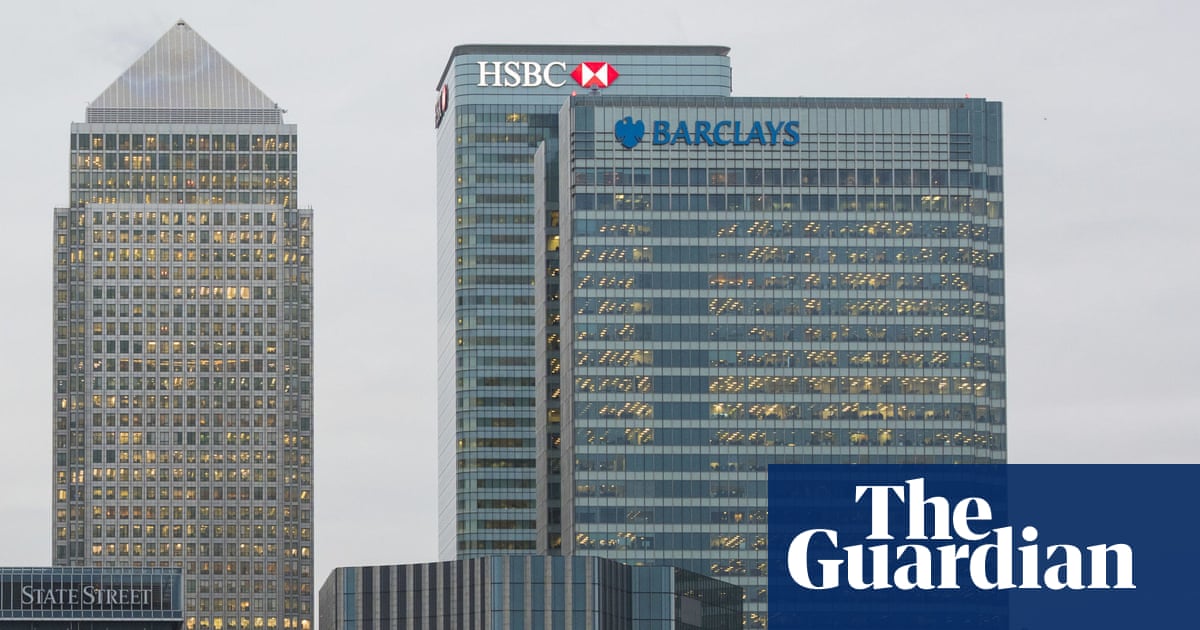
It came as fresh stress tests showed that the UK’s seven largest banks – Barclays, Lloyds Banking Group, Nationwide, NatWest, Santander UK and Standard Chartered – are strong enough to continue lending through “a severe but plausible” economic downturn.
The Bank said its proposed new capital rules were “consistent with its view that the banking sector can support long-term growth in the real economy in both current and adverse economic environments”.
It added that banks have tended to hold more capital than required, meaning that money is not used to issue loans.
“Banks should have greater certainty and confidence in using their capital resources to lend to UK households and businesses,” the Bank’s financial policy committee said.
The central bank announced it would be reviewing capital levels in June, having last assessed them in 2015. It said that, since the capital levels were last reviewed, banks had managed to continue issuing loans and mortgage despite “several macroeconomic shocks” including Covid and Russia’s full-scale invasion of Ukraine.
The chancellor, Rachel Reeves, has put extra pressure on regulators to do more to stimulate growth, having this summer gone so far as to say that rules and red tape were a “boot on the neck” of businesses and risked “choking off” innovation across the UK.
The move could stoke concerns about weakening protections against UK bank failures, as the government continues to row back on regulations introduced after the 2008 financial crisis.
Reeves appeared to subtly encourage cuts to bank capital requirements last week. In letter to the Bank’s governor, Andrew Bailey, released alongside the budget, she said she welcomed the review of bank capital requirements, adding that the process should “ensure the UK’s capital framework strikes the optimal balance to deliver resilience, growth and competitiveness”.
skip past newsletter promotion
after newsletter promotion
“The next steps in this work should identify actions that could support the supply of long-term capital for productive investment, particularly for high growth-potential firms seeking to scale up,” the chancellor’s letter added.
There will also be pressure on banks to do more to support the UK economy after they narrowly escaped higher taxes and emerged among the biggest winners of the budget.
The Bank warned over the risks of the rise in valuations of artificial intelligence companies this year, saying that this “heightens the risk of a sharp correction”.
“Equity valuations in the US are close to the most stretched they have been since the dotcom bubble, and in the UK since the global financial crisis. This heightens the risk of a sharp correction,” it said. It expressed similar concerns last month.