Category: 3. Business

  • Rate Hikes Wouldn’t Put Brakes on Japan’s Economy, BOJ’s Ueda Says

    Rate Hikes Wouldn’t Put Brakes on Japan’s Economy, BOJ’s Ueda Says

    By Megumi Fujikawa

    The Bank of Japan will thoroughly discuss the possibility of an interest-rate increase at its upcoming meeting, Gov. Kazuo Ueda said, stoking hopes that it could resume monetary tightening this year.

    The central bank will pay special attention to the outlook for wage increases, he said in a speech to business leaders Monday in Nagoya, central Japan.

    Sticky inflation backs the case for higher rates, but as living costs rise policymakers want to see commensurate growth in wages.

    Ueda said the bank is actively collecting information regarding firms' stance toward pay increases ahead of its next policy-setting meeting scheduled for Dec. 18-19.

    At that meeting--the final one of the year--the BOJ "will consider the pros and cons of raising the policy interest rate and make decisions as appropriate," Ueda said.

    While policymakers at the central bank have signaled that a rate hike is likely in the near future, market participants and economists have been divided on when it will happen.

    Persistent inflation suggests that conditions are becoming ripe for the central bank to make a move, but some economists say Prime Minister Sanae Takaichi's preference for expansive economic policies complicates the path to monetary tightening.

    This tension, combined with lingering uncertainty over the full impact of U.S. tariffs and the need for inflation expectations to become firmly anchored, has split views on when the BOJ will act next.

    But after Ueda's remarks on Monday, markets seem to be leaning toward a December hike. The yen recovered against the dollar, reaching around 155.50 in morning trade after weakening to near 157.90 recently. The 10-year Japanese government bond yield rose to 1.850%, the highest since June 2008.

    In response to the speech, Capital Economics changed its call for a January rate hike, now expecting the BOJ to lift its policy rate to 0.75% in December.

    "If the bank does indeed raise its policy rate in a couple of weeks, we'd still expect two more rate hikes in 2026," it said in a note.

    Ueda said raising rates at an appropriate speed won't put the brakes on Japan's economy--rather, it would take the foot off the accelerator enough to achieve growth and price stability.

    Gradually adjusting interest rates "will ultimately lead to the success of the efforts undertaken by the government and the bank thus far," he said.

    Write to Megumi Fujikawa at megumi.fujikawa@wsj.com

    (END) Dow Jones Newswires

    November 30, 2025 21:20 ET (02:20 GMT)

    Copyright (c) 2025 Dow Jones & Company, Inc.

    Continue Reading

  • Real-World Usage of Nintedanib for PPF Differs From Trial Settings

    Real-World Usage of Nintedanib for PPF Differs From Trial Settings

    Real-world data on usage of the tyrosine kinase inhibitor nintedanib (Ofev; Boehringer Ingelheim) suggest there is significant dissonance between how the therapy is being used to treat non–idiopathic pulmonary fibrosis that has progressed to progressive pulmonary fibrosis (non-IPF PPF) in clinical practice and how it was used in clinical trials.1

    The report, published in BMJ Open, suggests additional research is needed to better understand how the therapy performs in real-world practice.

    Nintedanib is approved to treat IPF, chronic progressive interstitial lung diseases (ILDs) with a progressive phenotype, and systemic sclerosis-associated ILD. The study authors noted that it is the only antifibrotic approved for the treatment of non-IPF progressive pulmonary fibrosis (PPF). Yet, they explained that significant evidentiary gaps remain related to its usage in non-IPF PPF.

    “To our knowledge, there is no real-life data on the use of nintedanib in non-IPF PPF,” they explained. “Additionally, there is a lack of information regarding the combined use of antifibrotic and immunomodulatory drugs, particularly in patients with PPF in CTD-ILD (connective tissue disease-ILD).”

    The investigators examined real-world data for nintedanib usage to see how closely it aligned with usage patterns in clinical trials. They analyzed all patients who were treated for non-IPF PFF at the Hospital District of Helsinki and Uusimaa in Finland in 2022 and 2023. A total of 31 patients were identified who met inclusion criteria.

    Of those, 13 patients were diagnosed with CTD-ILD, and 10 patients were diagnosed with fibrotic idiopathic non-specific interstitial pneumonia (iNSIP). Patients in the real-world data set had forced vital capacities (FVCs) and diffusion capacities for carbon monoxide (DLCO) scores that were similar to the patients in the INBUILD clinical trial of nintedanib.

    “However, in our study, the predominant radiological pattern was fibrotic NSIP in more than half (58%) of the patients, and only 19% had a usual interstitial pneumonia (UIP) pattern,” the investigators said. “This differs markedly from the INBUILD trial, in which most patients (62.1%) had a UIP pattern.”2

    The authors also found significant differences in dosage patterns in their real-world data.1 Of the 30 patients who received nintedanib, 6 permanently stopped taking the drug due to side effects. And only half (47%) of the patients who were still taking the therapy at the end of follow-up and for whom dosage was known were taking the full dose of 150 mg twice daily. The other 10 patients for whom dosage was known were taking a reduced dose of 100 mg twice daily.

    The discontinuation rate in the study was similar to the INBUILD trial. However, the high rate of patients taking a reduced dose is notable because of the relative lack of data on the efficacy of reduced doses. The topic has not been extensively studied in randomized controlled trials, the authors noted, though there is some real-world evidence supporting its efficacy at lower doses.3

    The authors said, however, that the biggest difference between their patient cohort and the patients in the INBUILD trial has to do with the use of immunomodulatory treatments.1 In the INBUILD trial, patients who were treated with one of several immunomodulatory therapies were excluded. In the real-world data set, 87% of patients were taking immunomodulatory drugs.

    The investigators added that the relatively high rate of discontinuation they saw underscores the need for additional treatment options for patients with non-IPF PPF. They noted that in patients with IPF, the availability of pirfenidone gives clinicians and patients an alternative in cases where side effects or progression occur.

    The findings were limited by the small sample size and the fact that all of the patients were treated in the same health care system, the authors noted, and therefore they may not be generalizable to all populations. They said the significant differences they saw between real-world usage and clinical trials show that more studies are warranted.

    References

    1. Renner A, Vertanen E, Sutinen E, Ainola M, Myllärniemi M, Hollmén M. Characterisation of patients with antifibrotic-treated non-idiopathic pulmonary fibrosis progressive pulmonary fibrosis: a retrospective real-life study. BMJ Open. 2025;15(11):e097246. doi:10.1136/bmjopen-2024-097246
    2. Flaherty KR, Cottin V, Devaraj A, et al. Nintedanib in progressive fibrosing interstitial lung diseases. N Engl J Med. 2019;381(18):1718-1727. doi:10.1056/NEJMoa1908681.
    3. Porse S, Hoyer N, Shaker SB. Impact of reduction in antifibrotic treatment on mortality in idiopathic pulmonary fibrosis. Respir Med. 2022;204:107015. doi:10.1016/j.rmed.2022.107015

    Continue Reading

  • Send Legal Letters To Insurers Over Denials, Oncologist Tells Patients

    Send Legal Letters To Insurers Over Denials, Oncologist Tells Patients

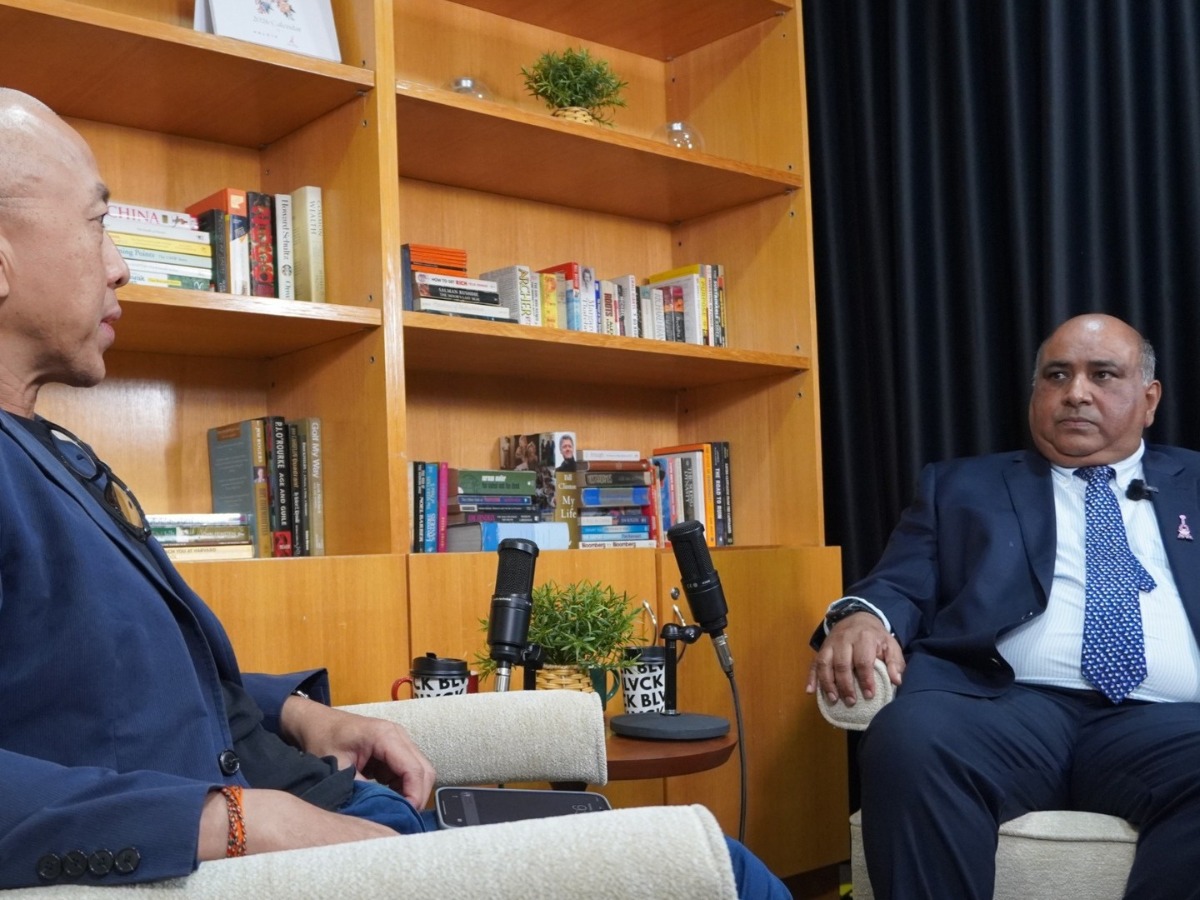
    KUALA LUMPUR, Dec 1 — A senior oncologist has advised patients to get lawyers to send letters to insurance companies that deny their medical claims, without necessarily going to court.

    Dr Mohamed Ibrahim A. Wahid, a senior consultant clinical oncologist who has been in practice for more than three decades, said he has suggested to some patients to consult lawyers when coverage was denied over what he believed to be a “gray area”.

    “I have seen patients who go to a lawyer and all the lawyer has to do – no need to take them to court – is to write a letter to the insurance,” Dr Ibrahim told the Do More – Today financial podcast hosted by Khoo Hsu Chuang that aired last November 18.

    “‘Why did you deny? On what account did you deny? Where in your policy says you will not pay for this?’

    “The whole thing flips.”

    “Oh, so they’re deathly afraid of lawsuits?” Khoo remarked. “Fantastic.”

    Dr Ibrahim, who is former president of the Malaysian Oncological Society, pointed out that even if insurance companies decided to go to court to defend claims denials, the industry might have difficulty recruiting specialist doctors as expert witnesses.

    “I think none of the specialists will sit down and represent them. Certainly my own oncology society, we’re not going to help defend. They will defend the patients; they will not defend the insurance industry.”

    The senior oncologist advised the general public to discuss claims denials with lawyers, who would be able to interpret their health insurance policies and decide whether denials should be challenged.

    “And when it comes to a challenge, most of the specialists, certainly the oncologists, will be protecting their backs – they will help patients.”

    Raja Eileen Soraya Raja Aman, a management partner at Raja, Darryl & Loh, previously said patients could take insurers and takaful operators (ITOs) or third-party administrators (TPAs) to court for health insurance denials or delays.

    RM1 Million Policy, RM130 Monthly Oral Cancer Therapy Denied

    During the Do More – Today podcast, Khoo noted that some people take up medical plans with RM1 million coverage limits, expecting to be covered for any contingency.

    “But when the crunch time comes and they go through the process with the hospital, they’re then denied coverage,” said Khoo. “Is that what you’re saying?”

    Dr Ibrahim affirmed it. “When it comes to claims, there are a lot of little hidden phrases in the insurance clause that you signed. You’re not aware of the limits to the RM1 million [policy] that you can claim, how much, and what they will pay or what they will not pay.”

    The oncologist cited, as an example, hormone tablets that breast cancer patients need to take, sometimes up to 10 years, which he said was part of the standard of care.

    However, he noted that insurers often refuse to cover such oral therapy that costs RM130 per month, paying only for surgery or chemotherapy for breast cancer. RM130 monthly over 10 years is equivalent to RM15,600, just a fraction of RM1 million.

    “But the problem is, if you don’t pay for that, there’s a high chance that your cancer might come back,” said Dr Ibrahim. “It’s not maintenance treatment; it is part and parcel of ongoing cancer treatment.”

    He likened it to taking medication for diabetes. “When you stop taking your tablets, your diabetes will come back and your blood sugar will shoot up.”

    Dr Ibrahim said he has had patients complaining to him about how their insurers deny RM130 claims, despite having an RM1 million medical plan. These patients are then forced to be referred to government hospitals because they can’t afford to pay out of pocket.

    “The responsibility shifts from insurance who are supposed to provide that cover, and you still have that amount of coverage, but that cost now has to be borne by the Ministry of Health.

    “Ministry of Health hospitals are already burdened with lots and lots of patients,” he noted. “Why should the government take the responsibility that belongs to the insurance company?”

    Khoo said his sources have told him that most claims denials come from “big players” that control about 20 per cent of the insurance industry.

    The financial journalist added that he personally raised his medical insurance cover to over RM1 million earlier this year to reach a certain comfort level. “Clearly, that peace of mind is not really a real peace.”

    Patients Allegedly Reimbursed 50% After Tribunal Determines Wrongful Claims Denial

    Dr Ibrahim and Khoo also discussed regulatory gray zones in health insurance. Khoo noted that Bank Negara Malaysia (BNM) is a financial regulator that regulates banks and the financial services industry, which the insurance industry falls under.

    “But Bank Negara doesn’t know about medical issues,” Khoo said. “So if you’re an aggrieved customer or an aggrieved patient, where are your points of resolution?”

    Dr Ibrahim similarly said the central bank doesn’t know much about health care, whereas the MOH lacks regulatory authority over ITOs.

    “So I think there’s a huge grey area in Malaysia in terms of governance. Because of that, insurance companies are taking advantage of this grey area and they’re making their own rules and doing their own thing.”

    In a statement last October, Health director-general Dr Mahathar Abd Wahab warned ITOs and TPAs against interfering with doctors’ clinical decisions that he said might be in breach of the Private Healthcare Facilities and Services Act 1998 (Act 586).

    “They’re contravening the private health care Act if they deny patients standard-of-care treatment,” said Dr Ibrahim. “Despite coming up with such a circular, nothing has changed.”

    Citing public disclosures by insurance companies, Khoo noted that some of the biggest houses are “literally making billions of ringgit”.

    “I’ve done the research, I’ve spoken to many insurers, and they’re literally making at least a few hundred million, if not a few billion ringgit,” said the financial journalist.

    BNM recently reactivated its Grievance Mechanism Committee (GMC) to resolve disputes between health care providers and ITOs, with the GMC holding its first meeting last November 10. There is also an existing Financial Markets Ombudsman Service (FMOS) that manages disputes involving insurance, among other financial services or products.

    Dr Ibrahim, however, noted that even if the tribunal found that a health insurance claim was wrongly denied, the ITO would merely be instructed to reimburse the claim, which he described as a “slap on the wrist”. Even then, some of his patients allegedly received only 50 per cent reimbursement instead of the full amount.

    “I would like to see them [ITOs] get penalised – pay a summons of maybe 10 times the value to the government as a penalty,” said the oncologist. “Once you start penalising these people, this nonsense will stop.”

    Malaysia Among Cheapest For Health Care In Southeast Asia

    Dr Ibrahim said despite the rise in private health care costs over the past few decades, Malaysia remained one of the cheapest countries in Southeast Asia for health care, illustrated by Malaysia’s medical tourism.

    “We’re a lot cheaper than our neighbouring countries,” said the oncologist.

    “To do a PET scan in Indonesia costs RM5,000 to RM6,000, but in Malaysia, it costs RM2,300.”

    Comparing his experience working in the United Kingdom and the United States, Dr Ibrahim said, “I’m proud to say the Malaysian health care system is one of the best in the world.”

    Medical equipment and treatment in Malaysia are at par, if not better than other countries.

    “I don’t want the health care industry to be destroyed by false accusations of, you know, private hospitals charging so much,” said Dr Ibrahim, stressing that treatment costs have gone up, in line with the rising prices of food and other goods.

    The oncologist maintained that the problem was with health insurance denials, despite companies promising protection with RM1 million annual coverage.

    “But when the claim comes, you cannot claim for this, you cannot claim for that.”

    Continue Reading

  • Hong Kong stablecoin stocks slump after PBOC vows cryptocurrency crackdown – Reuters

    1. Hong Kong stablecoin stocks slump after PBOC vows cryptocurrency crackdown  Reuters
    2. China’s central bank vows crackdown on virtual currency, flags stablecoin concerns  Reuters
    3. China Making Plans to Crack Down on Crypto Payments and Stablecoins  Yahoo Finance
    4. Beijing Business Daily: Cryptocurrency traders flock to social media platforms  Bitget
    5. China Central Bank Crackdown on Virtual Currency, Flags Stablecoins  Dawan Africa

    Continue Reading

  • BOJ to consider 'pros and cons' of rate increase at December meeting, Ueda says – Reuters

    1. BOJ to consider ‘pros and cons’ of rate increase at December meeting, Ueda says  Reuters
    2. Japan amid monetary and fiscal shift – will the yen regain strength?  marketpulse.com
    3. Asia-Pacific stocks trade mixed as Tokyo inflation runs hotter than expected  CNBC
    4. BoJ’s Ueda says will raise rates if prices, economy move as forecast  FXStreet
    5. Asian Stock Markets Show Mixed Performance…  jordannews.jo

    Continue Reading

  • Ireland’s manufacturing sector activity expands again in November

    (Alliance News) – Ireland’s manufacturing activity expanded in November, with firms also expressing an optimistic outlook for the next year, S&P Global reported Monday.

    The AIB Ireland manufacturing purchasing managers’ index rose to 52.8 in November, up from 50.9 in October.

    A reading above the 50.0 neutral mark indicates an overall increase in business activity from the previous month, while a reading below signals a contraction.

    David McNamara, AIB chief economist, said: “The improvement in manufacturing conditions in November was driven by strong gains in current output and new orders…Output saw renewed growth in November, with respondents citing stronger demand conditions. This was also reflected in a first rise in export orders in four months.”

    Despite this, S&P Global reported that hiring activity in Ireland’s manufacturing sector “broadly halted” during November with the increase in hiring activity at the weakest level seen over the past 12-month period of growth.

    Furthermore, price increases were prevalent as producers faced greater cost pressures.

    Looking ahead, business confidence in the sector strengthened to an 11-month high, with optimism stemming from an anticipated improvement in sales and new contacts over the coming year.

    S&P Global compiles the PMI each month using survey responses from a panel of around 250 manufacturers.

    By Elijah Dale, Alliance News senior reporter Asia-Pacific

    Comments and questions to newsroom@alliancenews.com

    Copyright 2025 Alliance News Ltd. All Rights Reserved.

    Continue Reading

  • Dollar braces for crucial December with Fed meeting, Powell's successor pick – Reuters

    1. Dollar braces for crucial December with Fed meeting, Powell’s successor pick  Reuters
    2. Dollar set for worst week since July  Business Recorder
    3. FX Today: Focus shifts to inflation data in Japan and Germany  FXStreet
    4. US Dollar Forecast: DXY Declines on Rising Expectations of a December Fed Rate Cut  FXEmpire
    5. US Dollar Trades Quietly but Headed for Worst Week Since July  Investing.com

    Continue Reading

  • Assessing Revolve Group After a 9.3% Rally and Shifting Consumer Spending Trends

    Assessing Revolve Group After a 9.3% Rally and Shifting Consumer Spending Trends

    • Wondering if Revolve Group stock is a bargain or if there is more risk than reward? Let’s dig into what has been happening and what it might mean for value-focused investors.

    • Shares have rebounded nearly 9.3% over the last month, but are still down 28.0% year-to-date and 33.0% over the past year. This signals both volatility and renewed investor interest.

    • In recent weeks, headlines have highlighted shifting consumer spending trends and evolving online shopping habits. Both of these factors have contributed to the stock’s recent upswing. Expanding influencer partnerships and speculation over retail sector consolidation have also kept Revolve Group in the spotlight.

    • If you are looking at valuation, the company currently scores 0 out of 6 on our valuation checklist. There is plenty to unpack about the methods behind that result. Stick around as we break down different valuation approaches and reveal an even better way to get the full picture at the end.

    Revolve Group scores just 0/6 on our valuation checks. See what other red flags we found in the full valuation breakdown.

    A Discounted Cash Flow (DCF) model calculates a company’s intrinsic value by projecting its future cash flows and discounting them back to today’s value. This helps investors estimate what the business is truly worth right now, based on its expected ability to generate cash in the future.

    For Revolve Group, current Free Cash Flow is $66.6 million. Analysts forecast Free Cash Flow to be $62.05 million by 2026, and Simply Wall St projects values out to 2035, primarily extrapolating from available data after 2029. Over the next decade, the company’s cash flows are expected to stay within a tight range, hovering just above $60 million annually.

    Using this 2 Stage Free Cash Flow to Equity model, the estimated intrinsic share value comes to $14.70. Compared to the current market price, this suggests the stock is about 64.5 percent overvalued.

    Result: OVERVALUED

    Our Discounted Cash Flow (DCF) analysis suggests Revolve Group may be overvalued by 64.5%. Discover 914 undervalued stocks or create your own screener to find better value opportunities.

    RVLV Discounted Cash Flow as at Dec 2025

    Head to the Valuation section of our Company Report for more details on how we arrive at this Fair Value for Revolve Group.

    The Price-to-Earnings (PE) ratio is often the go-to valuation metric for companies that are consistently profitable, like Revolve Group. It offers a quick way to gauge how much investors are willing to pay for each dollar of earnings. This is especially useful for businesses with a steady track record of profitability.

    Growth expectations and overall risk play big roles in what is considered a “fair” PE ratio. If a company is growing quickly or taking less risk to generate strong profits, investors generally accept a higher PE. In contrast, for slower-growing or riskier companies, the fair multiple is typically lower.

    Currently, Revolve Group trades at a PE ratio of 31.07x. This is well above both the Specialty Retail industry average of 18.03x and the peer group average of 16.10x. At first glance, this suggests the stock trades at a significant premium to its sector.

    However, Simply Wall St’s proprietary “Fair Ratio” for Revolve Group is 16.04x. The Fair Ratio is designed to be a more tailored benchmark than using generic industry or peer averages because it accounts for factors specific to Revolve Group, including its earnings growth, profit margins, risk profile, and market capitalization. This approach provides a more nuanced estimate of a reasonable valuation multiple rather than a one-size-fits-all comparison.

    Comparing the Fair Ratio of 16.04x to Revolve Group’s current PE of 31.07x indicates that the stock is trading well above what would be considered reasonable based on its fundamentals.

    Result: OVERVALUED

    NYSE:RVLV PE Ratio as at Dec 2025
    NYSE:RVLV PE Ratio as at Dec 2025

    PE ratios tell one story, but what if the real opportunity lies elsewhere? Discover 1438 companies where insiders are betting big on explosive growth.

    Earlier, we mentioned there is an even better way to understand valuation, so let’s introduce you to Narratives. A Narrative is your personal story about a company, where you connect your beliefs about Revolve Group’s future, such as revenue growth, margins, and earnings estimates, to a financial forecast and ultimately a fair value for the stock.

    Unlike traditional models or static PE ratios, Narratives allow you to quickly and clearly outline your assumptions about the business, putting numbers behind the story and comparing your estimated fair value against the current price. This approach moves beyond the numbers, helping you see not only whether the price seems reasonable, but also if it aligns with your unique expectations.

    Best of all, Narratives are easy to use and are part of Simply Wall St’s popular Community page, where millions of investors create, share, and update their views. They are dynamic and automatically refresh when new information, such as earnings or news, impacts the company, so your story always stays relevant.

    For example, some investors see international expansion and AI-powered marketing lifting earnings and set a Fair Value above $30. Others focus on margin pressures and inventory risk, resulting in a value closer to $19. Narratives help you weigh these perspectives and decide if now is the right time for your own decision.

    Do you think there’s more to the story for Revolve Group? Head over to our Community to see what others are saying!

    NYSE:RVLV Community Fair Values as at Dec 2025
    NYSE:RVLV Community Fair Values as at Dec 2025

    This article by Simply Wall St is general in nature. We provide commentary based on historical data and analyst forecasts only using an unbiased methodology and our articles are not intended to be financial advice. It does not constitute a recommendation to buy or sell any stock, and does not take account of your objectives, or your financial situation. We aim to bring you long-term focused analysis driven by fundamental data. Note that our analysis may not factor in the latest price-sensitive company announcements or qualitative material. Simply Wall St has no position in any stocks mentioned.

    Companies discussed in this article include RVLV.

    Have feedback on this article? Concerned about the content? Get in touch with us directly. Alternatively, email editorial-team@simplywallst.com

    Continue Reading

  • GovStack opens call for DPI training and challenge for govtech women leaders

    GovStack, an open-source community, has just launched an open call for the Women in GovTech challenge.  


    Themed around Digital Public Infrastructure (DPI), the challenge entails training and mentorship, collaborative design sprints, and opportunities to showcase prototypes that emerge from this challenge. 


    Currently recruiting for the third cohort, this challenge follows successful editions in 2023-24 and 2025.


    The challenge is a joint initiative by the Deutsche Gesellschaft für Internationale Zusammenarbeit (GIZ), the International Telecommunication Union (ITU), the World Bank, and the UN Office for Digital and Emerging Technologies (UN ODET), with support from UNDP. 

    What it is 


    The challenge brings together women innovators and digital leaders from around the world to co-design and prototype solutions that make DPI more inclusive, people-centred, and sustainable.  


    The programme continues to grow as a platform for learning, networking, and action, helping women shape the future of GovTech through open collaboration and global exchange. 

    Programme at a glance 


    The focus this year: moving beyond design to prototyping and real-world implementation pathways, to empower women to build citizen-centric digital government services.  


    Key themes include: 

    • Partnerships include: World Bank, UN Office for Digital and Emerging Technologies (UN-ODET), UNDP, academic partner University College London (UCL) IIPP, and the Open Source Ecosystem Enabler (OSEE) initiative.  

    Why it matters 


    Digital transformation is reshaping how governments serve their citizens, but women remain underrepresented in GovTech leadership and innovation. 


    The Women in GovTech challenge aims to close this gap by supporting women-led solutions that enhance inclusion, digital trust, and accessibility in public digital systems. 


    By combining technical mentorship, peer learning, and exposure to real-world DPI challenges, the programme equips participants with the knowledge and confidence to lead change in their institutions and communities. 

    Who can apply 


    The challenge is open to women from all regions and sectors who are ready to make digital governance more inclusive. 

    • Mentees: Women working in government, private sector, civil society or academia. Background is no bar. (roles might include project coordinator, service designer, policy/legal advisor, user research specialist, solution architect, developer/tech specialist).  


    Language of delivery: English. 


    Time commitment: approx. 1.5 hours/week for lectures, + 1 hour for networking sessions (3 weeks out of 6), plus optional office hours and + 2 hours/week for assignments/group work.  

    Timelines


    • Applications open: 3 November 2025  
    • Deadline for applications: 7 December 2025  
    • Selection announcements: 14 January 2026  
    • Training/Challenge period: February – March 2026 (6-week programme)  
    • Demo Day (final prototype pitches) – end of March 2026  
    • Graduation & alumni induction: Early April 2026  

    What participants can expect to gain:


    1. Hands-on experience designing and building digital government services with a modular/ building-block approach. 

    2. Deepened understanding of DPI Safeguards (inclusion, equity, safety) and how to embed them from the start.  

    3. Opportunities to pitch functional prototypes to ecosystem partners, with potential pathways toward implementation.  

    4. Access to an international network of women practitioners and leaders in GovTech, and inclusion in the alumni network.  

    5. Certification/recognition: Participants who complete all requirements receive a certificate of completion (and all participants a certificate of participation). 

    How to get started 


    Applications for the third cohort are now open until December 7, 2025.  


    Interested participants can apply via the official website: https://govstack.global/govstackwomen-in-govtech-challenge-wigtc-2026/ 


    —————————————– 


    GovStack is a global multi-stakeholder initiative that promotes a DPI approach, empowering governments to design and implement their own scalable, interoperable, and citizen-centric digital public services using a modular architecture based on reusable digital building blocks. 


    The initiative was founded by the International Telecommunication Union (ITU), the governments of Estonia and Germany, and the Digital Impact Alliance at the United Nations Foundation in 2020. 

    Continue Reading

  • South Korea's factory activity shrinks again on weak demand, PMI shows – Reuters

    1. South Korea’s factory activity shrinks again on weak demand, PMI shows  Reuters
    2. The output of South Korea’s service sector fell to -0.6%, down from 1.8%  VT Markets
    3. Koreas industrial output posts steepest drop in nearly 6 years in October  Tribune India
    4. S. Korea: Industrial output falls in Oct on base effect of chip production  lokmattimes.com
    5. Industrial output growth in South Korea fell to -4%, disappointing projections of -0.2%  VT Markets

    Continue Reading