SEOUL, Nov 28 (Reuters) – South Korea’s LG Chem Ltd (051910.KS), opens new tab said on Friday it plans to lower its stake in subsidiary LG Energy Solution (373220.KS), opens new tab to about 70% from around 80%, in a bid to improve long-term finance and boost shareholder returns, according to a company filing.
Shares of LG Chem fell 2.9% in Seoul trading, while LG Energy Solution’s stock plunged 6%.
Sign up here.
LG Chem maintained its earlier target of offering a 30% dividend payout to shareholders in the future when the firm achieves a return-on-equity ratio of at least 10%.
President Lee Jae Myung is pushing publicly listed companies to resolve the so-called “Korea Discount”, which refers to a tendency for local companies to have lower valuations than global peers due to factors such as low dividend payouts, and the dominance of opaque conglomerates known as chaebols.
In October, LG Chem also faced a push from London-based hedge fund Palliser Capital in October, which blamed a heavy discount in stock valuation and “a lack of trust” in governance and poor capital allocation.
Reporting by Heejin Kim and Hyunjoo Jin
Editing by Ed Davies
Our Standards: The Thomson Reuters Trust Principles., opens new tab
Fujitsu today announced that it has built a platform for NSK Ltd. to support a business model that enables co-creation of value with user companies throughout the product lifecycle of bearing products. This system, which leverages Fujitsu Sustainability Value Accelerator, an offering provided through Fujitsu’s Uvance business model focused on addressing societal challenges, will collect and utilize bearing data across departments, processes, and companies throughout the entire product lifecycle, and provide services for condition monitoring and maintenance. The initiative will promote the reconditioning and reuse of bearing products, supporting NSK’s corporate philosophy of contributing to a sustainable society through global environmental conservation, and enhance corporate value.
The platform is planned for introduction to bearing product customers as a “Powered by Uvance” product. NSK is currently conducting verification with early adopters and will continuously enhance this system through these trials, aiming for full-scale operation of the platform from 2026. Fujitsu will support NSK in the deployment of this platform, expanding its reach to more users. Furthermore, Fujitsu will continue to promote the circular economy and the generation of new business opportunities through co-creation with NSK, our Uvance Partner. By leveraging reliable data integration, we will realize value co-creation that transcends individual companies and industries, ensuring traceability and environmental value assurance.
Built upon SAP Fioneer’s globally proven SAP Fioneer Cloud for Insurance [1], the new edition integrates Fujitsu’s proprietary functionalities and services tailored to the specific regulatory requirements and business practices of the Japanese insurance market. These all-in-one platform covers a comprehensive range of core insurance operations and systems such as product, policy and claim management. Offered as part of Fujitsu’s Uvance initiatives focused on the financial industry, which aim to accelerate digital transformation for financial institutions and contribute to solving societal challenges, the platform will support operational improvements for Japanese insurance companies and drive business transformation across the industry.
The platform is enhanced with Fujitsu’s unique developments, including functions, templates, and external data linkage capabilities that address specific Japanese market processes and legal regulations. As a first step, the platform will primarily feature common functions and business processes, such as language settings, along with capabilities specifically for automobile insurance, a high-demand area for both agency-based and online insurance.
Fujitsu will continue to expand the Japan Edition of SAP Fioneer Cloud for Insurance to support various types of insurance, including automobile insurance. This expansion will drive product, channel, and process transformation, as well as strengthen governance within the Japanese insurance industry.
Through the provision of financial industry-focused initiatives with Uvance, Fujitsu will help to enhance the operations of financial institutions and advance the realization of a more prosperous society.
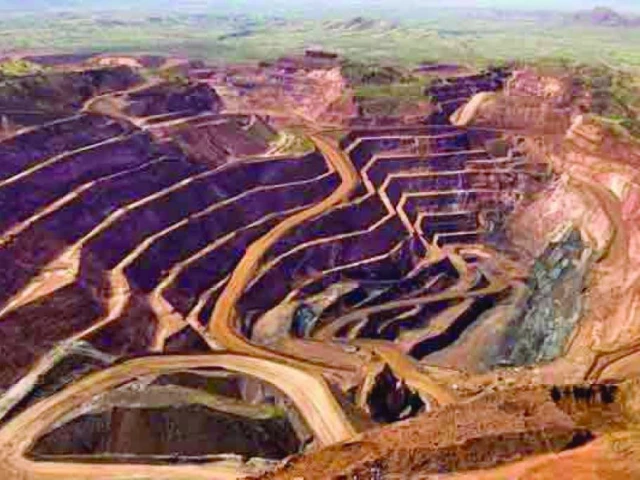
Pakistan has already chalked out a $1.9 billion funding plan to execute the Reko Diq copper and gold mining project. Total project funding has been estimated at $4.297 billion. Photo: File
ISLAMABAD:
Petroleum Minister Ali Pervaiz Malik said on Thursday that the Reko Diq Mining Company was very near to achieve financial close with $3.5 billion loans lined up, as the company’s local executive vowed to complete the $7 billion first phase of the project in the next three years.
The Reko Diq Mining Company is very close to achieving the financial close and raising $3.5 billion in debt, said Malik while speaking about prospects of Pakistan’s mining sector during a seminar organised by the Pakistan Business Council (PBC).
The minister’s statement came days after the US Export-Import (Exim) Bank board approved a $1.25 billion loan for the Reko Diq mine, as part of the US Congress’s larger plan to invest $100 billion to secure global mineral supplies.
The total cost of the project is estimated at $7.7 billion, which includes $3.5 billion in debt from 11 international banks and organisations.
Zarar Jamali, Country Manager of Reko Diq Mining Company, said that the $3.5 billion financing has been secured from 11 banks, including Japan, Canada and the United States. Jamali said that the first export shipment is targeted for the first quarter of 2029.
There have been high hopes that Reko Diq miners can solve Pakistan’s external sector problems. But the petroleum minister watered down claims of $7 trillion worth of mineral reserves in Pakistan, saying that “$7 trillion is a presumed value, as it neither has been measured nor calculated”. He cautioned against attaching so many hopes to the $7 trillion figure and said that it takes about a decade to complete one mining project.
Malik said that the government spent the past year standardising the legal, regulatory and safety regulations in the light of feedback received from foreign investors.
Pakistan has already revised upwards the cost of the first phase of the Reko Diq copper and gold mines project for the second time in six months. The cost has now jumped 79% to $7.7 billion from the initial estimate due to the higher cost of loans being taken for the project and to offset any future price shocks.
Zarar Jamali said that the first phase of construction at Reko Diq mines is going on with an estimated investment of $5.5 billion to $6 billion.
While commenting on the Barrick Company split, Jamali said that Barrick has not performed as well as other mining companies. “Barrick has given a statement that it would stay here. We have secured the financing and we are going ahead with the project,” said the local executive.
Barrick’s board has recently raised the possibility of splitting the company into two entities: one focused on North American assets and the other on assets in Africa and Asia.
Barrick’s interim chief executive officer also recently stated that the company remained committed to its Reko Diq copper project in Pakistan.
Muhammad Ali Tabba of the Lucky Group emphasised the need to set up smelting plants of copper and gold in Pakistan, brushing aside the perception that these facilities were unviable. He spoke against exporting raw materials and called for exporting only refined value-added products.
Millions of tonnes of raw material should not be exported, which will be more hazardous and involve security concerns too, said Tabba.
Ali Pervaiz Malik said that to run a smelter on a sustainable basis, there is a need for continued supplies of raw material.
Pakistan is on the verge of operationalising two mining projects – about $8 billion worth of Reko Diq and over $1.5 billion worth of Siadiq project, said Shamsuddin Sheikh, Chief Executive Officer of National Resources Limited. He said that both of these projects are expected to begin operations before the end of 2030.
Col Hamid Ashraf, Adviser to the Geological Survey of Pakistan, said that there was a need to give fiscal incentives for mining to tap the $7 trillion reserves and set a better internal rate of return on investment.
The petroleum minister said that it would be difficult to give fiscal incentives under the IMF programme. In her closing remarks, Dr Zeelaf Munir, Chairperson PBC, stated, “Pakistan’s economic future depends on resilience, reform and responsible partnership. No institution can deliver progress alone; all the stakeholders need to believe in business.”
Pedestrians walking across a crowded traffic at Shibuya crossing square in Tokyo, Japan.
Jaczhou | E+ | Getty Images
Asia-Pacific markets are set to open slightly lower on Friday as U.S. stock futures remained flat over Thanksgiving Day, with the Nasdaq Composite on track to end a seven-month winning streak.
Traders in Asia will assess key economic data from across the region, including inflation data from Tokyo, a leading indicator of where national inflation is heading. Investors will also watch India’s GDP for its fiscal second quarter, ending September, later on Friday.
Headline inflation in Tokyo for October dipped slightly to 2.7% from 2.8% the month before, while core inflation came in at 2.8%, slightly higher than the 2.7% expected by economists polled by Reuters. Core inflation in Japan strips out prices of fresh food but includes energy prices.
Australia’s S&P/ASX 200 started the day down 0.18%.
Japan’s Nikkei 225 futures pointed to a marginally weaker open for the market, with the futures contract in Chicago at 50,160 and its counterpart in Osaka at 50,080 compared to the previous close of 50,167.1
Hong Kong Hang Seng index futures were at 25,935, lower than the HSI’s last close of 25,945.93.
Overnight in the U.S., all three major indexes were little changed. Dow Jones Industrial Average futures rose just 10 points. S&P 500 futures and Nasdaq-100 futures traded just above the flatline.
Stocks are on pace for a losing month when trading resumes on Friday. A pullback in tech stocks has weighed on the major averages in November, as doubt swirled around the future profitability of AI companies.
Yet some investors are hopeful that this month’s slide will signal a year-end rally for the major averages, as they step in to buy stocks that have been unduly punished at more attractive valuations.
U.S. markets were closed Thursday for Thanksgiving Day. The stock market will close early at 1 p.m. ET on Friday.
— CNBC’s Sean Conlon and Pia Singh contributed to this report.
In Hong Kong, the government is promoting the adoption of hydrogen fuel cell vehicles to achieve net-zero emissions in the transportation sector by 2050.
—
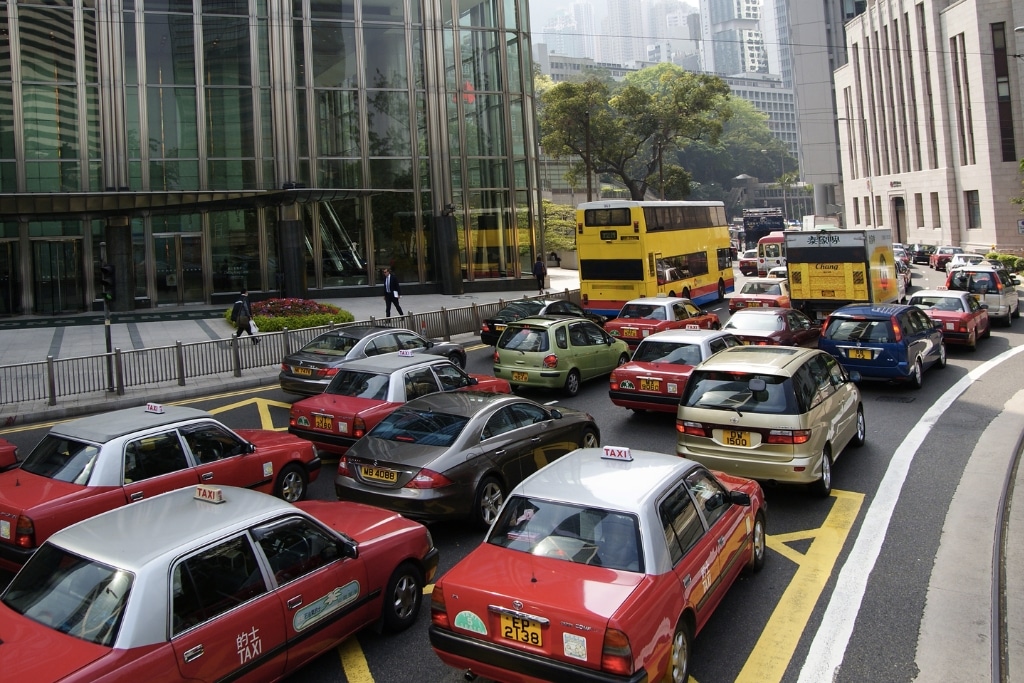
Road transport is a major source of emissions for nitrogen oxides (NOx), carbon monoxide (CO), and volatile organic compounds (VOC). During vehicle engine combustion, significant amounts of these pollutants are released, degrading air quality and contributing to ozone and particulate matter pollution.
In 2023, road transport was responsible for approximately 45% of CO emissions and about 20% of NOx and VOC emissions in Hong Kong. Additionally, vehicle engines emit carbon dioxide, a potent greenhouse gas and the leading cause of climate change. It is estimated that transportation contributes to approximately 20% of the city’s total carbon emissions.
Green transport is a key decarbonization strategy of Hong Kong’s Climate Action Plan 2050. The government has been promoting the adoption of “new energy” vehicles, such as hydrogen fuel cell (HFC) and electric vehicles (EVs), and the development of relevant supporting infrastructure. These efforts could help Hong Kong achieve its goals of reducing carbon emissions by 50% compared with the 2005 level by 2035 and reaching carbon neutrality by 2050.
As of the latest Chief Executive’s Policy Address, unveiled in September, the government is looking to promote HFC vehicle adoption in Hong Kong by establishing hydrogen standard certification, building public hydrogen filling stations, and collaborating with neighboring Guangdong Province in mainland China.
Hydrogen Energy
There are three main types of hydrogen energy: gray hydrogen, blue hydrogen, and green hydrogen.
Gray hydrogen is currently the most common and cost-effective type of hydrogen on the market. It is typically produced through steam methane reforming, using natural gas as a feedstock. During this process, methane reacts with steam and forms hydrogen and carbon dioxide. As this production method involves emitting carbon dioxide into the atmosphere, gray hydrogen is considered unsustainable.
Blue hydrogen is also produced through steam methane reforming, but with the addition of a carbon capture and storage device to offset the carbon emissions. The carbon dioxide is captured and stored deep underground to prevent its release into the atmosphere.
More on the topic: The Problem With Blue Hydrogen Energy
Green hydrogen is considered a clean energy source. It is produced by electrolysis of water using renewable energy. Throughout the process, only water and oxygen are released, with no carbon dioxide emissions.
Advantages of Hydrogen
HFC vehicles produce zero tailpipe emissions. Powered by electrochemical reactions instead of combustion, they emit only water and no carbon dioxide or other harmful air pollutants. Therefore, widespread adoption can significantly improve air quality in Hong Kong.
When using green hydrogen, HFC vehicles further help mitigate global warming and support Hong Kong’s goal of achieving net-zero emissions in the transportation sector by 2050.
HFC vehicles powered by green hydrogen also benefit businesses. While public transportation operators can reduce scope one emissions from their vehicles, other companies can cut upstream scope three emissions generated by employee commuting. As a result, these companies can enhance their reputation and attract more investment.
Supporting Policies in Hong Kong
Last June, the Hong Kong government outlined the four points of its Strategy of Hydrogen Development.
Improving Legislation
Currently, hydrogen is categorized as Class 2 dangerous goods and is not covered by the Gas Safety Ordinance, which governs the importation, manufacturing, storage, transportation, supply, and use of gas. To address this, the government introduced the Gas Safety (Amendment) Bill 2025 to the Legislative Council this year, establishing a regulatory framework for hydrogen fuel. In July, the amendment was gazetted. The government will introduce relevant subsidiary legislation to the Legislative Council in 2026. Both the amended ordinance and the subsidiary legislation will come into effect on the same day.
Secretary for Environment and Ecology, Mr Tse Chin-wan, delivers a speech at the launch event for the Strategy of Hydrogen Development in Hong Kong on June 17, 2024. Photo: GovHK.
Establishing Standards
The government has established various safety standards and technical guidelines for the industry. In 2024, the Electrical and Mechanical Services Department published guidance for conducting quantitative risk assessment of hydrogen installations and codes of practice for hydrogen-fuelled vehicles, maintenance workshops, and hydrogen filling stations. Currently, the government is working on a new code about hydrogen fuel cell power generation systems, set to be published this year.
The government also plans to establish a green hydrogen certification framework to promote green hydrogen production and consumption. The government commenced a study last year to review existing certification systems in mainland China and overseas, in order to develop a system suited to Hong Kong’s circumstances by 2027.
Aligning with the Market
In Hong Kong, hydrogen energy is predominantly applied in land transport. Therefore, the government is exploring HFC vehicle models that are suitable for Hong Kong by strengthening liaison with both mainland China and overseas manufacturers. According to its hydrogen development strategy, the government plans to build public hydrogen filling stations spanning Hong Kong Island, Kowloon, and the New Territories by 2027.
The government has also provided various financial incentives to support HFC technology development, including the New Energy Transport Fund, the Green Tech Fund, and the Environmental and Conservation Fund.
In July 2014, the government introduced a new subsidy scheme under the New Energy Transport Fund. Under this scheme, local companies can apply for subsidies to test the performance of HFC heavy vehicles and compare it with that of conventional or battery-electric heavy vehicles. The applicant can receive a maximum of HK$10 million (US$1.29 million) to cover the costs of purchasing HFC heavy vehicles and hydrogen fuel, and installing a hydrogen filling facility.
Advancing with Prudence
China is the world’s largest hydrogen producer, with an annual production output of approximately 33 million tonnes. Therefore, the Hong Kong government is facilitating technology exchange and knowledge sharing with the mainland, and says it is working closely with its hydrogen suppliers to ensure a steady supply of hydrogen to the city.
Green group Friends of the Earth supported the plan, saying last year that the government “must seize the opportunity to strengthen cooperation with the mainland in hydrogen development, leverage the country’s industrial base and policy support, and jointly promote hydrogen innovation.”
H2 Solution, a company that focuses on research and development and industrialization of hydrogen energy and HFC technology, has signed more than 10 agreements with Hong Kong operators for cross-border HFC transport, said the company’s consultant, Zion Lee Sheung-yuk, according to the South China Morning Post.
Qian Wei, founder of Hong Kong-based H2 Solution, suggests Hong Kong can utilize cheaper hydrogen and refueling infrastructure in Foshan – a Chinese province north of Hong Kong – to boost the hydrogen economy.
“Since starting commercial adoption of hydrogen in 2019, Foshan has learned some valuable lessons,” Qian told the South China Morning Post.
However, the economic feasibility of this operation needs to be worked out, according to the Civic Exchange. Lawrence Lu, executive director of the public policy think tank, said that although trucks can refuel with cheap hydrogen in Foshan, extra time and fuel cost are incurred. Therefore, the feasibility will depend on whether there is substantial transport demand for goods originating from Foshan.
Trial Projects Underway
As of September, there are 28 hydrogen trial projects in Hong Kong.
Sinopec, a Chinese oil and gas company, completed the city’s first public hydrogen refueling station last November. The station can provide a daily capacity of 1,000 kilograms of hydrogen for a variety of transportation and operational vehicles, including buses, sanitation vehicles, passenger cars, and engineering vehicles.
Citybus, a major bus operator in Hong Kong, has launched projects to develop hydrogen energy. In 2022, the company purchased the world’s first tri-axle hydrogen double-deck bus, and in 2023, it completed Hong Kong’s first hydrogen refueling station. After testing and training, the first hydrogen-powered bus started serving customers last year. Committed to having a fully zero-emission bus fleet by 2045, Citybus has stopped purchasing diesel buses and plans to slowly replace them with hydrogen and electric buses.
The Food and Environmental Hygiene Department has also deployed three HFC street-washing vehicles. Rachel Li, an engineer from the Electrical and Mechanical Services Department, pointed out that HFC vehicles require fewer and smaller batteries than pure electric vehicles, thereby reducing future battery disposal concerns. “Hydrogen energy, therefore, has significant potential for wider use in heavy-duty vehicles,” Li said.
Other ongoing trial projects include HFC goods vehicles for local and cross-boundary transport, HFC coaches for shuttle services, HFC heavy vehicles for refuse collection, and an HFC minibus for passenger services.
Challenges
Despite various policy supports, HFC vehicles are currently facing high costs and a lack of refueling infrastructure.
In June 2024, Hong Kong’s Secretary for Environment and Ecology Tse Chin-wan said that the city would adopt hydrogen where it would be cost-effective.
“The cost of hydrogen is quite expensive, much more so than other fuels that we use now,” he said, admitting that mass adoption of hydrogen as an energy source was still “a considerable distance away.”
He added that achieving carbon neutrality would require the adoption of green hydrogen.
Currently, approximately 95% of the world’s hydrogen is produced as gray hydrogen. Producing green hydrogen remains expensive due to the high capital costs and limited market scale. While the cost of using gray hydrogen is double that of using diesel, the cost of using green hydrogen is still two to three times more expensive than gray hydrogen.
What’s more, the city needs adequate ancillary facilities, such as hydrogen production and storage facilities, hydrogen refueling stations, and maintenance facilities. A complete supply network can attract the public and businesses to use HFC vehicles. However, developing these facilities requires long-term planning and investment.
Currently, the government provides subsidies for operators purchasing electric taxis and buses through the New Energy Transport Fund. However, no such subsidy is available for purchasing HFC vehicles – the current support is limited to trial projects. As businesses prioritize profit maximization and cost minimization, they have little incentive to develop HFC vehicles under high operating costs.
Take the franchised bus sector as an example. Citybus currently operates just one HFC bus, while another major operator, Kowloon Motor Bus (KMB), has no plans to adopt HFC buses. Instead, KMB is developing electric buses, which have relatively more mature technology and abundant supporting infrastructure at this stage.
Hydrogen fuel cell-powered double-deck bus in Hong Kong. Photo: Citybus.
Research suggests that Hong Kong will fail to achieve carbon neutrality in the public transport sector by 2050 without targeted government intervention, such as providing purchasing and fuel subsidies for HFC buses. In 2050, the projected market shares of hydrogen, electric, and diesel buses will be 34%, 32%, and 34% respectively.
Due to the lack of refueling infrastructure, the study, published in 2023, shows that operating costs for HFC buses will remain higher than those for electric and diesel buses until 2035. Therefore, it is predicted that bus companies will be more likely to select electric buses before 2044.
To address this issue efficiently, researchers proposed that the government provide a higher long-term purchase subsidy, develop refueling stations, and enhance public awareness at the same time. The measures will accelerate the development of HFC buses and enable the transport sector to achieve net-zero emissions by 2050.
This story is funded by readers like you
Our non-profit newsroom provides climate coverage free of charge and advertising. Your one-off or monthly donations play a crucial role in supporting our operations, expanding our reach, and maintaining our editorial independence.
About EO | Mission Statement | Impact & Reach | Write for us