Simply sign up to the Financial services myFT Digest — delivered directly to your inbox.
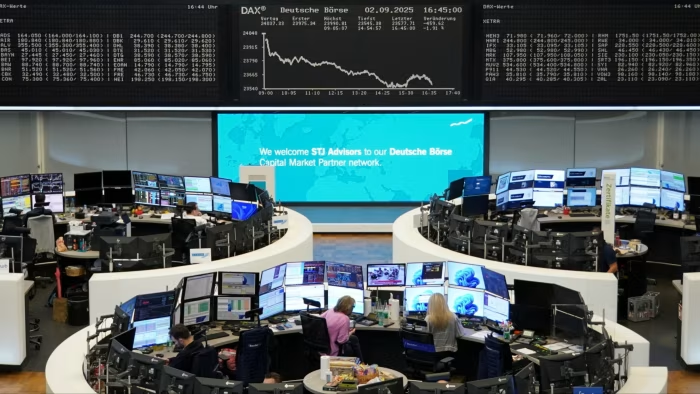
Deutsche Börse has launched a bid to buy private equity-backed fund platform Allfunds for €5.3bn, as the German exchange group seeks to expand.
Deutsche Börse said on Thursday it had entered into exclusive discussions with Allfunds regarding a potential acquisition, saying a deal would “reduce fragmentation in the European investment fund industry and create a harmonised business with global reach”.
Amsterdam-listed Allfunds currently has a market capitalisation of €4.9bn and is backed by investors including US private equity firm Hellman & Friedman, which has previously explored a sale of the company. Deutsche Börse’s rival Euronext sought to buy the fund company in 2023 for €5.5bn, but dropped the bid.
A takeover would pave the way for an exit by Hellman & Friedman, which acquired Allfunds in a €1.8bn deal in 2017 before taking it public in 2021. Between them, the private equity group and Singaporean sovereign wealth investor GIC own about 35 per cent of the company’s shares.
An agreement would be the latest in a string of liquidity events for Hellman & Friedman, which last month pulled off one of the largest European initial public offerings of recent years when it took security services company Verisure public in Stockholm at a €13.7bn valuation.
Deutsche Börse is offering €8.80 per share for Allfunds, a roughly 8 per cent premium to the company’s closing share price on Thursday. Shares in Allfunds closed 22 per cent higher, after Bloomberg earlier reported the potential deal.
Deutsche Börse runs the Frankfurt stock exchange as well as derivatives exchange Eurex. A deal for Allfunds would mark its biggest acquisition in recent years, after the German group’s purchase of software company SimCorp for €3.9bn in 2023.
Allfunds helps connect fund management products with investors, charging buyers to access its platform and charging sellers to offer their products such as exchange-traded and mutual funds. It has more than €1.7tn in assets under administration and works with thousands of fund groups.
Deutsche Börse said a deal would expand its fund services arm, and would “significantly benefit” EU equity markets, adding that it strongly believes that “a prospering funds industry [is] essential to the EU’s status as a globally relevant financial centre”. European policymakers have for years tried to encourage more investment in the bloc.
Under the terms of the proposed deal, Deutsche Börse said Allfunds shareholders would also be entitled to dividends of up to €0.20 per Allfunds share for the financial year 2026 and €0.10 per share per quarter in 2027.
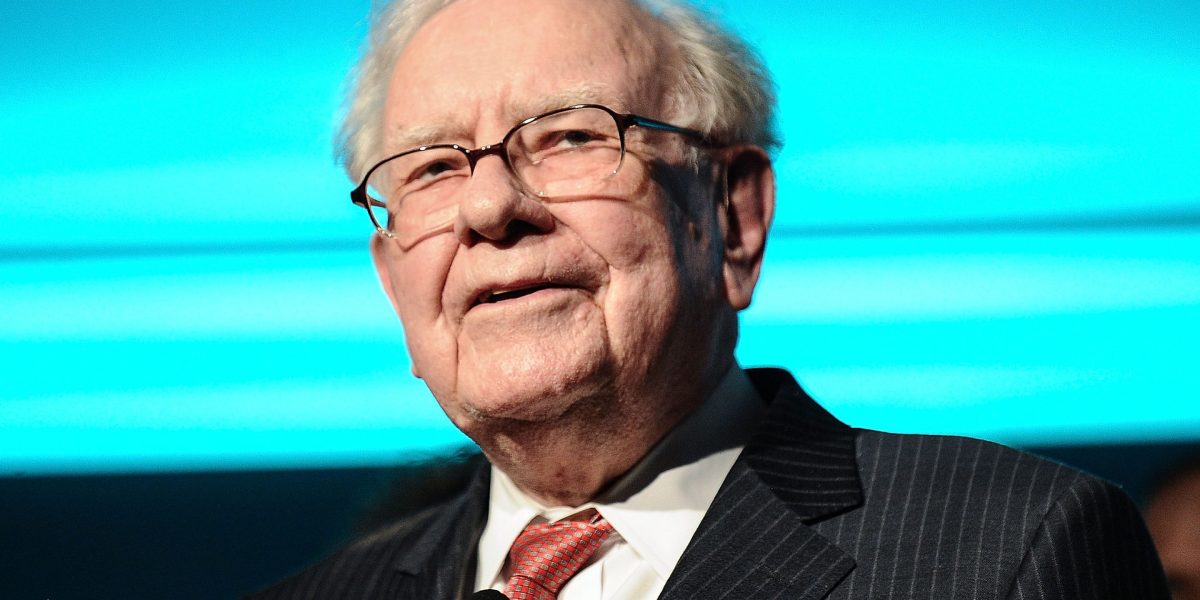
Warren Buffett has officially signaled the end of an era. In a move that marks the closing chapter of his historic tenure, the 95-year-old Oracle of Omaha released a letter to Berkshire Hathaway shareholders earlier this month that outlines his departure as CEO and the cessation of his legendary annual reports. While families across the country gather for turkey and gratitude today, the investment world is digesting a different kind of serving: the definitive “going quiet” of its most celebrated figure.
Buffett’s letter, dated November 10, confirms that his longtime lieutenant, Greg Abel, will assume the role of CEO at year-end. But the most poignant shift is in Buffett’s communication. For decades, his annual shareholder letters have been scripture for investors—a mix of folksy wisdom, financial acuity, and candor. Now, he says, that tradition is over.
“I will no longer be writing Berkshire’s annual report or talking endlessly at the annual meeting,” Buffett wrote in the letter. “As the British would say, I’m ‘going quiet.’ Sort of.”
This “sort of” is classic Buffett misdirection. While he is stepping back from the grueling demands of running the $1 trillion conglomerate, he intends to keep a singular line of communication open. “I will continue talking to you and my children about Berkshire via my annual Thanksgiving message,” he assured shareholders. “Berkshire’s individual shareholders are a very special group who are unusually generous in sharing their gains with others less fortunate. I enjoy the chance to keep in touch with you.”
The letter was accompanied by a tangible act of that generosity. Buffett converted 1,800 Class A shares into 2.7 million Class B shares—valued at approximately $1.35 billion—donating them immediately to four family foundations: The Susan Thompson Buffett Foundation, The Sherwood Foundation, The Howard G. Buffett Foundation, and the NoVo Foundation. This continues his lifetime pledge to distribute 99% of his net worth to philanthropy.
Buffett used the missive to heap praise on his successor, ensuring investors that the company remains in steady hands. “Greg Abel will become the boss at yearend,” Buffett wrote. “He is a great manager, a tireless worker and an honest communicator. Wish him an extended tenure.”
But the letter was also deeply personal, reflecting on his 64-year friendship with the late Charlie Munger and the serendipity of his life in Nebraska. He asked readers to “Indulge me this year as I first reminisce a bit,” attributing much of his fortune to the “magic ingredient in Omaha’s water” and the sheer luck of being born in America.
For the business community, the letter serves as a final navigational chart from a man who has steered capital through seven decades of market turbulence. His message remains consistent: bet on America, trust in compounding, and acknowledge your mistakes.
“You will never be perfect, but you can always be better,” he said.
As Greg Abel prepares to take the helm, the silence from Omaha will be louder than usual this coming spring. There will be no sprawling annual manifesto to dissect, no marathon Q&A sessions to parse for hidden meaning. Instead, we are left with this Thanksgiving dispatch—a final, gentle reminder from the world’s greatest investor that while money is important, the time we have to give it away is the only asset that truly depreciates.
You can read Buffett’s final letter to shareholders in full below.
Warren Buffett’s Thanksgiving Letter 2025 by FOX Business
Earlier today, the Council of the European Union (EU) and European Parliament announced a provisional political agreement on the EU payments package. While the final texts of the third Payment Services Directive (PSD3) and the Payment Services Regulation (PSR) are not yet available, press releases indicate that negotiations centered on three key areas: fraud prevention, transparency, and open banking.
Regarding fraud prevention, the new framework will introduce obligations for payment service providers (PSPs) to share fraud-related information, verify IBAN details against account holder names before executing transactions, apply strong customer authentication in additional scenarios and offer spending limits. Non-compliance will trigger PSP liability, including in cases of spoofing where fraudsters impersonate PSP employees. Online platforms will also face liability if they fail to remove fraudulent content that results in payment fraud, and advisers offering financial services via such platforms will have to demonstrate appropriate licensing.
Regarding transparency, customers will have to receive additional pre-payment information, including on currency conversion charges.
Finally, to improve competition, access to payment account data will be further facilitated for open banking providers. In addition, PSPs will be required to offer customers a dashboard to monitor and manage these third-party data access permissions.
Formal adoption will follow finalisation of separate technical discussions on the texts of the PSD3 and the PSR, with exact implementation timelines yet to be confirmed.
For more details, see the official press releases from the Council of the EU and European Parliament.
Dr Lars Immisch has been a member of the Management Board of HENSOLDT AG since 1 October 2022. In addition to his responsibility for human resources, he was also responsible for sustainability and facility management. During his tenure, he has played a key role in shaping the further development of the management and corporate culture and has established modern HR processes and tools as part of the company’s strategic transformation. He has played a key role in the company’s strong growth during this period with targeted recruiting and prudent initiatives to integrate a large number of new employees.
Under his leadership, sustainability reporting in accordance with CSRD was also successfully introduced. Facility management also gained in importance under his responsibility – in particular through numerous projects for the expansion and new construction of locations as part of the strategic axis ‘Deliver at Scale’.
‘Lars Immisch provided decisive impetus during a period of profound change,’ said Reiner Winkler, Chairman of the Supervisory Board of HENSOLDT AG. ‘With great commitment, he has created structures that will strengthen HENSOLDT in the long term – in terms of management culture as well as sustainability and modern working practices. On behalf of the entire Supervisory Board, I would like to thank him very much for his passion, his humanity and his tireless dedication, and wish him all the best for the future.’
Oliver Dörre, CEO of HENSOLDT AG, also praised the collaboration: “With his heart, energy and empathy, Lars Immisch has contributed to HENSOLDT being perceived today as a modern, attractive and responsible technology company. His work on the strategic axis “Lead our Team into the Future” and his commitment to sustainability and the further development of our locations have left a lasting mark. I would like to thank Lars personally and on behalf of the entire Executive Board for his trusting and inspiring collaboration and wish him all the best for the future.”
Wondering if LVMH Moët Hennessy Louis Vuitton Société Européenne’s luxury pedigree is reflected in its current stock price? You are definitely not alone. Figuring out if the shares are a steal or priced for perfection is a hot topic.
LVMH’s stock has shown resilience, gaining 2.6% over the last week and 2.3% over the past month, even though the year-to-date performance is slightly down by 1.6%.
Recent headlines have focused on shifts in luxury sector sentiment and ongoing changes in global consumer demand. News about LVMH’s strategic initiatives and acquisitions has added fuel to investor discussions, making the latest price moves especially intriguing.
Its valuation score currently stands at 2 out of 6. This sparks a deeper look into whether the company offers fair value. Let’s break down traditional valuation methods first. There is also a smarter way to gauge true value coming up at the end.
LVMH Moët Hennessy – Louis Vuitton Société Européenne scores just 2/6 on our valuation checks. See what other red flags we found in the full valuation breakdown.
A Discounted Cash Flow (DCF) model estimates a company’s worth by projecting its future cash flows and then discounting them back to today’s values. This approach helps investors gauge whether the current market price reflects the underlying financial performance and growth potential.
For LVMH, the model uses the most recent Free Cash Flow, which stands at €13.3 billion. Analyst forecasts provide projections for the next five years, with Simply Wall St extrapolating further growth out to 2035. By 2029, Free Cash Flow is expected to be around €12.8 billion, with longer-term projections tapering slightly as growth rates normalize.
Based on these cash flows and applying a 2 Stage Free Cash Flow to Equity model, the estimated intrinsic value per share comes in at €364.01. Comparing this to the current share price, the analysis implies the stock is trading at a 71.8% premium to its fair value, meaning the shares appear significantly overvalued according to this method.
Result: OVERVALUED
Our Discounted Cash Flow (DCF) analysis suggests LVMH Moët Hennessy – Louis Vuitton Société Européenne may be overvalued by 71.8%. Discover 927 undervalued stocks or create your own screener to find better value opportunities.
MC Discounted Cash Flow as at Nov 2025
Head to the Valuation section of our Company Report for more details on how we arrive at this Fair Value for LVMH Moët Hennessy – Louis Vuitton Société Européenne.
For profitable companies like LVMH Moët Hennessy Louis Vuitton Société Européenne, the price-to-earnings (PE) ratio is a widely accepted valuation metric. It compares the company’s share price to its earnings per share, offering a snapshot of how the market values those profits. A higher PE ratio can signal strong growth expectations or lower perceived risks, while a lower PE might suggest more modest prospects or elevated uncertainty.
LVMH currently trades at a PE ratio of 28.3x. To put this in context, the average PE for the luxury industry stands at 17.5x, while LVMH’s direct peers average a higher 37.9x. These benchmarks help set the stage, but they do not capture company-specific nuances like future growth, risk profile, or competitive advantages.
This is where Simply Wall St’s proprietary “Fair Ratio” comes in. The Fair Ratio for LVMH, which blends expectations for earnings growth, market cap, profit margins, industry factors, and risk level, is calculated at 33.1x. This tailored measure provides a more nuanced gauge of what would be a reasonable PE for LVMH today, going beyond broad industry or peer analogies by including all the company’s relevant fundamentals and outlooks.
Comparing LVMH’s actual PE of 28.3x with its Fair Ratio of 33.1x shows the stock is being valued slightly below what would be considered fully fair according to the analysis. While not dramatically underpriced, LVMH’s shares look about right compared to where one would expect, given all the company- and sector-specific factors.
Result: ABOUT RIGHT
ENXTPA:MC PE Ratio as at Nov 2025
PE ratios tell one story, but what if the real opportunity lies elsewhere? Discover 1433 companies where insiders are betting big on explosive growth.
Earlier we mentioned that there is an even better way to understand valuation, so let’s introduce you to Narratives. A Narrative is simply your personal story or perspective about a company, tying together what you believe about its future prospects, growth rates, earnings potential, and margins. Narratives connect the story behind LVMH to a concrete financial forecast and an estimated fair value, giving context to the numbers and making valuation more meaningful.
These Narratives are available to use on Simply Wall St’s Community page, where millions of investors create, share, and update their views as new information becomes available. Narratives make investment decisions easier by letting you see how your Fair Value compares to the current Price, helping you decide if now is the time to buy or sell.
Best of all, Narratives dynamically adapt to new headlines or earnings reports, so your investment thesis always stays current. For example, some investors may set their fair value for LVMH as high as €720 based on optimism about luxury sector recovery and brand strength, while others might be more cautious, valuing it closer to €434 due to global risks and margin pressures.
Do you think there’s more to the story for LVMH Moët Hennessy – Louis Vuitton Société Européenne? Head over to our Community to see what others are saying!
ENXTPA:MC Community Fair Values as at Nov 2025
This article by Simply Wall St is general in nature. We provide commentary based on historical data and analyst forecasts only using an unbiased methodology and our articles are not intended to be financial advice. It does not constitute a recommendation to buy or sell any stock, and does not take account of your objectives, or your financial situation. We aim to bring you long-term focused analysis driven by fundamental data. Note that our analysis may not factor in the latest price-sensitive company announcements or qualitative material. Simply Wall St has no position in any stocks mentioned.
Companies discussed in this article include MC.PA.
Have feedback on this article? Concerned about the content? Get in touch with us directly. Alternatively, email editorial-team@simplywallst.com
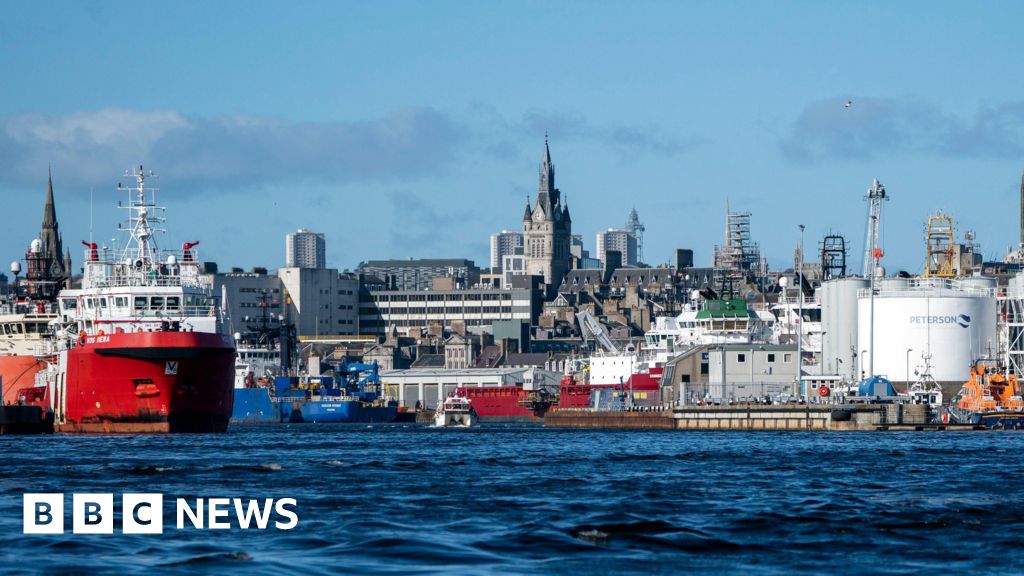
The city and port of Aberdeen are tied into the North Sea oil and gas industry
Aberdeen is an oil and gas city and has been for more than 50 years.
The city’s port is filled with the busy traffic which services the North Sea industry. The skies above buzz with the helicopters which dart back and forth between the city’s airport and the near 300 platforms which sit in the UK’s waters.
The industry serving those is huge and covers all sectors from cutting edge technology through engineering and logistics to those firms which feed and water the workers offshore.
An estimated 200,000 jobs rely on what happens in the waters of the North Sea. That includes those who work in Aberdeen’s pubs and hotels and even those who drive its taxis.
And that’s why what was announced in Wednesday’s Budget matters.
The news that there would be some relaxation of restrictions on new oil and gas drilling in the North Sea was something those in the sector could welcome.
A UK government review will allow small “tiebacks” – subsea links permitting extraction to go ahead in fields where existing oil and gas fields stray into currently-unlicenced areas.
That ought to help prolong the future of the sector, perhaps keeping people in skilled jobs while the UK economy moves its energy balance away from fossil fuels towards renewables.
It also brings UK ministers closer to their counterparts in Edinburgh, where the Scottish government has moved away from its earlier “presumption against” new oil and gas extraction.
But there was disappointment that the Chancellor made no move to scrap the Energy Profits Levy (EPL) – the so-called “windfall tax” – which was introduced by the Conservative government in 2022 following a boost in oil and gas profits caused by Russia’s invasion of Ukraine.
It’s due to stay in place until 2030 and there have been constant and repeated calls for it to be scrapped amid claims it’s damaging the North Sea industry.
Mark Milne has owned the Spider’s Web bar in Dyce for 36 years
Mark Milne is one of those Aberdeen business owners who, at first glance, doesn’t seem connected to the oil and gas industry. But he is.
He’s owned the Spider’s Web pub for 36 years. It sits in the suburb of Dyce, on the north-west edge of the city. It’s close to a heliport and is the first stop for many workers touching down after weeks offshore.
That leaves him well qualified to notice what’s happening. To his own living and to his customers’ businesses and jobs.
“We’ve seen a dip in the oil and gas customers and that’s onshore and offshore. A lot of the oil offices that were here are not. There’s a horrible example just along the road of a great office building torn down this week,” he said.
“Those were all my customers. We do still get plenty of oil and gas people coming in but maybe not as many and, are they as confident to spend?”.
Mark says this is a worry for him, his staff, his neighbours. “I speak to the hairdresser up the road. There’s not the same people going through Dyce. It affects everybody.”
He says “100%” of his oil and gas customers believe the UK government is not doing enough for the industry, both through the windfall tax and “the green issues, not allowing redevelopments and what have you”.
“It’s a great industry with a great future. It creates wealth, it creates jobs. Well-paid jobs. And it seems like the government is happy to see these things go,” he said.
Energy Minister Michael Shanks MP was visiting Aberdeen after the Budget
On the day after the Budget, UK Energy Minister Michael Shanks was in Aberdeen, where his government has committed to basing the state-owned energy company Great British Energy.
Visiting an offshore training centre, he defended the importance of the ELP, which he said had raised £11bn for investment in public services.
He believes the oil and gas sector has to do its bit and contribute to the overall tax take.
But speaking to BBC Radio Scotland’s Lunchtime Live, he said the problems being experienced in the North Sea could not be blamed on the ELP.
“This isn’t a short-term transition that suddenly arrived in the North Sea. We hit peak oil and gas more than 20 years ago,” he said.
“We’ve been a net importer since 2003 and we have lost more than 70,000 jobs in the past decade. So the idea that somehow this isn’t a transition that isn’t already underway, I think is quite wrong.
“Our plan as a government is to say: ‘Look, oil and gas is hugely important and will be for decades to come. But in order to make sure that that this is genuinely a prosperous and just transition we also have to drive forward the investment in what comes next’.
“That means investment in offshore wind, carbon capture, hydrogen. But it also means making it as easy as possible for people to find those jobs.”
Proserv
David Larssen is concerned about the future of the oil and gas sector in the UK
Some of the loudest voices speaking out against the EPL are coming from the city’s many boardrooms.
Davis Larssen is chief executive of global energy technology company Proserv.
They operate out of Europe, Asia, the United States and the Middle East. Their UK headquarters have been in Aberdeen for the past 50 years.
But he points out that where and how they do business is changing.
He told BBC Scotland News between 35-40% of the firm’s workforce is based in the UK but the last two years has seen most of their work moving overseas.
“I think it’s fair to say if we were starting with a blank piece of paper we would not put our HQ in Aberdeen,” he said.
“We’re here for historical reasons. We’ve got a lot of very valued employees here but we increasingly support clients all around the world so it obviously has been more difficult to continue with an HQ and with facilities in Aberdeen.”
He blames the ELP for that change. He believes it has accelerated the decline of North Sea oil and gas and the UK government’s decision to allow tiebacks is scant consolation.
“It could potentially help but it’s a very, very small step in the right direction,” he said.
Back in the Spider’s Web pub, the answer for Mark Milne is simple.
“Take advantage of our natural resources. Drill baby, drill”.
Basel Committee provides additional information regarding the 2025 G-SIB assessment.
Further details include global denominators and individual bank indicators.
The release accompanies the Financial Stability Board’s updated G-SIB list.
The Basel Committee on Banking Supervision today published further information related to its 2025 assessment of global systemically important banks (G-SIBs), with additional details to improve understanding of the scoring methodology.
The publication accompanies the Financial Stability Board’s release of the updated list of G-SIBs and includes:
The denominators of the high-level indicators used to calculate banks’ scores.
The high-level indicators for each bank in the sample used to calculate these denominators.
The cut-off score used to identify the G-SIBs in the updated list and the thresholds used to allocate G-SIBs to buckets for calculating the higher loss-absorbency requirements.
The Committee’s methodology assesses the systemic importance of global banks using indicators calculated from data for the previous fiscal year-end (2024) supplied by banks and validated by national authorities. The final scores are mapped to corresponding buckets that determine the higher loss-absorbency requirement for each G-SIB.
Maximizing the Value of Data-Driven Asset Selection
In today’s competitive oncology landscape, identifying and prioritizing the right assets is critical for portfolio growth and long-term success. See how a leading biotech partnered with Evaluate to transform its in-licensing strategy, screening over 4,700 assets and leveraging a bespoke, dynamic prioritization model to select high-potential candidates for negotiation.
The Challenge
Develop a bespoke, dynamic asset prioritization model that was aligned with the biotech’s strategy
Deliver unbiased secondary research to evaluate the potential value of key assets of interest
Validate the path forward for successful in-licensing and future revenue generation
Our Approach
Longlist generation: Evaluate’s consultants generated a longlist of over 4,700 assets using data from Evaluate Pharma. They used this list to drive a discussion with key stakeholders from the client company which would be used to identify the key parameters for prioritization.
Dynamic prioritization model: Using the range of highly-detailed data in Evaluate Pharma the consulting team then built a dynamic asset prioritization model. They used this to quantitatively compare assets at an indication-level across market factors, unmet need, and development feasibility and assess potential licensors through their likelihood to partner.
Tailored secondary research: Armed with a list of five assets of interest, the Evaluate team conducted additional research to augment the insight gathered from Evaluate Pharma. For each of the assets, they provided detailed insight – both qualitative and quantitative.
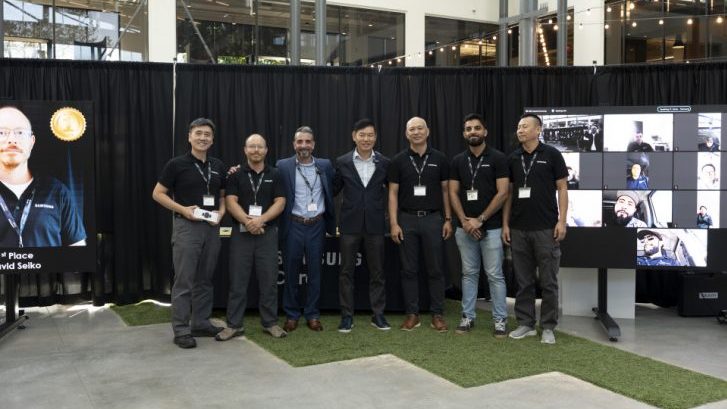
Samsung hosted its annual National Skills & Repair Competitions, celebrating the top Mobile Experience (MX) and Consumer Electronics (CE) technicians from across Canada and the U.S. The events highlight Samsung’s ongoing commitment to delivering a customer-first care experience, while investing in the development and advancement of its technical workforce.
“We were pleased to see our Canadian Authorized Service Centres participate alongside our U.S. counterparts in this year’s competition,” said Frank Martino, Vice President, Corporate Service, Samsung Canada. “Initiatives like this foster cross-border collaboration, knowledge sharing, and the continued enhancement of the exceptional service and support that define our brand across North America.”
Samsung’s National Skills & Repair Competition is designed to strengthen the foundation of Samsung’s authorized service network by advancing technician skills in both technical repair and customer service. Through hands-on challenges that test speed, accuracy and soft skills, technicians sharpen the capabilities that directly impact the customer experience. This investment helps bring faster, more reliable service across all channels, from carry-into in-home services, reinforcing Samsung’s commitment to quality, convenience and care at every touchpoint.
“We commend the Samsung Care team for their ongoing focus on exceptional customer service across their entire network of technicians serving all their product categories,” said Michelle James, CTIA Vice President of Strategic Industry Programs. “We are proud the WISE Certification team was invited to participate in this annual Technician Repair Competition held at Samsung Electronics America’s North American headquarters, and we applaud all of the technicians who earned their spot in this nationwide.”
CE Technicians Show Off Precision and Professionalism
At the seventh annual Samsung CE Care Skills Competition, 10 finalists from across the U.S. and Canada gathered to compete for the prestigious Top Tech title. The finals, held at Samsung’s Technical Training Center in New Jersey, featured the best of the best Samsung technicians from their respective areas.
The competition challenged participants to simulate real-world customer service scenarios, including diagnose an issue as if they were working in a customer’s home, replace part, with an emphasis on speed and accuracy and engage in a customer-based scenario to demonstrate effective communication and problem-solving skills.
“I want to thank Samsung for the opportunity to compete on a national scale and be able to bring home an accolade as prestigious as this. This is the ultimate culmination of a journey living for the singular purpose of service excellence,” said Alex Nahum, skills competition winner from Samsung Electronics America.
“The competition was a good experience to confirm I’m on the right track and that I am providing the best service possible and the customer is being taken care of,” said David Seiko, skills competition winner from Samsung Electronics Canada. “I thank Samsung for offering this opportunity to see their headquarters, to see their team and see how it all works.”
The Top Canadian winners from the competition included:
Consumer Electronics
David Seiko from SUMMER BREEZE APPLIANCE LTD
Jeffrey Lu from J&M APPLIANCE SERVICE LTD.
Aamir Mahmood from ARS REPAIR AND INSTALLATION
Michel Vo from ALBERTA APPLIANCE SERVICE LTD
Michael Feng from HE UNIVERSAL APPLIANCE SERVICE LTD
To learn more about Samsung Canada’s branded service and service network visit https://www.samsung.com/ca/support/Home-Appliance-Service/